Don’t Stop Moving

Stopmotion is a strangely affecting horror movie.  Body horror as well as Euro-horror, it follows the dream-like world of Ella, a stop motion animator.  She learned the trade from her mother who, suffering from arthritis, has Ella do the work for her.  After her mother has a stroke, Ella continues working on her final film but in a new location.  Tom, her boyfriend, gets her an apartment in a run-down building where Ella meets a precocious and odd little girl who tells her she should film a different movie and proceeds to tell Ella how it should go.  To her chagrin, Ella has to admit that the little girl’s story is better than her mother’s.  With the girl’s help, Ella animates a monster, the Ash Man, who is pursuing a girl lost in the woods.  Then Ella starts receiving visits from the Ash Man, or at least she believes so.  She ends up in the hospital. Spoilers follow.

Tom, who visits her there, is worried that Ella has let this go too far.  He threatens to delete the film while she’s immobile in the hospital.  Ella’s mother dies and with the little girl’s help, Ella gets back to her apartment to finish the film.  When Tom, and his plagiarizing sister, come to return Ella to the hospital, she kills them both.  She then, with the girl’s help, finishes the film.  The film results in her own death, or at least that’s the way she sees it.  The film features quite a lot of stop motion animation although the movie itself is live action.  It’s a very artful, if gross, film.  The little girl is never seen by anyone else, nor explained, suggesting that she’s a younger Ella following her own creativity.  And paying the price for it.

I can’t claim to understand everything that happens in this movie.  That doesn’t make it bad, but worth pondering.  Those of us who live creative lives experience dry patches, and often, self-doubt.  I know that when I compare my writing to that of others, I suffer in the very comparison.  When Stopmotion first ended, I felt both confused and intrigued.  Euro-horror of recent years, to generalize, emphasizes the art of the craft.  There was a lot of symbolism in this movie, some of which I couldn’t connect to the action.  I suspect repeated viewing might bring some of this to light.  My family has often told me that with my focus and interests, I would’ve been a good stop motion animator.  I certainly have the creating monsters part down pat.  It’s just a matter of deciding which narrative to follow.


Routine Weirdness

I’m weird.  Nobody has to tell me that.  Like most people, I suspect, with my mental condition, I value routine.  Although the time I post on this blog varies, that’s usually due to one of two factors—the wobbling of the earth, and whether I get wrapped up in something that makes me forget.  The wobbling earth changes the time of sunrise rather dramatically, of course.  I jog at first light and my routine before that jog is pretty solid.  Then something comes along to interrupt it.  I have to begin planning the day before how to make it all fit.  So, routine bloodwork.  The lab where I have it done is within walking distance.  Of course, you have to go in fasting so everybody wants to get there first.  The lab opens at 6:30 a.m. and this time of year vampires are still safe out and about at that time.  

Edvard Munch, Vampire. Image credit: Google Art Project, public domain via Wikimedia Commons

But by 6:30 I’m usually dressed for my jog.  I’ve been writing and reading, typically for three hours.  I forgot to wash my jogging clothes this week and this was a Friday.  Hmm, better think about that.  Then there’s the whole question of my eating routine.  If I’m going to have something it has to be a couple hours before I jog—can’t do that with anything on my stomach.  Will I be too weak with nothing until afterwards?  After all I’ll be missing a vial or two of blood.  And there’s the matter of my shoes.  I only wear my jogging shoes on the local rail trail.  It’s pea gravel and it’s been raining lately which means they get a bit muddy.  All the rest of my shoes are in the bedroom where my wife’s (sensibly) still asleep.  Besides, I need to be on the trail right after giving blood, and changing shoes takes too long.

I’ll need to change my shirt when I get home.  The jogging tops are a bit too much to expect even a phlebotomist to put up with.  Besides, the under layers are tight-fitting since it’s only in the thirties today.  Why all this fuss about going to the lab before work?  That’s the magical word.  Work.  Also, lines have always been a problem for me.  Although I take a book I dislike waiting in line.  I need to get there before the doors open.  Be first in line.  There’s already a car in the parking lot, but standing beside the door in the cold has to earn you something, doesn’t it?  I’m back home just as the sun is rising.  Throw on my under layers and out before anyone else gets on the path.  I know I’m weird.


Not Frightening

Years ago a friend, which I define as someone who wishes me no specific bodily harm, suggested I watch The Frighteners.  It finally came to a free streaming service (with commercials), so I gave it a go.  I really enjoyed parts of it, but on the whole, there was too much going on to make it an effective film.  It’s a horror comedy, and once films like that stretch beyond 90 minutes they tend to need a lot of magic juice to keep the engine running.  So, here’s the basic idea: Frank can see ghosts.  With the help of a couple of ghosts he makes a living driving spirits from peoples homes, after setting them up.  Unfortunately there’s a serial killer ghost actually killing people.  Since Frank tends to be the last one the victims see, there is some suspicion that he’s involved in their deaths.  

A young widow, Lucy, is a doctor and is trying to help a woman (Patricia) who seems to be abused by her mother.  It turns out that Patricia is associated with a serial killer from many years ago, and it’s unclear whether or not she’s innocent.  Meanwhile, a neurotic FBI agent comes to town and decides Frank is guilty and tries to kill him without due process.  Meanwhile, more and more people are dying.  It’s probably a spoiler to say that the serial killing ghost is the same as the serial killer that Patricia was in love with and she’s still helping him to get to a record number of deaths.  Frank ends up dying twice but is brought back to life at the end, after Patricia and the serial killer are taken to Hell.

The movie is stylish and a bit of fun, but if you’re watching it on a streaming service with commercials it ends up being over two hours long.  Some parts are funny, but not hilarious.  Some parts are spooky, but not really scary.  The plot is complex and takes its time unfolding.  The serial killers attempting to break a record is disturbing and not exactly in good taste.  The acting is good but the viewer’s left feeling a bit confused as to what the message is and how they ought to feel.  It’s the kind of movie that I might find myself in the mood to watch again, someways down the road, but in the short term, I’m glad to have seen it once.  I’m not sure my friend and I share taste when it comes to movies, but at least he’s not wishing me any harm.


Evolution of Psychology

We are a fragile species.  Those of us who experienced childhood trauma carry it all our lives, even if it only seems to pop out unexpectedly from time to time.  This gets me to thinking about the evolution of psychology.  Not the discipline psychology, but of the human mental map.  Things that can upset a roomful of people these days would’ve washed over an entire village unnoticed yesteryear.  Did people then really feel as angry and breakable as we do now?  Please understand, I’m not advocating the view that people of previous ages were better, or even stronger than we currently are.  I just wonder if their circumstances made it so that what we think of as therapy wasn’t really necessary.  For one thing, much of human history has been dominated by short lifespans.  Historically, many women died in childbirth in their twenties.  The majority of men, until modernity, didn’t make it to fifty.  Sitting here musing, I’ve got ten-plus years on that and yet I wonder.

Those facts of life would’ve had to have affected people’s outlooks.  Our extreme squeamishness around reproduction also didn’t exist in antiquity.  Privacy, as we know it, wasn’t part of their world.  How many people see a therapist these days because of sexuality issues?  When did this turning point take place?  If we go back to early Cro-magnon, perhaps living in caves, did they come back traumatized from the hunt?  Surely they must’ve seen death on a nearly daily basis.  Today it’s difficult to get anyone to consider the mortuary sciences for a career.  We don’t like to think about death.  We pick up the phone and dial our therapists. 

When I was still teaching I thought often about how differently people framed their lives in the past.  It’s only now, however, that I’ve come to wonder about the psychological support we require.  I suspect life was, for most people, a literal daily struggle to survive.  Agriculture tamed the environment somewhat, and if current evidence is taken into account, religious gathering looks to have developed even in advance of that.  Perhaps the larger issues, what we still recognize as religion, helped to cope with the constant uncertainties of life.  Unfortunately, there’s no way for us to really get their mental maps.  We can read ancient writings, many of them pro forma or religious in nature.  We start to get some insight in pieces such as the Gilgamesh Epic, but that is so very brief.  I wonder when we started to require help going out the door in the morning or facing another day of the same old, well, you know.  Psychology had to evolve but it left so very few traces.  I, however, have an advantage in years great enough that I ponder our mental states.


Mirroring Reality

I watched Oculus for two reasons: it kept coming up as a “freebie” on a service I use, and I’d been thinking about haunted mirrors.  Well, three reasons—I also liked the sound of the title.  (Not all decisions are a matter of science.). I was pleasantly surprised that it turned out to be pretty good.  I’ll probably throw in a spoiler or two, so if it’s on your list, you’ve been warned.  Kaylie and her brother Tim were attacked by their parents, but Tim was being framed by the mirror.  Both parents attempt to kill the children, but end up dead instead.  Tim is sent to an institution since he pulled the trigger, and Kaylie has spent eleven years researching the mirror.  When her brother is released she convinces him that they have to keep their promise to destroy the mirror.

The problem is, the mirror messes with perceptions of reality.  The two go back to their childhood home where Kaylie has set up a device to drop an anchor onto mirror.  This is set to happen with a wind-up timer since the mirror can control electronics.  She’s also set up the room so that everything is being recorded.  If she can prove the mirror is what she believes it to be, her father will be exonerated and her brother proven innocent.  The movie gets a little tricky to follow since their current story is intercut with flashbacks as to what happened when they were children.  Also, the mirror records events on the cameras that didn’t really happen.  Add to this the fact that Tim has undergone therapy for eleven years and he’s convinced that his sister is delusional.  It’s one of those movies that messes with your perception of reality.

When Tim doesn’t see his sister in front of the device meant to destroy the mirror, he accidentally kills her.  The police arrive, believing he has repeated his murderous attack from eleven years before.  The ending is rather nihilistic, but the scares are effective.  There are a few gross-out scenes and some jump startles, but overall it is the story that conveys the fear.  For me, the mental issues were almost triggers.  But then again, I watched it on a day when I was a bit fuzzy-headed because of waking up too soon.  I really didn’t know what to expect when I hit “play.”  I’ve done that enough times and ended up with films that were wastes of time, so I was glad to have found a competent one this time.  These are my reflections, in any case.


Author Pages

It takes me awhile, sometimes.  Maybe it’s a generational thing.  I’ve been blogging for sixteen years now (my blog is a teenager!) and it only just occurred to me that I should be putting links to authors’ pages when I post about their books.  I know links are what makes the web go round but I assumed that anyone whose book I’ve read is already better known than yours truly.  Why would they need my humble help?  Well, I’ve been trying to carve out the time to go back and edit my old posts about books, linking to authors’ pages—there are so many!  In any case, this has led to some observations about writers.  And at least this reader.  Most commercial authors have a website.  Not all, of course.  People my age who had earlier success with writing tend not to have a site since they already have a fan base (I’m guessing).  Most fiction writers in the cohort younger than me have pages, and I’m linking to those.

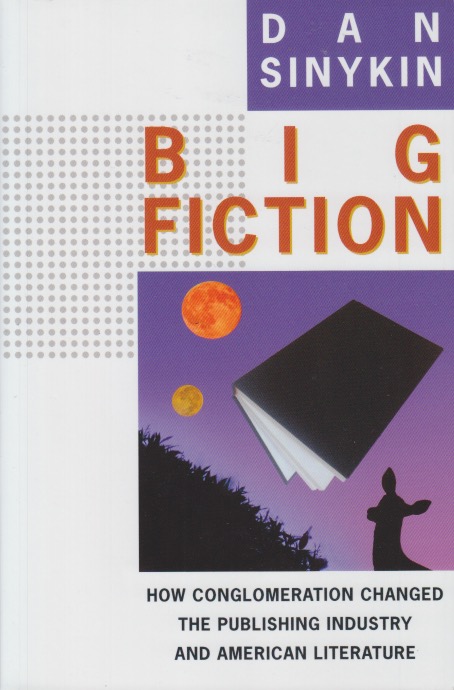
I’ve noticed, during this exercise, that my reading falls into two main categories: novels and academic books.  I suppose that’s no surprise, although I do read intelligent nonfiction from non-professors as well.  In the nonfiction category, it’s fairly rare to find academics with their own websites.  They probably get the validation they require from work, and being featured on the school webpages.  Or some will use Academia.edu to make a website.  As an editor I know that promoting yourself is important, even for academic authors.  Few do it.  Then I took a look around here and realized, as always, that I fall between categories.  No longer an academic, neither have I had any commercial success with my books.  I’ve fallen between two stools with this here website.  I do pay for it, of course.  Nothing’s free. 

Almost nobody links to my website.  This isn’t self-pity; WordPress informs you when someone links to your site and that hasn’t happened in years.  Links help with discoverability on the web, so my little website sits in a very tiny nook in a low-rent apartment in the part of town where you don’t want to be after dark.  And I thought to myself, maybe other authors feel the same.  Maybe they too need links.  So I’m adding them.  As I do so I hope that I’ll also learn a thing or two.  I’m trying to learn how to be a writer.  It just takes me some time before things dawn.  Maybe it’s just my generation.


Hungry Madness

It’s been on my wishlist of movies to watch for a few years, In the Mouth of Madness.  A tribute to Lovecraftian horror, as well as a probing of insanity, it is a heady mix.  In keeping with my usual rules for movie watching, I hadn’t pre-read anything about it that would give away the plot.  Coming to it fresh, a number of things stood out.  There were some very good scenes and parts of the movie made me want to like it a lot.  It is a great movie for religion and horror analysis, and in that regard it’s much better than Prince of Darkness (despite Alice Cooper).  In fact, had I been able to see it years ago, it would’ve been included in Holy Horror.  That itself is noteworthy since two of John Carpenter’s other movies were in it: The Fog and the aforementioned Prince.  I suppose I should provide a little summary (if possible) in case you haven’t seen.

Trent is an insurance investigator, and a hardened skeptic.  A horror writer who outsells Stephen King, Sutter Cane, has gone missing and Trent’s sent to investigate.  He discovers that Cane is in a town that doesn’t exist (Hobb’s End) and that his books are not fiction.  In fact, Trent is a character in one of his novels.  When people read his latest book, In the Mouth of Madness (a title adapted from Lovecraft), they go insane and begin killing others.  The plot gets a bit busy because people are starting to transform into slimy, Lovecraftian monsters and this reality, if the book is read, or movie watched, will spread to all of humanity, leading to our extinction.  A bit too ambitious, the plot can’t hold all this weight, but it really isn’t bad.  There’s just too much going on.

The religion elements come in because Cane has holed himself up in an unholy church.  He refers to his latest novel as the “new Bible.”  “More people,” he says, “believe in my work than believe in the Bible.”  He later refers to himself as God.  I haven’t seen all of Carpenter’s films, but there seems to be a trajectory of his earliest major films being his best.  Halloween and The Thing are classics.  The Fog isn’t bad.  When he brings religion into his stories, as in The Fog, things begin to cloud over a bit.  Prince of Darkness doesn’t deliver a believable Devil.  In the Mouth of Madness doesn’t quite hang together well enough.  It’s not a bad movie, though.  It has given me some ideas for another book, if I can stay sane long enough to write it.


Hallowed Halls

Every time I read a short story collection I tell myself I should do so more often.  Knowing that you’re only committing yourself for maybe thirty or forty minutes at a time is one way to incorporate more reading into a life that’s incredibly busy.  I read In These Hallowed Halls, edited by Marie O’Regan and Paul Kane, because, as its subtitle declares, it’s A Dark Academia Anthology.  As with nonfiction anthologies, it is a mixed bag.  The stories are all well written and all were enjoyable to read.  They also display some of the breadth of dark academia.  Most of the stories are literary (as a genre), others dip into science fiction and horror.  Dark academia doesn’t specify whether a book (or story) will be speculative or not.  As someone who writes short fiction, it seems that some of my tales might wag that way.

In any case, discussing a collection is tricky because there is such variety.  Some of the stories stayed with me beyond reading the next, which could be quite different.  Others I have to go back to remind myself what happened.  These days it can take several weeks to finish a book and a lot can happen in real life in that time span.  The stories that stay with me the most have obsessive narrators, or characters who are obsessed.  This kind of story, I know from experience, is difficult to get published.  Many of us who write, I suspect, do get obsessed.  An idea latches on and won’t let go.  Of course, most of us also have jobs that force the jaws open and drop us down in the world of the ordinary again.

Another thread that runs through many of these stories is how students struggle for money.  That’s true to life.  Thinking back to both college and seminary, there were times in both settings that I was working two part-time jobs as well as being a full-time student.  And living like, well, a student.  That experience, except for the truly privileged, is fairly common and our writers here recognize, and perhaps remember, that.  The other unavoidable theme when writing about young people in college is, shall we say, hooking up.  For many of us, college is that period in life when, thinking of our futures, and following our hormones, we start looking for love.  (I know, high schoolers do that too, but college has a way of focusing your energies.)  All of that swirling around the darkness that sometimes falls over our tender years makes this dark academia collection worth reading cover to cover.


House Spiders

I give them names, the spiders who choose to live in our house.  That’s how I named Henry, shown in the photo.  I grew up with an almost debilitating arachnophobia, and as with most of my fears, worked hard to overcome it.  So when a spider moves in, I let them stay.  Unless they’re too big.  Here’s where it becomes interesting.  Like quantum mechanics, there seems to be an arbitrary point when something is “too big” for the rules to apply.  What is that tipping point?  The other day I bumbled into the kitchen early to get some water, having given up coffee years ago.  There was a spider that I could see from across the room.  It was very large.  It’s a sign of how much I’ve overcome my phobia that I was able to walk around the counter and to the sink to fill up.  I kept a wary eye across the room, however, in case Octavian made any funny moves.

The spider held very still, as arachnids often do when they know they’ve been spotted.  I sometimes wonder if they know how scary they are to other creatures.  I searched around for a jar large enough to catch and release, without pinching any legs, and crept over.  Turns out Octavian was faster than I am first thing in the morning.  And, honestly, I was still recovering from a vaccine that had knocked me out the day before.  At least I can blame that.  I wonder if that’s one of the reasons fear of spiders is so widespread—they’re fast.  Or is it something inherently menacing about those eight legs?  I’ve never experienced any kind of octopus phobia, so I can’t think that it’s merely the number.  The jointed legs?  That seem disproportionate to the body size?  Whatever it is, days later I’m still cautious in the kitchen.

I have a great appreciation for spiders.  I don’t like to be startled by them, but otherwise, if they keep their distance, I’m fine with them.  I do wonder what they think, living in a world of giants.  Some insects, in the same size range as arachnids, seem ignorant of the human threat.  It’s not unusual for an ant to find its way inside and walk right up your foot and leg, oblivious to the danger.  They seem to have no fear.  Spiders, however, do.  They’re very good at running and hiding.  I like to think they know our house is generally a safe space, until the vacuum cleaner comes out.  When I’m behind it, I always try to give Henry and his friends a chance to get out of the way.


Unwritten

It has been clear to me for some time now that I won’t live long enough to finish all the books I’m writing in my head.  A good number of them have a head start on my hard disc, but as Morpheus says, “Time is always against us.”  The largest culprit in the 9-2-5 job.  Eight hours is a huge amount of time to devote each day, no matter how you slice it.  Since eight hours are required for sleep, or trying to sleep, that means work is half of each day’s waking hours.  The other half includes things like making meals, washing clothes, family time, paying bills, running the vacuum, exercising because you sit in front of a screen all day, and, of course, yard work.  Plants don’t have the same constraints that humans do and can get to the business of growing larger 24/7, as long as the weather cooperates.

Some days I grow reflective about this.  My daughter often asks why I don’t draw or paint more.  I love doing both.  The answer is time.  Even weekends are eaten up with shopping for the food you need to get through the week, and yes, the yard was bigger than I realized, and the house needed more repair work than anticipated.  You see, writing well requires a lot of practice.  And even more reading.  Any successful writer (which I am not yet) will tell you that reading is essential.  I do read a lot.  A friend recently sent me an article about a writer whose heirs calculated he’d read at least 4,000 books.  I know that I’ve read about 1,200 since 2013.  I also know that I can’t count them all before that time.  I went through our living room shelves and counted 500 I’d read there, and that’s only one room.  

Ironically, as a professor reading time is limited.  Unless you have a research only post.  I read a lot as a kid and a ton as a student.  When I started teaching I had less time, except on semester breaks and I tried to read as many books as possible during those interludes.  Then the 9-2-5 began.  My current pace of reading began when trying to live as an adjunct between Rutgers and Montclair State.  Montclair was a 70-mile drive, so between classes I started reading voraciously.  Ironically, the commute to my 9-2-5 spurred me to start writing books again.  By then I was practically fifty.  Since my nonfiction books take about five years to write, well, the math’s not in my favor.  Time to stop my musing, because the 9-2-5 begins shortly.


Booking Halloween

I’ve met several people who say that Halloween is their favorite holiday.  One of the (likely commercially-driven) realities, however, is that not many nonfiction books on Halloween exist.  I mean the kind with a known publisher behind them, the sort that have been vetted.  My recent book, Sleepy Hollow as American Myth has a chapter on Halloween in it, and I’ve often considered writing a book on the topic.  Halloween and Other Festivals of Death and Life is an edited collection brought together by Jack Santino.  It is one of the (few) academic books on Halloween that I hadn’t read.  Although I learned a lot from it, it suffers that inevitable trait of books that are assemblages of essays: they are uneven in focus, scope, and execution.  Santino is known for a couple of influential articles on Halloween, so editing such a book seems a natural development.

Some of the essays in this book were quite helpful to me.  The problem with drawing together anthropologists, however, is that they have discrete regional as well as thematic interests.  In some ways this is very appropriate for Halloween.  The holiday, as most holidays, has regional variations.  Reading about how it’s celebrated elsewhere, or elsewhen, gives you an idea just how lacking it is of any kind of “top-down” authority.  For all of its variations, Christmas has a somewhat “canonical” narrative (although this isn’t the full story).  Halloween grew from folk traditions and when the church got ahold of them it tried to focus them on All Saints Day, and later, All Souls Day.  But Halloween and it adjutants comes the day before All Saints, thus allowing the varied influences of the day to come to light, if they can be found.

The part of this tradition that I’ve always found disturbing, highlighted in this book, is the pranking.  I suppose that growing up poor, the idea that someone could damage your stuff when it’s really what you feel you need to survive, is quite distressing.  A light-hearted prank feels less insidious, but reading what some regional celebrations in North America included made me realize why many local authorities have tried to contain and control celebrations.  Nobody wants to lose everything due to a thoughtless prank.  Trick or treat was sometimes trick and treat.  I recall being in a crowd in England celebrating New Year’s.  Some partiers threw lit firecrackers into the crowd.  My only thought was to the damage or injury this might cause.  Halloween is that way, however.  And it is likely impossible to write a book that captures it in its fullness.


Professionalism

We’re all tightly packed together here on the internet.  Social media is a fuzzy category and now includes such platforms as LinkedIn, which I think of mainly as a place to hang your shingle while looking for a job.  I chose, many years ago, to make myself available online.  This sometimes leads to a strange familiarity.  It isn’t unusual for me to have an author hopeful to contact me through my personal email or through LinkedIn, especially, to try to push their project.  (Such people have not read this blog deeply.)  One thing acquisitions editors crave most highly is professionalism.  Being accosted on LinkedIn, or in your personal email, is not the way to win an editor’s favor.  Some of us have lives outside of work.  Some of us write books of our own and don’t blast them out to all of our contacts on LinkedIn.  Professionalism.

It’s tough, I know.  You want to promote your book.  (I certainly do.)  It seems strange to say that blogging is old-fashioned, but it is.  (Things change so fast around here.)  But you could start a blog.  Or better yet, a podcast.  Or a YouTube channel.  You can blast all you want through X, Bluesky, Facebook, Tumblr, or Instagram.  I admit to being old fashioned, but LinkedIn is for professional networking, not doing quotidian business.  It may surprise some denizens of this web world that some publishers don’t permit official business through social media.  Email (I know, the dark ages!) is still the medium preferred.  Work email, not personal accounts.  Some authors (believe it or not) still try to snail mail things in.  Publishing is odd in that many people, and I count my younger self among them, suppose you can just do it without learning how it works.  Most editors, I suspect, would be glad to say a word or two about professionalism.

Photo by Ben Rosett on Unsplash

Professionalism is what makes a commute to the office on a crowded NYC subway train possible.  We all know what’s permissible in this crowded situation.  We know to wait until someone checks in at work before asking them about a project we have in mind.  (If you’re friends with an editor that’s different, but you need to get to know us first.)  When I started this blog I was “making a living” as an adjunct professor.  I was hanging out my shingle.  I also started a LinkedIn account.  Then I started writing nonfiction books again.  Since those days I’ve been trying to figure out the best way to promote them.  Professionally done, if at all possible.


Reptile Puppet

I read about Reptilicus, but I can’t remember where.  A monster movie shot simultaneously in English and Danish in 1960, with two different directors, it was universally panned.  Some times you just have to see a bad movie.  This one qualifies.  I actually laughed out loud a time or two.  The idea behind the story holds promise: some animals can regenerate lost limbs, or even entire bodies from a severed piece.  What if a giant reptile could do the same?  The film’s problem is in the execution.  So, a team drilling for copper above the arctic circle—they’re sweating and working with their sleeves rolled up in a temperate forest—hits a frozen animal in the permafrost under the tundra.  Taken to an aquarium in Copenhagen, the animal’s tail is kept frozen until someone leaves the door open overnight.  When it thaws it begins to regenerate.

Once fully formed—and nobody could see this coming—it breaks out and terrorizes Denmark.  There are some scenes thrown in to show off Copenhagen, and the film makes liberal use of stock footage from military exercises.  The dialogue, poorly written, is delivered with wooden earnestness by actors who struggle to be convincing in their roles.  The monster, Reptilicus, is so obviously a puppet that it could scare no-one.  But it’s a monster movie!  Those of us who grew up on such fare sometimes feel a need to go back to the well.  To appreciate a bad movie, I always approach it with a certain hopefulness.  Here I am, over six decades later, watching the film.  If that can happen, perhaps someone will see that publishing my novels isn’t the worst you could do?  It makes for a crooked kind of logic.  

The main thing Reptilicus has going for it is its near indestructibility and its ability to regenerate.  How is it finally destroyed?  We’re not shown.  In one scene the general asks the head scientist, something like, “If we can knock it out, you can kill it?”  Receiving an affirmative answer, they drug the monster and send the scientist off to do his work (after he’s suffered a heart attack).  I’ve read novels where it seems pretty clear that the author was unsure how the resolution actually goes—I’ve painted myself into that corner a time or two, so I know how it feels.  If you’ve got a budget and backers, however, you have to deliver something.  The movie performed reasonably well at the box office, which shows just how indestructible some monsters can be.


October’s Poetry

October is a beautiful, melancholy time of year.  Edgar Allan Poe died on October 7.  Two years ago today, my mother died.  This was brought home to me forcefully yesterday.  A colleague had invited me to address her class at Princeton Theological Seminary about Weathering the Psalms.  I had vacation days that have to be used up or lost, so I took the day off.  My wife and I drove to Princeton, a town we know well.  When we lived in Somerville, about 15 miles north of there, we’d visit Princeton not infrequently.  I wasn’t really familiar with the seminary grounds, however.  My colleague informed me that her class, on the Princeton Farminary (where a program in ecology and theology is housed) would be meeting in a barn so I should dress appropriately for the weather.  A cold front had come through, so I went for the tweed and turtleneck combo.

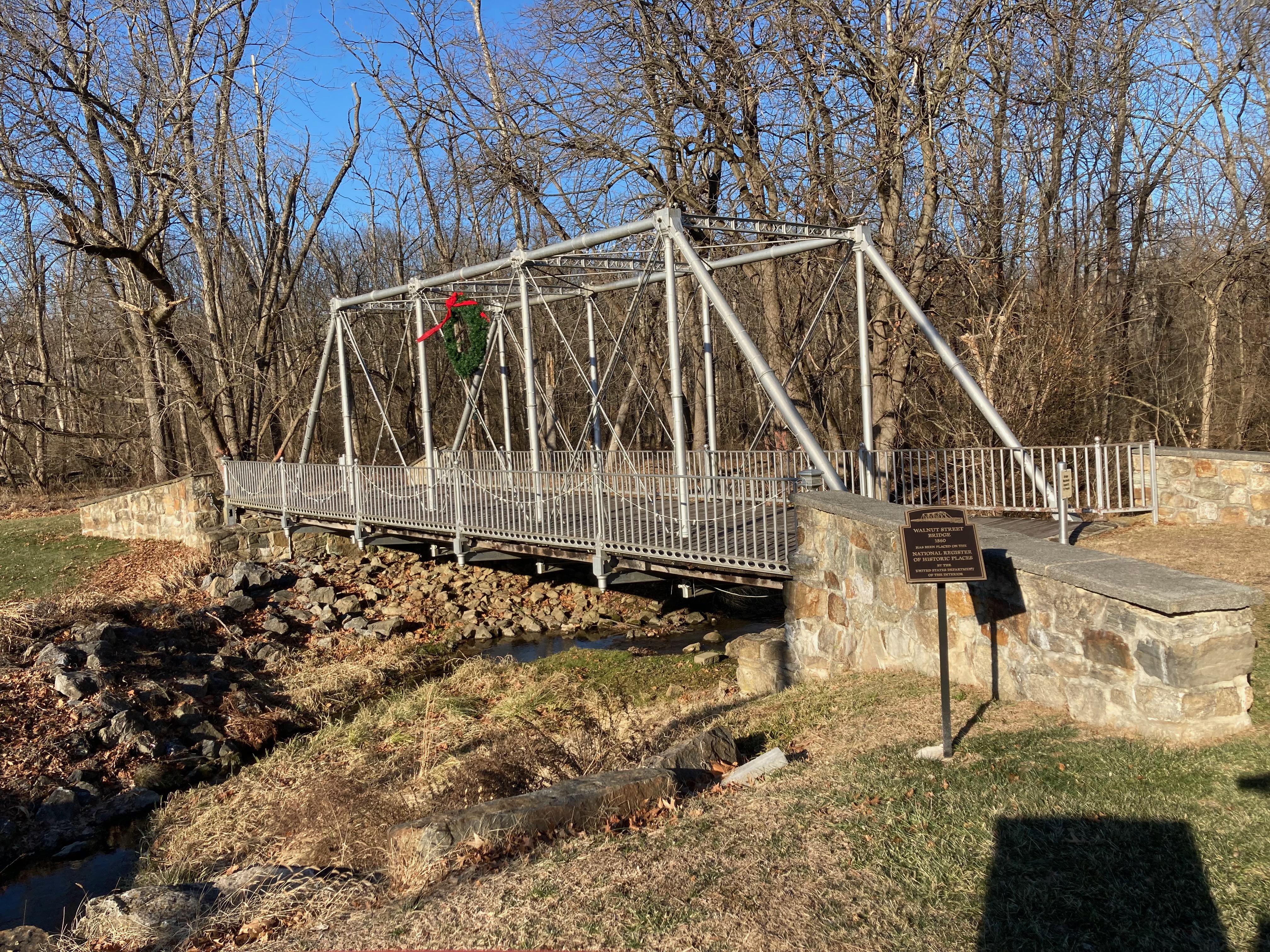
So we set off on a beautiful drive along the Delaware.  The leaves aren’t at peak yet, but there was plenty of fall color as we navigated our way toward Frenchtown, where there is a bridge across the river.  The GPS also told us this was the way to go.  On River Road, still in Pennsylvania, a flagman refused to let us on the bridge, although the signs did not say it was closed.  He impassively waved us on.  The GPS insisted we “return to the route.”  We soon found out why.  The next crossing is seven miles further down, along winding roads with a 25 mph speed limit.  The drive was beautiful, but suddenly I was going to be late for my appointment.  The new route added 45 minutes to the estimated travel time.  After uttering some choice words about unplanned bridge closures on a road where there are only a very few ways to emulate Washington’s crossing, we eventually arrived.

The weather beautiful, if a little chilly, the class decided to meet outdoors.  I hadn’t forgotten how much I love teaching.  It was brought back to me with force.  With the trees reminding us that winter is not far off, and the students eagerly asking questions, I felt at home for the first time in many years.  It was a temporary shelter, I knew, but it was a kind of personal homecoming.  Carefully avoiding the Frenchtown bridge, we drove north, crossing to River Road at Milford.  If the GPS had known that to go forward you sometimes need to go backward, it would’ve sent us to Milford that morning.  We arrived home tired but glowing from a day out of the ordinary.  As I put my tweed away that evening I found a pencil from the the funeral home where I last saw my mother in the pocket.  It had been the last time I’d worn this jacket, two years before.  October is a beautiful, melancholy time of year. 


Banning Books

For many years I’ve celebrated Banned Books Week by reading a banned book.  What with Republicans wanting only white, hetero, history-denying titles approved, I’m pretty sure that most books I read are banned somewhere.  Banned books, of course, see sales bumps and benefit the publisher and author.  So instead of reading a noted banned book, this year I’ll hang out my shingle here with but shallow hopes that it will be read.  I’m pretty sure, any agents out there, that at least one of my novels would be a banned book.  Maybe all of them.  You see, in my fiction I’m not the mild-mannered, inoffensive person who blogs here everyday for free.  There’s a reason that I keep my pen name secret.  I’m pretty sure that most people who know me would be surprised, if not shocked, by what appears in my fiction.

Writing, you see, is where we express the ideas in our heads.  I may seem to yak about everything on this blog, but in reality, I’m quite guarded.  Many of the horror movies I discuss, for instance, have ideas or scenes that I simply leave unaddressed.  I’m trying not to offend anyone here.  (A friend of mine who does publish fiction mentioned recently that a significant other in her family suggested that her writing wasn’t controversial enough to be picked up by publishers.  I think there could be something to that.)  While my mother was alive, I took special care that she wouldn’t discover any of my fiction.  Now that she’s gone these two years, I still protect her name with my own nom de guerre.  I really don’t want to hurt anybody.  I do, however, need to express myself.

Some of my fiction is horror.  Some is just plain weird.  The novels are well written, I think, and I’m open to editing.  (Agents, I am an editor—I know how this game works!)  As long as we’re stuck in a morass of banning books, why not look at a writer who’s more controversial than you might believe?  I’ve been writing daily for going on half-a-century now.  Think about that.  Think about the sheer number of controversial thoughts one might have in that amount of time!  Add graphomania to the recipe, with just a squeeze of talent and you’ve got banned books to last a lifetime!  I’m not sure any of the books I’m currently reading (five actively, at this point) formally appear on a  banned list.  But if you want to find one that almost certainly will be, well, my shingle’s out there if you care to take a look.

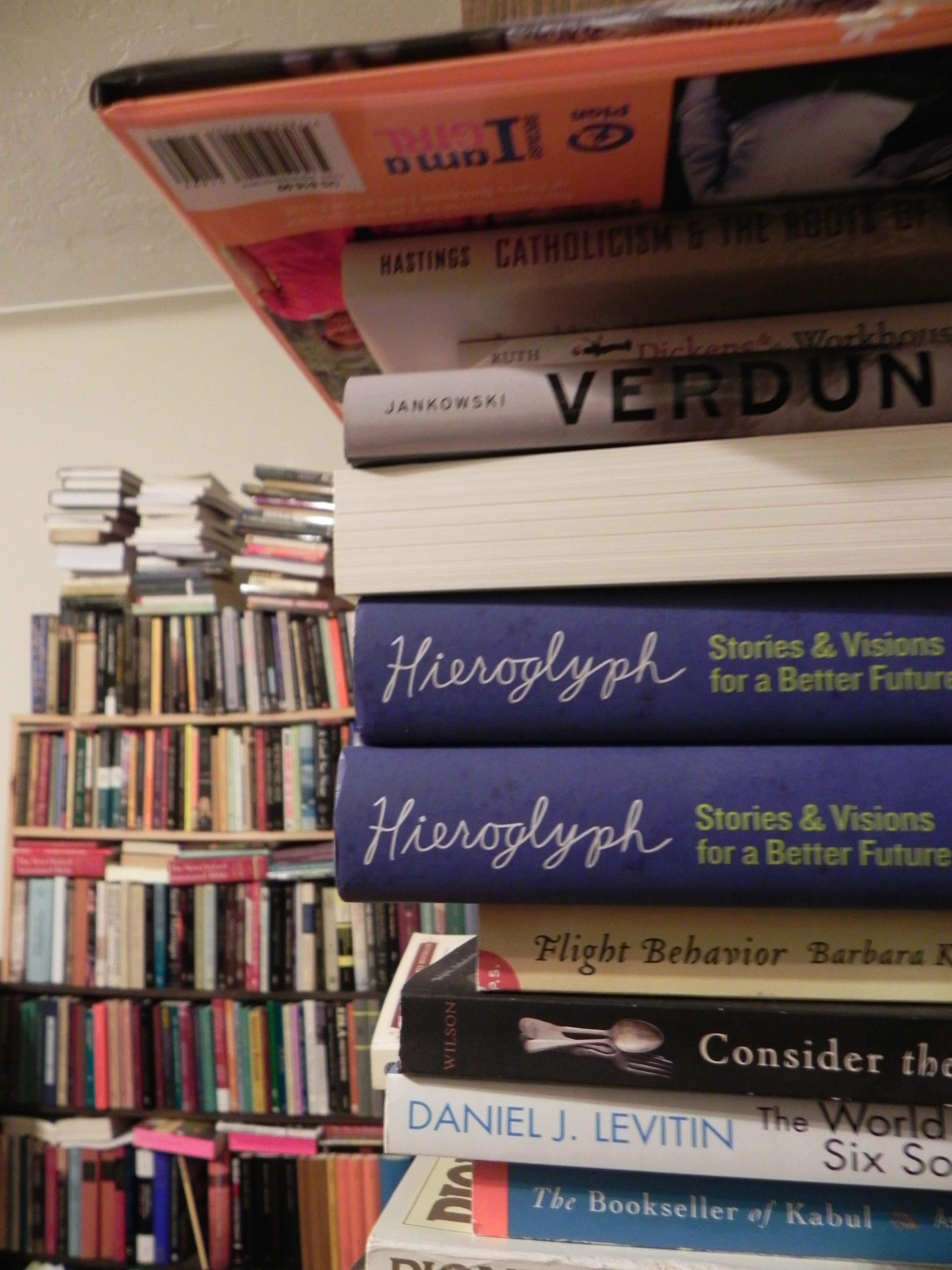
A banned book, in some districts