Demons, Once More

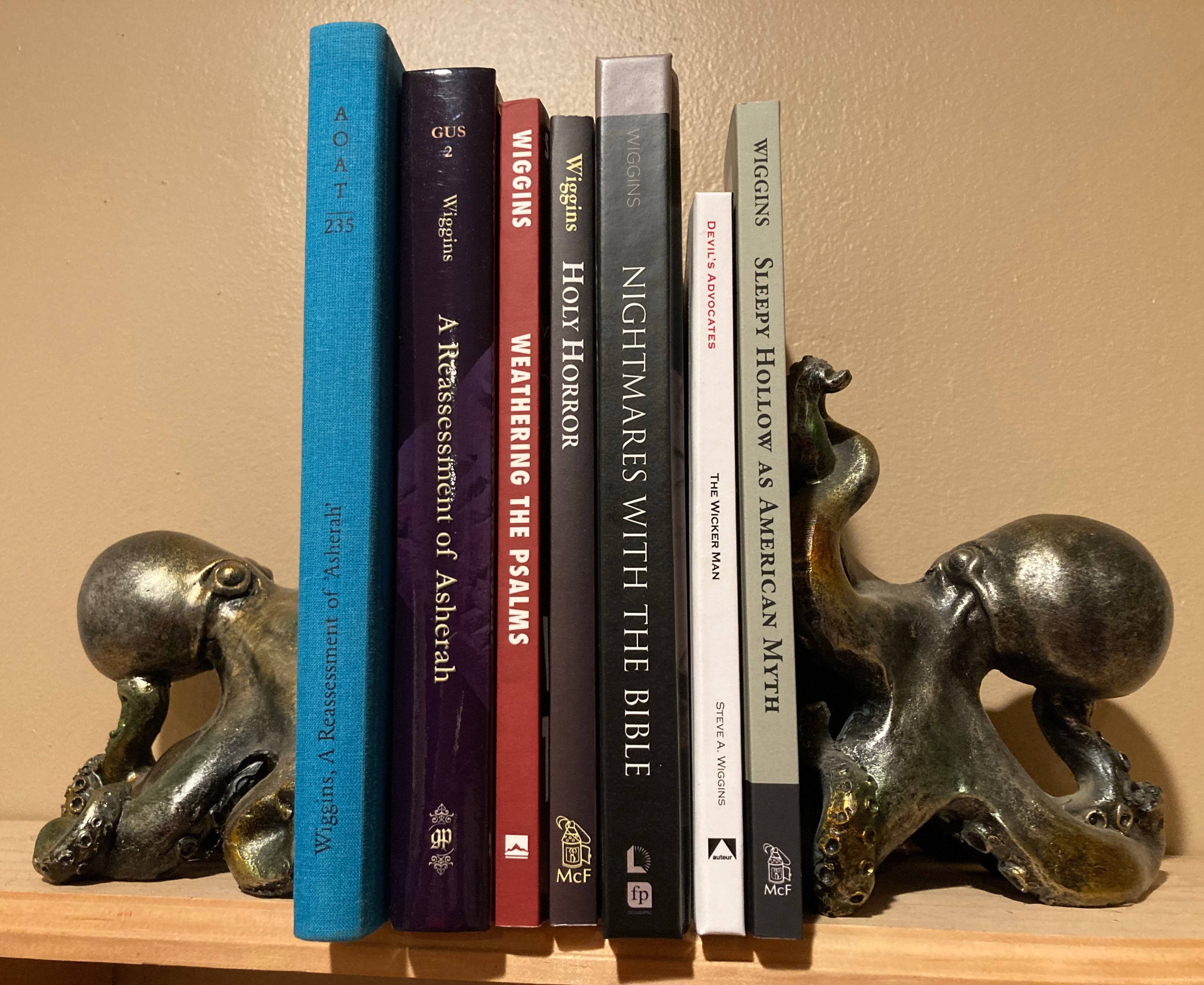
Victoria Jaye’s book got me thinking, once again, how powerful movies are.  Ever since I was a child, I think, I had some awareness that movies were more than simply entertainment.  Things I saw that scared me stayed with me.  They’d come back in nightmares or unguarded moments.  Indeed, they would frame what I thought of as real, or possible.  I read Hell, Horror and Despair in preparation for my appearance on the Nine Gates Podcast.  Perhaps it’s a combination of my age, how busy I am at work, and how I move from one project to another, but I do tend to forget things about the books I’ve written.  I needed to remind myself about Nightmares with the Bible, and reading Jaye’s book definitely helped ring a few bells.  I remain interested in all the subjects I’ve published on, from Asherah to Sleepy Hollow (and beyond).

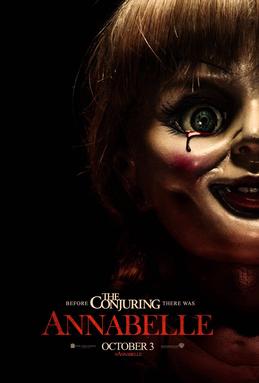
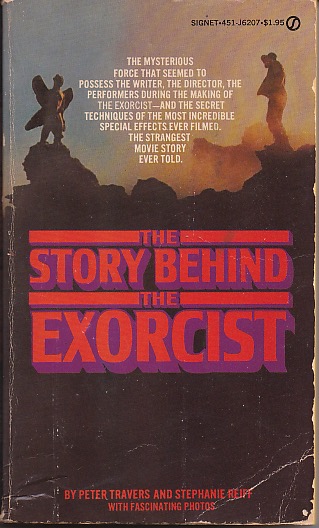
Hell, Horror and Despair is about demonic fantasy—broadly, the ideas culture sustains about demons, largely influenced by movies.  Jaye recognizes, as many authors do, that The Exorcist was formative.  The more I ponder it, the more I think it might be the most influential horror movie ever.  William Peter Blatty famously wanted it to draw people back to faith.  I think it probably did that and mostly through the fear it inspired.  The money brought in attracted other filmmakers.  There’s gold in them thar hills!  Counting the number of movies I’ve seen featuring some kind of demon would take more than an hour or two.

And maybe they weren’t only fiction after all.  Demonic fantasy is fiction about demons that derives from the media.  The beliefs that The Exorcist kick-started have grown and evolved over the years until all kinds of beliefs about demons are held, but not tested against evidence.  Any evidence itself is dismissed by science, so people turn to the only available source: the fiction of movies and pop culture.  This is really a fascinating development.  Now we have congressional leaders, and a Vice-President, who believe UFOs are demons.  Talk about your Middle Ages!  Since science doesn’t investigate the immeasurable world, and since experts in religion tend to be unemployed these days, of course this kind of thing is going to happen.  Jaye’s book points out the problems with demonic fantasy.  Historically, prior to movies and television, it often contributed to literal witch hunts.  Today it is used to make political opponents seem evil.  And it contributes to a belief that demons are everywhere—something the Catholic Church tried to tamp down after the Dark Ages.  I’ll be on the podcast on Tuesday evening.


Nextdoor

Eight years we’ve been in this house.  In that time the only neighbor’s name we knew was the guy who owned the house immediately next door.  He bought the house only a couple of months before we bought ours.  We were sad to see him move out over the winter, but when I saw new folks milling about in the spring I went over and introduced myself.  Thankfully, they’re nice folks.  While I was talking to them a neighbor across the street who’d seen me hundreds of times without a word called out and introduced herself to them as well.  She didn’t ask my name and apparently didn’t feel the need to know it.  She did say that she grew up in the house on the other side of ours.

That is the house we see from all our south-facing windows.  Four different sets of people have lived there in eight years.  Only the second set ever told us their names and talked with us.  To be fair, it is a rental property, owned by the real estate agent who sold us this house.  All day long at work I can see the tenants coming and going.  A married couple maybe a decade younger than us was there first.  Then a couple in their twenties/thirties—the friendly ones.  Then another couple with a couple of kids.  From overheard observations I gathered he worked in recruitment for Binghamton University (where my daughter went) and Rutgers (the last school at which I taught).  We have both Binghamton and Rutgers swag, but that never spurred any interest on their part.  Now I can’t figure out the renters.  They look like students to me, maybe from nearby Lehigh University.  There’s two men and two women (I think) but they never act like couples.  Who knows?

The other day I was out fighting the weeds when another neighbor across the street was outside.  She asked my name and this led to a conversation and learning, after all these years, hers and her husband’s names.  All of this brought to mind something I learned as a candidate for the ministry in the United Methodist Church.  Methodists practice itineracy—bishops move ministers every few years so that a “permanent” minister doesn’t become too settled.  It was then that I learned most congregations (neighborhoods?) don’t really feel comfortable with a minister until after about seven years, I think it was.  Seems like our timing is about right.  For the first time in eight years we know the names of two sets of homeowners in our immediate vicinity.  Welcome to the neighborhood.  

Photo by Tim Mossholder on Unsplash

Not a Flower

There are occasional benefits from my attempts not to learn about movies before I watch them.  I approached Bugonia unaware of what it was about, or about its twist ending.  That ending makes it a difficult film to discuss in any detail, but I’ll start with the question of how to classify it.  Different websites use different designations: horror, sci-fi, dark comedy, thriller, satire, crime, and so forth.  In some ways it’s genre-defying, like Everything, Everywhere, All at Once, Parasite, and Poor Things.  A movie that will get you thinking and one that’s exceptionally good at misdirecting you.  While not a financial success, it received critical acclaim.  It does follow a storyline, and there are hints of what’s “really” going on as the story unfolds.  Here’s the basic idea, without spoilers (I hope).

Teddy Gatz is a conspiracy theorist and mentally unbalanced.  His mother is hospitalized in a coma, having been a drug addict, and he was abused as a small boy by his babysitter.  His autistic cousin Don goes along with what he says.  Teddy is planning to kidnap an alien, the CEO of the company for which he works.  He’s convinced she (Michelle) is from Andromeda and that her mothership will be in range during the upcoming lunar eclipse.  He believes the Andromedans are killing all the bees.  He and his cousin pull off the kidnapping and imprison Michelle in their basement.  He interrogates and tortures her.  She tries to convince them that this is all a mistake, but Teddy is very certain of his convictions.  Michelle finds her way into a secret room long enough to use Teddy’s conspiracy theories against him.  He takes her back to her office so they can meet the mothership.  I’ll leave it at that.

There are definitely some funny bits to it all.  It’s also a poignant movie.  At times it felt like it was making light of mental illness, but in context it really doesn’t.  The film has a strong ecological message and a somewhat disturbing final melange of images.  Is it horror?  It definitely has some elements of the genre.  I wouldn’t say that it’s the best overall classification, though.  I’m not really sure what that might be.  The thriller elements are clearly there.  It’s the kind of story for when you’re in the mood for something disorienting and a bit threatening.  I haven’t figured out the title yet, but it is the kind of movie I’m glad to have watched.  With no warnings.


Inspiring Ideas

Human minds are strange.  For instance, they often experience their best ideas when it’s difficult to write them down.  Or consider that our best work often comes just as time is running out, as if the added pressure is what produces these diamonds of thought.  Or yet again, the problem that resolved  itself just as your body’s dropping off to sleep and you’re too tired to write it down.  These kinds of things aren’t isolated incidents.  They happen all the time.  I was thinking about this because I found a broken shower memo board in the attic.  My wife gave this to me as a gift at Nashotah House.  I used to complain about having my best ideas while in the shower.  The internet and easy electronics may have existed, but they weren’t part of everyday life yet.  Besides, I prefer to write things down.  This plastic board could be mounted in the shower and had a waterproof “pen” that could work while wet.

Since minds are strange, after a while the best ideas stopped coming in the shower.  There was a way of recording them, so they shifted to other times.  These days they’re likely to come while I’m jogging.  I’m not inclined to stop and try to find some voice recording app on my phone, if I remember to take it, and I don’t jog with my pen and notebook that I otherwise keep at hand.  Since the idea is endangered, it shows up.  Sometimes it gets written down when I get home—I do keep a small notebook just inside the door—other times I see a fox or an owl and ideas vanish.  With my strange sleep schedule, I’m not inclined to arouse myself while a great idea dawns just as the theta waves start.  Generally it’s gone by morning.

For those of us who write, losing ideas is more like losing teeth than losing a hair.  It’s something substantial with fewer replacements available.  For whatever reason, ideas seem to have learned to avoid the time I’m in the shower.  At Nashotah that was generally after my morning writing session and jog, while getting ready to go to morning chapel.  These days showers tend to come after a long day at work, relaxing me before sleep.  My mind is already tired by then.  These rare ideas are almost playful at being inopportune.  If they are captured, they can be written down.  But they have to be trapped first.  As if they have minds of their own.


Sleepy Hollow Returns

Timing has never been my strong suit.  Regular readers may know that the reason I tried to get Sleepy Hollow as American Myth out when I did was that Lindsey Anderson Beer had been announced as the director for a new Sleepy Hollow movie.  I prioritized getting the book done and settled with a publisher.  Still, even in the time it takes to write a book and get it through the production process, the movie was no closer to being seen.  Yesterday while reading a trade news article I learned that Lindsey Anderson Beer has just signed a publisher for her first novel.  Its title?  Hollow.  One guess as to what it’s about.  Beer, of course, is known as the writer/director of Pet Sematary: Bloodlines, a prequel to the Stephen King story.  An up-and-coming horror director. I was anticipating that her Sleepy Hollow venture would make a big splash.  And my book would be just out.

Sleepy Hollow is one of those stories that keeps reappearing in American culture.  That’s the point of my book.  Indeed, even as I was attempting, in vain, to get it noticed, I learned that J. W. Ocker was finishing his own book on Sleepy Hollow, due out in September.  And now I learn that the putative director of a new film is writing her own novel.  The story bears repeated retellings.  The way that I characterize it in my book is as a labyrinth.  I have also started my own fictional retelling of the story.  I’ve got a couple novels that I’d like to get out the door before turning back to it, but I certainly understand the draw.  Sleepy Hollow is America’s founding ghost story.  I do hope Beer continues with the movie.  My guess is that it will be based on her own novel, which, naturally, I will read.

We keep coming back to “The Legend of Sleepy Hollow.”  Even now, with August awaiting at the end of this week, autumn is swiftly approaching.  And with it rides the Headless Horseman.  As a figure, he’s ubiquitous around Halloween.  I’m already looking forward to next summer when, I hope, McFarland will be willing to drop the price of my book a bit.  I recently had a friend say they were interested in reading it but it was priced a bit too high.  I get that.  I do hope to be part of the conversation as Ocker’s book comes out and then, a year later, Beer’s.  Even if I’m not, this is precisely what my book is about.


Nightmare Talk

For those inclined to podcasts, and who plan in advance, I wanted to pass along the information on this poster.  James Annitto and Victoria Jaye have kindly invited me to be a guest on their Nine Gates Podcast.  The topic will be Demons in Media.  This is a subject that has interested me for some time since it seems that our current ideas of what demons are owe a huge debt of gratitude to The Exorcist.  Yes, exorcism did exist long before the novel and blockbuster film.  And yes, many of the reported behaviors portrayed therein had been proclaimed by witnesses to said exorcisms—this is what gave William Peter Blatty the idea in the first place.  What had also happened, however, is that public interest in the topic had waned to the point that the novel and movie were so shocking as to jolt the interest back to life.

After The Exorcist, we had a new old monster to add to the horror lexicon.  The Exorcist-styled demon.  It has only grown from there.  A ritual that the Roman Catholic Church had mostly buried became frequently requested.  Protestants, never willing to let Catholics get the upper hand for long, joined in with their own methods of expelling demons.  Popularizers such as Malachi Martin and Ed and Lorraine Warren joined in, asserting demons were not all that uncommon after all.  Those who distrust science now had a new potential source to cure ailments that may have, ironically, been spawned by movies that convinced people that demons did exist.  I dealt with this in my book Nightmares with the Bible.  

I’ve occasionally been invited to various podcasts (a list is here) and I always enjoy it.  It reminds me of being back in the classroom, where I belong.  I realize blogs are outdated, but writing is what I do.  Also, putting together a single podcast can eat up a weekend while a blog post claims much less time.  I like to think I pay back the publicity of my kind hosts by advertising books here.  I have no idea if such notice ever leads anyone to add to any author’s coffers, but I can hope.  Living by the word has never been an easy prospect.  Certainly book royalties (in my experience) don’t come near reimbursing the expenses.  I suppose they’re more legacy building than anything else.  My “Kilroy was here” spray painted on the internet.  In any case, if you’re interested, on a forthcoming Tuesday night, look for me on the Nine Gates Podcast.


Lemony Reptiles

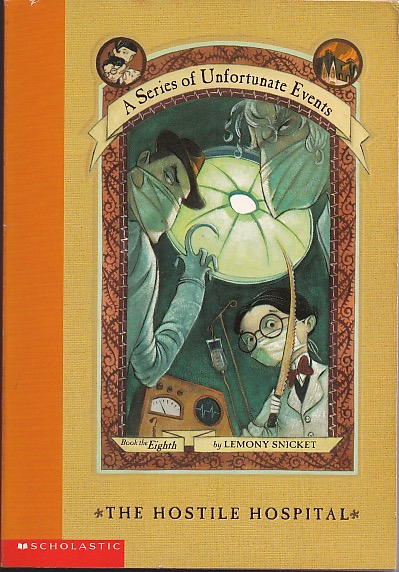
Having embarked on A Series of Unfortunate Events again, and having just finished The Reptile Room again, I might reflect on Lemony Snicket’s contribution to dark academia.  I mentioned to a friend recently that some dark academia aficionados consider the series to fall into that genre.  Having had the books read to her at a young age, she asked “Why?”  That got me thinking again about this wide, wonderful, amorphous category of books.  In my personal calculus, dark academia involves education—and this may be book learning undertaken independently—something going seriously wrong, and, in the best of it, a gothic atmosphere.  While A Series of Unfortunate Events is generally quite funny and fun to read, it clearly has the main elements I seek in classifying dark academia.  The Baudelaire orphans are pursued relentlessly by Count Olaf in a setting which, although difficult to place time wise, has Victorian aesthetics.

Of course, The Reptile Room is the second book utilized by the movie A Series of Unfortunate Events to get it up to feature length.  Reading it again revealed just how distorted my memory of the story had become by the movie.  The resolution of the scam by Stephano in the film is merely a distraction by the children to come to the real reveal in the book.  I’m not one to diss the movie.  It is quite gothic and it has many quotable moments, but it isn’t the same as the books.  I still remember when we first learned about these books from a niece, very young at the time, who enthused about them.  We were just a little cautious about reading scary stories to our daughter because one Roald Dahl book we read really was too gruesome for a child of tender years.  We immediately loved this series, however.

A quarter century or so is plenty of time to forget details.  Rereading these books also reminds me how influential they were on some of my own writing, although I read them as what passes for an adult at the time.  (I was old enough to be, and indeed was, a father.)  It occurs to me, as it likely did back then, just how clueless adults are.  Some of the descriptions of Count Olaf in this book could easily be substituted for a particular denizen of the Oval Office these days.  And, I suspect, children are able to see through those who constantly make up excuses to cover their own incompetence.  I’m looking forward to The Wide Window.


In Hollywood

Serial killers, depending on how they’re portrayed, often get a movie a horror rating.  But not always.  And not even when Quentin Tarantino writes and directs it.  My wife had been wanting to see Once Upon a Time in Hollywood while, I must confess, I’d heard nothing about it.  I find the movies I watch through websites that tend to favor horror, or sometimes sci-fi.  After I realized she wanted to see it, the next trick was finding an evening that would allow for an almost three-hour movie.  (This is, I confess, entirely my fault.  I wake up very early and can’t stay up too late watching movies without completely trashing the next day.)  We finally found a weekend with enough wiggle room to fit it in.  Random murders, like those of the Charles Manson family, always bother me.  Still, this film makes it seem not so threatening.

The story is somewhat complex, but basically a fading actor and his stuntman buddy are trying to survive in, well, Hollywood.  The actor lives next door to Roman Polanski and Sharon Tate in 1969.  Much of the plot follows his efforts to stay relevant and his, in reality, scene-stealing stuntman’s antics.  Brad Pitt’s acting in this role definitely earned him that best supporting actor Oscar.  While the actor (Leonardo DiCaprio) struggles, unable to get over himself and his alcoholism, the stuntman meets some members of the Manson Family and visits Spahn Ranch.  I got uneasy at this part.  I’ve never been a fan of true crime and I’ve only had a passing idea of what took place with the tragic Tate murders.  Also, I didn’t know if the movie was depicting things as they might’ve actually happened or not.  (It isn’t, in case you’re as clueless as me.)

Overall, there is a comic resolution as the murderous plot gets turned back on the Manson kids.  Curiosity drove me to read about what had happened in California when I was six years old and I found myself getting dragged down a true crime rabbit hole I wanted to avoid.  Maybe it’s my age, or maybe it was because the movie was still lingering in my head, but the facts didn’t bother me as much as I thought they would.  There aren’t too many auteurs whose work I follow (Robert Eggers and Damian McCarthy are ones I do), so before Once Upon a Time, the only Tarantino film I’d previously seen was Pulp Fiction.  But then again, I’m more at home amid straightforward horror.  Preferably without serial killers.


More Rocks

Another thing about rocks—I warned you!—is the matter of scale.  When I go out jogging, it’s on pea gravel.  Some of these tiny stones are interesting.  Or, if you’re the romantic type and gave or received an engagement ring, that diamond is likely not to be massive.  I’m always reminded of this when I go to a mall, say, which has a floor full of fossiliferous limestone.  I think of the hours I’ve spent poking around creek beds and cliff faces for fossils, and here, laid out for thousands of square feet, is polished flooring floating with fossils.  Or when I walk into a bank, say, and see a counter made of labradorite.  I carry a small labradorite piece in my pocket that my brother once gave me.  I love the way it catches the light and reflects a beautiful blue color back to me.  Here it is in massive form where I’m trying to make a modest withdrawal.

Once in Wisconsin we went to Devil’s Lake for the purple quartzite of the region.  If you look among the tumbles you can sometimes find clear quartz crystals.  I’ve noticed that on rockhound YouTube channels that collectors are chuffed to find nice, if small quartz crystals.  They’re collectable.  But they’re also small.  Size is one of the reasons for not letting rock collections grow too much.  I’ve tried my hand at making small sculptures out of significant rocks.  I can see some of them on the landing window ledge from where I’m sitting at the moment.  They’re small, but heavy, and if we ever move, will require careful wrapping.  I’m not even sure what kind of rock they’re made of.

Wisconsin quartzite with quartz crystals

Rock identification is hard work.  I have a Moh’s scale set.  A streak plate.  A hand loupe.  It’s hard to use the acid test (vinegar will do) because the pieces are so small.  Identification is often destructive.  This might not be an issue if I had a ton of similar rocks to dispose of.  No, but when you have just a handful, and these had to fit in your luggage along with your clothes, making TSA agents scratch their heads, you’re reluctant to damage them just to figure out what they are.  So identifying the small rocks I have is difficult.  Online forums tend to be unhelpful in this regard.  Not even the color can give you certain answers.  Once I collected some jasper in a creek.  I could identify it because a large boulder clearly had jasper intrusions and I could compare.  The piece I took home, of course, was quite small.  Small, however, does not mean insignificant.


Dark Academese

I thought I was having a stroke.  The words on the page just didn’t make sense.  Nouns were being used as verbs.  Gerunds were mugging nouns.  A subject for the sentence was impossible to be found.  Was this a brain seizure?  No, it was a piece of academic writing.  In a field in which I hold a terminal degree.  This made me feel plain terminal.  I wonder what has happened to academia.  My wife and I were going to be an academic couple.  We started out when there were defined academic disciplines and with a little bit of discipline-specific training you could read just about any journal article in said discipline.  Now hires are being made in what seem like completely made up fields.  People can’t explain their appointments, so they opt for addressing their current research project.  And I confirm with Toto that this isn’t Kansas anymore.

Fearing for my sanity, I asked my wife for a reality check.  She opined (probably correctly) that in the 1980s universities were issuing lots and lots of business degrees.  More and more people were thinking college was the same as job training, not teaching young people to think for themselves.  That could explain how the rules of grammar have been abandoned so that a humanities professor can make him/herself sound like a nuclear physicist.  And those of us with degrees from the early nineties are unemployable because the standard disciplines just aren’t on offer any more.  I scratched my head when the University of Wisconsin Oshkosh couldn’t get a position in religious studies approved but was launching a marina management major.  (No joke.)

I’m a fan of dark academia.  I think maybe it makes sense given the weirdness into which I’ve stumbled.  I like to think I have a reasonable education, but I often come across documents in my own field that I can’t hope to understand.  Perhaps I’m just a slave to S-V-O (subject-verb-object, to eschew obfuscation).  All I want is to be able to understand what I’m reading from my peers.  They’ve come to believe, however, that if you write so that people understand what you’re trying to express, they’ve somehow failed in erudition.  I love higher education.  I’d go back to the professorate in a wink.  I’d be considered somewhat more ancient than protoplasm, I expect.  I went to school to learn how to communicate effectively and to express my findings so that they could be understood.  Today I’m wiping my brow, glad to learn that this isn’t a stroke after all.


Let Me Explain

One of the reasons, I believe, that people said I was such a good teacher is that I explain things.  Clearly and thoroughly.  Living in a nation that has never really valued teachers, I have come to understand just how rare clear and thorough explanations are.  In April, within one week, we had two urgent household repairs that both required financing.  Even though I experienced sticker shock both times, I listened carefully as this was explained.  Both times it was explained poorly and I had to put multiple calls in to each of the lenders after the fact.  I can’t tell you what this does to my blood pressure, but I can say I’m glad I had Cheerios for breakfast.  One of the services wasn’t even performed in the way that it was explained.  In any case, I wrote all the more detailed explanations down.  I learned that companies don’t send you any verification that you’ve paid off a loan anymore.  At least we haven’t received one.

I was doing okay with this.  Blood pressure back to normal.  Then I received a letter from the IRS.  This always raises blood pressure, even before opening the envelope.  In my experience, it’s never good news.  In this case it was an identity verification request.  Okay, that I can handle.  But then I found something unexpected on our 1040.  You never want to find something unexpected there!  We’d paid a professional to do our taxes for us, and all we had to do was sign on the dotted line (actually, sign the screen with your finger).  I ticked taxes off my to do list back in March.  Here it was May and I was finding an irregularity on my professionally filed taxes.  I called the vendor.  I soon learned that how this was being handled simply hadn’t been clearly explained in the office.

I hope that I’m a reasonably intelligent Homo sapiens; I can tie my own shoes and I can figure out how to get to Manhattan on fairly short notice, from two states away.  What is obvious to me is that many people of my species are not good at explaining things clearly and thoroughly.  I’ve worked for employers who’d rather see costly inefficiencies remain in place for years rather than hire a trainer who can explain things clearly.  I’ve left more than one HR office more confused than I walked in.  Why is it that we eschew good explanations about things like financing and taxing?  Last year I was scammed by a guy who, despite his moral deficiencies, explained things clearly and thoroughly.  He was lying through his teeth, but he could and did explain things.  What I’m wondering is why legitimate businesses can’t do the same, only with the truth.


Going Some Place?

I recently had to drive to the Philadelphia Airport to drop off/pick up some folks.  Here in the Lehigh Valley I’m roughly an hour north of the city of brotherly love.  Like most sentient drivers, I’ve come to rely on GPS navigation.  Dropping off my parties turned into a nightmare of congestion.  The GPS solidly insisted that the turnpike, 476, was the “fastest” way.  One thing AI doesn’t understand is how people behave.  The flight required dropping off a couple hours before that known as “rush.”  476, once yet get near Philly has several pain points where traffic merges on from several ramps onto an already crawling stream of traffic.  That’s human behavior—never considering that the “longer time” route might actually be quicker.  Or at least a touch easier on the blood pressure.  Of these thousands and thousands of people, relatively few were going to the airport.  Once I got home from a journey that Al told me would be two-and-a-half hours, round trip (which was actually three-and-a-half), I began looking for alternate routes for pick up.

Pulling up the usual map app on my laptop, the only route shown was the turnpike, clearly not designed for this volume of traffic.  Not being native to Philadelphia, I don’t know my way around very well.  Then I began to lose trust in Al.  Interstate 95 also goes right by the airport.  I force-dragged the route over that way.  The estimate? Maybe fifteen minutes longer than the turnpike.  AI doesn’t understand that people who know the turnpike is a bad idea at this time of day will take it anyway.  It is the “fastest” way to where you’re going.  And who wants to waste time?

Me, I’d rather not shave off so many years of my life.  I’m not so foolish as to suppose I-95 would be much better, but with the “real-time” facts added in, it might very well save some time, and gray hairs, to go the somewhat longer, slower route.  Al didn’t even want to tell me that was an option.  Who could possibly want to go on at a slower pace, for mental health reasons?  Even en route it will try to reroute you back onto “the fastest” way that it clearly misunderstands.  I remember driving in Newark, Seattle, Boston, Chicago, Milwaukee, Pittsburgh, and, briefly, New York City.  Those who write algorithms are missing something basic.  Human psychology plays into this in a major way.  Al is not human nor does it “think.”  It calculates.  As for me, I calculate that the slower way may just be what the doctor ordered.


Bad Start

I’m not too proud to admit to reading books for young readers.  On a recent family night we watched the 2004 film, A Series of Unfortunate Events (not for the first time), and I realized that my memory of the books by Lemony Snicket was hazy.  Since we bought and read all the books for my daughter, I pulled The Bad Beginning from the shelf and read it in a couple of hours.  Although it was published over a quarter century ago, it is still fresh and it stands as one of those books (and series) that defied convention and presented stories that were potentially disturbing for children.  I have to admit that another of my motivations in re-reading this was the suggestion that perhaps on another family night we might start watching the Netflix adaptation, which, as I understand it, is better than the theatrical movie.

The movie, of course faced a dilemma.  There are thirteen books in the series—too many to comfortably fit into one film.  Each individual book, however, is too slim to fill out a feature-length presentation.  The decision was made to blend the first three books together, beginning and ending the show with the events from The Bad Beginning.  If you’re not familiar with the series, even if you don’t have children, the books are an entertaining read.  Snicket, who was later revealed to be Daniel Handler, is quite a clever author and there were a couple of points that had me, well, snickering out loud.  In any case, I’m given to understand that the Netflix series tackles this conundrum of too much/little material by being, ahem, a series.

A brief summary of The Bad Beginning may help if you’re still undecided about reading it as an adult.  The three Baudelaire children, Violet, Klaus, and Sunny, are orphaned in a fire.  Adopted by their scheming uncle, Count Olaf, they are immediately put in peril as he tries various ways to get at their parents’ fortune.  Since Olaf is a thespian, he devises a plot to hold a wedding between himself and fourteen-year-old Violet in disguise as a play.  The plot is foiled, of course, by the children.  The book ends by letting the reader know that the orphans are still in danger because Olaf has escaped and remains at large.  That would take quite a lot of padding to get a feature-length film out of it.  It works quite well as a brief book for young readers.  I was impressed at both the set-up and execution when I first read this many years ago.  And I liked it again the second time through.


Naming Birds

I’m no Jane Goodall, but I grew up loving animals.  I still do.  I’d spend many hours poring over animal identification books.  When I was young I could tell a crab from a lobster from a crayfish.  I knew moths from butterflies.  Megafauna?  I had it covered.  One thing, however, eluded me.  Bird identification.  Now, I can tell the obvious ones apart, but ornithology seems to delight in making the trade difficult.  For example, I was on a walk with a couple friends in May.  We spotted a small bird—smaller than finch size but larger than a hummingbird.  Short tail.  Its coloration was an unusual shade of brown.  We got a good look at it.  Back home I pulled out my bird identification books.  Nothing like it.  I tried online, even Cornell’s famed ornithology lab website.  According to all the specs what we saw doesn’t exist.

The problem with birds is that they come in different colorations.  Most bird identification books and sites focus on the males.  They tend to be more colorful and their identification is easier.  Not only that, but young birds’ plumage often changes as they mature.  This is such an issue that some bird books warn the would-be watcher not to try to identify by the color.  You should look for things like eye-rings, beak shapes, and that tiny spot on the tip of the tail, when seen in flight.  Right.  After a couple of days of searching in my spare time, I gave up.  Given how small it was, this was likely a juvenile.  Which sex I have no idea.  It bothers me when I can’t identify what I see.  The world is full of such wonderful things!

Many years ago in Scotland, some friends willingly crawled to a cliff’s edge with us on a rainy day in the Orkney Islands.  We’d come here to see the puffins.  Puffins nest on cliffs overlooking the sea.  They have colorful bills and are similar in looks (but not physiognomy) to penguins.  We were rewarded with a view of a cliff-full of sea-birds, including puffins.  I often ponder, living inland now, why the bright, colorful birds tend to hide.  I know, I know—predators.  But still, I can count on one hand the number of times I’ve seen an adult male oriel with their bright orange plumage, despite living in an area where they’re listed as common.  Birds can be so coy.  Maybe that’s why dedicated bird watchers have such passion.  I love animals.  The problem with birds is, despite hours with books and websites, some of them I just can’t identify.


Rocky Ground

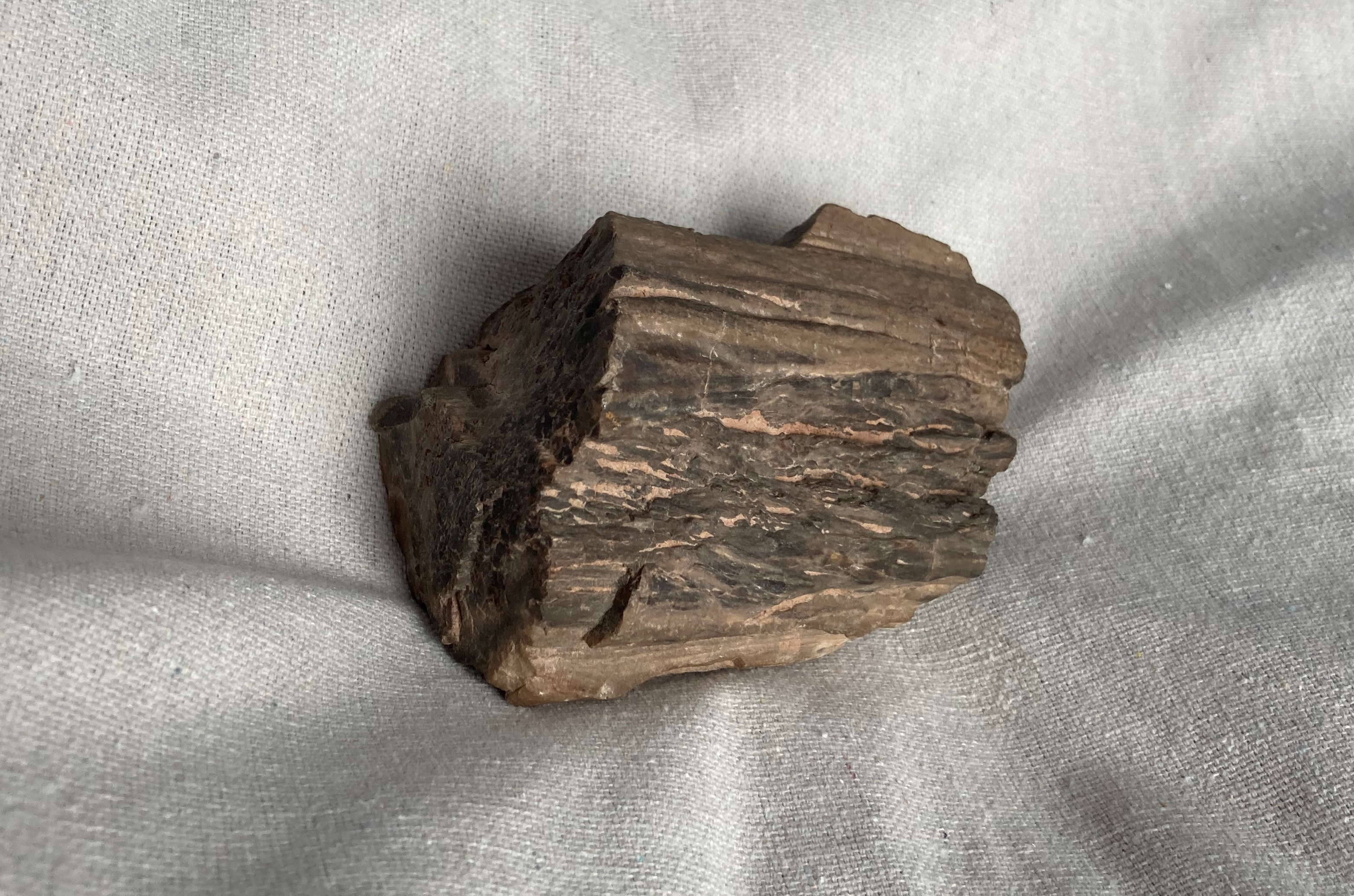
When I begin to lose my sense of wonder, the natural world grounds me.  I’ve been an amateur rockhound for many years and I sometimes wonder if it’s because I grew up poor.  The idea that you can just pick up something valuable on the ground has a treasure-hunting aspect to it.  Movers, I’ve discovered, dislike rock collectors.  My collection is quite small, and most of it not on display.  The danger is that I’ll be wanting to pick up more interesting rocks.  Like much of nature, rocks are amazing if you look closely at them.  And when the mania hits, it takes all my attention.  We all know that gemstones tend to be small, but perhaps it’s the fact that they look very little like their finished state in the wild makes them intriguing.

This interest was recently rekindled by a visit to the Lehigh Valley’s local cave, The Lost River Canyon.  As with most local attractions, it takes some time to get around to them.  We decided to go during the recent heat wave since caves maintain a constant temperature, generally in the fifties, and during the height of the wave the outside air temperature was double that of the cave thermometer.  Caves often have rock shops associated with them because being in a cave will trigger the rock-hounding gene.  And I suspect I’m not the only one to whom this happens.  Like many preserved caves, Lost River Canyon was an accidental discovery and was later purchased by a family that has been running it as a tourist attraction ever since.  I left inspired to find my rock tumbler and get it rolling again.

It’s difficult to say when or how such obsessions originate.  When my daughter was really into dinosaurs I started looking into geology.  The next thing I knew I was a member of the Wisconsin Geological Society and was going on field trips to collect.  When I lost my job at Nashotah House I seriously considered enrolling in a geology degree program, put off by the fact that calculus and chemistry were pre-requisites.  I was a hopeless humanities major and advanced math just doesn’t psit well in my psyche.  Part of me wonders if the fascination doesn’t go back to Genesis.  Geology was the science that tolled the death knell for any kind of literal six-day creation.  When this rock madness hits other interests can, if I’m not careful, be shunted aside.  It’s important to feel grounded.