Time Well Spent

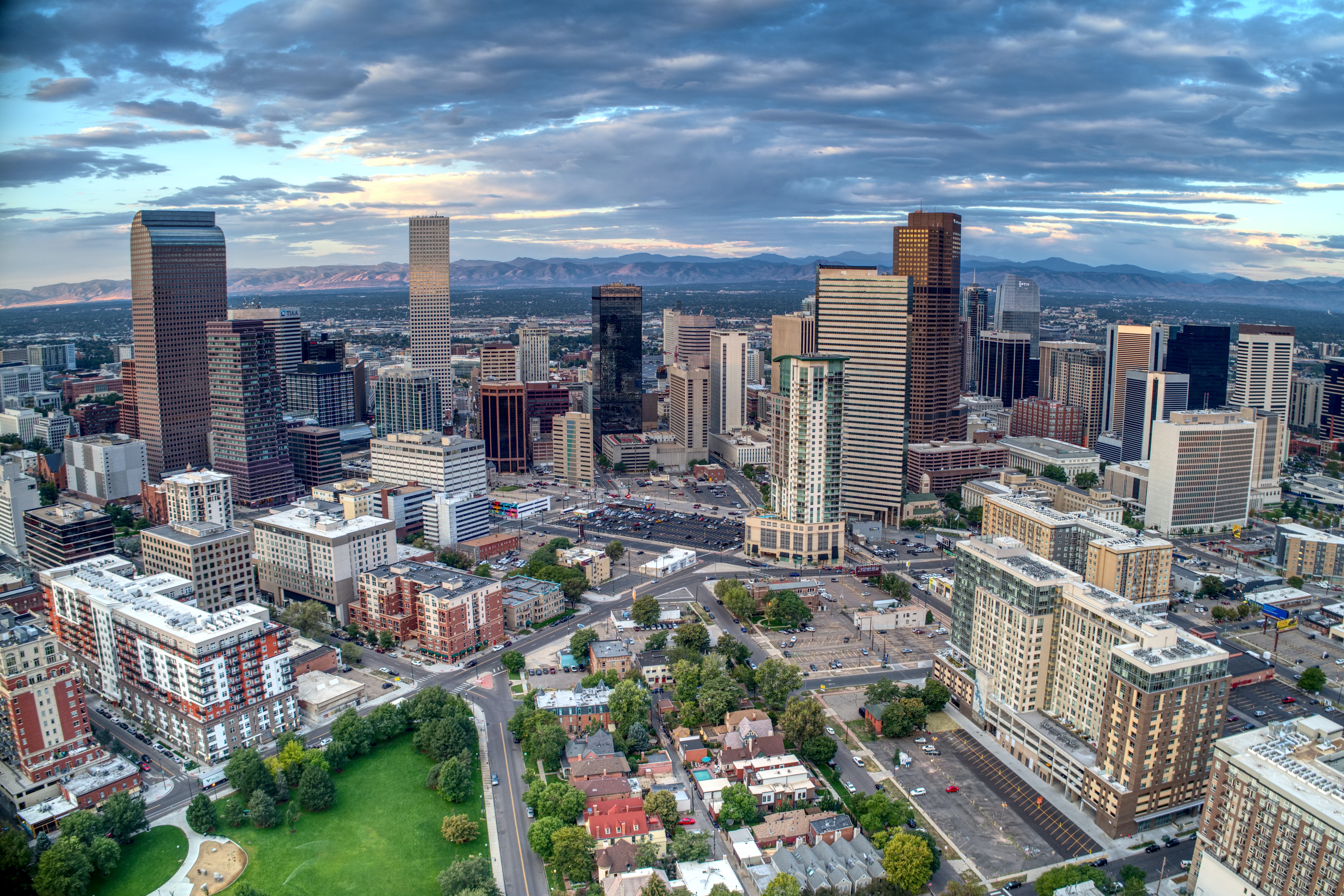
If you want a bookstore mostly to yourself, go on a fine, sunny summer weekend.  There will always be those with reading on their minds, of course, but since we’re still dealing with a pandemic, going when it’s quiet feels right.  Having to drop someone off for an event in rural New Jersey, I found myself with a couple of hours and the prospect of sitting in a hot car and trying to read or to find another way to use time productively.  It was a fine, sunny summer weekend day.  I realized the event wasn’t far from Frenchtown.  Now, I’d been through Frenchtown several times, often with my wife on her way to a weekend stint at work.  I’d noticed Frenchtown Bookshop, but since we were always on our way somewhere, we could never stop.

Public parking in Frenchtown is difficult on a fine, sunny summer weekend.  There is a bike and hike trail that passes near the Delaware there, and there’s also the river itself.  Kayaking and rafting on the border between New Jersey and Pennsylvania are popular pastimes.  The mercury was creeping up to 90, so people were out, either sweating on the trail or cooling their heels in the water.  Both public lots in town were full, as was all the on street parking I could find.  A bank tow-away lot—the bank was closed—seemed like the only option.  Independent bookstores are national treasures.  I always carry a list with me since it’s too easy to lose my head when surrounded by print.  If my specialized tastes aren’t represented, I can always find something.

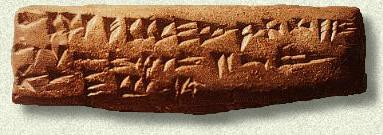
Books are one of the great achievements of humankind.  Although circumstances may have prevented many women from making careers in writing early on—Enheduanna proved even among the Sumerians that women had wisdom to convey.  Once novels came to be written, the form was well populated with female sages.  Reading and writing were kept from slaves for fear of what might happen could they see what the knowledge of humanity really said.  The internet has, of course, become the great democratizer of writing, but has made it more difficult to get a publisher’s attention.  Apart from all that, books laid out on a table, or stacked neatly on shelves, are one of the simple, usually inexpensive, joys of life.  For about the price of a movie you can stretch that entertainment dollar out over several days.  Even when they’re fine, sunny summer weekend days.


Tone Deafness

Tone deafness isn’t just for music any more.  Perhaps because of the incessant torrent of the internet, we might think we understand something better than we do.  Or this may be what comes after years of what Linda Stone has called “continuous partial attention.”  We’re all so busy that we don’t have time to think things through.  I’ve run into several instances of tone deafness lately, where the sound comes not from music, but from a lack of considering the society.  For example, Black Lives Matter.  When I sometimes feel pressed upon by the fact that the mongrel peoples who came together to eventually deliver me benefitted from slavery I feel helpless.  I can’t understand how Black folks feel, as much as I want to help.  This can lead to tone deafness when I think I’m actually able to explain.

Photo by saeed karimi on Unsplash

This also applies to other aspects of our lives.  If someone we know is too busy, asking them to fit us into their schedule may be tone deafness.  Unless we pick up on the many hints that “not this day, but that day might work” conveys, we tend to miss the point.  I’m always amazed just how many people don’t pick up on the stress conveyed in such situations.  Even professional service folk.  You can almost hear them looking at their screens instead of the distressed look on your face.  When we’re all too busy, ironically, the way to address this is to spend a little more time listening.  Paying attention to someone else.  The world won’t end if we do.

Short emails may show tone deafness as well.  Those who send one or two word emails probably don’t realize how rude it seems on the receiving end.  Perhaps they think it’s the same as texting.  There’s a reason I don’t text.  If someone is important enough for me to contact, I feel that I need to give them the required time.  Look at them, not the screen.  Try to hear the pitch they sing in, the cadence they use.  People make beautiful music.  Lives are symphonies.  Do we really want to approach their performance preoccupied by what’s next on our agendas?  I remember getting dressed up and going to a formal concert hall to listen to live music.  I also remember sitting across a table or desk from someone with no devices, being listened to carefully.  Even if it was a viva it was a wonderful feeling that someone was actually listening.  Now what was it you were saying?


Bushkill

Waterfalls are fairly plentiful in this part of the country.  Although they’re not the Rockies, the Appalachians are mountains, and mountains lead to waterfalls.  Niagara is an outlier, of course, where one great lake drains into another.  In the area around Ithaca and Watkins Glen, in New York, there are great falls where the water, through the eons, has eroded the softer rock to flow down to sea level.  While most of the waterfalls in Ithaca are free, you have to pay to get into Watkins Glen.  The waterfalls cascade down into Pennsylvania as well, where the geology is similar, where the bedding planes of ancient seas left layer after layer of rock washed away by yet more water millions of years later.

Bushkill Falls, like Watkins Glen, is privately owned.  Deep in the Poconos, it offers a shaded walk around what has been called “the Niagara of Pennsylvania.”  When we went, it had been mostly a dry summer.  Still, there’s a draw to all that water.  Like Watkins Glen, there are stairways to ease the access among tourists; there are those who might be inclined to sue should they lose their footing.  There were lots of others there the day we went.  Many speaking languages other than English, deep in Trumpian, xenophobic territory.  In nature we’re all just human.  Water washes and water erodes.  Water smooths out rough edges.  There are many parables in water.  It makes life as we know it possible.  It flows to the lowest point, creating incredible beauty as it tumbles over many different types of rock that make up the crust of the earth.  There’s a wisdom in water.

The red trail, around the outline of the several waterfalls, has 1276 steps to descend and climb.  Going down the stairs at the start of your journey assures that you will need to climb at the end.  The air is full of negative ions around breaking water.  Positive feelings are created.  Perhaps people should live near waterfalls.  It’s difficult to imagine hatred thriving in such a place.  I recall a family walk, back in some troubled times, when my older brother led us all to a waterfall hidden deep in the western Pennsylvania woods.  The tension and strife melted away.  We probably all knew that it wouldn’t last, but at the time the present was all that mattered.  Water is so basic, but so unbelievably wise.  Paying attention to such things is worth the price of admission.


Sacred Hudson

As scientific as we may wish to be, there’s no denying that there is a sense of place.  We know that some animals, at least, also feel it.  Whether theirs is a more pragmatic desire to return to where conditions were favorable to be born, or whether something deeper draws them there, we have no way of knowing.  People feel it too, this sense of place.  We know where we’re from, and if we don’t we often want to find out.  The space is somehow part of us.  There’s a compelling exploration of this in Judith Richardson’s Possessions: The History and Uses of Haunting in the Hudson Valley.  While not America’s first haunted location, the Hudson Valley was singled out for this treatment by Washington Irving.  He, however, didn’t invent it.

I’m not from the Hudson Valley.  I could never afford to live there.  That doesn’t mean the area can’t speak to me.  Richardson’s approach is academic yet readable and she considers how hauntings fill needs and how they play a role in that ever-contentious enterprise of land claims.  Ranging through literary treatments, whether the fiction of Irving or tour books of the next generation, or indeed, more recent literary efforts, Richardson deftly guides the reader through American Indian and Dutch and other inhabitants’ stories of themselves.  Race inevitably plays a part, and her tracing of the origins of some traditional tales is really remarkable.  Who owns the land?  Who truly owns anything?   

Similar treatments (I can’t help but feel somehow lesser) must exist of other haunted locations.  Richardson doesn’t engage in arguments over whether ghosts are factual since ghosts serve so many other functions.  Our lives are the stories we tell about ourselves.  Many of those tales involve the place we are or places we’ve been.  In our highly mobile society, few of us, it seems, can make a living where we’re from.  Those of us born in small towns range far and wide to find employment.  In many cases we may not want to go live where the drama of our childhoods unfolded.  Yes, there are pleasant memories there, but there are also ghosts.  Richardson explores how this plays out in one small stretch of the country.  Indeed, it’s a small stretch of New York state.  Stories of hauntings continue in that particular valley.  Uncanny, perhaps, but there are places in this world like that, and this book is a sure road post on this particular overgrown trail.


First Images

I awoke to an image from the James Webb Space Telescope.  Looking at the universe at it was 4.6 billion years ago is a humble and terrifying experience.  Our universe is so incredibly vast and we are tiny.  As we on this planet bicker and kill and destroy, out there something truly wondrous looms.  Those tiny pinpricks of galaxies.  Our own galaxy so massive that we can’t comprehend it.  Our own midsize star large enough to hold more than a million earths.  Our own planet big enough that no human being can see it all in a lifetime.  What in the world are we fighting for?  This image is just a patch of sky about the size of a grain of sand held at arm’s length.  How many grains of sand would it take to fill the visible sky?

Many people argue that such things are a waste of money.  Yes, there are very real, human-created problems right here on earth.  The siren call of space, however, has the potential to save us.  If we look into that immense universe just out there and realize that we are part of something larger than ourselves, we can stop fighting and hating and electioneering.  Keep looking up instead.  Costs, after all, are relative.  Our entire economic system is arbitrary.  We decide what’s valuable and what’s not.  We make rules that allow individual human beings to control the lives of countless others based on nothing more than agreed-upon principles.  Food could be freely distributed.  Medicine could be given to the sick.  What’s required is perspective.  If looking at the universe doesn’t provide perspective, what can?

I often wonder about life in those distant galaxies.  Given the sheer numbers it’s practically impossible that life evolved only here.  We’re told that teleological thinking is wishful and naive, but looking at the way life behaves I have to wonder if that’s true.  Life may be seeking goals.  If it is, than intelligence may be among them.  We’ve got billions of years and billions of lightyears to work with.  And when I look at the headlines I find those of the James Webb Space Telescope to be the most hopeful of all.  Galaxies are all about possibilities.  Stars being born where the outcomes may be better than one gender assuming it’s better than another.  Or that the “right to bear arms” means  stockpiling assault rifles to kill others in a fit of pique.  No, this money’s not wasted if only people might listen and pay attention to the stars.


Celebrating Folk

The whole ox on a spit was kind of disturbing, but there’s nothing artificial about folk tradition.  We’d come to take in a bit of the Kutztown Folk Festival.  The crowds weren’t excessive, and we wore masks if the conditions warranted it.  The oldest continually operated folk festival in the country, this July event is a celebration of Pennsylvania German heritage.  In addition to the usual kinds of festival vendors were a number of specifically folk artists—quilters and hex sign painters prominent among them.  It’s difficult to find a good sarsaparilla anywhere else these days.  We wandered around, watching an old-fashioned hay bailer at work, appreciating the time various craftspeople put into their art, taking in a quilt auction.  (I can’t even imagine having a spare few thousand on hand to buy a quilt, but obviously others can.)

Although mostly white—those of us with blue eyes may have been in the majority here—there were those of various ethnic backgrounds around, enjoying the ethos.  What struck me upon hearing one of the singing, folklore groups telling about Pennsylvania German (commonly called Pennsylvania Dutch) traditions is that this may be one reason people fear the current emphasis on multiculturalism.  It’s fairly rare to hear anyone speaking proudly of being a German, even though Germany seems to be one of the least fascistly inclined countries these days.  Even a dominant culture is afraid of losing a sense of self.  It seems to be a uniquely human problem.  That ox on a spit really bothered me.

While I’m an American mutt, about half of my DNA is fairly solidly teutonic.  Although I was born in Pennsylvania and my grandmother still spoke German, we weren’t Pennsylvania Dutch.  A second-generation American, my grandmother was from Washington, DC.  My germanic grandfather was from upstate New York.  They just happened to settle in Pennsylvania late in their lives.  Still, I felt a strange kind of kinship to those explaining German food—heavily meat-based—and hex signs on barns.  I grew up seeing the latter, and it never occurred to me that while living in the Midwest they simply weren’t there.  I didn’t grow up on a farm—we lived in a cheap apartment—and we never talked of German tradition at home.  No, like the blacks, and south Asians, and those, like me, of clearly mixed descent, that I saw there, we were all simply Americans.  That’s what folk festivals are all about—celebrating who we are.


The Birds and the Bees

Our house came with a wood-plank fence surrounding the yard.  This is a dog neighborhood and just about everyone has a fenced in yard to keep their dogs in check.  It’s more the birds and bees that have me worried, though.  The fence, which is in need of some attention, is bare pine stained redwood.  As the stain fades carpenter bees find it irresistible.  These insects are great pollinators and we don’t like to gas any creatures just doing their evolutionary job.  Painting that fence will be a summer-long project and one that requires far more sunny weather than we tend to get around these parts.  So we have a fence with several carpenter bee homes.  (These are ubiquitous insects in this area, with lots of people complaining about them.  We have, however, the only wooden fence in the neighborhood.)

The other day I heard a knocking while I was working.  I looked out the window to see a downy woodpecker, well, pecking at the site of one of the carpenter bee homes.  This industrious little fellow had three holes in the post by the time I got downstairs to startle him or her away.  Now, you have to understand that this is a large fence.  We didn’t put it up but we have to keep it up.  Then I thought, “I was worried about the carpenter bees.  Why should I be worried about the woodpeckers?”  Holes can be patched, and fences can be painted.  I hope the neighbors don’t mind a white fence.  In any case, I left the woodpecker alone after that.  Besides, I can’t be outside all day long—I have a day job.

Over the next several days the pecker became a regular visitor.  I’d be working and then I’d hear a now familiar knocking.  I decided to watch once.  I keep a pair of binoculars in my office because I see lots of birds that I want to identify—there’s a park across the street.  At the risk of the neighbors thinking I was spying, I trained them on Downy.  It was amazing how effective its bill is on a four-by-four.  It quickly cleared a hole, stuck its beak in, and pulled out a fat carpenter bee grub.  Down it went.  A centimeter to the right it repeated the procedure.  Carpenter bees, which are so territorial when building their nests, seem to have forgotten their young.  Perhaps it’s for the best.  This bird was one well-fed flier.  And I’d finally learned what they mean about the birds and the bees.


Tree Owners

I hated to do it.  I always feel guilty afterwards.  I’d never have made it as a lumberjack.  We had a problematic green ash tree that someone might’ve planted long ago, or which may’ve been a volunteer that nobody really paid much attention to.  Prolific, although cultivating the seeds is difficult, in nature they spread rampantly.  This particular tree was in a sheltered corner of the house, in an outdoor nook created by a neighbor’s fence adjoining the one that goes around our yard.  (Fences are a big thing in this neighborhood.)  The branches were overgrowing our neighbor’s fence, getting under the eaves spouts on our house, and providing squirrels with access to the roof, which had previously been denied them.  The roots were getting into the foundations of the house and there are at least seven smaller green ashes that require constant cutting back, in that same corner.

Cutting trees down goes against my principles.  I’ve had to do it a few times and I’ve never felt good about it.  It was yard-waste haul-away, which rarely comes, and the sun was shining like it rarely does.  It was time.  All told, it took a few hours.  The sky looks naked in that corner now.  The green ash is a beautiful, but unruly tree.  We decided to plant a scarlet oak instead.  Edge of the Woods nursery in Allentown sells only native plants.  They recommend oaks for their benefits to the ecosystem.  There’s an optimism about planting a tree that will, hopefully, long outlive you.  It can’t replace that troublesome green ash, but future owners of this house will hopefully appreciate its shade. 

Digging up the yard to transplant this tree made we want to do the same thing again.  And again.  There’s a reason the story of Eden is set in a garden.  It feels natural to be around plants, particularly those that don’t make us itch, or sneeze, and that don’t prickle us with thorns.  A place of trees and cultivated shrubs and flowers.  Yard work dominates my free time for at least half the year, so making it something worth the labor seems a reasonable thing to do.  Trees own the planet in a more righteous sense than humans do.  Many live longer than we do and give back so much to the environment.  I’ll worry about our little tree.  The woman at the nursery said that trees thrive by pushing back against the wind.  It was more than a tree we planted; it was a parable.


Places We’re From

The places we’re from aren’t always where we’re born.  The funny thing about reaching “middle age” is the amount of reassessment that goes on.  Where we’re from has a tremendous impact on who we become.  Not that we can’t change how we turn out, but we will always carry along with us some of where all that coming about took place.  I wasn’t born in Rouseville, but I lived there from the time I was eleven until I left for college, and then for good.  A recent creative project sent me back to the web for some information on my former home.  I’d been a (fairly local) immigrant, and I didn’t know much about this tiny town.  Although from only sixteen miles away, I’d never heard of it before moving there.  It was a small town of about 900 people.

The home of a smelly Pennzoil refinery, not everyone wanted to stop there on their way through, along route 8.  What prompted this post, however, was that web search.  According to a recent census, the population of Rouseville is now just over 500.  The Pennzoil refinery closed years ago, and my return trips to the area have always been bittersweet.  Those teenage years were tough, but formative.  Growing up in a town that small you have no connections.  You eventually learn that connections are how you get ahead in life and if you ain’t got ‘em, you ain’t got ‘em.  Even as I met other Pennsylvanians during college, none of them had heard of Rouseville.  The one exception was my advisor who’d recalled a former student from the town.

I’m not certain that it will ever become an actual ghost town—many oil boom towns did back when the petroleum industry began—but it has started on that trail.  The last time I visited, the house where I’d lived was gone.  The elementary school I’d attended had been razed.  The huge refinery was missing.  Some of the paved streets had reverted to gravel.  Part of my childhood was being erased.  Rouseville wasn’t an easy place to live.  The nearest bookstore was thirty miles away.  You couldn’t buy regular groceries, or ironically, even gas for your car in town.  Drug use was rampant and violence wasn’t unheard of.  Even so, I know the town will always be part of me.  And even if Rouseville never becomes a ghost town proper, there will always be ghosts from there living in my mind.


July Forth

Independence Day.  What does it mean in a nation on the verge of a fascist takeover?  Supreme Court justices, themselves appointed by crooked but technically legal politics, have just struck down the independence of half the people in this country.  Independence Day for whom?  Originally a celebration of freedom from monarchy, one of our political parties has opted for authoritarianism—the objection to which was the very reason the Revolutionary War was fought.  The colonists wanted religious freedom, but now we find religiously motivated politics driving the bus off the cliff.  If you’re not a white evangelical these rulings are not for you.  Your religious freedom has been compromised by politics.  So we gather in grassy places to watch fireworks.    We celebrate the independence of the wealthy.  Those who can break the law and buy the results they want with lawyers without scruples.

I think of Independence Day from the perspective of our Black siblings.  Freedom to be shot for a traffic stop or to be publicly strangled to death for petty crime.  To be redlined and kept in poverty.  Independence from literal chains only to be shackled in bureaucratic ones.  Being sentenced to prison for things a white can easily afford to pay off.  Independence Day in a nation with over 40 million people in poverty and where just three white men own more than the bottom fifty percent of Americans.  Give them fireworks and firearms and let the bottom half work it out for themselves.  When is the last time a Supreme Court justice had to worry about having enough for both rent and food?  Freedom, those on the top tell us, is not free.  Watch the pretty lights.  Hear the loud booms.

What of American Indians, still awaiting freedom?  What is Independence Day to them?  Kept out of sight and in poverty, we don’t want to be reminded.  No, we only want freedom to get more for the white man.  As a child in the sixties I had some hope that we might be making progress.  Freedom and protest were in the air.  There was at least hope for some justice.  The privileged white leaders now give us a day off work.  The wealth can still flow upward, even if we take a brief hiatus from labor.  Women, Blacks, the poor, American Indians, and many others who make America what it is are nevertheless denied basic freedoms.  This loss of independence at least comes with a light show.  Just watch it and be grateful.


Life Writing

It’s sometimes thought that a writer’s life is easy.  What’s so difficult about scribbling things that people will pay for?  I’m absolutely certain that, like most systems, this one may be gamed.  Amazon has made it quite easy to slap together words and covers and sell them alongside literary giants.  Only time will tell those that endure.  Most writers, apart from those who achieve early success (capitalism loves nothing so much as a repeat source of money), hold down other jobs.  Many of those jobs don’t involve writing, so those with literary ambitions must carve out time from their busy lives to write.  Not only that, but to write well you have to spend a lot of time reading.  Think about your daily life—how often do you have time to curl up with a good book?  Sure, you can read on the internet, but that’s not the same thing.

I love reading about writers.  Often they had struggles to overcome and many remained obscure as writers until after they’d died.  (At least that takes some of the pressure off.)  Someone saw there was money to be made in what they left behind.  Knowing quite a few writers, I suspect most of them really wouldn’t mind that.  Recognition during your lifetime must be nice, but writers tend to have a longer view.  That’s why things are written down, and, against hope, published.  Literary ambition can be a mean dog indeed.  Especially when the lawn requires mowing again and those invasive trees need constant trimming and gee, why didn’t we buy that house with no yard?  Many writers had even greater struggles to overcome.

Image credit: George G. Rockwood, via Wikimedia Commons

When reading, I’m constantly discovering new old writers that I missed.  I didn’t grow up in a literary family.  I find them by reading other writers and, perhaps more importantly, reading about other writers.  Who influenced whom.  Many remained obscure.  Although it’s only an estimate, 2.2 million new titles are published each year.  Readers are, and always have been, a minority.  Most people don’t read for pleasure.  That makes sense, given that we haven’t evolved for that.  Survival involves working for sustenance and mowing the lawn or shoveling the walk when you’re done with work.  A clueless professional once asked me “Why don’t you hire a service?”  With what?  My royalties?  Sacrifice is an inherent part of writing.  Whether it’s the neighbors thinking you’re a trashy yard-keeper, or you boss wanting you to spend more hours on the clock, or cheating sleep night after night, a writer’s life isn’t for the fainthearted.  That’s why they inspire me.


Closed System?

Photo credit: NASA, public domain

Nothing is wasted.  Not in nature.  Maybe that’s the true economy of life.  We humans come in and make our habitat in our own image and then start throwing things away.  I’m no great fan of yard work.   I would just as soon let nature take its course, but if it did I’d soon have no place to live.  Trees find their way into the cracks in the foundation and those flaccid white roots we see dangling from the ends of weeds can insinuate themselves into tiny places and slowly expand.  Buildings left without maintenance soon begin to crumble.  I’m reminded of this every time I visit Bethlehem Steel.  Weather, plants, even the occasional raven, slowly tear down what human hubris has built.  And it doesn’t stop there.

We set up a composting area for all those weeds, yes.  A place where we could make our own soil.  After three years it was pretty full and when I went to cut back the ever-growing trees and vines, I learned the bees had claimed our pile for their own.  Not happy to see me poking around their home—not happy at all—they began to hover aggressively.  I got the message.  Nothing is wasted, not even compost.  

Our species is in love with petroleum products.  We can’t live without plastic.  Looking at all the plastic litter around is evidence enough of this one-sided affair.  Our plastics cause so many problems.  They do break down, but never go away.  They get eaten.  Undigestible, they can slowly poison animals.  Whatever isn’t recycled becomes part of us.  Nothing is wasted.

Yard work monopolizes my weekends from May through October.  This year it started in April.  I had to mow the lawn in November.  Really only four months to make it through without the endless cycle of birth, growth, death.  Those who are worried that nature won’t recover from our foolish species haven’t paid close attention.  Even as we live here the seeds find every crevice and life, life is irrepressible!  Scientists try to tell us life is unique to this planet, but looking at its tenacity, how can that possibly be the case?  The tardigrade can survive extreme dehydration, very high pressure, very low pressure, radiation, air deprivation, and starvation.  It seems like the perfect space traveller.  We try to make the world in our own image.  We like to think our version of the world is the one to endure.  Nothing is wasted.  Nothing short of human hubris.


Internet of Nothings

In the vast internet of things, it’s surprising that you can’t order some specific things.  This became clear to me recently when there were two separate things I was looking for.  I know these things exist.  You can find them on the internet, but they are not available in this area.  One of them is very mundane.  Lath.  You see, the previous owners of the house wired up the attic, which is handy.  To do so they had to break through the plaster and they removed several sections of lath.  Like a squirrel digging for a forgotten nut, they did this several times, leaving holes in the wall with exposed insulation.  One of my projects since moving in has been to plaster over these holes.  The gaps are so large, however, that you need lath to replace the discarded pieces.  

Our local big box hardware stores don’t carry it.  If you find it in a large urban store, they can’t deliver it to a local branch, and shipping isn’t available for this item.  I realize drywall has triumphed—I prefer it myself—but doing the entire attic is a major expense.  I just want to plaster up the holes.  No lath, no how.  At the same time I began to look for Top Ramen soy flavor for quick lunches.  It is the only inexpensive vegan option with the much coveted flavor pack.  I know it exists and that it is available in Ithaca, New York, the last place I bought it.  Although the brand is in our local grocery stores that variety is not.  It’s listed on Amazon, but as unavailable.  (Amazon, by the way, insists that you want to buy a lathe if you type in lath.  If it finally accepts “lath” it’s clear it has no idea what it is.)

So I went to the website of the Top Ramen parent company, Nissin.  They list the product as available.  They don’t ship themselves, not to small customers, but they helpfully tell you stores nearby where you can buy it.  Their vegetarian varieties are “not available in your area.”  Not even Amazon can get them.  This to me seems odd.  Nearly every day I read about the greatness of the internet of things.  Anything can be had in this market.  If you’re looking for something specific, whether it be thin strips of cheap wood or thin noodles without beef broth for your lunch, you can’t get those in an area within about 250 miles of one quarter of the US population.  Of course, I have until lunchtime to sort this one out.


Ravens and Teachers

Humans, it is claimed, have a theory of mind.  What this means is that we know what others are thinking, or better, at least we can anticipate what they might be thinking.  This allows us to be self-aware and live in a complex society.  We can see someone else and infer what’s going on in his or her noggin.  This is often considered a uniquely human trait, but I’m not sure how widespread it is.  You see, I frequently run into the situation where someone expects something of me without telling me.  It happened just recently with an organization to which I belong.  I’m a very busy person.  I suspect most of us are—not having time to accomplish everything we need to get done.  If someone wants something from me I have to be told what it is and I have to be told in detail.

One of the things my students always said was that I was a good teacher.  The reason for this, I think, is that when I explain something I back up a bit before the beginning.  I try to assume no knowledge on the subject before going in a bit more deeply.  This method works because of my personal theory of mind.  These people wouldn’t be taking a class on this subject if they already knew the stuff I could assume.  For understanding something new, things have to be explained thoroughly.  That doesn’t mean taking a lot of extra time, but it does mean not assuming others know what I know.  For many people this is difficult.  We’re all busy.  We tell others “Do this,” without explaining what exactly “this” is.  The results are predictable.  It happens all the time in work emails.

I’ve recently written of teachers and ravens.  The effective among the former understand the value of full explanation.  The latter have a theory of mind that allows them to go as far as to try to fool others by giving not enough information.  We might learn a lesson either by sitting in the classroom of the former or by watching the ravens that skulk on the edge of civilized areas.  What they have in common is the ability to realize that others operate with limited information.  In order to learn, information has to be conveyed and conveyed well.  Even now colleagues at work are surprised at when I explain something that it’s done thoroughly and clearly.  When I receive information it’s often piecemeal and frustrating.  The reason, I infer, is that we don’t spend enough time paying attention to either our teachers or the ravens.

Image credit: Wikipedia Commons, public domain

Stand with Women

We like to think we’re the most advanced civilization in the world, but we allow the appointment of “justices” who still believe women are inferior to men.  Millions of women who’d been born into the modern world yesterday found themselves thrust back into medievalist thinking that now seems to reign in the Supreme Court.  Even Donald Trump, who is responsible, has expressed his doubts.  When will we acknowledge that women should have the same rights as men?  How long do we have to continue this inane struggle against religious amateurs who believe their reading of Scripture is the only correct one?  I was raised by a woman on her own.  Uneducated, with no practical job skills, she remained religious and very capably reared three sons.  She was far more capable than my father.

Democracy can be gamed, of course.  And the “angry white man” has become America’s new face to the world.  The petulant, selfish male who thinks everyone else is getting the benefits.  Even as Catholic-majority nations are declaring women’s rights, America is stepping backward in the Human Rights Index because certain senators refused to allow voting on legitimate candidates for the supreme court.  How they can go home and face their wives I do not know.  Of course, our laws do not apply to our lawmakers.  As revelations continually show, theirs is a world of “do as I say, not as I do.”  Is it so difficult to say it out loud?  Women are fully human and have an inherent claim to the same rights as men.  But then again, when have those blinded by religion ever seen clearly?

America, do you enjoy seeing your rights stripped away?  Do you enjoy justices who one day decide it’s our right to carry weapons in public and then next to say that women must remain home barefoot and pregnant?  Is this the mentality that now rules the gamed “supreme” court?  I’d like to exegete that word supreme and ask our “justices” just how deeply they’ve studied religion.  And that doesn’t mean just praying over your Bible.  The most difficult courses in the religion-philosophy curriculum are those dealing with ethics.  Days spent wrestling with the subtleties of how reason, law, and religion interact and teasing them apart to look at each with real understanding.  Or do we just vote along party lines like any beast in the herd?  It’s a shock to have been born in the sixties only to now find yourself living in the fifties with all their inherent hypocrisy.  I stand with women, not amateur theology masquerading as justice.