Paperback Nightmares

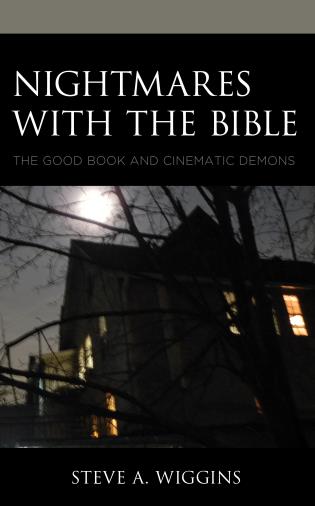
I’m not assertive.  My voice is not loud and even when I have strong opinions I like to let others have their say.  Those of us who’ve been beaten down too many times can be like that.  So it took a lot of courage to ask.  “Is it possible that Nightmares with the Bible might be issued in paperback?”  You see, I know that “academic” books almost always sell the copies they’re going to sell in the first year.  Some follow-up sales continue into years two and three, but beyond that it’s about done.  And I also know that when authors ask for a paperback it almost never sells as well (or even more poorly) than the hardcover.  I’m hoping the paperback of Nightmares will buck this trend because it published into the pandemic.  That was a game-changer.

When you’re worried about staying alive you might not feel like reading about demons.  Of course, what better time to do so is there?  Paperbacks are often produced, in academic settings, to appease authors.  I have long believed—and this flies counter to the orthodoxy of the publishing world—that if books were initially published in paperback and priced affordably they would sell better.  The fear is that the higher priced hardcovers wouldn’t be purchased by libraries.  Librarians would, oh tremble, purchase the reasonably priced paperbacks and rebind them for less expense than the stratospheric price put on a 208-page monograph.  Publishers are often afraid to try anything different.  Assured sales are a blessing that can be bankrolled.

I’m hoping, once the paperback comes out, to do some more promotional work on it.  This blog was started long before I had books to flog.  It’s free content for those who like the less sweet kinds of treats in the bowl.  I do appreciate the occasional free advertising I can do.  It’s my hope that there’s always something to learn offered with it.  Successful content providers can make a living doing it.  Others pay for the privilege.  I often ponder what will happen to this blog when I run up against the size limits of my WordPress account.  The next level up, commercial, is beyond my price range.  Perhaps, like a phoenix, it will be time to start all over again when that moment comes.  In the meantime I’ll reuse images as often as I can, because each new one takes a byte out of my account.  And when it’s all said and done, Nightmares will still be available in print. Hopefully in paperback next year.


Redacted

A friend recently introduced me to Redactle.  Yet another of those daily internet games that have become trendy in these pandemic years, Redactle gives you a page that looks like a Freedom of Information Act piece from the government.  Most of the words are blanked out and all you really know it that it is taken from one of the significant pages on Wikipedia.  You get some clues from the format, the way the prepositions and articles they give you are arranged, and occasionally, the punctuation.  You just start guessing words and it fills in the blanks as you get hits.  Like most things of this sort, there’s one puzzle per day, otherwise none of us would ever get anything done.  I’m a sucker for learning games, so we’ve been playing it as a family for a few days now.

A redacted file from the CIA, via Wikimedia Commons

The thing that has surprised me the most in our early on is that the trickiest ones to get right were on religions.  In our first week of play, two of the puzzles were religions: Lutheranism and Shaktism.  We’d been able to guess famous people in two dozen guesses, and countries in about the same.  Religions are trickier.  Despite having studied religion my entire life, my thought process doesn’t include guessing words like “theology” and “worship” for important articles on Wikipedia.  (In the case of Shaktism it took well over 100 guesses.  I taught world religion maybe fifteen years ago, but I haven’t kept up with my Hinduism.)  In the case of both of these religions what eventually gave them away was the place names: Germany and India.

India, of course, has been the birthplace of many religions.  The majority of Indians today are Hindu, but Buddhism, Jainism, and Sikhism were also children of India.  Even in this increasingly secular world, religions remain the driving forces behind lives.  So much so that some religionists consider Secularism a religion.  The fact is we all believe something.  It may not be supernatural, but then not all religions are.  They often brush up against philosophy at their most sophisticated end, and literalism is the least developed form of any belief system.  With some exceptions it doesn’t pay well to be a religionist.  Perhaps that’s because thinking hard about religion reveals uncomfortable truths.  Not only that, studying religion is no guarantee that when you have to fill in the blanks you’ll be able to guess one when it’s right in front of you.  That’s why I appreciate learning games.  


Solstice Thoughts

At the equator, the difference is nil.  The longest day and the shortest day don’t deviate from the standard day length.  The further you move from the equator, the more dramatic the effect is.  Here in the northern hemisphere this is our longest day, the solstice.  Historically, particularly in countries to the northern edge of the northern hemisphere, this is a holiday.  Midsummer marked the days of sun and growth.  Light is abundant—too abundant to sleep well in the furthest reaches.   Being visually oriented creatures, we enjoy the surfeit of light.  Light has long been a symbol of the divine for, I suppose, just that reason.  It makes us feel secure and safe.  We can see what’s going on around us.

In Antarctica, today is the shortest day of the year.  Indeed, around now there is seldom any light at all.  On the exact same day there are literally polar opposites on this planet.  The summer here is winter there.  It’s the first day of winter in the global south.  Their understanding of this day is completely different.  Of course, once you reach the shortest day, things can only improve.  The climb to summer lasts half a year, only to have the decline immediately begin again.  The difference is as subtle as it is inexorable.  For those of us who wake before the sun, it’s already obvious that sunrise is coming later than it did last week.  The earliest sunrise was the fourteenth.  Sunset will come later and later for the next few days, to compensate for the lost morning light, but overall there will be less and less until we are the winter half of the world.

There are many lessons to learn here.  In a world where the longest and shortest days are the same day—solstices depend on where you live—we don’t fight over it.  This despite the fact that light is our most precious commodity.  We simply accept that we celebrate light when we have it, and await its coming when we don’t.  Other resources we fight over.  Potable water.  Petroleum products.  Arable land.  Silently, radiantly, light shows us the way.  There’s an inevitability here.  Through long experience on the earth we simply accept it.  The other option is to fight over what we can’t control, which is futility defined.  There are lessons to learn from the longest day.  And if it’s your shortest day, you know that all will be forgiven at the next equinox.


Thanking Teachers

Those who know me personally are often surprised to hear that my high school gym teacher was one of the most influential people in my life.  It is true.  He, and a handful of others I can still remember by name, set me on the path of knowing that I should be a teacher.  It is a very important profession, habitually underpaid.  To hold the future in your hands is a responsibility like no other.  I complained, like all kids do, about having to go to school.  Once there, however, I was fascinated by the learning.  I still am.  I think of those women and men who really wanted to mold young minds.  Who knew they’d never be paid as well as their peers, but who had a message worth preserving.

I suppose I’m thinking about them because I recently watched Dead Poets Society again.  It’s a poignant thing to do since Robin Williams’ death, but the movie makes a powerful statement about teachers.  Knowledge, once planted, grows.  I don’t name people on this blog unless they say I can, and although I’ve connected with a few high school teachers through Facebook, I don’t bother them in retirement.  I can say, though, that one English teacher, my German teacher, a couple history teachers, a math teacher, and my gym teacher made significant impacts.  The math teacher, of course, helped me realize that my thinking process veers in quite a different direction from equations and proofs.  Ironically, now I tend to think that way and often think I could’ve done it, but I needed several years for the ideas to settle into place.

Thinking of them by name may not be a daily occurrence, but in my actions I live out what they taught.  I’m not sure what leads a young person to pursue a teaching career, but clearly some of them have gifts that make them influential in lives long after the classroom relationship ends.  The young mind is receptive in the way that a more experienced one tends not to be.  Even as we reach our teens the natural confidence of youth seems to take over for many.  We might still, however, listen to those with more experience.  Teachers, under-paid and often having to take summer jobs to makes ends meet, are almost as influential as peers.  The twenty years of my life from the age five on were under the sway of teachers.  Time set aside for learning.  It wasn’t nearly long enough.


Bright Idea

No, I didn’t see a long tunnel with a light at the end, but I did have soot on my hands from the flash.  I’m no electrician and the ordering instructions weren’t clear about how to get the dryer installed, as well as delivered.  The driver, who spoke English haltingly, told me he would not set it up.  There was another problem with the order: the dryer cord was for a four-pronged outlet, but our house has a three.  I suppose that’s why the cord doesn’t get attached to the appliance.  Now, we lived in Scotland for three years.  Electronic devices there are sold with a cord that you have to wire into the plug yourself—different places have different outlet types.  With fear and trembling I’d wired a lamp or two.  I prefer not to play God when it comes to electricity.

I don’t know how many appliance-related deaths happen each year, but I’m sure it’s not a null set.  Here’s what happened.  A week after delivery I found time to go to the hardware store to exchange the four-prong for a three-prong.  I went home and wired it up.  The plug didn’t fit into the socket.  Muttering under my breath, I turned to the internet to find out what had gone wrong.  Well, it turns out that electric kitchen ranges are also not wired sometimes, and they take a different three-prong plug with wires handling different voltages or whatever.  Yet another weekend came and I finally got the right cord.  A little insecure from the two attempted efforts, I put the plug in the socket to see if it fit.  A bright spark and a loud pop occurred.  Two of the connectors had been touching and I’d closed the circuit.  If I’d been holding it differently, I wouldn’t have survived the experience.

As a child I once electrocuted myself, quite by accident, it is an experience I never wanted to have again.  I was so shook up after being so close to it again that I couldn’t face going back to the store to see if they had another one—the cord was now soot-blackened, and useless.  Living in a capitalist society my mind immediately turned to my electric bill, wondering how much that light and sound show would cost me.  The dryer is energy-efficient, all the more so for not having ever been used up to that point.  Now we’re hooked up and ready to go and I’m thinking how fragile life is.  And how, in middle and high school we had to have wood shop and metal shop but not a thing about that favorite tool of the gods—electricity.


Souls, All

What is a soul?  Can you lose your job for believing in one?  Well, maybe not lose your job, but be placed on paid leave.  Yesterday’s New York Times ran a story about Google engineer Blake Lemoine being put on leave after claiming a soul for the company’s artificial intelligence language model.  Isn’t that what artificial intelligence is all about?  We’ve become so materialistic that we no longer believe in souls, and when we create life we don’t expect it to have one, right Dr. Frankenstein?  One of the sure signs that we are alive is our sensing of the many qualia of biological existence.  We understand that we’re born, we’re biological, and that we will die.  We also sense that there’s something beyond all this, our self, or mind, or psyche, call it what you will.

In our minds the soul has become entrenched with the Christianity that provides the backdrop to our somewhat embarrassing history of repression of those who are different.  How do we redeem one without having to be shackled to the other?  And once we do, can we declare why AI doesn’t have a soul while biological beings do?  Or will we insist that it is solely human?  In this odd world that’s evolved, we view animals as innocent because they can’t know what they’re doing.  Historically there have been animals put to trial.  That’s an aberration, however, from our usual ways of thinking.  We don’t know what a soul is.  We’re not even sure there is such a thing.  To suggest a machine might have one, however, is taboo.  Would we trust a soul made by humans?

Skepticism is good and healthy.  So is having an open mind.  We’ve been a polarized people for a long time.  If it’s not politics it’s elites versus uneducated, materialists versus those who think there might be something more, self-assured versus those who question everything.  The path of learning should keep us humble.  We should be open to the possibilities.  There’s no way to measure the immaterial since all our tools are material.  Even psychology, which utilizes categories to help us understand neurodiversity, often finds chemical solutions to the most cerebral of problems.  Perhaps overthinking is an issue—it can certainly get you into trouble.  Believing in souls can put you in a place of ridicule or suspicion.  Does AI have a soul?  Does a soul emerge from biological existence, whenever a sufficient number of neurons gathers in one place?  Is it the fabric of the universe from which we borrow a little?  We have some soul-searching to do.

Carlos Schwabe, Death of the Undertaker; Wikimedia Commons

Fragmented

The existentialists, remember, used to put scenes in their plays to remind you that you were indeed watching a play.  In keeping with their philosophy, there was no reason to fool yourself.  Meanwhile, movies seldom break the fourth wall, immersing you in a story that, if done right, will keep your eyes firmly on the screen.  With home based media, however, we’ve all become existentialists.  (Of course, some of us had made that move before the internet even began.)  When we watch movies we always have that “pause” button nearby in case an important call, text, or tweet comes through.  We can always rejoin it later.  Life has become so fractured, so busy, that an unbroken two hours is a rarity.  I see the time-stamps on my boss’s emails.

While the existentialist side of me wants to nod approvingly, another part of me says we’ve lost something.  What does it mean to immerse ourselves into a story?  I know that when I put a book down it feels like unraveling threads at the site of a fresh tear in the fabric of consciousness.  Even the short story often has to be finished in pieces.  Poe, who knew much, wrote that short stories should be read in a single sitting.  All of mine have bookmarks tucked into them.  For a fiction-writer-wannabe like me, you need to feed the furnace.  To write short stories, you have to read short stories.  Novels must be spread over several weeks.  Some can take months.  I would like long novels again if time weren’t so short.  Presses are even encouraging authors to write short books.  Readers want things in snippets.

Perhaps all this fragmentation is why I enjoy jigsaw puzzles so much.  Part of the thrill is remembering several places in the picture simultaneously.  Being able to pick up where you left off.  I limit my puzzle work to the period of the holidays when I can take more than one day off work in a row and the lawn doesn’t require attention and those trees that you just can’t seem to get rid of don’t require monitoring.  But puzzles are designed for interruption.  Movies and short stories are intended to engage you for a limited, unbroken period.  The real problem is that we’ve allowed our time to become so fragmented.  A creative life will always leave several things undone by its very nature.  Other forces, mostly economic, will demand more and more time.  The best response, it seems to me, is to be existentialist about it.

Photo by Hans-Peter Gauster on Unsplash

Free Reality

One thing movies can do especially well is to make you question reality.  Early on this was more or less literally true as people couldn’t believe what they were seeing on the screen.  Photography had perhaps captured souls, after all.  A series of movies in more modern days began to ask us to reconsider what we know, with profound results.  In 1998 The Truman Show suggested that we might be living on a stage and God is really a misguided director. The next year The Matrix went further to float the idea we might be living in a simulation—an idea that some highly educated people have taken seriously since then.  They asked us to consider what we meant by reality.  Those questions have haunted us as the cybersphere grew.

I recently saw Free Guy, a movie that slipped me back into that uncomfortable space.  I’m no gamer, so I’m sure I missed many of the references to memes and characters that are familiar to many.  Still, it was fun and profound at the same time.  It’s not giving too much away to say that Guy is a non-playing character in a shared game.  In other words, he’s just code.  Not conscious, not making any decisions.  Until he starts to.  He turns out to be a form of artificial intelligence.  Teaming up with a human player, he learns to appreciate virtual life and works to make Free City a better place to live.  When the credits rolled I found myself asking what I knew about reality.

Not a gamer, I’m pretty sure we’re not caught in that particular matrix.  I’m pretty sure my wife wouldn’t’ve put up with over thirty years of pretending to be married to me just for ratings.  Still, many times riding that bus into Manhattan I had the distinct feeling that none of it was really real.  I would tell myself that on the way to the office.  Not that I think movies are the whole truth, but they definitely seem to be part of it.  Guy learns to rack up points to level up.  He becomes a hero.  In this reality we can look but not see.  Becoming a hero is unlikely unless someone is actively watching you.  Many heroes on a small, human-sized scale exist.  They don’t get to wear sunglasses, but they can watch movies about those that do.  And if they’re not careful, they might find themselves getting in a philosophical quandary by doing so.


Paper not Paper

I’m sure other people have this problem.  I read hardback books with the dust jacket off.  Lest anyone accuse me of being consistent, my wife reminds me that I debated the opposite side early in our marriage.  I guess I’m complex.  In any case, the problem I face is with things pretending to be what they’re not.  This particular book is “cloth-bound.”  I own quite a few cloth-bound volumes, but this one is so slick that I keep dropping it.  It slips right through my fingers.  The reason this happens is because “cloth-bound” seldom means “cloth”-bound.  Modern binderies offer a textured paper covering that looks like cloth but it’s not.  In other words, although this book is not a paperback, it has, in fact, a paper back.  This is more than just semantics.

When looking for a house one of my non-negotiables was that it couldn’t have vinyl siding.  Vinyl siding pretends to be wooden cladding, and I require authenticity.  I don’t want a substance saying it’s something that it’s not.  You see, I grew up in a plain-speaking, blue-collar environment.  The last time I visited my mother’s trailer to get something from her former neighbor who’d moved in, it was summer.  I stepped out of the car and although I’d said maybe less than two sentences to this man in our meetings over the years his first words to me were “What are you all dressed up for?”  A bespectacled, white-bearded veteran, he was wearing a tank-top tee-shirt.  I had on a button-down that had been recently laundered.  I loved his authentic approach.  It was hot out, so why was I “dressed up”?

Book-binding actually has a fascinating history.  Books were originally sold as sheaves of paper in a “book block.”  In the early days booksellers often did the binding themselves, or customers would buy a book block and take it to a bindery of their choice.  That’s why there’s no uniformity in old book covers.  Eventually, however, mechanization allowed for books to be bound before being shipped to book sellers.  Early binding tended to be leather, which is why many Bibles are still sold that way.  I found all of this out from reading various books.  Which ones they were have slipped my mind.  Probably they were bound in paper, pretending to be cloth.  Cloth binding is more expensive than paper-pretending-to-be-cloth binding.  That’s why publishers use it.  The same applies to vinyl siding, I suspect.  Only with human beings does pretend authenticity become more expensive.  


Whiggery

It’s difficult to keep track sometimes.  You see, I’m reading a book that makes frequent reference to the Whigs.  The thing about titles is they change meaning over time.  Whigs, in America, became Republicans.  This was back when the Republican Party was the liberal one.  Whigs in Britain, where the party started, believed in the power of the people rather than the absolute right of kings.  Today’s Republican, as events of the past few years have shown, is an authoritarian.  This swapping of party characters allows Republicans today to claim to be the “party of Lincoln,” although in today’s political landscape Lincoln would have been a Democrat.  So whatever happened to the Whigs?  Their basic ideology is still alive and, for the moment, embodied in the Democratic party.

“Whig” could also be used as a supporter of the American side against the “Loyalists” in the Revolution.  Loyalists tended to be what were called Tories back home.  A Tory supported the power of the monarchy.  In other words, they were conservatives.  All of this changing around of labels makes me wonder just how helpful they really are.  Individuals tend to dislike those who fall into the opposite camp—a factor politicians have been using to divide and conquer.  I try to imagine what that world might be like if honesty were more common among those in elected office.  Starting in 2016 we entered into a new era of the politics of hatred and we will be paying the price of that for many years to come.  We are all just people; why can’t we act like it?

When I registered to vote at 18, I registered as an independent.  I didn’t like the idea of being classed into a party.  There have been Democratic candidates I didn’t like—my party’s not my religion—but none of them has advocated hatred of others as their only platform.  Analysts have long written that a two-party system is faulty and likely to lead to abuse.  We’re living through it right now.  Fiscal conservatives have no choice when the officials in their party back Trump, despite having vocally expressed how badly he reigned and how dangerous he is.  A viable third option is needed, and it would also prevent electoral college shenanigans (as would ranked-choice voting).  Maybe this third-choice party could adopt the venerable title of Whigs.  After all, in its long history this party has played both sides of the political spectrum.  Or perhaps those favoring authoritarianism could use the name Tory.  At least there’s an honesty to it.

Wikimedia: after John Greenhill, oil on canvas, (circa 1672-1673). No matter his party, that’s a wig!

Short-Changed

Time often feels short.  When we back it up against the pencil marks on the doorpost we find it seems to shrink with its own passing.  It is nevertheless relentless.  This shows especially with daily tasks, such as the posts on this blog, which leave enormous piles of writing behind.  I used to print every entry I wrote but I had to stop because there were too many.  There are now well over 4,500 of them and yet time keeps going and each day demands its sacrifice.  It’s that way with other daily tasks too.  It’s staggering, for example, to think of just how much food you eat in a lifetime.  It makes sense of why we struggle against that middle-age bulge.  Little bits add up.  I suspect that’s why the news can feel overwhelming at times.  It just keeps piling on.

If I’d chosen to study journalism—I really didn’t know what it was, despite being co-editor of my high school newspaper—I might’ve reached the point of being paid for my writing by now.  Even with my published fiction stories (and two of my nonfiction books) no money has ever changed hands.  I know from editorial board meetings that journalists expect pay for what many of us give away for free.  Writing is funny that way.  The best way to improve is to practice, and so I spend time each day writing blog posts, as well as content for books and articles and fiction stories.  As I said, there’s quite a pile.

Time is relentless.  It’s also in short supply.  The marking of each passing day with writing is a reminder of just how quickly the sand slips through the glass.  Other tasks go neglected for writers, which is, I expect, why we appreciate being paid for our work.  But just imagine if we were paid for reading.  What if every book read brought in say, in today’s economy, $1,000.  Would we be a more literate society then, valuing the work of writing?  For nonfiction editorial boards note the difference between professors, who are paid to do other things (and paid pretty well, considering), and journalists who live by the pen.  I have another job, helping other writers get published.  I suppose that means I have less time to do my own writing.  Time and writing are engaged in a complex dance which, when viewed from a distance, may look beautiful.  And when the dance is done you’ll find another piece of paper to add to the pile, regardless of whether it has monetary value or not.


Slow Running

It’s extremely slow.  In fact, you might think nothing is happening at all.  I mean the book publishing process, of course.  It takes a long time to read 60,000+ words.  Even longer if you’ve had a few poor nights of sleep.  And many people have to read it before it gets anywhere near a printing press.  Everything about writing a book takes time.  While everything in the outside world happens at an unbelievable pace—last year at this time there was no war in Ukraine, for example—the slow process of organizing thoughts, putting them into words, sending them to a publisher who has many, many other proposals and manuscripts to consider, getting it rejected once or twice, finally finding a publisher, making the requested changes, getting it copyedited and typeset, getting the files sent to one of the few domestic printers left (who have tremendous backlogs), then to the bindery, and finally shipped out to the warehouse—it takes years.

Centuries of work

Current events publishers can rush things through and it often shows.  Meanwhile the authors of all other books learn to wait.  And wait.  Often the payoff isn’t great.  (I’ve received no royalties at all for Nightmares with the Bible.)  So why do we do it?  Those of us compelled to write have many motivations, I suppose.   One is to expand human knowledge.  We’ve discovered something and we want to share it.  We want to inform and entertain.  Those of us who write fiction also hope that our ideas may speak to others.  Having the fiction piece accepted is a validation of our outlook and experience.  Those who do so well may be inflicted on future literature classes.  I still remember The Loneliness of the Long-Distance Runner by Alan Sillitoe.  We had to read it in twelfth-grade English.

None of my friends liked it.  It was a collection of short stories by Sillitoe, titled after the one story that is still his only real claim to fame apart from his novel Saturday Night and Sunday Morning.  The tale of an English boy’s alienation didn’t speak to the rural western Pennsylvanians of the late seventies.  One of my classmates disliked it so much that he drove his pencil through the runner’s image on the front cover in a kind of uncouth performance art.  Now as I experience trying to get short stories published (with a little success here and there, but no royalties), I can feel for Sillitoe.  Still, “The Loneliness of the Long-Distance Runner” was made into a movie and has quite a few cultural references pointing its way.  Long-distance running, like publishing, is sometimes a slow process.  And at times you decide not to finish the race.  Or at least realize this race may last for years.


Aleph, Borges

I’m never quite sure how I’m supposed to approach books of short stories.  Some of them are truly massive and contain only a handful of tales I wish to read.  Others are governed by a dedication to the author that compels me to read from cover to cover.  Some are by differing authors, among whom some appeal more than others.  I wasn’t sure where to begin with Jorge Luis Borges.  Not having been raised in a literary family, and having never formally studied literature, I found Borges through a friend and co-worker.  After my academic career crashed and burned, I started reading more literary writers and discovered Borges again and again.  I knew the basics of his story—he was perhaps the most famous Argentine writer, he had gone blind, and he had written probing, unusual stories.

I picked up this collection because of the title.  “The Aleph” is included here.  It was also the title of a collection of Borges’ stories, which make up the basis of this book.  To that collection are added some other pieces, and these last become a mix of poetry and philosophy more than a simple narrative.  Of course, Borges didn’t write simple narratives.  His stories are layered labyrinths.  A complex person doesn’t write simple stories.  Often they reflect on religion.  Some of them explicitly so.  They aren’t, however, religious stories.  Indeed, I was drawn to “The Aleph” because of my own experience of Hebrew and the sense that it is a sacred language.  Borges also puts this into the mix here.

So what kind of collection is this?  I’m still not certain.  This time I did read it cover to cover and at several places I became uncomfortable.  Borges doesn’t shy away from the harsh realities of life.  What people are capable of doing to each other, and what they in fact do.  Some of the pieces just under a page long stopped me in my metaphorical tracks.  Was I reading fiction or some kind of history?  Was philosophy secretly being fed to me by being left right out in the open?  This isn’t weird fiction, although it’s clear that some of it could be taken that way.  It is the work of a mind that operated on a plane different from that of many others.  There’s an uncertainty, a tentativeness here that is very becoming, and even beguiling.  Having read the book I’m not sure what it was.  It will, however, lead to yet more reading.  Of this I am certain.


Capital Idea?

One of the most difficult parables in the New Testament is the one where Jesus praises the fraudster (in Luke 16).  In case you’re a little rusty it goes like this: a steward of the king learned he was losing his job.  Knowing his employment prospects were like those of a mid-career religion professor, he called in his masters’ debtors and slashed the amounts they owed so that they’d think kindly of him.  When the king finds out, instead of growing more angry, he praises the steward for his shrewdness.  The parable seems to not condemn deceit and his left both scholars and laity scratching their heads ever since.  I’ve never, in my long church going career, heard a sermon extolling fraud.  The good book can be tricky some times.

The parable came to mind because I’ve been the victim of the fraudulent use of one of my few credit cards.  I only have two.  One of the reasons for this is that it’s difficult to keep track of everything as it is.  Life is busy.  I have most of my bills set to autopay so that I don’t forget to do it when an email reminder comes.  I don’t remember the last time I used actual money.  Writing a check is a rarity.  How my credit card was hacked I don’t know.  I didn’t notice right away because the charges were always small and spaced out.  I caught on when I hadn’t been using the card in that lull after Christmas and the exact same amount was charged two months in a row.  I called the company and they confirmed that similar small charges had been going on since December.

Now I picture in my head a scene where the criminal is caught and in court they use the Bible in their defense.  I’m sure it wouldn’t happen that way, but it’s an interesting idea.  Who’s going to argue against the Bible?  Heck, most courts can’t get those who know Trump’s many crimes to get their cases ever heard!  What do we do when the Bible distorts the moral narrative?  The fraudster, after all, is breaking at least one of the ten commandments.  Of course, those are negotiable these days.  The right wing’s endorsement of violence to maintain power shows that.  So it seems a prudent time to consider the parable of the fraudster.  We might still have something to learn from the Good Book after all.


Companies

Perhaps you’ve seen them too.  Big companies that express what they do purely in platitudes that apparently impress business types.  I’ve looked at some of their websites and after considerable poking around I can’t conjure even a ghost of an idea of what they do.  Love ‘em or hate ‘em, we all know what companies like Exxon, Random House, or even Planned Parenthood offer.  They have a function—a product or service that you can recognize.  Some of these vague large corporations seem to exist simply to exist.  And get paid for it.  It reminds me of that episode of The Simpsons where Lisa asks a corporate executive woman what her company produces and she answers “Synergy.”  We see these “centers of excellence” popping up here and there.  Excellence in what?  Excellence is a quality, not a commodity.  Or maybe I think too small.

Someone I know recently changed jobs and I looked up the company she’d switched to.  It obviously had money for a slick website and an office in Manhattan.  The list of industries it supports as clients was wide and impressive.  But what does this company actually do?  They spew platitudes.  Corporate climbers apparently like this lingo.  You’ll never catch me citing “best practices.”  Are they trying to imply that the rest of us use worst practices?  Do they mean a better way of doing things?  Why not say what you mean?  I like to play with words.  It doesn’t pay very well, but I’m wondering if I’m perhaps missing an opportunity here.

We could form a company that spins out new corporate phrases to make business sorts sound intellectual.  We wouldn’t actually need to do anything except attend company meetings about our company and throw out a few phrases likely to become trendy.  Maybe hire a publicist to get those phrases going.  Surely some company has the money to spend on that.  Those of us who actually do peddle words for a living have trouble getting big corporate money.  Publishing is a low profit-margin business.  But a company that makes you sound intelligent?  Priceless.  Growing up there seemed to be only a few standard jobs.  Of course, I lived in a small town where the options were indeed limited.  Each of them, however, had a defined role.  You knew what the job entailed.  This new company, which will have a vague name, will be in keeping with the times.  Who’s with me?  Just be sure to bring your checkbook.