Monster Gods

“I would go to Catholic Church and the saints made no sense.  But Frankenstein made sense, The Wolfman made sense, The Creature from the Black Lagoon made sense.  So I chose that as my religion.”  Famed writer/director Guillermo del Toro said these words.  They’re not exactly gospel but they do demonstrate the connection between religion and horror that is only now beginning to be explored.  Del Toro and I are of the same generation, and some of us in that time frame found meaning in the monsters we saw as kids.  They were coping techniques for living in an uncertain and difficult world.  A world with hellfire on Sundays and often hell for the rest of the week.  Fears of bullies and alcoholic fathers and lack of money.  Fears of an unknown infraction sending you to eternal torment, even if you didn’t know or mean it.
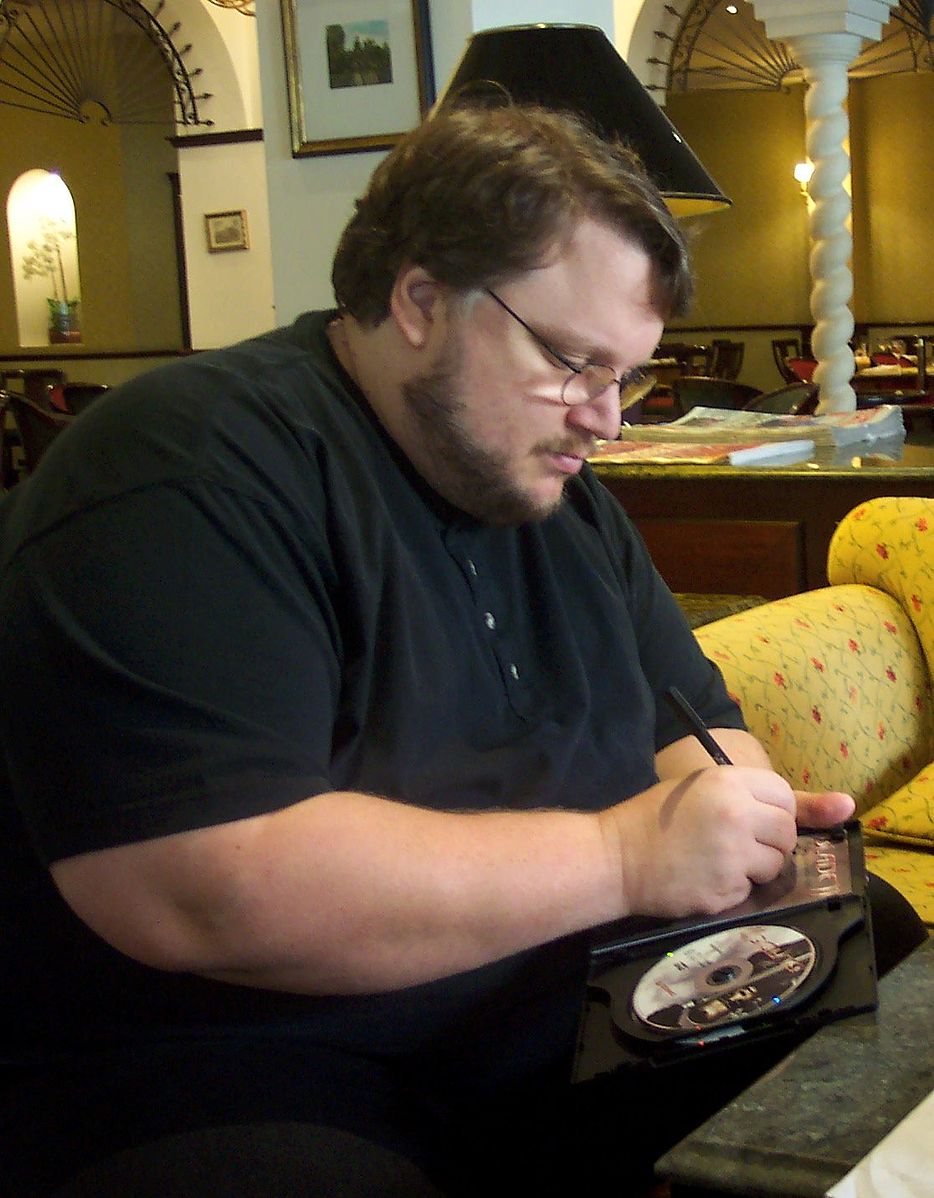
Image credit: Manuel Bartual, Creative Commons Attribution 2.0 Generic license, via Wikimedia Commons

I didn’t choose horror as my religion.  I didn’t grow up Catholic like del Toro either.  I haven’t seen all of his movies, but he does evince a kind of religious devotion to his monsters.  Pan’s Labyrinth was distinctly disturbing.  Pacific Rim was intense.  Crimson Peak is one it’s about time I watched again.  The Shape of Water offered a lovable monster.  Many of these films don’t follow standard horror tropes.  They’re thoughtful, emotive, and often wrenching.  These are, of course, traits shared in common with religion.  I suspect my own attempts to articulate this would benefit from conversation with someone like del Toro.  There’s no doubt that monsters give me the sense of Rudolf Otto’s mysterium tremendum et fascinans.

Religion and horror share a common ancestor.  Fear is an emotion that we apparently share with all sentient beings.  How we deal with it differs.  While a bunny will run away a rattlesnake will strike.  Horror is a way of dealing with fear.  So is religion.  We can’t avoid fear because, honestly, there’s much to be afraid of.  Many choose to believe their clergy, taught by people like me, and assume religion has all the answers.  Others, like del Toro, seek wisdom elsewhere.  When the credits roll at the end, you know it was all just a show.  When you walk out of the church, synagogue, or mosque, you know daily life awaits with its peaks and valleys.  Some may substitute one for the other, while others require the support of both.  And both, as odd as it may seem, can be addressed with conviction.  If you don’t believe me, just ask Guillermo del Toro.

Locally Speaking

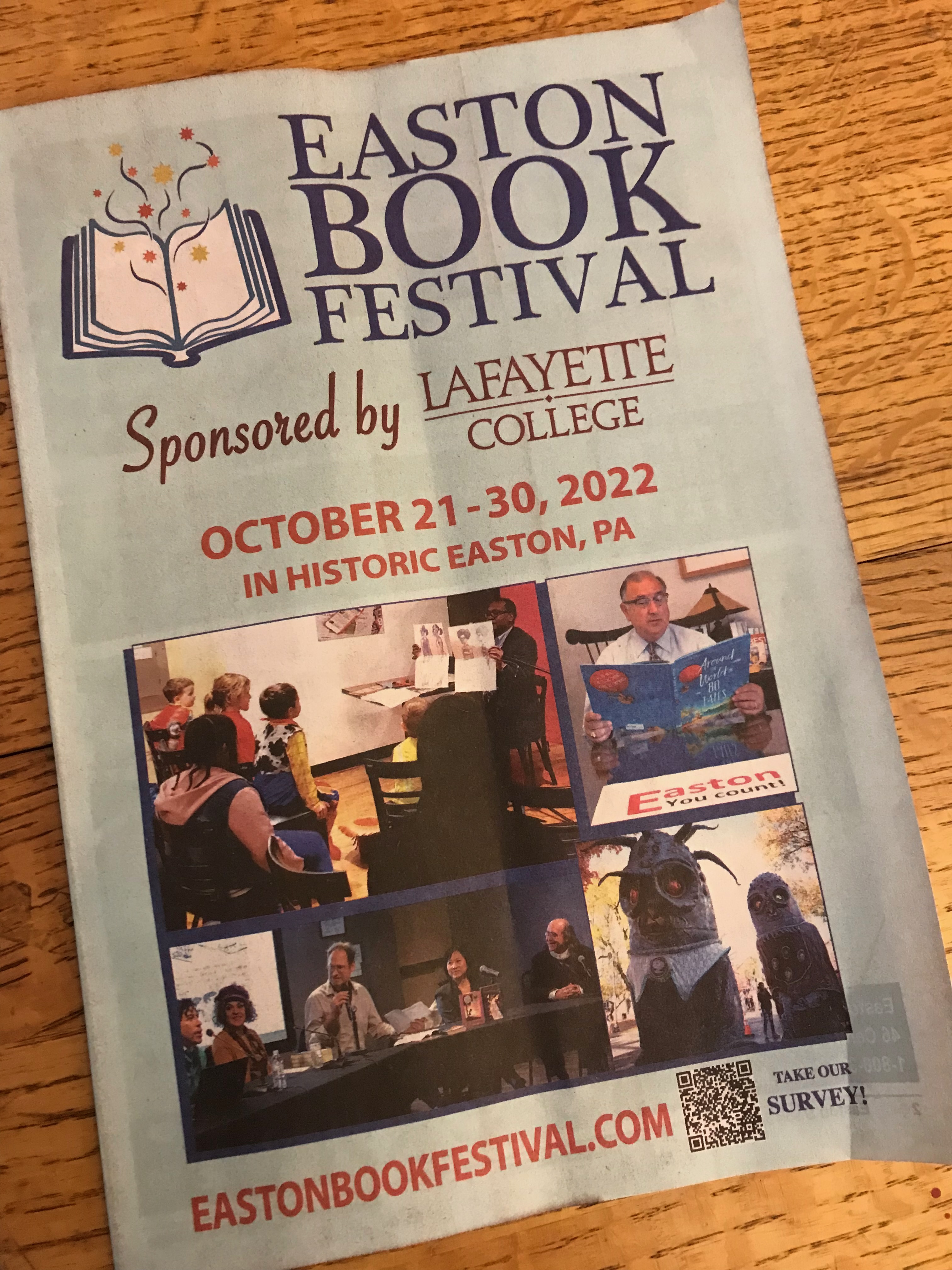
One of the weird things about moving is that you don’t know many people in your new location.  Ah, but who am I kidding?  As an introvert I knew few people in my last two decade-long locations.  So when I blog my readers tend not to be local.  Those I know locally tend not to read what I write.  This is the way of things.  Nevertheless, I make bold to mention the session I shared with Robert Repino and Andrew Uzendoski at the fourth annual Easton Book Festival yesterday.  The session was recorded and may be found here.  The topic is speculative writing.  While speculative writing may encompass nonfiction, it is generally considered to be fiction about things most people consider not to be real, such as science fiction, horror, and fantasy.

The slippery word there is “real.”  There’s a great deal of philosophy to that word.  How we determine reality is hardly a settled matter.  It involves more than the physical, as much as we might want to deny it.  In the case of future-oriented fiction “it hasn’t happened yet.”  Even if it comes true, such as George Orwell’s 1984.  In the case of the past, such as Game of Thrones, it never really happened.  For horror, itself not easily defined, it may range from gothic ghost tales to bloody accounts of carnage, generally set in the present.  Speculative often involves the supernatural.  The supernatural, however, may be real.  Who’s the final judge of that?

If I had a local readership I would add a plug for the Easton Book Festival.  It started strong in 2019 but was nearly choked by the pandemic.  I’ve had the honor of being involved in some way for all four years although I’m a minor author with perhaps the poorest sales figures of any who participate.  The Lehigh Valley is a major population center of Pennsylvania, but there’s wonderful greenery and woods between Easton, Bethlehem, and Allentown.  I live here but work in New York City and there’s no question who gets the lion’s share of time.  Publishing is a mystery to many.  How does it work, and how do you find a publisher?  And once you get published how do you get your books noticed?  And perhaps more relevant to more people, how do you get to know your neighbors?  Apart from the chance encounter across the lawn, we’re hermetically sealed in our houses, living lives on the web.  Unless you happen to venture to your local book festival where you’ll find like-minded individuals.  It goes on through the weekend, so if you’re nearby check it out.


Chilly Ghosts

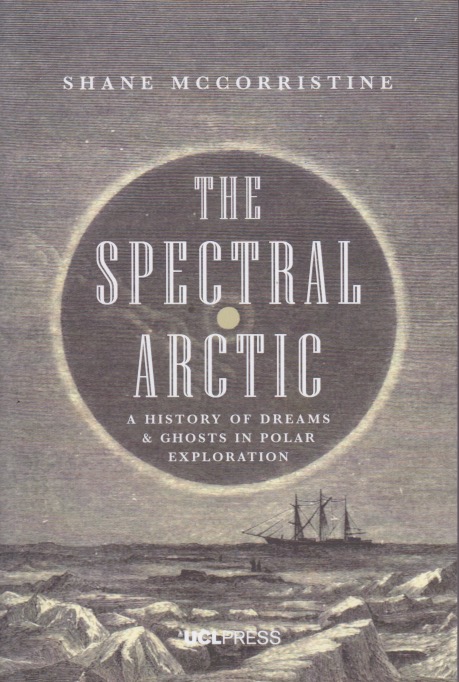
The names of many Antarctic explorers are more familiar to me than Arctic ones, so John Franklin was a name unknown to me.  A nineteenth-century British explorer, his expedition was lost beginning in 1845 when his appropriately named ships, Erebus and Terror, became icebound.  Franklin was seeking the famed Northwest Passage and given the slow communication of the time, nobody knew for years whether he’d survived or not.  (He hadn’t.)  Shane McCorristine’s The Spectral Arctic: A History of Dreams and Ghosts in Polar Exploration is a fascinating account of the attempts to find Franklin and his ships, often with speculative means.  Franklin’s widow, Jane, was famous in Britain for her constancy and her unwillingness to give up on the search for her husband.  She also consulted clairvoyants and paid attention to noteworthy dreams.

What drew me to this account was the involvement of the supernatural.  Significant dreams and many clairvoyants—all in the Victorian Era—made suggestions and claims about Sir John’s health and survival, as well as his whereabouts.  This was, of course, in the era before anyone reflected on the rightness of the imperial ideology of exploration and exploitation.  (We seem to have a hard time shaking that even today.)  In any case, these unusual, supernatural means of gaining information were often utilized and sometimes even functioned to set the destinations for other ships sent on rescue missions.  The chapters dealing with spectral landscapes of the Arctic are riveting and hard to put down.  Arctic imagination, even for those of us who don’t care for the cold, is powerful.  And we tend to think of it in spiritual terms.  There’s something about the far north.

There are many names involved and there are some places where it’s difficult to keep track of all the characters on a casual read, but overall this study is gripping.  McCorristine, as an academic, can’t tip his hand regarding the authenticity of the phenomena he explores here, but it simply doesn’t let go.  His chapter on women in Arctic discourse is likewise engaging.  Franklin and his crew had died by 1847 but the ships weren’t “discovered” until 2014 and 2016 by Canadian expeditions.  As McCorristine points out, even such political use of resources makes statements about how indigenous people continue to be treated by nations established as colonies.  There is much to say on this point, but the book focuses instead on “polar terror and sublimity” that comes to the surface in supernatural beliefs.  Tying all of this together is an astonishing feat and the results leave much room for wonder.


No Words

I read something scary recently.  And no, it was not a horror story.  I work in publishing and we have to keep abreast of developments, so I’ve had a glimpse of the future.  Publishers are now starting to look toward the time when information will no longer be conveyed by the written word.  A picture’s worth a thousand of them, after all.  This new future will convey information by video, or whatever the replacement of video will be.  Perhaps some are looking forward to the Matrix direct downloading model.  Perhaps the computer will be able to simulate the pleasures of reading a book, of browsing in a bookstore, of writing with pen on paper.  Something about the process and discipline of reading has made us what we are.

Star Wars, as others have noted, is set in a world with no paper.  You won’t find a scrap blowing in the wind, even on Tatooine.  Nobody is shown reading.  Plenty of action, but no wizard behind his big book of spells, no princess writing down her inmost thoughts.  Make a recording and plug it into your R2-unit.  Perhaps this is heresy, but compare this to Star Trek.  The episode “Court Martial” has Cogley (Elisha Cook, before he applied to become Rosemary’s landlord) saying to Kirk, “Books, young man, books. Thousands of them. If time wasn’t so important, I’d show you something. My library. Thousands of books.”  We always thought even the future would have plenty of reading material.  Now we’re being told the technology is passé. 

The constant emphasis on “data-driven analysis”—mostly in an effort to get more money—seems to mistake the downloading of knowledge for the pleasure of reading.  They’re not the same.  I love movies, as any regular reader will know.  Perhaps ironically, I write books about them.  The thing is, I watch them largely to write about them.  Knowledge downloading is getting the cart before the horse.  I’ve read even nonfiction books wrapped in awe.  An author’s way with words, the phrasing, the craft, the artistry.  These are pleasures.  Sure, images can show an interpretation but there are those of us who will always want to read the book before we see the movie.  Can you get the actors’ faces out of your head if you do it the other way around?  There are those who celebrate this sterile future.  And there are those of us who won’t even go there if we don’t have a book in hand to read, just in case.

Image credit:Bender, Albert M., artist; Federal Art Project, sponsor. Public domain.


Shatner’s Space

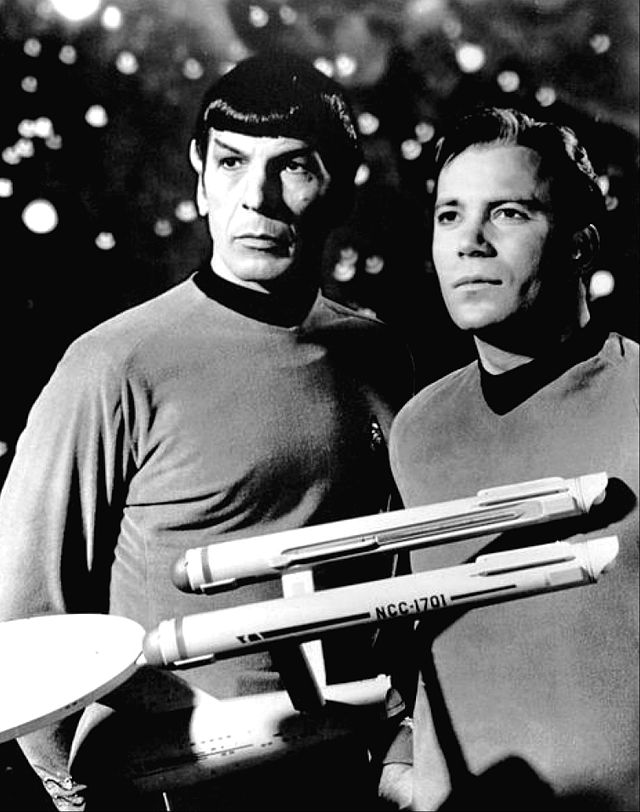
We constantly underestimate the power of fiction.  It’s difficult to break into getting fiction published.  It wasn’t always that way.  When the pulps were still a thing often it took a thimble of talent and a handful of persistence.  Publishers were looking for content and those with typewriters were clacking away as fast as they could.  Ding!  Carriage return.  These days it’s harder.  This came to mind in thinking about William Shatner’s trip to space and his subsequent reaction.  As several news outlets said in anticipation of Shatner’s new book, the experience made him feel profoundly sad and not a little cold.  So much empty space and we still haven’t figured out how to travel fast enough to reach our nearest neighbors.  We don’t even know if we’ll like them when we meet them.

Others, in defense of space exploration, were quick to counter Shatner.  He’s not a real astronaut, after all, having spent nine decades earth-bound.  Or so they said.  But I think I understand, as a fellow land-lubber, where he’s coming from.  We’ve only really got one chance on this planet, being the only creatures evolved enough to type, to capture our thoughts—our essence—in words that can be preserved.  And wildlife statistics are showing an alarming decrease in other animals since the 1970s.  If we’re all that’s left and we can do no better than to elect fascists, well, stand me with Captain Kirk.  We look to the skies and see, well, empty space.  And besides, we need to get home because it’s supper time.

Image credit: NBC Television, public domain via Wikimedia Commons

The reason Shatner got a free ride to space was, of course, fiction.  Star Trek captured the imagination of my generation and those with actual science ability started to put that kind of future together.  Today we can talk to computers and they still mishear us, often with laughable results.  But if writers of fiction hadn’t been available the show would never have succeeded and what would a Canadian actor have had to do?  Maybe a crime drama or two?  And even those require writers.  It seems to me that we should be encouraging fiction writers with talent.  Believe me, I’ve read plenty who really haven’t got it (often in the self-published aisle) but I know firsthand how difficult it is to get fiction noticed.  It’s like, to borrow an image, being blasted off into a dark, cold, empty space and looking at the blue orb below and wanting to be home for supper.


Free to Listen

It was a delightful conversation, as always.  Robin and Debra from The Incarcerated Christian podcast always amaze me with both their program and their enthusiasm.  I’m still bit nonplussed that they find my work interesting.  They invited me back for an October discussion around Nightmares with the Bible, located here.  Although the book has not yet sold enough copies to have earned any royalties (i.e., it hasn’t covered the cost of its own publication yet), it has nevertheless led to four interviews and even had a Choice review.  Granted, a good part of the lack of enthusiasm is its Elon Musk price point, at least that’s what I tell myself.  I’m still hopeful that a paperback will be out next year.

I suspect people are interested in demons.  Considering that movies keep on being made about them and doing well, I hope it’s only a matter of time.  While I’m waiting, however, I’ve got some good listening over at The Incarcerated Christian.  The podcast addresses a couple of issues: one is spirituality and the other is the effects of being raised in a religion that boxes or cages a person in.  The proprietors are among the few who realize that there’s a spirituality to horror.  I’m reading a book just now that considers thzt question.  And I know of others, active ministers among them, who find spirituality in horror.  I don’t know their backgrounds well enough to know their carceral status, but to me the connection makes sense.

Photo by Marco Chilese on Unsplash

I’ve written before that I’ve come to rely on experience as a source of knowing.  Not entirely, of course, but it’s clear that those who don’t trust their experience end up incarcerated.  My experience of organized religion suggests that it has many issues that require professional help.  That’s one aspect of having been a seminary teacher, and administrator, that has fed into my experience.  Having seen how that happens, and knowing the kinds of people who rise to the top—just look at politicians, particularly on the right-hand side—my experience suggests that ecclesiastical corruption is far more common than most people suspect.  In order to accomplish big things humans have to organize.  And in any organizational structure there will be climbers.  In general you don’t get to be clergy (apart from those non-denominations that’ll hire anyone making certain claims) without seminary.  And seminary isn’t what it seems.  To me, watching horror makes far more sense than befriending the jailer.  Take a moment to listen; it’s free.


Love for the Sky

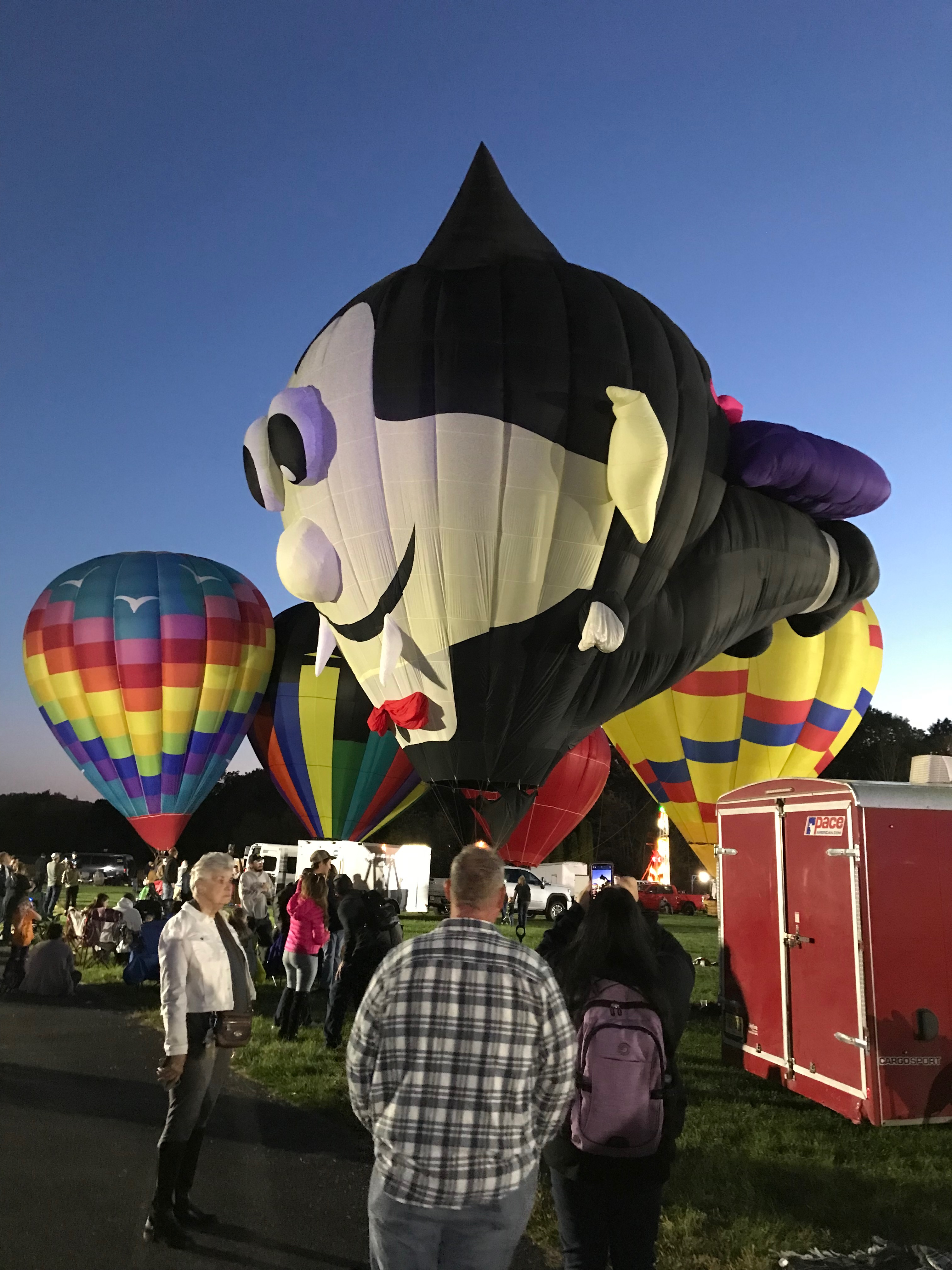
People long for the sky.  We look at birds with envy and we have historically treated the weather, or the sky itself as divine.  To get oneself into the air is an expensive venture, no matter how it’s done.  One of the earliest forms of overcoming gravity was the hot air balloon.  The principle’s pretty simple: hot air rises.  Trap that hot air in a container large enough and it will lift a person, or people, to the sky.  Today ballooning remains popular, although not generally used for long-distance transit.  Still, to be in the sky is a consolation all its own.  Various hot air balloon festivals tour the country, but the Lehigh Valley Spooktacular Hot Air Balloon Festival was the first time I’d ever been close to an actual hot air balloon.  While not asking, I’m sure it is quite pricey to own and operate one.  Given the number of people there, it’s a safe bet that others are fascinated by the sky too.

Apart from one vampire balloon, two things made this “Spooktacular.”  One was the fact that it’s midway through October, the month for scares.  The other was the vendors selling Halloween merchandise.  Options for disguises have come a long way since my childhood.  Blinking LED lights dangling from tentacles and battery-operated masks of black that show patterns in glowing colors on the faces of the wearers were both popular among attendees.  And not just with children.  Although the festival runs all day for Saturday and Sunday there are those of us who came for the evening finale—a mass inflation of balloons followed by a laser show and fireworks.

Such shows as this obviously require a ton of tech and a lot of set-up, but I couldn’t help but think as I watched that the sky, so eerily lit up at times, that in ancient times this would certainly have been considered as a theophany, an appearance of the gods.  Projected onto the sky itself, or penetrating that very sky, the lights could be made at times to dip, creating the impression of something large descending from above.  It was a show worth seeing.  As we drove home—it was past my bedtime and I had the passive role of passenger—I spotted a large bird winging through the night, dark against a low cloud.  Too dark to identify (although probably an owl), I thought how birds have a view that’s still rare among land-dwellers.  Theirs is the realm of the gods.


Bad Dog!

A few years back, it was, when I saw my first video of a robo-dog.  I don’t mean the cute ones that you might fool yourself into thinking, on an off day, might be a real mammal.  I mean the bare-bones, mean-looking robot kind.  If was, of course, being developed by military contractors.  Then just days ago I saw something truly frightening.  In a video from China, one of these robo-dogs with an assault rifle and a ton of sensors mounted on it, was remotely air dropped by a drone and began policing the area.  Knowing that fleets (I’m not sure that’s the right word) of thousands of drones have been coordinated for entertainment purposes, and aware of how much money and tech militaries have, well, let’s just say nightmares aren’t just for sleeping any more.

Image credit: DARPA, public domain via Wikimedia Commons

Dogs, until they mostly had it selectively bred out of them, are killers by nature.  The wolf has to be a predator to survive in the wild.  As much as we like bipedalism, it has to be admitted that four legs (or more—imagine the robo-centipede, if you dare!) benefit locomotion quite a bit.  You may get a lower angle of view but a boost for speed.  And if you see a robo-dog, especially one with a machine gun for a nose, running is where you’d want to excel.  But we’ve taken our companion—our “best friend”—and made it into yet another engine of fear.  As someone who grew up with an inordinate number of phobias, I really don’t need one more.  Of course, it’s a truism that if a technology comes from the military it will be cause for alarm.

I’m capable of dreaming.  I can dream of peace and cooperation and what we could build if we didn’t have to worry about the aggressive, the greedy, and the narcissist.  Those who never learned to play well with others but who make money easily and spend it to bend the world to their bleak, bleak vision that lacks a happy ending for all but themselves.  I can envision meeting people who are different without the first thought being exploitation—what can I get out of them?—or fear that they wish to harm me.  Humans are endlessly inventive, especially when it comes to ways to harm one another.  If our creativity could be set toward working for the benefit of all, dogs would be for petting and drones would be for seeking out new ways to solve the problems that beset us all.  Instead we make them into new nightmares.


Flavor of Childhood

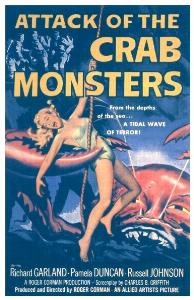
Giant, telepathic crabs whose molecular structure make them impervious to bullets, explosives, and fire, and that know how to use dynamite and who plan to take over the human world?  A group of scientists trapped on an irradiated Pacific island that is slowly sinking into the ocean?  This must be Attack of the Crab Monsters!  I was born during what is generally considered the dearth  period of the American horror industry.  Roger Corman, however, was working hard outside of the studio system to cater to that new demographic—teens with spending money.  Drive-in theaters were big and for about $100,000 you could shoot a double-feature and bring in ten times that much.  If you shoot quickly enough you can produce several of these in a year and not have to worry about the big studios.

It’s been fashionable to laugh Corman off, but he knows how to live the teenage dream.  Monster movies were part of the childhood of many of us during this “dearth.”  Yes, sophisticated frights were yet to come, but these creature features were full of creativity and escapism.  And so many unanswered questions.  How did those giant crabs chop all the radio wires to bits with those indelicate giant claws?  If they could smash through the outside wall of a house, why couldn’t they break through a light-weight door once inside?  And why, knowing that bullets and grenades can’t possibly hurt them, do scientists keep firing away?  What was that oil subplot all about anyway?  And how do you end a film with the lines “He gave his life,” followed up by “I know”?  This is stuff, like Strawberry Quik, I couldn’t get enough of as a kid.

No, this wasn’t intelligent horror—it was often laughable—but it made an impression.  As an adult I can’t recall which of these movies I’ve seen before and I suspect it would take a lifetime to watch all the films Corman directed or produced.  Along with his contemporary indie director/producer William Castle, Corman may be inordinately responsible for my tastes as an adult.  I’ve grown more sophisticated (I hope) in some ways, but I’m at a pay grade where free on Amazon Prime often decides a weekend’s entertainment.  Besides, these movies struggle to top out an hour’s running time.  You can still get a lot done in a day and still have time for a monster crab, giant leech, or wasp woman.  With enough radiation, and imagination, anything can happen.


Former Education

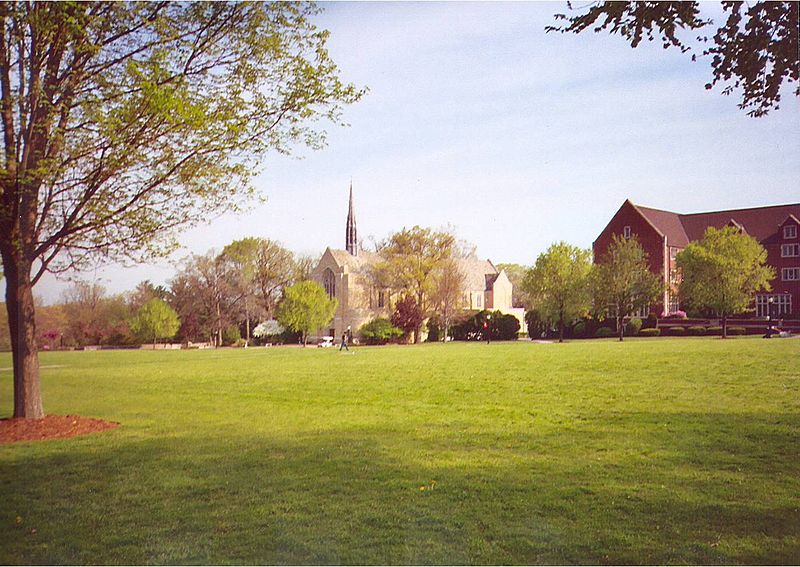
Like most people I don’t have time to sit around thinking much about college.  Once in a while you’re forced into it, however.  This time it was by an NPR article.  I attended Grove City College for a few reasons: it was a Christian school close to home, it wasn’t expensive, and, perhaps most of all, I knew campus because the Western Pennsylvania Conference of the United Methodist Church held its annual conference there.  I’d been several times during high school.  It didn’t hurt that I was a Fundamentalist at the time.  Grove City was a college of the Presbyterian Church and I loved having debates about predestination with professors who actually believed in it.  At the same time, I was encouraged to think things through, which liberal arts colleges are known for promoting. Is it now “conservative arts?”

Photo credit: The enlightenment at English Wikipedia

The NPR story my wife sent me was about how Critical Race Theory is disputed at my alma mater (sic).  I noticed in the article that Grove City is no longer affiliated with the Presbyterian Church.  It’s become much more right wing than that.  At the same time they ask me for money on a regular basis.  What made them think they had to go hard right?  Are they still educating students or are they indoctrinating them?  It reminded me of a sermon I heard at yet another conservative school I was associated with: Nashotah House Episcopal Seminary (or at least it was then).  The priest made an entire sermon about how it was right to be conservative, as if no matter what the issues there was some creed to get behind in staying behind.  As if virtue exists in never admitting you were wrong.

I suspect that my failure to attain a full-time academic position at a reputable school was because of what looks like a conservative outlook, despite the evidence of this blog.  Yes, I grew up Fundamentalist—you grow up the way you were raised.  Hopefully, however, you start thinking after that.  And experiencing.  And yes, using critical thought.  There comes a time when “because I told you so” just doesn’t cut it anymore.  For many of us that’s when we go to college.  If it’s a good one you’ll be encouraged to debate with your professors.  Not one of them has all the answers, I can assure you.  Education is, by its very nature, progressive.  We learn and we continue to learn.  We don’t stand still and say the 1950s was when God reigned on earth.  It wasn’t.  And it wasn’t any time before that either.  Now we know that Critical Race Theory should be taught.  We know Black Lives Matter.  What I personally don’t know is what became of a college that was once conservative, but at the same time, believed in education.


Reading Algorithm

I appreciate help.  I really do.  It’s easy to feel overwhelmed in this world and others offering to help out are welcome.  But you do have to wonder about algorithms.  They seem to lack human sympathy.  And perhaps the ability to count.  Every year I enter the Goodreads Reading Challenge.  I would read without it, of course, but having that extra pressure doesn’t hurt.  Because of my convoluted mental makeup, I try to get things I have to do done early.  That means I want to finish my reading challenge before I have to.  In my commuting days I read about 100 books per year.  When I stopped commuting I had to bring that number down by about half—frankly, I don’t know where the time went, but I do spend more awake time with my family, which is good.

So I’ve settled on setting my Goodreads goals at about 50-60 books per year.  I often exceed it, depending on how many big books, or ponderous academic tomes I read.  Lately I’ve set the goal at 55, which is just over a book a week.  That seems doable to me.  This year I achieved that goal in September, but that doesn’t stop me from reading, nosiree!  I’m currently somewhere near the 60 book mark and I’ll keep going.  Now the help I was referring to is this: Goodreads typically sends an encouraging email in October suggesting how to meet your goal.  My message showed, via tracker, that I’d already met my goal, but telling me I could still meet it with these suggested books.

The books suggested are fine, I’m sure.  And that this message was sent via some formula that I have no hope of being able to comprehend, I’m also sure.  An algorithm, however, doesn’t feel for you.  I’m relieved to have the goal behind me and to continue pressing on regardless.  I could use some help in getting the lawn mowed, should an algorithm like to apply.  I particularly resent having to do so while wearing a jacket and stocking cap.  It’s time for the grass to be settling down for its year-end nap, isn’t it?  Or maybe an algorithm could do my job for me.  I guess that’s not funny, because that fate has befallen many humans, I suppose.  Maybe the solution is simply to read more.  That’s not a bad thing, but I don’t need an algorithm to get me to do it.


No Donations

They’re after my blood.  In fact, they repeatedly call on my work phone asking for it.  But when I go in they won’t take it.  There are blood shortages, I know.  My wife and I used to be regular donors.  Then we moved to the United Kingdom for my doctorate.  Although largely vegetarian even then, Britain came to be under the “Mad Cow” disease scare just at that time.  Bovine spongiform encephalopathy seems to have been caused by adding filler from other animals to cattle feed.  Naturally vegetarian cattle—vegan as adults—were being fed animal by-products.  Anyone who lived in the United Kingdom during the height of the scare is banned from ever donating blood in the United States, no matter how severe the shortage.  That doesn’t mean they won’t continue to call and make you feel guilty for not donating.

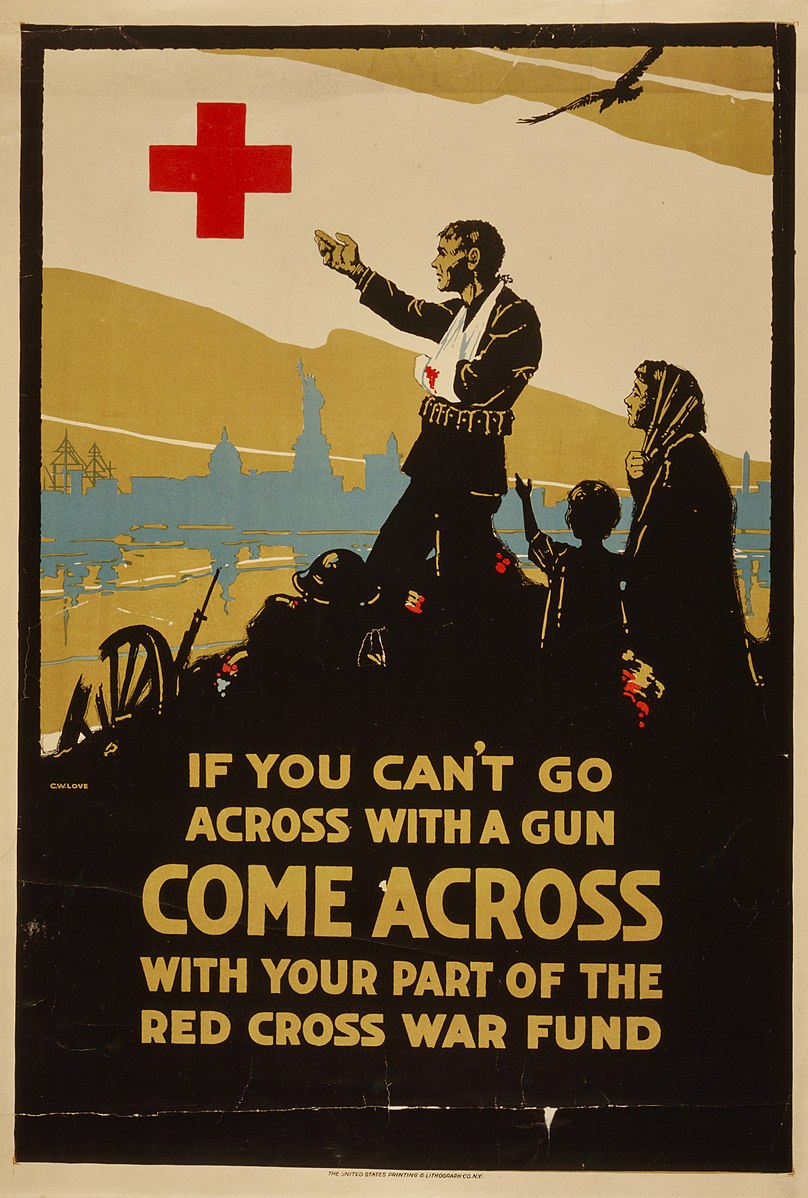
Image credit: C. W. Love, public domain via Wikimedia Commons

Medical care is culture-specific sometimes.  We once knew a woman who was a medical doctor in Sweden but who could not practice medicine in the United States.  At least not without undergoing extensive medical retraining.  I think of wonderful organizations such as Doctors without Borders where medically trained people help out those in less developed nations.  Nations may be a necessity, but nationalism quickly leads to problems, many of them major.  I realize that mixing medical techniques can cause complications, but I wonder if sometimes we go too far.  And I often think about the medical problems caused by consuming too much meat.  Raising cattle and hogs, especially, leads to huge environmental problems.  There are better ways.

It’s been about five years now since I’ve been more or less fully vegan.  Eating options have expanded enormously in that time.  There are plenty of options for eating out, although most restaurant chains still seem to equate the practice with consuming animal products.  For me the process was gradual.  While living in Scotland in the late eighties to early nineties we cut most red meat from our diets.  When my daughter turned out to be a natural vegetarian, I joined her.  After several years living that way (over two decades now), I finally made the leap to being vegan.  Animals should have rights.  Nature can be cruel, I know.  Still, to exploit other species for our gain and their sacrifice bothers me.  I like to share.  I even like to donate blood.  I’m still asked to do it and am turned away when I show up at the door.  I can’t help but to think there’s a better way.


Past Knowing

It’s like watching a fall in a movie in slow motion.  You know you can’t really stop it, as much as you’d like to.  We see the collective world pieces moving into place for a third world war and thinking people worldwide are wondering why countries such as Italy and Sweden are electing hard right candidates.  Especially when Russia is invading countries at will.  I’m no politician and I resent having to be drawn into political topics, but at times you just have to say something.  Even if it won’t change anything.  Parts of the Bible are like that—witnesses simply wanting it to be noted.  Something seen, something said.

My family wasn’t political as I was growing up.  They pretty much just voted Republican, being in a rather Pennsyltuckyish county.  When I was nearing voting age I asked my mother about the political parties.  We’d learned about hawks and doves in school, and having been taught that Republicans tended to be those who started wars I wondered why Christians voted for them.  She really didn’t have an answer for me and I later came to realize that as a certain segment of Protestantism is actively attempting to bring about the second coming, this fits the plan.  One way to do so is by initiating wars—environmental degradation is another—because they believe it’s all going to end soon anyway.  Although Jesus advocated for peace, they choose war, ironically, to bring Jesus back.  That was the start of my journey to the Democratic party.  War serves no purpose.

In democracies worldwide right-wing parties are propagandizing heavily to urge nationalism.  Separatism.  Fear of the stranger.  Many in Russia believe Putin’s rhetoric that Ukraine is a dangerous threat to the largest country in the world.  China, the largest country in terms of population, feels threatened by the small island nation of Taiwan.  Borders around much of India are disputed.  The control of resources, in thrall to capitalism, makes people want to close borders and watch out for their own.  At least their own that are members of their party.  From my perspective it’s difficult to see a peaceful way out of this.  Even the world’s oldest democracy falls prey to the propaganda of a known swindler.  Human society is complex.  We have enough resources to meet the needs of all except the greedy, but it’s the greedy who run for office.  We have, it seems, forgotten the last century entirely.

Photo credit: Remember, public domain via Wikimedia Commons

Eclecticism

Eclectic.  An eclectic approach is experiential.  I don’t mean to be obscure here, but I was once an academic.  Let me try to spell this out a little more clearly.  You’re reading along in your academic study—perhaps it was assigned to you for a class, or perhaps you have unusual interests, or maybe you want a deeper treatment than you find in Barnes and Noble or on the internet.  In any case, what you’ll often find is academics like to glom onto a theoretician that they follow.  Applying Derrida to this, Lacan to that, and Bakhtin to the other.  In doing so they establish their mastery over complex theory, and earn their ticket into the academy.  You, the poor, curious reader, are left wading through explanations of the theory when what you really want is the content—the actual subject of the book.

My own work has been rightly accused of lacking theory.  Or, more precisely, not following a consistent theory.  It’s eclectic.  That’s because I believe in an experiential approach to research.  I trust my own experience.  Your experience is different, I know.  Trust it.  We learn things through experience.  Perhaps others were raised by parents who read and thought deeply and introduced their children to Deleuze (and perhaps Guattari as well), but most of us weren’t.  And some of us came to trust both raw logic and intense feeling.  We call it instinct in animals, but in people we expect more.  What’s wrong with being eclectic?  It seems to make sense.  If Foucault had it right, shouldn’t it be obvious to all of us?

What’s always amused me about this is that such theoreticians—and I don’t know how you become one without basing your work on your own experience—come and go like fashions.  Ricoeur was the big name a few years back and now I haven’t seen anybody writing about him for a couple of decades, at least in the fields I’m reading.  I tend to read primary material and think as deeply as I can on it.  Yes, I read others who write on the topic and sometimes I’m even quite taken by someone else’s approach.  Still, my experience tends, alas, toward the Baconian—an embarrassment for a vegan, I suppose—that of gathering information and seeing what makes sense of it.  I read the theoreticians from time-to-time and then I read those not classically considered experts.  We’re all in this knowledge game together.  Even Lévi-Strauss and his school.


After It’s News

We live our lives by the news cycle.  It tells us what to think about and worry about, often beyond our local, daily concerns.  And sometimes we forget about yesterday’s headliners.  If you’re curious about whatever became of actual Hurricane Ian, I can tell you.  He’s been hanging around here.  Oh, he’s a mere shadow of his former self, becoming just a low-pressure system sitting off the Atlantic coast between New York and Philadelphia.  And spinning, and spinning, and spinning.  Around here we haven’t seen the sun since last Thursday.  The rain has been intermittent, but yesterday it was pretty much all day and he’s set to continue dominating the skies here at least through today.  Your typical hurricane, if there is such a thing, just keeps moving until it reaches unpopulated areas and nobody cares any more.  This one has been a long-term guest.

With the first few days of lassitudinous rain we had maybe an inch.  Rainfall spat and sputtered and sprinkled.  Yesterday it began to really come down and as I write this it’s too dark to tell but I can hear it splashing on my windows.  The toadstools popping up in the yard are impressive.  As has been the wind and below average temperatures.  I’m wearing my winter-level protection and dodging raindrops on my morning jogs.  Some days I’ve had to delay them for the water.  Not too many other people are out taking their exercise, I notice.  The Weather Channel’s taken to calling it just a low-pressure system, but we’re on a first-name basis now.  Ian is still very much a thing.  At the end of “daylight” yesterday the rain gauge read about three inches.

The thing about these “unusual” storms is they’re becoming the norm.  Global warming has been affecting us for years now, even as we deny it exists.  Our summer around here was very hot and very dry.  The dry was okay by me, but the heat prevented any outdoor work or play for a good deal of the time.  Days when you’d stay inside and try your hardest not to move.  We had maybe one or two days of transitional weather then boom, straight to November.  The leaves around here are still mostly green although they’ve been starting to change more readily now that October’s arrived with December in it’s train.  Forecasters tell us, like Annie says, the sun will come out tomorrow.  Around here we sure hope that’s right.  I wonder what else is happening hidden behind the news?

Not Ian, but you get the picture