Shadows of Childhood

While it may not seem to fit my current re-fascination, I’m not really a “fan”personality.  My interests are far too diverse.  Since I’ve been thinking about Dark Shadows a lot lately I decided to do some reading on it.  There’s a genre of nonfiction that involves small format, short introductions to various media.  I’ve read a few of the Devil’s Advocates series about horror movies and I recently discovered the similar TV Milestones series about, well, TV.  They have a volume on Dark Shadows by Harry M. Benshoff, and I knew it would help scratch my current itch.  You see, I wasn’t really a devoted fan of the show—I watched it after school like a lot of kids did in the late sixties and into the early seventies.  I read a few of the novels.  I never attended any conferences (they exist) and never wrote any fan fiction.  I think my level of engagement was different.

Nevertheless, this is an informative little book.  I found out that there’s even more to the phenomenon than I already knew I didn’t know.  I never really followed the whole plot line.  I didn’t realize just how complex the story is.  Perhaps on some level I knew the series was culturally significant.  As a child I didn’t know much about the wider culture.  We were working class poor, how was I to find out about such things?  For me, Dark Shadows was a kind of escapism, I suppose.  A fantasy that met a need, not a plot to be unraveled.  I wasn’t aware of how sophisticated, if cheap, it was.

By the time I got to college and started to meet different people, it was a moment that had passed.  I really didn’t think much about Dark Shadows again until after my own gothic tragedy of Nashotah House.  During the days of my career malfunction I rediscovered my childhood, perhaps looking for something better.  I started collecting and reading the novels again, and if I’m honest, were it not so expensive I’d consider watching the original series again.  Like all things nostalgic, I know my Rosebud will never be today what it was back then.  My reading sense wasn’t developed enough to see what might’ve been going on behind the scenes.  Benshoff does a good job of bringing much of that to the light.  I’ll likely read more on the series as time goes on, but I now have a better framework for looking at this particular milestone.  Not, however, as a fanatic.


Sexist Instructions

The thing about cars is there’s so much that can go wrong.  And when it does it’s costly to fix it.  Yet, even when working from home, we need them.  We have two, both quite old in car years.  One is approaching twenty.  We bought it new—the first time we’d ever been able to achieve such a feat.  This was one of the new Beetles and it has had never-ending electronic issues.  Warning lights come on that seem to be a malfunction of the warning lights—if you ever wanted an existential situation that’s one right there.  How do you know if there’s something wrong with your engine or is it just something wrong with the warning light?  A worrisome one came on just as winter was settling in and we didn’t need to drive it much before inspection time and we let it sit a little too long.

The battery, naturally, died.  We have an old, seldom used battery jump-starter, which, in the cold of the garage, also died.  We’ve been trying to find time on the weekend when both my wife and I are free (rare) so that I can drive it a ways to try to recharge the battery, but with someone home who can rescue me if I get stuck.  So it was we came to buy a new jump-starter.  These new ones are the size of a cell phone on steroids—much smaller than the old kind.  Ours came from China, I’m guessing, and the instructions are sexist.  They imply that women can use this because it’s easy.  Part of the description reads “It can be used more than 30 times, giving you peace of mind, no matter where you are, if the battery runs out, you can start it without looking for women who are not smart at night in an empty parking lot, such as a college campus or forget you.”  I don’t know about you, but this sounds like the writer had a past he’s trying to deal with.

I was indeed once left stranded because of a dead car battery.  It’s a story I’m saving for my autobiography, if I ever write one, but let me assure you all the people responsible for that abandonment were men.  Men with a car that wouldn’t start while I sat in the middle of nowhere in the dark.  (This was before cell phones.)  I didn’t want to buy a sexist device.  Both men and women have batteries die and I’m always a little scared to jump-start a car.  At least now we can get the Beetle rolling again and drive toward a future where women are rightfully seen as equal to men.  And I hope that instruction writer has found some help, perhaps with therapy.


Search and Research

Woe to those who live to research but who have no professorship!  I have been prone to research since about high school, driven by the need to know.  Almost Wesleyan in my need for certainty, I have always been inclined to check things out.  It took college and a doctorate to teach me the necessary research skills.  It took years of teaching for me to learn how to frame questions on my own.  And it took years of being shunned by the academy to realize that as I’ve been pursuing my personal research agenda that I lack the time to fulfill it.  I’m a slow learner.  Yet I can’t give it up.  The thought process that led to Holy Horror was a kind of epiphany.  I could write a book without reading every last thing about the subject.  The problem, however, would always be time.  I’ve read an awful lot about horror media and I’m only beginning to scratch the surface.

I’m not totally naive.  Okay, I’m pretty far along on that path sometimes, but I want my readers to know that I understand movies and television are made for money.  It’s a business, I know.  But I’m an artist at heart and I like to think the creators are fond of their characters.  Writers are advised to drown their darlings, to put their protagonists on a cliff and then throw rocks at them.  And I also understand that money can make you do even worse to them.  Of course, I’m still thinking about Dark Shadows.  For me it’s been a rediscovery of my childhood.  And just how much time I’d need to make sense of just one television series with a five-year run.  There’s far more information on the web on Dark Shadows than I was able to find in print on Asherah for the years of my doctorate.

And the expense involved.  Plus, it’s only early April and the lawn needs mowing!  I’m still wearing a heavy jacket some days but the grass is always greener.  Period.  What a time to fall into a research reverie!  I need a sabbatical but they don’t have those in the 925 world.  And I need a professor’s salary to be able to afford the media required.  The Dark Shadows series alone has over 1200 episodes.  House of Dark Shadows introduced the fear of the cross to my understanding of Barnabas Collins.  My world has been shaken and to settle it I need research.  What I have, however, is work starting in just a few minutes.

Now watch this, for time is fleeting

April Says

I can honestly say that it wasn’t on my bucket list to mow the lawn while it was snowing.  Friday would’ve been better—sunny and sixty—but I have a 925 and I had a meeting after work I couldn’t get out of.  Saturday it rained all day, which, I know, grass loves.  Sunday was the only opportunity left in the weekend, and with stocking cap and gloves on, I went to mow.  Snow started to fall.  It must be April.  I’ve always believed that “April fools” has an origin in the weather.  I can’t prove it, but it seems just when you think it’s safe to go without a coat, suddenly winter.  Back when we lived in Wisconsin we took a family fun trip to Wisconsin Dells for my wife’s birthday in April.  It snowed.  We rode the famous ducks and then played mini-golf amid squalls.  April fools.

The weather influences many aspects of life.  Why it’s considered a neutral topic I don’t know.  It’s kind of like talking about God.  The only thing we all agree on is that we can’t control it.  Well, we can certainly influence it.  Global warming sets strange weather patterns into motion.  It was in the seventies less than a month ago.  (Which is why grass was unruly just as April began its double-digits.)  Then there’s all the rain.  See what I mean about God?  Divinity and weather were in mind as I worked on Weathering the Psalms.  I still wrestle with how these things relate to each other in the human psyche.  We do tend to think the weather is somehow a judgment or blessing.

My family knows I complain about it religiously.  And mowing isn’t my favorite activity in any weather.  It was late November and I was still mowing.  April (which fools) seems to be a little too soon to be starting that all over again.  Committing at least one day of every weekend until nearly next Christmas to cutting grass.  It’s a long-term commitment.  I suspect those who benefit (monetarily, for we all lose, existentially) from global warming probably don’t mow their own lawns.  They probably have their private jets that don’t need to be jump started because that worrying idiot-light on the dash is on again and they’re afraid to use it.  It’s life in a different key.  Still, we all share the weather.  When it affects crops, or swamps New York City, we’ll all be bound to notice.  Enough grumbling.  It’s time to get the weed-whacker fired up while the icicles start to form.  April fools.


The Campus Library

Perhaps it’s an odd kind of nostalgia.  Many people can’t wait to be done with school and get on with “life.” Some of us remain fixated at the learning stage and society used to shuffle us into colleges and universities where we could be safely ignored.  One of the refrains in the very long song that is this blog has been the lack of a university library.  Although I’ve tried to get to know the academics in the Lehigh Valley really only one has made an effort to befriend me and when I was asking him about library access he actually did something about it.  Such acts of kindness are rare and require a kind of thinking that takes into account the circumstances of the academically othered.  I’ll be forever grateful.

It’s been a long time since I’ve been in a college or university library.  Many are protective and/or restrictive, as if knowledge is only for those academically employed.  I had to look up a couple of references for an article I was writing.  My colleague checked with his institution and yes, I was welcome to come in and use their collection.  The night before going to campus I had a series of nightmares of various librarians barring my attempt to get to the books.  I’d been trying to get there (in real life) for weeks.  Between family work schedules, the occasional weekend blizzard, and the library being closed for spring break, it ended up taking about six weeks to find the time to drive there, negotiate parking, and look up the references.

Everyone has a place they belong.  Mine has unwaveringly been the college campus.  It is home to me, even if it doesn’t recognize me.  I’d almost forgotten the feeling of being let loose in the stacks.  It was a Saturday morning and there was almost nobody else there.  As early as Grove City College I cherished the feeling of spending time in the library.  Few other students were hanging out there, but those of us who belong on campuses know that being surrounded by books is the only place that will ever feel like home.  Having looked up my references I wished that I had more to do.  I’d been to both the Dewey and the Library of Congress sections and, being a weekend, I had much else to do.  Stepping back out onto campus I was filled once again with a poignant nostalgia.  Getting to where you know you belong is a lengthy journey.


Spring Holidays

March and April, despite having their holidays, tend to be months of pretty solid capitalistic work.  Congress may take its April recess and universities have their spring break, but the working stiffs just keep going.  I’ve worked for a couple of British companies and they have a dilemma in the Human Resources department.  Britain has a lot more days off per year than American business practice does.  The dilemma?  How to tell your colonials that the head offices will be closed around Easter when those of the New World will remain open.  You see, very few American companies recognize what some Christians call Holy Week as a time for anything other than work.  Back in the days when I was still trying to work myself into the Episcopal priesthood, I had to ask my manager for Good Friday off and permission was only reluctantly given.

The two major Christian holidays of Christmas and Easter are vastly different in their public expression.  Despite the outlook of Scrooge, most companies consider Christmas a holiday, even to the point of giving you a Friday or Monday off if it falls on a weekend.  A present, as it were.  Easter, on the other hand, reliably falls on a Sunday.  Viewed in isolation there’s no need to give people any days off.  Since I was a teen, however, I took Maundy Thursday and Good Friday seriously.  You were, even in the Methodist church, encouraged to spend the latter in church, especially around the middle of the day.  If at all possible, it should be raining.  It wasn’t a day off for rest and relaxation, but for contemplating sin and its costs (hardly conducive to capitalism).

Universities, however, have tended to shift spring break to St. Patrick’s Day so as to get the damage of drunken students off campus.  Indeed, Purim, the Jewish spring holiday, also advocates drinking until Haman and Mordecai become indistinguishable when spoken.  Sort of like Hamilton, it was the holiday that saved the book of Esther, just like the Broadway show preserved the ten-dollar bill.  When it comes to business, however, Americans are all business.  (Did someone  mention a ten-dollar bill?!)  Money, as MC reminds us, makes the vorld go round.  And holidays are viewed as constant interruptions.  The typical work calendar will have no holidays from President’s Day in February until Memorial Day at the end of May.  It’s typically the longest stretch without a paid holiday.  Just when the weather’s starting to get nicer.  But let’s not forget, money is fully in charge here, for where your treasure is, there your heart shall be also.


Movie Moving?

If you don’t know me personally, you may not realize how frequently I quote movies.  On a daily basis, films I’ve seen—particularly multiple times—are the source of some of what I say.  Films have tremendous impact.  Some theorists have even argued that they are the new mythology.  So imagine my distress when an opinion piece in the New York Times suggested that movies are losing their relevance.  Media comes in so many varieties that we can take our choice.  YouTube and TikTok have given television its first real competition in my lifetime.  Our local CD store is a rather sad place, and does anybody even remember Blockbuster?  But movies—the media of entertainment for over a century—irrelevant?

What of the movie star?  It doesn’t matter which one.  The phenomenon of it.  The person recognized as a household name.  Now we seem to be losing yet one more frame of reference.  There’s no firm ground left for culture, it seems.  Is this why things are falling apart?  Movies weren’t the only glue, of course, but I wrote three books on movies.  The larger implications are sobering.  Media, of course, is always changing.  Movies are but a modern form of story-telling.  Already decades ago the weight for this began to swing towards what we used to call video games.   The younger generation prefers stories where their actions decide the ending.  To a point.  Someone had to program this thing and has predetermined possible outcomes.  Like a movie, it’s a story.

Stories are probably the oldest form of human entertainment.  The nonfiction books that sell the best are those with a narrative arc—they tell a story.  Nonficionados may be reluctant to admit that they’re drawn to stories, but we all are.  It’s human nature.  While I prefer books to movies, there are times I just can’t settle down to read.  And also, horror novels don’t quite scare the same way that horror movies do.  Movies have their place.  They can be tremendously expensive to make and many now have so much CGI that actors are disguised beneath layers of code.  Kind of like The Matrix.  Even so, they are telling stories in a format that has become a huge industry that ties culture together with common references.  Can you image a world where there was never a Star Wars?  The internet has perhaps blurred the line a bit and movies are evolving.  As long as we tell one another stories, however, we’re still human.

Image credit: Georges Méliès

Shadowy House

The more you learn the more you realize just how little you know.  The House of Dark Shadows was like a key, a missing puzzle piece for me.  Dark Shadows has been on my mind quite a bit lately.  I’m the first to admit that I’m no expert.  I never saw the whole series on television—I saw many episodes once, during my childhood.  Enough to know who the characters were—especially Barnabas—but when I stopped watching it (when? Why?) I started reading the novels by Marilyn Ross.  Clearly the soap opera was gaining enough ratings to merit the building of a franchise.  But the thing was, there is so much in life that I never concentrated on it.  I read the novels occasionally, and I never saw House of Dark Shadows when it came out in 1970.  Not, in fact, until 2022.

Since I was only eight when it came out, even though it was rated PG, I would’ve had neither the means nor the money to get to a theater.  I had, in fact, never even heard of it.  Having been raised a Fundamentalist, I have a tendency to believe there is just one way a story goes.  I know there are variations—they occur in the canon of Scripture, even—but something deep-seated tells me it should go this way.  House of Dark Shadows (which explains a lot of Tim Burton’s decisions for his movie reboot) has a different story line.  Given that it was 1970 it would have been in the midst of the initial series broadcast.  The movie was quite successful.  Still, Barnabas ends up victimizing Carolyn (which in the novels he is reluctant to do), and Roger, and outright killing a number of people.

I spent the movie trying to process how the story should go.  Of course, I haven’t seen the soap opera enough to know.  This Dark Shadows franchise is episodic and it doesn’t add up.  The film was shot quickly and leaves gaps in the story.  It certainly doesn’t track well with the tale of the Maine family who knows about “cousin Barnabas”and that he visits Collinwood from time to time.  Our course, between the series and the novels there are many, many avenues to select.  When Tim Burton got the idea to make a movie he had an abundance of stories from which to choose.  The House of Dark Shadows isn’t a great movie.  It is gothic and moody and a standalone story.  And it has me wondering about what other dark shadows conceal.


Eclectic Electric

It all began with the internet going out.  Less than a month ago the modem was replaced, but the tech this time thought it could be the co-ax cable.  We went outside and he fed the cable through, but when he got to the box he noticed a problem.  “Your electrical drop isn’t attached to the house,” he said.  Sure enough, he was right.  “I can’t replace the rest of the cable until that’s fixed—it’s an electrocution risk.” So I called the electric company.  They said I’d need an electrician to secure the conduit to the house, but they’d send somebody out to look.  The tech must’ve been in the area because he arrived just after I spoke to our electrician.  “Your cable has never been permanently connected to the house,” he observed.  “It should be.  We can do that, but you’ve got to get an electrician to attach that conduit.”

The funny thing about this is actually two-fold.  One is that our home inspector didn’t notice that the electrical cable was not secured to the house (once the tech pointed it out to me it was perfectly obvious).  The second is that the former owner of the house claimed to be an electrician.  In fact, he runs a electrical contracting business.  The electrician we pay has said, on one of his many jobs here, “I don’t think he was an electrician.”  I, for one, believe the guy we pay.  So now we have to have him come out and secure the conduit.  Then call the electric company and have them permanently connect the cable (the house has only been here since 1890, so do a few weeks matter?).  Then we call our internet provider and have them replace the cable that’s been causing our internet issues.

We like our quirky old house.  It does seem, however, that many owners have neglected various aspects of it.  And that our home inspector was a somnambulist.  We’re just trying to get it up to code.  Well, actually, we’re just trying to get a secure internet connection because three livelihoods rely upon it.  Shoddy work has consequences, and caveat emptor reigns.  Few things are more basic to modern life than electricity.  Or even the internet, for that matter.  These things are fragile, it turns out, in ways difficult to imagine.  There’s a lesson hidden here, and it reaches back, I suspect, before the taming of electricity.

Image credit: Mircea Madau, public domain via Wikimedia Commons

Moving Movies

I read something recently which began something like, “Do you remember when you first saw…?” (fill in the blank with a title of a movie).  This got me to thinking.  Movies used to be community events.  I’m not the first to notice this, but your community would wait (especially if it wasn’t especially urban) until a hyped up movie came to a local theater.  Everyone would see it and it was all that they’d talk about for days.  The internet makes all of that rather obsolete.  Even the part where you were the less popular sort who had to wait for the film to be shown on television to get in on the fun.  You can set up an account to see the movie at home while those who aren’t afraid of Covid go to the theater.  Or you may be like me—so busy that years pass before you get to it.  Hopelessly behind.

There is definitely a benefit to being able to catch a movie you missed at the theater when it’s convenient to do so.  You might be a bit late to the party, though.  And, depending on your tastes, you may be watching the movie alone.  I can’t recall having ever gone to a theater alone until recent years.  Once when my wife was away, pre-pandemic, I went to a local theater to catch the latest Annabelle movie.  Since I’m an early person the theater was pretty empty—at least one guy and his girlfriend, or a girl and her boyfriend, depending, were there with me.  Maybe a couple others I didn’t know.  Nobody to talk it over with.  Like bowling alone, I suppose.  The last movie I saw in a theater, The Conjuring 3, I was literally the only one there.

Photo by Denise Jans on Unsplash

I did recall the first time I’d seen the movie in the article.  I was watching with headphones on, sitting in my bedroom.  Sometimes it’s the living room.  I do recall my reaction, which is, after all, what the article is about.  Still, it was a movie that was watched without discussion, without seeing the reactions of others.  Watching it was, nevertheless, an enjoyable enough experience.  An intellectual one, even.  But as a former teacher I still have this haunting sense that if there’s no-one with whom to exchange information, remembering that first time becomes somewhat muted.  I suppose that’s why I keep this blog going.  I can interact with others on the internet and, collectively, recall seeing our movies together.  Attempt to be part of the discussion.


Son of Comfort

So the other day I was reading a book proposal for another editor.  It mentioned the mononymous Barnabas.  Since the proposal wasn’t from a biblical scholar I wondered if this was the same Barnabas mentioned in Acts as the sometime traveling companion to Paul of Tarsus.  As I began to type this into the search box—and this was on my work computer, which, I hope, doesn’t know my reading habits—it autosuggested Barnabas Collins as the first choice.  One of the frustrating things about devices these days is they know who we are and sometimes we want an objective opinion from the internet.  Is Barnabas Collins as popular as I like to think he is, or is it just a case of my work computer anticipating my off-hour whims?  I sincerely hope it’s the former.

The proposal, by the way, was surprisingly referencing Paul’s Barnabas.  I wasn’t aware that he was much known outside biblical studies circles.  Probably about as rarely as Barnabas Collins is known in such circles.  There has been a resurgence of interest in Dark Shadows that has taken place in spite of, or perhaps partially because of, Tim Burton’s movie.  The film made many missteps, but people from my generation who’d never heard of him before began to reference Barnabas Collins to me.  I’ve never been a soap opera watcher.  It does seem that many college students used to go through such a phase—again, it’s the story that draws them in—but that never really happened to me.  I’d grown up watching Dark Shadows, however, and I’ve been tempted a time or two to start watching the series again.  With well over a thousand episodes, some of which are lost, it would be a major time commitment.  And besides, it wouldn’t recapture those grade-school afternoons watching what my mom thought was a waste of time.

The name Barnabas probably means something like “son of comfort.” I don’t know how the somewhat desperate writers, trying to gain back a slipping audience, came up with the name.  Their introduction of the supernatural into the daily drama did, however, transform television.  The usual demographic for the show was a bit older than me when it was being aired and I didn’t by any stretch see the entire series.  I did see enough, however, to forever frame my view of vampires.  There have been efforts, including one current, to reboot the series on television.  It may eventually rise again from its coffin. Featuring, of course, Barnabas.


Look It Up

Say you remember something, but imperfectly.  Maybe it’s from years ago.  You have distinct recollection of a word or two, but other details (author’s name, publisher) escape you.  In the case of a book maybe you remember the cover.  If a journal article you’re out of luck there.  Not even Google can help you.  (I use Ecosia regularly, because they plant trees, but sometimes you just need to google.)  This happened to both my daughter and myself recently.  She was trying to remember a childhood book and I was trying to recollect an article I’d read while working on my dissertation.  And although I remember Edinburgh very well, that was, uh, three decades ago.  I tried searching different combinations of key words, but there’s just too much stuff on the internet.

One of the strange features of ancient Near Eastern mythology is that it’s extremely popular online but not in academia.  Departments have been closed down.  Smart people left unemployed.  But just take a guess whose websites come up first when you google a god?  After Wikipedia, it’s often fan and fantasy material for page after page.  Universities haven’t figured out how to monetize this interest, so it remains the purview of those who’ve read a book or two (or done a lot of web surfing) and have popularized the deity.  If universities offered courses that caught people where they lived, there’d be a steady audience.  That fickle lover academia, however, is quite coy.  In my daughter’s case it was fairly easy for my wife to locate the title and bibliographic details.  My case was a little harder.

Most sources I consulted on my dissertation are in my book, A Reassessment of Asherah.  (It is available in PDF form for free on Academia.edu).  Back in the day, I made extensive bibliographies.  I pulled it from the shelf and ran an index card down through the entire bibliography.  Apparently I hadn’t listed it there.  Or I was remembering the title incorrectly.  There’s a distinct possibility that I imagined it.  When you’re an active researcher you keep ideas current by going over them time and again.  I can still remember some individual articles that were used to make a point some thirty years ago, but those beside the point have somehow vacated my gray matter.  In the end I never did find the reference.  Perhaps some day, like bread cast upon the water, it will come back to me.  Like said bread, it too will likely be soggy by then.


Learning to Fly

“Be afraid.  Be very afraid.” This quote originates with David Cronenberg’s The Fly.  Of course, after watching the original, how could I not watch its successful remake?  I initially saw this one upon its 1986 release in a Boston theater.  I hadn’t seen it in some 35 years but some of the scenes were as fresh in my memory as if I’d seen it last year.  It’s safe to say that it made an impression on me.  Even usual critics of horror gave the film high marks.  Both it and its predecessor with the same title were quite successful in the financial department and became part of popular culture.  The remake ends without the philosophical statement of Vincent Price in the original, choosing despair instead.  I’ve never seen the sequel.

I picked this up as a used DVD many years ago.  Mainly I wanted to have it on hand in case the mood struck to see it again.  I did recall that, as a Cronenberg film, it was a gross-out of body horror.  So much so that it’s difficult to classify it as science fiction.  It, along with its near contemporary Alien, demonstrated that the fusion of the genres was possible.  Perhaps inevitable.  At the same time, movies, like most other media, have proliferated to the point that such standouts are rare.  Yes, there are still Academy Awards and Golden Globes, but who but a professional can see all the offerings out there?  It feels like we’ve moved beyond the time when a movie could define a generation.  But on a deeper level, that’s why The Fly is about.

We, on the far end from the white male oligarchs, are blending.  We’re no longer simply accepting what we’re told.  We’re becoming more global and more people are starting to break into the power structures.  Even if they sometimes transform if they do.  I saw a recent newspaper article about what to do with your second home, as in decorating it.  Second home?  The majority of us are having trouble up keeping our one home, and that’s if we’re even owners.  Society needs a telepod.  The end results may be messy, for sure, but we need to stop thinking in exclusive terms.  Cronenberg indicated back in the eighties that the movie was about disease and aging and letting those we love go.  That gives the film its poignancy, in a kafkaesque way.  At the same time it may be a teaching tool.  Yes, we can be afraid, very afraid, and still learn.


Sacred Sites

The sacred is hard to define.  Calling it “holy”is only to pass the buck, and I can’t get beyond the feeling that we need something more up-to-date than Rudolf Otto.  Something that takes into account what the religious world looks like in the next century.  No matter which direction we turn we run into undefinable words—numinous, heightened, transcendent.  Wonderful words that fail to capture the essence of the experience.  This has been on my mind because I’ve been thinking about sacred spaces.  No matter how secular we may be, we all know such places exist.  They may be places significant to large numbers of people, or to a set of one.  Perhaps there are many kinds of sacred spaces and many ways that they may be made so.

The place where a significant event in life took place, for good, is recorded in that way our brains have of switching into slow-motion, high-attention mode.  Were we not so secular we might say something spiritual was going on.  Pilgrimage sites worldwide are often associated with what’s interpreted as a religious event.  Those of us who weren’t there at the time feel compelled to visit.  To breathe the air of that place.  To linger in wonder.  Is there something still there?  I tried desperately to feel this when I visited the Church of the Holy Sepulcher in Jerusalem.  It was difficult with so very many other people there.  I went alone and I was thinking maybe something might happen.  Like what happened to me at the Church of All Nations next to Gethsemane.

As I was pondering this, many such sites came to mind.  The birthplaces or living spaces of great writers have always drawn me into such a reverie.  Standing in Poe’s house in Philadelphia, knowing that one of the world’s iconic writers saw these same walls, walked these same floors, but for him it was likely ordinary.  For the rest of us it’s something more.  Yet I’m no closer to defining it.  Thinkers like Otto had professions that included unstructured thinking time.  Many of us don’t have that luxury.  We feel the urge but the clock for our 925 keeps inexorably ticking, like the beating of the heart beneath the floorboards that make a place sacred.  Many of these places are far too personal to write about in a public place.  They await someone with the time and inclination to think on these things to give us to words to define them.


Not Really New

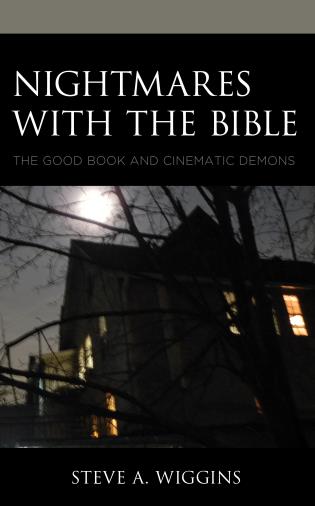
It’s called the New Books Network.  I have no idea what its stats are, but it is a place to get word out about your book that the academy has apparently overlooked.  I pitched Nightmares with the Bible to them some months ago and I recently had an interview about it.  I’ll keep you posted when it appears.  I suppose those who read this blog for the horror content sometimes think I may’ve forgotten about it.  The fact is I think of horror every day but there’s more to my psyche than just that.  This blog is a romp through part of what’s on my mind.  Sometimes it’s the quotidian horror of everyday.  At times it’s full of curiosity and wonder.  Sometimes I just trying to figure out how to work this thing.

So with the New Books Network.  I found out about it from an interview I heard with the guy who started it.  Funny—one interview leads to another.  He encouraged those listening to pitch their books.  I don’t have an institution to support mine, or students to have to buy a copy (and I’ve received zero royalties for it), so I figured what’ve I got to lose?  It was quite a nightmare (speaking of which) to arrange a time that worked for both interviewer and interviewee.  I think we rescheduled about half-a-dozen times, but then finally we both had a few free minutes together to chat.  Perhaps it’s a good thing I’ve been reading about the Devil.  

This was actually my third interview about this book.  Perhaps it’s a measure of how small the impact it’s had has been that I can recall each one so precisely.  You’ve got to start somewhere, so why not here?  The last question asked was about the next book.  I do hope I have a few more left in me.  I started writing early but publishing late.  Just because you write doesn’t mean people will read what you produce.  I find writing the most hopeful avocation ever.  Like a sower with his or her seeds, broadcasting them across the air, hoping they’ll land legible.  If there’s anything worth reading here there’s always the possibility it’ll be discovered someday.  That’s optimism with a glass half empty!  In any case, check out the New Books Network.  There are hundreds of books there to learn about.  And, I suspect, many authors who’d like the world to know what they’ve written.