Monasticism

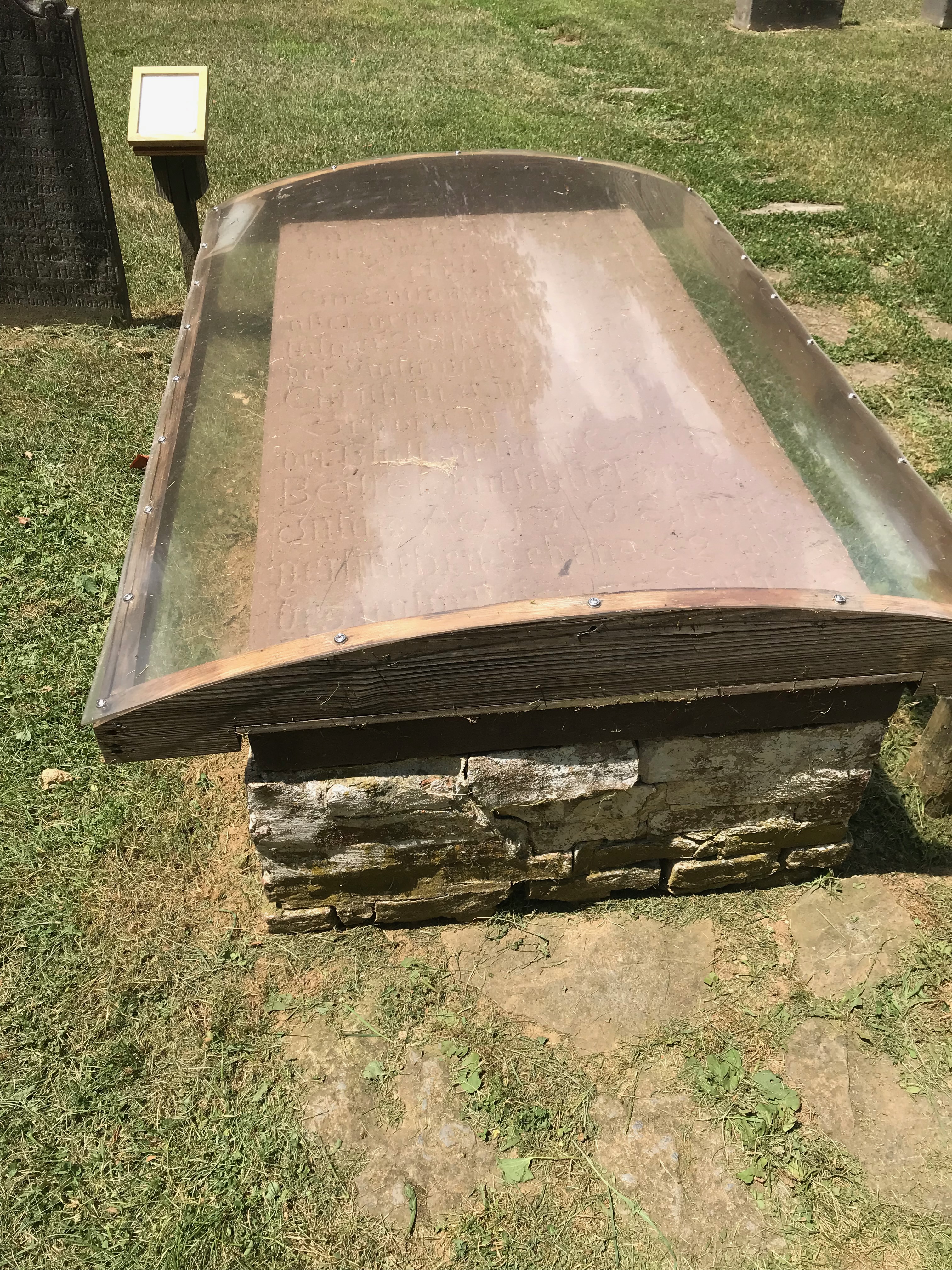
The other day I was reading about monasticism (as one does), and something curious occurred.  The article, which was describing a famous monastery, mentioned that monks lived in the convent.  Now, lest you think anything about religion is simple, I must clarify that in English it is common usage to refer to “monasteries”as places where monks (male) live.  Again, in English usage “convents”are for nuns (female).  The words, however, have a more interesting history than that.  Not exactly interchangeable (can you imagine the confusion?), they do originally refer to different kinds of institution.  

Often monasticism is traced back to Anthony of Egypt.  Anthony famously kept himself away from other people to devote his life to God.  This, of course, led other people to seek him out, wanting what he’d found.  Eventually, the narrative goes, the idea occurred that lots of guys could live together in common, but shut away from the rest of the world.  Thus monasteries were born.  The story’s actually more complicated and I can’t give you the full picture here.  We do know that even in Judaism, before Christianity came along, there were separatist sects.  One of them, known for convenience as “the Essenes,” set up a commune not far from where the Dead Sea Scrolls were discovered.  They lived lives of purity and prayer and women were strictly forbidden.  They seem even to have had a monastic rule.  They lived on the edge of the desert and perhaps were responsible for the famous scrolls.  Monasticism thus had early roots.

The European Middle Ages were the high-water mark for monasticism.  Like our own day, people were dealing with plagues and strong-arm kings and lack of adequate infrastructure.  Many powerful monasteries had been founded, and they could be for monks or nuns, generally not in mixed company.  There were also solitary monks (it was more difficult for women to wander about alone), called mendicants.  Such people needed places to stay now and again, and that was what was called a convent.  A monastery could be for either sex, and the word “nunnery”eventually helped to make this clear.  The English use of the words, while convenient, can lead to confusion because established monasteries could have convents as part of their design.  I suppose not many people are really interested in monasticism these days.  Looking at what’s happening in the world, however, I wonder if we might not be on the cusp of a modern replacement for them.  It would be something curious indeed.


Saving What?

It’s soul-tormenting.  For those who always awake in the dark, February starts to offer the hope of some early morning light.  It brings cheer and optimism into late winter.  We are awaking from the long night, only to be plunged back into darkness in an act of sheer, collective insanity.  For many weeks we’ll be tired all the time.  Less productive.  Automobile accidents will increase.  Finally, around mid-April, the early light will return.  Now please don’t misunderstand me.  I like Daylight Saving Time.  I see no logical reason, however, to set our clocks back in the fall.  What good does it do?  Gradual change is much easier on the human psyche, so why do we force a sudden shock to the system twice a year?  If the apocalypse ever actually happens it will be when we set our clocks forward.

Human hubris messes with time.  Many people simply accept the time shift as something we “have to do.” We don’t.  In the technological age there is no reason to continue what was initially a war-time effort to use light to increase production.  Hey, look, it didn’t prevent wars from happening.  All it causes are wicked huge yawns and their knock-on effects.  Time is a valuable commodity and yet we waste it twice annually, with abandon.  People as a group are a lethargic bunch.  The threat of war led the world to adopt a measure to shift light into the evening time, but for only part of the year.  Why not all the year?

When I commuted into New York City I often stood waiting for the bus in the dark.  Late February would come and some cheer at standing in the cold (there was no bus shelter) was possible with the faint streaks of dawn arriving before the bus, like the earth finally opening its sleepy eye.  March would come and I was once again in the dark.  Finally, about a month later the light would return.  Is it necessary to climb the same hill twice?  Can’t we just spring forward and leave it at that?  There will be lots of yawns at work tomorrow.  People will be careless while driving.  It may even lead to deaths.  There’s no reason to do this, but we keep on, as if it were some kind of divine command.  I’ve yet to meet one person—no wait, there was one—who thinks this system works.  Empty ritual is the worst kind.


Lenten Friday

I thought something was on fire when I first saw it.  A plume of black smoke rising against a backdrop of lowering, sullen clouds in a late winter sky.  Then I remembered that there’s a pet crematorium in that part of town.  I was witnessing the end, the smudged spirit of someone’s departed companion.  It made me reflective.  We currently have no pets.  (We can barely afford keeping ourselves going without adding another mouth to feed.)  Having grown up with a variety of animals–dogs, cats, birds, fish, turtles, guinea pigs—and having kept fish, a bird, and a couple hermit crabs for our daughter, I know the connections we make with our animal kin.  They teach children about death.  And they have the capacity to make all of us reflect on what it means to be alive.

I’ve buried my share of pets, but I have no idea what happened to the larger ones.  The cats.  The dogs.  It was pretty obvious when a dog died.  The cats, which were outside pets, tended simply to disappear.  There were no dog grave markers and I still have no clue what the grown ups did with the carcasses.  I once visited a pet cemetery; it was an oddly moving place.  Although we’re taught theologically that animals don’t have souls, it feels like part of ours dies when they go.  That strange teaching is courtesy of the Bible and it manages to hold sway in both science and religion.  And so another puff of black smoke rises from down the block.

Religion has a tremendous influence on us, whether we’re personally religious or not.  Since humans have always eaten animals, it’s likely that the earliest religions helped to assuage the guilt of killing something that so obviously has feelings and thoughts and could, in other circumstances, have been us.  When monotheism came in there was a great reduction in souls.  Humans alone made in God’s image learned to dominate other animals.  Today we have feedlots that are animal Hells while we pat Fido on the head and mourn his passing.  I somehow doubt that we’ll ever find ourselves back in the natural world.  We’ll likely go extinct before that happens.  Until that day, however, some of our saddest memories will be from when our beloved companions pre-decease us.  You can never be certain which way your thoughts might turn when lowering, sullen clouds fill a late winter sky.


Discovering Diaries

When you move, there are always things that get lost.  I wrote about Nietzsche recently, but one of the puzzles from my latest move, now approaching four years ago, was my college diaries.  (I have to be careful not to write dairies, since my spelling could use some attention.)  I used to keep diaries.  I haven’t done so since early in my married life, and even a little before.  While looking for an empty notebook for use at work, I discovered two diaries in the attic.  I’d been looking for them for, it’s safe to say now, years.  I spend quite a bit of time in the attic, so the fact that I didn’t find them in plain sight—a virtual purloined diary—was odd.  But not nearly as odd as what happened next.  

It was still part of our internet-free weekend.  Unable to get online, and having done my morning writing and reading, and with family listening to things in the background (I can’t read or write with background sounds such as music or talking), I picked up one of the diaries.  It was a lesson in the fragility of memory as well as how reading your own words from the past can make the present seem unreal.  It was a veil, if that’s not too Pauline, that came over me.  Who was that young man?  Was my life really that chaotic?  Were friends really that generous?  Did I really know that many people?  Why have specific ones stayed in mind while others who clearly meant so much of me slipped and fallen in my gray matter?

Like encountering a younger version of yourself, reading diaries opens new windows of self-reflection.  I guess I hadn’t remembered myself being as self-reflective as that man in his mid-twenties was.  Perhaps still is.  If you’ve spent any time on this blog you’re probably aware of my tendency to look at things from different angles.  To think things through.  My own brand of neurodiversity is what I think I have to offer.  I try to save my academic stuff for my published writings, but when as many years have passed, I wonder if I will look back on my early posts here and find myself asking who it was that wrote them.  Youth is a time of acquiring new experiences unlike any other.  Having grown up with so very little, the world itself seemed only days old back then.  If memory serves.


In War’s Domain

Good for absolutely nothing, to borrow the wisdom of Edwin Starr, war has again marred Europe.  We could see it coming from afar because people keep electing autocrats and strong men always want to fight one another.  There should be international laws banning their election, but instead innocent people die because one man has to prove he’s bigger than another.  The evils of the Trump years will be with us for decades.  There’s nothing Christian about waging war.  Seems that some folks have forgotten their Sunday School.  Wasn’t the selfless, self-sacrificing carpenter from Nazareth known as the “prince of peace?”  Of course, Ukraine became Christian long before Russia did.  What deep-seated insecurity such “world leaders” have!

While not wanting to be drawn into open conflict yet again, the world has pretty much all sided with Ukraine.  It has the misfortune of being nestled next to a weary nation with a dictator who despises the west.  Who pulls down his pants and shows off his missiles when anyone starts to open their mouth.  Who isolates himself and his people in the name of self-aggrandizement.  We came close to that over here.  So close that it still makes me shiver.  We feel for the people of Ukraine.  They did nothing to provoke attack, and they probably knew other world leaders would keep their distance.  Putin, like Stalin, wants a USSR.  An empire to put the evil west in check.  Hadn’t we left that kind of thinking behind?  Hadn’t we grown up after World War Two?  Strong men learn nothing from history.  They look at it and see only a mirror reflecting only themselves.

Hitler annexed Poland.  Russia, which has more land than it knows what to do with, doesn’t need Ukraine to be part of it.  The good people of Russia are protesting, just like the women brave enough to march on Washington to protest the fascism America embraced for four years.  I’ve put off writing about this because it’s so difficult to do without dissolving into tears.  Beware of either bare-chested or chest-thumping politicians worldwide!  It’s time to end the era of the alpha male.  We need mothers to nurse us back to health.  They call it “Mother Russia” but what mother acts this way?  The women aren’t impressed, Vlad—they’re in the streets bravely protesting.  It’s International Women’s Day.  Let’s honor women. It’s time to let the women lead.  It’s time to put war behind us forever.

Photo by Jenna Norman on Unsplash

Wordle

Each year in late capitalism seems to begin with a new fad.  This has been pronounced with the pandemic (which I almost wrote as “academic”) keeping people indoors.  Last year sea shanties were the rage with many of us finding ourselves humming something about a wellerman during the oddest times.  This year’s initial fad seems to be Wordle.  In case you’ve been living on the dark side of the moon, Wordle is an online game that is best described as Mastermind with five-letter words.  Mastermind, in case you were born after the Republican Party turned evil, is a game where you have six colored pegs that one person sets in a board a sequence of four.  The other player can’t see them, but has to try to replicate the colors in the right sequence.  At each guess the one who selected the sequence gives the guesser the following information: which pegs are the right color and which pegs were the right color in the right place.  (It occurs to me that explaining Mastermind could have been left out and I could’ve just described Wordle.  But what’s the fun in that?)

In any case the Wordle player has six chances to guess the right word based on the same clues: the right letter in the wrong place (yellow), or the right letter in the right place (green).  The hook is that you can only get one puzzle per day (otherwise many of us would be starving to death and out of work).  As a kid, I have to say, I could play Mastermind for hours.  I even brought our daughter up on it.  There’s something beguiling about trying to figure out what’s in somebody else’s mind.  There is a dark side to it, however.

I read a lot.  Lately I find that when I’m reading I’m secretly scanning for five-letter words that might be a good initial guess for Wordle.  The ideal word has no repeated letters and at least two vowels.  You need to narrow down the vowels first because every word has to have one of those six letters, since “y” functions as a vowel.  The other day I was thinking “s” has enough lubricant to function as a vowel too, but I digress.  Isn’t that the point of Wordle, though?  To digress?  There’s so much despair in the world with autocrats in power and the planet melting down that we need a little boost.  If only I could let myself read normally again, all might be well with the world.


Underestimated

Under-printing, ironically, can create great demand.  Books are generally under-printed because publishers don’t see much of a market for them.  Back before the days of inexpensive print-on-demand (POD, in the lingo) books may not have even existed as electronic files.  Often a publisher won’t print a book unless it anticipates that it can make back its costs.  If they think it won’t sell that well, they’ll print just enough.  And they might even melt down the typeset plates to reuse them for other books.  I’m not sure if that happened in the case of a book I’ve been looking to consult, but something has made this under-printed book extremely rare.  It’s not on Internet Archive.  WorldCat shows it in only two libraries world-wide, the nearest one over 3,000 miles away.  Its price used (and there seems to be only one copy) is $46,000. I can’t tell you what it is because you might buy it before I can.

For the purposes of my research, this is actually the only book on this particular topic.  (The subject isn’t even that obscure.)  The book is cited everywhere this topic is mentioned, and at least one person on Goodreads has actually seen a copy of it.  I have to conclude that all those who cite it must live within driving distance of one of two libraries worldwide.  For the rest of us the book is simply inaccessible.  As an author this is one of the worst fates imaginable.  Even if some price-gouger is selling a copy for $46,000 the author gains nothing from it.  Royalties are null and void for used book sales.  The only profiteer is the person who happens to have found a rare book (from the 1990s!) and is determined to ensure only the most wealthy will be able to purchase it.

I’ve known people who sell used books online.  Those who want to move books try to undersell the unfortunate under-printed title by pricing a bit lower than the competition.  There is no regulation, however.  You can charge whatever you like.  The funny thing is, if someone eventually forks over $46,000 for this book, and then has it appraised (it is a paperback from the 1990s), its actual worth is probably at most in the hundreds of dollars.  Back when we watched the Antiques Roadshow we always knew that the poor person who brought in a book would be disappointed in the appraisal.  Last time I was in Oxford I saw rare books from the 1400s for sale for far, far less than $46,000.  I only hope that my books, as obscure as they are, are never deemed that expensive.  And I would encourage publishers to print a bit more generously, for the sake of knowledge.


The Archive

Publishers hate it, but I bless its holy name.  The Internet Archive is a major boon for “independent scholars.”  If you’re not familiar with it, the Archive is a repository of scanned books.  It doesn’t contain everything, of course, and some publishers have tried to sue, but it operates like a library.  You set up a free account, and if you just want to look up a reference in a book they have, you can “borrow” it for a while, check your reference, and then return it.  All without leaving your home.  Internet Archive really took off during the pandemic.  You couldn’t get to the library and some of us research as long as we breathe, so here was a solution without breaking the bank.  The bank, ah, there’s the rub.

The reason publishers hate Internet Archive is that it makes content available for free.  Working in publishing, I understand the concern.  Publishers have to make money off their books—they are businesses, after all.  And if somebody scans it and makes it free online, your sales are undermined.  But are they?  Now, I can only speak for people like myself, but if a book is directly relevant to my research I will buy it.  Reading online is a last resort. My library is full of books bought for that reason.  Once in a while, though, my research leads into areas I don’t intend to come back to.  Or I remember reading something in a book long ago, back when I had library access with interlibrary loan, and I can’t afford to buy the book just to look up that reference.  Well, Internet Archive to the rescue.  Publishers don’t often turn their mind to independent scholars since we’re not prestige authors.  Waifs of the academic world.

That’s one reasons I don’t feel bad blogging about Internet Archive.  Most traditional academics pay no attention to my blog.  If I were hired by Harvard that would change overnight.  Those of us who skulk in the shadows of the ivory tower don’t mind getting by with freebies like Internet Archive.  And some part of us, even if we work in publishing, applauds such ventures as SciHub.  I do not suggest visiting SciHub, however, and I’ve never done so myself.  Its software automatically scans your hard drive for content that it can add to its huge repository.  It’s not safe.  The idea stands behind Open Access as well.  Knowledge should be free.  But even publishers have to eat.  And those in ivory towers have everything to gain by keeping their edifices pristine.


First Books

It was back in the day when I believed a book was the final word.  Remember those times?  (I have a suspicion that many Republicans really are longing for the days of simple answers: “Smith wrote it in History of Everything so it must be true,” and such.)  You’d read a book assigned in college and assume that since the author wrote a book s/he (but generally he, in my day) must be right.  If college really caught on, however, you’d start comparing sources.  Still, there was that one book that got you started thinking in a new way.  Back in the day when I believed a book was the final word I read J. Alberto Soggin’s Introduction to the Old Testament.  I remember the context well: Harrell Beck’s intro course at Boston University School of Theology.  We were given a list of texts and allowed to pick.  I chose Soggin.

Reading that book I realized for the first time that ancient Israel had borrowed from its even more ancient neighbors.  The fact that I’d attended Grove City College and majored in religion without ever having been introduced to the idea says volumes.  (Some parties, it seems, have always preferred to suppress information.)  I followed it up with Helmer Ringgren’s Israelite Religion.  I was hooked.  If we knew that there were ancient sources, and if we knew their languages and their cultures, why hadn’t it been obvious to the general public?  I started on a doctorate to uncover the truth since I couldn’t find courses on it at seminary.

We didn’t take many books with us to Edinburgh, but Ringgren was one.  By then I’d begun to realize that introductions weren’t really research books.  I spent my years digging deeper and deeper into ancient West Asian culture.  If it’d been possible I’d be there still.  Soggin and Ringgren, I realized by this point, were clearly biblical scholars, and not students of the specialized field that’s still called Ancient Near Eastern studies.  But still, their books had started something.  My copy of Soggin has followed the socks in the dryer, and I now realize the politics of introductory texts (if you believe it’s innocent you may be happier remaining in your bliss).  Still, I owe a debt of gratitude to those scholars who wrote in accessible words aimed at the novice.  Time has passed and nature has begun its own tonsure process, but this fallen monk has learned that many books are the only way of getting to the truth.


Better Things

It’s only a store brand, but still.  Maybe like me you remember opening a box of Raisin Bran and pouring out the first bowl.  And finding only bran.  Maybe a raisin or two.  By the time you munched your way to the bottom of the box you’d get a bonanza in that last bowlful.  It was more fruit than cereal.  Then they somehow figured out how to suspend raisins so that didn’t happen.  My mind hasn’t caught up yet, I guess.  I was down to the last bowl, and I was eagerly anticipating it.  Especially since the day before I’d only had three raisins and it was clear that the end was near.  Then the last bowl.  One raisin.  That’s a lot of bran to start your day, like C. S. Lewis’ always winter but never Christmas in Narnia.

Speaking strictly for myself, I like to save the best for last.  When I receive snacks in my Christmas stocking, I keep my favorites until all the others are gone.  In my personal myth of scarcity I’m quite aware that good things run out.  And they’re not always easily replaced.  Therefore I tend not to buy the things I like best.  This is the kind of psychology that drives economists mad.   As a child I was taught to put others’ needs before my own and that lesson has dovetailed with the running out of good things.  Of such things monasticism was made.  The raisins are now near the top of the box, but the crumbs are still on the bottom.

I often find breakfast to be the most philosophical of meals.  Perhaps it’s because I write my blog posts in the early morning.  Perhaps it’s because others are awake when I eat lunch and supper.  Perhaps it’s because that valuable things are rare.  It’s the nature of what we find most meaningful.  We live in a culture of largeness and acquisition.  What we truly want, however, may be very small indeed.  Ours is a culture of choice and plentifulness.  Raisin Bran is a choice, as is the store brand.  And it’s even possible to open the box at the bottom and return to my old form of expectation.  I doubt I will ever outgrow the idea, however, of trying to save the best for later.  It’s a form of optimism, after all.  And isn’t it best to start the day with the knowledge that better things are coming?


Reconnecting

Not using the internet for 48 hours isn’t the same as not being able to use the internet for that length of time.  Even politicians (who are notoriously slow at figuring out what people need) have started to make noises about this being an essential aspect of life.  Some (many) things you just can’t do without connectivity.  And during a pandemic taking an entire family to an enclosed space with free wifi (still a rarity) for over a full day so that they can get things done is an issue.  All of this has convinced me of the need to purchase a wifi hotspot, in addition to relying on what Astound Broadband (formerly RCN) is able to provide.  (You see, I’m in charge of a Sunday morning program at a local faith community.  I couldn’t even email anyone to let them know I wouldn’t be able to show up on Sunday without using costly data.)  Now that service has been restored, a kind of nervous normality has returned.

This has been a learning experience.  Of course we’ve got books to read.  I have papers, stories, and a next book to write.  None of those, ostensibly, uses the internet.  All of them do, however.  I’ve been conditioned to look things up on the web while I’m writing.  This is true of both fiction and non; a fact needs checking, a reference requires look-up, a thought occurs to you that has to be dealt with before you move on.  There’s an email you forgot to answer.  Etc.  Etc.  The web is our source of news (what’s happening with Ukraine?), our phonebook, our map, our encyclopedia.  Let’s face it—it’s an addiction.  But a necessary one.

Like many things, our government has the capacity to make internet access available, just like they could do our taxes for us and stop the madness of setting back clocks each year from Daylight Saving Time.  They could ensure universal health care.  They’re too busy “defending” a crumbling, pre-internet way of life and enriching themselves to actually enact any of these things.  And somebody would have to figure out what accountants would have to do if taxes weren’t an issue.  I strongly suspect people would still be willing to pay for more than basic internet connectivity.  But to have a basic signal out there that we could tap into without tapping out our data plans would be a real boon.  I found myself glancing at our neighbors’ houses all around and thinking, “They have internet.”  We pay a lot to have it too, but the only company in the Valley can’t guarantee access, especially on a weekend.  What have I learned?  The ascetics were onto something.

Photo by Nicolas Häns on Unsplash

Outernet

Once in a while (ahem), I interject a note of caution regarding technology.  This blog has been part of my daily routine for over a dozen years.  I try to post every day.  When I experience life outside I often think “that would make a good blog post.”  I make notes.  I ruminate.  One of the things I caution about is the fragility of tech.  In order for me to post these thoughts many different components have to work just right.  Not only that, but if I want to pay bills, or, more importantly, work so that I can pay bills, I have to have internet.  Everyone in my family uses it and they do so all day long.  This weekend is the long anticipated Project for Awesome (check it out at projectforawesome.com) sponsored by the Vlogbrothers, John and Hank Green.  If the names are familiar it’s perhaps because I’ve read and commented on their books.  Then the internet went out.

Late on Friday afternoon, of course.  Now we’ve had outages before—most recently after a power outage earlier in the week.  I called what used to be RCN, the only service provider in our area, only to be on the phone for half an hour with a tech.  She talked me through the usual rebooting and system checks.  The router was fine, but the only actual connection to the internet is via wifi mediated by a device called Eero.  There’s no ethernet cable (as if Apple laptops even have ethernet ports any more!), no phone line plug-in (ditto), nothing.  Nothing but Eero.  Apparently Eero had died.  And being a weekend a masked tech can’t be sent until Sunday afternoon.  So Friday night with no Disney Plus and Saturday without the long-anticipated Project for Awesome (you really should check it out).

Then my wife noticed her phone could act as a wifi hotspot.  It felt like we were entering a new world of magic.  (And data bills.)  The laptop could covert the G4 that her iPhone could receive into wifi.  It wasn’t ideal, because we have three people who want to use the internet.  With old tech.  All because one component of RCN’s complex system has x’s for eyes.  We had to play Wordle through her phone.  Watch Project for Awesome (it supports charities!) through her phone.  I don’t know, maybe we are even breathing through her phone.  Once in a while I interject a note of caution regarding technology.  This blog post is brought to you by my wife’s phone, acting as an internet hotspot, before anyone else awakes this Saturday morning.

Ancient history!

Routine Interruptions

Ironically, having just written about routines, we experienced a power outage with a wind storm.  Sitting home of an evening, the lights in every occupied room began to flicker.  We grabbed flashlights, suspecting what would come next.  The power outage led to a temporary loss of the internet, the god of this age.  Routine was interrupted.  This brought to mind just how fragile all this is.  As supply-chain issues have demonstrated, everything has to work just right for our society to operate at expected standards.  And an internet outage leads to an interruption of routines.  Whenever this happens, it reminds me of how complex our lives have become.  And how unfair.  There are people across the world who struggle with daily necessities such as clean water, safe homes, and reliable sources of power.  And a wind storm in eastern Pennsylvania doesn’t mean that the company’s power in another state is out.  Does this mean I take a vacation day?

As this winter winds down I again lament the loss of snow days.  They were local holidays, of course, and based on the unpredictability of nature.  Our power outage, followed by internet outage, was a personal kind of snow day.  Nobody wanted it and we all planned to work today.  Other than the outage, we’re fine.  Just like a snow day.  There’s a feeling of helplessness to it.  To fix the internet we rely on someone who knows how to do such technical wizardry.  Anyone can stuff a rag in a hole in the window, but to replace the glass it takes an expert.  How do you contact them when the internet’s out?  (Of course, everything’s back on in time for work.)

No doubt, many aspects of our lives are better.  We can pay our bills without using a stamp.  We can look up basic information online.  Even attend religious services virtually.  (Who doesn’t want to linger in their pajamas on a Sunday morning?)  Yet, for all of this to happen our power must be on and steady.  Our internet connectivity must be strong.  We have to be able to connect to work so that we can be paid so that we can keep the power on.  It seems an odd way to spend our time.  Obviously, if you’re reading this they—that mysterious they—have got things working again.  The power is on so that I can type this, and the internet is connected so that I can post it.  And yet I don’t feel any more secure.  And I know I’m one of those who has it easy.


Routine Change

A certain type of mindset thrives in routine.  Perhaps you’ve noticed that these posts appear each day about the same time.  This happens because the routine states that work comes next and it will be largely the same day after day after day.  After work there’s also a pattern until I fall, exhausted, into bed.  Hit repeat.  In the midst of this routine change has crept.  Partly it’s the pandemic, but mostly it’s technology.  And spending habits.  People don’t buy academic books like they used to.  Overall books are booming—so much so that paper shortages aren’t uncommon.  In order to try to keep up with electronic lifestyles, publishers have to integrate the newest technology and to do that everyone has to learn far more tech than technique.  The pace of change is dizzying.

For those who thrive on routine, such rapid-fire alterations make it feel like we need a personal change manager.  “How do I do this now?”  The way we’d done it for years has suddenly shifted and it is only one of many moving parts.  Meanwhile, outside work, other aspects are shifting even as many people still survive without computers at all.  We’re left, those of us tied to routine, in a haze of uncertainty.  It’s like that dream where you’re driving and you can’t slow down but you can’t see out the windshield either.  To make it through we look for routine.  I type this posts on a laptop.  I prefer to write things out by hand, but there’s no time for that any more.  The routine has been broken and the shop that repairs it has gone out of business.

Perhaps this is a malady of those of us who look to the past.  Technological changes used to be measured in centuries, not seconds.  Ancients thought a spout on a jar was a pretty rad invention.  For a hundred years.  Maybe two.  Now if you don’t buy a new iPhone every couple of years you’re hopelessly outmoded.  What was my routine again?  I still awake at the same time and begin each day with writing.  I’ve learned to do it via laptop.  Then it’s to the work laptop where updates seem to be loaded daily and I’m the dog chasing that stick now.  I wonder whose vision we’re following?  Technology’s in charge now.  The rest of us mere humans should be able to get along, as long as we establish a routine of routine change.


Socks and Books

The other day I was thinking about my annotated copy of Friedrich Nietzsche’s Thus Spoke Zarathustra.  I read this in seminary and took notes in the margins.  It was part of my permanent collection.  After a couple of moves from Boston, finding myself in Illinois, I couldn’t find it.  Like socks in a dryer, it had simply vanished.  Socks, of course, sometimes fall out of a sweatshirt or some other garment some time later—a piece of clothing with which they shared the carnival ride of the tumble dry.  The book, however, stayed vanished.  I often wonder where it went.  Prior to Nashotah House, mostly my wife and I kept our books in boxes.  Even now with a house many of them are still in boxes.  But I’ve never knowingly left a book behind when vacating an apartment.  Where is Nietzsche?

Wherever he is, he’s not alone.  This has happened before.  While attending Edinburgh University it seemed like a good idea to get out a bit.  Travel is an excellent form of education.  My wife and I, both interested in history, joined Historic Scotland.  Membership came with a guidebook describing all the properties and we used this as a record of which sites we’d visited and when.  (We used to keep extensive travel diaries, but epic trips are few these days now that we’re no longer academics.)  In any case, when we moved back to the United States, that guidebook was a treasured possession.  Yes, we kept it with the other books but in those days they weren’t so many as they’ve become now.  When we were unpacking things in our apartment in Illinois, we noticed it was missing.

Our flat in Edinburgh was small—really only three rooms.  Nothing was left behind there.  Where, then, did our book go?  Where’s Nietzsche?  What other items have we lost that we haven’t discovered yet?  And where do the socks go when they’re lost in the dryer?  It’s almost enough to make me believe there are little wormholes scattered around our planet, particularly attracted to socks and books.  Well, phones, wallets, and car keys too, I suppose.  The biggest mystery, for me, is the books.  We’ve unpacked nearly all of them now that we have a house.  Those still in boxes have been taken out and returned, no box remains unopened.  Our Historic Scotland guide and Also Sprach Zarathustra aren’t among the books we have.  They’re out there with the many things we treasure and misplace over time.  Perhaps some day we’ll stumble upon that place and be amazed.