Pennsylvania Dreaming

“I finally understand what I’ve come here to learn,” I said.  I was incredibly happy.  I recall the sun was shining, making its way up from my feet to my legs in a symbolic way, soon to reach my head.  I was on the cusp of an epiphany.  That’s when I woke up, needing to head to the bathroom.  Of course, after that it’s difficult to fall back asleep.  I knew that even if I did it would be to a different dream and I wouldn’t learn what it was that I’d come here for.  So it is with the great experiment of consciousness.  Either we’re continuously learning or we’ve already died.  Nobody has all of the answers.  Consciousness may be the true final frontier.  There is no scientific explanation for what it is that is universally accepted.  We all, however, know what it is though daily experience.

Dreams are considered part of our subconscious.  While we sleep we’re said to be not conscious, although we all know that at times we are.  Sleep can be somewhere between.  And we don’t even know what consciousness is.  The study of dreams is still valued in psychoanalysis—it is a form of thinking too—but in our materialist, capitalist society we tend to dismiss dreams.  They generally don’t bring in money.  In ignoring them we move further from understanding consciousness.  Enlightenment, while not a scientific category, still seems possible, even should it come in dreams.  If only we could stay asleep long enough to see it through.

I have a friend who also thinks too much.  He sometimes wonders if this constant focus on what the “they” want isn’t a plan to keep us too busy to think things through.  I often think that the monastics had it mostly right.  At least the part about taking time to contemplate.  When you encounter an idea that feels like a key and you know the door that it opens will be profound, it always seems that work comes to interrupt right at that point.  The job where you can wrestle with ultimate reality and not worry about not producing “product” for which you’re paid, is rare indeed.  That’s why waking from this particular dream was so difficult.  I had a semester break while teaching where I read three books that changed my outlook forever.  It was possible because I had a few weeks before I had to be back in the classroom.  Since then the dream, I guess, has been to return to where you’re paid to learn, for the betterment of all.


Just Curious

I’m constantly reminded of the dangers of it.  Interdisciplinarity, I mean.  We all know the cliched image of the myopic professor unable to function in the world because he (and it’s normally a he) has spent all his time on one subject.  Such people do exist, and they are generally institutionalized.  (What else can society do with them?)  More recently, however, the emphasis in higher education has been on interdisciplinary pursuits.  Many modern doctorates span two areas and many modern professors show themselves as adept at activities beyond their “day jobs.”  It is difficult, however, to be an expert in more than one thing.  In my own case, I had interdisciplinarity thrust upon me.  I’m therefore constantly being reminded of how tricky it can be.

While hot on the trail of a new angle recently, I found what I thought was the only book on a subject.  (All these years and am I still so naive?)  I started reading only to discover that the topic had been explored many times before by scholars, beginning in the decade I was born.  Clearly, if I wish to speak intelligently on this topic I should go back and start at the beginning.  So it is with interdisciplinary work.  Ironically, the book I was reading was itself interdisciplinary, demonstrating that old Ecclesiastes was right all along.  

My own research journey has been one of restlessness.  Others have seen this more clearly than I have.  Once at the Nashotah House bookstore I had a discussion the the manager about rocks.  This particular woman was certainly smart enough to have been on the faculty, and she saw things those of us that were didn’t.  I concluded by saying I didn’t know why I’d been so taken by geology to which she replied, “If it wasn’t geology it would be something else.  You’re curious.”  She knew me better than I did.  My curiosity about geology was deep and intense.  (It still is.)  I realized suddenly, it seems, that I knew too little about the very ground upon which I walked all day.  What could be more basic than rock?

On my desk

If anyone bothers to look at my full list of publications it quickly becomes clear that geology is absent.  I never became an expert, but I still read about it and pick up interesting rocks.  A small piece of rose quartz with a fresh fracture face stopped me in my tracks one very cold morning recently.  I’m sure plenty has been written on the subject.  The safest thing, however, is to become an expert on one thing.  Safest, but dullest.


Secret Formula

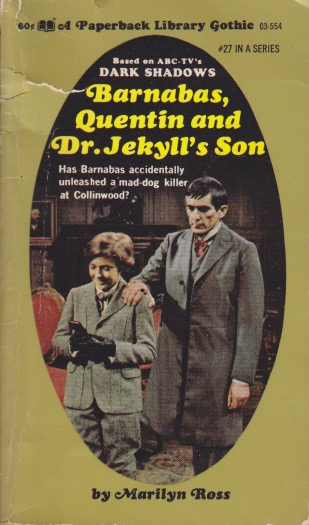
When writing fiction, I’ve never tried a series.  Some, such as Harry Potter, can set a writer for life.  I’ve always had the sense that the Dark Shadows novels were more potboilers.  There was a built-in fan base, and somehow in the sixties and seventies we didn’t expect Rowling-level writing.   It was the entire package: the Gothic, the recurring characters, the moody setting of Collinwood.  And of course, Barnabas Collins.  These novels may be journeyman writing, but here at number 25 in the series, Barnabas, Quentin, and the Magic Potion, there are some signs of literary improvement.  They are slight, rather like the first tinging of leaves with yellow as August begins to settle in, but they are there.  The series is nearing its end for me (provided I can actually find the last few books), but maybe it’s getting better.

What’s my reason for such a burst of enthusiasm?  Well, in this episode we see some features of Quentin that are more in line with how I remember him.  First of all, Ross tries some misdirection.  Quentin is presented as a master of disguise in the series and here there’s some clever hinting that, if you’re trying to think it through, leads you to mis-guess early on.  Not only that, but there’s a more positive view of Quentin here.  He’s not the evil satanist that he is earlier in the series.  Perhaps Ross had figured out by now that if people liked the idea of a Barnabas who is a conflicted victim, the same might apply to Quentin.  He’s not evil, but when you’re a werewolf, well, what can you do?

The “magic potion” is just as contrived and sketchy as most of the plot devices in this series—Harry Potter this is not.  It’s just a get rich quick scheme for a reprehensible old man and serves to move the plot along without really adding anything to it.  Carolyn here discovers that Barnabas is a vampire and, it seems to me, some of the plot devices for the Tim Burton movie might’ve been picked up from this particular novelization.  Although still not belle lettres by any stretch, the story here seems to have made some progress over the previous 24.  As a child, of course, I didn’t read these in order.  I relied on what I found at the bin in Goodwill, when I could find them.  I never had the whole series.  While trying at times, reading them may be a worthy exercise as an adult.  Perhaps series too grow up.


Ignoring or Ignorance?

As someone whose career has always been about the Bible, I’ve noticed that many intelligent people are naive.  They seem to believe that since they’ve outgrown the need for religion that it doesn’t exist among the majority.  I guess that’s another way of saying their thinking tends toward elitist.  The vast majority of people in the world are religious.  Among the elites, since about the sixties, there’s been the fervent belief that religion will die out in the face of science.  That hasn’t happened, of course, and it’s not likely to.  In the meanwhile, the idea persists and replicates itself and religion is ignored until people fly jets into towers or elect Trump or commit some other extremely catastrophic act.  There’s then usually a flare up of interest that dies down when the danger is past.

I wasn’t very socially aware in the sixties.  I was quite religious, though.  The religious, although always in the majority, constantly talked about being under threat of extinction.  There was, even then, a paranoia about being discounted.  Some of the elites realized that by pretending to be religious themselves they could make use of those numbers.  In other words there are forces, not from any divine source, keeping the interest in religion high.  Only the naive ignore it.  That’s one of the reasons it distresses me to see institutions of higher education cutting religion programs.  It plays into the worst sort of elitism to ignore the vast majority of the human population.  Meanwhile, subjects that bring in cash thrive.

Should we look away?

Growing up in an uneducated environment may have been a hidden blessing.  It can sometimes instill a lifelong desire to learn, even if your outlook is discounted.  I’ve always believed in education, and when it wasn’t, or isn’t, available I tend to self medicate by reading.  Reading about religion is always a learning experience.  There’s something profoundly human about it.  Acknowledging that something greater than ourselves is out there, whether you want to face it as divine or natural, seems wise to me.  I think we all know it’s there.  How we choose to respond to it, however, differs widely.  We’ve had glimpses of what the universe would be like if humans were the most puissant beings out there.  The results, based on the headlines, aren’t terribly encouraging.  I see these things and say something, but it’s ever so easy to ignore someone whose career has always been about the Bible.


Can You Recall?

While recently in touch with a colleague I’ve never met, I agreed to send along a filmography of my two horror movie books, Holy Horror and Nightmares with the Bible.  I tend not to read my own books after sending them to the printer.  Defensively it might be that I can say, “I know what I wrote,” but in reality it’s probably more a lack of self-assurance.  Writers often experience self-doubt and although you’ve convinced an editor and an editorial board you may still have your harshest critic to please.  Even though you’ve read the book many times through—at least fifteen each for these two books—you fear you might’ve overlooked something.  So it was strange trying to recall which films I’d actually discussed.  Or how many.

The latter point became clear in a recent review on Reading Religion.  Knowing how I went about piecing together Holy Horror, I’d forgotten just how many movies I watched and rewatched for it.  While it was never intended to be a comprehensive treatment of the Bible in horror (I haven’t seen all horror films), it nevertheless ranges widely.  After having submitted it I continued to watch horror and I continue to find various Bibles in it.  The amazing thing is just how truly widespread the Good Book is as an iconic symbol.  Indeed, I’d been reading about the Bible as an iconic book and that idea took hold in the early days of putting words down for the book.  As an editor I help authors figure out these kinds of issues all the time.  Physician heal thyself.

Even though Nightmares with the Bible just came out over a year ago I couldn’t list all the films off the top of my head.  Sometimes you need reminders.  My books are never discussed at work.  The people I interact with on a daily basis have no interest in them.  In other words, unless I’m having an interview or reading a review, I don’t have much opportunity to think about them.  I’ve moved on to my next projects.  The draft of The Wicker Man has been submitted and I have three promised articles to work on.  Still, I’m trying to settle on the next book.  I seem to have found some acceptance among the horror crowd.  Biblical meteorologists and researchers on Ugaritic goddesses are much less seldom in touch.  Monsters are often mixed forms.  I should know that after watching all these movies.


Write It Down

Those of us with a bookish outlook often wish we could look things up.  This comes to mind because of a recent documentary I watched, but the thought has occurred many times when visiting museums, particularly for special exhibits.  I’m pretty easily overwhelmed by too much information at once.  In a museum I have trouble reading all the placards and remembering how they tie in because there are so many interesting artifacts to look at.  I leave inspired and impressed and wishing I could look up the information I just read.  I’ve often wondered why museums don’t sell exhibition books that have photographs of the objects with replications of the placards describing what they are.  Maybe it’d just be a market of one, but I’d buy them.

The same thing is true of documentaries.  I’ll readily admit I’m poor with names.  It takes many interactions before a person’s name sticks with me.  (It’s nothing personal, I assure you—it’s just the way my brain works.)  When I watch a documentary I often wish a booklet accompanied it with the names, and credit lines of the interviewees and (because I know this is available on IMDb) a full bibliography.  The books mentioned.  You see, those of us inclined to research enjoy looking things up.  In the case of a long documentary (and that’s only if you subscribe or buy it instead of “renting” it for a one-time viewing) it means having to skim through it all again to reach the information that you could easily look up in a book.  Books are wonderful.

For me, one of the benefits of books is their stability.  Electronic resources change.  When you go to cite a website as a source you have to list the accessed date because things may have changed.  The book on your shelf remains reliably unaltered.  The few ebooks I’ve read come with marks in them.  There’s probably a way of turning this off, but I don’t want to see what other people think is noteworthy.  I suppose it’s supposed to make reading a communal experience.  Reading, in my experience of it, is mostly a private things.  One of the great joys in life is talking about reading with others, whether it’s the same book you’ve read, or a different one.  Why not add to that by making books to go with other species of information-sharing, such as museums and documentaries?  Those of us with a bookish outlook aren’t hard to please.  We just like to have it down on paper.


Sole Food

Perhaps its the pandemic.  Or at least the knock-on effect of shipping delays and supply-chain interruptions.  I can take it.  Unless, that is, it interrupts my soul food.  You see, my father was from South Carolina.  I grew up eating things like grits and black-eyed peas.  Then I probably went for a good two decades without eating either.  Like most people, however, I experience breakfast malaise.  Cold cereal every single day gets old after five-plus decades.  If we have reasonably healthy leftovers in the fridge I’ll sometimes have those.  Several years ago I started cooking breakfast for myself on weekends.  (My family wasn’t interested in my concoctions.)  When I became vegan I couldn’t keep cooking my usual weekend egg, so I turned back to soul food.

On a typical weekend I’ll have grits and black-eyed peas.  As a vegan, I really like beans.  There are so many varieties of legumes and each has its own charms.  Although we don’t eat all of them, there are over 40,000 different types of beans.  Even of those cultivated for human consumption I’m probably still pretty much a novice.  But lately our local grocery store has been having bean trouble.  Since the pandemic began we’ll occasionally go in and find the canned bean shelf bare.  Last week they had no black-eyed peas.  I fretted about it all week.  Was there a national bean shortage?  Was this the new toilet paper for a new year?  As the weekend drew near I decided I’d walk a mile on a snowy Friday to a local health food store where, I was pretty sure, there would be at least organic beans.

Dried beans are, of course, available.  I don’t trust myself to cook them properly.  It takes hours of soaking and boiling and always ends with some uncertainty.  Something about toxins and digestion just don’t mix.  Early on in the pandemic we didn’t horde, but slowly collected necessities, just in case.  Then in the summer it looked like Covid was over so we ate our supplies.  Bemused, I realized how many cans of black-eyed peas I’d storehoused.  Perhaps I had more foresight than I thought.  Supply chains are still stressed.  Backlogs take a long time to clear.  I have accepted that new appliances, cars, electronics might take quite a bit longer to get.  Specialty food items too.  I accept such things with a certain stoicism.  But my soul food, well, that’s a different matter entirely.  Don’t take my soul away!


Zones of Twilight

The other day I saw a beautiful twilight moon.  This was in the morning twilight.  I suspect many people don’t realize that twilight comes twice a day.  Twilight is when dayglow either begins or ends but either before or after the sun itself is visible.  Most people are familiar with evening twilight since they stay awake until after dark.  Morning twilight, so full of hope, is beautiful to the point of being painful.  The other day it was twilight as work was starting—the days are beginning to lengthen since I’ve been starting work in the dark for months now.  A waning gibbous moon shown through a gauzy cloud cover in an indigo sky.  It was very cold outside, so I went to the window to take a picture with my phone.

The modern phone camera often misses the point.  I zoomed in on the moon—phone cameras are wide-angle, by default—and it kept sliding in and out of focus.  The sky was getting lighter by the second, and I was losing the opportune moment.  I tried moving the phone closer to the glass, then back a little.  Still out of focus.  Then I realized what was happening.  My phone was focusing on the dirt specks on the window.  (Hey, it’s winter, hardly the time to be out with the squeegee.)  It occurred to me that a life lesson was being offered.

Thich Nhat Hanh recently died.  He was a Zen Buddhist master, and his passing reminded me of the old Buddhist saying that the Buddha is not the moon but rather the hand pointing at the moon.  Religions often confuse the hand pointing for the truly sublime realm to which it points.  Worshipping the person instead of following her or his teachings is a standard feature of religions worldwide.  It is the reason for much of religious conflict.  Those who worship the figure soon come up with their own teachings that are unrecognizable when held up next to those of the departed leader.  They focus on the window, not the glowing moon beyond.  The sky was growing too light to capture the image that had struck me.  The moon was blurry in a way that my eye hadn’t experienced it.  The moment of teaching was past.  The lesson was over.  The best that I could do was spend  a long day working then try to recapture a moment that had occurred in twilight.


Maudren Saint

Saint Maud is one of those movies that requires some thought.  (And I’ve been giving it plenty.)   It follows a brief time in the life of Maud, a hospice nurse who becomes obsessed with saving the soul of one of her patients.  Maud has direct experiences of God, like Teresa of Ávila but the film doesn’t make it clear, until the very end, if she suffers delusions.  After the traumatic loss of a patient at the beginning of the film she becomes a devout Catholic and when she feels she isn’t succeeding in her mission she punishes herself by using medieval-level means.  She hears God talking to her and what he (yes, he’s male) demands makes the viewer wonder if she’s found the correct spiritual entity.  Moody, edgy, and theological, Saint Maud is another example of how horror and religion work together.

It’s one of those movies that, when you finish it you start looking around for someone to talk to about it.  Of course, I watched it alone, wearing headphones, so I had dialogue with my own imagination.  One of the founding principles of cinema was the realization that viewers liked to discuss what they’d just experienced.  The other horror fans I know tend to be academics far removed from here.  I don’t know any of them well enough to pick up the phone, or call up on  Zoom, and say “Hey, let’s talk about Saint Maud.”  The thing is, I understand some of the doubts and motivations of Maud.  It’s always that way when religious interactions are with an invisible, petulantly silent deity.  Kind of like watching horror movies alone.

Horror has proven to be a kind of therapy for me.  The stresses of life are many and unrelenting.  Watching someone even worse off can help, as long as it’s fiction.  The world we’ve created is a very unfair place.  Many people suffer so that a few can enjoy more than they deserve.  Their lifestyle is protected by lawmakers that they buy while others suffer.  I’d just spend a day hearing about such injustices, and then paying hefty bills, and it seemed that some weekend horror was just what the doctor ordered.  I’ll probably watch Saint Maud again once I’ve had time to recover, and to think about the implications of the story.  Horror and religion have a viable partnership.  Such films occasionally become blockbusters, but sometimes they’re smaller affairs waiting to haunt us on weekends after hearing about the sad state of the Frankenstein world we’ve all created together.


Prolonged Re-entry

It’s a trope as old as holiday decorations themselves.  We all know the house (or plural) where the Christmas decorations remain until it’s warm and light enough to go out and take them down.  The same thing happens inside our house, on a smaller scale.  Bits of the holiday—whether it be Christmas cards on the mantle, or the not quite spent candles from the Yule log—remain, while we reluctantly reenter BAU (business as usual).  It’s a process best taken slowly.  I suspect many of us find AU (as usual) to be not really ideal.  Too many bills, too much Covid, too much of a demand made on that non-renewable resource, time.  I know people happy to see the holidays go, but I’m already counting the days until they come again.

January, whose end is fast approaching, is a waiting time.  Waiting to recover from perhaps a little bit too much holiday spending.  Waiting for a bit more light and warmth.  Waiting for that package to arrive.  Waiting for the plumber to call back.  Waiting for, well, business as usual.  I read about holidays quite a lot.  They wouldn’t be special if they happened all the time, of course.  And we need the supply chain that demands steady production of goods and services from those not actually chained to a desk all day.  Still, I can imagine a different world.  One in which there is time to get the non-work stuff done as well as filling obligations to capitalism, pouring out our libation to the emperor.  Many analysts are suggesting technology has increased efficiency to the point that a four-day work week is optimal.  Who’s going to pay the same for less, however?

Time is a commodity.  I’ve got a lot of projects outside work that I really want to finish.  Some of them, like that junk car in my step-dad’s yard, could turn a profit if only I had the time to spend on them.  Meanwhile there’s work to be done.  Long days in front of the computer knowing there’s something more exciting after it’s all over.  When work’s done I’m too tired to get much accomplished.  It’s like the endless lapping of the waves on the sea shore.  Unchanging.  Persistent.  Aware there’s always a coming storm.  So I’m sitting here with Tom Petty, waiting.  Even if we don’t know what comes next.  Let’s call it a holiday.


Out of Hades

They went together naturally, like chocolate and peanut butter.  Just about seven months ago Jim Steinman died.  Then yesterday, Meat Loaf.  They were both born in 1947 and together they made one of the best selling albums of all time, Bat Out of Hell.  I’m saddened by the loss of perhaps the only truly Wagnerian Rock performer.  After I discovered Bat Out of Hell, raising some eyebrows among those who knew me as a kid, I was hooked.  I bought all the Meat Loaf and Steinman collaborations.  Not only was Meat Loaf’s voice big, it was also sincere.  It was easy to believe the stories he was singing to us, no matter how fantasy-prone they might’ve been.  Once I start listening to one of his albums I end up going through them all.

When we become aware of music helps to define it.  I became aware of Bat Out of Hell during my Nashotah House years.  Still fearful from my evangelical upbringing, I wondered what students might think when they came over.  (Nashotah is a residential campus, and this was largely before the days when faculty were fearful of being alone with a student.)  As strange as it may sound, for a best-selling album, I was unfamiliar with any of the songs before I bought it.  I’ve never been much of a radio listener.  I agonized quite a bit before finally buying the CD.  I quickly came to see why it was so popular.  More than anything, it was the sincerity of Meat Loaf’s voice.

That music saw me through some dark times.  Attending mass in the mornings and listening to Meat Loaf at night proved an effective elixir.  The longer I was at Nashotah the more I came to associate it with the titular geonym.  Eventually Bat Out of Hell II came out.  I was less slow about acquiring it.  The third one appeared only after my teaching career ended.  When things went south at Nashotah, I decided that I would perform some symbolic actions during my departure.  There was nobody there to witness any of them—no person is indispensable to an institution and you’re soon forgotten.  The last thing packed from our on-campus house was the stereo.  I went back alone to get it and the few last-minute belongings from well over a decade in a place of torment.  Just before leaving campus for the last time I cranked the stereo up and played “Bat Out of Hell” at full volume.  An era has come to an end.


Nightmares with Poe

A review of Nightmares with the Bible recently appeared in which the reviewer said he didn’t get the Poe references.  Indeed, the anonymous reviewer said the same thing.  What neither of them understood is that Edgar Allan Poe has been formative for my life and that book was a tribute to him.  Did Poe write about demons?  Not really.  Did he once claim that the death of a beautiful woman was the most poetic theme?  Yes.  I saw the opportunity, in discussing possession movies, to draw Poe’s observation into the conversation.  Could the book have been written without it?  Yes and no.  Yes, I could’ve written a book on demons without mentioning Poe.  No, I would likely not be writing books at all were it not for Poe.

Today is Poe’s birthday.  What is this strange attraction I have for him?  It began, as most things do for me, with growing up poor.  We couldn’t afford bookstore prices, and that’s even assuming there was a bookstore nearby (there wasn’t).  I found the majority of my reading material at Goodwill in Seneca, Pennsylvania.  The shop had a book bin or two with prices I could afford (books were a quarter, if I recall).  I found a copy of Poe’s Tales of Mystery and Terror there.  I probably heard about Poe from my big brother—he’s a good source for scary information.  Reading Poe, I wanted to read more.  We couldn’t afford Scholastic school fare rates, but I did find a four-or-five volume collection of Poe’s writings at Goodwill.  Foolishly, I bought only two—those with his stories.

By high school I was checking out biographies of Poe from the library.  Perhaps as the child of an alcoholic I identified with a man who seemed so tormented.  I count his stories still among my favorites.  My favorite short story is, I believe, “The Fall of the House of Usher.”  It has come back to me at several points in my life and I find myself thinking about that gloomy house.  Particularly the narrator’s arrival there.  So full of possibilities.  So much potential fear.  Those of us who consume horror have a gateway to it—some event, or influence, or person who introduced the aesthetic of fear to us.  For me it was Edgar A. Poe.  Nightmares with the Bible is of a piece with Holy Horror.  To leave Poe out of it would’ve been the worst kind of sacrilege.


Phobia Therapy

I don’t like being scared.  That’s why I watch horror.  You see, many people deal with fear by running away from it.  Embracing artificial fears, however, prepares you for the horrors life will inevitably throw at you.  We humans have created an artificial environment for ourselves with many natural dangers removed.  For example (and there are always exceptions) we’ve been able to seal ourselves up in our homes and wear masks in public to avoid a killing virus.  For the most part we’ve destroyed our large predators.  As a society we tend to avoid the things that make us afraid which, in turn, makes us fragile when we have to face truly frightening situations.  I wouldn’t suggest becoming a fear junkie, but experiencing scary scenarios can diminish the overall  fear factor.

People often make assumptions about those of us who watch horror, even though it is the majority of Americans.  We’re seen as creepy people who lurk in dark places, unable to get along with our fellow human beings.  Perhaps it’s true, or perhaps it’s a reasonable coping technique.  I tend to think of it as a spiritual practice.  Spirituality is often about feeling, but it’s not completely divorced from rationality.  Often it has to do with that gut feeling that this is really real.  This is something that my years on this weary old globe have taught me is true.  Many times it’s this way in the face of evidence.  Others have trouble believing it, although some bearded guy alone on a mountain top says it’s true.  So life goes.

Spirituality is important.  I have many humanist friends and they are often uncomfortable thinking about spirituality.  It seems dangerous, a superstition that somehow survived enlightenment.  Enlightenment, however, is itself a spiritual idea.  There’s something inside of us that makes us who we are.  Whether it’s something physical or something else, it requires nourishing in order that we might thrive.  We expend a lot of energy arguing about the right (only right) way to do it.  The way to be a more spiritual person.  To me it seems that it’s about discovering what replenishes us.  What makes us into better people.  You find that and you feed it.  Spirituality comes in many forms and shapes.  Some of us have it fed by what others dismiss as mere horror.  There’s more to it than meets the eye, however.  I watch it to learn not to be afraid.


Come In

It feels good.  To be invited, that is.  Like many people I know how rare it can be.  When teaching at Nashotah House, invitations were scarce.  It’s a small seminary, not widely known.  Besides, the internet was in its infancy then and a great many people (including the seminary dean) were suspicious of it.  Few invitations came.  None for peer review opportunities, none for interviews.  I was invited to the Ugaritic Tablets Digital Edition project (for which I wrote a successful grant application) but that was because I met one of the lead editors while my wife was studying at the University of Illinois.  It’s strange, but nice, to be invited to things now.  It still happens rarely, but when it does it has two things in common: the invitations come closely spaced in time, and they have to do with horror.

Photo by Stella de Smit on Unsplash

This past week two invitations came.  One was to review an independent horror movie for Horror Homeroom and the other was to have an interview on the New Books Network.  Since this is the internet and since the internet’s endlessly self-referential, I’ll be writing about them both in more detail, directing you to the end results when they arrive.  It just feels good to be included.  I didn’t have many academic mentors at Nashotah House.  I’m a first-generation college-student; I didn’t know what academia would try to do to a person.  I had no idea what a “post-doc” was.  I did publish an article a year and write a second book which, I understood, was the key to getting hired by a “real school.”  I had a few interviews, but I’m demographically challenged, I guess.

Weathering the Psalms was written at Nashotah House but it has only led to one weekend church program.  My books on horror, written post-academe, have managed to get some small measure of attention.  It always struck me as ironic that, although raised among the theology crowd I never really found acceptance among them.  Those who know there’s something to horror, however, are a welcoming crowd.  The other day I was listening to Alice Cooper’s Welcome to My Nightmare and realized, whether intentional or not, the invitation was sincere.  It remains one of the formative albums of my life.  As a child the only invitations I had were altar calls.  I responded to many.  As an adult I’m still inclined to say “yes” when someone invites me in.  Rarity only adds value.


Anticipating Holidays

There’s that mundanity that sets in after the twelve days of Christmas are over that reminds us we’re back into regular time.  Many people no longer believe in the sacred, but the holidays are still sacred time.  January can be kind of stark that way.  Once we reach Halloween the rest of the year seems achievable, but there’s a lot to do between now and then.  Reemerging from the run-up to the holidays—it’s the long period of anticipation for the rest that comes at the end of the  year—back to what is now being called BAU (business as usual) is like cold water on your face first thing in the morning.  Each time I wonder if I’ll have the energy to do it all again.

Holidays punctuate and define our year.  It may be that your December holiday is fading now to a (hopefully) pleasant memory, but depending on your employer you might have Martin Luther King Day coming up soon.  I’ve known people to complain that it comes too soon after they’ve already had a few days off and they’d rather have a different day, later.  That kind of misses the point.  Business analysts (whom business leaders listen too except when they don’t like what they say) suggest that the four-day work week is sufficient to achieve what we need, now that we’re connected all the time.  Some jobs, of course, require your physical body to be in a specific geographic location and there’s not much that can be done about that.  Hours can be reduced if more people are hired, but we’re going through a strange period of people quitting their jobs.  I’ve always wondered what that must feel like.  Is it like a long holiday, only with even more financial worries?

The twelve days are over, and although I didn’t have all of them off I kind of wonder where they went.  Some folks are eager to get the tree down and decorations put away.  To look out at the blank canvas of snow and envision how to paint the year ahead.  Others of us see the wisdom of hibernation.  Bears seem to have the right idea.  Still, I enjoy the starkness of January.  The cold can be bracing and the snow a chore to remove.  But being out in it can become a kind of holiday in its own right.  Our time on earth should be a time of celebration, even as we look forward to the holidays later this year.