Energized

I grew up in Pennsylvania, but there’s a lot I don’t know about the commonwealth.  (I do know that it’s a commonwealth rather than a state.)  My parents weren’t educated—neither one finished high school—so I didn’t have a lot to go on at home.  I recently learned that it is the second largest energy producing state in this somewhat tenuous union.  Texas is, of course, first.  I suspect this is because the Keystone State is old.  Not because it was one of the original thirteen colonies (which it was), but because the Appalachians around here are ancient and abundant in coal, oil, and natural gas.  And speaking of natural gas, the state houses of congress are dominated by Republicans.  The state motto should probably be “Burn, baby, burn.”  Given the number of Republicans, it is also one of the most corrupt states.

Even in the rural parts where I grew up, it was clear that energy was a huge part of our history.  The petroleum industry began in Pennsylvania.  Col. Edwin Drake’s well at Titusville is still producing.  The oil fields here are shallow (speaking of the GOP), however, and the interest shifted to Texas where, well, everything’s bigger.  Growing up, refineries were a familiar sight.  One of my vivid childhood memories is witnessing a refinery fire.  I was too young to really understand.  My brothers and I were outside playing when it started to snow in the summer.  It wasn’t really snow, it was hot ashes falling from the sky from a refinery fire about five miles away.  We later drove out to see the huge vats melted like wax, charred and rusted under what had been an industrial paint facade.  Petroleum companies are like that.

My second hometown of Rouseville lived under constant threat of a refinery fire.  The small town of about 800 was completely dominated by a Pennzoil refinery that took up much of the valley.  We trembled whenever the refinery sirens went off.  My life may have been shortened by breathing in all those toxic fumes.  Big petroleum comes with massive costs.  We know that alternative sources of energy are available, but we have very rich people who stand to lose some of their vast fortunes if we move away from fossil fuels.  There’s much about Pennsylvania that I don’t know.  I’ve lived here longer than in any other state.  And I, for one, would like to see this fascinating commonwealth work for the betterment of the world it inhabits instead of rewarding the bad behavior of the wealthy.


925

Sometimes you just know.  One of the things I know is that nine-to-five schedules are killers.  Literally.  I grew my permanent teeth as a teacher.  Before that I had been set on being a minister.  Something they have in common is that neither profession relies on a nine-to-five schedule.  The hours are much longer than a forty-hour work week, but they’re flexible.  If you’re not in class, or in church, or a committee meeting, or your office hours, you can dash out to the store if you need to.  You can shut your eyes for a few minutes if you didn’t sleep well the night before.  As long as you get your work done adequately, nobody really bothers you about your time.  My initiation into the nine-to-five, in my mid-forties, was a shock from which I’ve never quite recovered.

A few years into this unnatural territory, my nine-to-five (925 is quicker to type) evolved into the commuting variety.  I didn’t live terribly near New York City, so that meant catching a very early bus.  I’m a morning person, so that’s not really a concern.  The problem is that my brain’s not a 925 brain.  Like one of my professors, I still awake at 1:30 (having gone to bed about five hours before) with an idea that won’t let me go.  When that happens you have to put on heavy layers of clothes against the night’s low thermostat and make your way downstairs to the computer.  By three a.m. your body’s in the fully awake commute mode.  Thing is, you’ve got a 925 day in front of you.  When I was teaching I’d be able to snooze again before even my eight o’clock class (I was never one to object to the early shift) began.

The idea behind the 925 is an atavistic throwback to pre-internet days.  Pre-pandemic days.  Days when you had to be watched to ensure you were working.  When you had to sit in a cubicle where nobody and everybody can see you.  If you’re not staring at your screen or not in a meeting you’re not working.  So this antiquated thinking goes.  Teachers and ministers don’t hold to regular hours.  They identify with their jobs—the very definition of “professional.”  If it’s what you’re born to do you don’t complain.  And if you happen to awake at 1:30 with an idea that just has to be expressed, those who pay you will understand if you yawn a time or two the next day when, ideally, you won’t be stuck staring at a screen.


Twilight on Christmas

We have too many ornaments for the single Christmas tree we can afford.  There are few reasons for this.  One is that I married into a family with Christmas ornaments.  While on my own I never set up a tree and I owned very little beyond books and some LPs.  Besides, I went home for Christmas.  Another reason is that although I seldom think of Christmas before December, we tend to buy ornaments as souvenirs.  Not for everywhere we go, but we did start a ship sub-collection when visiting coastal locations.  We also have a moose sub-collection.  I spent quite a bit of my early adulthood out in the woods looking for moose, generally in Maine.  Then there’s the “other sub-collection.”  The one that’s be relegated to it’s own mini-tree.

To understand this, let me begin by noting that Christmas is the birthday of Rod Serling (shoutout to my friend John Morehead for pointing this out).  Rod Serling is one of the reasons—he can’t take all the blame, of course—that I’m interested in strange things.  The Twilight Zone affected me profoundly as a child, and probably had more impact on my life trajectory than I might’ve realized.  The “other sub-collection” consists of the weird ornaments.  It began with a Cthulhu ornament I found online a few years back.  Then, at a fair trade shop in Ithaca, I found a yeti ornament.  How could I not support fair trade?  This year at Christkindlmarkt I found an alien head made from a recycled Christmas tree trunk round.  It seems my strange Christmas ideas aren’t unique.

Bethlehem styles itself “Christmas City.”  The celebration in the Lehigh Valley is palpable.  My family generally spends a December Saturday strolling up and down Main Street, visiting the quaint shops.  Last year one of them had ornaments of sasquatch skiing.  I didn’t buy it, thinking someone might pick up on my pointing it out.  This year I went back to the store but they didn’t have it any longer.  A quick online search, however, revealed many options for a cryptid Christmas.  What can I say?  These things make me happy!  This year I’ve been thinking quite a bit about ghosts and the holidays.  It’s an ancient connection that has been lost to the commercialization of Yule and Saturnalia and other December celebrations.  So, Rod Serling was actually born on Christmas day.  I hope that however you celebrate this day it will bring you joy, no matter how weird.


Another Article

Some insecure people feel the compulsion, but really don’t know why.  Speaking strictly for this insecure person it’s because (I think) I’ve been ignored most of my life.  I didn’t cause trouble so teachers seldom paid me any mind.  (I’m pretty good about obeying rules.)  I was a middle child with less than a year at youngest status.  I was abandoned in a house at the age of one for God knows how long when my father went out on a bender.  Who knows?  In any case, this piece isn’t really about any of that.  It’s about the compulsion to write articles.  I don’t know why I keep volunteering to do this.  They get me nowhere.  You’re not paid for them, and you get little exposure.  I seem to be addicted to appearing in print.

This blog is purely an electronic phenomenon.  It exists nowhere in print.  I post on it every day in the hope that, like a Pioneer probe, it will connect with somebody who comprehends.  As a non, but erstwhile, academic I am not compelled to write.  In fact, it sometimes complicates things.  (If you believe that freedom of written expression exists you’ve never read a publishing contract.)  So print publication appeals to me.  I had an email from a volume editor the other day and I couldn’t place the name.  I opened it to read that the volume had been accepted as I was struggling to remember what I promised I would write for him.  I had to do an email search to locate the chain.  So that’s what I said I’d do! (The previous article I’d committed to I remembered well, since the proposal was long overdue.) 

Print publication, you see, takes a long time.  An erstwhile editor (likely an academic), gets an idea.  They wrestle with it a while and then write it down.  Pitch it to a publisher.  The in-house editor has to pitch it to the editorial board.  Often after peer review.  It can, in my defense, take months—plenty of time to have forgotten I said I’d contribute.  Then the book has to be written.  That part can take years, but in edited collections many hands make light work.  After the disparate pieces are finally cajoled in (one editor had to keep after me for four months), the editor, well, edits them.  Then they finally get sent off to the publisher.  The production process takes about a year.  The volume comes out and you get a congratulatory email or two, and then it’s forgotten.  I’m not sure why I do it, but I’ve been published by university presses for taking these on.  When I was teaching I couldn’t seem to get their interest.  Now that I’m writing about horror they’re starting to notice.  But then, that’s how monsters behave.


Not Really Nervous

Embarrassment is a not uncommon reaction.  People who knew me as a religion professor or who now know me as a volunteer leader in my local congregation wonder why I watch and read horror.  It helps to know that you’re not alone.  Mathias Clasen is an author I’ve mentioned before.  I read his first book on horror and I was excited to see his A Very Nervous Person’s Guide to Horror Movies, recently out.  I’m not really a very nervous person in this particular regard.  As those who know me will attest, I’m nervous in many aspects of life, just not this one.  Still, after having heard the author describe what his university sponsored fear lab does I was curious how he’d approach horror for the nervous.

Clasen is an academic who clearly enjoys writing.  He’s fun to read.  He admits to being somewhat nervous around horror himself, not watching horror alone.  In fact, the book has several tips—such as not watching horror alone—on how to survive the experience for the curious but cautious.  What I inevitably take away from studies such as this is a couple of things: watching horror isn’t something only I do, and it’s actually good for you.  Studies (and here’s where Clasen is able to point to actual sources) have repeatedly demonstrated that horror has adaptive benefits.  Kids like scary stories, and there’s a reason for that.  The interest in horror generally peaks at the onset of adulthood and tends to decline from there.  Some of us, however, are perhaps arrested at that stage.  Or rediscover it.

There’s a great utility in being able to discuss horror intelligently.  Another point Clasen addresses is that horror is often intelligent but since those who don’t watch it often set the social standards it’s addressed as if it’s juvenile and unsophisticated.  Yes, there’s trash out there.  There is in every genre.  For many people, however, the popularity of slashers in the eighties forever defined horror as naughty teens getting murdered by a bloodthirsty maniac with some kind of blade.  That’s only part of the picture.  Horror has a history as old as cinema itself and the earliest exemplars were based on literature.  It has been an innovative genre from the beginning and when a particularly noteworthy horror film comes out critics and pundits are quick to relable it as a thriller or drama or anything but horror.  We need to give horror its due.  It’s always a pleasure to read a book by someone who has an appreciation of what horror has to offer, even if he’s nervous about it.


Masking Identity

Who am I, really?  Identity has been on my mind quite a bit during this pandemic.  With millions dying I suppose it’s important that “the officials” know who we are.  At the same time I don’t feel comfortable taking my mask off in front of strangers.  It’s kind of like a facial striptease that puts you at risk for some communicable disease.  Because I had to fly for Thanksgiving this year I got to put my Real ID to the test.  I removed my mask for the photo—at the DMV, of all places—so there was risk involved to prove that I am who I’ve always been.  When I went to get a Pennsylvania license three years ago, the system remembered me from when I got my permit and asked if I still lived in the county where that had occurred.  They seem to know a lot about me.

At the airport the TSA guy told me to take off my mask.  He had to confirm that I was the same person my Real ID stated I was.  I wish our government would tell me who I am.  And of course my passport decided to expire also during this pandemic.  I went to a local pharmacy to get my passport photo taken.  (I know you can do this at home, but you need a printer that handles photo paper.)  Then you can send the application in by mail.  How do they know it’s really me in the photo?  I had an uncanny experience many years ago when a visiting team from the Association of Theological Schools (ATS) visited Nashotah House for an accreditation visit.  One of the inspectors looked very like me.  I think we both noticed the resemblance immediately.  It was like we were twins.  Later I found his photo on the school website and asked my pre-literate daughter who it was.  She said “Daddy.”

Who is that masked man?

So I’m standing here with my mask off in a store for confirmation that I am who I claim to be.  I wonder if this other guy’s photo were sent in would they know the difference?  In fact I’ve had the experience I suspect many people have had of being mistaken for someone else.  Helping a friend move to Kentucky after college, I had several people in a small town I’d never visited before identify me as Joe’s son.  I looked just like him.  Of course, that was way before the pandemic when our faces were public property.  Now I just wish I could put my mask back on so that I could feel a little less naked.


Riddle

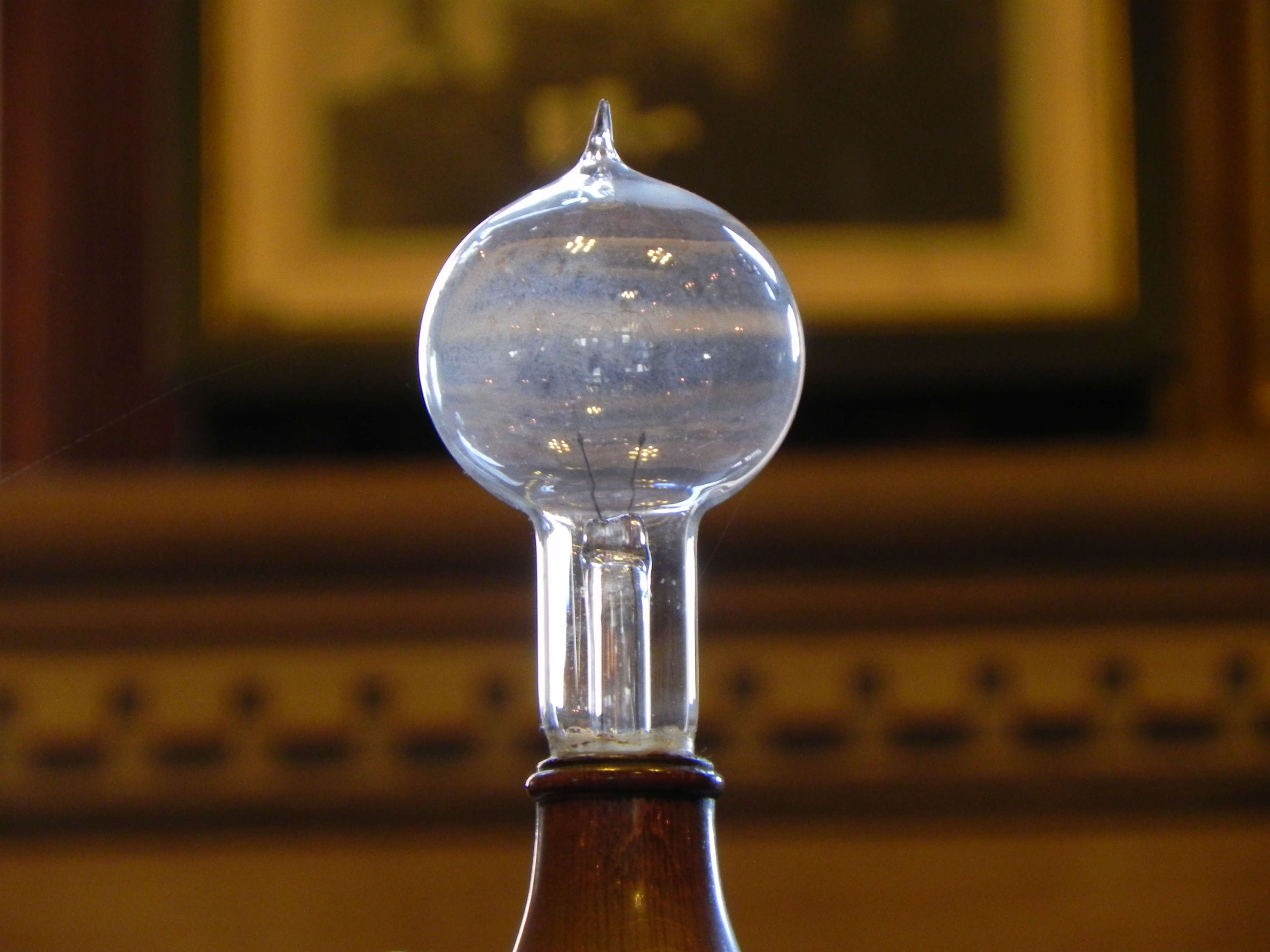
It’s an age-old question: how many Ph.D.s does it take to screw in a lightbulb?  I haven’t figured it out yet, so if you have the solution please let me know in the comments.  It’s like this—I’m a short person living in a tall house.  Even while living in apartments I had bought a six-foot ladder and an eight-footer, to reach various things.  A bit of an acrophobe, I tend not to use the latter ladder unless it’s really necessary.  Then the landing light went out.  It’s a dark time of the year and a light over the stairs is really a matter of safety.  The stairs continue up from the landing and this particular ceiling light is eleven feet above the ground.  Given how far I can safely (debatable) climb an eight-foot ladder, I can’t reach the ceiling with what I’ve got.

We had to buy a 28-foot extension ladder to reach the roof.  In its collapsed position it’s 14 feet and requires two people to carry.  I’m not sure we could get it around the corners in the house, and even if we did the math doesn’t work out to fit it in an eleven-foot space with stairs every direction.  I decided to ask YouTube.  The solution there is to buy several two-by-sixes and some heavy-grade plywood and build yourself a temporary platform.  With the pandemic-induced shortages, and therefore price increases, such a platform would cost about $100 to build, and then I’d need to unbuild it after screwing in the light.  Or we could buy another ladder.  Maybe a different house while we’re at it.

Imagine

The thing about ladders is they come in standard lengths.  Around here, anyway, a ten-footer isn’t an option.  The best bet is a multi-position ladder.  Retail cost somewhere upwards of $150.  To someone afraid of heights it feels like the safest of many less than optimal options.  Apart from perhaps carrying flashlights in the evenings that come so early now.  Still, that raises the specter of cost.  How much does it cost to screw in a 5-dollar (LED, of course, to help the environment) lightbulb?  It seems to be a $100 repair, no matter how you do it.  I could try custom-building my own ten-foot ladder.  Or I could try making some tall friends.  Apparently you can rent ladders as well, but of course we’d need to rent the truck to get it here as well.  Or we could learn to live with a shadowy stair this long winter that’s just getting started.  How many Ph.D.s does it take?  I don’t know, but the answer will be more than one.


Myth of Ownership

“Luddite” doesn’t really describe me.  I don’t have a problem with technology, but I often object to how its used.  Let me give an example or two.  You spend your hard-earned money on a device—smart phone, for instance, and/or a laptop computer.  These you use for your personal email, which you’re not allowed to check at work, and for paying bills and buying new stuff.  So far, so good.  But once these devices become ubiquitous enough, others presume the right to use them.  Never mind that you’re paying for the internet plan and your likely unreasonable monthly fees for using that phone.  Employers, for instance, concerned about their own security, require you to use your personal phone for some kind of authentication app to protect their assets.  Hmm, and who is paying for the data use on that phone?  And the wifi that makes it work?

Or consider a volunteer organization that’s taken over by a technocrat.  Suddenly you have to set up Dropbox on your laptop (with its attendant frequent emails asking you to upgrade until he seated on a white horse comes through the skies).  You can’t participate without access to the Dropbox.  Or maybe they want you to join Slack.  The problem, it seems to me, isn’t that we don’t have enough way to communicate.  No, the problem is we don’t communicate well with what we do have.  Terse messages may be understandable for smoke signals or telegrams, but a greeting, body, and closing aren’t too much to ask for an email.  I don’t text largely because too many misunderstandings occur from the brevity, and not infrequently, from auto-correct.

I use technology daily.  For about a dozen years now I’ve been posting daily right here on this very internet.  A have a neglected Twitter account and I glimpse Facebook for, literally, about two minutes per day.  I can be reached on LinkedIn (and no, I don’t have any jobs to offer), Instagram, and yes, even Slack.  We’re all available to each other constantly, but communication breaks down when we don’t communicate clearly.  A writer I greatly respect once told me emojis are cheating.  I tend not to use them, but they may help the terse text go down a little more smoothly.  We are all challenged for time.  There’s so much to do and we’re not getting any younger.  But I was born in an era in which if you use somebody else’s stuff you ask nicely first and said “thank you” after.  Especially if they’re paying for you to use it.

Who owns whom?

Change Management

Calendars fascinate and flummox me.  When I try to convert from Julian to Gregorian, or vice versa, I get hopelessly lost.  The same applies to time zones and that horror known as springing forward or falling back.  Time, as something that is constantly moving, isn’t easy to grasp.  I’m in charge of a scheduling activity at a local organization.  (Whoever thought that was a good idea I’ll never know.)  While trying to sketch out 2022, with fear and trembling, I noticed something for the first time.  In a non-leap year the dates correspond to the same days of the week for January and October.  This is also true for February, March, and November.  And September and December.  This would’ve been helpful to know, it seems, in the previous half-century of my life.  There’s solidity underlying the flux.

It was really only in the 1890s that “eastern religions” were discovered by Americans.  Our nation was so thoroughly biblicized that we had forgotten that there are other ways to view the world.  The idea, prevalent in the sixties and seventies, that we can gain wisdom from exotic religions was probably misguided.  After all, to truly understand them you need to have years of immersive experience in them.  It also helps to be a true believer.  Still, I find the conceptions of change from Buddhism and Taoism particularly helpful.  Change is permanent.  If we spend our lives fighting it we’ll be frustrated rather than enlightened.  Of course, for those of us who are chronologically challenged this isn’t necessarily good news.

Employers are busy hiring change managers.  These people work at a pretty theoretical level that doesn’t always address the desire for stability.  Sometimes I want to say, “Hey, for the first two decades of my career change was slow, and now that I’m aging I’m being told to go faster.”  I do try to keep up, but the automobile hadn’t been invented when my grandmother was born and we were walking on the moon before she died.  Since the internet, however, things have speeded up even more as ideas are shared worldwide and we see new ways of looking at things.  We may desire stability, but change is indeed permanent.  The pandemic has changed much, and things aren’t going to go back to the way they were.  I look to the notebook in front of me.  I probably would never have noticed the correspondence of January and October if I hadn’t been writing the dates out on old-fashioned paper.


Old and New

Annual holiday traditions show just how deeply ritual is established in our behavior.  As the holiday season rolls around we find our familiar customs to be fun and comforting.  I’m not much of a commercialist; for me the end-of-year celebrations are mostly about rest and peace, still a family tradition since settling in the Lehigh Valley is the Christkindlmarkt.  Bethlehem, founded on Christmas Eve by Moravians, has attempted to live up to its namesake and celebrate the season well.  It’s become an established family tradition to visit the Christkindlmarkt and we wander the tents with artisanal goods, some Christmas-themed, and others more just gift-ideas.  We seldom buy much.  It’s the spirit of the holidays that seems to come through and we need something to help us get through winter.

Each year things are a little different.  Many of the mainstays are similar, however, with the same vendors with the same merchandise.  What has changed in the past year is really us.  We’re not the only ones who make an annual tradition of this and we’re not the only ones who see the same scarves, sweaters, pillows, and pottery.  And ornaments—lots of ornaments.  We see new things because we’re different from our selves who’ve wandered through here before.  Hopefully we’re better selves.  Each time I do this I find myself growing more and more reflective.  A celebration of peace and love to all seems to hold, for the most part.  There are lots of people—too many for my comfort at this stage of the pandemic, but we’re wearing masks and hopefully most of these people are vaccinated—peace and love for all.

The end of the year has long been a season of festivities.  Even ancient peoples, especially in temperate regions, longed for the return of warmth and light.  In response to the long hours of darkness around the solstice they instituted holidays.  Times for us to get together and work a little less and relax a little more, recharging our spiritual batteries.  Yule with its Christmas trees and logs, served to bring the message of light into the darkness.  The twinkling of holiday lights is a festive sight, bringing back childhood memories of gifts, special foods, and time off from school.  I’m a different person than the one who’s written a blog post about Christkindlmarkt in the past.  If you’ve read such posts you’re a different person now too.  We all hope that the present person is a better one than the previous as we enter this season of joy and kindness.


Standard Maintenance

Something disturbing happened the other day.  My laptop started requiring constant plugging in.  I figured the battery was starting to go—it is several years old now.  Since time is the ultimate commodity in short supply, I made a weekend appointment with a genius at the local Apple store, which really isn’t that local.  I drove out on a rainy Saturday afternoon to get the battery replaced.  That’s not the disturbing part.  Neither is the fact that so many people were flocking around in an Apple store without wearing masks (although that does count as disturbing in it’s own right).  As I sat there watching the giant projection of devices I should consider buying, my daughter mentioned to me how like a dystopia it was: being subjected to advertising aimed at purchasing something you’re in to have repaired.  That wasn’t really the disturbing part, either.

No, what was disturbing occurred when our genius told me I would need to leave my laptop there for three-to-five days for it to be repaired.  I use my laptop daily and extensively each day.  I have no spare and I post daily on this blog.  (Those times when a post doesn’t appear it’s because I think I’ve hit the “publish” button but I haven’t.  That happened to me again recently and I only discovered days later that WordPress was listing it as a draft.  Sure enough, I’d gotten so busy I’d not click “publish”—which happens, ironically, mostly on weekends.)  I was hit with panic.  Could I live for three days, up to a week, without my laptop?  No email.  No blog.  No ubiquitous Zoom meetings outside of work?

Even before the pandemic the internet had become my lifeline to the larger world.  And the thing is I’m sending my thoughts out like a Pioneer probe to that outer space of the web, not sure if anyone will intersect with it and understand the gold-plated plaque within.  At least I hope it’s gold-plated.  I’ve been blogging here since 2009, at least one laptop ago (or perhaps two).  I’ve posted over 4,500 times.  What would happen if the earth went through the tail of a comet and wiped out all this electronic data?  Would there be anything left at all?  That’s the part I found disturbing.  My ambivalence about technology doesn’t mean I’m not addicted to it.  I was spared an immediate crisis since the genius at the bar told me the battery (being such an old model) was out of stock and would take a few days to arrive.  Meanwhile I could continue to live in my virtual world as normal.


Flight Path

It’s been some time since I was on a plane.  Or in a hotel.  These things seem strange and foreign to me now.  Covid-19 is now a fixture in life and we, as humans typically do, have adjusted.  Of course I was flying for Thanksgiving on the busiest travel day of the year.  Seeing all those people standing in line at 4:30 a.m. at the airport made my lifestyle seem a little less weird.  I’m used to being up at this time.  They did have to de-ice the plane at Lehigh Valley International Airport.  I’ve never been on a plane that was taking a shower before.  I also didn’t touch anything but my book.  And it seemed that those who “don’t believe in” masking weren’t making a fuss because you can’t win an argument with the FAA. I’m thankful for that.

I’d almost forgotten how to fly.  On the first leg of the journey I was the only one whose “hand-held device” was made of paper.  Connecting out of O’Hare, however, quite a few more books made an appearance.  I sit in front of a device all day at work, so on a rare day off I don’t really want to have to stare at a screen.  Although the total air time was under four hours I brought seven books in my personal item.  I finished one of them (the longest) on the trip.  I still have plenty of choices for the flight home on the weekend.  Thanksgiving, even more than Christmas, is the time for family gatherings.  We’re all vaccinated on this side, so it feels mostly safe.

This Thanksgiving I’m thankful that no turkeys were harmed on my account.  If you knew how “thanksgiving turkeys” are raised it’d put you off your feed, as the saying goes.  I’m also thankful that travel is possible, even if with added restrictions.  Frankly, I’m glad for them.  Anti-vaxxers don’t seem to realize that it’s not just themselves they’d be protecting, but others as well.  Vaccines and masks aren’t just about selfish desires.  Last year we couldn’t even consider traveling.  Covid-19 has changed the way we do things, perhaps permanently.  We can be thankful that we learn to adjust.  I’m no fan of crowds, but there was something a bit exhilarating about being among other goal-oriented individuals all focused on being with loved ones.  It gives me renewed faith in humanity, and that is something for which to be thankful.


Learning to Like

The shout-out is an always appreciated gesture.  Among the guests on The Incarcerated Christian podcast, I’m pretty clearly the one with the smallest following.  That makes me doubly grateful to Robin and Debra for the work they’re doing.  If you want to get a sense of what their initial year involved, please take an unrushed moment or two and listen to their year-end reflection.  Better yet, follow them wherever you follow podcasts.  I’ve been watching some YouTube lately (I know, I know, the world has gone after TikTok instead) and I’ve come to realize that even those channels with millions of views have to remind people every single episode to click like, share, and/or notification.  Nobody knows it’s worth their time if readers/watchers don’t share!

One of the things about writing is that is craves readers.  There’s an almost Hebraic sense in which my writing is intended as a statement, whether or not it’s even read.  Ideas build up until they must be expressed.  You start to get to know other people by their words, written or spoken.  I sincerely wish I had more time to listen to podcasts.  I’m one of those people who can’t write with music or talking going on.  Nor can I work that way.  Those two activities make up the majority of my waking hours (perhaps I’m trying too hard, if there is such a thing).  Even the smallest Who, however, has his “Yop” to express.  In that case, however, he ended up saving the world.  I suspect many people have no idea what this blog’s about.  If you know, please tell me.  (There’s a comment section below.  Don’t forget to click like and share when you’re down there!)

The Incarcerated Christian has had everyone from evangelical pastors to obscure religionists such as yours truly on their podcasts.  People who aren’t afraid of the dark.  There’s an episode about the divine feminine.  There’s another by a blogger who used to follow my blog and comment on it in the early days until his own efforts took off.  And there are the hosts, Debra and Robin, whose stories are intriguing in their own right.  They approached me not knowing my own history with abusive religions—perhaps it comes through in my writing, or at least my choice of subjects?  There’s a strange comfort in knowing that others have had similar experiences.  Religion can be a monster, devouring people and spitting them out, all in the name of sanctity.  Listen to the Incarcerated Christian podcast, and don’t forget to like and share alike.


Global Swarming

It’s a veritable horror trope.  The swarm, that is.  We fear being overwhelmed by vast numbers of apparently innocuous insects or arachnids, although they are much smaller than us.  It’s their logistical superiority, and perhaps their utter disregard of personal space.  Summer at Nashotah House was the time of the earwigs.  They came out in such numbers that no room in the house was safe from them.  There was a horror element to pulling your toothbrush out of the holder only to find one hanging onto the place you were about to put your fingers.  Or opening the refrigerator to find that one had crawled into the butter.  Any time you picked something up you might find an earwig under it.  They would crawl up the walls and across the ceiling.  Other places on campus would be overrun with ladybugs or black flies.  It was in the woods, after all.

Most places we’ve lived since then have had their native bug that gets in, often in numbers.  Our current nemesis is the box elder bug.  Although harmless, it is a true bug in every sense of the word.  I’m Buddhist in my desire not to kill and there are too many to catch and take them back outside.  Fortunately they’re pretty localized—they like my study, probably because its southern exposure means it gets sunshine even into December.  We’ve had some cold days but November has been experiencing global warming and the box elder bugs, clueless, wander all over the place.  Most of them are near the end of their life and die after poking around for a few days.  Others are quite frisky.  Some remind me of horror movies from the fifties.

I have one of those desk set Stonehenge models.  I don’t have the space to set it up fully, and the die for the model was obviously done with poorly sculpted clay, so it takes some imagination to think the trilithons resemble those of the actual site.  When I noticed a box elder bug crawling over one, however, it took me back to Tarantula and other such films where the menace wasn’t just a little old bug, but a huge one.  Our monsters these days have shrunk, however, and fear comes in small packages.  Box elder bugs are harmless but annoying.  Of course, they’re still out this year because we’ve warmed the place up for them and even in November they, well, swarm.


Next Books

The other day an older friend asked about my writing.  My answer was brief because it’s complicated.  Not because I do it from three to four a.m.  Not because many of my older friends don’t know what a blog is.  No, it was complicated because my next book is about a movie few Americans know, especially many of my friends.  I really don’t know many horror fans.  Academics, yes, but normal folk, no.  This is a little odd because statistically most adults like horror.  I feel I always need to explain why I bother writing such books.  (There is a reason and there’s even a book I’m working on to try to explain it.)  It’s easiest, in such circumstances, just to say “I’m keeping busy with it.”

The fact is the draft of my book on The Wicker Man is done.  It has been for a few weeks.  None of my published books are the same as their drafts initially were.  (This is the difference, say, between a dissertation and a first monograph.  Let those seeking advice take note.)  The draft follows the approved proposal pretty closely, but I now kind of do research backwards.  Or at least while the book is in process.  Unlike a professor with a library and sabbatical and summers off, I find my sources as I write.  My books, despite what might seem a narrow focus, range pretty widely.  My reading goes in directions not even I anticipated when I began.  Ideas lead to other ideas.  Soon there’s enough of them for an entirely new book.  So I’m reading my draft and reading other books and creating the Frankenstein monster that will be a codex.

Every time I reach that point where I say, “this will be the last book I need to read for this project,” only a matter of days later I find another.  And another.  Book writing involves both creativity and distillation.  It takes a lot of books read to make one book written.  All writers know that.  Some have trouble knowing when to cut off the research because, and this is a truth for all of life, there’s always one more.  The very month of my doctoral defense a new book on Asherah was published.  The external examiner brought it to my viva.  Obviously he knew that I couldn’t have read it by then (it had to be in German, of course).  It ended up on my bibliography.  So I plod along with my book already written, but not yet begun.  I said it was complicated.