Thought Experiment

One benefit of aging is that hiccups become less common.  They were always a conversation starter when I was younger—someone you were on a date with, or a college buddy, would get the hiccups and you’d end up talking about how they got rid of them.  Generally it was some variation of taking a long drink of water, often with a twist (not a lemon twist, but some kind of alteration from normal drinking).  I did that myself.  My technique was simply a very long draught of water.  I eventually figured out that it was holding my breath as I drank that did the trick, so I started using the dry method, which was helpful when you didn’t have a glass of water handy.

People sometimes tell me I overthink things.  So with the hiccups.  Somewhere in Wisconsin—I don’t remember where, but we weren’t at home and I didn’t have any water in the car—I thought, if holding your breath gets rid of hiccups, you don’t need an external agent at all.  The point is rather to get your mind off the physical discomfort and it goes away.  If that’s true, you ought to be able to think the hiccups away.  I tried it and it worked.  I’m no physician, and I’m rather squeamish about many body things, but you can kind of feel what’s going on in your throat when you get the hiccups.  What I do now is concentrate on that and will it to stop.  It works unless I’m really distracted by something else I have to do.

Our minds can control quite a few of our bodily functions by concentration.  It’s sort of like mind over matter, I suppose, but I’ve noticed that when I can take the time to analyze something I can often think a physical annoyance away.  It’s difficult to ignore an itch, but if you can do it it often goes away.  Like everybody else I find my hand subconsciously scratching itches.  To invoke the power of concentration entails having to be able to think about it.  Our working lives are filled with the distraction that we call vocations.  Time to concentrate on how the world works quickly evaporates once they hand you that diploma.  We have things to do so that we can get paid, and some of us really can’t afford to retire.  Just think of the things we’d learn if we had the time to think away physical annoyances.


Degrees of Separation

For some reason lost in the fog of weblandia, I get The New York Times, “The Morning” delivered to my email.  By carefully not clicking the links I can get my day’s worth of fear and paranoia for free.  Not all the news is bad, of course, and I’d be glad to pay if circumstances had been different.  After giving all the sorrow that’s fit to print, “The Morning” ends with an Arts and Ideas section.  By then I’m usually cradling my head in my hands but I look up to see the positive side of humanity.  The other day the article on the Metaverse included this line: “In its simplest form, the term — coined by Neal Stephenson in his 1992 novel ‘Snow Crash’ — describes an online universe that people can share together…” and I realized probably the closest I’ll ever get to the Gray Lady.

I am, as many of my regular readers know, Neal’s brother-in-law.  He mentions me in the acknowledgements to Snow Crash, something that was discovered by someone at work fairly recently, and which probably did more for my stature than my many long hours daily.  When it comes to degrees of separation, fate, I suppose, plays a role worthy of the Joker.  Neal hadn’t written Snow Crash yet when I met his sister.  Her somewhat unlikely friendship with me eventually led to our marriage and it was in the context of a family gathering that the conversation Neal mentions in Snow Crash took place.  Outside publishing, and in particular academic publishing, acknowledgements are seldom read.  I always read them, though, looking for unusual connections.  I’m often rewarded for doing so.

Asherah was, unbeknownst to me at the time, undergoing a resurgence of interest.  My Edinburgh dissertation was published the same year as a more prominent one by Cambridge University Press.  Just a year later, another came out.  Then another.  The internet was really an infant in those days and we learned of such things through printed resources and printed resources are always in arrears by months, if not years.  Of the many Asherah books mine had the distinction of being the most expensive.  Some things never change, I guess.  Suffice it to say, Asherah was on my mind as Neal and I drove to the store to pick up some baby supplies.  I had nothing to do with his coining the word or idea “Metaverse”—he’d already worked that out.  It was Asherah that ended up in the novel.  I was on my way to a short-lived romance with academia at the time.  Family, however, is so much more than degrees of separation.


Sky Dwellers

If the atmosphere’s an ocean, we’re all bottom-dwellers.  Ancient peoples populated the sky above with incorporeal beings, starting with a god, or gods, at the top.  Beneath that great being were other, for lack of a better term, spiritual beings.  Angels, etc.  Eventually, the lower you got in the sky, the heavier bodies became until those of us bound to our planet by gravity (for which they had no concept) were pretty much stuck on earth.  Although this may not seem like it, it was an early form of scientific thinking.  Birds fly.  The first thing you notice upon lifting a bird, is how light it is.  (Bird lifting may be rare to those of us in modern times, keeping the wonder intact when we actually encounter it.  I was once handed an owl-hawk or some such raptor, at a street vendor stand at Stratford-upon-Avon.  As the handler slipped the glove on and asked me to hold my hand out, I prepared for like a five-pound bag of flour.  Instead I could barely tell that the bird, larger than a bag of flour, was even there.  “Light, isn’t he?” the vendor asked.)

Back to science.  If birds, which are light, can fly in the air—some at great heights—it must be that sky-dwelling beings are lighter.  Lighter than birds.  In the Middle Ages, in Europe, this proto-scientific thinking was applied to theology.   Monastics and scholastics tried to determine what exactly spiritual bodies were made of.  Keep in mind that their world consisted of a basically flat earth with a very large dome over it.  That dome had layers—the sun and moon lived in one, the stars lived in one, and then spiritual beings all the way up to God (since monotheism reigned by then).  Stories of angels and demons mating with humans circulated.  How was that possible if they were pure spirit?

It stands to reason that clouds also inhabit the skies.  It doesn’t take much of a scientist to associate heavy clouds with rain.  Logic suggests clouds are made of water.  Perhaps then spiritual bodies were some kind of vapor.  Lighter than air they inhabited realms far above the clouds.  They descend by gaining weight, perhaps like clouds.  These otherwise ethereal beings would be unknown to us, they dwell so high.  They have to come down to deal with us.  There may be realms even lower, but if the atmosphere’s an ocean, early science suggests, we are indeed bottom dwellers.


Story Time

Why am I so nervous about this?  I’ve done it hundreds of times.  Perhaps it’s because it’s a public place in a pandemic.  Maybe it’s because I’ve never used this particular branch before.  Or the thought of all the people having touched this book ahead of me, leaving God knows what germs on it.  I would’ve never made it through my years of higher education, let alone fatherhood, without having gone to the library.  This is the first time I’ve used this one and I’m not sure what I’m looking for.  My Modern Mrs. Darcy reading challenge is complete but for one last category—a book checked out of the library.  So here I am, mask on face, standing fretfully outside the public library.  Nervously I note that it’s story hour.  My wife assured me libraries are never crowded.  Taking a deep breath, I go in.

The library is a fine institution.  A marker of civilization.  Perhaps I’m afraid of having to take care of somebody else’s book for three weeks.  Maybe it’s because I’m an embarrassingly slow reader and these books all look so big to me.  I’ve fallen into the habit of buying (generally used) the books I need.  We’ve donated quite a few to the little free library across the way, passing it forward, as they say.  Still, it is good to be in here with all of these books.  Even though pangs of guilt come, knowing that the yard requires attention.  And I’ve gotta get that squirrel out of the garage.  But there’s now a book in my hand.  I can go someplace else.

I can’t image a world without books.  A world like Star Wars where nobody reads and everyone lives in a Campbellian fantasy where good overcomes evil.  Our world is more Republican than that.  It would be a better place if people read more.  Maybe let the grass go just a little bit longer.  It’s not going to be the end of the world.  Reading may give crucial insights.  It may even help you to be a better person.  Stepping out into the autumn air I have a book in my hand.  It’s one I’ve never heard of, but one that I’m excited to read.  The library wasn’t crowded.  The children were in a separate room.  The leaves are changing and the breeze is fresh.  There’s a lot to do, I know.  But it is always worth the time to read a book.


Author Talks

Author talks are one of my favorite perks.  While work obligations mean I often can’t attend, I was glad to have caught this week’s visit by Mathias Clasen.  Clasen has been writing books on horror movies for Oxford University Press, and his talk strangely made me feel less alone.  Let me explain.  First of all, lots of people came.  Yes, Halloween is merely days away, but I get accustomed to thinking I’m the only one who watches horror.  Nobody close to me does.  Learning that many colleagues enjoy the genre was a boost.  Clasen runs the Recreational Fear Lab at Aarhus University.  Their survey of Americans found that 55 percent liked horror films.  I’m actually in the majority, which felt affirming.  

The Recreational Fear Lab studies various aspects of why people seek things that make them afraid.  This ranges from thrill seekers to those who cower in the corner of a theater to watch the latest slasher.  There were several takeaways from his talk.  One was that two main types of people subject themselves to horror: “adrenaline junkies” and “white knucklers.”  Adrenaline junkies are pretty self-explanatory—they like getting scared for the rush of it.  White knucklers, on the other hand, enjoy steeling themselves from fear while subjecting themselves to it.  They try not to scream, but keep control.  I was putting myself in the latter category when he mentioned that further research had revealed a third personality type: the dark copers.

Dark copers are those who use horror as therapy for themselves.  I immediately knew this was my group.  Some people, for whatever psychological reasons, find horror movies therapeutic.  They help us cope.  Interestingly, and in line with other materials Clausen has published, horror is good for people.  It has many benefits and if we deprive children from any stressful situations in their young lives they tend towards neurotic behaviors when they’re faced with stress as adults.  The Recreational Fear lab is a place for the scientific study of voluntary fear experiences.  They operate by grants and have many programs of study from a variety of disciplines.  And some of them watch horror.  Perhaps because when I started this blog I tended to write mostly about religion, I suspect many of my readers don’t really care for the horror posts.  They’ve been there from the beginning, however; my first month I wrote about werewolves, zombies, and Barnabas Collins.  Religion and horror are closely related, even if it makes me feel a bit alone to say so.


Not Quite Quetzalcoatl

It must be difficult to write the same basic story over and over.  And nostalgic adults like me can be tough critics as we try to recapture faded childhood glories.  Those memories fade like afternoon shading into evening, but still I can’t help myself.  Marilyn Ross wrote 33 gothic tales of Dark Shadows in the spinoff series from the long-running television program, and I’m determined to read them all.  In small doses.  The one, Barnabas, Quentin and the Serpent is actually a bit distinct.  The writing is still journeyman, that of a tired potboiler author, but the plot offers something a little different.  As in the last volume reviewed, Barnabas is free from the vampire curse for a time, allowing him to emerge in the daylight.  And his arrival at Collinwood is actually dramatic and well-timed.  The story is set in the nineteenth century.

Gerald Collins, a professor of archaeology, unexpectedly inherits Collinwood along with his daughter Irma.  They head to Maine from Mexico taking exotic creatures with them, including a dimetrodon that escapes and tries to eat them.  The story revolves around rumors that the professor caught and transported back a flying serpent.  At Collinwood (and let’s think about this a minute—if you add up the body count from all the novels you’ve got to wonder why there’s been no federal investigation) people start to die and reports circulate of a flying snake.  The professor’s going to be driven out of town because angry villagers think he brought this creature back with him.  It’s all very melodramatic.

As in the last novel, Barnabas acts as a detective.  Quentin, who is the werewolf cousin, manages to allude detection by disguising himself.  Even Barnabas is fooled.  The story tries to avoid invoking the supernatural—there’s no such thing as flying serpents—while allowing a werewolf to perpetrate a hoax.  It’s all good fun (except for that body count).  There’s a bit of vim here from our weary journeyman writer, but there are nine novels yet to go in the series.  Writing a series seems to be smart money.  Children (and I first read several volumes of this series as a child) like to complete things and can be loyal series fans.  I never read the full series when I was younger; they were haphazard finds at the local Goodwill book bin.  Of course they were still being published at that time.  I have to admit that I’m curious where it will go from here.  And I do miss Barnabas as a vampire.


Feeling Used

It may be perverse of me, but it makes me happy that used copies of all my books can be found on Bookfinder.com.  I discovered Bookfinder many years ago and it is a wonderful site for cash-strapped ex-academics, or anybody who loves books.  There is almost nothing you can’t find here.  Some of the books are very expensive (if they’re rare), but generally you choose the condition you’re willing to accept and how much you’re willing to spend.  The other day I was looking for a research book there and decided to type my own name in, just for fun.  I suppose some authors, having received next to no royalties, might be upset to find themselves on the used market.  For others it’s a kind of validation that their books are overpriced.

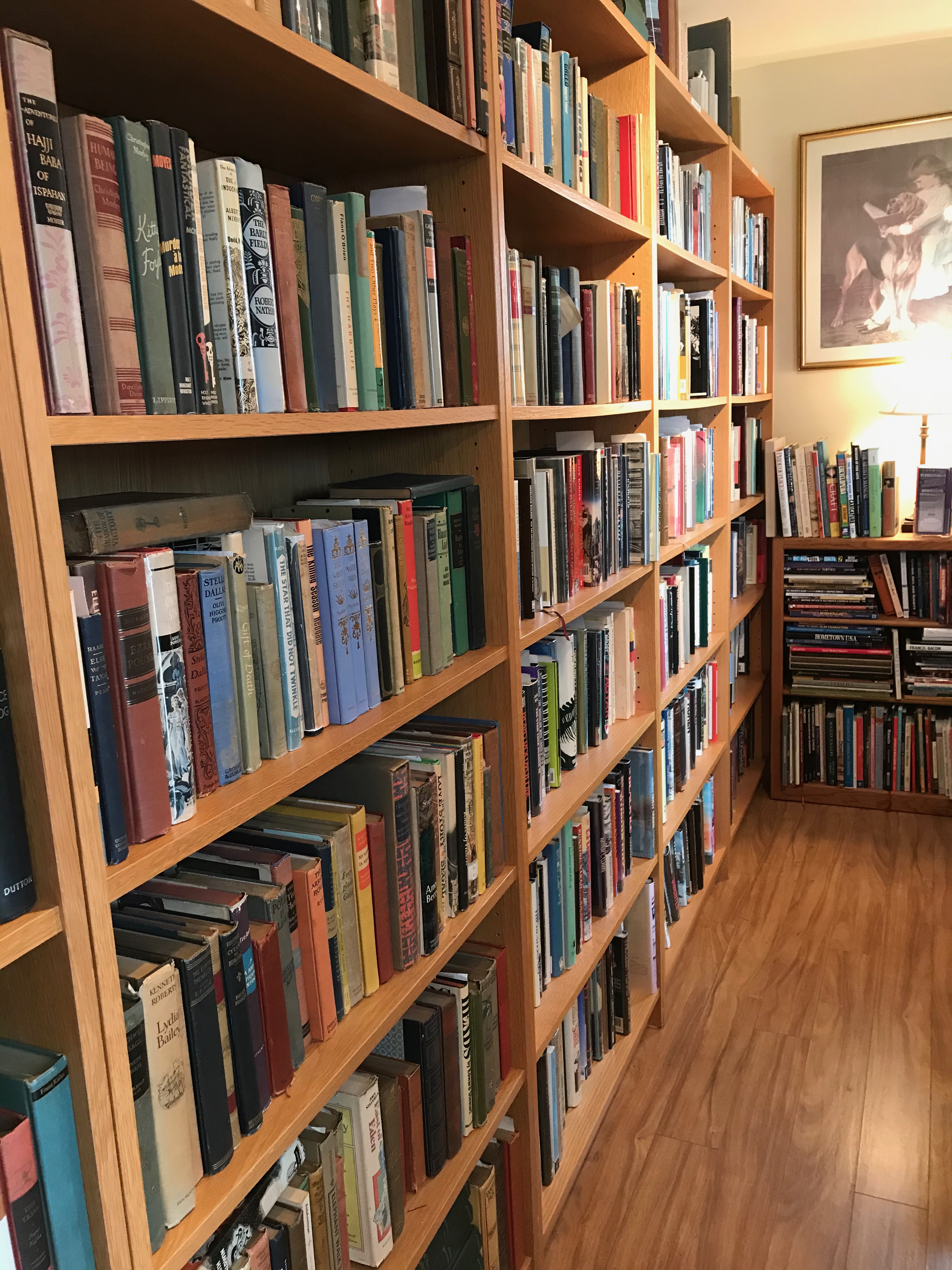
I’m a book keeper.  (Not, I hasten to add a bookkeeper.)  If I read a book I want to be able to refer to it again.  That’s one, but not the only, reason I don’t quite trust ebooks.  I’ve had electronics die on me and they can cost many books’ worth of dollars to replace.  Even then you can’t be sure some software upgrade hasn’t deleted the content you paid for.  At least sitting on a shelf you can find an actual book again.  I know some people prefer to read a book and then set it free—a kind of read and release method.  I suspect some folks buy used books just to sell them.  Still, to know that books are available is cause for celebration.  We may survive this after all.  At least our words will.

Bookfinder has been a lifesaver for us independent scholars who don’t have university library privileges or research expense accounts.  The collections of books individuals amass are as unique as the person her or himself.  A family friend was once won, I’m guessing, by visiting us years ago and saying, “You’ve got interesting books on your shelf.”  (In that apartment shelves covered all available wall space in every room except the bathroom.)  Having books around is kind of like having kids.  Some are new, some adopted.  A few you’ve even produced yourself.  They make you glad when they’re around.  Bookfinder occasionally has items that not even Amazon can find.  It doesn’t sell books directly, but puts you in touch with vendors who work with vendors who actually have the goods.  It’s all very complicated but it works.  It actually seems to showcase one of the things the internet does particularly well—puts people in touch with actual books, to be read offline.


A Day with Books

A day with books.  Is there any better kind of day?  Before I lapse into poetry I want to put in one more plug for the Easton Book Festival.  Today is the last day for this year, but keep an eye out for next October.  And you can still catch the videos from this year’s session on the Festival website.  Writers can be skittish creatures, you see.  We spend time alone and try to get our thoughts into words.  We don’t always have regular gatherings.  That’s what makes book festivals, well, festive.  I didn’t want to appear in person to plug Nightmares with the Bible—it’s too expensive.  As a friend said, “What’d you do to make it that expensive?”  I was glad, however, to be in person to interview my friend and colleague Robert Repino.  The interview will be posted on the Festival website.

An unexpected pleasure is finding acquaintances that you didn’t know were writers.  As I said, some of us spend most of our time alone.  And even for someone who spends so much time with words it’s difficult to describe the species of euphoria that talking about books evokes.  It makes me wonder why we don’t do it more often.  Since the pandemic is still with us—the pandemic that interrupted the natural progression of the Book Festival, which began in October 2019—in person events were held outdoors.  It was a bit on the cool side yesterday, with some sprinkles of rain, but few sensations match spending a day outdoors in October.  If you’re not in this area, please support your local book festival.  If you don’t have one, maybe talk with your independent bookstore owner.  It can happen.

As I’ve mentioned before, many of us who write make very little money at it.  When people ask why we do it, pointing to events like the Book Festival supply the reason.  Call it fellowship, or communion, or just a gathering of the hive mind, but finding the other book lovers in your community is a worthy way to spend a Saturday.  Book and Puppet has the distinction of hosting the event, with support from Lafayette College and a few local sponsors.  It’s also the only bookstore in which I’ve seen my actual books on the shelf.  I know it’s a sacrifice to order stock that moves slowly.  Halloween, however, is nearly here and that’s the crowd for whom I tend to write.  Why not spend a day with books?  It’s the best kind of day.


Steel Industry

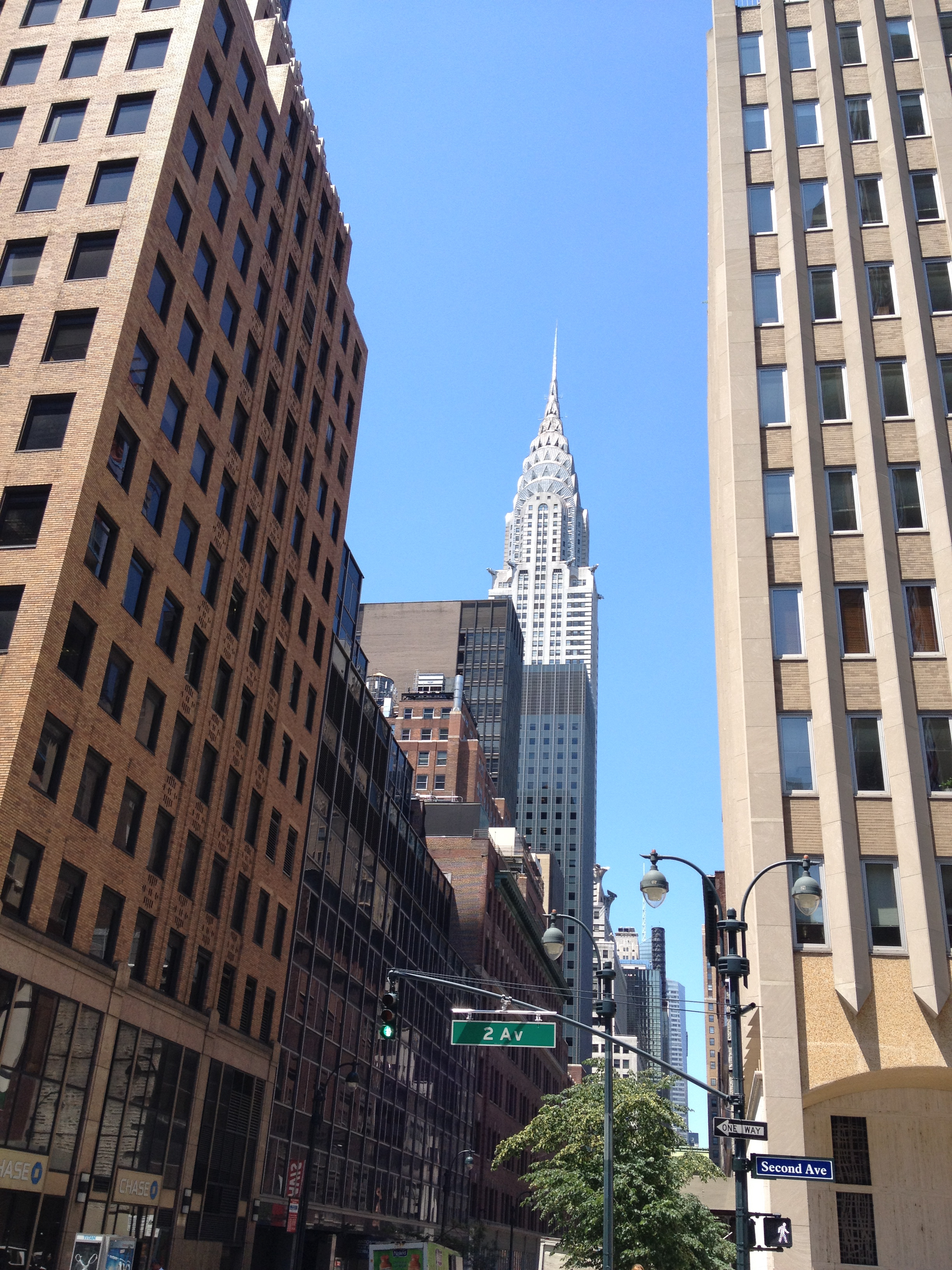
It was a building on Broadway, just south of Times Square.  I don’t know the name of the building or remember what business it may have housed, but I did notice on my quick walks through Manhattan on my way to the bus that it was being renovated.  The facing had been removed and an exposed I-beam bore the words Bethlehem Steel.  From coast to coast, and even to ships at sea, Bethlehem Steel was a major supplier.  Today the factory is still.  There’s a poignancy about such giants falling.  The world as we know it was largely constructed from the products of the still impressive, rusting reminder of days of glory.  No doubt the air is healthier to breathe and the noise level much more suited to humanity, but standing here next to this behemoth it’s easy to fall into a reverie.

I grew up near heavy industry.  Nobody in my family was directly involved, but my hometown had a steel mill just across the river and my next hometown housed an oil refinery.  Both are closed now and the area has been in an economic depression that has lasted for decades.  Industry on this kind of scale requires workers willing to sacrifice much in order just to survive in an industrial world.  Over 500 workers died over the years at the Bethlehem Steel plant.  Factory life involved dangerous jobs with machinery containing material at over 3,000 degrees, and single pieces of equipment that could easily crush a person beyond recognition.  Workers were in some sense expendable as the collective, the nation, grew.  The factory never shut down, running all through the night, seven days a week.  The profits were enormous.  So were the costs.

Global warming was well underway as the greenhouse gases belched into the sky.  Bethlehem Steel wasn’t the only polluter, of course.  Heavy industry, industrial farming, individual cars—we seem to be determined to poison the air we breathe in order to make money.  If the pandemic has taught us anything it’s that we’re all connected.  Rising prices and supply chain breakdowns have underscored that we all depend on each other worldwide.  Climate change has already assured that disruptions will continue and likely worsen.  There’s a kind of autumnal beauty in desolation.  These great steel stacks stand rusting and silent beneath a leaden but too warm sky.  Actions have consequences, and those that affect many create ripples that become waves.  We have created monsters but we can’t control them.


Paywall

They were my former employer, for goodness sake!  Here’s how it happened.  It begins with research.  Nobody is born knowing all they need to learn.  Research teaches you to question what you read and check sources.  That’s how bibliographies are built.  So I came across a reference to an article I needed to read.  The problem was it was behind a Taylor & Francis paywall.  (Taylor & Francis own Routledge.)  The cost to read one article in an academic journal?  $45.  That’s usually my upper limit for buying an entire book.  Working in publishing I know the reason for this.  They want you to go to your library (I don’t have one) and ask them to subscribe.  If you need access, probably somebody else will too.  This particular author isn’t on Academia.edu.  Should I risk Sci Hub? I mean the article is right there, but I’m not allowed to see it!

I did find that you can ask the author for a copy on Research Gate.  First you have to join Research Gate.  They want your institutional email.  My email doesn’t have a .edu extension.  I therefore had to go through a lengthy process of verifying that I am a researcher.  I had to claim papers I’ve authored.  I had to explain why I don’t have an affiliation.  I had to have them email me, twice.  Each time I had to provide further information.  I swear, it’s like getting a Real ID all over again.  All this so that I can ask an author for a paper that’s only available for $45 on the publisher’s website.  Every time I start a new research project I ask myself why I keep at it.  I guess I want to be part of the conversation.

The open access movement is gaining steam.  The idea is that research should be free.  Very few object to paying nominal fees for access, but often prices are extortionate.  Publishers are caught in this web because overheads are so high—they have to pay employees—and the cost of materials isn’t cheap.  Traditionally this has been overcome by passing some of the expense on to customers.  That’s why academic books are so pricy.  With journals, such as the one I need, the scenario’s a little different.  Journals are purchased by libraries via subscription.  “They wouldn’t subscribe to them,” so the argument goes, “if researchers could get the contents for free.”  Still, putting in place a free article or two before dropping the price bomb would seem to be in the best interest of actually moving knowledge forward.  Hey, T&F, don’t you remember me?


Dark Academia

Genres can be slippery things.  Those of us who dabble in fiction sometimes find it difficult to describe what we do.  Writing is individual expression and it may have elements of this and that.  Given my disposition, much of my fiction has some horror features but I tend to think of it as something else.  My wife recently sent me an article on Book Riot about the genre Dark Academia.  The piece by Adiba Jaigirdar begins by asking the question of what exactly dark academia is.  The label conjures up books about something untoward happening in the halls of learning, and that certainly qualifies.  It’s difficult to be more precise because it’s different things to different people.  Some of my fiction, in my own mind, falls into that category.  Things go wrong in higher education all the time.  Why not preserve it in fiction?

I’ve attended, and worked at some gothic places.  The contemporary university, such as Rutgers—although it’s old by American standards—has continuously modernized and although I don’t know it’s history well, I suspect gothic was never its aesthetic.  The same is true of Boston University where I went to seminary.  Edinburgh University, while also modernizing, has retained much of its gothic feel.  That’s certainly true of New College, where I studied, in the heart of the medieval old town.  There’s a gravitas to such dark settings.  They invite strangeness.  My first teaching job was at the intentionally gothic Nashotah House.  Although I didn’t agree with the politics I loved the setting.

I seem to have slipped from Dark Academia into Gothic Academia.  Indeed, it’s difficult to keep the two distinct in my mind.  When I taught I maintained the tweed jacket and somewhat disheveled look of someone who has something else besides grooming in mind (this is entirely genuine).  Indeed, that’s one of the great charms of higher education.  You need not constantly worry about each hair being in place—they’ll take care of that when they shoot the movie.  Not many people, and probably a diminishing number given the state of things, experience full-time life in academia.  It can be well lit and modern.  If done right, however, it should take you into odd places.  Discovery is generally messy.  Perhaps that’s part of the dark of dark academia.  When we use our brains we end up in unexpected places.  I’m not sure I understand dark academia, but I have a feeling that I’ve lived it even without my fiction.


Eve’s True Desire

Psst—don’t tell anyone!  There is a free copy of my first book available on Academia.edu.  I thought I was kind of radical for doing that, but people who write books want people to read them.  Having a book priced $70 or more, heck, even $30 or more, means only diehards will buy it.  Nightmares with the Bible promptly sank at $100 cover price, released during a pandemic.  I’ve always admired scholars who’ve bucked conventions to make their work available.  Recently I needed to consult a book.  I won’t say what it is because I fear a take-down order will be issued where I found it.  The author, aware the book was hard to access, actually photocopied the entire book and put it on a website.  I stand up and cheer!  Photocopying an entire book is a lot of work, a labor of pure love.

Now, I’m all for authors getting royalties.  It takes a lot of time and energy to write a book.  It can cost years of your life.  You ought to get something back for it.  It seems to me, however, that a different model is required for academic books.  Why are they so expensive?  Not only that, but smaller publishers without the distribution channels often publish worthwhile books, but in small quantities and they go out of print after the initial run is sold.  The academic enterprise (knowledge for knowledge’s sake) has become a captive of capitalism.  There’s no other way to trade in that market.  Books that have willing, even eager, readers are sequestered in libraries only accessible to employees.  Is there anything wrong with that picture?

Academics at less wealthy institutions often find ways around the rules.  I did my research for Weathering the Psalms at a small seminary that had trouble getting unusual items on interlibrary loan.  Bigger schools were distrustful of this tiny enclave called Nashotah House.  Would they ever get their rare property back?  Meanwhile worldwide mail service crisscrossed with offprints sent for free from scholar to scholar.  It was like your birthday, or Christmas, when a long-awaited piece of research landed in your mailbox.  Nobody was in it for the money.  We were beguiled by learning.  Eve looking wistfully up into the tree.  Now it’s all business suits with dollar signs for eyes.  The academic who puts their book up for free on the internet is nothing less than a saint.  Seeking knowledge is never really a sin.

Tasty fruit of knowledge

What’s Class Got to Do with It?

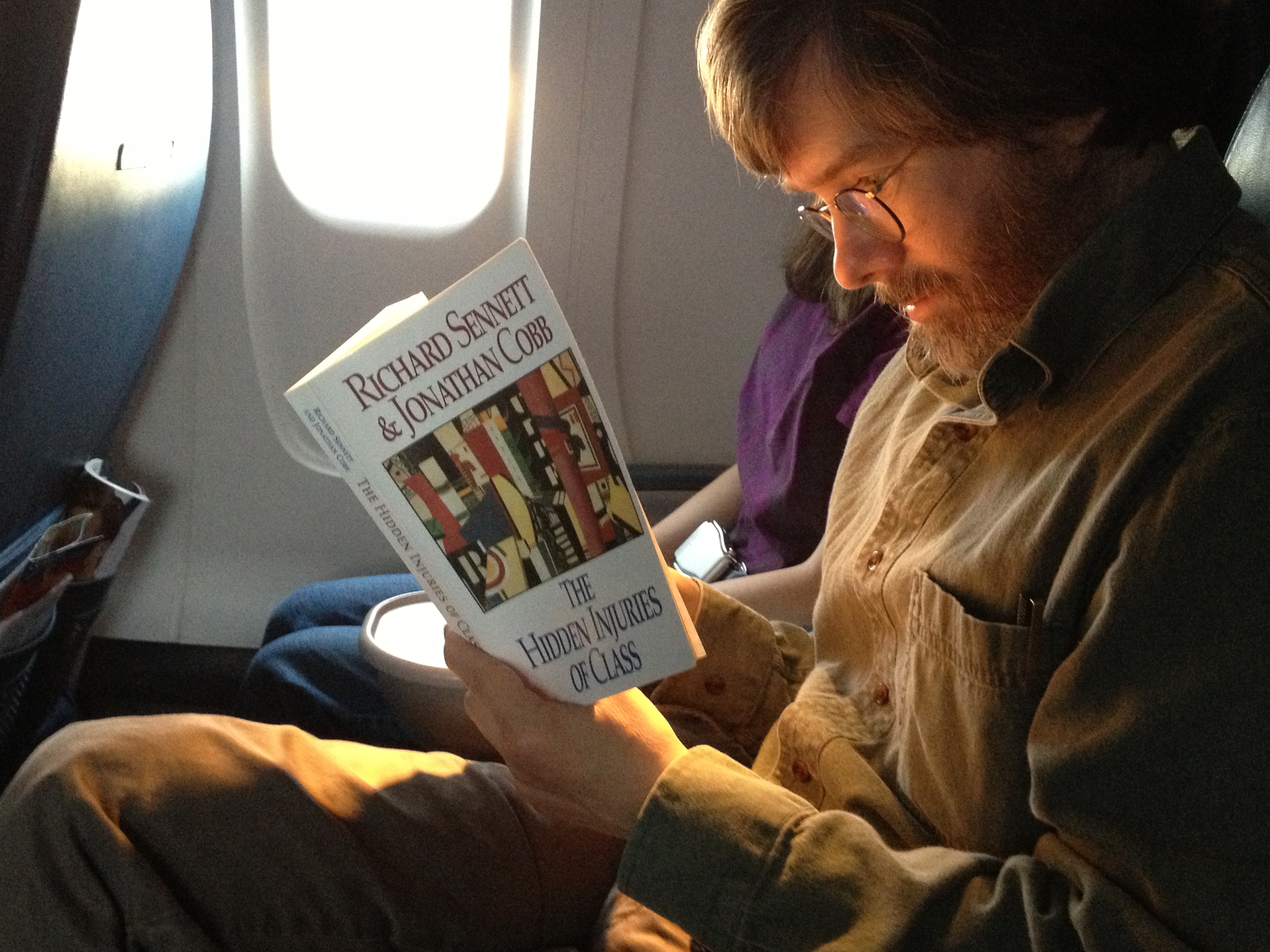
As an editor you get to read synopses of nascent books across a wide variety of disciplines.  A live topic in sociology and poli-sci is class.  As in “the hidden injuries of.”  So I’ve been grinding class in the machinery of my mind and the product always seems to be a question mark.  Neither of my parents finished high school.  My father worked, when he did, as a house painter.  With three children and no money for childcare (and not even a GED), my mother was of the stay-at-home variety.  I saw neither parent, and this would include my step-father, sit down to read a book for enjoyment.  My mother read the Bible for consolation, and read us children’s books before bed, but literature wasn’t really part of our lives.  I still think of myself as working class because that’s what I learned growing up.  Working class with books.

I recently posted about a contract for my fifth book.  The previous four have earned total royalties of well under four figures (combined).  I’ve been asked why I do it.  It’s not an expectation of my job.  It takes up most of my time outside an unrelenting nine-to-five.  Where does it get me?  None of my books (so far) have sold more than 300 copies.  I can see why—they’re either expensive or obscure (perhaps both).  But I love books and reading and I want to give back.  The truth is I don’t know why I do it.  Working class folk wind down from work in different ways.  Some of us do it by writing, I guess.

Learning, for me, works best if someone shows me how to do it.  I expect that’s why I did so well as a teacher.  Explaining things works for me.  I still run into this all the time—people come at you in media res and suppose you’ll know what they’re talking about.  At work, in extra-curricular organizations, just about everywhere.  My working class response is “whoa, back up!”  There’s no better place to start than the beginning.  It’s folk wisdom, I suppose.  In this world where everyone middle class is too busy, they don’t like to stop and tell you what you need to know to get started.  I don’t know how to be middle class.  One of my early jobs involved using a sledge-hammer.  I’d never done it before and I learned by watching others.  I’m not qualified to theorize about class, but I do know that by the end of the day that blisters will accompany any new task.


Podcast Live

Have you ever had one of those weeks where you forgot what day it was?  (Come on, now, it’s a pandemic—you can admit it!)  I spent yesterday unaware that it was Tuesday.  Tuesday is important because I knew that The Incarcerated Christian was going to be posting my interview on Holy Horror on their podcast.  It’s live now—give a listen!  I’ve been toying with rebooting my own podcasts, but like most other things in life I just can’t find the time to do it.  I still enjoy talking about my ideas and I thank Robin Mitchell Stroud and Debra Levy Martinelli for allowing me to yak their ears off for an hour.  There are many interesting podcasts on their site, so it you decide to listen the interview be sure to hang around a while and explore.

My hosts understand that Holy Horror was written for general readers, if not priced for them.  Being asked questions keeps you sharp, and sometimes it feels like my blade has been dulled from sitting in the drawer too long.  At the risk of sounding too biblical, iron sharpen iron, right?  Conversation is increasingly important in a polarized world where minds are already made up and the preferred solution is to hate others based on differences of opinion.  Why not talk about things?  Interviews also keep me sharp in asking about things I wrote years ago.  It may not seem like it, but the main body of Holy Horror was finished nearly five years ago.  Books take a long time to write and then a long time to publish.  It’s good to be asked about what one has written.

The questions asked on this interview were well thought out and reflective.  I can only hope that my responses were the same.  If you decide to listen and like what you hear, please share it with others.  The interview actually spilled over into a part two that will be posted in a couple weeks.  There’s a lot to say about religion and horror.  I’ve continued to watch movies since the interview and I notice further affirmations.  The Wicker Tree, for example, is a very biblical movie.  Or at least it quotes from the Bible quite a bit.  Holy Horror was very much an experiment on my part to find out if there was any room for a book like this.  After I wrote it I found others shared some interest in these topics, and two people cared enough to schedule an interview about it.  Please give it a listen.


Time Keeps on

Do you want to feel old?  Consider this BBC headline: “TikTok overtakes YouTube for average watch time in US and UK.”  If you’re like me you first heard of TikTok at some point during the pandemic and had only a vague idea what it was.  A new platform yes, but platforms come and go and I was really just starting to get into YouTube.  In fact, I remember when I first heard of YouTube.  A colleague at Gorgias Press was telling me about it.  It was a place to post videos.  I didn’t own a video camera and besides, what does a washed-up professor have to say?  No only that, but my computer didn’t have the memory capacity to upload and edit videos and who even has the (figurative and literal) bandwidth?  (I do have a YouTube channel, but it turns out that a nine-to-five and writing books on the side take up pretty much all of your time.)

Speaking as a homeowner, YouTube has been a lifesaver.  Most of what I have to do in household repair (a lot) I learn how to do from YouTube.  I know younger people who prefer YouTube to movies and never watch television.  It turns out that people are pretty good at entertaining each other even without the studios telling us what to watch.  (Although discoverability benefits from sponsorship, so money does change hands and the economy is happy.)  I was just beginning to get YouTube figured out when TikTok came along.  I was under the impression it was a music app—does Napster even still exist?  CDs are getting hard to find, as are DVDs.  I guess I can learn out where to buy them on YouTube.  Or TikTok?

I recently watched a horror movie on one of those services where they break in with a commercial at the absolutely worst moment time after time.  As the excitement began to build the commercials became more frequent.  As soon as it was over I was wishing for a DVD.  Too much content is on somebody else’s terms unless you’ve got a physical disc that you can slide in on your own timetable.  It’s strange being in that transitional generation between print and ebook, vinyl/VHS and streaming, paper maps and Google maps.  Now I guess I have to figure out what a TikTok is and how to use it.  I think I’ll go to the library and see if I can find an old-fashioned reference book on it.