Underestimated

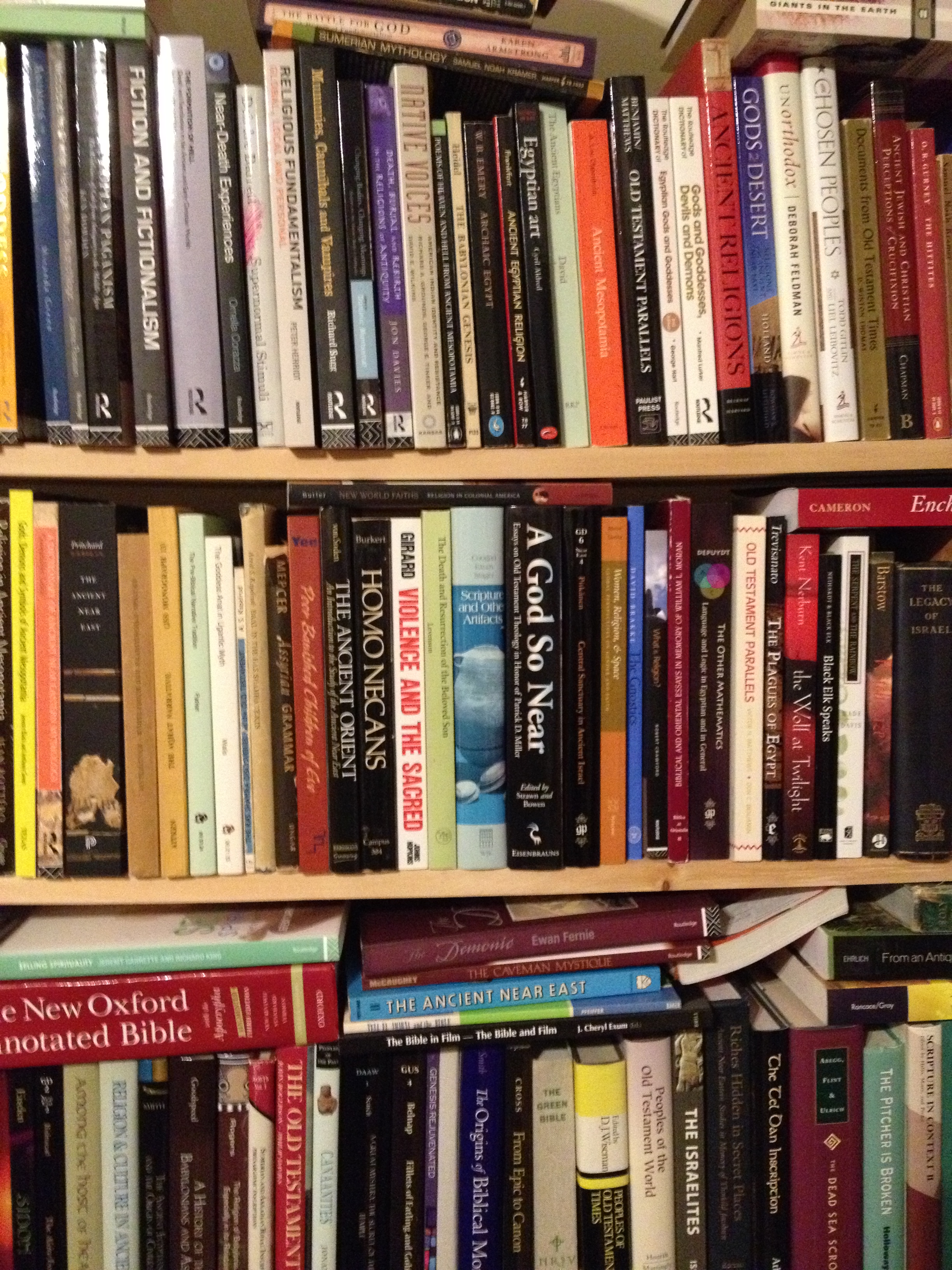
Under-printing, ironically, can create great demand.  Books are generally under-printed because publishers don’t see much of a market for them.  Back before the days of inexpensive print-on-demand (POD, in the lingo) books may not have even existed as electronic files.  Often a publisher won’t print a book unless it anticipates that it can make back its costs.  If they think it won’t sell that well, they’ll print just enough.  And they might even melt down the typeset plates to reuse them for other books.  I’m not sure if that happened in the case of a book I’ve been looking to consult, but something has made this under-printed book extremely rare.  It’s not on Internet Archive.  WorldCat shows it in only two libraries world-wide, the nearest one over 3,000 miles away.  Its price used (and there seems to be only one copy) is $46,000. I can’t tell you what it is because you might buy it before I can.

For the purposes of my research, this is actually the only book on this particular topic.  (The subject isn’t even that obscure.)  The book is cited everywhere this topic is mentioned, and at least one person on Goodreads has actually seen a copy of it.  I have to conclude that all those who cite it must live within driving distance of one of two libraries worldwide.  For the rest of us the book is simply inaccessible.  As an author this is one of the worst fates imaginable.  Even if some price-gouger is selling a copy for $46,000 the author gains nothing from it.  Royalties are null and void for used book sales.  The only profiteer is the person who happens to have found a rare book (from the 1990s!) and is determined to ensure only the most wealthy will be able to purchase it.

I’ve known people who sell used books online.  Those who want to move books try to undersell the unfortunate under-printed title by pricing a bit lower than the competition.  There is no regulation, however.  You can charge whatever you like.  The funny thing is, if someone eventually forks over $46,000 for this book, and then has it appraised (it is a paperback from the 1990s), its actual worth is probably at most in the hundreds of dollars.  Back when we watched the Antiques Roadshow we always knew that the poor person who brought in a book would be disappointed in the appraisal.  Last time I was in Oxford I saw rare books from the 1400s for sale for far, far less than $46,000.  I only hope that my books, as obscure as they are, are never deemed that expensive.  And I would encourage publishers to print a bit more generously, for the sake of knowledge.

The Archive

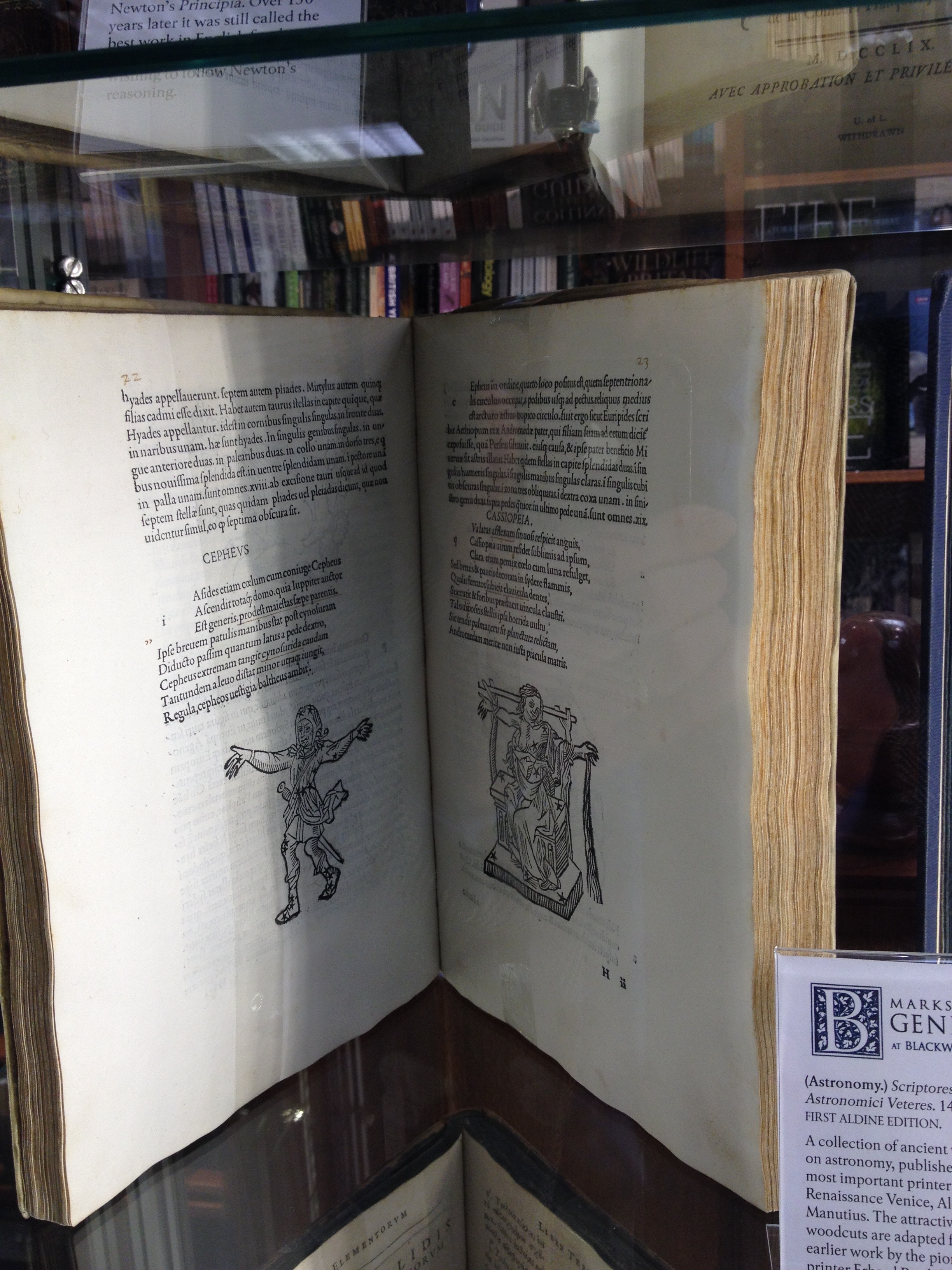
Publishers hate it, but I bless its holy name.  The Internet Archive is a major boon for “independent scholars.”  If you’re not familiar with it, the Archive is a repository of scanned books.  It doesn’t contain everything, of course, and some publishers have tried to sue, but it operates like a library.  You set up a free account, and if you just want to look up a reference in a book they have, you can “borrow” it for a while, check your reference, and then return it.  All without leaving your home.  Internet Archive really took off during the pandemic.  You couldn’t get to the library and some of us research as long as we breathe, so here was a solution without breaking the bank.  The bank, ah, there’s the rub.

The reason publishers hate Internet Archive is that it makes content available for free.  Working in publishing, I understand the concern.  Publishers have to make money off their books—they are businesses, after all.  And if somebody scans it and makes it free online, your sales are undermined.  But are they?  Now, I can only speak for people like myself, but if a book is directly relevant to my research I will buy it.  Reading online is a last resort. My library is full of books bought for that reason.  Once in a while, though, my research leads into areas I don’t intend to come back to.  Or I remember reading something in a book long ago, back when I had library access with interlibrary loan, and I can’t afford to buy the book just to look up that reference.  Well, Internet Archive to the rescue.  Publishers don’t often turn their mind to independent scholars since we’re not prestige authors.  Waifs of the academic world.

That’s one reasons I don’t feel bad blogging about Internet Archive.  Most traditional academics pay no attention to my blog.  If I were hired by Harvard that would change overnight.  Those of us who skulk in the shadows of the ivory tower don’t mind getting by with freebies like Internet Archive.  And some part of us, even if we work in publishing, applauds such ventures as SciHub.  I do not suggest visiting SciHub, however, and I’ve never done so myself.  Its software automatically scans your hard drive for content that it can add to its huge repository.  It’s not safe.  The idea stands behind Open Access as well.  Knowledge should be free.  But even publishers have to eat.  And those in ivory towers have everything to gain by keeping their edifices pristine.


First Books

It was back in the day when I believed a book was the final word.  Remember those times?  (I have a suspicion that many Republicans really are longing for the days of simple answers: “Smith wrote it in History of Everything so it must be true,” and such.)  You’d read a book assigned in college and assume that since the author wrote a book s/he (but generally he, in my day) must be right.  If college really caught on, however, you’d start comparing sources.  Still, there was that one book that got you started thinking in a new way.  Back in the day when I believed a book was the final word I read J. Alberto Soggin’s Introduction to the Old Testament.  I remember the context well: Harrell Beck’s intro course at Boston University School of Theology.  We were given a list of texts and allowed to pick.  I chose Soggin.

Reading that book I realized for the first time that ancient Israel had borrowed from its even more ancient neighbors.  The fact that I’d attended Grove City College and majored in religion without ever having been introduced to the idea says volumes.  (Some parties, it seems, have always preferred to suppress information.)  I followed it up with Helmer Ringgren’s Israelite Religion.  I was hooked.  If we knew that there were ancient sources, and if we knew their languages and their cultures, why hadn’t it been obvious to the general public?  I started on a doctorate to uncover the truth since I couldn’t find courses on it at seminary.

We didn’t take many books with us to Edinburgh, but Ringgren was one.  By then I’d begun to realize that introductions weren’t really research books.  I spent my years digging deeper and deeper into ancient West Asian culture.  If it’d been possible I’d be there still.  Soggin and Ringgren, I realized by this point, were clearly biblical scholars, and not students of the specialized field that’s still called Ancient Near Eastern studies.  But still, their books had started something.  My copy of Soggin has followed the socks in the dryer, and I now realize the politics of introductory texts (if you believe it’s innocent you may be happier remaining in your bliss).  Still, I owe a debt of gratitude to those scholars who wrote in accessible words aimed at the novice.  Time has passed and nature has begun its own tonsure process, but this fallen monk has learned that many books are the only way of getting to the truth.


Better Things

It’s only a store brand, but still.  Maybe like me you remember opening a box of Raisin Bran and pouring out the first bowl.  And finding only bran.  Maybe a raisin or two.  By the time you munched your way to the bottom of the box you’d get a bonanza in that last bowlful.  It was more fruit than cereal.  Then they somehow figured out how to suspend raisins so that didn’t happen.  My mind hasn’t caught up yet, I guess.  I was down to the last bowl, and I was eagerly anticipating it.  Especially since the day before I’d only had three raisins and it was clear that the end was near.  Then the last bowl.  One raisin.  That’s a lot of bran to start your day, like C. S. Lewis’ always winter but never Christmas in Narnia.

Speaking strictly for myself, I like to save the best for last.  When I receive snacks in my Christmas stocking, I keep my favorites until all the others are gone.  In my personal myth of scarcity I’m quite aware that good things run out.  And they’re not always easily replaced.  Therefore I tend not to buy the things I like best.  This is the kind of psychology that drives economists mad.   As a child I was taught to put others’ needs before my own and that lesson has dovetailed with the running out of good things.  Of such things monasticism was made.  The raisins are now near the top of the box, but the crumbs are still on the bottom.

I often find breakfast to be the most philosophical of meals.  Perhaps it’s because I write my blog posts in the early morning.  Perhaps it’s because others are awake when I eat lunch and supper.  Perhaps it’s because that valuable things are rare.  It’s the nature of what we find most meaningful.  We live in a culture of largeness and acquisition.  What we truly want, however, may be very small indeed.  Ours is a culture of choice and plentifulness.  Raisin Bran is a choice, as is the store brand.  And it’s even possible to open the box at the bottom and return to my old form of expectation.  I doubt I will ever outgrow the idea, however, of trying to save the best for later.  It’s a form of optimism, after all.  And isn’t it best to start the day with the knowledge that better things are coming?


Reconnecting

Not using the internet for 48 hours isn’t the same as not being able to use the internet for that length of time.  Even politicians (who are notoriously slow at figuring out what people need) have started to make noises about this being an essential aspect of life.  Some (many) things you just can’t do without connectivity.  And during a pandemic taking an entire family to an enclosed space with free wifi (still a rarity) for over a full day so that they can get things done is an issue.  All of this has convinced me of the need to purchase a wifi hotspot, in addition to relying on what Astound Broadband (formerly RCN) is able to provide.  (You see, I’m in charge of a Sunday morning program at a local faith community.  I couldn’t even email anyone to let them know I wouldn’t be able to show up on Sunday without using costly data.)  Now that service has been restored, a kind of nervous normality has returned.

This has been a learning experience.  Of course we’ve got books to read.  I have papers, stories, and a next book to write.  None of those, ostensibly, uses the internet.  All of them do, however.  I’ve been conditioned to look things up on the web while I’m writing.  This is true of both fiction and non; a fact needs checking, a reference requires look-up, a thought occurs to you that has to be dealt with before you move on.  There’s an email you forgot to answer.  Etc.  Etc.  The web is our source of news (what’s happening with Ukraine?), our phonebook, our map, our encyclopedia.  Let’s face it—it’s an addiction.  But a necessary one.

Like many things, our government has the capacity to make internet access available, just like they could do our taxes for us and stop the madness of setting back clocks each year from Daylight Saving Time.  They could ensure universal health care.  They’re too busy “defending” a crumbling, pre-internet way of life and enriching themselves to actually enact any of these things.  And somebody would have to figure out what accountants would have to do if taxes weren’t an issue.  I strongly suspect people would still be willing to pay for more than basic internet connectivity.  But to have a basic signal out there that we could tap into without tapping out our data plans would be a real boon.  I found myself glancing at our neighbors’ houses all around and thinking, “They have internet.”  We pay a lot to have it too, but the only company in the Valley can’t guarantee access, especially on a weekend.  What have I learned?  The ascetics were onto something.

Photo by Nicolas Häns on Unsplash

Outernet

Once in a while (ahem), I interject a note of caution regarding technology.  This blog has been part of my daily routine for over a dozen years.  I try to post every day.  When I experience life outside I often think “that would make a good blog post.”  I make notes.  I ruminate.  One of the things I caution about is the fragility of tech.  In order for me to post these thoughts many different components have to work just right.  Not only that, but if I want to pay bills, or, more importantly, work so that I can pay bills, I have to have internet.  Everyone in my family uses it and they do so all day long.  This weekend is the long anticipated Project for Awesome (check it out at projectforawesome.com) sponsored by the Vlogbrothers, John and Hank Green.  If the names are familiar it’s perhaps because I’ve read and commented on their books.  Then the internet went out.

Late on Friday afternoon, of course.  Now we’ve had outages before—most recently after a power outage earlier in the week.  I called what used to be RCN, the only service provider in our area, only to be on the phone for half an hour with a tech.  She talked me through the usual rebooting and system checks.  The router was fine, but the only actual connection to the internet is via wifi mediated by a device called Eero.  There’s no ethernet cable (as if Apple laptops even have ethernet ports any more!), no phone line plug-in (ditto), nothing.  Nothing but Eero.  Apparently Eero had died.  And being a weekend a masked tech can’t be sent until Sunday afternoon.  So Friday night with no Disney Plus and Saturday without the long-anticipated Project for Awesome (you really should check it out).

Then my wife noticed her phone could act as a wifi hotspot.  It felt like we were entering a new world of magic.  (And data bills.)  The laptop could covert the G4 that her iPhone could receive into wifi.  It wasn’t ideal, because we have three people who want to use the internet.  With old tech.  All because one component of RCN’s complex system has x’s for eyes.  We had to play Wordle through her phone.  Watch Project for Awesome (it supports charities!) through her phone.  I don’t know, maybe we are even breathing through her phone.  Once in a while I interject a note of caution regarding technology.  This blog post is brought to you by my wife’s phone, acting as an internet hotspot, before anyone else awakes this Saturday morning.

Ancient history!

Routine Interruptions

Ironically, having just written about routines, we experienced a power outage with a wind storm.  Sitting home of an evening, the lights in every occupied room began to flicker.  We grabbed flashlights, suspecting what would come next.  The power outage led to a temporary loss of the internet, the god of this age.  Routine was interrupted.  This brought to mind just how fragile all this is.  As supply-chain issues have demonstrated, everything has to work just right for our society to operate at expected standards.  And an internet outage leads to an interruption of routines.  Whenever this happens, it reminds me of how complex our lives have become.  And how unfair.  There are people across the world who struggle with daily necessities such as clean water, safe homes, and reliable sources of power.  And a wind storm in eastern Pennsylvania doesn’t mean that the company’s power in another state is out.  Does this mean I take a vacation day?

As this winter winds down I again lament the loss of snow days.  They were local holidays, of course, and based on the unpredictability of nature.  Our power outage, followed by internet outage, was a personal kind of snow day.  Nobody wanted it and we all planned to work today.  Other than the outage, we’re fine.  Just like a snow day.  There’s a feeling of helplessness to it.  To fix the internet we rely on someone who knows how to do such technical wizardry.  Anyone can stuff a rag in a hole in the window, but to replace the glass it takes an expert.  How do you contact them when the internet’s out?  (Of course, everything’s back on in time for work.)

No doubt, many aspects of our lives are better.  We can pay our bills without using a stamp.  We can look up basic information online.  Even attend religious services virtually.  (Who doesn’t want to linger in their pajamas on a Sunday morning?)  Yet, for all of this to happen our power must be on and steady.  Our internet connectivity must be strong.  We have to be able to connect to work so that we can be paid so that we can keep the power on.  It seems an odd way to spend our time.  Obviously, if you’re reading this they—that mysterious they—have got things working again.  The power is on so that I can type this, and the internet is connected so that I can post it.  And yet I don’t feel any more secure.  And I know I’m one of those who has it easy.


Routine Change

A certain type of mindset thrives in routine.  Perhaps you’ve noticed that these posts appear each day about the same time.  This happens because the routine states that work comes next and it will be largely the same day after day after day.  After work there’s also a pattern until I fall, exhausted, into bed.  Hit repeat.  In the midst of this routine change has crept.  Partly it’s the pandemic, but mostly it’s technology.  And spending habits.  People don’t buy academic books like they used to.  Overall books are booming—so much so that paper shortages aren’t uncommon.  In order to try to keep up with electronic lifestyles, publishers have to integrate the newest technology and to do that everyone has to learn far more tech than technique.  The pace of change is dizzying.

For those who thrive on routine, such rapid-fire alterations make it feel like we need a personal change manager.  “How do I do this now?”  The way we’d done it for years has suddenly shifted and it is only one of many moving parts.  Meanwhile, outside work, other aspects are shifting even as many people still survive without computers at all.  We’re left, those of us tied to routine, in a haze of uncertainty.  It’s like that dream where you’re driving and you can’t slow down but you can’t see out the windshield either.  To make it through we look for routine.  I type this posts on a laptop.  I prefer to write things out by hand, but there’s no time for that any more.  The routine has been broken and the shop that repairs it has gone out of business.

Perhaps this is a malady of those of us who look to the past.  Technological changes used to be measured in centuries, not seconds.  Ancients thought a spout on a jar was a pretty rad invention.  For a hundred years.  Maybe two.  Now if you don’t buy a new iPhone every couple of years you’re hopelessly outmoded.  What was my routine again?  I still awake at the same time and begin each day with writing.  I’ve learned to do it via laptop.  Then it’s to the work laptop where updates seem to be loaded daily and I’m the dog chasing that stick now.  I wonder whose vision we’re following?  Technology’s in charge now.  The rest of us mere humans should be able to get along, as long as we establish a routine of routine change.


Socks and Books

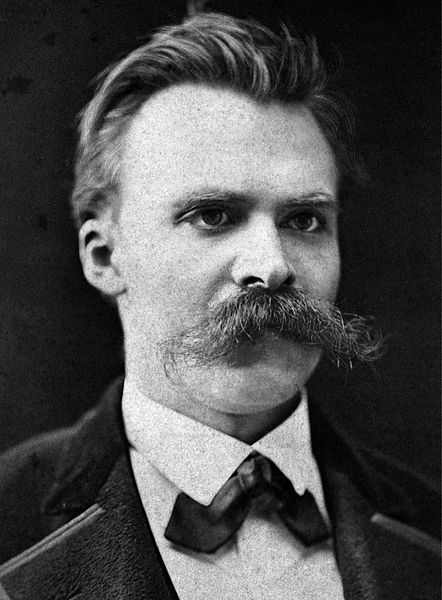
The other day I was thinking about my annotated copy of Friedrich Nietzsche’s Thus Spoke Zarathustra.  I read this in seminary and took notes in the margins.  It was part of my permanent collection.  After a couple of moves from Boston, finding myself in Illinois, I couldn’t find it.  Like socks in a dryer, it had simply vanished.  Socks, of course, sometimes fall out of a sweatshirt or some other garment some time later—a piece of clothing with which they shared the carnival ride of the tumble dry.  The book, however, stayed vanished.  I often wonder where it went.  Prior to Nashotah House, mostly my wife and I kept our books in boxes.  Even now with a house many of them are still in boxes.  But I’ve never knowingly left a book behind when vacating an apartment.  Where is Nietzsche?

Wherever he is, he’s not alone.  This has happened before.  While attending Edinburgh University it seemed like a good idea to get out a bit.  Travel is an excellent form of education.  My wife and I, both interested in history, joined Historic Scotland.  Membership came with a guidebook describing all the properties and we used this as a record of which sites we’d visited and when.  (We used to keep extensive travel diaries, but epic trips are few these days now that we’re no longer academics.)  In any case, when we moved back to the United States, that guidebook was a treasured possession.  Yes, we kept it with the other books but in those days they weren’t so many as they’ve become now.  When we were unpacking things in our apartment in Illinois, we noticed it was missing.

Our flat in Edinburgh was small—really only three rooms.  Nothing was left behind there.  Where, then, did our book go?  Where’s Nietzsche?  What other items have we lost that we haven’t discovered yet?  And where do the socks go when they’re lost in the dryer?  It’s almost enough to make me believe there are little wormholes scattered around our planet, particularly attracted to socks and books.  Well, phones, wallets, and car keys too, I suppose.  The biggest mystery, for me, is the books.  We’ve unpacked nearly all of them now that we have a house.  Those still in boxes have been taken out and returned, no box remains unopened.  Our Historic Scotland guide and Also Sprach Zarathustra aren’t among the books we have.  They’re out there with the many things we treasure and misplace over time.  Perhaps some day we’ll stumble upon that place and be amazed.


Pennsylvania Dreaming

“I finally understand what I’ve come here to learn,” I said.  I was incredibly happy.  I recall the sun was shining, making its way up from my feet to my legs in a symbolic way, soon to reach my head.  I was on the cusp of an epiphany.  That’s when I woke up, needing to head to the bathroom.  Of course, after that it’s difficult to fall back asleep.  I knew that even if I did it would be to a different dream and I wouldn’t learn what it was that I’d come here for.  So it is with the great experiment of consciousness.  Either we’re continuously learning or we’ve already died.  Nobody has all of the answers.  Consciousness may be the true final frontier.  There is no scientific explanation for what it is that is universally accepted.  We all, however, know what it is though daily experience.

Dreams are considered part of our subconscious.  While we sleep we’re said to be not conscious, although we all know that at times we are.  Sleep can be somewhere between.  And we don’t even know what consciousness is.  The study of dreams is still valued in psychoanalysis—it is a form of thinking too—but in our materialist, capitalist society we tend to dismiss dreams.  They generally don’t bring in money.  In ignoring them we move further from understanding consciousness.  Enlightenment, while not a scientific category, still seems possible, even should it come in dreams.  If only we could stay asleep long enough to see it through.

I have a friend who also thinks too much.  He sometimes wonders if this constant focus on what the “they” want isn’t a plan to keep us too busy to think things through.  I often think that the monastics had it mostly right.  At least the part about taking time to contemplate.  When you encounter an idea that feels like a key and you know the door that it opens will be profound, it always seems that work comes to interrupt right at that point.  The job where you can wrestle with ultimate reality and not worry about not producing “product” for which you’re paid, is rare indeed.  That’s why waking from this particular dream was so difficult.  I had a semester break while teaching where I read three books that changed my outlook forever.  It was possible because I had a few weeks before I had to be back in the classroom.  Since then the dream, I guess, has been to return to where you’re paid to learn, for the betterment of all.


Just Curious

I’m constantly reminded of the dangers of it.  Interdisciplinarity, I mean.  We all know the cliched image of the myopic professor unable to function in the world because he (and it’s normally a he) has spent all his time on one subject.  Such people do exist, and they are generally institutionalized.  (What else can society do with them?)  More recently, however, the emphasis in higher education has been on interdisciplinary pursuits.  Many modern doctorates span two areas and many modern professors show themselves as adept at activities beyond their “day jobs.”  It is difficult, however, to be an expert in more than one thing.  In my own case, I had interdisciplinarity thrust upon me.  I’m therefore constantly being reminded of how tricky it can be.

While hot on the trail of a new angle recently, I found what I thought was the only book on a subject.  (All these years and am I still so naive?)  I started reading only to discover that the topic had been explored many times before by scholars, beginning in the decade I was born.  Clearly, if I wish to speak intelligently on this topic I should go back and start at the beginning.  So it is with interdisciplinary work.  Ironically, the book I was reading was itself interdisciplinary, demonstrating that old Ecclesiastes was right all along.  

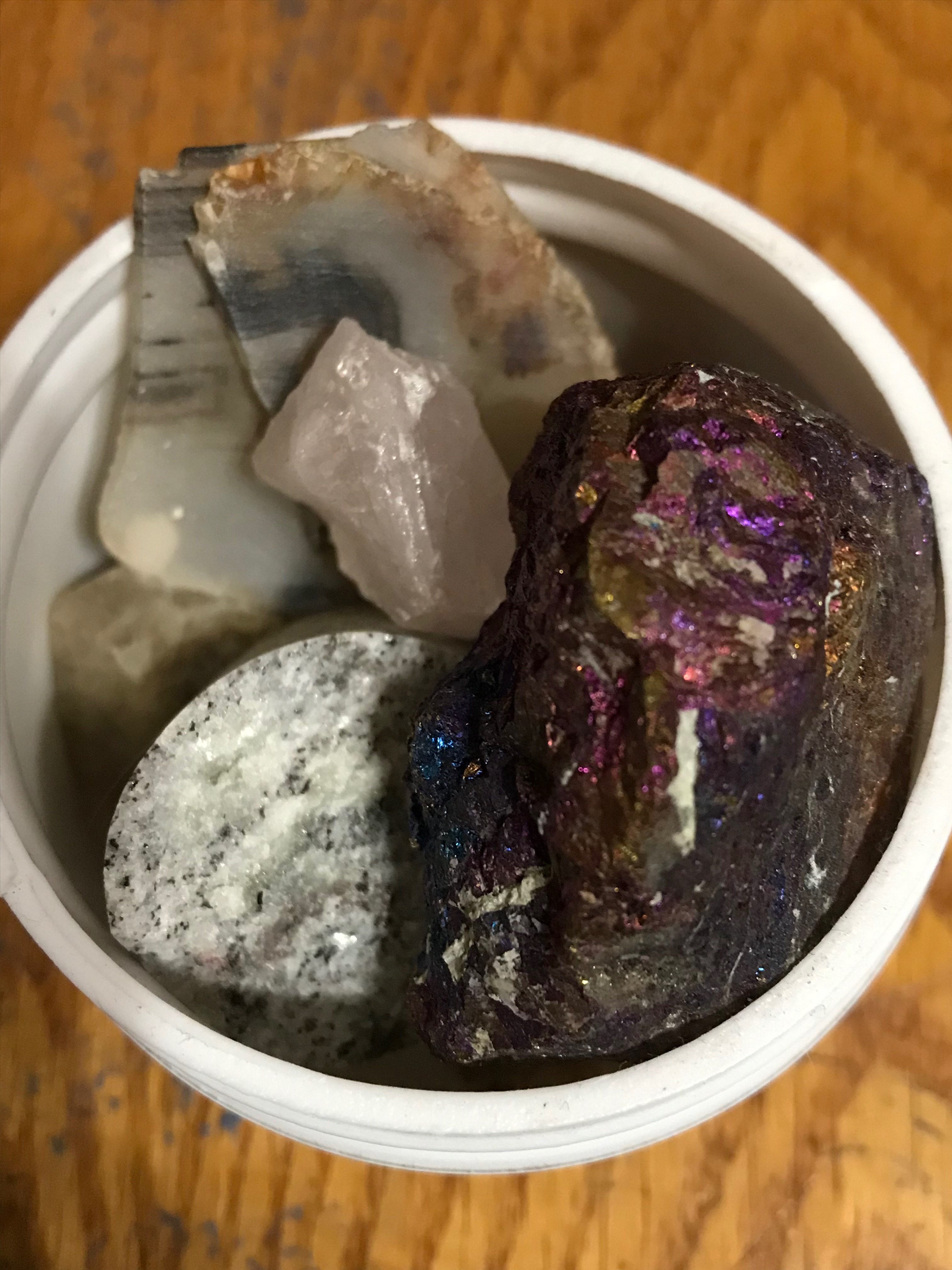
My own research journey has been one of restlessness.  Others have seen this more clearly than I have.  Once at the Nashotah House bookstore I had a discussion the the manager about rocks.  This particular woman was certainly smart enough to have been on the faculty, and she saw things those of us that were didn’t.  I concluded by saying I didn’t know why I’d been so taken by geology to which she replied, “If it wasn’t geology it would be something else.  You’re curious.”  She knew me better than I did.  My curiosity about geology was deep and intense.  (It still is.)  I realized suddenly, it seems, that I knew too little about the very ground upon which I walked all day.  What could be more basic than rock?

On my desk

If anyone bothers to look at my full list of publications it quickly becomes clear that geology is absent.  I never became an expert, but I still read about it and pick up interesting rocks.  A small piece of rose quartz with a fresh fracture face stopped me in my tracks one very cold morning recently.  I’m sure plenty has been written on the subject.  The safest thing, however, is to become an expert on one thing.  Safest, but dullest.


Secret Formula

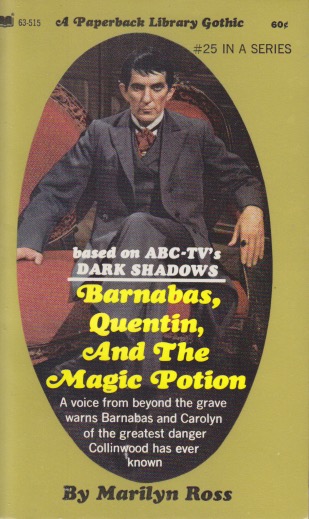
When writing fiction, I’ve never tried a series.  Some, such as Harry Potter, can set a writer for life.  I’ve always had the sense that the Dark Shadows novels were more potboilers.  There was a built-in fan base, and somehow in the sixties and seventies we didn’t expect Rowling-level writing.   It was the entire package: the Gothic, the recurring characters, the moody setting of Collinwood.  And of course, Barnabas Collins.  These novels may be journeyman writing, but here at number 25 in the series, Barnabas, Quentin, and the Magic Potion, there are some signs of literary improvement.  They are slight, rather like the first tinging of leaves with yellow as August begins to settle in, but they are there.  The series is nearing its end for me (provided I can actually find the last few books), but maybe it’s getting better.

What’s my reason for such a burst of enthusiasm?  Well, in this episode we see some features of Quentin that are more in line with how I remember him.  First of all, Ross tries some misdirection.  Quentin is presented as a master of disguise in the series and here there’s some clever hinting that, if you’re trying to think it through, leads you to mis-guess early on.  Not only that, but there’s a more positive view of Quentin here.  He’s not the evil satanist that he is earlier in the series.  Perhaps Ross had figured out by now that if people liked the idea of a Barnabas who is a conflicted victim, the same might apply to Quentin.  He’s not evil, but when you’re a werewolf, well, what can you do?

The “magic potion” is just as contrived and sketchy as most of the plot devices in this series—Harry Potter this is not.  It’s just a get rich quick scheme for a reprehensible old man and serves to move the plot along without really adding anything to it.  Carolyn here discovers that Barnabas is a vampire and, it seems to me, some of the plot devices for the Tim Burton movie might’ve been picked up from this particular novelization.  Although still not belle lettres by any stretch, the story here seems to have made some progress over the previous 24.  As a child, of course, I didn’t read these in order.  I relied on what I found at the bin in Goodwill, when I could find them.  I never had the whole series.  While trying at times, reading them may be a worthy exercise as an adult.  Perhaps series too grow up.


Ignoring or Ignorance?

As someone whose career has always been about the Bible, I’ve noticed that many intelligent people are naive.  They seem to believe that since they’ve outgrown the need for religion that it doesn’t exist among the majority.  I guess that’s another way of saying their thinking tends toward elitist.  The vast majority of people in the world are religious.  Among the elites, since about the sixties, there’s been the fervent belief that religion will die out in the face of science.  That hasn’t happened, of course, and it’s not likely to.  In the meanwhile, the idea persists and replicates itself and religion is ignored until people fly jets into towers or elect Trump or commit some other extremely catastrophic act.  There’s then usually a flare up of interest that dies down when the danger is past.

I wasn’t very socially aware in the sixties.  I was quite religious, though.  The religious, although always in the majority, constantly talked about being under threat of extinction.  There was, even then, a paranoia about being discounted.  Some of the elites realized that by pretending to be religious themselves they could make use of those numbers.  In other words there are forces, not from any divine source, keeping the interest in religion high.  Only the naive ignore it.  That’s one of the reasons it distresses me to see institutions of higher education cutting religion programs.  It plays into the worst sort of elitism to ignore the vast majority of the human population.  Meanwhile, subjects that bring in cash thrive.

Should we look away?

Growing up in an uneducated environment may have been a hidden blessing.  It can sometimes instill a lifelong desire to learn, even if your outlook is discounted.  I’ve always believed in education, and when it wasn’t, or isn’t, available I tend to self medicate by reading.  Reading about religion is always a learning experience.  There’s something profoundly human about it.  Acknowledging that something greater than ourselves is out there, whether you want to face it as divine or natural, seems wise to me.  I think we all know it’s there.  How we choose to respond to it, however, differs widely.  We’ve had glimpses of what the universe would be like if humans were the most puissant beings out there.  The results, based on the headlines, aren’t terribly encouraging.  I see these things and say something, but it’s ever so easy to ignore someone whose career has always been about the Bible.


Can You Recall?

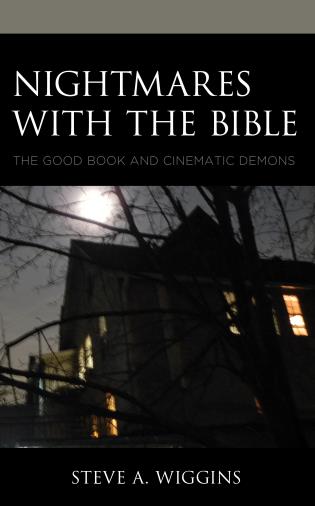
While recently in touch with a colleague I’ve never met, I agreed to send along a filmography of my two horror movie books, Holy Horror and Nightmares with the Bible.  I tend not to read my own books after sending them to the printer.  Defensively it might be that I can say, “I know what I wrote,” but in reality it’s probably more a lack of self-assurance.  Writers often experience self-doubt and although you’ve convinced an editor and an editorial board you may still have your harshest critic to please.  Even though you’ve read the book many times through—at least fifteen each for these two books—you fear you might’ve overlooked something.  So it was strange trying to recall which films I’d actually discussed.  Or how many.

The latter point became clear in a recent review on Reading Religion.  Knowing how I went about piecing together Holy Horror, I’d forgotten just how many movies I watched and rewatched for it.  While it was never intended to be a comprehensive treatment of the Bible in horror (I haven’t seen all horror films), it nevertheless ranges widely.  After having submitted it I continued to watch horror and I continue to find various Bibles in it.  The amazing thing is just how truly widespread the Good Book is as an iconic symbol.  Indeed, I’d been reading about the Bible as an iconic book and that idea took hold in the early days of putting words down for the book.  As an editor I help authors figure out these kinds of issues all the time.  Physician heal thyself.

Even though Nightmares with the Bible just came out over a year ago I couldn’t list all the films off the top of my head.  Sometimes you need reminders.  My books are never discussed at work.  The people I interact with on a daily basis have no interest in them.  In other words, unless I’m having an interview or reading a review, I don’t have much opportunity to think about them.  I’ve moved on to my next projects.  The draft of The Wicker Man has been submitted and I have three promised articles to work on.  Still, I’m trying to settle on the next book.  I seem to have found some acceptance among the horror crowd.  Biblical meteorologists and researchers on Ugaritic goddesses are much less seldom in touch.  Monsters are often mixed forms.  I should know that after watching all these movies.


Write It Down

Those of us with a bookish outlook often wish we could look things up.  This comes to mind because of a recent documentary I watched, but the thought has occurred many times when visiting museums, particularly for special exhibits.  I’m pretty easily overwhelmed by too much information at once.  In a museum I have trouble reading all the placards and remembering how they tie in because there are so many interesting artifacts to look at.  I leave inspired and impressed and wishing I could look up the information I just read.  I’ve often wondered why museums don’t sell exhibition books that have photographs of the objects with replications of the placards describing what they are.  Maybe it’d just be a market of one, but I’d buy them.

The same thing is true of documentaries.  I’ll readily admit I’m poor with names.  It takes many interactions before a person’s name sticks with me.  (It’s nothing personal, I assure you—it’s just the way my brain works.)  When I watch a documentary I often wish a booklet accompanied it with the names, and credit lines of the interviewees and (because I know this is available on IMDb) a full bibliography.  The books mentioned.  You see, those of us inclined to research enjoy looking things up.  In the case of a long documentary (and that’s only if you subscribe or buy it instead of “renting” it for a one-time viewing) it means having to skim through it all again to reach the information that you could easily look up in a book.  Books are wonderful.

For me, one of the benefits of books is their stability.  Electronic resources change.  When you go to cite a website as a source you have to list the accessed date because things may have changed.  The book on your shelf remains reliably unaltered.  The few ebooks I’ve read come with marks in them.  There’s probably a way of turning this off, but I don’t want to see what other people think is noteworthy.  I suppose it’s supposed to make reading a communal experience.  Reading, in my experience of it, is mostly a private things.  One of the great joys in life is talking about reading with others, whether it’s the same book you’ve read, or a different one.  Why not add to that by making books to go with other species of information-sharing, such as museums and documentaries?  Those of us with a bookish outlook aren’t hard to please.  We just like to have it down on paper.