Religion Prof

Back in 2009, when Sects and Violence in the Ancient World started out, there was a fair bit of interest.  At one point I was listed among the top fifty “biblioblogs.”  Back in those days I got to know James McGrath, the curator of Religion Prof, a great blog now hosted on Patheos.  If you want a finger on the pulse of what’s happening in religious studies, you should read him.  With an energy I can’t conceive, he posts interesting stuff every day, even while being a professor.  And like me, he’s fascinated by religion and pop culture.  He also understands something—links and likes and shares are important.  People in my generation and beyond often don’t think that clicking that little thumbs up will do anything.  It does.  More so, that share button.

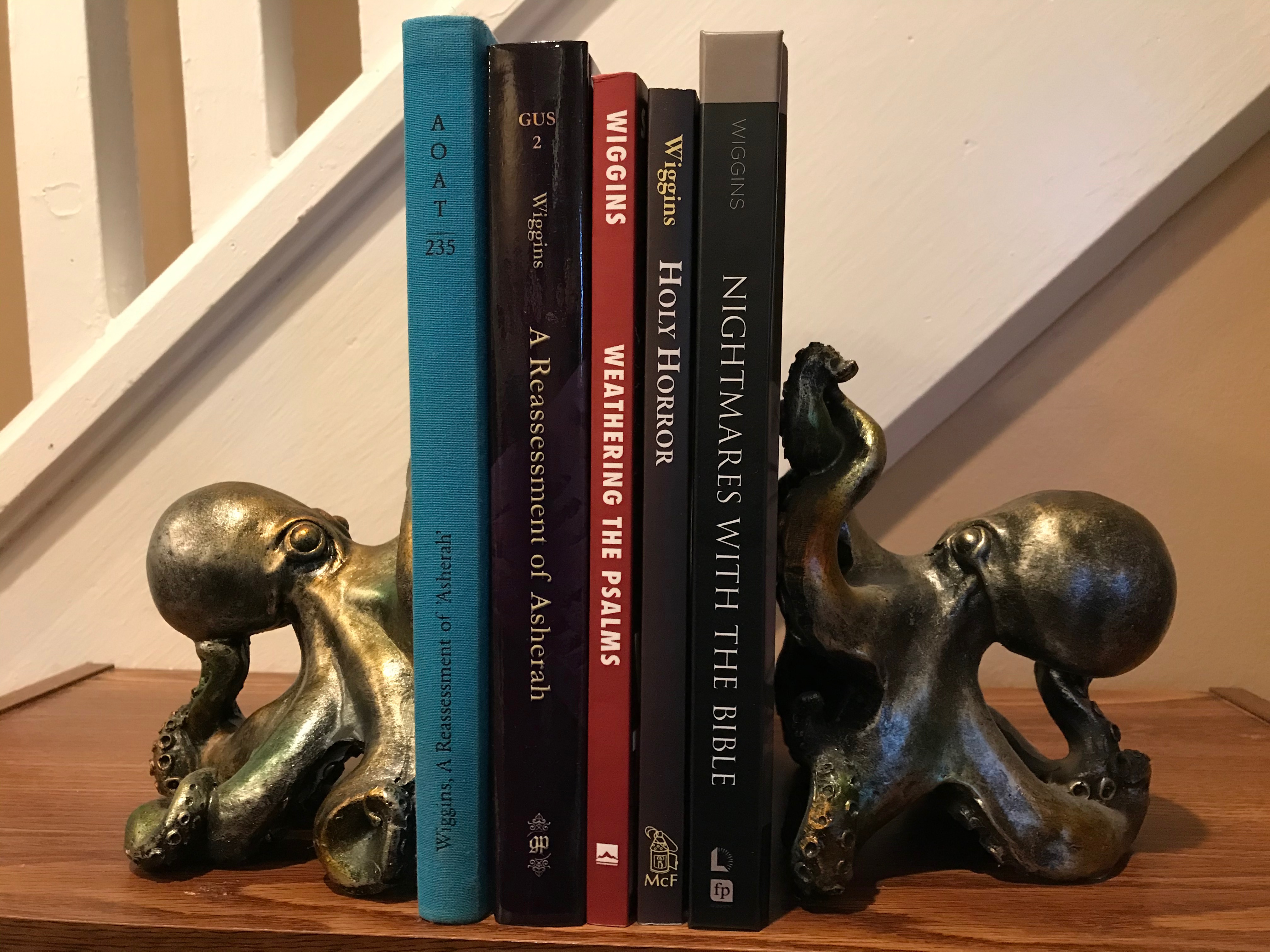
I was really pleased when James agreed to do a virtual interview with me about Holy Horror and Nightmares with the Bible.  You can find the interview here—and be sure to recommend and share it.  James has several interesting books of his own.  You should check them out.  The world of religious studies (and dare I claim it, biblical studies) is hardly moribund.  Underfunded, yes.  Socially devalued, certainly.  But alive nonetheless.  James’ blog is proof of that.  My regular readers will know my usual jeremiad about how higher education has been treating religious studies.  You see, I’m an historical thinker.  Where we come from is important.  Higher education began because of religion.  Its origins lie in monastic communities preserving learning—some of it secular—for the good of the world.  Now administrators looking for a department to cut know just where to turn. Shouldn’t we treat our ancestors with a little more respect?

I’m forcefully reminded of the many times analysts have declared that religion would fade away.  The claim has been made multiple times over the centuries.  At the same time scientists studying humankind conclude that religion is good for us, and that we’re naturally inclined to it.  Of course we should cease studying it!  Well, Sects and Violence in the Ancient World has also evolved over the years.  Not all of my posts are about religion anymore.  Most of them touch on it, however, because I’ve studied it my entire life.  Not only did religion make Homo sapiens what they are, it also formed some of us individually in ways so profound that we’ll never escape it.  Some of us even wear it proudly.  Great job with the blog, James, and thanks for the shout out!

Remember the early days?


Bounce Back

Bounce-backs are when an author receives a rejection letter and immediately emails the publisher back.  They are some of the worse ways to ensure future prospects with a publisher.  Now, I’m more sensitive than most editors, but I know of none, absolutely none, who feel good about writing rejection letters.  We’ve all received them and we know how bad it feels.  In publishing in general the appropriate response to a rejection is silence on the part of the author.  Since I submit more fiction for publication than non, it is mostly in that realm that I experience rejection.  (I’ve had my fair share in the nonfiction realm as well.)  I know, however, that if I want a future chance with a publisher you simply walk away from a rejection.

Photo by Mel Elías on Unsplash

Bounce-backs are a bad idea for a number of reasons.  First of all, they don’t change anything.  Unless a rejection is conditional (it rarely is), all a bounce-back does is make an editor who probably already feels bad about it feel even worse.  Misery may love company, but it’s unprofessional to spread it around.  Secondly, bounce-backs hurt your future prospects.  Nobody wants to establish a professional relationship with someone who can’t take rejection.  A third reason is you’re asking someone who’s already considered your project and who’s moved on, to take more time with a book (or article, or story) to which they’ve already said “no thank you.”  A fourth reason is that a bounce-back announces loudly and clearly, “I didn’t take time to think about this; I’m reacting emotionally.”

One of the best things an aspiring writer can do—and this includes academics—is to learn about the publishing industry.  There are tons of resources out there.   The best information I personally have found on success in academic publishing is reading about how to submit fiction for publication.  I have a very long list of rejections to hold up against the twenty-something stories I’ve had published.  None of those rejections felt good.  Obviously, I thought my material was good, otherwise I wouldn’t have sent it in.  I try not to take it personally, but slowly learning those lessons has led to more frequent success.  You need to practice submission to get better at it.  I’m somewhat of an expert on aporripsophobia, so I can say with confidence that even a nice, polite, “thank you” in response to rejection is not favored.  Simply let it go.  That’s the professional thing to do.


Home Alone

Due to circumstances beyond my control (and what other kind of circumstances are there, anyway?), I recently had to spend a few days alone.  Even as an introvert I’ve never enjoyed “batching it” for long, perhaps because my imagination is so untamed as to belong in a zoo.  Nevertheless, you learn things with time alone.  Particularly in a pandemic.  I’m not inclined to seek the company of strangers, and I don’t know many people here in town yet.  So I introspect.  Of course, Zoom and FaceTime keep me in touch with others, but I can’t help remembering a PBS special I saw about Admiral Richard Byrd.  Byrd famously self-isolated himself in a one-room shack in Antartica for five months when weather made travel impossible.  His contact with the outside world was limited to electronic communication.

Photo credit: US Navy, via Wikimedia Commons

Byrd had been seeking the ultimate isolation.  It turned out to be psychological torture.  Even those of us who are introverts are social creatures.  We just need smaller doses than most.  I can’t recall the name of the PBS series that Byrd was part of, but I do recall the profound impact it made on me.  I was teaching at the time and there was another series on PBS that I was discussing with my fellow professors and it was because of this other series that I had the television on at all.  The Byrd program came next and eclipsed the former.  (We essentially lived without television in our Nashotah House days.  Cable wasn’t available and trying to get reception with an inadequate aerial antenna led to frustratingly snowy, dizzying reception.)

We like to have other people around.  I grew up with siblings and time alone was a rare commodity.  I left home to live in a dorm with roommates for four years.  After that apartments in the Boston area often felt isolating, even with housemates.  It was a time for introspection.  By the time I moved to Edinburgh I was married and I’ve not really looked forward to my time alone since then.  November typically brings AAR/SBL with it’s five nights alone in a hotel room.  I get by because I’m so exhausted by the  event.  Nevertheless I often think of Admiral Byrd and how this mentally strong man began to break down under the strain of not seeing another person for five months.  We need each other.  The pandemic has been teaching us lessons of self-reliance, but hopefully it’s also teaching us to reach out to others.  Even America can feel like Antartica sometimes. 


Believing Beyond

The closing line “I’ll come back to you—in the sunlight” is all I remembered from this little book.  Perhaps I hadn’t read it all the way through, but likely I did.  An unapologetic fan of science fiction as a kid, I must’ve picked up Beyond Belief at a fairly young age.  Although it’s a Scholastic book, it is appropriate for older readers as well.  I picked it up again because I start to get anxious when I can’t post about a book for a while.  My current reading projects are either very long or somewhat technical, meaning they take time to finish.  I’m running out of my ready stock of shorter books (mostly collections of stories from the time before book prices were hiked up and publishers felt the need to make them thicker so consumers wouldn’t feel so cheated.

I had put off reading this collection edited by Richard J. Hurley because of that one story I remembered.  As a kid I recognized the name of Isaac Asimov, but probably not that of Theodore Sturgeon, Richard Willey, or Richard Matheson.  These stories were masterpieces of sci-fi in its golden era.  Although they seem antiquated—perhaps even quaint—now, they are the kinds of stories that inspired young pioneers of space travel and may have contributed in some measure to this strange world in which we live.”Phoenix” by Clark Ashton Smith, has stayed with me for decades.  This tiny tome is old enough that I’m not going to worry about spoilers.  I’m only grasping for an emotional thread with childhood.

The sun has gone out.  Two young lovers talk on the eve of the earth mission to reignite the sun by a series of thermonuclear reactions.  The male, of course, is on the mission, but he assures his love that he will return to her in the sunshine.  Something goes wrong, of course.  The ship crashes into the sun, reigniting it, but annihilating the ship and crew.  As the future lady looks out on the newly illuminated world, she knows her love cannot have survived, yet he has returned to her in the sunlight.  That powerful story of self-sacrifice and love left unfulfilled stung my young psyche.  So much so that reading the other seven stories in this book was like reading tales I’d never heard before.  Beyond Belief was a quick read interjected in much more  complicated literary endeavors.  Like childhood, it didn’t fail to bring a warm glow after far too many years.


Chick Tracks

Goodreads isn’t the only booklover’s website, but it is one that publishers pay attention to.  Having a following on Goodreads helps for making marketing manageable.  Or so the thinking goes.  In any case, I recently had a message on Goodreads about Holy Horror.  It seems someone has, against all odds, found the book and is reading it.  This particular reader asked me in a comment about Chick tracts.  I’ve written about Jack Chick before.  He was a veritable one-man evangelical force of super-nature.  He is responsible for many of my personal nightmares with the Bible.  His cartoon tracts were designed to scare the Hell out of kids, literally.  I read them religiously.  My Goodreads reader pointed out that I could’ve made use of them in Holy Horror.

This made me ponder the reticence of academics to address religion as a cultural force.  Chick tracts are extremely common, even today.  As I posted last year, we were handed one while walking between venues at the first annual Easton Book Festival (an event forced virtual this year by, well, you know).  Not that Chick’s intellectual ability deserves study, but his influence is undeniable.  How many of us fundamentalist kids were set on our life trajectories by tracts that looked like mini-comic books but which had an unwavering, uninformed viewpoint held as gospel?  Chick tracts broached no dissent.  The Bible alone, and the Bible as interpreted by fundamentalists alone, was the only possible way of avoiding everlasting hellfire.  Nightmares indeed.

Chick died in 2016 after half-a-century of terror (his first tract was published in 1960).  Apparently Chick was a shy evangelical and his prolific cartooning was a way of assuaging his own fears of not evangelizing.  Ironically, in his tracts he offloaded that burden onto others—kids were made to feel inferior if they didn’t talk about Jesus to their friends, no matter how shy they might have been.  There’s not much information easily available on this influential man.  A motivated scholar, I’m sure, could dig up information—nearly any life can be illuminated to some degree—but I’m not sure the will is there.  If it ever happens, I suspect the study will be done by someone like me, raised on Chick and fed steady doses of childhood Bible reading.  My Goodreads interlocutor was perhaps onto something by suggesting my watching horror has something to do with Chick tracts.  Stranger things have, I’m sure, happened.


Roll out the Memories

That takes me back a bit.  It’s also a great idea.  The Epic of Gilgamesh tablet 5 rolling pin, that is.  A friend shared Farrell Monaco’s blog with me and the Gilgamesh cuneiform rolling pin took me back to a seasonal event in Edinburgh.  The Scots love to socialize.  My doctoral training involved lots of seasonal gatherings—something that we’ve missed since returning to the United States.  On one such occasion with my fellow Ugaritic students, we said we’d bring cookies.  Now the correct term for such things is “biscuits,” I know, but we had a recipe that really didn’t fit the biscuit description.  It was for chocolate cookies.  The dough was the consistency of a clay tablet.  I taught my wife enough Ugaritic so that, using toothpicks, we inscribed a good part of the Baal Cycle on the desert.  Alas, the tablets are no long extant.

Photo by Egor Myznik on Unsplash

Of all writing materials, clay and stone are the most durable.  Our cuneiform cookies were in the days before cell phones, however, and film wasn’t cheap.  We didn’t bother to make a photographic record, and, alas, such tablets are edible.  They were a little difficult to read when baked and even more so when eaten.  The use of culinary cuneiform makes me think that its design potential has gone under-utilized.  Also back in Scotland for a while Coke was running a promotion with cuneiform on its labels.  The problem with cuneiform is that even for someone who reads it an isolated character or two, without context, is difficult to decipher.  I never did figure out what Coke was trying to say. 

The Gilgamesh rolling pin apparently exists in the real world and can be purchased by antiquarians with university-salary-level jobs (somewhat over the pay scale of the mere editor).  Tavola Mediterranea is listed as “The Home of Culinary Archaeology on the Web.”  Although publishers and others doubt there is any interest in my erstwhile area of expertise, I feel vindicated by Monaco’s website.  There is a real hunger for things ancient, but universities tend not to support that interest.  I often wonder at how great centers of learning have evolved into upscale job training centers.  Then again, I’m the kind of person who reads the Epic of Gilgamesh for fun.  I even have an illustrated children’s edition of the story.  Now I’m waiting for Ugaritic tablets to show up on cookware.  Given the slow death of the field of Ugaritology, I suspect the day of making Baal Cycle cookies is long gone, and unless a new recipe for encouraging public interest can be found, we’ll all starve for knowledge of it.


New Twilight

The strange thing about The Twilight Zone is its ability to endure in the minds of those exposed to it at an early age.  Often it’s more the image of it, that feeling of awe and wonder, that remains with me.  Rod Serling cut a sophisticated figure with what, for the time, was an unbounded imagination.  New Stories from the Twilight Zone was the last of the three standard collections of his tales.  Another book of stories published the same year, From the Twilight Zone, is a little difficult to pin down from online descriptions.  It’ll probably be the subject of a future nostalgia-laden post.  Reading the current collection is like déjà vu; some of the stories I remember from seeing on television, and others I’d probably read before.

In some ways these stories are time machines.  A slice of the early sixties.  The cover of my edition emphasizes that dramatically with Serling’s head hinged open and colorful ideas (“weirdies” in the copy) flying out.  Over half a century later the Zone continues to fascinate, despite the obvious context in which Serling originally wrote.  The enduring nature of his contribution somehow validates me, and probably many other kids of the sixties too.  The stories all suggest that the world isn’t quite what it seems.  It relates to what I posted on a couple days back, the weird, the eerie.  In other words, these are good stories.  Timeless in their own way.  Reaching back toward childhood, they help with the aging process.  

Weird tales have become a popular genre, and I suspect the popularity is due largely to the internet.  Those of us who liked stories such as these were an earlier generation of nerds (of the non-technical variety), those who didn’t find sports or girls or controlled substances—the more mainstream forms of diversion—to our liking.  We were perhaps misfits, but we knew we could well find a place in The Twilight Zone.  This may have been its great, subliminal draw; anyone could find her or himself in the Zone.  Some of the narratives were scary, some were funny.  Others were just odd (“weirdies”).  But they could sell books and Serling was able to make himself a household name through his imagination.  The internet has, in turn, made it more difficult to get noticed in its democracy of expression.  Indeed, it has become a twilight zone of its own.  At least it’s one where it’s a simple matter to still find the books that made us who we are.


Wild Oats

The day after Thanksgiving, although it’s too late for millions of industrially slaughtered animals, is a good time to think about plant-based diets.  I’ve been a vegan for three years now, and it has led me to some interesting places.  One of them is oat milk.  Like most Americans, I eat cereal for breakfast most days.  (When I volunteered for the dig at Tel Dor in 1987, however, olives, Nutella, and bagels made quite a passable morning meal.)  Apart from cereal breakfasts being a religiously motivated practice, they’re easy to prepare but difficult to do without milk.  You can (and many sometimes do) eat dry cereal, but we’ve been conditioned to pour milk on it to make a kind of soupy, grainy start to our day.  It feels familiar.

We started out, after much research, using soy milk.  It has to be a particular brand, though, because it can have an oily taste.  We eventually switched to oat milk.  Unlike soy, I can actually drink it like regular milk.  We’ve been buying Planet Oat, but recently we tried Oatly.  Now, I’m one for a working breakfast.  Time is precious and work begins uncompromisingly early.  That means I don’t read cereal boxes or milk cartons any more.  That changed with Oatly.  I found an entertaining and eloquently stated kind of creed on the back of the carton.  When’s the last time someone brought spirituality to the breakfast table (apart from introducing the eating breakfast cereal craze)?  It makes me feel more grounded.

The intricately interconnected web of life makes me think that we should be cognizant of our food.  What we eat should be approached reflectively.  If we had government subsidies for fields of oats rather than industrial farms for the inhumane treatment of “food animals” it seems to me the world would be in a better place, spiritually.  There’s been some comeback of wildlife since Covid-19 forced us all indoors.  I am glad to see it.  These creatures are our siblings.  Even if that seems to be going too far, it’s becoming increasingly difficult to deny that animals have emotions and minds, particularly those that humans eat.  Given the foodieness of contemporary society (everyone’s talking about food rather worshipfully these days) it would seem that pondering at least how we treat animals before we eat them should be a matter of common courtesy.  Being so far removed from our sources of sustenance has done something to us, I fear.  There are great alternatives out there, and some even make you smile while munching your cereal.


Rest and Be Thankful

Many years on Thanksgiving I find myself distressed.  Don’t get me wrong, I’m thankful for all the good things in my life—and they are more than I regularly stop to count—but life has a way of tossing reality bombs into the mix.  This year, though, there is much for which I’m feeling particularly grateful.  Family and friends foremost.  Fairly good health and a day or two off work.  These are all wonderful.  This year gave us a couple more great gifts: the rejection of a leader who always and only thought of himself and convinced millions that he cared for their interests and beliefs.  A “leader” who refused to acknowledge defeat but just this week began a transition that should’ve begun nearly three weeks ago.  Many are inexpressibly thankful for this.

Although on a much smaller scale, I’m thankful for Nightmares.  Nightmares with the Bible, that is.  Although it’s expensive (I’ll thankfully give a discount code to all askers), it is with a publisher that will promote it better than Holy Horror.  It was a very pleasant surprise to receive the book before Thanksgiving, even with its Halloweenish theme.  Anyone who puts years of their life into a project knows the gratitude in seeing it come to fruition.  Nightmares was a labor of love and I hope all who venture to read it will be thankful that they did.  I know I”m grateful for having lots of other book ideas.  That’s one area where there’s a substantial surplus.

Like many people I’m becoming aware of the dark under-narrative to the American Thanksgiving myth.  What we were presented in state-sanctioned school curricula was a story of grateful pilgrims wanting to share abundance with the American Indians.  History shows that their motivations in colonizing were actually subjugation and making slaves of the indigenous people, something we now recognize as a form of evil.  Such lessons are difficult to learn as an adult when the holiday has so many happy, cozy memories associated with it.  We have just been through four years of national chaos in which “othering” became a wedge intended to fracture the fragile unity of this country.  Yes, the guilt is real.  We cannot, or at least should not, deny what history reveals about our motives.  Instead we should widen our tables.  Invite others to join us.  (Virtually this year.)    And be truly thankful for the many good things—some very large, and others very small—which we have.


Trade Wars?

A few friends are suffering sticker shock at the cost of Nightmares with the Bible.  I offer my sincere apologies.  To those in the normal world (outside academia) such pricing appears predatory.  It is, but you’re not the intended prey.  One of the pillars upon which capitalism rests is “what the market will bear.”  You price up any product until people stop buying it, then you retreat.  I’m no fan of the dismal science, but I am certainly not in the cheering section for capitalism.  Institutionalized greed.  Still, I can explain a little of why Nightmares comes with such a high price tag.  Publishers have long indulged in “library pricing.”  Although many libraries now buy ebooks instead, the model persists.  The idea is that libraries can afford higher prices than mere mortals.  For those of you not in academia, $100 is actually on the low end.  Believe it or not.

In researching Nightmares I saw monographs I coveted.  Some of them priced at $175.  Considering that some of these were under 200 pages, my primitive math sets the rate at about 87 cents per page (single-sided).  Here’s where the disconnect comes in.  Nightmares was written for general readers.  I long ago gave up the idea that to be intelligent a book must be impenetrable.  And academics wonder why people question their utility?  Only after I signed the contract did I learn that the Horror and Scripture series, of which Nightmares is the second volume, would suffer “library pricing.”  There is a discount code for those who may not be libraries.  But please, have your library buy a copy.  That’ll give me fuel for a paperback argument.

In a “catch-22” scenario, it goes like this: a publisher tells an author, “if your book sells well enough at this price we’ll issue a paperback.”  The truth is your hardcover only sells well if you’re well known or if your choice of topic is truly compelling.  If the unit cost were actually the same as the library pricing I’d be a rich man.  Where does all that money go?  It’s a legitimate question.  It’s not royalties!  Academic publishing is an expensive business to run.  Apart from overheads—there are always overheads—you need to pay tech companies to ready your files so they can be printed.  Unless the print run (generally under 200 now) is intended to sell out you’ll have it done domestically so that you don’t have to pay warehousing costs on unsold stock.  I knew a single-man academic publisher who stored his stock in his basement.  Excuses aside, my apologies that Nightmares costs so much.  I’ll send the discount code to anyone who’d like it.


Childhood’s End

Childhood.  It’s a time of many lessons that we soon learn to apply to all of life.  One of those earliest lessons is “Don’t be a sore loser.”  When someone else wins you congratulate them with a smile, even if you’re inwardly aching.  Fair play, it’s called.  Or morality.  All of these characteristics are sadly lacking in the Grand Old Party, it seems.  There has been no evidence of voter fraud, Biden currently leads by over 5 million votes, and yet Trump refuses to concede.  Not only that, the dissembler in chief, Mitch McConnell encourages such behavior.  In my fundamentalist church you’d have failed Sunday School for less than that.  And where are the biblical literalists?  Right there with them, thumping their Bibles but not reading them.  What happened to turn the other cheek?  Or even, for God’s sake, an eye for an eye?

Instead the world is watching as a putatively grown man throws a temper tantrum about losing.  Hilary Clinton conceded on the night of the election.  I’m sure it didn’t feel good to do so.  Nor did it feel pleasant for the 44 other losing candidates (in fact, more) who had to go home with their hats in their hands.  Not content to act like a king, Trump is behaving like a monarch for life.  His followers, perhaps aware that Americans will never again put up with such a travesty of a presidency, insist that someone must’ve miscounted by about five million.  They won’t be content until they can count themselves, throwing away any ballots they disagree with.  And they’ll continue to call themselves Christians.  Because, like the Donald, they can.

I’ve reached the stage in life where childhood has become a lingering preoccupation.  I sure got some things wrong.  Not being a sore loser isn’t one of them, however.  Like all people I’ve lost my fair share of contests.  Sometimes the stakes have been very high.  If you want to retain any dignity or moral standing at all, you know you simply have to admit, “I lost.”  We knew as soon as Trump was nominated in 2016 that he wouldn’t admit he lost then, even if he had.  We knew four years ago he’d never admit he lost when he would.  The Republican enablers stoked those fires in which to burn the Constitution.  Some of us, at least 77 million at latest count, are tired of all this political theater.  Big boy pants, it seems, are difficult to locate this season.


Dreamland

I don’t keep a dream journal, but with my odd sleeping habits I’m thinking maybe I should.  You see, waking in the middle of a dream is a good way to remember it.  Often I bolt awake in the middle of the action.  Well, I assume it’s the middle of the action, but how would I know?  Dreams are that way.  Whether in the middle or at the end, I wake up able to remember them in some detail for a few hours.  I have noticed a pattern over the past several months.  Not surprisingly, the characters in my dream worlds know about the pandemic.  It often plays a role in the story.  I have yet to remember a dream where the people are wearing masks, however.  They sometimes talk about it, but never do it.

The subconscious is a slippery place.  Although psychologists are often fascinated by dreams, nobody can say for sure what they mean.  One class of dream that I often have on an annual basis is the AAR/SBL anxiety dream.  The American Academy of Religion and Society of Biblical Literature annual meeting has been a fixture throughout my professional life.  Usually I have a dream where I’ve forgotten something important for the conference, such as forgetting to stop in the exhibit hall to see the new books.  I recently had my annual conference anxiety dream.  This year the conference is virtual so I’m not actually going anywhere.  In the dream I did.  And nobody was wearing masks.  The dream, however, was mainly about keeping my boss happy.  That’s simple enough to understand.

Most years I get several blog posts out of the conference (which takes place in November).  The virtual conference has been postponed until after Thanksgiving, and lengthened out by over a week.  Accommodating all those papers (thousands of them) via Zoom must be a logistical nightmare.  Since editors go to these for meeting people, there’s no reason for me to sign up.  Instead, I’ll be right here in eastern Pennsylvania, huddled down waiting for the pandemic to be over.  I’ll be wearing a mask whenever I venture off my own property.  It is my hope that others might do the same.  I read of covid-weary people burning their masks, putting themselves at risk as the number of infections continue to rise.  In my subconscious mind I’m somewhere else.  Perhaps I can convince them to wear masks in my imaginary world.  After all, anything is possible in dreams.


The Halloween

Halloween seems especially portentous this year.  Some of us thrive in this introduction to what was a major set of Christian holidays that encompassed many pagan traditions.  The lynchpin was All Saints Day (All Hallows), which in good Christian fashion upheld its favorite sons (and a few daughters) to remind the rest of us what a sorry lot of humanity we are.  Followed by the more democratic All Souls Day where the vestments went from white to black, it was preceded by Halloween.  Through mostly Celtic additions from Samhain, the first of the three days became decidedly spooky and came to be a commercial holiday.  There’s more to it than that, of course, but we all know Halloween.

This year a number of other phenomena are converging on today.  Not only is it a full moon, but a famed blue moon—the second full moon this month.  It feel like something could happen.  And if that weren’t exciting enough the powers that be have decided to end Daylight Saving Time tonight (well, technically tomorrow morning).  And Tuesday is the most importation election day in the history of our nation, when we decide whether to retain democracy or become a monarchy.  Seems like a strange confluence of phenomena.  Meanwhile, outdoors a pandemic rages and some locations have had early snowfalls.  The last of what had been Hurricane Zeta blew through here yesterday.  Who needs Halloween to be scared?

For some years I’ve been contemplating the spirituality of Halloween.  We live in a death-denying culture while knowing full well we all die.  Halloween has become a holiday when we can think about it openly.  Pretend we’re someone/something we’re not.  Perhaps, if we’re lucky, we might learn something from it.  It has become a boon for horror films, but they’ve been successfully spread through the rest of the year as well.  There’s plenty to be frightened of in July and January too.  Still, there’s something about Halloween.  Some of my earliest memories are of this particular holiday.  Poor as we were, we always had costumes for the day.  I remember sitting on the school bus, wearing a mask, thinking that nobody knew who I was, and I could really be the hero or villain that my costume suggested that year.  Now we wear masks all the time and we’re frightened every day.  Halloween is coming along with a blue moon this year.  There must be some significance to that.


Wild God

Living with a Wild God, by Barbara Ehrenreich, is one of those books I wanted to put down gently after reading it, for fear that it might explode.  Or maybe it was my head I feared might combust.  Describing it is difficult because it is so wide-ranging.  On the one hand it is an atheist’s view of religion.  On the other hand it is a spiritual biography.  On a third hand it is coming to terms with having had a profound mystical experience.  It is one of those books where, knowing my life has been so very different, yet I feel that Ehrenreich and I have had so much in common that we’d be friends if we ever met.  It is also the work of a woman who is scary smart and whose teenage thoughts were so intense that my own seem puerile by comparison.

But that mystical experience!  I’ve had many of them in my life, but I don’t know you well enough to share them here.  They’ve been recorded in an unfinished book that I may or may not try to publish some day.  (Ehrenreich was smart and took a job as a journalist, which means others assume you know how to write.  Even those of us in publishing have trouble convincing agents and others who hold the keys to non-academic pricing that we understand the craft.)  Mysticism quickly becomes a staid discipline, not at all like the life-directing experiences such encounters themselves actually are.  It’s difficult to explain without sitting down and talking to you.  It’s something academics tend to avoid like Covid-19.

The books that mean most to me are like conversations with an absent author.  Drawn in by an openness, or perhaps by the fact that we’ve lived in a few of the same places over the years, perhaps passed one another unknowingly on the street, you feel that they’ve invited you into their very head.  What you find there has a strange similarity to what is in your own head, while being completely different at the same time.  We should all strive for such honesty in our writing.  In the end Ehrenreich, with a doctorate in science, suggests we need to be open.  That kind of validation is important for those of us who’ve poured our lives into the study of religion.  She was drawn in from atheism, and I have been trying to escape from literalism all my adult life.  We have ended up in places not dissimilar from each other and I’m glad to have met her through this profound book.


Dreams and Nightmares

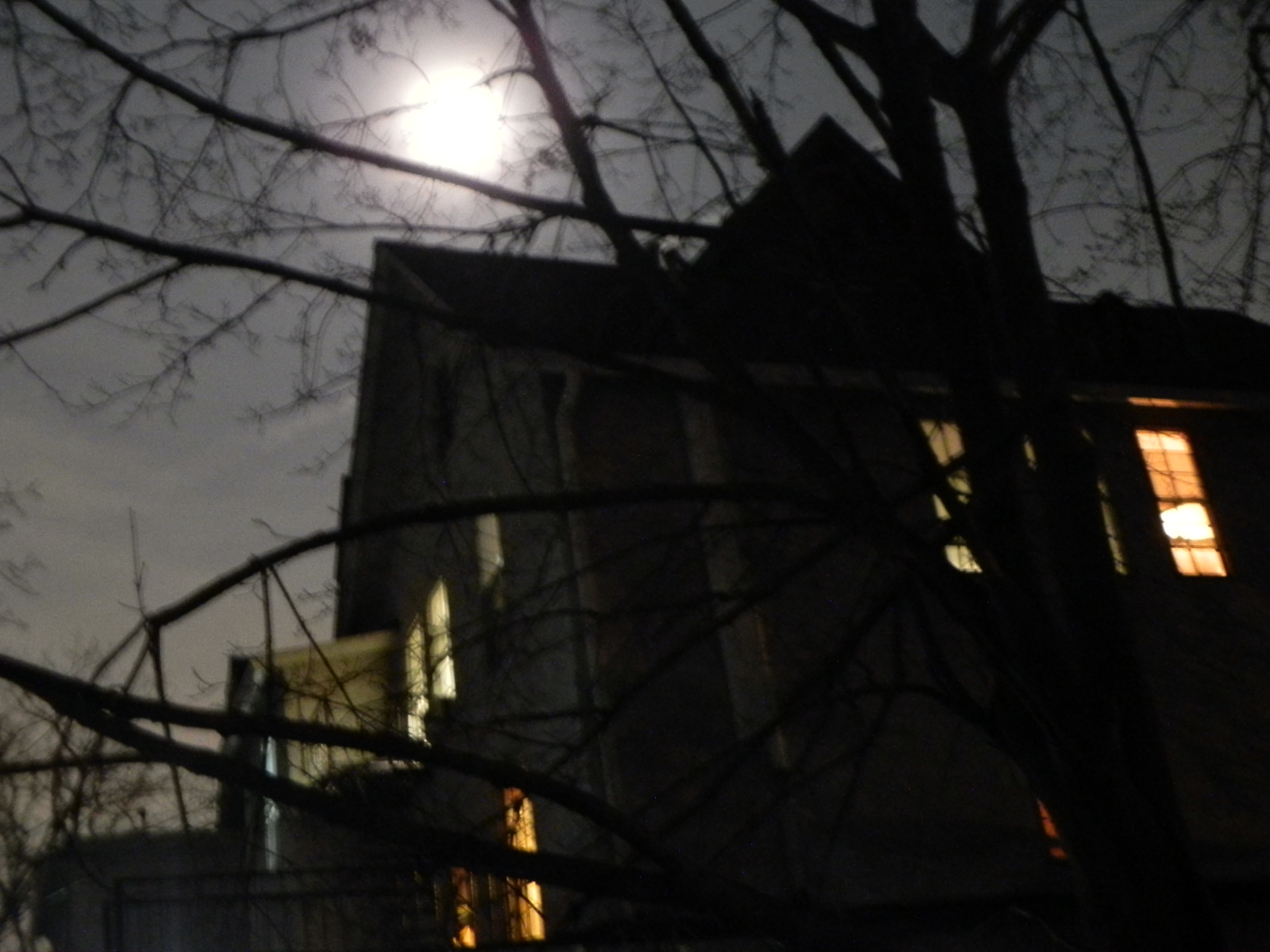
Since posting just a few days back about the cover of Nightmares with the Bible it has now been posted on the Rowman & Littlefield website (more on that in a moment).  I’m pleased with the cover because it includes a photo I took.  It’s a little blurry, but that adds to the effect.  In the days before my commuting began, I could easily stay awake until regular hours and one autumn weekend we arrived home to find the spooky house next door all lit up, under a full moon.  I appreciated the eerie look of the situation and snapped this photo, which I’ve used a few times on this blog.  I’m not sure the house next door was haunted, but it sure looked like it.  More to the point, it reminds me of the poster for The Exorcist.  It has always been a dream of mine to have one of my photos appear on a book cover.

I also received the happy news that the book is with the printers.  That means it will soon be available.  It will be expensive, but I should be receiving a discount code that I will be glad to share.  “Library pricing” is something publishers unfortunately have to do to make books pay themselves off.  In the past several years so many books have been appearing that the bottom has fallen out of the academic library market.  Too much supply, to put it in capitalist terms.  Many publishers, however, will give discounts to individuals who want to buy a copy.  All you have to do is ask the author.  (I don’t have the discount code yet, but I will be glad to share it once I’ve received it.)

Nightmares with the Bible is being published by Fortress Academic.  A few years ago Fortress Press partnered with Lexington Books to handle their library market books, including those in the series Horror and Scripture, in which Nightmares appears.  Lexington Books is an imprint of Rowman & Littlefield.  It’s sometimes difficult to keep track of publishing houses since there has been a lot of consolidation over the centuries, accelerating in recent years.  Publishers don’t sell as many individual books as they used to and with Amazon’s arrival a new shift in the market took place.  It tends to favor trade publishers over academic ones.  In any case, that means even books written for trade readerships, like Nightmares, are priced for libraries.  If you have access to an academic library please recommend they buy a copy.  If the book succeeds in that venue a case can be made for a paperback edition.  In the meantime, the book should be, barring an apocalypse, out on schedule.