Keep It Covered

I’ve seen it at last.  The cover concept for my book.  I’ve been manicly checking the Rowman and Littlefield (parent company of Lexington/Fortress Academic—a roadmap would be useful) webpage to see what it might look like.  I’ve “seen a sighting” at last.  Nightmares with the Bible seems to be actually happening.  As a writer there’s always some doubt involved with your book.  You wonder, will it really come out?  Will someone pull the plug at the last minute?  Is any of this real at all?  Those kinds of things.  I’ve mentioned before that waiting is a very large part of the process.  Publishing is a slow business and the world changes so fast.  I sincerely hope it doesn’t ever leave books behind.

My waiting hasn’t been idle, of course.  My next nonfiction book is well underway but I’m focusing on fiction at the moment.  I had two short stories published within the last month and I’m inclined to follow where some success shows itself.  Besides, fiction and nonfiction aren’t as far apart as is often claimed.  Seeing the cover of the book, however, nudges me back towards nonfiction a bit.  Since I’m no longer an academic it’s a toss-up.  A few colleagues like what I’m doing, but my fiction work is secret.  So the process continues, waffling back and forth.  It’s all in service of learning how the publishing industry works.  That’s one of the many things they don’t teach you in graduate school.

It’s October and I should be thinking about monsters.  Although I’ve gone through my closet of DVDs, there are many that bear watching again.  If only I could fabricate time!  One of the things I’ve noticed about this pandemic—and I know it’s not just me—is that time seems to have been swallowed up.  A simple walk down the local biking trail now requires masking up before and washing hands after.  Less than a minute of time, for sure, but it adds up.  And if you go after work there’s not enough light left to paint the porch by when you get back.  Such are the contradictions of this wonderful season.  You really can’t pin anything down.  The colorful trees put you into rapture then they’re bare.  The bright blue sky looms under relentless clouds.  You throw off your jacket one day and it snows the next.  And there might just be monsters lurking out there.  One of them, it’s said, will be released in November.  Given the nature of this season we’ll just have to wait and see.


October Reflections

The people are dressed in their finest.  The best food and drink available are spread on white tablecloths while rats scurry underfoot.  The feasters invite Lucy to join them.  “It’s the last supper,” they say, hoisting a glass, knowing that they will soon die of the plague.  This is one of the most powerful scenes in Werner Herzog’s Nosferatu the Vampyre.  It’s October and we’re in the midst of a plague.  The wealthy retain their fortunes while the poor die in the streets.  Do I really need to explain why someone so focused on religion and social justice finds horror films as able conversation partners?  My two books that relate to the topics don’t come outright and say it, but there are spiritual lessons to be learned here.

Genre is a convenient, perhaps even necessary, means of making sense of the vast creative output of humankind.  We write fiction, poems, and songs.  We film movies.  We produce these forms of entertainment at a stunning rate, especially when we consider the large number of pieces made that never find official publication.  Genre helps us sort through—this is like that, etc.  Still, some of my favorite pieces of literature, and movies, don’t really fit into neat genre divisions.  Take Herzog’s Nosferatu.  There are definitely horror elements here, but it is also an art film.  Some scenes, like that described above, are suffused with religious meaning.  When circumstances align correctly we can see it and say, “ah, now I understand.”  That was what came to me recently.  I haven’t seen the movie for years, but circumstances with Covid-19 brought it to mind.

October is a month of poetry and transitions.  We turned the furnace on only to find ourselves in the midst of a string of days reaching near 70.  The cerulean sky which looks so different this time of year suddenly disappeared with nearly a week of heavy cloud cover.  There’s beauty in the daytime and monsters in the night.  Outside lurks a plague.  Lacking the willpower to overcome it, people are growing weary of the restrictions.  We’re not used to being locked up.  The thing about the last supper is that life goes on even after it’s over.  Changed, yes, but October is all about change.  We’re anxious, wondering if it was indeed a vampire that bit us.  Meanwhile the leaves continue their journey from green to yellow, orange, and red, their litter becoming the food for next year’s growth.  Yes, there are spiritual lessons here.


Ode to Bookstores

The pandemic has changed everything.  You knew that, of course.  Like many people in fields of regular job uncertainty, we’ve curtailed spending as much as we can.  Never very securely established after Nashotah House, we’ve managed to get by by not thinking too far ahead.  I can’t imagine retirement (if there’s still a job left to report to).  Even more, I can’t imagine a life without books.  The only way I get through each day is by trying not to think about it.  Still, I miss bookstores.  Pre-pandemic, when jobs at least felt somewhat secure, we’d often nip into one of the many local independents of a weekend.  Missing browsing shelves sorely, we stopped into Book and Puppet over in Easton, when on a trip to buy produce at the outdoor farmer’s market.

It felt strange, the thought of going into a store that wasn’t dedicated to groceries or hardware.  Masked, of course, but would there be lots of people there, crowding the air with germs?  No.  There was maybe one other customer in the place.  I have to admit that I was a bit disoriented, trying to read over spines on a shelf, not wanting to touch anything.  I’ve tried hard to curb any spending during these highly uncertain times, but could I imagine a world with no bookstores?  Would I even want to?  Books, you see, give me hope.  My vision of heaven is October and a never-ending stack of books (and, of course, friends).  Books allow for escape and exploration.  Life will continue after the pandemic in books.

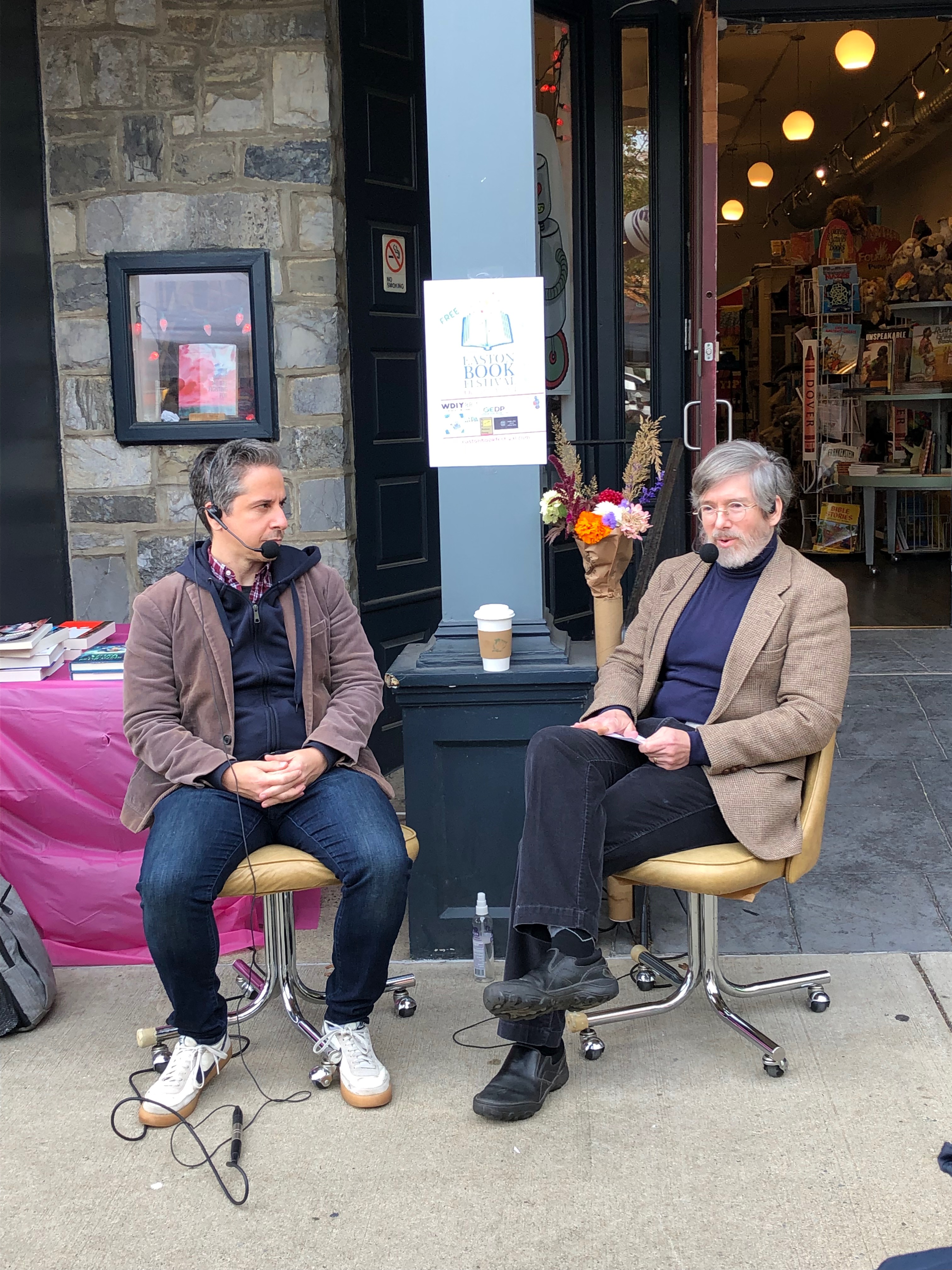
The fear has gripped many of us, I suspect.  I’m old enough to retire, but not well-off enough to do so.  Our house requires a two-person income at our level (highly educated, under-employed), and the pandemic rolls on.  I think of the Black Death—I’ve read about that too—and how history changed because of it.  In this pandemic we’re dying (all but the wealthiest) piece by piece.  The most vulnerable first, of course, but the middle class may well be in the sights.  The owner of the bookstore said he wasn’t sure how long he could hold out.  Just last year at this time I was participating in the Easton Book Festival that he’d organized.  I had a book-signing at the nearby Moravian Bookshop.  I can’t remember a time I felt so hopeful, knowing I had another book coming out, and if we survive long enough, another after that.  I really shouldn’t, but I’m in a bookstore.  I’ll buy one in hope that the future may just offer a place to keep it.


The End of Snow Days

It’s a chilling thought.  An article in the New York Times said it, but we were all thinking it.  Snow days may well have become another victim of Covid-19.  No, it’s not snowing yet (but give climate change a chance!), but New York City schools have figured out that if students can learn from home then one of the truly treasured memories of our youth may no longer be necessary.  In fact, snow days ended for me when I began working remotely.  My supervisor had suggested, even before that, that I take my company laptop home daily, in case of inclement weather.  The idea of awaking, wonder-eyed, at the world covered in white—that cozy feeling of knowing you had no obligations for the day but to enjoy the pristine world out your window—is a thing of the past.

Technology has changed our lives, and some of it is even for the better.  It hasn’t made work easier for some of us, but has made it longer.  We used to talk about kids and their continuous partial attention, but now work is always at home with you and that time signature on your email says something about your work habits.  As the days are now shorter than the nights, as they will be for six more months, finding the time to do what you must outdoors (it may be cooler, but lawns still insist on growing) is always a bit more of a challenge.  And when the snow does fall you’ll still have to shovel the walk.  All time has become company time for a truly linked-in world.

The real victim here, it seems to me, is childhood.  Snow days were a reminder that no matter how strict, how Calvinistic our administrators wanted to be, the weather could still give us a smile now and then.  A legitimate excuse not to have to go to school and, if parents couldn’t get you to daycare, a day off for everyone.  The strict number of limited holidays allotted by HR had limited power in those days.  Although we all know that well-rested, happy workers tend to do better jobs than those who are constantly stressed out and who have trouble sleeping, we’ve now got the means to make the sameness of pandemic life the ennui of everyday life, in saecula saeculorum.  Thanks, internet.  At least now we work where we have a window and can look out on nature and can see what we’re missing.


Hot Breakfast

Cooking in a pre-dawn kitchen has a certain appeal as the weather cools.  Knowing that something with warmth will set you right before the nighttime cold forces the furnace on for the next six-to-nine months.  After a recent tooth extraction I was told to keep on a soft diet until the wound healed.  A fan of crispy breakfast cereals, I faced a new dilemma—what to eat before work?  Being vegan means bacon and eggs won’t do (there is passable vegan bacon available, but so far the plant-based eggs haven’t managed not to taste like mung beans).  On a recent frenzy of nostalgia I had purchased a box of (now mostly empty) farina.  Often known by its commercial name “Cream of Wheat,” farina is more like flour and milk (many vegan options available) but with a better texture than paste.  It reminded me of childhood Saturdays.  Then the box was empty and grocery day was the better part of a week away.

Grits seemed a little more challenging.  The particle size is larger and might cause problems in the healing wound.  Still, I gave it a try.  Since my father was from South Carolina I grew up eating things like grits and black-eyed peas.  This makes for a hearty breakfast as long as you keep the grits on the other side of your mouth.  When the black-eyed peas were gone, I turned to oatmeal.  Bigger pieces yet, but still soft.  Oatmeal works best with some kind of sweet accompaniment.  Brown sugar and cinnamon is a standard. Sweets bother my teeth, however, so I need to be careful there.

The problem with all of these options is that one serving of these hot cereals was too little to keep me going.  I wake early and eat breakfast early, so I need about six hours of energy from this meal.  Two servings are too much.  Ratios are beyond me.  So I turn to my religious roots.  Whenever I think of breakfast I’m reminded that our cereal-eating culture (hot or cold) was largely influenced by Seventh-Day Adventist sensibilities.  Adventists are vegetarians, and some prominent among them by the name of Kellogg launched massive, religiously motivated campaigns to have the day begin with grains, back in the day.  It stuck.  I suspect Kellogg was good with numbers.  I wish I could figure out how third-cups and quarter-cups relate to one another.  Like most things in life, it’s falling midway between that is difficult.  It’s chilly in here and I too hungry to do math.  At least the religion part I partially understand.


Electricity

After the oven incident (see last Monday’s post), I took some time to examine the burned out bake element from the range.  Clearly a break in the piece led to some arcing like you might get in Frankenstein’s laboratory.  By the time I’d arrived on the scene (I always seem to be behind my time), the fire was snaking along the element itself and now that the piece is cooled and removed I was fascinated by the damage it caused.  I suspect this is why I leave any electrical repairs to experts.  This is dangerous stuff.  Interestingly, in the realm of monsters electricity is most frequently associated (in my mind, anyway) with Frankenstein’s creature.  Mary Shelley’s novel isn’t explicit about how galvanism resurrected the patchwork human, but it was clearly part of the tale.

Electricity retains a certain element of mystery for some of us.  If we stop and reflect on how recent our understanding and harnessing of it is, that further adds to the drama.  People have been thinking about and trying to understand religion for thousands of years.  Like early electricity, religion involves invisible forces.  Of course, lightning and sparks and arcing oven elements can be seen, but seeing isn’t the same as comprehending.  We are a curious species and we want to understand.  Being inside the situation, however, our understanding will never be complete.  We can get a pretty good grasp, a functional one even, but our brains will always limit just how much we can understand.

It should come as no surprise that those of us who chose to study religion are intrigued by mysteries.  The divine, the transcendent—no matter what you want to call it—can never be fully understood.  Thus the impatience with evangelicals and others who pretend they’ve got all the answers.  No, we’re all still attempting to get to the bottom (or top) of this mystery.  Like electricity, religion can do an enormous amount of damage.  Motivating those who have only a cursory understanding how it works has historically led to debacle after debacle.  It has generated wars and perpetuated human misery.  Like electricity, when used properly religion has done a tremendous amount of good in the world as well.  The thing is, as my bake element shows, we have all come to learn that electricity should be handled by those who know what they’re doing.  Ironically, religion has never gathered the same level of respect for the specialists.


The Good of Others

On a recent trip to visit family in upstate New York, the Sunday we had to leave (for work Monday is an implacable law), we decided to have lunch in a local park.  The weather was fine and there was plenty of social distancing, given the size of the grounds.  After a nice picnic and stroll, we realized it was getting late to start out in order to get home by my oddly early retiring time.  We headed back to our hosts’ car only to find it wouldn’t start.  They had a new battery and so we popped the hood and hoped to find something obviously wrong as we waited for the long response time for AAA in a rural area on a weekend.  We were a little concerned because we still had a long drive and no real way to get back to our own car, parked at our hosts’ residence.  A stranger came up and asked if we were having trouble.  Listening to the symptoms he said, “Do you mind?”  Putting his head under the hood, he said, “I’m a mechanic.”  He had our host try again and the car started right up.  He refused to take payment and wouldn’t even give his name.

Despite the fear the Republican Party tries so hard to spread, it has been my experience that good Samaritans abound.  When I’ve had car trouble far from home, I’ve never waited long beside the road before a stranger has stopped and asked if they could help.  Technology may make us feel more self-sufficient (we have smartphones and can call for our own help), but it doesn’t always work that way.  My wife had accidentally left her phone at our hosts’ place, and I’d forgotten to charge mine so the battery was depleted.  Uber would require an active, charged phone and our hosts were using theirs to communicate with AAA.  If the stranger hadn’t stopped by we would’ve been stuck, likely for hours.

I oftenconsider how Calvinistic GOP thinking can be—assuming the “total depravity” of everyone and declaring that we must be kept in check by laws that maintain outdated concepts of both humanity and justice.  To be sure, there are dangerous individuals out there.  Would you want Trump to stop by if you were having car trouble?  What selfless behavior could you expect from that quarter?  Sucker!  In general, however, people are good.  They are motivated by what they think is right.  We’re in a pandemic.  The mechanic didn’t know us (we outnumbered him), he had no obligation to help.  Good Samaritans exist, and they are frequently found outside the yellowed leaves of Scripture.

Balthasar van Cortbemde – The Good Samaritan, via Wikimedia Commons


No Way Out

Racism is evil.  The grading of the shading of humans degrades us all.  Robin DiAngelo knows much about the subject and as we watch Trump rally the openly racist, she gives us all pause for thought.  Our entire culture is one of white supremacy.  Progressives, determined to combat it, are also part of it.  White Fragility is not an easy book to read.  It allows no escape for anyone “white” to use.  We must confront our racist culture and admit that we benefit from it.  When we try to explain that we’re misunderstood, she anticipates.  She has heard it all before.  The only thing we can do is confess, interrupt, and try to break down the system that continues to support the systemic evil we’ve embraced.

One thought occurred to me as I was reading.  No doubt DiAngelo would suggest I’m deflecting, and it may be that I am, but those of us who struggle with a perpetually low self-image, even if “white,” may not participate in feeling superior to anyone.  There are individuals whose natural assumption is the superiority of others.  I’ve experienced it time and again in my professional and personal life.  I assume the other is more adept and worthy than me.  In such circumstances a bit more carrot and less stick might’ve been helpful.  I know many both at work and more voluntary activities, for whom a word of encouragement is rare.  For those of us who assume the superiority of others, such encouragement goes far.

Even as I was thinking this I saw a post on Nextdoor.com.  The app, intended to help you find contractors or dentists or whatever, receives many posts on all kinds of topics from identifying animal droppings to alerts regarding crime.  The post to which I refer was from a security camera showing a “prowler.”  The young man seemed more to be walking than prowling to me.  His skin tone and the time of night led to a string of assumptions built on assumptions.  Since I’m often awake just an hour after the alleged “prowling” took place, I knew that were I caught on a security camera I’d merely be considered an insomniac.  Add some melanin and some racism and suddenly a walker is a prowler.  The words I was reading in White Fragility hit me with incredible force.  We have a massive amount of work to do.  “White” people have to own their history.  Own it and overcome it.


Hypersensitivity

Tell people you’re hypersensitive and the first thing they’ll say is “I’m sorry.”  The way I use the term is, however, somewhat literal.  Some of us experience sensory input in especially intensive ways.  Psychologists say that those of us who do often stop and assess in new situations.  We can become overstimulated and sometimes “shut down” if too much is going on.  It doesn’t mean I’m going to burst into tears if you insult my haircut.  (It’s homemade, we’re in a pandemic, after all.)  The reason I bring hypersensitivity up at this point is two-fold.  The first fold has to do with the fact that I no longer get out much, which means much of the “ordinary” now seems new.  The second fold is that I wonder if hypersensitivity had a role in leading medieval people into monasteries and convents.

Back to point one.  If sensory stimuli can overwhelm one, going back into TMI territory can be almost traumatic.  I commuted into New York City for about seven years.  Manhattan is difficult for a hypersensitive person to take.  Over time I became accustomed to it, and familiar environments are more easily navigated.  The pandemic, however, has me spending about nine or ten hours a day in the same small room at home.  Actually, working remotely had already done that, but I used to get out on weekends.  We recently took a safe weekend trip, stopping only at places with few people and staying with family.  Less than 24-hours out from home I realized I was feeling overwhelmed.  Too much interaction.  We had stopped at a town I’d never visited before.  The trees were spectacular.  I soon regained my bearings, because no matter how late I stay up, I still awake early to write.

This leads to the second point.  I suspect things moved much more slowly in Late Antiquity and the Middle Ages, but I can see why certain individuals might like to cloister themselves.  While I disagreed with the theology, I taught for fourteen years at Nashotah House, a cloistered seminary.  You saw the same people day in and day out.  The campus was suspicious about this thing called “the internet” for quite a long time.  You ordered books through the mail and waited a month or more for it to arrive.  In some ways this was a comfortable existence.  Of course, it blocked me from much of what was happening in the wider world.  The pandemic has, in some measure, brought me back to that space.  I wonder if, historically, they might be connected.  But right now it’s time to get to my ten-hour room and work.


Fire and Ice

Most people in our modern world consider a cooking device an important part of a household.  Many of us are also over-committed.  These two elements came together last week when our kitchen stove (“range,” I’m finding out, is the correct term) burned out.  We could tell when we bought our house two years ago that the previous owners had likely not replaced any appliances.  The refrigerator died our first year.  Now, in our second, the stove—excuse me, range—went.  Given that it’s turned cooler around here, a good hot meal in the evening has been a welcome relief, but with no stove how do you cook it?  This happened on a Tuesday.  My wife and I compared calendars.  The closest evening we could both get out to look for replacements was Friday.  Of course, once you shell out the money you also have to wait for delivery and installation.  It looked like at least a week without home-cooked food.  Grocery shopping, of course, had been on Monday.

It occurred to me how utterly dependent we are on our big appliances.  The refrigerator died just before a holiday weekend in pre-covid days, so we were on our way out of town when it happened.  A lot of food had to be wasted.  It took about four days before a new one could be delivered, and we had to cut short our trip to be here in time for the installers.  Food.  Unless you’re living on granola bars and trail mix you need to keep it cold or keep it hot.  Our ranges and refrigerators do the heavy lifting for us.  Our ancestors stuck things in the cellar to keep cool and chopped wood to keep what is properly called a “stove” hot in the kitchen.  It was pretty much a full-time job just to survive.  Now nightly Zoom meetings make any interruption of online connectivity difficult.

Weekends, given the circumstances, are gems.  They are the only time we can get things done.  Days are eaten up by ever-expanding work by people desperate to keep their jobs in a tanking economy.  Supply chains, interrupted by the virus, meant that a delivery of a new range would only happen in January.  Going without food until the new year steered us toward a DIY appliance repair solution.  I never thought I’d be sticking my head in an oven, but here I was, with a new part ordered from Amazon and the confidence of the friendly people on YouTube telling me I could do it.  Taking days instead of months, we were cooking again by Sunday, and I just might’ve learned something along the way.


Twain Shall Meet

On a slightly hazy fall day, when the autumnal colors were alive, we stopped in Elmira.  To understand the significance of this stop, I should explain that from the time my daughter could appreciate it (and probably even before) we used to make fall literary trips.  We would take a long weekend and drive to where a famous author had lived.  Laura Ingalls Wilder in Pepin, Wisconsin, or Mark Twain in Hannibal, Missouri.  When we moved east we visited Edna St Vincent Millay at Austerlitz, New York, and Washington Irving in Sleepy Hollow.  More recently, in the spring, we went to see Rod Serling in Interlaken, New York.  So it was that we stopped in Elmira, New York, where Mark Twain rests.  I had always assumed Samuel Clemens was buried in Missouri, but his most productive literary period was his time in upstate New York, and it is here he remains.

His tombstone was covered with pennies and a few higher denomination coins, a rock or two, and a guitar pick.  People want to show their respects to the writers who’ve meant something to them.  I find this a moving tribute.  I suspect it happens at the tombstones of many famous people, but in Highgate Cemetery in London we found Douglas Adam’s small plot filled with pens stuck in the ground as mementos.  I travel through the world lightly, seldom carrying anything extra with me.  Somehow I never stop to think to bring a memory to the cemetery.  Fortuitously I had found a penny on the ground the morning we left for Elmira and I placed it among the others on Twain’s marker.  

What would make the appropriate calling card to leave?  I often wonder that.  If I had such a token, I suspect I would feel the need to revisit the various cemeteries of years past to leave a sign of my respect.  There are lots of them.  Edgar Allan Poe in Baltimore.  George Orwell in Sutton Courtenay.  H. P. Lovecraft in Providence.  Is there anything that ties them all together?  Pens seem an obvious choice, but stones are far more traditional (especially in Jewish settings).  The tradition is traced back to building cairns in biblical times, and the idea survives in that stones are more permanent than flowers and are a sign of respect.  Writers often have more elaborate items left, but it’s clear that they are removed from time to time by the grounds keepers.  Before I visit my next literary grave, I’ll give some thoughts to symbols and tokens and the importance of celebrating writing.


Dangers of Experience

I’m so used to being behind everyone else that when I turn out to be ahead of the curve it occasions genuine surprise.  That’s the way it appears when I think about the dominance of the far right in American politics.  As an editor I get to read proposals for other editors on the board.  Political scientists are trying to analyze how we’ve come to be a nation of religious far-righters when we seemed so progressive that we put a smart phone in everyone’s pocket and Alexa in everyone’s voice range.  I grew up as a far-righter when it certainly felt alienating.  Apart from people we met at church I didn’t know any others outside my family.  People we knew were, well, just different.  Back in those days we didn’t judge them.  We accepted them for who they were.

One of the aspects of my life to which I’ve grown accustomed is being ignored.  I’m not a big person, nor am I a loud one.  It isn’t unusual for me to be overlooked at work and even at religious gatherings (a field in which I’m a bona fide expert).  Nevertheless, I have a wealth of experience among the far-righters and I think it might help to understand our political climate.  I think I have a pretty good grip on what motivates this crowd.  Since I grew up (serious study will do that to you) and am no longer arrested at that stage, I’ve blended into the crowd as someone just as perplexed as everyone else.  I do, however, have an idea of what they’re after.  Our particular sect didn’t push this—we seemed more worried about our own souls staying out of Hell—but many fundamentalists wanted to take over the nation.  In fact, they have.

The fact that 45 isn’t one of them is immaterial.  Power is the thing.  Power to make others conform or suffer.  This particular faith is built on fear, not love.  It’s as if their New Testament lacks the gospel of John.  You see, I was ahead of the curve.  I was part of it before it took over congress, the White House and the supreme court.  Things move so far these days that thinkers just don’t have time to think about everything.  Work days are long and covid still complicates everything.  Who has the time to seek out those who grew out of the very source that now endangers our democracy?  I think I prefer running a little behind, don’t you, Cassie?


What Smells

One of the stories I recently read had a character commenting on the smell of a place.  Although humans can’t rival many other mammals and some birds for sense of scent, smell is a keen reminder of location.  It is also one of the more personal aspects of the senses.  We get nervous when people start talking about smells.  We all know, however, that places have their own fragrances.  Home smells a certain way.  You always notice it going home from college, where the dorms have their own smell.  When I was visiting campuses as part of my editorial expectations, I returned to Boston University School of Theology.  Apart from the main corridor of 745 Commonwealth avenue appearing smaller than I remembered, the smell was so familiar as to be overpowering.  I hadn’t been there for at least a couple of decades, but my brain remembered it well.

I trust science.  I also think science can’t explain everything, particularly in the life of emotions.  One of the natural limitations of science is the data with which we have to work.  We have limited input.  I remember in chemistry class in high school we worked with chemicals that replicated scents.  The particular ethyls used to reproduce fruit scents were similar only by suggestion.  I remember thinking the banana combination only smelled like bananas because it was suggested to me that it did.  Smell is a complex world, and we know many animals do it better than we do.  Dogs, bears, even mice, know more of the world through their noses.  I suspect Fido knows home primarily by its smellscape.  We, the “masters” tend to miss a lot.  And that makes me wonder what science might be missing by our limited sense of smell.

If there is a supernatural world, I wonder what it might smell like.  We’ve all known someone whose dog wouldn’t go into a certain room, or who reacted to something we couldn’t see.  Perhaps Fido couldn’t see anything that we couldn’t but could smell it.  I often think that when dogs are tested humans try to understand their visual acuity because that’s how we experience our world.  Dogs, however, experience their world through scent.  We could stand to learn quite a lot about this planet we inhabit if we could somehow access the smells that we simply lack the capacity to reach and analyze.  We are only beginning to scratch the surface.


The Hardest Part of Nightmares

In the process of writing a book, there comes the long time between when everything’s submitted and you hear nothing.  In fact, writing a book is often about waiting.  You spend years pounding your thoughts through a keyboard, send them off to some editor (guilty, as charged) who takes months to read and think about it.  If they like it they’ll send you instructions on how to change it and you start banging the keys again.  When it’s finally ready you submit it and wait while it gets transferred to production.  This handover is a complicated process and can itself take a month, easily.  Then the manuscript has to be copyedited.  I’m at the post-copyedited phase of Nightmares with the Bible, and this is, it seems, the longest wait.

There were only a few changes to the proofs I received.  These days your Word files (converted from Pages files for Mac users) get loaded directly into the production software.  What you see is your own words, in a different format.  You type your corrections directly onto the proofs.  Hit submit.  Then wait.  In my head I know that my book is one of many waiting in a queue to be printed.  I’m also a realist so I know the initial printing will likely be about 150 copies.  (When I first started in the publishing world academic books routinely sold 300 copies, but those days are long gone.)  At some point before then I’ll receive an email telling me the cover’s ready.  That’s what I’m waiting for at the moment.

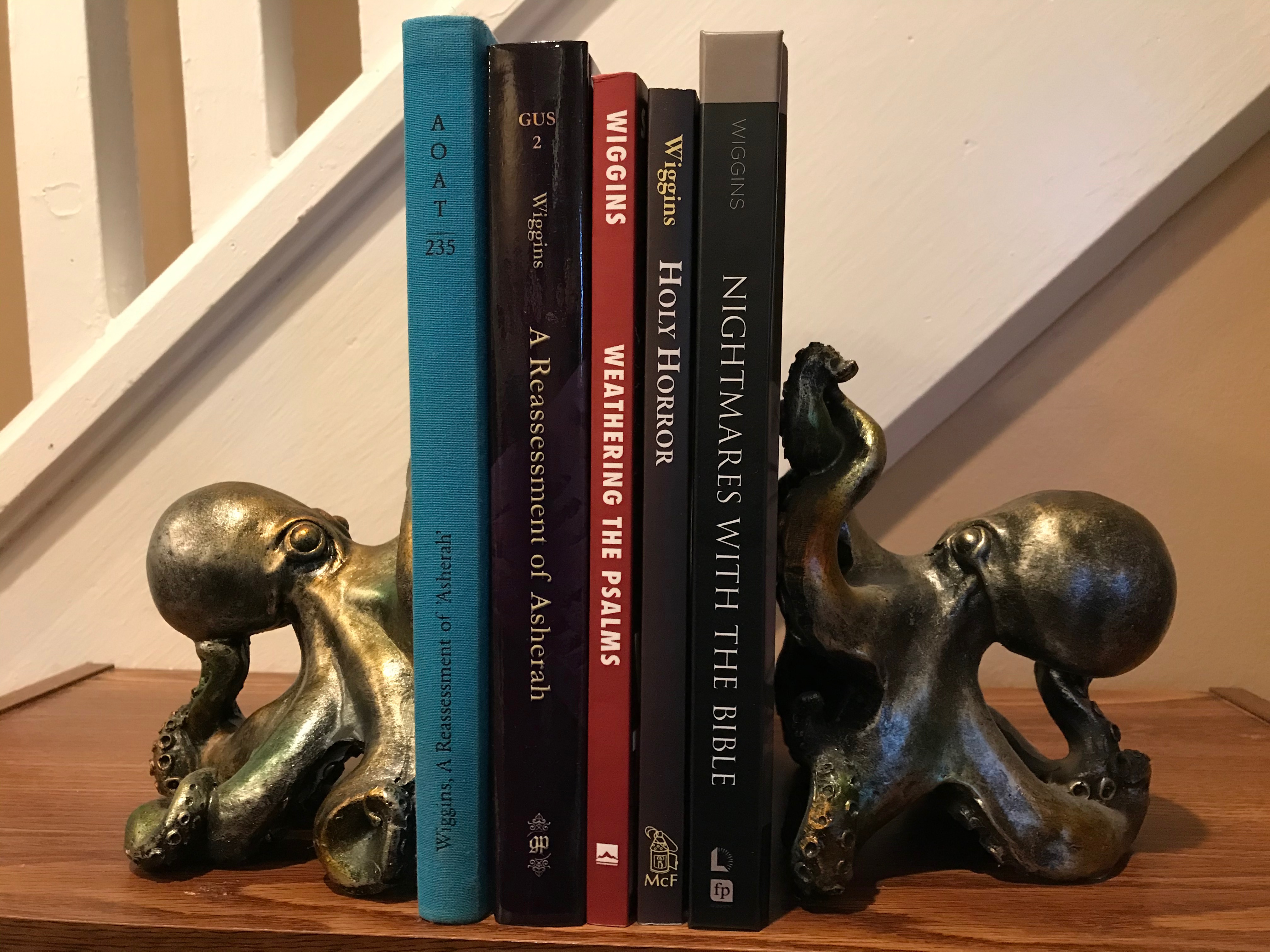
We’re constantly told, in the business, that electronic books are what people want.  I can’t speak for others who write, but when I think of a book I think of a physical object.  Not some electrons sharing a screen promiscuously with any number of other books.  I haven’t published until I hold the printed object in my hands.  That’s still at least a weeks away.  Unless your book is anticipated to be a big seller, this is a period of absolute silence.  You just wait, nervously checking the publisher’s website every other day to see if your page has been updated, all the while working on your next tome.  Although it is priced expensively, I’m hoping Nightmares with the Bible will do reasonably well because of the subject.  Maybe some people will even get curious about Holy Horror, which was the precursor for it.  But for now, I sitting here with Tom Petty, waiting.


Unintentional Patterns

Time, they say, is what prevents everything from happening at once.  I’ve noticed something about my reading life (is there any other kind of life?).  One of my favorite topics on this blog is books.  Both reading and writing them.  When I wake up and try to clear the cobwebs of sleep from my head to think about the day’s post, I always feel relieved when I have a book I’ve just finished because that’s an eager and ready topic.  When I’m in the middle of a large book, it seems like a long time until I’ll be able to jot down some thoughts on it, and the ideas don’t always flow.  It’s here that I’ve noticed a strange kind of pattern and it has to do with the way I read.  Interestingly, it isn’t intentional.  It goes back to my post-commuting literary lifestyle.

I read nonfiction in the mornings.  I awake early and after about an hour of writing I try to get in an hour of reading before thoughts turn to work and its unraveling effect on the fabric I’ve been weaving before the sun rises.  The nonfiction I read depends, to a large extent, on my writing projects.  Not exactly the kind of research that time and libraries afford academics, but still, research in my own way.  Often these nonfiction books are large—400 pagers seem to be the trend.  I’m a slow reader, so they take some weeks to finish.  At night (or actually evening, for I retire early) I read fiction.  It isn’t unusual for my fiction choices to be briefer than the nonfiction books of the morning.  It always seems, however, that I finish two books very near the same time.  Then I have two book posts in a week and many days without any.

Since we married over thirty years ago, my wife and I read to each other.  Usually she reads while I wash dishes.  Those reading choices are by mutual consent.  They sometimes make their way into my research, but more often they show up in my fiction writing.  In any case, they also seem to fit this same pattern.  When I finish a large nonfiction book in the morning, the same day, or the next day, I generally finish my fiction book.  Shortly after that our dishes-reading book finishes.  I’ve noticed this happening over the past couple of years and I always wonder about unexpected patterns that I find.  It doesn’t always happen this way, but it does often enough to make me wonder.  If I intentionally set out to do this it would be understandable, but as it is, it simply happens.  As they say, things tend to occur in threes.