Summers and Hauntings

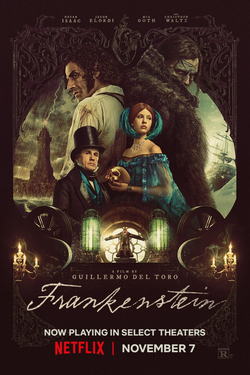
I’ve written before about that odd Ken Russell movie Gothic, one of my “old movies.” In case you missed it, the film is a fictional retelling of the gathering of Lord Byron, Percy Shelley, Mary Godwin, John William Polidori, and Claire Claremont in the summer of 1816.  They read ghost stories to pass the time and decided to try writing them.  Two famous stories came of it: Frankenstein and Polidori’s “The Vampyre,” a story that would go on to influence the genre.  I hadn’t realized, being generally the one invited to someone else’s choice of film, that two years following Gothic a movie called Haunted Summer was released.  Directed by Ivan Passer, it is a slow-paced romance that tells about the same meeting.  It’s somewhat more believable than Russell’s movie, but it has some oddities.  Perhaps the most telling is that it doesn’t mention the famous “contest” at all.

No doubt, one of the most compelling aspects of that summer meeting was the fact that a nineteen-year old Mary Godwin would go on to write one of the most influential fictional books of all time.  The influence of Frankenstein is visible in most unexpected places.  Internet personalities create “Franken” products by mixing together discrete products.  (For example, “Frankensoap” is when you cut up and blend different soaps.  You’ll actually find Frankensoaps in our bathrooms at the moment since that’s the way I handle soap scraps.  Soap never seems to go fully away before it becomes unusable.)  Frankenstein influenced everything from feminists to science fiction.  Not to mention horror.  Haunted Summer, however, although it has Polidori as a character, doesn’t mention his story at all.  It really focuses on the sexual tension between Byron and Mary Godwin.

Our imagination of that meeting of two famous writers and one soon-to-become famous one, often doesn’t make room for the fact that Shelley and Godwin were actually traveling with their infant son William—not shown in the movie.  (Mary had delivered a premature daughter the year before, who didn’t survive.)  I suppose putting a baby in the mix might, in Puritan America, dampen the romance implied in Haunted Summer.  Both that movie and Gothic make use of Henry Fuseli’s painting “The Nightmare.”  And although Haunted Summer isn’t a horror movie there are a few moments of fairly high tension—one when Godwin has her dream of the creature approaching her bed at Villa Diodati.  The story, however, had already been told by Ken Russell’s movie and Haunted Summer failed to make much of an impact.  That isn’t, however, quite the end of the story.


Not Conan

What are Weapons without a Barbarian?  I learned about the latter movie after reading about the former.  After watching Weapons I knew I had to see Barbarian.  It is outlandish but decidedly scary.  I haven’t been that tense during a movie for some time.  Nor have I watched one where there were so many moments when the average person in real life would’ve just left before things got so bad.  There may be some spoiler-level information here, but I won’t give away the ending.  Tess is booked into an AirBNB in Detroit, but arrives to find another renter already checked in.  It’s a rainy night and there’s a convention in town so all the hotels are booked.  Tess decides she can trust Keith and stay the night.  They end up getting along very well, and she’s planning on staying the next night as well, even with the double-booked situation.  Then Tess discovers a disturbing room in the basement.

We then learn that Keith, whom we’re all suspecting (Bill Skarsgård has become well known for playing horror villains), isn’t the real threat.  In one of the moments when I would’ve left, she goes to find him after he falls silent in the basement.  She discovers a sub-basement where a strange, inhuman woman dwells.  This woman kills Keith.  Cut to California where AJ, a guy who’s not exactly evil but certainly not good, is being accused of rape and is losing money.  He’s the owner of the AirBNB and he flies to Detroit to get the house ready for selling.  He sees that it’s occupied, but the agency says no one is staying there.  He discovers the secret sub-basement and we learn a sexual predator has for years been abducting women, having children with them, and then having children with their children, thus producing the scary woman.

As I say, outlandish, but the story is quite effectively filmed.  The real monster is not the woman, but modern people such as AJ.  The police refuse to help because they assume everyone in that neighborhood is a crackhead.  The urban blight reminded me very much of It Follows, another horror film set in Detroit.  This is kind of a new form of folk horror where the landscape becomes a monster.  Instead of using traditional folklore, however, films like It Follows and Barbarian suggest that the landscapes we build and then neglect become scenes of supernatural horror.  This is quite effective.  Having grown up in a much smaller town, but one which is equally neglected, this kind of horror really works.  Zach Cregger has become another horror director to keep an eye on.


The Vampire’s Father

I’d been very curious about D. L. Macdonald’s Poor Polidori for several years.  This is not an easy book to find.  (I have noted before that I find university press book pricing illogical and unconscionable.)  John William Polidori was, as the subtitle states, the man who wrote “The Vampyre,” treated sometimes as a novel, at other times a short story.  Polidori, apart from being treated as a fictional character, is a difficult man to get to know.  This critical biography contains much useful information.  There are sections, however—and probably the reason for the pricing—, that interest only scholars of literature looking to find an exegesis of works of Lord Byron and Polidori himself.  My curiosity about him derives from the fact that “The Vampyre” was a very influential story and yet its author is somewhat consistently considered insignificant.  This seems to have predated his association with Byron; Macdonald points a finger at his father.

So who was Polidori?  Born in England of an Italian father and English mother, he was raised with literary aspirations but his father (who was a writer) had other plans for him.  Catholic in a period of strongly Protestant sentiments, John was sent to Catholic school and considered the priesthood.  His father eventually sent him to Edinburgh University to become a medical doctor.  Clearly this wasn’t John’s interest, but he complied.  Finishing his qualifications, he found setting up practice difficult because of both his foreign-sounding name and his Catholicism.  Lord Byron, about to exile himself from England because of scandals, wanted a personal doctor and settled on Polidori.  He knew of Polidori’s literary ambitions and frequently belittled them.  Polidori was present in the summer of 1816 when Percy and Mary (soon to be) Shelley visited Lord Byron along with Claire Claremont, Mary’s half-sister pregnant with Byron’s child.

Famously, the group read ghost stories and at Byron’s suggestion each started writing their own.  Byron’s fragment led to an idea Polidori later wrote out, after Byron had dismissed him, as “The Vampyre.”  Mary Shelley’s story, of course, everybody knows.  “The Vampyre” was published without Polidori’s knowledge and was attributed to Byron.  Even Goethe read it and thought it Byron’s best work.  Polidori was eventually credited with the story and tried to make a living as a writer.  He produced other works, but no real success.  He decided to become a lawyer.  Unable to establish his independence from his father, he died at 25 by ingesting prussic acid.  Even during his life, which was quite interesting, he was called “Poor Polidori” by more than one acquaintance.  His literary output isn’t bad, according to critics.  To me, he’s a kind of patron saint of those who would write but who are overshadowed by Byrons and Shelleys.


Vengeance Is Hers

A Lesson in Vengeance, by Victoria Lee,  is a novel with some twists that I’ll try to conceal.  It is a kind of young adult horror-themed dark academia novel.  I really enjoyed it although there are a few improbable events.  That’s the way of fiction with an unreliable narrator.  Felicity Morrow, a girl from a wealthy Boston family, is enrolled at Dalloway School.  Dalloway is a girl’s prep school in upstate New York.  Felicity had to take some time off, during which she was institutionalized, after the death of her best friend, and lover, Alex.  Now that she’s back at school she feels the ghost of her friend coming back for vengeance.  She lives in Godwin House, which only has space for five.  It’s also part of the story of the Dalloway five, girls accused as witches when the school was founded, who all died there.

A new girl is starting at Dalloway this year.  Ellis Haley has already written a published novel and is working on a second.  She lives in Alex’s old room.  In spite of their rocky start, Ellis and Felicity become friends.  Then more than friends.  Meanwhile, they’re both working on their senior projects but Ellis wants to form a fictional coven and replay the way the Dalloway five died, for her novel.  Things grow tense as Felicity begins to remember more and more about what happened to Alex.  Then a murder takes place.  I won’t say more about the plot.  The last several chapters are ones where putting down the book is a real struggle.  You want to know who did it.  And since Felicity is the narrator, you gather that she must survive.  But this isn’t without danger.

The horror elements involve ghosts and witches.  Since Felicity is revealed to be an unreliable narrator it’s unclear whether the ghosts are real or not.  Most of the events are revealed to have had naturalistic answers, but one remains as either a real ghostly visitation or a delusion on the part of Felicity.  I read this book as part of my ongoing fascination with dark academia, and I’m glad I did.  It’s quite a well-told story.  Enough information is held back and revealed in moments of insight as the story unfolds that I was kept guessing until very near the end.  And the final realization only hits at the very end.  This is a good entry into dark academia for anyone wondering where to start, at least in my opinion.


Accidentally Backward

I watched Regression by accident.  “How is that possible?” you might ask.  Well, I don’t read up about movies before watching them.  These days I try to save money by streaming on services I pay for anyway, such as Amazon Prime.  I had identified The Tractate Middoth as a movie that I could see without knowing anything beyond that it was based on an M. R. James story and that it was only about half an hour long.  I clicked on it.  It struck me as strange that it began with a “based on true events” intertitle, but people will do anything to sell a movie, including saying fiction is fact.  Then I noticed that the production values were pretty substantial.  I began to wonder if there were two movies by that title.   About forty minutes later, I’m needing to take a restroom break and I’m thinking, this movie should be done by now but it feels like we’re in the middle of things.

After I flushed and clicked back in, the title “Regression” flashed across the top of the screen.  Well, that explained a lot.  I didn’t recall having read any M. R. James stories like what I was seeing.  Clearly my initial click had been off and I’d hit the movie next to, or above or below, the one I wanted to see.  With that level of investment, I figured I might as well watch the rest.  It wasn’t bad but it took me a while to reassess my expectations.  Regression is about how the Satanic ritual abuse scares of the 1990s were fueled by, well, regression therapy.  A girl in Minnesota is identified as having been ritually abused.  Her story convinces police, who use a therapist to do hypno-regression to uncover what “really happened.”  Soon even the cop in charge is seeing Satanists coming after him in his own house.

The movie isn’t great, but it’s not bad either.  It has enough Bible in it to have made the cut for Holy Horror (or Holy Sequel).  And it is religion-based horror.  It wasn’t what I was expecting to see, of course, but that can’t be blamed on the movie.  The Satanic panic was real and unfortunate.  The movie is probably more of a thriller than horror, and yes, I can accept that it was based on real incidents because the panic is well documented.  There is no Devil here.  There are also no Satanists.  The real culprit, the film implies, is the fundamentalist minister who first suspected the abuse.  It is something to think about, but it was no Tractate Middoth.


Second Friday the 13th

It’s a measure of how regimented my life has become.  The 9-2-5 workday is ruled by the calendar in a way teaching wasn’t.  But on this, the second Friday the 13th of 2026 I figured I’d reveal something that only repetitive calendar watching taught me.  It’s so simple many children probably know it, but it is something that being a drone taught me.  Ready?  Unless it’s a leap year, the dates in March are the same as they are in February.  Mathematically (and I don’t think that way) this makes perfect sense.  February’s 28 days are evenly divisible by seven, something that isn’t true of either 30 or 31.  That means in three years out of four, March begins on the same day of the month that February does.  So if February has a Friday the 13th, so does March.  

Photo credit: Andreas F. Borchert, Wikicommons

I’ve confessed to being interested in holidays and significant dates.  Last month we had Friday the 13th before St. Valentine’s Day on the 14th, and the following Monday, the 16th, was Presidents Day.  A special long weekend.  This kind of syzygy always catches my attention.  I knew even then, however, that Friday the 13th would recur in March.  The only extenuation, in this case, is that St. Patrick’s Day is on Tuesday.  Now, I have some Irish ancestry and Tuesday always vexes me a bit.  Well, the coming Tuesday, I mean.  Green isn’t really my color.  I have a green sweater that doesn’t really fit anymore, but I try to wear it just about every year.  (I’ve had it since high school.  I can still fit into my college clothes—those that I still have, but alas, nothing green.)  I keep clothes until they literally wear out.  I can’t donate them because they’re rags by the time I’m done wearing them.  I grew up poor and that shows.

So here I am on Friday the 13th wondering if I should buy something green to wear on Tuesday.  You see, I take holidays seriously.  One of my unpublished books was about holidays.  I ended up using some of it in The Wicker Man, but May Day is still a ways off at this point.  Friday the 13th isn’t really a holiday, except for horror fans.  I’ve only seen the first two movies in the franchise—slashers have never been my favorites.  So this is just another Friday at work for me.  It feels sort of like the movie Groundhog Day.  The calendar just keeps telling me it’s a work day.  But at least on Tuesday I’ll be wearing green.  And if I decide to act on my impulse, contrary to my usual practice, and spend money on a sweater instead of books, maybe it’ll even be something new.


Creepy Cryptids

J. W. Ocker and I have a few things in common.  We’re both Edgar Allan Poe fans.  We both have an interest in the odd.  And we like to visit places where something strange is commemorated.  It gives me hope that there are likely more such people out there.  I read Ocker’s Poe-Land a few months back and knew I’d be coming back for more.  The United States of Cryptids caught my eye.  This book is for fun, but with a serious subtext—our world is a weird place.  Dividing the country into four regions: Northeast, South, Midwest, and West, Ocker traveled across the country looking for stories, or better yet, memorial statues and/or plaques, of cryptids.  Defined broadly.  These cryptids can be sightings of something unusual, folklore, or, in some cases, confessed hoaxes.  He makes the point repeatedly that cryptids make for great tourism opportunities.  There are people like me that will seek out such places, given half the opportunity.

Quirk Books, which has been unfortunately experiencing some difficulties of late, functions as a sort of home to oddities.  And cryptids fall into that category.  Ocker does point out, on a serious note, that any animal reported to have been encountered prior to scientific description was a cryptid.  Perhaps the most famous case is the gorilla, which many non-Africans believed to be mythic until one was actually found.  Or the coelacanth.  In any case, discussing cryptozoology is a dicey thing to do.  If you take it too seriously you’ll be ousted from polite society and if you handle it with too much humor, true believers will shun you.  Ocker manages to find the middle ground here with a book that is fun to read and yet gives you ideas of places to visit or concepts to explore.

Reading Ocker’s books makes me think that maybe I take things a bit too seriously from time to time.  That’s one reason that it’s important for me to read authors like him.  I’m plagued with a need to know.  Not everybody is, of course.  I do tend to take things with an amount of earnestness that others sometimes find too intense.  It’s probably my childhood that’s to blame.  That doesn’t mean I can’t enjoy a lighthearted treatment of unknown animals.  And I do try to keep a somewhat open, if critical mind.  There’s a line, sometimes fine, between having fun with and making fun of.  Ocker enjoys the odd enough to know which side of that line to walk.  Or drive.  Now, where did I leave my car keys?


Demon Pop

To be honest, I hadn’t even heard of KPop Demon Hunters.  The places I look for media advice generally don’t cover such fare.  I’m not into K-pop, Manga, or boy/girl bands.  Most of my media tends a bit towards the weightier side.  Now that I’ve sufficiently justified myself, my wife asked if I’d like to see it, pointing out that there were demons in it.  The concept seemed intriguing; Huntrix, a girl-band K-pop trio, hunt demons while building a protective barrier with their songs.  Then Gwi-Ma, the king of the demons agrees to a plan for a demonic boy band, the Saja Boys, to draw attention away from Huntrix, lessening their power and the protective shield they’ve built.  When demons get through they feast on the souls of humans.  Huntrix is hampered by the fact that Rumi, one of the singers, had a demon for a father and her bandmates, Mira and Zoey, do not know this.  When they find out, internal strife leads them to losing the battle of the bands.  Until they accept Rumi for who she is.

The story is well told, even for those of us who wouldn’t normally willingly listen to K-pop.  I appreciate stories of female empowerment.  And there are, after all, demons.  The concept of demons in eastern Asia is quite different from how they’re conceived in Abrahamic religions.  Gwi-Ma is not “the Devil,” although he shares some of those characteristics in this movie.  The demons are portrayed in monstrous form, and they are very numerous.  Since this is an animated film for audiences that include younger ages, they don’t reach horror-movie levels.  All in all, this wasn’t a bad diversion for an evening’s winding down.  It did make me think about the way demons differ not only across time, but across cultures.

As I discuss in Nightmares with the Bible, the concept of demons evolved over time in the western world.  Not all demons were bad in Greek thought, but monotheism made them evil.  Meanwhile further east in Asia, the concept—which may have developed independently—was more ambivalent.  Many years ago, while visiting my brother-in-law on the west coast, we watched an Anime movie about demons, but I’ve unfortunately forgotten the title.  Since this was about two decades ago, hope of recovering that data is minimal.  Still, I remember being affected by seeing it.  Of course, it wasn’t a musical.  Boy bands and girl bands seem not to have enough world-weariness to sing songs that resonate with me.  I guess I have my own demons with which to struggle.


The Black Monk

Back at Nashotah House the local ghost was called “the Black Monk.”  A plausible origin story circulated with the name; a student broke through the ice on the lake one winter night and met his demise.  Some even claimed to know which was his gravestone in the cemetery on campus.  I really didn’t give much thought to any of this until I learned that Anton Chekhov wrote a short story titled “The Black Monk.”  Now, I don’t know if some literate Nashotah student was referencing Chekhov or if the color was just fitting for a cassocked community of quasi-monks.  In either case, I decided to read the story.  The Russian tale involves a man named Kovrin.  He holds a Master of Arts degree, in the way that degrees in Russian stories bring the holder a great deal of respect.  He was raised by a wealthy farmer who owns extensive orchards, and, needing some time to relax from his city schedule, goes to stay with his former guardian and his daughter.  While there he relates the tale of the Black Monk, who was seen all around the world, and maybe even in space, from where he walked in Arabia or Syria, a thousand years ago.  It was rumored that he would return a millennium later, and, as it turns out, Kovrin sees him.

G.K. Savitsky’s illustration “The Black Monk,” public domain via Wikimedia

Kovrin is a successful, bright, and cheerful scholar.  He begins to see the phantom and have conversations with him.  The monk assures him that he (Kovrin) is extraordinary, a genius even.  That other people, satisfied with mediocrity, melt into the herd.  True genius, however, is often perceived by others as madness.  They have long conversations.  Kovrin marries the farmer’s daughter but their relationship is troubled.  One night she awakes to find him speaking to an empty chair—nobody else sees the Black Monk.  Convinced that he is mentally ill, she and her father put him in a doctor’s care and his new regime of lifestyle changes prevents further visits of the Monk.  Kovrin, however, grows sullen and dull.  He realizes that his genius is gone and that he has become ordinary.  His marriage falls apart and when he goes on a vacation to the Crimea, he once again sees the Black Monk.  His feelings of being extraordinary begin to return, but he dies that night.  His corpse wears a smile.

This tale had me thinking.  It’s not clear that Kovrin was really mad but no doubt he’d been quite intelligent.  He was given a university chair and received the praise of others.  It was the cure that destroyed him.  It robbed him of his enjoyment of life and also led to the downfall of the farm since his father-in-law died and his daughter, now separated from Kovrin, writes to curse him for his insanity.  The farmer and his daughter aren’t always sympathetic characters, but until his dying day (literally) Kovrin had lost all that made his life meaningful.  The Black Monk admits he’s an apparition, but Kovrin was clearly brilliant while he met and conversed with him.  I’m not sure of any parallels with Nashotah House, but it has a character in common with Chekhov’s story.


Finding October

This post is both about and not about a movie.  On a recent weekend I tried to watch The Houses October Built.  I found it on a free streaming service (with commercials) and settled in.  I’ve been looking for good movies to watch in October for many years, and this one seemed to have promise.  Then a couple of things happened.  But first, the idea: a group of friends want to find the most extreme haunted house attraction in the country.  Fine and good.  Their banter is appropriate, and engaging.  But thing one: the backdrop is again in part of the country where the leaves don’t change dramatically.  Like Halloween, it has the Southern California feel.  Not the truly spooky mid-Atlantic, upper Midwest, or New England autumn.  This is, for me, an integral part of the Halloween, or October experience.  It’s one of the reasons I could never move to the south.

Thing two: as a found footage movie, the camera motion made me physically sick.  Now, I don’t want to give up on “found footage” films.  I really liked The Blair Witch Project.  Perhaps because one of the missing campers was a film student, the camera motion wasn’t extreme.  I do remember newspaper reviews when it came out saying that some people left the theater ill because of it.  Since then, however, found footage has become a standard horror trope.  Some of it is quite good.  The Houses October Built joins VHS Viral, Amish Witches, and even Avatar 3D,  as films I could not finish watching because of too much camera motion.  Other movies have come close.  I’m sure the condition I have has a name.  Since it mostly affects me these days when watching movies, I see no reason to go under the knife to fix it.  But the fact is, the nausea after it sets in lasts for more than a day.  The insidious part is that I notice I’ve entered that realm suddenly, usually because a movie, like The Houses October Built, are engrossing.

If enough people read this blog I’d call this a plea to movie makers—the camera does not have to move constantly to make your film scary.  You are, in fact, limiting your viewership by at least one fan by making it utterly unwatchable.  No movie is worth being physically ill into the next day.  I have a friend whose favorite type of horror movie is found footage.  I often can’t discuss this with him because I’m often afraid to watch them.  And really, does anybody else appreciate that the trees are part of what makes the fall spooky?


Oh Deere

Strange Harvest seems to have impressed a number of viewers, but for someone attuned to religion and horror it rang false.  The Lovecraftian elements appear with the idea of a serial killer who’s the devotee of an unfamiliar god.  The story is presented as a documentary, interviewing the detectives who resolved the case, intercut with crime scene footage—often quite graphic and gory—and trying to get to the bottom of this case.  So a guy named Leslie Sykes has been killing people in San Bernardino county since 1995.  He took a hiatus in his killing spree to go to Jerusalem, after seeing something in a cave while out hiking and experiencing a religious mania.  From Jerusalem he goes to Damascus and then into Europe, learning about religions, apparently, before stealing a grimoire from a bookshop in Germany.  He’s pretty clearly trying to raise an unorthodox deity, but the police don’t connect the dots.

After his years’ long absence, he starts killing again in order to have his last sacrifice ready when a rare triangular alignment of Mars, Jupiter, and Saturn will be visible with the naked eye.  He is stopped from his final murder attempt by the police, but witness cameras captured some strange cosmic event starting to unfold as the final victim is about to be immolated.  I’m not a fan of this kind of movie but what really made it seem less authentic was the stitched together nature of this religion.  It is never spelled out, it is true, but what is shown does not seem to add up to any coherent system.  The movie does an effective job of creating a scary sociopathic killer, but it implies that the religion responsible is real.  A religion of one, however, isn’t really a religion at all.

Again, critics seem to have liked this but I found the actions of the police inscrutable and the grotesque methods of torture and execution unequal to the task of suggesting how these might be connected into even a psychotic religious outlook.  The only thing that seems to connect them is an occult symbol left behind at the crime scenes.  The letters from the killer to the police are read only in part, and that by some kind of synth voice that’s probably meant to make them sound sinister.  This kind of horror can work, but in general, creating new religions is not as easy as it looks.  Lovecraftian isn’t a bad choice, but drawing the threads a little more closely together could’ve helped a lot.


Gothic Dreams

I love this book.  Roger Luckhurst understands that the gateway to horror is the gothic.  In Gothic: An Illustrated History he offers a world-wide, luxuriantly illustrated tour of both classic and contemporary gothic.  As a category, it’s difficult to diagram precisely.  Luckhurst does it through a series of themes: architecture and also form, various landscape settings, how the four cardinal directions appear in the gothic imagination, and, of course, monsters.  Each of these themes is divided into four or five chapters.  Not wanting to rush, I limited myself to a chapter a day, but I’m sure I’ll be dipping back in again.  This is the kind of book that both gives you ideas of new books to read and movies to watch, and affirms the choices that you’ve already made in those regards.  In other words, this is a place horror fans would naturally feel at home.

The gothic entered my life at a young age, partially because I was living it (unwittingly) but mostly because it appealed to me.  It made me feel good watching monster movies and Dark Shadows with my brothers, and later, reading gothic novels.  There’s definitely a nostalgia to it.  I loved gothic architecture from the moment I first saw it.  Not that Franklin had soaring cathedrals, but there were some very nice Victorian houses in town.  And when I saw cathedrals I felt a strange stab of joy.  Although I sublimated my love of gothic while working on my academic credentials, I couldn’t stay away from ruined castles and abbeys  in Scotland.  Although I was trying to be a scholar, I knew what secretly inspired me was made of coal-blackened stone.  Even if I didn’t say it aloud, the monsters of my imagination lurked there.

The narrative accompanying the wealth of images in this book probes what makes gothic tick.  It would be impossible to cover it all in one tome, of course.  My current fascination is with dark academia (an aspect perhaps too new to be in Luckhurst).  Dark academia’s draw is that it revels in the gothic, placing it in educational settings.  But it can occur anywhere, as Luckhurst clearly shows.  Anywhere that there might be shadows or reflections.  Anywhere that experiences nightfall and autumn.  Anywhere people must face their fears.  While my usual avocations always please me, when I see the gothic addressed directly it takes my breath away.  No doubt, mine has been a strange life.  One in which, even before I reached my first decade, I found the gothic vital and necessary to an odd kind of happiness. This book brings it clearly into focus.


Deception

It’s not bad for an independent horror film written and directed by the same person.  Who also did the music.  The Ruse is a moody murder-mystery with several elements that are unnerving.  The main problem is that the resolution is overly complicated and relies on too many factors coming together too perfectly.  Still, it’s worth the time.  Olivia Stone is a woman undergoing hospice in her own home in Maine.  She has dementia, but with moments of lucidity.  Her live-in nurse, Tracy, disappears one night and is presumed dead.  Dale, who really needs the work, is called to the house.  She finds Olivia demanding, while sometimes being very cordial.  Tom, a young man with a daughter, the next door neighbor, helps out when he can.  He has anger issues, according to Jacob, the grocery-delivery guy, also young.  Both of them try to make moves on Dale, which she resists.

Dale, whose relief hasn’t come, becomes convinced that Olivia isn’t really bed-ridden as she seems to be.  Somebody has been blocking the live feed from Olivia’s room and Dale thinks it’s her.  Tom, who is under suspicion, has been arrested, so he’s in jail the night of the attack on Olivia.  When Dale’s relief finally arrives, she is stabbed while trying to revive Olivia.  Dale, who escapes from a locked room, accidentally stabs Jacob, who tries to warn her.  Olivia, not dead from the attack, accuses Dale but then she falls and hits her head, which kills her.  Dale is accused of the murder but is cleared because she’s left-handed and the evidence planted against her shows a right-handed perpetrator.  You get the picture.  Complicated.

The premise, however, is pretty scary in its own right.  A dementia patient who is paranoid and demanding.  She also claims her deceased husband’s ghost is in the house, trying to take her with him.  The Maine scenery is wonderful and the set-up, or “ruse” does work if you follow the lengthy explanation the detective gives.  All of the elements shown on screen are in service of the story, so there’s little that’s extraneous.  Dale’s boyfriend Ben, however, doesn’t really have a role and Dale’s lack of using him for a sounding board is a bit unusual.  Some of the character motivations seem a bit off.  Still, even with these issues, the movie holds together and keeps your interest.  It makes me think that Stevan Mena, the writer-director, has some talent.  The Ruse is better than many films I’ve picked up on the fly.  It’s not bad, even if not great.


Substantial

Body horror isn’t my favorite, but The Substance was so widely acclaimed that I figured I needed to see it.  It’s easy to see why it was so well received—it is not only well done, it also packs a lot of social commentary into the story.  I hadn’t read about the plot before seeing it, and it occurred to me that the theme wasn’t dissimilar from Edgar Allan Poe’s “William Wilson,” but from the point of view of a woman who’s been celebrated for her good looks and finds herself aging out.  Elisabeth Sparkle has had a successful television personal fitness series for years.  When she turns fifty, however, studio executives decide she has to be replaced with someone younger.  The men in the movie are portrayed in an unflattering light, unable to curb their appetites, while Elisabeth has to stay in shape, remain “beautiful,” to find any work at all.

Then a doctor furtively informs her about “the substance.”  It comes with few instructions, but it causes a person to create a new version of themselves—younger, more attractive—but they must swap out their existence every week.  One week the younger body is active while the older body is comatose and then they keep on switching weekly.  The younger Elisabeth, named Sue, takes Sparkle’s job and becomes a hit.  Her fitness show, highly sexualized, quickly gains ratings.  Sue has boyfriends and glamour.  Elisabeth awakes to find the apartment a mess and starts to regret the doubling.  The advertising for the substance repeats the message, the two of you are one.  Then Sue starts to “stay out late,” taking a few extra hours before switching.  This causes Elisabeth to age, in pieces, very rapidly.  She takes her revenge on Sue by overeating and leaving the apartment a mess.

Of course this is building to a big finish, which I won’t describe here.  There are a number of themes the film asks us to ponder.  Women are expected to stay young to be valued by the men who control the money.  The divided self comes to hate itself.  And there is little recourse for those whose careers reward them richly for being young but who will live well beyond that with only the memories and regrets of what they no longer have.  Although the movie is deliberately comic in many respects, it is also a sad story.  Expectations are unreasonable and unrealistic, and women have to play by the rules set by men.   The Substance has depth and pathos.  And pointed social commentary.


Not Too Tired

It was the choice of reading a very long Stephen King novel or watching a very long movie.  The fact that Doctor Sleep was leaving Netflix soon decided the toss.  I’d heard that this sequel to The Shining wasn’t bad, but not as good as the original.  Stanley Kubrick’s movie is a masterpiece, so trying to follow it up requires more confidence that I would be able to muster.  Still, Doctor Sleep is not bad.  Danny and Wendy survive, but Dan still sees the Overlook entities coming after him.  As an adult he has shut out the shine and become an alcoholic.  He catches a bus to New Hampshire and meets a recovered alcoholic who befriends him.  In recovery himself, he works in a hospice where he uses his shine to help those whose deaths are imminent, earning him the nickname “Doctor Sleep.”

Meanwhile, entities like those at the Overlook are killing and “eating” kids with shine, but they call it steam.  Abra, a girl with very strong shine, contacts Dan because she experienced the creatures’ latest murder.  The creatures’ leader, Rose, is able to project herself anywhere and she finds Abra and becomes intent on “eating” her.  Dan, who realizes he has to use his shine to save her, with the help of his new friend (actually they’ve now known each other for eight years) goes to trap the entities.  One of them, however, kidnaps Abra and when Dan meets her after the kidnapping he knows they have to lure Rose to the Overlook Hotel.  I think I’ll stop summarizing there, but this gives you an idea of just how large a tale this is.

There are plenty of cues for those who want to be reminded of The Shining.  The climax at the Overlook takes viewers back to the original location and brings back some of the characters.  Overall it’s pretty well done but just what these entities, or creatures, are isn’t really explained.  At a number of points the supernatural becomes almost too much.  There’s no Kubrickian reserve here.  The story is much more about addiction and overcoming it.  Jack Torrance, after all, was an alcoholic.  The movie shows this but the novel dwells on it quite a bit more.  Doctor Sleep make alcoholism key to the tension Dan undergoes as an adult, even when he’s back at the Overlook, paralleling his father’s stopping in the bar.  The movie threads the path between The Shining King didn’t like and his vision of what happened after that episode.  Ambitious, but it does keep your attention, for a long movie.