Seasonal Reading (Not)

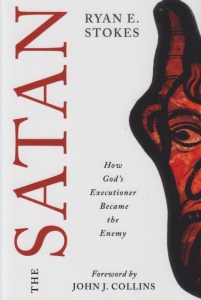
I might excuse writing a post on Satan on Christmas Eve by positing that I misread the title of this book as Santa.  After all, as Ryan Stokes explains, the Greek form of the title is ho satanas, which clearly contains the first of the canonical tripartite “Ho, ho, ho.”  The reality, however, is that work on Nightmares with the Bible continues despite the holidays, and there’s so much reading to do that not all of it can be seasonal.  I’ve known about Stokes’ book for some time, even as I’ve known his name through his various articles about the Satan.  This book, while not exhaustive, is certainly comprehensive for the time period covered and lays considerable groundwork for future discussions of the Devil.  What becomes obvious working through it, however, is that many different ideas about the Satan are represented in the Bible and related literature.

Long ago, as far back as my dissertation, I realized that it’s a problem for modern readers to systematize what ancients viewed disparately.  The Bible has no single idea of the Devil.  We’re quite accustomed to saying that “Satan” (which Stokes shows may not be a name in the Bible) and “the Devil” and Lucifer are all synonyms.  That’s not really the case.  Ancient peoples had many names for beings that caused problems, but not all of these entities were evil.  Belial, Mastema, Melchiresha, Beelzebub (and the list could go on) were designations used by different groups at different times.  These entities are sometimes agents of Yahweh, doing God’s will.  At other times they seem to be enemies of God, adversaries.  “Executioners,” is Stokes’ emphasis in these roles.  In early (and more recent) attempts at systematization, readers have tried to roll these various images into one.  With but limited success.

Ancient peoples didn’t feel the necessity that more modern ones do to make everything fit “scientifically.”  After all William of Ockham hadn’t shown up yet to suggest complicated ways of explaining things should be simplified.  We get the sense from reading ancient texts, including the Bible, that lots of ideas were floating around as to who these nasty beings might’ve been.  And their nastiness was really the result of human perceptions of who they were because often they were in league with the Almighty.  Theirs was not a simple, binary world of black and white.  It was more like a photo that we would still designate by that term but which is really grayscale.  Grayscale shades from white to black with the chiaroscuro preventing simple explanations.  Although it’s not about Santa, this book is very informative and will raise any number of questions at any time of year.
Gods and Fans

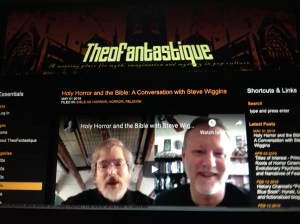
The blog Theofantastique started a couple of years before this one.  I remember that sense of childhood wonder that flooded me when I first saw its posts about books and movies with monsters—the kinds of things l always liked to read and watch.  But it was more than that.  This particular blog presents the very tangible connection between religion and horror.  Not only horror, though.  As the title indicates, this is a place for genre fiction of three closely related kinds: science fiction, fantasy, and horror.  The three are separated by mere degrees of semantics, and all three play very near to the third rail we call religion.  In my way of thinking, horror is probably the closest of the three, but I shift among this secular trinity and often wonder in which genre I am at the moment.

For someone who grew up being taught that religion was all about history—including a history of the future, mapped, plotted, and planned just as carefully as a summer vacation—seeing the connection with genres that are all acknowledged to be fiction was, at first, a little shocking.  I’d been taught in literature classes that genre fiction wasn’t really literature at all.  “Pulps” were printed on cheap paper because, as you might again guess from the name, they weren’t worth much.  Many of those books are now collectors’ items and cost a pulp mill to purchase.  My list of books from my childhood that I’d like to recover has me looking with some worry toward my bank book.  The thing is, these are often insightful statements about religion.

Monsters were always a guilty pleasure for me.  Being small, shy, and insecure, it was easy to understand things from the monster’s point of view.  And very often religion was implicated.  Sitting in my apartment in New Jersey, at times unemployed, I began to explore the connection between religion and horror.  I thought I was the only one.  Eventually I discovered kindred souls, and soon came to understand that monsters are perhaps the purest representations of what religion can do.  Even after writing two books about this subject, Theofantastique is a place unlike any other I know.  It has far more readers than I ever will, but this isn’t Godzilla v. Mothra.  No, we’re all in this together.  And we’re gathered together for one purpose.  In any other circumstances you’d say it was religious.


Faithful to Monsters

“Since childhood I’ve been faithful to monsters. I’ve been saved and absolved by them because monsters are the patron saints of our blissful imperfections.” Guillermo del Toro’s quote came to me via my colleague John W. Morehead’s wonderful Theofantastique (actually its Facebook page).  I get the sense that those of us in the field of teratology parallel play a lot.  At least I console myself that way because so few monster sites link to my blog.  Nevertheless, I have great respect for del Toro and his drive to bring monsters into the mainstream.  His quote, however, hits upon a central theme of what I try to do here and elsewhere—reflect on what monsters have to do with religion.

Notice the religious language (obviously intentional): faithful, saved, absolved, patron saints.  Monsters are indeed self-reflections, and they play on the same field as religion does.  Often at the same time.  Religion, even in the best of circumstances, entails fear.  If everything were fine all the time, what need would we have of it?  Instead, aspects of life we don’t cherish or anticipate come at us.  Winter comes far sooner than we expected.  Monsters lurk in that brief season between summer and winter, that autumn of the soul.  They know us quite well.  Our weaknesses are evident to them.  But as del Toro notes, they absolve.  And more readily than any Episcopalian.  The religion of monsters is fierce and forgiving.  When we watch them on the screen, we’re watching the drama of, in del Toro’s nomenclature, salvation.  If we didn’t require saving, again, why would we need religion (or monsters)?

Being faithful to monsters again bears comparison with the divine.  Should you become one of the lost while the 99 don’t require any assistance, your monsters will come find you.  In fact, that’s what they most specialize in.  What are dark nights of the soul without a little company?  It’s not sacrilegious to map the divine world with that of monsters, for any language regarding such high stakes beings must be metaphorical.  Our standard version of God is often a large human.  Generally he’s male, and he doesn’t always display compassion, although capable of doing so.  Monsters may be creatures of our own imaginations.  They are cast large on the screen since they too stand in for those to whom we owe some tribute for this is not a safe world in which to raise your kids.  Guillermo del Toro understands; we should listen.


Mad Dog

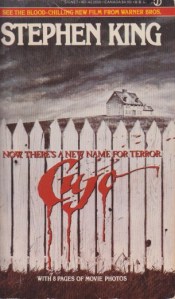
Like those who write long books, those who write very many books ask for some level of commitment from their fans.  I’m sure I’m not alone in wishing I had more time to read.  I tend to be driven to Stephen King’s novels by the movies made around them, and there’s nothing wrong with that I suppose.  I decided I wanted to read Cujo some years back when I was on a werewolf kick.  I knew it wasn’t a werewolf story, yet as one who suffers from cynophobia even a large household pet will do.  I didn’t know the story in advance, and I had no idea how it ended.  It’s good to read novels like that sometimes.

I took it with me to San Diego and read most of it on the plane, finishing it somewhere over the mountain west.  It is a bleak story, one of King’s more drawn-out and wrenching tales.  It’s made more so by the fact that it could happen, at least in the main storyline.  Or could have happened.  Maybe I waited too long to read it, but I kept thinking as I was going through—today we have cell phones.  A large part of this story unfolds because of Donna Trenton’s inability to contact anyone while a rabid dog keeps her trapped in her car during a record-breaking heat wave in Maine.  I suspect it’s kind of a story about redemption, but I really need some time to think about it before rushing to such conclusions.  There’s not much you can really consider religious in this particular tale, and perhaps it’s because Cujo is a very natural kind of monster.

I saw my first rabid dog when I was maybe five.  My brothers and I reported a dog acting strange to our mother, after which she kept us in the house.  That wasn’t the origin, I don’t think, of my cynophobia.  Two of my brothers were bitten by a family dog when I was little, and I was once chased by a dog about as big as I was, certain that it was going to eat me.  At the same time, we had dogs as pets, and apart from the one that liked to bite, they never gave cause for fear.  Cujo tapped into those memories and made me reflect on what it means to befriend wolves.  It won’t be my favorite King novel, but it did help to pass the time from coast to coast.


Sister Monsters

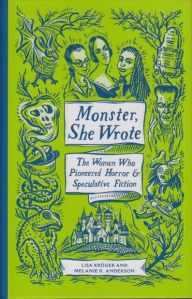
Every once in a while you read an inspirational book.  I’m hoping readers will keep in mind that inspiration comes from different locations for some of us.  Monster, She Wrote: The Women Who Pioneered Horror and Speculative Fiction, by Lisa Kröger and Melanie R. Anderson, is a source of inspiration.  With the usual Quirk Books touches, this isn’t a tome heavy on literary criticism, but it is a wonderful compendium of brief bios on women who walk(ed) on the dark side.  I find books like this encouraging in a number of respects.  First of all, these are women who did what they loved and were recognized for it.  Secondly, it gives the rest of us some hope that getting through the establishment to actual publication isn’t as impossible as presses would have us believe.  And third, it’s also a lot of fun.

It isn’t often pointed out that women played a major role in the development of the horror genre.  Some of the earliest Gothic novels were by Ann Radcliffe and Margaret Cavendish.  Probably the first fully fledged horror novel was Frankenstein, by Mary Shelley.  The real learning kicks in when the other names come out—many women found, and continue to find, the genre compelling.  Most of them, like most of us, are lost to history, but many of them have been rediscovered.  Here again is cause for hope; those of us who write, I think, have our eyes set on the far distant future.  We’re inscribing our “Kilroy was here” on paper—I still can’t think of ebooks as actually existing—in hopes that those down the road might know us a little better.  The fact that some of our sisters have been found suggests that we too may be resurrected some day.

There’s no plot here, and the point isn’t to present some great discovery.  This is a book that encourages women to be who they are through example.  The fact that it involves monsters and horror is simply a bonus.  As a non-female reading this it struck me time and again that women have long been informed of what they should or could do by men.  Men don’t like to see women knowing as much as they do about the shadow side of human existence, even as they relegated them to the shadows.  It’s my hope that this book will inspire women to be themselves.  And if they want to invite monsters along, so much the better.


Houses of Light

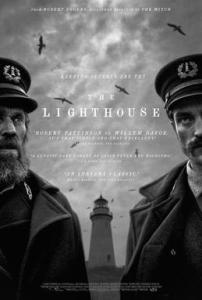
The Lighthouse is a movie we’ve been waiting a month to see.  Since its opening weekend my wife and I haven’t had two consecutive hours free during any weekend showtime.  Now that we finally managed it, I’ve been left in a reverie.  Robert Eggers, whose film The Witch opened to critical acclaim, has repeated the feat with this one.  His movies require a lot of historical homework and the end results have a verisimilitude that pays the viewer handsomely.  The details of the plot are ambiguous and the influence of King, Kubrick, Melville, Hitchcock, Poe, and Lovecraft are evident as two men in isolation grapple with insanity.  Also obvious is Greek mythology, with one reviewer suggesting Tom Wake is Proteus and Ephraim Winslow is Prometheus.  The end result is what happens when literate filmmakers take their talents behind a camera.

Naturally, the symbolism adds depth to the story.  The eponymous lighthouse is phallic enough, but the light itself—often a central metaphor of religions—is, like God, never explained.  Encountering the light changes a person, however, and the results can be dangerous, even as Rudolf Otto knew.  This light shines in the darkness so effectively that no ships approach the island.  The monkish existence of the keepers requires a certain comfort with the existential challenge of isolation, even if God is constantly watching.  The light never goes out, even when a reprieve would be appreciated.  Having reading Barbara Brown Taylor’s Learning to Walk in the Dark since the film opened, this makes some sense.  Horror movies lead the viewer into such territory when they’re thoughtfully made.

The concept of light is central to at least two similar forms of religion that have moved beyond doctrinal Christianity.  Both Quakerism and Unitarian Universalism emphasize the light as central to their outlooks.  Whether it be divine or symbolic, light is essential to spiritual growth.  In novels like Cormac McCarthy’s The Road the idea of an inner light keeps the father and son going.  In The Lighthouse the external light, when taken internally, leads to madness.  Since I watch horror with an eye toward religion—I do most things with an eye toward religion—I didn’t leave the theater disappointed.  I knew that, like The Witch, I would need to see it again but when it comes down to the price range of one ticket for repeated viewings.  Finding the time to get to the theater once was difficult enough, despite the payoff.  


Yeti Again Again

I wish I had more time for reading short stories.  I grew up on them since, like many young boys I lacked the attention span for entire novels.  Many collections of short stories sit on my shelves, but I’ve been drawn into the world of extended stories, perhaps because so much of reality bears escaping from these days.  In any case, I find myself neglecting short story collections.  I have a friend (and I tend not to name friends on this blog without their express permission—you might not want to be associated with Sects and Violence!) named Marvin who writes short stories.  This past week his tale called “Meh Teh” appeared in The Colored Lens.  Marvin often uses paranormal subjects for his speculative fiction.

“Meh-Teh” is a Himalayan term for “yeti.”  Since we jealously guard our positions as the biggest apes on this planet, science doesn’t admit yetis to the realm of zoology without the “crypto” qualifier in front.  Still, people from around the world are familiar with the concept of the abominable snowman.  Maybe because I grew up watching animated Christmas specials, I knew from early days that a mythical, white ape lived in the mountains, and that he needed a visit to the dentist.  The yeti has even become a pop culture export from Nepal, since those who know little else about that mountainous region know that strange footprints are found in the snow there.  Apes, however, like to dominate so we tend to drive other apes to extinction.  Still, they had to be there on the ark, along with all other cryptids.

I recall an episode of Leonard Nimoy’s In Search of that dealt with yetis.  Or was it a Sun Pictures presentation about Noah’s Ark?  I just remember the dramatic earthquake scene where either the skullcap of a yeti or a piece of the true ark was buried, lost forever under the rubble.  Yeti is also a brand name for an outdoor goods company based, ironically, in Austin.  This fantastical ape has become a spokesperson, or spokesape, for the great outdoors.  All of this is a long way from the story Marvin spins about the great ape.  As is typical of his fiction, religion plays a part.  I really should make more time for reading short stories.  In a world daily more demanding of time, that sounds like a solid investment.  And free time is more rare than most cryptid sightings these days.


Author Revise Thyself

Monster fans may have noticed that, despite the season I haven’t been writing much on the topic.  One of the reasons for this is that I’m in that dread stage known as “revision.”  As an editor I often see book proposals—or even entire books—that have never been revised.  You can tell.  I learned this while writing Holy Horror.  If you’re one of the people who took out a second mortgage to buy a copy, the book you purchased was based on a manuscript rewritten thoroughly at least five times.  The idea is that like rocks in a river, all that pouring over a text smooths the words like stones over the millennia.  Few rocks emerge from volcanic or sedimentary situations as smooth and round.  That takes revision.

My peer review report for Nightmares with the Bible came in a few weeks ago.  Nightmares had been revised a couple of times, at least, before I submitted it.  I understand the review process very well, as I deal with it daily.  Sometimes single blind (the writer doesn’t know the reviewer’s identity), other times double blind (neither reader nor writer know the other’s identity), the process is meant to provide feedback on a manuscript.  Having written many more manuscripts than have seen publication, I know just how useful peer review can be.  Like anything, however, it can also be treated legalistically, as if the reviewer knows more about a subject an author has just spent years researching.  No matter your impressions about this, once the reports come in, revision is in the cards.

Self editing is difficult.  And occasionally embarrassing.  You read again what seemed to make sense to you at the time, but even after you hit the “send” button you’ve continued reading.  New information comes to light.  Monographs are a very expensive form of dialogue.  Well, not so expensive as all that.  Many people are happy to pay out the cost of a monograph for a dinner out, which lasts an evening.  A book, mutatis mutandis, lasts much longer.  Like that meal, it’s taken internally and digested.  You can read the same book twice, however, without having to pay the second time around.  It’s a good idea, then, to revise before sending it to a patron’s table.  Ironically, revising a book on monsters takes time away from writing about monsters.  I also have essays awaiting revision, circling overhead like planes at Newark’s Liberty Airport.  And then there’s work, which has nothing to do with my own writing at all.  There’s a reason Nightmares occurs in the title.


Quiet Now

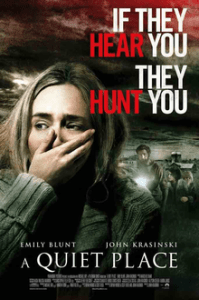
The funny thing about my movie watching is that it’s a reflection of my scattered lifestyle.  While I was teaching my career progression was linear with a goal of moving beyond Nashotah House to a college or university that shared my values better.  Publishing was a fallback, and I’ve learned a lot but I haven’t unlearned my academic leanings.  So, like the rest of my life, my movie watching is piecemeal.  I found a copy of A Quiet Place in a Halloween sale.  My wife bought it for me and on a weekend on my own I watched it.  I had no idea what it was about, but I’d read that it was an intelligent horror film, and that was good enough for me!  There may be spoilers here if you live in a cave, like I do (metaphorically), so be warned.

The backstory isn’t fully spelled out, but the monsters in this movie are blind and attracted to their victims by sound.  The focus is on a family in upstate New York that’s trying to survive without making any noise.  Since there are kids involved, you’ll see how tricky this could be.  John Krasinski’s film builds the suspense wonderfully.  Borrowing from M. Night Shyamalan at his best, and Alien and even Stranger Things, the movie has a odd effect.  When it’s over you don’t want to make any noise.  I watched it while my wife had to work over the weekend, and I put the DVD away as quietly as I could, and then went to bed.  Awaking alone the next morning, I continued the vigil.  Critics praised the movie for its silence, perhaps what we’re most afraid of in this noisy world.

I spend a lot of time saying nothing.  Editing is a quiet job.  Telecommuting is a quiet lifestyle.  At Nashotah House we had mandatory quiet days, which, if they weren’t mandatory I would’ve loved.  I’d seriously considered a monastic lifestyle when I was younger—there’s great value in being quiet.  A horror film that teaches that lesson, despite many obviously unanswered questions, is worth paying attention to.  Horror films have continued to grow more intelligent over the years.  This one is rated PG-13 and will have you on the edge of your seat (or under the bed) anyway.  And it’s got an important message.  For those of us who don’t say much (maybe that’s why I write all the time) a movie like this acts, if you will, as a loudspeaker.  Does anybody hear me?


Panic at the Bookstore

Usually it works like this.  I go into a used bookstore with a list of titles I’d like to find.  Yes, I know I can look them up on Amazon and pay some price gouger more than the book’s worth, but you sometimes find things forgotten on a shelf out of the reach of technology.  When I went into a used bookstore in the vicinity of Ithaca last month I didn’t have my list with me.  When I visit such a store, especially the first time, I don’t like to walk out empty-handed.  The word “Exorcism” on both the spine and cover of Ken Olson—excuse me, Dr. Ken Olson’s book on the subject, well, how could I not?  Exorcism: Fact or Fiction? is published by Thomas Nelson.  That immediately told me something of what the book would be like.  It wouldn’t be an academic treatment, and it would be somewhat evangelical.  Still, I didn’t have my list with me.

Olson hasn’t had an easy life.  His license to practice psychology was revoked after he performed an exorcism and my sympathies are always with those who have lost jobs.  Rejection is, after all, a form of violence.  The book, however, isn’t so much about exorcism as it is about evangelical views of it.  Written around the time of the satanic panic in the 1990s, the book takes seriously the claims of the alleged victims and also the physical existence of the non-corporeal Satan.  This actually leads to a few logical brick walls.  Referring to the body parts of non-physical beings can be an exercise in metaphor, but evangelicals tend to be literalists otherwise.  This discrepancy begs for discussion but receives none here.

The history of moral panics is interesting.  We live in the midst of them pretty much constantly now.  The internet doesn’t really help.  Moral panics are times when particular concerns spread rapidly (for which the web is ideal) without having any critical questions asked.  They often lead to a mob mentality that can victimize the innocent.  Although that’s clearly not his intent, Olson’s book tends to do this too.  If a victim is female, as is often the case, conservatives blame her for such things as abortions, forgetting, it seems, that a male was involved.  Since abortion scares are another example of a moral panic, it’s not surprising Olson treats them along with other forms of spiritual warfare.  Those who turn to the book looking for The Exorcist will be disappointed.  You might find a copy of that, however, at your local used bookstore.


Homemade Halloween

Halloween is a holiday that brings together many origins.  One of the more recent is the tradition of watching horror movies in October.  I don’t know if anyone has addressed when horror films became associated with the holiday, but Halloween hasn’t always been about startles and scares.  Histories usually trace it to the Celtic festival of Samhain.  Samhain was one of the four “cross-quarter days.”  Along with Beltane (May Day), its other post equinox cousin, it was considered a time of year when death and life could intermingle.  Spooky, yes.  Horror, not necessarily.  Many cultures have had a better relationship with their dead than we do.  We live in a death-denying culture and consequently lead lives of futile anxiety as if death can somehow be avoided.

As a holiday Halloween only became what it is now when it was transported from Celtic regions to North America.  Other seasonal traditions—some of English origin such as Beggars’ Night and Guy Fawkes Night—which fell around the same time added to the growth of trick-or-treating and wearing masks.  At its heart Halloween was the day before All Saints Day, which the Catholic Church transferred to November 1 in order to curb enthusiasm for Samhain.  As is usual in such circumstances, the holy days blended with the holidays and a hybrid—call it a monster—emerged.   When merchants learned that people would spend money to capture that spooky feeling, Halloween became a commercial enterprise.  Despite All Saints being a “day of obligation,” nobody gets off school just because it’s Halloween.

My October has been particularly busy this year.  One of the reasons is that Holy Horror, as a book dealing with scary movies, is seasonally themed.  As I was pondering this, weak and weary, upon the eve of a bleak November, I realized that home viewing of horror—which is now a big part of the holiday—is a fairly recent phenomenon.  Many of us still alive remember when VHS players became affordable and you could actually rent movies to watch whenever you wanted to!  Doesn’t that seem like ancient history now, like something maybe the Sumerians invented?  People watch movies on their wristwatches, for crying out loud.  I suspect that John Carpenter’s Halloween had a good deal to do with making the holiday and the horror franchise connection.  Horror films can be set in any season (Wicker Man, for instance, is about Beltane, and three guesses what season Midsommar references).  We’re so busy that we relegate them to this time of year, forgetting that we still have something of the wisdom of the Celts from which we might learn.


Rescued, Technically

One of the scariest tropes in horror (or other) movies is where the protagonist has to rely on the monster (or antagonist) to be rescued.  All the time the viewer is wondering if the monster is going to turn on the hero since, well, it’s a monster.  The tension builds because the situation is untenable to begin with, but there is no other way out.  So lately that’s the way I’ve been feeling about technology.  The first and only time I drove to Atlantic City (it was for a concert some years back), navigating by GPS was still new.  In fact, I didn’t have a device but my brother did so he brought it along.  I remember not trusting it to know the local traffic rules, but once we got into an unfamiliar city I had to rely on it to get us to the venue.  The fact that I lived to be writing this account suggests that it worked.

I no longer commute much.  Still, I’m occasionally required to go into the New York office for a day.  It’s a long trip from here, and to handle the true monster of New York City traffic, I have to leave the house before 4 a.m. to get a spot on the earliest possible bus.  If I do that I can justify catching the bus that leaves the Port Authority before 5 p.m., the daily urban traffic apocalypse.  The last time I did this, just this week, it was raining.  Rain almost always leads to accidents in New Jersey, where the concept of safe following distance has never evolved.  And so I found myself on a bus off route because the major interstate leading into Pennsylvania was completely closed.  The driver announced he wasn’t lost, just trying to find the back way home.  When the streets turned curvy and suburban he asked if anyone had a maps app on their phone.

Lately I’ve been complaining about smartphones.  Truth be told, I do use mine as a GPS when I get lost.  It’s at that stage in an iPhone’s life when it shows you a full battery one second and the next second it’s completely dead, so I let my fellow passengers—every single one of whom has a smartphone—do the navigating.  People on the narrow, off-route roads might’ve wondered what a bus was doing way out here, but we finally did get to the park-n-ride.  The monster had helped us to escape.  And people wonder why I like horror movies…


Book Festival

So it’s here.  The Easton Book Festival begins today.  The weather?  Partly sunny, temps in the mid-60s.  There’s no excuse not to go!  (Well, actually, there are plenty of reasons, but if you’re in the area please consider it!)  I have to admit that my involvement with it was opportunistic.  I contacted the organizer because I was looking to promote my autumnally themed book, Holy Horror, in the season for which it was written.  I understand delayed gratification.  What author isn’t delighted when her or his book arrives?  Thing is, mine came around Christmas time, and, while a wonderful gift, nobody was thinking about scary movies during the joyful winter season.  My observation is this: books are lenses to focus thoughts.  I enjoy Halloween, but I also enjoy Christmas.  One follows the other.  The Easton Book Festival just happens to be during the former rather than the latter.

It’s heeerrreee…

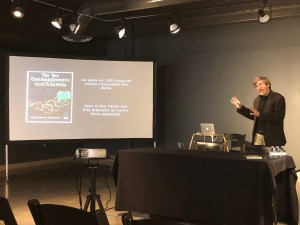
My own involvement with the festival doesn’t start until tomorrow.  Today’s a work day, after all.  Employers don’t give days off for self-promotion (or even for writing books) so festivals are extra-curricular activities.  I’ll be on a panel discussion tomorrow at the Sigal Museum and on Sunday afternoon I’ll be doing a presentation on my book, same venue.  Maybe I’ve got this backwards (nobody tells you these things), but I’m not doing this primarily to sell books.  I’m doing it to promote dialogue.  During my less-than-stellar book signing last week at the Morvarian Book Shop I had only one brief conversation of substance.  It was with a scientist who pointed out that science and religion had nothing to do with one another.  I guess my hopes for the events of the next two days are that folks might want to discuss the ideas in the book.  Or at least think about them.

Sunday morning I’ll be giving a church presentation on the book as well.  Being in the publishing biz I’ve learned the importance of authors getting out there to talk about their books.  Hands up, who’s read a McFarland catalogue lately?  Case in point.  The only problem with all of this is that I still have to get my weekend errands done.  My daily schedule doesn’t allow for trips to the grocery store or even putting gas in the car.  And no matter how much time I put into work, there’s always more to do.  Festivals, of course, are intended to be time set apart from regular pursuits.  So I’m going to put on respectable clothes and I’m going to speak about what’s on my mind this time of year.  If the Lehigh Valley’s in your orbit, I’d be glad to see you there.


Amityville Rehaunted

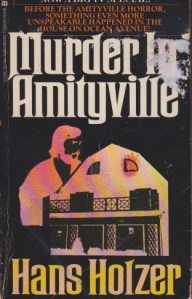
One of the problems with scarce resources is the desire not to squander any of them.  Time is so rare these days that I keep multiple writing projects going (and growing) and when they’re ripe I pluck them and take them to market.  One of my writing projects had me read Hans Holzer’s Murder in Amityville.  Why?  Fair question.  It was the “inspiration” behind Amityville II: The Possession.  I discuss this film in Nightmares with the Bible, and I’ve been going back and reading those period pieces from the 1970s that formed so much of our culture through the end of the last century.

In case you didn’t grow up with an interest in parapsychology, Hans Holzer was a pretty big name then.  I can assert that with some confidence because I grew up in a small town without access to big city resources (where fame is made) and I knew about him.  Holzer wrote well over 100 books, which might give you a hint regarding their quality.  He was an interesting person.  Like Ed and Lorraine Warren he made a living by investigating, writing, and lecturing.  (I can’t seem to break into that cycle—times have changed!)  A firm believer in ghosts and demons, Holzer was naturally drawn, like other moths around the candle, to Amityville.  Murder in Amityville is his summation of his investigation and all I can say is it’s a good thing he wasn’t a lawyer.  Apart from containing lengthy transcripts of Ronald DeFeo’s trial, the book also contains interviews conducted by Holzer.  Full of leading questions and lacking evidence, it fails to convince even a sympathetic reader.

Still, you’ve got to give Holzer credit for including interviews where his loaded questions get him nowhere.  In interviewing a town historian for Amityville, Holzer kept bringing up allegations about the house at 112 Ocean Avenue only to have the nonplussed historian tell him point blank that his (Holzer’s) allegations are incorrect.  His assertions of an “Indian burial ground” are taken for granted, although no historical records substantiate it.  His interview with DeFeo demonstrates Holzer’s irrepressible faith.  After being told by DeFeo that he’d heard no voices—something he made up for a failed insanity plea—Holzer keeps coming back to what the voices told him to do.  Not only that, when Holzer does stumble upon a good question he fails to follow up, chasing some other notion down another rabbit hole.  There was clearly enough material here to work into a horror movie, but for sorting out the troubled home life of the DeFeo family the critical reader finds her or himself being asked to take a lot on faith.


Local Hauntings

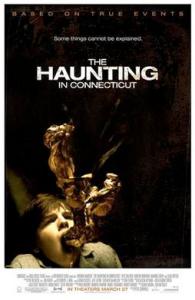
In my on-going research (as I think of it), I watched The Haunting in Connecticut.  I recently wrote about A Haunting in Connecticut, distinguished from the theatrical version by an indefinite article.  Both claim to be based on a true story and the story itself is disputed because it doesn’t fit into a materialist paradigm.  Ah, but that’s another can of worms.  Regarding the movie, it abandons the base story to add an entirely fictional subplot that drives the horror.  Or so the writers and director think.  The tale ends up jumbled and the confusion it generates is not the kind borne of intelligent planning.  The Campbell family, struggling to pay the bills against a case of childhood cancer is real horror.  In our healthcare system that is a true story.

According to the diegesis of the movie, Matt Campbell can see the dead because he’s close to death.  In case you don’t know the story—the family has to move to be closer to the hospital where Matt is receiving his treatment.  Once ensconced in their new house they learn it used to be a funeral home and hauntings ensue.  The writer of the original book claims to have made much of it up, while interviews with witnesses make the claim that much of it actually happened.  Matt ends up in a mental hospital.  In the movie a subplot of necromancy and a young boy medium are added.  Souls whose bodies have been bound are trapped in the house until Matt figures out how to break the spell with the help of the medium’s ghost.  Instead of Ed and Lorraine Warren investigating, a local minister is added.  Also suffering from cancer, he figures it out too, but too late to help the Campbell family.

In Holy Horror and Nightmares with the Bible I do not treat made-for-television movies.  A large part of the reason is that they often lack the cultural impact of a theatrical release.  (Although Game of Thrones and The Walking Dead may have reached a point of familiarity with numbers to rival big screen efforts.)  In the case of the cinematic treatment of the Snedeker (“Campbell”) family, however, the television treatment might well have been scarier than the big-budget studio effort.  Whether fictionalized or not, the Discovery Channel show stays closer to the book (In a Dark Place, by Ray Garton).  Using the Usher-like ending of destroying the house doesn’t seem to offer any release in the big-screen version.  Sometimes reality is scarier than the tales we tell after dark.