Lovecraft Legacy

CarterLovecraftHistory can be a funny thing. Take the way it treats some people. H. P. Lovecraft wasn’t famous in his lifetime. In fact, his isn’t exactly a household name even now. His creation Cthulhu lurks grandly in the internet, and even Lovecraft himself is finding mention in some literature courses, despite his lack of literary finesse. Yet, fiction is being written about him. I just finished Jonathan L. Howard’s new novel, Carter and Lovecraft. While H. P. doesn’t appear as an acting character in the novel, he is related to one of the protagonists in a way that is essential to the story’s plot. I won’t give away any spoilers here, but the novel takes over where Lovecraft, the non-fictional character, left off.

Lovecraft, famously, was an atheist. Nevertheless he spun a mythic world of Old Gods that has become canonical in its own right. His stories veritably teem with religious themes as well as monsters. In fact, in Howard’s treatment of the mythos, the religious elements still show up. As I’ve noted before, one need not be a theist to be a capable theologian. Fiction like that of Lovecraft, or that of Howard, inherently holds a kind of numinous quality. In fact, fiction frequently does. In reading, we allow ourselves to be drawn into another world. What could be more religious than that? The beliefs of the writer, it seems, may not ultimately matter.

At one point, at least, in Carter and Lovecraft the sentiment becomes explicit. One of the characters contemplates starting his own religion, only to realize that he’d have to write a holy book. That, he decides, would be a lot of work. As one who dabbles in various forms of literary art, I can take his point. There is something wondrously exhausting about giving birth to words. And those words make worlds. When you stop to think about it, that’s kind of a religious thing to do. I’d recommend Carter and Lovecraft to H. P. L. fans. It’s not a Cthulhu-fest, but it is an enjoyable, compelling tale that raises questions which, if not handled carefully, will quickly turn theological.
Mere Monsters

While my colleagues and I wait to hear if our monster session will be approved, my thoughts naturally turn to the taxonomy of monsters. One of the perennial problems in the study of monsters is that definitions vary widely. We might all agree that a werewolf is a monster, but what of Cthulhu? Or of a horribly deformed, but completely natural animal? What about demons? Should we all agree that we know what a monster is, how do we divide them into categories for easy study? One way of doing this might be to rely on binaries. For example: natural monsters versus unnatural monsters, living monsters versus undead monsters, monsters from earth versus monsters not from earth, monsters created by humans versus naturally occurring monsters, fictional monsters versus monsters reported in nature. It soon becomes obvious that monsters are a widely divergent group of creatures.

Monsters have won an enduring place in popular culture. I think of The X-Files. Apart from the “mythology” of the series, many episodes featured a weekly scary monster. The same is true of Sleepy Hollow, now in its third season. Monster movies, although perhaps taking a back seat to super heroes of late, are regulars on the silver screen. We just can’t seem to live without our monsters. I’ve mentioned in my many posts about monsters that the connection with religion is so obvious that it hardly requires apology. But a deeper question has occurred to me. It has to do with the nature of religion (itself not well defined).

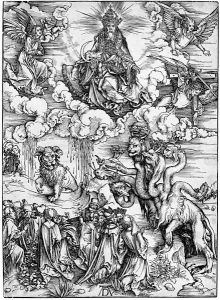
439px-Durer,_apocalisse,_12_il_mostro_marino_e_la_bestia

Religions exist to deliver people from the trials they face. Offering Nirvana to break the endless cycles of reincarnation, or Heaven when we die after one go-round, religions claim to give us something of an assurance that things will work out. (Mostly.) In the light of this, why does religion give us monsters as well? Surely they are more than mere metaphors for the misfortunes of daily life. There has to be something more to it. What that more is, I’m not certain. I’m not even sure of how to approach the question. Monsters will, for me and many other Monster Boomers, remain a guilty pleasure that we are pleased to be able to address as adults. I am becoming more and more convinced that the more we learn about them, the more we learn about religion itself. And perhaps also about those who give shape to religious thought.


Religious Monsters

Some colleagues and I are working to meet a deadline. I suppose I use the word “colleague” rather grandly, since they both have teaching positions, nevertheless, we have a common goal. We are fascinated by monsters and we’d like to see the American Academy of Religion dedicate a small section of its large annual meeting to them. We’d do all the work. At first glance, this might seem an odd topic for the serious study of religion. The fact is, however, that monsters are a part of human experience—at least in our imagination—and the conceptual space overlaps considerably with religion. Many monsters have their origins in religious thought. Some theorists go further than that and suggest the very concept of “monsters” comes to us, courtesy of religious beliefs. We can see it time and again in popular culture; the movie or television show, or novel that features monsters ventures into the territory of religion.

The reason for suggesting that this relationship be formalized is the fact that, although this connection exists, it has not be given adequate study. Monsters are the denizens of childhood imagination. When we grow up we leave our monsters behind. But not really. We just stop talking about them. With our mouths. The film industry knows that a horror film will generally draw in the lucre. Halloween has become a major commercial holiday. Stephen King is a household name. I’m not sure why all of this is so, but I think it might have something to do with repression. When we grow up we are taught there’s no such thing as monsters. Those who refuse to relinquish those beliefs are ridiculed. We have more important things to do. Things like making money. Deep down, however, we may still believe.

The fantastic and belief are intimate companions. In fact, belief is at the root of much of our experience. That’s not to say there are really monsters in the night, but at some level we believe there are. And we also believe that infinite deities control this infinite universe that may be only one of many multiverses. It just seems likely. Evidence may point in the other direction. Empirical proof is lacking. And yet, we believe. I’ve discovered a number of colleagues over the years who share this academic fascination with monsters and religion. I don’t know if we’ll be approved by the powers that be, but at least we will have begun to raise the question. What lurks behind it is a matter of belief.

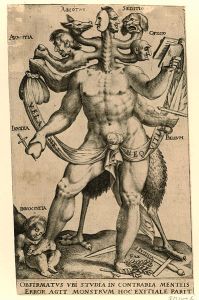
397px-Arminianism_as_five-headed_monster


The Witch

IMG_2679

The Witch, by Robert Eggers, is a parable. The movie accepts, and to appreciate it the viewer must too, that there is actually witchcraft in New England. Unless the witch too is a parable. Set in the days before the Salem Witch Trials, the movie is worthy of Lars von Trier on history. William and his family are exiled from their unnamed community due to differences of religious opinion. William and Katherine are a devout couple, steeped in the Puritan belief that all people deserve Hell and those who are good have no choice in the matter. They have a family of four children, and after they set up homesteading in exile, a fifth comes along. When the baby disappears, the eldest daughter, on the cusp of sexual maturity, is blamed. Portraying well the boredom of children raised in a world with no diversion, the girl, Thomasin, tells her little sister that she is a witch. In reality, she is a fearful, sin-sick girl, frightened for her future salvation. There is a witch, but it is not she.

Tragedy follows tragedy for the isolated family. Their religion permits them to believe it can only be punishment from God. They pray, recite Bible, and work hard. Their oldest son, abducted by the witch, returns home to die. The two youngest children begin to have fits, claiming that Thomasin has confessed to being a witch. Her mother, Katherine, believes them. Her father too, convinces himself that she is a witch and urges her to confess. The paranoia grows and Thomasin accuses her two younger siblings of witchcraft, speaking to the family’s black goat as their familiar. Confused, angry, and out of hope, the father locks the children in with the goats for the night, determined to find the truth in the morning.

I won’t add any spoilers for the ending here. Suffice it to say, this is a parable. Thomasin’s very name suggests “sin,” and her doomed brother is Caleb, the Hebrew word for “dog.” His recitation of the Song of Songs is distinctly creepy. God is absent from the movie, despite the family’s constant prayers. The only voice heard is that of the Devil. This is a parable of what happens when a religion goes wrong. The family left England to exercise their religion freely and the free exercise of it turns them against each other. The only ones who seem to find peace are those who leave their faith behind. It is a movie that I’ll ponder for many days, I suspect. Less a condemnation of religion than an open probing of what it’s logical outcome might be, The Witch is one of those movies that demonstrates the ongoing power of parables.


Grim Where?

An inordinate amount of my childhood time was spent on television. While the device of the day had been around for a decade already, I was among those who grew up learning that watching was easier than reading. Like most children, I took the path of least resistance. I watched. As a teen, however, I rediscovered reading and from that time television began to take a back seat to books. When the great switch-over to digital occurred we didn’t get a conversion box, and we could never really afford cable for as little TV as we watch. When a program gets commended, or if nostalgia takes too great a toll, we can always purchase programs—the price of watching television without the commercials. So it was that I began watching Sleepy Hollow. Very quickly in the first season the monster of the week trope was established as the plot grew more and more tangled. The Bible was so prominent in that season that I wrote an academic paper on it.

Sleepy_Hollow_-_Title_Card

Over the past few months my wife and I have been working through season two. The DVD version was delayed and we only watch on weekends. Recently we finished the eighteen episodes of the second installment. Clearly the budget had improved over the first season, but the Bible, it was also clear, had diminished. Throughout the first season the driving motif of the story was that biblical “prophecy” (from the book of Revelation) was unfolding in Sleepy Hollow. This is what one scholar has termed a “local apocalypse.” Throughout season two, however, the end of days is shut down. Molech, its architect, is killed. The headless horseman is less Death than a jilted lover. The second horseman, War, loses his armor and dies.

Magic, however, along with special effects, take on an increased roles. Instead of turning to the Bible to solve problems, the most helpful book to have on hand is a grimoire. Sleepy Hollow, which is anything but what its name suggests, is full of monsters. Powerful magic is required to contain them, and, it seems, the Bible is no longer needed as a tool to take down evil. Perhaps there is a parable at work here. I was drawn into the series by its biblical literacy, as well as its literacy in general. More action has been introduced, and fewer books. It’s a pattern I’ve seen before. I suspect I’ll watch season three presently. When I do I’ll be casting a wistful eye on the stack of books I have yet to read, and I’ll be wondering if reading may not have become easier than watching.


Monstrous Intentions

Atlas Obscura is one of those websites where you could spend all day and feel like you’ve just traveled the world. Featuring less know locations, and strange spots that you might like to visit, sometimes it also has stories about monsters. Well, at least one story about monsters. A friend of mine recently shared Cara Giaimo’s story about thirteen lesser-known monsters from history. While none of these are likely to keep you up at night, they do demonstrate the endless imagination people devote to the unknown. Monsters, like religion, defy easy categorization. Is something that’s “too big” or “too small” for its type a monster? Is it a monster if it is a mix of things that don’t normally come together? Or is it merely a matter of baleful intention? What doth a monster make?

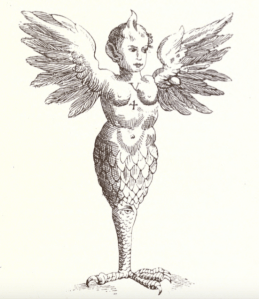
Taking a page (almost literally) from John Ashton’s Curious Creatures in Zoology, the Atlas Obscura page runs down some monsters once believed to have existed. Some of them, despite our flattened world seen only through the eyes of rationality, were actually reported to have existed. The “monster” of Ravenna, for example, was apparently a sad case of a medieval/early modern birth defect that, in the popular imagination took on monstrosity. We now know that birth defects may contain throwbacks to earlier stages of evolution, or that genetic coding may contain mutations. None of this suggests any evil intention on the part of anybody. Accidents of nature may be the saddest kind of monster of all.

Screen Shot 2016-01-27 at 5.42.32 AM

A surprising number of the monsters from Ashton’s sampler here are mixes between human and animal. Indeed, that mix is still a potent force, theologically. One of the loudest voices speaking out against evolution is the one that says people are “not animals.” Having grown up with that belief, it took a couple years of college to convince me that we fit into the greater biological scheme of things. We fear that which resembles us, but is not quite us. Perhaps part of the mystique is that we haven’t quite yet learned to be humane to one another. Being a monster may just have more to do with what one does with prejudices than it does with physical features of their bodies.


What You Pay For

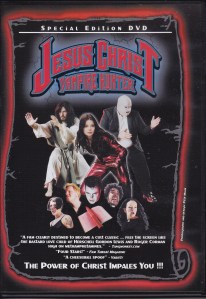
VampireHunterWhen a friend pointed out the easily missed 2001 film, Jesus Christ Vampire Hunter, (well before Seth Grahame-Smith came up with the same role for Abraham Lincoln) I knew I was duty-bound to see it. As regular readers know, although I’m not a fan of gore or violence, I have a soft spot for vampire movies. Vampires, although often evil, are frequently presented as conflicted characters. As former humans they have some level of sympathy for their victims, while at the same time, all people are objectified for the vampire. We are food. This low-budget, independent film didn’t promise to deliver on many levels, but as the end credits show, they did shoot enough film to be able to cut out a few bloopers. The story, in as far as there is one, has Jesus fighting lesbian vampires in modern-day Ottawa (where the film was shot).

Not that the film was serious enough to invite critical dialogue, I did wonder what Jesus had to do with the whole thing apart from the shock value. There were a few cute moments, as when the “atheists” pile, clown-like, out of a car for an extended fight scene, but the lead could have been any character apart from one scene where a miracle does occur. Jesus fights with his fists, not with supernatural power. Tossing in Mary Magnum and “professional wrestler” El Santo, the movie came close to the screwball level of Attack of the Killer Tomatoes. It’s difficult to critique a film where logic isn’t held accountable for the plot—the only thing to keep the film going is the action of a particular scene. And that, as I’ve intimated, can’t be counted on.

Interestingly enough, Jesus is treated throughout the film in a positive way. Although he doesn’t use supernatural powers, he is the “good guy” and is even tolerant of alternative lifestyles as long as love is the basis of relationships. The movie is biblically literate, using the Good Samaritan in a scene that underscores the accepting nature of the new millennium Jesus. The vampires don’t add much to the lore of the monster. They can be out in daylight because it is cheaper to shoot film that way, but the plot does come up with an explanation for it. Vampirism, at the end, can be healed by prayer, and when Mary Magnum, El Santo, and Jesus go their separate ways at the end, we are left wondering what all the fuss was about.


Dead of Winter

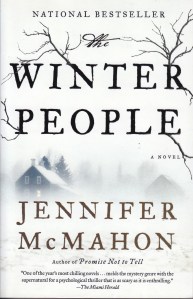
WinterPeopleOne of the commonalities of all religions, I used to tell my students, is the concern with death. Not that all religions react to it in nearly the same way, but the fact is no religion ignores it. For people, obviously, our awareness of our own mortality marks us as indelibly as our birth does. Once we become aware of death, we will never be able to forget it. This inevitability fuels many horror stories, whether literary or cinematic. When I saw Jennifer McMahon’s The Winter People, I knew that I would read it. Like most book consumers, I had to wait for the paperback edition, and once it was on offer I got a copy and waited for winter. Well, this year I’m still waiting for winter, but I began reading the story once the nights were long enough to qualify. It is an appropriate story for the season and it introduces what might be considered a kind of monster as well. Like most monsters, however, sleepers are not evil. The undead, however, have to find a way, ironically, to live.

The Winter People is a sad story, and tangled in the way that makes for successful novels. The main issue at play, however, is that with which all religions are concerned. Death is perhaps the most noble of literary subjects. Since we all have to face it, it is universal and yet somehow frightening. Fear of the unknown. The dead, unlike in the stories, don’t really come back to tell us what it’s like. Even those who do, in fiction, give us a distorted view. Theirs is a world inverted from our experience of it. It lacks finality. It is a place between. There is a macabre logic to it.

The living have never been comfortable with the dead. Memory reminds of who they were. McMahon is clear, in her vision, that memory is not who they are. We put them underground, but theologically we can’t let them go. Heaven, Nirvana, Purgatory, reincarnation, or even Hell—we feel that we need to give our dead a sense of place in a life after life. McMahon builds a sober mystery into her non-final afterlife. There are some, I’m sure, who will be kept up at night by her imagination. For me, I now have something to ponder. Many are the stories, like Stephen King’s Pet Sematary, that warn of resurrection. We can’t keep the departed with us, and winter, when it comes, is a season of harsh reality.


O Come Let Us

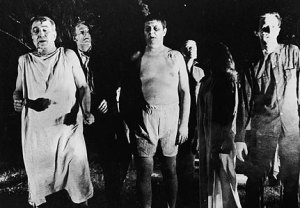
During the height of the zombie craze a meme went around the internet proclaiming “zombie Jesus.”  It was funny because the salient feature of zombies is that they come back from the dead.  Noting the resurrection and the easily annoyed trigger finger of Fundamentalist Christians, some wag brought Jesus and the undead together.  We had a good laugh and forgot about it.  A guy in Ohio with a sense of humor, took the zombie Jesus meme and constructed it into a zombie nativity scene in his yard.  None of us knew about it, of course, until it caught the attention of the news.  A story in the Washington Post notes that the man was required to take the scene down for violating zoning laws.
 
People take their religion very seriously and have a hard time laughing about it.  Religion is under constant fire from angry atheists and it already suffers a complex from having so many liberals pointing out the historical and logical faux pas from within the tradition.  Some people take advantage of American gun laws to stock up against the day when they’ll step over the line and join those who shoot up offices where they think Mohammad is being mocked.  Then we’ll sit around and wonder if we should classify them as terrorists or just deranged.  And we’ll post a take-down order, just in case any zombies remain.

NightoftheLivingDead
 
As an academic (at least erstwhile) I noted how little religion scholars reveled in the humor of their traditions.  There’s funny stuff in the Bible, believe it or not, and many religious traditions allow for a Mona Lisa smile every now and again.  A far more common stance, however, is that of taking offense.  Something that most critics just don’t realize is how much religions mean to those who believe.  I chuckle once in a while, but I never belittle the beliefs of others.  I have been in this religion thing since I can remember, and I know what it can mean to people.  The best way to avoid offending, I think, is to keep our jokes among the crowd of those who have a sense of humor.  Of course, the undead obey no rules and the media (and its unruly accomplice, the internet) can’t resist spreading memes that might earn a buck or two of advertising revenue.


Naming Evil

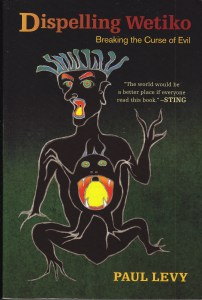
WetikoBooks don’t tell us what is true; books tell us what could be true. When I was growing up, under the influence of the Bible, I thought that non-fiction books were the truth. I came to understand that people disagreed about the truth, but it took a long time before I realized that books were merely the attempts of their writers to argue their version of the truth. If someone knew the actual truth that person would be a god. These thoughts came to me as I read the fascinating and mystical Dispelling Wetiko: Breaking the Curse of Evil, by Paul Levy. In many ways this is a mind-altering book. For one thing, Levy has made me reconsider how real evil is. Looking at what’s going on in the world it is increasingly difficult to deny the reality of objective evil. Levy’s book gives it a name and even attempts to analyze whence it comes. He calls it “wetiko.”

For several years now I have tried to find information on the monster known as the wendigo. Wetiko is a version of the same word, and it was this that drew me to Levy’s book. The wendigo is a shape-shifting creature that preys on humans. It is mentioned or featured in a few fictional books, and most recently featured in an episode of Sleepy Hollow. Since most academics don’t treat monsters seriously, it is difficult to find accounts of the beast. It is often discussed as a fictionalized version of cannibalism. It is a monster always hungry. The more it eats, the hungrier it becomes. It is this aspect that leads Levy to use it as his main metaphor for evil.

The evil that Dispelling Wetiko focuses on is the extreme selfishness our society has come to embrace. For example, our entire economic system is a fiction propagated by the ultra-wealthy. By defining a fiction as valuable and making it available to everyone else by a system of debt, the one-percenters keep everyone else, literally, in thrall to them. There is no gold to back up the fictional value they claim they have, and yet they consume others constantly in their evil greed. In a nuanced argument Levy suggests that this evil is real. Becoming conscious is the only way to combat it. There’s so much going on in this book that it has to be read several times, I’m sure, to get it all figured out. As I finished this one, however, I thought I had read a book that may actually be true.


R’lyeh Reality

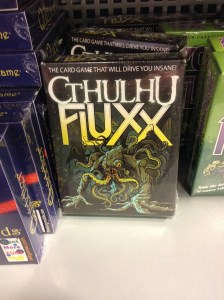
It’s always a sign that I’ve been too busy when I lose track of Cthulhu. Few created deities receive the attention of the web like the terror dreamed up by H. P. Lovecraft. The internet has created an environment, like the bottom of the sea, where the old gods may lie dead but dreaming, ready to reawaken. It was with great pleasure that I was pointed to Cthulhu for America. At last, a presidential candidate who is willing to admit that he is merely a myth. His agenda of destruction and domination is not at all hidden. If only real politicians would be so honest!

In a world with millions of diversions, it amazes me that Lovecraft’s nihilistic creation has taken on such popular interest. Perhaps it’s because those of us who grew up with monsters have now reached a dubious sort of adulthood where we are bossed around like children and given only those limited freedoms that capitalism will allow. We can’t go into public places without seeing heavily armed guards in fatigues. We can’t get into work without electronic chips in cards to keep us safe from those of our own nation. We can’t fly without being scanned like a week-old loaf of bread. We can’t even store our own files on our own personal computers any more since some software company would rather charge us for the privilege. At least Cthulhu says what he wants. Orwell may have had his Big Brother, but Cthulhu is an obvious overlord who wants nothing but his own satisfaction.

IMG_1551

Watching the circus of candidates vying for position, I can’t help but think of Rome before the fall. Historians are still debating the causes—lead poisoning may be too easy a way out. Perhaps it is, as Lord Acton declared, the result of power itself. Those who taste it can’t stop eating it until every microscopic crumb is devoured. It’s shameful to watch. I’m embarrassed when Dumb and Dumber sounds intelligent next to the utterances from political talking heads. Cthulhu would have none of it. Although the website is a parody, it, like all myths, is truer than what we often call reality.


Monsters, in Theory

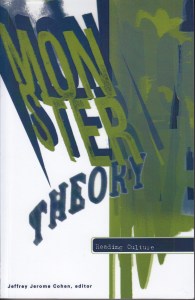
MonsterTheoryI want to understand monsters. I suppose that’s pretty common among Monster Boomers, but the thing is academics have been slow to give credence to our creatures. Yes, monsters are a throw back to the Medieval Period or worse, and reflect superstition, the supernatural, and things that go bump in the night. Our scientific worldview has no place for them, but they continually come back to peek in our windows and stomp on our cities. Horror movies, for example, consistently rate high in box-office grosses. And even adults, if caught in unguarded moments, might confess to enjoying the uncanny. So it was that I read Jeffrey Jerome Cohen’s Monster Theory: Reading Culture. Yes, it’s dated, but by humanities’ standards, it’s not too bad. Jurassic Park, one gets the feeling, was the rage when the book was being written.

As with most collections of essays, this is a Forest Gump of papers. Some of them were quite good and others were that kind filled with po-mo nougat. The one thing that was missing, sadly, is, well, monster theory. I’ve read just about every academic book available on monsters. I have yet to find a serviceable theory to help make sense of them. Yes, there are plenty of theories of origins—where monsters come from—but how to we handle them? Everyone knows that a stake is useful for vampires and a headshot is necessary for a zombie, but what are these revenants telling us really? Why do we still, when we can carry the internet in our pockets and call for help in the middle of nowhere, fear monsters? How do we construct, rather than deconstruct them?

Psychologists, of course, have a couch day with monsters. They represent parents, or phobias, or penises, or any number of things that make us uncomfortable. But how do we know a monster when we see it? Monster Theory, for example, has two chapters on conjoined twins. Now, at the time “monster” was a term used occasionally, but it is highly insensitive, let alone politically incorrect, to refer to humans that way. Then there were chapters on vampires and ghosts. Well, I suppose the dead can’t help their state either, but if they come back they could at least behave. Monstrosity is a concept, like religion, that we just can’t live without. We need our monsters in the dark just as we need dreams and desires. The question is what to do about them, and even after reading this weighty tome, I still don’t know.


Supernatural Quest

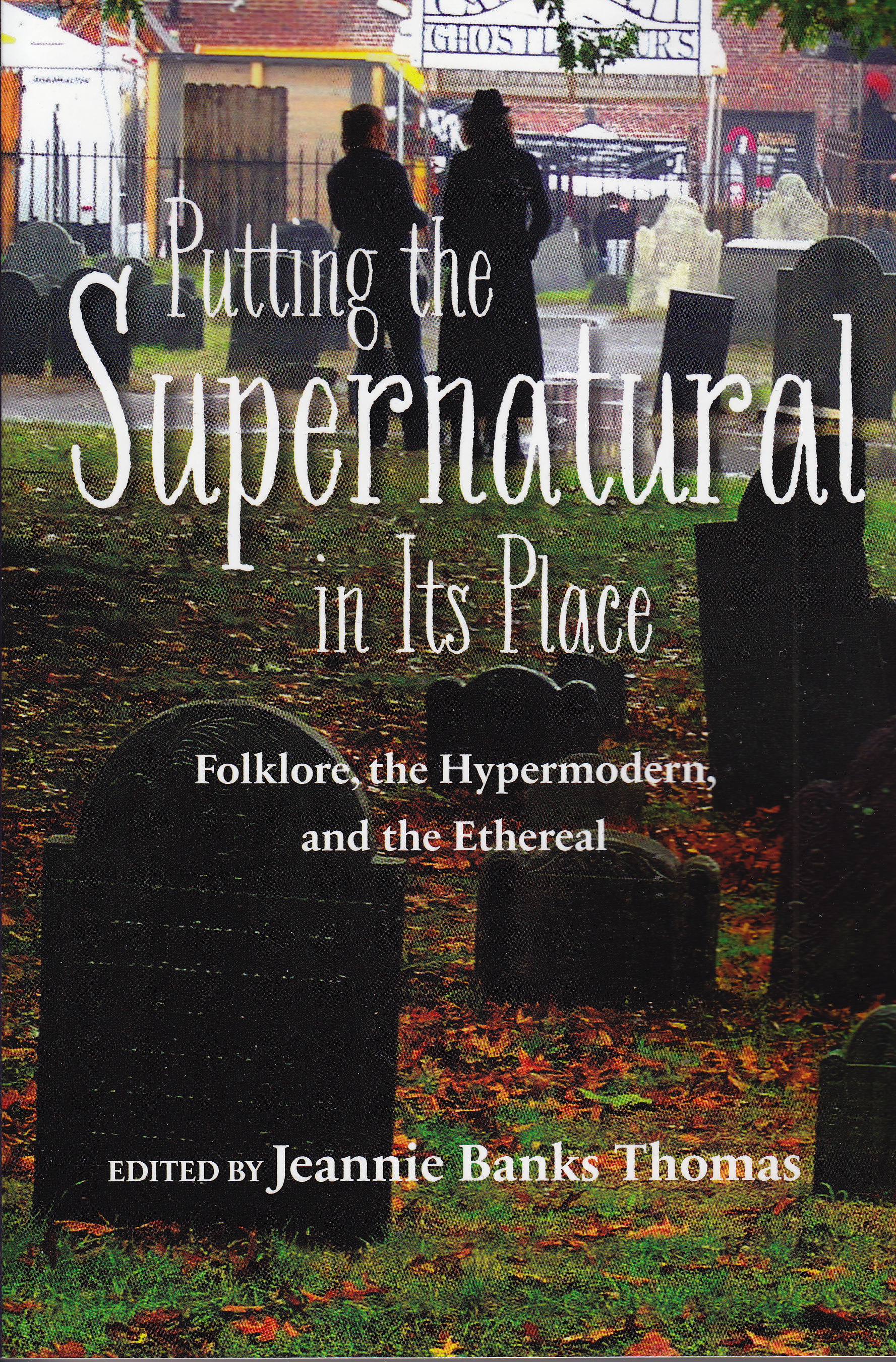
SupernaturalTwo things we’re told about the supernatural: one, it doesn’t exist and two, it can’t be studied. Of course the vast majority of people in the world don’t buy into number one and hardly care about number two. Both, it seems to me, could be wrong. As Jeannie Banks Thomas says in her introduction to Putting the Supernatural in Its Place: Folklore, the Hypermodern, and the Ethereal, belief in the supernatural is not declining. In fact, the more we’re told by cocksure scientists that all of reality is quantifiable and material, the more we become aware of the many exceptions to the rules. Of course, “supernatural” may be a misnomer. It could be that anything sloughed off into that category is simply not understood well enough to be empirically studied. Thinking back over the history of science I find it ironic that the very system that had to convince people that something couldn’t be seen (many gases) could be deadly. Now if it can’t be seen it can’t exist. We certainly don’t want any deities hanging out around here.

But back to the book. Putting the Supernatural in Its Place is a folkloric study of place. The contributors to the volume look at popular beliefs, some serious, some not, that accrue around certain places. As I’ve often stated on this blog, we are aware as humans that some places are fraught with meaning. Scientifically we know this shouldn’t be true, but we feel it when we approach any space of significance. The contributors to Thomas’ book look to some very interesting places: New Orleans, Salem, St. Ann’s Retreat, Lily Dale, Japan, and even movies and the internet. If any of these places aren’t familiar to you, it’s worth picking up a copy of this accessible book to learn more. Supporting folklore is a very good thing. Folklore, after all, is the wisdom of the people.

The places in this book are rumored to be haunted by ghosts, witches, zombies, vampires, and even fairies. Folklorists, of course, don’t try to prove that beliefs are true. Like any academic they study and analyze. The main form of exploration for the non-academic is the legend quest. Many of us have gone legend questing from time to time. A place where something happened is said to have a certain feel or manifestation, so we go to see what it’s all about. If such trips are given religious sanction we call them pilgrimages. We want to see. But more than that, we want to experience something that the past has left behind. In the part of the year when each night grows longer than the last, my thoughts turn to what is usually termed “the supernatural.” And I, for one, am glad to have able guides along the way to make the simple voyage into a quest.


Still There?

We_Are_Still_Here_film_festival_poster_2015

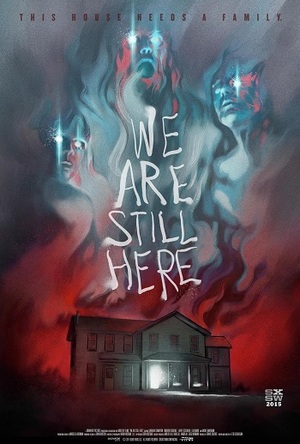
Keeping up with much of anything is hard to do, given work and commuting schedules. Often a horror movie will pass without even a notice until it’s on the sale shelf or free on Amazon Prime. On an October afternoon nothing feels more appropriate than a moody, ghost driven film. All these caveats are to introduce We Are Still Here, a movie that has received commendable ratings from the critics but which seemed pretty conventional to me. I’m not a fan of gore, and the finale has plenty to go around, still, the pacing is about right and the landscape is vacuously beautiful. I have to confess that I’m not sure of what was happening, although the newspaper shots during the credits were supposed to explain things. Haunted house, check. Townspeople acting badly, check. Spooky presence in the domicile, check. The menace is referred to in several different ways, but what is clear is that it wants a sacrifice.

To me this is what is at the heart of the connection between religion and horror. Sacrifice is wasteful by definition. Gods, who are demanding creatures, ask for people to give up something they could use to propitiate divine displeasure. We’re never really sure why gods have such anger issues, but it does seem like a universal trait. In We Are Still Here the “god” lives in the basement described as “hotter than Hell” and its choice of not slaying the intended victims is never really clearly explained. Perhaps that’s the point. Sacrifice is something that gods want. Reason has nothing to do with it. People in films like this seem to be minding their own business, doing what people do. Then the gods demand death. It is a religious trope older than the Bronze Age.

The film reminded me about the somewhat earlier and scarier Burnt Offerings. Ironically in the latter, there aren’t any burnings as there are in We Are Still Here, but there is a house that thrives on human sacrifice. Both houses demand a family and destroy it. Indeed, apart from sacrifice, such movies tend to be a critique of ownership. The house owns the people, not the other way around. And the house, in some sense, is a deity. We Are Still Here doesn’t give a full explanation. It puts the viewer through the usual paces for a horror movie with appropriate startles and grotesque deaths. Like most members of its genre, it reaches for religious backing to make it all hang together. It has the good grace not to be obvious about it as well.


The State Demon

It’s the time of year for seeing things. I suppose that’s why there have been two supposed sightings of the Jersey Devil flying around the internet this past week. The credulous take these kinds of things for evidence, and the posters claim complete sincerity and who doesn’t want to believe? Still, the photos and videos fail to convince. It’s the time of year when we want to see monsters.

DSCN0128

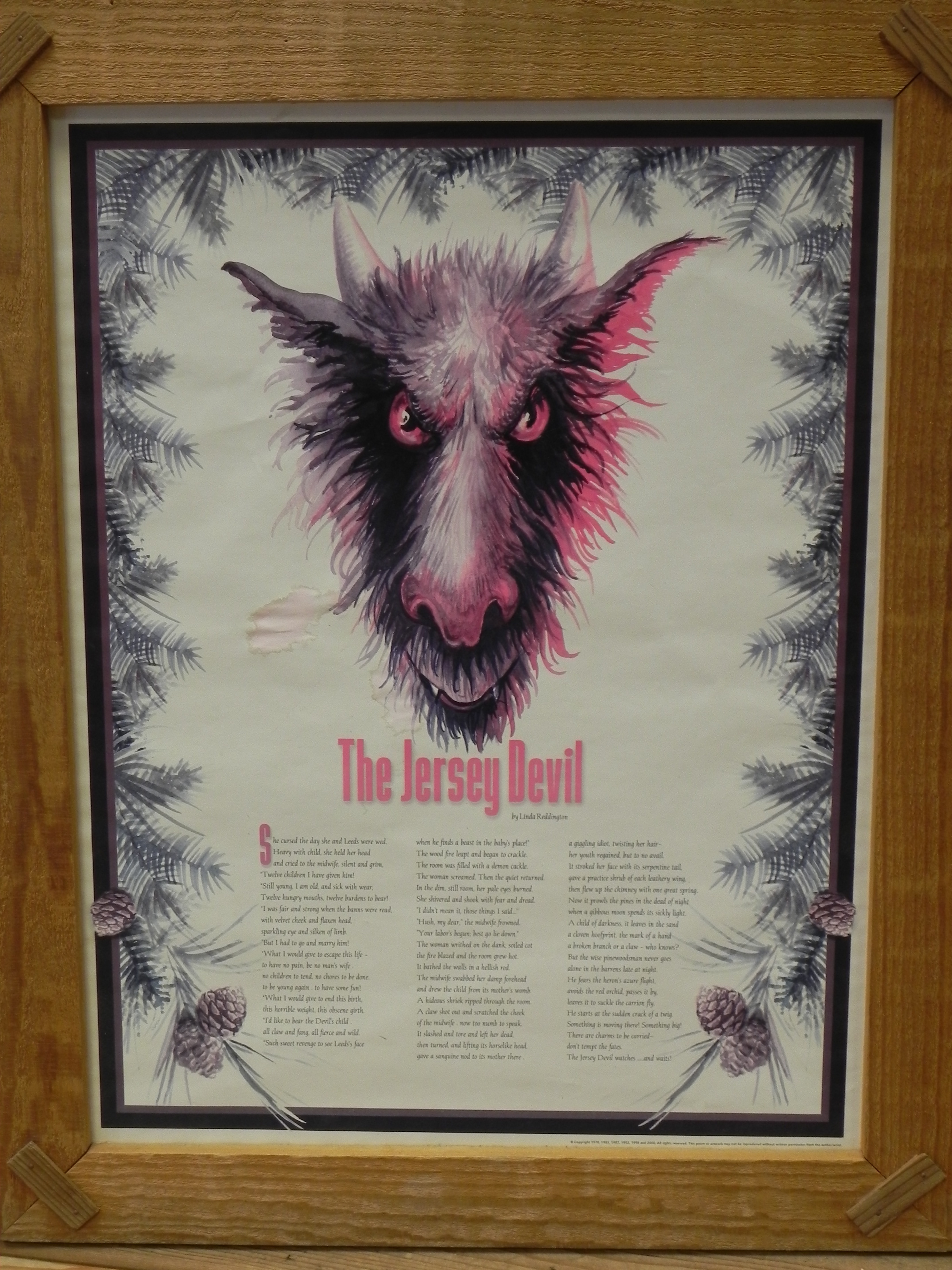
While the origin story of the Jersey Devil is one of the main strikes against it for sheer impossibility: Mother Leeds, who had twelve children, finding herself pregnant with a thirteenth, wished that it would be born a devil. The cursed child, meeting motherly expectations, came out a devil, flew up the chimney, and has haunted southern New Jersey ever since. The folklore elements are thick in this tale: the thirteenth child, the exasperated mother, devils in the woods. This doesn’t, however, suggest much confidence in the literal truth of the story. This traditional tale circulated in the same region where legitimately strange things were seen, especially around the turn of the last century. Every now and again the devil reappears in a present-day venue. At one time the Jersey Devil was even the official state demon of New Jersey.

The ease of use of photo-altering software has taken us further and further from the truth. It is an impoverished world that has no mystery to it, but the easily hoaxed world of Photoshopped monsters will cast doubt on all contenders, I fear, forevermore. We can no longer trust the veracity of the lens. Our world has become an electronic illusion. The creature spotted in the Pine Barrens can be more readily believed without photographic proof. The sober, shaken witness who can’t explain what s/he saw one dark night is more believable than a goat with wings or a stuffed animal on a string. Our religious sensibilities urge us to believe in the impossible. Our cameras urge caution. After all, internet fame is often the only kind available to those whose videos and photos go viral. The devil, they say, is in the details.