Making a Monster

I was maybe six or seven when Frankenstein’s monster charged us. My mother, brothers, and I were part of a small crowd at Niagara Falls, where we had gone to visit relatives, when we found ourselves in the monster’s path. We were among of a knot of tourists, and plate glass separated us from the great roaring beast, posted to draw visitors to one of the many plastic tourist attractions around the famous falls. Each time the monster charged, we all screamed, knowing full well he could never break through that glass. As a member of the Monster Boomer generation (although on the tail end of the boomer part), the monster that disturbed me the most has always been Frankenstein’s monster. I’m not sure whether that was natural squeamishness, or if it was that as children my brothers and I tried to divide things up evenly and I ended up with the vampire while one of my brothers claimed possession of “Frankenstein.” Certainly when I grew old enough to read the book, it only added to my discomfort. The concept of Frankenstein’s monster was old enough to have lost its scary edge, but the story was very sad. The monster was not evil, but lonely.
HitchcockFrank

Sarah Tyler Hitchcock’s Frankenstein: A Cultural History revealed a new angle on the monster. A thoroughly fascinating anthropological approach to one of the more modern constellations in the night-time sky of fear, what became immediately obvious in this book is just how religious a monster Frankenstein’s creature is. Many of us think of “playing God” as a recent phenomenon. Mary Wollstonecraft Godwin (Shelley)’s Frankenstein was published in 1818 with just that concept in mind. Mary Shelley, barely twenty when the book was published, had tapped into one of the most vital of religious topics—what it means to make life. Hitchcock’s treatment of the subject covers the conception of the monster, the book and its history, the plays and movies based on the story, and Frankenstein’s monster’s reception into popular culture. At every step of the way, religious issues are raised. Mary, in her birth of an immaculate creature, gave the world theological conundrums through which we’re still sorting nearly two centuries later.

Often on this blog I maintain that monsters and religion are cut from the same cloth. Hitchcock provides a compendium of supporting evidence in her compelling book. Even down to the contemporary debates of scientists over genetic engineering and cloning, the story of Frankenstein and the overstepping of ethical boundaries comes up again and again in scientific literature. I couldn’t help but to think how this reflects the current acrimony between the materialists and the dualists among the intelligentsia: is the forging ahead with manipulation of life simply an experiment we must undertake or is it really an ethical (read “spiritual”) issue after all? Mary Shelley was not so strident as her erstwhile husband Percy was regarding the necessity of atheism. Her monster seemed to be raising that question in terms profoundly theological for a girl not yet of seminary age. Sarah Tyler Hitchcock has done us a great favor by producing a history that stitches religion, culture, and science together into a beast that we still haven’t learned to control.

Blown Away

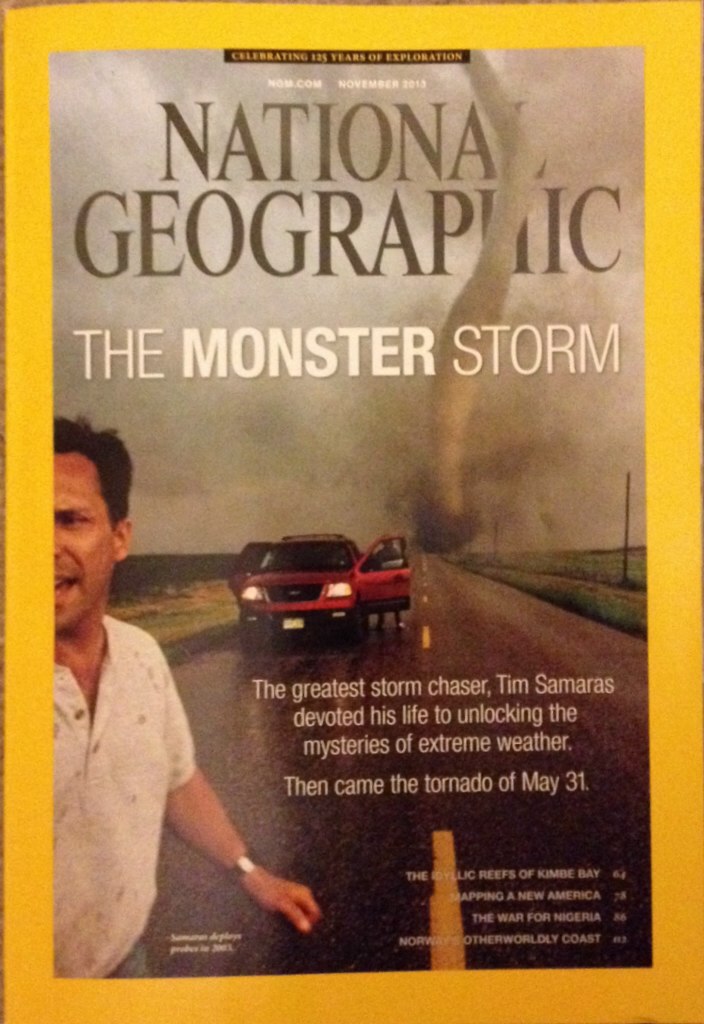
NovNationalGeoWith the weather that has dropped down over much of the US this past week, I can’t help but think of the religious implications of the weather once again. I’ve had a couple of discussions of my weather book, and perhaps it will be worth reviving; meanwhile the meteorological divine is alive and well. I recently had the chance to look through a November edition of National Geographic. We used to subscribe, but with the loss of too many jobs and the attendant moves, they became literally too heavy, and since the magazine is relentlessly prolific we finally had to donate our back issues to a loving home. In any case, this November’s issue proffers a cover story on Tim Samaras, the storm chaser who was killed by a tornado back in May. It was tornados that first led to my interest in the divine implications of the weather since the twister is often described as the symbol of an angry deity. The article on Samaras, however, took a different approach to the tornadic.

Describing the fatal May 31 tornado in El Reno, Oklahoma, Robert Draper, the article’s author, tends more toward language of the diabolical. Defining the terminal whirlwind as a “dense, moist leviathan,” Draper adopts the language of the chaos monster of antiquity. Over time leviathan came to be associated with evil (although originally it was morally neutral), even with the devil. That isn’t a biblical assessment but in a modern world swiftly becoming depleted of superlatives, leviathan has come to stand in for Satan. A few sentences later the trees are shaking “as if possessed by the devil.” Weather is often the provenance of the divine, but it can also be the tool of the devil. And since this was a fatal storm, one must be careful of blasphemy.

I have never witnessed a tornado first-hand, but I have been within a few miles of one or two. The utterly savage and random nature of the destruction translate to one of the most frightening atmospheric conditions imaginable. Reading about the growing storm, knowing that it will eventually murder the protagonist, reminds me of the stresses that led to my line of research at the very beginning. We have overcome so many of our natural predators that being completely vulnerable to the weather bestows a kind of metaphysical cast to it. We can still be frozen, washed or blown away, or overheated by the weather. It can desiccate us and begin wildfires to consume us. Its scale is immense. The origins may seem celestial, but the results infernal. Perhaps I will return to my book on the weather; it is clear that it remains one place where human power must bow before something so immense that it can only be divine or diabolical. Or both.


Rites and Wrongs

One thing about Amazon Prime is that you can watch a movie multiple times with no real fiscal consequences. Alone on a Saturday, I started my ritual of looking for a movie to match my mood. I’ve posted before on Cabin in the Woods, a kind of Lovecraftian parody of the five-people-in-an-isolated-cabin motif, but the movie is so deeply based on religious motifs that I noticed many things I’d missed the first time around. When the college kids descend to the basement to choose, unwittingly, their fate, they happen upon a diary written by Patience Buckner—one of the zombie family that will eventually emerge to murder three of the five. So far so good. The backstory to the Buckner family is sketchy (Drew Goddard and Joss Whedon are said to have written the script in three days, not much time to develop backstory), but they are religious zealots who believe in pain as a spiritual purgative. In other words, they hurt each other in an attempt to be religious. This idea is not without historical foundation, and although it plays only a small role in the movie, it is part of the larger plot as well.

The entire control center that is intended to keep the old gods satisfied, is a highly technical ritual center where the horror movie tropes take place to appease the ancient ones. As Sitterson and Hadley explain, the suffering of the kids as they face the ritual sacrifice is an essential element in pleasing the gods. It is, nevertheless, a ritual. As each victim is killed, a lever is pulled channelling blood down across icons of the roles played by the scapegoats. Marty, the stoner who ultimately figures out what is going on, makes the point that for a ritual all you need are robes and sticks. Of course, ritual is one of the main constituents of religion, and ritual has to meet the specs provided by the gods.

Cthulhu takes Manhattan

Cthulhu takes Manhattan

Modern day fascination with H. P. Lovecraft has led to a resurgence of interest in “the old gods.” Lovecraft, while personally an atheist, knew the powerful draw of the idea. Gods are controlled by ritual. Many religions trace the architecture of rituals to the deity placated by them, but this tacit domestication is a kind of archaic rule of law. Humans do this, gods will do that. The hastily written story of Cabin in the Woods abides by this pattern. As long as somewhere in the world a human sacrifice is made according to specifications, things will continue as they are. In other words, our random world is a throw of the dice by the gods. Unlike his contemporary, Albert Einstein, Lovecraft’s gods did apparently play dice. Cabin in the Woods is a modern farce of that ritual and is, in an unexpected way, a deeply religious movie.


History Bites

historian-elizabeth-kostovaAfter reading a post I’d written about Dracula last year, a friend recommended that I look at Elizabeth Kostova’s The Historian. This novel is very easy for a vampire fan to lose oneself in, taking a sweeping scope of the Balkans and western Turkey, and adding enticing bits of northern Europe as well. Although it is a novel, it is also a history lesson in international relations and in the costs that accompany clashing religious empires. Christendom and Ottoman powers frequently exchanged hostilities long before the Bush presidency, and it was in this milieu that Vlad Tepes, the Dracula of history, emerged. Interestingly, although vampires had been part of religious folklore since the earliest civilizations, it took Bram Stoker to make Dracula into one. It is difficult to believe that, with the household name-recognition of Vlad III’s epithet, Dracula would’ve likely remained one of history’s more gruesome footnotes without Stoker’s undead imagination. Vampires would’ve survived, I’m sure, but Dracula might not have come back to life.

Kostova does an excellent job of blending fact and fiction in an epic vampire hunt. She also takes the somewhat unusual step of making the historical Vlad her actual vampire. A defender of the Christian faith against the Turks and their Muslim ways, Dracula did earn a reputation for cruelty (and unusual punishments) during his lifetime. Kostova keeps him alive through a kind of scavenger-hunt through history as his decapitated body must be brought back together with his head, and then through the wilds of Transylvania, Wallachia, Bulgaria, and even into the cosmopolitan streets of Constantinople. This is an intellectual’s vampire story if ever there was one.

Although Dracula’s association with the vampire mythos began with Bram Stoker, his role as a symbol of religious conflict boasts much older roots. Indeed, conflict over what is the “one true faith” has been a bloody avocation of humanity since universal claims of salvation began to be made. The conflict continues, in a somewhat more civil guise, as science flexes its considerable muscles over the less empirical realm of religious belief. No matter which strand of religion one believes, if any, faith has a strange ability to set people seeking one another’s blood. The symbol of the vampire does not seem to be departing any time soon, for vampirism is part of human nature. We may never shed the physical blood of another, but we continue to participate in cultures where the strong impose their wills on the weak. And that is a scene darker than even the scariest tomb painted in The Historian.


Atomic Girls

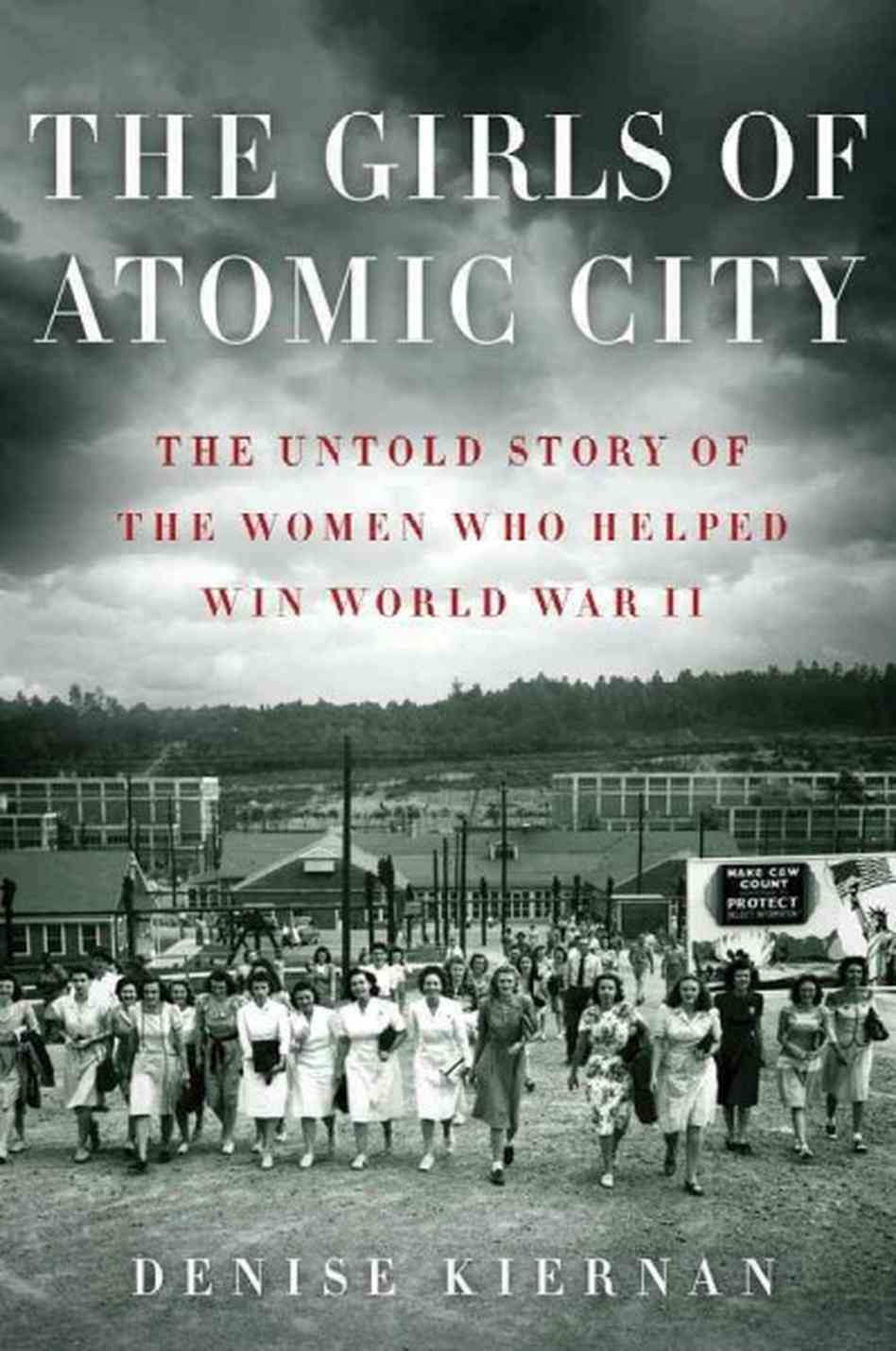
GirlsofAtomicCityRay Bradbury. Ray Harryhausen. Radioactive dinosaur loose in Manhattan. What’s not to like? I was inspired to watch The Beast from 20,000 Fathoms again for a single line, where Dr. Nesbitt informs the marksman his grenade has “the only isotope of its kind this side of Oak Ridge.” You see, I had just finished reading Denise Kiernan’s The Girls of Atomic City: The Untold Story of the Women Who Helped Win World War II. Atomic City, in this context, is Oak Ridge, Tennessee, a city built almost overnight with one objective: to produce uranium for the atomic bomb, then under development. The employees, many of them women, were not told the nature of their work and were not allowed to speak about the little they knew, putting many strains on marriages and human relationships. It is a captivating story, especially since Kiernan doesn’t pull any punches—the facility was in a segregated south, women scientists were belittled to their faces, and the end result was thousands of people incinerated in Japan. It is like the end of Eden, the loss of humanity’s innocence.

Growing up in the 1960s, I had heard of Oak Ridge. I knew it had something to do with nuclear stuff, but my understanding only went as far as the planetary model of the nucleus of an atom. I feared nuclear war. The height of that fear in the 1950s may have passed, but I was born just a month before the Cuban Missile Crisis began and all through the Reagan era that veiled threat of total, mutual annihilation hung heavily in the air. The religious had claimed God had created all this, but human hubris threatened to erase it all. On the eve of a friend’s wedding I sat across the Susquehanna River, eyeing Three Mile Island for the first time. Just six years earlier even those of us hundreds of miles to the northwest wondered if we would succumb to its radioactive glow. The power of the atom, as Kiernan demonstrates, was considered to be the basic power of the universe. And it was not divine.

When the war was over, a symbol of peace was erected at Oak Ridge. The International Friendship Bell was challenged as recently as 1998 by a local claiming that ringing the bell endorsed Buddhism, and it was therefore a religious symbol that had no business in a public place. For those who believe, ringing the bell is a form of Buddhist prayer. For others, it is a sign of goodwill between nations that have put their differences to rest. It is easy, sixty years after the release of The Beast from 20,000 Fathoms, to laugh smugly at Harryhausen’s famed stop-motion animation and the incessant worry about atomic fallout. But near the beginning of the movie, George Ritchie says of the atomic blast they’ve been monitoring, “You know, every time one of those things goes off, I feel as if I was helping to write the first chapter of a new Genesis.” Indeed, at least as far as chapter three. With the dawn of the atomic age, we had outgrown our need for the final chapters of Revelation as well.


Vampires Versus Science

Blade_movie

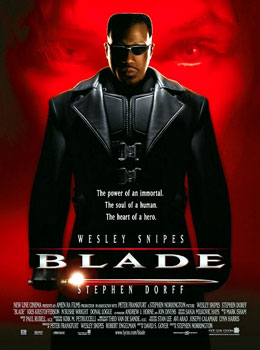
In keeping with my current explorations of vampire religiosity, I watched Blade for the first time. I’m aware that the figure of Blade is based on a comic book hero, but it is a series with which I’m unfamiliar. The movie is the basis of my knowledge here. The first interesting connection, or more properly, disconnect, between religion and vampires is the fact that in Blade’s universe crosses and holy water do not work. Vampires do respond to garlic and silver, and even to chemicals developed in medical labs. The faith-based origins, however, have disappeared. At one point Karen tells the vampire Frost that he’s just infected, like with a virus. Vampirism was, historically, based on diabolic influence and the signs of the “one true faith” had the ability to destroy them. In the modern worldview, however, organic chemistry holds greater promise. These seem to be secular vampires.

Still, not so fast—religion is not completely absent from this world. Frost conspicuously bears the cognomen Deacon, and he plans a revolution that will bring about the incarnation of “the blood god.” This is because of a prophecy in the book of Erebus, “the vampire Bible,” shown hanging in strips like so many Undead Sea Scrolls. Erebus, of course, is borrowed from one of the many Greek terms for sections of the Underworld. Hades is a general term, but an entire geography of the realm of the dead was speculated. Erebus may be translated as “deep darkness,” and thus is appropriate for vampiric faith. Religion is not absent, it is just that Christianity is irrelevant for vampires. They do, however, borrow the concepts of sacred scripture, sacrifice, incarnation, and even twelve disciples.

When Blade has his final showdown with Frost—now the blood god incarnate—it is the EDTA, the scientifically developed anticoagulant, that destroys him. A fascinating subtext lurks here. Although clearly intended as an action movie, the plot undermines the vampire religion with science. Frost believes that the ancient ritual, decoded from a forgotten language, will turn him into a god. When you need to bring down a god, science seems to be the best weapon. Vampires—Frost anyway—are believers. Karen is confronted with the existence of vampires by accident, yet she discovers the most effective means of killing them scientifically. In the bloody battle between science and religion, it is clear which side is most powerful in the vampire universe of Blade.


Heilige Geist

Poltergeist is one of those movies that evokes mixed emotions. Sure, it was one of the really scary ones when it just came out, and the rumors of a curse after the tragic early death of Heather O’Rourke probably added to the mystique. I actually didn’t see the movie until over a decade had passed since its release. It came out when I was in college, and I didn’t often splurge to see a movie in those days. VCRs were still expensive and your only real option was to rent a movie. In any case, a few years back I bought a cheap DVD and, after having seen many horror movies, it felt a little tame. And the ending was over-the-top. I have a theory that being unemployed makes you vulnerable to suggestion. Over the weekend I was looking for a movie I could watch for free on Amazon Prime, when Poltergeist II showed up. I hadn’t even realized that there had been a sequel, and after watching it, I think I understand why the movie was buried.

Poltergeist-2-the-other-side

Poltergeist II: The Other Side picks up where the original left off. An added character, Taylor, a Native American shaman, brings good spirits to the Freeling family as the original poltergeists start to haunt Diane’s mother’s house, where they are staying. Interestingly, the ghosts are revealed to be those of a traveling, apocalyptic preacher and his followers. The preacher, Henry Kane, led his group to the desert where they awaited the end of the world and then died after it did not come. They were apparently the ghosts haunting the original Freeling house, and not those of the “Indian burial ground” that the first movie touted. Taylor brings the healing, Native American spirits into the conflict and they win out over the Christian sect ghosts. All of this was becoming more unbelievably campy until Carol Anne was rescued by her now deceased grandmother, in the form of an angel. This mythological cocktail left me feeling a bit dizzy.

Some interesting subtexts floated through this film. Native Americans were now good, rather than the haunting spirits of the first movie. Kane’s sect, which had to be a veiled reference to the Latter Day Saints, showed Christian millennialists as the truly dangerous otherworldly residents. Kane is a preacher (and Mezcal worm) that doesn’t really want to pass over into the light. Why he travels all the way to Phoenix to try to pick up a nine-year-old girl isn’t really clearly explained. Horror movies, of course, frequently make use of religion as a vehicle for what truly frightens. Often it is religion misunderstood. Kane was not a believable character, in this case, without the abject cynicism of an unholy ghost who traveled to the desert southwest to set up a new religion. Once Mormonism breaks into the mainstream, perhaps I’ll have the stomach to watch Poltergeist III and see where the evil shifts the next time.


Vampire Science

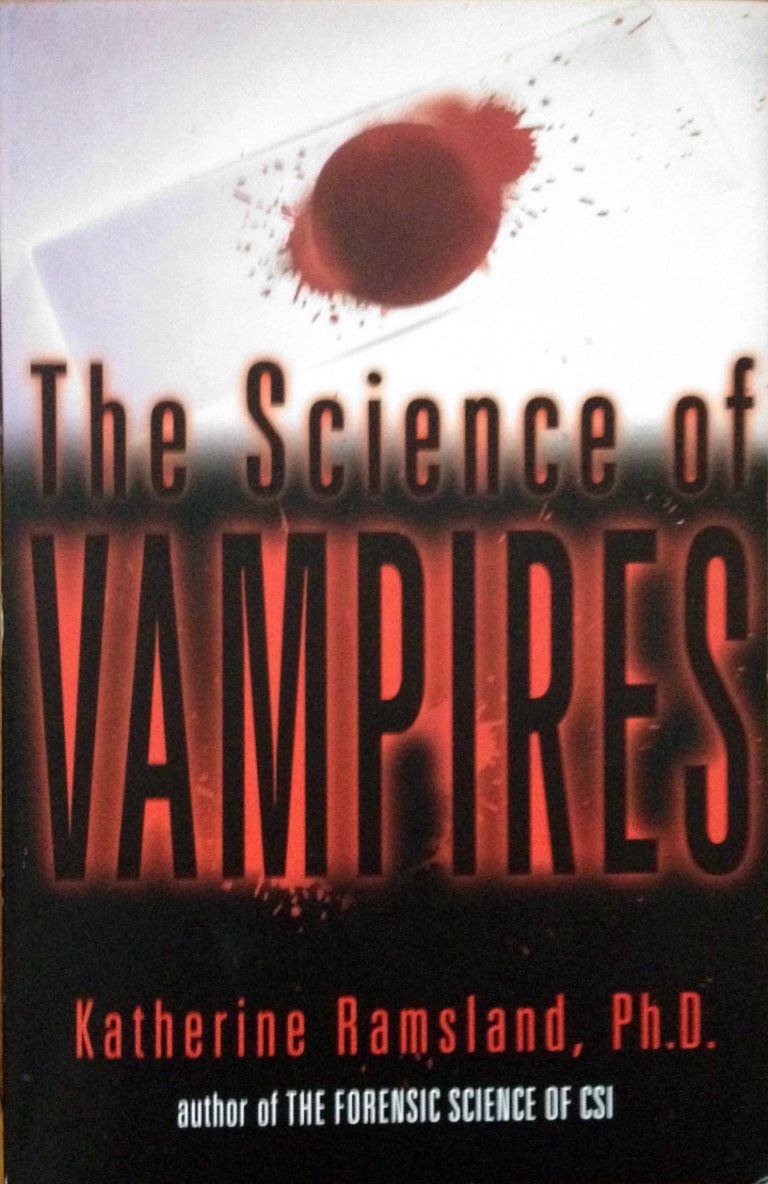
ScienceOfVampiresHow is one to take a book that combines science and vampires? That was the thought going through my head as I stood in Borders during the sad process of their going out of business sales, Katherine Ramstand’s The Science of Vampires in my hand. I knew already that I would buy the book—how could I not?—but I wasn’t sure whether it had been placed in non-fiction by accident or not. Ironically, I began reading the book on the day I was ultimately informed that my position had been made redundant. Vampires have been much on my mind since then. For several days I couldn’t concentrate enough to read, which is a kind of vampiristic encounter in its own right, in my case. Now that I’ve finished Ramstand’s study, I’m still not sure what to make of it.

Holding a Ph.D. in Philosophy from Rutgers University, Ramstand knows the fields of forensics and the supernatural surprisingly well. The Science of Vampires does indeed address the mythic creatures from a forensic perspective. The lore of the vampire is thoroughly examined and subjected to scientific scrutiny. Surprising results sometime arise. The book also contains its share of very disturbing material, more along the forensics than the fictional vampire side. I put it down woozily more than once. Yet, I found considerable insight here. Ramstand, although not focusing on the religious element, readily acknowledges the deeply religious nature of the vampire concept. She tends to focus on the scientific, rather than the spiritual, but she does have a telling interview with a professional counselor with a theological background. She quotes him as stating that he vampire is the disenfranchised among us—the pariahs of society: the homeless, people of color, those of differing sexual orientations, the working poor, the unemployed. Okay, I’ll admit that I added that last one to the list. I do, however, understand the point.

While supernatural powers may not create vampires, our society does. There are those who drain others of their resources, and there are those who are cast out. Both, in this post-modern world, might be considered vampires. At times Ramstand almost had me believing that Dracula might be more than fiction. As I read accounts of the horrors some people remorselessly perpetrate against other human beings, it seems that a vampire might be the lesser of two evils sometimes. As a symbol, both religious and secular, the vampire has proven to be irreplaceable. Hopefully some day we may outlive our use for those who prey on others.


Sacred Fear

Last week’s Time magazine ran a story about fear. I’m no stranger to this emotion, so long ago I decided to engage it creatively rather than run away. The article, “Monsters Inc., Inside the weird word of professional haunting,” by Lily Rothman, contains the laments of those who operate seasonal haunted houses. People are just getting too hard to scare. Some blame violence in the media and computer games, a large-scale desensitization to the suffering people might cause to others. CGI has made the most hellish nightmare realistic in the theater or on the small screen. If you can imagine it, it can be brought to life. Yesterday was Halloween, the day we’re allowed to be afraid. Of course, those who fear the influence of negative emotions on children have cute-ified the frights: bulbous air-filled creatures lit up from within billow harmlessly in front lawns, monsters of various sorts sport silly grins, and humor is liberally sprinkled in with the horror. One haunted house owner wanted patrons to walk through naked, so they could feel vulnerable. Today most people will wake up to just another day of work, while others will roll out of bed ready for All Saints’ Day and a rousing chorus of Vaughn Williams. Some of us will still be scared.

DSCN0216

Thrice I’ve had to face the highly secretive severance agreement offered by employers who know that people over forty have a difficult time rebuilding a career. I know that in this I’m not alone. If it hasn’t happened to you, here’s how it goes: you show up to work one day and begin doing whatever it is someone pays you to do. Depending on the size of the organization, either Human Resources or some level of supervisor will innocently invite you to the office. They will have solemn smiles on their faces. The door will be closed. You will be told that, for whatever reason they wish to give, your services are no longer required. In return for your silence you’ll be offered some kind of adult care package. You’ll leave shattered and stunned and willing to sign anything slipped under your nose.

The secrecy’s the thing. I’ve never revealed to anyone, under pain of prosecution, what any of those agreements said. What I have noticed, however, is the fear. The lawyer-instilled fear of bad press. Organizations want to be thought of as caring and concerned. They do not want any clandestine information released. Truth seems to be the greatest engine of fear in the corporate world. A few years back, before the Bush-whacking of the economy, I read about optimistic companies practicing “naked business.” Revealing vulnerability. I immediately admired the idea. Like walking through a haunted house in the nude, businesses could demonstrate that they have nothing to hide. But there’s real fear here. Like a ghost, truth can pass through walls. Like Godzilla, truth is indestructible. Like the invisible man, naked truth just can’t be seen.


World War 1.2

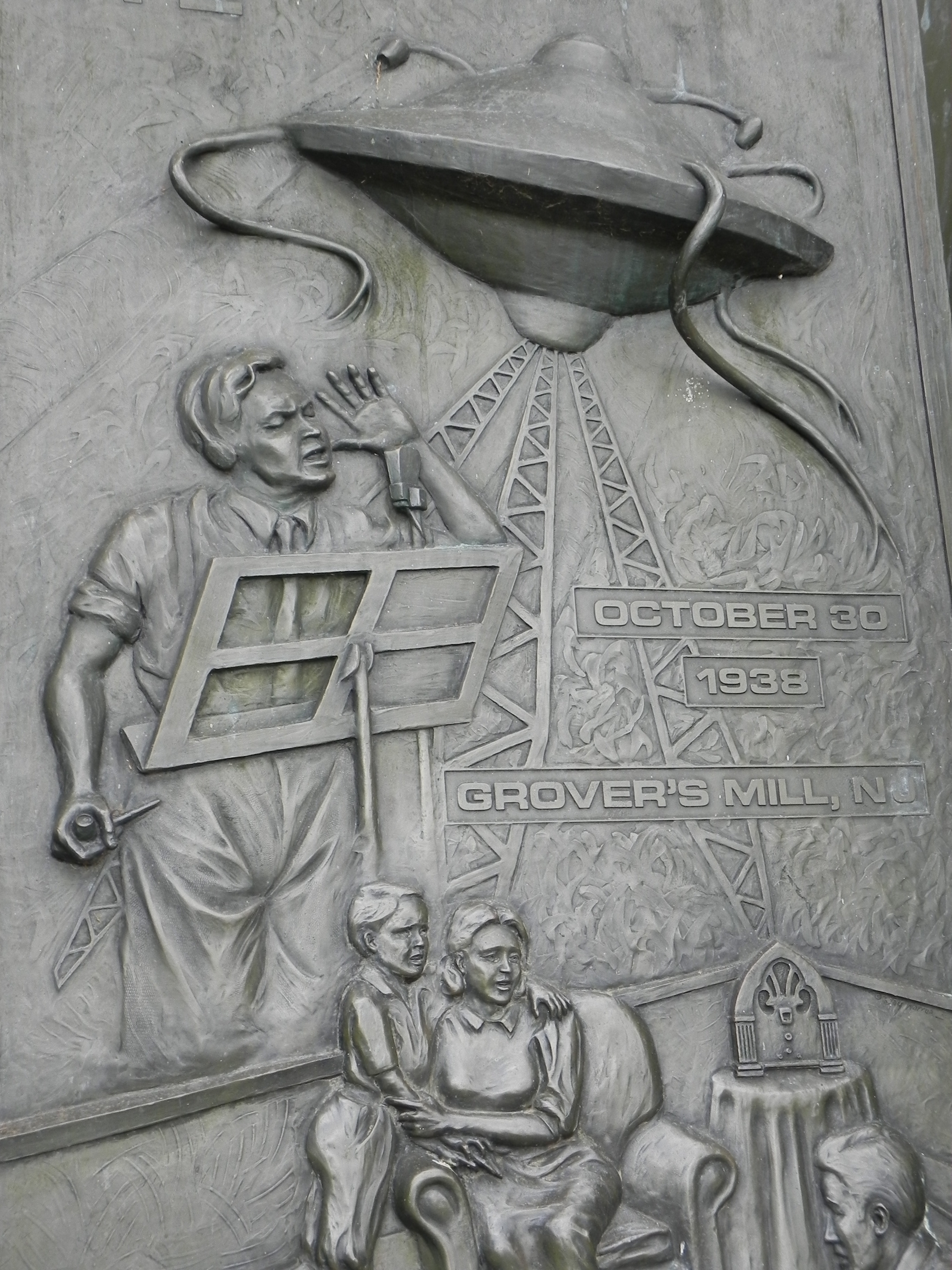
75 years ago today Orson Welles presented a radio drama version of The War of the Worlds. Perhaps it was the looming fear of the Second World War in a society that hadn’t yet overcome the trauma of the First, or perhaps too few people had read H. G. Wells’ novel, but the result was surprisingly catastrophic. Panic arose as listeners supposed that the invasion was real—the broadcast, although announced as a radio drama, followed a news bulletin format that overrode the rational faculties of many. This episode would influence government decisions about what to reveal to the public for years. And, naturally, it all began in New Jersey. Unlike the novel, the radio broadcast set the invasion, initially, in Grover’s Mill, New Jersey. This tiny town is difficult to locate even today, falling as it does between the busy north-south roadways that run through the central part of the state.

DSCN4241

The Hindenburg disaster had taken place the previous year in Lakehurst, New Jersey. Welles, impressed by the radio coverage of that celestial fear, used those broadcasts as models for his play. A few weeks ago I ventured to Grover’s Mill to let my imagination roam free for a while. A great deal of history may have been determined by that broadcast and the public reaction. We are ready to believe that danger lurks above. The First World War began to make early use of the airplane as a weapon. The sky, previously, had been obtainable only with the slowly moving balloon. Only eleven years earlier Charles Lindbergh had crossed the Atlantic by plane for the first time. The Second World War would see air combat as a major component of victory, also for the first time. My mother grew up in New Jersey, watching planes searching for German U-boats off the shore. The skies were not so friendly then.

DSCN4239

As I stood in Grover’s Mill, I recollected an unpublished book I once wrote about the weather in the book of Psalms. The thesis, somewhat loosely, suggested that for the average person the sky reflects the mood of the divine. Dramatic clouds still look angry, even when God is removed from the equation. The Reagan era gave us all new things to fear raining down on us from the skies. September 11, 2001, brought the skies crashing to the earth again. Invasion from above is an apt way to add a chill to Halloween, for it takes the prerogative of the deity and makes it either human or alien. At least most people who believe in God think he’s on their side. When the Wright brothers took their heavier-than-air craft briefly to the skies in 1903, The War of the Worlds had only been on the market for five years. The coming decades would drive God from the skies and we would come to learn that what falls from above would no longer have our best interests at heart.


Hungry Again

The_Hunger_film_poster
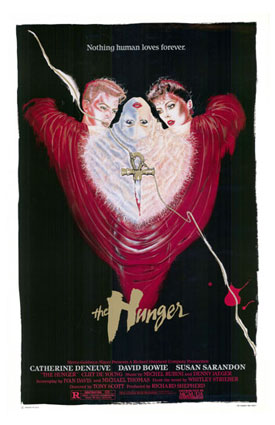
Vampires are on my mind. The funny thing is this often is the case when I’m unemployed. Feeling lost and alone, I settled down to watch the most depressing vampire movie I know, The Hunger. Miriam Blaylock, an unaging vampire, has made her way through history by taking lovers with the promise of eternal life. As she makes her lovers vampires, they survive centuries as young people, but then suddenly age and die within days. Terribly artistic (how could it not be with David Bowie as the male lead?), the film has a very heavy atmosphere and a calculating coldness as Miriam promises her lovers that they will live forever, knowing that once the aging begins, their decaying corpses will continue to live, weak, hungry, and wanting to die. I did say that it was depressing, right? The vampire, besides feeding off the essence of others, is concerned with eternal life. Religious symbols do not affect Blaylock and her ilk—in fact, they wear knives hidden within ankhs to stab their victims. The ankh, the Egyptian sign of eternal life, is the means of death. The only way to live forever is to feed off others.

Like many of those who pay attention to society, I have been fascinated by the enduring power of the vampire. When I was a child watching Dark Shadows on TV after school, I supposed vampires were things kids were interested in—the adults I knew had other things on their minds. As my generation grew, however, the vampire grew along with us. We had Interview with a Vampire, Lost Boys, Buffy the Vampire Slayer, Blade, Underworld, the Twilight series, I am Legend, Van Helsing, Priest, the Vampire Diaries, and on and on and on. Why are we so fascinated with a mythological creature? The vampire is profoundly religious and deeply symbolic. Evolution endows us all with a will to survive, the desire, if you will, of eternal life. The vampire is the symbol of that hope with no constraints. We are taught, and some of us even believe, that other people have the same rights as we do. The vampire’s urges, however, overwhelm even personal conviction and we are all potential victims.

Vampirism may be the ultimate symbol of our society. When future historians look back on the late twentieth and then the twenty-first century, won’t they see a world of profoundly deep inequality? Won’t they see multiple millions being sucked dry by the reassuring words that they are “middle class”? In The Hunger, daylight, crosses and mirrors do not dissuade the undead. Miriam needs her lovers, even though it will mean an agonizing unending end for them. Promises are made, and, when broken, the lovers are too weak to fight back. And her wealth increases with every generation. I lost my job at a very profitable company. Those who remain, on top, do not suffer fear of want. I look at Miriam Blaylock and wonder what it must be like to think that way.


Omega Alpha

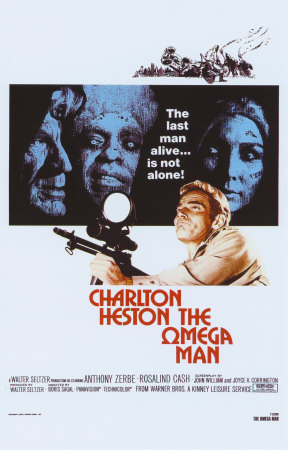
The-Omega-Man-Poster Perhaps out of a warped—perverse even—sense of self-punishment, I watched The Omega Man. Being unemployed will make you react that way. I have a pretty high tolerance for theatrical assault, as my regular readers will know. For those of you with less self-destructive penchants, The Omega Man was the second cinematic adaptation of Richard Matheson’s novel, I Am Legend. The first movie version, The Last Man on Earth, was released in 1964, starring Vincent Price. The most recent version, borrowing the novel’s name and starring Will Smith, is the third and best attempt so far. In any case, The Omega Man opens with Charlton Heston thinking he’s the last man alive, and even that doesn’t stop him from taking his shirt off at every opportunity. That I could tolerate, however, had the movie not strayed from what I thought was its central premise—that Robert Neville was alone with a city full of vampires. Although Vincent Price did not, uncharacteristically, make a convincing last man alive, the earliest version at least retained the vampires. The Omega Man, perhaps in the spirit of 1971, substituted them for religious fanatics.

The substitution didn’t bother me so much, but the religious fanatics were pathetically acted. Leibowitzian, anti-progress monks, hating the science that led to the nuclear holocaust that made them photophobic night dwellers, they snack on sardines and graham crackers, but only come out at night to kill scientists. Well, only one, since Neville seems to be, uh, the last man on earth. They accuse him of making the wheel and using technology as they run around in off-the-rack children’s Halloween costumes acting otherwise infantile while Heston strikes dramatic poses, grimacing with a variety of machine guns in hand, as he simply shoots them. That’s not the way the world’s supposed to end. The vampires have become a religious society doing everything short of handing out tracts on the corner. Well, maybe it is the end of the world after all.

It is difficult to portray loneliness effectively. Those of us who’ve been there know it intimately, and somehow Charlton Heston has too much fun with it. Even Vincent Price had trouble making it look convincing (I mean, who still uses a saucer when having their coffee and wears a tie after the apocalypse?). Will Smith at least showed a man occasionally breaking down in tears. Charlton Heston doesn’t cry. And he doesn’t shy away from god-like delusions. When he finds the other survivors (or they find him), we learn that Neville has been attempting to cure the religion virus. Dutch says, “Christ, you could save the world.” Neville doesn’t deny the obvious messianization of his mission. In fact, pseudo-crucified on a piece of modern art, Neville receives a spear-thrust to the chest, and dies in cruciform posture in a pool of his own blood. His blood that has the antibodies to save the world. Sound familiar? For all the blood, the vampires are gone. And when I feel that the world is against me, I want to see vampires.


Sleepy Hallow

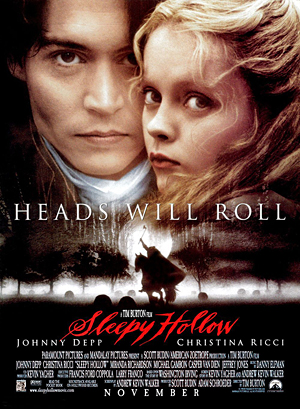
Sleepy_hollow_ver2Upon occasion I found movie clips to be of great help in explaining ideas in religion classes. A movie whose clips I used sparingly, due to concerns for squeamishness, was Sleepy Hollow (the Tim Burton movie, not the modern television series). Upon viewing it again recently, I was impressed by just how much religion is intertwined in the narrative. This is especially interesting since Washington Irving’s story does not contain much in the way of religious symbolism or motifs. From the beginning of the film, Rev. Steenwyck is one of the conspirators, making the church complicit in the attempt to subvert the van Garrett will. When Ichabod Crane arrives in Sleepy Hollow the cleric drops a Bible—a recurring motif in the movie—on the table beside him, telling Ichabod it is the only book he will need. Christianity and Paganism clash throughout the film as a number of the women are revealed to be witches, either “innocents” or practitioners of a darker kind of magic.

In flashbacks Ichabod Crane recalls his mother’s white magic that draws the ire of his ordained father. Indeed, Ichabod’s father is a stylized amalgamation of Roman Catholicism and Protestantism blended into one. His harsh white chapel houses an inquisitorial torture chamber in which he murders his wife. Seeing her pagan symbols in the fireplace ash, he too drops a heavy Bible to point out his wife’s sins. When he stalks off from his medieval chamber of horrors, the camera angle shows him to be headless—he is the true terror, rather than the Horseman who was raised by magic and appeased by the simple return of stolen property—his head. Even in the present Rev. Steenwyck is both an adulterer and a murderer. The melee in the church leaves the final three conspirators dead.

The white witches, however, are marked by their purity. Mother Crane is so light that she can float up into the air. Katrina van Tassel draws chalk icons to protect Ichabod, indeed, the whole town, from evil. While Ichabod refers to his father with the evocative phrase “Bible-black tyrant,” his mother was an innocent child of nature. In the film Ichabod moves from the rational view of life to one that allows for the supernatural, in the form of magic. True, the Horseman cannot cross onto the consecrated ground of the church (another Catholic concept mixed in with the Protestant milieu), but the faith that saves Ichabod’s life is the book of spells given to him by Katrina. Yes, the physical book stopped a material bullet, but it was faith the put the book in the pocket in the first place. All very appropriate to bring students’ minds to religion in the autumn of the year.


Literate Monsters

Skin-ShowsLiterary criticism is not for the faint of heart. Biblical scholars long ago adopted the methodologies of literary criticism since it had become clear that an absolute meaning for any biblical text will always end up being a chimera. Many of us are versed in the techniques of structuralism, post-structuralism, deconstructionism, reader-response, post-colonialism, and any number of other means of parsing hidden truths from texts. Since it is October and monsters have a way of creeping into the psyche about now, I read Judith Halberstam’s Skin Shows: Gothic Horror and the Technology of Monsters. Halberstam is using the word “technology” technically here, so this isn’t the easiest of texts to digest. Still, for those of us haunted by monsters this text does tap into one of the main connective tissue between monsters and religion: meaning. As Halberstam notes, the Gothic suffers from a surfeit of meaning. There is just too much meaning bursting out that we have no choice other than to analyze.

Beginning with Mary Wollstonecraft’s Frankenstein, and up through Bram Stoker’s Dracula into the modern horror film, Halberstam probes deeply into the layered meanings offered by the Gothic discourse. The monster is a transgressive creature, one with indistinct boundaries. I couldn’t help but to think how odd it is to suppose that we end at the limits of our bodies. The things that we do influence our environment, and we are capable (often through science) of a kind of spooky action at a distance (think of drones, HAARP, or fracking—I’m talking literally spooky here). As Halberstam points out more than once we don’t make monsters, monsters make us human.

Skin Shows is all about boundaries. Biological, psychological, sexual—we define ourselves by our boundaries. The monster is no respecter of such boundaries, forcing us to face our own definitions with a certain ambivalence. What do our monsters say about us? Do we really want to know? Monsters can be brutally honest. More honest, at times, than religions are willing to be. As views change over time, so do conceptions of the monster. Religions frequently attempt to hold out against inevitable change. Perhaps such stalwart bravado is admirable, at least until we experience a dark and stormy night of the soul. Here be monsters.


The Tell-Tale Telegraph

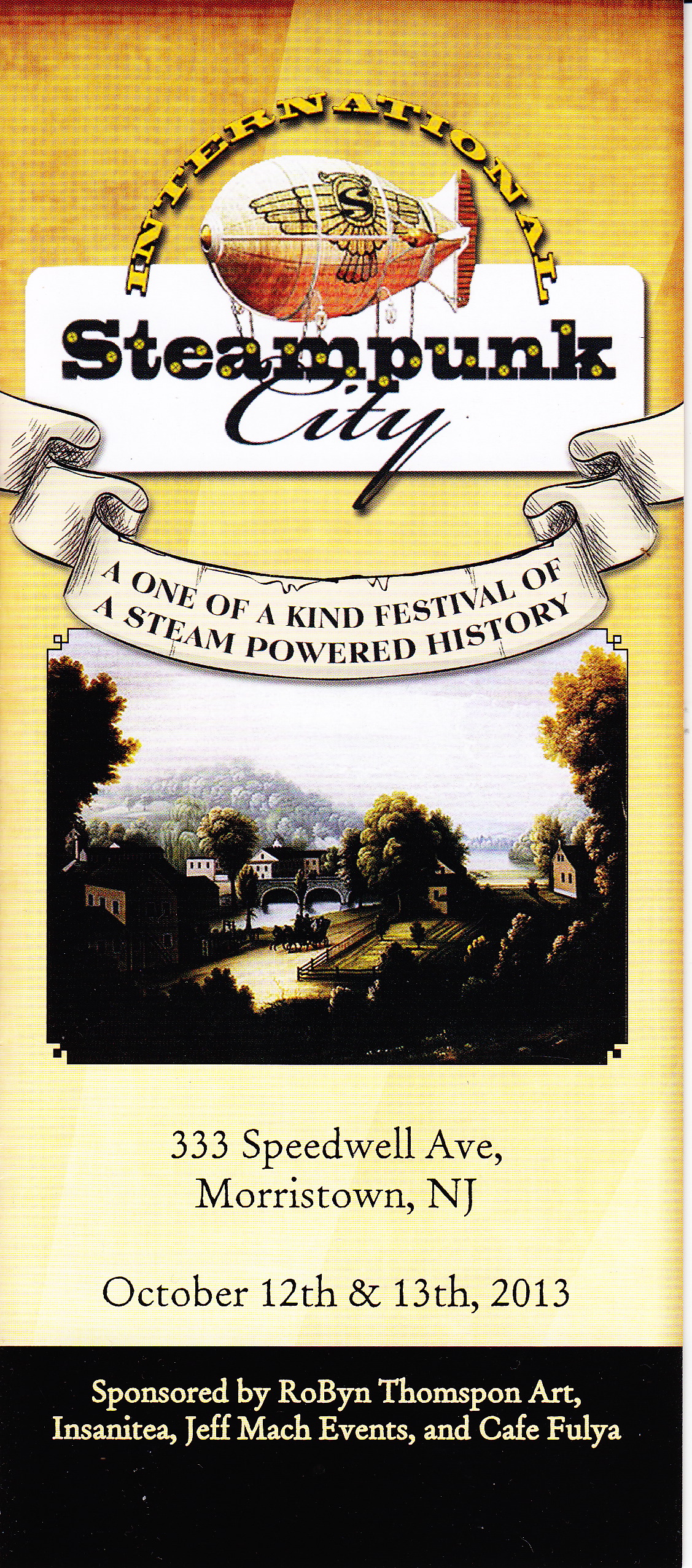
Steampunk CityThere’s a guy next to me with a robotic arm. Women with lace umbrellas and aviator googles walk by on the arms of Victorian gentlemen with walking sticks. A couple have an effervescing water-cooled device on their backpacks. I must be in Steampunk City. The forecast had predicted rain, but it is a beautiful October day in Speedwell, New Jersey. Steampunk City, an event dreamed up by Jeff Mach to make money for local museums, draws in a good crowd of the garishly bedecked, causing my wife and me to feel desperately underdressed. I’ve read my share of steampunk fiction, and I am really thrilled to see so many people taking an interest in such a literary event. I did wonder, however, what demonology had to do with it. Kevin Meares of Delaware Valley Demonology Research is giving a talk on demons, and it’s interesting to notice how the light laughter of customers from the booths outside wafts through the door where stories of possession are being told.

It is difficult to listen to Mr. Meares and believe that he hasn’t seen some pretty strange things. A practicing demonologist rather than the armchair variety, he has accompanied priests on exorcisms and is utterly convinced of the reality of the entities. When asked where demons come from, he relies on the Bible and Bible lore. Either they are fallen angels, remnants of a prior creation (thus the discrepancy between Genesis 1 and 2), or the offspring of the Nephilim of Genesis 6. Whatever they are, he has seen them in the dark, and people have died because of their activity. Being somewhat of a skeptic, I still find myself a little creeped out, kind of wishing I was outside with the laughing, costumed fiction readers.

Steampunk is often about alternate realities. A world where technology developed in the fog of steam rather than the neat circuitry of electricity. Speedwell, ironically, (and probably intentionally) is where the telegraph was invented and first demonstrated. It is a key site in the Industrial Revolution, the development that made the modern world what it is with smart phones, air-light laptops, and iCloud. I’m in the basement of an historic building having my rational worldview threatened by stories of demons. Although I’m wearing my nonplused face, I know that things will be different in the middle of the night. I’ve got brass gears in my pockets and supernatural entities in my head. I’ve met a watch maker outside who translates Aramaic manuscripts. What hath God wrought indeed, Mr. Morse? Yes, I’m in an alternate universe, and I may decide not to come back to the work-a-day one after all.