Of the Zombies, By the Zombies, For the Zombies

In what is sure to be a controversial move, the Center for Disease Control has posted an official government blog post entitled “Preparedness 101: Zombie Apocalypse.” (Be warned, if you click on this link it may be considerable time before the page loads—it has been receiving a tremendous number of hits.) Written by Ali S. Khan, the Assistant Surgeon General and head of the CDC, the article is actually about hurricane preparedness, but with zombie furor being what it is, many on the Internet are taking the warning seriously. Literally even. Citing the tsunami in Japan and the concerns for leaking radiation, the article begins with a lighthearted fear-fest that then reveals the actual concern. Humor in the government? This is something we should all encourage!

The analogue with the current rapture fever was immediately obvious. I grew up in terror of the rapture, but when I began to take courses on the Bible from scholars who knew about apocalyptic literature, its context, and what it was intended to do, I realized that the rapture was invented in the nineteenth century by evangelists with no critical training, misreading the book of Revelation. As much as we like to break history into discrete units, time simply keeps flowing and the current of fear generated in the nineteenth gushed into the twentieth century culminating in the birth of the Christian fundamentalist movement. For many people in the twenty-first century, fundamentalism and Roman Catholicism are the two ancient strands of Christianity that legitimately lay claim to the title. At least half of this history is backward.

The Bible itself, when read in context, shows the errors of the rapture-hungry. The idea is a blend of obscure bits of Paul’s letters, mixed into Revelation and stirred vigorously. Then half-baked. The Bible does not give us a rapture. The CDC does not give us a zombie apocalypse. We know where the myth of zombies originates (I have posted on the topic before) and we know zombies are as fictional as griffons and centaurs. Nevertheless, faith springs eternal. Those dissatisfied with all that life has to offer turn to zombies for an equalizingly grim future for all humankind. It’s all gonna rot, baby. Except, of course, for those who’ve been raptured before it happens. When the zombies fail to show up after Saturday’s non-event, all of us will feel pretty silly just looking at each other as Ali S. Khan comes up with his next zinger.

The author, upon reading the CDC blog.
Silver Scream

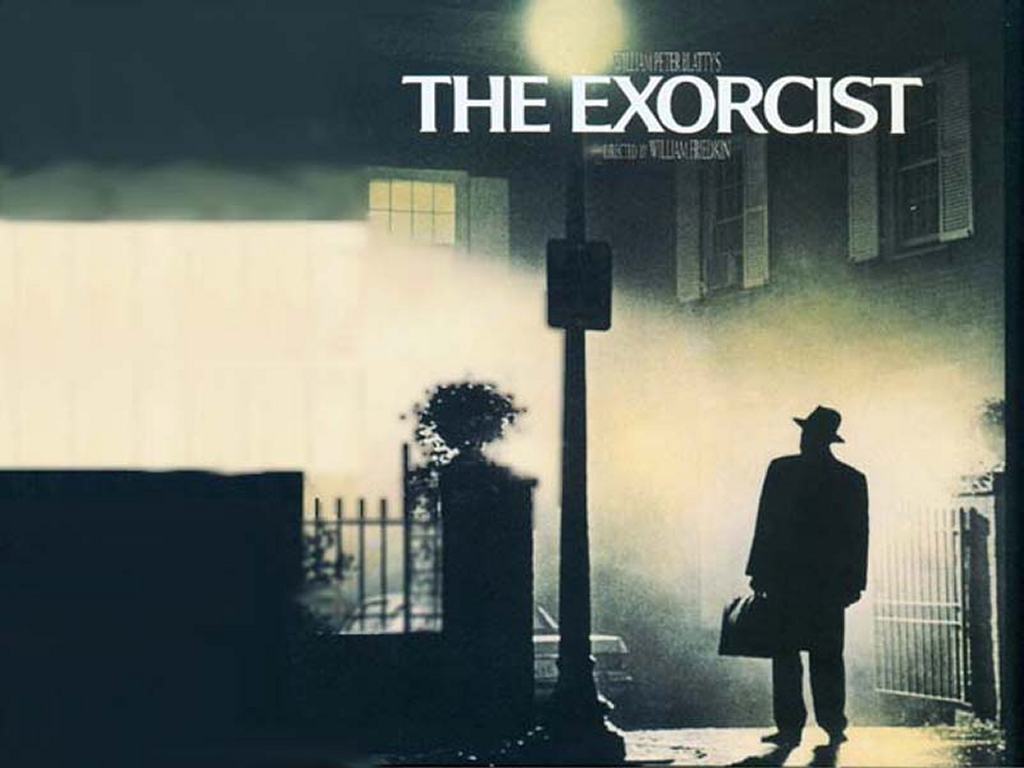
Only within the last couple of decades have movies begun to be taken seriously as expressions of the Zeitgeist. An art form not even 150 years old, commercial movies have been seen primarily as an entrepreneurial exercise—money-making ventures with little serious thought. Now students of society recognize that where our wallets are, there our hearts are also. Even in the depths of recession the entertainment industry maintained its draw. The unemployed could at least watch movies cheaply at home. Yesterday’s newspaper contained an insightful entertainment piece on horror movies by film critic Stephen Whitty. Noting that the film industry began when the Production Code largely mirrored pre-1950’s American cultural values, Whitty observes that clergy were left out of movies, or when they appeared they were strong role-model characters. Then, beginning with The Exorcist, the demonic became a huge theme in movies. As Whitty concludes, “Certainly it’s partly a reflection of a growing fundamentalism” that indicates why such movies are now so popular. Many Americans believe in angels and demons and turn to them to explain the serendipitous or contretemps.

Scary, but not necessary.

Social attitudes help to explain what we see on the big screen. Almost from the beginning religious leaders have castigated the entertainment industry as an unholy counterpart to sanctified living. Theater was earthy and evil, movies immoral, and even the desire to be entertained took away from the struggle for salvation. Ironically, however, movies tend to reflect conservative values. At least when it comes to demons. In the current glut of demonic films—which most Americans rate as the scariest kind of horror movie—the church-sanctioned hero is often the only effective tool against evil. A mythology of a Manichean dimension reigns: good struggles against evil and good will prevail. Unfortunately, this Hollywood scenario falls on the side of simplistic solutions to complex problems. Evil is our own doing—we need no demons to tell us how to be bad. Likewise, help often fails to come from on high.

Over the weekend I watched Dogma once again. Severely criticized as immoral and trashy, the overall message is, however, one of faith and hope. No fundamentalist, Kevin Smith certainly takes his pot-shots at Christianity, particularly Roman Catholicism, but in the end God and angels are real, and demons are defeated. Yes, this comedy is intended to be entertainment, but the audience that views it probably agrees with its core values. As Whitty demonstrates, the past decade has flooded the market with Hell-born foes, and there seems to be no imminent slacking of the pace. People are afraid. Our efforts at free-market Heaven have turned out to benefit too few while too many are still without work or adequate security. No, we need no demons to instruct us in the ways of evil. We are fully capable of initiating our own.


Gothic Mother’s Day

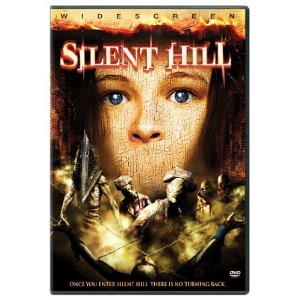
What does Mother’s Day have to do with horror films and religion? I serendipitously discovered last night. I generally run a few years behind the media, reading books after they come out in paperback and watching movies when I find a copy of the DVD. Last night as a family we watched The Sound of Music. I’d never seen this show until after I was married – musicals were not popular in my blue collar neighborhood growing up. Of course, I am now a veteran viewer. Last night, during mother’s choice evening, I noticed that if the music were removed (itself a weird concept) The Sound of Music is actually quite gothic. The interior settings, the use of shadow, the dark, Nazi threat, the stonework of the gloomy abbey – all of these things add up to a disturbing collage. In the mood for something more baldly gothic, I stayed up to watch Silent Hill.

I tend not to research movies before watching them since it reduces the visual impact. For those films based on books, I generally read the book afterward to see what was “really going on.” Silent Hill, of course, is based on a video game. I do not play video or computer games; “Pong” may have been my last serious attempt at doing so. Silent Hill, therefore, was a complete unknown. The gothic element did not disappoint, and as Sharon, the adopted orphan, began her sleepwalking scenes being shown beneath a lighted cross in the night, I knew that religion and horror were once again coming together. Indeed, the driving force behind the gruesome story is a religious cult on a witch-hunt that is set in a village based on Centralia, Pennsylvania. The cult, believing those who are different are witches, seems to enjoy the medieval pastime of barbecuing them. Centralia’s ongoing mine-fire was used to great effect. Rose, Sharon’s devoted adoptive mother, of course, rescues her daughter. The line in the film is “Mother is God in the eyes of a child.” (There is the Mother’s Day tie-in.)

Having been invited to present an adult forum to a local church on Christian themes in popular cinema, I have been recharging my attempts to test my hypothesis that what truly frightens people is religion. Silent Hill would support this hypothesis. I did not miss the significance of the names: “Rose of Sharon” is a popular biblical trope. The impotent father is named Christopher. Centralia’s predicament is often vividly compared to arcane ideas of Hell. And mother’s are, in the eyes of many children, saviors. Perhaps that last point is why we celebrate Mother’s Day on a Sunday. Although films such as Silent Hill may not make the best family viewing, even here where religion destroys, the divinity of motherhood is underscored.


Alien Agenda

Aliens are now firmly among the canonical cadre of movie monsters. Just the list of highly anticipated movies of 2011 is enough to demonstrate the fact: I Am Number Four, Battle: Los Angeles (past, but formerly anticipated), Cowboys and Aliens, Super 8, Apollo 18 (now sadly relegated to 2012). With two part-time jobs and the constant hunt for something more permanent, I tend to fall behind, however. I have to wait until the DVD release to see them.

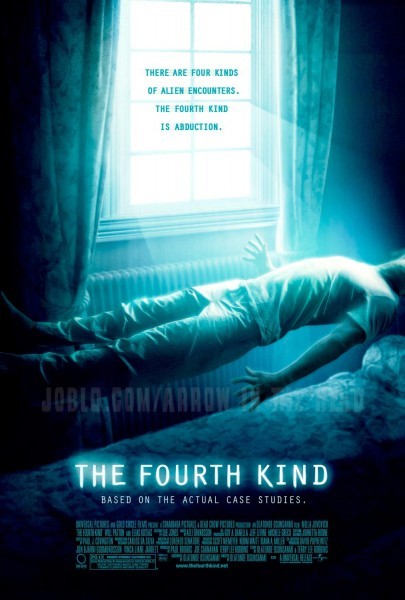
Watching horror films has been an avocation of mine since college. Once when a sociology student asked me why, in the course of a survey; I replied that it was better to feel scared than to feel nothing at all. Well, maybe I’d been reading too much Camus and Kafka at the time, but the habit has persisted and I am now professionally attuned to their religious elements as well. Even the aliens got religion. This past weekend I stayed up late to watch The Fourth Kind. It was suitably scary – when I read the reviews vociferously castigating the producers for claiming it was real, I suspected that the reviewers were overcompensating. The premise (alien abduction) is frightening enough – especially in such a remote location as Nome, Alaska – but the Bible had to be brought into it as well.

Admittedly the fear began to wane when Zecharia Sitchin’s Sumerian hypothesis appeared. Aliens speaking Sumerian is simply not convincing to those of us who’ve actually learned extinct languages. (It could explain some of the textbooks, however, now that I think about it.) The book of Genesis was then cited by the film to verify the much more ancient Sumerian claims. Many horror films deal either directly or indirectly with the fear of religion. The Fourth Kind was no exception. I was reminded of how the Bible played a small but crucial role in The X-Files: I Want to Believe movie as well. As a prop the Bible lends gravitas to otherwise questionable celluloid situations.

Never one to accept the ancient astronauts model, years of studying the Bible have convinced me that context explains most of the anomalous passages in scripture. Nevertheless, the monsters lose their bite without religion, so let’s give Sitchin’s crowd their due and just pretend for a little while.


Corny Children

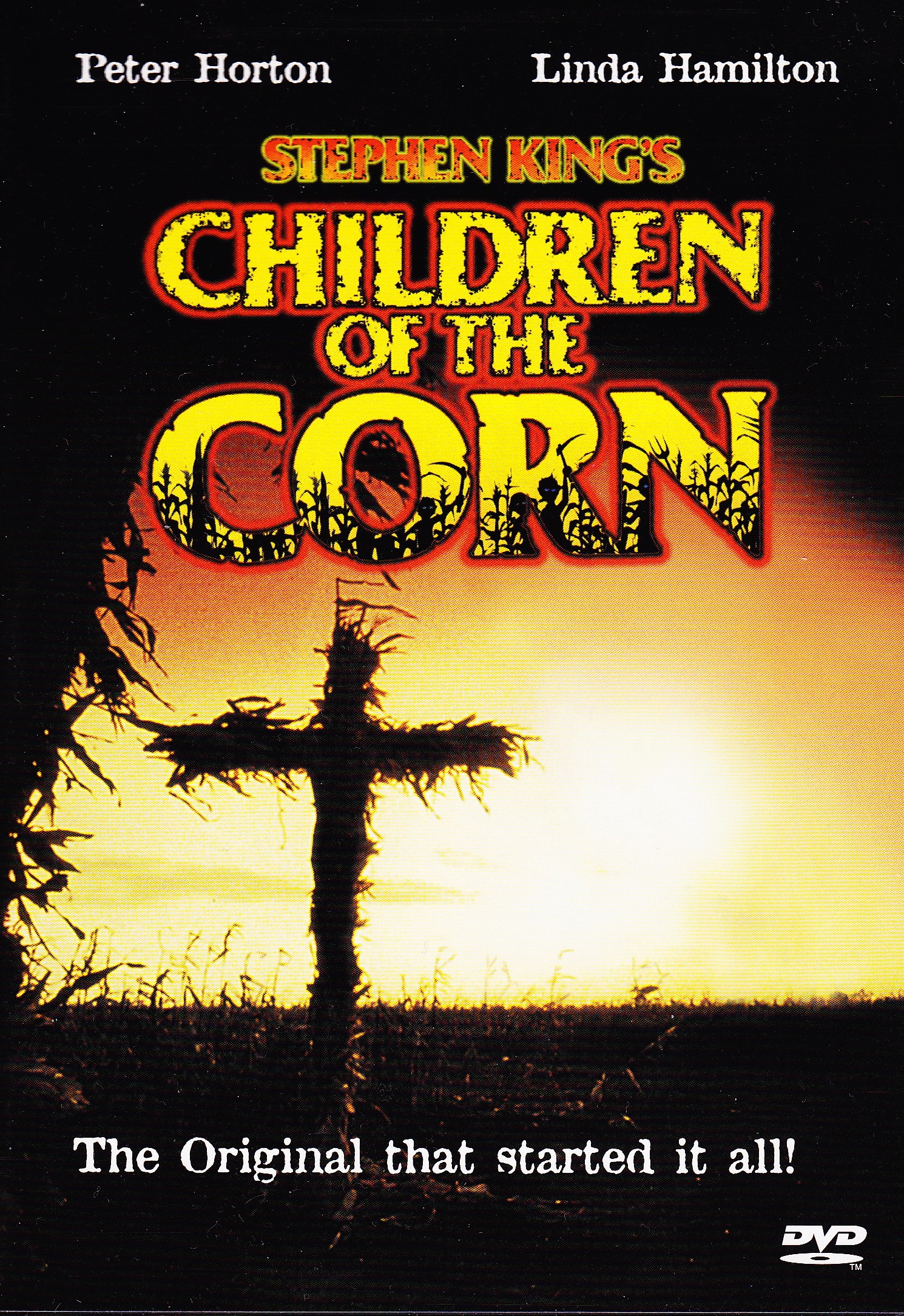
Once upon a time, if you wanted to see a movie you had to go to a theater or wait until it ran on television. This is stretching my memory back a long way, so indulge me if I only remember that four channels existed in those days, and you had to wait years for movies to appear at a time when you could actually be home to see them. Fast forward a few years and the VCR was invented. I remember being impressed that you could actually rent movies you’d always wanted to see, within reason. If you watched them too often they wore out. Then the electronic revolution came. This is all by way of excuse for why I’ve only just started to watch movies that came out in my younger years. Children of the Corn, although critically panned, was a financial success in my college days when I started watching horror movies. When I finally watched it yesterday, I realized it was a natural candidate for this blog’s running commentary on horror and religion.

What I had not fully appreciated is that the movie is a cautionary tale centering around a sacrificial cult. While the movie does have its problems, the concept of children taking the religion they hear from adults seriously runs throughout the film. Understanding gods as bloodthirsty demanders of sacrifice is a gruesome staple of all monotheistic religions. Someone’s got to die for the rest to be saved. While Fundamentalists take comfort in the substitutionary atonement of the “once for all” nature of sacrifice, in the film, the children erect crosses and sacrifice adults to “he who walks behind the rows” – a typical Stephen King kind of monster. Monster or not, the children believe he is a god.

Belief is the guy-wire for religion. The reality behind that belief is open to question, otherwise multiple religions would not exist. Children of the Corn confuses the issue by presenting “he who walks behind the rows” as a legitimate supernatural entity, one who is vanquished by a passage from Revelation. The truly disturbing aspect, however, is the complete, unquestioning devotion of the children. When children are raised in intolerant religions today, we are also planting corn that will lead to some unholy reaping in the future. Perhaps the message of the film was more trenchant than most critics were willing to admit back then. Today it is certainly more believable, given many religions’ demonstrations of their destructive powers.


Dream Quest

H. P. Lovecraft was a writer who remained unappreciated during his life but who has become a very influential literary figure after his death. So it is with artists. Known mostly for his short stories, one of the novellas he wrote, “The Dream-Quest of Unknown Kadath,” carries immense religious implications. Those familiar with Lovecraft’s fictional world know of the god Cthulhu and the “Other Gods” that he places in outer space. In “Dream-Quest” Lovecraft states that these Other Gods, “are good gods to shun.” While mere fiction, the concept of divinity has become pliable in the hands of its human author. Mortals are those who describe gods, those who decide what their deities will be like. The dream of the titular quest involves the earth gods having been removed from their shining city to leave the dark and dangerous other gods in charge.

While some would dismiss Lovecraft as overly inventive, his view of the earth being clouded by the crawling chaos Nyarlathotep strangely matches what we see playing out in the headlines. Those who are supposed to protect the masses, their leaders – elected or otherwise – have shown themselves to be interested in personal gain above all sense of duty. Throughout the world, and increasingly clearly in the United States, the working poor are seen as simple commodities easily manipulated and programmed to support those who would exploit them. Crawling chaos has landed.

Lovecraft’s “Dream-Quest” has a host of unlikely heroes, among them the cats of Ulthar. These cats maintain a true divinity appropriate for the descendents of Bastet. Feline divinity represents hope to Randolph Carter, Lovecraft’s protagonist. They also represent the tendency of the earth gods only to appear when most sorely needed, otherwise simply to set their own agenda. Where are the cats of Ulthar now? The problem with gods is they don’t always show up when you need them. Many dismiss Lovecraft as just another overly imaginative writer of cheap fiction, but to those will to listen carefully he was an author that could hear a very faint pulse. Even if that pulse was coming from under the floorboards to haunt a reality where the earth gods had gone away.

A little writer shall lead them


Gila’s Got the Whole World

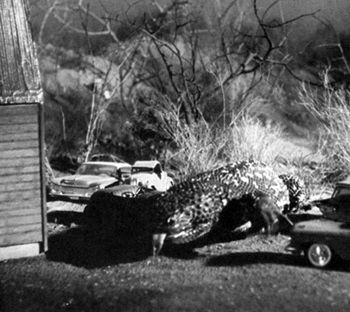
Singing pretty-boys and colossal lizards – it must be time for The Giant Gila Monster. A horror film that portrays all the innocence of the 1950s before the Beat Generation led us down the path to reality, the film has earned cult status in recent years. More accurately titled, “A Regular-Sized Gila Monster Filmed in Close-Up,” the sub-mediocrity of the movie has probably done more for preserving it in popular culture than any other aspect. The film stars the relatively unknown Don Sullivan as a great teen role model who writes and performs his own songs. The number that receives the most Internet attention, and the one that makes this movie of interest to this blog is “The Mushroom Song.” Chase Winstead (Sullivan’s character) has a young sister who is just learning to walk with leg braces. To cheer her, he picks up a ukulele and sings: “And the Lord he said I created for you/A world of joy from out of the blue/And all that is left to complete the joy–/Just the laugh of a girl and boy/And there was a garden, a beautiful garden/Held in the arms of a world without joy/Then there was laughter, wonderful laughter/For he created, a girl and a boy/And the Lord said, laugh, children, laugh/The Lord said, laugh, children, laugh” with the final line repeated numerous times.

Laugh, children, laugh

Perhaps intended to underscore the societal norms of a time when “the Lord” made frequent appearances as an unseen supporting actor in many movies, this song is oddly out of place. The disability of Missy Winstead is obviously a device to raise tension: how will a disabled girl run from a giant lizard? The song, however, provides the resolution – the Lord will take care of all good people. Their response should be to laugh. The reference to Adam and Eve, fitting for teen fantasies of all generations, also belies the evolution of this monster. The gila grows to its great size because of chemicals in the water that wash to the delta somewhere in Texas. This creature did not evolve. The Lord will take care of it. The Lord and nitroglycerin.

Respectful teenagers with predictable haircuts and a society that believes a missing teenage couple could be doing nothing but eloping fits the world of the Religious Right exceptionally well. Even though they may not be perfect, these kids know right from wrong for they live in a black-and-white world with no ambiguity or ambivalence. Children of subsequent generations have grown up with shades of gray or psychedelic colors. The older generation is frightened by new developments, claiming that the world they know is about to end. In fact, an evolution is occurring. Those who try to hold society to the norms of the 1950s would do well to move ahead a decade and at least listen to Bob Dylan. No matter how far we progress, however, it seems that Texas will always delight in producing Lord-loving, bloated threats to rational civilization.


Not the Oscars

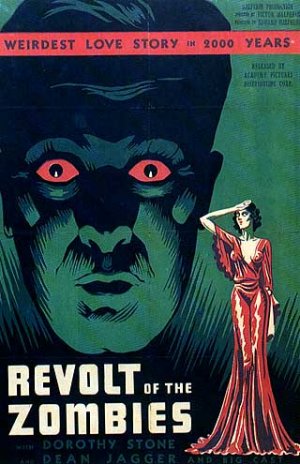
I could blame this week’s Time magazine for declaring that one thing we don’t need to worry about is an end to the zombie craze, but in truth I really have no one to blame but myself. Having watched White Zombie a few weeks back, I decided to see Revolt of the Zombies, its sequel, this weekend. With holes in the plot large enough for a small planet to pass through, it leaves a great deal of creativity – and imagined continuity – up to the viewer. It’s a movie bad enough to make you want to slap the television in frustration, but it did bring a number of my standard (read “tired”) themes on this blog together.

In this confused romp through sci-fi horror, excused only leniently for having been filmed in 1936, the terms robot, zombie, and automaton are used interchangeably. This is one of the technically redeeming features of the film. The term “robot” was coined to indicate a mindless servant, and in their religious origins zombies shared exactly that function of the automaton. Today’s robots are machines, and the future of the Singularity (posted on a couple weeks back) revolves around this very point: machines will complete the degenerating biological frame. Somehow the zombies will save us.

The zombies of 1936 were surrounded by swaggering, stereotyped caricatures of the helpless female who has very little mind of her own (perhaps less than the zombies who actually do something to better their state). Racist images including a wizened Scot called MacDonald and subservient Asians make the film uncomfortable for present day viewers. One glimmer of intelligence in the film, however, comes from an awareness of the classics. After a rat’s nest of a plot that is essentially one man wanting another man’s girl, old MacDonald gives a commentary on the assassinated master of the zombies. He takes his line from Euripides’ play Medea – an original strong female that the Greeks so feared. “He whom the gods destroy, first they make mad.” Second, I would add, they make watch Revolt of the Zombies.


Devils and Mooncussers

New Jersey is an easy state to caricature. Some of the most remarkable aspects, however, are those that seldom find their way into the popular media. An unseasonably warm spell led my family to a sudden awareness of cabin fever that sent us seeking diversion over the weekend. We ended up at Tuckerton Seaport. To get to the museum from our location meant a long drive through the pine barrens. This unique ecosystem is impressive for its size (over a million acres) as well as for its unique plant-life and relative lack of population. And, of course, the Jersey Devil.

A relatively harmless Jersey Devil

Even serious museums such as the Seaport can be expected to play up the heritage a bit. In a corner of the wildlife diorama is tucked a little sculpture of the Jersey Devil. The diabolical aspect comes only from the folklore of its birth as an accursed child. Far more dangerous were the human elements in the maritime history. Mooncussers were those who set out false lights for ships, hoping to lure them into the shore where the vessels would run aground, leading to easy plundering. The lighthouse has long been a religious symbol, a metaphor ready-made for illumination, safety, and solidity. This very reputation led the way for mooncussers to steal the signs of security to enhance personal gain.

The devil of personal gain unfortunately haunts more than the remote pine barrens of New Jersey. Those who use religion to attain that gain are the modern mooncussers who draw the unwary too near to the rocks and shoals. And mooncussers encourage others to participate in their sham, as long as there are gullible captains who are uncertain of the shore. The early church liked to compare itself to a ship. This image inspired many a nave ceiling to be designed as the hull of an upturned boat. Unfortunately, the hull often appears to have been capsized and the mooncussers appear in the role of diabolical captains set on wrecking the very vessel they command. Who needs a devil when human greed is far more than adequate to lead even the upright to opt for easy gain at others’ expense?


Terror Able

Saturday afternoons were made for B movies. After a hectic week, nothing soothes like grainy picture quality and poor dialogue. This weekend offered a chance to view The Terror. This 1963 Roger Corman film won its bad marks the honest way – by earning them. Nevertheless with Jack Nicholson playing against Boris Karloff and a plot so convoluted that I had to draw a chart to figure out what I’d just watched, the movie lived up to its grade. Throw in Francis Ford Coppola as an associate producer and it’s party time. Corman’s legendary cheapness and fondness for disproportionate claims of scares that never materialize only add to the charm. After watching the opening sequence one gets the distinct impression that Franklin J. Schaffner had watched this film before setting up the climatic scene of Planet of the Apes.

In keeping with a recent trend on this blog, the plot involved a witch. An old woman from Poland resettles in France to avenge her murdered son. The crone casts a spell transforming a bird into a beautiful young woman. The first words of the spells sent me fumbling for the “rewind” button. “Tetragrammaton, tetragrammaton,” the old woman intones to begin her spell. In a movie fraught with dialogue problems, this might be considered simply a choice of foreign-sounding, mysterious syllables to be uttered for an audience not expected to know that tetragrammaton is the title of the sacred four-letter name of Yahweh. By this point the plot was so convoluted that making God the agent behind a pagan curse seemed almost natural.

The analog with the Bible soon became clear. The Bible holds its sway over many because of its often beautiful rhetoric. Sparing the time to study what the rhetoric might have meant in its original context is an exercise few believers can afford to undertake. Our world has become so full of things that taking time to explore the implications of one’s religion must compete with ever increasing Internet options, thousands of channels of television, and plain, old-fashioned figuring out how to get along. Religion is a luxury item and, as experience tells us, it is best not to look too closely at luxuries – their flaws too readily appear upon detailed inspection. Allowing religion its exotic sounding mumbo-jumbo preserves its mystery and power. And if a witch says a theologically freighted word we can just chalk it up to entertainment. We are too busy to examine what our religions really say. Roger Corman may have unintentionally discovered a real terror in a movie that will keep no one awake at night.


Witch World

Little did I realize when I posted an entry on witches two days ago that the news this week would itself become bewitched. Tuesday’s New Jersey Star Ledger contained a piece entitled “Catholics publish guide to witches and wizards.” Then the next day a former student posted a link to CBC News article headlined “Witches to face prison for false predictions.” Last week the Jehovah’s Witnesses left an issue of Awake! at my door that reveals “The Truth About the Occult.” Coincidence or black magic? Are we really in the twenty-first century? If only employment had the same staying power as superstition there would be no jobless rate to complain about!

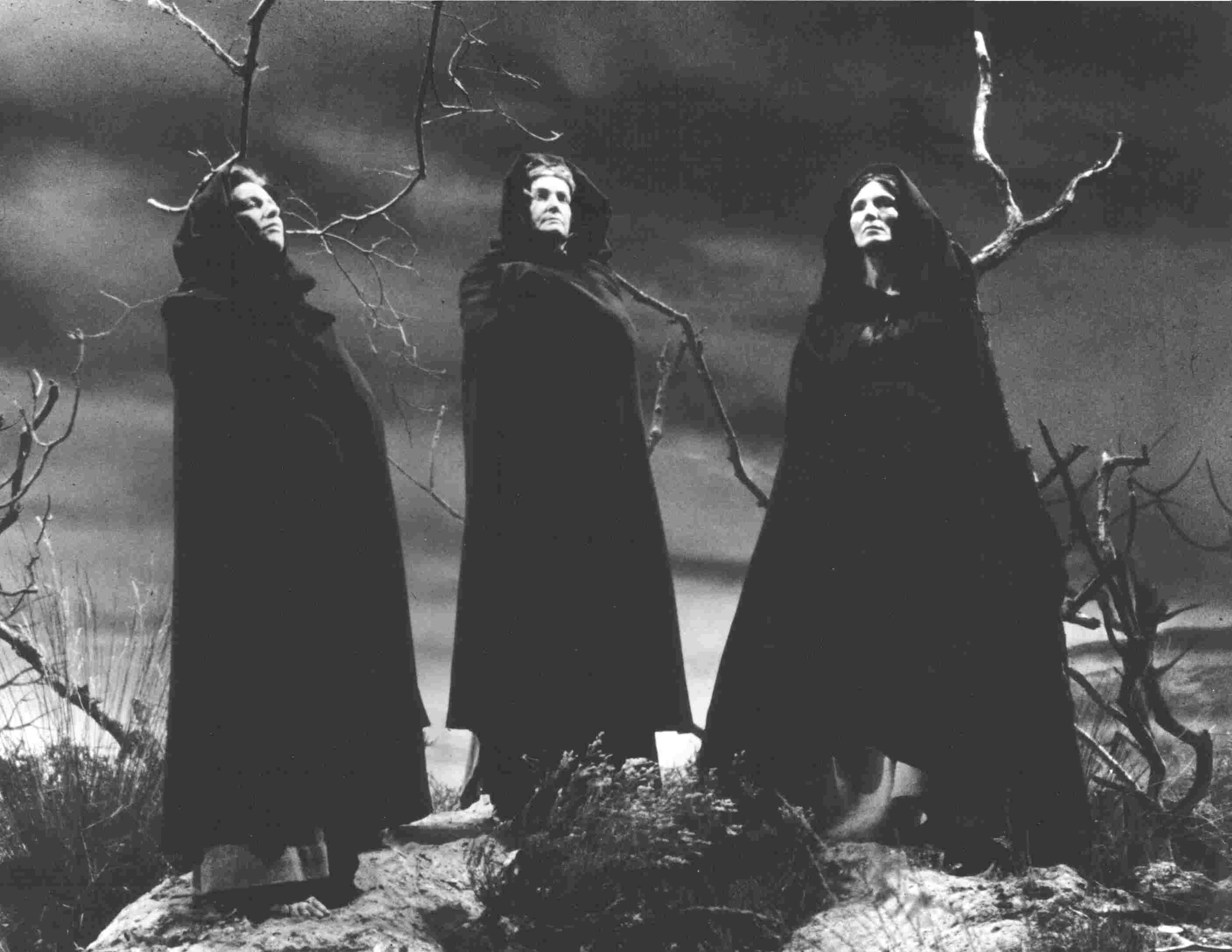
The Roman Catholic Church in England and Wales is concerned about all the interest Harry Potter is generating. Afraid that tweens and teens might tiptoe into the dark side, the Catholic Truth Society has produced a booklet called “Wicca and Witchcraft: Understanding the Dangers.” The booklet, written by a former Wiccan, is a strange answer to J. K. Rowling given that Potter and friends are not members of the Wiccan faith. They are simply fictional witches that haven’t been grounded by the constraints of the Enlightenment. Fantasy grants them their magical powers, not the Devil. In Romania, meanwhile, witches beset by income tax laws are now facing hard time if their predictions don’t pan out. New laws in the economically depressed nation would require witching permits to be obtained and receipts to be given to customers. This is not to sweep out paganism, but to gain some lucre from it. The Jehovah’s Witnesses are just concerned that occult practices, often seen as mere entertainment, might lead the younger generation down the road to sex and violence.

I was disabused of belief in witches before I failed out of kindergarten the first time. Teaching religion and mythology classes at two major universities, I see students from many different backgrounds trying to improve their minds. But once the sun goes down a backlash against the empirical method is nightly unleashed. I’m not sure whether to pick up my Kant and Descartes or my mugwort and rosemary. Religion breeds these darker manipulators of magic, a force against which many fear God has no recourse. So in our world of high tech gadgets and space stations and cyclotrons, we still have to worry about witches. Theirs is a metaphor yet to be fully appreciated.

Weird sisters or strange attractors?


Two Ghosts

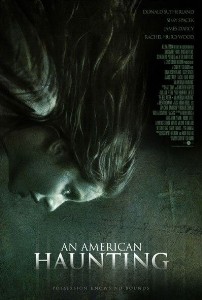
To escape the harsh realities of a fractured career, I turn to celluloid. Lest Hollywood distract me too much, I strictly limit my movie viewing to weekends when I can let down, for a few moments, my constant anxiety. Since my religious antennae are always prickling, I notice implications sometimes in unexpected places. So this weekend’s fare included two ghost stories. Both of them utilize religion to resolve the haunting, but in very different ways. An American Haunting purports to be based on real events involving the putative “Bell witch” of Tennessee. The movie takes many liberties with this scant folktale, including a church condemning a seemingly upstanding member and a Bible being dismembered as the angry spirit attacks the Bell family. In the end, the plot is confused by a revelation of family abuse and the viewer wonders who it is that tears apart Bibles.

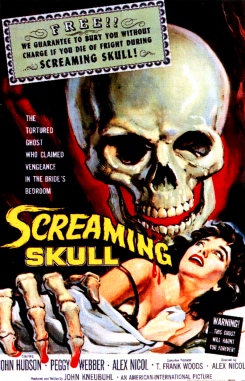
The second part of my double-feature was The Screaming Skull, a 1958 horror film that fails to raise a single follicle in fear. Nevertheless, the moody movie does provide the Dies Irae for Stanley Kubrick’s opening theme of The Shining as well as a sense of isolation that would also inform the latter exemplar. The religious element comes in the form of a priest who is a close friend to a clandestine murderer. With the help of a ghostly screaming skull, the priest is the one who eventually solves the murder and rescues the intended victim of our erstwhile protagonist.

Nearly half a century separate these two ghost stories, and the role of religion in them has reversed. In the 1950s the clergy were society’s protectors. Even though Rev. Snow is the only main character who does not actually see the ghost, he is a safe haven for the victims of evil. Fifty years later, it is the church that sets up the haunting of the Bell family by its unyielding laws. The family quotes the Bible at the spirit and the ghost tears the Bible apart. There is no sanctuary here. Films, no doubt, reflect social attitudes. When the foundations have lost their hold, confusion results. Who is to blame for the suffering of Betsy Bell? The movie leaves that up to the viewer. There is no solid Rev. Snow to whiten the sins of this world. Only ghosts remain.


New Age Present

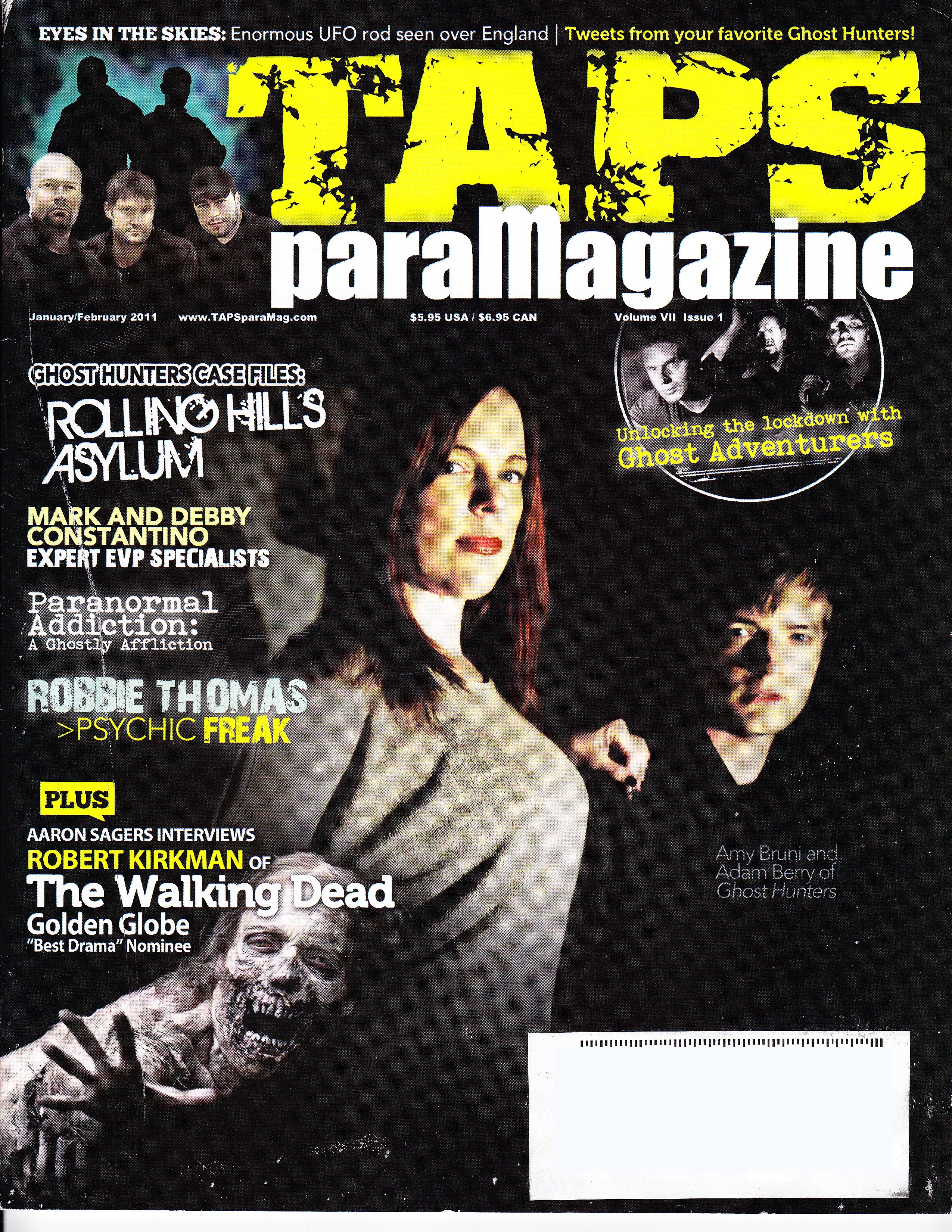
Okay, so I admit I’m curious. As my “six month” subscription to TAPS Paramagazine continues into its second year, itself somewhat paranormal, I get the feeling that I’m witnessing the birth of a new religion. I’ve been in this business long enough to know that new religions are hardly rare, but this one seems an accidental entry into the field. Now ghosts and religion are natural enough as corollaries. Both involve afterlife concerns and the unknown. Having watched TAPS Paramagazine feature fairies, tarot cards, and zombies, however, I wonder if the distinctions are becoming blurred. In this latest issue (January/February) many of the articles make explicit mention of God. God and ghost in the same breath, with the exception of a particularly holy spirit, is an odd combination, given the biblical injunction against mediums.

Spiritualism in the late nineteenth and early twentieth centuries was descried by famous debunkers such as Harry Houdini and accepted by famous intellectuals like Sir Arthur Conan Doyle. It is that liminal area that stays out of the reach of traditional Christianity and Judaism, but strays into the afterlife-prepared psyche. If the dead are out there, they should be able to communicate. Right? And with God’s full approval, so it seems. This latest issue alone suggests that UFOs may be demonic, that clergy may be legitimately interested in ghosts, God may speak through dead children, and that one may become addicted to paranormal investigation. Sounds like a recipe for a New Age mythology. Throwing in light-hearted contributions about the Walking Dead, and suddenly zombies become real as well. Oh, and skunks have a special wisdom.

Traditional Christianity cautions against all of these things (except skunks). When it comes to the supernatural, it claims, there is only one super, supernatural being. The rest are charlatans and wannabes. The Bible certainly does not encourage consorting with ghosts, and yet, in this New Age milieu it is possible to find any remotely spiritual entity touted as proof of reality beyond reality. As Bader, Mencken, and Bader observe in Paranormal America, citizens of this country are inclined to believe. Where does belief lead when there is no pole-star to guide the ship? I sense that we may be steering into uncharted waters. Anyone want to volunteer to be captain? Religions always get to make up their own rules, so feel free to devise your own compass.


Black and White Zombies

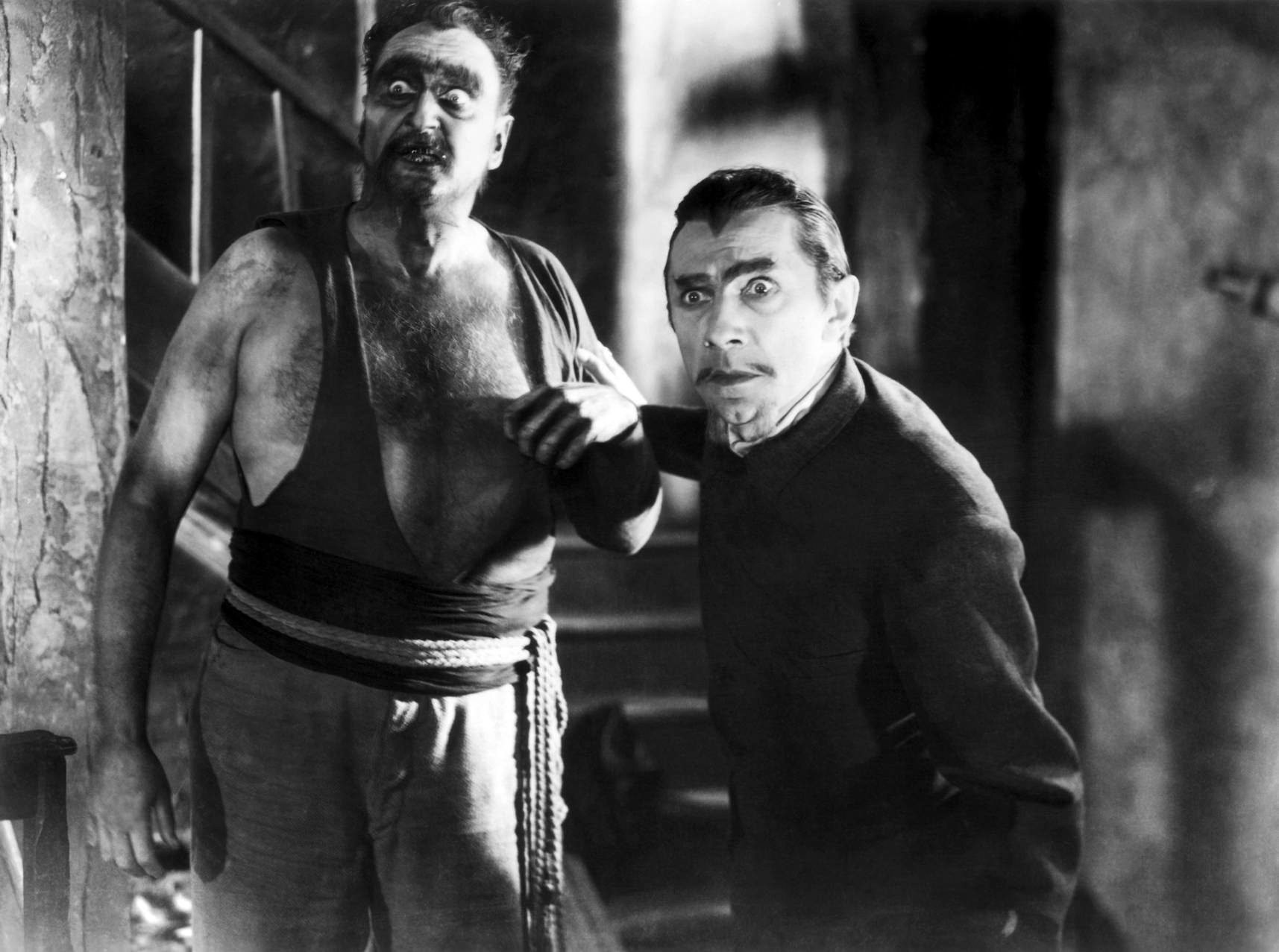
One of the sweetest privileges of a school-year weekend is the Saturday afternoon movie. The advent of relatively cheap, boxed sets of old films has opened the realm of many forgotten classics for me. My wife recently purchased one of those 50-movie boxes of classic horror films for me, and I’ve been making my way through it weekend-by-weekend, and occasionally there is a gem among the tailings. Yesterday I saw White Zombie for the first time. Back in the days when Bela Lugosi claimed a faithful following after his trend-setting interpretation of Dracula, he played a voodoo doctor with the power over zombies in this widely panned movie. In these days of the Walking Dead, it may be hard to appreciate that White Zombie was the first full-length film about our undead friends.

With the exception of the always professional Lugosi, the acting in the film received a well-deserved trouncing. Interestingly, the “van Helsing” of the drama, the doctor who overcame the monster, was a missionary. White Zombie is authentically set in Haiti, and it is never made clear whether the undead are really deceased or simply mindless. But the goofy, pipe-smoking missionary is the one who defeats evil at the end of the day. As noted elsewhere on this blog, monsters frequently emerge from the dark realms of religion, and the zombie especially so. Today, however, the zombie is all the scarier for being secular, unaffected by God or human deterrent. Originally it was a case of voodoo versus Christianity.

In what is perhaps an unintentional irony, the character who comes across the most sympathetically in the film, apart from the fetchingly pouting Madge Bellamy, is Murder Legendre (Lugosi). The missionary wins out by dim-witted happenstance, while the character responsible for the actual death of the zombie master is a partially aware zombie fighting against his fate. It may be assigning far too much credit to assert that the film had intentional social commentary, but White Zombie has had an often unrecognized impact on what has today become the symbol of corporate America: the once humble zombie.

A typical zombie


Which Witch?

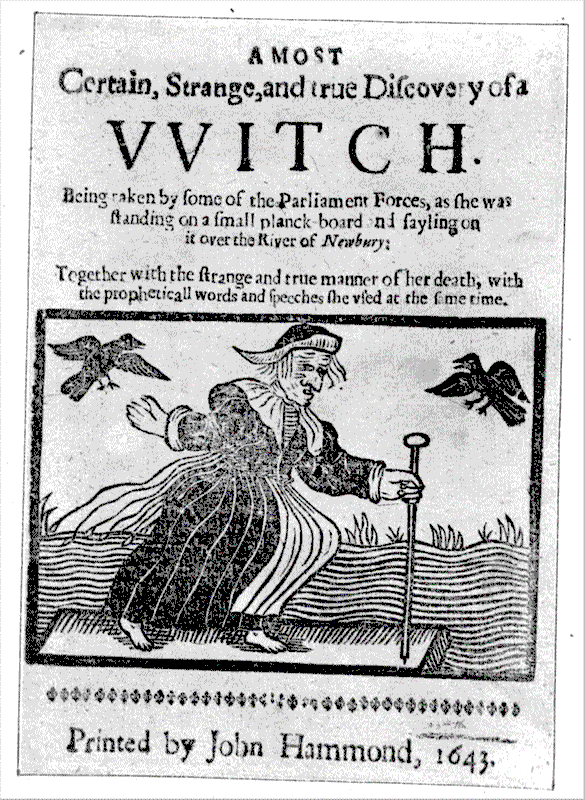
Witches have been flying all over the Internet the last few days. A story from AP Online, picked up by several websites, reports that witches in Romania are planning to cast spells on the government. Now, I have to admit to having been tempted to cast a few spells myself during the Bush years, but since I don’t believe in magic the desire simply fizzled. These witches, however, are serious. Cat excrement in hand, the carcass of a dog nearby, these witches are outraged. Perhaps even more surprising is that some government officials are taking it seriously too, according to the article. The reason for the hexes? Romania has just started charging witches income tax.

Romania is a nation that evokes the darkness of primal forests haunted by werewolves and terrorized by vampires. The one-time domicile of Vlad the Impaler, the region has retained this mystique into the twenty-first century while elsewhere rovers roll around the surface of Mars and instantaneous world-wide communications are available at the press of a button. I am nevertheless encouraged by this display of activism. These supernatural citizens are challenging what they perceive to be unfair government practices. Statesmen wear purple on auspicious days to mitigate the effects of enchanters who are in touch with the financial struggles of the vast majority of religious specialists. Most of us just sit back and take it.

Meanwhile, as thousands of blackbirds fall from the sky, members of our own government are posturing to take back the modest health care improvements President Obama has helped to institute. Emotional Republicans are getting ready to strike back at programs designed to help those less fortunate than they are (apparently so they’ll have someone to pray for at grace over meals). “Are not two sparrows sold for a farthing? and one of them shall not fall on the ground without your Father” (Mt 10.29). Never mind casting spells, the government will always find ways of making life less comfortable for those they see as threats. Which witch would you choose? I’d select the one with a moral compass, even if she has cat excrement in her hand.