Trouble with Triffids

Some time ago, I posted about the John Wyndham novel, The Day of the Triffids. In playing on the loss of humanity’s primary sense of sight, the story creates a truly eerie scenario in which people are harvested by plants. Not just any plants, but alien plants! Of course, such an idea demanded a movie rendition. The film was released the year I was born, but I only just got around to watching it. Compared to the psychologically thrilling novel, the movie doesn’t ever reach the intended level of terror. Nevertheless, religion, as usual, plays a role in the movie. As Bill Masen, the protagonist, makes his way from London to Paris, attempting to find other people who retain their sight after a devastating meteor shower blinded most of the world, he comes upon a mansion where the wealthy owners are caring for the disabled. (Hard to imagine that these days, but it was the 60’s, and idealism was kicking in.) While discussing their rather hopeless options, Bill suggests there is little reason for optimism. His new-found love interest, Christine, says “We must keep faith,” to which Bill replies, “It’s going to take more than that to get through this.”

Indeed, God is no help against the triffids. These intelligent, moving plants are soon everywhere, consuming humans and intent on taking over the planet. Bill and Christine, along with their adopted daughter Susan, make their way to Spain in hope of finding a military solution. They stop at a mission, topped with a cross and inhabited with a helplessly blind, and expecting, couple. The message is clear—there is no god to help those left to their own devices. Even those who live in god’s real estate have been abandoned. Those who survive are those who help themselves. Eventually our hapless heroes are rescued by the navy and a submarine moves them safely away from triffid-infested Europe. Then, in the final scene, our blended family is seen walking into a church while a voiceover declares that the triffids did not defeat humanity after all, and “Mankind survived and once again have reason to give thanks.”

Exegeting this film, however, leads to some uncomfortable conclusions. Those who had no divine aid give thanks to an impotent deity after it is all over. The solution for destroying triffids—salt water (you might want to store that away for future use)—is discovered by scientists and is applied at their personal peril. Even the heavenly-based origin of the menace has divine overtones: colorful portents in the sky are the provenance of God. In 1962 science had not yet even reached the moon. The default fallback, based on decades of evangelical sculpting of culture, is to give thanks to the Lord, despite the devastation. Indeed, a new Garden of Eden might be said to have resulted from the triffid assault. In this garden parasitic plants teach humans to give thanks, but the vast majority of humanity remains blind.


Persistence of Demons

Although released in April, Insidious is a film for the long nights of winter. At least with my schedule of keeping up with a culture that is moving too fast, this feels like a reasonable rationale for having just watched it. I tried not to read reviews of the movie when it came out since I prefer to experience the thrills first hand when I watch a film. Like many horror movies, Insidious revolves around the supernatural. Specifically, Insidious takes on the specter of the afterlife. Unlike The Exorcist, the demon in Insidious is not expelled by a priest, but by a psychic, borrowing a few celluloid feet from Poltergeist. Adding a couple of ghost hunters to the plot reinforces the idea of the secular demon that so often appears in the learned discussions of the TAPS team as they tilt with unseen entities on SyFy.

In an increasingly secular society, the fear of the dead is very much alive. Even a casual stroll through Barnes & Noble (the only show in town now) will demonstrate the popularity of the paranormal. Somehow sitting in pews listening to a sweaty orator go on about what he (sometimes she) thinks God is wanting us to do has disconnected us from the realm of the dead. Paul Tillich famously declared that God is a person’s “ultimate concern.” In an age when technology is hovering on the edge of keeping consciousness alive forever, people wonder what happens to the self when the body dies. Call it soul, consciousness, mind, or personality, we can’t deny—no matter how secular—that something inside makes each of us unique. The myth of flying about with angels playing harps doesn’t match everyone’s expectation of an afterlife any more. At least some of us hope for electric guitars.

Insidious opts for a realm like Limbo known as “the Further.” This is a place we have been before. The hopelessly corny The Seventh Sign gave us “the Guf” as a now empty federal reserve of souls. The Greeks gave us Tartarus and the Zoroastrians “the place of worst existence.” No matter what we call it, our brains like to believe there is some place out there that we go when the biomass we drive each day finally hits the wall. Increasingly it has become a negative place where darkness reigns. Insidious’s “the Further” is a hopeless realm of the dead, acting out their evil intent. There are no angels, but demons abide. It seems that we’ve outgrown the concept that angels are watching over us, but we can’t escape the creeping sensation that diabolical entities are peering at us from the shadows. During these long nights of winter, Insidious invites us to take a journey to where there is no heaven, but hell is surely not hard to find. All we have to do is close our eyes.


Crimes and Misogynies

Mill Creek Entertainment has, through no fault of its own, accounted for many an idle hour of my weekends. Assiduously gathering and collating public domain movies, mostly of dubious quality, into sets of fifty movies per box, sold at a rate that probably isn’t actually cheap since most of the movies are available free online, Mill Creek panders to the connoisseur of B, C, D, or even lower, movies. Sometimes, however, a good one slips through. That’s how I discovered Bluebeard (1944). One of John Carradine’s many movies, this version of the seventeenth-century tale of a murderous husband is set in Paris sometime in the not-too-distant past, Gaston Morel is a demented puppeteer who murders his models because of a religious incident. In the final confession scene Morel explains how he, as a starving artist, took a homeless girl to his studio to nurse her back to health. As he sketched her, he realized she reminded him of the Maid of Orleans—Joan of Arc. After her recovery, she turned to a life of debauchery, driving Morel insane with rage. He thus comes to kill his models due to his tattered faith (and fragile psychology).

Despite some typical overacting and strange plot twists (why would a Paris police inspector take his American girlfriend to examine evidence to solve a crime about which he is clueless? Was he planning to run for president later?), the movie manages to provide an intelligent number of turns in the plot to keep viewers interested to the end. The concept of a killer deranged by an idealistic fiction of a female victim is somewhat frightening because it continues to this day. Long before Eve bit the fruit, ancient Mesopotamians feared the demonic female of the night who later came to be called Lilith. When the unruly female entered Judeo-Christian tradition, however, she became the target of the hate and fears of too many men who had their own ideas (backed by their own religions) of how women should act.

Witch-hunts (of all varieties) have their basis in religion-fueled misogynies. Religious texts, written mostly by men, set the standard of female behavior. Those who fail to live up to it must be enemies of the world order of masculine ideals. They are the heretics, the expendable, the feminine. As someone raised by a woman without benefit of her husband, I have never had any doubts that women were just as, if not more, capable of making it in the world as men. Yet even then, in the 60’s, many women believed equal rights with men to be immoral because of the magisterial pronouncements of the male Bible. Remember, God for the Bible is a bearded man. And upon close inspection, at times at least, one may discern in that beard a touch of blue.

Parable


National Fear

Back in my full-time teaching days, the American Academy of Religion and Society of Biblical Literature annual meeting was an excuse to buy books. Not that we were flush with money, but the prices were so good (we’re talking academic books here) that they simply couldn’t be passed up. Those days are long gone. This year I limited myself to a single book: W. Scott Poole’s Monsters in America: Our Historical Obsession with the Hideous and the Haunting. I was not disappointed. Poole gives us a smart study with considerable insight into American culture. Not only that, but it also proved an excellent source of self-understanding. I had never come across the phrase “monster kids” for those of us born in the blue light of the television when the Universal monster movies were released for television viewing in the 1960s and 70s. Poole classifies himself in that camp, and it is clear that we share this “guilty pleasure.”

Categorizing our monsters into types that fit various aspects of the American self-image, we find our national phobias reflected in our fictional fears. Throughout the book the uneasy sense of uncertainty towards sexuality, science, and death, like the revenants described, keep arising from the ground. Although Poole is a historian, it very soon becomes clear that one of the main driving forces behind both identifying and challenging these monsters is religion. It is a view Poole shares with Douglas Cowan and Stephen Asma and other analysts who take seriously the origins of our fears. Monsters creep out of the same mental space as gods. That which is not real is no less scary for its non-existence.

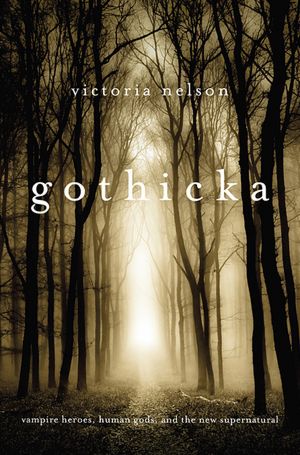
Particularly insightful was Poole’s analysis of the subversive nature of monsters. They challenge convention, forcing a cultural catharsis. The notable exception, Stephanie Meyer’s Twilight series, also has a religious rationale. Meyer, a conservative Mormon, effectively extracts the fangs of the vampire to make it a safe, if not Christian, monster. Monsters make establishment believers uncomfortable, for they remind us of the darkness that always follows the light. Humanity responds with efforts, religious and scientific, to banish the dark. But at the end of even the longest day, night will come. When it does, I would recommend curling up with Poole for an evening of cultural self-understanding. Followed by a bowl of popcorn and a movie from his filmography.


Nightmare Behind Holidays

Among the first mythical creatures to go extinct when the early rays of the Enlightenment began to filter through the blinds of superstitious antiquity, were demons. It was recognized that the activities attributed to demonic possession closely resembled epilepsy and psychological illness and that Occam’s Razor would remove any unseen entities with its no-nonsense straight-edge in one deft pass. And yet they remain. Among the ghost hunting crowd, demons have been recategorized from fallen angels to entities that have never been human. Their reality is assumed, and results of investigations, not surprisingly, support that assumption. It was, however, a Dirt Devil advertisement that created a desire to watch The Exorcist now when darkness comes early and the leaves have fallen from the naked branches and a chill has permeated the air.

As I watched the still disturbing film, I realized that I had also watched the Exorcism of Emily Rose and The Last Exorcism within the past few months as well. I am no fan of demon movies; even with no demonic forces out there, inevitably young women are tormented by what ultimately turns out to be a male establishment. My threshold for watching the suffering of others, even if only acted, is minimal. Movie makers—and often horror writers—know and exploit this, bringing us to face the real demons, the shadowy regions of our own minds. The Exorcist is particularly effective in this since it is Fr. Karras’s demon that ultimately wins out. Having never read the novel, I’m not sure whose idea it was to make the demon Pazuzu, but once again the origins of demons does not fit modern media’s expectations.

Pazuzu was a Mesopotamian “demon.” Akkadian doesn’t have a proper word for what the Judeo-Christian tradition would introduce as a fallen angel. Demons were simply a way of explaining profound misfortunes such as droughts, pestilence, or the Bush administration. Eventually such misfortunes became personified and took on the ability to possess a human being. Here is where psychology and neurology have come to banish demons. Part of the terror of The Exorcist is that such scientific explanations are laid flat in the face of real supernatural power. The lessons of over-consumerism, as evidenced in Black Friday eclipsing Thanksgiving for many (the lines were formed in many locations well before midnight, cutting into family time in order to get first crack at the bargains) show the demon more clearly. Holidays are measured in importance by the amount of money spent. Perhaps it is no wonder that Halloween’s demons have lingered through November and even to the end of the year.


Cthulhu’s Revenge

H. P. Lovecraft. Monsters. Aliens. UFOs. Ancient Egyptians. Sumerians. Is there nothing this book doesn’t have? Having read many of H. P. Lovecraft’s stories over the years, I have always been taken by how, as a writer, Lovecraft disappeared from public attention only to spring back in the 1990s. I discovered Lovecraft while doing research on Dagon, the putative “fish god” of the “Philistines.” Every time I typed the name of the deity into Google, I came up with pages and pages of Lovecraft. In my lonely room on a gray Wisconsin campus, I began to read his stories and shiver with fear as I walked across a dark parking lot to my car. Jason Colavito obviously has a great appreciation for Lovecraft as well, and his book The Cult of Alien Gods: H. P. Lovecraft and Extraterrestrial Pop Culture is a fun read for a November night. Colavito suggests that the “ancient astronaut” craze that has informed many a young mind stems back to Lovecraft’s fiction. Cthulhu and his ilk.

I’m not sure that Colavito convinced me that the ideas of ancient aliens began with Lovecraft, but he does an excellent job of exposing the foibles of many theorists who build houses of cards on shifting sand. One of the most interesting connections Colavito makes is that Creationism and Ancient Astronaut-ism are not dissimilar. “Both are, in essence, a concession that science is the ultimate arbiter of truth, and both seek to (mis)use science to give absolute authority to their beliefs” (331-2). This is an aspect of Creationism I hadn’t considered before. In the uncompromising desire for scientific respectability, the only option open is to bend science to the will of religion. This distortion must be carefully executed, convincing the followers that true science has validated a religious ideal. Rhetoric and occluding argumentation must be utilized carefully here. It seems Cthulhu has world domination in his squishy mind again.

Lovecraft famously gave us fantasy worlds where ancient space creatures left their impressions as gods upon a vulnerable humanity. Mysteries of the past—and Colavito doesn’t deny there are mysteries—are so easily explained by dei ex machina, and working with fantasy is so much easier than working with physics. To approach the mysteries with an answer already in hand, however, is to deny science its glory. As a civilization we owe much to a scientific understanding of the universe we inhabit.


All Saints

The movies of Guillermo del Toro, despite their success, must be watched with an astutely analytical eye. Although my movie watching runs a few years behind at best, a recent viewing of Pan’s Labyrinth left me feeling a little hollow and very reflective. The gruesome story is well told, and the fantasy world, even at the end, is hardly believable. Like most films that deal with disturbing issues, religious concepts are not far from the surface, or sometimes, the depths. In this case, the distinctly Christian trope of self-sacrifice opens a portal to a mystical world where a God-like father sits on a shining throne. But is it real? We are warned from the very first scene that this will not end well for young Ofelia, that “heaven” is but a fantasy seen through the hopeful eyes of a dying child. Even the faun (“Pan” of the English title) wears horns that suggest to modern minds the slightly diabolical, although he is in the service of the mystical king. I was so conflicted by end that I was glad the next day was a workday.

It is not difficult to notice that the heroes of the film are the female characters. Even the good men are generally ineffectual, but the strength of Ofelia and Mercedes bear the weight of showing any hope at all. Captain Vidal betrays his name of “life giver” time and again unless life is understood as unremitting pain and torture. Even the end of the film is set up as someone having to pay the price; the king demands innocent blood—will it be Ofelia or her baby brother? Of course, the girl must pay the price. In an interesting interpretation of the sacrifice of the only child, the daughter here becomes the savior.

Fantasy often has the power to heal. This is a key aspect that it shares with religion. Scientists have sought in vain a mechanism that would explain the brain’s remarkable ability to heal the body under conditions of belief. At times we’re reduced to name-calling, suggesting that somebody’s got something up their sleeve. After all, could a disreputable character like Rasputin really hold the key to physical wholesomeness (to say nothing of moral rectitude)? And yet, there are those who are made well by the most unlikely means.

The peoples of northern Europe believed that the veil between this world and the next was severely effaced at this time of year. Darkness is more prevalent than light. Pan’s Labyrinth begins and ends in darkness, and even the daylight—when it briefly occurs—is subdued. With Halloween behind us, the most veracious season of the year
lies ahead. Let us hope that this labyrinth contains fantasy.


Zombie Jesus

It must still be October. Despite a snowstorm before Halloween (one of nature’s trick-or-treats), all the signs are still there. My daughter showed me a Venn diagram yesterday, during a whole-day marathon of putting plastic around our drafty old windows, showing the intersection of three “monster” traits: resurrected from the dead, local townspeople fear and revere him, and convert as many mindless followers as possible. The creatures that inhabit this eerie universe are Dracula, Frankenstein, Zombie, and, where all three intersect, Jesus Christ. Obviously this was just for a laugh, but interestingly, one of the traits of Penn Jillette’s book, God, No!, is his rather frequent reference to Jesus as a zombie. Then I clicked over to Religion Dispatches, and the lead story is headlined, “Praying to the Zombie Jesus.” Ours is a world of mindless, quick connections where the compelling idea of resurrection has lost its appeal. Despite our religious culture—or perhaps because of it—we have come to see Christianity as just one more peddler of a wonderful, disturbing idea.

As regular readers of this blog know, I find the abuse of religious ideals inexcusable. Using one’s faith to beat another down is just plain wrong. Nevertheless, to focus on the folkloristic aspect of resurrection (or perhaps it is a metaphor) is to miss what drew the very earliest followers to Jesus. Before the idea of rising from the dead came a message that people should love each other and treat one another with respect and dignity. By the end of the first century of the common era, or perhaps as early as Paul, that idea grew to be a quasi-magical resurrection from the dead. No longer were women counted as equals among the followers of Jesus, and no longer were wealthy compelled to give it all up. Paul’s faith looked to a future world, beyond death, and was willing to consider this world, well, to be polite, crap. The reasons for this transformation are legion: the persecution that Christianity was undergoing, the failure of an apocalypse to take place, the disenfranchisement of the believers. They needed something to look forward to.

Zombies are likely a passing fad. When we start seeing books of zombie Christmas carols, zombie haikus, and zombie apocalypse survivors’ guides, we seem to be reaching the peak of the plateau. The zombie is mindless, rapacious, and entirely selfish. It will not go away. It is the perfect denizen of October. When I stare into those uncomprehending eyes, and see the disturbing lack of compassion and the desire to consume human brains, I start to make connections of my own. Analysts often describe zombies as the ghoul of the common folk. But all these characteristics taken together suggest that perhaps the month in which to expect zombies is November. Surviving another snowpocalypse, earthquake, and hurricane, the human spirit is difficult to dominate. And yet, when the polls open up in the darker season of the year, zombies will rise. The plastic on my windows does nothing to stop these chills.

Borrowed from a friend's site


Zombie Reality

The origins of zombies notwithstanding, they are the autumnal monster of choice in a post-modern society. They are the symbol of secular resurrection—no faith commitment is required, no pristine, moral lifestyle. Resurrection happens to you by accident, a chemical, a disease, cosmic radiation—whatever the cause it is not divine. And the zombie is fair game for the release of violent aggression; already dead, there is no moral imperative to keep them alive and well. Each year the mass of zombie walks increases where children and adults alike become the living dead for a day. Macabre? Indeed. It seems that the very word “macabre” may have come into English from Hebrew. Hebrew words are based (mostly) on triliteral roots, words with three unchanging consonants. The Classical Hebrew word for “grave” is based on the root q-b-r. The prefixed m is often the preposition “from.” Macabre, morphed through Latin and French, could go back to the root meaning “from the grave.” Literally, the source of zombies.

Resurrection is among the most poignant of human hopes. Religions often assure us that death is not final, but we can never know that this side of the veil. Those we love go away, we hope, to a better place than this. It is no surprise that the largest zombie walk in the country is in Asbury Park. We can imagine better. Why can’t God?

According to Wade Davis, there is a powder that vodoun priests use to zombify a person. This involuntary treatment does not actually prolong life, nor does it really resurrect the dead. It is, like many religious treatments, a show of faith. In The Serpent and the Rainbow Davis describes how psychosomatic attacks span the globe. All they require is belief. If a person believes in curses or the evil eye, the results can be physical and fatal. We create our own reality. Over the weekend I watched What the Bleep Do We Know? again. I sometimes showed this movie to my classes. Here physicists and gurus together affirm that we create our own reality moment by moment.

Zombies have migrated from the realm of religion to secular society. It is hard to imagine our modern world without them. They are cut from the same cloth as All Souls Day, reminding us of our mortality and suggesting that there might be something more. It is a reality we create ourselves.


Serpents, Rainbows, and Black Pearls

Riding on a bus with a bunch of coughing commuters may not be the best setting for reading about poisons and zombies. I am also aware that Wade Davis has come into criticism by some of his professional colleagues and that the movie based on his book, The Serpent and the Rainbow, may have led to an aneurism or two among scholars of Haiti. Nevertheless, Borders was closing down and a copy of the book remained on the shelf for an insanely low price, and October would soon be upon us. This past week I read Davis’ intriguing account of his experience with real-life zombies and the fascinating religion of vodoun. A number of issues were raised by his account, not least of which is that the feared religion of “voodoo” is a direct result of the evils of African slavery that brought indigenous gods into the realm of Christianity, and mixed them vigorously. My first “exposure” to vodoun was in the old James Bond movie, Live and Let Die. It terrified me as a child, and even with rational eyes, I’m not sure I fare much better as an adult.

No matter what one thinks of Wade Davis and his work, The Serpent and the Rainbow is a fascinating work. One of the most interesting aspects Davis raises is the continuing issue of defining death. Premature burial may sounds like the hysteria of a Poe-induced nightmare, but, as Davis shows, most methods of measuring death are susceptible to being fooled. Those who are termed “zombies,” in the vodoun sense of the word, are people declared dead by medical professionals, yet who are later found, after their burials, very much alive. Many readers will find this difficult to accept, but it is a phenomenon that goes back to Seabrook’s swashbuckling adventures of early last century and even before. If Davis is to be believed, it is thoroughly documented.

Paradigm shifts are seldom welcomed. We prefer to live within the comfort of the universe in which we grew up. Science and religion agree on this point—things are not what they seem. Zombies in the Walking Dead sense do not exist despite the fact that they are the kind most popularly known. We like them because they can’t hurt us; they lurch through the streets of our nightmares and our zombie walks, but they are not real. It could be, however, that our understanding of our world is woefully incomplete. Confronted with that which challenges our tidy universe, whether it be quantum physics or Haitian religion, we must consider the benefits of a mind kept open to the possibilities. Do vodoun priests in the hidden shadows of the Caribbean enslave the living dead? Disney answered with a resounding yes in Pirates of the Caribbean, but then, in Hollywood it is sometimes preferable to have the zombies in front of the screen.


Yeti Again

Time magazine announced last week, in a story spelled out on Time.com, that “There may be solid evidence that the apelike yeti roams the Siberian tundra.” This is surprising news given that even in the face of good evidence, science is reluctant to admit new large animals to our biological family. The reasoning goes that since humans (mostly white, male humans of the western hemisphere) have explored most of the landmass on this planet, we could not have missed any large land creatures. There are rare exceptions, such as the mountain gorilla, added to our database only about a century ago, but it seems to have been the last of the large animals to avoid detection. Now the yeti, the bogeyman of many childhood dreams, may be coming to life.

Science is our way of describing and theorizing about what we have discovered. Many therefore assume that science is all about new discoveries. Some of us feel a tinge of sadness at having been born after the great era of discovery. Reading about how adventurers (responsible for far more fundamentally earth-shaking discoveries than scientists of their times) ventured into new worlds and declared the wonders of God revealed in the formerly unknown, is always a humbling experience. We know so little. The mark of the truly educated is not the claims of great knowledge, but the admission of how little we really understand. Does the yeti roam the inhospitable and very sparsely populated regions of Siberia and the Himalayas where it has been a staple of folklore for centuries? We may never find definitive proof, but Time holding out a candle of hope seems a step in the right direction.

Relegated to the world of the “paranormal,” elusive animals demonstrate that the ways we know about the world are multitude. Science does not, and does not claim to, know everything. Indeed, science has a limited frame of reference within which it works. Going out seeking cryptids is not, properly speaking, science. The belief that those seeking evidence display is closer to religious conviction. That does not mean it is wrong or that it is founded upon faulty suppositions. It is simply a different kind of knowledge. It is common to say science is in conflict with religion. It need not be. If we accept science at its word, as doing what it claims to do, there is no need ever to question assured results. Belief, on the other hand, seldom crosses over into the realm of objective truth, empirically demonstrated. If it did, it would not require believing. If yeti is discovered, there will be much celebration among believers, but the creature will necessarily pass into the hands of science. For this reason alone, many are glad to leave it in the realm of folklore and myth. Either way, to some people, yeti will always be real, whether scientifically verified or not.


Cenobic Marvels

Among the most explicitly religious of horror movies, Clive Barker’s Hellraiser series exploits biblical themes and tropes to blur distinctions between sacred and sacrilege. Not a fan of gratuitous gore, I began watching the series after reading Douglas Cowan’s Sacred Terror. Cowan utilizes this particular series to illustrate how deeply the religious mythology may reach, awaiting the fourth installment before finally having an explanation. Curious, I have been making my way through slowly. October seems a good time to consider the unsettling aspects of human nature, so I watched the third installment, Hell on Earth, this weekend.

Funnily, I do not find Pinhead particularly evil. Perhaps that is the intent. His eyes seem too kind to be a true villain. As the leader of the demonic Cenobites, he leads the curious down the path of exploration to ultimate destruction and, appropriately enough, Hell. The Hell presented throughout the films, however, is the true desire of the victims. They stumble upon a puzzle box, but when it is opened the curious find themselves trapped. The very use of monastic ideals as emblematic of Hell is surely a commentary on the futility of self-inflicted means of grace. Does not the flagellant at some level enjoy the pain? Where is the religious value in that? In Hellraiser III, Joanne runs to a Catholic church for help with Pinhead in pursuit. As any horror fan knows, the church is never a haven against evil. Pinhead makes himself a parody of the crucifixion while a helpless priest tries to defend God.

Horror films are a remarkably successful genre. At least one aspect of the appeal is the unabashed use of religion. Conditioned by the old films such as Dracula, the early twentieth century taught us that the church kept us safe—crucifixes always used to work against vampires! By the end of the century that vision had shifted. The church of the early twentieth century was a preserve of male power, a place where men made the rules and abused the rules and no one questioned them. As the century progressed, we became wiser. And more vulnerable. By the dawn of the new millennium, when such movies as Hellraiser III were being filmed, the security of the cloister had itself become a source of fear. October is the season of reflection on the transience of summer and ease. Perhaps it is also the season to reflect on how our perceptions of religion are ever shifting as winter wends its way toward us once again. And Mr. Barker will be standing there to remind us that we each create our own Hell.


The Body Apocalyptic

We are all products of our upbringing. Our early assumptions, although sometimes challenged and overcome, are generally with us for life. So it was that my progression of education led me to a small, conservative college to major in religion. Compared to what I learned at Grove City, the historical criticism firmly in place at Boston University sounded downright sinful. Nevertheless, it made sense, so I followed reason. At Edinburgh we were way beyond historical criticism in that wonderful, European way. Somehow in the midst of all the excitement, I missed Post-Modernism. “Po-Mo” has, like most recent movements, been quickly added to the pile of the passé, but I find it refreshing. I just finished reading Tina Pippin’s Apocalyptic Bodies (Routledge, 1999). This may have been one of the first truly Post-Modern biblical critiques I have read, and it was fascinating. Pippin is taking on especially the book of Revelation. If more people had read her book there would have been less panic back around May 21.

I find feminine readings of the Bible enlightening. As a member of the gender largely responsible for a book filled with sex and violence, it is often difficult to see how the other half of the human race might read that same text. Having grown up with a literal understanding of Revelation, I never questioned whether it was a good or a bad thing. The end of the world must be God’s will, therefore, by definition, good. One of the beauties of a Post-Modern interpretation is that everything is thrown open to question. Pippin does just that. Noting the ennui associated with eternity, she asks a question that always lurked in my mind—isn’t too much of anything eventually a problem? Eternity itself becomes problematic. Where do we go from here?

Perhaps the most striking comment Pippin makes is in the context of her chapter on the monsters of the apocalypse, “Apocalyptic Horror.” She compares Revelation to horror movies and demonstrates how all the elements are there in the Bible. She notes, “There are many monsters in the Apocalypse, but the real bad ass monster sits on the heavenly throne.” Pippin explains that God, in Revelation, joys in killing off humankind. As many of us have come to learn, people are generally good; at least most people have done nothing to deserve the heinous punishments gleefully doled out in Revelation. That, of course, raises the sticky question of ethics as applied to the divine. Here the book of Job comes to mind where our hapless hero declares that even though he is innocent, God still can count him guilty. It is the human situation. And Job was a good guy. Pippin’s little book challenged many of the assumptions with which I’d grown. Anyone who can read such a book and not worry about being a good parent is more Po-Mo than me.


Brain Death

The computer revolution has spoiled some of the wonder associated with old films that had been formerly staged with cheap props and poorly written dialogue. (Well, computer literacy has not always improved the dialogue, in all fairness.) Nowhere is this more apparent in the science-fiction/horror genre where CGI has made the impossible pedestrian. There’s little we’re not capable of believing. Back in the fifties and early sixties when even color film often went over budget, some real groaners emerged. Over the weekend I watched one of the movies at the front of the class for poorly executed. The Brain that Wouldn’t Die, however, is experiencing something of a renaissance with a stage musical coming out next month in New York based on this campy classic. Most horror movies don’t really scare me much, probably due to overexposure. The Brain that Wouldn’t Die, however, creeped me out in an unexpected way. Daring toward exploitation status (the movie was shot in 1959 but not released for three years), the “protagonist” is Dr. Bill Cortner who specializes in transplants. When his girlfriend Jan is decapitated in an automobile accident, Cortner keeps her head alive while seeking a body onto which to transplant it. Ogling over girls in a strip club, or even stalking them from his car while they’re walking down the street, the doctor imagines what features he’d like grafted onto his girlfriend’s still living head.

Campy to a nearly fatal degree, the film is nevertheless disturbing on many levels simultaneously. Although I was born the year the film was released, I was raised to consider both genders as equal. The unadulterated sexism of a man grocery shopping for the body he wants stuck onto his girlfriend’s head was so repellant that I reached for the remote more than once. A bit of overwritten dialogue, however, stayed my hand. Kurt, the obligatorily deformed lab assistant, while arguing with Cortner declares that the human soul is part in the head, yet partially in the heart. By placing a head on another body, the soul is fractured. Now here was a piece of theological finesse unexpected in such a poverty of prose. The question of the location of the soul has long troubled theologians, an inquiry complicated by the growth of biological science. Heart transplants are common today, but the resulting people are in no way monstrous. The amorphous soul, theologians aver, is non-material yet resides within a specific biological entity. Some have even suggested that you can capture its departure by weighing a dying body at the moment of death. Others suggest no soul exists—it is a mere projection of consciousness. Cortner, however, once his eyes have opened the possibilities, can’t look back.

Our social consciousness has grown considerably since the late 1950s. Politicians and Tea Partiers who hold that era up as a paradigm of sanity do so at the price of half the human race. On the outside with the oiled hair, polished shoes, spotless automobiles, society seemed clean cut and orderly. Women, however, were relegated to inferior roles while men made the rules. Life was less complicated then. We knew who was in charge. Or did we? As a species that has evolved via sexual reproduction, it has taken us surprisingly long to realize that both genders are essential to humanity. We still tolerate gender disparity in pay scales, often shored up with the tired excuse that pregnancy and childbirth disrupt “productivity” and therefore female efforts are worth less than male—never changing due to biology. Such trumped-up excuses ring as hollow as a head without a body. Many Neo-Cons will even use the Bible to support it. John Q. Public (always male, please note), they insist, yearns for the “good old days.” The days they desire, however, were days of cheap horror and unrealistic dialogue. If they can watch The Brain that Wouldn’t Die without flinching, our future is bleak indeed.


The Truth of Ghosts

Strange noises in the night. Objects moving of their own accord. Disembodied voices laughing fiendishly. It must be nearing autumn. After having a brief discussion on novel writing with Brent Monahan earlier this summer, I decided to read his book, The Bell Witch: An American Haunting. Setting the story in the “found manuscript” genre, Monahan tells this famous account through the eyes of Richard Powell, one-time elected official in the Tennessee House of Representatives. The can be no doubt that the story has some basis in actual events, but the serious study of “ghosts” is a taboo that serious scholars break at their own peril. On my long bus rides this week I read Monahan’s version of the story as the rain continued to fall. As I read I was continually reminded how dependent we’ve become on genre labels. The book purports to be an eyewitness account and there is no genre declaration on the back cover. The Library of Congress Cataloging in Publication (CIP) data declares it fiction. Where is truth to be found?

Human beings are capable of great and terrible acts. Working in a city the size of New York after having been raised in small towns, the amount of distrust is very blatant. Security is evident in many places with cleverly locked doors and guards surveying those who enter buildings. We simply can’t trust everyone. Or anyone. When it comes to literature, stories often blend fact and fiction. Guidelines on books or classifications in bookstores help us to decide if our reading material is conveying actual events or not. The Bell Witch is one of those reminders that sometimes the truth will never be known. Historical records can be searched, but even these are often subject to human error. If someone tells us a ghost story, we base the veracity on the teller’s reputation. At the end of the day, sometimes we just can’t know.

Perhaps the most poignant aspect of Monahan’s version of these events is his reconstruction of the history. Although the supernatural remains intact at the end, Powell is able to uncover the “fact” that Betsy Bell was abused as a child and that the poltergeist-style events that pervade the story are an extension of her trauma. Actually, the treatment is very closely tied to the religiosity of the Bell family, good church-going folk who ran afoul of a fine point of church teaching. In the end, it is this rejection by the church that pressures John Bell to the point of incest. Is the story true? Yes. Did it every really happen? Probably not. The two are very different questions. In a society that increasing seeks easy answers, stories like this remind us that we are all a blend of fiction and fact. Easy answers are inevitably wrong. The movie An American Haunting once again revived “the Bell witch” but also raised the specter of the ambiguity of truth. Is it out there? If it is, how will we know when we’ve found it?

What really happened here?