New Prometheus

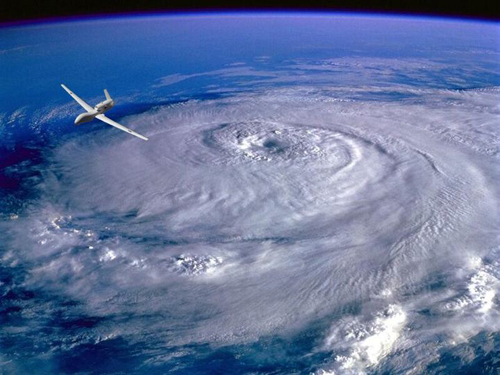
Nothing portends the wrath of the Almighty like an unseasonal storm. The late season Hurricane Sandy, now dubbed the Frankenstorm because of its potential hookup with two wintery systems making their way east and south, is poised to make an apocalyptic scenario on the east coast, we’re told. Well, it is 2012, the year of apocalypses, after all. In an interesting shift, however, this storm is named after not a divine character, but Frankenstein’s monster, the human-made nightmare. I first read Mary Wollstonecraft’s Frankenstein back in high school, and I was immediately subdued. The story, undoubtedly frightening when first heard, is unremittingly sad. The “monster,” like all of us, finds himself in a cold and lonely world where he is rejected because he is different. It is cruel and Republican kind of world. All the monster seeks is companionship, acceptance. I found the story so sad that I’ve had trouble reading it ever since.

The naming of a storm after a terror created by humanity may be prescient, in a regrettable way. Only the most gullible (read “greedy”) believe that industrialization had nothing to do with it. We toasted our own planet for a buck or two. In biblical terms we have sowed the wind, for which there is only one kind of produce. Hurricanes are quite natural, and although the irregular weather of 2012 may prove simply a meteorological anomaly, it may be the result of our tinkering with the baubles of divinity. They certainly seem to be getting bigger than they used to be.

I have to admit to having a persistent fear of those doing the cobbling. Too often their motivation appears to be flat and green and indigestible. And nothing like stockpiling it makes a person somehow less human. Mary Wollstonecraft wrote Frankenstein not for money, but for love of words. The modern chimeras we construct are mere carnival side-shows by comparison. And like Victor Frankenstein we have engineered beyond our capability to understand. Our best option may be to stand silently and wonder at the forces that hold us enthralled. For in the novel, at least, the real monster is not the cadaver stitched together underneath the sheet.

Barely Departed

Back before any of us, or anyone we knew, had attended Grove City College, one tragic night a student on the basketball team crashed through the glass doors of the gym on west campus and bled to death. If you walked across that part of campus at night, it was said, you would see his ghost. Everyone knew his name was Jim, but I never saw him. Folklorist Elizabeth Tucker presents a rare treat of the anomalous and academic in her book Haunted Halls: Ghostlore of American College Campuses. Professors have traditionally shied away from the paranormal. It can be a risky way to spend your time since the supernatural has been banished from the academy for ages. That doesn’t mean that students and professors have stopped seeing ghosts, though. Tucker, like a good prof, doesn’t just tell us ghost stories and dismiss class. She tries to unpack a bit of what they might mean.

Ghost stories, even when entertaining, are able teachers. Kids going to college find themselves in liminal situations. Not really independent, not really supervised, they test the limits of what they’ve been told. Ghosts, not supposed to exist, are the ultimate rebels. They don’t even obey the laws of physics or biology. But what are ghosts if not the embodiment of the human spirit? We call them spirits, and they represent that part of us that stubbornly refuses to go gentle into that dark night.

Tucker’s book will not convince a skeptic that ghosts exist. It probably won’t cause you any sleepless nights (unless you are about to send your child off to college). Her book is more about what ghost stories say about the living, as would be expected of a folklorist. Although not a comprehensive survey, Haunted Halls may well bring back the ghostly tales of your own college years, for very few places are without their specters, especially on a rainy October night. And even though I never saw Jim as I cut across west campus in the dark, who am I to say that he’s not really there?


Buyer Beware

Pain, it is said, has a wonderful way of focusing the mind. So when I woke up in what can best be described as a body position used for extras in the movie, Twister, I took a few aspirin and got on with my life. I had purchased non-refundable tickets for a campus visit, and capitalism is nothing if not unsympathetic. The lower back pain was fine when sitting, or standing. Try anything in between, however, and you’ll learn the real meaning of reading the riot act. Once off the train—slowly, slowly—I was fine again, until I had to sit down. The next morning, facing a day of meetings (why is everyone’s office on the fourth floor? Why do Brownstones still lack elevators?), I decided I’d better pop into CVS for some meds. It was with considerable irony and not a few groans that I noted all the products for back pain were on the bottom shelves. The condoms, in the same aisle, were right at eye-level. Sitting on the floor, pondering the relative merits of chemicals of which I’d never heard, I thought about what we take for granted.

Parents and guardians are our first teachers. Among those early lessons are often the religious ones. Recently speaking with both seminary professors and pastors, I have heard the common refrain that church membership is declining and the number of younger people listing themselves as religiously unaffiliated is growing. I noticed this in my teaching outside the seminary setting; quite apart from students of other religious traditions, many undergrads took my class knowing nothing at all of the cultural matrix of Christianity in which they’d been raised. It is also true in a consumer mentality that one shops for religious experiences just like one shops for backache medicine. You go with the one that works for you. Few bother to ask if they agree with the theology, after all, Methodist = Baptist = Presbyterian = Lutheran in many people’s minds. Doan’s or Bayer? Take your pick.

Now that Dark Shadows has been released for home viewing, another component may be added to the equation. We pass on what we value to those we love. While the writing for Dark Shadows leaves quite a lot to be desired, there are a few memorable lines. Angelique, you may recall, cursed Barnabas Collins for unrequited love, turning him into a vampire. When he laments to Elizabeth Stoddard that Angelique hates him, she replies, “No, if she had hated you she would have merely killed you. A curse takes devotion.” Passing on our beliefs, perhaps, somehow ties into all this. As believing creatures, perhaps we each need to find our own solutions. My only fear is that when I find the right remedy, it may very well be on the bottom shelf.

Read the caption


Shaman on Us

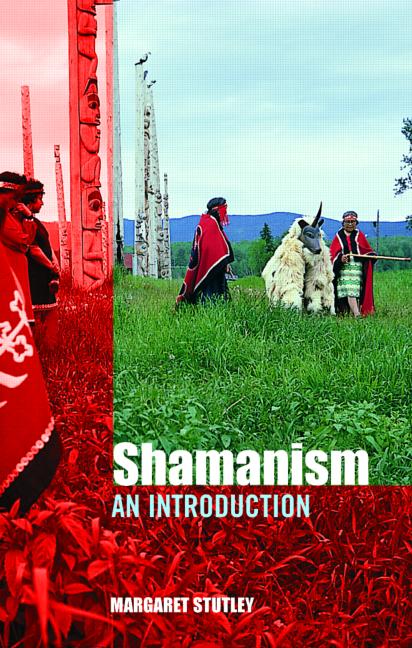
My reading habits are unorthodox. I don’t follow a fixed plan, but hope for something that will keep me engaged for the fifteen or so hours I spend commuting each week. I began October with a book about werewolves and followed it up with a book on the Hmong. Apropos of neither and both, I turned next to Shamanism: An Introduction, by Margaret Stutley. While not the best organized book, it does provide a smorgasbord of shamanistic traditions, principally from Siberia, where Shamanism was first recognized. Before I’d finished, I’d read about both epilepsy and werewolves.

Shamanism is not a “religion” per se. There is little agreement among scholars about what a religion is at all. Shamanism is very much a local set of beliefs and practices that have only very basic elements in common (shamans being one of them). It is a good example, however, of how moral heathens can be. Shamans often accompany egalitarian societies who do not require governments and religious leaders telling them to be nice to each other. No, this is not the noble savage myth, but it is a clear indication that major religions are not required for morality. It evolves on its own. Often shamanism is not constrained by overly left-brain influence, and sees connections science can only deny. The plight of Lia Lee was explained here in a way physicians could access—epilepsy and other diseases are problems of the soul as much as the body—if only they read books about religion. Healing involves calling the soul back. Treatment of the body misses the point. And sometimes the dead become werewolves.

We live in a world where real suffering is caused by lack of understanding about religion. Assuming a cultural hegemony of Christianity, or Islam, and sometimes even other religions, we discount those who believe differently than we do. The New Atheists frequently overlook just how seriously people take the world of the emotions and belief. That realm is a large part of what makes us human and it plays by no logical rules. Nor does it care to. In a country, such as the United States, where money is believed to be the very warp and woof of the good life, shamans sometimes secretly cut the thread. Still, don’t ask universities to expand the study of something as insignificant as religion because all intelligent people know that nobody really believes that stuff any more.


Holy Wolves

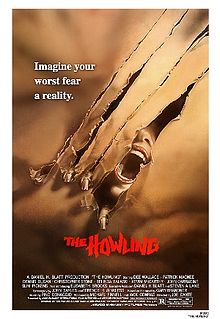
Nothing creates the mood for a werewolf movie like reading a book about real werewolves. The Howling was released the year I was finishing high school. At that time my humble circumstances allowed for very few visits to the movie theater, and certainly never to see horror films. I grew up watching B-films in black-and-white on television, but paying extra to see what was slightly unseemly in a theater stretched the limits for a good Christian just a bit. College was on my mind, and it was while in college that my horror film interest blossomed. All of which is to say, I’ve never seen The Howling before. I remember the movie posters, but the film had to wait until werewolves clawed their way back into my mind. Most of the classic movie monsters have their basis in religion, but The Howling doesn’t really delve into the origin of werewolves as much as it wonders what to do about when their numbers start to become a problem. Those who know about such things note that the special effects were cutting edge for the time, but CGI has spoiled us all.

Although the film doesn’t inquire into werewolf origins, it still gives a nod to the religious. The film’s werewolf population lives in a colony that has a “ritual center,” and since the cover for the colony is a retreat center for a psychologist’s patients, we find seekers amid the crowd. One of the inmates, Donna, explains that before joining the colony she had tried all the new religious movements, without success. And the one character who knows how to dispatch werewolves runs an occult bookstore in Los Angeles that is visited, in a shock-comic moment, but a pair of nuns. The message, so typical of the early 1980’s, is that all religions are just about the same. People are seekers, and any religion will do in a pinch.

In a way, this downplaying of the religious element in werewolves is not unexpected. As society was becoming more obviously secularized in the sixties and seventies, religion was becoming just one of many options available on the path toward self-fulfillment. In The Howling, becoming a werewolf was another. Ironically one of the old-timer werewolves laments the loss of “the old ways.” The werewolf colony lives on cattle that are farmed as politically correct sheep for the wolves, and it just doesn’t satisfy. The same might be said for religions. Accommodations, so necessary to survival in an evolving society, inevitably change the old ways of religion. Religions themselves transform over time. The Howling may not be scary, or believable, but it does serve as a kind of paradigm for worldviews that are undergoing transformation. Shifting shape, after all, is a sure symbol that one is still alive.


Where? Wolves?

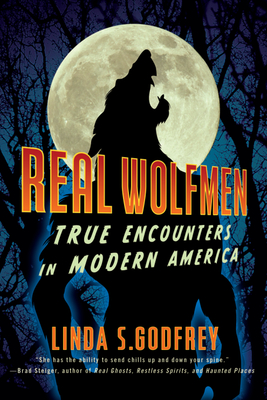
The problem with occasional phenomena is that they are seldom empirically verified. Try as we might, no one has managed to be in the exact place at the exact time on Loch Ness to capture definitive evidence that Nessie exists. Of course, it is very difficult to prove that something doesn’t exist. I have a creeping suspicion that not all of reality can be quantified. I’m very glad for the parts that can be, but a little mystery never hurt anyone. I’ve just finished reading Linda Godfrey’s Real Wolfmen: True Encounters in Modern America. There—I’ve already lost some of you! We all grow up to learn that there are no such things as werewolves and I’ve experienced many a peaceful night in that knowledge. Nevertheless, many people do report seeing upright wolf-like creatures, and many of the people interviewed by Godfrey appear to be entirely sincere. What makes this intriguing to me is that many of these episodes are reported in a circumscribed area (near which I used to live). While reports come from across the country, it is easier to dismiss one person who saw something odd once than it is to discount many people who see a similar thing over many years in the same general vicinity. That’s why I keep coming back to Godfrey’s books.

Being an open-minded writer, Godfrey also considers possible spiritual explanations for what people see. Shamanistic traditions, in this case particularly Native American ones, do not dismiss transformations from human to animal. It is difficult for most of us to accept that a person could bend the laws of physics and biology—for which we suffered through so many tests in our education—to mutate or mix human DNA into or with lupine stock. Indeed, it takes the faith of the world of religion to believe that. And yet, people see beasts.

We have been in the process of sealing the borders to our universe since the Enlightenment. The vaster our universe becomes the smaller the realm of possibilities grows. But we haven’t even explored all of our own little planet yet. The deep-sea trenches remain largely out of our reach, and the sheer volume of the oceans boggles the imagination. Even on land, we can’t watch every place all the time. The possibility of getting to somewhere truly remote is frequently an optimistic illusion. At times with my wife’s family I’ve ventured to places so far from civilization that freedom truly feels palpable. And as we hike down some neglected trail, talking to alert the grizzlies to our presence, nearly always we end up encountering others out here to escape from the likes of us. Yet a whole lot of the woods remain off-trail. It’s not a small world after all. And it’s October. Who’s to say there’s not the occasional werewolf out tonight?


Shopping for Fear

So I decided to visit a Halloween store. These have been showing up with metronomic regularity in September for several years now and are usually good for a cheap thrill. My personal preference for Halloween is more somber than garish, but the affirmation that other people enjoy a safe scare has a way of drawing me in. Those who read this blog on a regular basis know that I frequently point out commonalities between fear and religion. They both seem to hover around the same orbit in the brain, and, in some accidentals are very similar. Horror films therefore often indulge in religious imagery, and monsters do not infrequently partake of the divine. So it is no surprise to see my thesis borne out in shops intending to capitalize on fear.

I will freely admit that there may be cultural references that I’m missing here. A movie that I’ve neglected, or some television show or graphic novel may be informing some of the images in ways I can’t comprehend. Nevertheless, we all know of the power of the crucifix when it comes to vampires. I wasn’t aware that the cross had horrific effects on other species of monsters as well. Take this guy here. I’m not sure what he’s supposed to be—perhaps a zombie? It seems a little too corporeal to be a demon. The teeth just don’t look right for a vampire. In any case, he seems to have an extreme reaction to religion, with the cross melting right into his skull. Is there a conversion message hidden here somewhere? Of course it could be just a chinzy attempt to scare a real religiophobe. The cross has become the backup weapon against all supernatural evil.

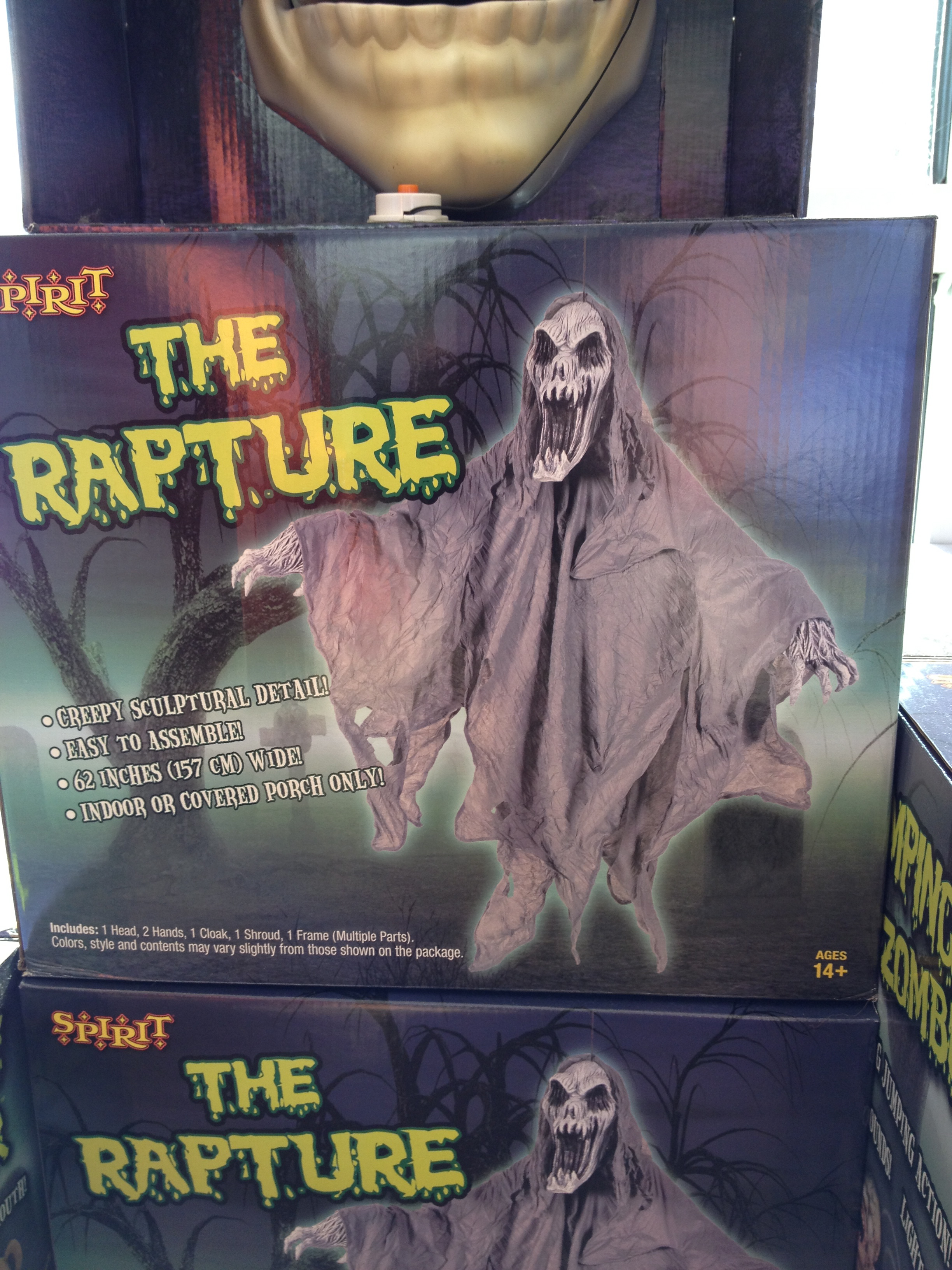
The use of a grim-reaperish ghoul rising from the grave to illustrate The Rapture was a new one on me. Last I heard only the squeaky clean and friends of the Tea Party got to go on the Rapture. (Well, the latter category might explain it.) The idea of the Rapture, as it was fabricated late in the nineteenth century, involved the chance for all the good Christians to escape before things really got rough down here for us normal folk. I would’ve thought that scary guys like this joining the heavenly crusade might take a little bit of the joy out of the occasion. Or maybe they’re being left here to haunt the rest of us. In either case it is clear that consumers respond to religious sounding language and symbolism when looking for a scare. Obviously there is plenty in the store with no religious significance at all, but finding hints of religion scattered in with the plastic scares does show a kind of Frankenstein’s monster of human sentiments and emotions. It’s only appropriate when the nights are now longer than the days.


Longer Nights

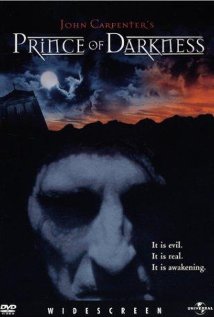
Nothing accompanies the slow decent into winter like scary movies. Now that autumn is officially here, it is time to look for the religious motifs in frightening movies again. Perhaps it is time to join Netflicks, because when it comes to my own movies I have mainly choices among bargain basement films I’ve picked up over the years. Over the weekend I watched one of them. John Carpenter’s Prince of Darkness is the second of his apocalyptic-themed movies, following on the remarkably creepy The Thing. (This is one of the few remakes that manages to outdo the original in just about every way.) Prince of Darkness, however falters almost from the beginning. I do appreciate a movie that is straightforward about using religion as the source of fear, and one that even has a character who is a graduate student in theology! Apart from the priest and street people, all the ill-fated characters are academics—professors and grad students of theoretical physics, the sciences, and our one, lone theologian. The plot revolves, literally, around a swirling green liquid in a decrepit church, which is the Anti-Christ.

Although the trappings are all here for a truly frightening experience, Christianity doesn’t really lend itself to a frightening mythology. To get to something truly tremendous, Prince of Darkness posits a kind of gnostic anti-God who is the father of Satan. The persona is evil writ so large that it is simply not believable that a corroded screw-top jar is able to contain him. For anyone who’s studied history or anthropology, placing the date of the Ball Mason jar back seven million years ago sounds like random guesswork. Homo sapiens sapiens weren’t even around then, making one wonder why God thought of a jar to trap the viscous Anti-Christ millions of years before the “fall” necessitated a regular Christ. The Bible appears, in transmogrified form, as an ancient book of spells that when translated sound suspiciously like the good old King James.

The movie does have its creepy moments—abandoned churches are scary; even fully functional ones can be remarkably spooky at night. It is difficult to accept that a priest would go to a physics professor before consulting his bishop, but then we have to prevent this movie from becoming just a watered-down Exorcist flick. Having Alice Cooper appear as the leader of the homeless minions was a nice touch, in any case. Since we are all still here, the movie ends predictably enough, with Satan’s Dad being stopped before entering the world. It does, in a de rigueur metanarrative, involve a self-sacrifice, albeit not a virginal one. And for the surviving handful of academics, life goes on as normal the morning after. Perhaps evil was blown too large to be believable here. Enough human-sized diabolism exists to frighten any reasonable person. And autumn is only just starting.


Magic Bibles

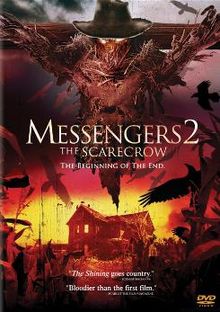
With autumn not far down the road, my mind turns to scary things. Actually, it is that way quite a bit of the time. Nevertheless, movies about farms are often the setting for the creepy—the sense of isolation, the sharp implements farmers use, the rustling of the drying crops in the wind. A couple years back I watched The Messengers. As a horror film it had a number of good scares, but the menace always seemed somewhat restrained. Nothing profound happens, and it is a film fairly easily forgotten. It was a rainy Saturday afternoon and The Messengers 2: the Scarecrow suggested itself to me. I began watching in an ambivalent mood, but when the first scene began with the protagonist (whose name I’ve forgotten) dropping his Bible on the porch chair as he loosens his tie to work on a derelict water pump, I was curious. When his wife arrives home and asks why he left church before it was over, my interest grew. This direct-to-video prequel turned out to be a cut-budget horror flick based squarely on a religious parable.

In a faustian moment of abandon, and at the advice of a jocular neighbor named Jude (Iscariot, anyone?), our hero erects a scarecrow to try to improve his lot (literally). To give credit where it is due, the scarecrow is distinctly disturbing. The scene of John (okay, I looked it up) nailing the scarecrow to the cross is clearly a crucifixion scene, and the blood that will later appear at the foot of the cross bears this out. Before he realizes that the scarecrow is evil, John hears ghostly children singing in his cornfield. The song is “Jesus Loves Me.” There is a strong fertility goddess theme running through the film and when Jude reveals that his wife has a magic book that explains all the benefits of the scarecrow, John decides to cut it down. The scarecrow, predictably, resurrects.

Meanwhile, John’s Christian family thinks he has gone insane. Or worse, backslidden. As he tries to explain to his wife what has happened, John shows her the magic book and she insists “It’s just your old Bible,” and it is. Heathenish occult instruction transubstantiates into Christian scripture. It is tough to tell one sacred writing from another. For cut-rate horror fodder, this is wonderful commentary on religious sensibilities. Although straight-to-video movies are not high art, and will never receive academy award nominations, they do reflect popular religious beliefs. Scholars are now in search of such beliefs in ancient societies since “official religion” almost never reflects what actual hoi polloi think. Lived religion seldom conforms to the intricacies envisioned by religious founders, and yet it is out there on the Internet for all to see. Maybe the messengers in this film are not the crows after all. The point of the parable? Stay true to your Christian upbringing or else the scarecrow will get you.


Ring

Absence of evidence is not evidence of absence. So goes a trite little statement meant to calm the fears of new students of biblical studies who worry that the historical record for biblical events is so sparse. The professor can head off many confrontations by declaring that such-and-such an event could have happened, but if it did it left no mark on the historical record. As I was watching the Japanese movie Ringu last night, I wondered about the apparent absence of religious imagery or themes. I am fully aware that not all horror movies have religious components, but the juxtaposition of religion and fear is so common in the western world that it often shows up in scary movies. I wondered if this translated to other cultures or not. Ringu is a decidedly creepy ghost story that creates considerable tension with little gore and not much in the way of special effects. The social commentary is evident even without the benefit of first-hand knowledge of the culture. The paranormal pervades the film.

Christianity is the matrix of many scary movies made in a North American, or even European, context. Although I have read about Buddhism and Shinto, and even occasionally taught courses on “World Religions,” my knowledge of eastern religious traditions is admittedly still quite basic. I can usually spot a biblical allusion a country mile away, but subtleties of foreign religions are harder to discern. Although many religions coexist in the United States the overall context is still Christian—there can be no doubt for anyone who follows politics. Japan is, like America, largely secular. The religious base, however, tends to involve both Shinto and Buddhism and I’m not sure which, if either, forms the recognizable “religious” basis of the collective consciousness. In many ways “religion” only applies to the Judeo-Christo-Islamic model. Much could have been transpiring in Ringu that I simply missed.

After the first mysterious death in the film a short sequence of a family in mourning is shown. Clearly this is what we in the western world would consider a religious context. The decision to try to calm the avenging ghost by uncovering her murdered corpse also conforms to what we might term religion. The fact is, these are very human concerns. Religions throughout the world treat death with a religious reverence since it is the great mystery of the living. Religion frustrates many scientists just for the fact of its mysteriousness. So, does Ringu revolve around religious fear? I don’t know. With the karmic implications of the story-line I would suggest that maybe it does. I’ll remain agnostic on the point, however. The same goes for the absence of evidence is not evidence of absence. Is it or isn’t it?


Psychotic Vampires

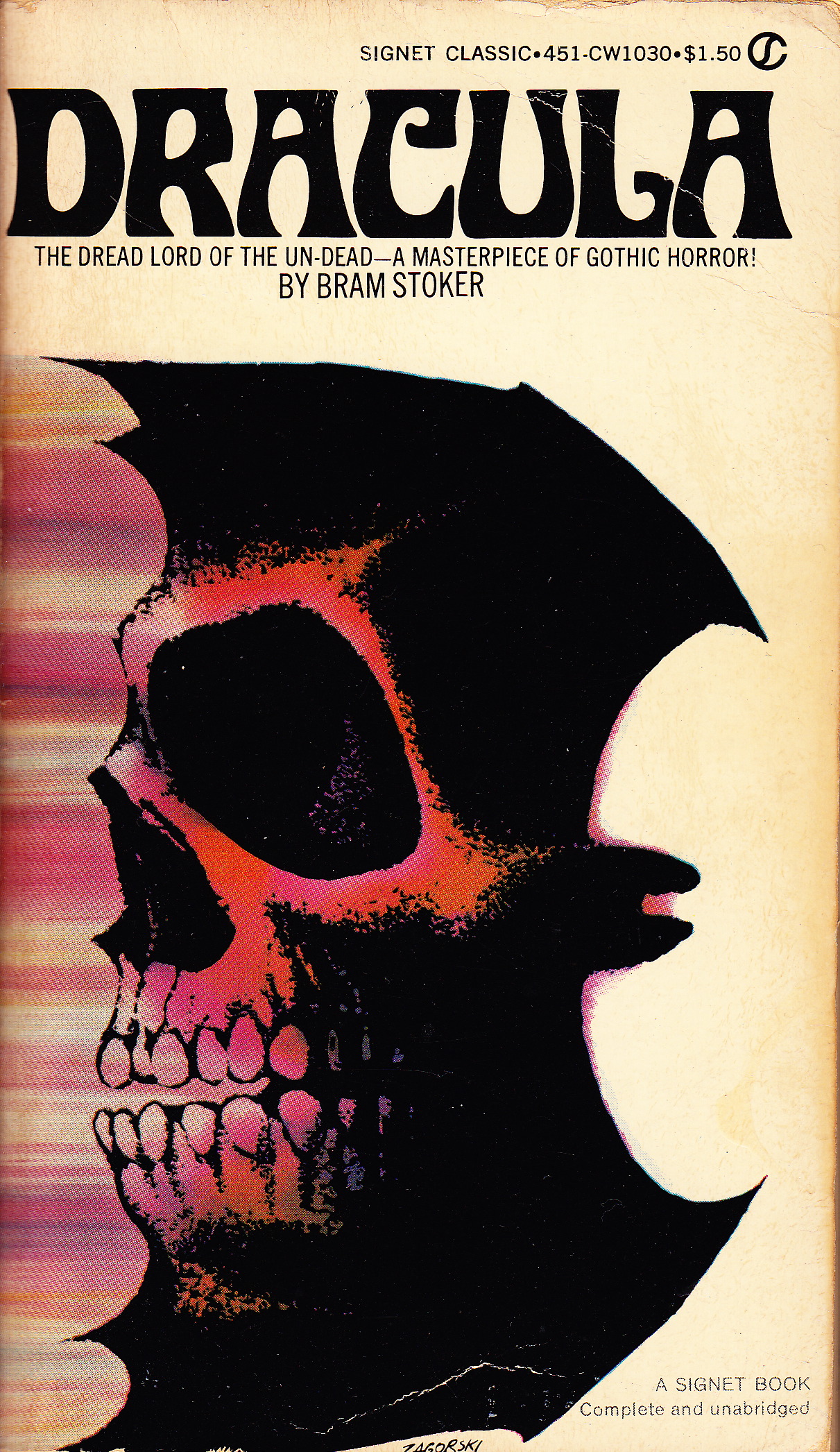
Over the past several months, and unrelated to the current vampire craze, I have re-watched some of the classic vampire movies: Dracula, Bram Stoker’s Dracula, Nosferatu (both Murnau and Herzog), and even Shadow of the Vampire—a movie about making vampire movies. Although the prototype of the vampire goes far back in civilization, in some form back to even the earliest of civilizations, the modern rendition rests mostly on the imagination of Bram Stoker. I’ve been re-reading Dracula to recapture a sense of why this particular telling of the tale has become iconic. One suggestion that comes as I’m reading is that it presses the religious taboos of its Victorian era sensibilities. Indeed, Stoker consciously wrote religiously provocative elements into his story. Of course, in movie form the story is altered to fit the needs of both time and scope.

A character that transforms in these various films is Renfield, the lunatic. In Stoker’s original Renfield is the foil for Dracula himself, his devotion interpreted as insanity by the science of the day. At one point Dr. Seward, Van Helsing’s protege and the man in charge of Renfield, notes with clarion penetration, “for a strong man with homicidal and religious mania at once might be dangerous. The combination is a dreadful one.” Renfield is, as a servant of Dracula, complicit in both homicide and religious mania. He uses Christianesque language when referring to his master. In describing his devotion, Seward notes, “He thinks of the loaves and fishes even when he believes he is in a Real Presence.” To a generation raised without Bible, this confession makes little sense.

I have contended throughout this blog that religion and horror are intimate familiars. To understand the appeal of the vampire, one must explore the religious context. Surely the simple neck-biting and blood-sucking without religious underpinnings would soon grow tedious. It is the sense of mystery—most fully realized in religious thought—that brings the vampire to life in the imagination of a generation lacking traditional religion. Not to mix metaphors too intimately, but there is a dose of Melville to be mixed in as well. Renfield is the epitome of madness, blindly following where he believes he is called. But the reader knows how sadly mistaken he is. So it is that I return to Bram Stoker’s Dracula and in so doing find a form of true religion.


Illini Wisdom

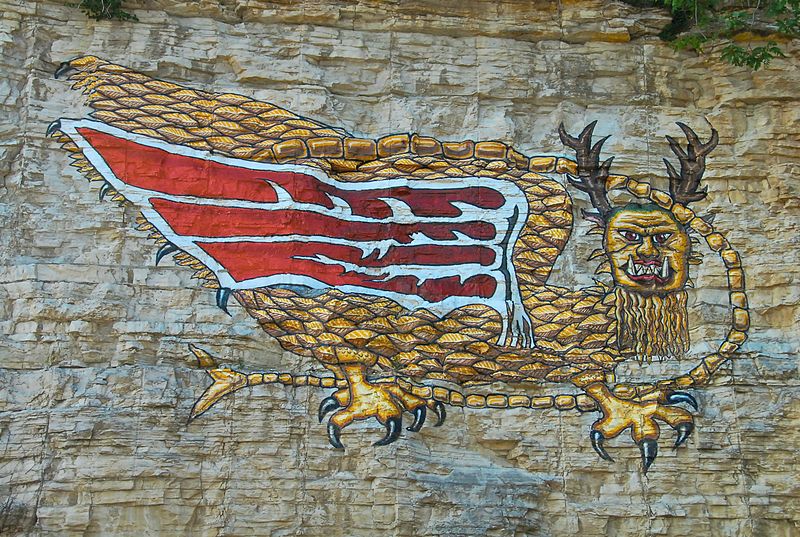
Running through the Midwest like a massive, erosive serpent, the Mississippi River has an unrivalled place in the American imagination. In many locations the relentless river has carved impressive bluffs over the millennia, providing impressive views out over the valley that has been carved in nature’s time. Down near the town of Alton, Illinois, along the eastern bluffs left by the sculpting waters, is a reproduction of the Piasa Bird. Years ago, while living in the Midwest, some relatives took me to see the replica, a local tourist attraction and not a bad place to watch for bald eagles. It was then that I first heard the myth of the Piasa Bird. “Bird” is a bit of understatement, or perhaps a misnomer. The creature was really a monster, by any description. According to the lore presented by the tourist literature, the Piasa was a flying, human-eating beast that terrorized the local Illini tribe. Unsure of what to do, the tribe was at a loss until Ouatoga, their leader, had a dream that revealed an ambush as the means of defeating the monster.

The ambush involved, as is often the case in folkloristic accounts, a victim. Someone had to be bait to draw the Piasa into the ambush of poisoned arrows that had been arranged. Ouatoga, aware of the obligations of leadership, volunteered for the role of the victim and stood in the open to lure the Piasa into the trap. As the monster swooped down on him, the warriors released their arrows, killing the beast and saving their leader. The story bears much in common with myths throughout the world: a frightful beast, a sacrifice, and ultimate deliverance. This framework also appears in many religions, outlining the human condition. It also reflects, in an abstract way, the ideal of pre-modern society; we are all in this together. Banding together against an outside evil, human society might banish the monster and everyone’s chances would be improved. It is the world of mythology.

In our enlightened society the emphasis seems to have changed completely. Our leaders are often our Piasa, snatching from the populace at will and maintaining uneasy control. Ouatoga, in the myth, understood the role of leadership as being willing to sacrifice everything for the good of those who were under his watch. The idea also occurs in the Bible where Ezekiel charges the ungodly kings of Judah with being shepherds who eat the sheep. I still believe in the power of mythology. Stories are preserved because of a truth that resonates with the hearers. Monsters are in no short supply, and a society that is subject to the whims of an oligarchy perhaps has the most to learn from our mythological past. When is the last time a public leader offered to give up anything in order to serve the populace who grants him (sometimes her) his power? Old Man River, he must know somethin’. Looking up at the Piasa, I think I might be able to guess what it is.


Evil Living

Maybe it was just the lack of rationality that comes with driving 700 miles in two days, or just plain glaikitness, but I watched Evil Dead II a couple nights back. I had read on an Internet site (probably already a warning) that it was very scary, but I’ve been a slave to logic for many years. Supposing this to be a sequel, I was confused when the first few minutes replayed the plot from the first movie with just two characters instead of the original five. Budget cuts (literally, as I later learned) meant leaving out characters and supposing that the viewers would catch on. In the first Evil Dead, the catalyst of the evil spirits in the woods was “Sumerian” spells recorded by an ill-fated professor in the cabin in the forest. Playing the recording (still in the first film), the kids release the evil spirits and one-by-one become possessed until Ash has to kill off all his companions. The campiness in both films tends to ameliorate the over-the-top violence and blood, and you know that the film isn’t taking itself at all seriously.

Once I figured that out (it was, after all, a very long drive), I settled in to watch a familiar story unfold. New characters are added in the form of the professor’s daughter, and traveling company, who show up with more pages from the Book of the Dead that will help to dispel the evil. When the characters encounter a ghost of the dead professor, he says something that may be the point of this blog post. He urges his daughter to seek salvation in the pages of the book. So here was a distinctly Judeo-Christ-Islamic theme playing out: salvation comes through obeying a book. It is an example of what I would have called “the Bible as a magical book” back in my teaching days. Movies, both good and bad, tend to portray “Bibles” as books that have the ability to affect the world around them in beneficial ways. Demons are cast out, illnesses are healed, lives are restored.

My fondness for B movies, in the end, is all that redeemed this domestic cinematic experience. I have spent many nights in the woods and I have read and reread sacred books. The two, however, seem to be worlds apart. Nature often feels like a redemptive experience. After many weeks of experiencing the outdoors only in the guise of New York City, a truth that can only be called sacred occurs—people are creatures of nature and nature can still feel sacred to us. Here is a simple reason that environmental integrity must be maintained against those who would exploit the earth for fossil fuels, timber, or drainage of lakes for irrigation. Nature may be our last chance to find something truly sacred. Once one person, company, or government destroys it, it will be gone for a lifetime or more, for everyone. That, in my book, is evil.


Thinking Zombies

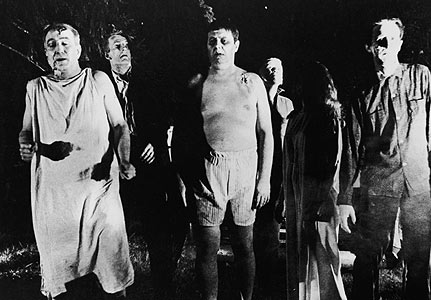
Religion seldom makes as big an impression as when it concerns itself with the undead. Popular culture has gone after zombies to such a degree that they have engaged academic discourse well beyond the field of African-Caribbean religions. In fact, religious specialists tend to shy away from the topic in a kind of first-date embarrassment. Perhaps it’s because zombies in popular culture are so much cooler than their Vodou forebears. Within the past several months, however, zombies have shown up in Time, on the Center for Disease Control website, and now in the Chronicle of Higher Education. An article this week explores the academic implications of a paper by neuroscientists Bradley Voytek and Timothy Verstynen on the zombie brain. The two took on the project as a lark at the behest of the Zombie Research Society. Science fiction writer and head of ZRS, Matt Mogk gave an interesting take on zombies. He’s quoted in the Chronicle as saying, “Zombies are rooted in science, not superstition and myth.”

At the risk of sounding extremely uncool (one that I take rather frequently, I fear), I would point out that exactly the opposite is the case. Zombies are rooted in superstition and myth, i.e., religion. The entire idea that a person can be made to rise from the dead—originally to be made a slave—comes from that heady blend of Christianity and African religion that developed as part of slave culture. Slavers were notorious in not wanting slaves to accept Christianity because that might make slaves think that they were equal with their owners. By suppressing Christianity among slaves, the African religions in which many were raised came to blend with the Christianity that they’d garnered. One of the bi-products was the zombie. The zombie partakes of the Christian concept of resurrection, but in a twisted way. Once the new vision of the zombie presented by George Romero took off, yes, they did move into the realm of science fiction, often the forerunner of science.

A very serious issue underlies the zombie myth—the very religious concern about death. While not all religions comfort with an afterlife, they all in some way deal with ultimate issues. The end of life is about as ultimate, from our limited experience, as they come. Science loudly and repeatedly insists that death is the final frontier. We don’t cross back this way again, according to the available evidence. Scientists do not study ghosts or souls, and are very cagey about near-death experiences. The zombie, who is now threatening the careers of young scientists, is a most religious monster. Everything about the zombie points to its origin as a religious trope. Voytek and Verstynen wanted to interest people in science by taking a comic look at zombie brains. The problem is that zombie brains are brains on religion, not science.


Scotland’s Cryptic Evangelist

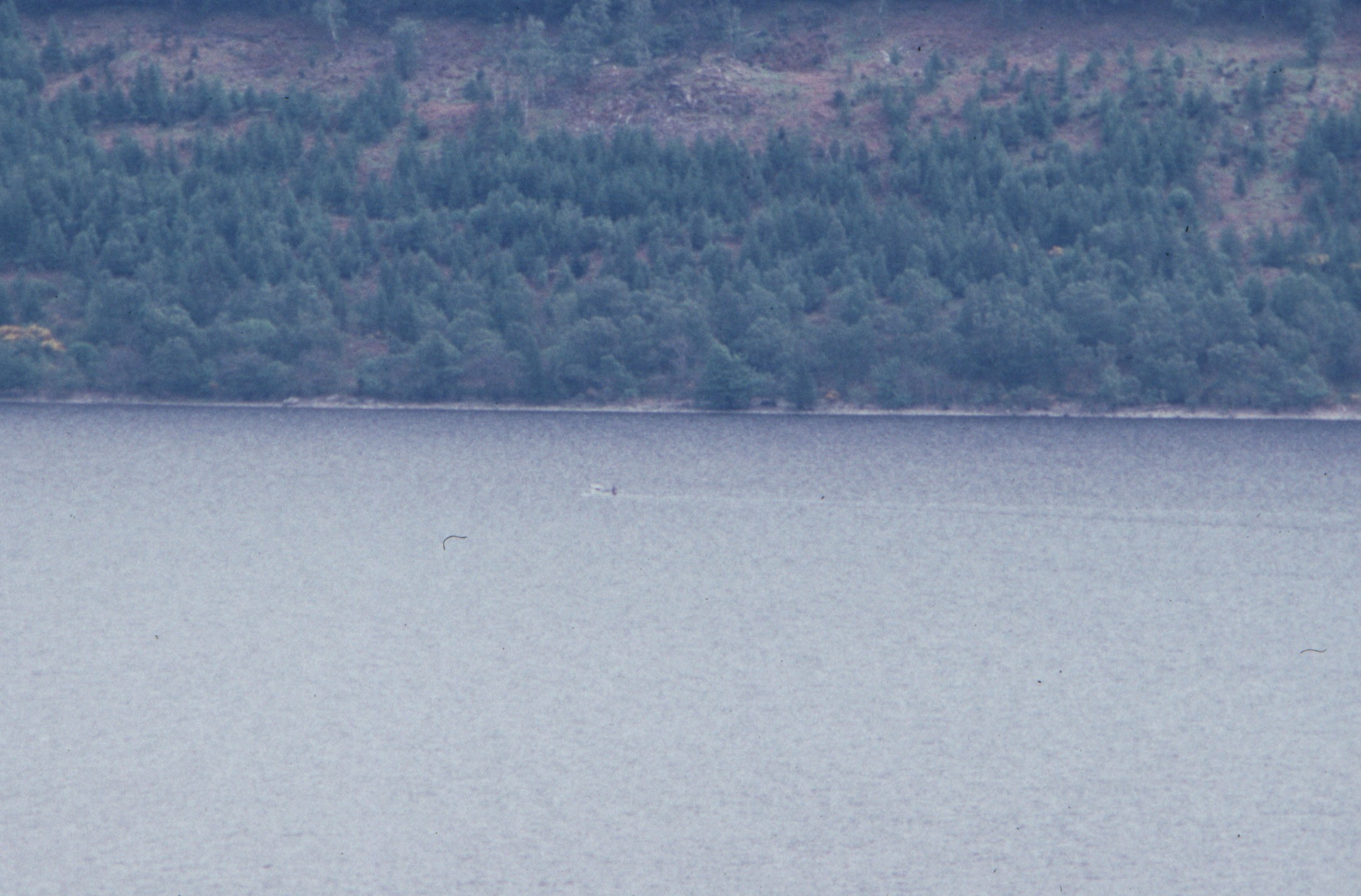
Many years ago it was now, on a Victoria Day bank holiday weekend, my wife and I were on a camping trip with friends in the Scottish highlands. Pitching our tents on the banks of Loch Ness, we joked about the potential danger—after all, Nessie had reputedly attached St. Columba, therefore even the pious had no refuge. Early the next morning, our party still intact, we drove to Urquhart Castle, arriving before it opened. Out on the loch we saw something moving through the water, leaving a wake. It was breaking the surface but was too small to be a boat and it was not a bird. It moved at constant speed until it was out of sight. This was in the days of actual film, and slide processing was “dear” as the Scots say, but I snapped off a photo anyway. The slide is too indistinct to make a diagnosis, but our friends, who had a better camera, came to the conclusion that it was a small boat. After looking at their enlargement, I still have my doubts. I’ve always sat on the fence for the Loch Ness monster. Certainly it seems improbable, but we have only a cursory knowledge of sea creatures and Loch Ness is deep and long and isolated. Is there a Loch Ness monster? Maybe yes and maybe no.

Of course, Nessie has been in the news, as my wife pointed out, backed by the considerable creativity of the creationist camp. Seizing a living dinosaur as the death knell of evolution, Fundamentalist schools in several states are using textbooks that argue Nessie’s existence proves that dinosaurs didn’t evolve and that they still walk (or at least swim) among us. An excellent corrective to this “either evolution or special creation” is Victor Stenger’s book God: The Failed Hypothesis, that I reported on a few weeks back. With apologies to the late Stephen Jay Gould, this tactic puts an entirely new spin on the concept of the hopeful monster theory.

Religion and monsters are thoroughly intermeshed. Often this intermingling comes as the result of revulsion against the unclean or impure aspects of life that monstrosity represents. Numerous analysts have shown that monsters tend to be unholy mixes of elements that religions prefer to keep widely separated—animals that would never have made it onto the ark, yet somehow have arisen since the deluge. Human fear at contamination has an excellent basis in evolution; those who never developed the sense to stay away from the sources of contamination grew sick and died off. Monsters, in this sense, serve as useful reminders for avoiding the “strange fire” that so displeases the Lord. Reading how good Christians are now reaching out the right hand of fellowship to their monstrous brethren, I wonder if a long-held belief is being imperiled. Those who would swim with monsters must be very cautious indeed, for above all things, monsters are notoriously unpredictable.