Map is Territory

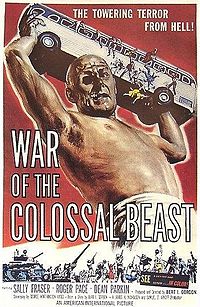
Far be it from me to challenge the established certitudes of the experts in academia, but I’ve been beginning to think maybe map is territory. This insight came to me from an unorthodox source (of course). I was watching War of the Colossal Beast over the weekend—among the corniest of corny 1950’s sci fi flicks. If you were born around the middle of the last century you already know the premise: a nuclear device has converted a man into a towering giant who resists all attempts to stop him or keep him under control. The reason that map and territory came to mind was that this 60-foot tall man (an apt companion for the 50-foot woman) could not be found by the authorities although he was terrorizing Los Angeles. Just as I was climbing on my high horse I realized that the problem they faced was communication. (And maybe they needed glasses.)
From the perspective of the twenty-first century and the vast network of instant communication (you can tweet your latest observation while on public transit, deep under the Hudson), map has become territory. There is nowhere left for the sixty-foot giant to hide. I am not the only one to speculate on the effect this shift will have on religion, but when we have become so intricately inter-connected, we seem to have squeezed the mystery out of life. Every trail has been blazed, every path has been trod. Old Ecclesiastes is laughing up his wizard’s sleeve. If a giant escapes among us its location will be texted across the territory second by nano-second. There is nowhere for us to hide either.

Our dependence on electronic media has changed part of the human race. It is easy to forget that in places not too distant, some of them even in the developed nations, there are human beings untouched by the revolution that has compressed map and territory. I have to wonder if their lives are better or worse for the ease that pervades our culture of flying fingers and ultra-dexterous thumbs. Avoiding the concept of the noble savage, I sense of kind of purity in the life free from the constant buzzing of 3G and 4G networks, wi-fi hotspots, and microwave towers disguised as trees. Theirs is a life where map is not territory, where being unplugged is natural and normal. It is a world where giants might hide in the night, and those who fear them may be all the more human for doing so.

Dreadful Dander

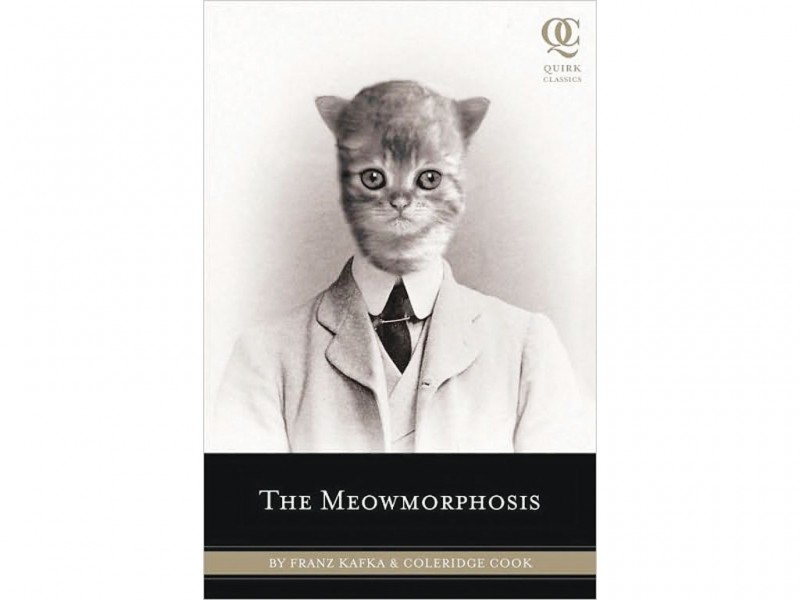
When it first appeared, mash-up literature seemed strangely novel for such a derivative art form. I read Pride and Prejudice and Zombies with some amusement, but a nagging suspicion kept asking if I was being fair to the genius of Jane Austen. At the same time, I like zombies. A lot. I decided to give the genre another try with Coleridge Cook’s mash-up of Franz Kafka’s classic, The Metamorphosis. During a long, late-evening flight from Los Angeles to New York, I finished The Meowmorphosis with a sense of dread. Instead of seeming funny, the idea of trying to make light of Kafka’s profundity felt like a devaluation to the classics of existentialist writers. Nobody writes like Kafka, Camus, and Durrenmatt any more. These are writers who welcomed me to an adulthood that seldom makes sense, but which is often generous with pain and angst.

The story of The Metamorphosis is well known. In the Meowmorphosis, obviously, Gregor Samsa is transformed into a kitten and is thrown into the same dilemma. The book takes a detour into Kafka’s The Trial along the way, and my memory of The Castle is rusty enough that I may have missed if it was referenced as well. Kafka’s work passes over from the entertaining to the profound. Perhaps that is the mark of classic writers—they seldom make a career of their literary efforts, for most people who read do so for entertainment. The Metamorphosis is not easy going. Perhaps that’s why I reacted so viscerally to Kafka’s truly horrendous bug being presented as a fluffy kitten. The idea is funny, but Kafka seldom smiles.

My reaction shed some light on the concept of sacred writing. Historically, the first book to receive that accolade seems to have been the Bible. Specifically, the Torah. There are sacred writings older, I know, but the reception is what makes a book sacred, not its words. Anyone who has read the Bible knows that it is a mixed bag of profundity, tedious lists, and literary beauty. Even Fundamentalists seldom quote 1 Chronicles 1-9 with the same ardor as Genesis 1-11. It is our reception of texts that make them sacred. Perhaps Christianity was premature with its insistence on closing the canon. Some of the best literature, the most inspirational words ever to be penned, lay centuries in the future. Our world would likely be a better place if sacred texts continued to keep their borders open and would admit texts that had passed the test of time. In any honest Bible including the twentieth century, The Metamorphosis would find a place. What a world it could be.


Attack of the 50-Foot Women

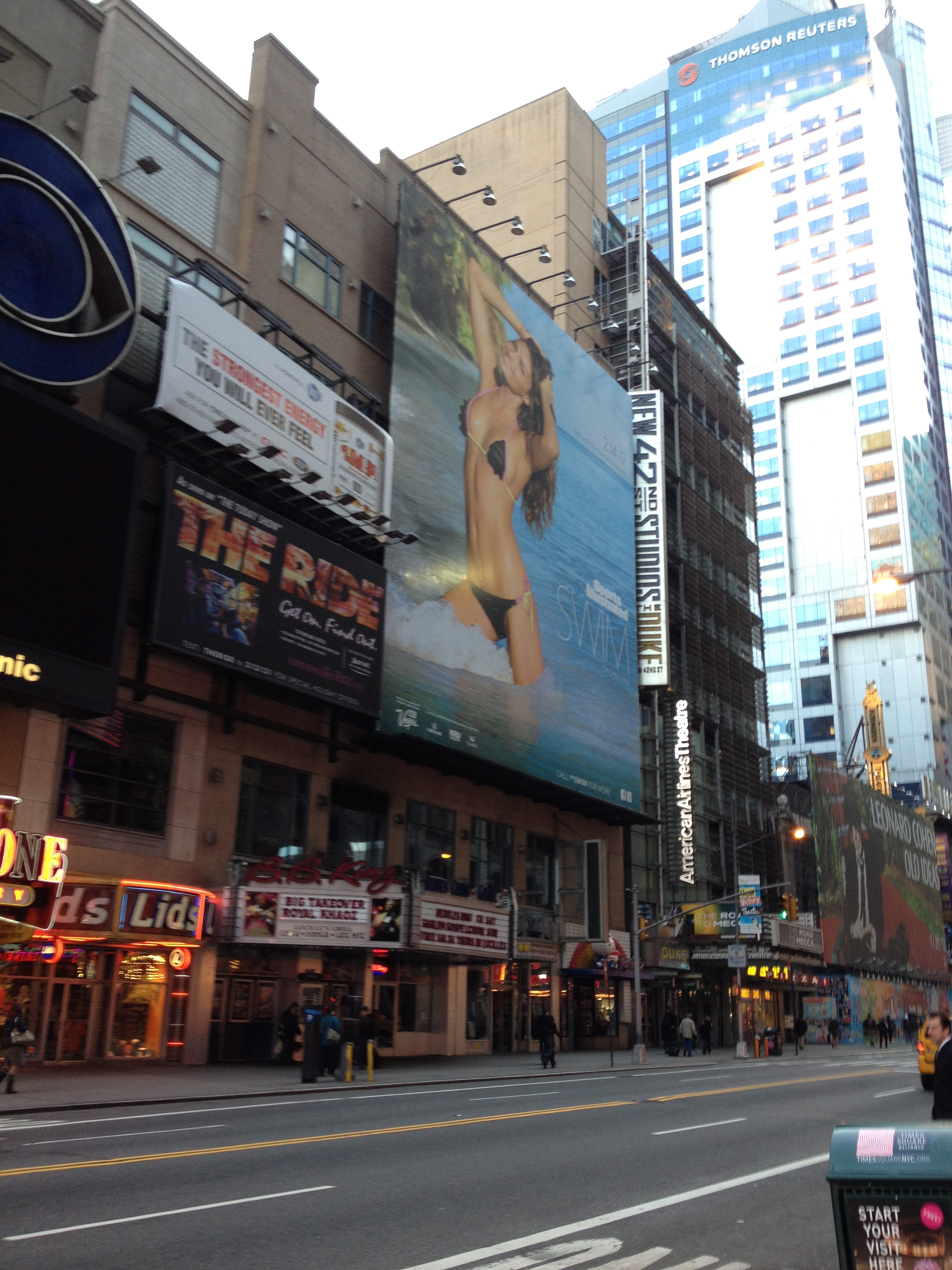
A society will be remembered by its lowest common denominator. At the mention of the Roman Empire many people immediately think of the decadence of that once mighty power in decline. Rome ruled the world at one time—or so it seemed—but Nero had his fiddle and Caligula favored his horse Incitatus as a senator (today we’re more accustomed to seeing asses in government than horses). The madness of Napoleon. The insanity of Hitler. Mighty powers crumbling under their own weight. Walking through Times Square is an education. Recently a fifty-foot woman appeared, looming over the heads of commuters, tourists, and the homeless. Unlike the classic 1958 sci-fi flick, this woman is apparently happy, smiling broadly, and nearly naked. She is an advertisement for Sports Illustrated’s soft porn swimsuit edition. Stories above us all, she pulls back her hair and, if she weren’t a fantasy, I’m sure she’d be chilly dressed like that in a New York winter.

We’re talking lowest common denominator here. As I man I can’t help but to understand the appeal. Advertisers know it too. At the corner of 42nd and 7th, there is another fifty-foot woman, apparently nude, sitting in an office chair for Go Daddy with a QR card across her torso offering to those who would scan her, “See More Now!” It is difficult to be judgmental when advertisers are using basic psychology to sell their products, and studies have shown that men are very easily aroused by visual images—our juvenile imaginations never do grow up. But women this large? In 1958 Nancy Fowler Archer was salaciously considered a monster, but the producers knew teenage boys would watch in fascination. Such simple creatures.

There is a disturbing subtext here. Men are weaker than they pretend to be, but that doesn’t bother me much. Vulnerability is where humanity is most authentic. The problem with the fifty-foot women in Times Square is the message to American society that women are a commodity. They, like everything else in Times Square, can be purchased and owned. They exist solely for the pleasure of men. I am not a prude, but I do believe that such blatant shows of the female body for sale bear as a subtext “mene mene tekel upharsin.” A society that cheapens its women in such a forum is creating the standards by which a hopefully more advanced future will remember it. Standing beneath the open thighs of the fifty-foot woman on my way to work, I am profoundly sad. This is Rush Limbaugh’s American Dream writ large.


Walking Monsters

It was a moment of weakness, or at least tawdry cheapness, that made me watch The Monster Walks. Just the day before the Cable Vision guy had stopped by, detailing how much money we could save by switching. We haven’t had television service since 2004, and even then it was only with a cheap aerial. Back in the days of Borders, I sometimes caved in and purchased the “Classic Features” movie boxes with 50 B, C, or D movies for what seemed a steal at less then 25 dollars. Maybe five or six of the movies from each set were actually worth the time spent watching them, but many of them proved an education. So it was with The Monster Walks.

Now, I readily confess to having a weakness for B movies. Made by people who were really trying, but who seemed to lack talent, I often identify with their efforts. So when I popped The Monster Walks into my DVD player, I had no idea what I might learn. The first revelation occurred in the opening credits where a character named “Exodus” was introduced. Since this was 1932, the character had to be African American. And comic relief. To spare you the pain of watching the movie, the plot is rather simple: rich man dies, helpless daughter inherits all to the chagrin of surviving brother and domestics, who plot to kill her by pretending to be a murderous ape. There also happens to be a murderous ape locked in the cellar. You get the picture. Aptly named Exodus is purely there as a foil for the educated, privileged white family. He was played by the talented but underappreciated Willie Best. As might (nay, should) be predicted, the scheme of killing the girl backfires and the ape kills the killer. Okay, so I can confess an hour wasted and get on with my reading. But the final scene arrested me.

Exodus wonders to the lawyer (who is there to read the will) why the rich man even had an ape. The lawyer, metaphorically transformed into a judgmental William Jennings Bryan, states that it was because he believed in Darwin’s theory of evolution. Exodus responds by noting some family resemblance to the ape. The blatant racism was hard to take, but in Black History Month the painfully obvious collective sins of our society should be laid bare. In 1932 Fundamentalism, often implicitly allied with racist causes, castigated Darwin’s theory for bringing all of humanity down to the same level. As long as a white god is creating the universe, the Anglo-Saxon can claim superiority. Never mind that Genesis was written by a Jewish writer living in Asia. Self-righteousness comes in many forms, but it always involves bringing others down to a rung below where the blessed stand. Has not the great Rick Santorum told us that even the Crusades were merely misunderstood?


Divine Monsters

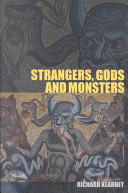
Monstrosity and religiosity are sacred siblings. Both are focused on that which is outside—the Other. Now, I have to confess being a bit rusty in my philosophy reading, and I sometimes wonder how I made it through three degrees without ever really encountering post-modernism in all its complexity. Reading Richard Kearney’s Strangers, Gods and Monsters (Routledge, 2003) was therefore a challenge. Like many of those raised in an uncompromising religion, I am innately attracted to monsters. Maybe it was the vivid images of Hell and its denizens; one of the earliest nightmares that I remember was of being dragged to Hell. Some authors suggest Revelation gave Christianity its monsters, but, as Kearney suggests, the connection goes back much, much further.

We fear what we embrace. It is the old division of sacred and profane—a line that has blurred considerably over time—that gives us our monsters on a separate plate from our deities. Otherness contains within itself both bane and blessing. People fear that which differs from them, a fact demonstrated every day by racism, sexism, and homophobia. At the same time, many look to the ultimate alterity for salvation from the mundane. God is just as “other,” more so even, than any human or monster is. Any creature/creator beyond the reach of our feeble grasp should be considered dangerous in our view of the world. And yet the further we get from the middle, the more the ends seem to come together in an ouroboros of divine monstrosity. Those who read Kearney need to be prepared.

While not taking on monsters as I expected he would, Kearney does address them with a sensitivity appropriate to the recognition of the closeness to deity. Nowhere is this clearer than in his superb chapter on melancholy. Being caught between the monstrous and the sublime, the melancholic learns to cope with a disinterested sadness that at times borders on insanity, yet produces flashes of light often more brilliant than those who think their way through problems. This is the affliction of Hamlet who stands on the cusp of being or non-being. For all who believe in a divine power, a strong divide must separate that realm from ours. That same realm, however, also contains our beloved monsters and strangers of every description.


Christian Underworld

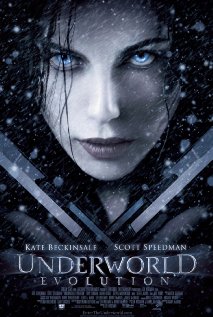
For constructing a mythology teeming with monsters, I must doff my metaphorical hat to the Underworld series of movies. Unrelentingly Gothic and stylish, I’ve watched the first two installments a number of times, but I have yet to see the last two (the latter of which is still currently in theaters). I have to admit that seeing Kate Beckinsale in her werewolf hunting gear two stories tall on midtown electronic billboards is some enticement to catch up with the story. Over the weekend I rewatched Underworld Evolution, number two in the set, to refresh my mind of the story. Quite apart from the implicit religiosity of vampires, the Underworld movies, while eschewing crucifixes and religious origins for vampires (which Bram Stoker’s Dracula by Francis Ford Coppola narrates to an explicit extent), nevertheless partake of the power of religion amid all the shootouts and weird transformations.

In Underworld Evolution, Marcus, the son of the original vampire, in a scene straight from Christian mythology, has the devil rebelling against his creator. As he is killing his powerful yet ineffectual father, Marcus predicts the beginning of a “new race created in the image of their maker—their new god. Me.” As he says this he has his own creator impaled on a demonic bat wing. Running him through with a sword he states, “And the true god has no father.” I admit I’ve been trying to read some post modern treatments of monsters, and this kind of reversal fits well with the conflicted outlook of the twenty-first century. Who is god? The good or the evil? The old certainties have grown gray and blurry. No wonder some people are uncomfortable.

Perhaps the most religious element in the film, however, is blood-memory. Blood is a cheap commodity in horror films, but it represents, in the Abrahamic traditions, life. In the Christian sense drinking communion wine is to consume the blood of Jesus, or at least to remember his death (the fancy word is anamnesis). Vampires, in Underworld Evolution, remember the lives of those whose blood they drink. The taking of life has a sacramental quality to it here. To a world less immersed in a Christian worldview, this concept might seem more macabre than it already is. Monsters often take their cues from the gods. So on a February weekend some of this feels terribly familiar. It may be a small underworld after all.


Virtually Divine

So I decided to try virtual reality for a while. I have been reading about the influence technology has on religion, so I thought a trip to Wikitude would be instructive. Now I don’t want to sling lingo like I’m some sort of real techie, but Wikitude is an app that shows the artificial worlds of virtual reality in your immediate environment. Many of us live our day-to-day lives without realizing that we are surrounded by powerful, invisible beings who can only be seen through electronic eyes. We have given our physical world an imaginary overlay that may turn out to be more real than reality itself. So I clicked on Wikitude and took a peek around my office on Third Avenue. Wikitude shows those things that I would have called “dialogue boxes” as a kid, but that now stand in for overlays against any mapped reality. In Manhattan there are many, many of them. I clicked on the one nearest my finger. It read, “A monster is destroying the city.” Like it read my mind.

In some ways I never got over the naïve realism I grew up believing. I first read about avatars in Neal Stephenson’s Snow Crash. Back then the idea of virtual worlds was still pretty new, and although Norman Spinrad and William Gibson had played with the idea earlier, the Snow Crash version is what stayed in my head. Avatars, I knew from my research on ancient religions, came from very early Indian belief. In what we now casually call “Hinduism,” some believed that gods came down and walked among us as avatars. Christians would later call this “incarnation.” In virtual reality, we are the gods and we descend into the world of human making as embodied electronic versions of ourselves. The idea, however, goes back to one of the most ancient religions in the world.

I’m not sure I feel safe in this virtual world I’ve discovered. I was relieved when I clicked on Wikitude the next day to find the menacing monster nowhere in sight. But is it really gone? The physical world has no shortage of ways to frighten the very sensibilities out of us. Many of them go by the name of religion. In this world, I can’t just click off the screen and be safe. It used to be that our simple, domed world had a divine bowl above it with a loving, if often very stern, parent watching over us. Now we have become that god, creating monsters and worlds to house them. Maybe that is the best answer to theodicy yet. When we create virtual worlds, we always include evil in the picture. Perhaps it has always been thus with the gods.

Reality or not?


The Evil Living

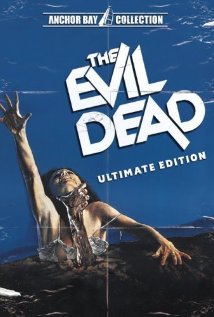
Returning home from my campus visits, I needed some brainless relaxation. Since we don’t have any television service at home, this means watching movies. I’d heard quite a bit about The Evil Dead over the years—a movie that was scary back in the 80’s when it appeared. Improvements in special effects and the intensity of engineered sound are capable of drawing a person into an alternate reality for a couple of hours these days, and the endless reiteration of earlier movie effects somehow robs the early thrillers of their impact. The Evil Dead, however, capitalizes on confusion about the menace and teeters on the brink of morality for the entire 85 minutes. Naturally, when looking for a source of fear, it seeks a religious agent. The source of the evil in the woods is narrated in a voice-over of the presumably dead scientist who has discovered Sumerian texts that release demons in the forest (mostly in the form of falling trees).

Sumerian is always a safe bet if you want a language that your viewers will not be able to identify. The earliest known recorded language, Sumerian is still difficult even for experts, and it conveys all the strangeness of long ago. We do know that the Sumerians recorded myths that involve what we might call “demons” today, but the possession of humans was a much later development—probably a pre-scientific way of explaining epilepsy. As our five students seek a weekend getaway in the woods, they become possessed and face the moral question of just when a person ceases to be human. At what stage does someone have the right to kill someone else? Perhaps unintentionally, the movie gives us the answer, “Never.” This kind of morality has a place in America, one of the very few “first world” nations in which the death penalty is still legal. Often promoted by those dead-set against abortion. Where do we draw the line saying a person has crossed over into the unforgivable other?

The Evil Dead has become a cult classic over the years. Its relatively low budget of less than half-a-million dollars brought an astonishing box office return on the investment. The gore, tame by more modern standards, does not mask that what is really at issue here: the question of right versus wrong. What is truly evil? Sumerians aside, what possesses people and drives them to destroy one another? The Evil Dead, like many horror films, reaches for a religious answer. As the supernatural fog begins to clear, however, we might not like what we see in the clear light of day. Religion may be an excuse, but the assaults upon one another are what Nietzsche famously called “human, all too human.” The sooner we clear our vision and pay attention to what is actually happening, the sooner we can combat the horror.


Let the Left One In

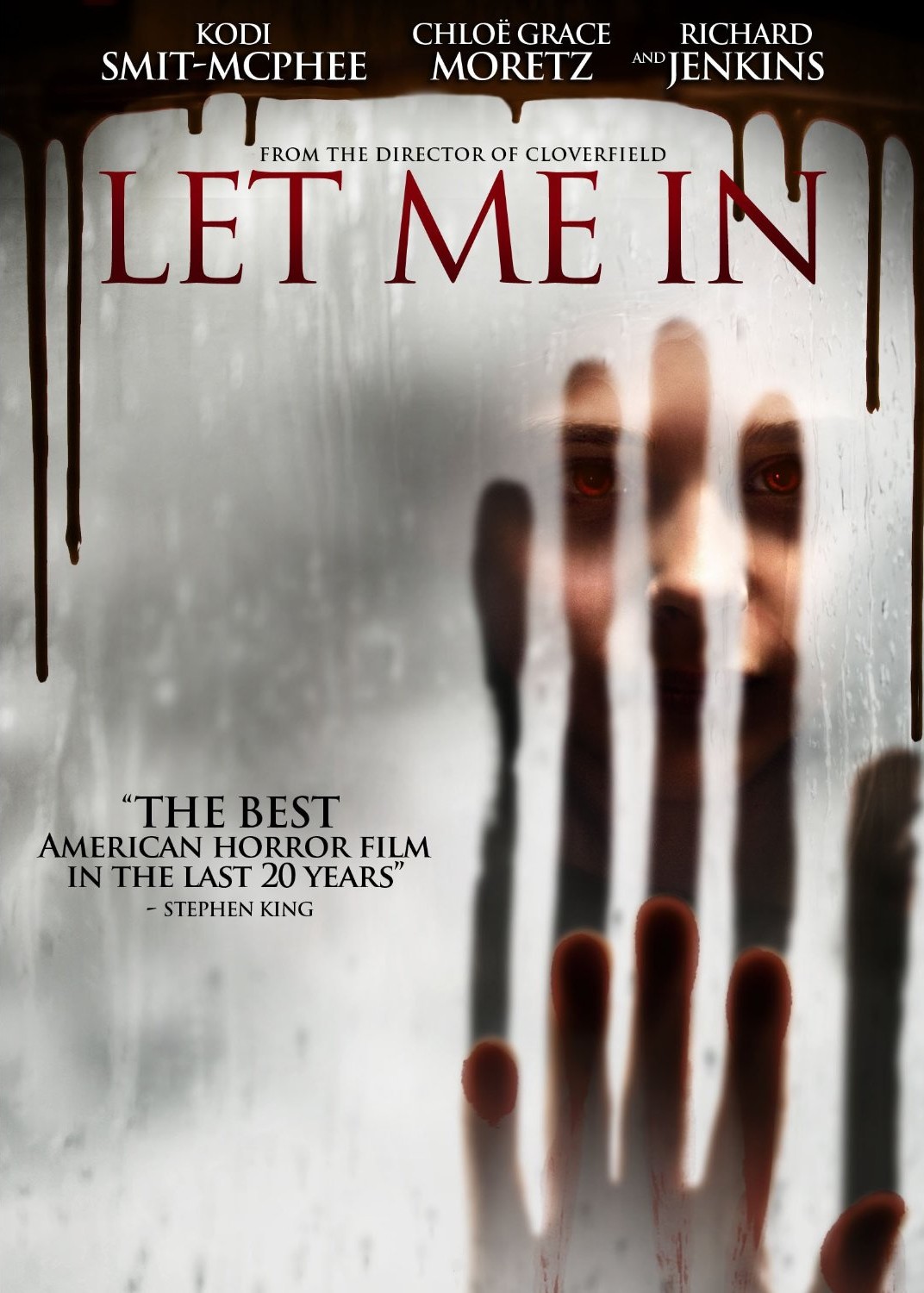
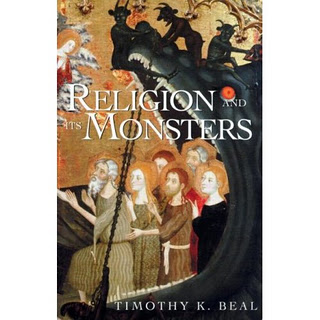
When you’ve got a good thing going, why stop? Reading Timothy Beal’s Religion and its Monsters put me in the mood for a vampire flick over the holiday weekend. I had watched with longing as Matt Reeves’ Let Me In flew into and out of theatres back in 2010. Advertised as a thoughtful vampire story based on John Ajvide Lindqvist’s novel, Let the Right One In, and having a real moral struggle unlike the Twilight saga’s dulled fangs, it had been on my “to see” list for quite some time. This movie doesn’t disappoint. The specific aspect to which I refer, of course, is the religious. Vampires may be the most religious monsters ever invented, and like all good, subversive movies Let Me In casts the religious aspect in an unexpected role. Religion and the vampire interact through the character of Owen’s mother. Her face never seen on the screen, she shuffles outside the range of view and tells her son of the need for prayer and belief. Her life is a shambles and 12-year-old Owen knows it.

Abby, the vampire next door, is a monster capable and desirous of love. Her vampiric self is not exposed to crucifixes or blessed communion wafers, but to the torment of outliving those she loves. Eternal life is her curse, and religion can do nothing to solve it. When Owen slips twenty dollars from his Mom’s purse to buy Abby some candy, Jesus is watching from the mirror. When the bullies torment Owen, Jesus is nowhere to be found. The symbolism, whether intentional or not, is apt social commentary. Our religion is there to punish us, not to help us. If in doubt, listen to the politicians and televangelists; God is intensely angry—Jonathan Edwards wasn’t even halfway there. Their surfeit of rectitude puts the rest of us to shame. Until they’re elected.

Vampires have their origin in creatures that steal the life-essence of the living. Whether blood, semen, or psychic energy, the vampire feasts while the victim withers. Let Me In, by telling the story of a pre-pubescent vampire, shifts the focus of culpability. A 12-year-old is beneath the age of responsibility according to the Judeo-Christian tradition. Unable to determine right from wrong, the child simply seeks what all living creatures do—the possibility of existence. When Owen discovers that his new friend, his only friend, is a vampire, he tries to find answers from his religious mother. She is asleep. He calls his absent father who blames the religion of his mother. The moral guidance here comes from the monster. The bullies would win if it weren’t for what the authorities call evil. Sometimes I think Jonathan Edwards got it all backwards, for when power determines who is righteous it is the bullies who dangle spiders over the fire.


Hic Sunt Dracones

Even a visionary like Thomas Edison can’t know the directions in which an invention might be taken. The idea of the moving picture has immersed human beings in an alternate reality that is sometimes difficult to separate from the physical world we daily inhabit. As soon as movies were invented, producers and directors began to explore the depths of fear with the monster movie. What they were really exploring was the mystery of religion. I frequently write of the nexus of religion and the monstrous, and Timothy K. Beal wrote a book on that subject a decade ago in which I found another affirmation of my suspicion. Forthrightly titled Religion and its Monsters (Routledge, 2002), Beal’s playful yet serious exploration of the scary traces the origins of monsters to Genesis, and even earlier. Taking on Leviathan, the biblical sea serpent, Beal demonstrates the pre-biblical pedigree of this fierce monster and shows that, like most truly frightening entities, it began as a god. Indeed, what we call religion today grew up around fear of those forces beyond our control, a nature so harsh it could be none other than divine. The writers of the Bible clearly knew this story as Beal traces it from Genesis to Job, from Psalms to Jonah, from Leviathan to Devil.

In a shot/reverse shot formation, Beal takes us to modern-day monsters and shows their religious origins. Those things that frighten us on the big screen crawl there from their origins in the temples, shrines, and chapels of religions that don’t manage to subdue evil completely. The claims are made that the gods are stronger than the chaos that surrounds us, but they are still fighting nevertheless. From Dracula to Godzilla, the monsters have the gods on the run. And when the human protagonists finally get their monster pinned down, they discover that it is often God wearing a mask. Our monsters are gods gone bad. How else could they revive from the dead at the end of the reel? They never truly disappear. And if they do, there’s always more where they came from. The reason, Beal concludes, is that we are, in fact, the monsters.

According to the analysis of W. Scott Poole, Timothy Beal, like myself, falls into the “monster kid” generation. As I grew up, I quickly learned that to confess my interest in monsters was to risk the labels of juvenile, naïve, and immature. Grown ups are interested in money and sex and power. Only kids have any interest in dinosaurs, mythology, and monsters. An epiphany of sorts, however, seems to be unfolding. Scholars of religion in my generation are peeling back the rubber masks of our movie monsters and are discovering the face of the divine. Perhaps we are all adolescents at heart, fixated on the weird and bizarre because the paths to money, power, and temptations of the flesh are blocked to us. Or perhaps we are the Magellans charting a course for regions off the map. It is those regions, as Beal reminds us, that are illustrated with sea serpents and inscribed hic sunt dracones, “here be dragons.” Doubt it? Read your Bible and find out for yourself.


Trouble with Triffids

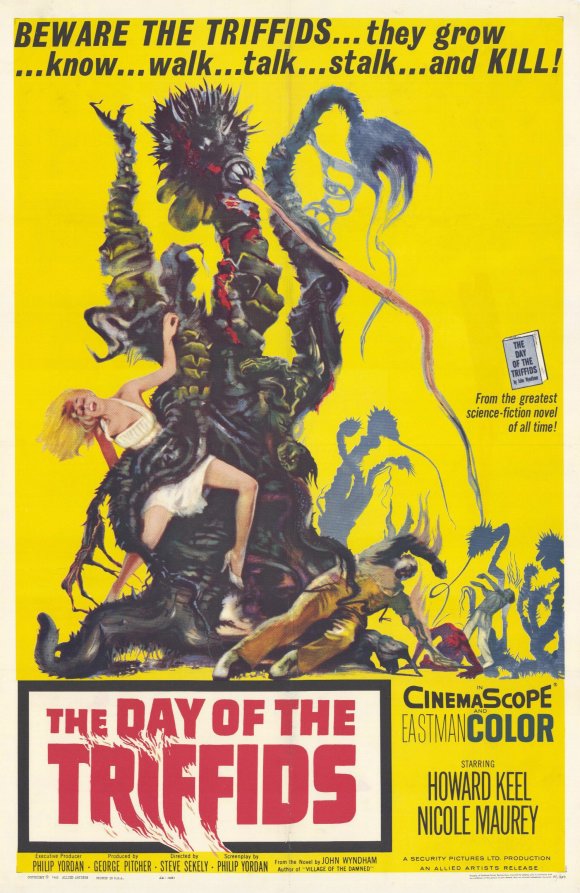
Some time ago, I posted about the John Wyndham novel, The Day of the Triffids. In playing on the loss of humanity’s primary sense of sight, the story creates a truly eerie scenario in which people are harvested by plants. Not just any plants, but alien plants! Of course, such an idea demanded a movie rendition. The film was released the year I was born, but I only just got around to watching it. Compared to the psychologically thrilling novel, the movie doesn’t ever reach the intended level of terror. Nevertheless, religion, as usual, plays a role in the movie. As Bill Masen, the protagonist, makes his way from London to Paris, attempting to find other people who retain their sight after a devastating meteor shower blinded most of the world, he comes upon a mansion where the wealthy owners are caring for the disabled. (Hard to imagine that these days, but it was the 60’s, and idealism was kicking in.) While discussing their rather hopeless options, Bill suggests there is little reason for optimism. His new-found love interest, Christine, says “We must keep faith,” to which Bill replies, “It’s going to take more than that to get through this.”

Indeed, God is no help against the triffids. These intelligent, moving plants are soon everywhere, consuming humans and intent on taking over the planet. Bill and Christine, along with their adopted daughter Susan, make their way to Spain in hope of finding a military solution. They stop at a mission, topped with a cross and inhabited with a helplessly blind, and expecting, couple. The message is clear—there is no god to help those left to their own devices. Even those who live in god’s real estate have been abandoned. Those who survive are those who help themselves. Eventually our hapless heroes are rescued by the navy and a submarine moves them safely away from triffid-infested Europe. Then, in the final scene, our blended family is seen walking into a church while a voiceover declares that the triffids did not defeat humanity after all, and “Mankind survived and once again have reason to give thanks.”

Exegeting this film, however, leads to some uncomfortable conclusions. Those who had no divine aid give thanks to an impotent deity after it is all over. The solution for destroying triffids—salt water (you might want to store that away for future use)—is discovered by scientists and is applied at their personal peril. Even the heavenly-based origin of the menace has divine overtones: colorful portents in the sky are the provenance of God. In 1962 science had not yet even reached the moon. The default fallback, based on decades of evangelical sculpting of culture, is to give thanks to the Lord, despite the devastation. Indeed, a new Garden of Eden might be said to have resulted from the triffid assault. In this garden parasitic plants teach humans to give thanks, but the vast majority of humanity remains blind.


Persistence of Demons

Although released in April, Insidious is a film for the long nights of winter. At least with my schedule of keeping up with a culture that is moving too fast, this feels like a reasonable rationale for having just watched it. I tried not to read reviews of the movie when it came out since I prefer to experience the thrills first hand when I watch a film. Like many horror movies, Insidious revolves around the supernatural. Specifically, Insidious takes on the specter of the afterlife. Unlike The Exorcist, the demon in Insidious is not expelled by a priest, but by a psychic, borrowing a few celluloid feet from Poltergeist. Adding a couple of ghost hunters to the plot reinforces the idea of the secular demon that so often appears in the learned discussions of the TAPS team as they tilt with unseen entities on SyFy.

In an increasingly secular society, the fear of the dead is very much alive. Even a casual stroll through Barnes & Noble (the only show in town now) will demonstrate the popularity of the paranormal. Somehow sitting in pews listening to a sweaty orator go on about what he (sometimes she) thinks God is wanting us to do has disconnected us from the realm of the dead. Paul Tillich famously declared that God is a person’s “ultimate concern.” In an age when technology is hovering on the edge of keeping consciousness alive forever, people wonder what happens to the self when the body dies. Call it soul, consciousness, mind, or personality, we can’t deny—no matter how secular—that something inside makes each of us unique. The myth of flying about with angels playing harps doesn’t match everyone’s expectation of an afterlife any more. At least some of us hope for electric guitars.

Insidious opts for a realm like Limbo known as “the Further.” This is a place we have been before. The hopelessly corny The Seventh Sign gave us “the Guf” as a now empty federal reserve of souls. The Greeks gave us Tartarus and the Zoroastrians “the place of worst existence.” No matter what we call it, our brains like to believe there is some place out there that we go when the biomass we drive each day finally hits the wall. Increasingly it has become a negative place where darkness reigns. Insidious’s “the Further” is a hopeless realm of the dead, acting out their evil intent. There are no angels, but demons abide. It seems that we’ve outgrown the concept that angels are watching over us, but we can’t escape the creeping sensation that diabolical entities are peering at us from the shadows. During these long nights of winter, Insidious invites us to take a journey to where there is no heaven, but hell is surely not hard to find. All we have to do is close our eyes.


Crimes and Misogynies

Mill Creek Entertainment has, through no fault of its own, accounted for many an idle hour of my weekends. Assiduously gathering and collating public domain movies, mostly of dubious quality, into sets of fifty movies per box, sold at a rate that probably isn’t actually cheap since most of the movies are available free online, Mill Creek panders to the connoisseur of B, C, D, or even lower, movies. Sometimes, however, a good one slips through. That’s how I discovered Bluebeard (1944). One of John Carradine’s many movies, this version of the seventeenth-century tale of a murderous husband is set in Paris sometime in the not-too-distant past, Gaston Morel is a demented puppeteer who murders his models because of a religious incident. In the final confession scene Morel explains how he, as a starving artist, took a homeless girl to his studio to nurse her back to health. As he sketched her, he realized she reminded him of the Maid of Orleans—Joan of Arc. After her recovery, she turned to a life of debauchery, driving Morel insane with rage. He thus comes to kill his models due to his tattered faith (and fragile psychology).

Despite some typical overacting and strange plot twists (why would a Paris police inspector take his American girlfriend to examine evidence to solve a crime about which he is clueless? Was he planning to run for president later?), the movie manages to provide an intelligent number of turns in the plot to keep viewers interested to the end. The concept of a killer deranged by an idealistic fiction of a female victim is somewhat frightening because it continues to this day. Long before Eve bit the fruit, ancient Mesopotamians feared the demonic female of the night who later came to be called Lilith. When the unruly female entered Judeo-Christian tradition, however, she became the target of the hate and fears of too many men who had their own ideas (backed by their own religions) of how women should act.

Witch-hunts (of all varieties) have their basis in religion-fueled misogynies. Religious texts, written mostly by men, set the standard of female behavior. Those who fail to live up to it must be enemies of the world order of masculine ideals. They are the heretics, the expendable, the feminine. As someone raised by a woman without benefit of her husband, I have never had any doubts that women were just as, if not more, capable of making it in the world as men. Yet even then, in the 60’s, many women believed equal rights with men to be immoral because of the magisterial pronouncements of the male Bible. Remember, God for the Bible is a bearded man. And upon close inspection, at times at least, one may discern in that beard a touch of blue.

Parable


National Fear

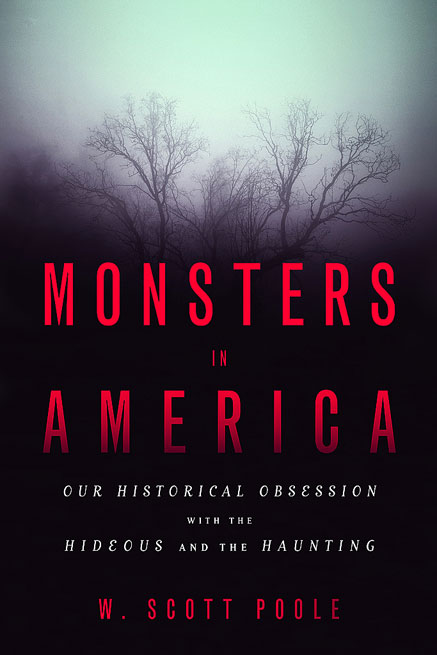
Back in my full-time teaching days, the American Academy of Religion and Society of Biblical Literature annual meeting was an excuse to buy books. Not that we were flush with money, but the prices were so good (we’re talking academic books here) that they simply couldn’t be passed up. Those days are long gone. This year I limited myself to a single book: W. Scott Poole’s Monsters in America: Our Historical Obsession with the Hideous and the Haunting. I was not disappointed. Poole gives us a smart study with considerable insight into American culture. Not only that, but it also proved an excellent source of self-understanding. I had never come across the phrase “monster kids” for those of us born in the blue light of the television when the Universal monster movies were released for television viewing in the 1960s and 70s. Poole classifies himself in that camp, and it is clear that we share this “guilty pleasure.”

Categorizing our monsters into types that fit various aspects of the American self-image, we find our national phobias reflected in our fictional fears. Throughout the book the uneasy sense of uncertainty towards sexuality, science, and death, like the revenants described, keep arising from the ground. Although Poole is a historian, it very soon becomes clear that one of the main driving forces behind both identifying and challenging these monsters is religion. It is a view Poole shares with Douglas Cowan and Stephen Asma and other analysts who take seriously the origins of our fears. Monsters creep out of the same mental space as gods. That which is not real is no less scary for its non-existence.

Particularly insightful was Poole’s analysis of the subversive nature of monsters. They challenge convention, forcing a cultural catharsis. The notable exception, Stephanie Meyer’s Twilight series, also has a religious rationale. Meyer, a conservative Mormon, effectively extracts the fangs of the vampire to make it a safe, if not Christian, monster. Monsters make establishment believers uncomfortable, for they remind us of the darkness that always follows the light. Humanity responds with efforts, religious and scientific, to banish the dark. But at the end of even the longest day, night will come. When it does, I would recommend curling up with Poole for an evening of cultural self-understanding. Followed by a bowl of popcorn and a movie from his filmography.


Nightmare Behind Holidays

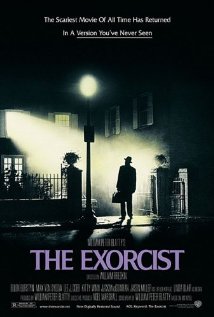
Among the first mythical creatures to go extinct when the early rays of the Enlightenment began to filter through the blinds of superstitious antiquity, were demons. It was recognized that the activities attributed to demonic possession closely resembled epilepsy and psychological illness and that Occam’s Razor would remove any unseen entities with its no-nonsense straight-edge in one deft pass. And yet they remain. Among the ghost hunting crowd, demons have been recategorized from fallen angels to entities that have never been human. Their reality is assumed, and results of investigations, not surprisingly, support that assumption. It was, however, a Dirt Devil advertisement that created a desire to watch The Exorcist now when darkness comes early and the leaves have fallen from the naked branches and a chill has permeated the air.

As I watched the still disturbing film, I realized that I had also watched the Exorcism of Emily Rose and The Last Exorcism within the past few months as well. I am no fan of demon movies; even with no demonic forces out there, inevitably young women are tormented by what ultimately turns out to be a male establishment. My threshold for watching the suffering of others, even if only acted, is minimal. Movie makers—and often horror writers—know and exploit this, bringing us to face the real demons, the shadowy regions of our own minds. The Exorcist is particularly effective in this since it is Fr. Karras’s demon that ultimately wins out. Having never read the novel, I’m not sure whose idea it was to make the demon Pazuzu, but once again the origins of demons does not fit modern media’s expectations.

Pazuzu was a Mesopotamian “demon.” Akkadian doesn’t have a proper word for what the Judeo-Christian tradition would introduce as a fallen angel. Demons were simply a way of explaining profound misfortunes such as droughts, pestilence, or the Bush administration. Eventually such misfortunes became personified and took on the ability to possess a human being. Here is where psychology and neurology have come to banish demons. Part of the terror of The Exorcist is that such scientific explanations are laid flat in the face of real supernatural power. The lessons of over-consumerism, as evidenced in Black Friday eclipsing Thanksgiving for many (the lines were formed in many locations well before midnight, cutting into family time in order to get first crack at the bargains) show the demon more clearly. Holidays are measured in importance by the amount of money spent. Perhaps it is no wonder that Halloween’s demons have lingered through November and even to the end of the year.