Religion Al Dente

I first learned of the Flying Spaghetti Monster while teaching a course on the Bible and Current Events a number of years ago at the University of Wisconsin Oshkosh. Being freed from the confines of my humorless seminary teaching post, I was free to explore innovative ways to approach my subject matter. When discussing evolution, it was helpful to bring in Pastafarianism as an example of how some highly intelligent—and very creative—people deal with the ridiculousness of Creationism. Lest I be accused of unfairness here, Pastafarianism is also ridiculous. That is precisely the point. The Church of the Flying Spaghetti Monster (FSM) was formed to demonstrate that any inane idea might pass as a religion and should be given equal time with those who use ultra-conservative views on the Bible to effect public policy.

A friend sent me a link to a BBC story of an Austrian man who has finally been successful in his attempt to wear a pasta-strainer on his head in his driver’s license photo. Claiming the headgear to be demanded by the Flying Spaghetti Monster, Niko Alm wished to have his official ID photo taken with the symbol of his faith. I sense an evolution taking place here. The Church of FSM has gone mainstream in many respects; there is a Bible available, you can buy a bumper-magnet to rival a Jesus fish, adherents have designed a slick website, and it boasts many, many followers. While the website of the Church of FSM defiantly refuses to be taken seriously, it makes legitimate claims—religions do not require literal belief, and therefore Pastafarianism is a true religion with believers not being held to any particular doctrine.

The outcry against the FSM movement (which began roughly early in the new millennium) demonstrates its effectiveness. Are there really people who believe this religion? A tour of the website should be proof enough. The claims made by the group have analogues in traditional religion; many major religions teach events and doctrines that are equally unbelievable in the confines of the physical world in which we find ourselves. It is difficult to believe that Niko Alm actually takes this seriously, but who are we to judge? The FSM has moved from making fun of Intelligent Design to casting the very definition of religious belief into sharp relief. Who’s to say we haven’t all been touched by his noodly appendage?
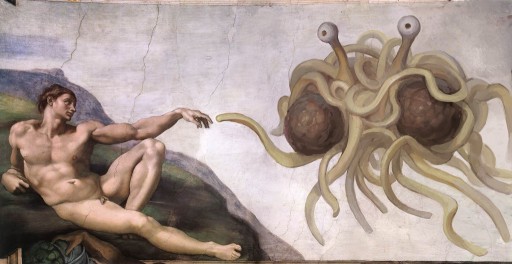
Touched by his Noodly Appendage
Religious Reflections

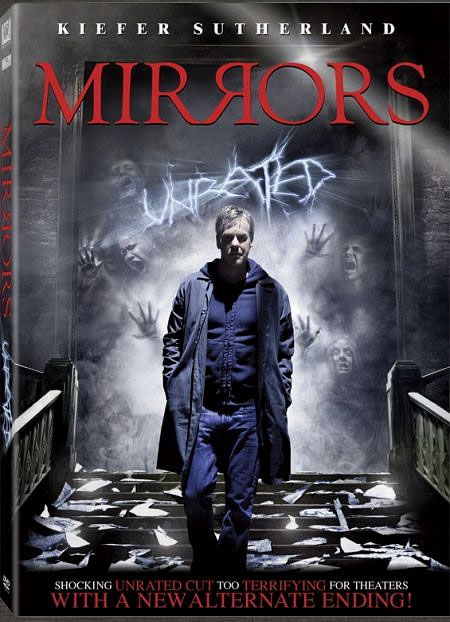
In a stunning display of alacrity, over the weekend I viewed the movie Mirrors only three years after it was released. Since I watch horror films with a view to how they portray religion, I was preparing myself for disappointment when well over halfway through no overt, or even subtle references seemed to have been made to any holy topic. As Ben Carson, security guard, discovers that the mirrors of his night-watch building are haunted, the story seemed to be evolving into the standard ghost movie. When the missing character of Anna Esseker was finally found, I breathed a sigh of relief—she was living in a convent (because there were no mirrors there). What I supposed was a ghost movie was really a demon movie, and I found yet another example of how fear and religion interact.

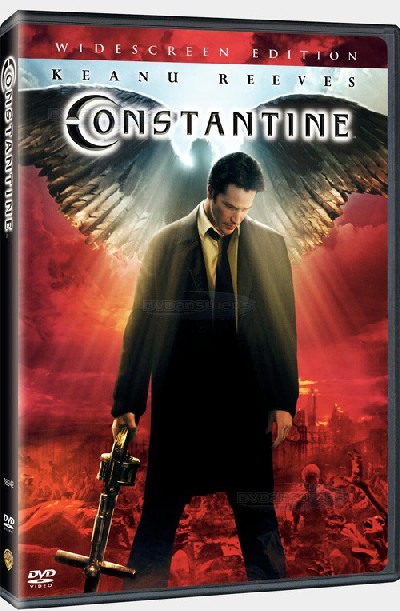
Since I’m currently preparing a program for a local church on the way that Christianity is represented in the movies, I’ve been rewatching a couple of standard films to gauge the scope of this interaction. So this weekend I also watched Constantine. This has never been one of my favorite movies, but as imbued as it is with Christian mythology it cannot really be ignored. When Gabriel is explaining to Constantine why he is bringing the devil’s son into the world, I realized that the reason coincided with some of my observations. Gabriel notes that humans need fear to appreciate God. By bringing fear into the world, Gabriel will force humans to become more pious. Intertextuality in the movies.

If I might indulge in some theological (that word makes me shudder) speculation that may not have been intended by the writers/producers, both of these movies utilize the concept that demons are trapped by mirrors. This may be a reflection truer than ever intended—we are our own demons. Mirrors reflect the vanity of visual appeal; our looks fade and our true self remains. Is that self an angel or a demon? Christian tradition states they are one and the same. Demons are only fallen angels. I’ve seen enough horror films to know that religion is not a universal element, but it often does appear in the role of producer of both good and evil. In this sense, at least, the movies are very honest.


American Haunted

Serendipity, although rare, still occurs in university life. As an adjunct instructor whose livelihood revolves around the number of courses that may be squeezed into a limited number of days, I have been considering online courses. As an avid watcher of horror movies—excellent preparation for adjunct life these days—I have attempted to sample the genre widely. It is therapeutic to see people in fictional situations worse than my own. While attending a training course on constructing online courses earlier this week I was surprised to find out my instructor was Brent Monahan, a versatile and talented individual of whose presence at Rutgers I was unaware. Most famously Dr. Monahan wrote the novel and screenplay for An American Haunting, a movie I had written a post on back in January.

Compulsive in my desire to be on time, I generally show up to all appointments early. For this particular session I was the first person present, so, not recognizing my teacher, we struck up a conversation about my field of studies. (He asked; I try not to lead with my chin.) He was nonplussed about the fact that I am affiliated with the religious studies department—in general this is a conversation stopper since, along with politics, it is a forbidden topic in polite company. Before I realized who he was he suggested that perhaps people go into this field because of their internal struggle with good and evil. It was a perceptive statement and it made sense when it came out that he was a writer of horror films and novels.

Since I’ve been exploring the nexus between religion and horror I have wondered what the deeper connection might be. Clearly fear of the unknown, the overly powerful, and the randomness of life in an uncaring universe play into it, but perhaps it is also the struggle of good and evil. Horror films often present the “what if” scenario: what if the side of evil were allowed free reign? Often the fount of that evil, in horror films, is religion gone awry. Certainly in An American Haunting a pious man is driven by inner demons to the abuse of his own child. That he is a religious man is made plain from the near-constant presence of a clergyman in his house once the haunting starts. While the exact relationship remains to be parsed, it is clear that fear and religion reside very near one another in our brains, perhaps as near as good resides to evil.


Zombie Friday

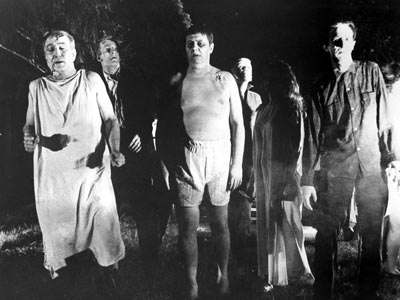
New Jersey is known for its zombies. Last October Asbury Park gained admission to the Guinness Book of World Records for the largest zombie walk (exception is made, of course, for daily life in Washington, DC). The movie zombie, in its now classic form, was reborn in western Pennsylvania, but New Jersey is the place where strange afterlives appear to gravitate. Yesterday Stephen Finley was sentenced. Finley, a mortician, had been convicted of selling the healthy organs of his dead customers to earn a little extra on the side. Given that the governor, Chris Christie, might rival Vlad the Impaler in his zeal for chopping, this really does not surprise me at all. Is it not the ultimate triumph of the free market to consider human beings commodities to be packaged, used up, repackaged and resold? Moral rectitude is on the side of the strong arm.

As someone who has been on the receiving end of the chop more than once, and reduced to a zombie-like state of perpetual job-insecurity, I think I know how the undead feel. Not having a place in the normal world of the living, but not quite dead, the zombie wanders about looking to feed on brains. This idea of brain-lust seems to stem from the cult classic The Return of the Living Dead, although, not being a film specialist, I would welcome correction on this point. Nevertheless, like the modern zombie I hail from western Pennsylvania and nothing satisfies me like a good brain (metaphorically, of course).

The idea of harvesting the organs of the powerless dead also suggests the endlessly referenced Soylent Green. Here the staunch NRA promoter Charlton Heston fights against the establishment that is turning (spoiler alert) people into Soylent Green, the ultimate solution to food shortages! For, after all, are people not just commodities? America’s thirst for zombies reflects our growing sense of victimization: the zombie is primarily a creature without a will, brought back by powers beyond its control. In the original vodun context the zombie was a source of cheap labor. Is it any surprise that West African slaves brought the concept to the New World with them? Today, of course, those with the cash may simply purchase the organs they desire, cutting out the middle man and going straight to the source.


Blood Lust

They emerge at night. They take your life-essence. They are very difficult to remove. In a particular political party their ruthless ways are highly praised. Yesterday I had occasion to watch the History Channel’s Vampire Secrets. Frequent readers of this blog know of my contention that horror films generally convey religious fears and certainly the vampire is prominent among such hosts of fear. Although superstition has held that actual creatures drew actual bodily fluids from their victims as far back as the Sumerians, today’s perception of the vampire has gone through several transformations. This particular documentary attempts to trace the origins of the modern vampire fascination through its major stages, beginning in ancient times. The writers and editors seem to favor a Far East origin of the concept, but linger for several minutes on the character of Lilith in Jewish folklore. Although Lilith does not really fit the profile of a classic vampire, she does contain a key to understanding the transformations: they are religious in nature.

People have believed in blood-suckers long before the GOP took on its recent transformation; there is no doubt, however, that the blood-lust of the vampire developed in the light of Christian ideas about the crucifixion. The regular imbibing of “blood” was an aspect of early Christianity that led to problems with the Roman authorities supposing this was some sort of precursor to Vampire: the Masquerade. By the time stories began to circulate about Elizabeth Bathory (ironically, at the same time the King James Version of the Bible was being translated) and her famous blood-lust, and after Bram Stoker later selected Vlad Tepes as a fictional model for his Dracula, blood-ingestion had become the singular hallmark of the vampire. In both cases, despite their historical facts, religious elements had entered in.

One of the most disturbing transformations, however, is that whereby religion itself becomes vampiristic. Originally established as a means of propitiating angry deities, religion very early assumed the aspect of blood-letting as a means of accomplishing that propitiation. With the development of religious abstractions, however, literal bloodshed has become distasteful and less common, but the deities still demand sacrifice. Even in the twenty-first century many accepting people are informed of the pecuniary sacrifice desired, commanded even, by the gods. While the occasional poverty-stricken cleric may occasionally appear, many far surpass the status quo in their crystal cathedrals while many of the faithful suffer want. The History Channel found vampire subcultures in the streets of New York City. They might also have found them in just about any town in any country of the world.

Saint or sinner?


Malleus Practice

Misfortune takes a quiet seat in the back of the bus for many people, but it is always there riding behind you. My recent trip to Salem is now over, but it has left me with that haunted feeling that sometimes tragedy just won’t let go. Reading up on the history of witches and the belief therein, it is pretty clear that the whole idea began as a form of theodicy. Misfortune happens. When a one-to-one correspondence attends it, people don’t worry too much. (John has a stomachache. We know that John slapped Bob, and Bob punched John in the stomach so there’s no supernatural agent at work here.) When the adversity comes out of nowhere, to all appearances, we naturally look for a cause. As long ago as ancient Sumer, and probably before, the answer was sometimes the baleful influence of enemies with supernatural powers. The witch was born.

This idea has remarkable longevity. Even as the eighteenth century dawned, just a few short years after the tragedy at Salem, Puritans and politicians embarrassingly looked at their feet and admitted this mockery of justice had been an unfortunate error. Yet they still believed witches existed. The concept is alive even today in parts of the world minimally influenced by schooling in science and logic. (I taught at a seminary where various witch hunts still took place; books were even burned.) Who doesn’t know the feeling that a totally natural disaster was in some way targeting them? Whether tornadoes, tsunamis, or rain on your Memorial Day picnic, the normal human response is one of a minor (or major) persecution complex.

To solve the riddle of witches, horseshoes and witch bottles are not necessary, but education is. Witchcraft was not considered Satanic until the late Middle Ages when apocalyptic fever raged through Europe with the Black Death. Not understanding microbes, the populace supposed a great war presaging the end of times was escalating between God and Satan. The minions of the Dark Lord were spawned by witches and demons. (Add Tim LaHaye and you’ve pretty much got Left Behind.) To solve the problems of the righteous, sacrifice a few innocent victims. If we call them witches—actually any undesirable name will do, eh, Senator McCarthy?—we will feel justified in doing so. The real solution, namely, working together to overcome natural and human-made afflictions, is really just too hard.


Lesson of Salem

I married a witch. I suppose I ought to clarify that a bit. My wife is descended from Rebecca Nurse’s brother Jacob. Rebecca Nurse was one of those unfortunately hanged as a witch in Salem, Massachusetts in 1692. My family has been spending the last couple of days touring Salem, seeking to get in touch with our heritage. Yesterday we had the rare opportunity to tour the home of Rebecca Nurse which, remarkably, still stands over 300 years after the tortured events of the late seventeenth century. Our tour guide was impressively knowledgeable about the witch hysteria. She noted that in the Puritan (Reformed) mindset, with no science to speak of, evil could only be explained by the Devil. If misfortune came, the Devil was to blame. Even after the “witches” were exonerated (too late to save 20 lives), it was understood that the Devil incited the girls to make their false claims against their ultimately and penultimately righteous neighbors. Without the Devil none of this made sense.

The Rebecca Nurse homestead

Salem was founded as a utopian community free to live out its Puritan religion. It was named after Jerusalem, a city of peace (!). As our guide noted, religious freedom was not the same as tolerance; the Puritans wanted the freedom to celebrate their own religion, but were extremely suspicious of all others. One of those hanged as a witch, George Jacobs, had nearly beaten a neighbor to death simply because he was a Quaker. Rebecca Nurse, however, at 72 years old, was no threat to anybody. She was a member of a Christian community that turned on her. Condemned for charges the nearly deaf woman could not even hear properly, she was hanged for consorting with a mythical Devil.

Rev. Parris's house, where the witch hysteria began

No doubt the religion of the Puritans was a harsh religion with a God nearly as unforgiving as that of Sweeny Todd. The problems occurred, however, when the law came into the hands of religious leaders. There is an allegory and a moral to this story. Today many of the tourist attractions in Salem focus on the need for true tolerance. They no doubt come closer to the spirit of the founder of Christianity than the Puritans ever did. As I stood looking over the hole in the ground that is all that remains of Rev. Parris’ parsonage—the very location the witch hysteria began as his daughter Betty started to act odd after hearing the stories of the slave Tituba—a profound sadness afflicted me. Twenty people died and many lost all their worldly possessions because of an uncontrolled mythology of a church convinced of its own righteousness. An allegory and moral for the twenty-first century indeed. Have we yet learned the lesson of Salem?


Decomposition

The following video report addresses a number of issues recently raised on this blog: apocalypses, zombies, fear, and humor. Zombies, of course, have been clawing their way to the top of the monster pile for a few years now. Media analysts have suggested that they represent the triumph of the working class—no sartorially suave vampires these—instead they are spattered with blood and gore, multitudinous, and clumsy. Having watched the most recent apocalypse come and go, and having been a victim of an unstable economy for several years of my professional life, I think zombies represent something else. Instead of being the triumphal usurpers of vampiristic free markets, zombies represent the breakdown in culture we are experiencing in the present.

If history gives us anything to go by, we know that powerful world empires ebb and flow. The Persians succumbed to the Greeks, and the Romans could not stop the Goths. The Holy Roman Empire was dissected into the nations of the modern European Union (roughly), and the sun now sets regularly on the British Empire. The United States, the capital of the zombie craze, has perhaps passed its zenith and the zombies know it. Since the 1970s we’ve watched as religious extremists have made a mockery of a political system that had already grown problematic. Like decaying corpses that won’t go away, the factors that propelled the United States to a place of prominence have been undermined so that the non-undead can continue to feather nests already stuffed with down as high as Babel. In the constant see-sawing of political parties the imperialist trends of the obscenely wealthy have rocked their way into the dominant. Is it any wonder that zombies are brainless, yet insatiably driven?

What does it feel like to watch the azimuth decline on a great empire? It is difficult to say. History, as the aphorism states, is written by the winners. Revisionist history has become quite fashionable to those who find that the facts refuse to bow to their worldview. Zombies are those who, historically, do the will of their masters without question. Instead, the zombie of the twenty-first century bows to no master. Pure selfish survival is its sole aim. Perhaps the CDC is too late, the zombies have already overrun us.

Newsy.com’s Report


Of the Zombies, By the Zombies, For the Zombies

In what is sure to be a controversial move, the Center for Disease Control has posted an official government blog post entitled “Preparedness 101: Zombie Apocalypse.” (Be warned, if you click on this link it may be considerable time before the page loads—it has been receiving a tremendous number of hits.) Written by Ali S. Khan, the Assistant Surgeon General and head of the CDC, the article is actually about hurricane preparedness, but with zombie furor being what it is, many on the Internet are taking the warning seriously. Literally even. Citing the tsunami in Japan and the concerns for leaking radiation, the article begins with a lighthearted fear-fest that then reveals the actual concern. Humor in the government? This is something we should all encourage!

The analogue with the current rapture fever was immediately obvious. I grew up in terror of the rapture, but when I began to take courses on the Bible from scholars who knew about apocalyptic literature, its context, and what it was intended to do, I realized that the rapture was invented in the nineteenth century by evangelists with no critical training, misreading the book of Revelation. As much as we like to break history into discrete units, time simply keeps flowing and the current of fear generated in the nineteenth gushed into the twentieth century culminating in the birth of the Christian fundamentalist movement. For many people in the twenty-first century, fundamentalism and Roman Catholicism are the two ancient strands of Christianity that legitimately lay claim to the title. At least half of this history is backward.

The Bible itself, when read in context, shows the errors of the rapture-hungry. The idea is a blend of obscure bits of Paul’s letters, mixed into Revelation and stirred vigorously. Then half-baked. The Bible does not give us a rapture. The CDC does not give us a zombie apocalypse. We know where the myth of zombies originates (I have posted on the topic before) and we know zombies are as fictional as griffons and centaurs. Nevertheless, faith springs eternal. Those dissatisfied with all that life has to offer turn to zombies for an equalizingly grim future for all humankind. It’s all gonna rot, baby. Except, of course, for those who’ve been raptured before it happens. When the zombies fail to show up after Saturday’s non-event, all of us will feel pretty silly just looking at each other as Ali S. Khan comes up with his next zinger.

The author, upon reading the CDC blog.


Silver Scream

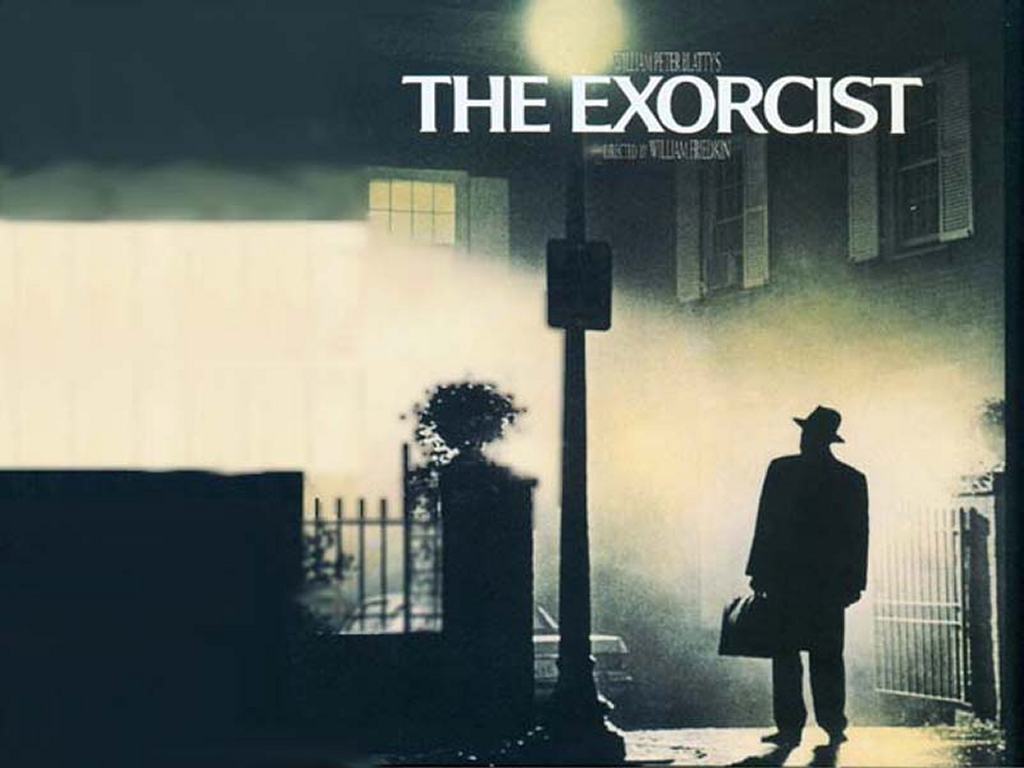
Only within the last couple of decades have movies begun to be taken seriously as expressions of the Zeitgeist. An art form not even 150 years old, commercial movies have been seen primarily as an entrepreneurial exercise—money-making ventures with little serious thought. Now students of society recognize that where our wallets are, there our hearts are also. Even in the depths of recession the entertainment industry maintained its draw. The unemployed could at least watch movies cheaply at home. Yesterday’s newspaper contained an insightful entertainment piece on horror movies by film critic Stephen Whitty. Noting that the film industry began when the Production Code largely mirrored pre-1950’s American cultural values, Whitty observes that clergy were left out of movies, or when they appeared they were strong role-model characters. Then, beginning with The Exorcist, the demonic became a huge theme in movies. As Whitty concludes, “Certainly it’s partly a reflection of a growing fundamentalism” that indicates why such movies are now so popular. Many Americans believe in angels and demons and turn to them to explain the serendipitous or contretemps.

Scary, but not necessary.

Social attitudes help to explain what we see on the big screen. Almost from the beginning religious leaders have castigated the entertainment industry as an unholy counterpart to sanctified living. Theater was earthy and evil, movies immoral, and even the desire to be entertained took away from the struggle for salvation. Ironically, however, movies tend to reflect conservative values. At least when it comes to demons. In the current glut of demonic films—which most Americans rate as the scariest kind of horror movie—the church-sanctioned hero is often the only effective tool against evil. A mythology of a Manichean dimension reigns: good struggles against evil and good will prevail. Unfortunately, this Hollywood scenario falls on the side of simplistic solutions to complex problems. Evil is our own doing—we need no demons to tell us how to be bad. Likewise, help often fails to come from on high.

Over the weekend I watched Dogma once again. Severely criticized as immoral and trashy, the overall message is, however, one of faith and hope. No fundamentalist, Kevin Smith certainly takes his pot-shots at Christianity, particularly Roman Catholicism, but in the end God and angels are real, and demons are defeated. Yes, this comedy is intended to be entertainment, but the audience that views it probably agrees with its core values. As Whitty demonstrates, the past decade has flooded the market with Hell-born foes, and there seems to be no imminent slacking of the pace. People are afraid. Our efforts at free-market Heaven have turned out to benefit too few while too many are still without work or adequate security. No, we need no demons to instruct us in the ways of evil. We are fully capable of initiating our own.


Gothic Mother’s Day

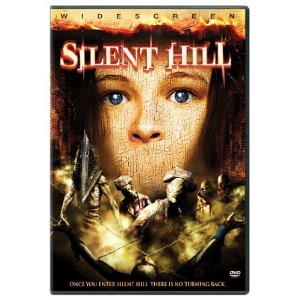
What does Mother’s Day have to do with horror films and religion? I serendipitously discovered last night. I generally run a few years behind the media, reading books after they come out in paperback and watching movies when I find a copy of the DVD. Last night as a family we watched The Sound of Music. I’d never seen this show until after I was married – musicals were not popular in my blue collar neighborhood growing up. Of course, I am now a veteran viewer. Last night, during mother’s choice evening, I noticed that if the music were removed (itself a weird concept) The Sound of Music is actually quite gothic. The interior settings, the use of shadow, the dark, Nazi threat, the stonework of the gloomy abbey – all of these things add up to a disturbing collage. In the mood for something more baldly gothic, I stayed up to watch Silent Hill.

I tend not to research movies before watching them since it reduces the visual impact. For those films based on books, I generally read the book afterward to see what was “really going on.” Silent Hill, of course, is based on a video game. I do not play video or computer games; “Pong” may have been my last serious attempt at doing so. Silent Hill, therefore, was a complete unknown. The gothic element did not disappoint, and as Sharon, the adopted orphan, began her sleepwalking scenes being shown beneath a lighted cross in the night, I knew that religion and horror were once again coming together. Indeed, the driving force behind the gruesome story is a religious cult on a witch-hunt that is set in a village based on Centralia, Pennsylvania. The cult, believing those who are different are witches, seems to enjoy the medieval pastime of barbecuing them. Centralia’s ongoing mine-fire was used to great effect. Rose, Sharon’s devoted adoptive mother, of course, rescues her daughter. The line in the film is “Mother is God in the eyes of a child.” (There is the Mother’s Day tie-in.)

Having been invited to present an adult forum to a local church on Christian themes in popular cinema, I have been recharging my attempts to test my hypothesis that what truly frightens people is religion. Silent Hill would support this hypothesis. I did not miss the significance of the names: “Rose of Sharon” is a popular biblical trope. The impotent father is named Christopher. Centralia’s predicament is often vividly compared to arcane ideas of Hell. And mother’s are, in the eyes of many children, saviors. Perhaps that last point is why we celebrate Mother’s Day on a Sunday. Although films such as Silent Hill may not make the best family viewing, even here where religion destroys, the divinity of motherhood is underscored.


Alien Agenda

Aliens are now firmly among the canonical cadre of movie monsters. Just the list of highly anticipated movies of 2011 is enough to demonstrate the fact: I Am Number Four, Battle: Los Angeles (past, but formerly anticipated), Cowboys and Aliens, Super 8, Apollo 18 (now sadly relegated to 2012). With two part-time jobs and the constant hunt for something more permanent, I tend to fall behind, however. I have to wait until the DVD release to see them.

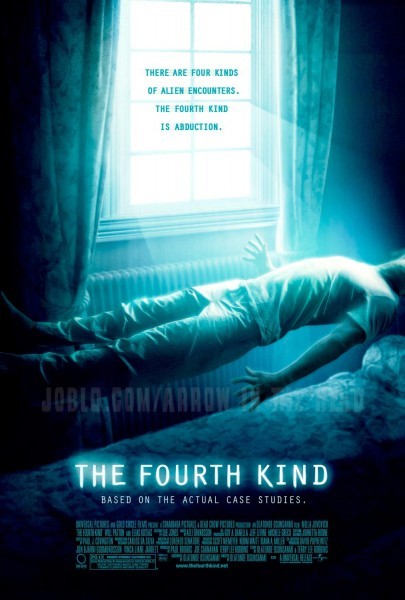
Watching horror films has been an avocation of mine since college. Once when a sociology student asked me why, in the course of a survey; I replied that it was better to feel scared than to feel nothing at all. Well, maybe I’d been reading too much Camus and Kafka at the time, but the habit has persisted and I am now professionally attuned to their religious elements as well. Even the aliens got religion. This past weekend I stayed up late to watch The Fourth Kind. It was suitably scary – when I read the reviews vociferously castigating the producers for claiming it was real, I suspected that the reviewers were overcompensating. The premise (alien abduction) is frightening enough – especially in such a remote location as Nome, Alaska – but the Bible had to be brought into it as well.

Admittedly the fear began to wane when Zecharia Sitchin’s Sumerian hypothesis appeared. Aliens speaking Sumerian is simply not convincing to those of us who’ve actually learned extinct languages. (It could explain some of the textbooks, however, now that I think about it.) The book of Genesis was then cited by the film to verify the much more ancient Sumerian claims. Many horror films deal either directly or indirectly with the fear of religion. The Fourth Kind was no exception. I was reminded of how the Bible played a small but crucial role in The X-Files: I Want to Believe movie as well. As a prop the Bible lends gravitas to otherwise questionable celluloid situations.

Never one to accept the ancient astronauts model, years of studying the Bible have convinced me that context explains most of the anomalous passages in scripture. Nevertheless, the monsters lose their bite without religion, so let’s give Sitchin’s crowd their due and just pretend for a little while.


Corny Children

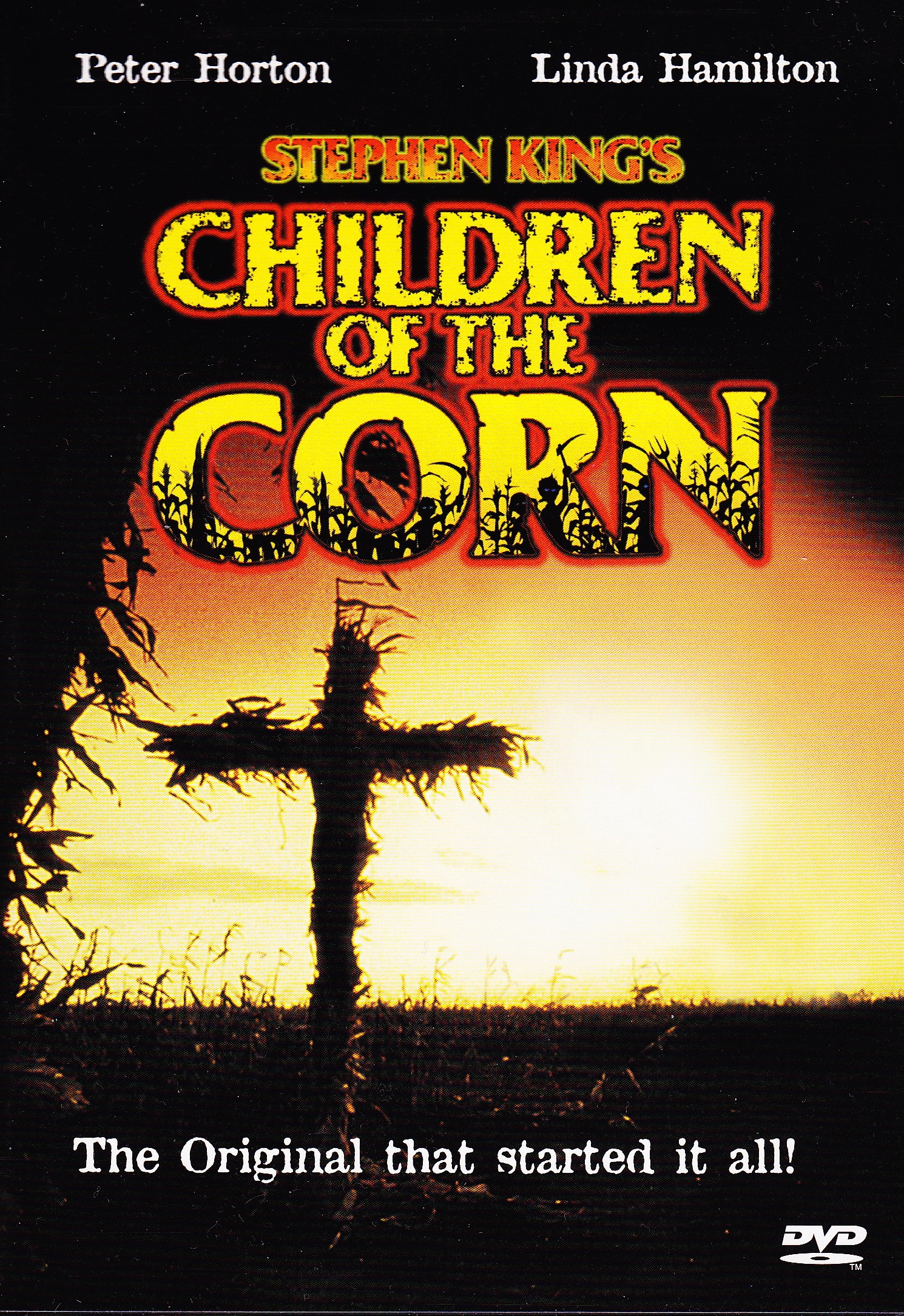
Once upon a time, if you wanted to see a movie you had to go to a theater or wait until it ran on television. This is stretching my memory back a long way, so indulge me if I only remember that four channels existed in those days, and you had to wait years for movies to appear at a time when you could actually be home to see them. Fast forward a few years and the VCR was invented. I remember being impressed that you could actually rent movies you’d always wanted to see, within reason. If you watched them too often they wore out. Then the electronic revolution came. This is all by way of excuse for why I’ve only just started to watch movies that came out in my younger years. Children of the Corn, although critically panned, was a financial success in my college days when I started watching horror movies. When I finally watched it yesterday, I realized it was a natural candidate for this blog’s running commentary on horror and religion.

What I had not fully appreciated is that the movie is a cautionary tale centering around a sacrificial cult. While the movie does have its problems, the concept of children taking the religion they hear from adults seriously runs throughout the film. Understanding gods as bloodthirsty demanders of sacrifice is a gruesome staple of all monotheistic religions. Someone’s got to die for the rest to be saved. While Fundamentalists take comfort in the substitutionary atonement of the “once for all” nature of sacrifice, in the film, the children erect crosses and sacrifice adults to “he who walks behind the rows” – a typical Stephen King kind of monster. Monster or not, the children believe he is a god.

Belief is the guy-wire for religion. The reality behind that belief is open to question, otherwise multiple religions would not exist. Children of the Corn confuses the issue by presenting “he who walks behind the rows” as a legitimate supernatural entity, one who is vanquished by a passage from Revelation. The truly disturbing aspect, however, is the complete, unquestioning devotion of the children. When children are raised in intolerant religions today, we are also planting corn that will lead to some unholy reaping in the future. Perhaps the message of the film was more trenchant than most critics were willing to admit back then. Today it is certainly more believable, given many religions’ demonstrations of their destructive powers.


Dream Quest

H. P. Lovecraft was a writer who remained unappreciated during his life but who has become a very influential literary figure after his death. So it is with artists. Known mostly for his short stories, one of the novellas he wrote, “The Dream-Quest of Unknown Kadath,” carries immense religious implications. Those familiar with Lovecraft’s fictional world know of the god Cthulhu and the “Other Gods” that he places in outer space. In “Dream-Quest” Lovecraft states that these Other Gods, “are good gods to shun.” While mere fiction, the concept of divinity has become pliable in the hands of its human author. Mortals are those who describe gods, those who decide what their deities will be like. The dream of the titular quest involves the earth gods having been removed from their shining city to leave the dark and dangerous other gods in charge.

While some would dismiss Lovecraft as overly inventive, his view of the earth being clouded by the crawling chaos Nyarlathotep strangely matches what we see playing out in the headlines. Those who are supposed to protect the masses, their leaders – elected or otherwise – have shown themselves to be interested in personal gain above all sense of duty. Throughout the world, and increasingly clearly in the United States, the working poor are seen as simple commodities easily manipulated and programmed to support those who would exploit them. Crawling chaos has landed.

Lovecraft’s “Dream-Quest” has a host of unlikely heroes, among them the cats of Ulthar. These cats maintain a true divinity appropriate for the descendents of Bastet. Feline divinity represents hope to Randolph Carter, Lovecraft’s protagonist. They also represent the tendency of the earth gods only to appear when most sorely needed, otherwise simply to set their own agenda. Where are the cats of Ulthar now? The problem with gods is they don’t always show up when you need them. Many dismiss Lovecraft as just another overly imaginative writer of cheap fiction, but to those will to listen carefully he was an author that could hear a very faint pulse. Even if that pulse was coming from under the floorboards to haunt a reality where the earth gods had gone away.

A little writer shall lead them


Gila’s Got the Whole World

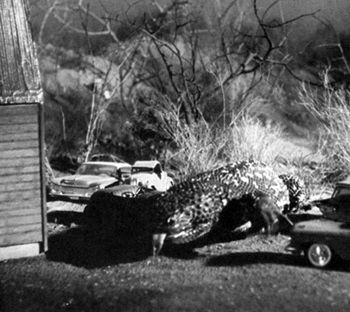
Singing pretty-boys and colossal lizards – it must be time for The Giant Gila Monster. A horror film that portrays all the innocence of the 1950s before the Beat Generation led us down the path to reality, the film has earned cult status in recent years. More accurately titled, “A Regular-Sized Gila Monster Filmed in Close-Up,” the sub-mediocrity of the movie has probably done more for preserving it in popular culture than any other aspect. The film stars the relatively unknown Don Sullivan as a great teen role model who writes and performs his own songs. The number that receives the most Internet attention, and the one that makes this movie of interest to this blog is “The Mushroom Song.” Chase Winstead (Sullivan’s character) has a young sister who is just learning to walk with leg braces. To cheer her, he picks up a ukulele and sings: “And the Lord he said I created for you/A world of joy from out of the blue/And all that is left to complete the joy–/Just the laugh of a girl and boy/And there was a garden, a beautiful garden/Held in the arms of a world without joy/Then there was laughter, wonderful laughter/For he created, a girl and a boy/And the Lord said, laugh, children, laugh/The Lord said, laugh, children, laugh” with the final line repeated numerous times.

Laugh, children, laugh

Perhaps intended to underscore the societal norms of a time when “the Lord” made frequent appearances as an unseen supporting actor in many movies, this song is oddly out of place. The disability of Missy Winstead is obviously a device to raise tension: how will a disabled girl run from a giant lizard? The song, however, provides the resolution – the Lord will take care of all good people. Their response should be to laugh. The reference to Adam and Eve, fitting for teen fantasies of all generations, also belies the evolution of this monster. The gila grows to its great size because of chemicals in the water that wash to the delta somewhere in Texas. This creature did not evolve. The Lord will take care of it. The Lord and nitroglycerin.

Respectful teenagers with predictable haircuts and a society that believes a missing teenage couple could be doing nothing but eloping fits the world of the Religious Right exceptionally well. Even though they may not be perfect, these kids know right from wrong for they live in a black-and-white world with no ambiguity or ambivalence. Children of subsequent generations have grown up with shades of gray or psychedelic colors. The older generation is frightened by new developments, claiming that the world they know is about to end. In fact, an evolution is occurring. Those who try to hold society to the norms of the 1950s would do well to move ahead a decade and at least listen to Bob Dylan. No matter how far we progress, however, it seems that Texas will always delight in producing Lord-loving, bloated threats to rational civilization.