The Persistence of Streaming

I’ve had to start keeping a list.  If I don’t I’ll forget which movies I’ve streamed.  I suspect I’m not alone in this.  Electronic information is vapid and eminently forgettable.  If you go see a movie in a theater, you’re likely to remember it.  Memory of place and occasion aid the memory of plot and effects, I suspect.  To my knowledge I’ve never had anyone ask if I’ve seen a movie that I didn’t remember, if I saw it in a theater.  Streaming—maybe yes, maybe no.  A few weeks back I found myself streaming a film and thinking “this looks awfully familiar.”  The longer I watched the more convinced I was that I’d seen it before.  When it was over I checked.  I had watched it only a few months earlier.

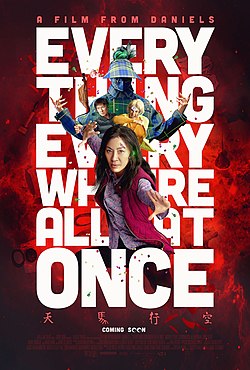
When you buy a DVD or Blu-ray (or even a VHS tape), the physicality of it serves as a reminder.  Unwrapping the package, handling the case, loading it into your player—these are all keys, hooks upon which memories hang.  As I’ve intimated before, movies are, I believe, our modern mythology.  The idea’s not original with me, but think about how movies are often our frame of reference around the water cooler or with friends.  What did you think of Nope?  It’s a safe way to express our beliefs and aspirations.  Even if it’s not great, it’s helpful to be able to remember it when you want to.  Streaming, it seems, often lacks commitment.  Particularly if it’s from a free site.  (I use such only when the media are otherwise unavailable.)  Maybe there’s a reason it’s free.

Streaming asks little by way of investment, financially or psychologically.  It costs time, of course, and perhaps that’s the greatest siphon of all.  If you’re a busy person time is a commodity.  Spending some of it watching a movie—depending on who you are—isn’t simply entertainment.  Mythology gives us meaning.  I suspect that’s why we value those auteurs who break through the noise and manage to stand out in our minds.  Those who know what it is to captivate an audience.  Those who are really invested in their projects.  Like most books I read, the movies I watch come from a list.  I have a reason for watching them, often related to research.  And if you put the time into it, you want to remember it.  For that, I recommend keeping a list. (Have a written a post like this before?)


Like Sheep

Since horror grew up in the late 1960s, religion has become a favorite theme in the genre.  Although religion had been in horror from the beginning, Rosemary’s Baby marked a definite sea change.  More and more religion has been moving from a subsidiary theme to the main vehicle of horror.  Małgorzata Szumowska’s The Other Lamb is a case in point.  “Shepherd” is the leader of a separatist religion that consists only of women.  The premise itself is creepy enough, but it becomes clear that Shepherd—the group literally has a flock of sheep—physically abuses the women.  They are divided into two groups: sisters and wives.  When unexplained things happen, Shepherd gives prophetic pronouncements.  His followers are expected to accept everything he says on blind faith.  Many religions do this by proclaiming faith against evidence a virtue.

One thing that I’ve emphasized in various presentations I’ve done is that Christianity, and perhaps all religions, work because believers are great followers.  While Shepherd uses biblical-sounding language, there are no Bibles in the film.  There are recognizably Christian themes, but the doctrine isn’t familiar.  Part of the reason, obviously, is that Christianity has a negative view of sex and Shepherd treats his flock as his harem.  The women follow because he “rescued” them from worse situations and their communal life is better.  Only it’s not.  When a woman director stands behind such a film, there’s clearly a message being sent about male privilege.  Any system set up with male superiority will lead to abuse.  When Shepherd’s enclave in the woods is discovered, they must move.  He instructs the women that they are going to find Eden.

Throughout, the movie is more creepy than scary in the traditional sense.  There are no jump-startles, but the situation makes you sense that something’s not right.  The women, acclimated to this lifestyle, many of them for years, know no other way of being or even where to go.  They have no vehicles.  Forced to move, they walk—Shepherd carries nothing while the women backpack out supplies.  Once Eden, on the shore of a lake, is reached, Shepherd baptizes the sisters and drowns the wives so the younger women can take their place.  You get the sense throughout that this movie is a parable.  Men like to take the privilege of determining women’s fates without understanding women’s needs.  This new kind of horror is insightful and symbolic.  There is no final girl when women band together.  The Other Lamb deserves wider exposure than it’s had.  It’s a good example of what religion can do to those who simply follow.


Walking Home Alone

It is an American-Iranian, female-directed vampire movie.  Shot in black-and-white and entirely in subtitled Persian, A Girl Walks Home Alone at Night is a very unusual and artsy movie.  The film has been described as a “spaghetti western” as well, but that’s a bit more difficult for me to see.  If all these disparate elements seem odd, the director’s background may help explain it.  Ana Lily Amirpour was born in England, but of Iranian heritage.  She moved to the United States as a child and began making movies quite early.  A Girl Walks Home Alone at Night is her best-known film to date (I only found out about it by reading a book about horror films that recommended it.)

The title may set certain expectations that will be subverted by the film.  There will be spoilers here, so if you’re likely to see the film you might want to wait to read on.  Who knows?  Maybe spoilers will make you want to see it.  The girl who walks home alone is the vampire.  She’s perfectly safe at night.  The story involves her falling in love with a compassionate young man who’s trying to support his heroin-addicted father.  The movie is quite gritty.  The girl is a conflicted vampire, which happens to be my favorite kind.  She’s never explained.  She simply is.  Her first victim that we see is the drug-dealer and pimp who’s pressuring the young man’s family.  Although they live in poverty, he takes their car in payment.  He’s a nasty piece of work.

The young man, also conflicted, takes over the dead thug’s drug-selling business, but doesn’t take advantage of people.  The vampire is attracted to his virtue.  She also befriends one of the thug’s prostitutes because she’s sad.  Apart from the dead petty crime boss, everyone in Bad City lives in humble circumstances.  The young man finally throws his father out of the house.  The vampire attacks him, leaving him dead.  The young man, in love with the vampire but not knowing she’s a vampire, talks her into leaving with him although he can see she’s implicated in his father’s death.  This is a most unusual film, praised for its feminine outlook.  That’s unusual in both vampire movies and horror, but there’s no reason that it should be rare.  More of an art-house movie than a cineplex blockbuster, A Girl Walks Home Alone at Night is a movie that will leave you wondering.  And that, it seems to me, is a good thing.


Wicker Back

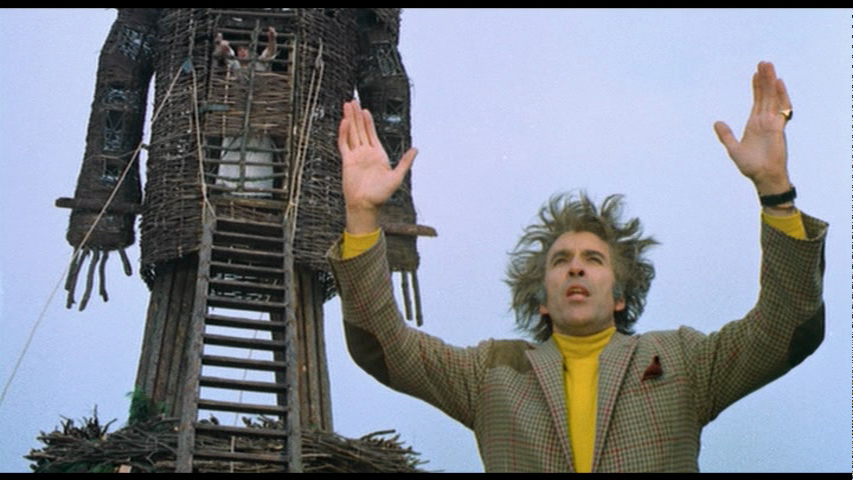
The dilemma of my eclectic interests sometimes runs up against the natural slowness of publishing.  My book on The Wicker Man has been given the green light by Auteur Publishing and should be out next year.  I just received the readers’ reports and they were positive enough to make me blush.  The thing is, I submitted the manuscript back in January and I’ve nearly finished writing my next book since then.  It’s on a different topic for which I’ve been collecting sources since January.  I really hope this next one won’t publish with an academic press.  The endless rounds of revision from peer review can wear a body out.  Reviewers, you see, have university jobs.  Libraries at their fingertips.  Sabbaticals.  (I work with authors who won’t write unless they have one of the latter.) Now my reading shifts back to Summerisle.

For those of us with 925s that get a paltry number of holidays per year (which are spent holidaying) and paid like most working stiffs, with no academic library access, this can present somewhat of a challenge.  I see peer reviews all the time.  Academics so deeply into the subject that they don’t (can’t) think of the practicalities.  When I see a reviewer write that a book is ready for publication, but if the author could only restructure the whole thing and approach it from this angle instead… I have to chuckle.  During my teaching career I worked in situations that didn’t allow for sabbaticals.  Even among academia those given such rare benefits are privileged.  It’s a wonder that so many books get written, all things considered.

Like waking from a dream world, I suddenly have to downshift to a previous project.  I haven’t really thought much about the Wicker Man since January.  My next book, which is eclectic, has been slowly gestating over the months.  My reading has been geared towards it and is financed personally.  I’ve tried contacting the local college and university libraries.  I can’t borrow, or do inter-library loan, so the weird resources I need I have to buy.  Preferably used.  One thing reviewers like to do is point out new resources.  And yes, I have to agree that my argument would be stronger with them.  I have a strategy to the way I write my books, now that I’ve found a receptive readership, so none of this is mishap, I hope.  (Ironically, now I get quite a few readers of my revised dissertation asking me questions about ancient West Asian studies.)  That trireme paddled from shore long ago.  I’ve moved my current project to another burner, and you’ll be hearing more about The Wicker Man in coming weeks.  Next year is the film’s fiftieth anniversary, so I have a deadline that I just can’t miss. It’s time to get reacquainted with an old friend.


The Burton of Thought

I haven’t seen all of his films.  Some of them I have seen I didn’t really like.  When Tim Burton does strike a chord, however, he does so hard.  Burton on Burton is one of a series of books of interviews with directors.  This one covers all of Burton’s films up to Corpse Bride with free-ranging answers to what are really more remarks than questions.  (The book is edited by Mark Salisbury.)  Although I’ve not experienced his entire oeuvre, it’s pretty clear that I share quite a few sensibilities with Burton.  He expresses that what he’s looking for in movies is feeling.  A good plot helps, but it’s the emotion he’s after.  And he knows that the dark isn’t bad.  At many points I had to shake my head and say, “I thought I was the only one who thought like that.”

This memoir is also full of information on the way movies get made—not the technical side, but from the studio or creative side.  Someone has an idea.  It may be original or it may be an adaptation of a well-known tale.  Sometimes, especially in Burton originals, they begin as a series of sketches.  Anybody who’s watched DVD extras knows about storyboarding.  A movie is sometimes laid out in a series of cards that show, step-by-step, the action.  Before that, or maybe during, a script is written.  In order to get funded—for all this costs money—a studio or production company has to pick up the concept.  The person pitching it might be a screenwriter or a potential director.  And, as in every avenue of life, money talks.  Once you’ve had a breakout success they start to pay attention to you.

Although Burton and I grew up with similar outlooks, he notes that he never did like to read.  Being a visual artist (he got his start at Disney), that’s perhaps no surprise.  You start to realize, once you get a sense of the number of people involved, why film credits go on and on.  It takes a village to make a movie.  Not only that, directors may be involved with several projects simultaneously.  That’s not so different from being an (unofficial) writer, I suppose.  At any one time, from my experience, I’ve got at least a half-dozen projects going.  Some will never be finished, most will never be published.  And who knows?  Maybe someday one of my fiction stories might catch a sympathetic (or perhaps simply pathetic) director’s eye?  In the meantime, we go on creating.


October Early

Still feeling that August is the new October, although that particular day happened to reach over ninety degrees, I watched Halloween.  Not the John Carpenter original; I’ve seen that one a few times before.  No, I watched the 2018 version only to learn it’s a retcon.  If you’re like me you’ll wonder what a retcon is.  It’s a portmanteau of “retroactive continuity.”  That’s where a sequel goes back and makes adjustments, or simply ignores, story elements from the original to take the story forward.  I haven’t followed the Halloween franchise.  There are too many movies I want to see that are original, with fresh ideas, to be spending my time trying to find my way through an emerging mythology of a serial killer.  Michael Myers, as horror fans know, inexplicably killed his sister as a child.  As an adult he terrorized Haddonfield, Illinois  one Halloween and Laurie Strode was the final girl.

What drew me to this sequel was that Jamie Lee Curtis was back as Strode, all grown up.  Michael predictably escapes again and goes for an even higher body count in Haddonfield.  Laurie, meanwhile, has gone NRA and booby-trapped her entire house in anticipation of this day.  You can see the draw, I hope.  You kind of want to see how this ends.  The original had Michael’s apparently dead body disappear at the end.  In the retcon he was arrested after that and re-institutionalized.  The thing is, you can never really kill a monster.  Original scenes and scenarios are revisited, and those familiar with the Carpenter story are rewarded by situations that subvert expectations.  Where is he hiding this time?  You always watch the credits roll wondering how “the authorities” don’t realize that a guy shot, stabbed, and incinerated and keeps coming back might be something other than human to be put in an asylum.

I should know better than to watch these kinds of movies when I’m home alone, but I don’t.  So it’s a good thing that I try to piece all these things together.  We have three strong women—three generations of final girls here, and the obligatory basis for a sequel.  (At least two, in fact, bringing the franchise up to thirteen movies.)  Laurie’s granddaughter is among the virginal, non-drinking final-girl prototypes.  Her less Puritan friends are killed off, although her worthless boyfriend survives the night.  You’ve got to love the endless self-references of such situations.  That’s why we keep on coming back.  We’ve seen it before but we still want more.  Even if it’s only August.


Some High School

I have a soft spot for bad horror.  And Sleepy Hollow High isn’t exactly good horror.  It’s not horrible horror either.  It follows the story of five teenage delinquents at Sleepy Hollow High School.  Threatened with expulsion, their only choice is to do community service.  In this case that means picking up trash in the eerily secluded town park.  I won’t give away the one big spoiler, but it’s fair to say not is all that it seems.  It’s very low budget (paid for by credit cards and estimated to be $16,500) shows in several places, but it does keep you watching.  And wondering, to an extent.  It claims that the legend of Sleepy Hollow is true, but not exactly in the way you might think.  (Sorry for being cryptic—I don’t want to give too much away.)

One of the reasons I appreciate efforts like this is that I know what it’s like to be possessed by a story you want to tell but being unable to find a publisher—or in this case, a distributor/studio—who’s willing to take a chance on you.  The movie is largely the effort of Kevin Summerfield and Chris Arth.  They are listed as co-directors and co-producers, and each has credited roles beyond that.  Neither one is famous, and yet they made the film anyway.  It’s the same impetus behind self-publishing, I suspect.  The problem with the latter is that anyone can do it, and it often shows.  Most of us don’t have access to proper movie equipment, props, and actors willing to work for free.  Heck, I don’t even know most of my neighbors.

Movies like this stand a chance of becoming cult favorites.  I have no idea how that happens or who makes the call on it.  Low budget (often), cult films catch the imagination of a certain kind of fan and eventually generates some buzz of its own.  Wikipedia articles will appear about some of the people involved because those who watch grow curious.  Our highly developed publicity systems make decisions on who or what gets exposure.  That doesn’t mean the rest of us can’t get a small dose of attention now and again, but those who’ve made it have had some help.  Sleepy Hollow High was perhaps able to cash in a bit on the previous year’s Tim Burton effort, Sleepy Hollow.  But there are horror movies—and stories—out there that nobody knows about.  And which might, if discovered, have their fifteen minutes.


Lovecraft’s Palace

So, to see Witchfinder General I had to buy a set of Vincent Price movies.  Complex copyright deals mean that not everything can be streamed—there’s a movie I’ve been waiting months to see because Amazon Prime says “not currently available in your area.”  That word “currently” tells you that it’s a rights issue.  In any case, that box of Price movies contained a few goodies I’d never seen and had wanted to.  And one that I hadn’t heard of: The Haunted Palace.  Legendary producer Roger Corman had Price star in a variety of Edgar Allan Poe adaptations.  (Witchfinder General wasn’t one of them.)  Corman wanted to make an H. P. Lovecraft movie, but the studio insisted it stay within the identity of this Poe series.  This movie is an adaptation of Lovecraft’s “The Case of Charles Dexter Ward,” but titled after a Poe poem, “The Haunted Palace.”

Suffice it to say, I knew little of this before I sat down to watch it.  I didn’t know, for example, that this was the first big-time movie based on Lovecraft’s Cthulhu mythos.  I didn’t realize it would involve the Necronomicon and perhaps the first, blurry—to preserve the sanity of viewers—view of maybe Cthulhu.  The movie doesn’t specify which of the Old Gods is kept in this pit, so it could be Yog-Sothoth instead.  You see, as a child I watched some of the movies in this series.  They would’ve had to have been the ones showing on television, likely on Saturday afternoon.  The one that I clearly recall, and remember thinking “that’s not how it goes!” was The Raven.  And as a child I had never been exposed to H. P. Lovecraft.

Some of us have our own brand of cheap or free entertainment.  The small number of friends I had growing up didn’t care to read.  My family wasn’t literate, and most high school teachers couldn’t suggest much to a kid who’d somehow found Poe and liked what he read.  As I’ve said before, Goodwill was my bookstore.  I discovered Lovecraft on the internet during a lonely stretch of teaching at the University of Wisconsin, Oshkosh.  Like many visionaries, Lovecraft didn’t achieve fame in his lifetime, but is now considered a bizarre American treasure.  The Cthulhu mythos is everywhere.  Even my auto-suggest is quick to fill in his name as I type.  The Haunted Palace isn’t a great movie—this is Roger Corman—but it’s a pretty good movie.  And its history in the cinematography of Lovecraft makes it worth part of a Saturday afternoon.


Conflicting Lifestyles

Sleep patterns often don’t fit with work patterns.  The reason I wake up so early is that for years I had to do it to get to Manhattan.  For work.  Since ending the commuting lifestyle four years ago, I haven’t been able to adjust back to normal, whatever that may be.  During a recent heatwave weekend, when it wasn’t really conducive to be doing yard work, I suggested to my wife that we watch The Godfather on Sunday afternoon.  Somehow I thought it was only two hours, but it is actually much closer to three.  Now this Coppola film is considered one of the greatest movies of all time and I have literally wanted to see it since 1972.  There were no VCRs in those days and life has been, well, busy since college days.

It is a powerful movie, even today.  I knew the basic plot and I started to read (I can’t recall if I finished it) the novel in the early seventies.  All I know is that I sat engrossed as the temperatures tempted 100 degrees outside.  Because I awake so early Sunday afternoons are often sleepy times for me, but I don’t nap.  Napping leads to long nights and I awake early no matter what.  The movie doesn’t allow for a lapse of interest.  One of the scenes that had the most impact is when Michael is attending the baptism of his godson and the priest asks him if he renounces Satan intercut with scenes of his hitman killing his rival family bosses.  The religious nature of the violence in the story is perhaps one of its most shocking elements, even today.

That night it was still hot, and all the water that I drank during the day made itself rather urgently felt around 2 a.m.  The trick to the late night bathroom run is to keep your mind shut off.  Although The Godfather ended nearly twelve hours earlier, it crept back into my head, keeping me awake after that.  Of course, I had a full day of work—there are no allowances for aging in this thing of ours called capitalism—ahead.  The thing is, when else do we find three consecutive hours to catch up with a cultural landmark but a Sunday afternoon?  Are you supposed to take a vacation day to do it?  I have no regrets about having watched the movie—it was like an offer I couldn’t refuse.  It’s just the rest of life that, well, simply won’t compromise.


Yep, Nope

I can honestly say that I’ve never seen a movie that starts with a quote from Nahum.  I also honestly admit that Nope left me scratching my head, but very glad to have seen it.  I trust Jordan Peele implicitly as both a screenwriter and a director, and I know I need to see Nope again to make it all fit (if that’s possible).  His movies are the most Twilight Zoneish things out there, and despite Peele’s reported reason for naming the film Nope, I’m going to keep watching the skies.  It’s clear he had done his ufological homework.  Even the idea that—SPOILER ALERT—have you seen it yet?  Are you going to?  You might want to finish this later, if you haven’t—they are biological entities has been widely discussed.  

Although classified as horror, Nope has mercifully few jump startles.  In fact I noticed (there were maybe only 10 of us in the theater) that one couple had brought their kids.  I can imagine they had some interesting discussions on the car ride home.  For me, driving home alone, I felt like I’d watched Close Encounters, Twister, Signs, and Arrival simultaneously.  Peele set out to film a spectacle and he did indeed.  Horror has become more intelligent of late, and there’s so much going on here that I’ll need some time to sort it out.  The online nattering suggests the Nahum quote (“I will cast abominable filth upon you, make you vile and make you a spectacle”) reflects Peele’s thoughts on the Bible.  A more literal take might see the evacuation of waste creating a spectacle, which it does.  How to explain the angel form of the creature?

Alien horror works.  Alien sees them deep in apace, but many films, such as Fourth Kind, see them closer to home. Fourth Kind, also by an Africa American director (Olatunde Osunsanmi) never received critical acclaim, but I thought the first half was impossibly scary.  It’s natural enough to fear those we don’t understand.  Perhaps that’s one reason we tend to deny their existence.  If we deal with them in fiction we can call it horror and go home happy.  Nope asks us to consider whether our differences matter so much in the face of a non-discriminate predator that eats any human that enters its territory.  Even if they were there first.  I still have a lot of questions about the movie.  Some of them will likely never be answered.  One that will is “Do you plan on seeing it again?”  The answer is yep.


Nope, Not Yet

It’s perhaps this summer’s most hotly anticipated movie, but I’m not sure when I’ll get to see it.  Jordan Peele’s Nope opened in theaters this weekend but I’ve been busy.  For many Peele may have seemed to come out of left field with his 2017 directorial debut, Get Out (it took me a couple years to see that one), but he’d been working in films prior to that.  Then Us appeared in 2019 and instantly established him as the auteur of black horror films.  Like many in horror, Peele has a strong element of humor as well.  His films feature black actors falling into circumstances that whites have tended to claim for themselves—being the victims of monsters (often human).  I unfortunately missed Peele’s attempted reboot of The Twilight Zone in 2019-20.  Nevertheless, I know he’s a kindred spirit.

I try not to watch trailers before seeing a movie.  They give away too much.  I don’t need any enticement to see a Peele movie.  Even as I await a free weekend, I think about how horror has been a field accepting of auteurial diversity.  Women have directed horror since at least the eighties.  James Wan has been a major player in the genre since the early new millennium.  M. Night Shyamalan had his start shortly before that.  Good horror is good horror.  Often such films are quite smart as well.  Get Out drew attention for its social commentary—something for which Rod Serling was famous, and thus the naturalness of The Twilight Zone.  But when will I have time to get out and see Nope?  Perhaps I need to cash in a personal day so I can take in a matinee.

The trick will be, of course, to be on the internet without reading about it before that can happen.  Taking time off work is punished with skyscrapers of emails when you return.  But when I start having dreams about my boss coming to my messy house and helping me do necessary repairs, I think maybe I’ve been working too hard.  Movies, in such a life, seem like superfluous luxuries.  Of course, I’ve long accepted the thesis that films are our modern mythology.  They are our cultural referents, and not infrequently the source of meaning.  They explain our world.  And they require taking at least an hour-and-a-half out of the mowing, painting, hammering, and hauling that never seem to end.  Nope, I won’t have time to see the movie this weekend.  Yep, I’ll be looking forward to the first opportunity to do so.


Having X

The final girl is such a classic horror trope that even horror novels can be titled after it.  You know the drill—teens hanging out, doing things that teens do, end up being killed off one-by-one by a monster or a disturbed person(s).  The one to survive is the virginal girl who doesn’t drink, use drugs, or whatever.  As a long-term horror watcher, I think the trope has been exaggerated, but it does occur enough times that there was clearly something to be noticed.  Enter X.  Released earlier this year, a slasher that rather obviously juxtaposes religion and horror, X features a “final girl” who is anything but virginal and sober.  The religion aspect is blatant from the beginning when the opening sequence involves a televangelist preaching to a viewership of the dead.

The title derives from the premise (which is a throw-back to the classic slasher era) that a would-be independent movie producer wants to shoot a pornographic movie.  Since this is strictly low-budget, he contacts an elderly gentleman on a remote Texas ranch who has a guest house.  With his one male and two female stars, a cameraman/director, and an assistant he drives to the isolated location.  They are all divided into couples, with each of the women having sex with the male star.  What makes this creepy from the beginning is that the old man, and his elderly wife, create a sinister presence.  She sneaks up on the young people, watching them through the window.  She misses her younger days when she was young and attractive.  As night falls the young people are killed off by the older couple one at a time.  What’s more, they’ve done this before.

X is a reflection on aging.  More than that, it’s a reflection on how religion leads to horror.  To say precisely how would involve giving away a spoiler, so I’ll leave the reader to watch the film to find out.  Suffice it to say, the televangelist is preaching about how sex leads to evil and the older couple kills because they’ve been listening to him preach.  X is not for the faint of heart.  I generally don’t like jump-startles and there were a couple of those that caught me off-guard.  (I try to anticipate them when watching slashers, or any horror, for that matter.)  But what of the final girl?  There is one, but it’s one who flies in the face of horror convention, if there is such a thing.  


Dangerous Fiction

At the suggestion of a friend, I recently watched the documentary Daphne du Maurier in Rebecca’s Footsteps.  I confess I haven’t read much of du Maurier’s work, yet.  From a family fairly well off, du Maurier, perhaps unusually for a writer, found early success and was able to make a living from writing.  Like many authors she valued her time alone, but also had basic human needs.  In keeping with her gothic sensibilities, she fell in love multiple times, both with men and women.  And she lived in that kind of fantasy world that fiction writers often inhabit.  For some reason I had it in my head that she had died young, many years ago.  It was somewhat surprising to learn that she lived until I was 26.  I can make the legitimate excuse that I didn’t grow up in a literate family, though.  I learned about du Maurier from my wife.

Copyright released photo, author unknown; via Wikimedia Commons

That doesn’t mean, however, that I didn’t know her works.  I first saw Alfred Hitchcock’s The Birds when I was in college.  In those days I hadn’t yet learned to pay attention to who the writer of a film was.  That intimate interplay between written literature and film easily ties me into celluloid knots.  My wife is a Hitchcock fan and together we watched some of his earlier du Maurier adaptations, such as Jamaica Inn.  Then she introduced me to Rebecca, du Maurier’s early and best-known novel.  We watched the Hitchcock rendition.  The documentary makes the point that du Maurier’s life, in some ways, played out that novel.  Writing can be a dangerous business, especially fiction.

My own most recent book, on The Wicker Man, which I hope will see the light of day, brought me back into du Maurier’s orbit.  The Wicker Man was, of course, nearly disowned by the studio that had sponsored it (British Lion).  Half-hearted about the effort, they made it a B movie, showing it after Don’t Look Now, a film I admit that I’ve never seen.  I learned from watching this documentary that this was yet another du Maurier story.  I’ve read one or two of her short pieces—they aren’t commonly found in American bookstores, although I see them whenever I visit England—and clearly I need to read more.  That brings up, however, the age-old dilemma: should I try to read the story before I see the movie?  I think I know what du Maurier’s answer would have been, and I think it wise to follow her advice.


Keeping Your Head

Horror is a gift that keeps on giving.  Not many horror fans are among my regular readers, but I like to keep a finger in the pie nevertheless.  Just earlier this month it was announced that Paramount has hired Lindsey Beers to direct a new big screen Sleepy Hollow.  It’s early days, of course, and the movie hasn’t been titled, let alone filmed.  Beers is just wrapping up a prequel for Pet Sematary (not yet titled) that I’ll be eager to see.  Women horror directors tend to bring refreshing angles to the genre—and why shouldn’t they?  Women writers were crucial in developing the Gothic genre that evolved into horror as we know it.  No matter what the Supreme Court says, they are just as important—probably more—than males.

I’ve been reading quite a lot about Sleepy Hollow over the past several months, which is how I came across the intelligence about this new movie.  It’s nice to know that the Hudson Valley is evergreen.  My visits there have offered brushes with the uncanny, but nothing explicit.  A weekend near the ice caves of Sam’s Point, geocaching in the woods outside Poughkeepsie, a visit to Sleepy Hollow itself to visit Irving’s grave and tip my hat to the Old Dutch Church.  With deep family roots in upstate New York, I’ve always thought it would be a great place to live.  Alas, not on an editor’s salary.  It’s been too long since I’ve given the area a visit.

John Quidor, The Headless Horseman Pursuing Ichabod Crane, via Wikimedia Commons

There have been many takes on Washington Irving’s “The Legend of Sleepy Hollow.”  Even in the silent era movies were made of it.  In retrospect, it seems odd that it took so long for Tim Burton to bring it back to the big screen.  There were some television movies, usually with plodding plots to draw the story out to commercial length.  Disney had early on devoted half a feature to it, as if the story couldn’t support its own weight.  For better or worse, that film was probably the first introduction to the tale that many people had—the story itself was written for adults.  Of course, many written kids’ versions have come out since then.  The satirical original was meant for a somewhat sophisticated readership with a sense of humor.  The story lends itself to horror treatments, however, if they’re done well.  It may have been an early viewing of the Disney tale that set me moving in this direction.  I like to think I’ve kept my head over it, however.


Updating Irving

Movie quality is measured by many standards.  It’s pretty clear that budgets can make a difference—Hollywood movies generally outshine television movies.  Streaming services, like Netflix and Hulu, have been gaining ground here, but they still lack some of the qualia that come from long-term players in the industry.  Often this was measured, pre-pandemic, by box office success.  I’m not sure how it’s all quantified now, but I’m sure it still comes down to money.  To me, the deciding factor about the quality of a movie is often the writing.  Even with a modest budget excellent writing can make up a lot of ground.  Headless Horseman originally aired on the SciFi channel (now Syfy) in 2007, and I wrote a tiny bit about it in a former post.  I recently rewatched it with an eye toward how religion is integrated in it.

Headless Horseman is not a great movie.  Its writing doesn’t inspire and it leaves too many gaps in the narrative to carry the viewer along easily.  Still, religion plays an important role in the story.  This one resets Washington Irving’s tale in the south—from the license plates, Missouri.  The horseman is a serial killer who offered his victim’s heads to the hydra, the serpent that guards the entrance to Hell.  When the killer is stopped and his body sent through the gateway, he comes back every seven years to chop heads.  The town where all this takes place has the biblical name of Wormwood, and everyone in it is literally family.  So every seven years they have to trap seven outsiders to make their offering.  The person who originally stopped the killer was the local priest.

Even this brief synopsis reveals how deeply religion is engrained in this retelling.  Irving’s classic story is set in an overtly religious period (particularly Protestant, of the Reformed variety), and wears this lightly.  Everyone can be assumed to go to church and the Headless Horseman is a Hessian mercenary decapitated by a cannonball during the Revolutionary War.  Over time, with many retellings, the horror becomes more and more involved with religion.  To the point that the religion itself is the real engine of fear.  A town protecting a Hell-guarding hellion doesn’t exactly make them Satanists, but it does mean they’re not far from it.  The in-breeding is, however, a bit insensitive.  My recent rewatching wasn’t with an eye toward the Bible, as my last viewing was.  When retelling the story, however, it seems religion will surface where once it was only in the background.