Illusions Incorporated

illusionsFiction and fact aren’t so different. Long before the Wachowski Brothers came up with The Matrix, Richard Bach wrote Illusions: The Adventures of a Reluctant Messiah. I was in seminary when I read it and it seemed, at that time, to change my life. Fiction, or fact, has a nasty habit of getting into the way of things and over the course of decades I forgot. The Matrix reminded me—reminded me multiple times—but Illusions sat on the shelf, gathering dust. I was reminded of this book that refuses to be categorized when playing a family game. Like many games these days it’s a set of pre-printed cards and what makes the fun is the context in which you put the words. In this particular game you have to find the suggested idea in the book you have at hand.

I have to confess that this is just a touch artificial at our house. We don’t have much in the way of things, but we have books. Lots and lots of books. When we play this game, we think ahead of time what books we might bring to the table. You never know what the cards will ask, so books with diverse ideas are a good choice. I saw Illusions on the shelf. As I thumbed through, it was as if the decades were wearing thin. I knew I had to read it again.

Stubbornly refusing to classify itself as fact or fiction, the narrative of what it’s like to meet a messiah is inspirational. I can’t claim to have come to the conclusion on my own—I’ve read Illusions before, and I have seen The Matrix many times—but I recollect the realization coming to me on the streets of Manhattan. This is not real. Standing in the shadow of the tallest buildings in this country, that’s not a comfortable realization. Nobody said reality was comfortable. We easily let ourselves accept what we can’t do and what’s impossible. It’s far more rare to consider what is truly possible. What we can do. These ideas will be a hopeful ebenezer over the coming months. We choose to elect reality. Despite what the loud and angry say, the mind is the arbiter of truth. I read the book before I knew much about the world. If I’d had the good sense to believe it, it might not have taken me decades before pulling it off the shelf to remind myself of what I already knew.


Hopeful Horror

joneshorrorI don’t make New Year’s resolutions. To my way of thinking, if I’m aware I’m doing something wrong, I try to change it at that point, rather than waiting. Needless to say, then, I’m up to my old habits of reading about horror movies. Actually, Darryl Jones’ Horror: A Thematic History in Fiction and Film goes a bit broader than just the cinema. As the subtitle indicates, this charming book also addresses narrative fiction as well and the result is quite engaging. Divided thematically, Jones considers the various types of horror without delving into pretentious theorists to give him academic credibility. Here is a true fan who’s capable to sharing the excitement of the genre. Along the way, accompanying the usual observation that horror and religion share considerable conceptual space, he makes the point that in movies horror is one genre that makes use of academics as characters of authority. Sure, there are others, but in this realm to be educated is a benefit, whether the plan is to take over the world or to stop some evil force from doing the same.

I’ve been watching movies that can be broadly classified as horror since I was young. And I had admired—emulated to some extent—the professors and scientists I saw in those presentations. When a monster was on the loose, you went to find an expert to learn what to do. At the risk of contradicting myself, theorists have been suggesting that one of the problems with post-truth is the death of expertise. Anyone can be an expert these days. The question, “Why should I listen to you?” is on every self-appointed smarty’s lips. Earning a doctorate, the horror world tells us, gives you access to some kinds of knowledge that others don’t have. Problem is, zombies don’t respect such learning. They only want brains to consume.

It never seemed to me that watching horror was a means of learning. As a kid escapism is part of everyday life—taking things seriously is for adults. Growing up, however, I kept my love of scary movies in reserve. Little did I realize that it was a form of training. Now university-affiliated academics are finally able to begin admitting that they find monsters compelling. More than that, they actually learn something from them. Although not a resolution, I see myself reading further books about horror movies this year. It may be a naive hope, but it would be wonderful if they were all as insightful as this one has been.


Reel Salvation

salvationcinemaSalvation is a fraught concept. It’s one of those topics that’s been commandeered by the evangelical camp so that mainstreamers are afraid to touch it, as if it’s catching. The thing is, Christianity is built around the idea that people require saving. The question is how you go about getting “saved.” Some insist it’s being “born again,” while others take a more gradual, one might dare say “evolutionary,” approach. Either way the end result in the same—being rescued from that which threatens you. Like many people, I watch movies. Sometimes I do so with manic intensity, not really knowing why I do it. My personal rationalization is escapism. Living in a world of harsh realities such as Trump (and even before there were sources of great anxiety) one needs an escape hatch. You might say I’m seeking salvation through film.

Crystal Downing suggests I may not be alone in this. Salvation from Cinema: The Medium is the Message is a book that explores the salvific function of movies. These are not just Christian or Bible movies she’s talking about. Indeed, she spends some time wrestling with that preposition “from” in the title. Is cinema something from which one might be saved, or by which one might find salvation? The latter is her focus and she sharpens it by looking at theories which might make it happen. The stories, the stars, and even nudity are put forward as ways the silver screen has been thought to bring salvation to viewers. She also includes a very interesting discussion of breaking the fourth wall. This technique brings the contents directly to the viewer. The second half of her book is more theoretically dense, engaging with modern theorists about what salvation from cinema might mean. Her selection of films to discuss is wide and intriguing.

There can be little question that cinema has a deeper significance than it’s usually supposed. Part of the reason is, as Downing discusses, the easy marriage of capitalism and celluloid in the United States. Movies make money. To counter this she also discusses foreign and art house films as well. There can be little question that those who stand in the queue are seeking something. While cheaper than many diversions, going to the movies does involve a small investment and as capitalists we expect a return on that. So it is that we sit in the dark and allow others to guide us toward the light. That’s as fine a metaphor for salvation as any that the preacher might proffer.


Possessed by Work

Now that I’m safely ensconced back in the daily work routine, I spend some time thinking of the scary movies I had time to watch during my “free time.” Well, I actually thought about them then, too, but I had so many other thoughts to write about that I kept putting it off. That, and the fact that some of the movies were about demonic possession and the juxtaposition of holidays and demons just didn’t seem to fit, kept me from expounding. Why watch such movies at all? It’s a fair question. I tend to think of it as part of a larger thought experiment—wondering what such movies might tell us about being human.

stanthony

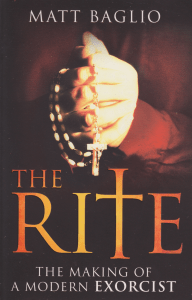
A few weeks back I wrote about The Exorcism of Emily Rose, based on the true tragic story of a young woman who died after a prolonged exorcism. After that I watched The Last Exorcism, The Rite, and The Possession. (I’m such a cheerful guy, as you can see, and this may be why I inhabit an isolated cubicle at work.) This array of movies, held together by the common chord of the reality of demonic possession, also brought together the standard sociological division of Protestant, Catholic, and Jew. The Last Exorcism is a Protestant-based treatment of what is generally considered to be a Catholic subject. That connection is affirmed in The Rite. The Possession, however, gives us a Jewish demon and a rare representation of a Jewish exorcism (acted by Matisyahu, no less!). What emerges from watching all of these films together is that demons are an inter-denominational problem, even in a scientific world. Carl Sagan wrote about the demon-haunted world, and it continues to exist, it seems.

But these are movies we’re talking about. Not reality. Nevertheless, The Rite and The Possession are also said to be based on true stories. We do live in a mysterious world. Evolution has developed reasoning as a practical way of dealing with life in a complex ecosystem. It is a survival mechanism. So is emotion. We sometimes forget that both thought and feeling are necessary for survival in our corner of the universe. Neither one is an end in itself. We can’t quite figure out how these two features of the human brain work together. There are, in other words, some dark corners left in our psyches. I suspect that’s why I find such movies so interesting. They’re not my favorites, but they do serve to remind us of just how little we know. And that’s a scary thought, given how we’ve learned to possess this planet.


Political Games

the_imitation_game_poster

The enigma machine held an almost impossible complexity for generating codes. It gave the Nazis a great advantage during World War II since it was beyond the ability of cryptographers to decipher it. It was against this background that Alan Turing developed what would come to be recognized today as the computer. A brilliant mathematician, Turing himself was an enigma, in part because he was a homosexual—and in Britain at the time acting on this was a crime. Turing famously committed suicide just at the start of a brilliant career, probably because of his conviction of this “crime.” Those of you who’ve seen The Imitation Game will recognize the plot of the movie, and most people who read about technology will recognize that the story is largely factual. We like to think we’ve progressed since the days when one’s sexual orientation was considered a crime, but the enigma of the election has proven indecipherable once again.

As we begin to realize just what the price will be to have an avowed bigot in the highest office in the land, it may be helpful to decode things a bit. I, for one, have to admit that having a few days off from work and avoiding the news as much as possible, has been restorative. Watching movies, spending hours at a time writing, and actually seeing family when we’re all awake have been wonderful. Now it’s time to face the cold realities of 2017 with early morning bus rides and a looming intolerance on the horizon.

I have to admit that my mind doesn’t work like that of a code-breaker. Some of the ancient languages I studied were originally decoded by cryptographers who turned their attention to trying to understand people whose only means of communication were forms of writing long forgotten. For me, as a student, it was more a matter of trying to understand what it meant to think like someone else. This may be what is most distressing about the fascist outlook brewing in Washington—there is no desire to even attempt to look at things from the other point of view. It’s a raw celebration of power granted in a moment of weakness. We have tomes and tomes of history to demonstrate just what’s wrong with all of this, but the enigma is that those who have no interest in learning will ever read them. We continue to play a silly political game without counting what we have lost. This may be a zero-sum game after all.


Undiscovered Countries

My friend Marvin always amuses me with what he’s got in his refrigerator. He likes to buy products that he considers appropriate to the season. On a recent visit he pulled out a bottle of Arrogant Bastard Ale. He said it was prophetic, in the sense that later this month we’d all be faced with someone fitting of such a moniker. I appreciate his sense of humor—I think we’re going to find that laughter, incredulous and otherwise, is going to help get us through to 2020. Once we reach that mythical date when there will be cities under the sea (unless my childhood cartoon watching has steered me wrong yet again) crewing aquagum all the way, we will have to begin undoing the damage that our government is planning even now. Of course, we were supposed to have a moonbase in 1999, and that show wasn’t even animated. Television produces the biggest liars of all, I guess.

img_3122

January always makes me think of Janus, the two-faced god. Looking forward and looking back. Even Janus seems to have taken on new meaning this year. That’s the thing about symbols—you can’t pin them down to one thing. One of the benefits to studying religion is that you get to feel comfortable around symbols. There may be no real symbology department at Harvard or anywhere else, but scholars of religion inhabit that territory. We skulk around the dark places that human beliefs may go, even allowing people to believe things that are factually false. Instead of getting too dark, maybe we can think of a joke. Two Corinthians walk into a bar…

The future is the famously undiscovered country. Maybe by the time we get there we will have realized just how silly the very idea of countries are. Seems now that citizens of foreign nations can legally take over the US election process, so why bother with borders at all? Put in another way, who wouldn’t welcome the spy who came in from the cold? It’s January out there and all people need shelter from the chill. I keep telling myself there’s no mess that’s so bad that it can’t be cleaned up. Or maybe I’m just thinking of Bruce Almighty again. My friend Marvin refuses to let reality get him down. When the days are short, it is especially important to be the light. Maybe he’s right.


We Are an Island

moana_teaser_posterApropos of both building your own deity and Disney, my family went to see Moana. Now, I have to admit up front to being a bit behind on my Polynesian mythology. Scholars of the history of religions feel terribly insecure if they don’t read the languages or haven’t spent time with the culture first-hand. I’ve seen the Pacific Ocean a few times, but never from the point-of-view of an islander. In fact, one of the areas of growing interest in biblical studies is the interpretation of Holy Writ by islanders. Their perspective, it seems clear, is different from others in more populated land masses. So Moana, which delves into Pacific islander mythology, was a brand new world for me. More than hearing about the demigod Maui, it was a chance to consider what destruction of our ecosystem looks like to those who have more limited resources at hand. Those who, when global warming really kicks in, will be the first to become homeless.

One of the strange things about living in the post-truth world (defined as the world after 11/9) is that many movies, novels, and other creative explorations I encounter seem to underscore the demon we’ve invited in. Moana is about a girl who saves her people, but she only does so by defying the man in power. Had she not journeyed beyond the reef, her people would’ve starved on their island. Meanwhile the big white man prepares to assault the White House and all that our founders held dear: an educated leadership. Progress. Fair treatment for all. Someone needs to remind these short-sighted individuals that every landmass is an island.

As we approach the end of 2016 it’s time to think of where we’ve been. At the theater, an ad by Google showed the newsworthy events of the year. There could not have been a better rendering of the high hopes with which we began and the sorrow with which we’ve come to an end. Our scorn of education has caught up with us and we’ve asked “the man” to please destroy our world and enslave our women and deport anyone who’s different. We need a lesson in how to build better deities. We need to be willing to admit that a girl might know more than her father. We need to learn the wisdom of the islanders.


Lions and Lambs

This brief break between Christmas and New Year’s Day, taking into account the vacation days expended to enjoy it, is a time filled with movies, reading, writing, and sufficient sleep. In short, it’s like a dream. I’ll get around to addressing the movies eventually, but right now one in particular is on my mind: Zootopia. Disney movies weren’t a big part of my childhood. We did watch the Wonderful World of Disney on Sunday nights, but movies were an expensive treat. I remember seeing The Jungle Book, Bedknobs and Broomsticks, and Herbie the Lovebug. When we could afford a movie, it was frequently at a drive-in where a carload was cheaper than individual seats. I missed several of the childhood western canon—I never saw Mary Poppins until I was in college. Becoming a parent in the 1990s meant becoming conversant with Disney.

zootopia

Oh, I’ve heard the conspiracy theories: Disney is “the evil empire,” part of the Bilderberg Group, the Illuminati, and any number of other collectives that want to run the world. They have access, we are told, to the young and a reach that excludes few before the age of ten. I know little of Disney’s business practices, but Zootopia suggests to me that they are telling our children the right message. The movie follows the ambitions of Judy Hopps, a bunny that want to be a police officer in Zootopia, the largest city in the animal world. Threatened and bullied because she’s a girl, and small—traditionally prey—she nevertheless overcomes the obstacles necessary to meet her dreams. Once she meets success, however, she finds herself engaging in prejudice against predators. Species profiling takes over and the white sheep (literally) take over.

The message of not assuming someone is a slave to their “biology” is a powerful one. Nick Wilde, the fox that assists Judy to her goal, becomes a victim. The only way forward for Zootopia is to recognize that profiling—gender or species—is wrong. Since the story isn’t preachy, it’s all the better. Watching unchecked prejudice surging through our political machinery today, it was difficult to believe that this movie was released all the way back in March. The prey animals are the majority, and they feel threatened and so follow the leadership that controls, deports the predators who’ve been law-abiding citizens all along. Only when we once again see shrews living peacefully next to elephants, rabbits, lions, and polar bears, do we get the sense that everything’s as it should be. I know nothing of Disney’s business practices, but with messages as important as this, I have but few worries.


American Possession

the_exorcism_of_emily_rose

Exorcism seems an especially appropriate trope these days. Embedded evil has to be faced squarely and forced out before it kills its host. I recently rewatched The Exorcism of Emily Rose. This is a most unusual horror film in that the story is born by a courtroom drama over whether the priest overseeing the ritual was responsible for the death of Emily Rose. Famously based on a true story, the movie raises a more basic question than whether it “really happened”—what is the viewpoint through which we view the world? We see from the very beginning that the case is actually a contest between two powerful law firms. Each wants a lawyer that can shred the case of the other. The prosecutors engage Ethan Thomas, a very religious Methodist, against the defense’s Erin Bruner, an agnostic. Believing Emily’s case to be purely medical, Thomas asserts that had she stayed on her medication Emily would’ve remained alive with the prospects of a healthy life. Fearing a complete loss, Bruner takes a risky counter-approach: what is Emily really was possessed?

The obligatory scary scenes are shown, of course. They are flashbacks inserted into the course of the trial, but nevertheless disturbing for all their calm, rational framing. The real question, as the story plays out, is can a supernatural worldview be allowed in a court of law. Ironically, such a worldview is already present when a witness swears on the Bible. This particular movie doesn’t show those scenes, but it would’ve been a fair point for Ms. Bruner to make. Clearly the court can’t decide if demons are real, but it can allow that possibility. It’s a classic case of science versus religion. Nevertheless, both sides make use of science. The anthropologist on the stand is dismissed by the religious Mr. Thomas. He has no time for Catholic, or any other religions’, superstition.

Many strange choices were made for this particular cinematic piece, but the story works nevertheless. Those who believe in spiritual realities are allowed to live them out only to a point. The legal system decides if a religion has gone too far. I couldn’t help but wonder if, in a post-truth world, any clear standard of rationality can possibly hold. But questioning universally accepted truths and subverting them to personal preferences its almost if we’ve actually reached the stage of “all those in favor of general relativity say ‘aye.’” As I say, the film was more timely than anticipated. Demons, after all, often appear in the guise of an angel of light. Especially for those motivated by fear.


Engendering Fear

menwomenchainsawWe live in fear. At this point in history, it seems, with good reason. Horror films, apart from being considered low art, teach us to deal with some of these fears. I hadn’t been reading about the genre for very long before I began to notice the repeated references to Men, Women, and Chainsaws: Gender in the Modern Horror Film. This is Carol J. Clover’s seminal study of gender theory and horror. Probably best known for first identifying the trope of “the final girl,” Clover gives much more than that to the conscientious reader. Her chapter on possession movies is among the most insightful that I’ve read. And yes, she does make a very good case for the final girl.

Using theories of gender, she explores why both boys and girls (the former numerically more obvious) flock to such disturbing movies. Although she suggests masochism has something to do with it, is isn’t simply that boys enjoy seeing girls suffer. Quite the opposite. Boys often see themselves in the place of female victims. As with most things associated with gender, it’s far more complicated than it seems. In that sense, this is a book for our time. We live in what George Banks calls “the age of men,” and while Mary Poppins can hardly be called horror, the underlying narrative bears some warning tones. Men, left to their own devices, will seize what power they can grasp. We’ve spent the last five decades teaching men that this is no longer appropriate, only to have that message wiped away with the final trump. Horror can be remarkably pro-feminine. Business, as we’ve seen over and over, is less so.

Not having ever formally studied gender theory, some of the intricacies of Clover’s argumentation were no doubt lost on me. I was, however, able to gather a remarkable amount of appreciation for the subtexts in many of the movies I’ve watched. Gender, you see, touches everything we do. It behooves us to be aware that careless, or thoughtless support of misogyny does not lead to the results that many men suppose. Some horror movies are truly difficult to watch. Not all conform to the standard expectations. What Clover has shown, however, is that often the women are able to draw from a depth of strength to which the male characters lack access. They don’t do so willingly. In fact, they are often reluctant. When the horror is at its end, however, the final girl emerges triumphant.


Monsters and Men

dreadful-pleasuresHorror films are something you either “get” or you don’t. I have no empirical evidence for that, but then again, “getting” is hardly a precise verb. In my recent desire to find some explanation for my own fascination with the genre, I turned to James B. Twitchell’s Dreadful Pleasures: An Anatomy of Modern Horror. This is a smart book. Twitchell, an English professor, knows to include Gothic novels in his accounting for this strange addiction. He has several insightful things to say about the differences between terror and horror. He gives a fairly complete analysis of the “big three”—vampires, Frankenstein monsters, and werewolves/wolf men/Jekyll and Hydes. Still, at the end, I have to wonder if he really “gets” the monsters he explores. Part of this is his early admission that he didn’t grow up with monsters, but that he was introduced to them academically. Another part of it is his sometimes dismissive style when talking about movies that meant a great deal to us monster boomers when they came out. Either you get it or you don’t.

Still, I recommend this book for those who want to make sense of some of the hidden dynamics of classic monsters. That the analysis is sexual should come as no surprise. Twitchell finds evidence for a sublimated incest in many of his creatures, but the true fan knows there is more to them than that. The monster does indeed cross boundaries—that’s what monsters do, after all—but that’s only scratching the surface with their claws. Of course, the book suffers from having been written perhaps a little too early. Although there is protest to the contrary, horror films have grown up considerably since the 1980s. Not all of them, of course. The same thing could be said of the kids I knew in high school.

Having a single theory to approach a phenomenon is respectable. So respectable that it’s called Occam’s Razor and everyone is expected to shave with it. I’ve never liked shaving. The more I reflect on reality, the more it seems to me that answers are more complex than single causation. Sometimes the simplest answer isn’t the most parsimonious. Sometimes there is far more going on than meets the cyclops’ eye. In my experience, limited though it may be, the horror movie has unexplored dimensions. One of them is the coping ability that they offer when evens such as 11/9 occur. There’s no simple way to understand monsters, but if we see them around enough, we might just be able to survive them.


December Demons

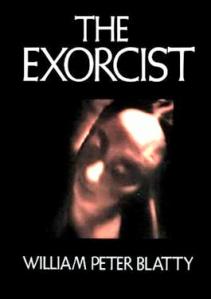
Conversations with friends, inevitably, turn to the fiasco this country faces with Donald Trump. My response, apart from attempting a measure of optimism and combativeness, often involves escapism. Regular readers know that I watch horror movies. They may not know that I watch such films to help me cope with the very real fears of living in what has all the signs of being an out-of-control autocracy. With this in mind, I’ve been reading about horror films to try to understand myself a bit more. Perhaps a roundabout way to psychological insight, but it is cheaper than seeing a therapist. Over the weekend I again watched The Exorcist. A classic of the horror genre, it is rare in having been nominated for Best Picture at the Academy Awards and having received mainstream critical acclaim. What made it particularly interesting at this particular viewing is the fact that demons are such poorly understood monsters.

Mikhail Vrubel's demon, Wikimedia Commons

Mikhail Vrubel’s demon, Wikimedia Commons

One of the reasons for this is that no single entity known as “demon” fits all the ancient ideas about such spiritual beings. The earliest demons we know about, from ancient Mesopotamia, aren’t necessarily evil. They seem to be in control of natural forces that harm people, but that isn’t always intentional. From the human perspective this is bad, but from the point of view of the divine world, it’s neutral. Sumerians and those of the Babylonian and Assyrian empires did not believe in Hell. There was no Satan and therefore “fallen angels” intent on harming people weren’t part of their worldview. The Greeks, who gave us the word, referred to as “daimons” nature spirits that were generally benign. In the biblical world, influenced by Zoroastrianism, a dualistic understanding of the universe emerged and eventually demons came to be understood as angels that followed the Devil in revolt against God.

Complicating the picture, possession, in world religions, is not always a negative thing. In some cases it is a way of having a deity inhabit one’s body—something of a blessing. In the New Testament demons may have been an explanation for epilepsy. They were, however, understood in that day as possessing spirits of evil intent, in league with Satan. Thoroughly evil, they could evoke paranormal phenomena and could completely control a person unless expelled. In modern media, where reality television dictates the terms, demons are responsible for some hauntings. They are disembodied entities “that were never human” and they are always malevolent. One of the reasons they are so scary is that no one really knows what they are. And in cases where one has no idea what to expect, fear is a natural result.


The Wicked Man

I confess, it was a moment of weakness. Or I could say that it was dedication to research. In either case, I subjected myself to watching the remake of the 1973 classic, The Wicker Man. The reviews that I’ve read over the past decade since its release had warned me not to subject myself to it. Not only did I, but I had my wife gamely watch it with me. If you plan to watch the flick but haven’t, I’ll first of all beg you to save your time and secondly warn you of spoiler alerts. So here goes.

By Source, Fair use, Link

By Source, Fair use, Link

In a movie that may be either pro-feminist or misogynistic, depending on which way you look at it, this version of The Wicker Man takes place in the United States. We’ve got all kinds of New Religious Movements in this country, so that much is believable. The film has a group of women who mute, deafen, and enslave their males moving from Salem, Massachusetts, across the country to Puget Sound where they can find an island to be left alone with their rituals. Superfluously adding an “s” to the original’s Summerisle, they come up with the sloppy-sounding Summersisle where they can raise bees. They worship the great mother-goddess, which is cool enough, but their religion appears to be cobbled together in a way that suggests those responsible for the movie didn’t do their homework. Although Sister Summersisle (five “s”es—count ‘em!) claims this to be a Celtic religion there are merely the weakest echoes of such.

To make matters worse, Edward Malus goes around beating up women when they get in his way. Yes, he is the unwitting victim—we’ve seen the original and know how this plays out—but it makes the viewer uncomfortable watching this unsympathetic protagonist punching, kicking, and even bicycle-jacking with a gun, the women of the island. A man comes ashore and the first thing he does is try to take over. Were there evidence of a deeper plot here it might suggest that this was intentionally written into it. As it turns out, however, as we enter a fearful era of the rich white man’s revenge, such scenes only suggest that Mr. Malus had it coming. Perhaps the movie is prophetic after all.

I really don’t recommend spending your time on the remake of what has become a horror classic. If you’ve seen the excellent original, you already know how it ends. And despite his brusque manner Neil Howie didn’t shout invectives at women or punch them in the face. In short, he took his fate in what might be a way that is also prophetic.


Cinematic Reality

monstersmadEven without the results of the recent presidential election, I would be reading about horror movies. One of the reasons is that I wonder what the appeal might be—why do I put myself in a dark room with an uncertain future? Until recently academics had thought this was something only unreflective, uneducated people did. As is often the case, such as with the electoral college, the numbers tell a different story. Andrew Tudor’s Monsters and Mad Scientists: A Cultural History of the Horror Movie is an example of what happens when a sociologically oriented film critic explores the genre. Although not overwhelming, there are plenty of tables and charts, showing the various trends of horror films from the 1930s up through the mid 1980s. Tudor analyzes what makes us afraid and the main sources of that fear: science, supernatural, and psyche. Since these are all day-to-day things it seems that movies express the basic human condition.

Reading a book published in the ‘80s, however, makes you wonder what might have been missed. We’ve had more than three decades of further horror movies and although categories may be useful, and perhaps even stable, recent events unlock further fears. I suspect there will be a comeback of Nazis in scary movies over the next few years. Horror is, after all, a reflection of those who are willing to be honest about what scares them. There’s plenty of subject matter lying about the headlines of the past weeks.

What I found especially interesting is, at least in the 1980s, statistically the great majority of films featured a supernatural threat. Of these, Tudor notes, the vampire is by far the most popular. We’ve had a dalliance with zombies since then. And I’ve seen plenty of examples where extraterrestrials form the threat. Even ghosts have staged a somewhat unexpected comeback. And movies of demons have proliferated. The supernatural does indeed scare us. I’m not sure that we can quantify it as easily as we used to. Unlike earlier generations of scholars, I’m beginning to see the horror inherent in much of society. We’ve created a scary world with even more scary possibilities. The thing about monsters is they have no sympathy. They are cold, calculating, and all about meeting their own unnatural needs. All the rest of us are just, not to put too fine a point on it, their food. I have a feeling that we’ll be seeing much more of this in days to come.


United Hates of America

horrorfilmHorror comes in many forms. Some people may wonder why I watch horror movies and read scary stories. The election results tell the story. As we descend into four years of horror, I was reading Peter Hutchings’ The Horror Film. At least I feel somewhat prepared. Or course, I’m still in shock. So I turn to horror shows. One of the things I found in Hutchings’ book was the idea that this kind of movie is a collective nightmare. The thing about nightmares is that sometimes reality is even worse.

It’s difficult to think straight sometimes. When I was a child I was taught that hatred was evil. Hate itself was a bad word, close to, maybe even worse than, swearing. What horror shows us clearly is that hatred leads to results we’ll only regret. Being bullied because you’re a little guy, or because you’re female, or because your sexual orientation is different, is something far too common. It seems it may be institutionalized now. No wonder so many horror movies take place in insane asylums.

Don’t mind me, I barely slept. I woke up in a country I no longer recognize. Or maybe recognize a little too well. The thing is, I feel sorry for Peter Hutchings’ The Horror Film. It is a worthy little book. I learned a lot from reading it. In fact, some of what I learned may come in very handy in the next few years. Zombies, after all, are called the walking dead. And I can’t really see the future at all. Maybe I’m just waiting for the curtain to part. Maybe I’m still asleep. I’ve seen enough horror movies to know how that scenario ends.