Jonahado

SharknadoSome movies are so bad that they become classics. Some are just plain bad. The jury in my head is still out on Sharknado. The story, obviously tongue-in-cheek, is so far-fetched as to be pretentious, and anyone who knows something about either sharks or tornadoes, or both, will likely find credibility waning from the first scene. For those sensible among my readers, who’ve not seen the movie, the title gives it all away. A global-warming-induced hurricane hurries toward Santa Monica with its forever young sun-worshippers. The hurricane floods the California coast, bringing sharks to the city streets. As our protagonists drive around somewhat pointlessly, the sharks attack their car, eventually eating everyone who’s not family. At one point the family tries to buy rations at a liquor store, only to have the news announce that this is the apocalypse. The store owner scowls that it’s the government, not God, that’s bringing this upon them. Then the waterspouts appear, morphing into tornadoes carrying sharks, still hungrily chomping at everything as they fly through the air.

Ironically a biblical theme comes about with the swallowing of Nova. As she falls from a helicopter (don’t ask), a great white shark snaps her up in mid-air, and since she’s about the only character you can care about, the movie seems to have reached its nadir. As the tornadoes dissipate and the sharks coming raining down, the eponymously named Fin is swallowed whole by a huge great white, while still holding his chainsaw. We already know that this latter-day Jonah will make his way back out, and we are supposed to be surprised that this is the very same shark that holds the reborn Nova, who admits her real name is Jenny Lynn. Like Neo in The Matrix, she is the convert to a new faith, this time in the family of Fin, whose only fault, it seems, is that he cares too much for others.

While a made-for-television B movie (although C or D might be more appropriate), Sharknado demonstrates the popular conception of the apocalypse. Not that it will involve flying sharks and destructive wind-storms, but that the end of the world is somehow inevitable. We have convinced ourselves that its a matter of when, not if, the world will meet its demise. Global warming, clearly our fault, is blamed by the movie (as is the government), but the story is that the flimsy culture we’ve constructed is subject to utter ruin by a hurricane and maritime predators. Or I could be reading far too much into this. Religious tropes may be picked and chosen at will. And when things really go wrong, like accidentally switching on Sharknado, we have a ready arsenal of religious ideas at hand to blame. And the apocalypse may be the least of our worries.


Gorilla Whale

Monster Boomers grew up with Godzilla. Among the many monsters on offer on a Saturday afternoon, Godzilla was one of the most obvious fakes, but also among the most poignant of realities. Even as kids in the 1960s we knew about the atomic bombs that had been dropped on Japan. We knew, at some level, that we had come to a point where one species could destroy its entire habitat and that we had obliterated millions of our own kind in just the past half-century, let alone the millennia prior to that. Godzilla represented not just a man in a rubber suit, but the fear of what we could bring upon ourselves. Radiation, burning, the terror of Japanese citizens, and yet, that odd sympathy for the monster. Metaphors were growing much faster than the half-life was decaying. Godzilla became a lasting symbol of both childhood and adult awareness.

I haven’t seen the Godzilla that opened in theaters this past weekend. Inevitably, I eventually will. The 1998 version came pretty cheaply on DVD at a local video store a decade after its release, and I saw then that the monster had lost its emotional appeal. The original, compelling Godzilla was now just another monster to be destroyed. Instead of representing the environment fighting back, it was the environment waiting to be exploited. A shift had taken place and Godzilla was less godlike than before, but more terrifying. Monsters can be lovable, too.

MCDGODZ EC052

H. R. Giger, Time reports, died this past week. Giger was involved in creature design for the new Godzilla, and the memorial by Richard Corliss notes that he was inspired by H. P. Lovecraft, among others. Lovecraft gave us the old gods, and although the original Godzilla was about the horrors of nuclear war, there is a streak of Lovecraftian righteousness to it. The universe does not care for us. We invent gods, or monsters, or both, for that. Godzilla, as originally conceived, was never really that scary. What people could do to each other, and their planet, was. Sometime in the next decade, I’ll watch the newest Godzilla, and in the meantime, I hope that the message of the original somehow manages to sink in. We Monster Boomers can be quite naive that way.


Rosemary by Any Other Name

Rosemary

With NBC’s remake of Rosemary’s Baby into a mini-series in the news, I sat down to watch the original again. I’ve blogged about it before, but with most available funds being diverted to college, watching new movies will be a rare treat for some years to come. Besides, the original is a mishmash of religious ideas that despite their lack of coherence still leave the viewer somewhat disturbed. Since the last time I watched the movie, I’ve read several books on witches and have come to recognize the strange brew that Roman Polanski concocted for public consumption. Reaching back to the myth of diabolic witches, the original movie presents such witches initiating a new world by literally spawning Satan on a woman whose name is based on the mother of Jesus and who will ultimately care for the helpless little devil. The viewer, despite the knowledge that Rosemary is carrying evil incarnate, still sides with the vulnerable, pregnant protagonist. It’s the end of the world as we know it.

I’m not sure how you make a miniseries out of this thin plot. I suppose a nine-month pregnancy would lend itself to slow development, but haven’t we grown a little too old for witches and devils? In fact, Wicca is now a recognized religion in much of the industrial world, and the devil’s been on the run for decades. Religious movies, or at least movies based on religious themes and characters, are perennially popular, however, no matter what the secularists tell us. And why not open a series about pregnancy on the weekend of Mother’s Day? Nothing stirs the emotions like putting a young mother at risk. That’s perhaps the insidious side of the original movie—we silently side with the devil.

Rosemary is, of course, manipulated by her husband with the everyman name of Guy. This isn’t in any sense his child and, like any businessman, he stands to gain enormously from someone else’s labor. Exploitation is the cost of the continuation of the human race. It doesn’t take much to figure out that we’re watching a parable here. After all, the Time magazine cover asking if God is dead makes a cameo in Dr. Saperstein’s office. And the setting in Manhattan clues us in from the beginning that this is the place were many millions are asked to make a few very rich. There is a witchery in New York, and for those who know how to look, the devil may be found in the details.


Hotel Nowhere

HotelCalifornia1977. I was in junior high school and I wore my hair long. I hadn’t yet donned the cross that I carried through my high school years with a constant fear of Hell on my back, but I did listen to the radio. The haunting song “Hotel California,” by the Eagles, scared me. There was something lurking there—something undefined and yet compelling. Cults were in the news, and after the People’s Temple suicide a year later, we were all pretty well convinced that the song was based on fact of some sort. Religious analysts concluded that the song referred to everything from the Antichrist (“they just can’t kill the beast”) to a New Religious Movement that had taken over a western mission (“we haven’t had that spirit here since 1969”). Members of the Eagles, when asked, said their intentions were to expose the darkness of the music industry as idealistic hippies came of age and realized, yes, it’s just business. Still, I shivered.

Nashotah House used to be on the frontier. Although it is only 30 miles from Milwaukee, it could still feel terribly isolated less than two decades after the Eagles had flown. Indeed, there were sotto voce suggestions that “Hotel California” should be the official seminary hymn. “You can check out any time you like, but you can never leave.” The nights could be very dark in the Wisconsin woods, and for those attuned to some of the more honest aspects of a religion based on exclusion this didn’t seem too far to stretch. “Hotel California” came forcefully back to mind reading about Oneiric Hotel in Wired. (Mentioning Wired makes me look smart.) The Oneiric Hotel is a lucid-dreaming device by artist Julijonas Urbonas, the kind of thing Wired finds newsworthy. The story mentions that Urbonas’s previous project—called Euthanasia Coaster—was designed to kill its passengers.

Now my mind checks into Bates Motel. I know Psycho is set in Arizona, but the desert southwest is terra incognita to an easterner, and besides, it’s just a metaphor. It looks like California to me. I saw Psycho as a college student, and was rather afraid to watch it while at Nashotah House. Indeed, the night I moved to campus I found a dog-eared script from a play about a murderous maid at the seminary left on my coffee table. “This could be Heaven or this could be Hell.” Psycho, it is asserted, was based on the macabre case of sociopathic killer Ed Gein who had roamed these self-same woods of Wisconsin, and who had died less than a decade earlier just down the road in Madison. There was, I knew, a psychiatric hospital just across the small lake that the campus bordered. We don’t call them cults anymore, but we all know what we’re talking about. There are indeed places that you can never check out, even if you leave.


Fire Bearer

Prometheusposterfixed

Part prequel and part religious odyssey, Prometheus both treads familiar ground and explores new territory. In keeping with my invariable sense of timing (I saw none of the Alien trilogy in theaters), I waited until well after the fact to see the movie. I had heard Prometheus called a prequel, but even if I hadn’t some of the Ridley Scottish touches might’ve given it away: a large ship bound for a distant planet, evidence of unexpected inhabitants—yes, they knew about the “engineers” (we could call them “watchers”) but not the proto-Aliens they were breeding. We even have the android that understands science’s need to be greater than that of human need. Déjà vu. Still, there’s something very different here—direct discussion of religion and how faith plays into the work of scientists. Elizabeth Shaw, the sole survivor, wears a cross as she tries to work out what her father’s teaching about religion might mean. The cross isn’t hidden in the background—it is brought out into the open and discussed.

If you haven’t seen the movie, the premise is that ancient artifacts (including the ubiquitous Sumerian, Egyptian, and Mayan templates) added to a new discovery in Scotland, demonstrate that a race of giants have been inviting us to their planet for thousands of years. In fact, they had engineered us. (Ironically, the biologist who espouses Darwin is among the first to die.) Peter Wayland, industrialist billionaire who doesn’t want to die, funds a trip to meet these engineers. The engineers, save one, died long ago. Apparently of some plague (cue the aliens!) that were created to destroy humans. They were about ready to send the nasty beasties to earth when they were overcome, with only a single survivor. No coincidence that this planet was reached on Christmas day. It becomes clear to Dr. Shaw that these engineers were intent on destroying the human race they created. And still, she slips her cross back on before facing the engineers of life and death. This was Noah without all the water (and much better writers).

Of course we think we know the rest of the story. Sigourney Weaver bravely led us through three alien attacks before sacrificing herself in a New Testament kind of ending. But what about Elizabeth Shaw? She who bore and aborted the mother of aliens in a very maculate conception? She is off to a prequel’s prequel to find out why these engineers wanted to destroy us. Rumor tells of Prometheus 2, and I wonder if we will get to meet our maker’s makers. Although Scott is an atheist, he brings us Moses later this year, and has already given us Mary and Jesus wrapped up into one with Ripley and her spiritual mother, a sci-fi St Anne, in Elizabeth Shaw. After all Elizabeth was cousin to Mary, and now that the question of faith has been openly discussed, it will have to be more fully addressed. Among the unanswered questions is whether I be able to make it to the theater on time to see this one, or will two years vanish before I find the time to address the eternal questions that Ridley Scott always seems to pose.


Ham Awry

Ham, in the movie Noah, is a conflicted figure. I felt a slight chill, I’ll have to admit, when the carnivore Tubal-Cain asked him his name, reminiscent as it is of pork. Of the sons of Noah he alone bears the impossibly stylish short hair his father seems to favor, and yet, he is one of four men alive and the only one without a mate. Japheth is young enough to wait for his twin nieces to grow up, and the ancestor of the Semites, Shem, has already begun his fruitful multiplication, just when humanity seemed at an evolutionary bottle-neck. Ham found a wife but couldn’t keep her. Noah leaves her to be trampled to death as he takes his son to the gentlemen’s club known as The Ark. The rain has already begun to fall.

In the Bible Ham gets short-shrift as well. Having seen Noah naked after he discovers alcoholism, Ham bears the brunt of his father’s wrath. Noah, perhaps still hungover, curses Ham’s son (not appearing in the movie), Canaan. From the biblical point of view, the reason is perfectly clear: when Israel arrived in the promised land, the Canaanites already lived there. Given that the promise was to Shem’s descendants, a genocide was ordered and probably the more liberal among the marauding Israelites felt a bit of guilt about that. No worries—like ethnic minorities in horror movies, the Canaanites were created to be killed. Ham, however, isn’t cursed for his voyeurism. Still, according to later interpretation, he is the ancestor of the Africans as well, and the “curse of Ham” was used for a biblically literate society as a justification of slavery. After all, Ham had had an eyeful, and it was only fitting, they reasoned, that his n-teenth-hundredth generation should suffer cruelly for it. How’s that for air-tight reasoning?

According to the movie, Ham decided to leave in voluntary exile. Perhaps he hoped that like Cain he might find an unlikely spouse in an unpopulated world. He had grown apart from the new Adam, welcoming Tubal-Cain aboard the ark, and keeping him hidden until Noah threatened to kill the future of all humankind. Strangely, it seems that Ham is the proximate cause of the salvation of all humanity, and he become a self-sacrificial scapegoat in the Icelandic scenery. He declares that his deceased chosen mate was good, and Noah had cursed her as well. In the Bible cursing is freely dispensed, and it is considered adequate to its task. Somehow that curse transmuted to a nobility in the film, for Ham is the most like Noah of all his children. And even today that self-same Bible is used to justify a genocide in a world where myth is taken for reality.

Noah doesn't like Ham

Noah doesn’t like Ham


Better Watch Out

Among the more intriguing mythologies of Noah, the movie, is the presence of the “Transformer-like” Watchers. The more biblically literate of the film’s viewers will know that Watchers are mentioned in the Bible, but in the book of Daniel—chronologically the latest book in the Hebrew Bible—and not in Genesis. Daniel does not tell us what Watchers are, but it uses the term in parallel with Holy Ones, implying that they are angels. In the apocryphal book of Enoch, there is quite a bit of mythology concerning Watchers, and they are tied back to the flood story by the strange first four verses of Genesis 6 that note the sons of God saw human women were beautiful and took them, populating the earth with giants as a result. The Bible, as typical, is very cryptic about all of this, leaving imagination to fill in the gaps. Watchers were later associated with fallen angels, and they are sometimes referred to as Grigori, the Slavic form of the name. Biblically we know practically nothing of them.

Watchers have long had a home in the paranormal speculation crowd. Associated with ancient astronauts, a modern mythology has grown up around who the Watchers supposedly really were. This is an outgrowth of the Judaic myth that came from the non-biblical texts that themselves grew out of such esoteric references as those to Enoch, nephilim (fallen ones), and giants, in Genesis. That antediluvian world was a fascinating period in which just about anything goes, but nothing is explained. Even the ark itself is described in terms so vague that it really can’t be reconstructed precisely. The Watchers, according to Genesis in any case, weren’t there. One gets the sense that ancient readers, anxious for a logical roadmap of the divine world, were quick to fill in the gaps that the Bible leaves.

Although Christian theology would eventually declare God omniscient, this does not characterize the deity of the Hebrew Bible. Even before the discovery of Oceania or the New World, the ancient Mediterranean and West Asia were too large for any one God to know it all. Watchers were, most likely, members of the divine council whose purview was to view. Keep an eye on what people were up to. Fallen angels, later equated with demons, were a convenient way to explain evil in a world made by a deity who is only good. And who doesn’t know that feeling of being watched, especially when being naughty? According to Genesis 6 not even the children of God are exempt from such behavior. The Bible gives us plenty to work with, if we’re only willing to use our imaginations.

Somebody's eye is watching...

Somebody’s eye is watching…


Heaven Can Wait

“Like a good neighbor, State Farm is there.” So the jingle goes. Or went. I’ve only met my upstairs neighbors once. Twice now. Apparently last weekend I slept through the fire alarm—one of the dangers of awaking ridiculously early on a daily basis. The neighbors found the source of the smoke and turned off the furnace in the basement, but told me first thing in the morning before the coffee really kicked in. I avoided a close call, perhaps. What if they’d not been home?

I have no delusions about understanding how the Internet works. I’m still trying to figure out the telegraph. Perhaps having this inconsequential blog has put me on somebody’s radar, or maybe it’s just some bored robot that searches for strange combinations of words in the wee hours of the night. In any case, I ended up with an email with the trailer for Heaven Is For Real embedded in it. I recall when the book was on the New York Times bestseller list, and I suppose the Easter weekend release date is no coincidence, but the trailer still bothered me a bit. It’s not the resurrection part—the film industry wouldn’t get very far without that trope—but it is the implications of what heaven would be like. I haven’t read the book, but apparently Colton Burpo had a near-death experience and then for a considerable time afterward began describing things that were impossible for him to know. A miscarriage where his sister died, what his grandfather looked like as a young man, what his parents were doing when he was dead in the hospital. Talk about your spooky effects at a distance!

Despite my penchant for watching scary movies, I don’t think I’ll see Heaven Is For Real. There’s just too much emotional build-up here, and Life After Life traumatized me for weeks a couple decades back. Still, I am very interested in the possible explanations for what might have been going on. Near-death experiences have never been adequately explained. Scientists suggest that a lot can happen in a complex brain in a matter of nano-seconds, and we have no chronograph precise enough to know whether the thoughts and images happened before death, during death, or during resuscitation. Still, how people frequently know precisely where others were, who were not in the room at the time, and how they heard things that, medically speaking, they couldn’t have heard, remains eerie and hopeful at the same time. What does appear to be without question is that consciousness is far from being explained.

Botticini's vision

Botticini’s vision

Heaven is always described as pleasant. That concept differs radically for people, and you have to wonder how it can be one-size-fits-all. Some people prefer to be in crowds, while others like to be alone. Some like it hot. Some like it cold. And those who experience near-death phenomena often report having a body of some sort “up there.” Some people would prefer a different body. According to the trailer, Colton says we’re all young over yonder. For me, such things are far more about questions than answers. We don’t know what goes on after death. Nearly every religion ever invented says that clearly there’s more to the story. Some say we come back, others say we stay away. Maybe it is different for each. Maybe it is just a matter of having good neighbors after all.


Clash of the Watchers

NoahMovie

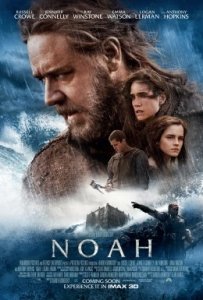
I don’t know about you, but I think I got gypped with my Bible. I have just come out of Noah where I saw amazing sights and a seriously troubled Noah to whom God refuses to say a single word. Controversy still swirls around the web concerning the movie, but I honestly have to say that it was more like Clash of the Titans (2010) than anything else. Except a thin part of the plot—and a few character names—that were borrowed from the Bible, this could have been Herodotus rather than Moses. I don’t recall finding any exploding lava angels in Genesis 1-11, and magic rocks that seem to fit better into a Mormon worldview than a biblical one. Gopher-wood trees grow incredibly fast, and Noah sure fights very well for being a six-hundred year-old man. So why all the fuss? This is a movie folks, not scripture. For the price of the ticket you can buy yourself a new Bible and read the entire story in fifteen minutes (it’s just over two chapters long). If it’s an action movie you’re looking for, I thought The Avengers was better.

What struck me most about the movie, apart from the watchers, which were admittedly an improvement on Holy Writ, was the subtext of evangelicalism. Noah, when he decides to build the ark appears suddenly with an evangelically approved haircut. He also had grown decided misanthropic, insisting that the ark is only for the animals’ sake, and that he only allows Shem to have a wife because he thinks she is barren. When he considers finding wives for Ham and Japheth, there is a huge meat for sex kind of deal going on in Tubal-Cain’s city that disgusts Noah so much that his vegetarian righteousness declares that all people will die off once the ark runs aground. And, of course, he will have to kill his granddaughters. This is a dark and tormented Noah who drinks to forget his problems in a world where God only speaks in cryptic dreams and one gets the sense that Noah is very Republican in his lack of compassion. Take out the whole human race while you’ve got the chance.

The movie is filled with mixed messages. Noah certainly doesn’t appear to live up to his name (“comfort,” by simple translation), and although the supernatural is everywhere, a compassionate deity is utterly lacking. Species die off when Tubal-Cain gets hungry. And the very sign of blessing is the skin shed by the serpent that led to the fall. What are we supposed to learn from this? A vague, Avatar-esque “the planet is good” message does give me a little hope, but seeing Noah poising a knife above an infant’s head only because she’s female makes me a bit squeamish. Noah obeys simply for obedience’s sake and people are mere stains on an otherwise ideal world. Before the fall Adam and Eve veritably glowed. Adam stoops to pick up the serpent’s skin while Eve engineers the fall of all. The special effects are good, but the story, it seems to me, is all wet. That’s the gospel truth.


No Noah

Noah2014Poster

I haven’t seen Noah yet; the timing didn’t work out this past weekend. Besides, you don’t always get to see what you want. Nevertheless, the critics are already having a go at it, and the movie is gathering such attention because it is of biblical proportions. Or more properly, of biblical origins. One commentary in The Guardian suggests that, since knowledge hasn’t moved since Aristotle, that gods really have no place in movies. I have to wonder about that. Sure, the wealthy and powerful seldom have a need for gods, being the captains of their own destinies. Until it comes time to face the flood that all mortals face, and even the rich have to acknowledge that no ark is big enough to take it with them. Who wouldn’t want to have a little divine intervention then? Indeed, God strikes me as the almost perfect antagonist. Before you begin to hurl your stones this direction, think of the book of Job, underrepresented at the box office, but about as honest as they come. We, like Noah, are not in control of this vessel.

To quote Tom Shone, in his review, “[God] has no desire, no needs, no social life, no private life, no self-exploratory intellectual life to speak of.” Of course, the biblical view is quite different. God in the Hebrew Bible is not omnipotent. In fact, he (and he is generally male) comes across as quite lonely. He has anger issues, to be sure, but he is a troubled character rather like a Disney Hercules who doesn’t know how to control his power. Add him to the mix with willful, self-satisfied human beings and it sounds like an afternoon at the movies to me. Perhaps film makers don’t present God with weaknesses—that would be the worst of heresies—but it is also perhaps the most biblical of heresies.

Going back to Aristotle, perhaps it is not that gods should be left out of drama, but that human ideas of God are what writers call a Mary Sue. A Mary Sue is a perfect character with no flaws, the kind of person we first learn to write, since we believe people—and gods—are only good or evil. Then we begin to discover shades of gray. More than just fifty. Characters are complex and experience conflicting wants and wishes. Thus, as Shone notes, God wants people to procreate, but then wants to destroy them. Afterwards he is upset at what he has done. What could be more human than that? The perfect god who knows no struggles, and who never has to fight for what he wants, would be a boring deity indeed. That’s not the divinity skulking around Genesis, however. I’ll have to reserve judgment on Noah’s god until I get to the theater. It seems to me, at this point, that a wee touch of evil makes for deities that are closer to those we experience in our own workaday lives.


The Search for Khan

Star_Trek_II_The_Wrath_of_Khan

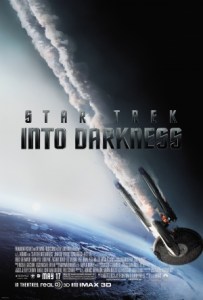
Continuing with the series, I watched Star Trek II: The Wrath of Khan last night. Since weekends are the only time I have for the media, I also threw in Star Trek III: The Search for Spock. Now, I haven’t seen either of these movies since their theatrical release longer ago than I care to admit, but many of the details, particularly from II, had stayed with me. Clearly The Wrath of Khan is superior in every way, but I hadn’t realized how literate it was until I saw it again. From Tale of Two Cities to Moby Dick to the Bible, the viewer in 1982 was given a sci-fi movie with classics sprinkled through it. I hadn’t read Ahab’s famous words on the dying lips of Khan when I first saw it, but I still realized that they were powerful words nevertheless. The premise of both movies, however, is biblical—the Genesis project, which even gets Spock quoting the Bible, is creatio ex nihilo, well, not exactly ex nihilo, as we do have a Big Bang to start the thing. Throughout the language of creating in six days is juxtaposed to morality, for in order to create, you must destroy.

We all know that Spock dies, citing a utilitarianism that would’ve made John Stuart Mill proud, but in what is really a biblical trope: self-sacrifice. And this leads to speculations of resurrection, always lurking in the background of the biblically minded. But theology (and the acting) turn bad in III. We’re all glad to see Spock alive again, but it turns out that Genesis destroys itself after just a short time, and that “Genesis is a failure.” Where do we turn back from the first page of the Bible? There is no preface here. There is, nevertheless, a temporary garden of Eden on the Genesis planet, and it is a federation-level secret. You just can’t keep anything from the Klingons, however. So the Bible implodes and Kirk’s son sacrifices himself so that Spock might live. Can I get a concordance here?

I’m not a trekkie, but I had noticed from the original series through the original cast movies, the assumption was for a biblically literate audience. That assumption can no longer be presumed, although, if pressed, many people could guess that Genesis is in the Bible. Meanwhile, the flood of Noah is also upon us. Exodus comes next. Movies featuring Leviticus are rare. Even as the cast ages visibly from the young, brash Kirk of the 1960’s to the bespectacled, patrician father with regrets in The Search for Spock, society itself has also aged. Some would say, matured. But we need directors telling us now that the flood story is found in Genesis. The Bible has been on self-defense mode for some time as religion has become equated with fanaticism. And yet, even as resurrection looms, we can’t help but to wonder if better things lie ahead.


Jesus of Hollywood

What hath Hollywood to do with Boston? Not enough, apparently. In this week’s Time magazine, an article entitled “Films Are His Flock” by Josh Sanburn revisits the ark. Actually, it throws the doors open a little wider—it looks at Hollywood’s effort to woo the religious. Ironically, although universities all across the country offer courses in religion in popular culture and the Bible in popular media, they are constantly trying to rid themselves of the detritus known as biblical scholars. High brow is in, while Hollywood makes no secret of its love to the common people. For Americans the common person is religious, or at least doesn’t block out religion like the educated crowd does. And they come with pockets lined. Religious movies, if marketed well, can be phenomenal successes. In my four years teaching at a secular state university, my Bible classes were filled to capacity each semester. Still, Rutgers coyly refused to hire me full-time. “There’s no interest,” they seemed to say. “Nobody reads the Bible.”

Meanwhile, according to the article, Jonathan Bock, founder of Grace Hill Media, a marketing firm that sells the Bible to Hollywood, knows a good thing when he sees it. Noah is about to come splashing into theaters. Son of God has already incarnated. Exodus is yet to come. And those are only the movies that are explicitly religious. I had no trouble pointing out to my long-suffering January term classes that religion plays a role in many movies, most of them explicitly secular. Those in Hollywood know that religious themes—the Bible even—resonate with the general public. Having grown up in, or maybe even below, John Q. Public, I have always known that the Bible makes good movies. Doubt it? Ask E.T. As he appeared risen, ascended, and glorified, the stranger from above wearing a white shroud and backlit with a nimbus, many of us squirmed in our seats for we had seen a clever representation of our Lord.

Perhaps it is resistance to the McCarthyism of the 1950s that so many intellectuals associate with religion, but academics just can’t seem to understand that this is important. The Bible business is a multi-million dollar industry, and yet, universities would prefer to ignore the implications. Meanwhile in Hollywood, they’re trying to make sure they get the blend just right. Theatrics and theology. You’ve got to be careful whom you choose to offend. The Last Temptation of Christ, based on a novel written by a devout Nikos Kazantzakis, just didn’t perform as a Scorsese movie. It is the job of people like Jonathan Bock to figure out why. And it isn’t hard to see that it’s a buyers market on America’s left coast. Indeed, without a hint of cynicism the Bible will bring in a flood. But that’s just academic. Or it should be.

Noah looks down over Times Square

Noah looks down over Times Square


Flood of Fancy

Years ago I was approached to write a book about Noah. There was still some hope at that time that I might find a university job and that my words would have more credibility than just any old internet hack. At the time I’d read just about every book about Noah that had been written—and there weren’t that many. Biblical scholars, beyond tying the story to its obvious Mesopotamian sources, have long relegated the tale to the nursery school of biblical drama. Sure, it’s a great story, but what serious scholar takes an interest in a great story? Well, I outlived my academic job and it looks like Noah is going to have the last laugh. We’re told that the Pope has been tweeted about the movie by Russell Crowe and that several Islamic nations have already banned it. According to Today Darren Aronofsky, the director, is more interested in getting non-believers into the theater than trying to please the faithful. Well, let’s face it. A movie based strictly on the Bible would have to be pretty preachy.

The bigger draw seems to be this: our society is simultaneously deemed secular and religious. Americans go to church. They also respond to surveys that they believe in God, the Devil, Heaven, and Hell. They also act as if none of this were true. Business practices tend to be anything but caring, and we show no concerted effort to make sure basic healthcare is offered to all our citizens, let alone the millions who are daily suffering and dying elsewhere in the world. We don’t want to reduce our emissions as a real flood—a literal flood—is on the rise on a global scale. Maybe we’re waiting for a biblical-scale miracle to save us. Noah’s face stares out at you all across Midtown. Judgment is upon us.

NoahMovie

Action films draw male viewers. Religious movies draw females. Aronofsky and Crowe have the winning combination. No gender-bias for a secular-religious nation that has enough loose change to spend a weekend at the movies. The biggest complaint is that it isn’t the Bible. I have to admit I’m kind of enjoying the hype, despite the fact that I never received the chance to write that Noah book that was next on my agenda. If I had, now it might have enjoyed the sales that Irving Finkel’s The Ark Before Noah—scheduled for release three days before the movie—surely will. Timing has never been my strong suit. Of course, money can be its own sort of flood, and many more drown in it than in the literal waters of a secular-religious society. According to Genesis a raven was released to fly about looking for land. The Crowe might have been a better choice since movies, as we all know, improve upon the book.


Frozen Few

It’s that time of year, neither winter nor spring, when ambivalence is in the air. Gray skies with just the first damp aromas of a change in the season, followed by another snow storm and icy winds custom-made in the arctic. So we turn to movies. Frozen is continuing to make headlines and break records. And although the critics voice strong opinions, ambivalence about a powerful message still rocks a society that can’t decide if a woman director having success is an anomaly or an idea far past its time. Stories about the animated feature crop up on the internet on a daily basis, five months after its theatrical release. Some claim it is the most Christian movie in years while others claim it has homosexual marriage at its core. The queen doesn’t need a man and the world’s most conservative, progressive society is in a muddle.

Perhaps I’m just showing my age, but I noticed what I thought was an older child in the sauna when Anna first meets Kristoff. The movie didn’t give me any clues as to his being a gay partner to the shopkeeper, although it’s none of my business if he is. Disney movies have had subtle clues to a kind of radical equality that I’ve noticed over the years, from Edgar’s license plate that reads RU-1 in The Aristocats to two masculine creatures sharing a pad in Monsters Inc. I even remember some people staring suspiciously at Ernie and Bert while the insanely ambiguous Teletubbies were faulted for carrying purses and dressing in primary colors. (Even Judas Iscariot kept a purse, according to the Bible.) A good, empowering story is suspect if we think something more is going on when the lights go out in cartoon-land. Our culture can seem to think of little else beyond mores and how to enforce them.

Globalization has repeatedly demonstrated that there are many different ways of being in the world. And yet, when worlds collide the more conservative culture inevitably makes claims on its more “progressive” neighbor. We see this happening as the church in Africa, now larger than the church in America, drives social policy through denominations that somehow feel guilt at promoting equality. Perhaps proselytization is, at the core, of our fear of difference. What if the other guy is right and we are wrong? Read that back into all our misguided ancestors and we feel chilled indeed. How far do we really trust objective truth? My guess is that ice ages have come and gone that have forged the truth of the moment. Only when the cold faces us do we really admit just how slippery truth might be.

The beauty of ice.

The beauty of ice.


Backyard Archaeology

Among safe topics for discussion among strangers and casual acquaintances, the weather tops the list. It affects each and every one of us continually, and there’s nothing we can do about it. The ideal neutral subject. In fact, however, the weather is highly freighted with religious thinking, deeply sublimated. If you listen closely, you will hear it. Well, this year, at least in the northeast of the United States, winter has been the topic. We still have snow on the ground in New Jersey, and it has been here continually since January. The thaw has begun, however, and when I went to fetch the paper I noticed a newly melted item on the lawn—an archaic newspaper. Obviously the paper-deliverer missed the front steps that day, and by the time I stepped outside it had already been buried. Curious, I brought it inside to get a first-hand look at the past. It was the Monday, February 3 paper. The day after the Super Bowl. Apparently nothing much else was happening in the world a month ago. I don’t even know who played in the game.

IMG_1237

Religion and sports have a long pedigree. One of the first books I signed up at Routledge was on religion and sports in American culture. Routledge decided to sack me before the book was published, so I haven’t had the opportunity to see it yet. Nevertheless, it is clear that the meaning once provided by the strong arm of the Lord is now covered by the stronger arm of the athlete. I’ve watched in fascination as reporters question the players after the game, panning for bits of wisdom as if they might actually get us up off the couch and lead us to a few minutes of physical glory. Instead cliches trickle out: “we saw what needed to be done and did it.” “I took it to the next level.” “First of all, I want to thank Jesus.” Each one like a nugget of pure gold. I still don’t even know who was playing.

On my kitchen table, however, sits a soggy newspaper with the answers to that. The news is old news. And damp. We’ve had an entire Olympics since then, and war seems to be breaking out in the Crimea. Wait a minute, what century is this again? It seems that no matter how old the news is, it still isn’t old enough. One of the oldest news flashes received by humankind, if the Mesopotamians are to be believed, is that there is a huge flood coming. I turn on my browser and lo, a flood indeed! Noah will be released later this month. Posters began to appear in Manhattan as soon as the Super Bowl cleared out. Move on to the next big thing. And, unbeknownst to me, a newspaper laid buried beneath the snow, containing all the information I needed to know. I’m still wondering how that flood turned out.