Psychotic Vampires

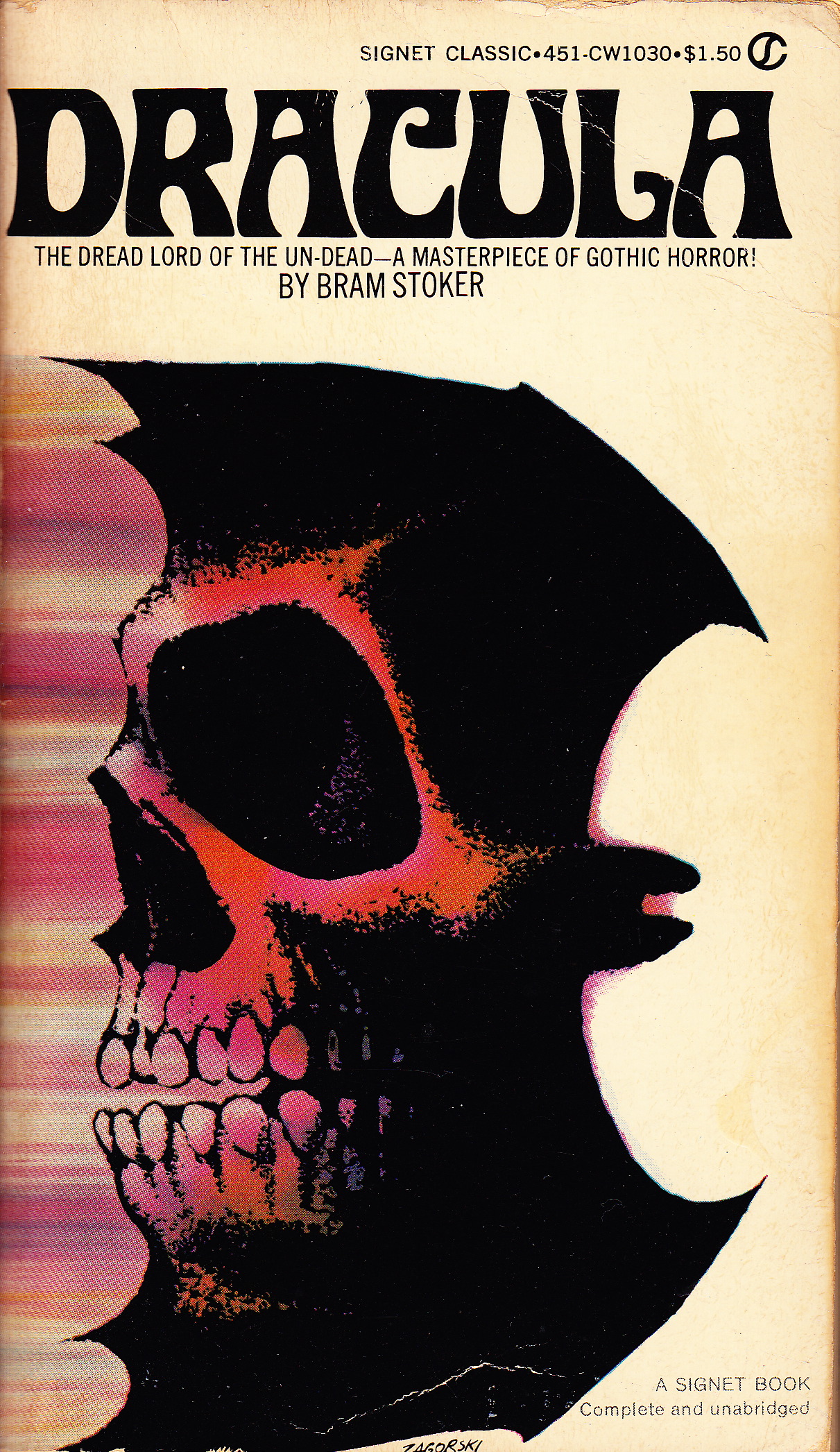
Over the past several months, and unrelated to the current vampire craze, I have re-watched some of the classic vampire movies: Dracula, Bram Stoker’s Dracula, Nosferatu (both Murnau and Herzog), and even Shadow of the Vampire—a movie about making vampire movies. Although the prototype of the vampire goes far back in civilization, in some form back to even the earliest of civilizations, the modern rendition rests mostly on the imagination of Bram Stoker. I’ve been re-reading Dracula to recapture a sense of why this particular telling of the tale has become iconic. One suggestion that comes as I’m reading is that it presses the religious taboos of its Victorian era sensibilities. Indeed, Stoker consciously wrote religiously provocative elements into his story. Of course, in movie form the story is altered to fit the needs of both time and scope.

A character that transforms in these various films is Renfield, the lunatic. In Stoker’s original Renfield is the foil for Dracula himself, his devotion interpreted as insanity by the science of the day. At one point Dr. Seward, Van Helsing’s protege and the man in charge of Renfield, notes with clarion penetration, “for a strong man with homicidal and religious mania at once might be dangerous. The combination is a dreadful one.” Renfield is, as a servant of Dracula, complicit in both homicide and religious mania. He uses Christianesque language when referring to his master. In describing his devotion, Seward notes, “He thinks of the loaves and fishes even when he believes he is in a Real Presence.” To a generation raised without Bible, this confession makes little sense.

I have contended throughout this blog that religion and horror are intimate familiars. To understand the appeal of the vampire, one must explore the religious context. Surely the simple neck-biting and blood-sucking without religious underpinnings would soon grow tedious. It is the sense of mystery—most fully realized in religious thought—that brings the vampire to life in the imagination of a generation lacking traditional religion. Not to mix metaphors too intimately, but there is a dose of Melville to be mixed in as well. Renfield is the epitome of madness, blindly following where he believes he is called. But the reader knows how sadly mistaken he is. So it is that I return to Bram Stoker’s Dracula and in so doing find a form of true religion.

The Force

A long time ago in a galaxy far away, or so it seems, I began studying religion not knowing where it would land me.  One of the great things about studying religion is the perpetual refreshing of religious thought that grows with human culture.  Anthropologists and philosophers and sociologists have difficulty defining exactly what religion is.  It is clearly a belief system of some description, but in many parts of the world religion is not so much reflective and reflexive—doing the ancient rituals and getting on with life.  Every great once in a while I learn about a new religion.  Those who don’t spend too much time thinking about it might be surprised to learn that new religions emerge quite frequently, and sometimes with the most unlikely of inspirations.  Consider Scientology.  While reading about new religions recently I discovered Jediism, or Star Wars religion.  Like Scientology, it is based on science fiction.  For those of us alive in another universe in 1977 it is difficult to convey to more recent hominins just how impressive Star Wars was.  Life-changing, in some instances.  Jediism takes the concept of the Force and makes it a central tenet of a belief system for the twenty-first century.
 
Having witnessed the impact of Avatar in even more recent lightyears, perhaps we should not be surprised that fantasy worlds spawn new religions.  After all, although death and suffering pervade even the most pristine of human-concocted galaxies, good ultimately wins over evil in these realms.  It is something worth hoping for.  Maybe even believing in.  Some people question how serious those who call themselves “Jedi” on religious surveys really are.  There are online Jedi sanctuaries, and even humor can be a part of a serious religion—consider the craze of Christian clowns that was going around in the 1980s.  For those of us from long ago, religions just don’t seem authentic without some antiquity to them; they should’ve been started centuries ago by founders who can be mythologized to sainthood or divinity.  We have more facts about the life of Yoda than we do of Jesus.


The thin line between fact and fiction grows more effaced every day.  Can religions be based on fictional founders?  Of course they can!  Without any means of determining objectively which religion is right (if any), we are left with only a person’s word about what s/he believes.  If I choose to believe that Sherlock Holmes was a real person what harm does it do?  It may even benefit the estate of Sir Arthur Conan Doyle.  As Matt Rossano points out in his book Supernatural Selection, religions are about perceived relationships.  Many people have relationships with fictional characters, sometimes falling in love with one or fantasizing about being one.  Basing a religion on a fictional character may be the greatest sign of trust.  After all, we can’t even define religion in a way on which all specialists will agree.  Religion itself may be the ultimate fiction.  May the Force be with you, just in case.


The Naked Vicar

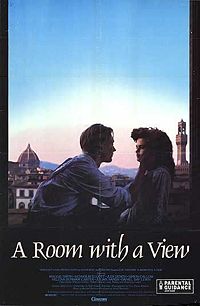
In a fit of nostalgia, for lack of a better excuse, I recently re-watched A Room With a View. I suspect I saw it with my wife near the time it first came out since I had trouble recalling having viewed any of it before. Until the skinny-dipping scene. Even then, it was unfamiliar until Mr. Beebe, the vicar, jumped into the pond. Now perhaps in the Victorian era same-sex cavorting was permitted for the young, far from repressed eyes, but it was the implications of seeing a priest in the nude that was particularly jarring. As Lucy Honeychurch comes primly along with her fiancé, she is scandalized to see the boy she truly loves unclothed, but the minister in similar state is a laughing matter, a novelty. In the light of the many church scandals that have become public knowledge since 1985, this particular scene has perhaps accrued additional, unintended freight.

Embodiment is a popular topic for theologies these days. I’m no theologian, but as a member of the human race I do participate in the embodiment question. Everyone from biologists to psychologists seems to be rethinking the implications of the soft machine. Some theorists are already preparing to leave behind their bodies to have their consciousness electronically preserved. Their new bodies may be robotic or simply virtual, but I suspect they will find the experience deeply disappointing. We are closer to the cockroach and the goldfish than we are to the disembodied divine. Our bodies are who we are, and embodiment analysis is the attempt to make sense of it all. At the same time, some neuroscientists are speculating that human brains work perhaps in closer concert than we generally suppose. We human beings are more like cells in a great organism that encompasses all of us. The Portuguese Man O’ War, which resembles a human brain in some respects, is a communal organism and not a single creature. The implications are worth considering.

Our rules for getting along with biological bodies include some pretty straightforward permissible behaviors. We don’t penetrate the body of another person without their express approval. They have to be competent enough to give valid approval. We don’t end the existence of another human being’s life unless they’ve been convicted of being exceptionally naughty and they live in the United States (the only “first world” country where the death penalty is still routinely carried out) or unless we are mentally unstable or emotionally overwrought and have easy access to firearms. Bodies are limited, and so are brains. Although, since I’ve upgraded my operating system I notice that my laptop has now claimed my name as its own identity—(if anything looks weird, please let me know!) In the Victorian era it was assumed that the brains of the clergy were attuned to higher things. The naked vicar accepts the good-natured laugh at his expense because he is no threat to either young ladies or young men. In the technological era we are more savvy and less carefree. And given the choice, the religious would prefer a room without a view, thank you.


Last Genesis

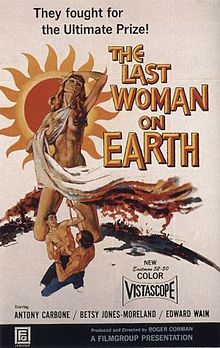
Roger Corman was famous for saving a buck on his movies. When it came to low-budget sci-fi and horror, he could be counted on to stretch pennies into dollars. The B quality with which this impresses most of his films makes them all the more addictive. I watched my share growing up, but I’m still discovering ever more as an adult. The Last Woman on Earth is one I recently found and the religious implications of the film were so obvious that they seemed worthy of a little exegesis. The plot is simple enough, three skin-divers, a man, his wife, and his lawyer friend, are the only survivors of an anoxic episode. When Harold Gern (the man) wonders what happened his friend Martin says, “A new and better bomb, act of God, it doesn’t really matter.” The destruction of humanity is a time-honored divine pass-time, so no one considers the statement blasphemous.

Naturally enough, within a short time Martin starts to feel that Harold’s claim on his wife Evelyn (clearly, by choice of name, an Eve figure) is a bit unreasonable under the circumstances. Biology is, in this instance, the misogynic element as the men increasingly step up their hostilities. Evelyn eventually decides to run away with Martin, but Harold is in hot pursuit. The entire episode takes place on Puerto Rico, and so there are a limited number of places to hide. Martin tells Evelyn to await him in the church, which she dutifully does. Harold catches up with Martin and blinds him. Martin finds his way to the church and when Harold comes in Martin provides a final homily (including some lines from Alice Cooper’s “School’s Out”) declaring that there is no more God. He then dies on the church floor.

The movie ends with Harold and Evelyn leaving the church to try to learn what life is all about. Reading up on the movie, I learned that Corman wanted to keep the costs down so that the writer of the script was cast as Martin for the film. The script wasn’t finished before they started shooting. Nevertheless Robert Towne’s story brings the overall trajectory back to an updated Garden of Eden story. Puerto Rico, a tropical paradise, where the one woman is Eve, is the scene of the first sin—the murder of Martin by Harold. Throughout the movie, Martin is clearly the Abel character while Harold is selfish, unsympathetic, and emotionally absent. Cain wins the epic struggle and God, we are told, is no more. Not the most profound of story-telling, but the themes and concepts are very much biblical. And when the final couple leave the church the remainder of world history is set to begin. I’d gladly give this one a B.


Used Against You

Many times I’ve confessed to being a reluctant Luddite. My reluctance arises from a deep ambivalence about technology—not that I don’t like it, but rather that I’m afraid of its all-encompassing nature. This week’s Time magazine ran a story on how smartphones are changing the world. My job, meeting the goals set for me, would be impossible without the instant communication offered by the Internet. Everything is so much faster. Except my processing speed. We all know the joke (which would be funny if it weren’t so true) that if you’re having trouble with technology, ask a child. In my travels I see kids barely old enough to walk toddling around with iPhones, clumsily bumping into things (i.e., human beings) as they stare at the electronic world in the palm of their tiny hands. And once the technocrats have taken over, “progress” is non-negotiable.

I made it through my Master’s degree without ever seriously using a computer. Even now I think of this very expensive lap-warmer before me as a glorified word processor. Over the weekend I succumbed to the constant lure of Mac’s new OS, Mountain Lion. Some features of this blog had stopped working, and, being a Luddite, I assumed that it was outdated software. Of course, to update software, you need an operating system that can handle it. So here I am riding on a mountain lion’s back, forgetting to duck as the beast leaps dramatically into its lair. In this dark cave, nursing my aching head, I realize that I have become a slave to technology. For a student of religion who grew up without computers, I’ve got at least half-a-dozen obsolete ones in my apartment, each with bits and fragments I’m afraid to lose, despite the fact that I’m not even sure where to take them to retrieve the data. When I sat down to write my post this morning I received a message that Microsoft Word is no longer supported by Mountain Lion. Fortunately my daughter had the foresight to purchase Pages, so life goes on.

This blog has an index. It is an archaism. Indexes are not necessary with complete searchability. It is there mostly for me. In my feeble attempts at cleverness, I sometimes forget what a post is about, based on its title. The index helps me. In a truly Stephen King moment, I found this morning that my index had infinitely replicated a link to my post on the movie Carrie, so that any link after that will lead you directly to the protagonist of Stephen King’s first novel. It will take a few days to clean that up. There’s probably an app for it. For those of us brought up before household computers were a reality, however, there is a more religious explanation. Yes, my laptop is clearly haunted. And in the spirit of Stephen King I type these words while awaiting the top to snap down with the force of an alligator byte and break off my fingers. I should be worried about it, but instead, I’m sure there’s an app to take the place of missing digits. Even if there isn’t I’m sure my iPhone will happily survive without the constant interference of a Luddite just trying to call home.

Not a lap-pet.


Zongfu’s Ark

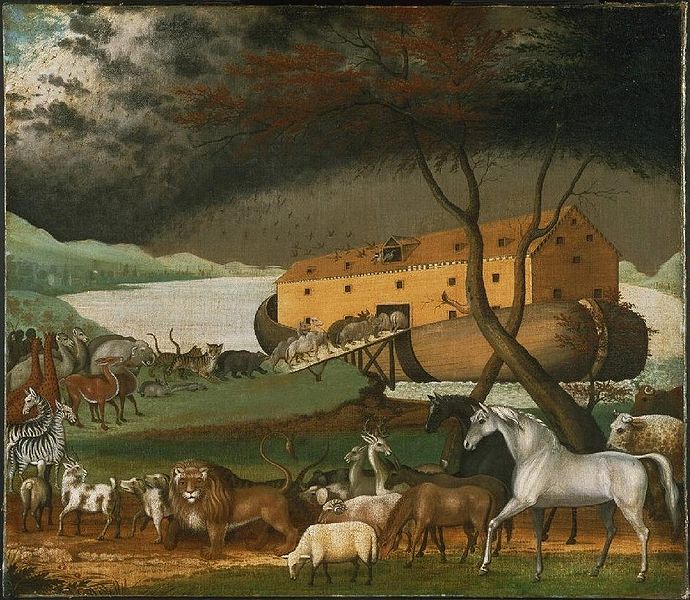
While riding the elevator up to work last week, I glanced at the little LCD screen that plays single-page news stories for those who only have the seconds in an elevator to catch up in what is happening outside the world of commerce. That’s where the really creative stuff occurs. The picture on the screen appeared to be a large, orange, smashed ping-pong ball. I caught the words “Noah’s Ark” in the caption before the busy screen flashed onto a new and more pertinent story, such as who is winning what in the Olympics. I remembered the odd image when I got home and tried an Internet search and discovered only a small bit of information. This ark is in China, which may account for the lack of full coverage. Here in God’s own America, stories that potentially validate biblical myths are sure to attract readers and/or watchers, so there must be more to the story than I can find.

The details I’ve been able to locate note that Yang Zongfu, a Chinese inventor, designed an improvement on Noah’s ark. His ark is a sphere and really doesn’t have much room for animals beyond the occasional tapeworm or wayward spider. “Noah’s Ark of China” is a six-ton ball that costs nearly a quarter of a million dollars to build. Five people can live for ten months inside, sheltered from heat, impact, and, of course, water. Like a latter day bomb shelter, this is the place you would go to survive a disaster. The odd number of survivors, however, made me wonder about the repopulating of the earth part. Even in the Bible God made sure that instead of any individuals the ark was populated with couples. The more I thought about attempting to survive in a world with only four other people, the more frightened I became.

This is old school ark building.

Our lives are intricately inter-connected. Most of you reading these words will never have met me, yet here we are, sharing the same cyber-head-space. Movies like I Am Legend make it seem that a single man, whether Vincent Price, Charlton Heston, or Will Smith, could survive for a great length of time alone. This is pure science fiction. With the exception of Vincent Price, I doubt that any of our omega men could have successfully planted and raised a garden, let alone survived more than a few weeks. We need each other. The picture of Yang Zongfu popping triumphantly from his ark fills my head with a strange vision. A post-apocalyptic world in which the toxic runoff of our irradiated rivers will have a jumble of orange balls at their deltas and a bunch of confused, somewhat nauseous millionaires inside. As I stare out over this valley of dry balls, I think to myself, Who’s winning ping-pong at the Olympics?


NDEs

I love science. Like many young boys, I was probably enticed to science through science fiction. While I didn’t follow science to a career, I used it to study religious texts. Those who’ve never undertaken the challenge of trying to figure out what something written thousands of years ago—on clay!—really says may be surprised to learn just how much science is involved. Nevertheless, as comforting as reductionism may be, something just doesn’t feel right about it. Science is how we explain and understand our world, and it does a spectacular job of it. The problem arises when science becomes what Stephen Jay Gould called a “magisterium.” Magisteria have all the answers. Yes, science explains how matter and energy work and interact, but it has yet to explain satisfactorily what it feels like. Most days I feel like the person I’ve become accustomed to show to the world. That person is very much like every other—being born, eating, breathing, dying. Medical science can explain most of it, but what about the parts it can’t?

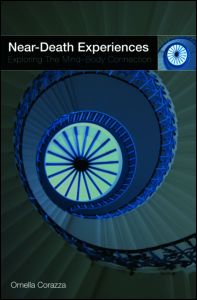
I just finished reading Ornella Corazza’s Near-Death Experiences: Exploring the Mind-Body Connection. I remember when the craze about this hit in 1981 with the release of the movie Life After Life. I was fascinated and terrified by it. Since a materialistic view of science dismisses anything that has the residue of spirits or souls, the phenomenon of the resuscitated dead reporting seeing their bodies from above, shooting through tunnels into the light, and sometimes meeting the dead (or God), were explained as last nano-second hallucinations as the brain prepared to shut down or reboot (upon resuscitation). That’s that. The answer, however, didn’t satisfy everyone. What about those cases where the dead person reported, in detail, what happened in other rooms, or things they couldn’t have seen in their own room, had they been conscious? Corazza takes these considerations seriously and tries to understand what may be going on. Obviously, her explorations will not convince a reductionist, but they may give pause to some of us.

What makes her approach so interesting is that Corazza takes into account an alternative way of looking at consciousness. While the facts of science are, by definition, universal, the contexts within which those facts are viewed are not. Having spent considerable time with Japanese scientists exploring consciousness, eastern ideas of the body inform her research. In the western world we have an easy familiarity with the Cartesian dualism of body and soul that does not fit into other worldviews. Corazza takes the interesting step of asking what if we apply an eastern paradigm of the body (one that understands soul as body, and not just in a materialistic sense) and apply it to the question of Near Death Experiences. The results are mind-stretching. I feel as if my consciousness got up from months of laziness and ran a marathon (or at least a 5-K). It’s a bit winded and parts of it are starting to ache a little. No reductionists need worry, however, because in that worldview none of this exists.


Charon’s Obol

One of the concomitants of spending time with religion is a non-morbid fixation on death. As a college student I was surprised to learn that other people my age did not think about death nearly every day. Perhaps with a typical college student’s obsession with the other end of the life cycle this is only natural. Ever since I was a child, however, I felt frustrated by the lack of permanence that characterized all of the striving involved with life. We work very hard and then we die. I suppose that is one of the reasons religion appealed so strongly to me—it had an answer to this dilemma. Science, as I began to experience it about the same time, suggested a radically different conclusion: we have no souls, and so it is best to accept the fact that death is the end and get on with life. No wonder Ecclesiastes has always been my favorite book of the Bible.

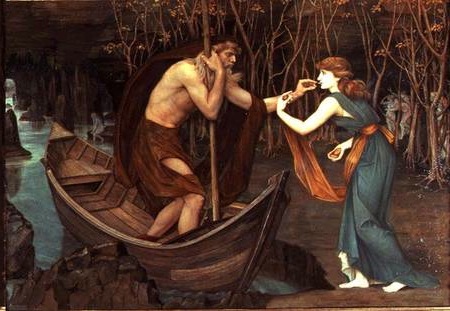
While reading about–shhh!–death recently, I came across an interesting tidbit. Pope Pius IX was buried with a coin. I’ve read that even John Paul II was buried with coinage, but I’ve not been able to find credible sources on that. What is fascinating about this practice is that no matter how it is vested, burial with money is a form of Charon’s obol. With movies like Clash of the Titans, many modern people are aware of the need to pay Charon to cross the River Styx. (Back in the radical days of traditional education just about everyone would’ve learned this in the course of studying the classics. In any case…) The gifting of the dead with money represents the survival of a pagan custom that likely stretches back well before ancient Greece. Even before money was invented people buried the dead with goods that the living would never be able to use again. They may not have considered this payment to a ferryman, but the principle is the same.

This idea has a strong grip on our psyches. Not one of my favorite movies, I have watched Ghostship a time or two. What initially brought me to the movie was the fact that it is a horror-movie built around the character of Charon. The mysterious stranger who lures the crew of the Arctic Warrior onto the Antonia Graza laden with gold is named Ferriman. The salvage crew quickly forget the tons and tons of metal that they came for in exchange for the a few dozen bars of gold. Of course, a sole survivor lives to tell the tale. The thing about Charon’s obol is that once he is paid, death is inevitable. Thus death and money are inextricably twined like earbuds carelessly tossed into a backpack. It seems that no matter how you measure it, the only winner is Charon. Maybe the Greeks have something to teach us yet.

Charon’s got ahold of our Psyches


Evil Living

Maybe it was just the lack of rationality that comes with driving 700 miles in two days, or just plain glaikitness, but I watched Evil Dead II a couple nights back. I had read on an Internet site (probably already a warning) that it was very scary, but I’ve been a slave to logic for many years. Supposing this to be a sequel, I was confused when the first few minutes replayed the plot from the first movie with just two characters instead of the original five. Budget cuts (literally, as I later learned) meant leaving out characters and supposing that the viewers would catch on. In the first Evil Dead, the catalyst of the evil spirits in the woods was “Sumerian” spells recorded by an ill-fated professor in the cabin in the forest. Playing the recording (still in the first film), the kids release the evil spirits and one-by-one become possessed until Ash has to kill off all his companions. The campiness in both films tends to ameliorate the over-the-top violence and blood, and you know that the film isn’t taking itself at all seriously.

Once I figured that out (it was, after all, a very long drive), I settled in to watch a familiar story unfold. New characters are added in the form of the professor’s daughter, and traveling company, who show up with more pages from the Book of the Dead that will help to dispel the evil. When the characters encounter a ghost of the dead professor, he says something that may be the point of this blog post. He urges his daughter to seek salvation in the pages of the book. So here was a distinctly Judeo-Christ-Islamic theme playing out: salvation comes through obeying a book. It is an example of what I would have called “the Bible as a magical book” back in my teaching days. Movies, both good and bad, tend to portray “Bibles” as books that have the ability to affect the world around them in beneficial ways. Demons are cast out, illnesses are healed, lives are restored.

My fondness for B movies, in the end, is all that redeemed this domestic cinematic experience. I have spent many nights in the woods and I have read and reread sacred books. The two, however, seem to be worlds apart. Nature often feels like a redemptive experience. After many weeks of experiencing the outdoors only in the guise of New York City, a truth that can only be called sacred occurs—people are creatures of nature and nature can still feel sacred to us. Here is a simple reason that environmental integrity must be maintained against those who would exploit the earth for fossil fuels, timber, or drainage of lakes for irrigation. Nature may be our last chance to find something truly sacred. Once one person, company, or government destroys it, it will be gone for a lifetime or more, for everyone. That, in my book, is evil.


Disputed Parentage

What has Athens to do with Jerusalem, Tertullian famously asked. Much, seems to be the rhetorical answer. Today, August 1, is Lammas. It is said to commemorate the wheat harvest and Lammas is taken to be derived from Anglo-Saxon hlaf-mass, or “loaf-mass.” Beneath this apparent Christian celebration is the pagan festival of Lughnasadh. I’ve posted on Lugh before, but holy days are often seasonal, and it is time to consider Lammas again. Lammas is the last of the cross-quarter days that divide the European pagan year. Some communities bake bread to celebrate it, sometimes in the shape of a person (those of you who’ve seen the original Wicker Man know what I mean).

Christianity was born a persecuted religion that grew to be a persecutor. Deeply rooted pre-Christian traditions were eradicated or sublimated in the growth of Christendom. The modern pagan movement may not have an unbroken line of tradition, but it is a tradition that has ancient antecedents. What Christianity could not conquer it assimilated. Much of what became Christianity derived from Judaism. Much of Judaism had its origins in folk religions of ancient Western Asia. In its European context, Christianity adopted the heathen traditions that fit within the pattern of Christian thought. Agricultural celebrations quite frequently matched events in the imperial religion. Or, if no so events existed, new traditions were invented. It is quite plain that that is why we celebrate Christmas in December.

Why is it that Christianity has so vociferously disavowed its lowly parentage? Being a chthonian religion should be no mark of shame. What is wrong with different but equal? Many people fear and despise those who declare themselves pagan, but paganism is a religion like any other, concerned with morality, justice, and living in accord with the power “out there.” So as August wends its way into the calendar, and the earth begins its inevitable tip towards lengthening nights and the cooling of the days, we might do well to consider Lammas. Whether from the Christian angle of Saint Peter in Chains or from the Pagan angle of Lughnasadh, Lammas is a time to eat bread and reflect, two of the most human of activities. And perhaps with thought will come tolerance.


Trapped

Music has always meant a lot to me. I am, however, not musically talented. As I child I never saw The Sound of Music (or Mary Poppins, for that matter). College finally introduced me to Julie Andrews when friends were aghast at how deprived my childhood had been. Sound of Music was cute, but I didn’t really “get it” until someone explained that it is largely a true story. There really was a Maria von Trapp and Captain. Much of the story, of course, my colleagues (not really knowing) told me was fabricated. My daughter has recently returned from a musical tour of part of southern Europe, centering mostly on Austria. The tour group visited Salzburg and saw where part of The Sound of Music was filmed. When she returned home we decided to visit Stowe, Vermont. This mountain community, known for its skiing, is where some of the von Trapp family still live. Not sure what to expect, we signed on for a tour of the Trapp Family Lodge (a little beyond the comfort range of someone unemployed until recently).

The first surprise came when Sam von Trapp, the grandson of Maria, introduced himself as the tour guide. Many of the mysteries of fact versus fiction were cleared up—I can’t reveal it all here, otherwise you might not visit Stowe for yourself—and the person of Maria von Trapp became much more like the rest of us. During an interview taped four years before she died in 1987, Maria explained how the course of her life was changed by the mountains around Salzburg. Feeling the presence of God there, she joined the convent that sent her to tutor one of Baron von Trapp’s daughters and that eventually led to her marriage and the formation of the Trapp family singers. She was urged on in her marriage, as the movie indicates, by the sisters of the convent.

A second surprise emerged as the narrative turned to how the von Trapp family tried to help out others in times of difficulties. Not content to count themselves uniquely blessed by having escaped Austria the day before the Nazis closed the borders of the country, they sent supplies to those who were still under threat of Hitler’s regime after the Anschluss. The home made famous by the movie became Nazi headquarters in Austria. It seems that in this case religion led to a favorable result. Some critics argue that religion brings no good. I have to admit that often I feel as though attempting to justify it at all is a fool’s errand. It is good to be reminded once in a while that lives are sometimes changed for the better by what they believe to be the divine voice. Even in my horror film world, The Sound of Music still has its place.


Thinking Zombies

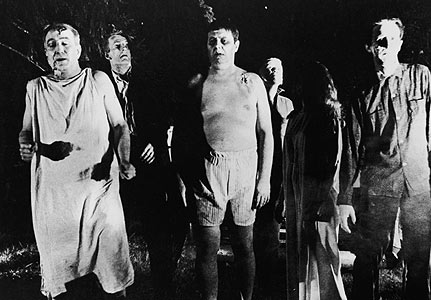
Religion seldom makes as big an impression as when it concerns itself with the undead. Popular culture has gone after zombies to such a degree that they have engaged academic discourse well beyond the field of African-Caribbean religions. In fact, religious specialists tend to shy away from the topic in a kind of first-date embarrassment. Perhaps it’s because zombies in popular culture are so much cooler than their Vodou forebears. Within the past several months, however, zombies have shown up in Time, on the Center for Disease Control website, and now in the Chronicle of Higher Education. An article this week explores the academic implications of a paper by neuroscientists Bradley Voytek and Timothy Verstynen on the zombie brain. The two took on the project as a lark at the behest of the Zombie Research Society. Science fiction writer and head of ZRS, Matt Mogk gave an interesting take on zombies. He’s quoted in the Chronicle as saying, “Zombies are rooted in science, not superstition and myth.”

At the risk of sounding extremely uncool (one that I take rather frequently, I fear), I would point out that exactly the opposite is the case. Zombies are rooted in superstition and myth, i.e., religion. The entire idea that a person can be made to rise from the dead—originally to be made a slave—comes from that heady blend of Christianity and African religion that developed as part of slave culture. Slavers were notorious in not wanting slaves to accept Christianity because that might make slaves think that they were equal with their owners. By suppressing Christianity among slaves, the African religions in which many were raised came to blend with the Christianity that they’d garnered. One of the bi-products was the zombie. The zombie partakes of the Christian concept of resurrection, but in a twisted way. Once the new vision of the zombie presented by George Romero took off, yes, they did move into the realm of science fiction, often the forerunner of science.

A very serious issue underlies the zombie myth—the very religious concern about death. While not all religions comfort with an afterlife, they all in some way deal with ultimate issues. The end of life is about as ultimate, from our limited experience, as they come. Science loudly and repeatedly insists that death is the final frontier. We don’t cross back this way again, according to the available evidence. Scientists do not study ghosts or souls, and are very cagey about near-death experiences. The zombie, who is now threatening the careers of young scientists, is a most religious monster. Everything about the zombie points to its origin as a religious trope. Voytek and Verstynen wanted to interest people in science by taking a comic look at zombie brains. The problem is that zombie brains are brains on religion, not science.


Preachers and Pirates

One of the more colorful characters, albeit briefly mentioned, in Jon Butler’s New World Faiths, is Rev. Henry Loveall. While not a major historical figure in any sense of the word, and as a man who is known without the benefit of his own account of himself, the little we know of him intrigues. According to Butler, Loveall was dismissed as pastor from the Baptist church in Piscataway, New Jersey (a town in which I once worked) on charges of bigamy, prompting the Philadelphia Baptist Association to note he’d chosen an appropriate name for himself. Genealogical records online indicate that his given name was Desolate Baker and that he was born in Cambridge, England. As a youth he found himself in trouble for immorality with a woman at his church and he moved to America. Records are sketchy, but he apparently moved from Rhode Island to New Jersey to Maryland to Virginia. He had married but had gone to Virginia with another man’s wife. Even the usually forgiving genealogical records indicate some suspicion of his character.

Loveall lived in the eighteenth century when the world was still large enough to hide in. While I’m not the one to be impressed with Disney’s attempts at profundity in the Pirates of the Caribbean series of movies, there is one parsimonious line from At World’s End where Barbossa and Sparrow are discussing the incursion of business interests (in a delightful irony for a Disney film) into the free-spirited world of piracy. Barbossa avers that the world is smaller, but Jack Sparrow retorts that it’s not a smaller world after all, but “there’s just less in it.” Our world has been rapidly reduced to the pixels we can see on the screen in front of us. Bloggers are acclaimed as experts while those who’ve gazed across the war-torn promised land from atop the Mount of Olives with its frenetic network of churches start to doubt what their own eyes have revealed to them. We are content to let the Lovealls and Sparrows live it for us.

Our names are seldom a matter of choice. Like being born, they are factors in the midst of which we find ourselves—someone else supposed that we might turn out like this. The names we would select for ourselves show the size of our inner worlds. To love all is a noble sentiment. A sparrow is nervous, flighty, and has but a small brain. Our inner worlds are partially constructed by our religions. Declaring on divine authority what we must and mustn’t do, we find ourselves born into religions like we’re born into names. Few question the faith tradition fed to them by parents with such certainty, and that religion, just as surely as our name, becomes an integral part of our identity. History tell us little of Henry Loveall, a man who changed his name, and a clergyman who lived religion on his own terms.

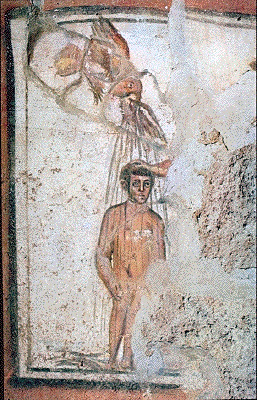
Baptized!


Another Dark Knight

Batman was dreamed up in the late 1930s as an ambiguous character that fought crime and protected innocent civilians. The backstory emerged that he had witnessed his parents being shot down as a child, and eventually adopted the identity of a bat to frighten the perps. Batman never, in principle, used guns. Of course, the DC Comics character eventually scored a wonderfully campy television series that entertained many of us as children. It even spawned a movie. Then, fifty years after the original, Tim Burton gave us a darker, more serious Batman. The series of promising movies degenerated into the unforgivable Batman and Robin, and many assumed the flash in the pan was over. We didn’t need any super heroes. Christopher Nolan resurrected this bat in Batman Begins, and when I first saw The Dark Knight I was stunned. Good and evil danced a waltz so delicate that you were never sure who was leading. The frisson was palpable.

Thursday night the Nolan series’ final episode was released. I’ve not seen it yet, but from the moment I step out of the Port Authority Bus Terminal in Times Square until I arrive at work, I will have seen several multi-story Batmen looking down on the real life Gotham, explosions erupting and everyone wondering if Batman will survive this film. Yesterday morning the news opened with a horrifying story from real life in Aurora, Colorado. A gunman opened fire on a crowd of opening night movie viewers, killing at least twelve. Several children were shot. The gunman, like a real-life character from Arkham, was apprehended and claimed to have explosives in his house. I stared at the story and wondered what has become of humanity.

Facebook has turned into a venue for flying political banners. I’m always surprised to see how conservative people I knew in school have become—in those days no one had me beat for non-progressive thought. I’m truly amazed, at times, by the glorification of America’s gun culture that accompanies conservative causes. People want to shoot and want to glorify their right to shoot. I have, on rare occasions, shot rifles for sport—only at targets and only when others have asked me to. There is no denying the rush of power one feels, knowing that, like God, you can destroy the thing far distant from you with just a squeeze of the finger. I’m not sure I’m happy in a universe populated by such gods. I grew up a conservative, but also a pacifist. I grew up watching Batman defeat evil so clearly defined that no room remained for ambiguity. Yes, I grew up a conservative, but then I just grew up. I will watch The Dark Knight Rises and will not know what to expect.

Neither good nor bad.


Leggo My Congo

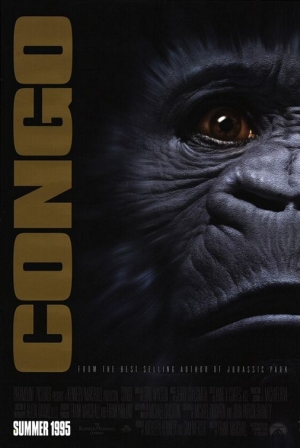
When I first saw the trailer for Congo, back in 1995, I was a new father and my interest in talking apes understandably took a back seat. While the movie sat back there like a quiet child, it was slowly forgotten. Something prompted my memory over the weekend, so I finally watched it. Now, I had plenty of time to read the negative reviews, but I have a soft spot for both talking apes and bad movies. The really fascinating aspect of Congo, however, was the fantastic liberties it takes with the ancient world, particularly the kingdom of Solomon. Solomon has been under investigation over the past few decades. Archaeologists have not found evidence of the biblical opulence concerning both his wealth and fame. It seems likely that he was an actual king, but the king of a small nation that did not have quite the pull that later tradition granted to it. Still, Solomon has become a cultural trope for great wealth and splendor, and if a movie-maker wants an easy frame of reference, well, some people will recognize old Sol. Those who do recognize Solomon probably won’t have a ready inventory of his assets to interrupt their enjoyment (that presumes a lot) of the movie.

The motive factor that brings our unlikely traveling companions together in Congo, are the fabricatedly mythical diamond mines of King Solomon, located in the Congo. A self-styled archaeologist and professional con-man from Romania assists to finance a flight to Africa to help return a homesick gorilla (Amy) who also, by the way, talks. The only realistic aspect of the heroes is that the university professors are the ones who are completely broke and have to rely on corporate funding to get their monkey off their back (well, actually she’s an ape). And then there is the huge communications giant (TraviCom) that needs the diamonds for their communications equipment. And a bunch of Africans who just want to stay alive (most don’t succeed). Solomon was never really associated with diamonds in the Bible. His wealth is described in terms of gold, silver, bronze, peacocks, and suprizingly, apes. Why and how he would have managed a mine in central Africa when even the Egyptians didn’t travel there is never explained.

Well, I shouldn’t be so hasty about the Egyptians. Our Romanian con-man is also able to translate Egyptian heiroglyphics, liberally scribbled on the walls of the fortress surrounding Solomon’s mine. These preserve the story of the “myth of the killing apes” that generated an honest-to-god guffaw from my cynical self. New mythology and corny characters aside, the movie didn’t fail to reach me. I’m always a sucker for talking apes and under-funded education, both of which represent a kind of extinction. If Solomon really had a reach all the way to the Congo, and if he extracted the huge diamonds the movie showed scattered around on the surface of the ground and if universities could actually get media attention for causes other than the shortcomings of their football programs, there could be cause for hope. In what is a bit of probably unintended social commentary, after the mine is destroyed in a volcanic eruption, only one diamond remains. And that diamond benefits neither the single surviving African nor the underfunded university professor. It becomes a weapon in the hands of a large, private corporation.