Stormy Weather

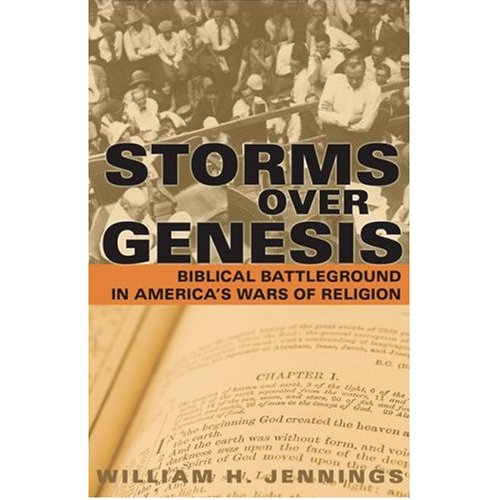
The privileging of one literature over others is problematic. Of course, the entire industry of biblical studies is built around such preferential treatment. And so is a large share of Christianity. I’ve just finished reading William H. Jennings’ Storms over Genesis: Biblical Battleground in America’s Wars of Religion. For someone who has taught Genesis before there wasn’t too much new material in here, but it strikes me as a very good primer for those who wonder about why the issues of gender inequality, global warming, and evolution remain firmly entrenched in evangelical minds, and therefore, our society. Just the first three chapters of Genesis, as Jennings points out, have led to the much of the irrational, at times inane, arguments that just won’t go away. Tea Party kinds of issues.

At the base of it all is the concept that Genesis somehow represents the way the world is supposed to be (rather than the way it actually is). As if seconding my choice of bus reading, The Economist recently published an article on Glen Rose, Texas. I’ve known about Glen Rose since I was a child. There, in a bizarre twist on the Flintstones, locals claim human and dinosaur footprints intermingle in a nearby creek bed. As the article points out, some locals see this as evidence of young earth creationism—seems Fred and Wilma missed the ark along with Dino. For decades paleontologists have tried to explain that the “human” tracks are actually dinosaur tracks as well. Given their size and stride, if they were human Adam must’ve been a giant. Despite the science, the myth persists. Even the article in The Economist doesn’t give the scientific answer.

It would be difficult to find a book more influential than Genesis. It would also be difficult to find one that is less scientific. Anyone who has studied ancient societies knows that they delighted in telling outlandish stories to explain the origin of the world. After all, there were no eyewitnesses. No channel 11 helicopters hovering overhead to bring you the story live. It all comes from mistaking a good story for a good book. In an era when evidence of evolution literally abounds, we still have nearly half the population of this technological nation trying to make room for the Valley of the Gwangi. Jennings may not hold the answers to all the problems Genesis raises, but if people would read Storms over Genesis, we might be able to afford a little more energy to solving global warming rather than running from dinosaurs in Texas.

Vampire Jesus

It was a dark and stormy night. Well, so far that could describe most any night in April or May of this year. Anyway, I had just read about vampire-bots for the first time. Robots, like all machines, require a power source. Those I’ve witnessed up close require rechargeable battery-packs that are surprisingly heavy. I’d read that some robots were being designed to consume their own energy sources—mechanical and chemical eating, if you will. One dreamer figured that blood could work as a source of energy. A robot could be designed to take energy from blood, and thus arises the concept of the vampire-bot. I don’t think such an insidious machine was ever really built, but it is theoretically possible. It is also a reflection of a biblical idea—the life is in the blood. Ancient people tended to associate life with breathing. With no CPR, an unbreathing body was a dead body. Blood obviously played into the picture too, but precisely how was uncertain. Clearly a person or an animal couldn’t live without it. To say nothing of robots.

One of those dark and stormy nights I watched The Shadow of the Vampire. Surprisingly for a monster movie, Shadow had been nominated for two academy awards. Not really your standard horror flick, it is a movie about making a movie—specifically Murnau’s Nosferatu, the classic, silent vampire movie that really initiated the genre. The actor cast as Count Orlock, however, is really a vampire. The premise might sound chintzy, but the acting is very good with Willem Dafoe making a believable Max Schreck (vampirized). Stylistic rather than gory, the story plays out to the fore-ordained conclusion and the vampire disappears in the cold light of dawn.

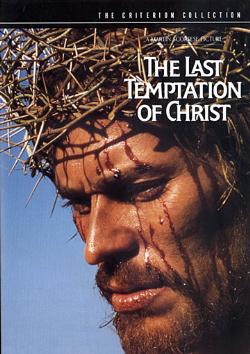
When I was an impressionable child I was told what is likely an apocryphal story about Leonardo da Vinci. The story goes that the man who posed for Jesus in the Last Supper was also the model for Judas, after living a life of dissolution. Willem Dafoe, of course, famously played Jesus in Martin Scorsese’s Last Temptation of Christ. From Jesus to vampire. Both characters are bound by the element of blood. Christianity still celebrates the shedding of divine blood symbolically while the vampire takes blood (also symbolically). Although the vampire cannot endure the sight of the cross, the same man effectively played both sides of the mythic line, almost as if the apocryphal story came true. There are implications to consider here, and not all of them insinuate Hollywood. On these dark and stormy nights, we have something to ponder.


Bleak Visions

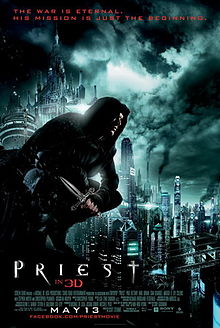
The day was leaden and rainy. Hopes for seeing the sun over the next several days dim. I had been warned about this, but once my mind has settled on vampires, they’re hard to resist. The reviews said Priest, as a movie, was full of cliched dialogue and predictable outcomes. This is true. But still, it is perhaps the most religious vampire movie ever made. While some have doubted my analyses of Underworld and other vampire films, Priest is set in a Pullmanesque world dominated by a church that has lost its belief in vampires. In fact, the civilized world, in scenes reminiscent of Blade Runner, owes ultimate allegiance to the church. Based on the graphic novels by Hyung Min-woo, the post-apocalyptic world of Priest presents an over-industrialized society where humans live in walled cities (ironically, Jericho has no walls). Vampires, more fierce than any Count, even by fifteenth-century standards, rip humans to shreds, but have been forced into reservations by the warrior priests. Their weapons are cross-shaped, but there is otherwise no reference to Jesus in the movie—only an amorphous “God.”

Despite the endless tropes, “a vampire killed my brother,” “the Priest is her father,” and endless chatter about the nobility of sacrifice, the movie is strangely compelling. Visually it maintains the appeal of a place somewhere between Planet of the Apes and the Book of Eli. And something appeals about priests who are willing to fight evil rather than sit around arguing about whether women should be allowed to join the movement or not. Keeping with modern proportions, we see only one female priest and none among the Monseigneurs, but she is the one who actually stops the vampires. And these are vampires that have evolved into the blind, naked denizens of the night who kill, apparently, for the sheer joy of it. The only article of faith the church can muster is, “if you go against the church, you go against God.”

I wonder if anyone in the world of religions is tracking how society perceives them. Religions once stood for our noblest aspirations, and our humblest weaknesses. Like bad caricatures from the movies, religious organizations don’t shy away from the desire for ultimate power. In His Dark Materials and in Priest, the church is content with nothing less than total domination. This is not missionary zeal, but good, honest power-lust. Not all religions are like that, of course. Still, there are those who perceive them that way. Maybe it is my own insecurity, or maybe it is the fact that I’m seldom convinced I have the answers, but I can’t help but feel the thrill of justification at the rebel who maintains conviction to the ideals s/he holds deeply. It takes no backbone to enforce obedience when might is on your side. But only those who have faced the vampires personally know who the real enemy is.


Dark Shadows Indeed

Part of my childhood died today. Like millions of others, I have been eagerly anticipating Tim Burton’s new Dark Shadows movie to wash the treacle of Twilight from the vampire’s mouth. Barnabas Collins was the epitome of the conflicted gentleman vampire, fully aware of and repulsed by his curse. After school I would religiously sit in front of the black-and-white television and watch the waves crashing into the cliffs of Maine as the moody story began to unfold in daily episodes. So when I read this morning that Jonathan Frid had died, I knew the vampire had found peace at last. And I was sad.

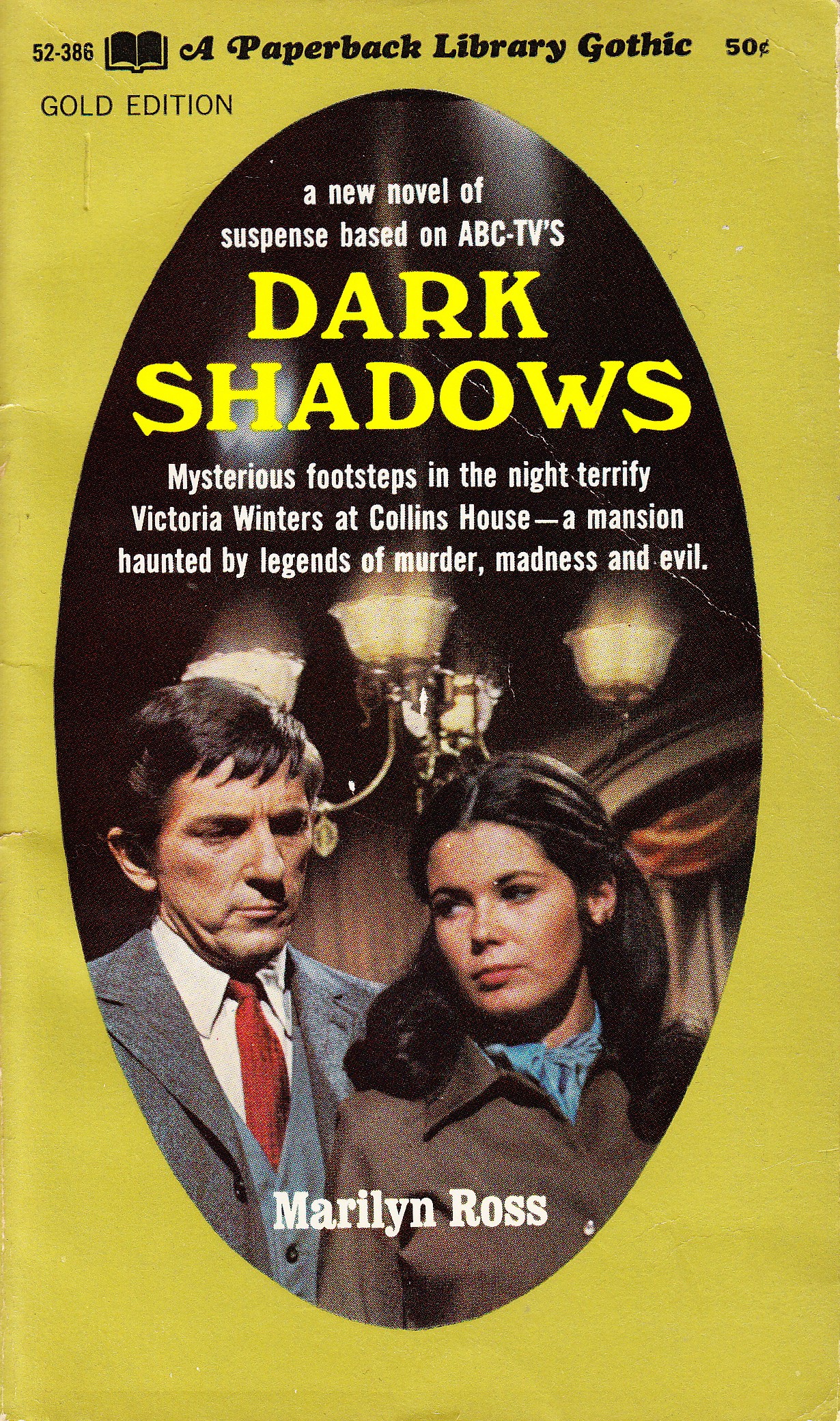
Although I’ve read scholarly analyses of monster fascination, nothing sets me back to childhood so directly as my beloved monsters. I don’t know why I feel a thrill in my chest and my pulse quickens when monsters appear before me. Perhaps it is a child’s way of coming to grips with a world beyond his or her control, or perhaps it was my way of dealing with a broken family. Lacking a father figure in life, I was fascinated by the gentle care and predatory nature of Barnabas Collins. He really did care, but he still had to bite you in the neck to survive. To my pre-adolescent mind, Jonathan Frid was Barnabas Collins. When I grew old enough for gothic novellettes, I consumed the serialized Dark Shadows books by Marilyn Ross, no matter how predictable or trite. I was reading about my heritage.

I have no doubts that Johnny Depp will portray a believable Barnabas Collins next month. Jonathan Frid, it is said, was consulted and was often present on the set of the new movie as it was being filmed. His turn to portray the tortured ancestor of the Collins family had lapsed, but he was the original. What is the draw of the vampire if not life after death? And although Jonathan Frid is gone, next month I will stand in line to see the resurrection of the vampire on the large screen.


Good Morning, London

First of all, Virgin-Atlantic Airlines gets a gold star in my book. Having flown quite a bit over the past six months, I’ve been reminded on just how stingy airlines can be, making even a brief flight a test of endurance. They are very generous with full body scanners and less so with basic human services, such as food, entertainment choices on long flights, and a sense that you’re doing anything other than propping up a flailing, deregulated industry. Virgin-Atlantic demonstrated that air time need not be torturous. So, with many choices of movie to watch, on Good Friday, I decided on one of my favorite genres of religious movie—the vampire flick.

I have been anticipating Dark Shadows for well over a year now, but I had heard nothing about Fright Night. Really, in many ways Fright Night was an unremarkable vampire movie, but then again, watching on a plane is maybe not the place where one would expect the gothic mood required for full enjoyment. Nevertheless, the full range of religious cures of vampires was present with one notable exception: crucifixes. Crosses abounded, but here on Good Friday I saw no corpi. There was holy water, so clearly it wasn’t purely Protestant sympathies that led to the abandonment of crucifixes in the movie. In any case, crosses were only a minor deterrent in this scenario. What finally dispatched the chief vampire in this case was a traditional wooden stake. Which, somehow reminds me of typical airplane food on most airlines.

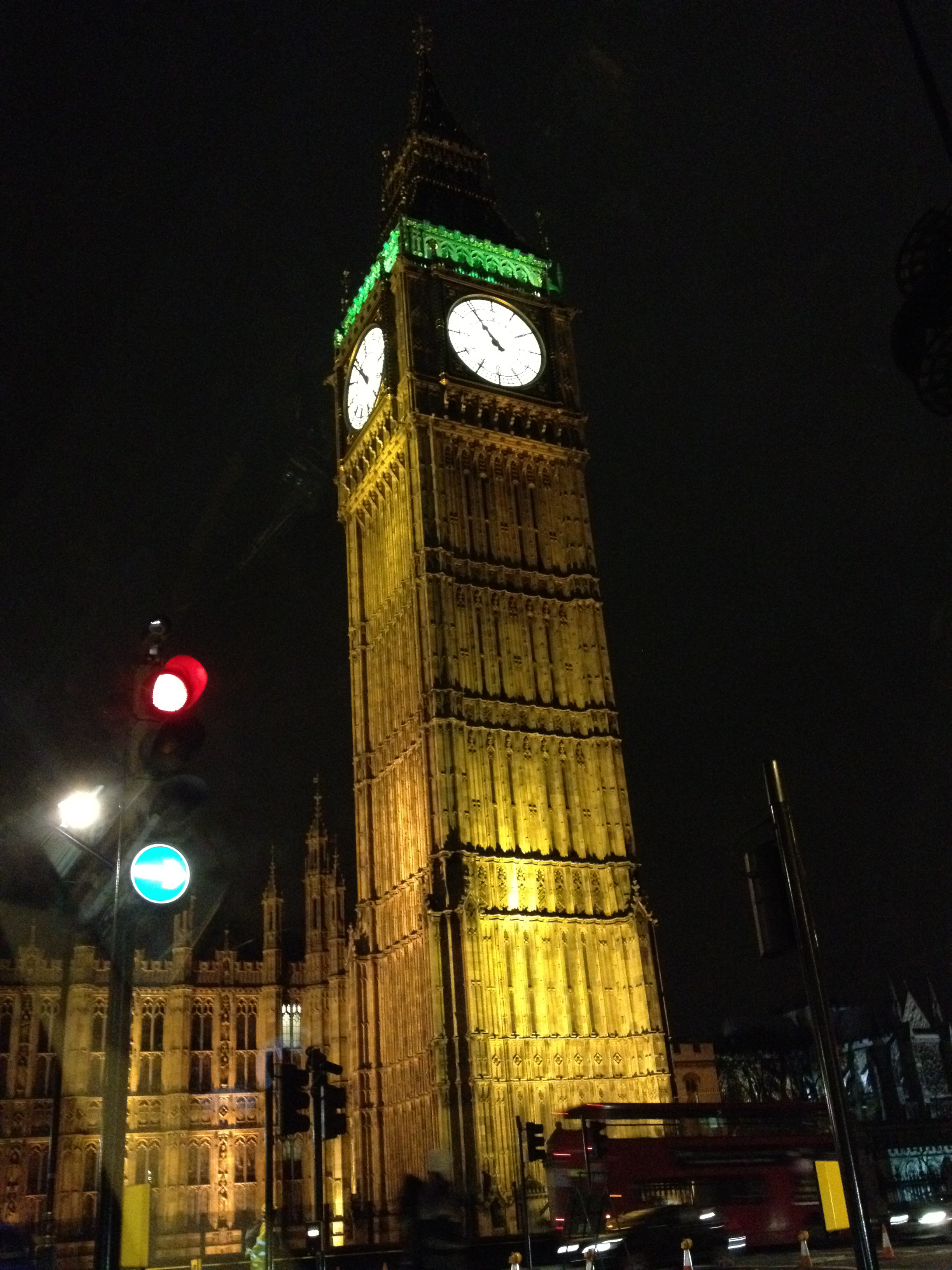
Driving around a secular London dressed in religious garb, St. Paul’s Cathedral lit splendidly in the night, was a reminder of the hold Christianity still has on even non-religious culture. It was kind of like the corpus-less crucifix in the movie. The inspiration behind the great gothic stylings of Big Ben and Parliament arise from their long association with Christian culture. On the streets people were milling about London late in the evening, not apparently fresh from church, standing in the shadow of Westminster Abbey and happily snapping photos. This may be a montage of disparate images colliding in my jet-lagged mind, but somehow virgins, vampires, crucifixes, and churches seem to fit naturally together.


Robot Crossing

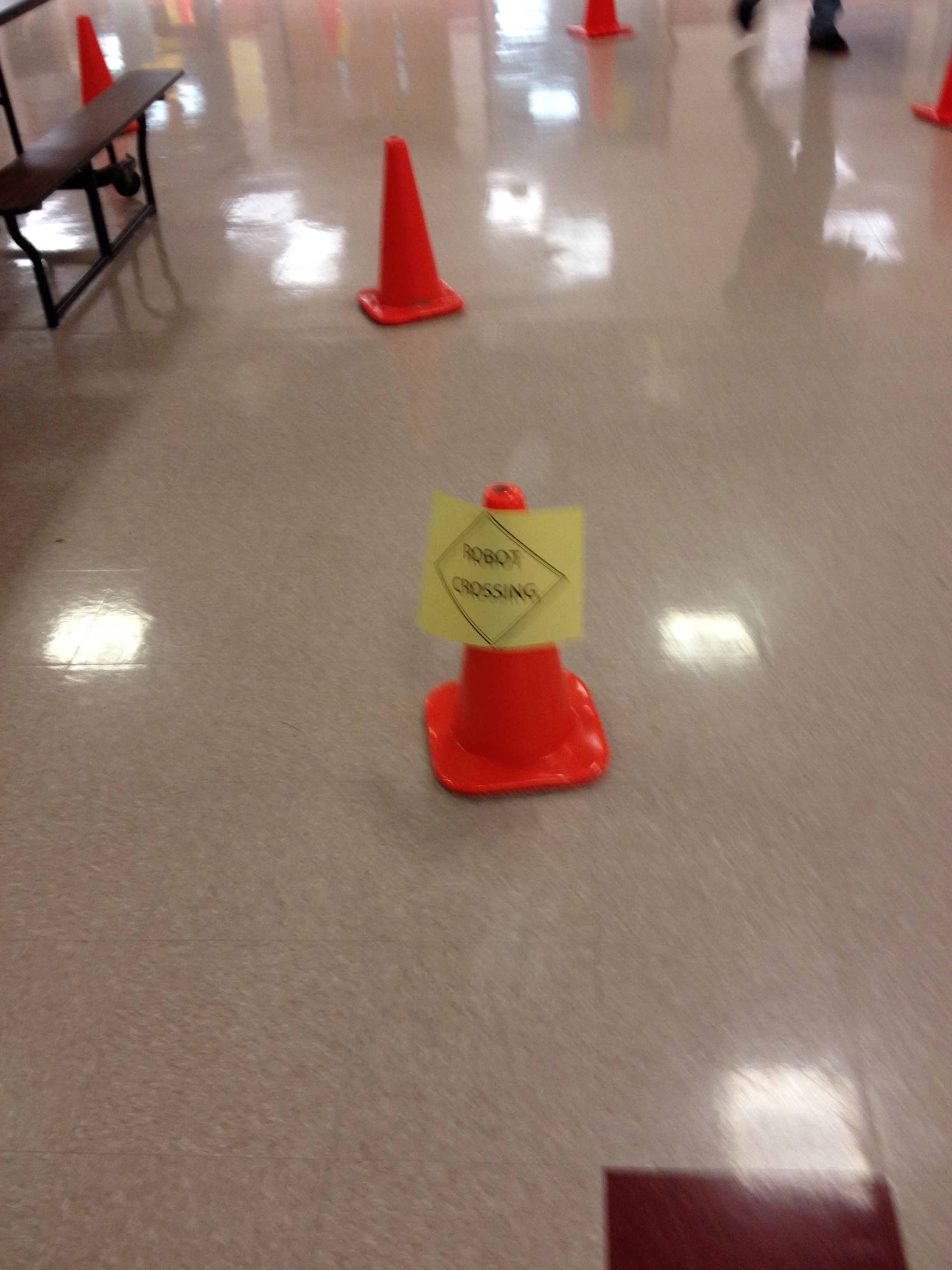
With my new job I haven’t been able to be as active on our high school’s robotics team this year. Not that I ever contributed much beyond moral support, but there is a very profound satisfaction at seeing teenagers concentrating on such technological marvels and building self-esteem. Yesterday was spent at a regional competition. Noisy, colorful, chaotic—it was like being a teenager again myself. I overhead engineers talking during the course of the day about the great technological marvels of the future made possible by robots. These people have no apocalypse hidden among their endless optimism. We’ve got robots on the ocean floor and rolling around on Mars, snaking into our bodies even down to the cellular level. No end of times here, only forward motion. I know that computers now define my life. If I miss a day on this blog I grow dejected; one of my biggest worries about going to Britain later this week is how I will continue posting from overseas. But I sometimes feel as if our love of technology will be our undoing.

Experts—of which I am not, I hasten to add, one—tell us that within a lifetime artificial intelligence will be indistinguishable from real intelligence. As I watched the robots playing basketball (this year’s FIRST Robotics challenge), I began to wonder about the motivation of our robot slaves. Humans are driven by biological and emotional needs. Robots, as far as we can tell, do not want anything. It is a vacuous life. Yet as the robots played basketball all day, I noticed they didn’t suffer the obesity problems so evident among humans, nor the weariness that accompanies having to awake before dawn to catch a school bus to the competition. They are built for a purpose and they stick to it. Even as I watched hours of competition, I began to miss my laptop—driven by my own emotional needs as I am. I begin to wonder who is really the slave here.

Last night my family participated in Earth Hour. We try to do it every year with a kind of religious fervor. Turning off all electronics, including lights, we sit in the dark and talk by candle light. There is a profound peace to it. As my daughter commented on how spooky the shadow play could be, I imagined our ancestors who had no choice but to rely on pre-electric light in drafty houses where real wild animals still prowled the dark nights outside. How quickly that would become a trial for us. The same thought occurred to me as I watched M. Night Shyamalan’s The Village again last weekend. We are helplessly tied to our technological advancement. We might like to get away from it all for a few days or weeks, or even months. But we want the comfort of knowing that the robots are waiting for us when we turn back to reality again. Perhaps no apocalypse is needed after all.

Robot crossing


Unholy Brides

Hollywood is seldom accused of being a religious venue. Indeed, carrying on from an earlier distrust of theater as idle entertainment, some Christian groups early on deemed movies as tools of the devil. (Some relaxed that harsh assessment when Cecil B. DeMille came on the scene and started offering biblically based epics.) Many directors and writers, to judge from recent vapid box office successes, consider action or titillation sufficient to draw in the dollars. Yet, movies have often proven to be an outlet for the intellect as well, with profound, intricate, and important themes unfolding against the silver screen. The movies we watch reveal much about who we are. A surprising number of them, despite early evangelical concerns, have decidedly religious themes or messages. My regular readers know of my confession to being one of the monster kid generation, and as an adult I re-watch those movies with senses attuned to their religiosity.

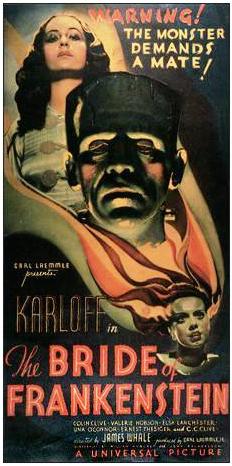
Last night, as I watched The Bride of Frankenstein, I was repeatedly reminded of the role religion plays throughout the film. From the opening lines of Lord Byron through to the monster’s moral judgment on humanity as he is about to pull the switch, religious language, symbols, and implications practically tumble over each other to get to the audience. The concept of life—the divine prerogative—being absconded by human scientists forms the skeleton of this story based on Mary Wollstonecraft Shelley’s original work. While Shelley can hardly be considered the poster-girl for religious scruples, her work, and its adaptation into this movie, bristle with the implications of usurping the divine. In the words of Dr. Pretorius, “To a new world of gods and monsters!”

The Bride of Frankenstein is not alone in this aspect of mixing religion and monstrosity. Hollywood of the 1930s was a money-hungry haven, but the classic monster tales that began to shape movie-watchers’ sensibilities often included religious themes. Dracula has his resurrection and aversion to crucifixes. The Mummy arises from ancient Egyptian ritual magic. The Wolfman suffers a gypsy curse. Frankenstein is the power of God incarnate. When the final reel is placed on the projector, we discover that God has rejected all these human attempts to ascend to the heavens. Hollywood gives us conventional religious endings. More recent and daring approaches have emerged, but seldom have they captured the American imagination like the creature features of the 1930s. The religious veneer may have been thicker in those days, but the underlying message could have chilled the blood of the finger-waving evangelists. Even the Bible, from the beginning, has its monsters.


Battle Billboards

Perhaps the oddest intangible accompanying democracy is the concept that all things are negotiable. Add to that a capitalist sensibility that everything has its price and even truth itself feels like a matter of debate. We see this all the time with Creationists so desperately wanting the Bible to the “true” that they twist science into a fairy tale noose from which to hang their literalist god. The tendency, however, does not stop with them.

Surely one of the most tense stretches of pavement in the country is NJ 495 leading into the Lincoln Tunnel. The aorta pumping countless metallic cells into the heart of Manhattan, drivers and passengers often sit motionless in it for seemingly endless periods to crawl forward like an inchworm entering the Olympics. It is there that Battle Billboards takes place.

I have followed the Atheist billboard development with some interest. In my limited experience with the Lincoln Tunnel, I have noted the digital billboard on the Jersey side bears the message of atheist.org near the major Christian holidays, so as Easter approaches the newest one reads “Celebrate Living Without God” to promote a rally on the Mall in DC. Both religion and science make claims of how to know the truth. Truth with a capital T should be non-negotiable by definition. The problem is that nobody has the Truth. We’re still trying to figure it out. Atheist.org holds a firm conviction that life would be better without religion. Clearly not everyone agrees. Clarity, it seems, is the chimera of debates over Truth.

A few seconds after the atheist.org ad flashes off the big screen, an ad for Wrath of the Titans (coming soon to theaters) flashes on. Irony can be sweeter than honey and as bitter as the Dead Sea. The most recent Clash of the Titans (2010) borrowed little from classical mythology beyond the names and large plot lines. An atheistic Perseus just doesn’t fit the classical taste. In the new film, Zeus—surely one of the prototypes for modern conceptions of God—is captured by Hades and has to be rescued by his unbelieving son. Could any movie be a more thinly disguised Easter story? Atheists? Wrath of the Titans? Which way to jump? Fortunately for me, traffic going into the Lincoln Tunnel in these lanes is one way. That’s the kind of certainty we all can live with.

Light from above or hopeless ambiguity?


Battle the Angels

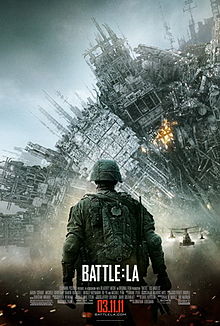
Over the weekend I finally got around to watching Battle Los Angeles. Now, I’ve never been a fan of war movies, but I do have a soft spot for aliens, so I decided to tough it out and see who won. I knew the historic event upon which the premise of the film was based took place in 1942, before flying saucers captured the American imagination. The official Air Force story suggests that old nemesis to our control of the air: weather balloons. Considering that Los Angeles was blacked out and ground forces lobbed 1,400 artillery rounds at the things, I wonder why the balloons at my daughter’s birthday parties never managed to last the night. In any case, the movie runs with the premise that aliens have taken over the city of angels and the U. S. Marines are the ones to get the job done when it comes to taking out aliens. (The Air Force, one expects, is too busy chasing weather balloons.)

Gratuitous aliens and science fiction action may be merit enough to get into this blog, but there is actually a more compelling reason. Back in my teaching days, I tried to demonstrate to students how deeply the Bible pervades our culture. When I taught those long summer and winter term courses, sometimes lingering four hours into the night, I would break up the inevitability of my lectures with a few movie clips to show them just how often the Bible shows up in films. Sometimes the cameo appearance is a matter of fleeting seconds, but when directors pay attention to every detail of a scene, we can be sure that Bibles don’t just show up by accident. Battle Los Angeles is no different. As our platoon is being air-lifted into the alien hot zone, one of the soldiers (I couldn’t figure out which one, since most of them get dispatched in fairly short order) is shown reading the Bible. The camera hovers there a second before pulling back to show the pre-battle chatter.

The viewer is probably supposed to be reminded that there are no atheists in foxholes, as the saying goes. Or it is a sign of how serious this is: before the big guns come out, bring on the Bible? In our culture the Bible has that kind of role. I recently read of a Catholic astronomer who was seeking alien civilizations in order to convert them to Christianity. The premise is as intriguing as it is arrogant. Human beings can be tenacious when it comes to matters of belief. In Battle Los Angeles, however, we speak with our guns and our missiles. But first we read our Bibles. Without wishing to ascribe to much intentional subtlety to the movie, this might be the underlying paradigm. Once the battle begins in earnest, the Bible never comes back into play. It is human ingenuity that wins the day, and perhaps the aliens are being taught to pray.


Map is Territory

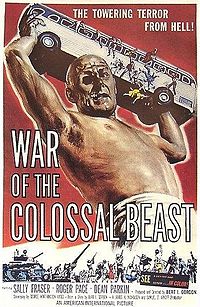
Far be it from me to challenge the established certitudes of the experts in academia, but I’ve been beginning to think maybe map is territory. This insight came to me from an unorthodox source (of course). I was watching War of the Colossal Beast over the weekend—among the corniest of corny 1950’s sci fi flicks. If you were born around the middle of the last century you already know the premise: a nuclear device has converted a man into a towering giant who resists all attempts to stop him or keep him under control. The reason that map and territory came to mind was that this 60-foot tall man (an apt companion for the 50-foot woman) could not be found by the authorities although he was terrorizing Los Angeles. Just as I was climbing on my high horse I realized that the problem they faced was communication. (And maybe they needed glasses.)

From the perspective of the twenty-first century and the vast network of instant communication (you can tweet your latest observation while on public transit, deep under the Hudson), map has become territory. There is nowhere left for the sixty-foot giant to hide. I am not the only one to speculate on the effect this shift will have on religion, but when we have become so intricately inter-connected, we seem to have squeezed the mystery out of life. Every trail has been blazed, every path has been trod. Old Ecclesiastes is laughing up his wizard’s sleeve. If a giant escapes among us its location will be texted across the territory second by nano-second. There is nowhere for us to hide either.

Our dependence on electronic media has changed part of the human race. It is easy to forget that in places not too distant, some of them even in the developed nations, there are human beings untouched by the revolution that has compressed map and territory. I have to wonder if their lives are better or worse for the ease that pervades our culture of flying fingers and ultra-dexterous thumbs. Avoiding the concept of the noble savage, I sense of kind of purity in the life free from the constant buzzing of 3G and 4G networks, wi-fi hotspots, and microwave towers disguised as trees. Theirs is a life where map is not territory, where being unplugged is natural and normal. It is a world where giants might hide in the night, and those who fear them may be all the more human for doing so.


Sh*t Apes Say

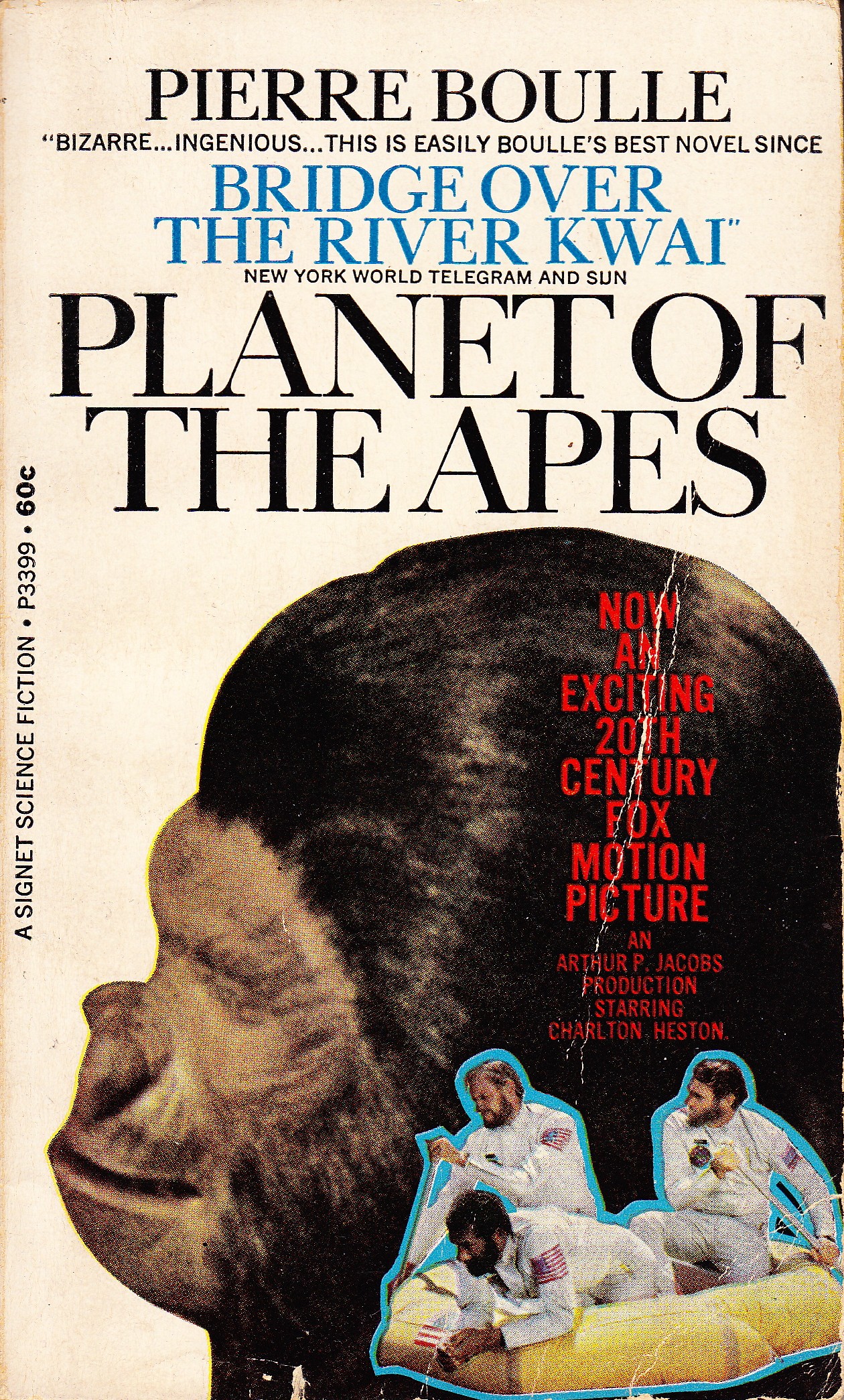
Knowing from experience that when I stay alone in a hotel, despite my best intentions, I will get bored and end up watching Mudcats or Dual Survival until my brain feels like a boiled egg, I anticipated my trip to California. I packed Planet of the Apes, the original and best of the lot, hoping for some intellectual stimulation. Having grown up in an anti-evolution household, we were curiously allowed to watch Planet of the Apes, a kind of forbidden zone of the mind. It remains one of my favorite movies of all time. It is also a manifesto of science besieged by religion. Note what Dr. Zaius says, “There is no contradiction between faith and science… true science!” And he is the Minister of Science, and Chief Defender of the Faith. The trial of George Taylor, a thinly disguised parody of the Scopes Trial, has Honorious (read William Jennings Bryan) stating, “It is based on our first article of faith: that the almighty created the ape in his image, that he gave him a soul and a mind, the he set him apart from the beasts of the jungle and made him lord of the planet,” and turning on his fellow apes Zira and Cornelius, he accuses them of being “perverted scientists who advance an insidious theory called evolution!”

Dr. Zira, as one of these “perverted scientists,” asks Cornelius (incidentally, the name of the first non-Jewish Christian, according to Acts), “How can scientific truth be heresy?” This is echoed by Dr. Zaius in the trial where he states, “It is scientific heresy that is being tried here.” Indeed, the entire simian culture is based on the blurring and blending of science and religion. Throughout the film various characters make barbed statements about the human propensity to ignore the obvious. Landon, challenging Taylor about the time change they experienced in space, says—in a line that could come straight from Answers in Genesis—“Prove it! It’s still just a theory.” The exact rhetoric currently used by creationists in school board meetings around the country. To which the most apt reply seems to come from Dr. Zaius, speaking of humanity: “his wisdom must walk hand-in-hand with his idiocy.”

Occasionally even the gun-toting humans get the picture clear. In his opening monologue George Taylor wonders about the world seven hundred years from now, “Space is boundless. It squashes a man’s ego. I feel lonely. That’s about it. Tell me, though. Does man, that marvel of the universe, that glorious paradox who sent me to the stars, still make war against his brother? Keep his neighbor’s children starving?” This seems to be the true measure of heresy—a religion that puts fellow humans on the same level as animals (and even animals deserve far more credit than we are willing to give). Among my favorite lines is Cornelius’ response to Taylor shaving his beard; “Somehow it makes you look less intelligent,” he opines. Endlessly remade, Planet of the Apes is a movie that still answers some of the issues that plague our society nearly half a century later. Perhaps the last line should go to the apes, adjusted of course, for gender sensitivity, “[hu]man[ity] has no understanding.” Well said, Dr. Zaius, well said.

A piece of childhood


Real Hope

I’m doing something I seldom undertake: posting a second blog entry on a single day. Well, I’m in California and my time scale is all out of whack anyway; who’s to say what time it really is? Last night (or was it afternoon?) I checked into my hotel to find a message from Una McGurk, the colleague of Trina Paulus and coordinator of the Hope for the Flowers Kickstarter campaign. I mentioned Trina Paulus’ Hope for the Flowers in a recent post, as a way of summing up some thoughts on resurrection and societal change. I am a die-hard idealist, often to my own detriment, and I didn’t really elaborate on just how important a book Hope for the Flowers is. In all seriousness, it is a transformative book for those receptive enough to read it with an open mind. Sometimes we’re inclined to think that books that look as if written for children can’t have anything adult to say. We are so wrong.

In keeping with the spirit of the book, Trina Paulus and Una McGurk are attempting to raise funding to produce an independent animated version of the story. Since movies and books dominate my post topics, this is a cause I find worthy of support. A bit of a spoiler alert here—if you haven’t read the book, or if you simply need to be reminded, Stripe and Yellow are caterpillars in love. Stripe, however, is drawn to the world of what all other caterpillars do—climb. Forsaking his love, he climbs to the top of one of the countless caterpillar pillars in the world only to find that those at the top get there by throwing others off. The top of the pillar is empty. Nothing is there except the hollow feeling of having beat others to the pinnacle. Still, above the pillar, butterflies soar.

It is a simple story, but the message is profound. And necessary. Looking at the progress of corporate greed and heartless acts of personal promotion, it is difficult not to call Trina Paulus a prophet. In a day when Christianity is identified primarily with draconian restrictions on what “true believers” cannot do, I think we could all use a few more butterflies. Chances are, if you are reading this blog, you have some sympathy for the human race. If you do, visit the Hope for the Flowers website and consider pledging a donation, no matter how small, to spread this message further afield. Not only the flowers, but also the very survival of humanity could well depend on it.

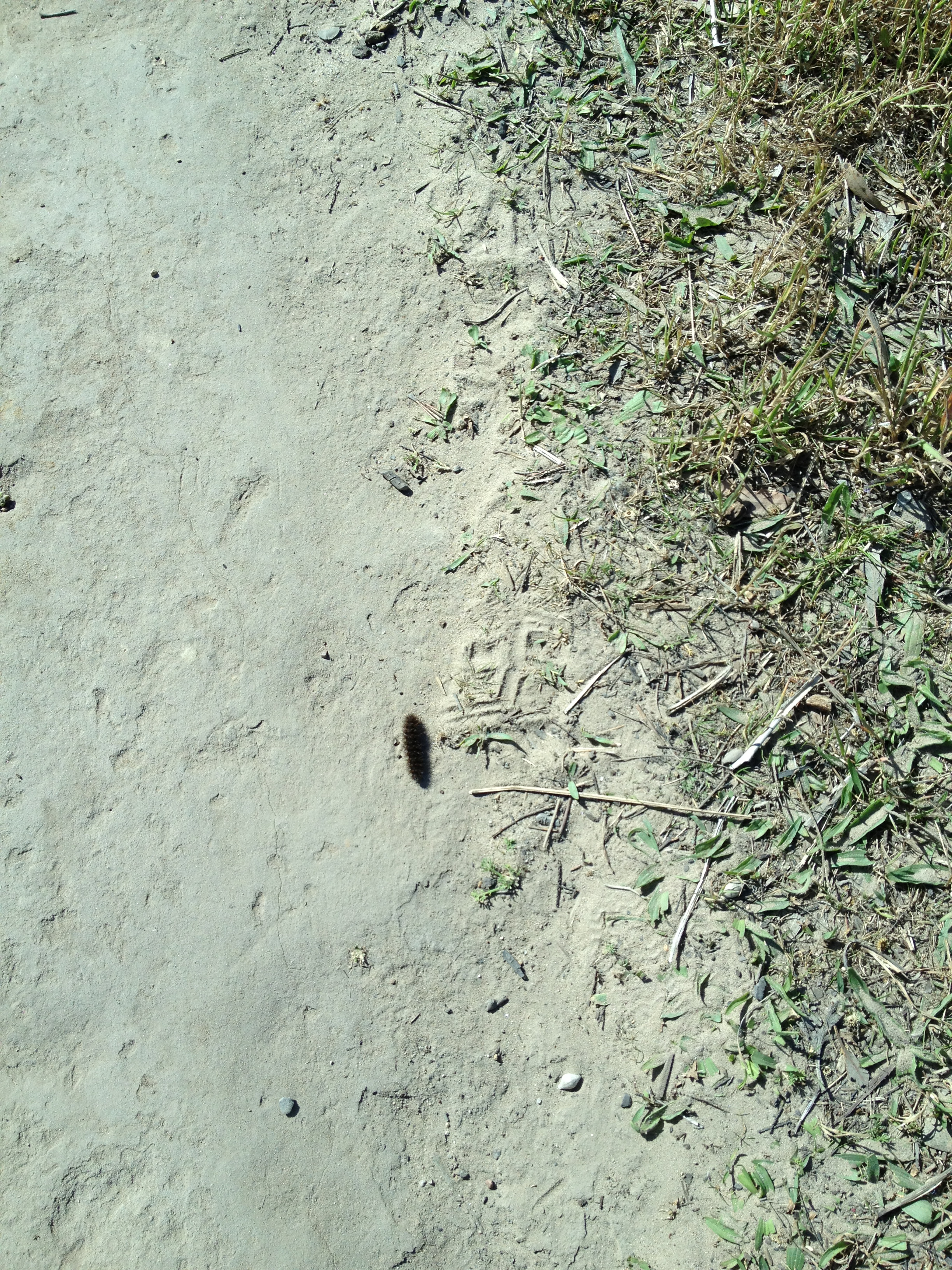
A California caterpillar says yes!


Book Me

I’m a reader by nature. I grew up, however, with television. I recall somewhat precisely when reading really grabbed me. Starting in fifth grade I began to stash cheap books in an old duffle bag in the room I shared with my brother. We lived in humble circumstances and bookshelves were a luxury, but I kept my precious books together so that I could always find the one I wanted. Eventually I upgraded to a suitcase made out of what appeared to be cardboard. This fascination with books would stay with me my entire life. So would the television side of my education. When I wasn’t watching cheesy B movies or World Federation Wrestling, I was watching documentaries. A few weeks ago, I posted about a documentary site on the web, and I have discovered another site as well, Documentaryz.

One of the benefits of the web is the access to free information. I regret not having the time to watch all the quality material that can be found with a bit of poking around. Documentaryz has several categories of shows available including, as befits this blog, religion titles. The documentary has clearly become an art form as well as a source of information. The problem with the web, however, is so little material is peer reviewed. I can imagine a better world where political speeches and sermons would have to stand before a board of peers to justify their often phantasmagorical claims. A world where someone can make no claims to special knowledge because an old man laid hands on his head or because he has too much money and wishes to run other people’s lives.

So it is that I come back to my books. On the bus, or in the airport, or train station, I often feel hopelessly outmoded as I sit among people with beeping, chirping, or rhythm-and-blues spewing devices. I sit holding a book. It’s bulky, and sometimes requires both hands to keep open. It doesn’t make any noise. I am the librarian of public transit. Sometimes well-wishers suggest that I might cull the herd a bit, get rid of some of the books I’ve spent a lifetime gathering. I think back to a little kid in a stuffy room with a duffle full of paperbacks and I realize that books are a lifestyle choice. They are a part of me. As much as I enjoy watching documentaries, I begin and end my day with books. It may be a parody or some bizarre irony, but the only room in our apartment without books is the bathroom. They are not the waste products, but the stuff of life itself.


Attack of the 50-Foot Women

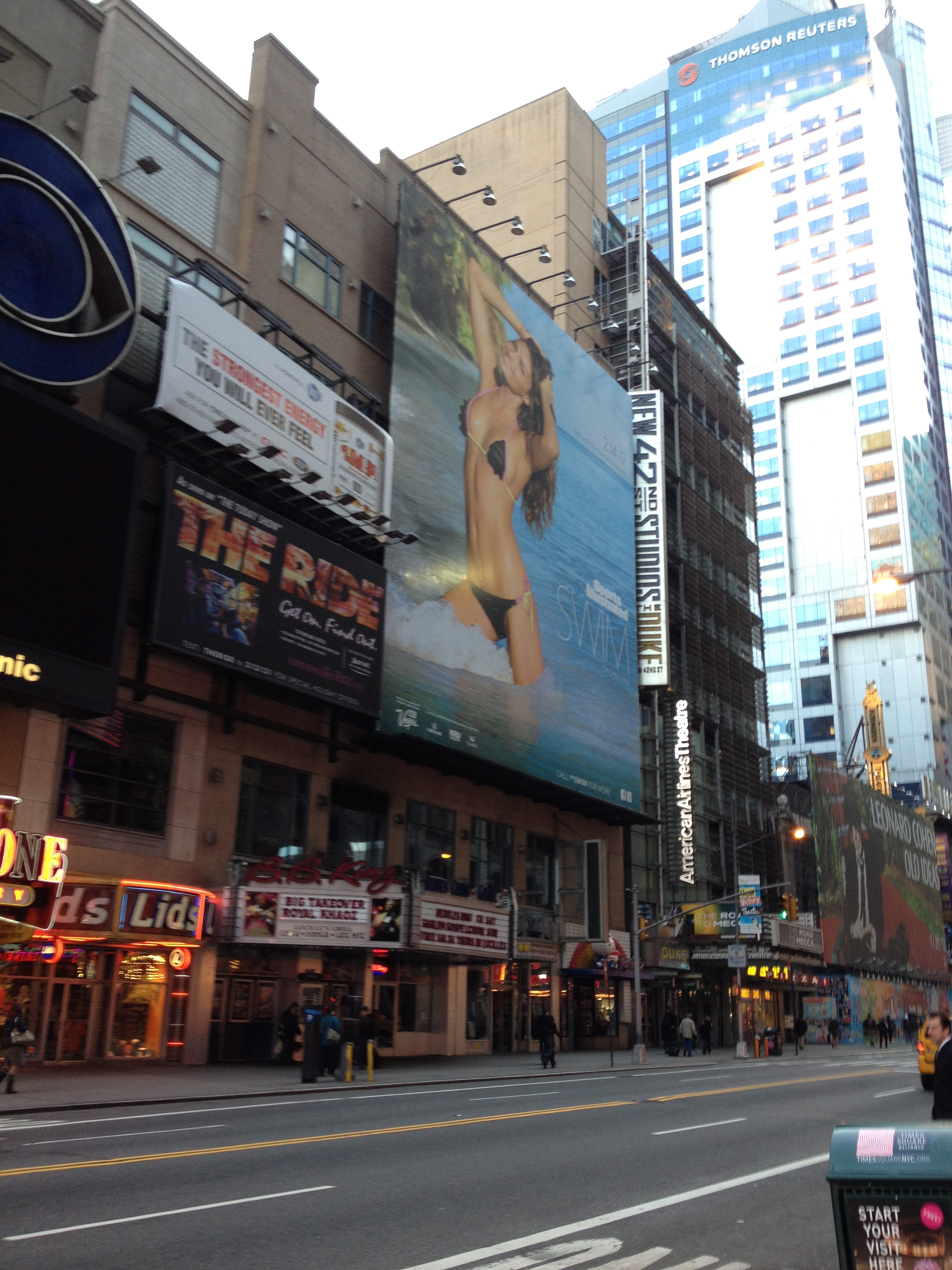
A society will be remembered by its lowest common denominator. At the mention of the Roman Empire many people immediately think of the decadence of that once mighty power in decline. Rome ruled the world at one time—or so it seemed—but Nero had his fiddle and Caligula favored his horse Incitatus as a senator (today we’re more accustomed to seeing asses in government than horses). The madness of Napoleon. The insanity of Hitler. Mighty powers crumbling under their own weight. Walking through Times Square is an education. Recently a fifty-foot woman appeared, looming over the heads of commuters, tourists, and the homeless. Unlike the classic 1958 sci-fi flick, this woman is apparently happy, smiling broadly, and nearly naked. She is an advertisement for Sports Illustrated’s soft porn swimsuit edition. Stories above us all, she pulls back her hair and, if she weren’t a fantasy, I’m sure she’d be chilly dressed like that in a New York winter.

We’re talking lowest common denominator here. As I man I can’t help but to understand the appeal. Advertisers know it too. At the corner of 42nd and 7th, there is another fifty-foot woman, apparently nude, sitting in an office chair for Go Daddy with a QR card across her torso offering to those who would scan her, “See More Now!” It is difficult to be judgmental when advertisers are using basic psychology to sell their products, and studies have shown that men are very easily aroused by visual images—our juvenile imaginations never do grow up. But women this large? In 1958 Nancy Fowler Archer was salaciously considered a monster, but the producers knew teenage boys would watch in fascination. Such simple creatures.

There is a disturbing subtext here. Men are weaker than they pretend to be, but that doesn’t bother me much. Vulnerability is where humanity is most authentic. The problem with the fifty-foot women in Times Square is the message to American society that women are a commodity. They, like everything else in Times Square, can be purchased and owned. They exist solely for the pleasure of men. I am not a prude, but I do believe that such blatant shows of the female body for sale bear as a subtext “mene mene tekel upharsin.” A society that cheapens its women in such a forum is creating the standards by which a hopefully more advanced future will remember it. Standing beneath the open thighs of the fifty-foot woman on my way to work, I am profoundly sad. This is Rush Limbaugh’s American Dream writ large.


Walking Monsters

It was a moment of weakness, or at least tawdry cheapness, that made me watch The Monster Walks. Just the day before the Cable Vision guy had stopped by, detailing how much money we could save by switching. We haven’t had television service since 2004, and even then it was only with a cheap aerial. Back in the days of Borders, I sometimes caved in and purchased the “Classic Features” movie boxes with 50 B, C, or D movies for what seemed a steal at less then 25 dollars. Maybe five or six of the movies from each set were actually worth the time spent watching them, but many of them proved an education. So it was with The Monster Walks.

Now, I readily confess to having a weakness for B movies. Made by people who were really trying, but who seemed to lack talent, I often identify with their efforts. So when I popped The Monster Walks into my DVD player, I had no idea what I might learn. The first revelation occurred in the opening credits where a character named “Exodus” was introduced. Since this was 1932, the character had to be African American. And comic relief. To spare you the pain of watching the movie, the plot is rather simple: rich man dies, helpless daughter inherits all to the chagrin of surviving brother and domestics, who plot to kill her by pretending to be a murderous ape. There also happens to be a murderous ape locked in the cellar. You get the picture. Aptly named Exodus is purely there as a foil for the educated, privileged white family. He was played by the talented but underappreciated Willie Best. As might (nay, should) be predicted, the scheme of killing the girl backfires and the ape kills the killer. Okay, so I can confess an hour wasted and get on with my reading. But the final scene arrested me.

Exodus wonders to the lawyer (who is there to read the will) why the rich man even had an ape. The lawyer, metaphorically transformed into a judgmental William Jennings Bryan, states that it was because he believed in Darwin’s theory of evolution. Exodus responds by noting some family resemblance to the ape. The blatant racism was hard to take, but in Black History Month the painfully obvious collective sins of our society should be laid bare. In 1932 Fundamentalism, often implicitly allied with racist causes, castigated Darwin’s theory for bringing all of humanity down to the same level. As long as a white god is creating the universe, the Anglo-Saxon can claim superiority. Never mind that Genesis was written by a Jewish writer living in Asia. Self-righteousness comes in many forms, but it always involves bringing others down to a rung below where the blessed stand. Has not the great Rick Santorum told us that even the Crusades were merely misunderstood?