Parson’s Poe

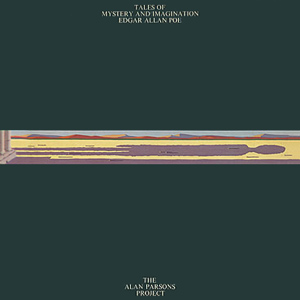
Some things just don’t mix: oil and water, cats and dogs, intelligence and Republican policy.  That’s the way of nature.  I don’t have a lot of time to listen to music—unlike some authors, I can’t write with music playing.  I end up paying attention to the music rather than what I’m trying to do.  So the other day when I had the opportunity, I went through our CDs to see what I hadn’t heard for a while.  I’d completely forgotten about the concept album Tales of Mystery and Imagination Edgar Allan Poe by The Alan Parsons Project.  Now, I’m not the biggest fan of Alan Parsons, but some of their songs are among my absolute favorites.  One of them can almost invariably make me tear up and my throat clench.  And I think Ammonia Avenue is one of the great albums of all time.

You’d think their mix of alternative rock would be favorable to Poe.  Poe is extremely personal to me.  I’ve read probing biographies and put them down thinking how much my perspective is similar to that of Poe.  I mention him in my books because he’s my writing companion.  APP just doesn’t get it.  Neither did Lou Reed.  Like Black Francis, I like Lou Reed.  But I like Poe more.  Not even Poe (sorry Anne Decatur Danielewski) comes close.   I have heard rock adaptations of Poe that I do like, so why didn’t Alan Parson, Lou Reed, or Poe (Danielewski) do it for me?  It’s difficult to say.  Music is very personal to me.  It stays in my head for a very long time, so I have to be careful what I let in there.  I don’t write much about music on this blog because I just don’t know you well enough.

I got the Alan Parson’s album long after it was published.  I can’t remember how I found out about it, but I had great hopes for it.  I guess Poe (the man) has a certain sound profile in my head.  It’s likely because, to me, Poe is more than the author of tales I read when I was young.  He is a symbol, coming to represent more than just another writer who struggled and was likely never understood in his lifetime (if ever).  As those who write and attempt publication know, this is a hostile business.  It’s difficult to get published in the traditional way and then it’s difficult to get your work noticed after it’s published.  These days a “like” and a “share” can go a long way (click “like” if you do), but even so my Poe music will be mine alone.


More Rats

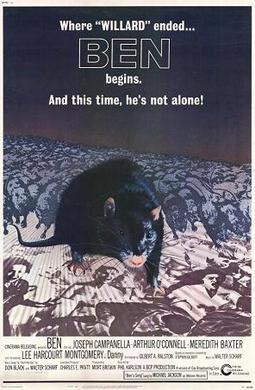
I’ve asked other survivors of the 1970s if they knew that the Michael Jackson hit “Ben” (his first solo number one recording) was written about a rat.  Most had no idea.  The song is the theme for the sequel to Willard, namely, Ben.  Now, I have a soft spot for seventies horror movies.  Before the days of streaming I repeatedly looked for Willard in DVD stores and never did find it.  I eventually found it on a streaming service and even wrote a Horror Homeroom piece on it.  One winter’s weekend with not much going on, I finally got around to seeing Ben.  Neither are great movies, but I’ll give them this—people in my small hometown knew about them.  Everyone I grew up around knew that “Ben” was a song from a horror movie.  In case you’re part of the majority, Ben is the chief of the intelligent rats who turns on Willard at the end of his movie.

An incompetent police department and other civil authorities can’t seem to figure out how to exterminate rats when they begin attacking people.  A little boy, Danny, has no friends.  He is apparently from an upper-middle class family, and he has a heart condition.  Ben finds him and the two become friends.  Danny tries to get Ben to lead his “millions” of rats away from a coming onslaught, but for some reason Ben decides to stick around and nearly get killed.  In the end, badly injured, Ben finds his way back to Danny.  Cue Michael Jackson.  It really isn’t that great of a movie—the number of scenes reused during the tedious combat scene alone belies the pacing of a good horror flick.  I felt that I should see it for the sake of completion.  Check that box off.

It’s a strange movie that ends up with viewers feeling bad for the rats.  They’re not evil, just hungry.  They do kill a few people (poor actors, mostly) but it’s often in self defense.  The best part is really the song, and the premise behind it—boy meets rat, boy falls in love with rat; you know how it goes.  Michael Jackson famously loved horror movies, and as many of us have come to realize there’s not much not to like.  This movie is pretty cheesy (with the rats attacking a cheese shop, but only after an unintentionally hilarious spa scene) but it has heart.  And it has a fair bit of nostalgia for those of us who grew up in the seventies.


Sounds Funny

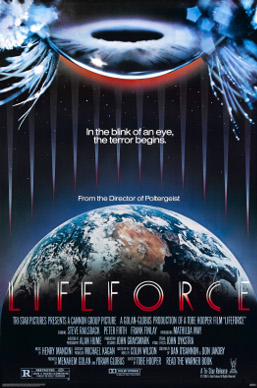
It may be the strangest vampire film ever.  Lifeforce not only postulates the origins of vampires as beings from space who come to suck humans dry of their souls, it also plays off of Invasion of the Body Snatchers, any number of zombie films, and Alien, all with a score by Henry Mancini.  Patrick Stewart is in it, but the plot makes very little sense.  Although it didn’t perform at the box office, it has become a cult film, and some parts of it are actually pretty good.  Directed by Tobe Hooper and partially written by Dan O’Bannon, there was some real talent involved.  Too bad it just can’t seem to hang together.  The main reason seems to be the story-line.  It’s based on a novel, but not all novels translate to film so well.

What’s interesting is that it attempts to provide an origin story for vampires.  When the crew of the Churchill initially discovers the alien ship, the creatures are bat-like.  This intends to explain why vampires are associated with bats.  Since these beings had come to earth long ago, their association with sucking people dry, and bats, led to the belief in vampires.  Of course, following the logic of the story, vampires should’ve nearly taken over the earth before since victims revive after two hours and victimize those nearest them.  Only one scientist in this future London can uncover a specific combination of metals that have to be used to stab a vampire in precisely the right location in order to kill it.  Meanwhile the souls of thousands of residents of London are being sucked up to the alien ship.

The score for the movie also rings a bit oddly.  Henry Mancini isn’t the first name to come to mind as a composer associated with horror movies.  Or science fiction.  Even G-rated 2001: A Space Odyssey knew that.  Perhaps we’re lulled into thinking nothing of it by big studio productions that make the soundtrack sound natural to the movie.  Like all of the elements of a film, however, they really have to work with all the other elements to make something spectacular.  Lifeforce had a large budget and nevertheless struggles.  Tobe Hooper had just come off of directing Poltergeist, which, although never one of my favorites, was a stronger and more lasting entry into the horror canon.  Maybe it’s that vampires and space just don’t mix.  Vampires are gothic monsters and that’s difficult to transfer to outer space with all its gadgetry.  That, and a score that’s difficult to take seriously.


Major Drum

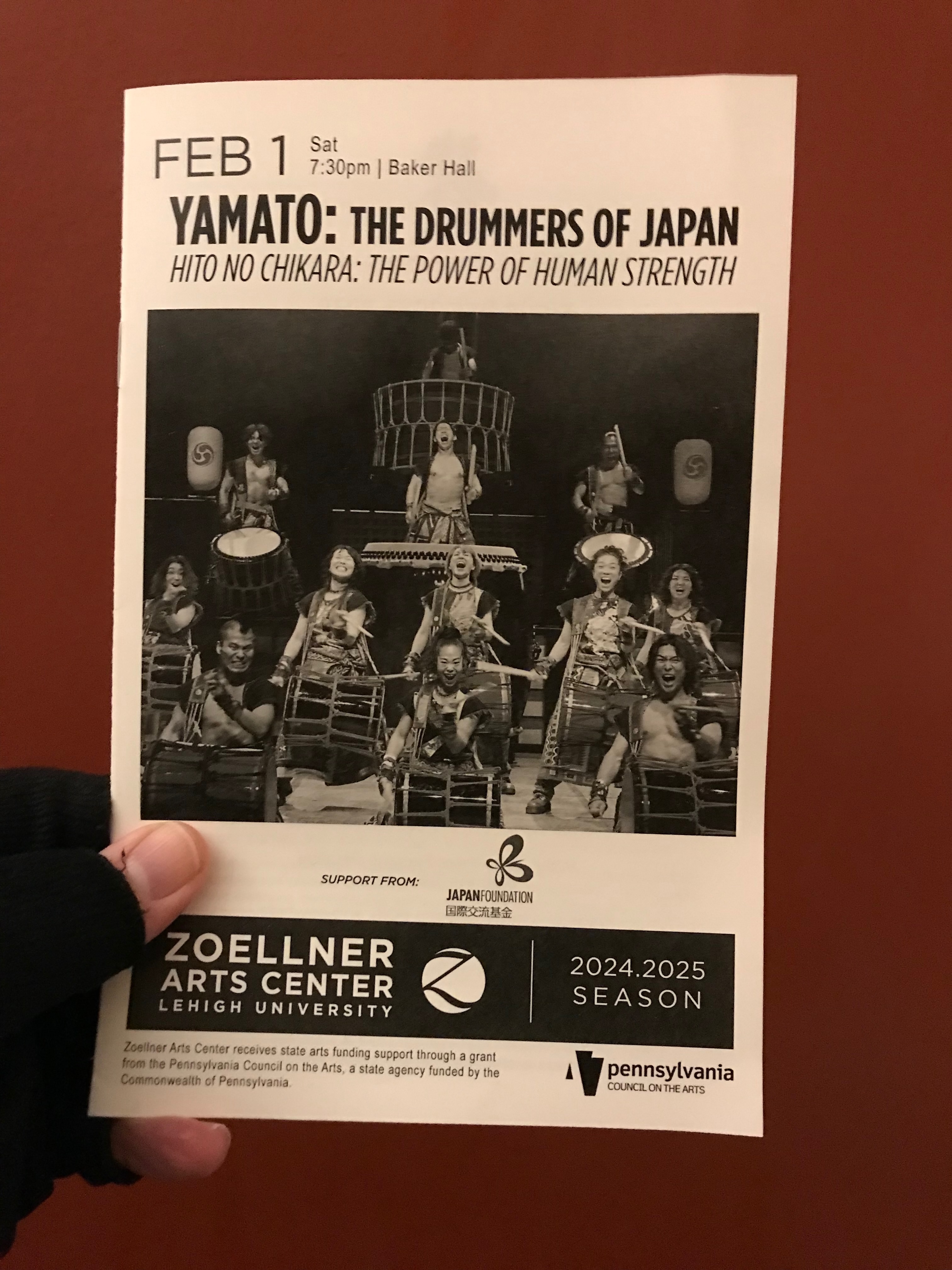
We don’t get out much.  Live shows can be expensive and these cold nights don’t exactly encourage going out after dark.  Living near a university, even if you can’t officially be part of it, has its benefits, though.  Over the weekend we went to see Yamato: The Drummers of Japan.  Our daughter introduced us to the concept while living in Ithaca, a town that has a college or two, I hear.  These drummer groups create what might be termed a sound bath, that is profoundly musical while featuring mainly percussion.  Now, I can’t keep a beat for too long—I’m one of those guys who overthinks clapping in time—but that doesn’t mean I can’t appreciate those who can.  The timing of the members of Yamato was incredibly precise, and moving.  At times even funny.  It’s a show I’d definitely recommend.

This particular tour is titled “Hito No Chikara: The Power of Human Strength.”  Now this isn’t advertising their impressively well-toned bodies, but is a celebration of human spirit under fire from AI.  The program notes point out some recurring themes of this blog: to be human is to experience emotion, and to know physical limitations, and to be truly creative.  Would a non-biological “intelligence” think to wrap dead animal skins around hollowed out tree trunks, pound them with sticks and encourage hundreds of others to experience the emotions that accompany such things?  I live in a workaday world that thinks AI is pretty cool.  Humans, on the other hand, can say “I don’t know” and still play drums until late in the night.  We know the joy of movement.  The exhilaration of community.  I think I can see why they titled their show the way they did.

Bowerbirds will create nests that can only be called intentionally artful.  Something in biological existence helps us appreciate what they’re doing and respond in wonder.  Theirs is an innate appreciation for art.  It spans the animal world.  Japan is one of many places I’ve never been.  I’ve never played in any kind of band and you don’t want me setting time for your pacemaker.  If a computer keeps such precise timing we think nothing of it.  It’s part of what humans created them to do.  When a group of people gets together, stretching their muscles and working in perfect synchronicity, we sit up and take notice.  We’ll even pay to watch and hear them do it.  Art, in all its forms, is purely and profoundly biological.  And it is something we know, at our best, to appreciate with our emotions and our minds.


Hungry Eyes

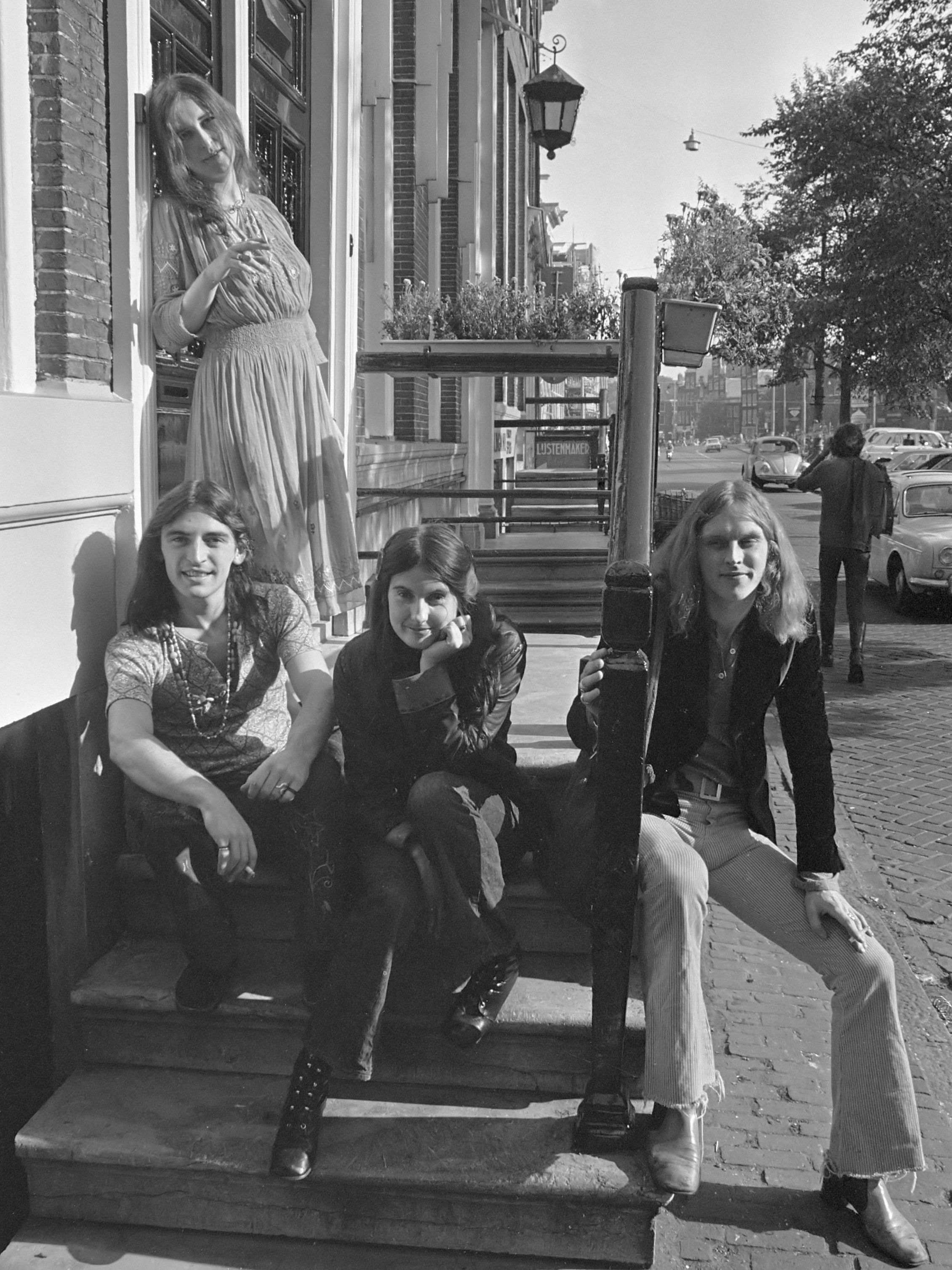
They’re watching.  All the time.  I may be a quasi-paranoid neo-Luddite, but I have proof!  Who’s the “they”?  Technology nameless here forevermore.  So my wife and I attend Tibetan singing bowls once a month when we can.  It’s the night I get to stay up late even though it’s a “school night” and get bathed in sound.  Our facilitator is a kundalini yoga instructor.  To those of you with experience, you know what that means.  At the end of each session we sing the “Longtime Sun” song.  Each and every month the next morning I groggily look it up.  I know it’s a recent song (hey, I’m in my sixties) but I can never remember by whom.  So for the record it was written by Mike Heron of the Incredible String Band and it’s part of a piece called “A Very Cellular Song” on the 1968 album The Hangman’s Beautiful Daughter.  (Now I remember!)  Okay, so I’ve got that out of my system. (I must add that this is disputed, with some claiming it’s an old Irish blessing. But note, AI only complicates the issue because it doesn’t do actual research.)

Incredible String Band: Image credit—Bert Verhoeff / Anefo, under the Creative Commons CC0 1.0 Universal Public Domain Dedication, via Wikimedia Commons

So how’s that proof?  Well, there’s an unconventional website I check daily.  Are you surprised?  Really?  To get headlines I have to reload it daily and the ads sometimes refresh.  I checked this site a mere five minutes after searching “Longtime Sun” for maybe the fifth time and the ads in the refreshed page were for singing bowls.  Just five minutes earlier I’d been searching a hippie tune and already they were preparing ads for me.  You see, “Longtime Sun” is a standard of many (I gather from the interwebs) kundalini yoga classes.  So much so that it’s commonly said that this is a traditional Tibetan song.  Well, I suppose to call it “Very Cellular,” or even “Hangman’s Daughter,” might harsh the experience a bit.

Kundalini yoga is very esoteric stuff if you read a little more deeply.  For me such reading is an occupational hazard, so I’ve read enough to know that many respectable people might be a bit shy upon hearing the details.  That’s not to say that it’s ineffectual on the level of singing bowls.  I have great respect for esotericism, although Hinduism isn’t in my background.  But if “they” know what kundalini teaches, what kinds of ads might begin to show up on the websites I visit?  What’s truly amazing is that a web search for a specific song brought up an ad for something that would be puzzling, were a reader innocently wanting to find out about “A Very Cellular Song.”  For academic purposes, for instance.  Of course, they know, you can merch anything.  You can trust the internet only so far. And they are watching.


For the Music

Believe me, I’ve tried.  I took a year of piano lessons but just couldn’t get it.  I married a musician.  I tried to learn guitar.  (I would still play with it, but I broke a string last time I tried to tune it and who has time to get to a music store where it can be restrung?)  I can’t sing—I’ve never been trained and I just don’t seem to have the voice for it.  (In fact, since I no longer teach those close to me say I speak so softly that it’s a strain to hear me.)  But the fact is I love music.  That’s why I don’t listen to it as background.  If there’s music playing, that I like, I find it difficult to concentrate on anything else.  It goes directly to my brain, it seems.

My memory is such that if a piece of music is too familiar I sometimes just don’t want to hear it.  I’m also out of touch with contemporary music.  I have strong tastes, and not too much appeals to me.  When something does, it’s transcendent.  It’s like I’ve fused with the performers.  It’s mystical and amazing.  Growing up, we couldn’t afford much in the way of records.  (I’m sure I need not say anything about cassette or 8-track tapes.)  I listened to the radio with my brothers from time to time, and enjoyed what we heard.  I secretly enjoyed what I heard coming from my older brother’s room.  Left to my own devices, however, I tend to pick up a book and I can’t listen to music and read at the same time.  I know that this is my own neurological issue, but I’m letting you in because anything transcendent is worth sharing.  

Photo by Jefferson Santos on Unsplash

Although the quality isn’t as good, services such as Spotify and Amazon Music Unlimited have slowly introduced me to music of the nineties and later.  Why the nineties?  That’s when I began teaching and my spare time was spent researching (reading) and I had little time for other diversions.  You see, music may just be what it’s all about.  It’s being absorbed and enjoying every second of it.  Humans are visually oriented, but when we focus on sounds something happens to us.  I can be in a crowded store and stop dead right in the middle of the aisle if one of my special songs comes on in the background.  I have to stand and listen, shopping forgotten.  Transcendent moments are few.  If we were in transport all the time I fear it would become ordinary.  And such things are worth pondering on Groundhog Day.


Obscure Subjects

The world is so full of things that require further explanation that I can’t believe there aren’t more universities.  No, seriously.  If you look closely, or even casually, there are so many things under-documented that it’s a wonder we get along.  Instead we focus on criminals who want to be president and deny science is real.  Alas.  What brings this on is that I’ve been working on a book that involves researching pop culture.  Naturally, there are books and articles to read, and even videos to view.  Still, some information just doesn’t seem to be out there.  I’ve run across movies that appear with no explanation.  They’re simply there.  Sure, you can find the name of the writer, director, stars, and such, but how did that movie come to be?  Unless someone (normally a journalist) has followed up the story of its origins, there’s really nowhere to go.  Unless there are extras.

I’m remembering how CDs came with liner notes.  (Does anyone remember CDs?)  Good notes gave you further information on the music.  It was documented.  There was an explanation.  DVDs often lack that.  If there aren’t “extras” on the disc, the liner notes don’t help you much if they don’t exist.  Now that we stream everything a search on IMDb is about the best you can do.  Sometimes Wikipedia helps, but only if the article cites its sources.  We need more information.  I read a lot about movies and I’m always glad when an author has found a source that explains a bit more about why this particular film exists.  Are we that non-curious?

Believe me, I know the world is too full of things already.  On some subjects too much information is already available.  Things like movies, and music—things that really move us—however, are left hanging in the air.  I’m curious about them.  I suppose I could subscribe to trade magazines, but I wonder why those who’re already paid to be professors—professional researchers rather than erstwhile academic hacks like yours truly—aren’t all over this.  Academic respectability can be a real problem sometimes.  I know I didn’t feel like I could explore these things until I’d been ousted from the academy.  You see, I think we need more universities.  Places where the curious can go to learn about even more obscure subjects, but subjects that are really important to people.  It seems a far better use for our ill-gotten gain than spending it on lawsuits just to bring down those that education could take care of as a natural benefit.


November Nightmares

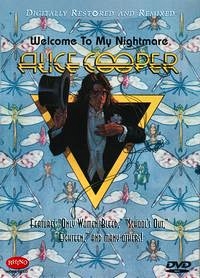
Music videos weren’t really a thing then.  And “Welcome to my Nightmare” was theater as well as rock.  I knew a movie of it existed, but I only made an effort to see it as October was slipping through my grip.  I have a strange, one-sided history with Alice Cooper.  We listened to the radio back when we were kids and we all knew Cooper from “School’s Out,” an unofficial anthem of the seventies.  We didn’t have much money when I was growing up (some things never change), but I had a copy of the album Welcome to my Nightmare.  I couldn’t recollect how I’d got it until my brother clued me in.  We were at Jamesway just outside Franklin one Friday night.  My mother, frugal to the day of her death, saw that Alice Cooper’s new album had a song called “Steven” on it and she bought it for me.

Now Mom knew full well that my official name is “Steve” (she named me).  There’s no “n” in there anywhere.  Yet still, even as I knew this, I found that song spoke to me.  Like the Steven on the album, I was prone to nightmares.  And the sequence of “Years Ago” and “Steven” on that concept album never left me.  Mom would not have approved of the movie version—I found the misogynist parts difficult to watch myself—but it did answer a question I always had: how did he perform these songs in concert?  They seemed too big for that.  They weren’t the snippets I always assumed rock stars did.  (I never attended concerts, so what did I know?)  Alice Cooper is still the only rockstar I’ve ever seen in concert, but the theatrics were brought way down and his back probably ached like mine did after that event.

I’d been looking for a horror movie to finish out the month, you see.  I keep a list of movies that, apparently, are never free on Amazon Prime or Hulu.  It ended up taking nearly all the little time I allot myself for such indulgences to try to find something.  Then I remembered Alice.  It was raining outside and I had caught up on my emails for the moment.  This step into a yesteryear I never knew made me realize just how creative people can be.  We have to get someone to pay us for doing something, and if you can sing and strut, well, you might consider sharing your nightmares.  Something many of us have in abundance, even in November.


Personal Psalms

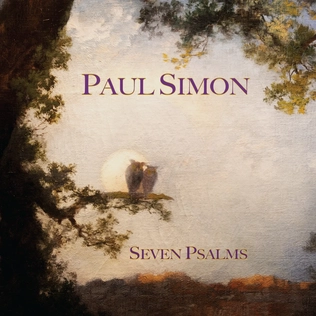
I haven’t heard it yet, but a New York Times article encourages me to.  Paul Simon has joined the ranks of those aging music stars to record albums presaging their deaths.  The article was about Simon’s latest album, Seven Psalms.  And, yes, the religious reference is pretty hard to miss.  Like most kids from the sixties, I grew up hearing Simon and Garfunkel on the radio.  We didn’t have money for albums, but I always liked their songs when I heard them.  After their breakup I really didn’t pay much attention to Simon until Graceland, and since then I’ve listened with half an ear.  You see, I’m wired in such a way that I can’t listen to music while I write.  Or read.  My mind grips one thing at a time.  That means I don’t listen to background music much.

That doesn’t mean I don’t appreciate music.  I do.  Almost religiously so.  On occasion I come back to Simon, with or without Garfunkel.  I posted about his song “Werewolf” some years back.  I eventually listened to that album, and I’m not sure I got it.  Artists are that way.  Some pieces you like, others are just okay.  I am curious about Seven Psalms, though.  I’ve posted about David Bowie’s Blackstar, Leonard Cohen’s You Want It Darker (both discussed in the Times article), and Bruce Springsteen’s Letter to You.  No longer young myself—these guys were young when I was a kid—hearing them reflect on death is powerful, and, if the mood is right, peaceful.  We fear death because it’s unknown.  And also, we all know, deep down, that we’re flawed.

Psalms aren’t necessarily biblical, of course.  Sinead O’Connor’s “Take Me to Church” is a psalm.  So is “Sounds of Silence.”  Artists have been writing psalms for as long as they’ve been writing songs.  The biblical psalms are among the most quoted bits of literature in the western world.  They were likely originally sung as well, but we can only guess what they may have sounded like.  We know that across the world people turn to song to express strong emotion.  I’m not sure what Paul Simon’s Seven Psalms might be, but it seems that thoughts of mortality go naturally enough with emotion.  I don’t write much about music because it’s so deeply personal.  I try to be intellectually honest on this blog, but if you want to talk music you really have to get to know me first.  Then I’ll reveal my psalms.


Middle Ground

It’s the real poison Trump baptized.  Polarization.  The idea that there is no middle ground.  It’s a shame since the middle ground has been what’s kept America stable over the years.  Now it seems to be eroding rapidly.  While my sympathies have always been on the left, I realize that radical change tends to dirempt societies.  As much as I deeply desire justice and fairness for all, I know it will take time.  In my way of thinking that “all” includes animals.  That’s why I’m vegan.  Now, I know being completely vegan is likely not possible since who knows what everything is made of, and who has the time to find out?  I do the best I can and I don’t eat animal products and I try not to wear them either.  I know there are those who don’t share my outlook and they’re entitled to their point of view.

For nostalgia’s sake, and to get out of the house, we attended a 4-H county fair.  An annual event when we lived in New Jersey, it’s now a rarer treat.  So I put on that scarce recording of Bruce Springsteen’s song “County Fair,” not on any of his studio albums, and headed for New Jersey.  This county fair is the kind with animals rather than rides, and we stopped in to see the sheep, goats, cows, and alpacas.  It was in the cattle tent that I saw the following poster, claiming “There’s no such thing as vegan.”  Well, I don’t go around saying there’s no such thing as omnivores (thus the polarization) but this poster convinced me that we need to try even harder to stop raising animals to exploit. I understand, I think, the intent of the poster—cattle aren’t just meat.  The thing is, I think of them as conscious beings.

I miss the middle ground.  People no longer want to compromise or negotiate.  Since Trump it’s become “my way or the highway.”  I think I prefer the highway.  That highway takes me far from industrial feedlots where it’s illegal to document the cruelty that these animals undergo daily.  It’s quite a different thing for Bessie to lay down with a fan blowing on her under a tent with a small farmer caring for her, but that won’t feed a nation.  Small farms aren’t the problem. I don’t insist everyone be vegan.  I would like it if we could sit down and talk about it, however.  Cattle raising is the industry that generates the greatest amount of greenhouse gases that are causing global warming.  If we keep dividing ourselves and refusing to change we’ll be having this polarizing argument under water before too many years have gone by.  My highway is middle of the road.  Even slow change can benefit many.  The goal is to get “many” to “all.”


Moments of Happiness

“When happiness shows up, give it a comfortable seat,” Fezziwig says.  I wonder just how much like old Ebenezer Scrooge I am—apart from the abundant money, of course.  This isn’t going where you expect, I promise you!  I don’t come across as a happy person.  I was forced out of my ideal career many years ago by Fundamentalists, and I struggle to keep my writing going.  That old rabbinic adage that you can’t be both wise and happy probably doesn’t help.  So I sit here worrying about the everyday cares and concerns of a sexagenarian (not as sexy as it sounds) and watching horror films to help me cope.  That doesn’t mean, however, that moments of happiness don’t appear.  When they do they shine bright and hot and shed enough light to help me make it to the next beacon that some thoughtful lamplighter has set ablaze.

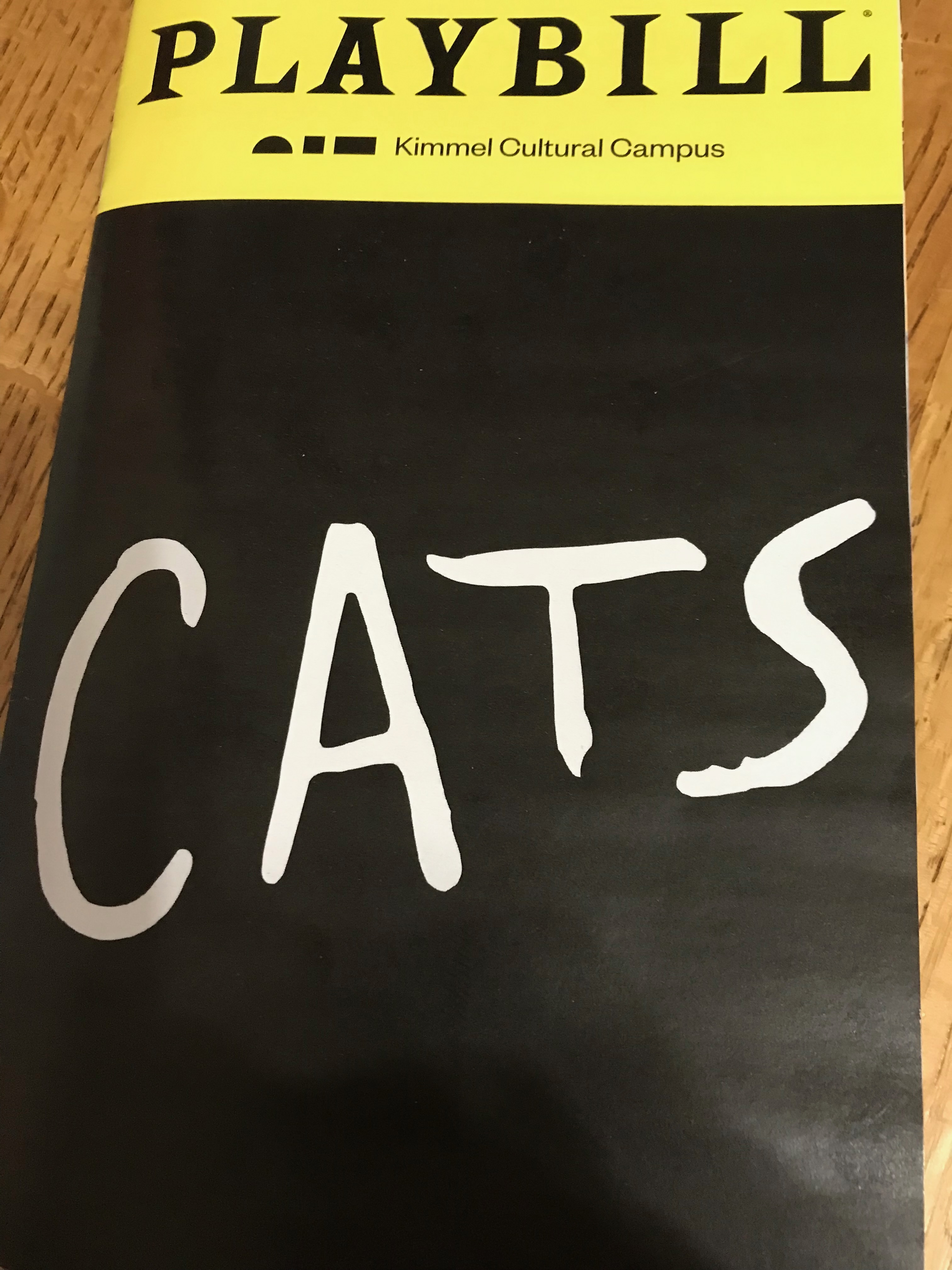
For a birthday gift, we gave a family member a trip to see Cats live in Philadelphia.  Everything about that day comes back to me through rose-tinted lenses.  The worry and stress of driving in Philly—I’ve done it a few times and it’s always nerve-wracking.  Finding the theater, negotiating parking, finding a place to accommodate a vegan, a vegetarian, and an omnivore for lunch.  Locating seats only to discover they’re further back than they looked on the schematic map, and then the lights dim and the music begins and you’re in a different world.  All the worry and fear melt away.  Happiness has appeared and you know she’s sitting right next to you.  Even with evening Philly traffic still looming ahead and a drive when I’m beginning to feel drowsy, I’ve had an experience almost of a religious nature.

It’s no wonder that many early evangelical Christian leaders warned about the theater.  Live performances reach that spiritual place that weekly Sunday services only wish they could.  Of course, it helps that Cats is my favorite show—I’ve seen it live five times over the years.  It’s a show about happiness and finding redemption.  I’ve written before about the religious undertones to the musical, but here I’m thinking about how the day after always has a special glow.  Yes, the quotidian worries are still there.  The attempts to grow wiser and stay solvent.  The difference is that something transcendent—all the more valuable for being rare—has happened.  It has shaken me out of my comfort zone and my daily routine.  And I can’t wait for happiness to come knocking again.


Handle with Care

It reminds me of that old Traveling Wilburys’ song, “Handle with Care.”  Hate is a strange and dangerous motivator.  It’s something that makes me consider demons as a real possibility.  Having experienced Zoom bombing during an online meeting about racism, I was greatly saddened.  The distress the bombers caused in just a few minutes was truly saddening.  With white supremacist comments and ideology, they seemed to have nothing better to do than to ruin the day of twenty-some people who want to make the world a better place for all.  I was reminded of a video that Arnold Schwarzenegger had posted earlier that same week.  The link is below and it is worth twelve minutes of your life.  I’ve been impressed by how Schwarzenegger has been using his influence to combat the evils of Trumpism, although himself a Republican.  Of course, he has a backbone that many elected officials lack.

As an Austrian, Schwarzenegger is aware of the damaged lives that Nazism left behind.  There’s no glamour here, just pain left behind for all.  We’ve unfortunately suffered through four years of leadership based on the rhetoric of hatred that has rubber-stamped this kind of thinking.  It will take many years to recover, if we ever do.  And the internet, for all the good it does, also offers a venue for those who find hateful activities enjoyable.  I do wish there were a way to channel such people to Schwartzenegger’s video.  It is the moral responsibility of the strong to protect the weak.  We have millennia of history to back that up.  What’s so hard about live and let live?

Opposites don’t always hold fast, but love certainly is the antithesis of hate.  One of the things watching horror movies has done for me is to reinforce what happens when hatred is allowed to take control.  The best of the genre contains morality that reinforces that those who love overcome while those who hate never end up in a happy place.  No belief system that promotes superiority is worth investing in.  There will always be those with nothing better to do than to trawl the internet to troll those who try to make the world a better place.  As a society we can reject such behavior and attempt to help those who are motivated by hatred.  The damage caused by hate is real.  Actual human beings are destroyed by it, and for no reason.  Many of us, most, I suspect, think love is the ultimate good.  We must do what we can to try to help those who disagree, no matter what certain political leaders espouse.  The Wilburys were right, all people deserve to be handled with care.


Black Sabbath

I used to be afraid of them.  The band Black Sabbath, I mean.  I heard the songs from Paranoid wafting from my older brother’s room (separated from mine by only a curtain) and was secretly intrigued.  But the name of the band—wasn’t that satanic?  To a young Fundamentalist there was much to fear in the world.  More than once I bought Alice Cooper’s Welcome to My Nightmare only to replace the copy I’d thrown away in evangelical terror.  I recently learned, however, the the band name Black Sabbath was taken from a 1963 horror movie.  And I also learned that the film was, in part, based on a Russian vampire story by Leo Tolstoy’s second cousin Alexei, titled The Family of the Vourdalak.  And that this story was published decades after Tolstoy’s flop, The Vampire.  That novel was inspired, in turn, by John Polidori’s The Vampyre.

Polidori’s work was inspired by a fragment by Lord Byron, which he contributed to the ghost stories putatively told among friends a stormy night in Geneva that also led to Mary Shelley’s Frankenstein.  Connections such as this are immensely satisfying to me.  Although I taught mainly biblical studies, my training was in the history of religions—it just happened to focus on ancient semitic examples.  Finding the history of an idea is one of the great pleasures of life.  But we’ve left Black Sabbath hanging, haven’t we?  The band realized something that Cooper would run with, namely, horror themed songs and metal go naturally together.  Such dark things led evangelicals to condemn the whole enterprise, claiming the band name was satanically inspired.  (Michael Jackson, raised as a Jehovah’s Witness, was famously fond of horror, although Thriller is perhaps the least scary horror-inspired album ever.)

I’d never seen Black Sabbath before, so now I had to watch it.  Of course, there’s nothing satanic about it.  An Italian, French, American collaboration, it’s a set of three stories bound together by Boris Karloff’s narration, and it’s all in Italian.  One story is about a woman double-crossed but saved by an estranged friend.  The second, the one featuring Karloff, is the one based on Alexei Tolstoy’s Russian vampire tale.  The third is about a poor woman who steals from a dead patron and is haunted until the inevitable happens.  Not particularly scary, the film title was the inspiration for the band, not the content.  They were therefore labelled satanic because of a movie that has nothing to do with satanism.  The song “Black Sabbath” was actually inspired by Dennis Wheatley novels, which do, of course, deal with satanism.  The song itself isn’t satanic.  They decided to make songs like horror films in music.  And it all goes back to Lord Byron and the night near Geneva that inspired both Frankenstein and Dracula.


The Eve before Christmas

Even as we sit here on Christmas Eve, the work week finally over, my thoughts go to those who celebrate different holidays.  Or none at all.  Cultural Christians may find it difficult to believe that some sects—thinking themselves strictly biblical—observe no holidays.  Not even birthdays, some of them.  You may be doubting the accuracy of that statement, but my second college roommate was one of them.  He believed any holiday was idolatrous, and celebrating birthdays self aggrandizing.  Perhaps it’s not surprising that he can’t be found online.  Many of us, some without reflecting much on it, have been preparing for tomorrow for many weeks.  The older I get, for me it’s really the time off work I treasure.  It’s so rare, and more precious than gold, frankincense, and myrrh.

Like many people, I associate Christmas with music.  One of the songs—not really a Christmas carol—that has become seasonal by its inclusion on Pentatonix’s album That’s Christmas to Me, is “White Winter Hymnal.”  The song is a cover of a haunting song by Fleet Foxes, a folk band, who included it on their debut album, the eponymous Fleet Foxes.  If you’re not familiar with it you can find it here, along with the official video.  The claymation short portrays a group of old men outdoors watching time pass.  One of them begins to crank a drive that makes them younger as time reverses.  When he reaches that point (please forgive the sexist language) “when a man becomes a boy once again” (from another winter song), he releases the handle and the men rapidly reach the age they were when the song began.  Time is the greatest gift.

As the decades press on, their weight increases.  Dreams of what, as a young man, I hoped to accomplish slip away facing the grinding reality of capitalism.  The need to have money to spend for Christmas presents.  And food and shelter.  But mostly books.  Writing takes time.  Writing well takes a tremendous amount of time.  Time for reading, reflecting, and even listening to music.  Christmas Eve is all about waiting.  We hope for a quiet, if cold, tomorrow when maybe the phone and email will cease to solicit money and time, if only for a day.  I have to remind myself that not everyone recognizes Christmas.  For some it’s simply the season to make money.  I, weak as I am, cannot imagine life without it.  And so I watch the skies, eagerly straining my eyes for the light.


Whence Dawn?

It’s rare, but that’s often what makes things so special.  Because of the way my mind works, I can’t have background music on when I work.  My concentration suffers.  The only real exception is when I have a mindless, repetitive work task that I have to do that lasts for an hour or more.  Then I can slip on the phones and start up Spotify.  I can only afford so many premium accounts, so I have the free version.  That means ads.  The thing about Spotify ads is that they too are repetitive.  I guess that’s how marketing people try to get things stuck in your head.  I can remember many jingles from childhood.  Mostly for products I never use, and a few from products that no longer exist.  They live on in memory.

The other day I had a repetitive task to do that was aided by a lack of early emails at work, so I was able to begin shortly after login.  You see, I tend to start work before seven.  An early riser, I like to work when I’m still able to concentrate well.  I had the headphones on and was listening to Spotify.  One of the ads, about insomnia (ahem), started out by stating they had to choose between a daytime ad and a nighttime ad.  They said something like “obviously we chose nighttime.”  It was seven a.m.  The sun was up.  Some of us were already at work.  Since my task took several hours, I was still at it after nine a.m. when the ad switched to its daytime version.  So night now lasts until work starts?  Whatever happened to dawn?

Perhaps the ads come from a different time zone.  Some of them are regionally specific, though.  Work defines much of our lives, and it also seems to dictate when Spotify switches to its daytime advertising.  For those of us who wake early, dawn is an almost magical time.  It has been many years now since I’ve awoken to find it light outside.  Although I get quite a lot of my personal work done before starting my paid job, I still keep an eye out for the first lightening of the sky.  At some times of the year, before the autumnal equinox sets in, it signals the time for my jog to start.  In September that gets delayed to 6:30 when many others are out and my work’s about to begin.  If I happen to be listening to Spotify when I start work, they’ll confirm I should still be sleeping.  Instead, I embrace the dawn.