Reaping the Exodus

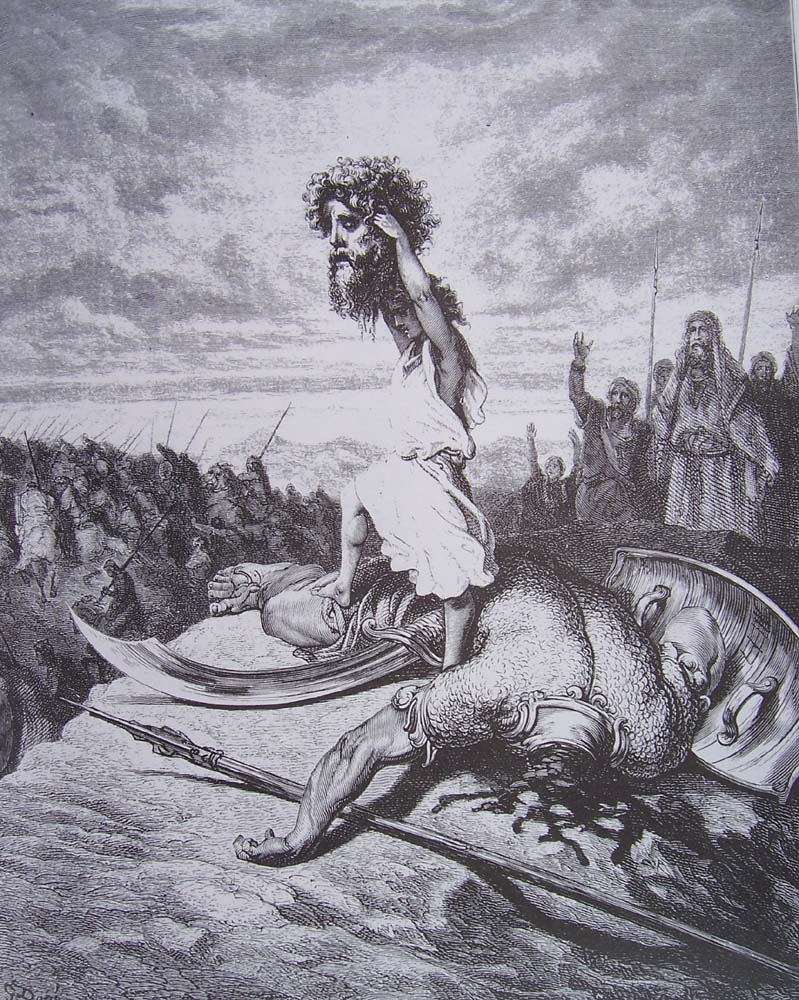
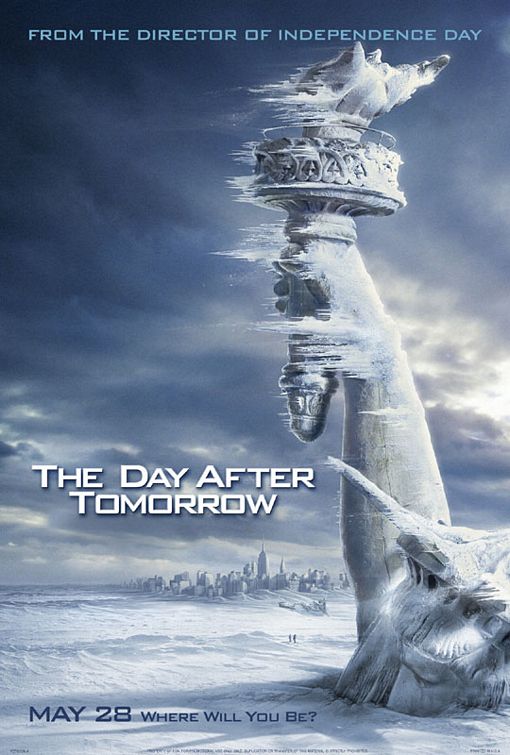
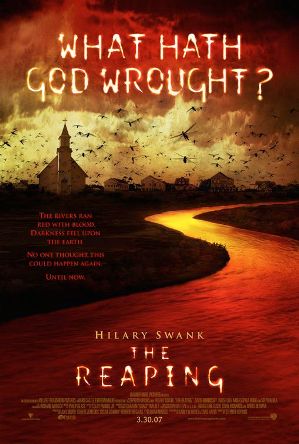
Strange coincidences transpire. In 2007, just after the professor in my discipline at Rutgers University retired, I showed up in the Religion Department seeking adjunct work. With the vicissitudes of “full-time” employment, at times my part-time stint at Rutgers is all I have. While covering the book of Exodus my first year there, students began asking me what I thought of The Reaping. I hadn’t seen the movie, which had been released on Good Friday of that year, but I promised my charges that I would. Still on my Hollyptic kick, I decided to rewatch it last night. The script was handled much better than that of Lost Souls, although the movie as a whole lacks credibility. It is, however, an example of how the Bible mystique continues to pulse through Hollywood’s veins.

The concept of bringing the plagues against Egypt into the bayou was a fresh one, but the satanic cult aspect has been overdone. A strong female lead in the role of a disenchanted former clergy-woman was a nice touch, and although the premise of her back-story was contrived, it was also decidedly eerie. The element of the movie that students wanted professional comment upon, however, was Katherine’s scientific assessment of the plagues of Egypt. This idea has a comparatively long history. Since critical biblical scholarship began, naturalistic suggestions for the non-historical plagues have been offered. Strangely, these offerings are intended to buttress an historical event that the theories themselves undermine. There is no archaeological or historical evidence for the exodus. Why then, are scientific explanations of the plagues necessary?

The story of the exodus is liberating; slaves liberated by a loving God forms a back-story that most oppressed people want to be true. The sad fact is that religion is more often used to repress than to liberate. Somewhere along the trajectory of human social evolution, religion became a key element in the control of the masses. This becomes clear from the merest glimpse at religion as it existed in ancient Egypt itself, or any of the other cultures contributing to Israel’s religious tradition. The Reaping, like so many films that springboard from the Bible, offers a conflicted worldview where nobody really knows who is in charge of the universe. In that aspect, it mirrors human religious experience.

Corporate Kindergarten

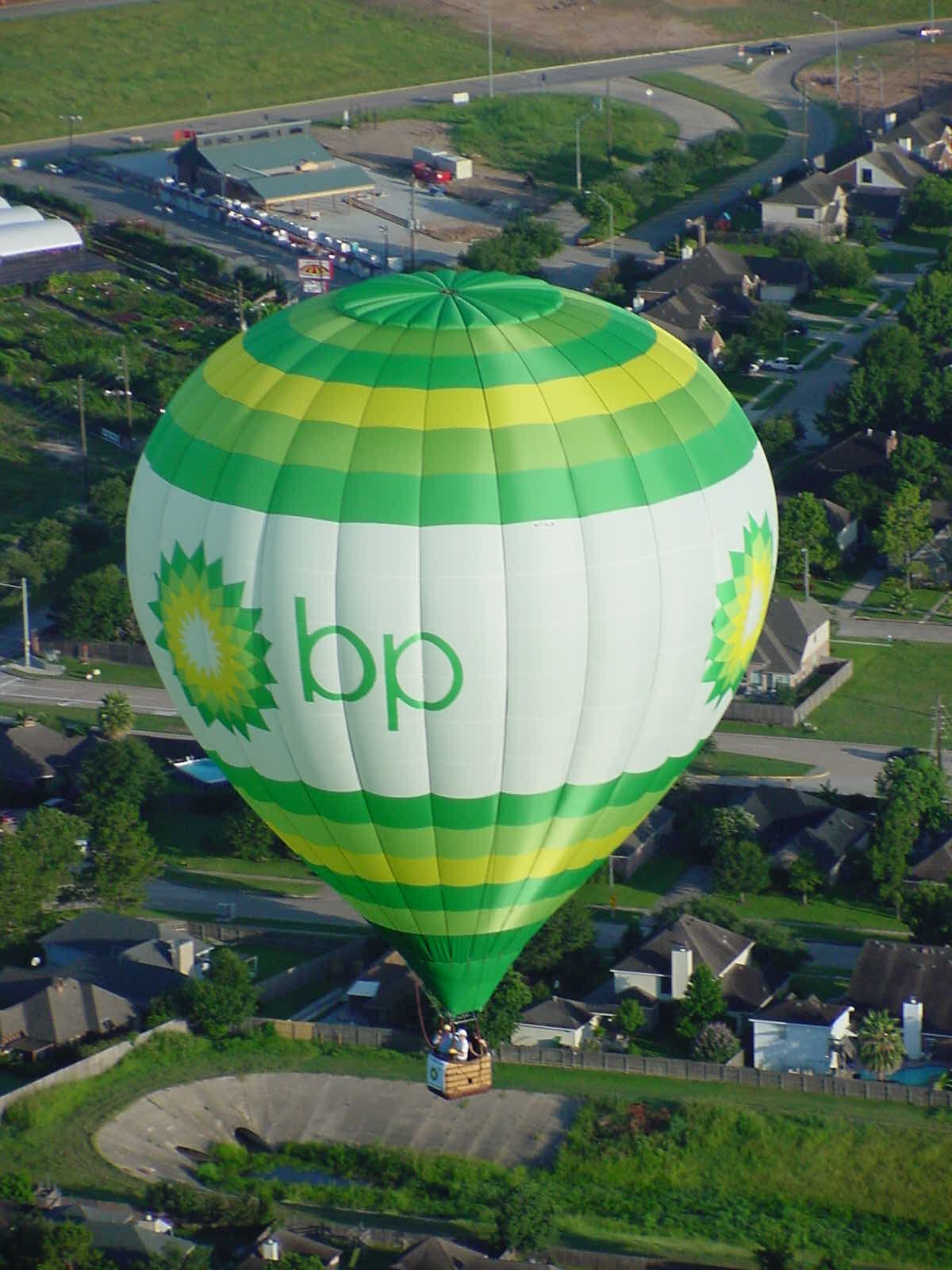
Ever since the Deepwater Horizon catastrophe, Tony Hayward, CEO of BP, has been under pressure not unlike the oil well itself. He has had to announce his resignation, having become the public face of the oil spill. Not an image anyone wants. Musing on the fact that he is being forced out as the head of one of the world’s largest corporations (which earns billions of dollars of profits each quarter) Hayward has stated that life is not fair. Welcome to Kindergarten, Mr. Hayward. Ask any of those millions of poor who’ve never been given a chance at a decent life and they will tell you. The lamentations of the rich are more annoying than jock itch. These guys have had it so good for so long that they’ve forgotten what it is to participate in the struggle for existence.

Not content to lament the fact that he still has an exorbitant salary within the company – being sent to Siberia is a great hardship, even if you have a mansion there – Hayward also stated that BP’s response to the tragedy is “a model of what corporate social responsibility is all about,” according to the New York Daily News. His words ring truer than he realizes. This is indeed a model of unbridled greed and utter disregard for either the planet or those who get in the way of corporate acquisitions. Yes, the response reveals what truly drives the corporate world. If the rich are left alone, they will allow life to remain just tolerable for those on the bottom.

Having learned very early that life is not fair, I have watched the response of the uncivilized wealthy to their various slings and arrows with a slurry of bemusement and rage. What separates those on top from others is their ruthlessness, not their intelligence, or, please!, their worthiness. Experience is the best teacher. I worked my way through three degree programs and earned exceptional teacher ratings for over a decade before being thrown in the unemployed slush pile. I routinely watch colleagues earn far more for doing far less while future prospects grow blacker and blacker. Oh, my heart goes out to Mr. Hayward. It is obvious he missed Kindergarten. Maybe the second-floor maid will be able to fill him in some day.

Soaring ever higher


Acts of God Algorithm

One of the oddest industry-standard phrases in use in secular contexts is “acts of God.” In a recent edition of Bostonia, the Boston University alumni magazine, an article entitled “The Acts of God Algorithm” seemed to promise some insight into this bizarre phenomenon. The piece, it turns out, is about an insurance analyst named Karen Clark. Of course, the place where “acts of God” are regularly invoked is in the insurance business. The reason this is so interesting is that in a nation as religiously motivated as the United States, people simply accept the slush-pile, default “act of God” as a given. The phrase, however, betrays a depth of fuzzy thinking and bad theology.

Does an “act of God” apply to an atheist? Does a devout Hindu have to accept any disaster that the monotheistic god and insurance companies present her or him with? Who tests to see if “God” is behind any of these acts? Given that monotheists differ widely on the day-to-day involvement of God in the natural world – certainly the world of insurance companies – how are any acts allocated to God? Legally! Predestinarians would assert that all acts are acts of God, and thus their insurance companies should be prepared for all such contingencies (they would, of course, have been predestined to deny this). Even those who accept less regular interference from on high would have trouble discerning whether a human-caused accident might or might not have had some hidden message from God. Are insurance moguls the ones qualified to decide?

To call any natural event an “act of God” betrays a level of jaded, if not indolent thinking that is inappropriate to all except those in the business of making money. Life is uncertain; it comes with no guarantees. Somehow our society accepts that if we pay good money to top-heavy, overly wealthy companies, bad things won’t happen to us, and if they do we get paid back. This kind of theology is diametrically opposed to the worldviews of the Bible and many monotheistic religious outlooks. Yet we accept that hurricanes, earthquakes, and floods are “acts of God.” The sneeze that causes a motorist to accidentally run a red light is not. And insurance brokers are weeping all the way to the bank.


When Dinosaurs Will Rule

Just about all of us begin life as budding paleontologists. What kid doesn’t adore dinosaurs and their paradigmatic story of planetary rule followed by inexplicable decline? The mystery and drama only add to the fantastical nature of the beasts themselves – creatures towering over houses and trees, predators the size of school buses. When my daughter hit dinosaur age, my latent paleontologist experienced a profound resurrection. Sure that she’d become the next great dinosaur hunter, I relearned all the old species names and added dozen more from creatures discovered since my interest went underground. While my career was spiraling downward at Nashotah House, I contacted the paleontology program at the University of Wisconsin to see about retraining. I even started to teach myself calculus.

Life delights in playing funny tricks on people. Once again my career in religious studies spirals downward and the specter of the dinosaurs rises. Literally. A former student of mine pointed out an article on Helium.com that spells out some possible implications of the Deepwater Horizon fiasco. The first sentence reads: “Ominous reports are leaking past the BP Gulf salvage operation news blackout that the disaster unfolding in the Gulf of Mexico may be about to reach biblical proportions.” The Bible is our standard measure for disaster; no crisis can not be made worse by throwing in the adjective “biblical.” If Terrence Aym is correct, however, even the Bible won’t save us now.

Apocalypse now?

Basing his analysis on Gregory Ryskin’s thesis that immense methane bubbles from under the ocean led to several past mass extinctions on our planet, Aym suggests that all the signs are present that a true doomsday scenario is unfolding in the Gulf of Mexico. I have seldom been impacted by doomsday predictions, but Aym’s article is perhaps the scariest thing I’ve read in years. I’m not enough of a scientist to assess the danger, and the media blockade only makes the speculation worse. Could it be that the decay from all those dead dinosaurs, their cohorts and predecessors, their flora – the very source of fossil fuels – is rising to deal yet another mass extinction on our planet? The reader will need to decide. For me, I regret that I didn’t stay with the dinosaurs, for they still rule the planet.


Hell on Earth, Part 2

Some time back I wrote a post on the Peshtigo, Wisconsin fire of 1871. That fire, one of the worst natural disasters on American soil, must have seemed like Hell to the residents of the small frontier town. Peshtigo regrew after the fire and is a thriving community today. On the way to a family wedding in Ohio, we stopped in Centralia, Pennsylvania yesterday. Centralia is its own variety of Hell on Earth. In 1962, a fire in a trash heap set an exposed coal seam on fire. The fire spread into a coal mine and has proved impossible to extinguish. The fire burns deep underground today, nearly fifty years after it started. Some analysts suggest that there is enough fuel in this anthracite-rich area to keep the fire burning for a thousand years.

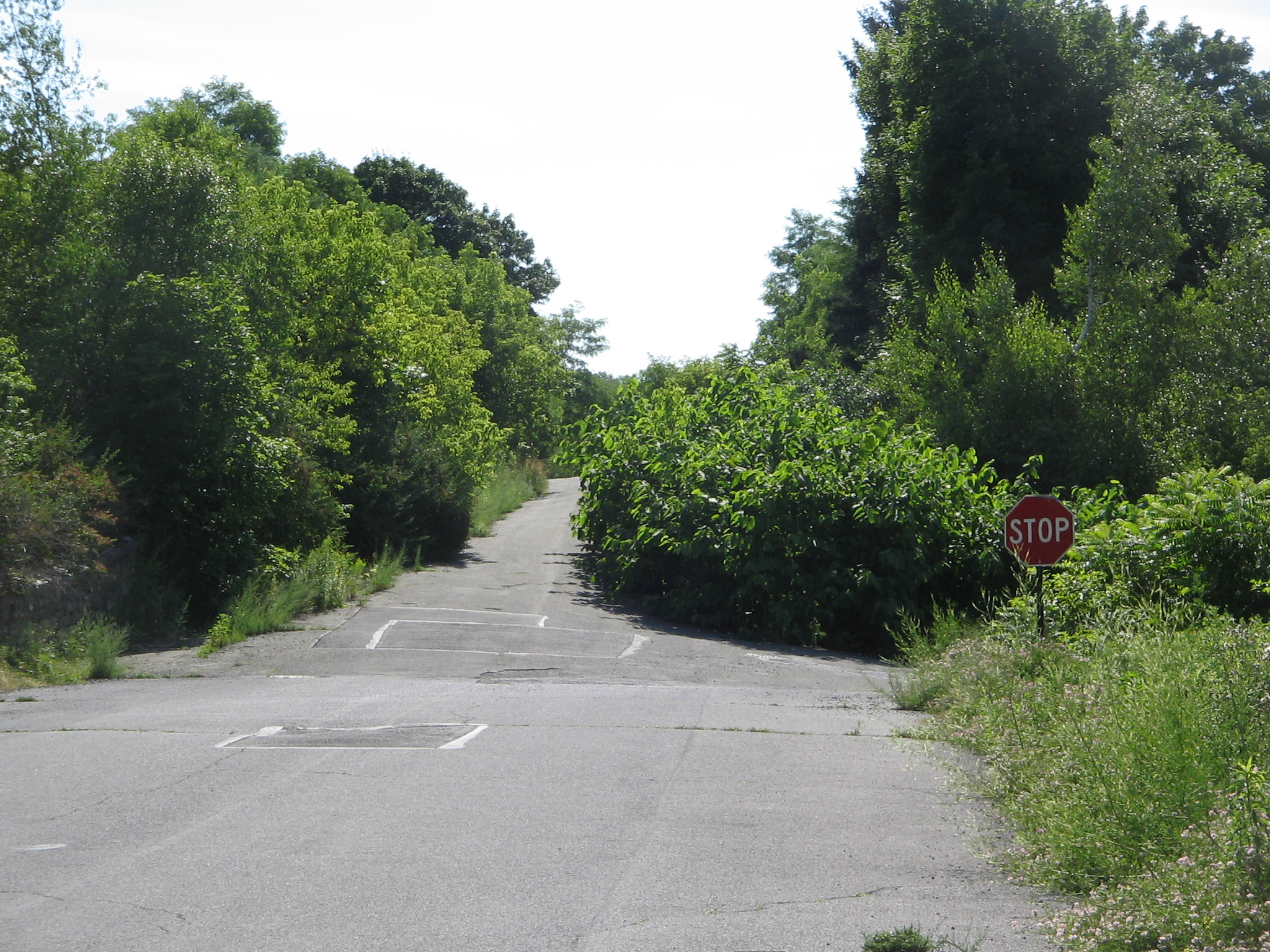
Today Centralia is a ghost town. Toxic fumes, sinkholes, and at times unbearable ground temperatures have driven many away. The federal government bought out the remainder; however, fewer than ten people still live here, refusing to leave their homes. When I learned that we’d be stopping in a nearby town for the night, I diverted our route to Centralia. There is really nothing to see. Two houses were all that I counted, and abandoned roads run into the untrimmed bushes like Life After People. While I attempted to get a feel for the place, my family spotted another car cautiously driving the abandoned roadways, looking for some ineffable handle on this man-made natural disaster. While not to the scale of the Deepwater Horizon spill, it is another example of the lust for fossil fuels and what might go wrong when these volatile substances accidentally escape human control.

Centralia, Pennsylvania

I couldn’t find the perfect picture of Centralia. There is no perfect picture here. Wary of sinkholes and reports of hostile locals, I pulled aside to take in the overall scene. On a hillside not far away, giant wind turbines lazily spun in the summer air. This clean energy alternative felt almost like an apology for setting the earth aflame below the feet of a town inhabited by mostly ghosts and less than a dozen living souls. In my head I knew that the temperature was 1000 degrees Fahrenheit well below, that 1000 people had been relocated, and 1000 years from now the fire may still be burning. Who needs a metaphorical Hell when human beings are so good at creating their own physical perditions?


Misappropriated Prophets

There seems to be a can of worms lying open on my desk, released by the comments yesterday’s post engendered. I thank all my readers and commentators. The issue most pointedly thrust among the worms appears to be that of prophecy. Teaching about prophecy constitutes a large part of my meager income. And since prophecy plays a large role in many Evangelical associations not only with the Deepwater Horizon disaster, but also Hurricane Katrina, 9/11 and just about any other major catastrophe, it is worth exposing. In the Bible prophecy is not about predicting the future.

Prophecy was a widespread phenomenon long before Israel appeared on the scene. One of the roles prophets shared in ancient times was the declaration of outcomes to momentous events. Unfortunately that aspect of their duty easily became equated with predicting the future. Its actual milieu, however, was that ancient people believed prophets to be “effective speakers.” When a prediction came true it was not because a prophet could “see the future,” but because the spoken word of the prophet participated in the reality of the world. The belief was that the effective word came from God/a god, and therefore would be true by definition.

Apocalyptic, the familiar literary form of Daniel and Revelation, is not prophecy. Zoroastrianism, the religion of ancient Persia, had influenced many ancient religions, including Judaism. Apocalyptic, like prophecy, has a predictive element. Like prophecy, however, apocalyptic has a different purpose. The books most heavily farmed for future predictions by Evangelicals, Daniel and Revelation, are both thinly veiled accounts of contemporary events of the authors’ own days. Daniel consoles Jews persecuted by Antiochus IV Epiphanes and Revelation consoles Christians persecuted by one of the early Roman emperors (the jury is still out on precisely which one). Neither book predicts the end of the world. Both, however, declare the comeuppance of the arrogant oppressor. It is here, perhaps, that the true relevance of the Bible speaks to the scars human beings inflict on their own planet and on each other.

sic semper tyrannis


Weather Religion

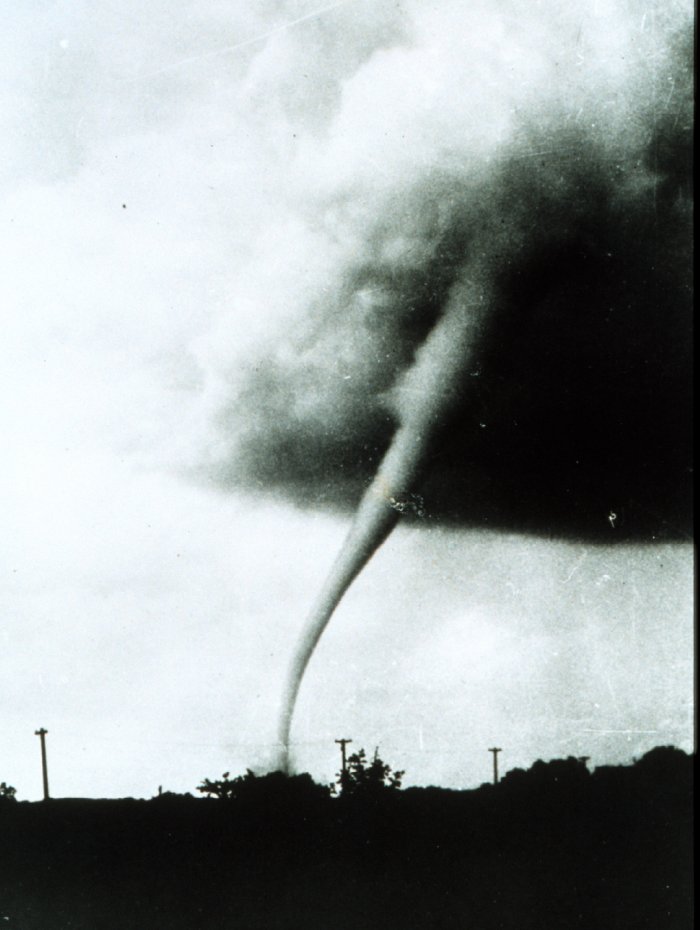
Byline: Yazoo City, Mississippi. Event: major tornado. Suspects: God. In the face of any tragedy, whether it be killer tornadoes or Christie’s budget, God is always implicated. It is the white god’s burden of monotheism. I am the last person to make light of tornadoes. Many a nightmare and sleepless night in Wisconsin were haunted by the loud, roaring gusts and twisted detritus mangled by apparently willful winds. Erratic fluid dynamics of violently spinning vortices of air are often chalked up to the divine. No less so in Saturday’s tornado outbreak.

An Associate Press article begins, “One prayed to God under a communion table as his church was blown to pieces around him.” The article goes on to note that a ravaged hymnal lay open to the page with “Till the Storm Passes By,” as if there were a divine message inscribed on a chance event of nature. One of the hardest lessons to accept is that nature cares nothing special for our species and that we are offered no guarantees in life. This is one of the reason religion is so powerful: here the faithful find divine-bound guarantees of at least a peaceful afterlife if the present life is torn apart by storms both physical and metaphorical. It is hard to struggle without an assurance of final victory.

I have contended for years that the association of the divine with the weather is intimate and tenacious. The weather has eluded human control well into the space age, nuclear age, and technological revolution. We still can’t stop the rain on Sunday’s picnic or festival. And so we pass the weather on to the CEO in the spiritual chain of command. God controls the weather, while we crouch under rickety communion tables. There is a deeper lesson here, for those willing to sift through the rubble.

Nightmare on Church street


Mother’s Day and Earthquakes

It is Earth Day, a holiday that all the world should join hands to celebrate since it is secular and concerns all people. Except the religious. Theologies are inured to common celebration; any admission that others might be right is a chink in the implacable armor of conviction. So it was not such a great surprise when an Iranian cleric this week blamed Iran’s earthquakes on women. Fuming like Eyjafjallajokull, the imam cited immodesty on the part of women as leading men to temptation and the very earth whose day we celebrate shakes in rage. Why it is that the burden to prevent sexual temptation should fall on women alone is unfathomable. If men have such trouble controlling their urges perhaps they ought to explore real estate on Mars, although it is doubtful they would be happy there.

The earth, our common home, was conceived to be female by many ancient societies. The Greeks of the Classical era called her Gaia and gave her the honor of being the earliest deity to emerge from Chaos. In the Bible, desexed and depersonalized, the earth was constructed on the first three days before any living inhabitants cluttered its pristine surface. With the drive of Christian conviction that this unruly mother should be subdued under human dominion the industrial revolution began a process of disrobing and dismembering Gaia, an impersonal “it” to be exploited. The Bible could be cited as demanding such action; we were commanded to take control. And our religions provided the ethics to underscore our mandate.

If not for the second great awakening in the 1960s, Earth Day would never have found its fundamental expression. We would continue subduing and dominating, as per Genesis 1, until the great white man above would be forced to send his son on a great white horse to end it all. But the earth is our mother. The missing woman from the all-too masculine Trinity. Instead of blaming her daughters for the unstoppable lusts of her sons, and instead of repeatedly defiling her to keep up with the Republicans, we should take a moment today to honor her. She is the only such mother we have.

Son, behold thy mother.


Trite Lite

Fresh out of that improbable world called Nashotah House, I was introduced to a jarring concept while in Oshkosh: a Hasidic rapper called Matisyahu. The strange image brewed in my head did not match the reality of this persona, but the very concept of a religious conservative engaging in protest music just didn’t seem to fit. I make no claims to musical expertise, but I did grow up in the 60’s and 70’s, and I know authentic protest when I hear it. Rap began as a countercultural rebellion, and I knew age had its gray fingers wrapped around me when a friend in grad school claimed that rap was “the end of civilization as we know it.” Civilization didn’t end, it simply evolved.

Rap started to become mainstream, as happens to all radical movements when they become “cool” and the aging performers join their aged fans. Then along comes Hi-Caliber, the pathetic Republican attempt to appeal to the hip, the young, the impressionable. The Tea Party rapper (Zac the Rapper?) inveighs his tired message that progress is bad, privileging the wealthy is good, for the Bible tells me so. And the public sips it in. As a person who can’t help but overthink things, it alarms me how trite answers are easily accepted by so many people. If a person stops to think about the implications of issues, the simple solutions proffered by Tea Partiers simply don’t solve anything, no matter how many rappers, twitterers, or ravers they get on their side. Rather than exercise mental rigor, most voters see the shiny glitz and pull the voting booth curtain. Perhaps my friend was right after all.

I have to face the fact that I’m aging into a guy who casts a nostalgic, longing glance back to the sixties of my youth with a sentimental eye. The cardboard-cutout world of the 1950s seems that it was insubstantial, staged even, compared to the psychedelic colors I first saw through childhood’s wondering gaze. I heard protesters on the radio and saw them on television while being raised in a conservative environment. And even though I never personally rebelled, being the Bible-reading type, I secretly admired those who had the courage to challenge the social evils of the day and damn the consequences. Now I switch on the radio and hear conservative fat-cats clipping out pithy rhymes upholding the man. Where is the authenticity? It all makes me want to turn on, tune in, and drop out.

Authentic Republican wrapper


Great Balls of Fire

Gnu from WikiCommons

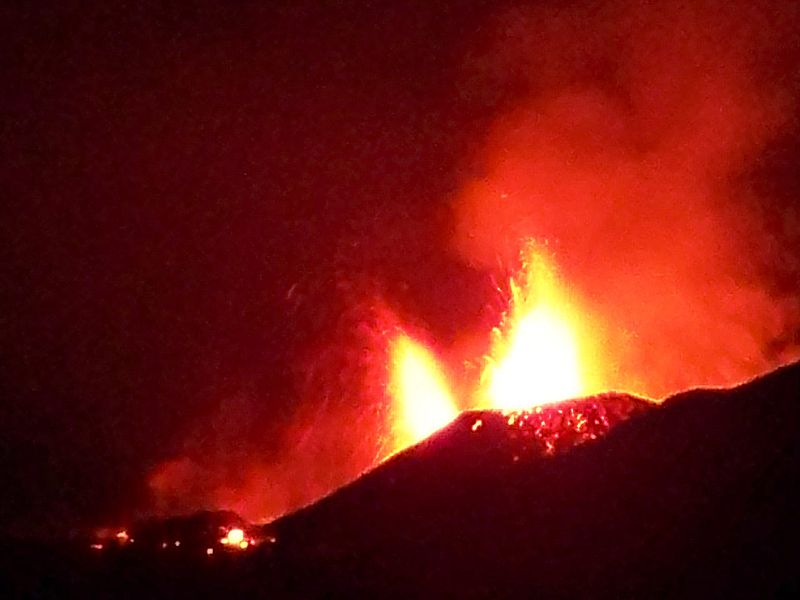
“I looked, and there came a great earthquake; the sun became black as sackcloth, the full moon became like blood, and the stars of the sky fell to the earth…” (Revelation 6.12-13a). With all the apocalyptic events of the past few days, some religious pundits are eagerly awaiting a rider on an extraterrestrial white horse with a light-saber jutting from his mouth. As the smoke from Eyjafjallajokull rises like a funeral pyre, a great green bolide streaks across Midwestern skies (landing, no doubt, near Nashotah House, among Wisconsin’s most paranormal locations), and this all follows an earthquake in China. More impressive than the snowpocalypse of this past winter, but less worrisome than the abrupt ending of the Mayan calendar.

All of this fuss reminded me of the way 1987 began. Having grown up in humble circumstances, one of my favorite pastimes was jigsaw puzzles. As my brother and I sat piecing one together on New Year’s Day while home on break, suddenly a loud boom shook our ramshackle house. Now I grew up in a small town built around a large refinery, and stories of the cataclysmic explosion that was sure to come raced through my head as my brother and I went outside to see the great pall of greasy black smoke that was certain to accompany such a disaster. We were met by clear skies and neighbors standing in a confused huddle in the streets. The news that evening reported that a fireball had been seen racing across the daytime skies of Ohio and Pennsylvania before it exploded some distance north of us. I’d just experienced my first bolide. It wasn’t the end of the world, but it was an event I’ve never forgotten.

The message I take from these many natural occurrences is that humanity is small. We imagine ourselves to be gods of our domain, controlling our environment and making it more to our liking. But we are not in control. Revelation was not predicting the end of the world, but was attempting to reassert a sense of control for people suffering from a perceived godless enemy. Today we still think of such events as a sign of God’s anger. I’m not sure what God is supposed to be angry about, unless he has happened to drop in on a Tea Party and heard how his name is being taken in vain.


Alaska’s Temblors

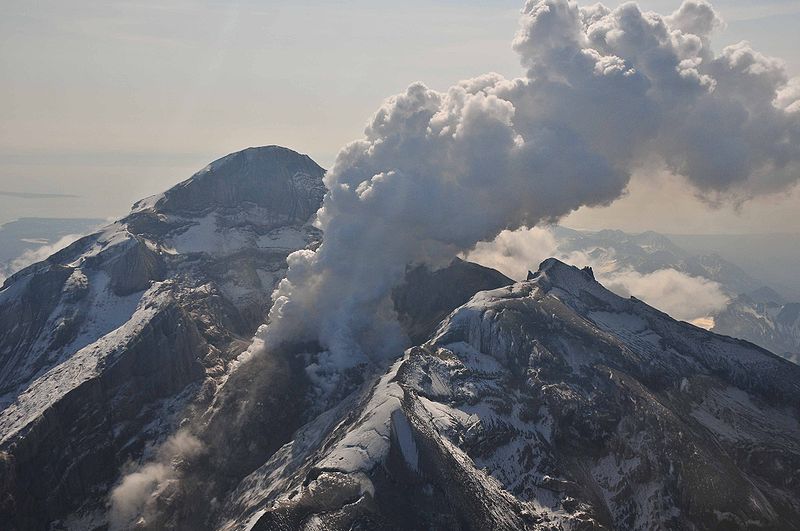
There are rumblings under Alaska. Some people are just a bit nervous after last week’s earthquakes in Mexico – could it be our turn next? Mount Redoubt, remote from human population zones, has been sputtering and steaming and making itself look large. It is preparing for something big.

In apocalyptic literature we see a similar image: the small horn that boasts and makes itself out to be the greatest of the ten that speckle the head of the great beast from the sea. The little horn called Antiochus, so enamored of his own abilities that he surnamed himself Epiphanes, “the manifestation.” And uncritical people, taken in by his bravado, followed him until he started torturing and killing those who didn’t agree with his religion. Those who would not bow to his own personal Zeus would be martyred in nasty ways.

Now an active volcano is sputtering in Alaska. Could it be the sign of the end times? I doubt it. The end does not come ushered in by mere movements in the earth’s crust. According to Revelation there has to be a harlot on the back of a hideous beast. And that’s only if you believe Revelation is predicting something that hasn’t already happened. No, I believe Mount Redoubt is just doing what volcanoes always do – threatening, making noise, and occasionally erupting. They may blanket their surroundings with ash and magma, but these are often only temporary postures on the part of nature. Those who have ears to hear, let them hear.

More than just a redoubtable mountain?


Eternal Dampnation

Does anybody have Noah’s telephone number? New Jersey has just experienced the wettest winter on record. Since the day records began, we’ve never had this much rain. That fact came home to me yesterday while driving the fifty miles to Montclair in a tremendous downpour. I had just purchased new windshield wipers, but the cap had fallen off the driver’s side blade. Driving on a truck-infested interstate where traffic continued to fly by at above posted speed limits, I realized with horror that at each passing swipe the rubber insert that actually swipes away the moisture was creeping out of the top of the wiper fixture. There it was, just at the top of my field of view, thrashing about like a demon-possessed snake, while my field of view grew smaller and smaller. I was in lane three of an eight-lane highway and couldn’t get over to make adjustments. In a nightmare I envisioned the slippery snake making a terminal bit for freedom and flying over my head as metal scraped glass and I drove blind into whatever lay ahead.

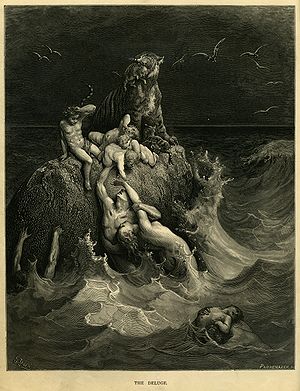
Well, the wiper stayed intact long enough to get me to the university. The rain did not abate, however. Even with battered umbrella and longsuffering raincoat, I was soaked below the knees by the time I squished into class. Unfortunately we studied the flood myth a few weeks ago. A few years back William Ryan and Walter Pitman, a couple of geologists, uncovered the fact that the Black Sea had been flooded by the Mediterranean some 7500 years ago. They posited that this sudden increase in sea-level around the Euxine Sea led to the dispersion of a world-wide flood myth. Their book became a best-seller and even Robert Ballard got in on the search for Noah’s homeland.

Hearing people talk about New Jersey’s incessant rain, I have no doubt that a major sea change was not necessary for flood stories to begin. As water levels rise, perhaps to the delight of whales and other blubber-laden beasts, the rest of us fear being perpetually covered by overwhelming waves. That is enough to start the story of a flood. Especially when your windshield wipers aren’t working on the Garden State Parkway.

Is it damnation or just New Jersey?


When Your World Rocks

The prophet Amos famously dates his oracles as “two years before the earthquake.” In ancient times (and some modern, dimly lit regions of some religious minds) earthquakes were thought to be signs of divine displeasure. We lost that naïve, magical view with the discovery of tectonic plates and fault zones, but it is hard not to take earthquakes personally. A third major earthquake of the year hit Turkey on Sunday, leaving further human distress in its wake. While scientists assure us that earthquakes are not increasing in frequency, we nevertheless hear more and more about them.

Although we have the technology to build earthquake-proof buildings, the nations suffering from the recent quakes do not have the luxury of ensuring that those who live around fault zones all have housing to withstand that unsuspected temblor. Those who cannot afford high cost housing are fated to be victims. We don’t cause the earthquakes, but we can ensure that affluent cities will withstand them. Haiti, Chile, and Turkey seem a long way distant.

Whose fault is it anyway?

Scanning the unfair distribution of wealth across the world, it is far easier to see an angry god behind an earthquake than it is to relinquish our personal gain. Perhaps it is a result of our biological urge to survive that we constantly seek to increase our own advantage while shaking our heads sadly as people we don’t know become the victims. Meanwhile neo-cons and prosperity gospelers bray loudly that wealth is their god’s reward for lives of righteousness in this wicked world. It is a scenario worthy of Amos himself.


The End of the World as We Know It

Well, that may be a bit dramatic, but my whole family is scratching its collective head over the news that our time on this planet has been foreshortened by the Chilean earthquake. Yes, scientists from NASA announced yesterday that Saturday’s 8.8 magnitude earthquake actually shook the earth three inches off its axis and has led to a loss of 1.26 milliseconds of time. Even for the gods this seems to be playing against the rules!

I wonder what the Fundamentalists are thinking about it? I do know that some extremely conservative types mess with time when trying to explain how the 4.5 billion-year-old world could have been manufactured in just 6 days — they call it the “day-age theory.” Or that the globe stopped spinning for 24 hours to give Joshua and his invaders more time to kill the Canaanites. I’ve even had students tell me that this latter case was scientifically proven. Time, however, ticks on despite our concerns with it.

It was my daughter who suggested the title for this post. After she said it, however, she noted, “Well, actually the world as we know it ended with the earthquake.” The world as we knew it. Radical changes have taken place with stunning rapidity on this old globe we call home, and some days the whole world changes. In 1815 the eruption of Mount Tambora led to the “year without a summer.” Wayward space rocks sometimes wipe out over 90 percent of all species on the planet. We live in a constantly changing environment. And it is my hunch that when that final disaster comes, those who’ve spent all their energy climbing the money mountain in the company of financial wizards, bank presidents, insurance profiteers, and oil company gods will come running to those who’ve spent their lives learning about religion seeking comfort in the face of the inevitable. We know we live in a temporary world; the wise spend their time contemplating the implications of that fact.

A little more to the left...


Childhood Never Ends

Yesterday’s 8.8 earthquake in Chile has people asking once again what has angered the almighty. Guilt, unassuaged by human suffering, accompanies natural disasters around the world. This perspective is nothing new, but rather an inherited burden from our cultural forebears who believed gods to be perpetually vindictive or indifferent to people, and who would strike out without warning. One of Poseidon’s favored titles in Homer is “earth-shaker.” When something as stable as the very planet rocks, the gods must be angry.

Psychologists have long delved into the all-too-human reaction of guilt to momentous occasions. Guilt is also generally recognized as a universal human emotion, occasionally supposed to be in evidence among the great apes. Perhaps our primate progenitors were born with an innate sense of having wronged the powers that be, for like children we still cry out for deliverance from blizzards, hurricanes, wild fires, volcanoes and earthquakes. No matter how much we grow up, we never outgrow our sense of having angered that great parent in the sky.

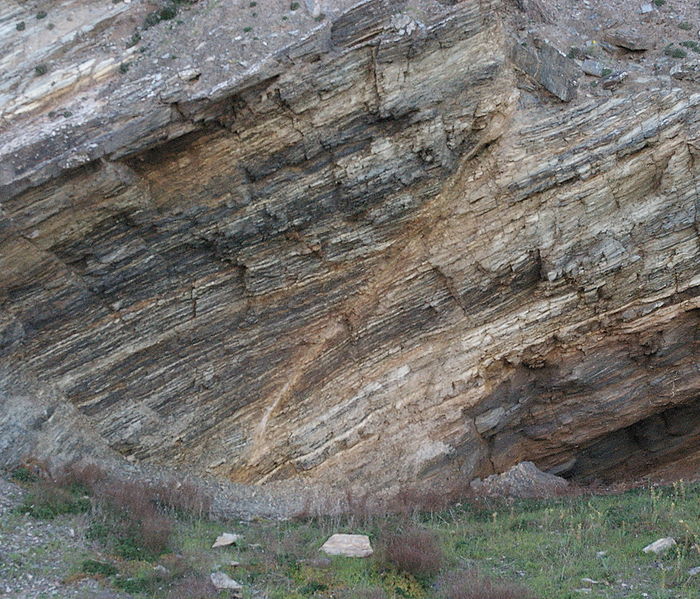
Science has revealed to us a natural world with physical causes. We know that massive plates of the earth’s crust rub past each other as they float on a hellish, viscous ocean of molten rock. We know that incredible stresses and pressures find release in the freeing jolts of earthquakes. This we know, but we find the concept more frightening that we are the victims of nature than the fantasy that we are victims of God. Better to put a human face, albeit an angry one, on natural disasters since we may at least beg for mercy.

There is no divine “why” to such disasters. Even the Bible affirms that things just happen sometimes with no divine intentionality. As this artificial world we constructed shivers from natural forces we are led by natural feelings to irrational conclusions that empower us. We are children looking for an absent parent. And Poseidon, it seems, evaporated long ago.

Never trust a god with a fork!