Who Says Suez?

“Where was Moses when the lights went out?”  That’s one of the few sayings I remember from my grandmother.  She lived with us when I was a child and she’d say that when someone came in too late to help with something.  I always thought it a strange expression since Moses didn’t do miracles on demand, but I still remember it—kind of a miracle in its own right.  The expression came back to me when hearing about the MV Ever Given in the Suez Canal.  This massive cargo ship, buffeted by high winds, has choked the canal that links the Red Sea to the Mediterranean for days.  This shortcut means ships don’t have to round Africa to get to European and American ports.  While the problems of this one ship play out, over 150 others are waiting to pass through and goods could be delayed for weeks around the world.  I’m glad we have toilet paper.
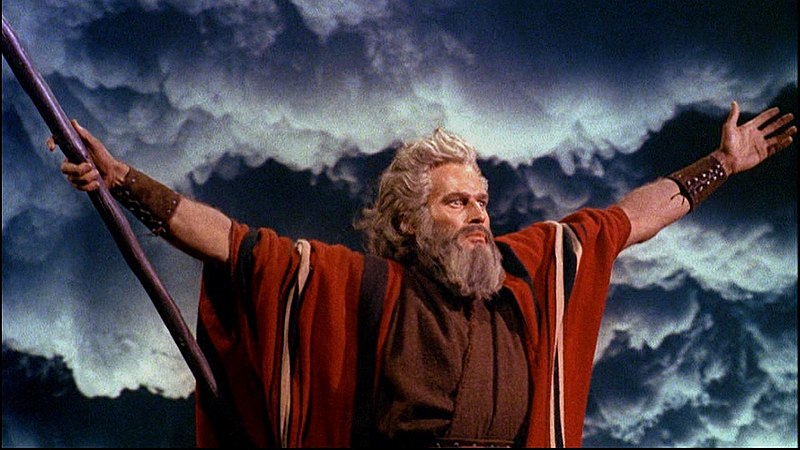
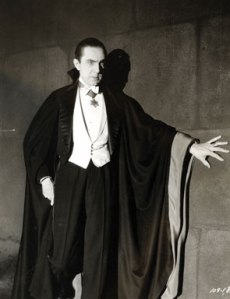
Image credit: Ten Commandments trailer, via Wikimedia Commons.

Now Moses was known for have a role in the dividing of the Red Sea.  Of course, the name of the body of water is debated.  The Good Book actually says “Reed Sea” and nobody’s really sure where that is.  Besides, the miracle isn’t really credited to Moses.  God did the deed through, well, a strong wind.  If the waters could be divided perhaps present-day crews could figure out how to free the ship.  Photos of a bulldozer that looks like a Tonka next to the colossal freighter give an idea of the scale of the problem.  People building things so large that they can’t control them.  And the forces of nature seem happy to remind us that we’re not in control, right, Moses?

And everything, we assume, will go smoothly if left to its own devices.  How often do we really worry about the Suez Canal?  Or large ships, for that matter?  Theses things should go just as clockwork, we suppose.  Until our order from Amazon is inexplicably delayed.  The pandemic, Post Office troubles, and unexpected bad weather have caused major shipping delays around here over the past several months, and now we have no Moses when we need him.  According to Exodus, God lives right next door on the Sinai peninsula.  That’s where Moses first met him.  If we had a true prophet these days (let the reader apply wisdom here) there would be no concerns for something as simple as a wedged ship.  But we can’t even find Moses when the lights go out. 

Weird Dreams

It’s almost like we’re all part of a huge experiment, perhaps orchestrated from outer space, to see how we react to being caged.  The pandemic and its associated lockdowns have held us in place for nearly a year now.  Long enough that I’ve started to dream about it.  For the longest stretch of time my dreams remained in “normal mode.”  That is to say, people talked about the pandemic very little and it was represented only by the occasional dream anxiety that I wasn’t wearing a mask.  I have yet to recall a dream wherein people are wearing masks.  Recently I dreamed that I had to start commuting again, and I climbed on the bus only to remember I’d forgotten my mask at home.  It was like one of those showing up to school without your pants on dreams,  only scarier.

Dreams are an antidote to the sameness of our days, I suppose.  I’ve watched as stable folks I know start to show signs of isolation stress.  I’m sure that I’m showing them too, but the thing is we often don’t see such things in ourselves.  We’re social animals and we’ve been kept in separate cages for a long time now.  I used to go to zoos and feel sorry for the obviously neurotic animals bored out of their skulls, isolated from their species.  Even as we were being told that animals don’t think and don’t have emotions, it was clear that their having interactions with our species was like us having nothing but Zoom meetings to keep us in company.  It’s artificial, but since the zookeepers have us in separate cages we try to act as if it’s normal.

Speaking of neurotic, at least around here since Trump’s been mostly out of the public eye people have begun wearing masks.  Nothing demonstrates that we’re herd animals better than the fact that an obvious charlatan was able to convince millions of people that he doesn’t care only about himself.  Funny how people can be used and not even know it.  We’ve been enjoying national sanity for just over a month now and things seem like the meds may be kicking in.  Vaccine production is booming and, apart from logistic issues, many people are receiving the necessary protection.  It’s always made sense to me that other beings exist in the universe.  I’m not so arrogant as to assume that we’re all that special.  Looking over the past year, it seems as if we may all be guinea pigs after all.


Seeking Renewal

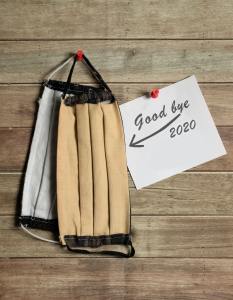
Now that many are breathing a sigh of relief that 2020 is finally over, I stop to ponder time.  Measuring time, although most forms of life do it in some way, is a human organizing principle.  Calendars were originally religio-agricultural devices.  In order to keep the crops on their seasonal cycles, the gods were invoked—there was nothing secular about their world.  It’s not known who invented holidays or even the concept of a new year, but it is clear that it was a fairly early idea.  Different cultures today still celebrate New Year’s Day at differing times of the year.  Having it a week after Christmas helps to make this a holiday season, but it is no guarantee that a sharp break in continuity will come after a bad year.

Lots of bad stuff happened in 2020, but clearly the circumstance that made it a “bad year” was the Covid-19 pandemic.  Here in the United States it became a full-blown crisis because of the cause of four years of ethical famine, Donald Trump.  Those who can see beyond their religio-politics know that he is a man who spent his entire career looking out for nobody but himself.  Such people do not work as public servants and are downright terrible in a crisis.  The pandemic quickly grew into a crisis and we spent nearly ten full months out of twelve isolating ourselves.  The other crises of the year (generally pointing fingers at Washington), such as the important resurgence of Black Lives Matter and the California wildfires, were exacerbated by the pandemic about which our government did nothing.  Lack of interest has led to death numbers that have become a Stalinistic statistic.

As much as we like to think nature bends to human plans—our calendars—we have no idea what 2021 might hold.  We’re left with a country that has been neglected for four years.  Our Republican-controlled senate can’t even agree to provide any kind of relief to average people without adding riders and conditions to make our situation even worse.  Still, I’m optimistic.  New Year’s, whenever it is, marks change.  I’ve been noticing for over a week now that the sun is rising earlier than it had been as we descended into December.  The light is beginning to return.  While we can expect nothing good from the White House for twenty more days, we can look beyond that and know that change is on the way.  The division of time may be an artificial construct, but it can, if we allow it, become a sign of hope.


Ode to Bookstores

The pandemic has changed everything.  You knew that, of course.  Like many people in fields of regular job uncertainty, we’ve curtailed spending as much as we can.  Never very securely established after Nashotah House, we’ve managed to get by by not thinking too far ahead.  I can’t imagine retirement (if there’s still a job left to report to).  Even more, I can’t imagine a life without books.  The only way I get through each day is by trying not to think about it.  Still, I miss bookstores.  Pre-pandemic, when jobs at least felt somewhat secure, we’d often nip into one of the many local independents of a weekend.  Missing browsing shelves sorely, we stopped into Book and Puppet over in Easton, when on a trip to buy produce at the outdoor farmer’s market.

It felt strange, the thought of going into a store that wasn’t dedicated to groceries or hardware.  Masked, of course, but would there be lots of people there, crowding the air with germs?  No.  There was maybe one other customer in the place.  I have to admit that I was a bit disoriented, trying to read over spines on a shelf, not wanting to touch anything.  I’ve tried hard to curb any spending during these highly uncertain times, but could I imagine a world with no bookstores?  Would I even want to?  Books, you see, give me hope.  My vision of heaven is October and a never-ending stack of books (and, of course, friends).  Books allow for escape and exploration.  Life will continue after the pandemic in books.

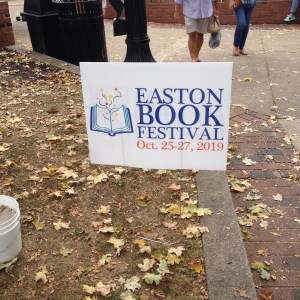
The fear has gripped many of us, I suspect.  I’m old enough to retire, but not well-off enough to do so.  Our house requires a two-person income at our level (highly educated, under-employed), and the pandemic rolls on.  I think of the Black Death—I’ve read about that too—and how history changed because of it.  In this pandemic we’re dying (all but the wealthiest) piece by piece.  The most vulnerable first, of course, but the middle class may well be in the sights.  The owner of the bookstore said he wasn’t sure how long he could hold out.  Just last year at this time I was participating in the Easton Book Festival that he’d organized.  I had a book-signing at the nearby Moravian Bookshop.  I can’t remember a time I felt so hopeful, knowing I had another book coming out, and if we survive long enough, another after that.  I really shouldn’t, but I’m in a bookstore.  I’ll buy one in hope that the future may just offer a place to keep it.


Jacob’s Ladder

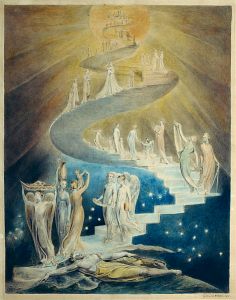
Jacob, it is said, was quite a dreamer.  While fleeing from his brother Esau he had a dream of a ladder, or stairway, to heaven.  Well, “Heaven” as we recognize it didn’t exist then, but you get the idea.  Angels were climbing up and down on it, I’m guessing to do roof repairs.  You see, neither my wife nor I are what you might call tall.  In fact, I’m a bit shorter than the average guy and we can’t reach the top shelf in our kitchen, let alone the ceiling.  Or, God forbid, the roof.  So when tropical storm Isaias (not to be confused with the prophet) dropped upwards of five inches of rain on us, some of it got inside.  Our roofer, vexed as I was, promised to get over the next week but there’s more rain in the forecast.  I had to get up there to do some temporary patching.  I needed a ladder.

Ours is an older house.  The roof is way higher than any ladder we have.  I have one that allows me to get as high as the ceiling, but being acrophobic I don’t use it much.  It doesn’t come halfway to the lowest roof.  The hardware stores have ladders, but delivery’s a problem.  A ladder twice as long as our car seems like a road hazard, strapped to the top.  I asked about delivery at the local Lowe’s.  It would cost a third of the price again of the ladder itself, and that’s only be if they could deliver it.  Their truck was, ironically, broken down.  Wasn’t this a DIY store?  Could nobody there fix a truck?  I put a face-mask and rubber gloves on for this?  The world isn’t easy for the vertically challenged.  I really don’t want to climb that high, but with the ceiling below already coming down I’ve got to do something.

I wonder if Jacob’s ladder is still lying about somewhere, unused.  We don’t live far from Bethlehem.  Maybe I can scoot over the Bethel and pick it up.  Then again, maybe angels deliver.  I hear they can be quite accommodating.  Of course, if they’d keep the rain off in the first place that would’ve been helpful.  I’m pretty sure that Plant and/or Page had a leaky roof.  When they went to get up there they’d found somebody had already purchased the ladder (I think they call it a stairway in England).  So I find myself with a leaky roof and no way to get to heaven.


Enough

Stories of the wealthy never interest me unless they have a mysterious, ageless cousin who’s really a vampire.  Unfortunately fantasy can’t save us from the reality of a once great nation that’s now crumbling.  As I wrote earlier on this particular book, we already know, at some level, what it says.  Mary L. Trump, who alone has courage among her family, exposes quite a lot in Too Much and Never Enough: How My Family Created the World’s Most Dangerous Man.  There’s no point in ascribing blame for deeds done.  I also fear there’s no hope that justice will ever be served in this case.  Dysfunctional families are all too real and all too common.  Some of the traits (but none of the money) from Fred Trump’s cruelty were as familiar to me as my own childhood.  A powerful, overbearing stepfather riddled with a sense of his own inadequacy, taking it out in his own empire within the walls of his house.  The damaged children it leaves behind, each struggling to cope in their own way.

The family Fred Trump raised was bound to become damaged goods.  It is to the everlasting shame of the Republican Party that it could come up with no other viable candidate for the highest office in the land.  Not so long ago I would’ve written “world,” by that day’s gone past us.  Not only did “the party” accept his nomination, it has enabled him, as Mary Trump shows, every step of the way.  Knowing that something is deeply wrong—that more people will have to die in this country of Covid-19 than anywhere else, just to stoke one man’s ego—and refusing to act should be a sin in anybody’s book.  Who still emerges as his defender?  The Evangelical.  This mess is so convoluted that it will take historians (presuming anyone survives it) decades to try to unravel it.  That’s because nobody in the GOP has any empathy for those already born.  Strange form of “Christianity,” that.

This book is a depressing read.  Still, I’m glad I did it.  Not that it will change much.  Those who are psychologically like Trump, incapable of distinguishing truth from fiction, will say it’s all lies.  You can always play that card.  There are facts, however, and they are recorded.  Those who are able to weigh evidence know (and already knew) that a dangerous man had been coddled by a dangerous party that puts self-interest over nation.  You know, I think there may be a vampire in this story after all, but I just don’t have the heart to look any further.


Hurricane Isaias

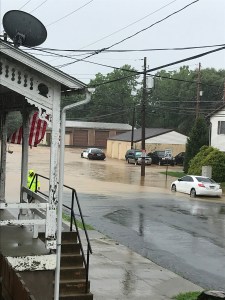
People have been debating how to pronounce Hurricane “Isaias,” an hispanic name based on Isaiah.  Pennsylvania, which has few distinguishing features, is generally well enough inland not to have too much hurricane damage.  Isaias, however you pronounce it, dumped over five inches of rain in the small town in which we live.  Multiple roof leaks sprang up in our house and a small part of the ceiling in one room came down.  Not exactly wrath of God level treatment, but unwelcome nevertheless.  The real problem was the short amount of time in which the rain fell.  Averaging about an inch per hour, the water simply overwhelmed the devices put in place to keep it outside.  Being of my particular disposition I can’t help but think of the prophet Isaiah.

Not a classical prophet of doom per se, Isaiah is the most quoted prophet in the New Testament.  He is remembered for “predictions” and soaring rhetoric that promises deliverance.  He’s also a prophet known for his woe declarations, as reflected in the Hebrew Bible.  This storm, I suspect, has delivered more of the woe than of the hope.  Streets were flooded as the local creek burst its banks.  Our own street was closed as I called our roofer who, I’m sure, had more than wanted popularity in one day.  Being a homeowner, I quickly discovered, is largely a matter of trying to keep the water out.  Our sump pump was working overtime and still the rain came.

My book Weathering the Psalms was intended to be the first in a series of volumes exploring meteorotheology in several books of the Bible.  The weather, you see, is a popular topic of discussion since in ancient times their meteorology was theology.  After the Psalms my exploration was intended to move toward the prophets.  There are dramatic events where these saintly folk were able to bring down rain, or withhold it.  Israel never experienced hurricanes because they don’t form in the Mediterranean.  Meteorological terms, however, shift over time just as by the time Isaias reached us it was a tropical storm.  The wind buffeted us a bit, but it was mainly a rain event.  I thought at first that I would look at weather terminology in Isaiah and see what I could find there.  I don’t know what my conclusions would have been since I was cut off before I could get that far.  Like those who cast their bread upon the waters, after many days it came back, ironically in the form of Isaias.


Everybody Knows

One of my favorite Leonard Cohen songs is “Everybody Knows.”  On a related note, the best-selling book in America last week was Mary Trump’s Too Much and Never Enough: How My Family Created the World’s Most Dangerous Man.  With the publisher citing 900,000 copies sold upon release, it produced numbers that most publishing houses only dream of.  I’d preordered it on Amazon but for the first time ever I did not have a copy on the day of release.  There were a lot of people ahead of me in this line.  That’s even more remarkable than it sounds because we all pretty much know what the book says.  We also know that its subtitle is true: we have a very dangerous man (daily rising Covid deaths show this to be true) given free rein by Republican senators.  Even adults without high school educations that I talk to know there is something seriously wrong.  Indeed, anyone who knows how to fact-check can see it.

A very popular way to deal with inconvenient truths is to posit a conspiracy theory.  Evangelicals (now defined as Trump supporters) have long used conspiracies as ways of explaining how facts simply don’t support their views.  From the moment “alternative facts” left the lips of the administration in January 2017 I knew we were in deep, deep trouble.  Funny thing is, many Evangelicals had to read Orwell in school, like the rest of us.  How they could support anyone that had such a long, long track record of criminal cases against him before placing his hand on the Bible and swearing to uphold a constitution he’s been daily dismantling since is anybody’s guess.  Daily life, it seems, is now a conspiracy.  

One of my favorite Leonard Cohen songs is “Everybody Knows.”  The lyrics suggest that whatever it is we want to keep secret everybody, well, knows.  That’s what’s so distressing about America’s current decline.  Everybody knows that being president is a very difficult position and that it’s only handled adequately by well-trained and smart people who, despite their faults, put country above self.  With the election of 2016 it was clear from even before day one that ego was the driving factor behind 45.  Americans love their outrageous television personalities and somehow think that appeal on the small screen somehow translates to leadership ability.  We’ve learned before that this isn’t true.  I haven’t read Mary Trump’s book yet—it just arrived in the mail—but when I do I’m sure I’ll find out what everybody knows.


Missing Markers

Something truly remarkable happened this week.  The Society of Biblical Literature, which, along with the American Academy of Religion, meets annually in November, has canceled its in-person meeting.  I’ve been attending this conference since 1991 (with a few years off for good behavior).  It always meets the weekend before Thanksgiving, stretching to the Tuesday prior.  Some academics use the meeting to have an exotic Thanksgiving break with their families, particularly when it congregates someplace warm.  (It was scheduled for Boston this year.)  So I’m ruminating what this will mean for a year of missing markers.  Some of you may recall I missed two years ago, electing to stay in Newark Airport instead, but this is different.  We’re all being changed by this virus.

Missing markers.  That’s what my wife calls it.  March 12 was the day that Covid-19 became a crisis.  In my extended family that’s in the middle of birthday season.  Travel plans had to be altered.  Trips to see loved ones had to be delayed.  Then cancelled.  Memorial Day came and went.  It was a long weekend, but for most of us it was a long weekend at home.  Our usual summer trip to the lake was also a victim.  A remote lake may be the safest place to be, but you have to get there.  Flying doesn’t seem safe and we don’t have enough vacation days to drive all the way out and back.  Here we are halfway through the summer and each day feels pretty much like the one before, even if it’s a day off work.  Time seems out of whack.  Back in April it was hard to believe it was still 2020, now it’s difficult to comprehend that the year’s more than half over and there will be no AAR/SBL in November.

Growing tired of the phrase “unprecedented times,” I prefer “missing markers.”  Yes, the weather’s still doing its time-keeping job.  This summer has been quite hot around here, for the most part.  I remember shivering in my study sometime not so long ago, bundled up in layers and thinking that when summer rolled around this coronavirus would be a bad memory.  If only there were something governments could do to keep people safe.  If only there were people in the White House who cared.  I had visions of professors, hundreds and hundreds of them, wearing masks with their tweed.  It was a vision of wonder.  They’d walk up to you, extending an elbow to bump, but you’d back off.  That’s actually too close.  And lecturing spreads germs very effectively.  Over time 2020 itself will become a marker.  I’m not sure anyone will miss it, however.


Weathering Frights

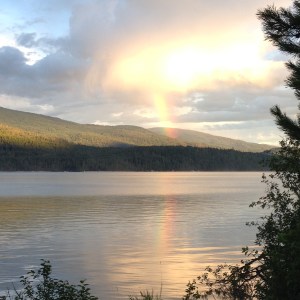
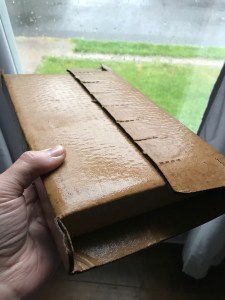
It reminded me of a nightmare.  The box, containing a book, was soaked through.  A sudden thunderstorm had come before we knew the box was even there on the porch and memories of several boxes of rain-ruined books came back uninvited.  Water and books just don’t mix.  This particular book, I knew, was Peter Thuesen’s Tornado God, which I had ordered back in December and which has just been released.  The irony wasn’t lost on me.  My own second book, Weathering the Psalms, was a rather inelegant treatment on a similar topic and I’ll discuss Thuesen’s book in further detail here once I’ve read it.  The point is that no matter how arrogant we become as a species the weather just remains beyond our control.  The rainbow at the end of this small storm was that although the packaging was soaked, I found the box before the book itself had time to get wet.

My research, ever since my first book, has largely been about making connections.  The weather is so quotidian, so common, that we discuss it without trepidation in casual conversation.  It is, however, one of the most dangerous things on our planet.  Severe storms kill both directly and indirectly.  Cyclones, typhoons, and hurricanes can do so on a massive scale.  So can their dramatic opposite, drought.  Snow and melting ice caps also threaten life, as do floating chunks of ice in chilly oceans.  It’s no wonder that the weather has been associated with gods from the earliest times.  Even today literalists will say God is in the sky although meteorologists and astronomers can find no pearly gates when they look up.  We just can’t shake the idea that weather is some kind of reflection of divine moodiness.

As weather becomes more and more extreme—it’s already a system that we’ve tipped seriously off balance—I suspect more and more people will start to assign it some kind of divine agency.  This June we’ve already gone from shivering mornings with frost on the roof to nights when sleep is impossible because it’s so warm and humid, all within a matter of a couple of days.  And this isn’t that unusual.  Wait’l the gods really get angry.  Weather is closely related to the water cycle, of course.  We can learn about such things from books.  We can’t take them out during a storm, however, and homeownership is all about keeping water out, or only in prescribed locations indoors.  When the delivery driver leaves a box on your porch, however, it remains within reach of the storm gods.


Still Evolving

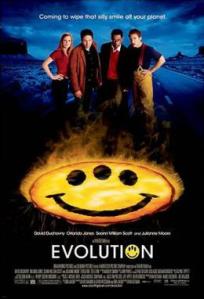
Evolution, the 2001 movie, I mean, is good escapism.  Thinking back on 2001, instead of a space oddessy, another piece of news—another national crisis, in fact, dominated.  The film kind of slumbered in the background until we could sort out what it meant to live in, ironically, an unsafe world.  That’s precisely what the movie was about.  I wasn’t thinking that when I recently pulled it off the shelf.  I was simply wanting some fantasy to relieve the daily pressure of living in stress mode.  Besides, it has some of the best alien monsters you could hope for in a comedic setting.  Soon, however, the parallels began to appear.  A source of contamination from outside.  A growing threat.  A government that doesn’t know what to do and that can’t admit its mistakes.  It all seemed eerily familiar.  Dr. Allison Reed is even from the CDC.

Life isn’t constant crisis.  Funnily enough, when Democrats are in office there seem to be far fewer of these large-scale troubles.  “There will be signs,” I guess, “in the sun, moon, and stars.”  The thing about signs is that we’ve left the reading of them up to Fundamentalists.  And Fundamentalists don’t believe in evolution.  Or science.  Or modernity.  Idealizing medieval thinking does come with a price tag.  So I reach for the remote.  While the government has lots of money that it spends on its own volition, the crisis grows.  The alien menace is set to spread across the country.  Although beginning in a different geographical location, all that red on the map sure looked familiar to me.  How little has changed in the last two decades.  Evolution came out before smartphones even evolved.

Meanwhile, practically unnoticed, the U.S. Navy has been saying UFOs are real.  The story, muted and subdued—we’ve got more immediate concerns, such as getting reelected—has been on major reputable media.  When they land on the White House lawn we’ll ask the aliens if they have respirators and masks aboard.  Preferably the kind with face-shields.  In the movie the monsters are aliens.  They’re like an infection, and even hazmat suits can’t keep you safe.  The solution, of course, isn’t fire-power, but a good shampooing.  Now I know you still can’t go to the salon in lots of places, but washing up at home seems to be pretty good advice.  We put the movie on for simple escapism, but there’s no escaping the fact that we now live in an alien environment.


Resurrectionists

“Resurrectionists” was the name given to those who supplied the black market for human bodies when medical science had scant access, back in the eighteenth and nineteenth centuries.  They’d rob graves, and sometimes kill their own victims, for the money medical schools paid for cadavers.  It’s just business, some would say, I suppose.  It was illegal, however, and carried its own death penalty at times, if a resurrectionist were caught.  I was surprised to learn that somehow the United States has learned to do large scale resurrection.  Clergy, hang up your stoles—the government’s got it covered!  I discovered this in the most unlikely of places, the World Health Organization’s daily situation reports.

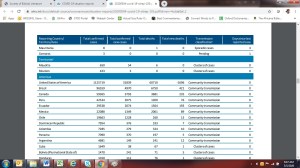
Like many people I wonder when COVID the 19th’s reign of terror will end.  I don’t trust anything that comes out of the White House, so I look to WHO.  The daily situation reports give the recorded number of cases of the virus, which, despite progress, keep going up.  The US, as always, is the world leader.  In addition to giving the number of cases, the website also records the numbers of deaths.  This is a sad and sobering statistic.  Additionally, it informs reader of how many new cases and how many new deaths have been recorded in the last 24 hours.  Here’s where I learned of our godly ability.  On Tuesday the number of new deaths in the United States was -1696.  This represents a mass resurrection indeed.  If only we’d share the knowledge with the rest of the world.

Here’s the insidious nature of statistics and governments who abuse them.  Stalin famously noted that one death was a tragedy but a million deaths are a statistic.  The US isn’t the only nation to play with the numbers—we’re all just statistics after all—but it is a matter of record that the Trump administration wouldn’t let the Diamond Princess land, although in American waters, because it didn’t want those cases listed as part of our stats.  So it still stands.  They are listed, of all the nations of the world, as “Other.”  Lest there be any doubt, the Tuesday WHO situation report ended with a note that American authorities “retro-adjusted” the figures.  You’d think that we’d want to announce with trumpet blast that we’d figured a way of retro-adjusting 1696 deaths.  For those of us listed as non-essential employees this is perhaps meant as a ray of hope.  Our work may be just icing, and we may be a single digit in our uncaring government’s eyes, but we can be brought back from the dead by political fiat.


Bats and Bloodsuckers

In what looks (somewhat cynically) like at attempt to add newness to frightfully old news, the World Health Organization has renamed COVID-19 to the much scarier SARS-CoV-2.  The basics remain the same: the virus is transmitted the same way.  If it lands on a non-organic surface it soon dies without a host, rather like the elected officials of an old party once grand.  Like any parasite, it requires the life of another to prosper.  And so we find Mitch McConnell telling states to declare bankruptcy in a move taken from the Bible’s own playbook.  You see, during a famine in Egypt Pharaoh bailed out the food banks, and by buying all the land made peasants in essence slaves of the state.  The Good Book has all the answers.  A few generations later, however, and Pharaoh had to learn how to swim in the desert.  The divine economy is not without humor.

The WHO report also states that the vector has been traced to bats.  Bats make me think of vampires—I can’t help it, I’m a late monster boomer.  While WHO doesn’t make any connections with vampire bats, I researched them when I was younger.  Unlike elected members of the gOP, vampire bats aren’t selfish.  Nor are they greedy.  Finding a victim, the make a small incision with their sharp little teeth and lap up enough blood to survive.  If another bat goes a night or two without success, vampire bats will share their success, realizing in a way that politicians don’t, that helping one another is an assured way of establishing communal strength.  Or you could just be capitalist about it, let the unsuccessful starve, and go seeking another victim of your own.  Bloated bats don’t fly well.

If the Old Party learns from nature we’ll all benefit.  Greed is hardly the basis for sound government.  Nature would suggest that ingesting disinfectant isn’t the best advice to dole out to a nation about which you truly care.  The Old Party refuses to do anything, of course.  Having proven themselves unable to govern, they’re busy pulling together campaigns for November’s election.  With a leader who’s already said on national television that Republicans can’t win without gaming the election process itself, they don’t even blush.  I’m no expert, but it may be because they don’t have enough blood to rise to their cheeks.  If they’re short on blood it might be worth their while to learn a thing or two from vampire bats.


Cancelled Easter

The year they cancelled Easter.  Well, not exactly.  Perhaps I’m merely a product of the commercialization of my time, but my thoughts go back to the Grinch.  “It came without boxes,” he said, “it came without bags” (and any more might be copyright infringement).  You get the point—holidays aren’t reliant upon their trappings.  Can Easter come without colorful eggs?  Without baskets and bonnets?  Without Peeps and chocolates?  Yes, it can.  We’ve taken another holiday with religious origins and associated it with what you can buy.  I know it’s more than that for some people.  It’s singing stirring hymns (all of which can be found on YouTube), and dressing nice (which can still be  done at home), but mainly I think it’s the sense of togetherness that’s missing.  The freedom of bursting from our personal tombs in which we’ve been stuck for three weeks.

Around here snow was falling on Good Friday.  A friend told me her company decided since everyone was working remotely they would give them an extra holiday that day.  Others of us slogged on as usual, for unlike Christmas, the Easter/Passover complex is not about getting days off work.  These are, I guess, working class holidays.  Our capitalistic outlook wants us to spend money, though, on holidays.  Halloween (on which I foresee a plethora of plague doctor costumes) has become almost as lucrative as Christmas.  The spring holidays—St. Valentine’s, St. Patrick’s, and Easter—encourage spending as well.  Can we not get to the heart of a holiday without pulling out our wallets?  Spring holidays are all about the return of life after winter.  It was snowing, but I could hear lawnmowers in the distance.

With capitalism growing old and sluggish, the next spending holiday isn’t until Mother’s Day, yet another spring celebration associated with flowers and life.  My wife has been saying that what she misses is being out to see things coming back to life in spring.  Some of the trees are putting on quite a show already.  Magnolias and dogwoods have started to scatter their petals with the snowflakes.  Our daffodils have been blooming since March.  The forsythias are already going green.  Life is returning.  That’s what Easter, and in its own way Passover, is all about.  Life after imprisonment—freedom.  Liberation.  We have to put them off this year, but they’re all movable feasts.  We keep quietly apart in the hopes that life really will return after disease and death.  And it will come regardless.  It always does.


Disease Divine?

I suspect many religious people are wondering where God is amid the current pandemic.   Theodicy (explaining the suffering of the innocent while defending the goodness of the Divine) has always been the bête noire of monotheistic belief systems.  (Polytheism has the advantage of always being able to blame another god.)   People have been pointing articles out to me that show the religious implications of a crisis.  I’m not at all surprised by the irrationality of the subjects.  The first article was an opinion piece in the New York Times.  It makes a good case that the religious right paved the way for the COVID-19 contagion in the United States.  The religious right is anti-science because they (wrongly) believe the Bible is a science book.  Even a small dose of seminary could cure that ill.  Katherine Stewart nevertheless makes a strong argument that the survivors of all of this will know whom to blame.  Science denial is not the same as authentic religion.

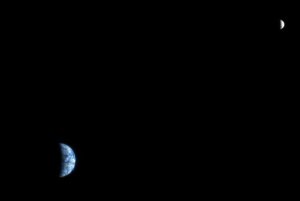
From NASA’s photo library

The other news stories that arise are of evangelical leaders defying government bans or guidance, even when delivered by messiah Trump, to large gatherings.  One of the main reasons for this is that said messiah kept saying the coronavirus was nothing to worry about.  Only when re-election seemed unlikely with all the uneducated dead did he finally start issuing warnings to avoid such idiotic congregating.  In the midst of it all, Jerry Falwell Junior (why did all these evangelists have to propagate?) decided to reopen Liberty University.  No doubt confident that God will keep them from any harm, the university officials decided it would be good to gather students from all over the country and put them together in dorms again.  If you’ve ever lived in a dorm I’m sure you can see why the decision is anything but wise.

It’s sad that evangelicalism has decided to pander to the uneducated.  You can believe in Jesus (many mainstream Christians do) without parking your rationality in the farthest parking spot from the door.  Many of us, huddled in our houses, not having seen other living people for days, are trying to isolate this thing and drive it to extinction.  Meanwhile, those who trust their own version of the supernatural are doing whatever they can to ensure the virus continues to spread.  Why?  They have long been taught that science isn’t real.  Never mind that their cell phones work and they get the news of open dorms through the internet, the science behind it all is bunk.  An entire executive branch administration that doesn’t believe in science is as sure a road to apocalypse as any.