Rite and Wrong

Anyone who’s never had anything very weird happen to her or him, raise your hand. Hmm, I thought so. Strangeness, whether prevalent or simply a unique event, is part of life. It is when we turn to explanations that the religious side of the equation suggests itself. Now I have a confession to make. When Borders was going out of business last year, I was in mourning. Those last poignant hours in my favorite bookstore I wandered the aisles picking up the books left behind by others, many of which I would not have otherwise purchased or read. One of those books was The Rite by Matt Baglio. I had seen the hype for the movie, and although the idea of possession terrifies me I’m not sure there’s anything here that can’t be explained by the likes of Carl Sagan’s Demon-Haunted World. Still, riding through the flickering lights of the Lincoln Tunnel on a bus on a gray and rainy morning, literal shadows of doubts creep in.
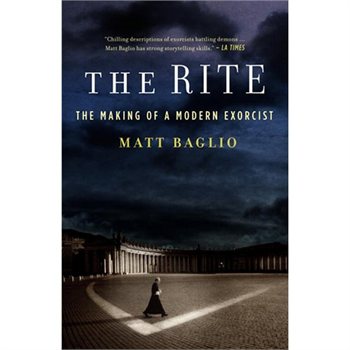
There is no doubt that events happen to us that seem to defy explanation. There is also no doubt that the enormous wealth of Christian mythology taken literally by Baglio defies all but the most gullible of readers. The problem is the black box. Nobody sees what goes on inside the locked chamber where the exorcist practices his art. Yes, it is a manly enterprise since the Catholic Church won’t admit of women priests. This was one books that left me tottering between what I know to be true and that shadowy place where doubts dwell. It is utterly certain that our perspective helps to determine what we see. A priest in a stuffy or chilly closed-off room believing a demon lurks therein will see the signs in the behavior of the victim. Throughout the book I kept pondering how so many possessed people lived in heavily Catholic Rome while in locales with more mixed religious traditions the phenomenon is rare.

Perhaps the most disturbing part of the story is the fact that Baglio readily admits: most of the possessed are women. In a religion where women have been marginalized as a matter of course from the early days, can this really be a surprise? And when the exorcist, a celibate priest, experiences sexual arousal how else can he interpret it but as demonic? The human mind is a fascinating system, capable of launching a body into stunning, adrenaline-induced feats of strength and endurance. It conjures gods and demons. And it can make a grown man cower on a dark and windy night with stories of possession racing through his head. I had a difficult time believing much of what I read in The Rite, but I do think perhaps it is now time to make a date with Carl Sagan. Lighting a candle in the dark is a very human thing to do.
Bleak Visions

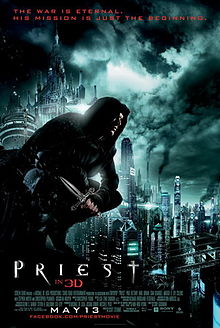
The day was leaden and rainy. Hopes for seeing the sun over the next several days dim. I had been warned about this, but once my mind has settled on vampires, they’re hard to resist. The reviews said Priest, as a movie, was full of cliched dialogue and predictable outcomes. This is true. But still, it is perhaps the most religious vampire movie ever made. While some have doubted my analyses of Underworld and other vampire films, Priest is set in a Pullmanesque world dominated by a church that has lost its belief in vampires. In fact, the civilized world, in scenes reminiscent of Blade Runner, owes ultimate allegiance to the church. Based on the graphic novels by Hyung Min-woo, the post-apocalyptic world of Priest presents an over-industrialized society where humans live in walled cities (ironically, Jericho has no walls). Vampires, more fierce than any Count, even by fifteenth-century standards, rip humans to shreds, but have been forced into reservations by the warrior priests. Their weapons are cross-shaped, but there is otherwise no reference to Jesus in the movie—only an amorphous “God.”

Despite the endless tropes, “a vampire killed my brother,” “the Priest is her father,” and endless chatter about the nobility of sacrifice, the movie is strangely compelling. Visually it maintains the appeal of a place somewhere between Planet of the Apes and the Book of Eli. And something appeals about priests who are willing to fight evil rather than sit around arguing about whether women should be allowed to join the movement or not. Keeping with modern proportions, we see only one female priest and none among the Monseigneurs, but she is the one who actually stops the vampires. And these are vampires that have evolved into the blind, naked denizens of the night who kill, apparently, for the sheer joy of it. The only article of faith the church can muster is, “if you go against the church, you go against God.”

I wonder if anyone in the world of religions is tracking how society perceives them. Religions once stood for our noblest aspirations, and our humblest weaknesses. Like bad caricatures from the movies, religious organizations don’t shy away from the desire for ultimate power. In His Dark Materials and in Priest, the church is content with nothing less than total domination. This is not missionary zeal, but good, honest power-lust. Not all religions are like that, of course. Still, there are those who perceive them that way. Maybe it is my own insecurity, or maybe it is the fact that I’m seldom convinced I have the answers, but I can’t help but feel the thrill of justification at the rebel who maintains conviction to the ideals s/he holds deeply. It takes no backbone to enforce obedience when might is on your side. But only those who have faced the vampires personally know who the real enemy is.


Final Flight

Back in the day before CD players, let alone MP3 files, my mom had a squat, boxy rectangle of a cassette-tape player. (Remember, I am a student of ancient history.) The cassettes we had were home recorded, scratching and hissing like a disgruntled cat, but they were the latest in technology. And, of course, they were religious in nature. One particular tape I still remember with terror. Narrated by a optimistically doleful bass male voice, it recorded the events surrounding those climbing aboard a plane bound for heaven, along with authentic jet noises. It was, of course, a thinly disguised metaphor for death, something I realized even as a child. As the passengers climbed aboard, anticipating that meeting with Jesus, I trembled in fear. They were all about to die.

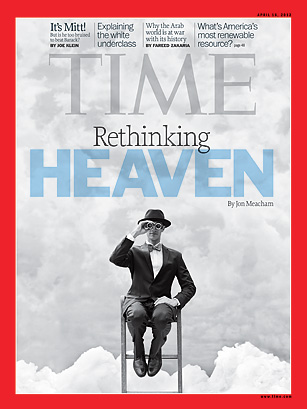
I have never been particularly afraid of death. Not that I’m in a hurry to go there, but I have always sensed it as inevitable and therefore not worth worrying over excessively. I was one of those who grew up thinking quite a lot about it, viewing it from different angles, trying to make sense of it. I still do. While I was in England, Time magazine ran a cover story on Heaven. Now that my feet are back on the ground, I have been reading the story with interest since I’ve just been spending several hours on a jet in the sky. One of the most surprising elements in the story is the fact that some evangelical preachers are beginning to inform their flocks that heaven is what we make it here on earth.

This may not sound shocking to you, but having grown up evangelical I knew that the only reason we behaved so well all the time was so that we could get into Heaven when we died. This was the economic basis of salvation—you paid for Heaven in good deeds and correct belief. Not that you exactly earned it, but you did invest in it. This was the defining characteristic of Christianity. The suffering that is so obvious in the world (I saw three homeless men curled up together inside the Port Authority Bus Terminal just this morning) can harsh anyone’s paradise. The traditional “Christian” response has been to look past that to a shimmering, if imaginary, kingdom in the clouds. I am very surprised that some evangelical pastors are willing to risk their entire campaigning platform in order to help those in need. It’s getting so that it is hard to tell which way is up any more. Maybe that’s what happens when you spend too long on a plane bound for a mythical destination.


Sutton Courtenay

Sutton Courtenay lies sleepily outside the bustling business complex known as Milton Park. Over my work time at Routledge in the United Kingdom, I have been immersed in the frenetic world of academic publishing. Putting a book together and selling it may seem a simple prospect, but in reality it involves many people at multiple stages who specialize in everything from writing content to ensuring that the four-color print of the cover looks just right. Sometimes working in publishing one can get so close to the trees that the forest really does become invisible. So it was that a friend of mine took me to Sutton Courtenay over lunch one day. The hamlet was very quiet. Next to the clattering pub—the only real sign of life here in midday—stood the gateway to an abbey long decayed to dust. Iconic thatched roofs and brilliant grassy greens make this place seem very far indeed from the negotiations and dealing that take place just down the road in Milton Park.

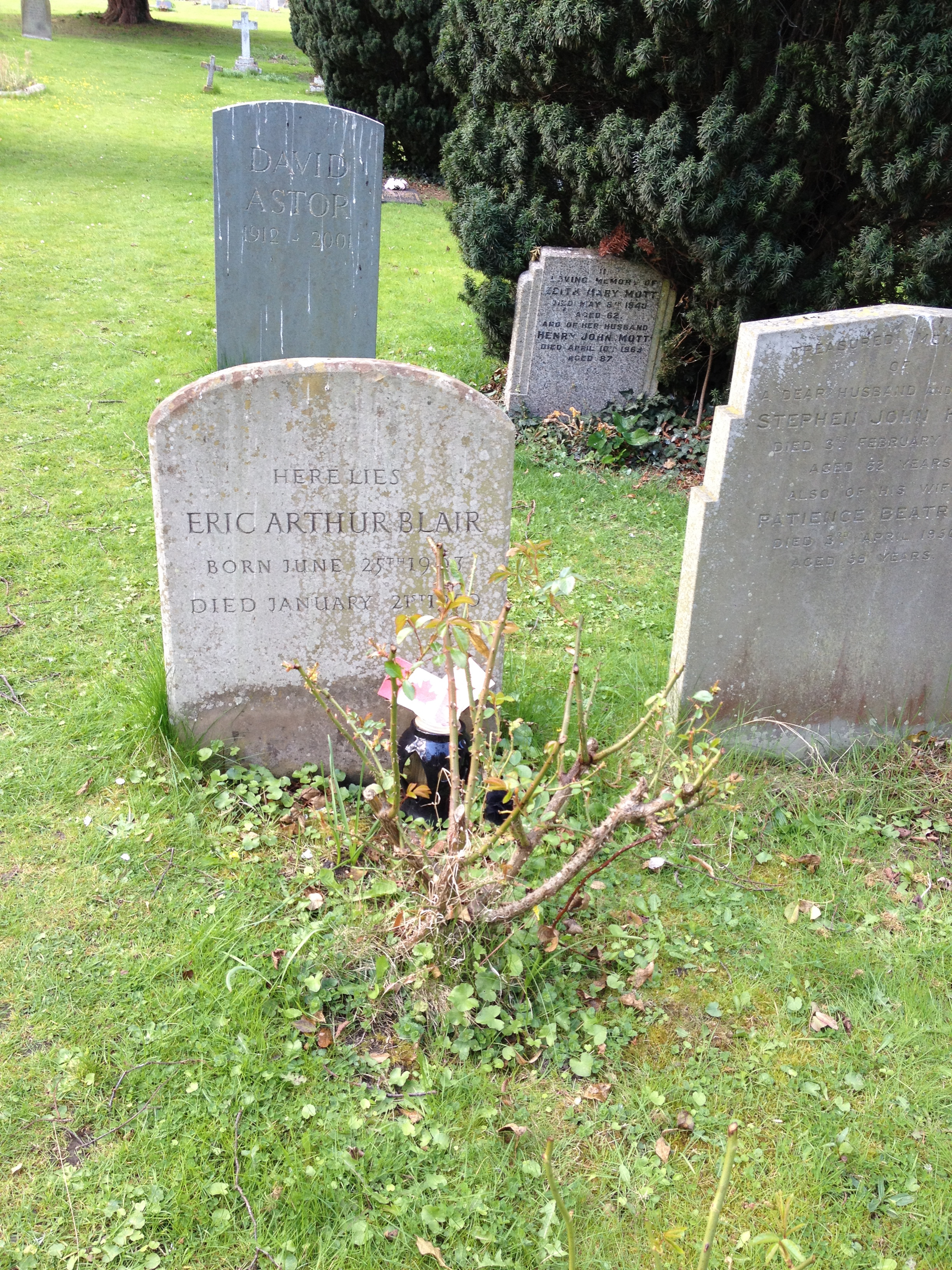
In a silent cemetery dotted with yew trees just behind the twelfth-century Norman All Saints’ church, rest a couple of very influential people. Lord Asquith, sometime Prime Minister, holds the most prominent place. A few paces away in an unassuming grave are the remains of Eric Arthur Blair. Unless you knew his penname, you wouldn’t be aware that you were in the presence of George Orwell. Orwell never lived in Sutton Courtenay. When he died in 1950, requesting to be buried nearest where he died, there was no room in the interment grounds. Millions of people live in London and millions have died there. The image conjured in the mind is distinctly Orwellian. Sonia Brownell, his widow, with the help of David Astor, found a resting place in Sutton Courtenay.

Today one would be hard-pressed to find a school child in Britain or the United States who has not been assigned to read one or both of Orwell’s prescient novels. Orwell’s anti-fascist views were often eerily prophetic. In 1949 1984 seemed a long way off. As the latter year came and went, some heaved a sigh of relief that Big Brother never arrived. Those who labor away in busy office parks, those who attempt to board a commercial airliner, those who live in cardboard boxes on busy city streets, and those who pay taxes so that the wealthy won’t have to, however, know that Big Brother is indeed alive. He has grown crafty with age and is well adapted to camouflage. He is known by many names: Free Market, Laissea Faire, Unrestrained Capitalism. One place he is not to be found is in a quiet churchyard in Sutton Courtenay contemplating a simple stone to a man named Eric Arthur Blair.


Pharaohs of Stonehenge

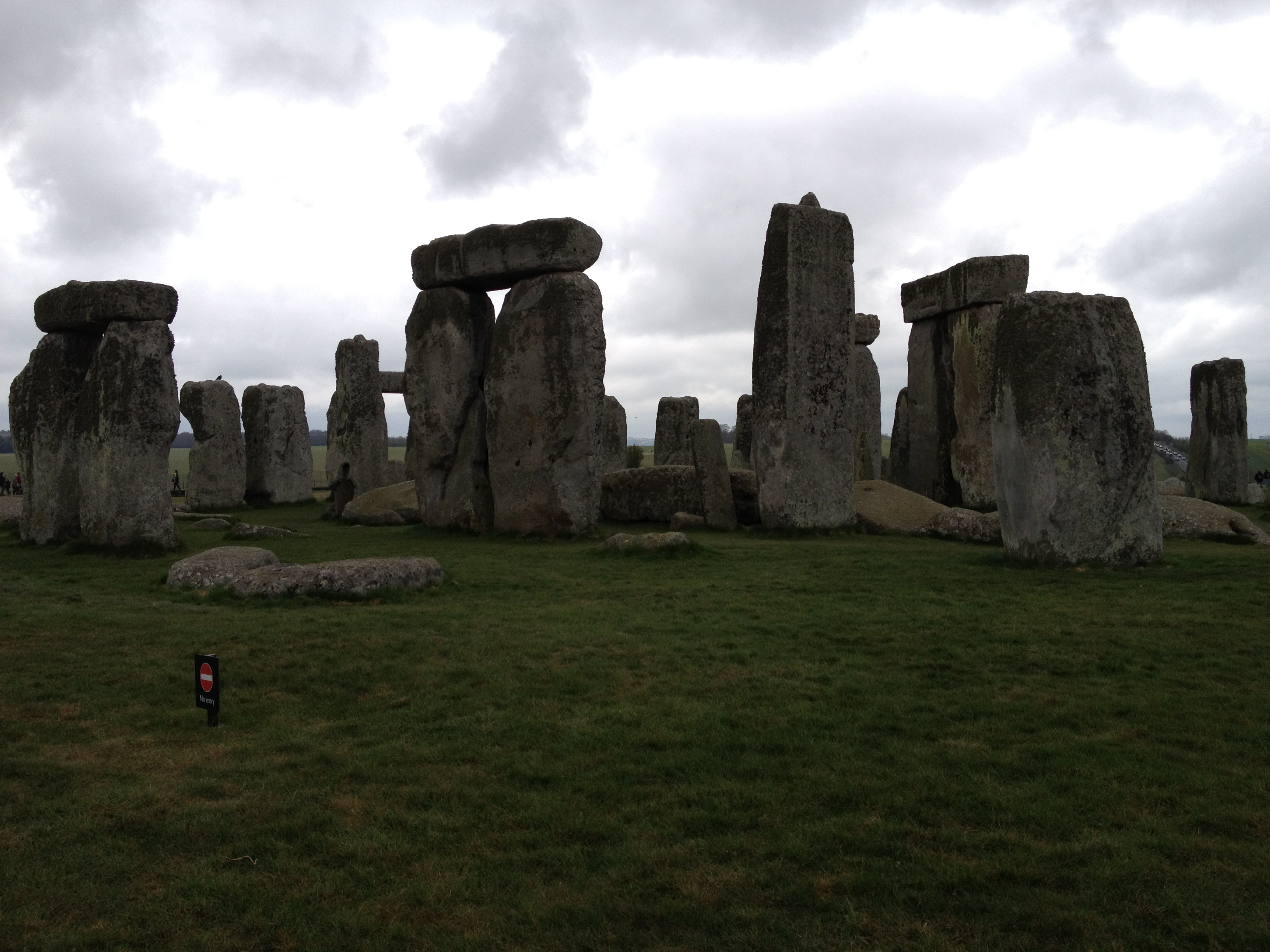
Stonehenge on Easter Sunday is a remarkably popular place. Tourists from all over the world crowd the pathway around those ancient stones as if they hide some arcane secret in their tumbled, massive form. Stonehenge may be the most iconic location in Britain, surpassing even such modern structures as Westminster Abbey and St. Paul’s Cathedral. Far pre-dating the art of writing, the purpose and nature of Stonehenge involve considerable speculation, but given the unquestionably costly years of labor required to plan, dig, transport, and align the monument, it stands to reason that it must have been religious in nature. One of the standard—perhaps even hackneyed—critiques of archaeological interpretation proves true in this case: if you can find no sensible reason for it, it must be religious.

The main phase of Stonehenge, the one that incorporates the iconic monoliths instantly recognizable today, came under construction some six hundred years after the pyramids of Egypt. In the case of the latter we know their language and we know the motivation behind the structures. More than just buildings to demonstrate the power of the king, they were celestially aligned portals to the afterlife. Although the Egyptians had no word for religion, the pyramids were as religious as the great temples that would soon surpass them in the energy consumption of the empire. In England of the time, we know no names, nor even an accurate assessment of the “nationality” of the inhabitants. Even nations, as we know them, did not yet exist. The builders of Stonehenge surely had something close to our concept of religion in mind. Otherwise, like the great cathedrals of millennia later, it would have been simply a waste of time and resources.

Wiltshire Downs on the Salisbury Plains is studded with ancient locations of significance. On the near horizon, among the eternal green of the English countryside, are dozens of barrows where people of unknown significance are buried. In that respect Stonehenge is emblematic of the individual struggle for eternal recognition. The name Menkaure stirs instant recognition among few. His pyramids stand as eternal monuments to a decidedly faded greatness. Stonehenge and its environs hold the remains of unknown numbers of unknown nationality bearing unknown names. It symbolizes the fate of us all. Yet on Easter, many believers in resurrection crowd in and gaze in awe at a pagan monument to human striving that no one truly understands.


Good Morning, London

First of all, Virgin-Atlantic Airlines gets a gold star in my book. Having flown quite a bit over the past six months, I’ve been reminded on just how stingy airlines can be, making even a brief flight a test of endurance. They are very generous with full body scanners and less so with basic human services, such as food, entertainment choices on long flights, and a sense that you’re doing anything other than propping up a flailing, deregulated industry. Virgin-Atlantic demonstrated that air time need not be torturous. So, with many choices of movie to watch, on Good Friday, I decided on one of my favorite genres of religious movie—the vampire flick.

I have been anticipating Dark Shadows for well over a year now, but I had heard nothing about Fright Night. Really, in many ways Fright Night was an unremarkable vampire movie, but then again, watching on a plane is maybe not the place where one would expect the gothic mood required for full enjoyment. Nevertheless, the full range of religious cures of vampires was present with one notable exception: crucifixes. Crosses abounded, but here on Good Friday I saw no corpi. There was holy water, so clearly it wasn’t purely Protestant sympathies that led to the abandonment of crucifixes in the movie. In any case, crosses were only a minor deterrent in this scenario. What finally dispatched the chief vampire in this case was a traditional wooden stake. Which, somehow reminds me of typical airplane food on most airlines.

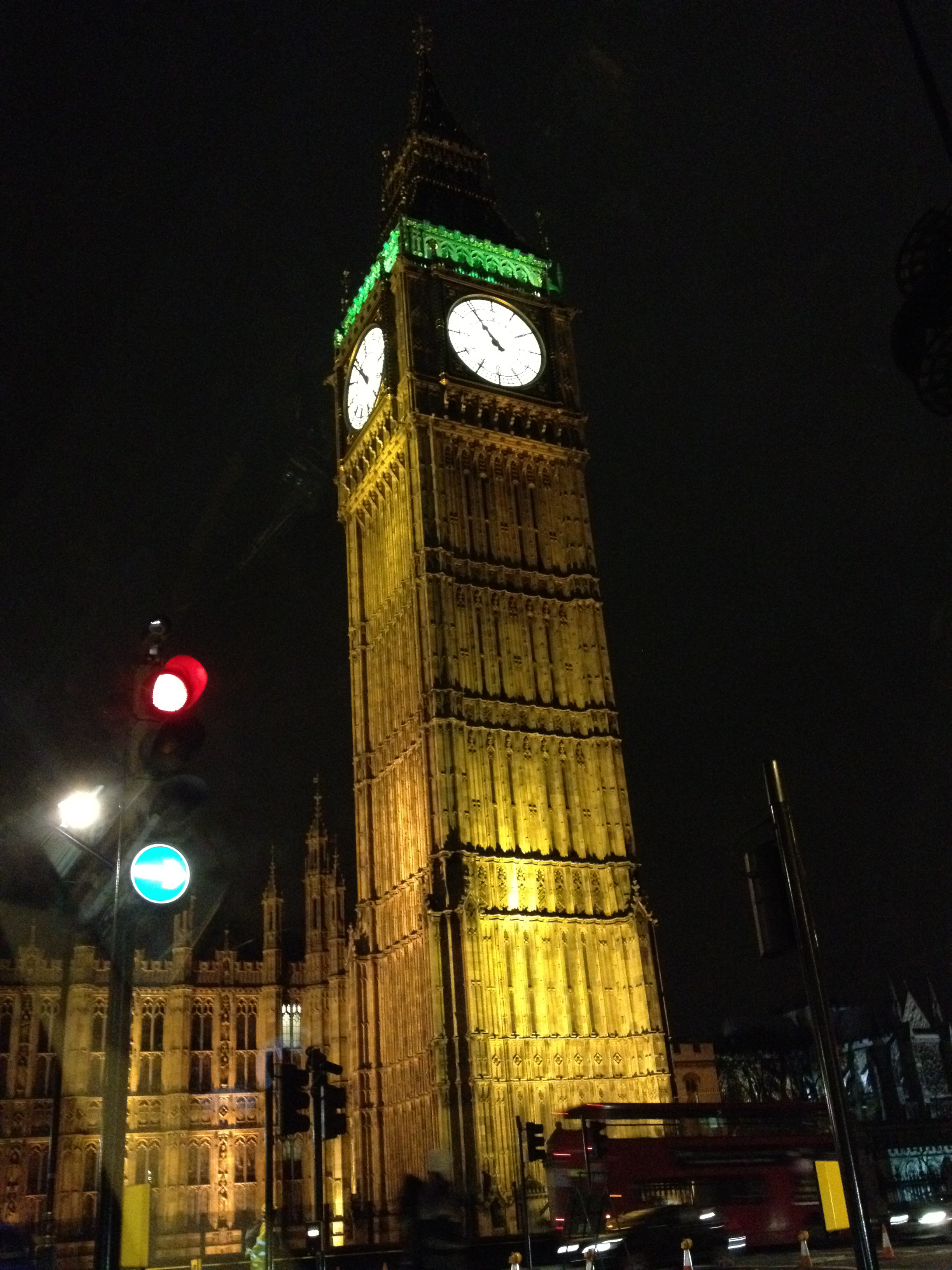
Driving around a secular London dressed in religious garb, St. Paul’s Cathedral lit splendidly in the night, was a reminder of the hold Christianity still has on even non-religious culture. It was kind of like the corpus-less crucifix in the movie. The inspiration behind the great gothic stylings of Big Ben and Parliament arise from their long association with Christian culture. On the streets people were milling about London late in the evening, not apparently fresh from church, standing in the shadow of Westminster Abbey and happily snapping photos. This may be a montage of disparate images colliding in my jet-lagged mind, but somehow virgins, vampires, crucifixes, and churches seem to fit naturally together.


One of Us

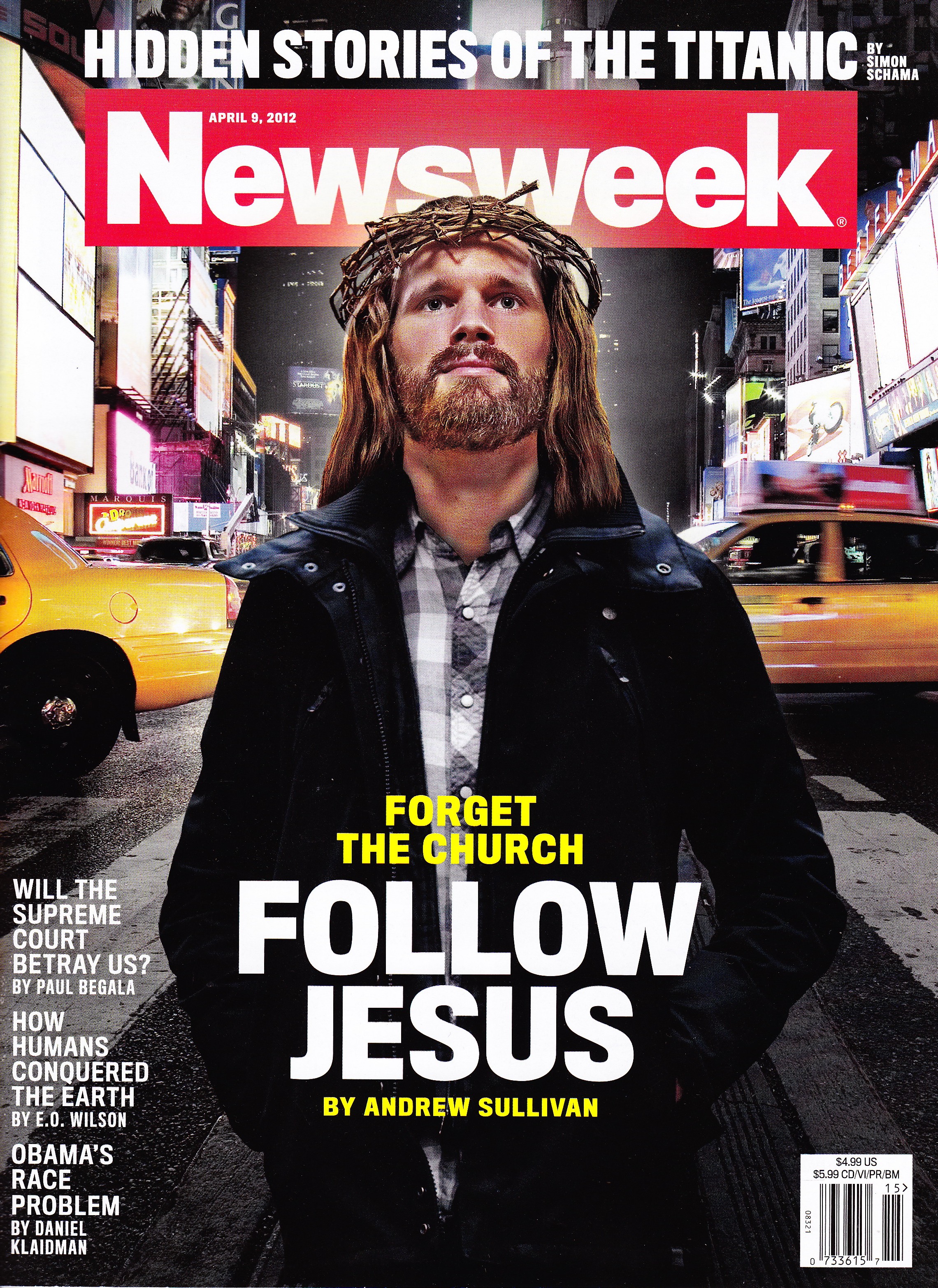
I suspect quite a few people are thinking about Jesus today. He does seem to be in the public consciousness with appearances on both Newsweek and the Watchtower. Newsweek, I have to admit, was an impulse buy. I’m flying to London today and I wanted something light to bring on the plane, so why not take Jesus along? I’ll have to report on the contents later. What caught my attention was the contemporary, very Caucasian Jesus standing in what appears to be Times Square. Since I walk through here a couple times a day, the immediately striking aspect is how unremarkable this would be. Perhaps that’s what the cover artist was going for, but people who think they’re Jesus—or at least a close approximation—are hardly rare. It seems that many of them are interested in running for president. Many others run Megachurches. Very few live on the streets.

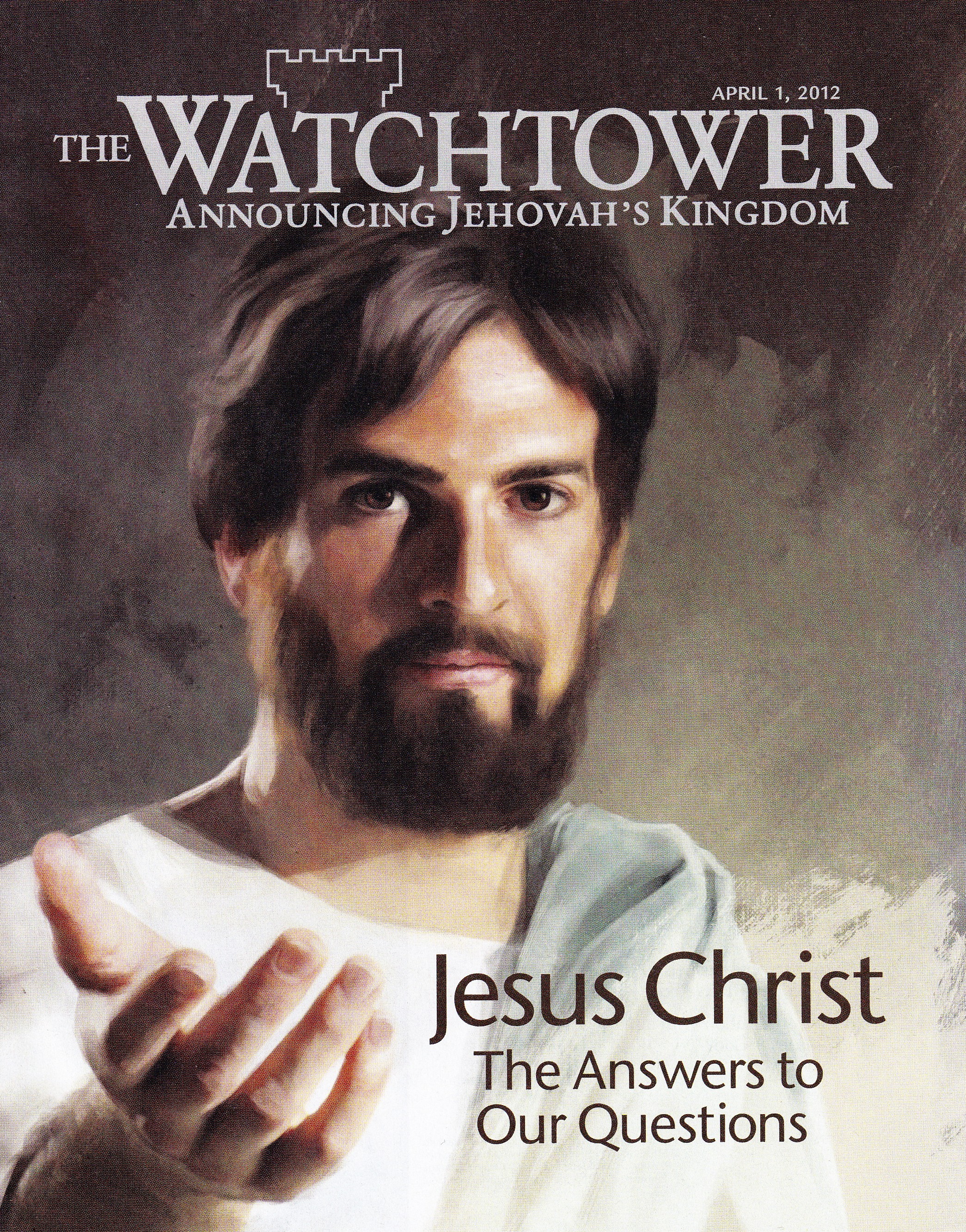
My Jehovah’s Witnesses friends stopped by recently. I used to chat with them when I was unemployed, but I’m no longer home during missionary hours. This edition of Watchtower also features a very Caucasian Jesus, but one who wears his hair in a style no first-century Jewish man would have. He has been stripped of his own faith heritage just as surely as the blue-eyed Jesus on Newsweek. The funny thing about Christianity is the chimera they make of the human half of Jesus. This is one part of the Bible nobody wants to take literally. Does Jesus need to look like us to effect salvific results?

It is often said that beauty is skin deep. One has to wonder just how profound faith is as well. People seem to be better at believing what they see. When it is time to consider what God might look like, we inevitably consult a mirror. Where is the comfort in an all-powerful being that looks like he’s not one of us? Well, maybe we could ask women what it’s like. For all the variables in Jesus’ appearance, he’s always male. Funny, so are the people who profit most from promoting his brand. Maybe my ideas are just taking a flight of fancy. The rest of me is on a flight as well. And I have no idea what the captain looks like.


Robot Crossing

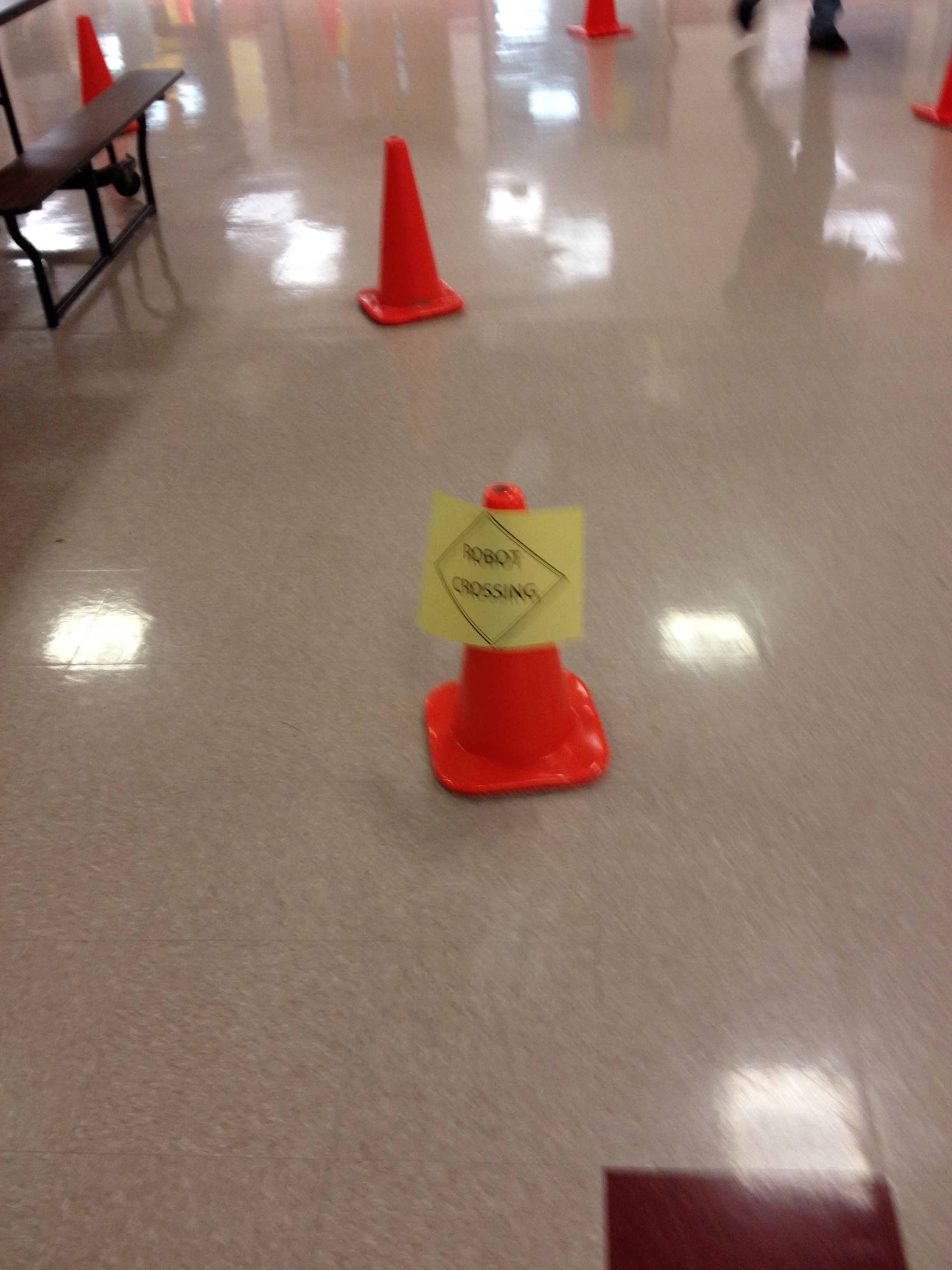
With my new job I haven’t been able to be as active on our high school’s robotics team this year. Not that I ever contributed much beyond moral support, but there is a very profound satisfaction at seeing teenagers concentrating on such technological marvels and building self-esteem. Yesterday was spent at a regional competition. Noisy, colorful, chaotic—it was like being a teenager again myself. I overhead engineers talking during the course of the day about the great technological marvels of the future made possible by robots. These people have no apocalypse hidden among their endless optimism. We’ve got robots on the ocean floor and rolling around on Mars, snaking into our bodies even down to the cellular level. No end of times here, only forward motion. I know that computers now define my life. If I miss a day on this blog I grow dejected; one of my biggest worries about going to Britain later this week is how I will continue posting from overseas. But I sometimes feel as if our love of technology will be our undoing.

Experts—of which I am not, I hasten to add, one—tell us that within a lifetime artificial intelligence will be indistinguishable from real intelligence. As I watched the robots playing basketball (this year’s FIRST Robotics challenge), I began to wonder about the motivation of our robot slaves. Humans are driven by biological and emotional needs. Robots, as far as we can tell, do not want anything. It is a vacuous life. Yet as the robots played basketball all day, I noticed they didn’t suffer the obesity problems so evident among humans, nor the weariness that accompanies having to awake before dawn to catch a school bus to the competition. They are built for a purpose and they stick to it. Even as I watched hours of competition, I began to miss my laptop—driven by my own emotional needs as I am. I begin to wonder who is really the slave here.

Last night my family participated in Earth Hour. We try to do it every year with a kind of religious fervor. Turning off all electronics, including lights, we sit in the dark and talk by candle light. There is a profound peace to it. As my daughter commented on how spooky the shadow play could be, I imagined our ancestors who had no choice but to rely on pre-electric light in drafty houses where real wild animals still prowled the dark nights outside. How quickly that would become a trial for us. The same thought occurred to me as I watched M. Night Shyamalan’s The Village again last weekend. We are helplessly tied to our technological advancement. We might like to get away from it all for a few days or weeks, or even months. But we want the comfort of knowing that the robots are waiting for us when we turn back to reality again. Perhaps no apocalypse is needed after all.

Robot crossing


A Tiger’s Tale

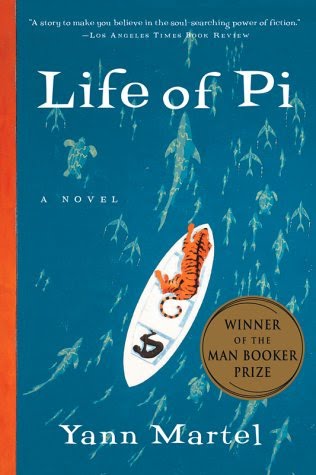
When my wife finished Yann Martel’s Life of Pi she said, “You’ve got to read this book!” Philosophical novels don’t often capture the interest of publishers or agents, but when they manage to slip through the fine-mesh mail-armor of the guild, they sometimes become best-sellers. Publishers often underestimate the intelligence and the hunger of the average reader. I was glad to have something so provocative to read on my long daily commute. Since the book was published in 2001 I won’t worry too much about spoiler alerts. It should come as no surprise that the biblical flood theme comes through a book where a zookeeper’s son is stranded on a lifeboat with various forms of wildlife. The most unexpected and endearing member of this menagerie, the tiger Richard Parker, is also the most deadly. How easy it would be to spin off in a Melvillesque direction of the beast as a representation of an uncomfortable God! Indeed, when Richard Parker scampers away when the boat runs aground, Pi laments how it was like losing God.

Setting the stage for this development is the tale of three religions. As a boy raised in India Piscine (Pi) is surrounded by traditional Hindu culture. On a family vacation he notices that atop the three hills are three houses of worship: Hindu, Christian, and Muslim. Curiosity draws the young boy in, and by the end of part one he is happily and concurrently Muslim, Hindu, and Christian, to the deep chagrin of the various religious leaders. They, coincidentally, all meet Pi with his parents one day in the park and each insists that although they encourage the boy’s continued membership in their tradition, he must drop the other two. Like any sensible person, Pi has chosen the safe road when it comes to conflicting religions: accept them all. It is only religion itself that deconstructs his triune belief system.

After his eventual rescue, Pi is questioned by insurance agents concerning the fate of the ship. They cannot believe his incredible tale, because they can only believe what they have seen for themselves. Pi asks, “What do you do when you’re in the dark?” An appropriate question for us all. This story is a parable about perceiving more than what can be seen. Tigers are hidden all around. Sometimes we call them Hobbes. Sometimes Richard Parker. They are protectors and they are dangerous. Some people call them God. In the end our protagonist is left without the divine presence that had kept him alive all the way across the Pacific Ocean. When the book is over, I think we would all admit, it is the tiger that we miss most of all.


Unholy Brides

Hollywood is seldom accused of being a religious venue. Indeed, carrying on from an earlier distrust of theater as idle entertainment, some Christian groups early on deemed movies as tools of the devil. (Some relaxed that harsh assessment when Cecil B. DeMille came on the scene and started offering biblically based epics.) Many directors and writers, to judge from recent vapid box office successes, consider action or titillation sufficient to draw in the dollars. Yet, movies have often proven to be an outlet for the intellect as well, with profound, intricate, and important themes unfolding against the silver screen. The movies we watch reveal much about who we are. A surprising number of them, despite early evangelical concerns, have decidedly religious themes or messages. My regular readers know of my confession to being one of the monster kid generation, and as an adult I re-watch those movies with senses attuned to their religiosity.

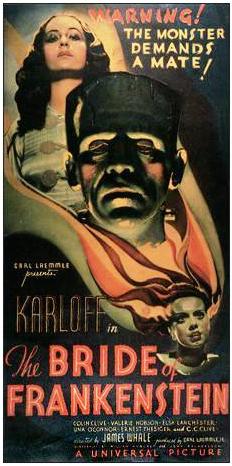
Last night, as I watched The Bride of Frankenstein, I was repeatedly reminded of the role religion plays throughout the film. From the opening lines of Lord Byron through to the monster’s moral judgment on humanity as he is about to pull the switch, religious language, symbols, and implications practically tumble over each other to get to the audience. The concept of life—the divine prerogative—being absconded by human scientists forms the skeleton of this story based on Mary Wollstonecraft Shelley’s original work. While Shelley can hardly be considered the poster-girl for religious scruples, her work, and its adaptation into this movie, bristle with the implications of usurping the divine. In the words of Dr. Pretorius, “To a new world of gods and monsters!”

The Bride of Frankenstein is not alone in this aspect of mixing religion and monstrosity. Hollywood of the 1930s was a money-hungry haven, but the classic monster tales that began to shape movie-watchers’ sensibilities often included religious themes. Dracula has his resurrection and aversion to crucifixes. The Mummy arises from ancient Egyptian ritual magic. The Wolfman suffers a gypsy curse. Frankenstein is the power of God incarnate. When the final reel is placed on the projector, we discover that God has rejected all these human attempts to ascend to the heavens. Hollywood gives us conventional religious endings. More recent and daring approaches have emerged, but seldom have they captured the American imagination like the creature features of the 1930s. The religious veneer may have been thicker in those days, but the underlying message could have chilled the blood of the finger-waving evangelists. Even the Bible, from the beginning, has its monsters.


Battle Billboards

Perhaps the oddest intangible accompanying democracy is the concept that all things are negotiable. Add to that a capitalist sensibility that everything has its price and even truth itself feels like a matter of debate. We see this all the time with Creationists so desperately wanting the Bible to the “true” that they twist science into a fairy tale noose from which to hang their literalist god. The tendency, however, does not stop with them.

Surely one of the most tense stretches of pavement in the country is NJ 495 leading into the Lincoln Tunnel. The aorta pumping countless metallic cells into the heart of Manhattan, drivers and passengers often sit motionless in it for seemingly endless periods to crawl forward like an inchworm entering the Olympics. It is there that Battle Billboards takes place.

I have followed the Atheist billboard development with some interest. In my limited experience with the Lincoln Tunnel, I have noted the digital billboard on the Jersey side bears the message of atheist.org near the major Christian holidays, so as Easter approaches the newest one reads “Celebrate Living Without God” to promote a rally on the Mall in DC. Both religion and science make claims of how to know the truth. Truth with a capital T should be non-negotiable by definition. The problem is that nobody has the Truth. We’re still trying to figure it out. Atheist.org holds a firm conviction that life would be better without religion. Clearly not everyone agrees. Clarity, it seems, is the chimera of debates over Truth.

A few seconds after the atheist.org ad flashes off the big screen, an ad for Wrath of the Titans (coming soon to theaters) flashes on. Irony can be sweeter than honey and as bitter as the Dead Sea. The most recent Clash of the Titans (2010) borrowed little from classical mythology beyond the names and large plot lines. An atheistic Perseus just doesn’t fit the classical taste. In the new film, Zeus—surely one of the prototypes for modern conceptions of God—is captured by Hades and has to be rescued by his unbelieving son. Could any movie be a more thinly disguised Easter story? Atheists? Wrath of the Titans? Which way to jump? Fortunately for me, traffic going into the Lincoln Tunnel in these lanes is one way. That’s the kind of certainty we all can live with.

Light from above or hopeless ambiguity?


Battle the Angels

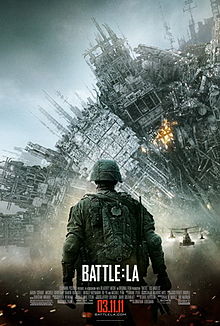
Over the weekend I finally got around to watching Battle Los Angeles. Now, I’ve never been a fan of war movies, but I do have a soft spot for aliens, so I decided to tough it out and see who won. I knew the historic event upon which the premise of the film was based took place in 1942, before flying saucers captured the American imagination. The official Air Force story suggests that old nemesis to our control of the air: weather balloons. Considering that Los Angeles was blacked out and ground forces lobbed 1,400 artillery rounds at the things, I wonder why the balloons at my daughter’s birthday parties never managed to last the night. In any case, the movie runs with the premise that aliens have taken over the city of angels and the U. S. Marines are the ones to get the job done when it comes to taking out aliens. (The Air Force, one expects, is too busy chasing weather balloons.)

Gratuitous aliens and science fiction action may be merit enough to get into this blog, but there is actually a more compelling reason. Back in my teaching days, I tried to demonstrate to students how deeply the Bible pervades our culture. When I taught those long summer and winter term courses, sometimes lingering four hours into the night, I would break up the inevitability of my lectures with a few movie clips to show them just how often the Bible shows up in films. Sometimes the cameo appearance is a matter of fleeting seconds, but when directors pay attention to every detail of a scene, we can be sure that Bibles don’t just show up by accident. Battle Los Angeles is no different. As our platoon is being air-lifted into the alien hot zone, one of the soldiers (I couldn’t figure out which one, since most of them get dispatched in fairly short order) is shown reading the Bible. The camera hovers there a second before pulling back to show the pre-battle chatter.

The viewer is probably supposed to be reminded that there are no atheists in foxholes, as the saying goes. Or it is a sign of how serious this is: before the big guns come out, bring on the Bible? In our culture the Bible has that kind of role. I recently read of a Catholic astronomer who was seeking alien civilizations in order to convert them to Christianity. The premise is as intriguing as it is arrogant. Human beings can be tenacious when it comes to matters of belief. In Battle Los Angeles, however, we speak with our guns and our missiles. But first we read our Bibles. Without wishing to ascribe to much intentional subtlety to the movie, this might be the underlying paradigm. Once the battle begins in earnest, the Bible never comes back into play. It is human ingenuity that wins the day, and perhaps the aliens are being taught to pray.


Map is Territory

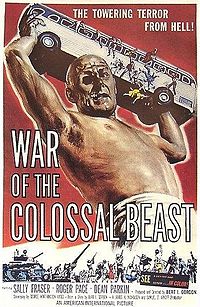
Far be it from me to challenge the established certitudes of the experts in academia, but I’ve been beginning to think maybe map is territory. This insight came to me from an unorthodox source (of course). I was watching War of the Colossal Beast over the weekend—among the corniest of corny 1950’s sci fi flicks. If you were born around the middle of the last century you already know the premise: a nuclear device has converted a man into a towering giant who resists all attempts to stop him or keep him under control. The reason that map and territory came to mind was that this 60-foot tall man (an apt companion for the 50-foot woman) could not be found by the authorities although he was terrorizing Los Angeles. Just as I was climbing on my high horse I realized that the problem they faced was communication. (And maybe they needed glasses.)

From the perspective of the twenty-first century and the vast network of instant communication (you can tweet your latest observation while on public transit, deep under the Hudson), map has become territory. There is nowhere left for the sixty-foot giant to hide. I am not the only one to speculate on the effect this shift will have on religion, but when we have become so intricately inter-connected, we seem to have squeezed the mystery out of life. Every trail has been blazed, every path has been trod. Old Ecclesiastes is laughing up his wizard’s sleeve. If a giant escapes among us its location will be texted across the territory second by nano-second. There is nowhere for us to hide either.

Our dependence on electronic media has changed part of the human race. It is easy to forget that in places not too distant, some of them even in the developed nations, there are human beings untouched by the revolution that has compressed map and territory. I have to wonder if their lives are better or worse for the ease that pervades our culture of flying fingers and ultra-dexterous thumbs. Avoiding the concept of the noble savage, I sense of kind of purity in the life free from the constant buzzing of 3G and 4G networks, wi-fi hotspots, and microwave towers disguised as trees. Theirs is a life where map is not territory, where being unplugged is natural and normal. It is a world where giants might hide in the night, and those who fear them may be all the more human for doing so.


Sacred Philadelphia

What makes a space sacred? There is no agreement on that issue, but it is clear that considering a specific location numinous, holy, or just special is something that even the most secular do. We trek to the places where something happened, maybe hoping for a personal epiphany or enlightenment. So yesterday I found myself in Philadelphia on the trail of Edgar Allan Poe. Like some other famous figures of the past, Poe was essentially homeless—no place claimed him (though now many do). Several years of his short life were spent in Philadelphia, and only one of his residences still survives there. On a pleasant Saturday it was clear that many others were drawn to this sacred space on pilgrimages motivated by diverse needs and curiosities. My family has gone on literary trips for many years, visiting the places of writers—for, at the end of the day, every piece of sacred writ has a writer.

Poe's house on Spring Garden

I can’t recall a time, after I began to read, when I did not favor Poe. Like some other inspirational figures he lived a short life, frequently rejected by his peers. Sad circumstances haunted him and he expressed them so well. His was a rare gift. Standing in his Philadelphia house, I guess I might have been hoping that, on some level, he might know that his life had touched mine. We all seem to leave an intangible part of ourselves in places we have been. Even the hardest skeptic of the “paranormal” will travel countless miles to come to some location of significance. There is no logical reason to do so. It is perhaps the most human of religious impulses. I saw no specters, heard no ghostly voices. But I saw and listened and wondered.

Writing is among the canon of sacred activities. It is taking what is hidden safely inside the confines of our minds and offering the opportunity to others to read it. Frequently it is ignored, lost in the noise. Life is too busy to sit down and read unless some teacher or professor assigns a task with grade consequences. We miss, however, so many opportunities to explore the legacy bequeathed to us by great minds. Our lives are driven by economics, not enlightenment. Poe died poor and largely unmourned in Baltimore after having called many locations home. Those locations are now shrines. I suspect he may have been very surprised to learn that over a century and a half later some people would attempt to follow in his footsteps for what can only be described as religious reasons.


Saints and Snakes

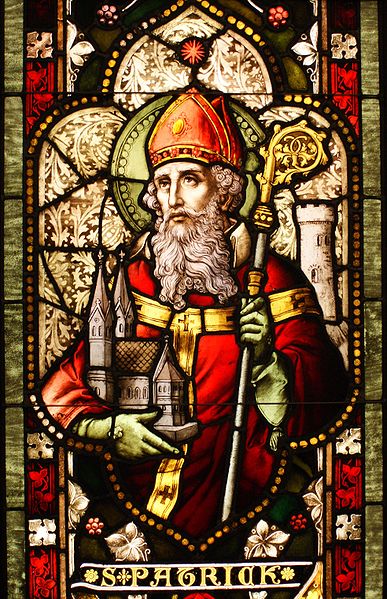
I am not now, nor have I ever been, Catholic. So why am I wearing green today? It could be that a drop or two of Irish blood courses through my veins from a stow-away great-great-grandmother, or the assurance that, as an American mutt some Irish must have gotten in somehow. Or maybe it is more than that. From my youngest days, even before I knew of my family history (and nobody had bothered to inquire), I still wore green on Saint Patrick’s Day. Getting off the bus at school and seeing so many people with otherwise so little in common coming together to wear shades of green on the same day was somehow inspiring and made me feel like part of something larger than myself. It was a day of fun, and decidely not one of doctrine or repressive decrees about women or homosexuals or even Protestants. It was a day of unity.

Can a day based on church mythology ever long remain a day of peaceful inclusion of others? In college I met militant Protestants who insisted that orange be worn on Saint Patrick’s Day to stand in solidarity with the Protestant minority. I heard news reports of gays being excluded from otherwise festive Saint Patrick’s Day parades in major cities. Maybe the snakes driven out of Ireland have lodged themselves in the souls of those who plant divisiveness—but it occurs to me that I’m being unfair to the snakes.

In a tiny time capsule of twenty-four hours, Saint Patrick’s Day is a miniature paradigm of the ambivalence that we call religion. At its best it draws people of all backgrounds together for a celebration as large as life itself. At the same time, it is the ultimate in exclusion—the statement that we are special in a way you are not. Green, the color of Ireland, is an apt symbol for the day. In the planet world, the large swaths of earth seen from high above, green is the color of life. Each spring the shooting forth of green is eagerly awaited as the plant kingdom reveals to us that a refreshing change is in the air. Among many animal species, however, green stands for illness, and perhaps impending death. So here I am wearing green—not Catholic, not plant, not wishing to make unequal divisions. It is just like a religious holiday to celebrate ambiguity.

What's love got to do with it?