Blazing Forest

Back in 1996 an angel was on the big screen. In a manner of speaking. Michael, starring John Travolta as the archangel Michael, may not have been an instant classic but it did have a memorable line or two. The image of a smoking angel had been contrived by Van Halen over a decade earlier, but the idea of the prince of the army of Yahweh being a guy just like the rest of us was strangely refreshing. No Park Avenue deity this. When the reporters first meet Michael and wonder if he’s the real thing, one suggests tugging on his wings to see if they’re real. Michael responds by asking if he should pull the reporter’s privates to see if they’re really attached. His companion comments, “An angel that says ‘pecker.’” While the very idea of “bad words” is an unusual one, it is well-nigh a universal. In just about every culture there are words or phrases that just aren’t uttered in polite company. Those who can’t control their mouths, suggests the book of James, can’t control their lives. So it is with a kind of perverse wonder that I read about the bullying bravado that issues from the lips of New Jersey’s governor.

Don’t get me wrong. I never fault anyone for speaking like they were taught. I was raised in a blue collar family and at times the talk could get pretty blue as well. I would, however, point out that you’ll not find a student I taught over my two decades in the classroom that every heard me cuss in class. It is a matter of standards. Emotions, those great clawing monsters inside us, rage to escape. The building blocks of society—restraint and control, and dare we even wish? subtlety and refinement—are signs of civilization. Some of us were taught to leave name-calling on the playground. I am profoundly saddened when politicians believe they are the best America has to offer when in reality they reveal themselves coarse, vulgar bullies. Enter Chris Christie.

In a public venue on Wednesday New Jersey’s governor called the chief budget officer for the Office of Legislative Services, “idiot,” “jerk,” and “numbnuts.” Here’s where we see Tea Party values incarnate. Belittling others, especially in a public forum, reveals a nature that should make all civilized civilians hang their heads in a surfeit of collective shame. America has come to this? Admiring bullies and slashing and burning services for those who need a little communal support? And he has been posturing for a vice presidential nomination. And angels will be smoking cigarettes in the wings. A President/Vice-President who says “numbnuts?” America deserves far better than this. Where is Michael when we need him?

Take that, you #!@&$!


Scary Monstrances

I can’t help myself. I’ve always found monsters fascinating. Now that I’m mostly grown up and am expected to have a modicum of respectability, I try to read academic books on monsters so that I can legitimate what would otherwise be puerile juvenility. David D. Gilmore’s Monsters: Evil Beings, Mythical Beasts, and All Manner of Imaginary Terrors was my latest foray into the forest. As I have come to expect, just pages into the book the first reference to religion emerged. This connection between monsters and religion is not Gilmore’s central theme, but it does recur at several points in the book. I especially enjoyed his discussion of Spain’s Pentecostal dragon. The Tarasque, named after its host town, is a medieval dragon that is still feted to this day in some locations. Considered to be symbolic of the sins of humankind, it accompanies either the holy day of Pentecost or of Corpus Christi. This connection between the church and monsters took me back to my first experience of Corpus Christi.

Raised as solid a protester as a Protestant can be, I had a difficult transition to some aspects of Anglicanism. The ceremonial was great, but some of the popish blandishments I could never quite accept. When a member of Boston’s famed Church of the Advent, the rector asked me to be a torch bearer on Corpus Christi. This involved processing outdoors onto Beacon Hill in full drag (or cassock and surplice, as I’m sure the parsimonious will correct me) to accompany the holy sacrament, carried as it turns out, in a monstrance. The idea that looking at a piece of wafer-thin bread on public display could somehow mediate a divine blessing, I never understood. It felt as much a fairy tale as the dragons of Spain. Monster or monstrance?

Gilmore concludes that monsters are people’s projections of their deepest unresolved issues. He may be right. One of his observations, however, struck me. He suggests monsters predate even gods in the human imagination. I tend to think they entered that gray space at the same time. Our minds have always told us that there were creatures out there to fear. Some of them, we hope, are good. Others are clearly evil. Monsters are difficult to explain in a world created by a benevolent deity. It is perhaps no mistake that Zoroastrians conceived of Angra Mainyu as monstrous. Divinity and diabolism could be fused into one being. There is a profound lesson here, for those able to read. Monsters are among the earliest projections of human imagination. And they remain forever with us.

Angra Mainyu; god or monster?


Children Shall Lead Them

One of the perks of moving to New Jersey was landing in a town with strong support for the arts. Every time I attend a middle or high school concert, I consider how the old image of painful evenings of parents patiently pretending to enjoy the music has ended. The kids in this town could be professionals. If I close my eyes, I forget they’re all under nineteen. Last night at a school concert one of the pieces was “Always Look on the Bright Side of Life,” Eric Idle’s chestnut from the Life of Brian (now featured, I hear tell, in Spamalot). I first saw the Life of Brian with some trepidation while in seminary—I had been sounded warned that it was a profane movie, making fun of Jesus. Considering that all the actual references to Jesus in the movie are quite positive, I eventually realized what all the fuss was about. The movie doesn’t make fun of Jesus, it does, however, show the laughable nature of those who follow a religion blindly. This, I gather, was the real root of the problem.

Next to this fun piece, the concert also included several pieces taken from originally sacred contexts such as Mozart’s Dies Irae and settings of Veni, Sancte Spiritus and Ave Maria. Spirituals, likewise, are a perennial favorite. Performed along next to these pieces of religious origin were also decidely secular pieces such as “Scarborough Fair” and the Beatles’ “Hello, Goodbye.” In concert the sacred and profane blend beautifully. Perhaps there is a paradigm hidden in plain sight here. Religions need not be defensive and unbelievers need not attack them. The world is surely big enough for differences of opinion.

Music has a power that sometimes frightens me. I don’t often address it in my blog because of how much it affects me. Theorists often note that music is part of nearly every religion ever invented—we know that something special is going on when we hear it. And music has the ability to move large groups of people simultaneously. I’ve not attended many professional concerts (the last one was Alice Cooper in Atlantic City back in 2008), but no matter how secular the artist the experience is profoundly spiritual. I’m not sure I can adequately define what that means, but when it is felt there is no mistaking it. So maybe that’s why school concerts have such power. It seems that schools that support the arts also tend to have excellent academic records as well. The truth is hidden in plain sight.


Avengers and Gods

The Marvel Comics Universe is a complex blend of juvenile and adult themes. At the suggestion of one of my readers (thanks, Erika!) and the urging of my family, we went to see The Avengers this weekend. Having grown up in my own complex circumstances (first of all, fundamentalist—therefore not prone to too much secular material, and secondly, of humble means—therefore not prone to too much material material), I was aware of only some of the group. I’d read Hulk, Iron Man, and Thor comics, and I knew who Captain America was, but I never realized they’d teamed up, along with Black Widow and Hawkeye, to form the Avengers. I guess I just missed that part. The amazing integration of gods, performance-enhanced humans, and technocrats, makes for a fascinating consideration of the boundaries of good and evil.

This became clear when Captain America first encounters Thor in the film and is told he is a god. His response, straight from Tea Party rhetoric, is “There’s only one God, ma’am, and he doesn’t dress like that.” Clearly a man from the early twentieth century would have expectations of Yahweh’s dress code. It would be a white robe, no doubt, but as the gods Thor and Loki duke it out, Yahweh is nowhere to be seen. The movie also toys with the concept of immortality. Dr. Banner, under the guise of the Hulk, is unkillable. In a poignant moment he admits having attempted suicide, but his alter-ego proved indestructible. The cheer of the audience was palpable when Loki tells the green guy, “I’m a god and I won’t be bullied by—” only to be divinely thrashed by the Hulk who responds with the word, “Demigod.”

Over the past several years I’ve noticed that hero movies have begun to declare Gotterdammerung, the twilight of the gods. No longer are supernatural beings the ones who rule humanity. Heroes are now in charge of their own destinies. And yet, that old time religion is still present. As Tony Stark is about to attack one of the wickedly cool flying leviathans he asks Jarvis “Are you familiar with the story of Jonah?” I wondered just how many in the theater got the reference—how many, like Captain America at the comment of flying monkeys, got the joke? When the movie was over, and I was convinced I wouldn’t have to go to work on Monday (I was sure my building was one of those destroyed in the mayhem), I pondered the resolution. The gods took their dispute to Asgard, out of the realm of humans. This was, after all, a dispute between deities. And humans, as so often happens in such scenarios, were simply caught in the middle.


Free Tea

I first became aware of The Town Hall, I have to admit, through the Christopher Guest mockumentary A Mighty Wind. In the movie, three aging folk groups are brought together for a concert in Town Hall to honor the memory of one of their early promoters. When I began to walk past Town Hall on my way to work, I grew curious about its history. This curiosity was piqued by the scriptural quotation engraved on the façade: “Ye shall know the truth and the truth shall set you free.” New York City is an architect’s smorgasbord and I am often intrigued by the little gems I spy here and there. I discovered that The Town Hall was originally a political venue built by The League for Political Education, an organization sorely needed now. Built because of the need for a public space to discuss the Nineteenth Amendment (which the League supported), Town Hall was originally a venue to keep the public informed.

The Nineteenth Amendment—which the Tea Party seems to have overlooked, along with much of what we recognize as democracy—was drafted by Susan B. Anthony and Elizabeth Cady Stanton. It took congress only four decades to ratify it. Women were finally given the right to vote. Stanton was noted for her suffrage activities, including the production of The Woman’s Bible. The idea that an entire half of the human race should share the rights of the other half seems to have required a building erected to educate the public. Of course, there were moments when even The Town Hall couldn’t bear the words spoken on stage, as when Margaret Sanger was arrested for speaking about contraception there in 1921. I suspect there were Tea Partiers in the audience.

The same stage also provided a venue for Edna St. Vincent Millay to have her poetry reading breakthrough. Richard Strauss and Sergei Rachmaninoff performed there, as did any number of other greats. Truth may take many forms. Certainly human equality is as basic a truth as can be found. Art and poetry are equally as parsimonious, in the formal sense of the word. These things that we value are the very aspects of culture that the Tea Party would like to curtail. Thankfully there have been believers in the truth in the past who have been willing to construct monuments to sanity. And I can’t help but think that there would be even more of them if we still had a League for Political Education to help promote the truth. Without it, as it says in stone, we can never be truly free.


Stormy Weather

The privileging of one literature over others is problematic. Of course, the entire industry of biblical studies is built around such preferential treatment. And so is a large share of Christianity. I’ve just finished reading William H. Jennings’ Storms over Genesis: Biblical Battleground in America’s Wars of Religion. For someone who has taught Genesis before there wasn’t too much new material in here, but it strikes me as a very good primer for those who wonder about why the issues of gender inequality, global warming, and evolution remain firmly entrenched in evangelical minds, and therefore, our society. Just the first three chapters of Genesis, as Jennings points out, have led to the much of the irrational, at times inane, arguments that just won’t go away. Tea Party kinds of issues.

At the base of it all is the concept that Genesis somehow represents the way the world is supposed to be (rather than the way it actually is). As if seconding my choice of bus reading, The Economist recently published an article on Glen Rose, Texas. I’ve known about Glen Rose since I was a child. There, in a bizarre twist on the Flintstones, locals claim human and dinosaur footprints intermingle in a nearby creek bed. As the article points out, some locals see this as evidence of young earth creationism—seems Fred and Wilma missed the ark along with Dino. For decades paleontologists have tried to explain that the “human” tracks are actually dinosaur tracks as well. Given their size and stride, if they were human Adam must’ve been a giant. Despite the science, the myth persists. Even the article in The Economist doesn’t give the scientific answer.

It would be difficult to find a book more influential than Genesis. It would also be difficult to find one that is less scientific. Anyone who has studied ancient societies knows that they delighted in telling outlandish stories to explain the origin of the world. After all, there were no eyewitnesses. No channel 11 helicopters hovering overhead to bring you the story live. It all comes from mistaking a good story for a good book. In an era when evidence of evolution literally abounds, we still have nearly half the population of this technological nation trying to make room for the Valley of the Gwangi. Jennings may not hold the answers to all the problems Genesis raises, but if people would read Storms over Genesis, we might be able to afford a little more energy to solving global warming rather than running from dinosaurs in Texas.


Living with Art

A day spent among art can be more spiritual than a month of Sundays. Few become rich by being artists—in fact the opposite is society’s expectation. The masterpieces artists leave behind then become among the most valuable of all human creations when their often tragic lives end and it is recognized that no more genius is forthcoming. As a lifelong dabbler in the arts, I know that nothing like a perturbed state of mind serves to bring about the pieces I like best. Seeing the art of others, however, is a deeply satisfying experience. In a pre-Mother’s Day celebration, we met friends yesterday to revisit Grounds for Sculpture in Hamilton, New Jersey. We’ve grown accustomed to gray skies this spring, so the fact that it was sunny and warm came almost as a divine sign that this was a day to spend outdoors among the artwork of both humans and nature.

As rational as we strive to be, emotion remains our main motive force. Psychologists and neuroscientists, approaching the human mind rationally, inevitably conclude that emotion and reason are hopelessly entangled in the psyche. Not only does this explain the persistent draw of art, but also of religion as well. If possible, pull back and try to listen to someone, anyone, describe their religion in rational terms. How quickly it breaks down! And yet, reactions against a purely scientific—and doubtlessly empirically correct—explanation of the origin and development of life on earth lead to very hostile reactions. For many such explanations are not emotionally satisfying. We need a little more magic in our imaginative diet. Art allows us to indulge without embarrassment in our need for emotional expression. In the art galleries I’ve seen, whether Edinburgh, London, Paris, New York, Milwaukee, Corning, or Hamilton, there have always been hundreds of others seeking something there as well.

What we are seeking can’t be purchased with money, and it can’t be grasped by greedy hands. It can only be held in receptive and hungry internal places—the space pre-scientific individuals called the soul. And there it will remain. The first time I saw the Mona Lisa and the statue of winged Nike will never leave me. Yesterday, wandering the acres of art called Grounds for Sculpture, once again artistic expression claimed another willing victim. In our money-fevered world where “real life” is squandered chasing material goods to outstrip everyone else, art, the spiritual quest, lies quietly awaiting the weekend. The time people value most. And those who spend that time among art will be the most blessed of all.


Lost Purpose

In a move that demonstrates its love of Inquisitions, the U. S. Conference of Catholic Bishops is officially investigating the Girl Scouts. Seemingly forgetful of the fact that a bunch of unmarried men with a record of protecting pedophiles is not above scrutiny itself, the Catholic Church now seems to think it has the right to police other organizations. The concern these men show for what goes on in other people’s underwear is beyond perverse—WWJD indeed? Both my daughter and my wife are Girl Scouts, and so I know it is not a perfect organization. I also know that it lives up to its goal of offering girls the chance to gain self-confidence and become empowered women. Women who are not trodden under the heavy feet of doctrine are tied to stakes and burnt, in good old-fashioned Christian charity. And why the fuss among our Roman companions? They’re afraid because of demonstrably false allegations that Girl Scouts “associates with” organizations to which the church also objects.

I was a Boy Scout for a few years. Already in those days jokes of homosexual leaders—and a few actual cases—were de rigueur. Where was the Catholic Church? Yet this year alone they have made strident moves against their own nuns and now, again, against the Girl Scouts. Where two or three women are gathered together, the Catholic bishops will begin to pick up stones. Better not read what Jesus is scribbling in the dirt. Some of my readers have problems with my biblical interpretation. I will now ask if anyone can produce a biblical prooftext for the church’s mandate to oversee the organizational structure of secular, non-profit, non-religious associations. What does the Bible say about that? Clearly what the Bible does allow sexually favors men. Where your testosterone lies, there will be your heart also.

All of this belies a lost of purpose for the church. Like the empire whose epithet it shares, the Roman Catholic Church is perceiving paranoid threats from every quarter. The purpose of Christianity, at least according to a guy called Jesus, was to help the poor and underprivileged and to love all people. Even those who crucify you. Now the message the headlines declare is that any organization offering women sexual autonomy will be investigated by the bishops. It matters not whether any allegations have a basis in fact. Christianity’s purpose? To assert male authority. To prevent any organization of women from achieving confidence or equality. To subjugate an entire half of the human race to the will of a single man. Does that sound like the true purpose of religion to you?


Egyptian Afterlife

The day after Maurice Sendak died, Google’s doodle celebrated Howard Carter’s 138th birthday. Although Howard Carter’s name may not immediately ring a bell, his work still affects all of us in the western world in profound ways. An inspiration for both Indiana Jones and Lara Croft, Carter is best remembering for discovering the intact tomb of King Tutankhamen in the Valley of the Kings. This discovery generated a neo-Egyptian revival in western culture, notable in the Art Deco movement and the Egyptianizing architecture it inspired. As Google’s doodle shows, we are still reaching back to ancient Egypt to find some kind of meaning for ourselves today. In a world of gadgets and hi-tech baubles, we still cast an envious eye towards the dwellers along the Nile.

It is difficult to assess why the Egyptians are so enduring. They were, after all, polytheists and occupied a country that is now part of the “Middle East.” It is, however, a mystique that they held even in antiquity. Raiders and invaders who came to Egypt ended up trying to walk like the Egyptians rather than attempting to force them to follow foreign ways. The ideal in ancient Egypt was a stable cosmos. In a perfect world Egypt would be an island of calm and tranquility. For this they had their strong kings to thank, and they spared little expense to build him tombs that would remain the largest buildings on earth until Eiffel began to tinker with steel.

Perhaps the characteristic we most admire about the Egyptians is their unshaken confidence. Assured that they were in the favor of the gods, they took that assurance to the grave. Even as the neighboring Israelites still confined the dead to a gloomy underworld, the Egyptians were constructing an afterlife that would keep the good times rolling as long as time itself survived. A great deal of effort was expended on the pampering of the dead. Funnily enough, in our Christianized nation the confidence of divine pleasure only seems to be enacted in the limiting of the rights of others. And when it is all over, the righteous still fear death. Google has an almost unlimited choice of inspirations for its doodles, but Howard Carter seems especially appropriate on a day when we remember those who are willing to go to dangerous places where the wild things might lurk yet.


Vampire Jesus

It was a dark and stormy night. Well, so far that could describe most any night in April or May of this year. Anyway, I had just read about vampire-bots for the first time. Robots, like all machines, require a power source. Those I’ve witnessed up close require rechargeable battery-packs that are surprisingly heavy. I’d read that some robots were being designed to consume their own energy sources—mechanical and chemical eating, if you will. One dreamer figured that blood could work as a source of energy. A robot could be designed to take energy from blood, and thus arises the concept of the vampire-bot. I don’t think such an insidious machine was ever really built, but it is theoretically possible. It is also a reflection of a biblical idea—the life is in the blood. Ancient people tended to associate life with breathing. With no CPR, an unbreathing body was a dead body. Blood obviously played into the picture too, but precisely how was uncertain. Clearly a person or an animal couldn’t live without it. To say nothing of robots.

One of those dark and stormy nights I watched The Shadow of the Vampire. Surprisingly for a monster movie, Shadow had been nominated for two academy awards. Not really your standard horror flick, it is a movie about making a movie—specifically Murnau’s Nosferatu, the classic, silent vampire movie that really initiated the genre. The actor cast as Count Orlock, however, is really a vampire. The premise might sound chintzy, but the acting is very good with Willem Dafoe making a believable Max Schreck (vampirized). Stylistic rather than gory, the story plays out to the fore-ordained conclusion and the vampire disappears in the cold light of dawn.

When I was an impressionable child I was told what is likely an apocryphal story about Leonardo da Vinci. The story goes that the man who posed for Jesus in the Last Supper was also the model for Judas, after living a life of dissolution. Willem Dafoe, of course, famously played Jesus in Martin Scorsese’s Last Temptation of Christ. From Jesus to vampire. Both characters are bound by the element of blood. Christianity still celebrates the shedding of divine blood symbolically while the vampire takes blood (also symbolically). Although the vampire cannot endure the sight of the cross, the same man effectively played both sides of the mythic line, almost as if the apocryphal story came true. There are implications to consider here, and not all of them insinuate Hollywood. On these dark and stormy nights, we have something to ponder.


Rite and Wrong

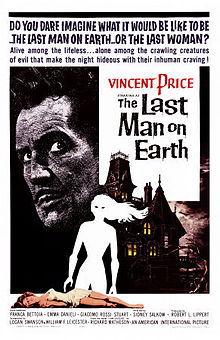
Anyone who’s never had anything very weird happen to her or him, raise your hand. Hmm, I thought so. Strangeness, whether prevalent or simply a unique event, is part of life. It is when we turn to explanations that the religious side of the equation suggests itself. Now I have a confession to make. When Borders was going out of business last year, I was in mourning. Those last poignant hours in my favorite bookstore I wandered the aisles picking up the books left behind by others, many of which I would not have otherwise purchased or read. One of those books was The Rite by Matt Baglio. I had seen the hype for the movie, and although the idea of possession terrifies me I’m not sure there’s anything here that can’t be explained by the likes of Carl Sagan’s Demon-Haunted World. Still, riding through the flickering lights of the Lincoln Tunnel on a bus on a gray and rainy morning, literal shadows of doubts creep in.

There is no doubt that events happen to us that seem to defy explanation. There is also no doubt that the enormous wealth of Christian mythology taken literally by Baglio defies all but the most gullible of readers. The problem is the black box. Nobody sees what goes on inside the locked chamber where the exorcist practices his art. Yes, it is a manly enterprise since the Catholic Church won’t admit of women priests. This was one books that left me tottering between what I know to be true and that shadowy place where doubts dwell. It is utterly certain that our perspective helps to determine what we see. A priest in a stuffy or chilly closed-off room believing a demon lurks therein will see the signs in the behavior of the victim. Throughout the book I kept pondering how so many possessed people lived in heavily Catholic Rome while in locales with more mixed religious traditions the phenomenon is rare.

Perhaps the most disturbing part of the story is the fact that Baglio readily admits: most of the possessed are women. In a religion where women have been marginalized as a matter of course from the early days, can this really be a surprise? And when the exorcist, a celibate priest, experiences sexual arousal how else can he interpret it but as demonic? The human mind is a fascinating system, capable of launching a body into stunning, adrenaline-induced feats of strength and endurance. It conjures gods and demons. And it can make a grown man cower on a dark and windy night with stories of possession racing through his head. I had a difficult time believing much of what I read in The Rite, but I do think perhaps it is now time to make a date with Carl Sagan. Lighting a candle in the dark is a very human thing to do.


Bleak Visions

The day was leaden and rainy. Hopes for seeing the sun over the next several days dim. I had been warned about this, but once my mind has settled on vampires, they’re hard to resist. The reviews said Priest, as a movie, was full of cliched dialogue and predictable outcomes. This is true. But still, it is perhaps the most religious vampire movie ever made. While some have doubted my analyses of Underworld and other vampire films, Priest is set in a Pullmanesque world dominated by a church that has lost its belief in vampires. In fact, the civilized world, in scenes reminiscent of Blade Runner, owes ultimate allegiance to the church. Based on the graphic novels by Hyung Min-woo, the post-apocalyptic world of Priest presents an over-industrialized society where humans live in walled cities (ironically, Jericho has no walls). Vampires, more fierce than any Count, even by fifteenth-century standards, rip humans to shreds, but have been forced into reservations by the warrior priests. Their weapons are cross-shaped, but there is otherwise no reference to Jesus in the movie—only an amorphous “God.”

Despite the endless tropes, “a vampire killed my brother,” “the Priest is her father,” and endless chatter about the nobility of sacrifice, the movie is strangely compelling. Visually it maintains the appeal of a place somewhere between Planet of the Apes and the Book of Eli. And something appeals about priests who are willing to fight evil rather than sit around arguing about whether women should be allowed to join the movement or not. Keeping with modern proportions, we see only one female priest and none among the Monseigneurs, but she is the one who actually stops the vampires. And these are vampires that have evolved into the blind, naked denizens of the night who kill, apparently, for the sheer joy of it. The only article of faith the church can muster is, “if you go against the church, you go against God.”

I wonder if anyone in the world of religions is tracking how society perceives them. Religions once stood for our noblest aspirations, and our humblest weaknesses. Like bad caricatures from the movies, religious organizations don’t shy away from the desire for ultimate power. In His Dark Materials and in Priest, the church is content with nothing less than total domination. This is not missionary zeal, but good, honest power-lust. Not all religions are like that, of course. Still, there are those who perceive them that way. Maybe it is my own insecurity, or maybe it is the fact that I’m seldom convinced I have the answers, but I can’t help but feel the thrill of justification at the rebel who maintains conviction to the ideals s/he holds deeply. It takes no backbone to enforce obedience when might is on your side. But only those who have faced the vampires personally know who the real enemy is.


Final Flight

Back in the day before CD players, let alone MP3 files, my mom had a squat, boxy rectangle of a cassette-tape player. (Remember, I am a student of ancient history.) The cassettes we had were home recorded, scratching and hissing like a disgruntled cat, but they were the latest in technology. And, of course, they were religious in nature. One particular tape I still remember with terror. Narrated by a optimistically doleful bass male voice, it recorded the events surrounding those climbing aboard a plane bound for heaven, along with authentic jet noises. It was, of course, a thinly disguised metaphor for death, something I realized even as a child. As the passengers climbed aboard, anticipating that meeting with Jesus, I trembled in fear. They were all about to die.

I have never been particularly afraid of death. Not that I’m in a hurry to go there, but I have always sensed it as inevitable and therefore not worth worrying over excessively. I was one of those who grew up thinking quite a lot about it, viewing it from different angles, trying to make sense of it. I still do. While I was in England, Time magazine ran a cover story on Heaven. Now that my feet are back on the ground, I have been reading the story with interest since I’ve just been spending several hours on a jet in the sky. One of the most surprising elements in the story is the fact that some evangelical preachers are beginning to inform their flocks that heaven is what we make it here on earth.

This may not sound shocking to you, but having grown up evangelical I knew that the only reason we behaved so well all the time was so that we could get into Heaven when we died. This was the economic basis of salvation—you paid for Heaven in good deeds and correct belief. Not that you exactly earned it, but you did invest in it. This was the defining characteristic of Christianity. The suffering that is so obvious in the world (I saw three homeless men curled up together inside the Port Authority Bus Terminal just this morning) can harsh anyone’s paradise. The traditional “Christian” response has been to look past that to a shimmering, if imaginary, kingdom in the clouds. I am very surprised that some evangelical pastors are willing to risk their entire campaigning platform in order to help those in need. It’s getting so that it is hard to tell which way is up any more. Maybe that’s what happens when you spend too long on a plane bound for a mythical destination.


Sutton Courtenay

Sutton Courtenay lies sleepily outside the bustling business complex known as Milton Park. Over my work time at Routledge in the United Kingdom, I have been immersed in the frenetic world of academic publishing. Putting a book together and selling it may seem a simple prospect, but in reality it involves many people at multiple stages who specialize in everything from writing content to ensuring that the four-color print of the cover looks just right. Sometimes working in publishing one can get so close to the trees that the forest really does become invisible. So it was that a friend of mine took me to Sutton Courtenay over lunch one day. The hamlet was very quiet. Next to the clattering pub—the only real sign of life here in midday—stood the gateway to an abbey long decayed to dust. Iconic thatched roofs and brilliant grassy greens make this place seem very far indeed from the negotiations and dealing that take place just down the road in Milton Park.

In a silent cemetery dotted with yew trees just behind the twelfth-century Norman All Saints’ church, rest a couple of very influential people. Lord Asquith, sometime Prime Minister, holds the most prominent place. A few paces away in an unassuming grave are the remains of Eric Arthur Blair. Unless you knew his penname, you wouldn’t be aware that you were in the presence of George Orwell. Orwell never lived in Sutton Courtenay. When he died in 1950, requesting to be buried nearest where he died, there was no room in the interment grounds. Millions of people live in London and millions have died there. The image conjured in the mind is distinctly Orwellian. Sonia Brownell, his widow, with the help of David Astor, found a resting place in Sutton Courtenay.

Today one would be hard-pressed to find a school child in Britain or the United States who has not been assigned to read one or both of Orwell’s prescient novels. Orwell’s anti-fascist views were often eerily prophetic. In 1949 1984 seemed a long way off. As the latter year came and went, some heaved a sigh of relief that Big Brother never arrived. Those who labor away in busy office parks, those who attempt to board a commercial airliner, those who live in cardboard boxes on busy city streets, and those who pay taxes so that the wealthy won’t have to, however, know that Big Brother is indeed alive. He has grown crafty with age and is well adapted to camouflage. He is known by many names: Free Market, Laissea Faire, Unrestrained Capitalism. One place he is not to be found is in a quiet churchyard in Sutton Courtenay contemplating a simple stone to a man named Eric Arthur Blair.


Pharaohs of Stonehenge

Stonehenge on Easter Sunday is a remarkably popular place. Tourists from all over the world crowd the pathway around those ancient stones as if they hide some arcane secret in their tumbled, massive form. Stonehenge may be the most iconic location in Britain, surpassing even such modern structures as Westminster Abbey and St. Paul’s Cathedral. Far pre-dating the art of writing, the purpose and nature of Stonehenge involve considerable speculation, but given the unquestionably costly years of labor required to plan, dig, transport, and align the monument, it stands to reason that it must have been religious in nature. One of the standard—perhaps even hackneyed—critiques of archaeological interpretation proves true in this case: if you can find no sensible reason for it, it must be religious.

The main phase of Stonehenge, the one that incorporates the iconic monoliths instantly recognizable today, came under construction some six hundred years after the pyramids of Egypt. In the case of the latter we know their language and we know the motivation behind the structures. More than just buildings to demonstrate the power of the king, they were celestially aligned portals to the afterlife. Although the Egyptians had no word for religion, the pyramids were as religious as the great temples that would soon surpass them in the energy consumption of the empire. In England of the time, we know no names, nor even an accurate assessment of the “nationality” of the inhabitants. Even nations, as we know them, did not yet exist. The builders of Stonehenge surely had something close to our concept of religion in mind. Otherwise, like the great cathedrals of millennia later, it would have been simply a waste of time and resources.

Wiltshire Downs on the Salisbury Plains is studded with ancient locations of significance. On the near horizon, among the eternal green of the English countryside, are dozens of barrows where people of unknown significance are buried. In that respect Stonehenge is emblematic of the individual struggle for eternal recognition. The name Menkaure stirs instant recognition among few. His pyramids stand as eternal monuments to a decidedly faded greatness. Stonehenge and its environs hold the remains of unknown numbers of unknown nationality bearing unknown names. It symbolizes the fate of us all. Yet on Easter, many believers in resurrection crowd in and gaze in awe at a pagan monument to human striving that no one truly understands.