Tattered Dreams

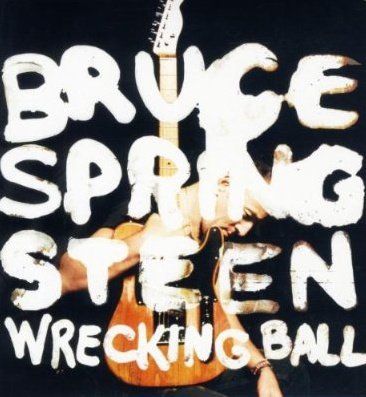
If I sometimes wax rhapsodic about Bruce Springsteen, it is partially because the world is sorely in need of believable prophets. I’m not the only one to notice this phenomenon. Writers on American culture and religion frequently cite Bruce, and his message has been called everything from a prayer to a gospel. The fact is he, like the best of prophets, is one of us. To those of us who grew up in working class families, Bruce seems like the torchbearer who encourages us to keep going. We may end up still in the darkness, but we’ll be a little closer to the light. Sunday’s paper has a review of Bruce’s latest concert tour kickoff, and there is some sadness there at those who’ve been lost. Although I haven’t yet had time to listen to Wrecking Ball, I did read the tribute to Clarence Clemons in the liner notes. It reads like a secular liturgy.
The word “liturgy” means “the work of the people,” or some such concept. And that is what Springsteen has always projected, the honor, the angst of the working class. There is trouble in paradise, from Cadillac Ranch down Thunder Road to My Hometown. Through it all, despair is always tinged with hope in, for lack of a better word, resurrection. In times when many artists focus on the escape, Bruce reminds us that hardship is real. Escape may be a possibility but even Born to Run still ends in New Jersey. Unlike many, the Boss is not willing to give up on this humble state. Perhaps the most diverse mix of people in the country, New Jersey is the American dream, scars and all.

Although his music has brought him fame and wealth, Bruce has not forgotten whence he came. Social inequality has been highlighted throughout his oeuvre, from the late 70’s on, and guess what? We’re still there. Like children of alcoholic parents we’ve grown used to promises being made that will never be kept. After reading what contenders for the presidency are saying, I cower, shivering with fear. I’ve never been one to believe a good beating is the way to solve anything. How is it possible that we’ve come so far only to have left so many behind? The American dream is indeed tattered, a mirage thrown to those slowly dying of thirst. If we’re going to make it through difficult times, we’re going to have to do it together. I guess that’s why I keep coming back to Bruce. In a world where lies are the coin of the realm, the words of true value can still be found, even in New Jersey.


Sh*t Apes Say

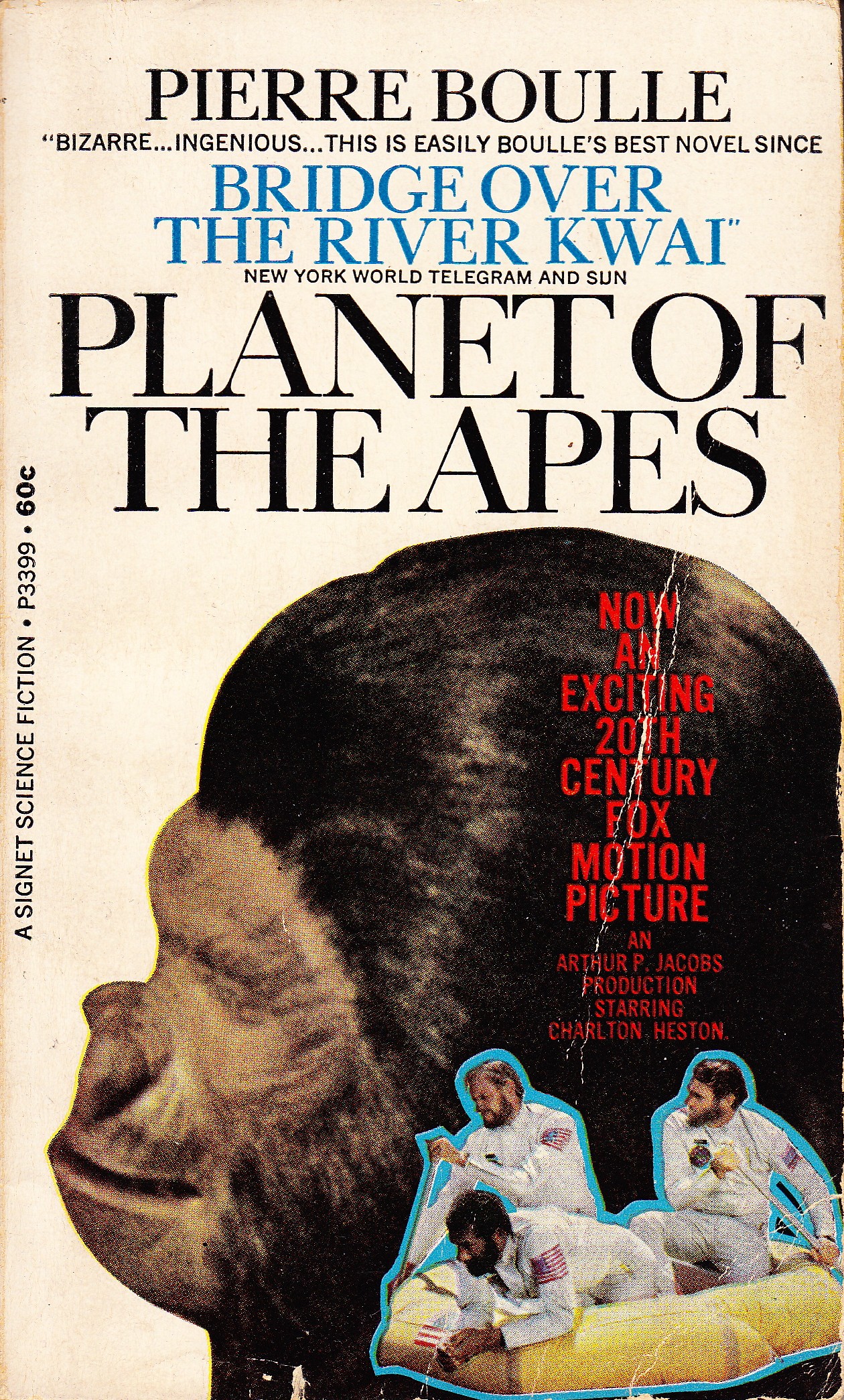
Knowing from experience that when I stay alone in a hotel, despite my best intentions, I will get bored and end up watching Mudcats or Dual Survival until my brain feels like a boiled egg, I anticipated my trip to California. I packed Planet of the Apes, the original and best of the lot, hoping for some intellectual stimulation. Having grown up in an anti-evolution household, we were curiously allowed to watch Planet of the Apes, a kind of forbidden zone of the mind. It remains one of my favorite movies of all time. It is also a manifesto of science besieged by religion. Note what Dr. Zaius says, “There is no contradiction between faith and science… true science!” And he is the Minister of Science, and Chief Defender of the Faith. The trial of George Taylor, a thinly disguised parody of the Scopes Trial, has Honorious (read William Jennings Bryan) stating, “It is based on our first article of faith: that the almighty created the ape in his image, that he gave him a soul and a mind, the he set him apart from the beasts of the jungle and made him lord of the planet,” and turning on his fellow apes Zira and Cornelius, he accuses them of being “perverted scientists who advance an insidious theory called evolution!”

Dr. Zira, as one of these “perverted scientists,” asks Cornelius (incidentally, the name of the first non-Jewish Christian, according to Acts), “How can scientific truth be heresy?” This is echoed by Dr. Zaius in the trial where he states, “It is scientific heresy that is being tried here.” Indeed, the entire simian culture is based on the blurring and blending of science and religion. Throughout the film various characters make barbed statements about the human propensity to ignore the obvious. Landon, challenging Taylor about the time change they experienced in space, says—in a line that could come straight from Answers in Genesis—“Prove it! It’s still just a theory.” The exact rhetoric currently used by creationists in school board meetings around the country. To which the most apt reply seems to come from Dr. Zaius, speaking of humanity: “his wisdom must walk hand-in-hand with his idiocy.”

Occasionally even the gun-toting humans get the picture clear. In his opening monologue George Taylor wonders about the world seven hundred years from now, “Space is boundless. It squashes a man’s ego. I feel lonely. That’s about it. Tell me, though. Does man, that marvel of the universe, that glorious paradox who sent me to the stars, still make war against his brother? Keep his neighbor’s children starving?” This seems to be the true measure of heresy—a religion that puts fellow humans on the same level as animals (and even animals deserve far more credit than we are willing to give). Among my favorite lines is Cornelius’ response to Taylor shaving his beard; “Somehow it makes you look less intelligent,” he opines. Endlessly remade, Planet of the Apes is a movie that still answers some of the issues that plague our society nearly half a century later. Perhaps the last line should go to the apes, adjusted of course, for gender sensitivity, “[hu]man[ity] has no understanding.” Well said, Dr. Zaius, well said.

A piece of childhood


Dreadful Dander

When it first appeared, mash-up literature seemed strangely novel for such a derivative art form. I read Pride and Prejudice and Zombies with some amusement, but a nagging suspicion kept asking if I was being fair to the genius of Jane Austen. At the same time, I like zombies. A lot. I decided to give the genre another try with Coleridge Cook’s mash-up of Franz Kafka’s classic, The Metamorphosis. During a long, late-evening flight from Los Angeles to New York, I finished The Meowmorphosis with a sense of dread. Instead of seeming funny, the idea of trying to make light of Kafka’s profundity felt like a devaluation to the classics of existentialist writers. Nobody writes like Kafka, Camus, and Durrenmatt any more. These are writers who welcomed me to an adulthood that seldom makes sense, but which is often generous with pain and angst.

The story of The Metamorphosis is well known. In the Meowmorphosis, obviously, Gregor Samsa is transformed into a kitten and is thrown into the same dilemma. The book takes a detour into Kafka’s The Trial along the way, and my memory of The Castle is rusty enough that I may have missed if it was referenced as well. Kafka’s work passes over from the entertaining to the profound. Perhaps that is the mark of classic writers—they seldom make a career of their literary efforts, for most people who read do so for entertainment. The Metamorphosis is not easy going. Perhaps that’s why I reacted so viscerally to Kafka’s truly horrendous bug being presented as a fluffy kitten. The idea is funny, but Kafka seldom smiles.

My reaction shed some light on the concept of sacred writing. Historically, the first book to receive that accolade seems to have been the Bible. Specifically, the Torah. There are sacred writings older, I know, but the reception is what makes a book sacred, not its words. Anyone who has read the Bible knows that it is a mixed bag of profundity, tedious lists, and literary beauty. Even Fundamentalists seldom quote 1 Chronicles 1-9 with the same ardor as Genesis 1-11. It is our reception of texts that make them sacred. Perhaps Christianity was premature with its insistence on closing the canon. Some of the best literature, the most inspirational words ever to be penned, lay centuries in the future. Our world would likely be a better place if sacred texts continued to keep their borders open and would admit texts that had passed the test of time. In any honest Bible including the twentieth century, The Metamorphosis would find a place. What a world it could be.


Tortured Gospel

Tornadoes? I don't see any tornadoes.

It is a little difficult to force yourself to think of tornadoes when you’re in sunny California. On my flight into Santa Barbara I could see the tail end of the gray whale migration from a few thousand feet in the air. Outside the tiny municipal airport (with its full-body scanner) I see palm trees swaying in the wind. The air smells like flowers. Life is too easy in California for me ever to live here. I need more angst in my diet. I can’t come to the sunny coast, however, without the Eagle’s “Hotel California” replaying endlessly in my head. It was the running joke at Nashotah House that the real Hotel California was located in the woods just outside Delafield, Wisconsin. The haunting lyrics by Don Felder, Don Henley, and Glenn Frey managed to capture the witch’s brew of mind control, humiliation, and desire that laced that little, gothic seminary in the woods. Yet even sitting in California with its full greenery in March, I see that Pat Robertson is blaming the devastation of the recent tornadoes on lack of prayer.

Blaming the victim is a classic fascist technique, and it is very easy to proclaim one’s own righteousness when not in harm’s way. Herein lies the darkest sin of the self-justified; they think themselves specially blessed and therefore not responsible to help the victims. While flying over the Santa Ynez Mountains, seeing the smoke from California wildfires climbing like the terminal flames of Babylon, I could hear a voice like a choir of fascists singing, “Alleluia And her smoke rose up for ever and ever.” Schadenfreude fuels too much of the evangelical worldview. According the Gospel writers, when Jesus foresaw the destruction of Jerusalem, he wept. WWJD, Rev. Robertson?

Tornadoes look so much like divine judgment that it is almost understandable how a naïve believer might see them as coming from God. We, however, are the gods destroying our own planet with the accompanying degradation of the weather. Neo-cons deny the fact of global warming. It is not a myth or a theory, there is inconvertible proof that it is happening. Still, it is more convenient to blame God. After all, chances of him showing up to deny false charges, as history repeatedly shows, are very slim. Ask any innocent woman tied to a stake in Medieval Europe accused of being a witch. Apparently the divine calendar is too full to worry about the troubles of hundreds of thousands, or even a few millions who are falsely accused. Why not send some terror from the sky? It is hard to think of such things in sunny California. Yet as the “good news” of the televangelists spreads to the ends of the earth, even those forever in the sun will need to stand in judgment before a very capricious deity.


Book Me

I’m a reader by nature. I grew up, however, with television. I recall somewhat precisely when reading really grabbed me. Starting in fifth grade I began to stash cheap books in an old duffle bag in the room I shared with my brother. We lived in humble circumstances and bookshelves were a luxury, but I kept my precious books together so that I could always find the one I wanted. Eventually I upgraded to a suitcase made out of what appeared to be cardboard. This fascination with books would stay with me my entire life. So would the television side of my education. When I wasn’t watching cheesy B movies or World Federation Wrestling, I was watching documentaries. A few weeks ago, I posted about a documentary site on the web, and I have discovered another site as well, Documentaryz.

One of the benefits of the web is the access to free information. I regret not having the time to watch all the quality material that can be found with a bit of poking around. Documentaryz has several categories of shows available including, as befits this blog, religion titles. The documentary has clearly become an art form as well as a source of information. The problem with the web, however, is so little material is peer reviewed. I can imagine a better world where political speeches and sermons would have to stand before a board of peers to justify their often phantasmagorical claims. A world where someone can make no claims to special knowledge because an old man laid hands on his head or because he has too much money and wishes to run other people’s lives.

So it is that I come back to my books. On the bus, or in the airport, or train station, I often feel hopelessly outmoded as I sit among people with beeping, chirping, or rhythm-and-blues spewing devices. I sit holding a book. It’s bulky, and sometimes requires both hands to keep open. It doesn’t make any noise. I am the librarian of public transit. Sometimes well-wishers suggest that I might cull the herd a bit, get rid of some of the books I’ve spent a lifetime gathering. I think back to a little kid in a stuffy room with a duffle full of paperbacks and I realize that books are a lifestyle choice. They are a part of me. As much as I enjoy watching documentaries, I begin and end my day with books. It may be a parody or some bizarre irony, but the only room in our apartment without books is the bathroom. They are not the waste products, but the stuff of life itself.


Attack of the 50-Foot Women

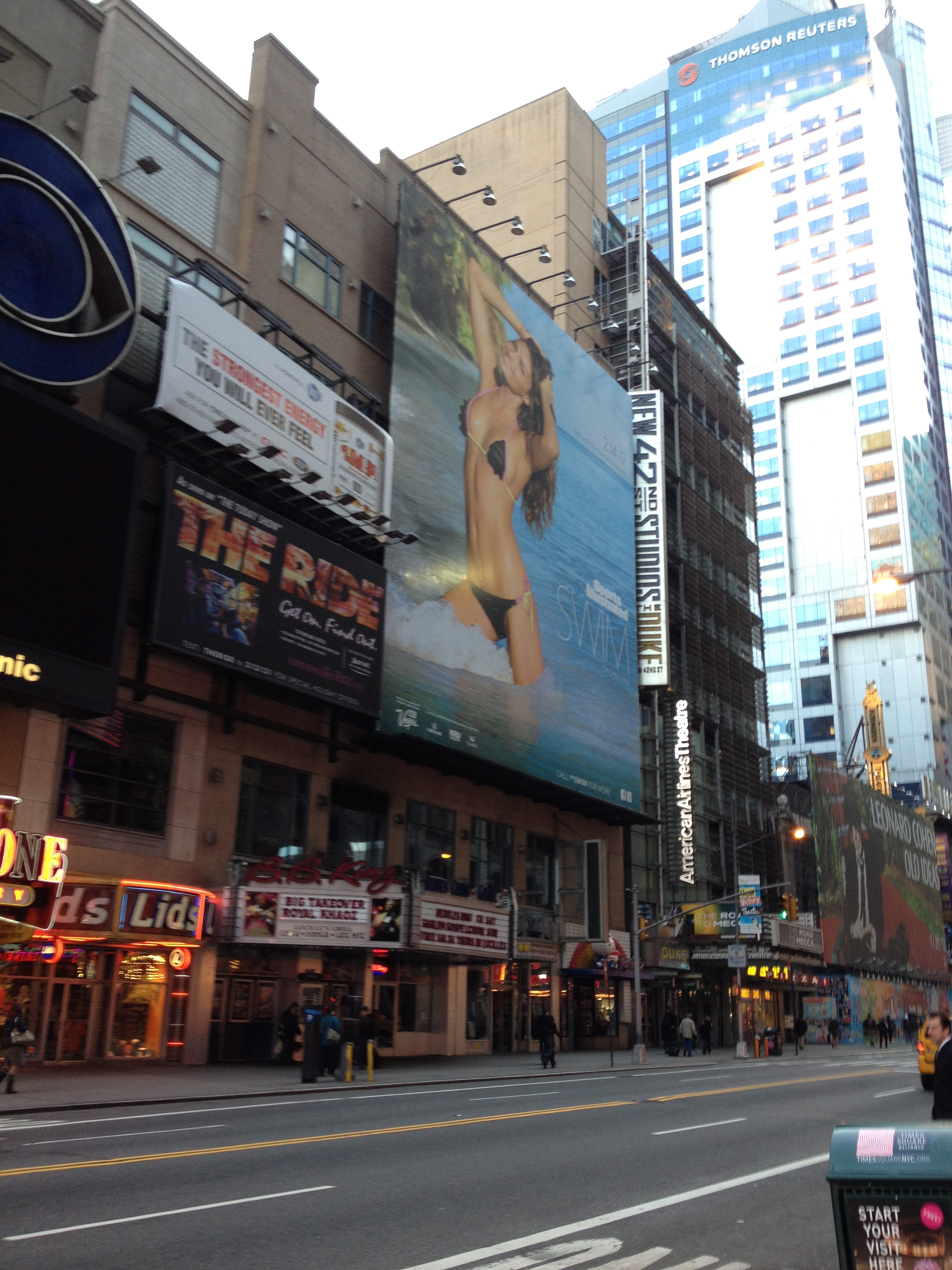
A society will be remembered by its lowest common denominator. At the mention of the Roman Empire many people immediately think of the decadence of that once mighty power in decline. Rome ruled the world at one time—or so it seemed—but Nero had his fiddle and Caligula favored his horse Incitatus as a senator (today we’re more accustomed to seeing asses in government than horses). The madness of Napoleon. The insanity of Hitler. Mighty powers crumbling under their own weight. Walking through Times Square is an education. Recently a fifty-foot woman appeared, looming over the heads of commuters, tourists, and the homeless. Unlike the classic 1958 sci-fi flick, this woman is apparently happy, smiling broadly, and nearly naked. She is an advertisement for Sports Illustrated’s soft porn swimsuit edition. Stories above us all, she pulls back her hair and, if she weren’t a fantasy, I’m sure she’d be chilly dressed like that in a New York winter.

We’re talking lowest common denominator here. As I man I can’t help but to understand the appeal. Advertisers know it too. At the corner of 42nd and 7th, there is another fifty-foot woman, apparently nude, sitting in an office chair for Go Daddy with a QR card across her torso offering to those who would scan her, “See More Now!” It is difficult to be judgmental when advertisers are using basic psychology to sell their products, and studies have shown that men are very easily aroused by visual images—our juvenile imaginations never do grow up. But women this large? In 1958 Nancy Fowler Archer was salaciously considered a monster, but the producers knew teenage boys would watch in fascination. Such simple creatures.

There is a disturbing subtext here. Men are weaker than they pretend to be, but that doesn’t bother me much. Vulnerability is where humanity is most authentic. The problem with the fifty-foot women in Times Square is the message to American society that women are a commodity. They, like everything else in Times Square, can be purchased and owned. They exist solely for the pleasure of men. I am not a prude, but I do believe that such blatant shows of the female body for sale bear as a subtext “mene mene tekel upharsin.” A society that cheapens its women in such a forum is creating the standards by which a hopefully more advanced future will remember it. Standing beneath the open thighs of the fifty-foot woman on my way to work, I am profoundly sad. This is Rush Limbaugh’s American Dream writ large.


Darkness, of Sorts

“The horror! The horror!” During high school I was never assigned Joseph Conrad’s Heart of Darkness. Neither was it required for the humanities core course at a highly selective Grove City College. Knowing that my daughter will be reading it for school, I decided to get ahead of the curve for once and read the book. I really wasn’t sure what to expect. I had gathered that it was set in Africa, but that is all I knew. I had even somehow managed to live through the ’80’s without ever seeing Apocalypse Now. Conrad layers the darkness thickly in his story of greed and cruelty in the material trade of ivory. The brief story does not dwell or linger on the suffering, but shows the deep scar never healed in Kurtz’s famous last words. It is a story still worth pondering profoundly.

By chance—in as much as anything happens by chance—I also watched Wolf Creek the same weekend. Again, I was unsure what to expect. I had heard about the movie before, but never with enough detail to give away the plot. Harshly critiqued for its exploitative narrative, the film presents a different setting that experiences the same darkness. Australia, 1990’s. Claiming to be based on actual events, Wolf Creek showcases the frightening duality of Mick Taylor, a character who holds many sleepless nights in store for me. Not that the movie itself is so terribly frightening, but the fact that people like Mick Taylor do exist, upon whom movie makers and novel writers base their characters, is darkness itself. It is the lot of humankind to be a mixed cast of characters, some of whom are decidedly unsavory.

I awake to newspapers bearing the cold, inhumane sentiments callously blasted from the lips of Santorum and Gingrich and their ilk stating that the poor can take care of themselves, the unborn have a right to be born into abject poverty, that women should be made to bow to the whims of men. My native naivety has worn off but slowly, hoping as I always have for sparks of kindness and genuine good will. Those who would be remembered as great leaders would do well to study closely the portraits of Napoleon and Stalin and their friends. And read a little Conrad. To find the still beating heart of darkness we need not venture all the way to Africa or Australia. We can find it in our own backyards.

NASA's view


Christian Underworld

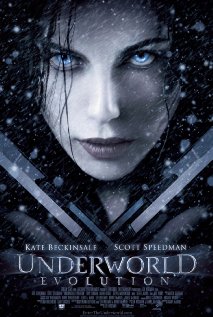
For constructing a mythology teeming with monsters, I must doff my metaphorical hat to the Underworld series of movies. Unrelentingly Gothic and stylish, I’ve watched the first two installments a number of times, but I have yet to see the last two (the latter of which is still currently in theaters). I have to admit that seeing Kate Beckinsale in her werewolf hunting gear two stories tall on midtown electronic billboards is some enticement to catch up with the story. Over the weekend I rewatched Underworld Evolution, number two in the set, to refresh my mind of the story. Quite apart from the implicit religiosity of vampires, the Underworld movies, while eschewing crucifixes and religious origins for vampires (which Bram Stoker’s Dracula by Francis Ford Coppola narrates to an explicit extent), nevertheless partake of the power of religion amid all the shootouts and weird transformations.

In Underworld Evolution, Marcus, the son of the original vampire, in a scene straight from Christian mythology, has the devil rebelling against his creator. As he is killing his powerful yet ineffectual father, Marcus predicts the beginning of a “new race created in the image of their maker—their new god. Me.” As he says this he has his own creator impaled on a demonic bat wing. Running him through with a sword he states, “And the true god has no father.” I admit I’ve been trying to read some post modern treatments of monsters, and this kind of reversal fits well with the conflicted outlook of the twenty-first century. Who is god? The good or the evil? The old certainties have grown gray and blurry. No wonder some people are uncomfortable.

Perhaps the most religious element in the film, however, is blood-memory. Blood is a cheap commodity in horror films, but it represents, in the Abrahamic traditions, life. In the Christian sense drinking communion wine is to consume the blood of Jesus, or at least to remember his death (the fancy word is anamnesis). Vampires, in Underworld Evolution, remember the lives of those whose blood they drink. The taking of life has a sacramental quality to it here. To a world less immersed in a Christian worldview, this concept might seem more macabre than it already is. Monsters often take their cues from the gods. So on a February weekend some of this feels terribly familiar. It may be a small underworld after all.


Denying Truth, For Profit

Sometimes I’m questioned about why I bother with creationism. Everyone who’s intelligent knows it is religious ideology masquerading as science and people will eventually figure it out. But will there be time? An editorial in yesterday’s New Jersey Star-Ledger pulls the curtain back on creationism’s incestuous cousin, climate-change denial. As the editorial notes, key documents of the Heartland Institute—one of the major propagators of climate change as “just a theory”—have been leaked and show that they have learned their lesson from creationist tactics. They want “debate the question” instilled in science classes in lieu of facts. And much of their money comes from big oil. It is the hope of such institutes that an American public already woefully pathetic at understanding science will be led to believe “just a theory” equals “likely not true.” The data are stacked completely against them and the entire rest of the developed world knows that.

While the issue may seem less religious than creationism—which is based on getting Genesis 1 in the classroom as science, no matter what you call it—it has deep roots in that same insidious cocktail of politics, religion, and dirty money. Biblical literalists tend to believe the world is about to end. The belief has been around for at least two millennia. It is a damning and damaging belief that declares the world was made for raping because it is about to end. This deranged thinking is fueled, literally, by unrestrained economic interests. Sometimes the groups can’t see beyond the Bible to realize that they too are being screwed. Science is objective, and it is science that has been challenged by various religious and political groups since the 1920s. Today, when there is far too much information for anyone to stay on top of it all, and in an American society deeply distrustful of higher education, I smell an explosive amount of methane in the air.

Climate change is real. The “theory” is so well supported by evidence as to be fact. Is anyone really surprised that supporters of the Heartland Institute have also backed Newt Gingrich’s campaign? We have placed ourselves in a very dangerous position as the last remaining “superpower.” I tried to read a book on environmental issues that Routledge published, but was so scared after the first three pages that I had to put it down. What is the lesson here, class? Is it not that money is the root of evil? And that, my dear literalists, is biblical.

The future of human economic evolution


Fall of the Planet of the Apes

Perhaps it is being under the influence of a head-cold that just won’t go away, or perhaps something deeper, I decided to watch Rise of the Planet of the Apes. Raised in a fundamentalist household, I was enamored of Planet of the Apes (the original one) and watched it and all its sequels repeatedly back before VCRs made owning such chestnuts possible. Perhaps it was that taste of forbidden fruit—evolution—that left such an exotic buzz in my head, or perhaps it was the unforgettable climax. The message that we’ve done this to ourselves. I once even missed seeing a high school friend after several years’ absence on a visit home because an all-day Planet of the Apes marathon was airing on TV. Perhaps it was the subtlety, the Rod Serling feel to it, or the deep level of empathy it evoked, for whatever reason, that original movie remains one of my personal favorites. In Rupert Wyatt’s slick new backstory, something was missing.

The CGI of Rise of the Planet of the Apes is pretty remarkable, except for the occasional jerkiness of violent scenes intended to pump up the testosterone. The subtle emotions visible in Caesar’s every glance conveyed the sense that animals share rights to this planet with us. I’ve been reading about animal intelligence again, and it saddens me that we’ve reached this far in our development only to continue the fiction that homo sapiens are unique among the tree of life. It’s not much of a tree when one of the branches is not and never has been attached. Our animal cousins have much to teach us, and perhaps that’s why I keep returning to Planet of the Apes, despite Charlton Heston. Even the new movie makes several nods to the original with naming the main family Rodman, Caesar building a three-dimensional puzzle of the statue of liberty only halfway complete, calling his mother “Bright Eyes,” spraying Caesar with a hose in his cage and calling the primate center a madhouse, and the cheesy repetition of “Take your stinking paws off me you damn dirty ape!” It simply can’t rise to the level set by the writing of Rod Serling and Michael Wilson.

The box-office success of the film tells us something about ourselves. Ironically, and perhaps intentionally, Wyatt’s version neuters the evolution. The apes don’t rise from an unspeakably long evolutionary track from us, but we create them with the nemesis of twenty-first century humans, the virus. Caesar and his friends are genetically engineered by humans, and God has nothing to do with it. In the original, a theological subtlety lingered as a religious court of orangutans condemned Taylor for religious reasons. His claim of human primacy was heresy to primate sensibilities. The new version takes itself too seriously for that. We can’t jangle the evolution keys anymore because of our own national schizophrenia concerning the raw power of nature. Just when we think we’ve evolved beyond petty superstition masquerading as righteousness, yet another state attempts to guillotine the entire scientific enterprise. It’s a sure thing that if the apes don’t get us, we’ll take care of it ourselves. That was the message already in 1968.


Ultimate God

In a recent op-ed piece in the New Jersey Star-Ledger, Ben Krull published a satirical piece entitled “Strategizing God’s election campaign.” While some, no doubt, took offense at the piece, it is less an indictment of God (Krull is a lawyer) than it is a broadside against those who use God to get elected. As portrayed in the Bible, God is not always a likeable character. As Krull points out in so many words, God is a guy with “issues.” Would he ever be elected on a family values platform? What is happening here is that God is being recast as those who most vociferously claim him an ally want him (always him) to be. Using Yahweh as a springboard, they vault over the compassionate Jesus and land firmly at the disapproving God of Jonathan Edwards, who, along with the God of John Rockefeller, wants them to be rich. It’s not as much an election as it is a catalogue where you can order just the deity you want. The God they claim America follows is a god of their own making.

Paul Tillich, a theologian, once famously declared that God is a person’s ultimate concern. While other theologians instantly and continuously disputed this, the idea still has some currency. The distorted versions of Christianity that we constantly see in the political and sports scenes today is a god that adores the free market and loves football, especially when the Broncos are playing. Somehow, incredibly, he couldn’t get tickets for the Super Bowl. If you listen closely you’ll see this god resembles nobody so much as Mitt Romney, Rick Santorum, Newt Gingrich, Herman Cain, Sarah Palin, Michele Bachmann—wait a minute… has god packed up and gone home? Since undisputed God sightings are as rare as undisputed UFO sightings (maybe even rarer) we are free to fill in the enormous lacunae with our ultimate concerns. Ourselves.

At least in the world of polytheism you had a choice of gods and a ready source on which to blame unpleasantness. If Baal’s not answering your prayer, maybe Anat is standing in the way. Ancient folk were not conscious of the fact that they were making gods in their own image, after their own ultimate concerns. But modern Christians, trapped with the God of the Bible, feel that they can at least give the big guy a makeover. This is God on-demand. The beauty of this deity is that he is a poseable action figure who is a picture-perfect image of one’s personal ultimate concerns. A God so malleable, so fluid, and so idiosyncratic should have no trouble getting elected. To find the God of popular politics, just look in the mirror.

Who does your God look like?


Wired for God

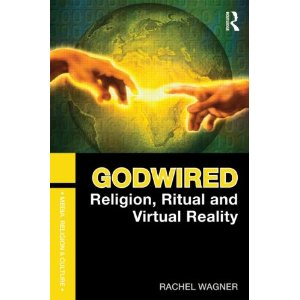
I am not now, nor have I ever been, a techie. When my fascination with the newest technological marvel borders on the rhapsodic, I suddenly realize it’s all electrons and immediately the fascination dissipates. It feels like an illusion. I am a guy who likes the sensation of a paper book in his hands and prefers conversation accompanied by all the subtle biological clues of being in the same room with somebody. Maybe it is lack of imagination on my part, but I will often get bored on the Internet and pick up a book instead. One book I recently picked up, and one that challenged my perception of reality, was Rachel Wagner’s Godwired: Religion, Ritual and Virtual Reality (Routledge, 2011). Wagner is one of that generation of younger scholars who is asking what the implications of electronic culture are for religion. If concepts such as online prayer walls, chat-bot salvation, and storing sacred texts on the same device as secular ones intrigue you, do yourself a favor and read this book.

As Wagner ably points out, religious individuals are tapping into the vast communications’ potential of the Internet to spread their faith abroad. There are apps to help you pray online, there are electronic games to prepare you for the fictitious rapture, and there are virtual churches. We have indeed sealed God in an Xbox, and we have beamed the divine across wireless networks and learned to confess our sins in cyberspace. And physicists are starting to confirm that, at our most basic level, we are energy rather than matter after all. Maybe we are tapping into ultimate reality here. Wagner explores how the level of engagement with virtual worlds constructed by software engineers (the new gods) becomes so intense as to provide an alternate reality. It all depends on how you define what is real. And it is clear that for many people, life without the Internet is now unimaginable. Those of us born before the supercomputer scratch our physical heads with amazement. How did Nebuchadrezzar or Alexander ever conquer the known world without GPS technology? Does my iPhone have a secret life about which I know nothing?

Within our culture live many older people who have never touched a computer. They exist alongside grandchildren practically born with some iDevice in their grasp (may be a choking hazard for children under three). I have lived long enough already to have witnessed keyboarding being replaced by thumbing, and research having shifted from long treks to the library in the snow to a few taps on a glass screen that can feel the electricity from my chilly fingers. From the comfort of my lonely room sings my soul, how great thou art! Perhaps Terminator didn’t go far enough, perhaps Skynet really is god. Maybe this matrix of blood, muscle, bone, fat, and spit is really just an illusion and the Internet is true revelation. Wagner pries open some very important questions in her book. And none of us should be surprised if, when we approach the pearly gates, we find a touchpad next to the electronic lock inscribed with this legend: “Welcome to Heaven. Please enter username and password. Type in the letters you see in the box below.”


Rising to The Abyss

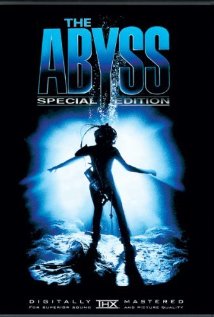
The name James Cameron has become almost synonymous with epic, large-scale adventures that suggest improbable world with stilted dialogue. The first Cameron film I watched with the awareness of his direction was Titanic. Last night I watched The Abyss for the first time. Of course, I’d heard quite a bit about the film since its release over two decades ago, and I had to satisfy my curiosity. The Abyss turns out to be a prognostication for Titanic as well as Avatar, what with the fascination Cameron has for sinking ships, friendly aliens, and impossible love reconciled. In fact, many of the characters presented in The Abyss appear to reincarnate in Cameron’s latter films under different names, but in similar circumstances. The reason the film is worth mention on a blog about religion is its heavy reliance on traditional Christian imagery of the afterlife, projected into the abyss (turning Dante on his head).

When the crew of Deep Core investigate the sunken submarine USS Montana, crew member Jammer sees what he thinks is an angel and goes into shock that lands him in a coma (just to awake at the right time to save the day). The theme of personal sacrifice and resurrection (the Christ syndrome, we might call it) is acted out by both Lindsey Brigman and her husband Bud. Lindsey drowns herself so that she can be resuscitated, with the intention of saving both herself and her estranged husband. In his turn Virgil (aka Bud-everyone get the subtle reference to Dante here?) disarms a nuclear warhead (by snipping a single wire!) by diving beneath the capacity of his oxygen supply, texting his now adoring wife that he knew it would be a one-way ticket down. Then the aliens arrive. The whole light at the end of the tunnel trope becomes factual as the aliens-angel hybrids flutter over and take Virgil to safety. In case you missed the biblical references, they part the water and you get the strange suspicion that Moses is lurking behind the scenes somewhere.

Of course, some of these ideas will be fresher in viewer’s minds from Titantic and Avatar, but the theme of resurrection following self-sacrifice is a staple of Hollywood. It is the right combination for a feel-good movie, even if it ends up being sad. Perhaps it is the mark of living in a secular nation that has its origins in a Christian worldview. The battle of our religious status as a nation rages on, but the fact is, no matter how free we are with our religion, we will flock to movies where the protagonist willingly sacrifices him(less frequently her)-self with the reward of new life. This is not a Cameron trope, it is a United States self-image on the large screen. The technical gaffs of the underwater world of The Abyss may be many, but the film captured the imagination of many Americans, paving the way for the enormous success of Titanic and Avatar. Despite our tough exterior and willingness to start wars, we like to think of ourselves as the ultimate Christians.


A Long Way to Go

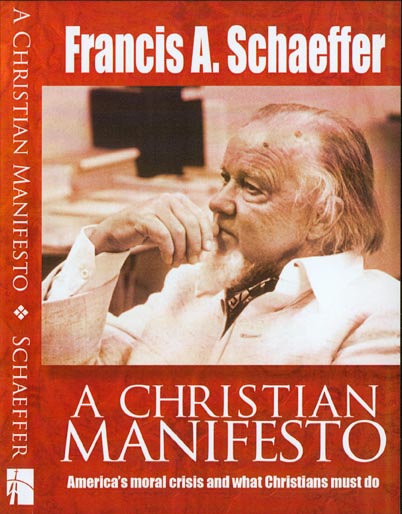
“One of the greatest injustices we do to young people is ask them to be conservative.” The words are those of Francis Schaeffer. The Francis Schaeffer. Among evangelical circuits, Schaeffer has a status right up there with James Dobson, Ronald Reagan, and Saint Paul. At Grove City College he was viewed with such veneration that hagiography would be an understatement. Few realize that Schaeffer was a mover and shaker in the hippie movement until Roe v. Wade caused what might have been akin to a breakdown. Schaeffer transformed into what he once despised, the ultra-conservative trying to protect the unborn. While Catholic groups had been unsuccessful at capturing Jerry Falwell’s sympathy for fetuses, Schaeffer would win. His book, A Christian Manifesto, published the year I started college, was required reading for religion majors. Abortion had now been taken on as an “evangelical” issue.

Fast forward a few decades. Karen Handel, erstwhile Georgia gubernatorial hopeful, becomes senior vice-president for Susan G. Komen’s The Cure. Handel ran for governor on a pro-life platform. The Cure (temporarily) withdraws funding from Planned Parenthood—the idea that every child should be loved and esteemed is less important than every child should be born. With those little tiny feet. And as it turns out, hopefully with little tiny penises as well. Divide and conquer. Women against women. The Margaret Thatcher syndrome. Call it what you will, but abortion as a religio-political issue revolves around women’s rights. Anti-female legislation has had a long and sordid affair with Christian theology, reaching back to medieval witch-hunts and Catholic sacerdotal declarations. What is sometimes excused as ignorance in less developed societies where women are routinely brutalized is given a Gospel air brush job and called “anti-abortion” in the United States. The real issue, the literal elephant in the room, is women’s rights.

The evidence on this is incontrovertible for anyone who is willing to open their eyes. In order for our culture—men hurling themselves at each other during the Superbowl while women are preparing food in the kitchen—to survive, outmoded gender expectations must be kept firmly in place. Even if you want to cure breast cancer—largely a plague against females—you do it so they can live to produce more males. Being raised with an absentee father, I learned very early that women had every right to equal treatment with men, but I also learned that it did not happen. The trick has been to get women on board to vote against their own best interests. Raise them up to think their religion, their God, demands them to be subservient. And if a man wants sex, it is a woman’s duty to comply. And abortion undoes all a man’s hard work in the bedroom, or backseat, or dark alleyway. Yes, these issues are complex and myriad aspects play into them. I say we call a quorum on the debate until one-half of the human race is truly given a chance to find its voice.

What does he have that half the human race doesn't?


Virtually Divine

So I decided to try virtual reality for a while. I have been reading about the influence technology has on religion, so I thought a trip to Wikitude would be instructive. Now I don’t want to sling lingo like I’m some sort of real techie, but Wikitude is an app that shows the artificial worlds of virtual reality in your immediate environment. Many of us live our day-to-day lives without realizing that we are surrounded by powerful, invisible beings who can only be seen through electronic eyes. We have given our physical world an imaginary overlay that may turn out to be more real than reality itself. So I clicked on Wikitude and took a peek around my office on Third Avenue. Wikitude shows those things that I would have called “dialogue boxes” as a kid, but that now stand in for overlays against any mapped reality. In Manhattan there are many, many of them. I clicked on the one nearest my finger. It read, “A monster is destroying the city.” Like it read my mind.

In some ways I never got over the naïve realism I grew up believing. I first read about avatars in Neal Stephenson’s Snow Crash. Back then the idea of virtual worlds was still pretty new, and although Norman Spinrad and William Gibson had played with the idea earlier, the Snow Crash version is what stayed in my head. Avatars, I knew from my research on ancient religions, came from very early Indian belief. In what we now casually call “Hinduism,” some believed that gods came down and walked among us as avatars. Christians would later call this “incarnation.” In virtual reality, we are the gods and we descend into the world of human making as embodied electronic versions of ourselves. The idea, however, goes back to one of the most ancient religions in the world.

I’m not sure I feel safe in this virtual world I’ve discovered. I was relieved when I clicked on Wikitude the next day to find the menacing monster nowhere in sight. But is it really gone? The physical world has no shortage of ways to frighten the very sensibilities out of us. Many of them go by the name of religion. In this world, I can’t just click off the screen and be safe. It used to be that our simple, domed world had a divine bowl above it with a loving, if often very stern, parent watching over us. Now we have become that god, creating monsters and worlds to house them. Maybe that is the best answer to theodicy yet. When we create virtual worlds, we always include evil in the picture. Perhaps it has always been thus with the gods.

Reality or not?