Ignorance Should Be Bliss

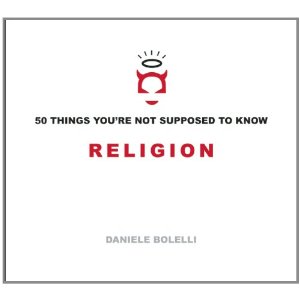
Even before we elected a president who was only a single year older than me, I had the creepy sensation that no one really knows what is going on. Call it what you will, but I am told, that for my own good, some information is kept from me. I can’t recall how old I was when I first came across the word “disinformation,” but the concept—a favorite of conspiracy theorists—has stayed with me ever since. It is that Kafka-esque sense that something is off kilter. Some time back I stumbled across a website called Disinformation, and was immediately intrigued. True to the nature of the title, the site keeps you guessing. I was pleased, therefore, when I was sent a prepublication copy of Daniele Bolelli’s forthcoming title, 50 Things You’re Not Supposed to Know: Religion. Disinformation has a plucky series of books in the 50 Things You’re Not Supposed to Know series, so I was decidedly curious about this new volume.

Not a heavy academic tome, 50 Things You’re Not Supposed to Know: Religion is written in a vein similar to this blog: reflective, unconventional, but not really earth-shattering. It is good fun. Bolelli does a great job pointing out less advertised aspects of otherwise socially respectable religions, not taking cheap shots, but simply rephrasing events as they really happened (mostly). Within all of this, however, some true wisdom lies. In thing 36 (of the 50), “Tao is the Sh*t,” Bolelli notes, “Many are those who, infatuated with all things ‘spiritual,’ forget that real spirituality is nothing but daily life lived with full awareness.” It is clear that Bolelli has an appreciation for eastern religions, but he is not so bourgeois as to let even those escape unscathed.

Often the reading of a book is the sharing of the author’s soul. The acknowledgements were so intense that I immediately felt that Bolelli has a hidden story. As the author of the highly regarded On the Warrior’s Path: Philosophy, Fighting, and Martial Arts Mythology, Bolelli is both a professor and a fourth-degree black belt. Clearly a man with whom to be reckoned (or better, reconciled). I too have been very influenced by a teacher who knows martial arts and who has one of the clearest heads around. I learned from him that there is a spiritual component to martial arts, and that spirituality seemed, rightly or wrongly, to be present even here in this book. Bolelli is willing to take on religions. In our alarmist society that stance is often confused with lack of morals or spiritual insight. From my idiosyncratic position, however, I found Bolelli’s small book engaging and irreverent and provocative (in every sense of the word). Do yourself a favor and read it. If you’re not careful, you’ll snigger a time or two and learn something along the way.
National Fear

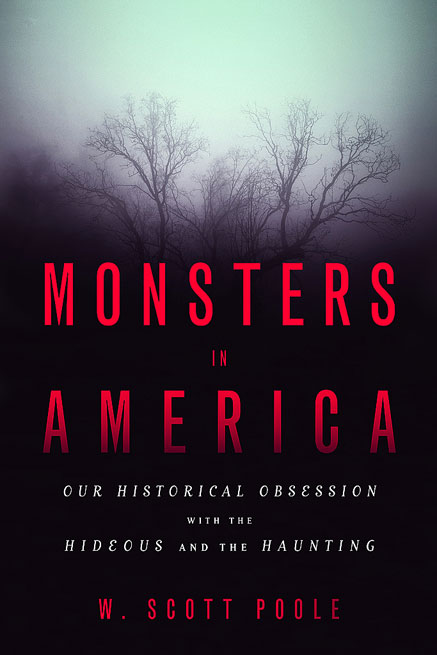
Back in my full-time teaching days, the American Academy of Religion and Society of Biblical Literature annual meeting was an excuse to buy books. Not that we were flush with money, but the prices were so good (we’re talking academic books here) that they simply couldn’t be passed up. Those days are long gone. This year I limited myself to a single book: W. Scott Poole’s Monsters in America: Our Historical Obsession with the Hideous and the Haunting. I was not disappointed. Poole gives us a smart study with considerable insight into American culture. Not only that, but it also proved an excellent source of self-understanding. I had never come across the phrase “monster kids” for those of us born in the blue light of the television when the Universal monster movies were released for television viewing in the 1960s and 70s. Poole classifies himself in that camp, and it is clear that we share this “guilty pleasure.”

Categorizing our monsters into types that fit various aspects of the American self-image, we find our national phobias reflected in our fictional fears. Throughout the book the uneasy sense of uncertainty towards sexuality, science, and death, like the revenants described, keep arising from the ground. Although Poole is a historian, it very soon becomes clear that one of the main driving forces behind both identifying and challenging these monsters is religion. It is a view Poole shares with Douglas Cowan and Stephen Asma and other analysts who take seriously the origins of our fears. Monsters creep out of the same mental space as gods. That which is not real is no less scary for its non-existence.

Particularly insightful was Poole’s analysis of the subversive nature of monsters. They challenge convention, forcing a cultural catharsis. The notable exception, Stephanie Meyer’s Twilight series, also has a religious rationale. Meyer, a conservative Mormon, effectively extracts the fangs of the vampire to make it a safe, if not Christian, monster. Monsters make establishment believers uncomfortable, for they remind us of the darkness that always follows the light. Humanity responds with efforts, religious and scientific, to banish the dark. But at the end of even the longest day, night will come. When it does, I would recommend curling up with Poole for an evening of cultural self-understanding. Followed by a bowl of popcorn and a movie from his filmography.


Fecit potentiam

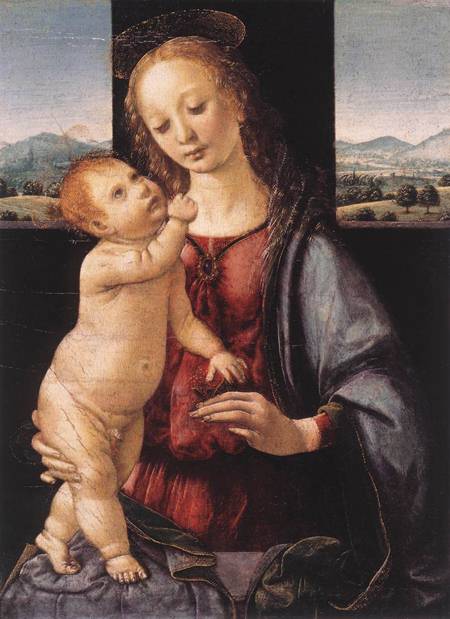
Yesterday at Princeton’s annual seasonal choral concert, the program consisted of Bach. The first piece was a Magnificat, a piece that, in prose form, I quickly memorized at Nashotah House. With our daily double dose of chapel services, liturgical standbys such as the Magnificat quickly became reflex recitations, made with little thought beyond getting on to the next piece. It occurred to me as I listened to it at leisure, the hopes of poor Mary haven’t really materialized after these 2000 plus years. After a couple of millennia, perhaps it is time for a state of the theology assessment.

Despite the veneration of Mary in the liturgical branches of Christianity, the collective handmaids of the Lord have made slow progress in being integrated fully into church leadership. Only with the last century, and fairly late therein, did many Protestant denominations finally recognize that Mary’s gender might have something to teach the men. Paul, for one, would have had none of it. Even today the Roman Catholic Church stalwartly refuses to consider female priesthood. Perhaps Mary’s prayer should be uttered yet again within its walls?

At the section labeled “fecit potentiam,” however, I noticed further lack of fulfillment. “God has shown strength with God’s arm,” the program translates, “God has scattered the proud.” The hopes expressed in the next several verses have been silenced beneath the greed of an economic system with no responsibility. “God has deposed the mighty from their seats.” When did that happen? Those of the Occupy movement who’ve received a face of pepper spray might beg to differ. “God has filled the hungry with good things, and the rich God has sent away empty.” Sent away to their summerhouses, their mansions, and their penthouse apartments? Away from the working class who oil the gears of their massive machines. No, it seems that the Magnificat has not fared so well at predicting the new era to be brought in by a special child.

Of course, Luke’s song of Mary is based on Hannah’s song at becoming the mother of Samuel from the Hebrew Bible. Samuel was the great judge and prophet who saw to the law and order in the land. Strangely, however, the Bible manages to confuse Samuel with his erstwhile enemy Saul, conflating their birth accounts. Isn’t it just like the Bible to confuse the oppressed with the oppressor? The strength shown with the divine arm, the wealthy inform us, is the strength they wield. After all, god and gold differ by only one letter.


Soccer Moms and Robot Dads

Long past Halloween, the air is taking on its terminal, winter chill. High school football teams have moved off the fields (although the “pros” will keep at it until the Super Bowl in sunnier climes). What are sports parents with an excess of aggression and competitiveness to do? It is the time of year when some parents start thinking about the FIRST (For Inspiration and Recognition of Science and Technology) robotics competition. It is a good sport for the hibernation season.

My daughter is on the FIRST Robotics teams in her high school. FIRST was invented by Dean Kamen (along with many physical inventions) as a way of stirring up interest in STEM careers. Interest in science and technology careers, inexplicably, is faltering in the US, while many of us who grew up enamored of science but without any natural ability sit by and scratch our heads. Careers in robotics are very hot—especially since machines can do things we mere biological units can’t. We are that squishy, organic chemistry with a mysterious plan that serve as gods to the mechanical beings we create. Woe to humanity when the robots become atheists! But that’s a point for another post. Sports—and FIRST clearly is a sport, as much as racecar driving or horse jockeying—take on a religious devotion among people of leisure that rivals the commitment oppressed peoples have to their more tradition forms of faith. The easiest means of seeing this is in the fans.

“Fan,” of course, is an apocopated form of “fanatic,” a word wielded with derision against those who take religious belief too seriously. In sports it is a venial sin, if not a downright virtue. Consider the continuing news stories still swirling around a non-necessary sports figure at Penn State. Even the name of the school evokes football rather than academic performance. The same thing applies to FIRST. FIRST robotics is a sport for the mind, and it has its share of analogues to the soccer mom, what I might call the robot dads. These are parents who are particularly driven to win. In a sport involving band saws, hydraulic lifts, and multiple motors, parents are actively involved in building robots suitable for competition. And the competition can be intense. It becomes a kind of robot religion. Dean Kamen, the Susan Calvin of FIRST, has tried to instill commandments of sportsmanship and gracious professionalism into the competitions. That is something the kids understand. As I attend the competitions, however, it is the religious parents that I worry about.

My worry includes the kind of gender disparity that characterizes the work place. Why should not the scientists and engineers include more women? The field strives to do so, but our society still discourages the participation of women in the men’s room of heavy equipment and intense mathematics. Isaac Asimov, frequently a writer with distance vision, made a woman the head robopsychologist of U.S. Robots and Mechanical Men, Inc. If Dr. Calvin were to look back from her fictional 21st century to the actual 21st century she would see women still struggling for equal voice in both science and religion.

Let's hear it for the boy


Christian Window Cleaners

In the city, with all the traffic, windows sure can get dirty. I often arrive in Manhattan around 7 in the morning, before the crowds grow too intense. It is a favored time with street-level window washers. There’s a lot of glass in the city, and when doing tall windows they need to use long poles, and that can be tricky with hundreds of people trying to get around you. So when I saw a window washer yesterday, I thought nothing of it. Then I noticed the red cross embroidered on his jacket. The back read “Christian Window Cleaners.” I tried to get a picture, but I didn’t want to be obvious. Even New York has its limits. The poor guy’s jacket already made him a target for stares, but I was intrigued. Long I had suspected my windows to have been cleaned by pagans, on account of the smears.

Businesses have been using the Christian cache to drum up the drachmas for decades, but for some reason, this particular business struck me as transparent. Are non-Christians going to peep in the windows while they’re cleaning? Try to steal your stuff when you step out to Starbucks? What does it say about those of us who never clean our windows at all? The implications suddenly seemed to grow enormous. I see window washers every day. Most of them seem like descent, upstanding citizens. If you’re going to go for a business where people are concerned with fairness, why not Christian cabbies? That’d be a big hit in New York. The prices, however, would remain extortionate. Such is the way of religion.

The eyes, they say, are the window to the soul. If so, window washers are given a unique privilege of looking inside. We all tend to be cautious about what we leave in front of windows, that which we want the world to see about our lives. At dusk we pull the shades. Perhaps it really does matter who stands close to our glass. But as C. S. Lewis once noted, a Christian and a pagan boil an egg the same way. Of course, C. S. Lewis is big business now among the evangelical crowd. His more sensible words are generally overlooked as he is stuffed into a coffin-shaped wardrobe of conservative dimensions. I suspect that his smoke-smeared windows were cleaned by people after whose faith he never inquired. But then, I am only looking through a glass darkly.


Retrograde Hollow-days

Surrounded by the intoxicatingly ebullient aroma of balsam, it is difficult to believe that it is not yet Christmas. As 4-Hers decorate their wreathes, in November, I recall that the first signs of Christmas appeared in the stores before its unexpected cousin Halloween this year. In fact, stores hawking Christmas remain open year round. This retrograde motion of the holidays in time belies the very concept of the “holy day.” Ancients, and not-so-ancients, believed that there actually was something different about particular days. The trimmings and the trappings were secondary to the point of the day; something momentous had transpired on this very day, making it unlike any other. With the advent of industrialization and its unrelenting work ethic, holidays came to represent a kind of mini-exodus, a release from labor that falls outside the insufficient weekend. Leisure time encourages shopping. A modern holiday is born.

A child's Christmas in Bucharest

The increase in labor-saving devices has placed us in a twilight of leisure. Holidays can be anticipated many months in advance—gifts purchased earlier and earlier, until the holiday itself seems to pale by comparison. Moving retrograde into other seasons. The joys of the consumer holiday are hollow. It is too easily forgotten that money is a symbol, a mere medium of exchange. It has become an end in itself. Just two centuries ago nobody would have dreamed of collecting the symbolic patina of a capitalist system for a profession. Now accounting may lead to great wealth. The wealth, however, is transparent. Millionaires, like emperors, are disinclined to have the fact that their clothes are immaterial pointed out. They are, after all, where we want to be. Let the one with no dreams pop the first seam.

Holidays have the capacity to give symbolic meaning to life. They emphasize the cycles of nature and of life itself: birth, procreation, death. Removed from context, however, they lose their meaning and become just another excuse to spend too much, eat too much, drink too much. We call it celebrating. Those on the receiving end of the cash flow have the most to gain by promoting such hollow-days. Nothing is so easily exploited as child-like anticipation. The scent of balsam takes me back to a far-distant childhood this November night. The memories, no matter how dysfunctional the setting, are serene and full of anticipation. The symbolism suggests this may not be vanity after all. Until the bank statement comes, and the hollow-days begin all over again.


Lost Knowledge

While an actual apocalypse for many turkeys ensued on Thursday, Fox News announced that a second reference to the Mayan apocalypse has been “admitted” by Mexican authorities. So I guess the world will end next year after all. And it figures, I just finally got a full-time job. For some reason, for all of our modern technology and scientific knowledge, many people still fear ancient “prophecies.” This remains true after countless failed apocalypses, two of them just this year proposed by Harold Camping in the name of the Almighty. People who trust the science of their cell phones—which, from any trip to the airport or bus station proves, humans are incapable of surviving without—nevertheless fear the “lost knowledge” of the ancients who believed myths were the most parsimonious means of comprehending a cold and uncaring universe. Yes, I’ll trust my entire life, finances, travel plans, social calendar, to a plastic box barely the size of a credit card. But if the Mayans said the world was going to end… these are the Mayans, after all! The Mayans!

Never mind that we know little about this antique people; we have had predicted ends to the universe from disaffected visionaries and disgruntled prophets ever since the Zoroastrians suggested this might not go on forever. And now that two predictions appear to coincide, it looks like its time to sell some stocks, cash in some IRAs and party like it’s 1999. When 2000 came in with its baleful symmetry, as some saw it, with events two millennia earlier, not many were dissuaded from the concept that never emerges. Doesn’t the book of 2 Peter state that the universe is reserved for a fiery destruction? Perhaps the Mayans had access to Holy Writ?

The fact is that most cultures concoct origin myths, stories of beginnings. The way the mind works, it is almost a necessary corollary to construct myths of the end as well. And somehow we trust that arcane knowledge on such matters is more accurate than the scientific scenario that, given the limited longevity of any single species, no humans are likely to be present when old Sol balloons out to be a red giant. Far more spectacular to suggest some ancient sage or savage saw it coming and grow anxious with the waiting. Strangely, many people seem ready to discard all the progress, the monuments, the essence of our humanity for the sake of ancient predictions. 2013 does not seem so far away. Many of us are planning to be here, even if they find an entire library of Mayan predictions. Perhaps the truest prophecy of all is that we, as humans, make our own future no matter what other humans have said in the past.


Nightmare Behind Holidays

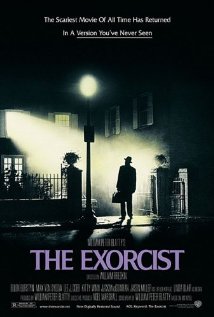
Among the first mythical creatures to go extinct when the early rays of the Enlightenment began to filter through the blinds of superstitious antiquity, were demons. It was recognized that the activities attributed to demonic possession closely resembled epilepsy and psychological illness and that Occam’s Razor would remove any unseen entities with its no-nonsense straight-edge in one deft pass. And yet they remain. Among the ghost hunting crowd, demons have been recategorized from fallen angels to entities that have never been human. Their reality is assumed, and results of investigations, not surprisingly, support that assumption. It was, however, a Dirt Devil advertisement that created a desire to watch The Exorcist now when darkness comes early and the leaves have fallen from the naked branches and a chill has permeated the air.

As I watched the still disturbing film, I realized that I had also watched the Exorcism of Emily Rose and The Last Exorcism within the past few months as well. I am no fan of demon movies; even with no demonic forces out there, inevitably young women are tormented by what ultimately turns out to be a male establishment. My threshold for watching the suffering of others, even if only acted, is minimal. Movie makers—and often horror writers—know and exploit this, bringing us to face the real demons, the shadowy regions of our own minds. The Exorcist is particularly effective in this since it is Fr. Karras’s demon that ultimately wins out. Having never read the novel, I’m not sure whose idea it was to make the demon Pazuzu, but once again the origins of demons does not fit modern media’s expectations.

Pazuzu was a Mesopotamian “demon.” Akkadian doesn’t have a proper word for what the Judeo-Christian tradition would introduce as a fallen angel. Demons were simply a way of explaining profound misfortunes such as droughts, pestilence, or the Bush administration. Eventually such misfortunes became personified and took on the ability to possess a human being. Here is where psychology and neurology have come to banish demons. Part of the terror of The Exorcist is that such scientific explanations are laid flat in the face of real supernatural power. The lessons of over-consumerism, as evidenced in Black Friday eclipsing Thanksgiving for many (the lines were formed in many locations well before midnight, cutting into family time in order to get first crack at the bargains) show the demon more clearly. Holidays are measured in importance by the amount of money spent. Perhaps it is no wonder that Halloween’s demons have lingered through November and even to the end of the year.


Imagine Thanksgiving

Although mildly jetlagged and slightly incoherent, a promise is a promise, so I took my family to Manhattan to see (the upper half of) the Macy’s Thanksgiving Day Parade. Commercial and flashy, it is difficult to conceive of a more American expression of holiday wonder. It kicks off the secular Christmas season and the parade forms the background noise to many a feast preparation in the United States. Not living in the city proper, there are limits to how early public transportation can get one into town, so by the time we reached the Upper West Side, the crowds were pretty intense. We met our friends at West 72nd Street and tried to see the floats and balloons over the heads of a sea of humanity; if you could glimpse the flashing tip of a tuba, we counted that as seeing a marching band. The weather was cool but nice and in the dense crowd I kept my hands shoved in pockets, not always sure they were my own pockets, and waited for the next tall or hovering parade feature. In-between times I stared at the building to our left until a friend informed me that it was the Dakota. The site of John Lennon’s slaying and the exterior used in Rosemary’s Baby, where, presciently, a murder victim was laid out on the sidewalk not far from where Lennon fell. Suddenly the parade took on a profundity that betrayed the levity of the gas-filled characters floating by.

Mark David Chapman, a delusional, born again Christian, had spent many hours waiting about where we were suspended in the crowd. Thinking himself Holden Caulfield of the Catcher in the Rye, he murdered Lennon creating a saint and a demon simultaneously. Perhaps John Lennon’s ashes are still floating about Central Park, and as we walked through, the exterior of the Teutonic Dakota took on a haunting quality. Lennon was a lover and a protestor and an experimenter, and scenes from Rosemary’s Baby of Satanists smoking cigars also hung in the air. The shop window displays on Fifth Avenue drew great crowds, but as we drifted toward 51st Street, we decided to stop into Saint Patrick’s Cathedral, along with the surging mass of the faithful.

Cathedrals are best enjoyed in quiet solitude. Nevertheless, we followed the pilgrims through the long nave, stopping to glance at the numerous chapels with statues along the way, each with a collection box, securely locked, asking for donations. And people say Christmas is commercial! Want to pray through your favorite saint? Please deposit a quarter. Preferably two. Or more. Their budget in candles alone would support many a smaller church throughout the nation. Advent begins this weekend, so the crèche was set up at the front with life-sized figures of the usual players: holy family, shepherds, wise men. And collection box. There was no baby Jesus and when my daughter asked why I said, pointing to the collection box, apparently they were saving up to purchase one. Keeping Christ in Christmas? Indeed. All those bronze, life-size Pope head statues can’t be cheap. John Lennon was cremated and his ashes scattered, leaving no trace. Popes are cast in bronze. Yes, John Lennon was wealthy, and once quipped that the Beatles were more popular than Jesus. What is the truth of the matter? Looking at the façade of the Dakota, I know where I would rather light a candle.


Old Myth

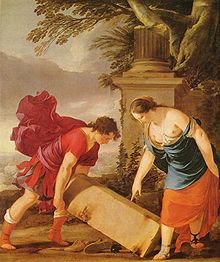
The Greek gods are in the ascendant again. They seldom disappear completely, but the big movie studios have rediscovered the special effects boon that only gods can deliver. When I first began to teach my Mythology course at Montclair State University, the Clash of the Titans remake and Percy Jackson: The Lightning Thief were both released just as the class was getting underway. It seemed like interest had been lost since the original Clash of the Titans back in 1981 when I was still a student. Special effects then meant Ray Harryhausen. Now they are measured in terabytes and whatever is larger than that. So Immortals was released recently, but I haven’t seen it yet. Picking up on the sometimes forgotten hero Theseus, the Athenian answer to Hercules, the movie promises to bring the divine into the theater.

In the spate of movies showing gods, America is not yet ready for a movie featuring Yahweh. Oh, certainly there have been films where the god of Israel has loomed very large behind the scenes, but with a prohibition of making images—no paparazzi need apply—it seems unlikely that we’ll see a special effects extravaganza featuring the Almighty. Besides, few Americans have reconciled themselves with the mythic nature of many Bible stories. As politicians and televangelists insist, these stories are fact, not entertainment. GCI Yahweh always stops at the somewhat comic George Burns or Morgan Freeman figures. Charleton Heston, where have you gone? Yahweh of the Bible is a gun-toting, hard-talking, pestilence-slinging, American-style deity. And action is where it counts.

Critics say Immortals suffers on the side of story-line at the expense of gore and action. A factor that is often overlooked, however, is mythology’s inherent mutability. “The Classics,” as we grandly call them, do not derive from a super-Scripture of literalist myths. Each writer told his (less often, her) story in his (her) own way. Although there were those who took such stories literally, as Socrates will silently confess, I suspect not a few knew these were stories told to make a point. There is no right way to tell a myth. From Harryhausen’s Jason and the Argonauts to Disney’s Hercules to Singh’s Immortals, mythology transcends the mere mortals telling it. This is the greatest shame of the modern world—we have traded the beauty of myth for a paltry handful of literalism approaches to religion. And the literary (and cinematic) world is much the poorer for it.

Theseus looking for immortality


Inauguration

Religion is an all-consuming beast. I suppose that goes with the territory of making universal claims. In the light of the already ponderous influence religion has had on the selection of presidential candidates this year, I recently re-read Abraham Lincoln’s second inaugural address, delivered not long before his assassination. The Civil War was not yet quite over, and Lincoln knew the horror of the situation. He famously said:

Both [sides in the conflict] read the same Bible, and pray to the same God; and each invokes His aid against the other. It may seem strange that any men should dare to ask a just God’s assistance in wringing their bread from the sweat of other men’s faces; but let us judge not that we be not judged. The prayers of both could not be answered; that of neither has been answered fully. The Almighty has his own purposes. “Woe unto the world because of offences! for it must needs be that offences come; but woe to that man by whom the offence cometh!”

Lincoln, never a regular church member, knew his Bible but also knew the soul of his country. A century later Bob Dylan would compose “With God on Our Side,” in protest to another war where divine backing was assumed. When a major undertaking is launched, the Lord is always on the guest list. The problem is, God can’t sit on both sides of the table.

The religicizing of politics is a dirty business. Religion plays so heavily on the emotions that it is, as history has shown, a truly unstoppable force. Even so great a conservative as Barry Goldwater felt this mixing of religion and politics an unholy cocktail. “I am frankly sick and tired of the political preachers across this country telling me as a citizen that if I want to be a moral person, I must believe in A, B, C, and D. Just who do they think they are?” (The Congressional Record, 16 September 1981). So here we go again.

Religion and politics are a dangerous mixture. In a culture as religious as that of the United States, the potential for (and realization of) disaster is great. Think of the lives lost based on the religious outlook of our last president! Over the past few decades we’ve witnessed a parade of preachers, Fundamentalists, believers in New Religious Movements, and quasi-certifiable candidates march across our political stage, and yet our doors are closed to those who refuse to make public statements about their intimate relationship with an ancient savior. For the Bible tells us so. If we believe the preachers. Those of us who don’t will be putting on our Bob Dylan records and reading the wise words of Abraham Lincoln.


Layers

I’m all for not offending anyone. I became P.C. in principal just as soon as my consciousness was raised that the very basics of English grammar caused distress to others (often women), based on its androcentric orientation. It does seem, however, that God is even more easily offended than humans. This raises some tricky questions when it involves the highest perceived authority within or outside of the universe, the font of all morality. Some of the things that offend God, if the sources are to be believed, are most unusual. Last night I attended one of those you-should-send-your-child-to-Europe-while-in-high-school seminars that remind you that being a good parent always involves a touch of poverty. The trip is a very expensive bargain, giving your daughter or son a lasting set of life-changing memories. So far I’m on board. And, what is a trip to Europe without visiting some of the great cathedrals that exhausted local, medieval economies but left modern companions to Stonehenge all around the continent? Okay. Having seen my fair share of European cathedrals, that’s perfectly understandable. Then the kicker: since these are religious places, there is a dress code.

Anyone familiar with mainstream culture even in America is aware of this idea. To attend a place where God is supposed to be present, you must dress for the occasion. The Simpsons can throw around the phrase “Sunday clothes” and everyone knows what they mean. Attend a religious service dressed down and you’ll immediately discover it. Some traditions raise this to a high sartorial art—some Episcopalians I know are so fastidious that the very statues of Jesus seem decidedly underdressed. Since your child will be in Europe and be in cathedrals, you mustn’t offend God in a foreign land. No jeans. As the parent of a teen that means buying a whole new wardrobe to add to the pricetag. Apparently the Levi-Strauss tribe is not the same one in the Pentateuch. I spent some time in Israel a number of years back. The dress code is very strict around sacred spots. No shorts or visible shoulders. In the hot climate of the Middle East wearing excessive layers, well, it’s no wonder some folks get a little irritable. God’s standards are high. Celestial even.

Nowhere is God’s discriminating taste more evident in the required “modesty” of women. Nobody told me, but apparently women are quite a turn-on to gods. Read Genesis 6 and see if you don’t agree. The burden of public hiding beneath cloth falls on them. A man’s calf doesn’t excite God nearly so much as a lady’s. In Jerusalem they used to hand our hooded cloaks to wear over your street clothes for visiting holy places, just in case. Lord knows we wouldn’t want any unrest in the Middle East!

Having lived in Europe for three years, I know about and despise ugly Americans. At home I find our culture and manner of dress fascinating. Most of us don’t think what it says about our religion. If you ever catch a priest in church wearing jeans you’ll have your own local, mini culture-shock. I’d like to figure out why God is so easily offended by human fashion, but there is no time. I’m off to the street corner with my tin cup to try to raise money to buy clothes so my child won’t offend God in Europe.

No shoes, no shirt, no salvation.


Cthulhu’s Revenge

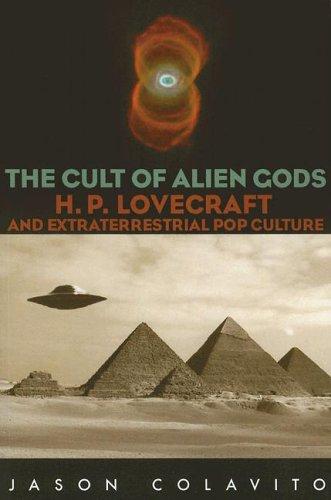
H. P. Lovecraft. Monsters. Aliens. UFOs. Ancient Egyptians. Sumerians. Is there nothing this book doesn’t have? Having read many of H. P. Lovecraft’s stories over the years, I have always been taken by how, as a writer, Lovecraft disappeared from public attention only to spring back in the 1990s. I discovered Lovecraft while doing research on Dagon, the putative “fish god” of the “Philistines.” Every time I typed the name of the deity into Google, I came up with pages and pages of Lovecraft. In my lonely room on a gray Wisconsin campus, I began to read his stories and shiver with fear as I walked across a dark parking lot to my car. Jason Colavito obviously has a great appreciation for Lovecraft as well, and his book The Cult of Alien Gods: H. P. Lovecraft and Extraterrestrial Pop Culture is a fun read for a November night. Colavito suggests that the “ancient astronaut” craze that has informed many a young mind stems back to Lovecraft’s fiction. Cthulhu and his ilk.

I’m not sure that Colavito convinced me that the ideas of ancient aliens began with Lovecraft, but he does an excellent job of exposing the foibles of many theorists who build houses of cards on shifting sand. One of the most interesting connections Colavito makes is that Creationism and Ancient Astronaut-ism are not dissimilar. “Both are, in essence, a concession that science is the ultimate arbiter of truth, and both seek to (mis)use science to give absolute authority to their beliefs” (331-2). This is an aspect of Creationism I hadn’t considered before. In the uncompromising desire for scientific respectability, the only option open is to bend science to the will of religion. This distortion must be carefully executed, convincing the followers that true science has validated a religious ideal. Rhetoric and occluding argumentation must be utilized carefully here. It seems Cthulhu has world domination in his squishy mind again.

Lovecraft famously gave us fantasy worlds where ancient space creatures left their impressions as gods upon a vulnerable humanity. Mysteries of the past—and Colavito doesn’t deny there are mysteries—are so easily explained by dei ex machina, and working with fantasy is so much easier than working with physics. To approach the mysteries with an answer already in hand, however, is to deny science its glory. As a civilization we owe much to a scientific understanding of the universe we inhabit.


Raising Cain

The Bible doesn’t contain many good horserace stories. The early stages of a presidential candidate race, however, are rather like a horserace (I don’t pay much attention to either). Unless one (or more) of the horses get religious. It seems that a candidate can’t cinch a Grand Old Party nomination without laying bets on religion. I’ve no idea how religious Mitt Romney is, but his religion itself forces the issue. Rick Perry wears it on his sleeve and in his pious grin. The keep in the heat, Herman Cain has now pulled out his religious credentials. God told him to run for president. So he says. Since the Bible doesn’t mention any candidates by name, we have to take his word for it. (Although I doubt Cain actually wants to be associated with his biblical namesake.)

God’s been down a bit on the divine luck lately. With all the causes the Big Guy has supported being lost to others (one thinks of the “Gott und Ich” mentality that stretches far back beyond World War One) you’d think that those chosen by God might keep the matter quiet. At least until the results are assured. Once that card has been laid, to shift metaphors, it can’t be trumped by any other. A card laid is a card played. How can a candidate climb higher than God for the next debate? And when one or another of God’s chosen loses—and this is inevitable—it is clear that God is dragged into the mud with the almost chosen candidate.

There has been much talk and debate about the role of religion in government. In a nation as religious as the United States it is purely impractical to keep the two impolite subjects apart. We only want a religious man in the White House. Preferably Protestant, but beyond that any flavor will do. In the 80’s at least one was Tutti Frutti, in a manner of speaking. The actual religious beliefs expressed by our national leaders would certainly lead to raised eyebrows among the truly conservative, if such matters truly mattered.

Back in college, it was considered wise advice never to try to stuff any variety of underwear in order to create an illusion of size—such tactics are bound to end in disappointment. It is lesson that politicians never learn. There will always be some disillusioned followers the morning after, unless, of course, the racehorse analogy is the proper one. And the Bible will back me up on that.

It's all in the reading


Master Cat

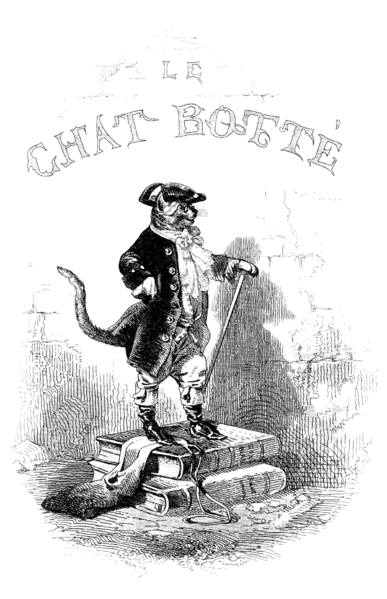
Okay, so I’ll confess having gone to see Puss in Boots yesterday. The movie had been getting good reviews and I’ll admit to really liking the first Shrek movie. The second Shrek movie, with Puss’s debut, was not bad. After that something changed. Anyway, it looks to be an intense week ahead, and I needed a little mindless release. Often on this blog, I mention horror movies and how fear ties into the concept of religion. Since working at Routledge—a publisher noted for its many books on religion and film—I’ve taken a renewed interest in finding the religious imagery in many different genres of movies. This is something I regularly undertook as a religion major in college and beyond, but it is an area of renewed interest in my mature years. So it was off to the theater.

One aspect of Puss in Boots, however, proved a distraction to me. The character of Humpty Dumpty scrambled in my mind with the same off-color image of the egg man in Jasper Fforde’s The Big Over Easy, a book I read this summer and blogged about earlier. In both stories, the egg was not what he seemed to be. A foodstuff with a decidedly darker side. In both stories, however, Humpty Dumpty was somehow vindicated, more a victim than a perpetrator of crime. It is not always easy to be a good egg. In Puss in Boots, however, this is where the religious imagery came in. The fractured fairytale storyline has Puss and Humpty (and Kitty Softpaws) growing a giant beanstalk and stealing the golden goose’s gosling. This is part of a twisted effort at revenge by Humpty; a kind of egg’s Benedict Arnold moment. Well, this is a children’s movie, so nobody is really bad. Humpty repents and sacrifices his own life to save the town. When he falls to his death, a golden egg is revealed inside. Mother Goose flies the golden Humpty up to the castle in the sky, disappearing in a blaze of heavenly sunlight. Life after death, the eternal reward. Heaven, Hollywood style.

Movies often serve as a source for and reflection of social values. Thus watchdog groups keep a close eye on what the silver screen reveals. Puss in Boots passes the test on highlighting the redemption theme. Although he is still a wanted criminal by the end, Puss (as well as Humpty) achieves redemption by making good on all the wrongs he committed against society. Almost sermonizing at points, the movie is another example of how mainstream media ends up on the side of traditional values. A deeper truth, however, may lurk beneath the celluloid. The true hero here is the Spanish Puss rather than the Angelo Humpty (and decidedly red-necked Jack and Jill). The religion it underwrites is, naturally, the civil religion expected by American audiences. Just maybe there is an awareness of social justice here as well.

The original