Jesus? No News

Stepping into the Port Authority Terminal in New York City may be the last place I expected to see Jesus. But there he was, at Hudson News, his beneficent face forming a repeating mosaic before the hurried and harried commuters rushing to get to work. U.S. New & World Report’s special issue features Jesus. Obviously. Racking my half-asleep brain, I couldn’t think of any reason for this sudden popular epiphany; it seems out of sync for Christmas and Easter, and no big news discoveries in the archaeological world had been recently announced. Perhaps the editors know the American Academy of Religion and Society of Biblical Literature annual meeting is coming up next week. Getting 10,000 scholars of religion together in one location is enough to make even the most hardened skeptic pray for a miracle. So, what are these “Secrets of Christianity” that call for a special edition?
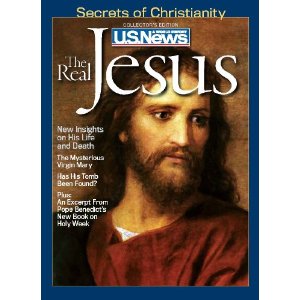
The sidebar taunts: “New Insights on His Life and Death,” “The Mysterious Virgin Mary” and “Has His Tomb Been Found?” I am curious about what makes Mary mysterious; she is a minor character in the Gospels who rose to a mysterious prominence only with Catholic hagiography. Well, the sidebar does also state that the special edition has “An Excerpt From Pope Benedict’s New Book on Holy Week.” Spoiler alert! Please keep in mind that Holy Week is months away yet. Perhaps it is in response to the overly religious tussle that is going on with Republican presidential candidates. What was once a forbidden topic of discussion is now headline news, and the average person might feel the need to brush up on Christianity 101. Problem is, apart from the Gospels—and their brief is not always historical—we have very little in the way of evidence about Jesus. In the first century he was just another radical rabbi, not likely to have garnered much public notice until after his martyrdom. That means that the smallest nuggets become huge in a world where we simply don’t know.

The cycling and recycling of Jesus into the public consciousness is big business in America. With the frenetic faith claims of political candidates lacing the headlines, it is almost like a high school locker room with each contender claiming to have the bigger God. Cracking open the magazine on my lunch hour confirmed my suspicions—there’s nothing here that scholars haven’t known for years. Problem is, scholars don’t speak on a level that most people can hear. I don’t recall the last time I saw a professor taking a bus or hanging out in a bus terminal. That’s the thing about Jesus, you can always find him hanging out with the common folk. If religious specialists would learn to speak in plain language there wouldn’t be so many “Secrets of Christianity.”

Sacked!

Higher education has made the headlines of the New York Times, page one. Of course, it has nothing to do with education, but with sex and sports and money—a kind of Trinity that has come to embody what truly drives education in the United States. Sports have long been associated with fitness, and fitness has a role to play in mental acuity. Games like those of the ancient Olympiad, however, were not part of the symposium as much as they were a deterrent to warfare. Representatives from towns all over Greece could see where the best martial skills resided (the games were modeled after behaviors of utility on the battlefield) and those who made the best showing were likely not wise to quarrel against. I suspect some vigorous sex followed the heroes of the sports field after the games. They were Greeks, after all, and laurel leaves are fine and good, but not so tangible as a reward.

I’m not a sports fan. I know very little about sports figures and even less about statistics. It was, however, impossible to grow up in Pennsylvania and not know the name of Joe Paterno. He made the news so often that no matter which college you attended he felt like your coach. (I am guessing here.) Even as an undergrad, asked to name one faculty member at Penn State, I would have fumbled. I could tell you the head coach of their football program, however, without having ever watched a game. As a society we decide by our accolades where our values will reside. There can be no question that sports prowess is highly regarded. Those who supposedly teach guys to do it better are like gods. When was the last time academic achievement at a university made front page of the New York Times?

Back in my ill-fated days at Nashotah House, believe it or not, I was on the seminary football team. Our season was one game long; we played the rival, “liberal,” and now disbanded, seminary, Seabury-Western. I was recruited because our student body was so small and I was relatively fit for a faculty member. If I am to be honest, a strange transformation took me over on the field. Those who don’t know me will have to take my word for it that I am a pacifist, a gentle and very shy person. Although the game was flag football, I earned more respect with the one flying tackle I perpetrated than I ever did by my teaching acumen. Where your treasure lies, there will be your heart also. So Paterno has been sacked. Join the club. If there were any cosmic justice we’d next see his god-like face at Occupy Wall Street. Instead, I imagine his consultant and endorsement fees will more than make up for a paltry lost job in higher education. Go Nitanny Loins!


P. T. Mammon

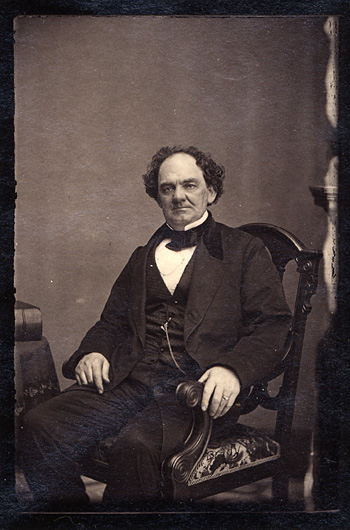
Phineas Taylor Barnum is frequently treated as a figure of cynicism personified. As the founder of what would eventually become the Ringling Brothers, Barnum and Bailey Circus, P. T. was a noted hoaxer and scam artist. He capitalized on the fact that people will pay to see anything they are gullible enough to believe. Unfortunately, many human beings were exploited for their unusual characteristics, but he was also known as a philanthropist with an eye for reform. Most people don’t realize that Barnum’s early career involved being a salesman for the Sears’ Pictorial Illustrations of the Bible. From Bible salesman to huckster extraordinaire. The great American success story.

In what I see as a related article on Religion Dispatches, St. Paul’s Cathedral, London, has taken legal action to move Occupy London protestors from its property. As religions go, it is difficult to conceive of a more established, conformist church than the C of E. (Well, maybe the Roman Catholic Church could vie.) St. Paul’s Cathedral actually charges an admission fee (not a cheap one either), perhaps cashing in on Mary Poppins; Feed the Bishops, I believe it’s called. The reason that the Cathedral is seeking to remove the undesirables (the cathedral is next door to the London Stock Exchange) is that they interference in business. Hard to charge admission to people who can’t come in. It’s not so much to save souls as it is to horde pounds. Problem is, the message of ancient Christianity more closely matches that of the Occupy movement than it does the Church of England. Barnum knew the selling power of religion. So do bishops and countless priests. How long do you suppose the clergy would remain if Christianity went back to the “tent making” model of the first century? I suspect there would be quite a few more prelates at Occupy London.

Somehow money and religion have become all tangled together. Not that I would begrudge any clergy of a fair salary—I’ve been on the receiving end of not receiving adequate pay myself, and I wish it on no one. When money, however, is the sine qua non of the religious establishment, where has compassion gone? One would like to think that clergy would be among the first to stand in solidarity with those protesting unfair business practices. But ah, the church is very establishment-oriented. Not just the C of E, either. Most churches have fallen into the comfortable zone of supporting the system and teaching their adherents that this is all in the divine plan. A kind of cosmic quid pro quo. According to the Gospel writers Jesus chased the money-changers out of the temple. Phineas Taylor knew that giving people what they wanted often trumped the honest truth. “The noblest art is that of making others happy,” he once stated. Somewhere along the line, the admission price shifted from the circus to the cathedral. There is one born every minute, indeed.


Jew Want Some Jesus with That?

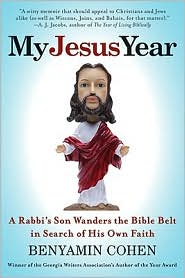
There’s been a trend in the last few years of journalists following a religious lifestyle not their own to learn something of another faith. This often leads to whimsical—occasionally funny—books that generally sell well. I appreciate the effort of those who try to open their minds to other belief systems, but the truly funny thing about religions is that they are very difficult to study objectively. There is a universe of difference between studying the papacy and being a Pope (I am only guessing here). This aspect of the religious explorer came through quite clearly in Benyamin Cohen’s My Jesus Year. Cohen, an Orthodox Jew, without compromising his faith, spent a year of Sundays attending various churches with two goals in mind: to learn more about Christianity and to appreciate his own Judaism more. The result is, for someone raised in the Christian tradition, a little disorienting.

We seldom tell children about other religions since such information would imply that religion is a choice, a marketplace. We prefer to tell our children that our brand is the right one—the only right one—because that is what we believe. By the time most children encounter those of other faiths, the indoctrination of their childhood has congealed. Many Christians will send their children to Christian daycare, often followed by parochial schools. Where would they expect to meet their first Muslim? Unfortunately, it is often on the battlefield. By protecting our children from the dangers of foreign faiths, we endanger everyone involved. So, reading a book written by a Jew, I felt a little strange—as if maybe Christianity wasn’t the majority faith after all. Given the wide diversity of Christianities Cohen cites, this is not so strange after all. Am I more like the evangelical Ultimate Christian Wrestling crowd or the Roman Catholic doing crossword puzzles during mass? Or none of the above?

Cohen notes that evangelical pastors (or laypersons, Christian or not) will sometimes share their secrets of success with those of other religions. Tellingly, he quotes Bernie Marcus, co-founder of Home Depot, explaining to rabbis how they might drum up more excitement: “You’re in the marketing business; you’re selling a product. You’re selling religion. It happens to be something that’s good for people. But you can’t get to them to sell them the religion because you’re in the marketing business and you don’t realize you’re in the marketing business.” Is that what it really comes down to? Religion is frequently described as a marketplace; it is the only paradigm available for the true capitalist. We’ve seen it take over higher education, and now those who give advice to religious leaders are the captains of industry. We have become victims of our own success. There was a time when religion stood outside the ordinary, but now it can be packaged and marketed and sold. An excellent exercise on your way to the store, however, is to stand back and listen to the other customers. If you are lucky, one of them will be Benyamin Cohen.


Bonfire of Vanity

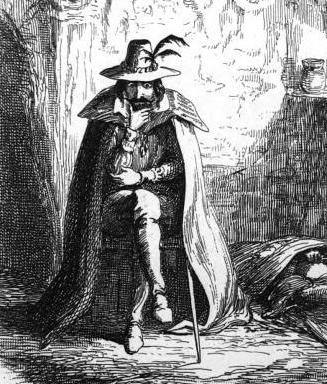
“Remember, remember the fifth of November, the gunpowder, treason and plot…” V for Vendetta is movie that gets me every time. It is not that I want to see venerated buildings destroyed, but I do want change. Very badly. When visiting Occupy Wall Street last week, I saw protestors wearing Guy Fawkes masks, made popular by the movie V for Vendetta. Verily, I had to smile. We may remember the Gunpowder Plot and how the victorious forces of the monarchy stopped Guy Fawkes just in time, but how often do we remind ourselves that the story revolves around religious liberty? Finding their religion outlawed, Guy Fawkes and his co-conspirators tried, in a very unorthodox way, to make a very valid point: conscience cannot be legislated. Indeed, in the movie, the political powers claim that it is “Godlessness” that has led to the villainy, the decline of society. In fact, however, it is that the vices of the rich and powerful have turned them against their voiceless commoners; vanity has led to this dystopic future.

Once more we find ourselves at vespers on Bonfire Night with wealth firmly in place, political, religious, and economic powers secure. And many cold, hungry, and without a vestige of hope. I’m not sure there is a solution to this problem, but if religion has taught any lesson of value at all, it is that we must try. We must venture to make the situation better. Even those who wallow in the status quo want growth and development, albeit for themselves, claiming it only a venial sin. If the human race is not to go extinct, ossified before its computer screens, iPhones, and televisions, we must use our voices. We must stand, and it is vital that we stand together.

“An idea can change the world,” V tells Evey near the beginning of the film. Once the leaders of the government take military control, the freedom of expression is soon vanquished. Books are not to be found, visual art is considered dangerous. Questioning those in power is the very stuff of treason. In my short time I have seen us coming dangerously close to that mentality and calling it visionary. When people are afraid they will close in around the virile leadership of guns and violence. But fear may be vanquished in another way. When we recognize that we are part of something greater, when we relinquish what is “rightfully” ours to help others, when we join in that great collective called humanity, fear itself will vanish. It is not just vaunted Wall Street that must be occupied. No buildings have to vacillate and fall. We must Occupy our Minds, for rage as they might, the wealthy and powerful cannot control a venerated idea. “Remember, remember, the fifth of November…”

Villain or visionary?


Dead Sea Souls

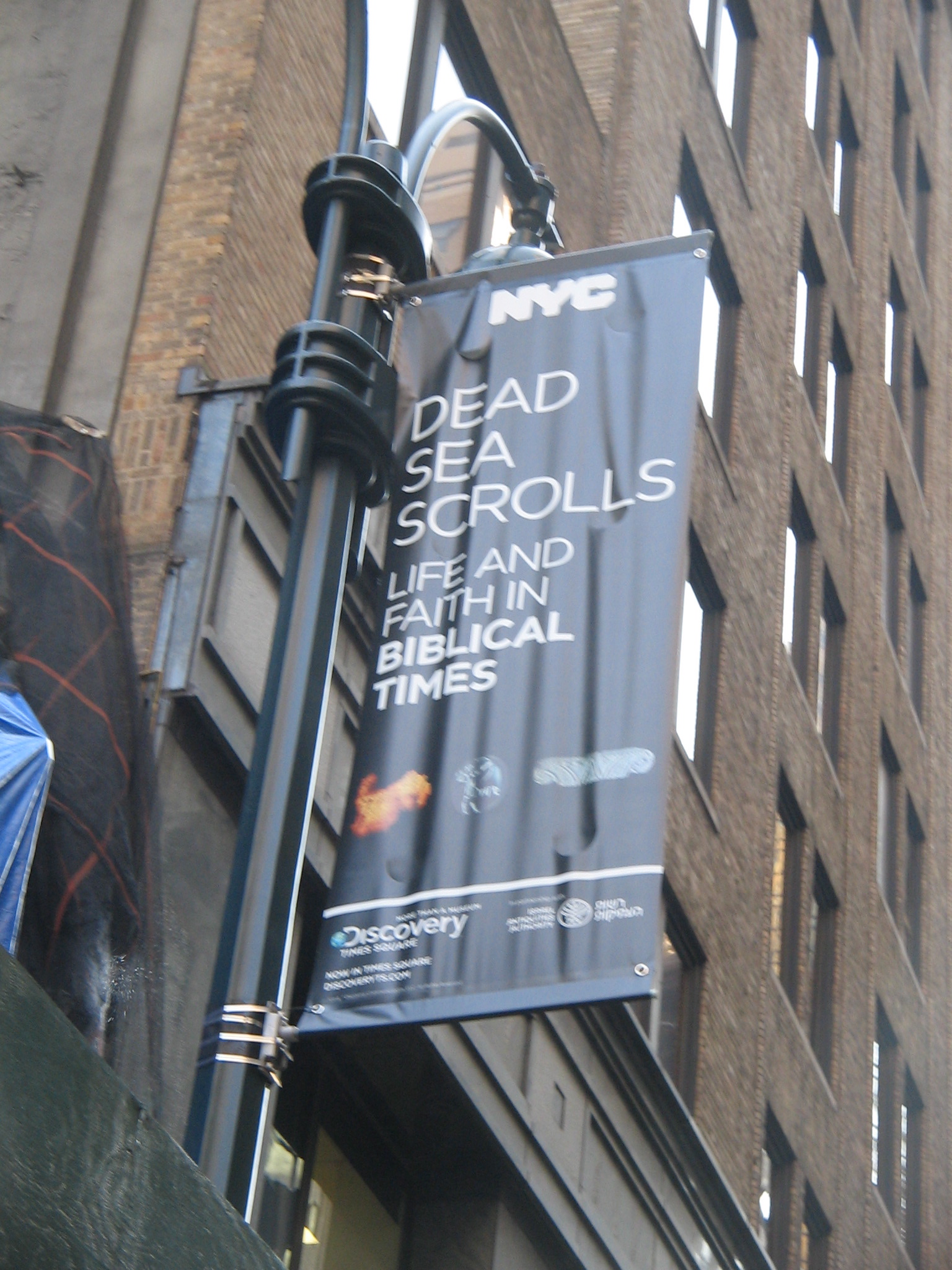
The Dead Sea Scrolls are coming to Times Square. Times Square is the kind of place where you know your being sworn at, but you’re never really sure in what language. It is a place of the people. So the sacred meets the profane. Mircea Eliade would be scratching his great head with his pipe firmly in hand. The Dead Sea Scrolls are the sexiest of ancient documents. Their story has it all: mystery, intrigue, conspiracy, romance—well, maybe not romance. A chance discovery by dirt-poor Bedouin in a desert, ads being taken out in the Wall Street Journal, clandestine meetings with ancient texts being viewed through a hurricane fence in a forbidden zone. And do those scrolls ever get around! I first saw them (those that are accessible to the public) in Jerusalem. The next time was in the Field Museum in Chicago. Now I’m feeling a bit blasé about the whole thing.

Those of use who’ve spent much time (too much time) with ancient documents relating to the Bible know that the Dead Sea Scrolls require no introduction. The far more interesting (and sexy–yes, literally sexy) Ugaritic tablets still receive slack-jawed stares of unrecognition, despite their importance. Those who read the stories of Baal, Anat, El and Asherah wonder why the “Classics” only begin with Homer. People have been creative with the gods since writing began. The theme of the human race might be summed up as, “if the gods are so powerful, what am I doing in a dump like this?” Fill in the blanks—that’s religion. From the beginning, once we’d come up with gods, we began to wonder why they treat us so. People are on the receiving end and so many things can put gods into a bad mood. It’s your basic dysfunctional family.

No doubt the Dead Sea Scrolls are important. We have learned much about the context of early Christianities from them. They provide the earliest manuscript evidence for the Hebrew Bible. And they’ve got that Dead Sea mystique. When I read the story of their discovery, I understand why crowds will flock into a tight room to stare through the glass at a bit of shriveled parchment that most of them cannot read. It’s like standing next to someone famous and powerful; maybe Moses or King David. Or more famous and powerful, like George W. Bush. I know, that was the last administration. But the Scrolls come from an even earlier one. I just hope somebody will give me a call when they find one that tells what happens when Baal meets Astarte. That will be worth the price of admission! And, who knows? It might even fit in with the spirit of Times Square (pre-Disney, of course.)


All Saints

The movies of Guillermo del Toro, despite their success, must be watched with an astutely analytical eye. Although my movie watching runs a few years behind at best, a recent viewing of Pan’s Labyrinth left me feeling a little hollow and very reflective. The gruesome story is well told, and the fantasy world, even at the end, is hardly believable. Like most films that deal with disturbing issues, religious concepts are not far from the surface, or sometimes, the depths. In this case, the distinctly Christian trope of self-sacrifice opens a portal to a mystical world where a God-like father sits on a shining throne. But is it real? We are warned from the very first scene that this will not end well for young Ofelia, that “heaven” is but a fantasy seen through the hopeful eyes of a dying child. Even the faun (“Pan” of the English title) wears horns that suggest to modern minds the slightly diabolical, although he is in the service of the mystical king. I was so conflicted by end that I was glad the next day was a workday.

It is not difficult to notice that the heroes of the film are the female characters. Even the good men are generally ineffectual, but the strength of Ofelia and Mercedes bear the weight of showing any hope at all. Captain Vidal betrays his name of “life giver” time and again unless life is understood as unremitting pain and torture. Even the end of the film is set up as someone having to pay the price; the king demands innocent blood—will it be Ofelia or her baby brother? Of course, the girl must pay the price. In an interesting interpretation of the sacrifice of the only child, the daughter here becomes the savior.

Fantasy often has the power to heal. This is a key aspect that it shares with religion. Scientists have sought in vain a mechanism that would explain the brain’s remarkable ability to heal the body under conditions of belief. At times we’re reduced to name-calling, suggesting that somebody’s got something up their sleeve. After all, could a disreputable character like Rasputin really hold the key to physical wholesomeness (to say nothing of moral rectitude)? And yet, there are those who are made well by the most unlikely means.

The peoples of northern Europe believed that the veil between this world and the next was severely effaced at this time of year. Darkness is more prevalent than light. Pan’s Labyrinth begins and ends in darkness, and even the daylight—when it briefly occurs—is subdued. With Halloween behind us, the most veracious season of the year
lies ahead. Let us hope that this labyrinth contains fantasy.


Twin Towers

The newly opened World Trade Center memorial in Manhattan is truly a solemn place. Staring into the seemingly endless holes into which the water forever pours, one feels the emptiness of loss like a thousand graveyards. Like watching the Titanic sink from a lifeboat. In the chilly late October morning hundreds were huddled about, looking at those reflecting pools with an undefined sadness in their eyes and a sense of frustration in their souls. So much loss. And for what? The American way of life has its towering foibles as well as its nobility. The protesters of Occupy Wall Street are mere blocks away in Zuccotti Park, reminding the nation that we have forgotten the principles of human decency even while we honor the fallen dead. It seems an appropriate epitaph for All Hallows Eve—a peaceful park where hundreds died just blocks from where hundreds camp in the cold. It is not too late to stop this ship from striking the iceberg.

Ground Zero

The symbol of peace, given to us by the Bible, is the olive branch. Actually the olive branch comes from the story of the flood; it is less a sign of peace than it is a sign that some of us have survived the wrath of God. Read into that what you will. The olive branch only comes after all but eight people pay the ultimate sacrifice. It is peace on the terms of a vengeful deity. Near the center of the memorial, one tree stands out. It is not an olive tree. After the devastating attacks of 9/11, workers found a living Calleri pear tree among the rubble. The scorched and battered plant was taken to a nursery where it recovered. It stands now in the midst of the peaceful reflecting pools, bearing not olives, but pears. The tree was saved by human effort, a symbol of peace, survival, and endurance.

A different kind of tower

I spoke with one of the protestors in Occupy Wall Street, and gave him encouragement. I suffered unemployment for long years when the weight of the flood crushed me to my own ocean floor. Loss and more loss. I was moved to tears in the World Trade Center memorial. The decision not to build again on the site where the Twin Towers stood is a symbolic statement to those who believe that evil triumphs in the end. The god of those who destroy others in the name of their faith is the god who destroys innocent and guilty alike in worldwide floods. This is a god who offers people with no knowledge tempting fruit that they are not permitted to eat. Nowhere in the Bible does it state the species of the tree of knowledge. Is there anyone left innocent enough to tell? Artists like to use an apple, an idea based on the similarity between the Latin words for evil and apple. I believe that loss of innocence was the price of maturity, and I believe the tree of knowledge might just have been a Calleri pear.

Peace


Zombie Jesus

It must still be October. Despite a snowstorm before Halloween (one of nature’s trick-or-treats), all the signs are still there. My daughter showed me a Venn diagram yesterday, during a whole-day marathon of putting plastic around our drafty old windows, showing the intersection of three “monster” traits: resurrected from the dead, local townspeople fear and revere him, and convert as many mindless followers as possible. The creatures that inhabit this eerie universe are Dracula, Frankenstein, Zombie, and, where all three intersect, Jesus Christ. Obviously this was just for a laugh, but interestingly, one of the traits of Penn Jillette’s book, God, No!, is his rather frequent reference to Jesus as a zombie. Then I clicked over to Religion Dispatches, and the lead story is headlined, “Praying to the Zombie Jesus.” Ours is a world of mindless, quick connections where the compelling idea of resurrection has lost its appeal. Despite our religious culture—or perhaps because of it—we have come to see Christianity as just one more peddler of a wonderful, disturbing idea.

As regular readers of this blog know, I find the abuse of religious ideals inexcusable. Using one’s faith to beat another down is just plain wrong. Nevertheless, to focus on the folkloristic aspect of resurrection (or perhaps it is a metaphor) is to miss what drew the very earliest followers to Jesus. Before the idea of rising from the dead came a message that people should love each other and treat one another with respect and dignity. By the end of the first century of the common era, or perhaps as early as Paul, that idea grew to be a quasi-magical resurrection from the dead. No longer were women counted as equals among the followers of Jesus, and no longer were wealthy compelled to give it all up. Paul’s faith looked to a future world, beyond death, and was willing to consider this world, well, to be polite, crap. The reasons for this transformation are legion: the persecution that Christianity was undergoing, the failure of an apocalypse to take place, the disenfranchisement of the believers. They needed something to look forward to.

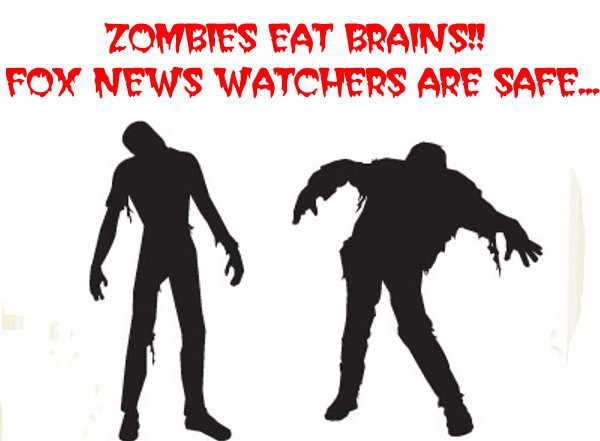
Zombies are likely a passing fad. When we start seeing books of zombie Christmas carols, zombie haikus, and zombie apocalypse survivors’ guides, we seem to be reaching the peak of the plateau. The zombie is mindless, rapacious, and entirely selfish. It will not go away. It is the perfect denizen of October. When I stare into those uncomprehending eyes, and see the disturbing lack of compassion and the desire to consume human brains, I start to make connections of my own. Analysts often describe zombies as the ghoul of the common folk. But all these characteristics taken together suggest that perhaps the month in which to expect zombies is November. Surviving another snowpocalypse, earthquake, and hurricane, the human spirit is difficult to dominate. And yet, when the polls open up in the darker season of the year, zombies will rise. The plastic on my windows does nothing to stop these chills.

Borrowed from a friend's site


Anglo-Wicca

Although it may seem the right season for witches, the revival of serious witchcraft in the religion of Wicca is a much misunderstood and maligned phenomenon. One of the persistant myths that many religions continue to perpetuate is that they go back to the very beginning. If any religion might rightly make that claim, it would be something close to Wicca, or nature religion. The fact is, however, all religions have histories and beginnings, and radical reshaping is not at all unusual along the way. In the western hemisphere, many like to claim a privileged position for Christianity. Certianly in the political world, such a claim is justified. Christianity shaped Europe, and therefore, by extention, all previous colonies of the European powers. The Christianity that shaped Europe, however, was the political powerhouse of Roman Catholicism, and later, reformed versions of the faith. The Catholicism of the Middle Ages, as may be discerned at a mere glance, shares little in common with the ideals given in the mouth of Jesus by the Gospels.

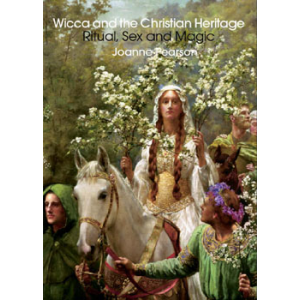
I just finished reading the provocative Routledge title, Wicca and the Christian Heritage: Ritual, Sex and Magic, by Joanne Pearson (2007). I learned a considerable bit about the modern origins of what is recognized as a tax-free (the sign of any true religion) belief system of Wicca. As Pearson points out, this Wicca dates back to the 1950s. What really caught my attention, however, was the tortured religious history of the movement’s founders. Enamored of Anglo-Catholicism (a form of ceremonial I had been force-fed for over a decade at Nashotah House), the founders of the religion (both intentional and unintentional) craved the seal of antiquity. Many of the players invented denomination after denomination of Christianity, sometimes acquiring ordinations and consecrations by hapless Eastern Orthodox bishops who misunderstood where they were spewing their blessings, in the attempt to show it was real Christianity. You need a roadmap to keep all the blind alleys straight. In the end, Wicca derived from an unorthodox combination of orthodoxy, Masonry, and Spiritualism. It is a wonder that modern Wicca appears as sane as it does.

Pearson’s book is not a full-fledged history, but more of a background to such a history. Many Nashotah House affilates, I’m sure, would rage to see time-honored names from Anglo-Catholic history alongside those often considered charlatans and posers. But when it comes to religion, even the most orthodox are very creative. Perhaps each gesture, vestment and accessory has a pedigree. None of them go back to a dirt-poor peasant who told his followers to give all material goods away. We may be willing to accept many things in the name of religion, but let’s not go overboard here. Not even the literalists do that.


Conversation with Solomon

“The rights and interests of the laboring man will be protected and cared for, not by labor agitators, but by the Christian men to whom God in his infinite wisdom has given control of the property interests of the country,” wrote George Baer of the Philadelphia and Reading Coal and Iron Company. In 1902. Along with Melville I’ve been thinking about old Ecclesiastes and his gloomy prognostications. The writer of this neglected book of the Bible claimed that nothing was new under the sun; what is has been before. I read the quote above in David DeKok’s Fire Underground (on which more later). I thought of Occupy Wall Street and the supposed great wisdom of the “Christian men” that God “himself” has appointed to towers of wealth for our benefit. As long as we keep our mouths shut and our hind-quarters out of Zuccotti Park. The data, Old Solomon, I must admit, are depressing. The staggering wealth of the top one percent is beyond unconscionable. Solomon? Are you still listening? After all, as one of the Lord’s chosen, Solomon was also a king. In his day, according to the book of Kings, silver was as common as the dust in the streets. Is that rain, or just drool from the towers of power?

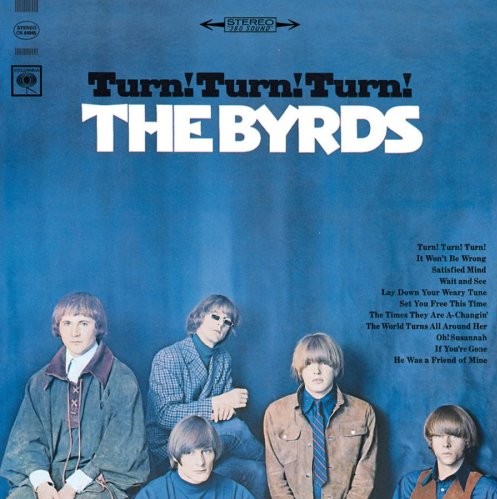
Old Ecclesiastes said the more that things change, the more they stay the same. He also inspired the Byrds’ “Turn, Turn, Turn.” As a society we have become reluctant to turn. Where did all that wealth go, Solomon? Did it not go to the temple and the palace? Seems there was a Religious Right even back then. As soon as Solomon died the common folk revolted. The chosen people split into two kingdoms that were never again reunited. Turn, turn, turn. The Christian men to whom God has given control have abandoned their posts. They’ve taken the cash and shared with their friends. Yes, America has kings. When the disparity is so great no other name applies.

“Cast your bread upon the waters,” Old Ecclesiastes says, “and it will come back to you in time of want.” I doubt that Solomon was ever unemployed. After working for “the Christian men” for over a decade, I was cast out on the waters, never to return. My stint of unemployment wavered in and out for six years. And I am one of the lucky ones. In that time I don’t recall feeling any wealth trickling down. I sure spent a lot getting the requisite degrees for a job that never materialized. So I sit down to read Ecclesiastes. Those who are addicted to wealth and power simply never took the words of the old sage to heart. We can excuse them, I suppose, since most clergy ignore him as well. When in need of some honesty, it is nice to know there’s a book in the Bible that is unafraid to utter the truth.


Great Gaps Be

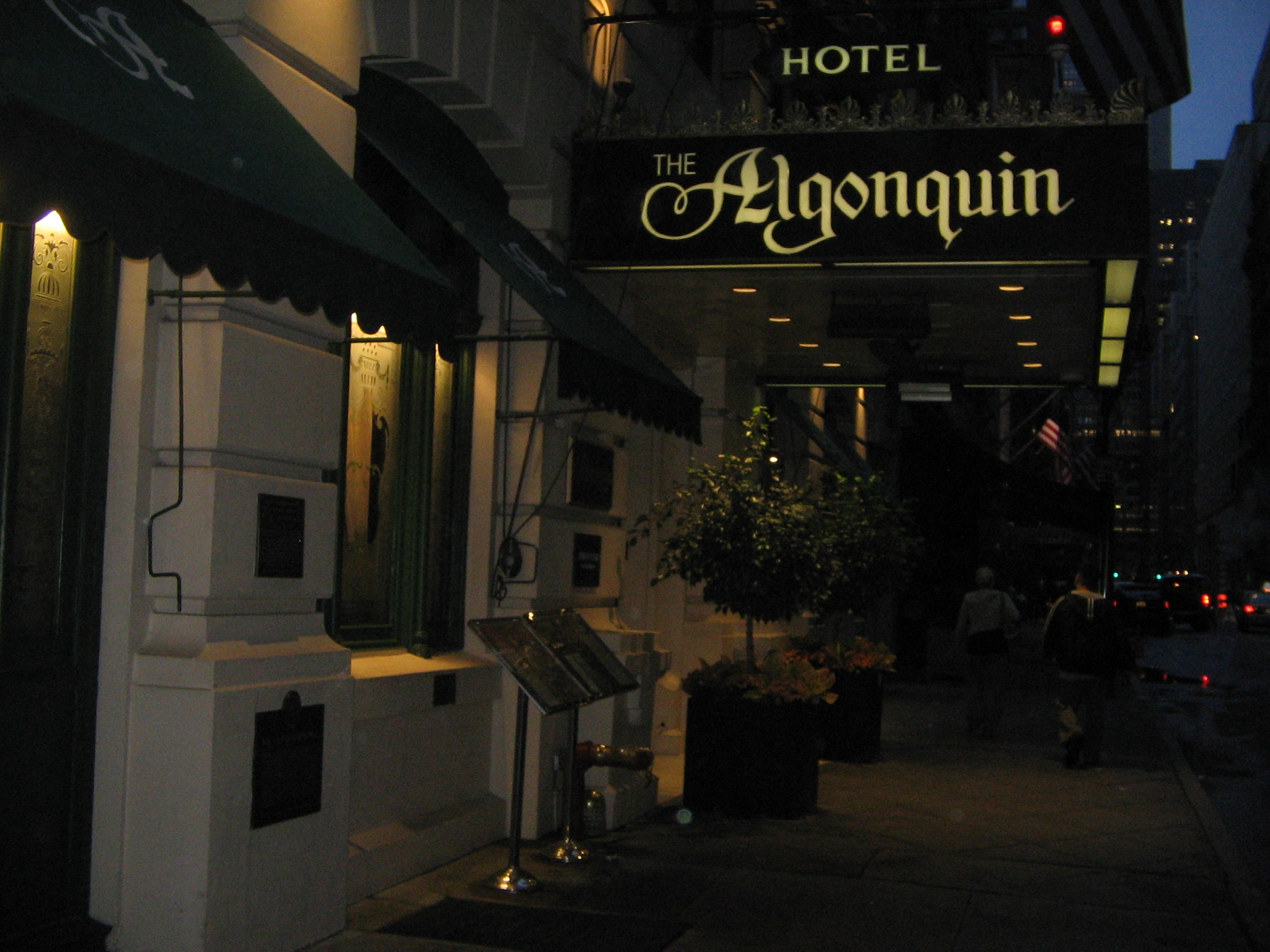
Before hanging out on my bookshelf, and countless others like it, F. Scott Fitzgerald and Dorothy Parker and their friends (including Harpo Marx) gathered at the Algonquin Hotel. Apparently without effort they forged a living at a trade to which I idly apply myself each day before dawn. They wrote the America of their era. There are those who say Parker haunts the Algonquin, but in truth her words, like those of her companions, are her legacy. Some of us dream of making a life out of words, but this is not much valued in our society where even concepts must have salability in order to be deemed worth the time. If it had not developed independently millennia ago, religion could never have emerged in a capitalist society. Certainly there are religions that barely qualify for the non-profit status they claim, but the founders of religions in antiquity were believers in idea, sacred words, invaluable concepts.

No society pours much money into what it truly values. Religions were never designed to be money-making ventures. Those of us who work in the book trade know that authors would write even if they never got paid a penny (and many of them don’t). Art, like religion, is an expression of the depths of human need. In a Wall Street society, however, those who don’t manufacture something, or get rich from those who do, are merely taking up space. We measure the success of a person by the chattels they own, not the linear feet of bookshelves they can fill. But when we need to find a human touch, a book is a far better companion than a checkbook.

When I walk past the fashionable Algonquin just as the sun is beginning to penetrate the dark valleys of Manhattan, I sense that two worlds are attempting to coexist here simultaneously. One is a world of separation and power. The other is a world where Harpo Marx sits at your table. F. Scott Fitzgerald gave us the Jazz Age, defining the brief interlude when the world wasn’t at war, defining with words that just about every high school kid will eventually read. Fitzgerald was never good with money, and even The Great Gatsby was not an immediate success. The walls of privilege are locked with stout doors indeed. Such a situation calls for the unparalleled wit of Dorothy Parker, but for some scenarios the last word properly belongs to Harpo Marx.


Zombie Reality

The origins of zombies notwithstanding, they are the autumnal monster of choice in a post-modern society. They are the symbol of secular resurrection—no faith commitment is required, no pristine, moral lifestyle. Resurrection happens to you by accident, a chemical, a disease, cosmic radiation—whatever the cause it is not divine. And the zombie is fair game for the release of violent aggression; already dead, there is no moral imperative to keep them alive and well. Each year the mass of zombie walks increases where children and adults alike become the living dead for a day. Macabre? Indeed. It seems that the very word “macabre” may have come into English from Hebrew. Hebrew words are based (mostly) on triliteral roots, words with three unchanging consonants. The Classical Hebrew word for “grave” is based on the root q-b-r. The prefixed m is often the preposition “from.” Macabre, morphed through Latin and French, could go back to the root meaning “from the grave.” Literally, the source of zombies.

Resurrection is among the most poignant of human hopes. Religions often assure us that death is not final, but we can never know that this side of the veil. Those we love go away, we hope, to a better place than this. It is no surprise that the largest zombie walk in the country is in Asbury Park. We can imagine better. Why can’t God?

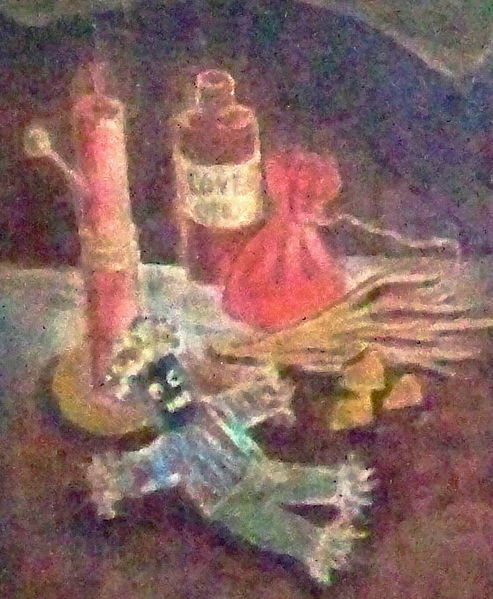
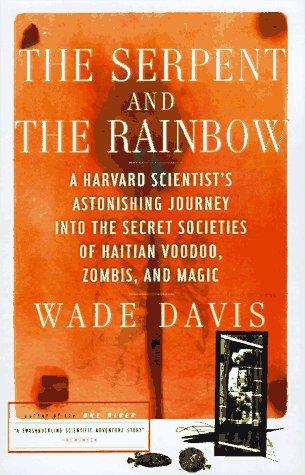
According to Wade Davis, there is a powder that vodoun priests use to zombify a person. This involuntary treatment does not actually prolong life, nor does it really resurrect the dead. It is, like many religious treatments, a show of faith. In The Serpent and the Rainbow Davis describes how psychosomatic attacks span the globe. All they require is belief. If a person believes in curses or the evil eye, the results can be physical and fatal. We create our own reality. Over the weekend I watched What the Bleep Do We Know? again. I sometimes showed this movie to my classes. Here physicists and gurus together affirm that we create our own reality moment by moment.

Zombies have migrated from the realm of religion to secular society. It is hard to imagine our modern world without them. They are cut from the same cloth as All Souls Day, reminding us of our mortality and suggesting that there might be something more. It is a reality we create ourselves.


Serpents, Rainbows, and Black Pearls

Riding on a bus with a bunch of coughing commuters may not be the best setting for reading about poisons and zombies. I am also aware that Wade Davis has come into criticism by some of his professional colleagues and that the movie based on his book, The Serpent and the Rainbow, may have led to an aneurism or two among scholars of Haiti. Nevertheless, Borders was closing down and a copy of the book remained on the shelf for an insanely low price, and October would soon be upon us. This past week I read Davis’ intriguing account of his experience with real-life zombies and the fascinating religion of vodoun. A number of issues were raised by his account, not least of which is that the feared religion of “voodoo” is a direct result of the evils of African slavery that brought indigenous gods into the realm of Christianity, and mixed them vigorously. My first “exposure” to vodoun was in the old James Bond movie, Live and Let Die. It terrified me as a child, and even with rational eyes, I’m not sure I fare much better as an adult.

No matter what one thinks of Wade Davis and his work, The Serpent and the Rainbow is a fascinating work. One of the most interesting aspects Davis raises is the continuing issue of defining death. Premature burial may sounds like the hysteria of a Poe-induced nightmare, but, as Davis shows, most methods of measuring death are susceptible to being fooled. Those who are termed “zombies,” in the vodoun sense of the word, are people declared dead by medical professionals, yet who are later found, after their burials, very much alive. Many readers will find this difficult to accept, but it is a phenomenon that goes back to Seabrook’s swashbuckling adventures of early last century and even before. If Davis is to be believed, it is thoroughly documented.

Paradigm shifts are seldom welcomed. We prefer to live within the comfort of the universe in which we grew up. Science and religion agree on this point—things are not what they seem. Zombies in the Walking Dead sense do not exist despite the fact that they are the kind most popularly known. We like them because they can’t hurt us; they lurch through the streets of our nightmares and our zombie walks, but they are not real. It could be, however, that our understanding of our world is woefully incomplete. Confronted with that which challenges our tidy universe, whether it be quantum physics or Haitian religion, we must consider the benefits of a mind kept open to the possibilities. Do vodoun priests in the hidden shadows of the Caribbean enslave the living dead? Disney answered with a resounding yes in Pirates of the Caribbean, but then, in Hollywood it is sometimes preferable to have the zombies in front of the screen.


Haunted Purgatory

Halloween season is a time for both pagans and evangelicals alike to tremble. Our usual local “haunted house” for charity being closed this year, my family went to the local haunted farm last night. In a nation where few of us grow up on farms, the agricultural world is already a foreign environment. And corn is a scary plant when it dries out, especially at night. The Creepy Hollow part of the farm tour was a long, rambling stumble through a corn field where costumed actors jump out at you or just as ominously shake the cornstalks as you walk by in the dark. Senses that we have long ignored leap to full attention, scanning for any possible fright. At nearly a mile long, this haunted trail was pretty intense, and I’ll admit to being glad to have seen the open field at the end. One of the props along the way was a haunted church. As I’ve noted before, religion and fear often stride hand-in-hand.

Earlier in the day, my wife had pointed out an article in the Huffington Post about the dilemma many evangelicals face when their kids want to celebrate Halloween. A holiday of Catholic and pagan origins (both feared equally by the truly staunch evangelical), Halloween is a season of dangerous influences. In response, some groups have started their own “Hell Houses” designed to show kids the horrors of Hell as they walk through a putatively non-fiction version of fear. The intention seems clear enough, although a little odd for a religion that claims to be based on love. The Hell Houses are part of an alternative holiday called “Jesus Ween” and people are encouraged to give out Bibles rather than candy. At least they got the scary book part right.

In an unrelated yet relevant story, Time projects that the seven billionth person will be born on October 31. I remember when there were just four billion of us, and my teachers began pointing out the stresses we place on our environment. Of course, those who co-opt the identity of being “pro-life” advocate for as many of our species as possible—less for God to pour out love, but better to populate Hell, apparently. The Roman Catholics share this petard with the evangelical camp, as Monty Python made famously clear in The Meaning of Life. We have overcome (largely) nature’s control on our expansion, and as Halloween, or Jesus Ween, races nearer, we have less to fear from chainsaw-wielding maniacs than we do from Bible-bearing clones who claim it is divine mandate to stress our own planet to death.