Life’s Soundtrack

Calvin once said to Hobbes, “I thought my life would seem more interesting with a musical score and a laugh track.” In many ways, our lives do have soundtracks. From my youngest days dramatic music has moved me and Jim Steinman always seemed to know just which buttons to push and strings to pull to bring it off. Growing up in humble circumstances, however, I missed the whole video craze that accompanied MTV, back when MTV still showed music. Friends would tell me about the great videos I was missing, and I let my imagination run wild. Recently, however, a friend pointed out the video of Bonnie Tyler singing the Steinman hit, “Total Eclipse of the Heart” on YouTube. This particular video brings together so much of my adult life that it seems like Steinman spent a few years inside my head. Well, maybe not that much. The song came out just as my first love was breaking up with me, back in college. I attended Grove City College, a campus that, despite its pristine Christian image, can be very gothic at night. The first chords of that song are always like a stake through my heart. Few experiences in life are as dramatic as unrequited love. Just queue up that song and I’m a college junior again.
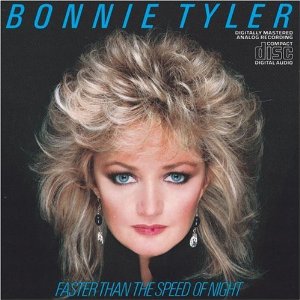
The video, however, is set in an old-style boy’s boarding school. The setting is not far off from the antiquated campus of Nashotah House seminary, gothic both by day and by night. The imagery of the video employs English trappings of cassocks and surplices and candles along with clandestine romps in the night. Seminaries, in my experience, leave many secrets in their shadows. My heartbreak as an undergraduate cannot compare with some of the drama I witnessed both as a student and a professor in seminary. The pious are often among the most passionate of people, but they must learn to be actors before their congregations. Such inherent conflict is fertile ground for intense drama. The video plays this out with the headmistress (Tyler) fantasizing about her young male charges in a highly ritualized, yet anarchic setting. Too close to the truth.

The sacred and the profane lie close together and may be teased apart only with difficulty. The experience of buying an LP when I was a teenager was an investment for not just the sound, but also the album art, the aroma of the vinyl and ink when the plastic wrap first came off, the feel of the heavy paper sleeve housing the disc. It could transport me to another place. Today the iPod reduces the sounds down to background noise, not a soundtrack. The drama we create for our lives is efficient and convenient, but in the end, plastic. Perhaps it is Calvin’s laugh track. No matter. Even if it is on YouTube, with its electronic sound, that video will take me back decades in time, and will be one of the repeated songs on the soundtrack of my life.

Dusty Flowers

V. C. Andrews was a name familiar to me from skulking around used bookstores where tons of over-printed, read-only-once books line the shelves. I had seen Flowers in the Attic on many shelves since the 1980s, but supposing it to be a romance title, I showed no interest. As Borders was closing, however, I noticed a copy of the novel on the horror shelf and couldn’t fight the curiosity any longer. I guess it might have been building, subtly, for three decades. My wife was surprised to see it in my stack, but I professed my lack of knowledge and began reading it.

Horror is a strange genre of writing. It is defined in various ways, but I have found that authors deal with their own fears with a variety of strategies. After thirty years I need not worry about spoilers, so I can say that the concept of a parent destroying her own children is about the scariest scenario imaginable. What makes the story of interest here, however, is the treatment of the Bible in the story. After the premature death of their father the Dollanganger children are secreted away in an unused upstairs wing and attic of their wealthy grandparents’ mansion. While the hidden foe is really their mother, Andrews introduces the grandmother as the Bible-quoting, intolerant, prejudiced symbol of oppression. Quick with the rod and completely unforgiving, she goes to bed each night reading her Bible and she insists the children do the same. When she finds an excuse, however, the children are lashed for being wicked.

Interestingly, it is the mother who is never shown quoting the Bible. Towards the end of the story the children recognize that while she is evil, the grandmother would not directly commit murder. The mother who has tasted the intoxicating liquor of wealth, however, knows that even her own children cannot stand in the way of her inheritance. The adults in the story are twisted—some by religion, some by greed. The questions raised by children, like all of us innocent of our own existence, merely ask where the love has gone. Religion without love is Hell, as the pictures selected for the children’s prison by the grandmother clearly show. Worse than Hell, however, is the blinding love of money.

We are all flowers in the attic of an uncaring world. Some find comfort in the power of wealth while others resort to religion. Many try to combine the two. At the end, those who are truly noble are those who survive without either.


Scared Mittless

Once again Time magazine has presented an article where the intelligent are left scratching their heads about religion. Jon Meacham’s Commentary, “An Unholy War,” details how evangelical concerns about Mitt Romney’s Mormonism has an undue weight in regard to his presidential candidacy. For many years the media industry has considered religion passé and without teeth. Sure, the street-corner preacher can still give you a good gumming, but it is rarely fatal. What those who’ve never felt the utter urgency of religion can’t appreciate is, well, its utter urgency. In a day when Buddhist monks and Catholic nuns are wired up to electrodes and told to find that spiritual sweet spot, it is easy to forget that these aren’t just laboratory fictions. For many people in the world, their religious experiences are very important and of sometimes deadly—sometimes eternal—consequence. The sophisticated, the educated, laugh it off as so much hoodoo, and try to get on with human progress. For those raised religious, however, escape is neither easy nor desirable. Those in positions of actually influencing the public need to recognize that religion is not a luxury, a trapping that might be cast off. It is a life choice cast in iron.

Just as serious as the analysis of religion is the incredible influence of religious teaching itself. Take a young child, barely old enough to understand death, and tell him or her that the worst thing they can imagine just can’t compare with the torment God has cooked up for those who step out of line. Repeat. At least once a week. When said child becomes an adult, these early ideas are deeply embedded. Since the 1980s elections in the United States have been restyled as religion popularity contests. With eternal consequences riding on the ballot, political analysts ought to be required to have had taken at least Religion 101. Probably a few upper-level courses would also help. Despite the optimism of scientists and academics, religion is not going away. The reluctance to take it seriously will not diminish its power in people’s lives.

As became very clear reading Philip Jenkins’ Mystics and Messiahs, it has only transpired that the Church of Jesus Christ of Latter-Day saints has been recognized as un-culted for less than a hundred years. As a relatively new religion, Mormonism was a “cult” until it had survived long enough to gather a band of respectable followers, such as Mitt Romney. Many Christian groups, particularly evangelical ones, have not released their perception of Mormonism as a cult. Romney, in their eyes, is effectively as pagan as Obama. Their votes, as the eight-year nightmare of the Bush administration demonstrates, can decide elections. Still, we the sophisticated laugh off the country rubes who still believe in God. And although we don’t believe in it, we already have, and may well once again, come to suffer through Hell to show just how educated we are.


Had my Phill

One of the pleasures of the editorial occupation is traveling to campuses to meet potential authors. Having no excuse not to go to Philadelphia, I jumped on a train this morning to spend the day on the campuses of the University of Pennsylvania and Temple University. I’d been to both campuses before, but they are a study in contrasts. Penn is Ivy League, of course, and the students appear confident and self-assured. Temple is a large, public university situated in a neighborhood that doesn’t exactly inspire the same confidence. The students appear happy enough, but of a rather different ethnic blend. I pondered these differences while waiting for a taxi. I hadn’t realized that PHL Taxi stands for “Prefer Hanging Loose”—after three calls and no vehicle, I had to call another company. To try to save Routledge a few pennies, I had opted for the Days Inn in north Philadelphia. A friend told me over lunch that this part of the city is probably not the safest.

In the taxi we drove through neighborhoods that politicians like to pretend do not exist. The sheer degradation of the buildings, sidewalks, and people was sad. The most common type of building, next to houses (many semi-demolished), is churches. Many of the churches bear their names in Spanish; most have heavy metal chain doors emblazoned with crosses. It seems that maybe Van Helsing would go to church in a place like this. The kind of place where a dead body does not astonish, and the people on the street corners look remarkably cheerful, given the circumstances. The Days Inn is in a more open and commercial area, and I don’t think anyone has actually been murdered in this particular room. On Temple’s campus I saw many signs for Occupy Philly.

Those who think everything is just fine with the ultra-wealthy in their heaven while we expect human beings to live like this are worse than naïve. Those who are privileged look on Occupy Philly with a sense of academic curiosity. Those who live next to poverty, hard up against it, see Occupy Philly as a mandate. We can’t keep pretending that everything is okay. If God has a plan for America, why have so many people been left out? People with more churches per block than any affluent neighborhood desires or supports? The movement may be ill-focused and leaderless, but the need is very real. Tomorrow I go back to Temple, back to where the struggle is often life and death and the need is very human. But for this evening, “Now I lay me down to sleep…” I’m sure you know how the rest of it goes.


Yeti Again

Time magazine announced last week, in a story spelled out on Time.com, that “There may be solid evidence that the apelike yeti roams the Siberian tundra.” This is surprising news given that even in the face of good evidence, science is reluctant to admit new large animals to our biological family. The reasoning goes that since humans (mostly white, male humans of the western hemisphere) have explored most of the landmass on this planet, we could not have missed any large land creatures. There are rare exceptions, such as the mountain gorilla, added to our database only about a century ago, but it seems to have been the last of the large animals to avoid detection. Now the yeti, the bogeyman of many childhood dreams, may be coming to life.

Science is our way of describing and theorizing about what we have discovered. Many therefore assume that science is all about new discoveries. Some of us feel a tinge of sadness at having been born after the great era of discovery. Reading about how adventurers (responsible for far more fundamentally earth-shaking discoveries than scientists of their times) ventured into new worlds and declared the wonders of God revealed in the formerly unknown, is always a humbling experience. We know so little. The mark of the truly educated is not the claims of great knowledge, but the admission of how little we really understand. Does the yeti roam the inhospitable and very sparsely populated regions of Siberia and the Himalayas where it has been a staple of folklore for centuries? We may never find definitive proof, but Time holding out a candle of hope seems a step in the right direction.

Relegated to the world of the “paranormal,” elusive animals demonstrate that the ways we know about the world are multitude. Science does not, and does not claim to, know everything. Indeed, science has a limited frame of reference within which it works. Going out seeking cryptids is not, properly speaking, science. The belief that those seeking evidence display is closer to religious conviction. That does not mean it is wrong or that it is founded upon faulty suppositions. It is simply a different kind of knowledge. It is common to say science is in conflict with religion. It need not be. If we accept science at its word, as doing what it claims to do, there is no need ever to question assured results. Belief, on the other hand, seldom crosses over into the realm of objective truth, empirically demonstrated. If it did, it would not require believing. If yeti is discovered, there will be much celebration among believers, but the creature will necessarily pass into the hands of science. For this reason alone, many are glad to leave it in the realm of folklore and myth. Either way, to some people, yeti will always be real, whether scientifically verified or not.


Step in Time

Magical blingdom

Mary Poppins is one of my wife’s favorite childhood movies. I first saw it in college and, being a parent, have seen it many times since then. Now when I walk through Times Square I see it is playing at the New Amsterdam Theater, and if I time it right I can hear bits of the musical on my way to the Port Authority after work. As is normal in the universe according to Disney, nothing is really ever seriously wrong in the London of 1910. Troublesome children are doing nothing more than chasing a kite and attempting to connect with an emotionally distant father. Even when he loses his job, Banks merely suffers an inverted umbrella and a punched hat. Joblessness lasts for only a day. Everybody sings. When we watched the movie again recently I considered how such an escape is healthy for those of us accustomed to a somewhat harsher adult existence. Joblessness is often long-term and desperation reeks as we find ourselves distanced from that which defines our existence.

Mary Poppins represents a divine figure in the Disney universe. She comes down from the heavens during a troubled period of history, judiciously utilizes a bit of magic, and heals the broken-hearted. When things go bad, Mary Poppins is there to make them right again, even on her day off. She shows the cold-hearted world of business that there is a better way. Who would you rather be—George Banks or the Bird Lady? Who is happier?

“All around the cathedral, the saints and apostles,” saintly Mary sings, “look down as she sells her wares. And although you can’t see it, you know they are smiling each time someone shows that he cares.” Where are the saints and apostles of Wall Street? Instead the optimistic view of humanity plays itself out on Broadway where the intensity of humankind spans from homeless beggar to movie star. Fantasy is underrated. Our minds have evolved the capacity to allow us to escape the realities of suffering, disappointment, and angst. When a week of trouble and turmoil has held us in its grip, we may still escape to the magical kingdom of our choice to find bread and circuses. Mary Poppins does not condemn the greed of Mr. Dawes and the rich die laughing. It is difficult not to like Mary Poppins, the angelic symbol of care that doesn’t disrupt the system. And Disney will see no end to its place among the wealthiest families on earth. It is a small world, after all.


Preoccupied

I wonder if I’m the only one who feels uncomfortable with the proliferation of armed military guards in public places. I know the rhetoric that “freedom is not free” (what is it then?), but when the coffee hasn’t really kicked in yet and I walk by guys young enough to be my kids holding machine guns in the bus terminals and train stations of New York, I really don’t feel safer. Sometimes I might look like a radical. Sometimes I don’t get my hair cut as often as convention dictates I should. Sometimes I forget to trim my beard. Some days I throw on my denim jacket as I head out the door in the predawn hours. Some days no one sits next to me on the bus. Am I the enemy here? I don’t like the idea of strangers seeing me naked in airports—even if only electronically. I do like the freedom of expression, but it is no longer really free.

I suppose that’s why I’ve noticed the other peacetime occupation going on in New York: Occupy Wall Street. It is time that people say “enough!” The religious leaders with the loudest voices declare this a dangerous thing, “class warfare” they say. The wealth that lines the very upper crust, however, is simply obscene. Was a day when wealth came with a healthy dose of social responsibility. They just don’t make Andrew Carnegies any more. A few Octobers ago my family visited Sleepy Hollow, New York. The cemetery made famous by Washington Irving (who is buried there) also houses William Rockefeller and Andrew Carnegie. On the top of the most prominent hill is a classical style, opulent mausoleum for the Rockefellers, overlooking all others. Down at the base of the hill, hidden away in a humble, quiet corner is the modest tombstone of Andrew Carnegie. I am certain that Carnegie was no saint, but he did not let his wealth go without doing some good for his fellow citizens.

Freedom is not free, but excessive wealth is tax-free. And Jesus was a venture capitalist, I’m told. We are a nation occupied in peacetime. We are occupied by our own military and their commanding officers in the towers of Wall Street. The GOP can’t support Occupy Wall Street, for it will alienate the moneyed vote it so craves. Call it “class warfare” instead. Those uppity middle and lower class bums! When the select few human beings climb too high in their towers to see the suffering of those down below, images of Babel come to mind. Babel is code for Babylonia in the Bible—the wealthy, powerful oppressor of the poor and displaced. If wealth breeds superiority, we are all in very deep trouble; the battle is already lost. In the meanwhile, I suspect Jesus might secretly be on the side of those camped out in sleeping bags, waiting for the sign of Jonah. And it has nothing to do with being swallowed by a whale.

Or maybe it does.


Cenobic Marvels

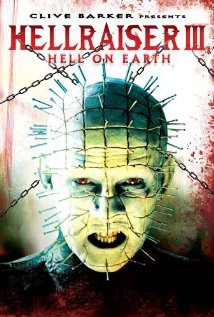
Among the most explicitly religious of horror movies, Clive Barker’s Hellraiser series exploits biblical themes and tropes to blur distinctions between sacred and sacrilege. Not a fan of gratuitous gore, I began watching the series after reading Douglas Cowan’s Sacred Terror. Cowan utilizes this particular series to illustrate how deeply the religious mythology may reach, awaiting the fourth installment before finally having an explanation. Curious, I have been making my way through slowly. October seems a good time to consider the unsettling aspects of human nature, so I watched the third installment, Hell on Earth, this weekend.

Funnily, I do not find Pinhead particularly evil. Perhaps that is the intent. His eyes seem too kind to be a true villain. As the leader of the demonic Cenobites, he leads the curious down the path of exploration to ultimate destruction and, appropriately enough, Hell. The Hell presented throughout the films, however, is the true desire of the victims. They stumble upon a puzzle box, but when it is opened the curious find themselves trapped. The very use of monastic ideals as emblematic of Hell is surely a commentary on the futility of self-inflicted means of grace. Does not the flagellant at some level enjoy the pain? Where is the religious value in that? In Hellraiser III, Joanne runs to a Catholic church for help with Pinhead in pursuit. As any horror fan knows, the church is never a haven against evil. Pinhead makes himself a parody of the crucifixion while a helpless priest tries to defend God.

Horror films are a remarkably successful genre. At least one aspect of the appeal is the unabashed use of religion. Conditioned by the old films such as Dracula, the early twentieth century taught us that the church kept us safe—crucifixes always used to work against vampires! By the end of the century that vision had shifted. The church of the early twentieth century was a preserve of male power, a place where men made the rules and abused the rules and no one questioned them. As the century progressed, we became wiser. And more vulnerable. By the dawn of the new millennium, when such movies as Hellraiser III were being filmed, the security of the cloister had itself become a source of fear. October is the season of reflection on the transience of summer and ease. Perhaps it is also the season to reflect on how our perceptions of religion are ever shifting as winter wends its way toward us once again. And Mr. Barker will be standing there to remind us that we each create our own Hell.


Jots and Tittles

While busy editing during the course of the day, I ran across this line in a Routledge book entitled What is Religion?: “We live in a pluralist, inter-racialist and multi-faith society and the need to understand one another is greater than ever before. Much misunderstanding arises from racialism and nationalism and could be avoided if people knew more about the beliefs and practices of one another.” Amen, Robert Crawford. I would, however, add a caveat to his statement: even more conflict could be avoided if people knew their own religions. I know many people, especially in the United States, who have no idea what their religion’s official teaching is. I know Presbyterians who have no concept of the official doctrines of this organization they’ve joined. Many Catholics, given the more corporate structure of that church, know the teachings but choose to ignore those that just don’t match the realities of life on earth. In such cases, the question of acceptance of religious teaching is a very relevant point. Can you get to heaven without crossing every “t” or, because it sounds more interesting, observing every jot and tittle? (By the way, “jot” is a stand-in for “yod,” the smallest Hebrew letter, “tittle” roughly translates as “serif” or the fancy little calligraphic flourishes typical of Tanak manuscripts.)

Religious membership devolves into self-declaration, often of a self-perceived version of the religion one favors. The vast majority of people are born into their religions, an immediate red flag that absolute truth claims will necessarily lead to conflict. And it won’t help to try to devise some Uber-religion that includes all the others, since apart from the occasional Universalist or Bahai, nobody buys that other religions are quite as good (or right) as theirs. Even the task of defining what religion is remains beyond the reach of mere mortals. I find Bronislaw Malinowski’s observation apt, that religion grows “out of the conflict between human plans and realities.” We can imagine a much better world than the one that exists. In some such fantasy worlds, religion itself ceases to exist.

Religion never existed in any pure form. It did not descend from the sky in a unified whole. Instead, religions have been cobbled together by people since the Paleolithic era, and we simply don’t have the time, resources, or influence to go back and start it all over again. Religion may be defined as conflict. Conflict between what is and what ought to be. Conflict between right and wrong. Conflict between us and those who believe differently than we believe. Religion brings, as one founder stated, a sword. Religion gets passed down the generations just as surely as the family jewels and deeds. To ask anyone to relinquish such valued property, even for the sake of world peace, is too much to ask. Even getting people to understand what they claim to believe is too much effort. It is much easier to praise whatever lord and pass the inhumane ammunition.


Job Well Done

By now the world is well aware that Steve Jobs has died. As an avowed Mac user, an encomium for a man I never knew seems somehow appropriate. In a world where most religious leaders are known for their lack of vision and staunch conservatism (“Where there is no vision, the people parish,” to paraphrase Proverbs 29), Steve Jobs gained high priest status among technocrats for making the computer accessible. Even if you are reading this with a PC—thank your lucky Mac-OS-emulating Windows that you didn’t have to begin with a god-forsaken C-prompt—Jobs’ impact is part of your daily life. Although Mac has always been second fiddle in the computer market, Apple has always taken the lead in the gear: your iPods, iPhones, iPads, perhaps even the letter ”i” itself. We have entered the world of the Matrix, so much so that earlier this year it was reported that Apple fans experience a high like a religious encounter when they behold Apple’s mighty hand.

Nevertheless, a deep uneasiness overtakes me when I consider how helpless I am without my electronic accoutrements. When my laptop crashed last month, I was completely disoriented for about a week. I didn’t know what the weather was supposed to be like, who had tried to email me, and just how few people had decided to read this blog. I had become immaculated, and I was embarrassed. I miss the days of wandering carefree through the forest, concerned only about bears, cougars, and getting lost. Not having to wonder if there is an email I had left unanswered or if some new gadget had been invented, or if I had forgotten the birthday of someone I barely know on Facebook. No, electronic reality has supplanted actual reality. On the bus I’m nearly the only one who passes 90 minutes with a book. The glow of LCD screens peer like huge eyes in the pre-dawn of a New Jersey highway.

If it hadn’t been for Apple, I would not have joined the computer race at all. Back in college, several of my friends and I vowed we would not give in to the computer craze. I made it through my Master’s degree using an honest-to-God typewriter with ribbons, white-out and retypes. Today I can’t image how I ever survived all that. My wife first encouraged me to use a computer. She took me to the computer lab at the University of Michigan one Saturday and sat me in front of an Apple. “See, it’s easy,” she said. She was my Eve, offering me the bite of an Apple I’d never be able to put down.

We dream of building legacies, something to show that we’ve passed through this weary wilderness. Steve Jobs did not live to be an old man, but he has left a legacy. This blog, and countless others like it, would be inconceivable, were it not for his genius.

The apple tree keeps giving.


Always Against Us

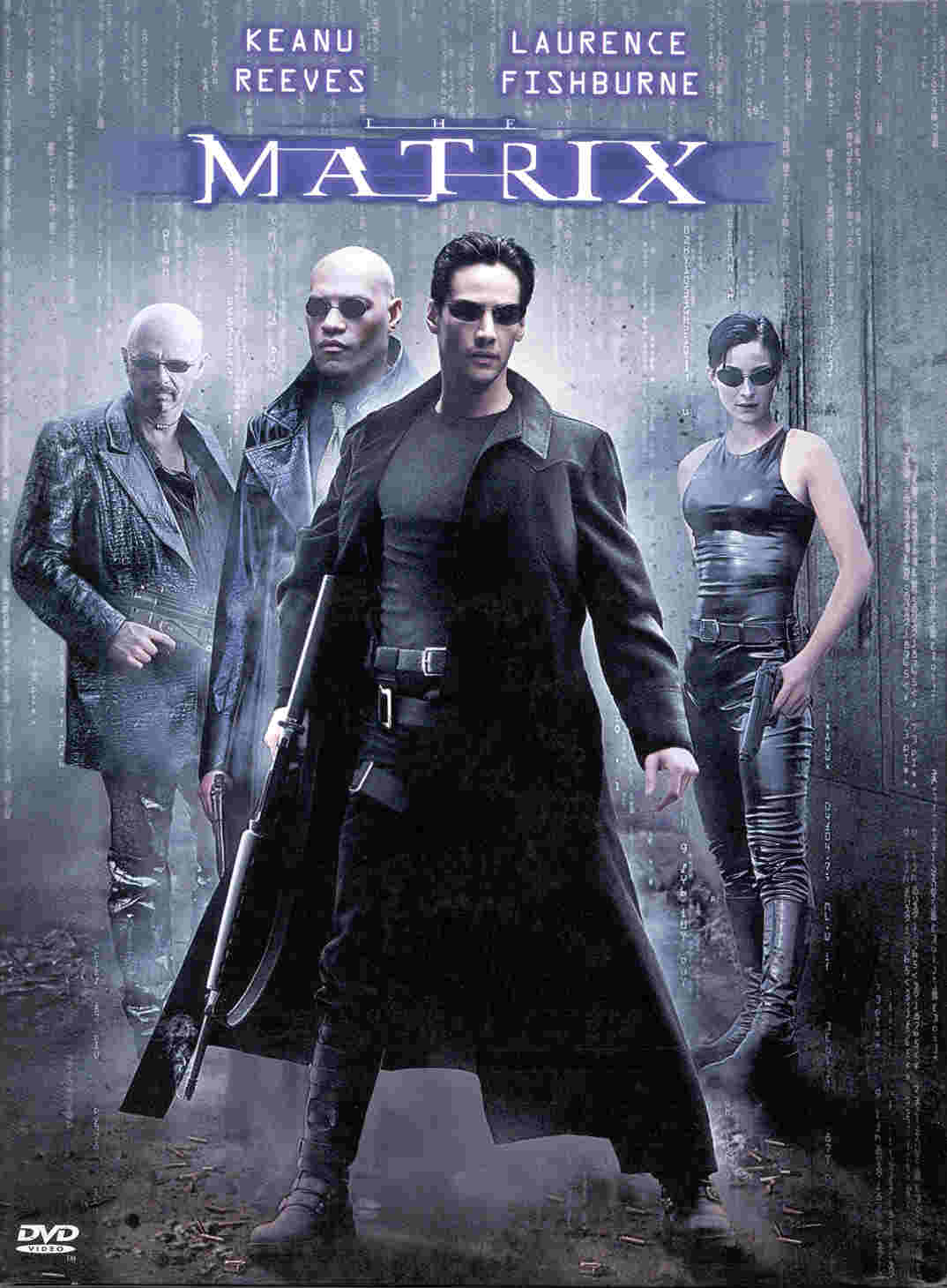
In one of the coolest homework assignments ever, my daughter was supposed to watch The Matrix. Her digital electronics class makes constant reference to the movie, so her teacher decided that in order to “get it,” those who hadn’t seen the movie should watch it. I know the film has many nay-sayers and some of the acting may not attain the highest standards, but it remains among my favorite movies. At Nashotah House, early in the dawning millennium, many students watched the film religiously. One student had it on his laptop and a small knot of his classmates would gather around just about every morning to watch before my class began. I was a bit put off by the claims that it was a “New Testament allegory,” but I have come to realize that without resurrection, the film industry in this country would be dead. American audiences (especially) crave the possibility of coming back. And even though I’m as much a sucker for a good love story as the next guy, that resurrection scene isn’t the highlight of the movie. Not by a long shot.

The Matrix has always been one of my favorites because of the basic premise: what if the world is not real? I’ve been plagued by that question for about as long as I can remember. When, in my first philosophy class, I learned about naïve realism, my worldview shifted. Who’s to say what’s real? And if someone decides to shoot me to shut me up, the lights might go out, but will there be anything left behind? Not that I believe I’m a source of energy for evil robot overlords (I get too easily chilled to believe that), but I often think about the tenuousness of it all. Our reality changes when we fall asleep, and each day we assume that a continuity is the same as the essence of our existence. There’s no way to check it, however, and I’m not entirely convinced. That’s why I like The Matrix so much. Someone else understands my deep fear that none of this is real.

The moment when Neo refuses to leave, but turns to fight Agent Smith, Trinity asks Morpheus what is happening. Morpheus responds, “He’s beginning to believe!” That line always gets me. The idea that something out there actually tips the balance on the side of good creates a longing so deep that it hurts. When I wake up the next morning, however, I see the headlines bring more suffering, more status quo ante-Christ. The last thing I want to see on the front page is Chris Christie’s face first thing in the morning. It can be a very cruel world. In one of Morgan Freeman’s Through the Wormhole episodes, a scientist suggests that a Matrix-like world may match our reality. God, the scientist suggests, may be a programmer and has coded us to live in a virtual world. The tapping of my fingers is just an algorithm. I’m not yet beginning to believe that. But if I ever do I’ll be forced to conclude that our programming deity has either a wicked sense of humor, or is just plain wicked.


Who’s to Say?

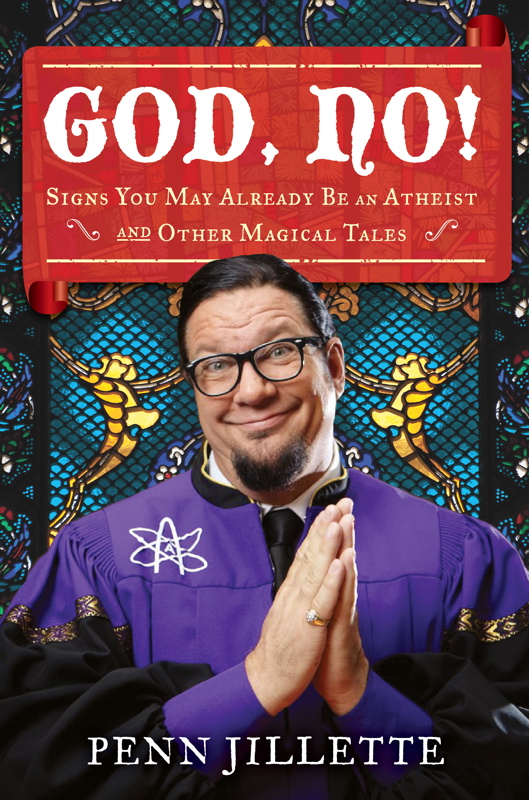
Stereotypes are so easy to fall into. Having been “typecast” myself, early in my career as a “seminary professor” and a “conservative”—neither of which matched my mental outlook at all—I eventually had to abandon higher education as a career option. Why did I take a job that didn’t fit? If you’re asking that question, obviously you missed the 1990s. It was a brutal time to be looking for a job; there was this recession… wait a minute. What decade was I writing about again? In any case, many people will always remember me in the various roles I’ve played as I sought to actualize my ideal career. It is always interesting to see how others break out of their expected roles into new venues. Penn Jillette of Penn & Teller has established a reputation for speaking his mind. To those with limited experience, such as myself, he is stereotyped as a “magician,” more specifically, a “bad boy magician” who gives away the secrets of the guild. To find out that he is a writer was a kind of epiphany.

I read his new memoir/confession, God, No! this past week. I’ve always been cognizant of the strangeness of a world where someone may speak authoritatively on the basis of star status, but Americans love their performers. I’ve enjoyed the Penn & Teller acts I’ve seen on television, and after reading Penn’s book, I think I would like him in person. I can’t agree with him much of the time, but his honesty and good moral sense are very winning. I seriously cannot remember the last time I read a book that made me snort out loud with laughter or try to sink even lower on public transit so the polite person sitting next to me would not be able to see all the profanity on the pages before me. The book itself very loosely follows the Ten Commandments, which, surprisingly, the author largely agrees with in principle. The essays are all over the place, but the libertarian spirit is difficult not to admire. His appreciation of rational explanations for the world is admirable.

Probably the most difficult point of agreement for me, however, is his definition of an atheist as anyone who do not know if God exists. He does have a chapter lambasting agnostics, but as a stickler (as much as anyone in religious studies can be a stickler about anything) for definitions, it is useful to distinguish atheism and agnosticism. Saying one does not know is not the same as declaring one is certain. Since the existence of God can be neither proven nor disproven, those who say God does not exist believe that assertion. Those who say God exists also believe their assertion. Objective knowledge, in our current state, is not possible. I had to agree, in the final chapter, that faith causes most of the problems we find associated with religion, but I’m afraid faith is a huge part of the human condition. God, No! is not for everyone. Those who read it will, nevertheless, find an author as convinced as any evangelist that he’s right. And if they are honest, they will have to admit to having laughed along the way.


Buying Salvation

October is upon us. The telltale signs are all there: trees just starting to turn, gray skies that hide an intangible menace, a coolness in the air, and Halloween stores sprouting like mushrooms. Halloween is a holiday with incredible sales appeal, I suspect, because people are still, at some level, very afraid. We evolved into who we are from a long history of being prey as well as predators. Fear governs many of our interactions in social settings, although we prefer to call it more abstract names such as “rule of law” or “peer pressure.” Deep down, we are afraid. Halloween allows us to wear that fear on our sleeves. And it isn’t just the Celts who made this confession; Día de los Muertos developed independently, giving us a different flavor of the same emotion. Savvy marketers know that where a human concern lies, there will be the purse-strings also.

Commercialization of religion—the fancy word is “commodification”—is as close to American religious experience as you can get. We live in a religious marketplace. Various religious groups offer their wares, sometimes obviously, sometimes subtly. Often the underlying motivation is fear—fear of displeasing deity, fear of eternal torment, fear of reincarnation. We are afraid and we don’t know what to do, so we try to buy our way out of it. Other times the Madison Avenue approach works. Consider the Crystal Cathedral, or even the great medieval cathedrals of Europe. These are tourist destinations, architectural marvels that draw us in. The message is still pretty much the same: the deity will get you unless you give back. How better to show respect (that is fear) than erecting a massive, complex, and very expensive edifice to the angry God?

It is simplistic to suggest that religion boils down to fear, but when all the water evaporates, fear is certainly evident among the residue. Next to the overtly commercial holiday of Christmas the most money can be coaxed out of Americans at Halloween. Or consider the appeal of horror movies. Love them or hate them, they will draw in big money at the box office. In a society that sublimates fear and tells its citizens that unimpeded growth is attainable, Halloween is the most parsimonious holiday. Perhaps the most honest, too. A full month before the creepy sight of naked trees and chill breezes that sound like screams whistling through their bare branches, the stores begin to appear. When Halloween is over they will be dormant for eleven months of the year, but like the undead they are never really gone. Only sleeping.

A parable.


Dark Materials

After three years we have finally finished Philip Pullman’s His Dark Materials trilogy. The Golden Compass, a fantastic story made into a very disappointing movie, followed the adventures of Lyra as she struggled against the insidious designs of the Magisterium, Pullman’s not-so-subtle code for the church. The story picked up again when Lyra met Will in The Subtle Knife and revolves back to the Garden of Eden in The Amber Spyglass. It becomes clear early in the book that Lyra is a type of Eve, about to open a Pandora’s box for the entire universe. Along the way Metatron and the symbols of the old religion, including God, die. Detractors like to hurl accusations of atheism at the author, although Pullman tends to call himself agnostic. Whatever label is pasted to him, the fact is the message of the trilogy is profoundly in keeping with what is purported to be the message of Jesus. Not to put too fine a point on it, the message is “Christian.”

Of course, these days that word has to be qualified. “Christian” has been co-opted by so many special interests theologies that its vagueness is useful for little more than winning presidential elections. Part of the difficulty begins with the fact that we don’t have any objective way to assess what Jesus actually said. The earliest canonical Gospel, Mark, was written some three decades after the events that it recounts. There can be no doubt that Matthew and Luke borrowed heavily from Mark while John, written much later, blazed his own trail. Some of the statements attributed to Jesus in these variant accounts differ, but the basic idea seems to be: love others, try not to harm each other, and be willing to be the victim once in a while. These precepts permeate that story of Lyra and Will as they flee from an institutionalized church that seeks to destroy them. Yes, the parable is transparent here and even today many would-be rulers understand the power in the blood of the lamb. Accusations of someone being non-Christian can turn a red tide against them.

Ironically, today “Christian” often has the connotation of intolerance and lack of forgiveness. We see the wealthy and powerful adopting the rhetoric when it suits their purposes but refusing to live by its principles when the poor reveal their underprivileged faces. Taking Jesus out of context they like to say, “the poor will always be with you.” As if Jesus never spoke a harsh word to the wealthy. Something that Pullman makes abundantly clear is that power corrupts. The church in his books is not evil, but corrupt. It is too powerful for its own good. Above all, the books are a tale of growing up. Lyra realizes the danger that the Magisterium poses, and fights it with the conviction of the young. She learns to love and liberates the dead. She learns the pain of loss. Indeed, her sacrifice is for the salvation of the universe. Sounds like something Jesus might have approved of—when he wasn’t busy lining the pockets of the wealthy, that is.


Lead us not into Dominion

Christian dominionists emulate the Roman Empire, it seems. The Viewpoint in last week’s Time magazine, entitled “In God We Trust,” points out several of the objectives of the dominionist camp. Taking their cue from a decidedly modern and western understanding of Genesis 1, this sect believes the human control over nature to be a divine mandate in which our species dominates the world, with divine approval. As Jon Meacham points out, that dominion does not end at other animal species, but includes control of the “non-Christian” as defined by their own standard. This non-negotiable “Christianity” is a religion guided by utter selfishness and self-absorption. So thorough is this directive that those indoctrinated in it cannot recognize Christians that do not share its perspective as part of the same dogmatic species. It is a frightening religious perspective for a nation founded on the principle of religious freedom.

Rehearsing the rhetoric from Rick Perry’s “the Response” rally, Meacham rightly points out that when dominionists quote the Bible it is most important to note what the Bible does not say. Herein lies the very soul of the movement—filling in the void where God does not talk with human desires and ambitions. As any good marketer knows, however, packaging can sell the product. Introduce a rhetoric that claims to be biblical to a nation where most people have never read the Bible and smell the recipe for success. People want to believe, even if what they think they believe is not what it claims to be. Christianity is claimed by so many vastly differing factions as to have been drained of its meaning. This is the danger in the game of injecting religion into politics. Surely the Perrys and Palins and Bachmanns know what they believe, but they do not say it aloud, for their Christianity does not coincide with the various forms of the religion advocated by the churches historically bearing the torch of Christ’s teachings, insofar as they might be determined.

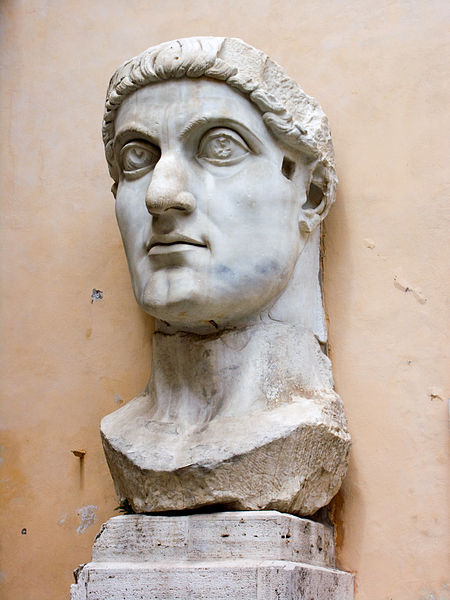
Dominionism is nothing new. Even the most pristine believer must see that Constantine had more than a warm fuzzy feeling in his heart when he adopted a foreign religion and fed it to his empire. No, Christianity was an effective, non-violent means of control as well as a way of achieving life after death. Rome was nothing without dominion. The parallels with the United States have been noted by analysts time and again. As we watch the posturing of political candidates wearing some form of their faith on their sleeves, the unsuspecting never question what might be up those sleeves. It is fairly certain that when the parties sit down at the table and the cards are dealt, it won’t be Bibles that we find scattered there. This is not a kingdom of God’s making. When dominionists take over all others must scan the horizon for the advent of the Visigoths who will not be dominated.