Dark Materials

After three years we have finally finished Philip Pullman’s His Dark Materials trilogy. The Golden Compass, a fantastic story made into a very disappointing movie, followed the adventures of Lyra as she struggled against the insidious designs of the Magisterium, Pullman’s not-so-subtle code for the church. The story picked up again when Lyra met Will in The Subtle Knife and revolves back to the Garden of Eden in The Amber Spyglass. It becomes clear early in the book that Lyra is a type of Eve, about to open a Pandora’s box for the entire universe. Along the way Metatron and the symbols of the old religion, including God, die. Detractors like to hurl accusations of atheism at the author, although Pullman tends to call himself agnostic. Whatever label is pasted to him, the fact is the message of the trilogy is profoundly in keeping with what is purported to be the message of Jesus. Not to put too fine a point on it, the message is “Christian.”

Of course, these days that word has to be qualified. “Christian” has been co-opted by so many special interests theologies that its vagueness is useful for little more than winning presidential elections. Part of the difficulty begins with the fact that we don’t have any objective way to assess what Jesus actually said. The earliest canonical Gospel, Mark, was written some three decades after the events that it recounts. There can be no doubt that Matthew and Luke borrowed heavily from Mark while John, written much later, blazed his own trail. Some of the statements attributed to Jesus in these variant accounts differ, but the basic idea seems to be: love others, try not to harm each other, and be willing to be the victim once in a while. These precepts permeate that story of Lyra and Will as they flee from an institutionalized church that seeks to destroy them. Yes, the parable is transparent here and even today many would-be rulers understand the power in the blood of the lamb. Accusations of someone being non-Christian can turn a red tide against them.

Ironically, today “Christian” often has the connotation of intolerance and lack of forgiveness. We see the wealthy and powerful adopting the rhetoric when it suits their purposes but refusing to live by its principles when the poor reveal their underprivileged faces. Taking Jesus out of context they like to say, “the poor will always be with you.” As if Jesus never spoke a harsh word to the wealthy. Something that Pullman makes abundantly clear is that power corrupts. The church in his books is not evil, but corrupt. It is too powerful for its own good. Above all, the books are a tale of growing up. Lyra realizes the danger that the Magisterium poses, and fights it with the conviction of the young. She learns to love and liberates the dead. She learns the pain of loss. Indeed, her sacrifice is for the salvation of the universe. Sounds like something Jesus might have approved of—when he wasn’t busy lining the pockets of the wealthy, that is.



Lead us not into Dominion

Christian dominionists emulate the Roman Empire, it seems. The Viewpoint in last week’s Time magazine, entitled “In God We Trust,” points out several of the objectives of the dominionist camp. Taking their cue from a decidedly modern and western understanding of Genesis 1, this sect believes the human control over nature to be a divine mandate in which our species dominates the world, with divine approval. As Jon Meacham points out, that dominion does not end at other animal species, but includes control of the “non-Christian” as defined by their own standard. This non-negotiable “Christianity” is a religion guided by utter selfishness and self-absorption. So thorough is this directive that those indoctrinated in it cannot recognize Christians that do not share its perspective as part of the same dogmatic species. It is a frightening religious perspective for a nation founded on the principle of religious freedom.

Rehearsing the rhetoric from Rick Perry’s “the Response” rally, Meacham rightly points out that when dominionists quote the Bible it is most important to note what the Bible does not say. Herein lies the very soul of the movement—filling in the void where God does not talk with human desires and ambitions. As any good marketer knows, however, packaging can sell the product. Introduce a rhetoric that claims to be biblical to a nation where most people have never read the Bible and smell the recipe for success. People want to believe, even if what they think they believe is not what it claims to be. Christianity is claimed by so many vastly differing factions as to have been drained of its meaning. This is the danger in the game of injecting religion into politics. Surely the Perrys and Palins and Bachmanns know what they believe, but they do not say it aloud, for their Christianity does not coincide with the various forms of the religion advocated by the churches historically bearing the torch of Christ’s teachings, insofar as they might be determined.

Dominionism is nothing new. Even the most pristine believer must see that Constantine had more than a warm fuzzy feeling in his heart when he adopted a foreign religion and fed it to his empire. No, Christianity was an effective, non-violent means of control as well as a way of achieving life after death. Rome was nothing without dominion. The parallels with the United States have been noted by analysts time and again. As we watch the posturing of political candidates wearing some form of their faith on their sleeves, the unsuspecting never question what might be up those sleeves. It is fairly certain that when the parties sit down at the table and the cards are dealt, it won’t be Bibles that we find scattered there. This is not a kingdom of God’s making. When dominionists take over all others must scan the horizon for the advent of the Visigoths who will not be dominated.


Brain Death

The computer revolution has spoiled some of the wonder associated with old films that had been formerly staged with cheap props and poorly written dialogue. (Well, computer literacy has not always improved the dialogue, in all fairness.) Nowhere is this more apparent in the science-fiction/horror genre where CGI has made the impossible pedestrian. There’s little we’re not capable of believing. Back in the fifties and early sixties when even color film often went over budget, some real groaners emerged. Over the weekend I watched one of the movies at the front of the class for poorly executed. The Brain that Wouldn’t Die, however, is experiencing something of a renaissance with a stage musical coming out next month in New York based on this campy classic. Most horror movies don’t really scare me much, probably due to overexposure. The Brain that Wouldn’t Die, however, creeped me out in an unexpected way. Daring toward exploitation status (the movie was shot in 1959 but not released for three years), the “protagonist” is Dr. Bill Cortner who specializes in transplants. When his girlfriend Jan is decapitated in an automobile accident, Cortner keeps her head alive while seeking a body onto which to transplant it. Ogling over girls in a strip club, or even stalking them from his car while they’re walking down the street, the doctor imagines what features he’d like grafted onto his girlfriend’s still living head.

Campy to a nearly fatal degree, the film is nevertheless disturbing on many levels simultaneously. Although I was born the year the film was released, I was raised to consider both genders as equal. The unadulterated sexism of a man grocery shopping for the body he wants stuck onto his girlfriend’s head was so repellant that I reached for the remote more than once. A bit of overwritten dialogue, however, stayed my hand. Kurt, the obligatorily deformed lab assistant, while arguing with Cortner declares that the human soul is part in the head, yet partially in the heart. By placing a head on another body, the soul is fractured. Now here was a piece of theological finesse unexpected in such a poverty of prose. The question of the location of the soul has long troubled theologians, an inquiry complicated by the growth of biological science. Heart transplants are common today, but the resulting people are in no way monstrous. The amorphous soul, theologians aver, is non-material yet resides within a specific biological entity. Some have even suggested that you can capture its departure by weighing a dying body at the moment of death. Others suggest no soul exists—it is a mere projection of consciousness. Cortner, however, once his eyes have opened the possibilities, can’t look back.

Our social consciousness has grown considerably since the late 1950s. Politicians and Tea Partiers who hold that era up as a paradigm of sanity do so at the price of half the human race. On the outside with the oiled hair, polished shoes, spotless automobiles, society seemed clean cut and orderly. Women, however, were relegated to inferior roles while men made the rules. Life was less complicated then. We knew who was in charge. Or did we? As a species that has evolved via sexual reproduction, it has taken us surprisingly long to realize that both genders are essential to humanity. We still tolerate gender disparity in pay scales, often shored up with the tired excuse that pregnancy and childbirth disrupt “productivity” and therefore female efforts are worth less than male—never changing due to biology. Such trumped-up excuses ring as hollow as a head without a body. Many Neo-Cons will even use the Bible to support it. John Q. Public (always male, please note), they insist, yearns for the “good old days.” The days they desire, however, were days of cheap horror and unrealistic dialogue. If they can watch The Brain that Wouldn’t Die without flinching, our future is bleak indeed.


Springing up Moses

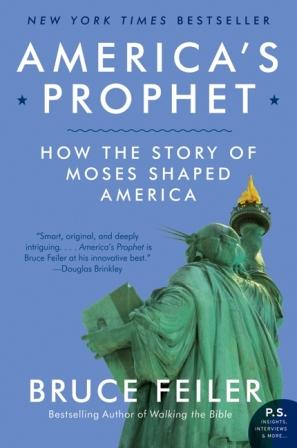
“Springsteen’s work and person invite analysis in terms of the biblical themes of exodus and promised land,” so wrote Kate McCarthy in “Deliver Me from Nowhere: Bruce Springsteen and the Myth of the American Promised Land” (conveniently in a Routledge title, God in the Details: American Religion in Popular Culture, second edition, 2011). Having just finished Bruce Feiler’s America’s Prophet (not Routledge), I am attuned to the exodus theme at the moment. Feeling an unaccountable, personal connection to the other Bruce (Springsteen), I have felt the sense of exile in his songs since I was a teenager. I had no idea who Springsteen was when “Born to Run” made it to the charts. Living in a nowhere town at the time (population less than 1000), I felt the burning need for a personal exodus that eventually landed me in the largest city in the country. But still the sense of exile remains.

Lest readers be too confused, it might be politic to point out that the biblical concept of exodus likely had its origins in the Exile. Without rehearsing too much history, the Babylonian Empire, under Nebuchadrezzar, conquered Jerusalem in either 587 or 586 BCE, leading to the deportation of a significant number of Judahites who would become, over a generation, the “Jews.” These people were exiles, forced to live under the watchful eye of a political overlord with whom they shared only the most basic of heritages. Their religions had grown apart over the centuries, and as the Jews began to think back on their homeland, the exodus came to mind. Archaeological evidence for an exodus of biblical proportions (literally) does not exist. Why, then, the story of the exodus? Did not the desire to return home involve crossing the desert, with a divinely appointed leader? One who carried the law (Torah) with him? When Ezra led returnees home in the fifth/fourth century, he had the Torah in hand. Like Moses, he led the people out of bondage under the Persian plan. Exile and exodus are twin children of oppressive regimes.

So, how do ancient desert wanderers come into the orbit of a very damp New Jersey, and in particular, it’s arguably most famous resident? Alienation is home. Very few teenagers don’t understand this. As we attempt to integrate them into adult life, something vital, essential, is left behind. Consider all the long-haired artists of the ‘60’s and ‘70’s who still perform, now shorn to conservative acceptability and sometimes churning out very conventional songs. The fire has gone out. It is difficult to escape exile when you carry it with you. That’s something I think Bruce understands. His look may have changed, but his message has not. America has always been a haven for exiles. Simply because an exile moves into a new setting, however, does not mean that the promised land has been reached. As McCarthy seems to be saying, and as I have often felt, the promised land disappoints. The seeking is what must persist. America may have its Moeses, but it will find, from atop Nebo, that the path is where your feet already are.

Look carefully at your prophets!


Declining Prophets

Prophets aren’t what they used to be. Was a time when you had to be real to make an impression on the world. The historical evidence for Moses is slim. So slim, in fact, that it can’t be seen. As a child learning that the Bible contained no mistakes (it does) and no contradictions (too many to count), there was never any doubt of Moses’ historicity. Charlton Heston’s iconic portrayal of the man who wouldn’t be king left little room for doubt in pliable young minds. Not bad for a man who probably never lived.

I finally got around to reading Bruce Feiler’s America’s Prophet: How the Story of Moses Shaped America. Initially I found the book difficult because I started it the day after finishing Kent Nerburn’s The Wolf at Twilight. There seemed a disingenuousness to America’s development that had been built on oppression. The retelling of sacred histories can be quite diverse. Nevertheless, Feiler’s book is well researched and compellingly written. Beginning with Columbus and coming up through the first years of the twenty-first century, Feiler shows again and again how Moses is lurking in the shadows of some of America’s grandest monuments to self.

Moses is the liberator who lays down the law. As such, nearly all the great political leaders in America’s Bible-saturated history have been compared to him. The funny thing about the actual Moses is that history’s chroniclers somehow failed to mention him. He does not appear in the annals of Egypt, where, according to Exodus, he was the near equal of Ramesses II. He is not mentioned by the political watchers among the other great powers of ancient western Asia. The Bible is all he’s got. Political commentators in early America, however, were not worried about whether he existed or not. The Bible says he did and that’s good enough.

Feiler builds a compelling case for Moses standing behind American figures and institutions. He also seems to be aware that Moses may never have walked the earth. An avenue he doesn’t explore is how entire national identities can be built on myths. Mythology gives us the meaning by which we live. Some times that mythology will include historical personages. Other times the myth must stand on its own. Moses may be one of the latter. Does it matter that Moses does not appear in history? No. He has already left his imprint, as Feiler ably demonstrates, on Columbus, the Pilgrims, George Washington, the Liberty Bell, Abraham Lincoln, the Underground Railroad, the Statue of Liberty, Martin Luther King, Jr., and even—God help us!—George W. Bush. Anyone capable of pounding a Bible loudly enough will eventually make the ranks, it seems. Ahistorical Moses has accomplished in his sleep more than historical people can ever attain. Amazing what you can achieve, real or not, with mythology on your side.


Material Whirled

With the moon and Jupiter waltzing slowly so high in the sky, radiating such brilliance early in the morning over this past week, it is understandable how ancient people came to see the gods as material objects. The course of progression seems to have been physical gods to spiritual gods: the earliest deities ate, drank, made love, fought. They were of the same substance as humans, or at least of the same psychological makeup. The Egyptians, Zoroastrians, and Greeks all toyed with ideas of beings of “spirit”—non-corporeal entities that did not participate in our material world, but were able to influence it. In the world but not of it. The tremendous gulf between great goddess and material girl was born. Today that concept is taken for granted, especially in western religions. We are locked into physicality while God is free to come and go.

Many religions respond to this by suggesting that we should look beyond the physical to the majesty hidden from biological eyes. And yet, physical creatures that we are, we are drawn back to material means to demonstrate our spirituality. One of the perks of working for a publisher is the constant exposure to new ideas. At Routledge I have been learning about the rising interest in material religion: the manifestation of religion through physical objects and rituals. This aspect of religious life easily devolves into a cheapening of faith into mass-produced, religious knickknacks and kitsch. Some mistake this for the real thing. While living in Wisconsin, my family used to visit the spectacular Holy Hill, the site of a Carmelite monastery atop a large glacial moraine. On a clear day you can see Milwaukee from the church tower. It is a large tourist draw.

No visit to such a shrine would be complete without the obligatory stop at the gift shop. Even the non-believer feels compelled to buy some incredibly tasteless artifact to keep them grounded in reality. Many of the items—giant glow-in-the-dark rosaries, maudlin mini-portraits of the blessed virgin Mary (BVM as the insiders call her, not to be confused with BVD) and the crucified Lord on all manner of crosses, line the walls and shelves. This commercialization is not limited to the Catholic tradition. Evangelical groups realize the importance of branding as well, passing out cheap merchandise (or better, selling it) with Bible verses emblazoned on it. These signs of faith sell themselves, but they blur the sacred distinction between human and divine. Does religion point to a reality behind the physical? This is its claim, but what is the harm in making a bit of cash on the side, just in case?


September’s Child

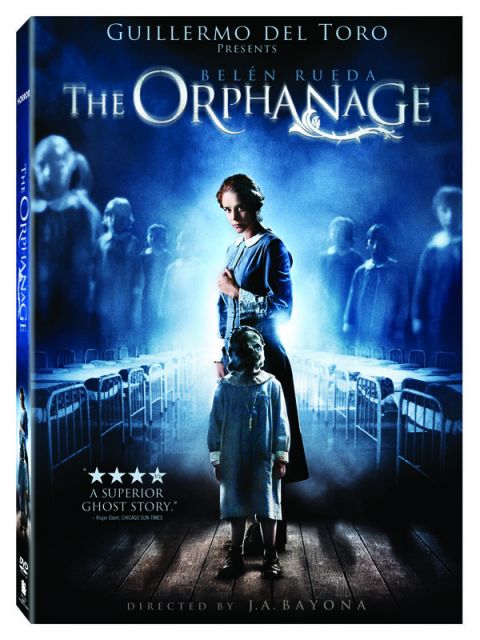
This was an appropriate weekend for a scary movie. With Guillermo del Toro in the news of late, I selected The Orphanage to fit the mood. Foreign language films can present a challenge when too much action is interspersed with dialogue, but the pacing and deliberate unfolding of The Orphanage solved that problem. As always when screening horror films, I was watching to see how religion played into the plot. The story follows the disappearance of a child adopted by a couple who wish to open a home for special needs children. Laura, the mother, is unwilling to accept her child’s disappearance while her rational, physician husband, Carlos, feels that the outcome is inevitable. In a show of support, however, Carlos lends Laura his Saint Anthony’s medal, just until their son is found.

The association of Saint Anthony—perhaps the most famous Franciscan after Francis himself—with lost items is a worldwide phenomenon. The city of San Antonio bears his name (although it is easily found). In the movie he is invoked to find the lost child. The distraught Laura religiously wears the medal until the child is found (in what state I’ll not say, for the benefit of those who’ve not seen the film). When Carlos comes to seek his wife, he finds the medal, bringing the movie to a close. The orphanage also features a very gothic chapel that sets the mood in a few scenes as well. “The Good Shepherd” is the very biblical name of the institution. Although not central to the story, religion is woven throughout, demonstrating once again that fear and religion are closely related.

Like Saint Francis before him, Anthony was born to a wealthy family in the Middle Ages. Both young men forswore their material goods to seek spiritual wealth. Both died relatively young (not uncommon in the Medieval Period) and in poverty. Choosing such a selfless character as the means of recovering that which has been lost may seem counter-intuitive, and The Orphanage exploits that idea very nicely. Over this gray weekend when many people were thinking about loss, an orphanage seems an appropriate metaphor. Although a Saint Anthony medal may inspire confidence, it can never restore what is truly gone. Even so, religion may assuage the anxiety, but in the end we still must find our own way home.


The Truth of Ghosts

Strange noises in the night. Objects moving of their own accord. Disembodied voices laughing fiendishly. It must be nearing autumn. After having a brief discussion on novel writing with Brent Monahan earlier this summer, I decided to read his book, The Bell Witch: An American Haunting. Setting the story in the “found manuscript” genre, Monahan tells this famous account through the eyes of Richard Powell, one-time elected official in the Tennessee House of Representatives. The can be no doubt that the story has some basis in actual events, but the serious study of “ghosts” is a taboo that serious scholars break at their own peril. On my long bus rides this week I read Monahan’s version of the story as the rain continued to fall. As I read I was continually reminded how dependent we’ve become on genre labels. The book purports to be an eyewitness account and there is no genre declaration on the back cover. The Library of Congress Cataloging in Publication (CIP) data declares it fiction. Where is truth to be found?

Human beings are capable of great and terrible acts. Working in a city the size of New York after having been raised in small towns, the amount of distrust is very blatant. Security is evident in many places with cleverly locked doors and guards surveying those who enter buildings. We simply can’t trust everyone. Or anyone. When it comes to literature, stories often blend fact and fiction. Guidelines on books or classifications in bookstores help us to decide if our reading material is conveying actual events or not. The Bell Witch is one of those reminders that sometimes the truth will never be known. Historical records can be searched, but even these are often subject to human error. If someone tells us a ghost story, we base the veracity on the teller’s reputation. At the end of the day, sometimes we just can’t know.

Perhaps the most poignant aspect of Monahan’s version of these events is his reconstruction of the history. Although the supernatural remains intact at the end, Powell is able to uncover the “fact” that Betsy Bell was abused as a child and that the poltergeist-style events that pervade the story are an extension of her trauma. Actually, the treatment is very closely tied to the religiosity of the Bell family, good church-going folk who ran afoul of a fine point of church teaching. In the end, it is this rejection by the church that pressures John Bell to the point of incest. Is the story true? Yes. Did it every really happen? Probably not. The two are very different questions. In a society that increasing seeks easy answers, stories like this remind us that we are all a blend of fiction and fact. Easy answers are inevitably wrong. The movie An American Haunting once again revived “the Bell witch” but also raised the specter of the ambiguity of truth. Is it out there? If it is, how will we know when we’ve found it?

What really happened here?


Feeding the Multitudes (on a Budget)

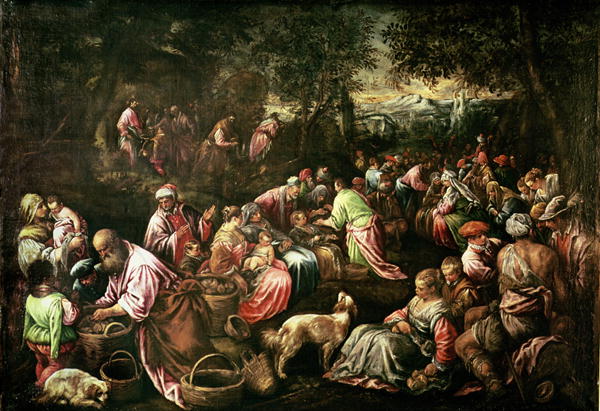
Commuting to New York City by bus can be an epiphany. When an hour-and-a-half scheduled ride stretches into two-and-a-half (I spent three-quarters as much time commuting as I did actually at work yesterday) you have plenty of time to look at the scenery. In New Jersey this translates into several towns and cities of differing socio-economic viability. The bus is a great leveler of people: corporate, business types sitting next to those who can’t afford a car or bicycle. As we trundled through Plainfield yesterday I spied a restaurant called Two Fishes & Five Loaves taglined Soul Food for all occasions. The name, of course, is borrowed from the story of the miraculous multiplication of food from the Gospels. This story fits particularly well in this setting.

According to the Gospel writers—this is the only miracle to appear in all four of the Gospels—a crowd following Jesus in a lonely place grew hungry. Instead of sending the crowds away, Jesus took the five loaves of bread and two fish they had with them and fed the crowd of 5,000 with that little morsel. When I was a student it was customary to interpret this story as one of a human-dimension miracle. The crowd, seeing Jesus sharing the food he had, each offered to share with their neighbors. Once the idea caught on, those without food had enough and those who’d brought extra had the right amount. They even had leftovers. This naturalized version of the story illustrates the message of Jesus quite nicely, although those who prefer supernatural intervention naturally reject it.

Plainfield is a town with stunning wealth and abject poverty. This situation is not unique to this location; indeed, it is a hallmark of capitalism. Those who have do not willingly give it up for the sake of those less fortunate. The free market is not really free. Today most readers like to see the story of the feeding of the five thousand as divine intervention. That matches our bail out mentality. When our circumstances make us too selfish, God comes to the rescue with conjured seafood and crumpets—or Tea Partiers—and the rest of us look on hungrily. By the end of the day, enduring that long bus ride home, I too was hoping for a miracle. Instead, as we crawled by Two Fishes & Five Loaves, loaded with people of every status, I was living in a Gospel story.


Biblical Muppets

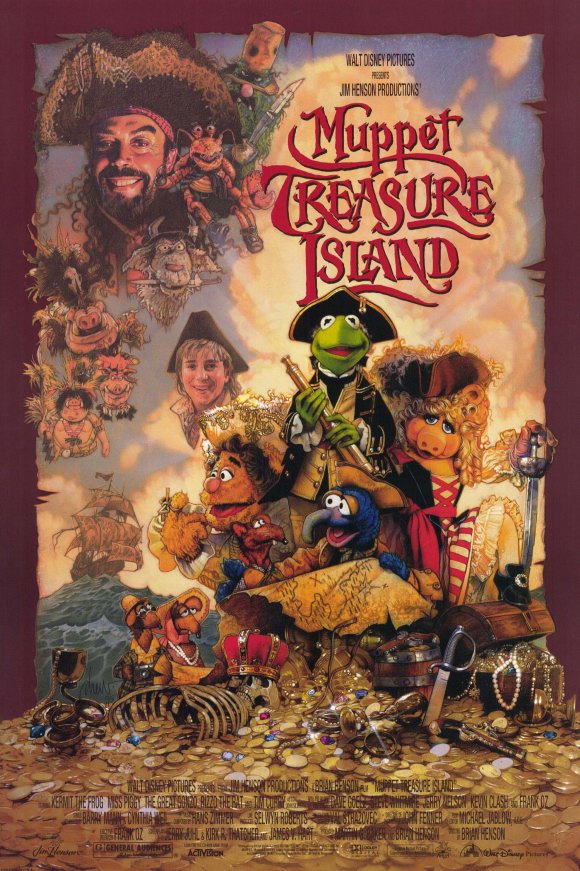
Back in the days when I was teaching intensive summer courses, I frequently used movie clips to help break up the three-to-four hour class sessions. I would find movies in which the Bible featured in what I’d call a minor supporting role—almost as a character—and would try to get the class to discuss it. One of the immediate observations is that such an exercise is starved for choice: the Bible appears frequently in films, both secular and religious. Sometimes its role is pivotal, at times incidental. Last night as my family prepared to return to work and school, we watched a movie to say goodbye to summer. The movie was Muppet Treasure Island.

Like most children of the 60’s I learned about Muppets from Sesame Street. By the time I was a teenager The Muppet Show had emerged on prime-time. Before long Muppets made their way onto the silver screen. Muppet Treasure Island was a movie I had missed until my daughter saw it in primary school. I have used it as an example in my summer classes for years. The story follows, as faithfully as Muppets can, Robert Louis Stevenson’s Treasure Island. Tim Curry—selected for Long John Silver because of his fame in the Rocky Horror Picture Show—makes a believable singing pirate. In this version of the story, when the pirates reach Captain Flint’s treasure it has been absconded by Benjamina Gunn (Miss Piggy). The pirates, now guilty of mutiny, give Long John the black spot. (For a generation raised and weaned on Pirates of the Caribbean, the black spot requires no explanation.) Long John, playing on the superstitious nature of the other pirates, sermonizes them because they used a page of the Bible to draw the black spot. Terrified of this sin, the pirates beg Long John for forgiveness.

This is a textbook example of the Bible acting as a magical book. Often in the movies it functions in that role; the Bible has the invisible authority to bring mortals to their knees. Pirates in need of paper might dismember any other book (I might suggest Going Rogue: An American Life), but the Bible is itself sacred. This particular role for the Bible reflects American sensibilities about the nature of religion particularly well. Without ever reading the Bible many people venerate it as if ink on paper is a little piece of God. There is a grain of truth in that, for literacy is a little piece of God and books do guide us. The problem is limiting that role to one single exemplar. Perhaps after all the Muppets shall guide us to a deeper truth.


Don’t Know Much

Pennsylvania does not come immediately to mind when “big states” are mentioned. When you have to drive the breadth of the state, however, you start to get a sense of the beast. Despite its abundant natural beauty, Interstate 80 manages to keep it to a minimum, so driving home yesterday we listened to the first disc of Kenneth C. Davis’s A Nation Rising in audio-book format. Mostly known for his Don’t Know Much About — books, Davis is a popular historian with a sense of what makes the past interesting. I can’t speak for the entire book yet, but the unabridged reading of A Nation Rising certainly was an educational experience for the first hour or so I’ve heard. The book focuses on the initial fifty years of the nineteenth century (1801-1850) in the United States. Of particular interest to me is the religious angle. In the introduction Davis states that it will become clear how the concept of America as a Christian nation is a myth. Other than my usual objection to “myth” being equated with falsity, this premise does look very interesting.

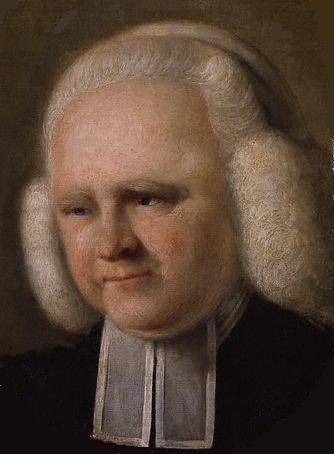
Stepping back before the nineteenth century, Davis spends several minutes (which I assume translates to several pages) describing the ancestry of Aaron Burr, one of America’s bad-boy politicians of the period. Burr was a grandson of the reformed minister Jonathan Edwards and this circumstance leads Davis to recount a bit about the Great Awakening. The first major religious revival on American soil, the Great Awakening spread throughout the States in the 1730s and ‘40s, setting the reputation of the young nation as a bastion of Reformed Christianity. Although many denominations became involved in the show, the origin and orientation of the Great Awakening was Calvinistic. Reacting against enforced Catholicism in much of Europe, many colonials flocked to America to practice their stripped down, Bible-based, generally intolerant religion in the New World. Particularly interesting in Davis’s rendition is George Whitefield. Viewing the preacher from hindsight that includes a distorted religious view of American history, Davis notes that Whitefield was as much performer as preacher.

Trying to figure out the next hot trend

Whitefield was an Anglican priest who helped set the mold for John Wesley’s success in bringing what would become the Methodist Church to America. “Whitefield pioneered the development of multiplatform marketing strategies,” using the media and staged events to draw attention to his evangelistic efforts, according to Davis. Whitefield knew that religion alone could not sway the masses. They had to be entertained. Davis notes that even the Tea Party has corollaries in early American history. What the mainstream has been slow—perhaps too slow—to realize is that entertainment works. In casting the die for American spirituality, preachers like Edwards and Whitefield knew the value of the gripping sermon vividly illustrated. The antics of many Tea Partiers reveal that they learned the lesson well. Showboating will garner more votes than substance any day. How else can we explain Ronald Reagan, Sonny Bono, Jesse Ventura, and Arnold Schwarzenegger? This is America’s truest legacy: entertaining with religious faith will take you where intellectual depth just can’t go.

I will have to wait for another car trip to hear more of Davis’s interesting perspective on American history, but in the meantime I wonder how long it will take intelligent Americans to catch on. Don’t Know Much About History is a frighteningly prescient title for those who continue to ignore religion as a political force.


Bad Eggs

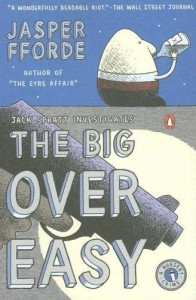
Over the past few months I’ve discovered Jasper Fforde. While my leisure reading tends toward heavier material, Fforde has an amazing sense of wit that makes his writing nearly irresistible. I recently read The Big Over Easy, a gritty detective novel about the case of Humpty Dumpty. Throughout the story nursery rhymes are presented in literal and improbable ways, juxtaposed with the daily life of a down-on-his-luck cop. The reason that I mention the book on this blog, however, has to do with the character of Prometheus (some mythological characters also make their way into the story). Having taught Classical Mythology over the past two years, I’ve had occasion to read quite a bit about Prometheus. He is one of the more intriguing mythological characters posited by the Greeks. The creator of humans, Prometheus has a soft spot for our development that angers the other gods, jealous as they are of their privileged places.

In The Big Over Easy, Prometheus is explaining to the protagonist and his family why he thought it was worth having his liver pecked out daily in order to give humanity fire. He then tells them that he also gave people the fear of death. When asked why, he declares that the fear of death makes mortals appreciate life. There are the negative side effects such as war, hate, and intolerance, but Prometheus maintains, “I’ve seen the alternative. Eternal slavery under the gods.” Greek creation myths leave no doubt on this point; people were created to serve the gods. If we challenge that decree that we simply inherited, we are guilty of hubris, stepping over that line that separates them from us. Gods appreciate no such challenges.

It is ironic that nations based on the ideal of freedom so readily bind themselves to the strictures of the divine. The latest aggressions in which our nation has involved itself purported to be in the cause of “liberty,” “freedom,” and “democracy.” These sentiments were uttered by politicians who believe such principles ought to be bound by archaic instructions handed down through a mythological lawgiver. Our freedom ought to be circumscribed by mythology. The irony is so thick here that it is difficult to believe anyone can take such rhetoric seriously. Perhaps Prometheus brought us fire in vain. Not to worry, however. Jasper Fforde is an author of fiction only, and the arbitrary storms of Zeus no longer strike us when the gods are angry. Unless, of course, you have forgotten Hurricane Irene. Old myths never die, and, like bad eggs, once encountered they are not easily forgotten.


Tea Party Science

I sometimes jog in the morning before the sun begins his course across the sky. Funny thing is, sometimes I beat him. I know the sun is a guy because the Bible says so. When I startle a bunny from its hiding place along my path, I am amazed that those little creatures chew the cud just like bovines. It is the word of God. Occasionally a suicidal insect tries to fly into my mouth, and unless they go about on all fours, with legs above their feet, I spit them back out. If they do meet Leviticus 11’s strict standards and I accidentally swallow, I try not to think of Deuteronomy 14.19. I am surprised that the Tea Partiers haven’t tried to correct science on this point: the Bible is clear that insects (technically “flying creeping things”) have four legs, not six. Open your eyes people! Six legs? All those sixes seem to be from the antichrist. That’s why I feel comfortable with the potential of handing our nation over to the Tea Party. Certainty is better than scientific orthodoxy, hands down.

“I don’t know how much God has to do to get the attention of the politicians. We’ve had an earthquake; we’ve had a hurricane. He said, ‘Are you going to start listening to me here?’” The words are those of Michele Bachmann. Those of us who were taught that hurricanes result from the heating of Atlantic waters, swirled by the rotation of the earth (it does not move, according to the only proven source of science, the Bible) have egg on our faces. Do I ever feel silly! Empirical evidence suggests that the earth’s crust consists of tectonic plates that sometimes bump and rub and pull apart. Earthquakes result. Last week’s earthquake creates a problem for me, however, since North America is not mentioned in the Bible. I now live in a country that can’t possibly exist. We had better elect leaders who know how all this really works.

According to a Religion News Service poll this year, 40 percent (that’s more than half, in Tea Party mathematics) of Americans believe natural disasters are signs from God. I am relieved that this clearly shows science to be wrong—surely that many individuals must be correct. That’s the way math works. I sometimes imagine the United States as the Titanic (movies are another good source of science). Ismay, the Tea Party, declares, “But this ship can’t sink!” Thomas Andrews, the engineer (representing science) replies, “She’s made of iron, sir! I assure you, she can… and she will. It is a mathematical certainty.” Ismay, believing the rich are too wealthy to die tragically, refutes the findings of science. When the colossal ship slips into the icy Atlantic, however, he’s nowhere on board. Like the rest of his party, he’s already secured himself one of the rare seats on the lifeboats inadequate to save those of us in steerage. Since the ship can’t sink anyway, why are we even worried about this?

Full speed ahead and damn the icebergs...


Religious Democracy, Media Style

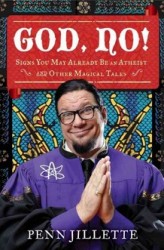
A delightfully witty book review appeared in yesterday’s newspaper introducing Penn Jillette’s book God, No! Signs You May Already Be an Atheist and Other Magical Tales. Having just learned of the book I’ve not yet read it, but I am intrigued. Penn Jillette is best known as the talking portion of the magic-debunking duo Penn and Teller. Having forged a career of exposing false claims to the supernatural mystique of stage magic, Penn and Teller delight in bucking the orthodoxy of the guild and showing that anyone clever enough can fool many people into believing what they know can’t be true. They are exploiting, of course, a phenomenon that neuroscientists have been exploring for a number of years: human brains retain belief even in the face of disproving evidence. Many religious believers call it “faith.” According to Hank Gallo, author of the review, Jillette uses his book to endorse atheism as the only real option for a thinking person. The book is generally categorized as humor.

Although Bill Maher’s Religulous makes many good points from a similar perspective, one of the haunting realities poised for religious specialists is almost a chiaroscuro with excessive contrast. It takes no special training to be a religious specialist. That is hard news to hear for those of us who’ve spent over a decade of our lives and thousands of dollars learning the trade. Comedians and others who are famous will impact far more people than this little blog ever will. Rick Perry can call together thousands to pray to pave his way to the White House. Maher and Jillette can poke fun at religious yokels and scholars will sit at their desks ignoring the crude efforts of those who have no training. There is no doubt, however, as to which will reach a wider audience.

Harry Houdini famously debunked spiritualists in his day. Like Penn and Teller, he was a stage magician who recognized that people could be easily fooled. He was able to expose mediums that scientists and academics of his day failed to uncover. It seems that those with access to the most basic of human desires—the will to believe—gain credibility more readily than an erudite yet obtuse specialist with several odd initials after his or her name and several obscure books to his or her credit. Those in the media have direct access to the mind of the public. If the tent is big enough the whole town will show up for the circus. The truth may be out there, but the minds of the public are won over by those who entertain, not those who bury themselves in dusty tomes and seldom see the light of day. The fact is people want to believe. Until a better alternative is offered, we might prepare ourselves for a long round of Texas Hold’em and a Tea Party or two.


Tomorrow Ever After

Last night as we said goodnight to Irene, my family decided to watch The Day After Tomorrow. Beyond The Perfect Storm and Twister we didn’t have any other weather-related disaster movies on hand. I became convinced long ago that weather was somehow key in the conception of divinity. Working at a seminary that required attendance at chapel twice daily where we would lugubriously and laboriously recite every verse of every Psalm according to the unforgiving schedule of the Book of Common Prayer, I began to notice the weather. Among the more common images used in the “hymnal of the second temple,” weather was seen as an essential aspect of divinity. Religions with celestial orientations frequently view the sky with a sacred aura. I began to compile all the Psalm references to the weather and eventually brought them together into a book, still unpublished. What became clear at the end of this exercise was that ancient people had no way to interpret the weather other than as a divine phenomenon. Listening to all the hype about Irene, it still seems to be the case.

In The Day After Tomorrow, our ill-fated teenagers are trapped in the New York Public Library as a super-chilled tropospheric wind freezes New York City. They build a fire and when you’re in a library, naturally, you burn books. I kept looking at all the furniture they spared as they consigned the books to the flame. A minor character called Jeremy is shown clutching a Bible. A girl named Elsa asks if he thinks God will save him. Replying that he is an atheist, Jeremy says that this is a Gutenberg Bible, “This Bible is the first book ever printed. It represents the dawn of the Age of Reason. As far as I’m concerned, the written word is mankind’s greatest achievement. You can laugh, but if Western Civilization is finished I’m gonna save at least one little piece of it.” This little dialogue represents the full circle of the celestial god. Jeremy doesn’t believe in this god, and the Bible requires human protection. Instead of being the instrument of war and political badgering and tea parties, it is seen as a symbol of enlightenment. It represents the first steps toward reason.

As Hurricane Irene still gusts outside my window, dropping rain as if New Jersey were a desert receiving its first drink in a century, the Tea Party is busy crafting ways of getting the Bible back in the White House. Their Bible is the antithesis to the Age of Reason. It is the symbol of superstition and prejudice and authoritarianism. It is the means of political power. The god of the Tea Party is a white-bearded man living in the sky, sending his fury against the liberal cities of the East Coast in a mighty wind. He is the punishing god of the Psalms. As the helicopter lifts off over a frozen Manhattan, the teenagers saved by a flawed father who walked from Philadelphia to New York to find his son, the camera pans across Jeremy as he hugs the Bible to his chest. I was in Boston for Hurricane Gloria back in 1985. Watching the waves crash on the beach at Winthrop I felt the power of fierce nature at the beginning of my own journey to, I hope, enlightenment. When it was over, however, there was not yet a Tea Party threatening an even worse, unnatural disaster to follow.

Irene, the early days