Honest to God

“A lot of traditional beliefs are outside people and have grown into rigid things that you can’t touch any more”–these words come from a minister of the Protestant Church of the Netherlands, according to a report yesterday on the BBC. The title of the article, “Dutch rethink Christianity for a doubtful world,” touches on a theme mentioned earlier on this blog about the church in Sweden: clergy often live with their own doubts about God. Showing similar results to the Swedish study, the Protestant Church of the Netherlands hosts one in six clergy who are agnostic or atheist. I would suggest that the specialization of labor–as well as the persuasiveness of science–stand behind this phenomenon. In modern societies far removed from human roots, we really don’t pay much attention to the training others receive to take on their professions. We assume that higher education is doing its task and that professional bodies like the American Bar Association put up tests to deter those who make false claims. Seldom do we reflect that our off-the-farm lifestyle is a very recent human development and that we haven’t really had time to sort out whether all this complicated training ever really works.
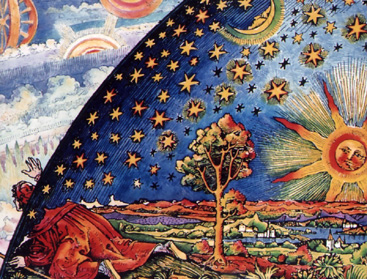
Don't rock the boat...

When I was a seminary professor, I saw the dilemma this way: seminaries crave, indeed require academic respectability. Accrediting bodies insist that a substantial portion of faculty hold terminal degrees. Seminaries, however, are run by confessional groups that insist on certain unscientific worldviews and premises. Doctoral students, unless indoctrinated at faux institutions that block scientific evidence, are educated in a worldview that contradicts their religious training on several levels. Seminaries require educated faculty, but education itself undermines traditional beliefs. Some conservative groups have been aware of this dynamic for years and have begun establishing “universities” that intentionally bar subjects that challenge their worldview. In other words, they want clergy with false credentials who are willing to fight for the cause, while still receiving academic accreditation. Few insiders will blow the whistle since the modern church is built on this shaky foundation.

What is being discovered in northern Europe likely pulses beneath the surface of many developed nations (again, with their specialization of labor). After a person spends three years of training beyond college to receive a “Master of Divinity” degree there is high financial motivation to see the process through to the end. The faithful in the pews, far removed from the realities of theological education, expect the same old show. With employment options nearly nil outside the church, smart clergy know the score. It is better to live a life of quiet desperation, mouthing the party line, than to be thrown into that swirling maelstrom of survival called the job market. Organized religions began when people lived on the land, very few people were educated, and priests were left alone to do their job. Education is costly in far more than college tuition bills. As they are learning in the Netherlands, growing up is never easy.
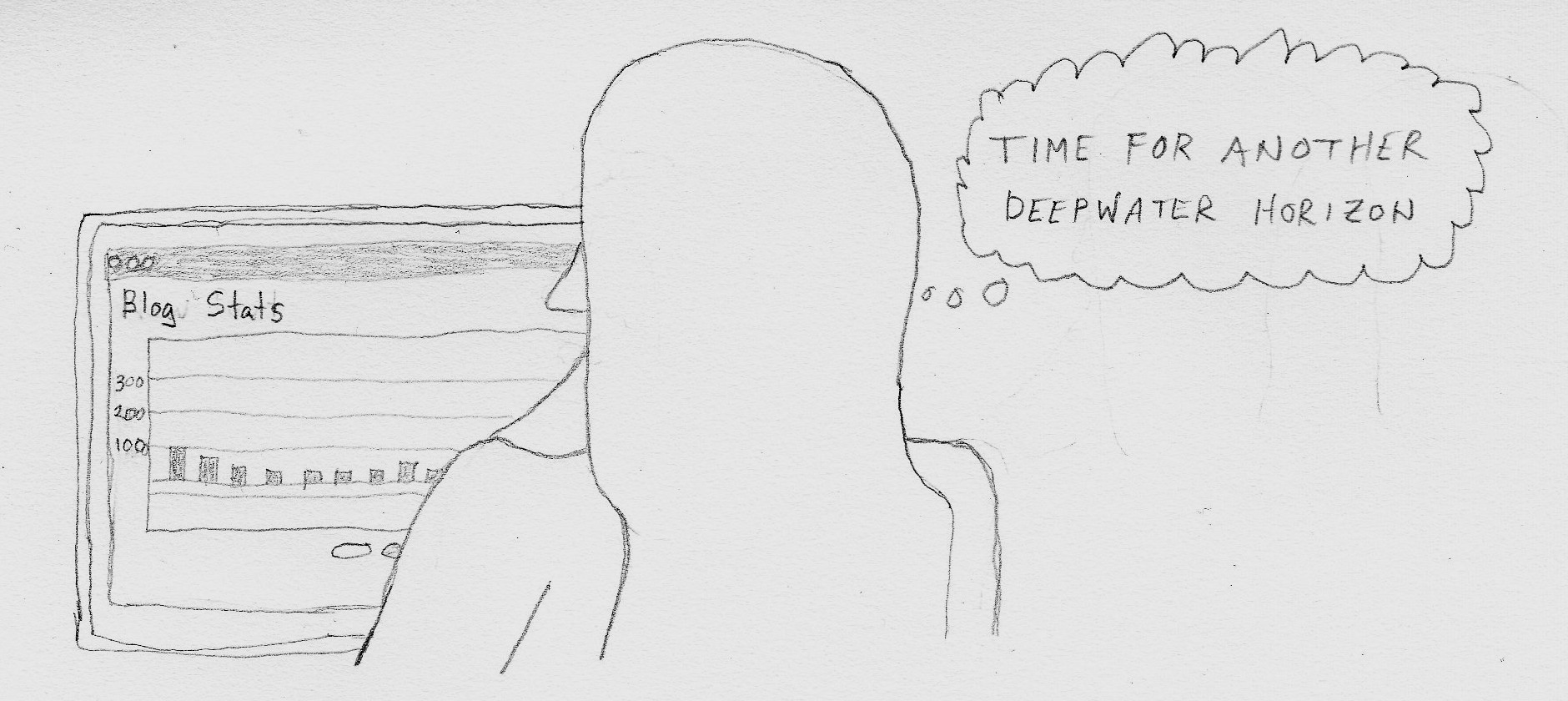


If God Could Blog

My wife pointed me to the current Shouts and Murmurs section of the New Yorker online; this issue’s is “God’s Blog” by Paul Simms. It is witty, as usual, and the comments outshine the divine post. I had a good smirk and soon forgot about it. I found my thoughts turning to recent events and the idea of God blogging returned to me with a greater intensity. What if God could blog? The responses of online experts might be notoriously predictable.

Most politicians and Tea Partiers would fail to recognize the author, I’m sure. The conservative life-style and outlook have their own particular structures that may have had roots in Christianity at one time, but have now taken on an agenda of their own. God, admittedly a long-haired liberal in his last incarnation, certainly doesn’t advocate the way his dad’s name is taken in vain by such political bluster. I suspect he’d be denied more than three times before the stock market bell sounds.

The theological liberals would probably find such an anthropomorphic activity distasteful for a being as abstract as the divine. After all, by stooping to our level and showing himself active in the world he would be raising the ugly question of theodicy again. If the Big Guy can afford the time to type out a blog post from his android in the sky couldn’t he at least solve one of the more pressing human problems such as starvation or war?

Bibliobloggers would surely rate his posts pretty low. Erudition is born of online prestige and although God is a big draw, his book is still a bestseller and literary types are much more comfortable deconstructing the written word. Besides, since he doesn’t belong to any denomination (or monotheistic religion, for that matter) his authoritative comments would certainly be disconcerting.

I suspect the atheist camp would suggest it was all a hoax. With sufficient skill the source of the posts could be pinned to a physical machine and the words themselves would be traced to a physical brain that is no more than an organic computer. The God Blog could safely be ignored.

We live in an age that has outlived the need for a live feed from the divine. Real-time responses from on high would make everyone uncomfortable. Since we construct God in our own image, those who blog already know what the divine would write if s/he could blog.


Livin’ On a Prayer

Am I the only one who finds it disturbing that Neo-Con politicians are naïve enough to believe that prayer will solve all our problems? Where was God during the Bush years, for crying out loud? And yet headline after headline speculates about Texas Governor Rick Perry’s prayer-fest scheduled for Saturday. What is more disturbing than the lack of imagination on the part of would-be candidates is the sheep-like following on the part of a large segment of the electorate. If God is going to step in and take charge, he had a great chance back on May 21 and refused to pick up the option. If God was behind politics, why did George W. Bush fail to find Osama Bin Laden? If God is running things, why are so many unemployed? Ah, but the religious pundits have a pat answer: America is a sinful nation. What it takes is religion, Texas-style.

In the many years I spent at Nashotah House, the majority of our students hailed from Texas. They represented the conservative hard-line and doctrinal strappadoes that caused much suffering but still somehow didn’t placate an angry God. That, of course, says more about Nashotah House than it does about Texas. Perhaps it is the logical evolution of a country that began with prominent ministers gleefully describing sinners in the hands of an angry God. Nearly three centuries later and we are being told God is still angry. Thou shalt not hold a grudge, eh? The problem seems less about sinful folks just trying to get by (a la Bon Jovi) than about politicians using their religion to get elected. Centuries down the road it will be the topic of some new series of History’s Mysteries that an affluent, educated, and generally forward-looking nation cluttered its governing bodies with politicians who believed the answer to complex problems is to bow their heads and tell God how to fix it. Are we really half-way there, or have we spread our arms to embrace Jonathan Edwards once again?

In MSNBC’s article on Rick Perry’s prayer day, it is noted that the book of Joel is cited as an inspiration for the event. For such a brief book, Joel has been at the forefront of a ton of damage wrought by prooftexters. Joel wrote three brief chapters about a locust infestation for which the suggested response was prayer. One wonders if Rick Perry simply prays when the termites begin to gnaw on his expensive home, or does he call Ortho instead? Joel was truly old school. The locusts in his day meant literal mass-starvation. No chemical romance to solve the problem there. Unfortunately we don’t know how that one turned out—Joel doesn’t say. I’m just glad that Governor Perry hadn’t been reading Psalm 137 when inspiration struck, and can I get an amen from the pro-lifers on that?

Ricky used to work on the docks?

P.S. Matthew 6.5.


Red Eye Religion

It is a slow news day when Bigfoot makes the front page of the New Jersey Star-Ledger (without a body being found, of course). Not even halfway through the article the word “supernatural” shows up. This illustrates once again my contention that paranormal and religion often share mental space. A few months back I posted on the recent book Paranormal America by Christopher D. Bader, 
F. Carson Mencken and 
Joseph O. Baker. The authors, sociologists by trade, expressed a revealing connection between religious belief and willingness to accept the paranormal. One exception stood out, however; professionals who engage the hunt for sasquatch often toe the line of science and disparage the popularizing notion that their quarry is supernatural. There’s no doubt that Bigfoot has a growing clientele. Whether mythic or biological, there can be little doubt that the big guy’s here to stay.

Appearing in the newspaper as a bit of New Jerseyana, the local tradition about Big Red Eye—the north Jersey version of Bigfoot—suggests instant comparison with the Jersey Devil, a tactic the paper takes. Similar to responses presented when religious behavior turns criminal, adding a light touch helps to ease the tensions. Both religion and the paranormal thrive in the realm of belief. As I waited all morning in the garage for car repairs yesterday, the incessantly chatty morning talk-show hosts were going on about some quote that the Tea Party had been compared to terrorists. One of the gambolers stated, in rather self-righteous tones, “they are entitled to their beliefs-the constitution protects our right to believe what we want,” or something to that affect. Belief is a very powerful motivator. Even those who thrive on science alone secretly imbibe.

The physical reality of a phenomenon is not the sole indication of its significance. People are meaning-seeking creatures. Our concepts of what life means range from nihilistic, to simple, to complex. Even those who claim life has no meaning arrived at that place after the search. The significance of the unseen, the unknown, is that it provides an Ebenezer for meaning. Does Bigfoot exist in New Jersey? I can’t say. If so, it would still not rank as the strangest thing I’ve seen here. Nevertheless, among the fervent critics and uncritical adherents a common bond exists. Belief can’t be measured in any laboratory (yet) but only the most naïve would assert that it doesn’t exist.

Do you want to believe?


Monsters Are Due on Elm Street

November 1984. George Orwell’s dark vision had not fully emerged, but the veneer had worn off of the fairy-tale world promoted by the evangelical, free-market professors at Grove City College. As a blue-collar kid in a blue-blood institution, I was out of place. The campus was buzzing, however, about a new movie—A Nightmare on Elm Street—for which I finally plucked up the courage to ask a cute coed for a date. I’d never seen a slasher movie before, having sampled mostly traditional monster-flick fare as a child. I felt a sense of accomplishment since some of my college friends had to leave the theater for fear. On the big screen, with no previous knowledge of the plot, the film worked for me on many levels. Last night I decided to watch it again.

My first reaction was a sense of surprise at how much of the movie I still recalled with pristine clarity. For having been nearly thirty years ago, such clarity is a rare phenomenon for many details of life, often reserved for memories of early girlfriends. A second reaction was noticing how religion featured in the film. The girls skipping rope chant, “One, two, Freddy’s coming for you / Three, four, better lock your door / Five, six, grab your crucifix.” Indeed, the crucifix features in several scenes as an ineffectual weapon against Freddie Krueger. The days of defying vampires are over when your own subconscious turns on you. In one of the early chase sequences, Freddie, raising his infamous glove, says, “This is God!” Religion and its overarching concerns with death and suffering come together with horror in that one moment. The traditional power structures of religion have lost their power to defend the troubled teenagers. The only one well adjusted is, ironically, Johnny Depp’s Glen. Even he falls victim to the revenge sought by Krueger.

Surprisingly, the scene I had most trouble recalling was the end. I recollected the bright, hazy sunshine, but couldn’t remember how Wes Craven released his audience from the drama. Of course, there is no end. Freddie came back in countless sequels, none of which I ever watched. Although I wouldn’t know it at the time, Robert Englund based the screen presence of Freddie on Klaus Kinski’s Nosferatu in Werner Herzog’s classic remake of that silent gem. Freddie is the vampire that defies religious cures. Movie villains are among the most adept practitioners of resurrection on the silver screen. The occasional E.T., Neo, or Spock will come back from the dead, but those who repeatedly return are the denizens of our nightmares. As Orwell’s vision continues to unfold in subtle ways, 1984 looks like an age of innocence before the ineffectual god worshipped by the establishment became self-image, writ large, on Elm Street.


Defining Humanity

Positions of power replicate themselves. In a sense this is understandable as power is the most addictive substance on the planet. Once superiority is asserted, it will never allow itself to be uprooted. With the recognition of homosexual marriage in New York, many heated reactions sprouted from the position of power man-plus-woman (always in that order) camp. Such a response was predictable and anticipated. I suspect it is largely based on fear. I have many friends with differing sexual orientations than mine. Raised to castigate such individuals, that outlook became increasingly difficult to uphold once I got to know my gay friends as people. I count them among my most loyal friends. People are people.

The problem lies in labels. Humans are natural categorizers: bird, fish, or mammal? Predator or prey? Religious or secular? We want our world to stay true to categories we devise. People, however, are seldom easily classified. Still, we try: skin color, ethnic ancestry, religious heritage, sexual orientation. People are people. The world of trite classification is ending, and those in positions of power tremble. Anything that is different might upset the economic balance that keeps those on top in their positions. (My own amateur observation, however, is that the economic balance is naturally top-heavy and readily upsets itself. It seems to have been that way since before this blog began.) Would we not do better to try to understand those who are different than ourselves?

As an exercise in this direction, I recently read Alvin Orloff’s smart satire, I Married an Earthling. As my long-term readers know, I have a slight soft-spot for aliens, and this story of a gay man finding nothing but rejection on earth and eventually marrying an alien seemed quite fitting in the present climate. Not part of the gay subculture, many aspects of the story were foreign to me, but what was painfully clear throughout is that people are people. Some are accepting, others are not. When reality offers so few options that he must flee his own planet, Chester, one of the protagonists, takes to the stars. At a couple points before his exodus, he notes the role that religion played in his antagonists’ outlooks. The book is lighthearted and funny overall, but the serious issue remains. Those in power tend to horde privilege. When that happens, economies—material and spiritual—collapse.


Demo-God

Not having access to the news wires, I am generally scooped by CNN’s Belief Blog. Of course, blogs dealing with religion are a pretty cheap commodity these days, especially since, as I’ve mentioned before, everyone’s a self-proclaimed expert on the subject. So it appears appropriate that God’s approval rating was put to the polls. According to Public Policy Polling, God only enjoys a 52 percent approval rating. Only 9 percent of those surveyed dared give God a negative “disapprove,” but that still leaves a large middle ground where— to borrow a phrase—God is in the dock. The scenario where a democratic society expresses its opinion on leadership, both human and divine, makes me recall the movie The Mission. Fr. Gabriel has to remind Fielding at one point, “We [the church] are not a democracy.” Religion is handed down from on high and those who inherit it have no right to question.

Or do they? When I was growing up in the sixties one of the common social references in the media was the teenager (oh, what rebellion!) yelling at his parents, “I didn’t ask to be born!” In the current universe, however, that is where all religious believers find themselves. With the exception of the few who suppose themselves somehow self-generated, we all realize that we are subject to the whims of the creator. That, of course, does not prevent us from sharing our opinion on the issue. Fr. Gabriel is right: this is not a democracy. The stereotypical 1960s teenager is also right: we did not ask for this. No wonder the approval ratings for the divine have plummeted. It seems that the tenets so readily accepted in more submissive times have eroded. Is God about to retire? Step quietly from center stage?

What’s next for the Big Guy? Will he write his memoirs—wait, he’s already done that; what do you think the Bible is? Perhaps an unemployed creator would be interested in making another universe. The problem is that wherever consciousness exists, ideas will soon follow. Some ideas fit comfortably in the system: do as you’re told because I’m stronger than you, for example. When the expression of power as an inappropriate means of governance evolves, however, the voices of democracy will emerge. Maybe it is safer to schedule an apocalypse after all. Let’s just hope that God doesn’t take a page from the politicians’ handbook, otherwise nothing will ever really change.


Who Made Whom, Now?

John Lennon has great currency, in part, because he is a martyr. Music has moved on since the ‘60s and ‘70s, but aging Boomers still like to quote him, especially his song “Imagine.” In an article written for the Los Angeles Times, reprinted in the local Sunday newspaper, J. Anderson Thomson and Clare Aukofer cite “Imagine” as the statement of what a world “that makes sense” looks like. I applaud their idealism. Citing psychological and sociological work that has been done over the past decade in the attempt to unravel “homo religiosus” they entitle their article “God didn’t make man: man made gods.” Much of the evidence they cite has been discussed elsewhere on this blog, but the overarching issue—whether this explains human religious behavior or not—remains open. In other words, if evolution provided us with religion, it must have some survival benefit and humans are not easily going to dismiss it.

Admittedly, the evidence for human conceptions of God arising from the need for close connections in community is pretty convincing. Nevertheless, the issue of whether there is a God or not will never be answered by empirical observation. As I tell my students, belief is not based on empirical observation. We do not yet know why people believe, and even if we find the right node, neuron cluster, or sensory stimuli, there will always be those who insist that the hardware is sparked into action by the unseen Other outside the system. It is the classic chicken or egg debate, taking place in that henhouse in the sky. The problem is that God is more like the rooster in that scenario.

The human brain is an endless source of fascination. Science has given us a sense of wonder about our own on-board computer, but it has not managed to capture the sine qua non of the totality of the experience of owning one. Scientists also read, go to shows, make love and eat fine meals for the enjoyment of it all. But as Cipher says in The Matrix, “I know this steak doesn’t exist. I know that when I put it in my mouth, the matrix is telling my brain that it is juicy and delicious. After nine years, you know what I realize? Ignorance is bliss.” Our perception of the world as a stable, unmoving center of existence is an illusion. Science has revealed an even stranger reality involving equations that used to haunt my nightmares. Should God ultimately be reduced to formulae, true believers will find another entity to name as the divine. “Imagine… no religion too”? As long as humans are humans such a world remains pure imagination.

Imagine


Internet Asherah

Things represented on the Internet are not always what they seem. Removed to the back-bench of academia, I don’t have the opportunity for research that I once had. Every now and again, however, I still like to see what people are saying about Asherah. When I check the popular goddess books available off the shelf, my book on the subject is not often mentioned. At least on the Internet some researchers seem to have noticed it. A recent search for Asherah on Google, however, brought some surprising results. The first item of interest was a quinoa-based, organic veggie burger from Asherah’s Gourmet. The Asherah in question here, however, is simply a woman’s name. As a vegetarian I thought I would put a word in for the product, in any case. I found this brand at a health food store last week, but miles from home and with an air temperature of over 100 degrees, I was afraid the frozen products wouldn’t make it home without half baking in the car.

My next stop on the web was Sacred Suds. This New Age-themed site offers hand-made soaps, many of them associated with goddesses. The product entitled Asherah is named for “the Canaanite mother goddess” and is made with milk and honey. The website doesn’t actually state anything about washing away sins, but it seems difficult to go wrong by washing with a goddess. Another selling point—also not on the website—might be to point out that Asherah is known as the one who “walks upon the sea.” There is even a scene in the Baal Cycle from Ugarit where she is presented as doing her laundry in the sea. Asherah and soap, it seems, are a natural match.

One final product seems to be biding its time, although I suspect there is a market for it. The Asherah action-figure, privately made, does not appear to be commercially available yet. Garbed in an Egyptianizing cobra headdress, armed with a cobra staff, this heroine looks to be a suitable partner for Captain America, bringing the United States and Middle East together in an attempt to bring peace to a troubled region. Maybe heroes can accomplish what gods apparently can’t.

Not exactly big business yet, nevertheless Asherah appears to be on the move. Maybe once she breaks into the big time, those of us who’ve tried to make a living on her cape-tails might be dragged out of obscurity as well. In the meantime, it is about time for a veggie burger and a luxuriant bath.


After the Carapture

When my wife showed me the first news article about “Carmageddon” I shrugged my shoulders with a noncommittal “meh.” Now that the nation has somehow managed to survive the two-day closure of a highway in Los Angeles, commentators are wondering what this reveals about our cardolatry. As a nation, the United States worships cars. Last week predictions were made that traffic jams of biblical proportions would disrupt the second largest city in the country and that not even God would be able to sort out the mess. In Norway, in the meantime, a right-wing conservative Christian decided to tip the scales of justice by becoming a mass murderer. Why do we glory in our own destruction?

Human beings only developed what we recognize as religion after the advent of the city. Cities require temples and temples require religious infrastructure. Priests had much to gain in antiquity by proclaiming the wrath of God—the angrier the deity the more offerings that roll in and the wealthier priests become. Religion has evolved over the five-and-a-half-thousand years of civilization, but it has never had a true conversion. It is one among many ways of coping with the stresses of becoming an urban population. We live in cities and we have traffic jams. We live in cities and learn from those far different from us. We live in cities and bomb our enemies in the belief that God finds those far different from us evil. Apparently God approves of the killing of teenagers. Just ask old Ramesses about that one.

Norway is among the most non-violent and secular cultures in the world. Los Angeles is a liberal city among one of the most religious cultures on earth. They experience the wrath of God in different ways, according to the media. Cities gave us religion. When we had had religion long enough, cities began to withdraw from that particular approach to life. When we can’t get our cars where we want, it is the wrath of God. When we can’t get the government to follow our personal religious quibbles, we take the prerogative to introduce the wrath of God. We long for the end of what we have created. No matter how we achieve such destruction, we’ll find religion planted squarely in the middle.

What's coming to your neighborhood?


Finding Nemesis

Philip Roth was an author unknown to me (shame on me!) until this summer. Over the past several years I’ve taken it upon myself to read my daughter’s high school novel-reading assignments so that we can stay current (in an aspect where a parent is permitted to do so). Her school requires summer reading and this year Roth’s novel Nemesis was on the roster. As a recent book, it is unusual in being assigned before the test of time has rendered its verdict. Set during a fictionalized polio outbreak in Newark in 1944, Nemesis follows the fortunes of Bucky Cantor, a Jewish physical education teacher in charge of a summer playground program in Newark. As his kids begin to fall to the disease, the protagonist flees to the Poconos to be with his fiancée at a Jewish summer camp. As the situation deteriorates, Bucky questions God’s role in the world of disease and in the war that continues to rage in Europe and the Pacific.

It is the classic issue of theodicy. Having been raised in a tradition that espouses God’s goodness, the protagonist has to face the death and disabling of children by a disease for which there is no cure (at the time). The issue of God’s role in the disaster is a recurring theme throughout the book. In the final chapter when the atheist narrator—himself a victim of polio and one of Bucky’s former students—questions Cantor about his beliefs, Bucky holds onto a dogged insistence that blame must be ascribed. His student opines: “it’s a medical enigma… His [Bucky’s] conception of God was of an omnipotent being who was a union not of three persons in one Godhead, as in Christianity, but of two—a sick f**k and an evil genius.” That statement gave me pause. Traditionally theodicy assumes the goodness of God and tries to bend the facts to fit the premise. Here God is in the dock and all interpretations are permitted in cross-examination.

The angst of dealing with the concept of omnipotence is real enough. In this Tea-Party world where selfish personal aggrandizement is seen as divine prerogative while children starve in misery and die painfully on an hourly basis, very real questions should be asked. Instead, most people assume the religion they have been taught is correct: often the facts of history are distorted to make such a belief match pre-decided outcomes. God is good as long as I get my share.

Reviews of Nemesis have been mixed, but Roth does a powerful job in his final chapter of this novel. The action is almost as predictable as the heat of summer, but the real substance, as usual, lies in the interpretation of the events. When God is brought into the equation, the temperature is sure to rise even further.


Meating God

A very interesting story ran in Tuesday’s New Jersey Star-Ledger. A Hindu family that was unintentionally served a dish with meat, hidden in samosas, has won a suit requiring the restaurant to pay for a trip to India in order to seek purification in the Ganges. As a vegetarian my sympathies are with the family, but as a student of religion I frequently wonder at the fragility implied by rigid religious demands. When your religious leaders declare a mundane act either sacred or profane, investing it with supernatural significance, what recourse is left to the believer? A religion that cannot adapt to everyday realities will necessarily become watered down to the point of a social club.

On the other hand, a society so focused on food as ours—particularly red meat products—can become overbearing. Over the past decade many restaurant visits have left me with ethical conundrums as all menu items include some species of meat. Not wanting to offend, I am willing to pick around the offensive bits to get to the non-sentient foodstuffs, but when food becomes equated with meat both sacred and secular vegetarians must lean to cope. Even in the monotheistic camp, Judaism, Christianity, and Islam all make demands on the diet—sometimes overt, sometimes subtle. Deities, it seems, are as concerned about what goes in the mouth as with what comes out.

In the modern understanding of religions, they are means of diverting attention from the physical present to a spiritual “reality” behind reality. Along the way even the most faithful frequently find themselves in compromising positions. The gods, having never been human, don’t understand. Even those incarnate deities had the ability to work miracles—a feature the majority of us lack—and so cannot truly participate in the angst of attempting to lead a perfect life in their footsteps. As one who has had his religion forcefully compromised repeatedly in a jagged career in religious studies, I wonder if any dip in any river will really do the trick in purifying a faith that makes superhuman demands on herbivores for conscience’s sake.

Immorality on a plate? Only time will tell.


Robot Ethics

One of the benefits of being affiliated with Rutgers University, if only part-time, is keeping a finger on the pulse of the future. No, I’m not on any admissions committees. Rather, this week, now available on YouTube, the university is advertising its robotics ethics program, geared mainly toward high school students. Perhaps reading Robopocalypse is not the best introduction to robot ethics, but it does raise a very serious issue—how do robots and ethics fit together? We haven’t even figured out human ethics yet! One of the principal concepts behind any ethical system is intention: did a person (or rarely, a higher animal) mean to do what it did? If an action has brought harm to a person, we need to know if it was intentional or not. In a world where artificial intelligence is just around the corner, we need to sort out how this will apply to mechanical minds.

Perhaps—if human minds are just soft computers—when robot minds are created they too will have a god concept. Neurologists and philosophers and theologians debate when the human concept of god originated and no consensus has emerged. It may be a by-product of “mind,” however we define that. If computers are eventually assigned true mind, will they also believe in God? According to Wilson’s fictional construction in Robopocalypse, Archon thinks “he” is “god.” Humans tend to project God out there somewhere. None of us has the power ascribed to God, and even if individuals claim otherwise, we don’t actually believe we are divine. Would a computer know?

Pressing just a little further on this, human ethics are always subject to corruption. It is clearly seen, almost advertised even, in politics. Not only do we find government leaders with their trousers down or with dirty money in their hands, we also find the same in ecclesiastical settings. Would robots become corrupt? Wilson calls the corrupting agent a virus, a real enough phenomenon. According to the Rutgers video, within two generations every home will have robots in it. The question is: what will their ethics be? I probably won’t be around to see it happen, but I do have a profound hope. My hope is that whoever fabricates robot ethics will be well aware of the failure our governments and religious institutions have made of the attempt.

Danger! Danger, Will Robinson!


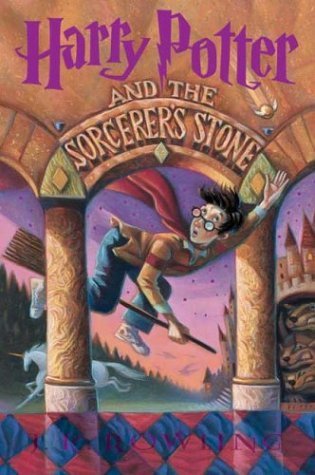
Parry Hotter

With the final Harry Potter movie opening this weekend, it is clear that the brainchild of J. K. Rowling will live forever. When the books first started to gain popularity numerous Christian groups protested that children would be tempted into witchcraft by the appeal of the young protagonists. Ironically, standard Christian teaching denounces the power of witchcraft, although some groups do still acknowledge a very active devil. Now that the series has run its course–all the movie spin-offs of the novels are complete–many are coming to the realization that the message is profoundly ethical if not downright religious. As usual with knee-jerk protests, the message is missed for the medium, and those with fragile faith clamor for a spell of their own to put an end to opposition.

Joining the bandwagon late, I first started reading the Harry Potter books when the third or fourth volume had been published and public interest was riding high. I haven’t kept up with the movies, however, last watching Goblet of Fire at a theatre in Wisconsin while contemplating my own position at a school like Hogwarts, minus the magic. The books, however, convey the message more clearly–the power of evil is real, good is not always what it seems, and institutions can’t save you. The importance of love (the main thrust, many would contend, of the preaching of Jesus) is the driving force behind the story from the moment Lord Voldemort (the Darth Vader of the twenty-first century) failed to kill young Harry Potter. Perhaps the true concern that many religions have with Rowling’s work is that it has trumped the traditional mythology with a bit more style and panache.

As a regular Protestant Christian, Rowling expresses traditional beliefs in her writing. The fantasy of witchcraft, however, has always maintained a lure for those cut out of society’s pathway to wealth, recognition and ease. In the days before Christianity, the early Israelites believed the power to be real to the point of making witchcraft a capital offence. Of course, omnipotence had not yet been invented. Once a deity becomes all-powerful, why should fear remain concerning magic? More likely protests against Harry Potter had less to do with the witchcraft than with the insecurity that many believers feel about God. The plan doesn’t seem to be unfolding as the Pat Robertsons and Timothy LaHayes are saying it should. Doubt is a much more powerful force, it appears, than magic.


Deliverance from?

At times it seems strange that I missed so many formative movies when I was growing up, but then my wife pointed out that many of the films were released when we were minors. That, combined with the fact that most of them bore R ratings, acted as an effective deterrent at the time. So it was that we only saw Deliverance yesterday. References from friends, colleagues, and even The Simpsons made us feel like we’d missed a part of American culture that everyone else had seen. Of course we knew the basic story, but seeing it played out intact is a much more satisfying experience. Since I am scheduled to do a church talk on Christianity and the movies later this morning, I was interested in the way the church is portrayed in the movie.

After the three survivors make it back to civilization, the first building that meets them at the riverfront is a plain white “Church of Christ.” At the moment of their eponymous deliverance, the church is there. As Ed and Bobby are being driven to the hospital in a taxi, however, the church appears again. The valley is being flooded to bring hydroelectric power to Georgia, the reason the men set off to see the river in the first place. Since the town is shortly to be flooded, the church is being moved. The taxi driver tells the men, “We might have to wait a minute for the church to get out the way.” In the extras director John Boorman spoke about the highly symbolic nature of the film, including the way that the symbol of stability in the community, the religious establishment, could not hold its own ground.

I also sensed another element of irony here. The church had been, symbolically, in the way of the advancement of civilization. Paralleling this inhibition is the utter, and bewildering freedom from the law experienced by the men following the murder of the mountain man. The viewer is left to decide which is the worse fate. Now that I have seen the film, I think I can understand the depth of struggle it represents. As the continuing debate on the relative merits and demerits of religion in society rages on, there is always a very human aspect that stands beyond simple formulae. Perhaps we save religion in the hope that it will save us.