Gothic Mother’s Day

What does Mother’s Day have to do with horror films and religion? I serendipitously discovered last night. I generally run a few years behind the media, reading books after they come out in paperback and watching movies when I find a copy of the DVD. Last night as a family we watched The Sound of Music. I’d never seen this show until after I was married – musicals were not popular in my blue collar neighborhood growing up. Of course, I am now a veteran viewer. Last night, during mother’s choice evening, I noticed that if the music were removed (itself a weird concept) The Sound of Music is actually quite gothic. The interior settings, the use of shadow, the dark, Nazi threat, the stonework of the gloomy abbey – all of these things add up to a disturbing collage. In the mood for something more baldly gothic, I stayed up to watch Silent Hill.
I tend not to research movies before watching them since it reduces the visual impact. For those films based on books, I generally read the book afterward to see what was “really going on.” Silent Hill, of course, is based on a video game. I do not play video or computer games; “Pong” may have been my last serious attempt at doing so. Silent Hill, therefore, was a complete unknown. The gothic element did not disappoint, and as Sharon, the adopted orphan, began her sleepwalking scenes being shown beneath a lighted cross in the night, I knew that religion and horror were once again coming together. Indeed, the driving force behind the gruesome story is a religious cult on a witch-hunt that is set in a village based on Centralia, Pennsylvania. The cult, believing those who are different are witches, seems to enjoy the medieval pastime of barbecuing them. Centralia’s ongoing mine-fire was used to great effect. Rose, Sharon’s devoted adoptive mother, of course, rescues her daughter. The line in the film is “Mother is God in the eyes of a child.” (There is the Mother’s Day tie-in.)
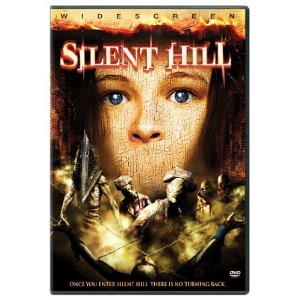
Having been invited to present an adult forum to a local church on Christian themes in popular cinema, I have been recharging my attempts to test my hypothesis that what truly frightens people is religion. Silent Hill would support this hypothesis. I did not miss the significance of the names: “Rose of Sharon” is a popular biblical trope. The impotent father is named Christopher. Centralia’s predicament is often vividly compared to arcane ideas of Hell. And mother’s are, in the eyes of many children, saviors. Perhaps that last point is why we celebrate Mother’s Day on a Sunday. Although films such as Silent Hill may not make the best family viewing, even here where religion destroys, the divinity of motherhood is underscored.
Thor’s Day

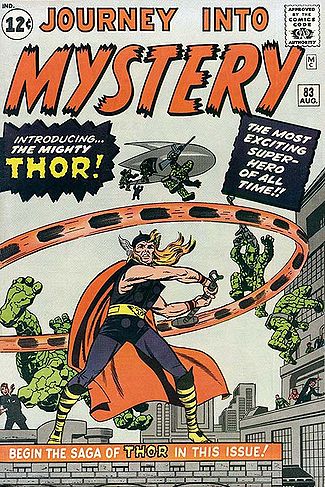
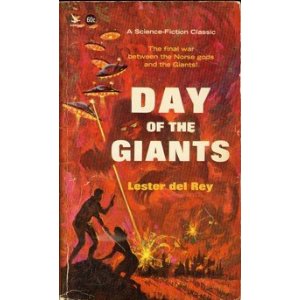
Mythology has visited the big screen in many guises, but among the current spate of superhero films a god may rival mere mortals and mutants. Thor opens in theaters today, bringing a Norse god back into the public eye. Like many young boys I owe my early reading predilection to comic books. One of my favorite heroes was Thor (our birthdays were very close) but I couldn’t quite make out how he was a superhero with the unfair advantage of being a god. Why weren’t other gods down here with us? At some level I sensed Thor’s rage, and perhaps even his estrangement from his father. Was there a sadness to this mighty wielder of thunder? When I was a little older Lester del Rey’s Day of the Giants became one of my favorite books. Norse mythology is plaintive compared to the world of the jovial Greek gods. Even the beloved Balder dies.

Thor is the embodiment of one of the most ancient principles of divinity: control of the storm. A generation after Odin, Thor also experiences that generational divide that all ancient people felt marked the lives of the gods. Zeus likely developed as a more civilized form of Hadad (Baal). In Ugaritic mythology Baal is the lord of the storm; he bears a mace where Thor will grasp a hammer. Baal, however, is often described as the son of Dagan, likely an early Mesopotamian storm god. Back to the earliest levels of civilization miniscule humans have quaked in wonder at the power of storm gods. Making Thor into a superhero humanized him a bit, and with classic comic-book biceps he was sure to be a hit among scrawny boys with dreams of grandeur. We would never have been allowed to read comic books featuring Baal.

The salient point, I suppose, is what makes a god a god? In the mythological mindset, deities are quite human except for their immortality and their strength. The might of gods clashes with the might of other gods. Omnipotence takes the fun out of the equation, for a truly all-powerful deity has orchestrated this whole cosmos and we are just pathetic players on the stage. Thor rages against the machine. If a god cannot be defeated, there is no story to tell. It may be difficult to predict how well Thor will perform on the big screen, but if I am not alone in my fascination of watching gods struggle against even greater gods, this may be like the Day of the Giants for grownups and kids alike.


Alien Agenda

Aliens are now firmly among the canonical cadre of movie monsters. Just the list of highly anticipated movies of 2011 is enough to demonstrate the fact: I Am Number Four, Battle: Los Angeles (past, but formerly anticipated), Cowboys and Aliens, Super 8, Apollo 18 (now sadly relegated to 2012). With two part-time jobs and the constant hunt for something more permanent, I tend to fall behind, however. I have to wait until the DVD release to see them.

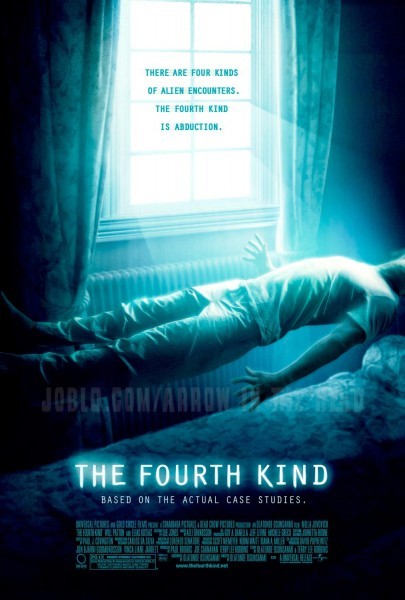
Watching horror films has been an avocation of mine since college. Once when a sociology student asked me why, in the course of a survey; I replied that it was better to feel scared than to feel nothing at all. Well, maybe I’d been reading too much Camus and Kafka at the time, but the habit has persisted and I am now professionally attuned to their religious elements as well. Even the aliens got religion. This past weekend I stayed up late to watch The Fourth Kind. It was suitably scary – when I read the reviews vociferously castigating the producers for claiming it was real, I suspected that the reviewers were overcompensating. The premise (alien abduction) is frightening enough – especially in such a remote location as Nome, Alaska – but the Bible had to be brought into it as well.

Admittedly the fear began to wane when Zecharia Sitchin’s Sumerian hypothesis appeared. Aliens speaking Sumerian is simply not convincing to those of us who’ve actually learned extinct languages. (It could explain some of the textbooks, however, now that I think about it.) The book of Genesis was then cited by the film to verify the much more ancient Sumerian claims. Many horror films deal either directly or indirectly with the fear of religion. The Fourth Kind was no exception. I was reminded of how the Bible played a small but crucial role in The X-Files: I Want to Believe movie as well. As a prop the Bible lends gravitas to otherwise questionable celluloid situations.

Never one to accept the ancient astronauts model, years of studying the Bible have convinced me that context explains most of the anomalous passages in scripture. Nevertheless, the monsters lose their bite without religion, so let’s give Sitchin’s crowd their due and just pretend for a little while.


Rhetorical Criticism

An insidious force far more devastating than it’s generally given credit for being, religious rhetoric is one of the oldest tricks in the book. With all the news about Osama bin Laden’s death, one can’t help but to think of his former rhetoric laced with religious archetypes on how his personal enemies were allied with the raw forces of evil themselves. Religion often has little to go on beyond rhetoric. The high point in many religious services is the sermon, a piece of individually crafted rhetoric sometimes claiming divine authority. The average person in the pew has no experience or knowledge of how the preacher comes by his or her secret knowledge. With eternal stakes in the scales, they are taught simply to accept what is a modern word of God. Those of us with long experience at seminaries know those who teach homiletics, we’ve learned the craft, and we keep the secret within the guild. The secret is that these words are simply rhetoric.

Rhetoric aplenty

Some denominations prefer their clergy seminary-free, inspired mavericks who hear directly from God. Their rhetoric may be even more flamboyant, not having been tempered by critical study of their scriptures. If even one of these dissenters is speaking truly, then all the others are wrong. The preacher with the mightiest rhetoric gets to take all the marbles and go home the winner.

Rhetoric is not evil. Religious rhetoric, however, often tears families apart – ripping friends away from those they once loved – because we undervalue its power. Education in the humanities (and rhetoric is about as human as one can get) is underfunded and devalued. Better to teach kids how to make a quick buck. Sadly in paper after student paper among the denizens of higher education the inability to recognize, interpret, and apply rhetoric is painfully evident. These kids run whirlwinds around their instructors in technological knowledge and ability, but can they write a sentence to move or stir a teacher, let alone a crowd of accepting followers? No matter, there are those with religious rhetoric who are only too pleased to step up onto the vacant soapbox. Without the critical ability to recognize what they hear, the masses will follow.


That’s All, Folks

As May is now upon us, in keeping with the spirit of Beltane, we are being warned to make ourselves ready for the end of the world. At Rutgers Day on Saturday, the eBible Fellowship was out in force, handing out tracts declaring in no uncertain terms that this month will see the dissolution of all things. Now is the time to buy things on credit, apparently, but make sure the payments aren’t due at least until next month! I’ve written a few posts on this particular prediction before, but the flyers I received have helped clarify a few things for me. I wondered why the god of eBible Fellowship had chosen this year to end it all. It turns out that this is the 7000th year after the flood! Things have been going swimmingly for seven millennia, so it is time to call it all to a halt.

Reading further, I was amazed at how accurate the reading of the cosmic timeclock has become. According to the pamphlet, the Church Age ended May 21, 1988. At that time I was too busy trying to get into doctoral programs in Bible to notice, I guess. According to eBible, the Bible states that the tribulation began then and would last for 23 years. That does explain my career history. Reading the passages they cite, however, I just don’t see the numbers adding up. eBible claims that God stopped using churches in 1988, so if you’ve been spending your Sundays there, I guess the joke’s on you. It kind of makes me glad that I was never ordained.

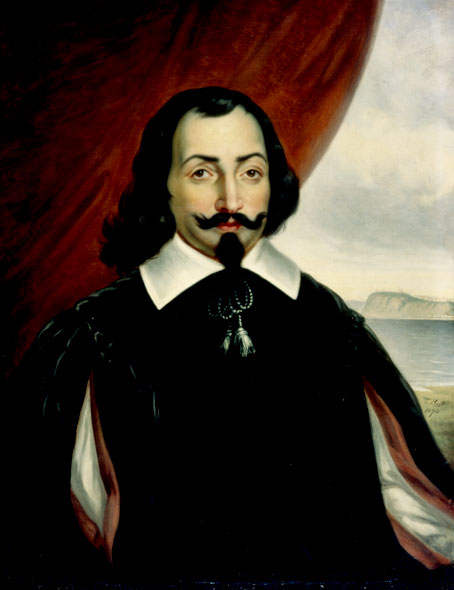
Samuel de Champlain does not endorse eBible Fellowship

Intrigued, I decided to look at their website. For a temporary site there do seem to be a number of incomplete pages announcing that more is coming. There are podcasts about what to do in case you are not raptured on the twenty-first, as well as proof that the world is 13,000 years old, unlike the traditional Ussher date (his name is misspelled on the website). The group, which is based in Sharon Hill, Pennsylvania, states: “We are living at a time when the Bible is being highly exalted by God.” A classic statement of bibliolatry – I was not surprised to note that the King James Version is the one the Fellowship approves. I didn’t see that they calculated the fact that 19 days before the end of the world the KJV would become 400 years old. The only significant event I could find for May 21 of 1611 is that Samuel de Champlain returned to Québec from France. I sure I am missing the hidden meaning of that event, since crossing the sea is almost certainly a metaphor for the flood and Samuel is a prophet in the Hebrew Bible.


Cheating God

Anyone engaged in education long enough will eventually encounter cheating in one form or another. Social psychologists have suggested that whether one believes in God or not has little bearing on moral behavior. A recent report in the International Journal for the Psychology of Religion demonstrates that belief in God does not effect cheating by undergraduates. Among those that believe in God, however, those that believe in an angry, punishing God cheat less than those who believe in a loving, forgiving God. An explanation of the study may be found at Medicalexpress.com.

Someone's watching you

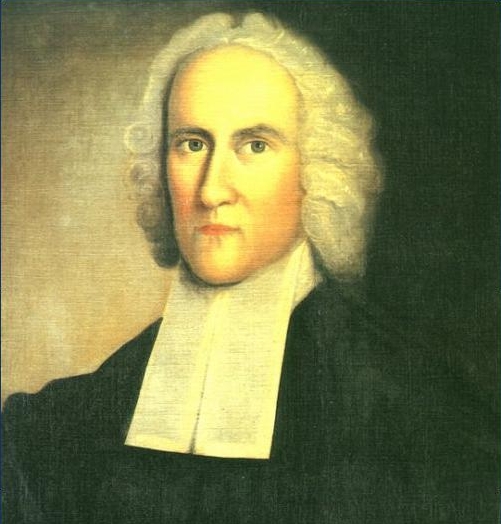
Jonathan Edwards’ famous sermon, “Sinners in the Hands of an Angry God,” it seems, is the bane of cheaters. The Great Awakening chased along the heels of a wrathful deity baying “believe or else!” Those believing in a nicer God are more apt to take liberties. The interesting corollary of this finding is that it does not divide believers along denominational lines but rather along personal outlooks on God’s kindliness. Nobel pagans and fearful believers share a strong moral center.

An informative follow-up would be a study to determine how many believe in a loving versus a wrathful God. From such data we might be able to extrapolate who is more likely to cheat on taxes, spouses, or any other big-ticket items in the economy of our society. Given the number of high profile spouse-cheatings among televangelists and Christian politicians, one thing seems clear: belief in a friendly God willing to look the other way is in no danger of extinction any time soon. Oh, and please keep your eyes on your own paper.


Playing Doctor

Science, religion, humanity. People are a conundrum. Medical professionals have the unenviable task of sorting out what is wrong with this jumble of organic biological systems and also attempting to address the uniquely human aspect of their subjects. As far as life forms go, although we may not be on top of the evolutionary ladder, we are suitably, impressively complex. We haven’t yet sorted out how mental states figure into physical processes: a number of cases of “faith healing” seem to have been verified, but the mechanism remains unknown. Praying has been demonstrated to improve some physical conditions with the believer saying God is doing the work and the skeptic suggesting it is the healing aspect of our own minds. How do you treat a creature that may not even agree with you on the ground-rules?

A story in yesterday’s New Jersey Star-Ledger revealed that New Jersey hospitals are experimenting with human subjects. The subjects, however, are doctors, not patients. In an effort to bring science and the humanities together, several hospitals are sponsoring reading groups for doctors. Like a garden-variety Oprah reading club, the physicians read a novel and discuss the human elements with each other. The theory is that it may help them understand the softer side of the science – how to touch the human reality of a field of study that has become very scientific. Specialists in the sciences and humanities have grown apart.

The humanities have long been assigned to the “less necessary” side of both university programs and the job market. Ironically, among those who are most famous in our pragmatic, make-a-buck world are musicians, actors, film-makers, best-selling novelists – in short, masters of one of the humanities. A darker side exists here as well; even celebrated humanities specialists can turn on one another. Contradictions and conflicts are part of human nature. Religion, one of the humanities, is a stellar example of the heights and depths of human behavior. As physicians attempt to discover what really makes us tick, reading novels is a good place to start. Attending religious services may be a bit more chancy, but like any human endeavor, one might get lucky and make a truly groundbreaking discovery. Did Rasputin write any novels?

Playing doctor, once upon a time.


Mary in the Sky with Sequins?

Shortly before Easter in the district of Yopougon in the Ivory Coast, a large group of Christians saw the Virgin Mary against the sun. UFO enthusiasts saw an alien in the same event. Several eyewitnesses ended up blind after staring into the sun. The video of this purported miracle is available on YouTube,

but even watching the “miracle” on a dim computer monitor hurt my eyes. If you want to see Mary, I suggest a good pair of Ray-Bans. The alleged vision occurs a couple of minutes into the video – let the audience reaction be your guide if you decide to watch. All that I saw was what may be categorized as an optical illusion or pareidolia, although it does look a bit like a walking person. Objective information on this miracle is decidedly lacking on the web.

I never pretend to have the answers on unexplained phenomena. I find human arrogance amazingly resilient despite all that we still don’t comprehend. In the midst of all that might exist out there in the 99.99 percent of the universe we haven’t explored, I remain skeptical that we know all there is to know. One thing is certain, however; if something unknown appears in the skies some will call it Mary, others Jesus, and yet others an angel. (Conspiracy theorists claim it is Project Bluebeam.) Religious belief and paranormal belief are close cousins. Both involve explaining something that science cannot yet comprehend. If the figure were moving any faster, I might be inclined to accept that it is Carl Lewis.

In an unrelated story, it seems that the Allen Telescope Array of the Search for Extraterrestrial Intelligence (SETI), Frank Drake and Paul Allen’s baby (anticipated by Carl Sagan), is being shut down. Earth-based governments are reassessing spending priorities and finding a cosmic big sibling who might help us out of our mess down here has become a luxury we can’t afford. ET may phone from home, but on this end the receiver will be off the hook.

Religions tend to bolster the self-importance of human beings. While I believe we are ethically and morally bound to help one another, I find it difficult to believe, when looking at the way governors are operating today (Christie one of Time’s 100 most important people? Christie eleison!) that Homo sapiens are anywhere near the top of the cosmic intelligence scale. I just hope that if it is Mary in the sky with sequins that she remembered to bring her SPF 2012 sunscreen along.


Aftermath of Easter

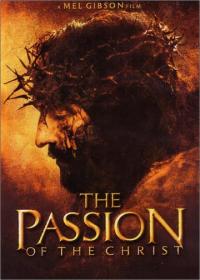
Holidays, it seems, are increasingly overloading themselves with baggage. Not only are many of them thinly veiled celebrations of materialism, but many are now being tied to “issues.” As I survey the aftermath of Easter as I saw it this year, it becomes plain that even the message of self-sacrifice and hope springing eternal can be co-opted. The Fellowship of Catholic University Students at Montclair State University hosted a screening of Mel Gibson’s The Passion of the Christ last week. An outcry of biblical proportions flooded university discussion groups over what was deemed cultural insensitivity. Gibson’s version of the gospel failed to impress me when I saw it, stressing as it did Gibson’s sadomasochistic torture scenes in an effort to raise a few welts over “Christ-killers.” Back at Nashotah House I was regularly on the preaching rota. (I’m not now nor have I ever been ordained in any denomination. I have, however had preaching experience going back to my high school years.) My final sermon asked whether we should accept theological truths from a loose cannon of an actor. These physical accidents may have had more than a little in common.

Conversely, my first sermon at the seminary – the very year I was hired, and several years since my last pulpit performance – featured Abraham Lincoln. Nashotah House was a bastion for disgruntled southerners at the time; they were often the only ones conservative enough to fit the seminary’s profile. My admiration of Lincoln was expressed in an innocent expostulation on the merits of freedom. Afterwards I was drawn aside and admonished, being informed, “not everyone here believes Lincoln was a hero.” Lincoln was assassinated on Good Friday, a point that has not escaped those who note that the Civil War began 150 years ago this month. Those at Nashotah who disliked my words felt that I was disparaging the south. With roots in South Carolina, I indeed was not. Slavery is wrong in any ethical system that will stand up to scrutiny. Those who believe in equality, however, often pay the ultimate price.

Holidays do not always bring out the best in us. We need the respite, and we have the Jewish community to thank for coming up with the Sabbath that has led to our weekend lifestyle. Each weekend rival churches fill up with those who believe others to be wrong. Religion seems to have failed in its quest to unite. A colleague at Montclair cited the quotation of uncertain attribution: “having a war about religion is like having a fight over who’s got the best imaginary friend” – this was in the context of the screening of Mel’s Passion. The fact is, when it comes to religion nobody knows the correct answer. The humble response one would like to imagine is the mutual encouragement to continue to strive for the truth. More likely than not, the response is someone will select their weapon of choice and try to prove their point of view the old fashioned way.


Conscious Cats

To pass yet another rainy Saturday, and to celebrate Earth Day, my family went to watch Disney’s African Cats yesterday. An avowed nature-film junkie as a child, I watched Mutual of Omaha’s Wild Kingdom on a weekly basis and have supplemented that fare with nature films throughout my life, when possible. It disheartened me a little to learn that some of the adventures were spliced together from different filmings, but I always believed every word avuncular Marlin Perkins said. After all, the show ran on Sunday nights, and who’d dare lie on a Sunday? Noting the humor even as a child when Marlin Perkins would stand back as Jim Fowler wrestled the anaconda or outran the crocodile, I could not get enough of authentic nature footage. As a child, wildlife sightings were limited to squirrels and rabbits, a number of birds that looked disconcertingly similar, and many, many bugs. Once a king snake slithered down an alley down the street, and we felt like Marlin Perkins, keeping our safe distance.

A trend in recent years has been to anthropomorphize animal films to engage children’s interests. So it was with African Cats. Each lion and cheetah family was described in human terms with human motivations, longings, and emotions. It is clear from watching many, many episodes of Zoboomafoo with my daughter (we even saw the Kratt Brothers live at a New Jersey Greenfest a couple years back) that animals genuinely do experience emotions. Anthropomorphizing them, however, has always disturbed me. I’ve been a vegetarian for well over a decade now, believing that animals have the same right not to be eaten that I fervently hope they respect in me. But placing them in the same level of consciousness as humans increases the suffering in our world a little too much. Both lions and cheetahs die in this G-rated movie. That is the unfeeling course of nature. Suffering comes at the level among humans of being aware of this misfortune, and taking it to heart. Theodicy is among the most intractable of theological problems.

Today as millions of Christians celebrate resurrection, my thoughts are with the animals. African Cats shows incredible footage of millions of wildebeest migrating, but packages them as mere prey for the hungry lions. What of the inner life of the wildebeest? In our society where the few lions demand the best while countless prey animals go about their daily grind, eking out a living from an unfeeling earth, the subtle message was almost overwhelming. Yes, the vast wildebeest herd can spare a member or two to predation. What if that member is you or me? It is the trick of numbers and the curse of consciousness. I respect and admire our animal co-inhabitants of our planet, but without the myth of resurrection isn’t giving them consciousness just a little bit too cruel?

James Temple's cheetah from Flickr, via WikiCommons


I Swear it’s True

Spoon-fed the belief from youngest years that certain words are categorically bad, I find myself as an adult who daily plays with words wondering how this curious idea began. The taboo. The “badness” of select words can have nothing to do with the combination of sounds; one language’s swear word is another language’s polite invitation to dinner. It is the context of those sounds that constitute a swear, a cuss, a curse. Forbidden words. The sanctions against such words generally come from religious specialists who know the hidden power of human utterances. Even magic words trace their ancestry back to religious elocutions. In a report sure to be condemned by many religious groups, the journal NeuroReport has announced this week, according to the Los Angeles Times, that cussing makes you feel better.

In a controlled experiment involving ice water (shudder), participants who swore in response to the pain were found to have higher tolerance to discomfort compared to those who suffered in saintly silence. Those writing the report theorize that flight-or-fight response may be triggered by angry expostulation, giving cussing a survival advantage when used judiciously. I had previously read reports that suggested swear words, different for each language, were societally determined and were intended to freeze action (without ice water) in a similar way to a lion’s roar. Indeed, apart from those who habitually cuss, thus cheapening the effect, an inappropriate word is often enough to get the attention of a room full of people (not that I would know).

No matter what their psychological origins, taboo words exist in every culture. Whether they are intended to hurt or help is a matter of theoretical perspective. There is no question that these words possess the power to give pause. I am reminded of a former student who had gone on a missionary trip to a part of the world where Indo-European languages were not the norm. Introduced to a young Christian woman who had a name that sounded to English-speaking ears like his host (a bishop) was suggesting he commit an immoral act with himself, said student turned red with indignation. Months later, safely back in North America, he remained scandalized by the experience. In their context those sounds meant nothing inappropriate – so swearing is in the ears of the beholder. Before you decide to use this curative, however, be aware that the study reveals the best results in pain control apply to those who generally do not swear. Many of those I have worked with through the years would perhaps find a non-swear word far more helpful in stopping pain than their everyday vociferations.


Good Earth Friday

In a rare superimposition of holidays, today marks both Earth Day and Good Friday. These two special days are a study in contrasts, yet both are holidays that look forward and hope for salvation. Good Friday, the culminating drama of Holy Week, is often paradoxically treated as a day of mourning. If Christian theology be correct, humanity would be Hell-bound without it. Yet many of the faithful weep as if for Tammuz, knowing that resurrection is just two days away. Earth Day, much more recent in origin, is much more ancient in importance. Biology as we know it, whether human or divine, would have no place to call home without Earth. Earth Day began in 1970, but every day is an Earth day for most of us.

Still buzzing with 1960’s activism, on the first Earth Day 20 million demonstrators got involved and helped lead the way to the Clean Air Act, the Clean Water Act, the Endangered Species Act, and the founding of the Environmental Protection Agency. People cared. This was before fashionable complacency set in. Whatever. Today citizens of the United States get stirred up about very little. Good Friday may represent a school holiday for some, others may even go to church although it is not Sunday. But get worked up? Hardly. Legislators in our country drag their feet like spoiled children when it comes to reducing emissions (many politicians positively treasure their emissions) or paying for cleanup of what we’ve done to our planet. Let our children inherit the dearth.

While bully governors seek to slash and burn, it is the responsibility of more reasonable individuals to try to repair the damage their leaders do. This is the spirit of Earth Day. Our leaders make the mess, those of us who care try to do something about it. Good Friday shows what happens when an idealist challenges the imperial status quo. Long-haired liberals get nailed, and guys in expensive suits cut themselves bigger and bigger checks while orphaning those who get in their way. Gaia was never crucified, but that doesn’t stop Neo-Cons from trying to rape her. Just a year on from Deepwater Horizon and oil companies argue they are legally within their bounds not to permanently seal off caps that “meet regulations.” Their friends the politicians politely look the other way. If things are going to get better I suggest that we leave official policy hanging on a cross and do our own best effort to save our mother’s life.

Careful, it's the only one we've got.


Pilgrims’ Regress

In March alone I had to build expanders for three of our bookshelves. I claim the problem began when, as a faculty member at Nashotah House, I had use of a house with a built-in, floor-to-ceiling library. My wife claims the problem began long before that. We own a lot of books. The only silver lining to Borders’ recent bankruptcy was that we hovered like buzzards at one of the closing stores and walked out with books we might not have otherwise bought, but whose prices demanded their owners find a new home. Orphaned books are a sad sight. So I purchased my first Christian satire book in many a year. I just finished reading Becky Garrison’s Jesus Died for This? A Satirist’s Search for the Risen Christ. Having spent many years among the Episcopalians, Garrison’s point of view set me at ease: had this been an evangelical attempt at humor I would have orphaned the book myself. Nevertheless, as I read through this travelogue/memoir, I rarely found myself laughing.

Nothing robs one’s sense of humor quite like being in higher education for a couple of decades. I still find plenty to laugh about, but I realize the reprieve is only temporary before more serious issues once again cloud the skies. Garrison’s attempt to find genuine “Christ-like” behavior among Christians was, predictably, peppered with the failures to find it. As she repeatedly notes, the odd marriage of religion and politics in the United States has tainted both institutions (and both had already tainted themselves without the other’s help many times previously). It doesn’t take a satirist to see that many religious figures have made a joke of their belief systems by touting them as the only way to heaven.

What became increasingly clear to me as I read this personal and revealing book was that Christianity has splintered into countless subcultures that attempt to reclaim the original Christian experience. The problem is that time doesn’t stand still. Religions are, by definition, conservative. Progress, by definition, is not. Ever since the first hominid hefted a wedge-shaped rock and used it as the first Paleolithic weapon, our course was set. We would continue to try to improve our lot. Institutionalized religions began appearing a mere six-to-seven thousand years ago, very late in the game, and they’ve been driving with feet firmly on the brakes ever since. Once we figure out what the gods want we need to – wait, don’t change that! We’ve just figured it out! So we find ourselves in a highly technological twenty-first century with pre-medieval religions trying to tell us how to survive the Black Death. Each time religions change, some get left behind. When we finally implode, some future archaeologist may find an apartment crammed full of books and she’ll declare that my wife was right: the problem began long ago.


Take Your Medicine

Sanofi-Aventis is a local pharmaceutical company. I drive by their massive campus on my way to Montclair a couple times a week. The facility is immense: it has its own three traffic lights on a state highway. Nestled in the center of this large sanctuary to engineered improvements to natural life is the Sri Venkateswara Hindu Temple (it too has its own traffic light). The first time I saw this temple – it is still under construction – I almost drove off the road. It is a stunning structure to see in the edges of rural New Jersey and it is a testament to the religious diversity of the state. Being small-minded in matters of zoning and construction (I’ve never owned property or a house), I wondered how this fascinating building came to rest in the center of a major pharmaceutical company’s strip.

As I considered this juxtaposition, it occurred to me that I was seeing a living metaphor. In our country of (admittedly uneven) advanced healthcare, an industry driven by science and its wonders is still penetrated by a religious institution. A temple to ancient Indic gods surrounded by a temple to human accomplishment. We can lengthen life, if there is cash on the barrel-head. Being technically unemployed, I do not receive healthcare benefits. According to bravado wafting from the governor’s office, other state employees may soon be joining me. Yet it is the cost of healthcare that has consistently caused the stagnation of some sectors of the economy. According to this month’s Harper’s Index, since the year 2000 Massachusetts has allocated $1,200,000,000 (yes, one-billion, two-hundred-million dollars) to decrease class sizes and to increase teacher pay. Of that amount, 100 percent has gone to cover rising healthcare costs. Kali have mercy!

Those of us in central New Jersey, like our Hindu temple, are surrounded by pharmaceutical companies. I have, because of my robotics avocation, been inside some of the facilities of a couple of these companies. Their visitor lounges surpass any faculty lounge I’ve ever witnessed in both opulence of appointments and sense of wealth. Yet I know that legislators refuse to tap these shoulders when it comes to taxes. Those wealthy beyond compare have already paid their dues. Besides, these guys have the keys to life: bad heart? Overweight? Sexual malfunction? All can be cured, given the cash-in-hand. Yet in the center of the capitalism’s campus stands a temple for a time-honored religion. Where your heart is, there will be your heart medication also.


Palm Versus Palm

“Mankind [sic] has managed to accomplish so many things: We can fly!” The words are not mine, but, depending on whether he was standing or sitting when declared, the Pope’s or God’s. In his Palm Sunday sermon yesterday the Pope addressed the issue of technology. Acknowledging flight a mere century after it began is breakneck speed for the Roman Catholic Church, but the concern behind the sentiment is real enough. Can religious systems survive the full onslaught of the technological revolution? As one small sample of the larger picture, ethics must react to increasing advanced technological scenarios. Raymond Kurzweil’s proposed Singularity where human and machine are fully integrated is perhaps an extreme example, but by no means the most extreme. Without fully understanding the context, our technical ability has soared way beyond our capacity to foresee implications. Believe it or not, many people alive today cannot use personal computers, have no palms, no cells. Sounds like they might be living free.

Palm Sunday is a day of tradition, heavily freighted as the start of Holy Week (in the Western tradition; of course, many Christians think it is a little too early some years, but that’s for a different post). Fronds from actual trees are waved as the Pope speaks. In the crowd palms are also being utilized to send the news home that one is waving a palm in the presence of the Pope. Traditional Christianity can survive with only the most rudimentary of tools. Religion, from the available evidence, began in the Paleolithic Era – earlier, I am pretty sure, than even the first integrated circuit. With its iron grip on the human psyche, religion is not about to disappear. Instead, technology is either ignored or embraced by it. As long as religions rely on human participation, however, technology will need to be reckoned with.

It's still a date (or palm)

The fact is technology has changed the perception of the world for many, especially in the western world. Even the revolution in Egypt earlier this year was conceived on the Internet. All the indications point to increased usage of technology rather than its imminent demise. Yet religious leaders still enjoin us to wave palm branches. Virtual Church websites abound where the faithful can wave electronic fronds and nary a tree will be harmed. Sermons, discussion groups, Bible readings, prayers – they can all be dispensed through wireless networks and modems. While many traditionalists turn from such ideas in disgust, it would behoove us all to pay attention. With the Vatican now onto the fact that we are flying, within mere decades we might receive a divine message on – oh, wait a minute – I’ve got mail!