Condom Not?

Newspapers and the Internet have been abuzz with Pope Benedict XVI’s leaked proclamation that condoms may be useful for male prostitutes in preventing the spread of AIDS. Many are astonished, and not a few heads have been scratched at the declaration from the stalwart bastion of “sex is only for procreation” Christianity. The announcement, while humanitarian, is deeply troubling. From ancient times it was recognized that human sexual behavior had more than procreational importance. The matter has been investigated by psychologists since the nineteenth century and the same conclusion was drawn: people engage in sexual practices for a variety of reasons. Meanwhile, the church has been holding out with a Hebrew Bible viewpoint enhanced by the personal outlook of Paul.

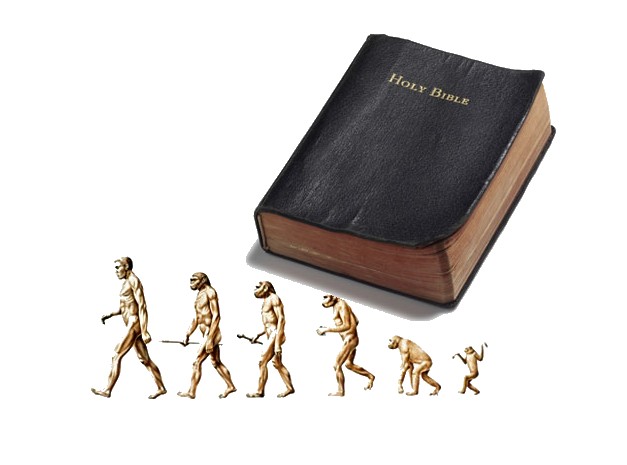
In the ancient world, the microscopic world of reproduction was unknown. What was actually happening in conception was misunderstood. Judeo-Christian sexual mores were based on faulty information, from a biological point of view. In such a view, the all-potent male gamete (inappropriately called “seed,” as if a womb were just a place for pre-formed humans to grow) was capable of producing life on its own. Reading a handful of Greek myths will demonstrate this principle nicely (since the Bible has a more demure and blushing way of discussing the idea). The concomitant concept that seed should not be wasted led to the faulty idea that, in the unforgettable words of Monty Python, “every sperm is sacred.” That mental construct has been used by the church to make women subservient to their biology in a way that never applied to males. The Pope’s declaration underscores this double standard.

If male prostitutes may use condoms with the church’s blessing to prevent the spread of AIDS, the only motivation left for heterosexual birth control is female control. The “lost cause” of male reproductive potential in male prostitutes does not apply in heterosexual unions? God holds married couples to a different standard than male prostitutes – why? Is the sperm in these two cases unequal? The Pope is undoubtedly on the right track by endorsing the use of condoms, but the church still has a profound distance to go before it can look women in the eye and say, “we believe you are truly equal with men.” Oh yes, and not blink while saying it.

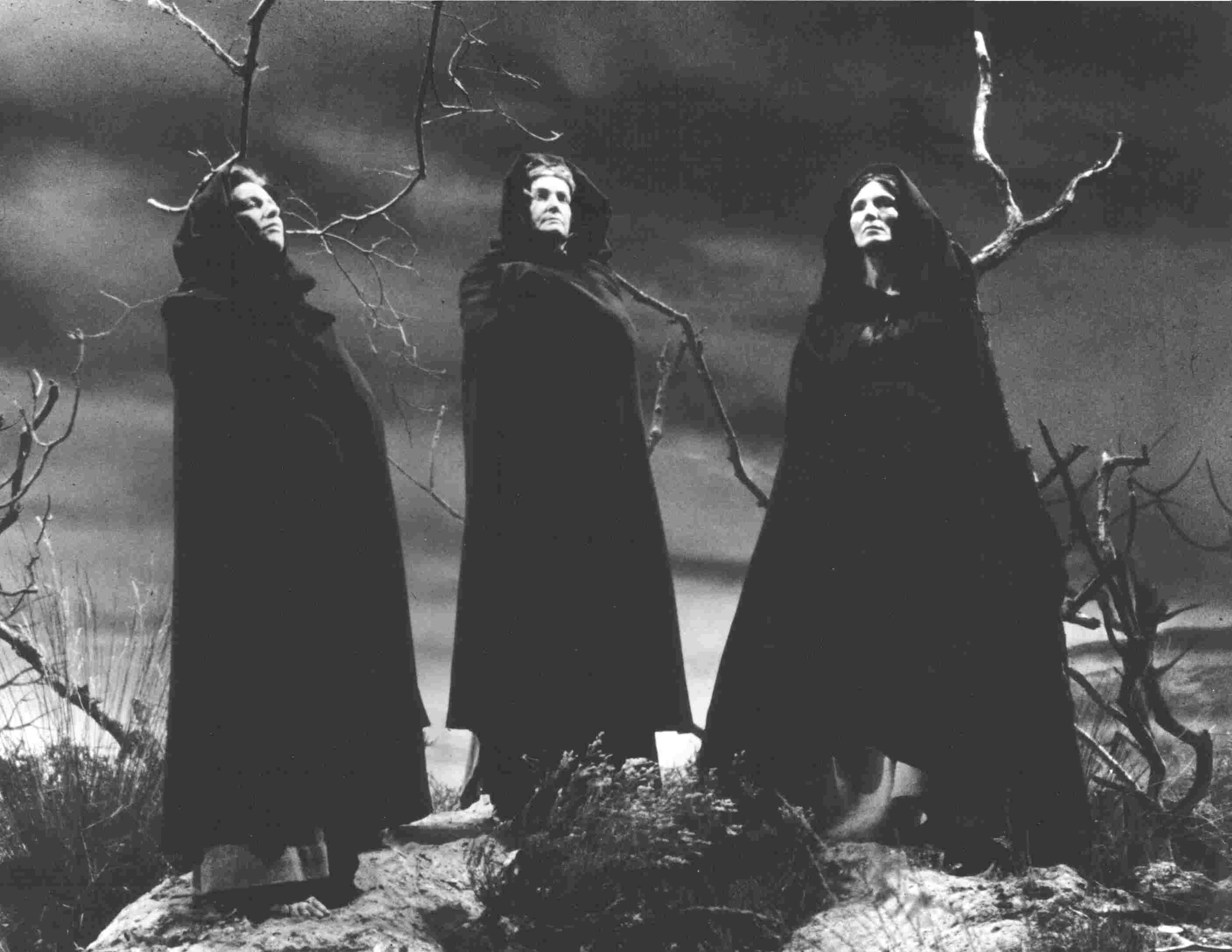
Remember, these guys lost to the Greeks...


Latest Temptation

It would be a rare day indeed when I claimed to be the first to see, read, or watch something. Caught up between constant obligations (part-time jobs can be more demanding than their full-time facsimiles) I often find my mind awhirl for a semester at a time, only to discover that inter-term courses start just two or three days after the current term ends. If there’s a great movie out there that everyone’s commenting on, I am lucky to catch it before it leaves the theater. Sometimes I even miss the DVD version. So it was that yesterday I finally got around to watching The Last Temptation of Christ, the 1988 Martin Scorsese movie. This film came out right after I finished seminary, while I shared an apartment with a seminary friend who was an irrepressible movie buff. Together we missed it and, despite teaching in a seminary for a decade and a half, I still missed this one by twenty years and a few. At last I can feel caught up with the late eighties.

I’m not a big fan of Jesus movies. Movie makers shooting such films portray an eminently likeable guy getting beat up and tortured to death with such contempt that it is wrenching to watch. Yes, I know that’s how the story goes, but must we be brought into the Schadenfreude? As a life-long religionist raised in the Christian tradition, however, I feel a professional obligation to see popular portrayals of the foundation stories. The first one I recall viewing was Franco Zeffirelli’s 1977 Jesus of Nazareth, a movie so reverently rendered that it is frequently cited as the best ever. The eponymous Jesus by Peter Sykes and John Krisch came out in 1979 and claims to be the most watched movie of the genre. I saw Jesus Christ Superstar in college, but even Andrew Lloyd Webber’s music couldn’t remove the depressing aspect. Then, of course, Mel Gibson’s The Passion of the Christ in 2004. All of them have left me depressed. Perhaps that is their intended purpose.

The Last Temptation was laden with controversy in its day. I was anxious to see why (okay, so not terribly anxious, but I was curious). So yesterday I got to satisfy an ancient itch. Despite the caveat at the opening of the film, many critics jumped on the portrayal of an indecisive Jesus who has a rather chaste love scene with Mary Magdalene in a “last temptation” vision while on the cross as irreverent. Perhaps two decades and countless movies later this criticism has been calmed, but I found Last Temptation to be a typical Nikos Kazantzakis introspective, full of self-doubt and deluded penance. Kazantzakis’ work is a man’s struggle against his personal demons. Do dream sequences count as theological fodder? The movie suffers from pacing issues and at times contrived dialogue. The best scene is where Jesus meets and dresses down Paul only to have Paul declare himself the true bearer of the message. Even that is in the dream at the end.

In 2004 a Fundamentalist atmosphere pervaded Nashotah House. Newly appointed “theologians” on the faculty easily bought into Mel Gibson’s theatrically distorted view of their faith. By the end of that academic year it was clear that the evangelical leadership had decided on a new victim for the sake of facile Christianity, but that is a story that can wait another couple of decades before being told.


The Good (Face)Book

One of the funnier books I’ve enjoyed has been Sarah Schmelling’s Ophelia Joined the Group Maidens Who Don’t Float: Classic Lit Signs on to Facebook. Its unwieldy title as well as the temporary nature of the subject ensure that this book isn’t destined to be a literary classic, but it is a nuanced and subtle treatment of the Facebook phenomenon. (My daughter found it on the bargain table at Borders, and it cost us less than two dollars.) Schmelling presents the Facebook pages of famous, departed authors, often with hilarious results. For some time I regarded YouTube, Twitter, and Facebook as passing fads, but now I’m beginning to wonder if we’ve become so connected that shutting down the networks would be tantamount to pulling the plug on the respirator. We live to be connected. Humans are social animals, and yet many of us find ourselves isolated and alienated, living apart from family and those who were significant to us in times past. It’s the Internet to the rescue.

My wife pointed out an article on CNN entitled “The theology of Facebook, an online ‘altar’” by Omar L. Gallaga. Gallaga explores the concept that Facebook is now being taken as a spiritual venue by many. Quotes from the Bible or self-righteous, self-congratulatory religious sentiments are very commonly posted. So much so, Gallaga suggests, that some clergy worry about their jobs. Facebook has developed its own “spirituality” quite apart from anything its creator may have imagined. Facebook is evolving. I joined Facebook last year, but I limit my involvement to mostly watching others. Rather like I did as a kid on the school playground.

Is there balm in Gilead? In rereading Brave New World I am reminded of the insidious nature of soma, the feel-good drug. I’ve been to churches like that. Like Bernard Marx I left feeling empty. In Facebook-world it feels the same to me. We are communal creatures by evolution, but we want to talk about our troubles more than we want to listen. We are seeking that mythical, homeopathic cure to the ills our society creates: lack of prosperity (except for the Prosperity Gospel crowd, of course), joblessness, despair. Misery loves company and Facebook loves company. It is like the confessional without the absolution. Gallaga may be right; maybe Facebook has become a religious institution for some. If Facebook had come along a little earlier there would be no lost years of Jesus for us to ponder. We would know through his posts and tweets, exactly what it was like to be the son of God.


Tax Dollar Peep Shows

Yesterday’s New Jersey Star-Ledger ran a column by Paul Mulshine entitled “It may be 2010, but it sure feels like 1984.” The topic, of course, is the increasingly invasive procedures that TSA officers have been granted. For a guy who “held it in” every day for the six years of middle and high school because of bashful bladder syndrome, the airport has begun to feel like the shower room after gym class. Having been raised with the idea that certain body parts were to be viewed by God alone (and the occasional physician), being undressed in front of others was a nightmare scenario. I still avoid public restrooms when at all feasible. Now TSA officials have tickets to a free “scope and grope” fest whenever you want to fly. I say the terrorists have already won.

Perhaps by coincidence, in trying to keep up with my daughter’s reading assignments, I have started to reread Aldous Huxley’s Brave New World. The grandson of Thomas Huxley, Darwin’s bulldog, Aldous had written a foreword in 1946 that was affixed to the front of my college edition of his novel. In it he states his bleak vision of a future where governments have all become totalitarian and control vast numbers of slaves made willing by apathy (read “world-wide web” or “Internet”). Showing your private parts to a total stranger who then gets to grope you later? This is freedom? Abandon hope all ye who enter here.

Have these TSA officials been trained, seriously trained, to deal with the fact that they see what many people would pay good money to glimpse? (Well, not in my case, but you get the picture.) Where are their credentials? No, wait, don’t show me that! If I decide to display myself in public, I could easily be arrested for indecent exposure, but if a pervert wants a free look, all s/he has to do is apply to TSA. What will it take for Americans to shake off their electronically induced haze and say “No more!”? Perhaps I am alone in feeling vulnerable naked before strangers. Perhaps others enjoy giving it all away. Is it not better to survive that flight so that another stranger gets a gander at the jewels when you fly back home? You can kiss my arse goodbye and call it government work. 1984? Brave New World? I think Silence of the Lambs might be a better paradigm.


Hallowed Be Thy Game

I don’t follow sports. At all. This may seem an unmanly confession, but I think of it as more a silent protest against a society that pays excessive bonuses to people who play for a living. It’s not that I have anything against physical fitness – I still jog regularly and have been known to rattle the free-weights around a time or two – it’s simply the recognition that the more difficult achievements, intellectual achievements, are undervalued. Not that I make any claims of being an intellectual – I have no time for those who tout Ph.D.s like intellectual currency – but I see things from a different angle. Usually when I reach the sports section, I simply flip over the whole wad of pages to get onto what’s next. Today, however, a front-page sporty headline caught my attention, “‘God Can Turn Mistakes Into Miracles’ is the message Michael Vick sent out…” I confess, I don’t know who Michael Vick is. But he knows what God can do in some sports venue.

I grew up with God. The information I was given was that those who devote the majority of their time and attention to God will receive their reward. Not always in money, despite what the Prosperity Gospelers bray, but at least in kind. Being the kind of person who likes to follow things through to their logical conclusions, I ended up with an appropriately named “terminal degree” in religious studies. The prosperity came in the satisfaction that I could teach others for a reasonable, if low-end, salary and continue my goal of deeper understanding. Then Prosperity Gospelers took over the seminary and those of us without material cache were kindly kicked out. I was jogging between seven and nine miles a day, looking for answers.

The headlines this year have included tragic college sports-related injuries, one of the more dramatic from my own part-time home of Rutgers. Immediately medics rush to the field and prompt, professional medical care is given. I am covered by no medical plan. Many athletes take my classes, and they can count on the good graces of God and university officials to take care of them. In my opinion they are just as capable of learning as any other students, but the incentives just aren’t there. Why earn a degree in a field that will plant you on your backside all day for minimum returns when you can perform miracles in the athletic world for more money than the average citizen can even imagine? If God can turn mistakes into miracles, perhaps this misspent life of religious studies can turn into a lucrative position after all.

Miracle or mistake?


New York Sinning

Men’s Health, a magazine I’ve never read, is making a foray into spirituality. Or at least religiosity. According to an article in the Friday New Jersey Star-Ledger, the magazine noted for its washboard abs and iron biceps is poised to claim New York City among the least devout cities in the country. Even lower on the scale are New Jersey’s own Newark and Jersey City. Quite apart from wondering what a magazine whose cover frequently involves suggestions on how to improve your sex life has to do with religious devotion, the criteria for this assessment also give pause. According to the article, a city’s saintliness is measured by the per capita number of worship venues, the diversity of religious groups in the city, and the amount collected in donations. Interesting criteria.

I’ve spent enough time in New York to know it is hardly Heaven – still it is one of my favorite venues – but that it is hardly Gomorrah’s brute step-brother either. Per capita places of worship as a measure of spirituality overlooks size of venue and number of services. A Midwestern town with a dozen churches, each with a dozen members and with one service a week scores ahead on such a scale against a city with more than 2000 churches, 1000 synagogues and 100 mosques, many with multiple congregations. Diversity of religious groups? Surely New York and New Jersey must come out in front on that! I’ve been to Europe, and even Israel, and there are days when I’d swear New Jersey has a higher percentage of ethnic groups than any similar-sized region I’ve experienced.

My main concern, however, is with the amount of donations criteria. “Where your treasure is, there your heart will be also,” a famous guy once said. Was the treasure monetary? Precisely the opposite seems to have been the point. True, money today is often a measure of value, but it is not the only such measure. In fact, the same guy who made that statement once said a poor woman’s two cents were worth more than the lucrative eternal investment of the wealthy. I don’t doubt that New York, Newark, and Jersey City have their share of innovative sins. Their citizens, however, are just about as religious as people are anywhere. In my opinion the trouble is not in the souls of the masses, but in the design of the assessment. But with pecs like that, what does it really matter?

A God's eye view of Sin City


Physics of Religion

As an observer on life’s sidelines, I rarely participate in the action. The subject matter is more important than the critic, so I tend to respond in this blog rather than create. Once in a great while, however, someone I know shows up in the media. A number of years back Neal Stephenson introduced me to George Dyson. I instantly felt an affinity for him, and found his book Darwin Among the Machines a great triumph of intelligible science writing. It was no great surprise, then, when George was mentioned in an article in December’s Atlantic magazine, comparing his outlook to that of his father, physicist Freeman Dyson. I was intrigued by physics in high school, but my overwhelming supposition that religion explained life overruled this predilection and so I’ve ended up an unemployed religion professor than a scientist. In the article, however, author Kenneth Brower brings these things together.

Brower asks a pointed question: how can a physicist as brilliant as Freeman Dyson hold factually inaccurate and apparently misguided ideas about global warming? The story contrasts Freeman with his son George as exemplars of two different religions. George represents the environmentalist religion while Freeman represents the belief in humanity’s ability to solve any problem. The use of religion as a means of distinguishing these views again raises a question of definition. I don’t dispute the use of the word – it is entirely apt in this context – but the functional definition here is that religion equates to something deeply believed. I am a little troubled by this. Not because no gods or deities or supernatural forces enter into it, but because for years many evangelicals have boldly declared that science itself is a religion. That idea has been used as leverage to get Creationist ideas equal time with those of science because it comes down to purely a matter of one religion against another.

Belief is a phenomenon that is not well understood. Most people have no difficulty accepting the truthfulness of factual data. Seldom do even religious zealots doubt two plus two equals four. At a more theoretical level, however, facts become formulas incomprehensible to most of us and critics are quick to call this “religion.” Faith in human ability to solve the riddles of the universe. Where is the line with religion crossed? In the year 2000 Freeman Dyson received the Templeton Prize, an honor reserved for those who make significant contribution to the spiritual dimension of life, often with a scientific component. It is the dream of every religionist to be considered for this great honor. Once again, however, the further out we peer into our universe, the more the lines become blurred. That does not worry me. What concerns me is how such ambiguity will no doubt be used by Creationists and their Neo-Con supporters who are only too glad to have a scientist of Freeman Dyson on their side. When religion trumps science not even 2 + 2 = 4 is secure.

Hubble's ultra deep field has yet to detect any deities


Hallelujah of a Long Night

I discovered Leonard Cohen is an unusual way. Having grown up with very limited funds for purchasing music, most of what I listened to growing up was what I heard on the radio out of a small-town station or what I heard emanating from my older brother’s room. My musical tastes, however, always included a “religious” element, whether that be a blatant religious message or provocative lyrics combined with compelling tunes. It was only when I first watched Shrek that I learned about Leonard Cohen. The moving scene where Shrek and Donkey have gone their own ways, both disappointed in love, is framed by John Cale’s rendition of Cohen’s “Hallelujah.” It is particularly poignant even in an animated movie, and I wanted to learn more about the haunted composer. The official movie soundtrack included the song covered by a different artist, but I found Cohen’s name listed as the writer. That’s when I began to explore.

I can’t pretend to be a groupie of any performer, but I find much of Cohen’s music to be moving and provocative. His lyrics, self-effacing and tentatively assertive, seem to capture the ideals of many religions. Reach out but don’t touch. Seek your own fulfillment, but put others first. I was reminded of this the other day while listening to some of his songs. A commentator once described Cohen as an artist with a Psalter in one hand and a picture of a naked woman in the other. An artist who struggles to overcome his humanity, yet who thoroughly enjoys it. “Hallelujah,” Cohen once explained in an interview, began as a religious song and ended up an erotic one.

As the nights grow longer and the days grow colder, my thoughts return more often to his provocative lyrics. After viewing Shrek I began to purchase Cohen CDs (this was back in the day when I was fully employed). I was amazed at what I’d been missing. There is an honesty about Cohen’s work from which many who overtly claim religion could learn. Cohen is the sinner who does not pretend to be a saint. His work openly expresses the struggle. If those who want others to join their religion could learn this simple trick of being honest, they might be surprised by the results. Self-assured bravado cannot convince as readily as the confessions of a lost but sincere seeker.


Jesus Gets a Head

Sunday newspapers often contain stories calculated to appeal to the purveyor of the unusual in addition to the usual current events. When my wife pointed out an article in yesterday’s paper about the new (unverified) tallest statue of Jesus in the world, I was instantly intrigued. A Polish priest by the name of Sylwester Zawadzki created the statue which tips the yardstick at somewhere between 108 and 167 feet (a little triangulation might be helpful here). Noting that Rio de Janeiro’s Jesus is 125 feet tall, some are claiming this as the largest Jesus in the world. According to the article, some Poles feel the statue is tacky and in bad taste. Others rejoice that a very large likeness of what Jesus may have looked like now overlooks Swiebodzin.

Religions frequently display their colors. Knocking down crosses for crescent moons or stars of David for crosses is a religious activity as old as monotheism itself. Zawadzki claims that he was called by Jesus to do this task. According to the Gospels, Jesus seemed to focus more on his message than on himself, but the two have become so intricately knotted that the Jesus icon has come to stand for everything from preserving fetuses to longhair free-lovefests. What Jesus is depends on the eye of the beholder. As the gold-crowned head was lifted by crane onto the awaiting shoulders, a cross was lifted from the shoulders of Zawadzki who expressed thanks at having been able to fulfill God’s will.

Construction workers gathered at the base of the statue for photos, wearing safety helmets. Working on Jesus, like any construction zone, can be hazardous. If it is the will of Jesus to have enormous statues erected in this faithless world, are safety helmets really necessary? It is all a matter of perspective. Many people in the world are in need. Many do not have the resources they need to survive. Where is the triumph here? I understand the artistic urge, I sympathize with the need to stand out. But is the will of Jesus to be represented in larger and larger formats, or is it to help those who feel physical need day by day?


10 Questions

This week’s Time magazine’s 10 Questions feature is directed to Stephen Hawking. Predictably, the first one concerns God. “If God doesn’t exist, why did the concept of his existence become almost universal?” a reader asks. I was less concerned with the answer than with the implications of the question itself. The very question represents a paradigm shift. Time was, such questions were directed to local clergy. The minister had the answers. To be sure, many millions, if not billions, of people regularly rely on their clergy for divine guidance. I used to teach clergy, so I am wary. Today, however, we need to know if all the answers fit. To find out if God exists, ask a scientist.

Theologians have earned their reputation as inscrutable doyens of the unspeakable. I have been involved in higher education in the field of religion for nearly twenty years and when I read theologians I am left scratching my head and asking “what?” Erudite to the point of being obtuse, the issues and methods of theologians address the unknowable. Much of it is idle speculation. The specialists, however, must earn their keep. Deans are impressed by what they can’t understand. God himself, I’m sure, wonders what some of it means. Is it any wonder that the average citizen would rather ask Dr. Hawking than ask some obscure theologian?

Religion and science are bound to bump at the borders like the parallel universes of string theory. Both are concerned with explaining things. Science has a proven track record of presenting verifiable results while theology has produced a poke full of intangibles. I am the first to admit to being a working-class Joe who has no special knowledge. What I’ve learned has come from the many classes I’ve endured and the books I’ve read. As far as I can tell, none of it comes directly from God. In my mind’s eye I reverse the situation. I see a popular theologian, take your pick (I have trouble conjuring the moniker of a household-name theologian), being featured in 10 Questions and the first query being, “What is M-Theory?” I can imagine the convoluted answer.


Golden Eagles

I used to be a Boy Scout. Not a very good one, but I did try. Eventually, before even reaching the rank of “Tenderfoot” I dropped out. I often wonder what life would be like if I’d gone on to be an Eagle Scout, like Gerald Ford. Would I have made president? Or at least Assistant Professor? Last night I attended a workshop for Girl Scouts. My daughter is about to embark on the program that leads to the Gold Award, the highest honor a girl can attain in the organization. I want her to succeed where Dad failed. Maybe earn herself a better life.

Girl Scouts are as organized as Methodists and as legalistic as Jesuits. As we sat listening to the requirements, I was stunned by the degree of technicality. You can do this, but not that, that, or that. I remember now that I didn’t make Eagle Scout. What struck me as most intriguing, however, is the fact that certain projects are disallowed for theological reasons. In order to earn a Gold Award, the Scout must conceive, lead, and implement a social service project. It is a noble goal. In society many people are hurting and in need, and governors, representatives, and senators do not seem to notice. Yet, the leader of the meeting noted – if the project involves “controversial” issues, it will be declined. Controversial issues are things like abortion (i.e., women’s rights), or gay rights.

While I agree, it is not safe to put girls in the line of fire, I thought about these issues. The reasons that they are controversial is that Evangelical Christianity has made them so. Evangelicalism is a strain of Christianity that has a trajectory that went on the offensive in the 1960s. Charging the emotions of regular Americans with the terrors of gay love and dead fetuses, it raised these issues to national consciousness and made them a part of every political campaign in the latter part of the last millennium and into this one. These are points of great human suffering. The answers are not easy, but the fact remains – neither is a biblical issue. Yet girls are prevented from taking on issues that may have the most solid and tangible impact on their future. I was saddened.

I have no complaints with the Girl Scouts. It is a shining example of an organization that gives girls the confidence and tools they need in a hostile environment. I am disappointed, however, that a small but vocal cross-section of Christianity has made certain topics – topics that need to be addressed – off-limits for concerned young women.


Lions, and Politicians, and Bears


A man was eaten by a lion in Zimbabwe yesterday. A boy on his way to school in Alaska was attacked but relatively unharmed by a brown bear. Predation. Much of the way humans act is based on our long history as both predators and prey. Evolution (may not apply in Kansas or Texas) has designed us to cope with these constant stresses of finding enough food and avoiding becoming food. A great deal of religious behavior can be traced back to avoidance of predation and success in the hunt. We like to think that we are somehow not animals, but animals are smart enough to disagree. Just ask that cheeky squirrel that finds ingenious ways to circumvent all the deterrents you put in place to assure that those seeds go to needy birds, not fat rodents. We are part of the mix. Our opposable thumbs help immensely; we build our own ecosystems to keep lions and bears out.

Yesterday was a day of predation. Even within the human sphere we find that killing others is permissible, as long as it is done slowly by those in fine clothes and fancy automobiles. Depriving the less deserving is a time-honored human behavior, after all, survival of the fittest only applies to animals, not us. Right? By backing policies that protect the wealthy in their lofty sanctuaries while others shiver in November’s Tuesday chill we show human nature. Humans are predators as well as prey.

Intriguingly, many politicians who support laissez faire economics deny evolution exists. Instituting policies that ensure survival of the wealthiest, they deny up and down that evolution has anything to do with the way that we are. It’s all in the nature of the evidence. And nature itself is evidence. We may be the smartest, most well adapted of the mammal class, and yet we can be eaten. What does the evidence suggest? From the point-of-view of a lifelong observer of religion, it suggests we are still the prey. When religion stealthily crawls into bed with politics, it is evident that even religion itself may be a deadly predator.


Theory of Everything

Over the weekend my wife pointed out an interesting story on MSNBC pointing out that superstitious beliefs are becoming more common. While reason may dictate that as it becomes more obvious that reason explains everything the supernatural will fade from the human explanatory repertoire. Instead, scientists are using reason to explain why this does not appear to be happening. Many neuroscientists suggest that something in the brain predisposes us to believe, while other scientists suggest it may be in the DNA. For whatever reason, we are inclined to believe in outside agency.

The article is an introduction to the book Paranormal America by Christopher Bader and Carson Mencken. I’ve read some of Bader’s work before and it is admirable for its balance. He tends not to judge the phenomena but raises the question why people believe what is, frankly, often unbelievable. What stands out in such discussions is that religion is often classed separately from the “paranormal.” Paranormal is generally anything outside the accepted bounds of science. Supernatural, apparently, is anything that makes blatant claims to be outside the reach of science. With recriminations frequently flying both directions, I suggest maybe a reworking of definitions might be in order. Science, by definition, can explain all phenomena that exist. Supernatural, by definition, cannot be quantified. Too many mutually exclusive truths.

For many decades many scientists have been seeking a grand unified theory, something that explains everything. This they hope to do without recourse to the supernatural. When they arrive at this theory or formula, predictably, those who believe God is bigger than all this will claim that God is simply outside the system. Perhaps the net needs to be widened. We know that we humans do not possess the keenness of senses that our animal friends have. Various creatures see, heard, smell, taste and touch with such exquisite sensitivity that we can only be jealous. Some can sense magnetic fields, while some flowers follow the sun without the benefit of any eyes. We, in our presumption, think we see and measure all that is to be seen and measured. Hamlet would disagree. I can’t wait to read Bader and Mencken’s book, but I’m inclined to think that even when a grand unified theory arises there will still be room for philosophers, and maybe even theologians.


All You Zombies

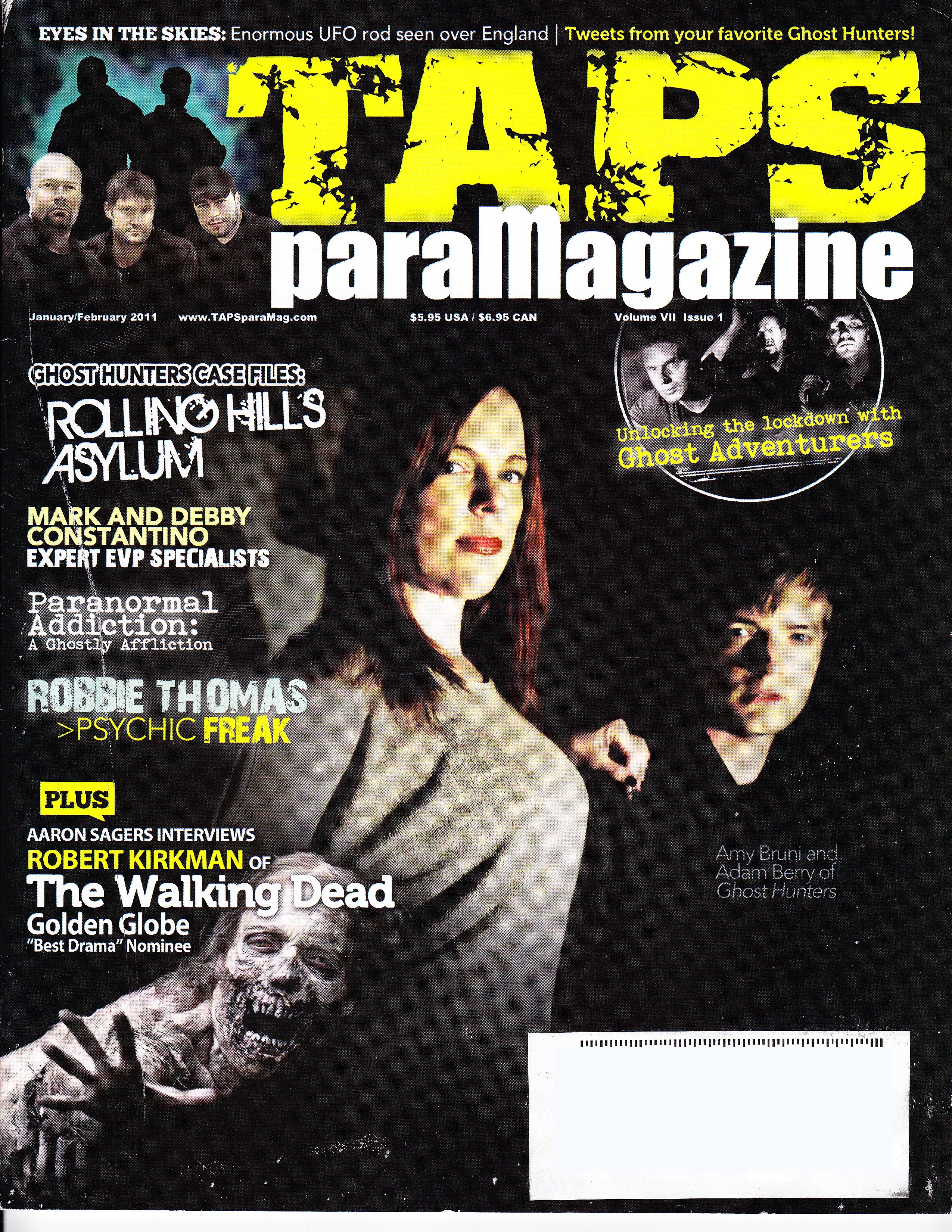
Not being a cable subscriber bears a burden all its own. Not only would paying the extra monthly fees for television prove a hardship, but the constant temptation to watch it would rate as a deadly sin. So on this “All Saints Day” I find myself wondering if the world is still out there after last night’s much-touted “The Walking Dead” premiere. The new AMC series has been written up in local papers and this week’s Time magazine. The latter calls it “a zombie apocalypse.” The fascination with zombie goes beyond holiday-fueled monsters. As James Poniewozik states in his Time article, zombies symbolize society’s insecurities: pandemics, terrorism, economic instability. The unrelenting undead remind us that death is perhaps not the worst thing to fear.

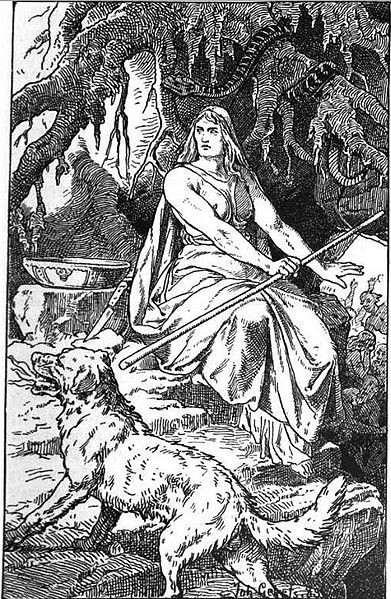
The religious side of this trend is fascinating. Revenants have no place in traditional Christian, Jewish, or Muslim theologies. Perhaps the closest semi-sanctioned version is the golem, a soulless protector of persecuted medieval Jewish communities. Traditional zombies are inextricably connected with magic, a means of manipulating the physical world through supernatural means. Like modern vampires, modern zombies have shifted from supernatural to biological, or at least scientific-sounding, explanations. Even Night of the Living Dead had an errant satellite to blame. The zombie has been reborn in a secular context, making it safe for religious believers to add it to their repertoire of fictional ghouls. And yet, the religious aspect has not completely vanished. The “apocalypse” that accompanies “The Walking Dead,” whether it is Armageddon, 2012, or Ragnarok, is a religious concept. Humans simply can’t face the end of the world without religious implications.

Audiences feeling a little let down after October’s terminal scare-fest, however, might find some cheer that Halloween is an end, but also a beginning. It is the start of the darkest time of year. Very soon not only do we drive home in the dark, but light will not have dawned by the time we start the car for work. In northern reaches of the globe, people can’t help but feel a little stress at finding our accustomed visual assessment of our world a little bit impaired for months at a time. And when we see that shoddy-clothed stranger straggling along in the half-dark, it may be time to remind ourselves that despite the naturalized zombie, there are still those who prey on their fellow humans. They may not be the undead. They may dress well and drive expensive cars and live off what they can legally draw from that stranger on the street. They may be the true harbingers of the apocalypse. They are the ones we should really fear.
Whose apocalypse?


Origin of Halloween

Perhaps the most misunderstood of holidays, Halloween has grown into a major commercial holiday. Outsold only by Christmas in the United States, Halloween now supports its own seasonal stores that cash in on the massive public interest. A few years ago a wrote a book explaining the holidays for teens/tweens. The book was never published, and I’ve been putting excerpts on this blog on appropriate occasions. For the full story of Halloween, please check out the Full Essays page (link above).

Accusations of a demonic origin may fit in with the popular creatures of the holiday, but they are far from the truth of the matter. A cross-quarter day, Halloween comes in the opposite side of the year from May Day (remember Walpurgis Night) when spirits make their way back into the mortal world. It represents the passing of fall into winter and the shades of death that accompany it. How much more religious can you get?

From ancient times people have been aware of how weak our control over our lives really is. We depend on the sun and the weather to cooperate for our crops. We fear the darkness when our eyes can’t compete with those of our predators. As the year descends into longer and longer nights, we secretly fear that eventually night will not end. The dark time of the year belonged to the spirits.

Just as all ancient people celebrated the vernal equinox (if you missed it, check out the Passover-Easter Complex for more), they marked the autumnal equinox with festivals. Although Halloween is six weeks after the equinox, it seems to have inherited some of the ancient associations of that season. One of the ancient feasts of the equinox was for Pomona, the Roman goddess associated with fruits and seeds. There is more of Thanksgiving than Halloween in this festival, however.

Halloween, as we have come to know it, is usually traced to the same people who gave us St. Patrick’s Day – the Celts. The Irish calendar was divided into four quarters, marked between the solstices and equinoxes by the cross-quarter days. The fall cross-quarter day was Samhain (in case you don’t speak Gaelic, this is pronounced “sow-win”). Samhain can be understood as “summer’s end” and it was the traditional marking of the onset of winter; it actually comes just a month before meteorological winter.

The Celts, as well as other ancient peoples, believed that spirits of the dead were active as the trees lost their leaves, the grass began to dry and, and the world itself seemed to be dying. Huge bonfires were lit to ward off evil spirits, and perhaps bloody sacrifices were made to ensure the safety of the living.

No matter what modern Halloween critics may say, the Celts did not worship Satan and the origins of the holiday are not satanic. Pagan, maybe, but who isn’t somebody else’s pagan? The idea was to fend off evil, not worship it. The shamans, or “medicine men” of the Celts were a class of priests called Druids. Samhain would have been one of the festivals overseen by the Druids. These guys were priests of a religion that focused on nature, not the Devil. They did play a little rough though. They seem to have practiced human sacrifice once in a while, but Samhain was more often about killing off livestock before the winter. Either you can keep your animals alive and they will eat the little food you have, or you can butcher them and add to the little food you have. After all, not much grows in winter.

[See Full Essays for the rest]