Om, Are You Through with That?

High school curricula constantly change, and one of the tasks I have set myself is to read what my daughter is assigned in English class so that we can discuss it. Sometimes by happy coincidence I’ve already read the book, and teaching four classes of my own this semester, I appreciate the break. This practice has led me to several books I would otherwise have never found on my own. Siddhartha by Hermann Hesse is one such novel. Based, as it is, in the imaginary world of the Buddha’s India as seen by a Swiss writer, Siddhartha is an odd blend of Eastern and Western religious ideas. Having spent four years studying German in high school, I am embarrassed to admit that this is the first Hesse I’ve read.

Naturally, given the strong Buddhist orientation of the work, Siddhartha deals with religion. More than just religion, however, it is the story of self-realization, of becoming. At times it is difficult to sympathize with the protagonist since his religious arrogance and self-assurance make him unapproachable. Nevertheless, as the brief story unfolds he discovers that he is merely human, and a needy human at that. As he reveals his final thoughts to his lifelong friend Govinda, Siddhartha states, “in every truth the opposite is equally true.” Here is a gem worth keeping. When statements of faith are uttered, are not those speaking their creeds also affirming the antitheses? The world is just so, and therefore it is also entirely opposite.

Many students approaching the Hebrew Bible fail to realize just how Eastern the outlook often is. Since the Bible is foundational for Western culture, we easily assume it shares the viewpoint of our culture. Those who read it seriously find out that the ideas and concepts often fit much better into an “Eastern” outlook. The Bible is comfortable with opposites and contradictions. The Bible values the journey as much as the goal. There are parts of the Bible that read very much like Siddhartha. While I doubt that Siddhartha will ever be my favorite novel, it has become for me a commentary on the religious life. The protagonist can, after having rejected the teachings of the Buddha, only seek. And the search is the point of the entire journey.


La Puerta

A musician who has always deserved more acclaim than he has received in his solo career is John Cale. A founding member of the Velvet Underground, a band whose lyrics and insistent – if at times atonal – music capture their era far more effectively than most, Cale has gone on to produce some songs provocative enough to rival those of Lou Reed himself. On his Paris 1919 album, the song “Hanky Panky Nohow” contains these thoughtful lyrics: “nothing frightens me more than religion at my door.” These words are, ironically, prophetic. Religion at the door, in public office, behind major media corporations, has become an insidious threat to the founding principles of this nation. Right, Ms. O’Donnell?

Yesterday morning I went out to get the newspaper. Although I live in a relatively safe town, we are classified as the “Greater New York City” area, and I’m always suspicious of anything unexpectedly left on the doorstep. There was an unaddressed, blank, sealed white envelope there that jingled when I nudged it with my foot. At first I thought it might be a set of keys left at the wrong house, but when I did finally open it I discovered a bilingual set of aluminum faith coins. An accompanying letter assured me that God wants to save me and shared with me a dream of somebody in a white dress carrying a Bible. The letter, amazingly, misquotes John 3.16.

I am the frequent victim of Jehovah’s Witness visits. I have students handing me booklets that will save my soul. I receive offers of golden miracle crosses in the mail – I still carry mine around, but prosperity has continued to elude me – with the assurance that God wants only the very best for me. I open the paper and see the suffering of the people of Indonesia. I see a column about teen suicides resulting from bullying with victims as young as twelve hanging themselves. I see overweight politicians feathering their already overstuffed nests. I turn back to the anonymous letter. “Please hold this coin or pass it on to someone who needs it,” it instructs. I think I’m going to need a truckload of coins. Nothing frightens me more.


Zombie Walks

As October nears its creepy climax, signs of the macabre have become abundant. A trend that has reached new heights in recent years is the zombie walk. Various cities or regions host large groups of brainless, reanimated corpses in parade (rather like a Tea Party, I should imagine) to welcome in the darker half of the year. In a most unconventional display of cultural unity, groups of strangers meet for the purpose of sharing their fascination with the undead. Given the inherent potential for overly enthusiastic participation, these events are usually held during daylight hours and are becoming as accepted as trick-or-treating on Halloween.

Fear of death is sublimated in a conquest of the same with less definitiveness than traditional resurrection, but with a more gritty and graphic triumph of life. Organized religions have had difficulty maintaining numbers in much of the “developed world” while this new danse macabre has taken on a life of its own. Many find claims of divine authority in institutions that refuse to make clean breaks with sex scandals or threats of Quran burning somewhat disingenuous, while nobody questions the motives of zombies. They simply do what it takes to survive. An honest zombie stumbles toward eternal life.

Credibility is less easily commanded than it had been in former times. While many voices, such as Tea Partiers’, are claiming the need to erase the sixties and seventies and subsequent decades from the calendar so that the authoritarian Father can be returned to power, thinking people are asking what the plan might be. Is it time to break down that putative wall between church and state and declare America a plutocratic, evangelistic Republic? Never mind that inevitable conflicts will break out over who has the right to set doctrine and public policy – most citizens will be found out walking with their fellow zombies, welcoming in the darkening season.


Black Monks and Grim Reapers

Last night I assisted my daughter with a stint of volunteering at the local community “haunted house” for charity. This is one of the high points of October, so I was glad to be asked. I reprised my role that I developed for Nashotah House: in that context the character was called “the Black Monk,” based on a local ghost story. While I was on the faculty of Nashotah there were plenty of students who swore the Black Monk story was true, the actual event involved an early student who drowned while trying to walk across water (something many students think they are capable of) – this was actually during the winter, however, and Upper Nashotah Lake is not always as thickly frozen as people assume. The poor student broke through and is buried in the cemetery on campus. Halloween was a major event at that Gothic location until a new, evangelical administration came along. During a haunted hayride, the kids of the community lumbered along on a hay-wagon while costumed students jumped out to scare them. I played along in a costume my wife made where my face was invisible and the flowing black robes eerily blended into the night.

In my current secular context, of course, I was simply The Grim Reaper. This character has a very ancient pedigree. Religions from the earliest times have personified Death as a character that all people inevitably meet. The Mesopotamians had Ereshkigal, the Queen of the Underworld, the Ugaritians had Mot, the god whose name is “Death,” and the Hebrew Bible has “the Angel of Death.” We are often not given a physical description of this baleful but sometimes beneficent supernatural entity. When Revelation was finally penned, Death is one of the four horsemen, and he rides a pale horse, but we do not find many physical details. In the fifteenth century Death was pictured as a skeleton, often with a scythe. His role is that of the classical psychopomp, or guide to the next world. He is not evil, but when the doorbell rings you’d rather hope it had been Avon calling rather than the G.R.

Carlos Schwabe, Death of the Undertaker

Appealing to the fear of the unknown, I lurked last night in the shadows, face completely obscured, not speaking, stepping out to reminded holiday revelers that what is really scary is that which we can not define. When playing the silent ghoul, sudden movements are not necessary to frighten, shouts and screams are unimportant. The simple reminder of mortality and the unspoken question “is he here for me?” are sufficiently frightening on their own. Whether the Black Monk or the Grim Reaper, this character has a natural place on the chilly nights of October. And sometimes it seems there is just not enough October to keep all of us in line.


Where Whoever Walked

No adequate explanation has ever been proffered for the human desire to be where more prominent individuals have been. In its religious guise this is generally called pilgrimage, and the faithful seek out locations where a besainted member of their faith tradition once trod, ate, slept, or died. Going to the place of the famous is a major motivation for the travel industry. We are driven to see what s/he saw, taste what s/he tasted, experience what s/he lived. Just to be there, and contemplate. No one person, however, is universally known by every individual world-wide, so who it is we follow varies widely. This sense hit me once again last night as my family undertook the rare treat of a live show at the Paper Mill Theater in Millburn. Although Hairspray is not the most profound of shows, it was exceptionally well done, and the images on the walls of the foyer reminded us of who had been here before.

The Paper Mill Playhouse, a place of transformation

The shotgun blast of emotions this experience created verges on the religious. There was a time when I too donned the greasepaint (hard to believe for those who’ve only known me with this two-decades worth of old-growth forest on my face), and I know it to be a transcendental experience. The clean-shaven face is a boundless canvas. My own experience was local and small-scale, and certainly not done for fame, but the transformation was palpable. I am sure that actors everywhere share this experience – the apotheosis of becoming someone else. This week in mythology class we discussed Dionysus, the god of such transformations (and theater). A god who travels, a god associated with place, it is easy to understand how Dionysus became so popular, with or without the wine.

An epiphany of Dionysus

Dionysus was the recipient of a mystery cult in antiquity, one that rivaled Christian inroads in the Roman Empire. You see, many people recognized the similarities of Dionysus and Jesus. Both were begotten in unusual ways by their father (the high god), and both were gods of epiphany. Both were gods who understood the human condition – having mortal mothers, who came to people where they were, and who transformed the ordinary into extraordinary. Both were associated with wine – Jesus’ first miracle at Cana showed his theological pedigree – and both had reputations for associating with the less desirable members of society. And yes, both offered resurrection, a means of overcoming the limitations of life itself. Perhaps that is why the rare pilgrimage to the theater is so transcendental. It is pilgrimage and apotheosis all in one. And that is more than most of us might ever hope to achieve, short of encountering Jesus, or Dionysus, himself along the way of our pilgrimages.


The Colbert Confessions

Gnu WikiCommons image by David Shankbone

The New Jersey Star-Ledger ran a human interest story on Montclair resident Stephen Colbert yesterday, “outing” his Catholicism. Well, given the fact that his religious affiliation is available on Wikipedia, maybe this isn’t so much news as filler. Nevertheless, the story repeatedly makes the point – cited by Colbert’s colleagues – that the mere fact that he is a practicing Catholic makes Colbert an evangelist every time he mentions the church. This is a bizarre concept, and one that would likely surface only in the United States. Many famous people in a variety of media are practicing Catholics (and I even hear, some public officials) and many of them would be shocked to learn of such an avocation being applied to them. Is the mere fact of belonging an affidavit? Does the government know about this? Does Christine O’Donnell even care?

What was noticeably absent from the piece was humor. Yes, the columnist mentioned that Colbert is a comedian and has a show on Comedy Central. She even noted that Colbert makes jokes about religion. What I mean by humor here is that little allowance is given for the fact that religious humor crosses some invisible line in our society, as if God is deeply offended when people use the sense of humor he gave them against him. Colbert is not shy about making fun of religion when it is appropriate, and for the last few decades, it has frequently been appropriate.

One of the surest signs of health in an institution is its ability not to take itself too seriously. Academic institutions are just as guilty, if not more so than churches, at presenting themselves as above reproof. Nevertheless, churches, colleges, synagogues, universities, and mosques are human institutions. Run by humans, they are bound to lead to comedic errors. When these happen it is standard procedure quickly to draw attention elsewhere while damage control is done. What Colbert does is evangelize for laughter. It is all right to take one on the chin now and again, but religious institutions, always in stiff competition with their rivals, do not give themselves much time to laugh. I say we need more Steve Colberts who aren’t afraid of the well placed snicker. And can you imagine having him as your Sunday School teacher? Montclair looks better all the time.


Empty Pews

An insightful op-ed piece by Robert D. Putnam and David E. Campbell in yesterday’s paper asked the question “why youths are losing their religion.” The authors, professors at Harvard and Notre Dame, respectively, answer with the suggestion that religion and politics just don’t mix. The truism that religion and politics are taboo subjects of polite conversation was widely accepted in my younger years. During the Reagan campaigning era, however, it became clear that some unprincipled louts were drawing religion into the political mix to garner votes. Those who actually research Reagan’s religious convictions are often surprised to find that they are not as “George W. Bush” as everyone thought. It was a ploy, and a vastly successful one at that. A new avenue had been paved, however, for hotly contested elections: use the Bible. The fawning attitudes of many Americans toward the Bible they seldom read is a powerful political tool.

Putnam and Campbell note that adults coming of age in the 1990s and later have been alienated by this paring of religion and politics. The results have tended to be the rejection of organized religion that is seen as hypocritical and intolerant. The interesting factor is that it is the political agenda that is hypocritical and intolerant, but organized religion is paying the price for going along with the Ralph Reeds, Jerry Falwells, and Pat Robertsons of the early religious right. One guy from an old book once said something like “what you sow you also shall reap.” The political use (abuse) of religion has only and always been about power.

The authors are able to provide statistics to back up their models, but their reasoning is clear enough on its own. Some of us have experienced first hand the ugly, hideous agenda behind the angelically smiling evangelistic face. Those who hold to it may be naïve enough to believe that it is actually religion that they are serving, but the sad truth is their positions are cravings for power. There are those who actually relish the days of imperial Christianity when, despite its Roman Catholicism, the church made Europe tremble. They forget that pilgrims and colonists moved to this land to flee such tyranny. Americans, reluctant to elect Roman Catholics to the presidency because of the latent fear of a hierarchical religion — so close to kingship — now bow down before political rulers in religious garb. Decidedly Protestant. And the Tea Party continues to crank out candidates who do not even realize that the separation of church and state is a founding principle of this nation. If there is a backlash coming, it is a well deserved one indeed.


The Power of Hope

My wife pointed out at article on MSNBC yesterday that stated Robert H. Schuller’s Crystal Cathedral is filing for bankruptcy. Internet reaction has been predictably hostile, clawing at the craven, money-driven industry of television ministry. There is no question that many television ministries quickly grow corrupt under the lure of immense wealth. The average American citizen is glad to part with some money if it can buy favor with the man upstairs. When a minister is able to construct such edifices as the Crystal Cathedral with the good-will offerings of the faithful, well, s/he’s an entrepreneur, the kind of people God likes, according to the Tea Party. Schuller was famous for his positive thinking and insistence that God will do great things for you. When recession hits, however, not even God remains solvent.

According to the article, various corporate sponsors of the Cathedral are having difficulty holding up their end of the contract. Positive thinking extends only as far as the goodwill of the banks. Is there any question who the real god is here? Americans love the non-biblical concept that God helps those who help themselves. Making more money than a humble clergy-person ought to make may improve the sense of optimism, but it loses touch with where the average citizen lives. It is easy to be optimistic when you have a heavenly bankroll on your side.

Yes, but can it keep birds from flying over your head?

Over the weekend my family looked at slides from our years in Europe. The great cathedrals, even if in ruins, convey a sense of stoic strength, genuine commitment. Built with the hard-won resources, if not the actual physical labor of the local populace, these cathedrals were made of stone. I recall standing in the nave of Salisbury Cathedral while the tour guide pointed out that the very stone pillars supporting its huge steeple were bowed under the weight of all that stone above. Some day it may collapse under its own pressure, but it will have always survived longer than the Crystal Cathedral. Religion, if I may use a metaphor, is more authentic when it deals with stone rather than glass. The religion that struggles with the intractable realities of daily life will inevitably last longer than the feel-good, glass-plated, Tea Party serving “religion” of feel-good Christianity. It is too bad about the Crystal Cathedral, but maybe the entrepreneurs should be asking serious questions right now about which god they truly serve.


Wasps

I just finished reading Iain Banks’ The Wasp Factory. It is a disturbing novel on many levels; even the back-cover comments warn against reading it. The reason for mentioning it on this blog, however, is that it is so full of religious ideas that it would be a shame not to address them here. I won’t put in any spoilers for those who might, even with adequate warning, want to read the book.

The wasp factory of the title is a divination device. The narrator, Frank, does not believe in God because of the unfairness and cruelty in the world, although he is also a frequent perpetrator of cruelty. As he seeks revenge on animals other children, Frank views their suffering as a form of punishment from the God he disbelieves. At one point, after his brother Paul dies, Frank compares him to his old dog Saul, also unfortunately deceased. At this point he reveals, “Paul, of course, was Saul.” Death is the Damascus Road experience in this world devoid of a deity, but one where death is considered far more certain than life. At one point Frank declares the sea to be a mythological enemy, a point of view shared by the Bible and many ancient societies.

Frank is a neurotically ritual-bound individual. No matter how gruesome, his tasks are part of an elaborate system that must be repeated in order to maintain its efficacy. At one stage Frank declares, “this is like intellectuals in a country sneering at religion while not being able to deny the effect it has on the mass of people.” This statement is more insightful than it first appears – it is the dilemma of many who attempt to understand religion who are considered a luxury not to be afforded by society. Frank is a paradigm: people are religious, even in heterodox belief systems. The Religious Right has understood this for decades: talk religious talk and they’ll vote for you. Most people have no way of checking out what form this religion might take. It makes me almost as nervous as The Wasp Factory itself.


Movie by Faith

Yesterday’s New Jersey Star-Ledger carried an article by film critic Stephen Whitty entitled, “Where script meets scripture: Recent films take a leap of faith.” The phenomenon he observes is that mainstream, big studio-backed film-makers are more and more turning to plots and scripts that emphasize faith. It is not always standard, revealed religion-type faith, but a belief that there is something else. Something beyond that with which our daily lives presents us. People are seeking, but traditional religions are having a hard time convincing them that they have the answers.

In a striking contrast, films that present a spiritual danger frequently revert to the stock image of a Catholic priest as the means of deliverance. When is the last time a Protestant exorcist took on a demon on the big screen? Torn though it is with its long and checkered history of imperialism, exploitation, and scandal, the Catholic Church with its obscure rituals is effective where the machinations of the Protestants are not. This too is a leap of faith, one that believes in the efficacy of ritual despite its origin or lack of scientific theory. Science provides a way of understanding the world that many people experience as cold and comfortless. Even many scientists choose simply to trust in what their spiritual guides teach them.

Over the weekend my wife and I watched Sleepy Hollow. It is an annual tradition; it is our October movie. In this film Tim Burton plays off the superstition of Sleepy Hollow – in fact real, in the movie – against the science of Ichabod Crane. In the end, Ichabod has to face the supernatural on its own terms in order to bring the world back to science. Having sent the headless horseman back to perdition, Crane once again returns to a New York City at the start of a new millennium, full of the optimism of science. It is the dilemma of the modern western world. People are tugged, torn even, in two diametrically opposed directions. Our experience leads us to believe in a “demon haunted world” while science placidly informs us that all can be explained. Movies do reflect the human outlook in many respects, and the end sequence has yet to be shot.


Eve’s Orchard

One of the innocent pleasures of autumn is apple picking. Not living in the country, many of us rely on the local orchards that open their trees and furrows to the public during the fall so we can feel once again in touch with nature. It may be only temporary, but this farm life is authentic and revitalizing – especially under a cerulean blue October sky. So it was that we joined our anonymous friends to pluck fruit and feel a part of the organic world away from laptops, palms, and cells. Picking apples always brings Eden to mind. In fact, no matter how secular the class I teach, if I ask students what picking fruit from a tree – usually I have to throw in the snake as well – represents, invariably most guess Adam and Eve. Of course, in the patriarchal world of the Bible, Eve gets the rap for taking the first bite, but a more sensitive reading reveals maybe this was what God intended all along.

Tasty fruit of knowledge

Within a generation of the origins of Christianity, a negative spin had been placed on that fateful fruit. This was the willful disobedience of sin rearing its ugly head in Eden. Of course, Genesis does not refer to the act as a “sin” – the word first occurs in the story of Cain and Abel. The human striving for knowledge, for the prerogative of the divine, the sadder but more informed life, was now a matter of blame. In the Greco-Roman cultural milieu where men set the standards, woman became the harbinger of sin and decay. Adam stood chastely by, happily clueless until Eve insisted he try this brand of iniquity. Pure fiction. And yet it is this version that has retained cultural currency in the western world. Blame it on Eve.

The patriarchal version


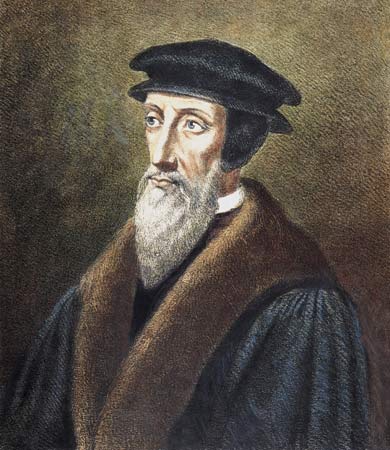
So much of our reading of the Bible is based on prior expectations. Even Bible translators know that they can’t go too far a field from the standard that the KJV set. When western Bible readers first cut their teeth on English prose, it was the dulcet tones of Elizabethan English that captured their attention. And the mores of Shakespearean England combined with the harsh repressions of a simmering Calvinism led to a Bible choked with sin to the point that a little fruit enraged the creator as much as fratricide just a chapter later. The fruit had rotted on the tree, and women were to blame. Perhaps it is time that we recognize the filters before our eyes when we approach the Bible. If we can understand that the patriarchalism is not the point, but merely the cultural shading of the time, we can release the message that the fruit is good. The temptation was not to become evil, but simply to become human.


Fearsome Fish

It must be October. As I was looking up a word on Dictionary.com, I noted one of their “the hot word” features entitled, “Scientists discover a fish they name ‘dracula.’” The fish, which is native to the eastern part of Asia, was discovered in 2009 but is just now starting to draw attention. The name apparently derives from its fangs. Vampires, however, have their ancient origins in creatures that draw the life force from humans. In the ancient world the “life force” could take different forms: blood, breath, and even semen. Soon a whole array of life snatchers populated the ancient mind – incubi, succubae, Lilith, demons, and any of a number of other contenders for the human essence. The fear of being drained is a very ancient one indeed.

While in my adjunct office at Montclair yesterday I met a colleague. We discussed the visit of the exorcist to campus that I missed but he attended, and while discussing the mythology class we both teach he mentioned how vampire movies make use of mythic themes. I have been using this information from the beginning for my class, but I was fascinated that another part-time instructor would latch onto the same film motif as I did to illustrate modern myth. The vampire is such a part of our culture that people often forget its religious origins.

I attended a public performance of a two-man play at a local library this week. The play was a conversation between Edgar Allan Poe and Bram Stoker. Naturally, vampirism played a strong element in the single-act show. While Poe and Stoker were not contemporaries, they did both share an awareness of how religion tied in with the macabre. The Frank Ford Coppola movie Bram Stoker’s Dracula makes this connection explicit as an enraged Vlad Tepes stabs a cross in his chapel with his sword, starting a flow of blood that he greedily drinks.

Vlad Tepes on a good day

We’ve just crossed into mid-October and I already find myself surrounded with vampires. It is characteristic of religion to deal with our deepest anxieties, and the more we reflect on vampires the deeper we find they reside in the religious sensibilities of both fish and phantom.


Jersey Devils

My trips to the DMV always seem to involve the paranormal. Admittedly, this is sometimes partially my own fault. Against my wife’s advice, I took The Lure of the Dark Side – a book I was reviewing – with its Satanic cover, when I went to renew my driver’s license a few weeks ago. Back when we first moved to New Jersey, and I had to sit for an excessive part of the day in that waiting room, I was reading a book on the Jersey Devil. I first heard of this exotic New World beastie when I was a ghost-story fixated teenager reading some Scholastic October special. Since I lived a state over, in the western end of Pennsylvania, I figured I didn’t have too much to worry about.

The Jersey Devil is an anomaly that involves two distinct aspects. One side of the story is pure folklore; Mrs. Leeds gave birth to a devil in south Jersey and the monstrous thing has been haunting the state ever since. The other side involves the sightings of an allegedly physical cryptid by reputable individuals, especially since the early twentieth century. An unlikely combination of horse-head, wings (often bat-like), and hooves make this one odd-looking creature, based on eyewitness accounts. I have to thank my friend Susan for pointing out the suggestion that this could be a hammerhead fruit bat, although how even a small population of the African rain-forest dwellers could survive in New Jersey without producing a single road-kill specimen would itself be beyond belief. The shape and size of the bats accounts for quite a bit, but the hooves just don’t fit. That, and the Jersey Devil seems to prefer chickens, ducks, and small dogs to the eponymous fruit of the hammerhead bat.

Whatever, if-ever, the real Jersey Devil might be, the story has all the makings of a Halloweenish blend of religion and monsters. There are several versions of the story, but the one most commonly told is that Mrs. Leeds, in labor with her thirteenth child, declared that this one had better be a devil. She got her wish. The child emerged, sprouted wings and flew up the chimney to terrorize south Jersey and Philadelphia over the next several decades. The beast gives the state’s hockey league an instant identity and even led to the breakdown of a priest in the sixth season of Seinfeld. The first season of the X-Files featured a Jersey Devil episode (although it turned out to be a very humanish kind of Bigfoot), and Bruce Springsteen recorded “A Night with the Jersey Devil” for his home-state fans back in October of 2008. Only the gullible take stories of cross-species (cross-metaphysical beings?) seriously, but the story, like the Jersey Devil itself, seems to be immortal.


Gods and Demons

In ancient times people were sometimes possessed by gods. They were called “prophets” and they gained a breed of knowledge hidden from most other people. Demons were believed to exist, but they did not possess people. Instead, demons were used as explanations for misfortune, whether malevolently premeditated or not. Demons reflect, in today’s society, the concept of pure evil. Fr. Vincent Lampert, one of America’s 24 official exorcists, visited Montclair State last night to discuss evil, and according to the New Jersey Star-Ledger, he believes evil is a reflex of how people treat one another more often than a “figure with the hooves and horns.” No doubt there is a public fascination with demons, but few people understand their religious pedigree or what other explanations may be used to categorize them. According to the paper, Italy claims 300 exorcists – demonstrating that demons show culturally determined characteristics.

The 2005 movie The Exorcism of Emily Rose, lays out how science and religion differ on the issue of the demonic. Anneliese Michel, a young German woman, died in 1976 after being subjected to a prolonged treatment of exorcism. Her story was the “inspiration” for the film, and it raises the question of the reality of the demonic in the physical world. Fr. Lampert is more circumspect, noting that real life exorcisms are not as dramatic as those shown in the movies. He does, however, recall having seen a person levitate, but not during an exorcism. The human behavior he’s seen while on duty may all be readily explained by mundane physical and mental phenomena.

What does seem certain in all of this is that demons are not the behooved and behorned antagonists of films like Constantine or countless other graphic-novelesque portrayals of evil. Their Pan-based characteristics hearken back to the days when Christianity had to make plain its dismissal of foreign gods. In the ancient world hooves and horns were symbols of strength generally associated with powerful, if sometimes capricious, deities. In other words, what were one culture’s gods have become another culture’s demons. Movie makers understand the simultaneous revulsion and draw of the demonic character, but it seems that Fr. Lampert strives for a more balanced perspective. Evil has many faces, and most of them do not conform to Hollywood standards. Perhaps if all religions were respected demons would lose their power to torment and people would learn to get along with each other.


Where Wolves Dare

It’s the fall of the year when an old man’s thoughts turn to werewolves. Not that I’ve ever believed there were such creatures, but they do have a pedigree in ancient religious ideas, and even today skin-walkers play a role in some Native American traditions. While I lived in Wisconsin I found out about the Beast of Bray Road, a cryptid that is seen on occasion south of Nashotah, where I lived. Unfortunately I learned about the beastie too late to make any attempts to see it, but the documentation of the creature is in good hands with local author Linda Godfrey.

When I moved to New Jersey, scrabbling for a living tended to outweigh concerns about werewolves. Nevertheless, I did hear of an odd account in a south Jersey newspaper from 1925. According to the Woodbury Daily Times (now defunct), a farmer in Greenwich, south of Camden, shot an up-right hopping, dog-like creature that had twice raided his chicken coop early on a December morning in 1925. According to the paper, hundred of people went to view the unidentified animal and some even photographed it. Now, 85 years later, the story is barely remembered. Was this just another gun-toting Philadelphia suburbanite shooting an annoying dog, or had a “werewolf” passed through New Jersey all those many years ago? Periodically accounts of dogs running on hind legs are posted by late-night drivers in the Garden State, but no photographs or other evidence ever seems to be forthcoming.

Werewolves are less about monsters than they are about struggling with inner conflict, according to many psychologists. Our animal nature, deeply sublimated, sometimes makes a ferocious bid for freedom and otherwise sane individuals believe themselves to have turned into wolves. When I look at my crazy employment history, somehow I can relate. Some day I hope to transform into a fully employed academic or editor who has a steady income and an appreciative employer. My chances of seeing a werewolf, however, may be slightly better. I think I’ll head to Greenwich to poke around a bit, but I’m going to wait for a full moon, Friday the 13th, or a full-time job – whichever comes first.

Read Linda Godfrey's new book