Woeful Wisdom

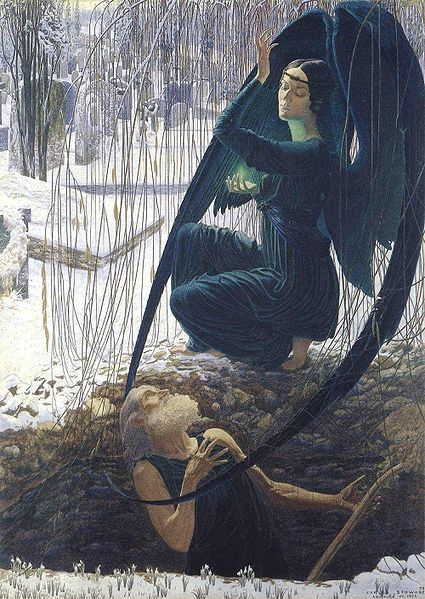
“There is a wisdom that is woe; but there is a woe that is madness. And there is a Catskill eagle in some souls that can alike dive down into the blackest gorges, and soar out of them again and become invisible in the sunny spaces. And even if he for ever flies within the gorge, that gorge is in the mountains; so that even in his lowest swoop the mountain eagle is still higher than other birds upon the plain, even though they soar.” Herman Melville takes the credit for this passage. It is one of the many pericopes that make Moby Dick the greatest book ever written. Those who know me only as a biblical scholar may be surprised to read that, but I invite anyone who has ever instantly fallen in love with 1 Chronicles 1-9 to reply and argue the point.

Although Moby Dick has fallen into the provenance of books that are kept alive only by required high school and undergraduate required reading lists, this novel still comes back to me at many points in my life and fractured career as both a solace and a warning. Melville was clearly a man tormented by his search for meaning. He drew heavily on the Bible for Moby Dick, likening Ishmael to Ecclesiastes at one point, and the whaling haunts of New Bedford to tophets. To appreciate Moby Dick deeply, one must be familiar with the Bible.

Is this the Bible, or what?

Considering the great changes that are taking place in society, I often wonder if we have reached a breaking point. In my university life, I see students absolutely frantic to achieve an A in an easy class, one that would not have broken a sweat in my undergraduate days. Their anxiety is real; grade inflation has forged the B into the new D, or F. Yet these same students know nothing of life apart from the internet. In times like these, I betake myself to the Catskills, and with Melville, turn my eyes upward, seeking madness.


SpongeBob’s Evolution

My daughter has, unfortunately, outgrown SpongeBob SquarePants. She was my putative excuse for watching the (literally) brainless eponymous lead character going about his inane adventures. The creator of SpongeBob, Stephen Hillenburg, is a marine biologist and much of the fun for adults watching the cartoon derived from the biologically correct remarks made by the characters about their physiological conditions. Watching the laughing yellow sponge with his inimitable voice was a pleasant escape from the constraint of my own biological existence.

Today the New Jersey Star-Ledger announced that two researchers from Princeton University may have discovered the oldest animal fossils ever recorded. It seems that for a while, some 635 million years ago, the earth was undergoing its Cryogenian Period when the planet surface was all but completely frozen. The earliest discovered animal fossils were discovered from after that period. Princeton geoscientist Adam Maloof has recovered what appear to be animal fossils from 650 million years ago, 15 million years before the big freeze. This find had been anticipated by genetic scientists who had suggested that such early animal forms likely existed prior to the appearance of the earliest sponges 520 million years ago.

For now the new finding shifts the fossil record back by about 90 million years. There will be massive gaps to be filled in by scarce traces left in inaccessible rock. Creationists will no doubt gloat that the fossil record is now even more full of holes than ever. This is frequently the quality of ambiguity that they suggest will topple the evolutionary lie. The truth, however, faces the opposite direction. The oldest creatures found are ancestors to the common sponge, pushing SpongeBob’s ancestors back many millennia before those of the Adam who discovered them. It seems to be the silly yellow sponge who will have the last laugh.

Gee, did I really cause all this?


Dark Night of the Ark

Vampires continue to be the rage of the age. My own interest began back in the days of Bram Stoker, Bela Lugosi, and Barnabas Collins. Stoker’s Dracula is one of the earliest novels I remember reading. Dark Shadows was a regular, gloomy fixture of 1960s daytime programming, and black-and-white vampire movies were often available on Saturday afternoons on commercial television. I have not kept pace with the current fetishism surrounding our toothy friends, but I did read Justin Cronin’s new novel, The Passage. I didn’t know the book featured New Age viral vampires, but they do make for a compelling story.

What particularly captured my attention in Cronin’s work, however, was the crossover between religious and monstrous themes. I have mentioned this connection previously, so I was glad to see confirmation that religion still features in monster stories. The religious element comes in the form of a virus developed by the military to create super-soldiers (a theme X-File affectionados might find familiar) that ultimately goes awry. The result is a girl who is part of a project named Noah; she lives the tremendous lifespan of the biblical hero without the debilitating effects of old age. She is also the ark by means of which humanity might survive the ordeal. The novel is apocalyptic and yet vaguely hopeful. It is also very difficult to lay aside for too many minutes at a time.

The tie-in of Noah and vampires is a novel one. The point of comparison is longevity – those who imbibe the blood of others do not age and wither as mere mortals do. Noah’s survival is a matter of grace (or science in the case of the novel). The last mortal to breech the two-and-a-quarter century mark (thank you, Terah), Noah is symbolic of those who stand out as examples of righteousness in a wicked world. It was refreshing to see the theme so creatively rendered by Cronin. The biblical flood is a kind of prepocalypse, a foreshadowing of what might recur if evil prevails. The Passage has left me strangely sentimental for both vampires and ark-builders alike.


Star Trek Paradise

I am not now, nor have I ever been, a Trekkie. I did watch the reruns of the original series after school on our black-and-white television, but I have never owned “Spock ears” nor does my cell phone look like a communicator. To the best of my recollection, I haven’t even seen all the episodes. I’ve mentioned before that some generous in-laws purchased the first season of the series for a gift last year. Since then my wife (a convenient excuse) has been interested in watching the remaining two seasons. We found a reasonably priced second season set and have been working our way through over the weekends of the summer.

Paradise-busters?

This weekend we watched the episode entitled “The Apple.” Even a fair-weather Star Trek watcher such as myself can’t help but notice that the series as a whole is biblically literate. Biblically literate, however, only in a popularist way. This became clear once again in “The Apple.” Stranded on a planet modeled after a troubled Garden of Eden, Captain Kirk and his landing party soon must destroy a serpentine “god” that keeps the luau-ready inhabitants in a state of perpetual ignorance. Diametrically opposed to Eden where it is the serpent who tempts with knowledge, this is a serpent that tempts with ignorance. Long, pleasant life without intellectual development and the “god” receives daily sacrifices. A world of status quo.

Back on the Enterprise, Kirk points out that the only one on the ship that bears resemblance to the Devil is, by implication, Spock. This is where the popularist interpretation grates most heavily. The Genesis version of Eden has no Devil, no Satan in it. Only a much later, revisionist re-reading, (certainly post-Zoroastrian) equates the snake with Satan. Genesis does not condemn the acquisition of knowledge. It comes with pain, true, but that is simply the way life is. Perhaps it would be easier for us all if some great Kirk might vanquish the inhibiting serpents of our apotheosis, but that’s simply not the way life works. In this instance, the Bible trumps Star Trek.


Sobek to the Beginning

From some of my earliest reveries, Maine has been my favorite state. This strange feature had to have been gleaned from books since I never visited Maine until my early twenties. Since that time I’ve returned as frequently as possible; however, over a decade spent in Wisconsin made the trip somewhat daunting. So last night, still dealing with lingering intense emotions from the county fair, I decided to watch Lake Placid, the 1999 horro-comedy set in Maine. The movie is generally brainless escapism, and even the scenery is that of British Columbia rather than New England. It had been years since I’d seen the film, so I was surprised when Kelly Scott stated in defense of Hector Cyr that crocodiles were worshipped as gods by many ancient peoples, making them more prayed to than Jesus. This was, naturally, a healthy dose of celluloid hyperbole, yet it did bring to mind Sobek, the Egyptian deity mentioned by name in the film.

The ancient Egyptians venerated many animals as possessors of god-like qualities. Crocodiles, naturally dangerous to humans as well as to many large mammals, would suggest themselves as a form of divinity. Sobek was never a major focus of the Egyptian collective of gods, yet the mummified remains of crocodiles and the striking iconography of the deity attest his cult. The ancient Egyptians had no way of knowing that the crocodile had withstood the pressures of evolution for millions of years, a striking example of a body plan and lifestyle requiring no improvement. Few creatures have the staying power of the crocodile, an animal capable of feats more incredible than the fabricated beast in Lake Placid.

While Jesus has nothing to fear from crocodile worship (or, apparently, the Beatles), religion grasps, even unwittingly, to the unchanging. In a culture shifting so rapidly that our eyes barely have time to focus before something completely novel is thrust before them, the stable image of the crocodile may still serve as a useful symbol of something our religious forebears knew that we should continue to recollect. Stability is worthy of admiration. In a bizarre way, throwing Maine together with crocodiles may be an antidote for melancholy, but only in the right environmental conditions.


Trashing the Bible

For the past month any free time I’ve had apart from class preparation has gone toward helping my daughter get ready for a presentation at the 4-H County Fair. Now, the morning after the close of the fair, when prize dairy cattle and model rockets and treasured family pets have all been transported back home, I am left with that sense of purposelessness that follows a period of intense preparation. Four minutes of public exposure translated into hours, days of often emotional planning, trouble-shooting, and dreaming. Although I grew up in a small town, farm life is as foreign to me as Cambodian politics. When I’m at the fair, however, spending long hours wandering amid animals, and go-carts, and community college recruiters, somehow being outdoors feels like being truly human. Perhaps it helps that the local 4-H is part of the Rutgers Cooperative Extension. My regnant, reluctant employer channels enormous resources into helping the youth of the state transform into the future.

One of the vendors at the fair was the Gideons. Each year they have a table piled high with cheap New Testaments bound in flimsy plastic made to resemble jaunty orange leather, and the unwary soon find themselves with the Gospels and Paul tucked away in their bulging samples bags. It is curious that the Hebrew Bible, apart from the Psalms, is so dispensable in the cause of conversion or enlightenment. The motivation of the Gideon movement, ironically, draws on the book of Judges for its very label. An occupational hazard, I already have more Bibles than any decent human should, nevertheless, the Gideons always wish me to take on one more, if only a truncated version.

While wandering back to my daughter’s club tent after a trip to the bustling food tent, I passed one of the numerous trash receptacles mandated by any such large gathering of people in a disposable culture. Glancing in for a place to toss my greasy napkin, I spied a Gideon Bible, its optimistic orange cover partially smudged by cotton candy and other ambiguous substances. The tableau gave me a moment of reflection amid the noise, energy, and enticing aromas of church and firehouse cuisine. To someone, the Bible was that extra bit of unwanted, cheap, fair promotional junk. Although not a Bible-worshiper, the image left me just a little sad. Those weeks of intense preparation for my daughter’s presentation are brief compared to the decades I’ve spent trying unsuccessfully to cobble a teaching career out of the Bible. Sometimes symbolism can be cruel and ironic all at the same time.


Religion in the Underworld

One of the unspoken truths of the study of religion is that it has an unacknowledged, problematic sibling in paranormal studies. There are many obvious differences: for one thing, religious study is respectable, if not really considered essential, whereas paranormal study is suspect and not generally acknowledged by established scientific or mainstream research institutes. Nevertheless, both religion and paranormal phenomena deal with unquantifiable experiences, aspects of human perception that cannot yet be measured. So it was with a large grain of salt that my wife signed me up for a year’s subscription to the TAPS Paramagazine. I’ve posted on this particular magazine before, but a new issue arrived just yesterday that contained so many references to the Bible and mainstream religion that I thought it worthy of reiteration.

In general I am skeptical about supernatural claims. At the same time, I am aware that we understand only a fraction of the universe and some aspects of theoretical physics are more bizarre than your average ghost story. When the magazine arrives I read through it with my salt-shaker within easy reach. Nevertheless, a feeling haunts me that at some deep level my specialization is connected with paranormal activity. The first article in the current issue concerns the Underworld. The author suggests that biblical and Mesopotamian references to the Underworld may be supported by the findings of ghost hunting investigators.

I’m all for a couple of working guys (plumbers Jason and Grant) daring to tread where scientists fear to go, but the problems of using ancient materials to bolster ghost-hunting claims are legion. Just a glance at the popularity of Zecharia Sitchin books warns against a simplistic reading of complex, ancient civilizations. We don’t need ghosts in the machine to explain the Sumerians or Babylonians. At the same time, we don’t have many academic options for uncovering the many, many ghost claims that have made throughout history. Mass neurosis is less believable than occasional hauntings. So although I have to disagree about the viability of a literal Underworld – a good understanding of ancient mythology helps to clarify that one – I do reserve some space for wondering if religious studies might not end up in the same final resting place as paranormal studies once science is able to penetrate the veil.

My all-time favorite ghost photo


What Hath AI Wrought?

Earlier this week an op-ed piece in the New York Times afforded the laity a rare glimpse into The First Church of Robotics, that is, Silicon Valley’s incredible and slightly disturbing vision of the future of technology. The writer of the piece, Jaron Lanier, an insider, expresses a concern that his area of specialization, a kind of artificial intelligence, is blurring the hard line between human and machine. Perhaps it is time we all watch Terminator again. Quoth Lanier, “It should go without saying that we can’t count on the appearance of a soul-detecting sensor that will verify a person’s consciousness has been virtualized and immortalized. There is certainly no such sensor with us today to confirm metaphysical ideas about people, or even to recognize the contents of the human brain. All thoughts about consciousness, souls and the like are bound up equally in faith, which suggests something remarkable: What we are seeing is a new religion, expressed through an engineering culture.” To put this in context, Lanier had been discussing the current concept that it might be possible to digitize human beings to incorporate all people in a Matrix-like universal brain.

I am woefully undereducated on the technology side of this issue to discuss whether or not such high-end digitization is possible. What interests me is the suggestion that this is a new religion. We haven’t even figured out the old ones yet. Defining what a religion is presents a nearly insurmountable barrier even to specialists in the field of religious studies, and some disgruntled conservatives claim that atheism and “sciencism” are religions. No matter how fast or how far you run, someone will always be able to label you as the adherent of one religion or another. Religion is an all-consuming category, a mental conundrum that cannot be contained by mere academic classification and circumscription. It is the universal solvent.

Meanwhile, universities and other learned bodies are reluctant to support the study of religion. In a world where the vast majority of individuals, university professors included, are motivated by religious guidelines and parameters, it is the elephant in the room we’d rather not discuss. From the sidelines I have watched reputable school after reputable school disembowel religion departments since they “don’t bring in money” and add nothing new to our understanding of the human condition. The sad truth is, religion indoctrinates much of the world. Deans and university presidents could learn a lot by reading op-ed pieces in the New York Times. Or at least have their avatars read them and store them away for future recall.


I Think, Therefore I Believe

This week in Time, an article by Jeffrey Kluger explores the intelligence of animals. Quite apart from many examples of how bonobos can string together relatively complex concepts using symbol cards (thus evidencing more intelligence than New Jersey’s current governor), the article demonstrates that many animal species display what we would recognize in other humans as intelligence. The article then develops the corollary that if animals think then perhaps they sense emotion as well. Having raised my daughter on Kratt’s Creatures and Zoboomafoo, none of this was new to me. I may be no scientist, but watching closely how animals behave, it has always been obvious to me that we are more like points on a continuum rather than a “special creation.”

Not to put too fine a point on it, this is what lies behind the human obsession with its non-animal status. As Kluger states, “For many people, the Bible offers the most powerful argument of all. Human being were granted ‘dominion over the beasts of the field,’ and there the discussion can more or less stop.” Unfortunately for our animal companions, the use of the Bible to repress others does not stop at human beings who don’t share your religious views. Many use the Bible as an excuse to do as they please to creatures who demonstrate similar emotional responses to people in similar situations and who, increasingly we realize, also think. Kluger’s article opens with an interview with Kanzi, a bonobo. One of the inevitable conclusions is that this great ape is able to think ahead and make plans. Evolution on this point has apparently skipped many Neo-Cons.

For years I have been telling my students that animals display behaviors that we label as “religious” in humans. The difference is that we are able to ask other humans what they are thinking and thereby gain somewhat direct access to their thought process (if they are telling the truth). Because we fail to share language with animals, we assume we are superior thinkers. To me this does not stand to reason. Animals are as fully members of this planet as humans are. Our desire to exploit them is more a reflection of human dominionist tendencies than a reflection of their lack of intelligence. We may even have animals to thank for the basic tenets of religious thought since religions are better described as evolved than revealed.

Maybe not the best sign of animal intelligence, but consider the Neo-Cons...


Lost Apocalypse

The Bible has many eminently quotable passages. I suspect that is one of the reasons it has the staying power that it does. Many critics of the theologies spun off by the Good Book have turned their vitriol toward the Bible itself, but I believe such hostility to be misplaced. Not everyone enjoys reading the Bible – that much is true for any book. The Bible, however, is foundational for not only our society, but the entire western literary tradition. Its influence on Shakespeare alone, who has, in turn, influenced just about every writer since the seventeenth century, underscores its literary importance. That’s why I’m always surprised with film-makers use concocted verses from the Bible when actual passages would produce the same effect. Granted, few Bible scholars comprise movie audiences and producers and directors seldom worry about writing the story for them. Last night I watched the “horror” film, Lost Souls, released in 2000. I’d read about the movie in Douglas Cowen’s Sacred Terror, so I wanted to see how it rated.

The movie begins with a false Bible quote: “… A man born of incest will become Satan and the world as we know it, will be no more. Deuteronomy Book 17.” Now granted, the movie failed to rock the critics, but the sheer weight of errors from pre-scene one should be the first warning to start from a better script. Beginning with an ellipsis for dramatic effect may be acceptable, but it serves no purpose – and what’s with the misplaced comma? A man born of incest in Deuteronomy is a non-starter because his potential parents could only be found dead, crushed together under a pile of hurled stones before the unfortunate could even be born. Satan as a devil is never mentioned in the Hebrew Bible, let alone Deuteronomy. Deuteronomy is almost never quoted by apocalypticists since it does not predict the end of the world, and Bible books are divided into chapters, not “books.” Well, the biblical illiteracy of Hollywood may be overlooked for a good story, but this is no such thing.

Lost Souls fails on the premise that a biblical “literalism” (and that is only if certain Evangelical interpretations are given unwarranted credence) about the coming of an Antichrist should be shored up by a fabricated quote from the Bible. I’m not trying to be a movie critic here, but a cultural one. The whole “end of the world” scenario held by many Evangelicals is a hodge-podge of biblical verses brought together by clever nineteenth-century clergy with little exegetical training. It is like trying to connect the dots while having to change pages constantly. The idea caught on amid the discarded lives left behind by advancing industrialism and the perceived threat of evolution. Apocalypticism has become its own industry as some otherwise unknown writers can attest. Movies like Lost Souls, or even The Omen, however, pale when compared to the antics of religiously motivated apocalypticists in the real world. Some of the rules in Deuteronomy itself are more frightening, if better written.


The Evil That Men Do

The graveyards of humankind are filled with the victims of religious violence. That fact does not seem to have lessened the impact of religion as a whole on humankind. One reason may be that religion has been a focal point of the good and humanitarian deeds of which people are capable, as well as a justification of the most heinous. The irony is that adherents of a religion claim that a just, true and righteous god is their motivation, for good or for ill. In the same church, mosque, or synagogue, there are widely differing views that live together. Sometime the truce is an uneasy one. Sometimes the adherents are united against a common enemy.

The furor over whether a mosque should be permitted near Ground Zero has become a major political whipping boy. Heavyweights like Newt Gingrich and featherweights like Sarah Palin are quick to fire off their half-cocked mouths about the impropriety of it. Michael Bloomberg, the mayor of New York City has been given the task that kindergarten teachers around the country – around the world – should incorporate in their curriculum, the task of teaching tolerance. In an excellent speech delivered yesterday, the mayor reminded citizens of what many appear to have forgotten: without religious freedom nobody is free.

Muslims are not to be blamed for 9/11 any more than Christians are to be blamed for the Inquisition. Every religion has members that misuse their sacred trust as a vehicle for hate and repression. By forbidding religious freedom to any religious group, America sets a precedent of a growing intolerance that can only lead to more, and greater suffering. Already the Gingriches and Palins of our nation tell us that there are indeed lesser citizens and greater citizens. Those like them deserve freedom of religious expression, of marriage recognition, of family size, of medical care, and those who believe differently and therefore deserve less. Speaking only for myself, I would rather have tolerant Muslims as my neighbors than supersessionist Christians.


Hoax Folks

The internet bores me sometimes. I can’t keep up with the pace of blogs that chug away like a neverending newsfeed. Information comes at me so fast I want to cower in a corner and start constructing my own printing press from scraps of lumber and bits of broken screws and bent nails. Slow things down a bit. Write something of substance. Of course, electronic information has its advantages – I frequent online dictionaries and thesauri where looking up words is much quicker than flipping countless pages. While hovering on the thesaurus.com page this morning, I noticed one of the blog entries entitled “Relax, Bill Cosby isn’t dead — it was a hoax. Is it true that the origin of ‘hoax’ mocks Christianity?” I’m glad for Bill Cosby’s sake, but what really caught my attention was the subtitle. We are all subjected to hoaxes almost as regularly as we are fed real news. Was this blurb suggesting that Christianity originated hoaxes or had given us the word “hoax”? Okay, too much information, but I had to find out.

The blog post states, in part, “The Eucharist, a central Christian prayer, contains the Latin ‘hoc est enim corpus meum,’ meaning ‘for this is my body.’ Jesus is said to have spoken these words at the Last Supper. The British clergy John Tillotson speculates in 1694 that hocus pocus is not only a corruption of this key Latin phrase, but a parody in keeping with the occasionally vulgar humor of prestidigitators.” Having taught for more than a decade at the avowed queen of “Anglo-Catholic” seminaries, I’d heard the gist of this before. For a blog on a website supporting grammar, however, I winced at “a central Christian prayer” and “The British clergy John…” phrasing. The Eucharist is not a prayer, but a sacrament, part of which is the Eucharistic prayer. Clergy is a collective, not an individual. Not to mention that if one was speculating in 1694 it ought to have been in the past tense.

In any case, the story as I received it was that Protestants coined the phrase “hocus pocus” to abjure the idea that anything “magical” was happening at the Eucharist. Protestants generally held communion to have been symbolic rather than a literal act of changing bread to flesh and wine to blood. So it seems that from a Protestant point of view the Eucharistic prayer was a hoax, but from a Catholic viewpoint it was salvation. As with most things religious, it is a matter of perspective. The word “hoax,” it turns out, likely derives from “hocus.” Having found this gem nestled in among so many grammatical errors, however, shakes my confidence a bit. That, however, is just my perspective.

A hoax or Dagon's sister?


Writing the Divine

The media has displayed considerable interest of late in the views of well-known writers towards the divine. Given the vast numbers of non-famous people daily consigned to Hell by the righteous, there are more tears shed for Anne Rice than for the thousands who’ve never written a vampire novel. Equally fascinating is a story from CNN yesterday on Ray Bradbury’s views on God. I cut my literary teeth on Ray Bradbury. I don’t even recall how I discovered him in the small town where I grew up. More likely than not I found used copies of his story collections at Goodwill. Already interested in science fiction, his tales of the future or fanciful past and alternate worlds captured my imagination. Living in a town where nothing ever seemed to happen, Bradbury was a doorway into someplace colorful.

According to John Blake and Bradbury biographer Sam Weller, the doyen of the sci-fi short story is an avid believer in something out there. Reluctant to accept any single religion, Bradbury embraces religious concepts as the wisdom of the sages. He believes, according to the article, that we have much to learn from religions. The views suggested in the interview may lack the rigor and sophistication of the professional theologian, but Bradbury’s emphasis on love comes close to the mark for several religions. People build superstructures around their religious founders and insist on orthodoxy and military adherence to human speculation about them. Often in the process, love becomes just another tenet left over, if you have time for it.

For many decades as I pursued formal degrees in religious studies, I was taught to put away childish things. I gave away my Ray Bradbury books and purchased hefty tomes of incomprehensible gibberish that passes for theological erudition. Then my daughter was assigned Fahrenheit 451 as high school reading. I picked up Bradbury again. His writing lacked the absolute wonder and fascination it held for my twelve-year-old eyes, but it was like greeting an old friend once again. My thinking had been partially shaped by this storyteller, and it is perhaps even possible, in a Bradburian sort of way, that I felt a “spiritual” connection as I read his books as a young boy. Reading his amateur views on religion was a quiet sort of homecoming.

An old friend


Toy Story 2.1

Summer is a season for movies. When the weather gets hot, sitting in an artificially cooled dark room for a couple hours, even if it is with strangers, seems like a good idea. Generally the movies I see in theaters are family movies – I’ve never been one to go to a theater alone and my personal taste in movies is unique in my family. The more interesting flicks usually have to wait until DVD release before I see them. Nevertheless, the movies are an experience that many of us remember fondly from childhood and children deserve good movie memories. Since the movie theater was invented it has become one of the signatures of culture in many parts of the world.

Last weekend, during the East Coast Heat Wave – a weather event so much talked about that it should have had its own theme music – we went to see Toy Story 3. In an unusual departure from my focus on religion, my comments here will focus on creativity. (Good religion is creative, after all.) Toy Story 3 opened to much critical acclaim, so my expectations ran a little high. A little too high. While I found the story to be interesting, it was a bit familiar. For those acquainted with the franchise, it felt like a remake of Toy Story 2. Both films open with the toys worried about their future because Andy is going away. In both 2 and 3 Woody is separated from his friends and has an epiphany that leads him back. Buzz gets returned to factory settings to reprise his humor in the first film. An evil toy in both movies holds the others captive against their wills. Meanwhile Woody makes new friends and with their assistance rescues the threatened toys. The evil toy ends up getting his just deserts and Andy’s toys successfully integrate.

The story line values friendship and commitment, and there is nothing to complain about there. Yet, after stepping out into the harsh sunlight, I felt like I’d just paid to see a movie I’d already seen before. Creativity – the factor that leads to truly new concepts – is not always valued in movies. This is particularly so in children’s movies. Our kids are being programmed to accept recycled stories as something new. It is not only Toy Story that has fallen into such rehashing: how many fresh ideas are shortly followed up by a 2, 3 or 4? Even if 1 wasn’t so good? I’ve even been told by publishers that publishing houses prefer to take few risks – they would rather have a product that is “like” one that has already proven a blockbuster. How many wizards and vampires have populated tween books over the last decade or so? It seems that the safe money is in the recycled story. In a society hooked on convenience, new ideas might seem just a little too dangerous. Once there was a cowboy blog…

Best friends forever and ever and ever


The Return of Christendom

Well, the Internet is shaking because Anne Rice has left Christianity. Not exactly, however. In her own words, according to her Facebook page, “I remain committed to Christ as always but not to being ‘Christian’ or to being part of Christianity. It’s simply impossible for me to ‘belong’ to this quarrelsome, hostile, disputatious, and deservedly infamous group.” For years I have observed decent people “quitting” Christianity because the name has been co-opted by intolerant, bigoted Neo-Cons who more often than not have political agendas in mind. I think the battle has been lost, the trademark name of Christianity must be surrendered to those who claim it most loudly. The meek have disinherited the earth. How many Catholic students have introduced their comments to me with “Christians say…” as if Catholics aren’t part of the club?

There was a perfectly good word for what Neo-Cons are calling themselves. It used to be “Christendom.” Harkening back to the imperial days when Orthodox Christianity ruled the East and Roman Christianity ruled the West, Christendom implied the power and the glory in its very name. Beyond a religion, it was a system of rule. The world was fine as long as everyone stepped in line to a magisterial faith that held the only set of keys to Heaven. Then Islam. Then Reformation. Then Enlightenment. The keys began to jangle amid many others on that divine keyring. Christendom seemed pretentious when there was no military might to back the strappado or red-hot iron. Christianity was but one belief system, deeply fragmented, among others.

Under the vision of James Dobson, Ronald Reagan, George W. Bush, and their minions, Christianity in its Neo-Con armor has once again become a forum for abuse and intolerance. Bearing little resemblance to the ethics and outlook of the carpenter of Nazareth, this religion would find an easy home in imperial Rome or medieval Aragon. As Ms. Rice notes, she is committed to Christ, but not a Christian. Although my impotent voice bears little weight in this overly loud and hyper-productive world-wide web, I would humbly suggest that Christendom be reinstated, instead of Christianity, to describe the Neo-Con religion. Christendom, after all, retains the imperial bearing and absolute authority the movement craves. Those, like Ms. Rice, who prefer to follow the teachings of Jesus might then have use of the traditional term of “Christian” once again.