Jesus’ Broken Dates

Jesus apparently has his calendar out. Again. This time it looks like May 21 is a red-letter day (he has a predilection for red-letters too). Well, at least it’s penciled in, like many other broken dates. An unemployed woman in Colorado Springs has decided to spend her dwindling reserves on bus bench advertisements reading “Save the Date / Return of Christ / May 21, 2011,” according to CNN. She states in the interview that she believes her job until judgment day is to get the world ready. She will find herself standing in the unemployment line on May 23 (the 22nd is a Sunday), more likely than not. Even more disturbing than the mostly harmless neurotic behavior of the unemployed (who am I to cast the first stone?) is the choice of Jerry Jenkins as an expert witness in the story.

Who questions a bus bench?

Jenkins and perennial Paleo-Con Timothy LaHaye wrote the “Left Behind” series that made more than a cottage industry out of repackaging Christian apocalyptic mythology into slick, science-fictionesque novels. They have more than a vested interest in promoting “and they lived horrifically ever after” scenarios. There is good money to be made by trolling the fears of the gullible. Very good money.

Our Colorado Springs prophet took her date from a billboard in Texas, a leading purveyor of rapture-mania. The thing that’s been left out of this – and many other apocalyptic episodes – is a serious consideration of the Bible. As most biblical scholars know, doomsday predictions generally derive from misinterpretations of ancient metaphors. Jesus, at least according to the canonical Gospels, was much more concerned about fair treatment of the poor and disadvantaged than he was about raining down brimstone on Babylon. Instead of spending money to warn the folks of Colorado Springs about yet another end of the world, why not donate the money to a local food bank and try to make the world a little bit better place?


True Colors

Over the past year several colleagues have urged me to join Facebook. To put this in context, I am one of those dinosaurs who made it through a Master’s program without having touched a computer – all theses and term papers were typed on a typewriter. It was only with the sheer volume of written material for my doctorate that I finally gave in to the technological revolution. Since then I’ve been sucked further and further into it, always a little bit reluctantly. When I read I like to have a book or magazine or newspaper in hand. When I communicate, I prefer a conversation to an electronic chat. Well, there are advantages to the technological world, but Facebook seemed a little too much. Caving to pressure, however, I eventually gave in and became a Facebooker.

One of the things I’ve learned from the daily updates of people – many of whom I’ve not seen since high school – is just how religiously conservative many of my friends are. I get daily, sometimes hourly, news updates about what the Lord is doing. He’s a pretty busy guy. Sometimes these friends look at my blog and wonder what has happened to me. When they ask, I have to wonder how deeply down the rabbit hole do they really want to go. I’ve been a professional religionist for nearly 20 years now – unfortunately several of those years have not included regular employment, but the work it took to get here can’t be undone – and prior to that I spent nearly 10 years in school studying religion. Anyone who makes it through an advanced degree in this field and comes out with the same viewpoint as when they entered it has had their mind firmly closed all along.

Religion is a phenomenon that can be studied, just like pottery or fashion history. Once a genuinely open mind is brought to it, perspectives begin to shift. Some of my friends who are less gracious about this respond by quoting the Bible at me, as if I’ve somehow learned how to forget the Bible while earning a Ph.D. in it. What they don’t realize is that if you want to learn about your religiousness in any serious way, there will be several Rubicons to cross and some pithy snippet from Paul is not going to change that. I don’t use Facebook to announce my religious thoughts to the diverse body of “friends” on my account. I use this blog for that. Those who are truly curious about religion might learn something from someone who’s been in the biz for nearly three decades. Others are content to announce to the world what the Lord is doing through Facebook.


Corporate Kindergarten

Ever since the Deepwater Horizon catastrophe, Tony Hayward, CEO of BP, has been under pressure not unlike the oil well itself. He has had to announce his resignation, having become the public face of the oil spill. Not an image anyone wants. Musing on the fact that he is being forced out as the head of one of the world’s largest corporations (which earns billions of dollars of profits each quarter) Hayward has stated that life is not fair. Welcome to Kindergarten, Mr. Hayward. Ask any of those millions of poor who’ve never been given a chance at a decent life and they will tell you. The lamentations of the rich are more annoying than jock itch. These guys have had it so good for so long that they’ve forgotten what it is to participate in the struggle for existence.

Not content to lament the fact that he still has an exorbitant salary within the company – being sent to Siberia is a great hardship, even if you have a mansion there – Hayward also stated that BP’s response to the tragedy is “a model of what corporate social responsibility is all about,” according to the New York Daily News. His words ring truer than he realizes. This is indeed a model of unbridled greed and utter disregard for either the planet or those who get in the way of corporate acquisitions. Yes, the response reveals what truly drives the corporate world. If the rich are left alone, they will allow life to remain just tolerable for those on the bottom.

Having learned very early that life is not fair, I have watched the response of the uncivilized wealthy to their various slings and arrows with a slurry of bemusement and rage. What separates those on top from others is their ruthlessness, not their intelligence, or, please!, their worthiness. Experience is the best teacher. I worked my way through three degree programs and earned exceptional teacher ratings for over a decade before being thrown in the unemployed slush pile. I routinely watch colleagues earn far more for doing far less while future prospects grow blacker and blacker. Oh, my heart goes out to Mr. Hayward. It is obvious he missed Kindergarten. Maybe the second-floor maid will be able to fill him in some day.

Soaring ever higher


Our Daily Bread

Over the weekend when my wife wanted to escape the East Coast heat wave and eat out in an inexpensive, but air-conditioned location, we ended up at the local Panera. While we were there, she mentioned that Time had just run an article about the chain because of its new, non-profit wing, the Bread Company. This store opened in Clayton, Missouri, and the store offers the option of paying what you can. Intended to help out the hungry but disadvantaged in an affluent St. Louis suburb, the customers are encouraged to pay more, if they able, to support those who can’t afford to pay. To the surprise of those on Wall Street, it seems to be working.

The article states that some wealthy take advantage of the system. No surprise there, we will always have the rich who feel the world owes them still more. Nevertheless, a successful company that offers to feed the hungry who can’t afford it – could this be a Gospel dream come true? It is easy to be cynical when the daily news feeds us a non-stop conveyor belt of corrupt politicians, CEOs greedy beyond the pale of human ambition, and the overall lack of concern among the privileged. Fat guys wearing cufflinks, jowls redolent with satisfaction, stare at the camera and inform us that they know what they are doing. Obviously.

In a nation as religiously inclined but as socially inert as the United States, it does me good to see a wealthy company offering something back to the community. The modest profits from the Bread Company are not channeled back into some executive’s already overstuffed wallet, but into community programs. I’m sure the cynical will say it’s a publicity stunt to win more customers. Perhaps so. Those who need help are nevertheless still able to access it. In a world where something as basic as bread is daily denied from many because those at the top can never have enough, it does my weary eyes a great deal of good to see any company with a modicum of social consciousness succeed.

A little bread shall lead them


Presbyterian Penance

Over the past week the Presbyterian Church (USA) has been in the news because of its overtures toward accepting gay clergy in committed relationships into ministry. While this is undoubtedly an honest approach to the issue, a disturbing subtext lies beneath the surface. That subtext, which may be practically impossible to escape completely, is that heterosexual clergy claim to have the right to “allow” homosexual clergy into “their” sanctioned leadership roles. The implied superiority is troubling. People have always found it easy to believe what suits them, the facts be damned.

Homosexual clergy is a picture-perfect example. Until society had evolved far enough to recognize that homosexuality is not a matter of choice, those who were homosexual existed in a kind of limbo. There was no lifestyle that could be displayed, just a secret predilection that could cost a person’s life if discovered. There were homosexual clergy, however, even in those days. They have very likely been part of Christianity from the first century on. In a society without the conceptual fortitude to realize that some people are born homosexual and others heterosexual – let alone the possibilities of evolution or stem-cell research – the lot of the homosexual clergy was one of pretense. There can be no doubt that homosexuality existed among the clergy, but the idea simply had no way to be delivered.

Many clergy, many of the best clergy, in my personal experience of the church, have been homosexual. Sexual orientation should make no difference in their ability to function as regular members of the clerical ranks. Only those with their eyes solidly closed can fail to recognize that Jesus never said anything about homosexuality, according to the Bible. What the early church taught was that all members should be equal. Somewhere along the past couple of millennia, however, the illusion slipped past actuality and the heterosexual (mostly male) clergy began to make all the rules. Perhaps we all have something to learn from the Presbyterians after all.


Truth in Fiction

In my more optimistic moods, I like to think of myself as a literary sort. Not constrained by the narrow confines of academia’s hallowed — and often hollow — halls, I have spent much of my life reading literature. I can’t say what started me on this track; my parents were not readers and the small-town school I attended encouraged little beyond subscribing to MAD Magazine. When I stumbled onto the literary giants, I was hooked. There are still great writers I have yet to explore, but one that I only really discovered at the prompting of my wife is Mark Twain. I’d of course known who he was. In my youth I never read any of his books. Then on a fateful, if carefully planned out, trip to Hannibal, Missouri to dig geodes during my geologist phase, we were rained out. The geode farm was closed. Sullen beyond shattered rock-hound dreams, I was at my wit’s end (not a long trip) when my wife suggested we not waste the miles we’d traveled, since Hannibal was also the boyhood home of Mark Twain. While there we bought souvenir quality volumes of Tom Sawyer and Huckleberry Finn. Upon returning home, I read them non-stop.

While on vacation last week my wife was discussing her literary pursuits with her family and it emerged that the full, uncensored, autobiography of Mark Twain will begin its public appearance in November of this year. One of the topics to receive his attention is religion. Twain was a Christian, insofar as any Presbyterian can make that claim, but he was critical of formal religion. A quote purporting to be from his autobiography runs: “There is one notable thing about our Christianity: bad, bloody, merciless, money-grabbing, and predatory. The invention of hell measured by our Christianity of today, bad as it is, hypocritical as it is, empty and hollow as it is, neither the deity nor his son is a Christian, nor qualified for that moderately high place. Ours is a terrible religion. The fleets of the world could swim in spacious comfort in the innocent blood it has spilled.” A bit caustic, but honest. When the books come out, I’ll be able to check it for veracity.

One of the things I value most about Mark Twain was his ability to hit his readers without giving away that they’d been hit. He accomplished this through a brutal honesty, often cloaked in fiction. When I explain myth to my students I tell them that it is an attempt to clarify the truth through story. Modern people tend to be fixated on historicity and sometimes miss the importance of a story because “it never happened.” If Huckleberry Finn never navigated a raft down the Mississippi, it would not affect the truth of the story or the insight of the author. It seems to me that with a writer so honest we would do well to consider what he had to say about his own religion before unsheathing our swords and rattling our sabers.


E.T. Go Home!

Now that my family is back from vacation, daily life is starting to regain a focus. One of the goodies my wife brought me from out west was an article from the Spokesman-Review, a Spokane, Washington, newspaper. The article is actually a letter to the editor, so it should not be taken as representative of the views of the paper, or of reality, for that matter. Obviously written in response to an article I missed, the letter is concerned that “Conservative Christian” viewpoints towards illegal aliens are being ignored. With a bravado that might be termed Christian jihad, the letter writer claims that “our nation’s laws are based on the laws God has laid down.” The authorities she cites? “Beck and Palin.”

Beck and Palin would make a great comedy team were it not for their crazed intolerance. Although devoted to this dynamic duo, our writer goes one better and cites the highest possible authority, “the Lord God.” Specifically, Numbers 15:15-16: “As for the assembly, there shall be for both you and the resident alien a single statute, a perpetual statute throughout your generations; you and the alien shall be alike before the Lord. You and the alien who resides with you shall have the same law and the same ordinance.” Problem is, this passage doesn’t refer to the state assembly of Arizona, but of an ancient Israel that is largely the creation of the writers. The Torah, explicitly, applies to Israel, not to other nations.

Quite often in my classes I have students claiming that our laws are based on the Bible. To extent there may be a modicum of truth in the claim, but in fact, American law is based on English Common Law, influenced by, yet not taken from, the Bible. I’m no legal expert (I wouldn’t be jobless if I were), but I do take the Bible at its face value. The laws apply to Israel alone. It is a mark of how little our religious leaders have been able to educate the public that we see this ingrained prejudice masquerading as divine truth. Fair treatment is a secular as well as a religious value. In addition to doling out abuse, the Bible itself continues to be a constant victim of abuse at the hands of Neo-Con nonsense.

Isn't God an alien?


What’s Wrong with Eve?

Reading a newspaper film analysis by critic Stephen Witty on film noir, I was intrigued by how he represents the role of the femme fatale. Most produced and directed by men, the classic noir features a dangerous woman. Noting that there are “nice girls” in such movies, Witty states, “they’re not the ones who matter, the ones as essential to the plot as that serpent is to Genesis.” Naturally, this statement evokes the image of Eve, the seductress.

Eve has been much maligned by patriarchal religions. She is a convenient scapegoat for men’s uncontrollable urges, and by making her the gateway to sin itself the male spiritual psyche is unburdened; it is all her fault. It often comes as a surprise that Genesis does not use the word “sin” in the episode in Eden. Interpretations of the tree of knowledge are not universally negative, nor is Eve alone to blame. Scapegoats, however, are much more comfortable than admitting culpability. Religions have stropped this to a high art; the masculine religious establishment can repress the feminine threat with scriptural justification.

Eve is a misunderstood heroine. She is the mother of knowledge. Genesis does not forbid the tree of life; ignorant humanity was free to live forever. Without knowledge. Eve, while perhaps under the duress of temptation, nevertheless took the initiative to find wisdom. And she has been paying the price ever since. Film noir is a reflection of life, as is most art. In a world where men like to think they have the right to rule, the woman who sees a little farther is considered dangerous. All feeble theological attempts to forbid religious leadership to women have Eve to thank for their revisionist hermeneutics.


The Mist in the Pulpit

With the teaching schedule I have, vacations are not viable. One semester blends into another like some demonic tapestry with blurred edges between the somewhat discrete components. Breaks just aren’t part of the picture. While my family is on a well-deserved vacation, I’ve been home doing class prep and lecturing. On those nights when I have no classes, I sometimes watch a movie to hear the sound of human voices. This week one of my picks was The Mist.

My fascination with horror films stretches back to my college days, concurrent with my first degree in religious studies. Never a slasher fan, I’ve preferred the more thoughtful movie that has a (hopefully) profound message. I’d never read Stephen King’s novella on which this movie was based, so I didn’t know what to expect. All I knew was “there’s something in the mist.” The build-up was great until the creatures were shown – after that it became a standard monster flick. A human menace arises in the form of Mrs. Carmody, a religious zealot who is convinced the mist is the apocalypse. As the survivors try to form some plan of action, Carmody’s preaching becomes more and more strident and self-convinced as the “wicked” die and the “righteous” are spared. Not having read the book, I’m not sure if her over-the-top rhetoric originated with King or with Frank Darabont, the screenwriter/director.

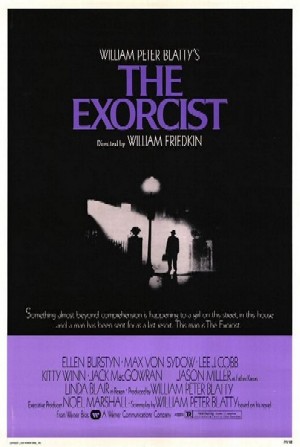
I have often posted on the relationship of monsters and religion, but The Mist is almost too easy to cite. Perhaps released too late to make it into Douglas Cowan’s Sacred Terror, the connection between religion and fear is patent and bald. Mrs. Carmody’s religion, apart from being very generally Christian, is hard to identify. She insists on human sacrifice while constantly referencing the Bible. Although there are examples of human sacrifice in the Bible, that particular cultic activity is never advocated for monster invasions or the apocalypse. Carmody is a parody of religious over-reaction to the unfamiliar and dangerous. In her insistence that others take her point of view, the caricatured Carmody becomes a danger that threatens the community. It is left indeterminate whether her followers survive or not.

The religious agitator is a trite and tired character, but one that has instant recognition value. In The Mist, however, I came for the mystery and stayed for the monsters. Mrs. Carmody could have said much more by saying much less.


Acts of God Algorithm

One of the oddest industry-standard phrases in use in secular contexts is “acts of God.” In a recent edition of Bostonia, the Boston University alumni magazine, an article entitled “The Acts of God Algorithm” seemed to promise some insight into this bizarre phenomenon. The piece, it turns out, is about an insurance analyst named Karen Clark. Of course, the place where “acts of God” are regularly invoked is in the insurance business. The reason this is so interesting is that in a nation as religiously motivated as the United States, people simply accept the slush-pile, default “act of God” as a given. The phrase, however, betrays a depth of fuzzy thinking and bad theology.

Does an “act of God” apply to an atheist? Does a devout Hindu have to accept any disaster that the monotheistic god and insurance companies present her or him with? Who tests to see if “God” is behind any of these acts? Given that monotheists differ widely on the day-to-day involvement of God in the natural world – certainly the world of insurance companies – how are any acts allocated to God? Legally! Predestinarians would assert that all acts are acts of God, and thus their insurance companies should be prepared for all such contingencies (they would, of course, have been predestined to deny this). Even those who accept less regular interference from on high would have trouble discerning whether a human-caused accident might or might not have had some hidden message from God. Are insurance moguls the ones qualified to decide?

To call any natural event an “act of God” betrays a level of jaded, if not indolent thinking that is inappropriate to all except those in the business of making money. Life is uncertain; it comes with no guarantees. Somehow our society accepts that if we pay good money to top-heavy, overly wealthy companies, bad things won’t happen to us, and if they do we get paid back. This kind of theology is diametrically opposed to the worldviews of the Bible and many monotheistic religious outlooks. Yet we accept that hurricanes, earthquakes, and floods are “acts of God.” The sneeze that causes a motorist to accidentally run a red light is not. And insurance brokers are weeping all the way to the bank.


Jesus Friends Me

From Jesus' Facebook profile


Jesus has a Facebook page. Given the circumstances it is highly doubtful that he set it up without some help from his friends. I went to the page to check out his friend list, but apparently he’s not accepting invites. Over 125,000 like the page, however. I wondered if it might be a stunt, since when I found Facebook they insisted that you could only sign up with your real name. While there is no doubt that this is a stunt, it turns out that it is considered an evangelistic tool wielded by a John 3:16er. On his info page, Jesus writes, “Please invite your friends to ‘Like’ (love) Jesus Christ,” an upgraded “honk if you love Jesus” if ever I read one. If you read the comments on his wall, it is clear that some people believe Jesus himself really reads his own page. It doesn’t mention the car accident.

A Rutgers student once told me about the “six clicks of separation” phenomenon on Wikipedia. Apparently, no matter how obscure a page you’re on, just six link clicks can get you to the page on Jesus. Don’t get me wrong: with his impact and importance Jesus certainly should have a Wikipedia article. There can be little doubt that anyone else can claim his level of influence in both the Dark Ages and Twentieth Century America, now creeping into the Twenty-First. The sad part is, those who constantly link to Jesus have latched onto a chimera grafted together from disparate sources. And they are his followers on Facebook.

I wonder who has the audacity to speak (type) for Jesus. Who is it that believes they have the deep insight into who Jesus was – deep enough to speak for him? WWJT? Technology speeds along and fans of Jesus fear he may be left behind. By making your Facebook admiration for Jesus public, I suppose, a kind of “witnessing” is going on. It would seem to me that a better way to show support for Jesus would be to care for others, the poor, the disadvantaged, the lonely. Feed the hungry, provide healthcare to the sick, offer justice to those who have been treated unfairly. If a friend invitation came from this faux Jesus, who would be inclined to accept it?


Kupalle or Ivan Kupala

The mysteries of newspaper layout are opaque to the laity, but the basic premises are clear; important news in the front, less pressing matter behind. The human eye, while expert at pattern detection, craves breaks in a series of repetitive columns of identically sized words. Newspapers and textbooks therefore punctuate the strictly “factual” information with images that lighten the ocular burden. So it was that yesterday’s New Jersey Star-Ledger graced the World and Nation section on page 10 with a photo of Kupalle.

Photo credit: Nikolay Yastrebov, European Pressphoto Agency

The caption notes that these young ladies are celebrating the pagan summer solstice holiday of Kupalle in Minsk. The summer solstice was almost two weeks ago, so why the photo made its premiere yesterday is one of those newspaper-specialist mysteries. Nevertheless, my curiosity about Kupalle was piqued. The photo looked like a more family-friendly version of a ceremony portrayed in The Wicker Man where young ladies leap over a fire. Some research revealed that Kupala is an ancient Russian water goddess, connected in some way with Neman, a Celtic goddess (thus the Wicker Man tie-in). The festival dedicated to Kupala involves leaping over a bonfire to ensure fertility. Kupala may have been lunar in origin but her name translates as “she who bathes.”

Christianity has a long history of subsuming “pagan” celebrations, often “baptizing” them into Christian form. In Belarus, Kupalle became the festival of Ivan Kupala, “John the Bather.” Kupalle was literally baptized. June 24, as the fictive date of John the Baptist’s birth, is a saint’s day in Roman Catholicism. The timing of the holiday intentionally coincides with Midsummer, one of the most sacred times of many nature religions. Ironically, in the Baptist’s name a holiday was reborn into Christian form. In the post-communist days of Eastern Europe, not only does Orthodox Christianity appear publicly, but its precursors once again engage public interest. Even if it is two weeks late.


Green Bible


One of the most heinous theologies to emerge from Christendom is the idea that exploitation of our planet is good for the soul. The idea, apart from having been foundational to Bush II’s administration, is based on the idea that if we mess up our world badly enough we will force the divine hand into sending Jesus back to clear up our detritus. The Second Coming apparently will be in a garbage heap rather than a garden. Christian businessmen rest secure knowing that their exploitation of our natural resources is all part of God’s master-plan. This “theology” is alive and well among many Neo-Cons and it insists that the fact of global warming is a myth and the myth of creationism is a fact.

One of the unexpected perpetrators in the war on our planet has been the Bible. Accurate records of the number of Bibles actually printed were not kept in the early days of Gutenberg’s dream machine, but current estimates place the number of Bibles printed at over 8 billion. That’s more than enough for one per person. Some of us would have to confess to owning multiple copies, making us perhaps guiltier than the rest. It was in an effort to stem the dendrite slaughter of this industry that I shifted to the Green Bible for my classes last year.

Some people treat the Bible as an object of veneration, never laying it on the floor or putting other objects atop it. Some people object to making Bibles out of “inferior” products – the Green Bible is printed on recycled paper and is biodegradable – but to me this seems to be the most responsible way to produce a book with the enormous environmental impact that the Bible has. I could live without the “green letter” sections intended to prooftext the Bible’s environmental concerns, but care for our planet trumps good taste at times. If anyone from Oxford University Press is reading this, the eco-friendly aspects of this Bible are what reluctantly switched me from 15 years of requiring students to purchase the New Oxford Annotated Bible! It is time that the Bible owned up to its part in our planetary plight.


Random Faces

A friend recently sent me an issue of the Annals of Improbable Research that featured an instance of pareidolia on the back cover. Pareidolia, or the brain’s tendency to read patterns in random input – especially faces or human forms, has been a subject addressed on this blog before. Nevertheless, the phenomenon has continued to find wider exposure on the internet, and its implications continue to grow. The Cheezburger folks who brought us LOL Cats now have a site dedicated to pareidolia entitled “Happy Chair is Happy.” The question is not so much why we see faces everywhere, but what do we do about it.

Photo credit: C. Vittore, K. Tribble and D. Savala, Ann. Improbable Research

Perhaps the most prevalent uses of pareidolia in natural phenomena (human-made objects are often funny or uncanny, but the faces may be there by intentional design) revolve around the supernatural. Would-be ghost hunters find what looks like a face in a window or shadowy corner and interpret it as a disembodied spirit. Religious believers of various faiths find the faces of their founders or leaders in natural noise. A tract I saw as a child told the heart-wrenching story of a woman who’d given up hope. She randomly took a photograph of her garden and when she developed it (this was back when film was actually still in use), she found the face of Jesus in among the leaves. Her angst alleviated, she went on to face life with a fresh sense of possibilities.

We often see what is not really there. On a visit to my niece last year, while waiting in the car outside her dorm, I saw a shadow on the wall that looked exactly like the recently deceased Michael Jackson. The shadow was cast by security lights through a bush, but the face was unmistakable. To test my observation, I asked my niece – who knew nothing of the fleeting rock star on the side of her building – if she could see it. Immediately it became obvious to her. An epiphany of Michael Jackson may be a religious event, or at least a supernatural one, to some. In reality it was a temporary arrangement of leaves aligned just right to catch a security light to form a public icon. Putting faith in pareidolia is a very haphazard source of security. However, if it helps someone deal with the stresses and strains of life, what harm is there in seeing Jesus (or Michael Jackson) where he really isn’t present?


Robots and Divine Engineers

Pennsylvania seldom comes to mind when one thinks of a “big state” unless, that is, you have to drive across it. On the way to a family wedding in Ohio, I had to drive interstate 80 from the Delaware Water Gap to Sharon, Pennsylvania, and beyond. Having made this trip more times than I care to recount, I knew some diversion would be necessary. So it was that my family settled in to hear the audio version of Daniel H. Wilson’s How To Survive a Robot Uprising. Given my current status as a “Robot Dad” and my lifelong interest in both monsters and doomsday scenarios, this particular book was an apt choice.

Although the book is classified as humor, there was much that was thought-provoking in it (as there frequently is in quality humor). As Wilson systematically describes what makes robots tick, back five years ago, it became clear what it means to make a creature in one’s own image. Roboticists analyze how humans go about doing things and how we think in order to replicate these processes in mechanical formats. The results are machines that easily outperform humans, but which also have severe limitations – what Wilson frequently refers to as the benefits of evolution. Not only is the book funny, but it is also informative concerning what amazing robots are already in development. For those with the capital, there is little that robots can not be made to do.

All the while, I was also thinking of the human dilemma. Judeo-Christian tradition claims that we are made “in the image of God” without ever really explaining what that means. Perhaps it is the height of hubris to suggest that we are pale reflections of what we might have been, given a divine designer. When humans make robots, they are designed to surpass what we can do. Is there a reason people can’t see in the infrared or ultraviolet light ranges, like robots can? Why are we not able to hear all available sounds waves or smell all possible odors, such as our machines and dogs can? Could a team of human engineers have designed a better prototype than the God of Genesis?

While I do not really fear a robot uprising, I often ponder why things are the way they are and why human limitations often lead to such intense suffering. It is an idea that can be explored thoroughly when, after hours of driving, you realize that you still have 200 miles to go to the border.