Wolves Again

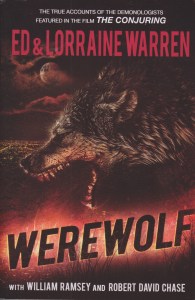
Although I don’t read movie reviews until after I’ve seen a film, I have a confession to make. With rumors swirling of The Conjuring 3, and since a chapter of Nightmares with the Bible will involve The Conjuring, I was a little curious what it might be about. Word on the street—and by “street” I mean “internet”—is that it will feature the case of Ed and Lorraine Warren that’s presented in Werewolf. Co-written by William Ramsey (the victim) and Robert David Chase, the book describes the strange malady of Ramsey, who never actually changed into a wolf, but for inexplicable reasons (at the time) thought himself a wolf and took on a wolfish look as he attacked people. The reports suggest he had preternatural strength at such times.

Since most of the Warrens’ books are concerned with demons, it should come as no surprise that in this case that was the diagnosis as well. With no real reason given, once upon a childhood evening Ramsey was possessed and occasionally broke out into violent fits. He landed in a psychiatric hospital a couple of times, but was eventually released. Noticed by the Warrens on one of their trips to England, Ramsey was invited to come stateside for an exorcism. According to the book, the rite was successful at least up until the time of publication. That’s the thing about demons—you can’t always tell for sure when they’re gone.

It’s pretty obvious why such a story line would appeal for a horror flick. You’ve got a werewolf, an unnamed demon, and an exorcism—there’s a lot to work with here. Weird things happen in the world, and there’s not too much to strain the credulity in this case. It would seem possible that a mental illness could cause much of what’s described as plaguing Ramsey, though. Its episodic nature is strange, I suppose, and the Warrens had a reputation for spotting demons. I did miss the conventional elements of the exorcism, however. No demon forced to give its name, no levitating and no head-spinning. Not even a bona fide bodily transformation. They’ll be able to fix that in Hollywood, I’m sure. Credulous or not, there will always be people like me who feel compelled to read such books. And since there’s no final arbiter but opinion in cases of the supernatural, that can leave you wondering.
Mythologies

Now that Holy Horror will be appearing soon, I’ve been neglecting my horror movies. It’s not on purpose, I assure you. I don’t feel comfortable speaking as a writer—publishers tend to agree with that, and besides, my job is more of being a reader—but my experience of it suggests you never have enough time. (Or money; movies never come with no costs.) With another book under contract and a lot more going on behind the scenes than I reveal on this blog, as Morpheus says, “Time is always against us.” So when my wife showed me a story about Hereditary, I knew my list of must sees would only continue to grow. I haven’t even seen Get Out yet!

Beyond being simple guilty pleasures, horror films area also a means of coping. I know this because although they’re generally very successful at the box office, I’ve rarely met anyone who admits to watching them. Horror thrives on secrets. We act one way in public, and a different way when we shut the door and pull the drapes. Since we’ve outlived our belief in gods and heroes, cinema has taken the role of mythology in modern life. Crammed with archetypes—and yes, stereotypes—movies act out age-old themes in impressive displays of color and sound. You might even learn something without trying. Mythology may have originated in stories told around the campfire, but science never displaced the need for hearing them again and again in different media.

I’ve taken to writing books about films because it’s clear that meaning lies there for many people. The invention of cinema and television forever changed culture. Yes, there’s cheap, thoughtless material available in both formats. Still, movies have an ability to convey truths in a way that sermons often fail to do. The values they depict are often very human ones. Horror, for example, isn’t about blood and gore. It’s about survival. That’s not to say the protagonists always reach a happy ending, but we learn from their mistakes. There’s a reason you shouldn’t open closet doors in a house not your own. Those who do, however, often find uncomfortable truths inside. Holy Horror looks in the closet at the way the Bible functions iconically in horror. Since writing it I continue to notice the Bible in horror and I feel affirmed in the conclusions I drew. And if only I had a bit more time, I’d be watching more mythology. And the list only keeps getting longer.


Credulity

So I went to see The Incredibles 2. Like the first movie, it deals with the complexities of family life amid the feelings of inadequacy when people are kept from their full potential. The idea of humans being enslaved by their screens seemed real enough. If you’ve ever tried to walk through Manhattan in a hurry you know that one of the clearest dangers is the pedestrian staring at his or her phone. People used to come to New York to see the scenery. Now you can get the full experience all online. There’s little doubt that we do need to be saved from our screens. Meet virtual reality. After only one encounter you can drop the “virtual.” Ironically, we were all sitting in a theater looking at a great big screen.

What was even more interesting was the fact that the film began with an apology for taking so long to make a sequel. An actual apology. As if no movie ever could, or should stand on its own. It’s common knowledge that sequels seldom live up to the originals. Interestingly, the villain in the movie states that people will always choose convenience over quality. That much is certain, and in an ironic way it applies to the film in which it’s uttered. I don’t believe in the crisis for creativity. It’s still out there. Original ideas are endemic to human nature. Ideas that bring in lots of money are more rare, and so we rely on the sequel. Sure things.

Publishers play this same game. Books that are completely new ideas frequently find their way from editors’ slush piles to their rejection piles. Publishers want something similar to what they’ve done before. Even better, something similar to something that sold well last time. The odds, in a capitalistic society, are stacked against creativity. It’s money that’s important, not originality. Yes, there have been books written extolling the wonders—virtues even—of originality. Such books are more easily published if they’re written by somebody already famous. So here was the dilemma in the theater: enjoy the movie or accept the message of the movie? The rare days I’m away from the screen, I’m old enough to admit, I don’t really crave it. When I come back in the door, however, the first thing I do is login to see if I’ve missed anything. Screens can lead to a strange uniformity. As long as we’re willing to pay for it, nobody will complain.


Behind the Scenes

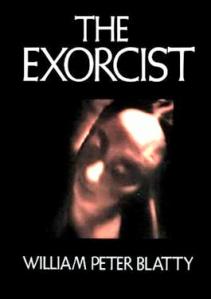
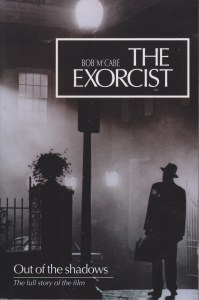
Although I confess to being a horror aficionado, it took many years before I could convince myself to watch The Exorcist. I finally saw it in the mid-20-aughts, and have watched it many times since. It’s a movie that I discuss in Holy Horror, and it will star in Nightmares with the Bible as well. Although younger people often don’t experience the movie as scary—certainly the increasing trust in science and growth of secularity contribute to this—there is a sincerity about it that earns it its deserved place in the pantheon of horror. Bob McCabe surely counts as a fan for his The Exorcist: Out of the Shadows. Sub-subtitled The Full Story of the Film, this book is a gallimaufry of anecdotes, interviews, and facts about the movie and even its sequels. It’s like of like a sustained reaction shot.

The book doesn’t lack insight and McCabe is surely right that this was one of the most influential movies of the early 1970s. It has become a frame of reference on its own and it has defined, in large measure, what people believe about demonic possession. One of the quotes from McCabe’s treatment however, uses the phrase “metaphysical unknown” to explain why the film retains its power to scare, and there’s a great deal of wisdom in that assessment. Fear of the unknown, of course, is prime real estate for horror, and one of the most interesting things about demons is how little the Bible, or other ancient texts, really says (or say) about them. They are an embodiment of the unknown that can take over a person and make her somebody else. But it’s that metaphysical that’s really scary.

As we continue into a time of less and less that remains unclaimed by scientific theory, those metaphysical unknowns continue to lurk and to frighten. Maybe it’s the concept of the metaphysical itself that scares—can there really be something larger, more intelligent than us? The human psyche bruises easily, and we don’t like to be reminded that we lack the control we suppose we have each day. The metaphysical challenges all that. Since it refuses to submit to empirical verification, it remains unknown. A great many people interpret this as the same as not believing in it. Every once in a while, however, a powerful statement such as The Exorcist comes along. Few people thought about demons before William Peter Blatty’s novel and subsequent film. Then the world was full of them again. Requests for exorcisms are on the rise, and the metaphysical unknown haunts us now as much as it ever has.


Cult of Paris

The cult of celebrity is dangerous. The results of both biological and psychological sciences inform us that mammals, especially primates, hold “alpha” individuals in awe. We don’t know what quality makes them irresistible to some, but in the case of humans before you know it everyone is talking about this Kardashian or that Trump. Valorizing the power of media as we do, those who appear ubiquitously on screen gain in magnitude merely by the attention paid to them. Others have vetted the details, and those who are deemed important enough for constant, widespread television exposure are worthy of our worship. Most of the time it seems banal, harmless. But when those without scruples are willing to exploit it, it is dangerous.

Paris rejecting the cult of celebrity

For example, the other day my wife and I rewatched An American in Paris. I know my wife likes the movie, but when it was over I couldn’t help noting that Jerry Mulligan chauvinistically claims his right to a woman he’s just met, and who is, moreover, engaged to a friend of his who had just lent him money. The fact that he doesn’t know about the engagement is no excuse. Lise tells him “No,” and when she gives him a false telephone number he doesn’t take the hint that she doesn’t want him to call her. He stalks her in a selfish and predatory way. Only because she laughs at his antics with some perfume bottles does she agree to meet with him later. He takes advantage of another woman who clearly has feelings for him and who sponsors him, using her money but not reciprocating her feelings. He’s aggressive and eavesdrops to get Lise’s name. He lies to her and about her (saying he knows her so her friends don’t object) and refuses to take no for an answer. Laying out my grievances, my wife politely listened and then said, “But it’s Gene Kelly.”

Like many people, I was jilted a time or two when I was younger. Losing out to a rival lover leaves a lasting scar. How can we hope that on New Year’s Eve Lise will leave Henri for the interloper Jerry? But it’s Gene Kelly. The cult of celebrity allows those on various pedestals to get away with many things. Trump was likely correct in saying he could stand in the middle of a crowded street and shoot someone and his base would not object. The cult of celebrity ’sn’twonderful, ‘sdangerous.


Rains and Bows

It’s raining and I’m here for an outdoor event. Here, in this case, is Ithaca, New York. The event is the parade that’s an integral part of the Ithaca Festival. As people have been laying out their chairs and blankets along the route since morning, it’s a fair guess that if we don’t stake out our few feet of available public space we’ll miss the parade. And yes, it will rain on my parade. The problem is waiting in the rain. With one hand holding an umbrella and water getting in anyway like a leaky roof, there’s only so much you can do. Reading a book—my default activity—is out of the question. I know very few people here and since I’m acting as a placeholder, there’s nobody to talk to. Tom Petty was right after all.

The parade itself turned out to be a celebration of diversity. Ithaca is what America could be. The various liberal organizations, eager to educate, marched by to cheers and bonhomie. There’s nobody judging here. This became clear in a particularly striking juxtaposition (for which I have no photos, because it was raining) in the parade lineup. A group of Mad Max-themed metal rockers went by in a gnarly truck decorated with torches protruding from fake human skulls. Dressed in future period costumes from the movie diegesis, they produced the guttural, primal roar that is an accusation against current society. Then, like Mel Gibson shifting to The Passion of the Christ, the group immediately behind was a Bible Baptist Church. Add water and mix.

For this I’d sat in the rain for a couple of hours. Forced to relax, I watched the water on the fabric over my head as beads crawled together, joined one another, and scurried, animal-like, from the umbrella to the ground. The drops may look uniform from a distance, but they’re diverse. They come in different sizes, and perhaps because of the distorting character of the nylon, they took different shapes. Placed together in one location, it was natural, it seemed, for them to come together for a common goal, which was the ground. There was a parable playing out here right over my head. While it didn’t seem to be the case at the time, it clearly was a lesson to be shared. Had it been sunny, I would’ve been reading a book. Sometimes it takes sitting in the rain to learn something that should be obvious no matter what the weather.


Fictional Facts

“If you want truth,” Indiana Jones famously said, you need to go to philosophy class. The sad fact is most people have little practical training when it comes to such issues as discerning truth. Some time ago I read an article about how fake news travels faster and is more deeply believed than actual truth. I suspect that’s because the truth is hard. The age-old trope used to be a wizened elder sitting atop a mountain in the lotus position. A lifetime of thinking through the labyrinthian corridors of wishful belief to get to what is finally and unassailably true. Our president, with the full complicity of the Republican Party, is out to dismantle the concept of truth once and for all.

Indiana Jones was contrasting facts to truth in this scene from The Final Crusade. The idea was that facts sometimes make you question truth. In GOP University, however, facts have alternatives. He who bellows the loudest is the harbinger of truth. Never mind that still small voice that comes after the raging wind. The voice that can stop a fiery prophet in his tracks—a man who could raise the dead, for crying out loud—but even his successor called Herod a FOX. In the culture of the shrug, who really cares? Finding the truth is so much navel-gazing. There are real enemies to bomb and somebody has some money that I can take away and claim as my own. To do so we can make up facts as we go along and lies will see us through. With the Evangelical seal of approval.

Even with rumors of a fifth film swirling, I miss Indiana Jones. In his formative days fascists were the enemies, even of the Republicans. Although he was showing his age in Crystal Skull, Jones still couldn’t countenance oppressive regimes. Scientific studies show people would rather believe fake news. We’re hopelessly prone to fantasy, I guess. Even as I volunteered on the archaeological dig at Tel Dor, although I had little money a fedora was required. There was a difference, however. I knew I really wasn’t Indiana Jones. I was digging for facts so solid that they could be held in my hand. Unlike Dr. Jones’ students, I did go down the hall to Dr. Trammel’s philosophy class. Surrounded by the young Republicans of Grove City College, none of us doubted that truth was spelled with a capital T. Now Truth is apparently an artifact buried in the sand, awaiting a hapless archaeologist to bring it to light. Amid all the forgeries that non-specialists can’t tell apart.


Spiritual Walls

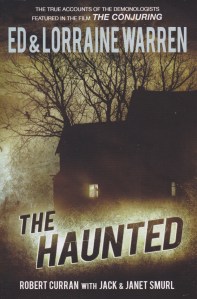
I often ponder what a difference walls make. Perhaps our ancient, cave-dwelling DNA just runs away with imaginations, but walls make us feel safe. Most of the time. As I was reading the ensemble-written The Haunted, by Robert Curran, Ed and Lorraine Warren, and Jack and Janet Smurl, the concept of walls showed its other face. In the mid-to late-1980s, the Smurls lived in a haunted house. The West Pittston duplex in Pennsylvania was also home to their four daughter’s and Jack’s parents. And the entity that harassed them there was deemed a demon. It’s easy to be skeptical about such accounts—no physical proof exists, after all, and proving anything is pretty near impossible anyway. Although I wasn’t aware of it at the time, apparently this become quite a media event. It’s easy to question the whole thing. Then I think about walls.

Although there are public haunted buildings, I often wonder about specific residences that foster claims of haunting. If spirits are, well, spiritual beings that can pass through walls, why would they stay in a house? In the case of the demon that everyone in the family saw, what does it mean to see physically a being that has no physical reality? And when the priest exorcised their house, why did they look to see where the incorporeal being might be hiding? It seems that the demon needed walls too.

Human beings are natural actors. We behave differently at home than we do in public. We act differently with friends than with strangers. Even closer to home, we act more natural with our families than we do even with friends. Beneath all these layers of pretending, most of us still act differently when we’re alone. That’s where walls come in. Although knowing someone’s in the next room might temper our behavior, the family unit within its walls is one intimate collective. What was happening within the walls of the Smurl household three decades ago? Any recounting will involve retelling. Interpretation. And we all know what a difference walls can make. The neighbors, according too this book, could hear demonic screams. Some even experienced invasions of their own during the height of the haunting. Books like this have a way of drawing you in, opening windows and doors through the walls into someone else’s life. What actually happens to them, however, is something we’ll only learn when walls begin to talk.


Measuring Immeasurables

Are demons getting more active, or are people just believing in them more? Quite apart from what’s happening in the District of Columbia, there’s been a surge of requests for exorcisms. This is according to a WBUR story my wife sent me. I’ve been researching demons for a few years now. Initially my concern was avoiding Hell (something I’d still like to do), but as an adult trained in rationalism, I wondered why people still believed in them. Trying to keep an open mind, I read accounts. Yes, misperception is possible. Alternative interpretations. But still…

Fundamentalists say that demons have to exist because Jesus said so. Historically speaking, people have recognized demons from the earliest writing cultures and probably before. What they thought demons were differed pretty wildly from place to place. A good case has been made that demonic possession, as we recognize it today, became popular after The Exorcist. William Peter Blatty researched the topic, and most of what he uses for Regan MacNeil’s symptoms came from medieval accounts. Although some of the descriptions are somewhat extreme, the actions themselves aren’t new to either movie or novel. In other words, according to the eyewitness accounts we have, such things do happen. And when they do, who ya’ gonna call?

Exorcists were mostly extinct by the 1960s. A decade later, after the movie’s release, reports began to increase in number. Malachi Martin’s Hostage to the Devil, which I reviewed here some time ago, was a bestseller. It reinforced the idea planted by Blatty. And the number of exorcism requests hasn’t started going down yet. Are there more demons about, or are we all imagining things? It’s a question not easily answered.

The fact is science can’t measure phenomena that don’t consist of matter or energy. Occam’s razor shaves away the whiskers of the spiritual. Perhaps nature intended for us to be a bit hairier. Spirit is something that has always resisted science and its metrics. We know it when we see it in someone. Or perhaps when it impacts a person’s actions or motivations. It doesn’t impact a scale. It has no visible spectrum. Conventional wisdom says if you can’t see it, hear it, or otherwise sense it, it must not be there. We know this to be shortsighted thinking, however. “There are more things in heaven and earth,” Shakespeare wrote, and we would do well to pay the bard his due. Are there demons? I can’t say. I do know that people have been asking for the services of exorcists more and more. For that there is ample evidence.


Strange Passions

In Holy Horror I make the suggestion that Mel Gibson’s The Passion of the Christ can be considered a horror film. It certainly has more gratuitous blood and gore than many examples of the genre I’ve seen. Really, I had no desire to see it. One of the great aspects of teaching is learning from students. While an adjunct at Rutgers one of my undergrads brought me a copy of the DVD to watch. She said I needed to see it. Obligingly I did so. I knew if I returned the disc to her without watching she’d ask why I hadn’t. Apart from the famously sadistic flogging scene, it was, like any other Bible film, off base quite a bit of the time. This was commentary, not Scripture.

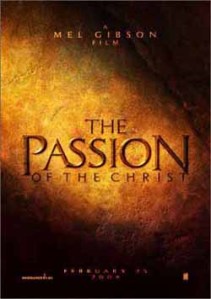
This came back to me reading Bob Cranmer’s account of his haunted house on Brownsville Road in the book about which I blogged a few days ago. Cranmer didn’t exactly follow orthodox methods for driving the demon out of his house. Some of his tactics were improvised. The one I found the most startling was that in the rooms that were most badly affected he played The Passion of the Christ on a continuous loop for weeks at a time. Not only does this suggest demons are capable of watching movies, but that this film can stand in for the actual events that took place in Israel two millennia ago. If the priests involved objected to this method, he didn’t record it. So we have what could be considered a horror movie being used to try to drive out a real life monster (depending on one’s point of view).

Interestingly, this is one of the points behind Holy Horror. Film (and other media) can be a powerful force in our experience of the world. We don’t just go to the cinema because everybody’s talking about a movie. Our experience of watching it is transformative, if only temporary. The same is true of live theater or a concert. Far from being mere entertainment, these cultural events provide a form of transcendence, if they speak to us. In my own case The Passion of the Christ didn’t sell me on Mr. Gibson’s vision. I have no doubts that Roman crucifixion was a horrible spectacle. I also have no doubts that the Good Book indicates that the point of all of this was elsewhere. The Gospels weren’t an effort to traumatize readers. That’s the job of horror movies. Apparently this is something on which even demons agree.


Zombie Wars

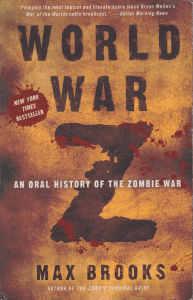
I suppose, rationally considered, most monsters can’t possibly exist. Maybe that’s the psychological relief required to enjoy the movies made about them. We can imagine the thrill, but we know we’re safe once we leave the theater. Culturally, monsters fight for supremacy. The early 2000s belonged to the vampire. They were everywhere. I once heard a literary agent advise wannabe authors to write on vampires since the publishing industry was showing no signs of slowing down on them. Then came the zombies. They’re still with us. World War Z came to my attention as a movie, but as one I never saw. I’ve watched many zombie films and none has lived up to the status of the spectacle that launched the genre, George Romero’s Night of the Living Dead. It remains a classic to this day. Still, I was curious and so I read Max Brooks’ World War Z: An Oral History of the Zombie War.

Let alone the chapter after chapter of tough-talking, cool-sounding reminiscers, I have trouble buying zombies. Yes, I get the scare factor, but maybe I’ve read too much science even to visualize myself into a fantasy world where a creature with no digestive system would be driven to eat. It just makes no sense. Human bodies can function with missing parts, of course, but without the integration of muscles, ligaments, digestion, and brain, it seems difficult to accept that they’d keep coming after you when they’ve been decaying for years. It’s all I can do to get out of bed most mornings, even as a healthy, living body. Analysts, I know, talk about zombies as metaphors, but with over 300 pages of stories in no way believable, I had to wonder about the limits of credulity. Maybe Carl Sagan was right after all.

I hope I’m not unsophisticated enough not to realize that the real point in Brooks’ novel is how the surviving humans treat each other. There is a moral to the story. We develop new and “better” weapons to kill one another. We’re smart enough to have world peace and prosperity, but wars are constantly erupting. We have a nation with many brilliant people and yet we elect a Trump. Self-destruction, it seems, is written into our genes. We consume one another. Even when the enemy is completely imaginary we find ways of believing. So I read World War Z, appreciating the irony. I still can’t get over, however, the trope that all you need is a human brain to want to destroy others.


Movie v. Book

The debate is about as old as celluloid itself; which is better, the book or the movie? The response obviously depends on personal taste, and I suspect that many people base their answer on criteria that can’t exactly be quantified. Often it’s a matter of the specifics—which book? Which movie? In my own experience I’ve done it both ways, read the book first and watched the movie initially. I’ve even gone to movies not realizing there was a book and, of course, some movies aren’t based on books at all. You couldn’t grow up when I did, however, and not know that The Exorcist was a movie based on a book. I never saw the movie in a theater. There was a lot of buzz about it in my hometown, of course. I hadn’t been introduced to modern horror yet—still being a Fundamentalist at the time—and besides, it was rated “R” and I wasn’t.

I finally got around to reading the book. At this point in my life I’ve seen the movie several times, so I knew how the story was “supposed to go” beforehand. The fact that William Peter Blatty wrote the screenplay suggested it would be close to the novel, and indeed that’s the case. Novels, by their nature, tend to have more information about the storyline than is obvious from a film. The author can take time to explain things that don’t translate visually, including scenes where one character lectures another, like this blog. Since I’m writing a book about demons in movies, I paid careful attention to this. One of the themes from the novel that didn’t make it to the movie was witches.

That surprised me a bit. I had seen the movie first and it was plenty scary just as it was. I had to remind myself that my younger years coincided with the rebirth of the fear of witches. Literal ones. I’m not an astute enough sociologist to say whether the “witch hunts” of McCarthyism led to a hypostatized fear of real witches or not, but people were afraid in those days, as I recall. The Exorcist tapped into cultural fears in a way rare for a horror movie. It spoke to the fears of the era, but it didn’t mention witches. I couldn’t help but make the comparison with Rosemary’s Baby, which hit theaters shortly after The Exorcist. Rosemary believes the Satanists are witches. There’s a whole supernatural concoction of malevolent entities on the loose. Witches, ultimately in the novel, are simply one avenue the desperate Chris MacNeil explores to find out what’s wrong with Regan. The movie, wisely in my opinion, chose to leave it out. Demons are scary enough on their own, but of course even that’s debatable.


Watching Research

Now that Holy Horror’s been announced, I’m at work on my next book based on horror movies. Although some people might question the aesthetic of the horror genre, these films are sometimes remarkably intelligent and can indeed be good cinema. Having spent the better part of last weekend watching multiple flicks, however, I’ve come to realize that watching films for research is quite different than viewing them for fun. We all know the feeling of going to the theater to be exposed to the mythology of the present day; movies are the new mythology and are a common source of meaning and hope for individuals in a post-religion era. We go for the spectacle and the story. We leave, if the movie is good, with a renewed sense of purpose, or in a thoughtful state. That’s what mythology does.

In writing up my analyses of many films, I’ve noticed how little the detail is generally acknowledged in many synopses. They can make a flick seem banal. I’ve even had very intelligent people ask me why I think watching movies should be considered intellectual exercises. One reason for this, at least in my experience, is how often people rely on what they see in movies to inform them of important things. Historical events, for example. For the average person, an historical recreation on celluloid can provide recall better than a detail from some 400-page tome on the topic. Human beings are visually oriented by nature and evolution. It takes us years to learn how to read, and if we don’t keep up with the practice our ability to comprehend advanced writing atrophies. It’s easier to watch a film.

No doubt movie scripts are available for purchase. To get the message of a film, however, you need to watch. Immerse yourself in a kind of flickering light baptism. Research watching, however, involves multiple viewings. Taking notes. Watching again to make sure you got that detail correct. Some may doubt that this is an intellectual exercise at all. Still, one of the concerns that some scholars feel is that we’ve lost touch with what hoi polloi believe. People have turned to mythology from the beginning of time in the quest for meaning. Science tells us how the world works, but not why. For such questions we need our mythologies, ancient and modern. Since Nightmares with the Bible focuses on demons, I’ve had to construct a cinematic demonology that’s quite different from those of the Middle Ages. It requires, after all, a modern research method for a modern mythology. And movie watching. Lots of movie watching.


Mediated Reality

According to the Good Book, Methuselah lived nearly a millennium. For all that, the information on him in Genesis occurs in a mere five verses, in a span of seven. We learn when he married, whom he sired, and how long he lived. Not much information of the last antediluvian, especially considering how much time he had. When I searched for him on the web the other day, the information box that showed up on Google had, at the very top, a picture of Anthony Hopkins. I immediately recognized his makeup from Noah, a movie that I just can’t make myself love. The fault for having no other image may be the failure of human imagination—where do we find an image of a thousand-year old?

The internet mediates our reality. One of the points of both my books now in the works is that modern understanding of the Bible is largely media based. Few people have the time or inclination to read such a big book. (Given the continued evangelical support of Trump, it’s pretty clear that most of them haven’t read it either.) We want other people to do the heavy lifting and give us a summary in neat little boxes at the top of the screen. There’s far too many things to do in this tangled web to be spending months reading a ponderous, outdated tome, even if it does have plenty of sex and violence. Even if it influences the lives of each and every person living in America every single day. We’d rather have someone else—preferably not some egghead with a Ph.D.—give us the executive summary.

Once I did the math. If you add up the dates in what I used to call “Genesis years,” the year Methuselah died was the year of the flood. The Bible doesn’t say that old Methuselah drowned when the windows of heaven were opened, but it’s a reasonable conjecture. Nature abhors, it seems, a human being living so long. Our bodies just aren’t built for it. Some trees, on the other hand, have been alive for thousands of years. Botanists call them “Methuselah trees” (I told you the Good Book influences everything!). The pity is we know so very little about this ancient human being from days of yore. Was he a good man? He seems to have been washed out in the sluice gates of what became one great universal sewer at the time. Although we know little, his life would make quite an epic movie, I think. We already have an actor lined up, for Google tells me so.


Updates

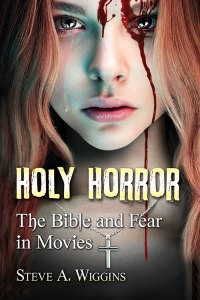
So, I’m getting ready to update this website. I’ll give you a warning before things change. Another update, however, is in order. I’ve been promising that I’d let you know when my forthcoming book with McFarland received its final title. Well, drum roll please! The final title is actually the first title I proposed—Holy Horror: The Bible and Fear in Movies. And it has an ISBN: 978-1-4766-7466-7. And a cover design too, but I can’t share that just yet. It is appropriately lurid, matching the subject. But in all seriousness, the book makes a case for the fact that many people understand their religion via popular media. Being a bad boy, I look at it through horror movies.

The title Holy Horror was a play on Douglas Cowan’s excellent book, Sacred Terror. I recall reading that book, starting the night I bought it as SBL, curled up in the swank conference hotel bed, turning pages until I couldn’t hold my eyes open any longer. It had honestly never occurred to me that religion scholars could get away with writing about horror movies. Cowan had the natural advantage of being a Canadian, something I’ve always longed to be. He also has a secure university post. I was, at the time, just a guy trying to feel secure in what seemed like (and turned out in reality to be) a threatening seminary position that was shortly to end.

It may be difficult to understand how horror can be consoling. It can. I’m a squeamish guy. I don’t like blood and gore. I hate being startled. Nevertheless, I took comfort in this genre as my career was falling apart. Holy Horror was a cathartic book for me to write. There’s more than a little metaphor in it. One thing that will become clear to readers is that the Bible is no stranger to horror movies. Ironically, many of them are strangely conservative—Carol J. Clover’s classic Men, Women, and Chainsaws (which I’ve reviewed on this blog) made that point clearly. Horror often has the same message as your typical Disney film, although it’s presently slightly differently. How so? Well, I can’t say very much here or you’ll have no reason to read my book. McFarland does a great job with publishing this kind of title. You won’t find it in Barnes and Noble, and not likely in your local indie either, but it’ll be available on Amazon and these days that’s enough. And before long these pages will change to reflect its coming.