The Witch

IMG_2679

The Witch, by Robert Eggers, is a parable. The movie accepts, and to appreciate it the viewer must too, that there is actually witchcraft in New England. Unless the witch too is a parable. Set in the days before the Salem Witch Trials, the movie is worthy of Lars von Trier on history. William and his family are exiled from their unnamed community due to differences of religious opinion. William and Katherine are a devout couple, steeped in the Puritan belief that all people deserve Hell and those who are good have no choice in the matter. They have a family of four children, and after they set up homesteading in exile, a fifth comes along. When the baby disappears, the eldest daughter, on the cusp of sexual maturity, is blamed. Portraying well the boredom of children raised in a world with no diversion, the girl, Thomasin, tells her little sister that she is a witch. In reality, she is a fearful, sin-sick girl, frightened for her future salvation. There is a witch, but it is not she.

Tragedy follows tragedy for the isolated family. Their religion permits them to believe it can only be punishment from God. They pray, recite Bible, and work hard. Their oldest son, abducted by the witch, returns home to die. The two youngest children begin to have fits, claiming that Thomasin has confessed to being a witch. Her mother, Katherine, believes them. Her father too, convinces himself that she is a witch and urges her to confess. The paranoia grows and Thomasin accuses her two younger siblings of witchcraft, speaking to the family’s black goat as their familiar. Confused, angry, and out of hope, the father locks the children in with the goats for the night, determined to find the truth in the morning.

I won’t add any spoilers for the ending here. Suffice it to say, this is a parable. Thomasin’s very name suggests “sin,” and her doomed brother is Caleb, the Hebrew word for “dog.” His recitation of the Song of Songs is distinctly creepy. God is absent from the movie, despite the family’s constant prayers. The only voice heard is that of the Devil. This is a parable of what happens when a religion goes wrong. The family left England to exercise their religion freely and the free exercise of it turns them against each other. The only ones who seem to find peace are those who leave their faith behind. It is a movie that I’ll ponder for many days, I suspect. Less a condemnation of religion than an open probing of what it’s logical outcome might be, The Witch is one of those movies that demonstrates the ongoing power of parables.

Philistines in Midtown

It’s an old story. In fact, it’s in the Bible. The enemies of Yahweh perish. Since Israel’s god could not be represented iconically, the story goes, an iconic ark stood in for the divine presence. After a certain unpleasantness with the Philistines, the ark was captured and taken to the temple of Dagon. There, the statue of Dagon fell down in worship before the ark. Philistine priests, embarrassed for their deity, set the statue upright again only to come back the next morning to find their god not only toppled, but decapitated. I’ve always found this story intriguing. I wrote an academic article about it some years ago, which, as far as I can tell, has been ignored by subsequent scholars of Dagon. Of course, the Philistine god eventually went on to fame at the hands of H. P. Lovecraft. Today most scholars are far too parsimonious to care about that, so I’m left to follow my imagination when it comes to the old gods.

IMG_2671

This past week, on my way to work, I spied a mannequin fallen in the Garment District. There used to be hundreds of fabric stores around here. I’m always interested in those that remain. Cloth is so basic to human needs. The mannequin was behind glass, behind a chain fence. She’d clearly fallen in the night. She was decapitated. Of course, Dagon came to mind. I’m sure that others walking by the store had the same thought. Fallen before the invisible almighty, an idol meets its end.

Once upon a time, I’m told, biblical literacy was common. I don’t mourn its passing because I believe society has become sinful, but I do mourn it because the stories are timeless and important. There is something very poignant about the idea of a foreign deity falling, headless, before an even more powerful, invisible foe. That foe these days is the equally omnipresent and omnipotent dollar. After all, I am standing in Midtown Manhattan where the only language that everyone can speak is that of Mammon. Writers of fiction and erudite scholars beyond the reach of mere mortals ponder the great mysteries of ancient gods. The rest of us walk the streets to our assigned places so that we may participate in its endless worship.


Seekers

We live not far from an upscale mall. This mall, although over 30 miles from Manhattan, has its own bus line dedicated to it by New Jersey Transit. There is a route that runs throughout the day from the City to this mall and back. My readers know I’m hardly an uptown type. Nevertheless, an occasional trip to the mall can be a learning experience. On a cold weekend where outdoor activities felt unnecessarily ascetic we went to stroll around to see what was new. In the midst of the usual stores I never visit, there was one that had the temporary feel of an exploratory venture in high rent retail. It was, for lack of an appropriate adjective, a “New Age” store, featuring figurines from eastern religions, incense, dragons, and the aesthetic of the hippie mystique. Wandering about, I couldn’t help but notice how much of the merchandise, in one way or another, was religious in orientation.

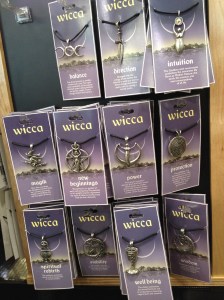
Those of us from the western hemisphere find the quotidian aspects of Hinduism and Buddhism exotic. Otherworldly, even. In our sterile offices, we dare not burn incense. Fabrics this colorful are not worn to work. It was as if the only place true color exists is in that mystical world that religions acknowledge, but businesses deny. Yes, it was a Saturday, but nevertheless the number of patrons surprised me. The town in which the mall sits is quite affluent. We live far enough from the City that some very serious money resides at no great distance. Patrons tend to have enough, and considerable surplus. And here they are, in a store selling that is undifferentiated spirituality. A stand of silver jewelry was explicitly marked Wicca. There were even Christian figurines among the crystals.

IMG_2672

People, even (or perhaps especially) the wealthy, desire more than the dollar can bring. We’re authoritatively told that we are meat computers. Mere automatons to the forces of physics. Our human experience tells us otherwise. We are meaning-seeking creatures. There are people who will willingly sit for three hours on a bus just to reach this mall. Whether it is a hippie-friendly shop, or the latest fashion trends that draw them here, they have this in common: they’re seeking something. I glance around and spy a mirror. I came here looking for a place out of the cold, but I have discovered an unexpected insight. If we make our own, or purchase it prefabricated, we venture to our secular cathedrals to find a kind of salvation.


A Mighty Fortress

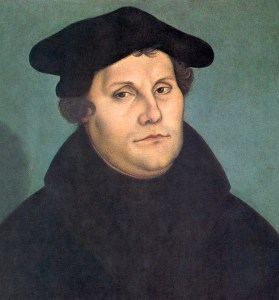
I have to admit to having not seen the Lego Movie. As a kid, I grew up without Legos. We were a family of modest means, so Lincoln Logs were more our style. When I first came to see Legos, they appeared restrictive to me with their pixel-like determination. Of course, Legos have come a long way since then. My wife sent me the story in Newsweek about the Martin Luther figure (not, I hear, featured in the movie) that surprised Playmobil, the parent company, by becoming their fastest selling figure ever. I suspect that the company put the figure out just a year before the five-century mark of the 95 theses that essentially created Protestantism, to catch a little of the interest that anniversaries always bring. Although I have no data to back me up, my guess is that the majority of sales have been to adults. Little Luther with his quill and German Bible, it seems, tickles adult minds more than pre-adolescent ones.

lossy-page1-558px-Martin_Luther_by_Cranach-restoration

This startling statistic ought to give pause to those who claim religion is irrelevant. Remember, Star Wars and Batman figures have also been available and collectable in Lego format. Even so, a German monk has outsold them all. This, it seems to me, indicates both an appreciation of irony and a very deep-seated need for finding meaning in life. After all, Star Wars is more than escapism. Lutherans are, by no measure, the largest Christian denomination. There is something, however, about Luther. Sure, those in the early modern period who had problems with the church were legion. Martin Luther did something about it. He took his life in his hands to address the wrongs he saw. Like most religious founders, he wasn’t advocating for a new religion, but a reformed one. The rest, as they say, is history.

The media tells us again and again that we are a secular people and that the church no longer moves us. Stagnating attendance figures and more vocal unbelief have become so common that many people feel a little embarrassed to admit that they believe something, anything. But do actions not speak more loudly than words? 34,000 Martin Luthers sold in 72 hours. Perhaps not Rock Star numbers, but very respectable for a bit of plastic. I wonder if this might not be a sign. Perhaps, with Luther, we ought to take the time to sit down and write out what we believe. Maybe our Wittenberg door should be that of Congress rather than a castle church. Or maybe it can be the door of our own minds. Luther, dead nearly half a millennium now, has shown us what a leader with vision can accomplish despite the centuries. And with a bit of plastic.


The Problem with Love

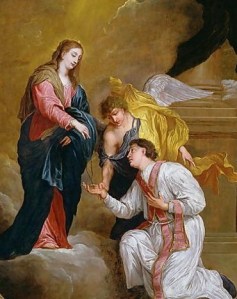
As far as we can tell, historically there is no Saint Valentine that is particularly connected to February 14. Even if there were, it is difficult to imagine a saint promoting what we know as love. Love is a slippery topic. The ancient Greeks (who did not marry for love) were so perplexed that they came up with three different words for it, and the nascent Christian community tended to prefer agape-type love. Love that expresses well-being for the community and has little to do with the physical attraction that people everywhere find so compelling. It is safe to say that Christianity has always been uncomfortable with the kind of love that Valentines Day celebrates. The holiday, because of its associations, has often been removed from the liturgical calendar a time or two. People are already prone to express their biological urges, so it is best not to give them an excuse, sanctioned by the church.

This is an odd situation, thinking love is wrong, or at best, tolerated. As far as we can tell, the earliest Christians had no particular concerns in this way. We can’t measure, of course, how people loved their spouses, but there was nothing inherent in the new religion to suggest physical attraction was bad. By the time Paul of Tarsus started writing his letters a couple of decades after Jesus’ life, at the earliest, some doubts had crept in. They seem to have been largely personal. We know little of Paul’s life, but we are aware that he saw the kind of love known as eros to be a problem. Concession had to be made to those who couldn’t control themselves, but otherwise, in good stoic fashion, love was to be ignored. By the time of Augustine of Hippo, some three centuries later, sex passed on original sin and love had become decidedly dark.

St-Valentine-Kneeling-In-Supplication

Attitudes change with time, of course. After two millennia a certain practicality sets in. We have moved through the troubadours and courtly love to psychology and deep human needs. Arranged marriages are, for the most part, considered like shackles from the past. And love, that feeling that we never completely outgrow, is believed to be a positive thing. Saint Valentine (and there were at least two of them) would likely have disagreed. While the Romans celebrated sexuality, they also believed in restraint most of the time. Valentines Day, however, still has something to teach us. Despite the commercialization of the holiday, in a world with a surplus of hatred, any kind of love is, as long as it’s mutual, is worth celebrating.


Grim Where?

An inordinate amount of my childhood time was spent on television. While the device of the day had been around for a decade already, I was among those who grew up learning that watching was easier than reading. Like most children, I took the path of least resistance. I watched. As a teen, however, I rediscovered reading and from that time television began to take a back seat to books. When the great switch-over to digital occurred we didn’t get a conversion box, and we could never really afford cable for as little TV as we watch. When a program gets commended, or if nostalgia takes too great a toll, we can always purchase programs—the price of watching television without the commercials. So it was that I began watching Sleepy Hollow. Very quickly in the first season the monster of the week trope was established as the plot grew more and more tangled. The Bible was so prominent in that season that I wrote an academic paper on it.

Sleepy_Hollow_-_Title_Card

Over the past few months my wife and I have been working through season two. The DVD version was delayed and we only watch on weekends. Recently we finished the eighteen episodes of the second installment. Clearly the budget had improved over the first season, but the Bible, it was also clear, had diminished. Throughout the first season the driving motif of the story was that biblical “prophecy” (from the book of Revelation) was unfolding in Sleepy Hollow. This is what one scholar has termed a “local apocalypse.” Throughout season two, however, the end of days is shut down. Molech, its architect, is killed. The headless horseman is less Death than a jilted lover. The second horseman, War, loses his armor and dies.

Magic, however, along with special effects, take on an increased roles. Instead of turning to the Bible to solve problems, the most helpful book to have on hand is a grimoire. Sleepy Hollow, which is anything but what its name suggests, is full of monsters. Powerful magic is required to contain them, and, it seems, the Bible is no longer needed as a tool to take down evil. Perhaps there is a parable at work here. I was drawn into the series by its biblical literacy, as well as its literacy in general. More action has been introduced, and fewer books. It’s a pattern I’ve seen before. I suspect I’ll watch season three presently. When I do I’ll be casting a wistful eye on the stack of books I have yet to read, and I’ll be wondering if reading may not have become easier than watching.


Steel Pennies

409px-CasablancaPoster-Gold

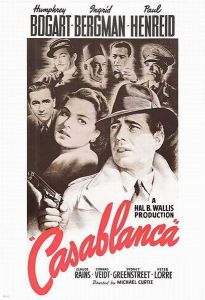
I remember seeing my first steel penny. At first I didn’t think it was real. Like many poor kids, I was a collector. I collected anything cheap: cancelled stamps, bottle tops from glass pop bottles, fossils, just to name a few free trinkets. And I’d started coin collecting, with pennies. I’d noticed the difference between wheat backs and Lincoln Memorial pennies, and I knew that the former might be worth something some day. There was a hobby store in town and by thumbing through the collectors’ books, before being shooed out, I’d learned that keeping an eye out for wheaties was a kind of investment. Just hold onto it long enough, and it’ll grow in value. I never saw a 1943 penny, though, until a fellow collector traded me one. During the war, he explained, copper was too valuable to use for pennies. Wartime, it turns out, changes lots of things. About the same time as these steel pennies were being minted, Casablanca was still showing in theaters.

As I sat down to watch Casablanca again last night, some new thoughts occurred to me. A wary eye can spot the cost-cutting measures of a wartime movie. Somethings never change. Nazis were bad guys, obviously, but we still didn’t know who’d win the war by then. And refugees flooded to Casablanca to try to escape Europe for America. The movie makes quite a lot of this endless waiting. It’s hot in the desert. People are waiting to go somewhere better. And there are elements of torture there as corrupt officials cooperate with Nazis, even though this is Free France. It occurred to me that this is an allegory of Purgatory. I’m pretty sure it’s not intentional, but here are lost souls waiting for deliverance. The plane to Lisbon is the soul’s escape to Heaven. Meanwhile the relentless waiting.

For a movie approaching 75 years old, Casablanca holds up remarkably well. The extras on our DVD tell us the plane in the final scenes is a cheap cutout just a few feet away on a sound stage. The mechanics attending it are little people to bring it into perspective. Tucked away in some box somewhere I’ve got a few steel pennies. These days coins change so frequently that I wonder just how stable this world really is. While the “Middle East” still has us as worried as ever, our money is, for all practical purposes, only virtual. Paychecks are mere electrons and I’m just a temporary repository between my employer and those who claim increasingly more of my pretend money. We seem to be caught between two worlds. In one nothing is really real at all. Rick’s Café Americain feels somehow very familiar, as we spend our time waiting for passage on a plane to Lisbon.


Gallows Hill

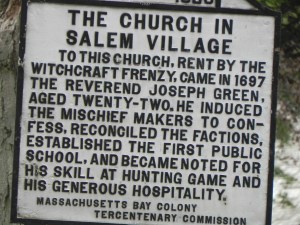
Over the past couple of weeks it has been in the news that the site of the “witch” hangings in Salem, Massachusetts has been identified. The actual site had long been suspected, and it was only recently confirmed by a group of historians using the empirical evidence available to historians. Although my interest in the Salem trials pre-dated my wife, nothing brings you so close to history as being a part of it. Descended from the brother of three of the women accused of being witches at Salem, my wife brings a sense of reality to the tragic accusations of three centuries ago. Although toyed about in the media (an episode of Sleepy Hollow, “Spellcaster,” in season two, featured an actual Salem witch) the fact is that nineteen innocent people were executed for a fanciful belief that the Devil was roaming about New England, and when you can’t catch the Devil, you have to use a scapegoat.

DSCN0518

One of those investigating the location of Gallows Hill was Benjamin Ray of the University of Virginia. I’m sure Professor Ray wouldn’t remember me, but one day as I was doing a campus visit for Routledge, I had taken AmTrak to Charlottesville to visit the religion department. Many of the faculty declined to see me, and as I sat on a bench in the hall (one of my academic dates had stood me up), Dr. Ray walked up to me and asked me if he could help. I explained who I was and he invited me to his office where we talked about Salem. I told him was wife was related to Rebecca Nurse, Mary Eastey and Sarah Cloyce, the two former, as he knew, executed for an imaginary crime, and the third accused. A strange quiet settled over the office. He told me his interest began because he too had descended from a Salem family. His ancestor, however, had been an accuser rather than a victim. It was a strange rapprochement. Opposite sides brought together in scholarship.

What truly frightens me about Salem is that we have not outgrown it. Presidential hopefuls spew the same fear and hatred toward Muslims, the hispanic immigrants who make our economy possible, and women (this should sound familiar) trying to “take the place of” men. And the crowds cheer, as crowds will do. Even though Donald Trump cussed twice in his Liberty University speech (an infraction for which a student would have to pay), President Jerry Falwell, Jr. (typing that makes me shudder) shrugged it off saying that we’re all sinners. Some sinners, however, carry a wicked, knotted rope with them while other sinners try to eke out a living in a nation where some can get rich by owning casinos while others frantically spend their inadequate cash hoping to win Powerball. We now know where innocent people accused of witchcraft died, but have we learned anything from it over these past three centuries?


What Do Sheep Know?

We trust those we see in the media. You see, those who have the longest reach can bring in the most advertising dollars and therefore must have a wisdom the rest of us lack. The cult of celebrity is perhaps the truest cult of all. Don’t get me wrong, I like reading books by bestselling authors once in a while, and I like movies by talented directors and writers. The problem with the cult of celebrity that it often confuses fame with knowledge. If someone knows how to get you to pull your wallet out, they must know about all kinds of things, right? It stands to reason. A recent article in The Guardian features an interview with Ridley Scott. Forever in my mind typecast as the director of Blade Runner and Alien, I think of Scott as one who understands science fiction. He, of course, gave us a version of Exodus that many didn’t buy, and now that The Martian has been gaining attention, people are once again wondering what they might learn from the director.

Blade_Runner_poster

Ironically, like the recently late David Bowie, Scott considers himself an agnostic. As the Guardian article says, that doesn’t stop him from having a lot to say about God. Catherine Shoard notes that religious questioning runs throughout Scott’s movies. The big issues, it seems, still matter. People will crowd to his movies and perhaps not even know that they were facing the questions that motivate people like Scott. Taking up such questions in the hopes of making a career out of it all is still not a wise choice, but if you can put it in fiction without people knowing it, you might become famous.

I’ve always been of the opinion that everyone is an expert when it comes to religion. Believer or not, everyone knows what to believe and is pretty certain about it. The people I find most fascinating in this mix are those who dare to question. While many doctrinaire religions call questioners “doubters” and suggest curiosity is some kind of sin, there are both religious and non who face the world with questions rather than answers. To me, this seems a more honest approach to things. The funny thing about this appreciation is that it is seldom reciprocal. Of course, people might be interested if I’d directed a block-buster movie or if I were a star. Until that happens, I’m an expert just like everybody else.


Not Your Father’s Demon

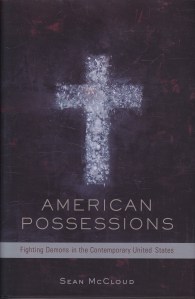
AmericanPossRegan MacNeil is a name that can still send shudders up and down stout spines. Despite advances in CGI and special effects, The Exorcist is consistently rated among the scariest movies of all time. Demon possession, clearly, is a very troubling thing. American Possessions, by Sean McCloud, is not a place to go to find Catholic priests expelling the forces of darkness. Subtitled Fighting Demons in the Contemporary United States, the book, one might suspect, is saying more than it seems to be letting on. This is a book about Third Wave evangelicalism and its demon-fighting manuals. Although the term “Third Wave” may be unfamiliar, the next time you go to a Tea Party you’ll know you’re among them. These born again uber-capitalists believe in a literal demonic world. In fact, demons are so common that Jesus would’ve had a hard time keeping up with their exponential economic growth. These demons are more frightening than those that possessed Regan. The are more akin to a different Reagan.

Especially popular among Pentecostals (the fastest growing form of Christianity) this modern day belief in demons sees them in places Jesus didn’t think to look. Family curses (at places ruled out in the Bible, but still, apparently, possible), addiction, depression, sexual urges—these are all demonic. And once these modern demons are cast out, unlike that of Regan, they can come back. And if they don’t possess you they will oppress you. And they can live in your material goods, your house, and even the land it is built upon. They are everywhere, and they have to be fought against constantly. They also, apparently, vote Republican.

This view of the world, strange as it is to many people with a basic education in science, motivates a large sector of the United States population. Expelling these demons requires a specific view of Christianity—a view that absolutely excludes Catholics. And it is a view that promotes free market economics, blaming the victims of poverty for allowing themselves to be oppressed by demons. Many aspects to this belief system will strike the reader as completely unbelievable, all the more for being so seriously believed. At the same time, we are told, we should pay no attention to religion, at least as educated people. The problem with this is that these true believers vote. And the kingdom they would have come on earth is, in a way they would certainly deny, possessed.


Hamilton

Religion and politics. It’s difficult to get over the wisdom instilled in your earliest years, and I was one of those who learned that religion and politics always cause potential friction in polite conversation. They are both, however, very important to people and knowing how to communicate about them irenically is a sign of maturity. While I can’t afford Broadway shows, I have read reports about the brilliance of a couple shows that feature—what else?—religion and politics. “Book of Mormon” has continued to be a success in the theater district, and, starting this summer, “Hamilton” joined the ranks of most popular Broadway shows. A hip-hop-inspired version of the story of Alexander Hamilton, the show offers history to audiences traditionally just out for a good time. I haven’t seen the show, but on a recent long car ride, I listened to the soundtrack and I have to admit that I haven’t stopped thinking about it since. Part of the reason is the sadness of the story—the dual between Aaron Burr and Alexander Hamilton ended up with one of the “forgotten founding fathers” dead, and another cast forever as a criminal.

IMG_2652

Although my interest in history has defined my career (such as it is), I don’t pretend to know much about the revolutionary period. One of the reasons is that I’m more than a bit ashamed by the treatment of American Indians by the colonials. It is hard to celebrate when you feel like a criminal yourself. Another reason has been that ancient history has always captivated me, and events two-to-two-and-a-half centuries ago feel too recent. Nevertheless, I find myself in New Jersey where much of the Revolution played out: Washington crossing the Delaware, the Battle of Princeton, the Battle of Monmouth, and many other famous episodes. The British of that time enjoyed the power of empire—keeping others down so that the privileged might see themselves entitled. In the musical, King George has a role, in my mind, similar to Pontus Pilate in Jesus Christ Superstar.

I can’t help but think that what Lin-Manuel Miranda has offered in “Hamilton” is an extended kind of parable. The show is noted for its multi-ethnic cast in a story that was almost entirely, historically speaking, one of white privilege. Who can hear the songs swirling around the shooting of Hamilton and not think of the equally insane shooting of young African Americans who, like Hamilton, have no intention of causing harm? There are writers and poets and lovers who still try to find their place in a country that bathes the uber-rich with adoration and tax breaks and far too much power. “Hamilton” may, if people actually pay attention, turn out to be revolutionary. Politics and religion share that feature in common.


Head of STEAM

The market producing doctorates in the humanities is showing no signs of slowing down. The fact is we’re all human, and many of us aren’t very technically inclined, unless we have to be. There are fewer and fewer jobs for these bright students who graduate with doctorates in the humanities, but the plight of the “privileged” is no concern to wider society. Let the eggheads figure it out. At the same time, wisdom in the job market is that careers in Science, Technology, Engineering, and Math (STEM subjects) are growing and showing the most promise for future careers. The pace of technological change is so rapid that yes, obsolescence for new devices is six months or less. My iPhone 4 is a dinosaur, although when I first held it some three years ago it was so advanced that I was afraid of it. A moment’s reflection will reveal that the most advanced technology is already in use in the military since staying ahead of the enemy is always the bottom line.

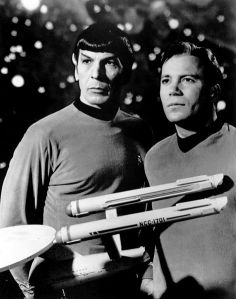
This situation has led to some concern, and not just among those of us in the humanities. Some in the world of STEM are saying that quality of life suffers. To indulge a stereotype, try to imagine geeks without Star Trek. We know that Star Trek was as much fantasy as science fiction. My iPhone makes a communicator look just plain silly. Star Trek is, however, creative indulgence. While many would hesitate to raise it to the status of “art” it is part of the Arts: fine arts, literature, film, music, and some television. The stories it tells are the stories of human beings (and one alien) struggling against often more advanced civilizations. In the end, humanity always wins. If we exit the stereotype, scientists are often musicians and writers as well. Some become novelists or consultants on box-office busters. We are more than meat machines.

Recently voices have been heard suggesting that STEM should be STEAM. The Arts have an integral role to play in the scientific and technological fields. Even some numbers are imaginary. The basis for developing imagination is the Arts. Although we could have made it to this point in our development without Star Trek, the fact is that many of us growing up with it, as well as the more silly, but also influential Lost in Space, and what we now know is a most assured cash cow, Star Wars, know that these shows helped shaped the present we inhabit. Arts give us visions. There continue to be those who castigate the Arts as “soft” and “weak” and tangential to the cold hard facts. But they are wrong. Humans can’t survive without a source of warmth and energy. And the first great engines of advancing civilization still have much to teach us, for those engines ran on steam.


Creating English

From Wikimedia Commons

From Wikimedia Commons

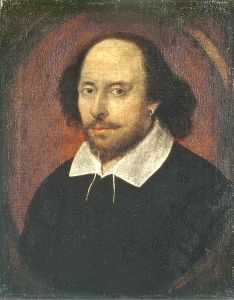
The seventeenth century was a portentous time for the English language. Well, I suppose every day is portentous in some way, but in the year 1611 the King James translation of the Bible was published, and it still has considerable staying power in the English-speaking world. Quotes from it show up regularly among the modern media with many readers (and likely a few writers) having no idea of the origins of the phrases they use. Just five years after the King James Version made its debut, William Shakespeare died. Many languages can point to formative individuals or literatures that codified their forms of expression. In English the honor is shared by the forty-seven translators of the KJV and William Shakespeare. This four-hundredth anniversary of Shakespeare’s death is set to be a year of celebration among Anglophiles worldwide. We will gladly acknowledge that the words we write and speak owe much to the Bard and his lasting influence that still has high school students griping all the way through English class their senior year. I have read a Shakespeare play or two that I was never assigned in school, as many come to do. This year, among my reading goals, is at least one more of the works I’ve never read.

As with the text of the Bible, there is doubt about some of Shakespeare’s plays. Scholars scrutinize. (That’s what we’re supposed to do.) And scrutiny raises doubts. The seventeenth century was a time of generally acknowledged authorship. Some great English epics, such as Beowulf, have no author we can cite by name. Over time, however, quality came to be associated with the person who produced the literature. Even today a name often sells a book far more readily than the contents do. Some of Shakespeare’s plays may not go back to William himself, but the English language wouldn’t be the same without them, in any case. We are heirs to this legacy. Spelling began to be standardized. Grammatical expressions were codified. Classic stories predating Shakespeare became endlessly replicated and copied by those who know there’s no replacing an original.

A story on NPR notes that the First Folio—the first bound copy of all of Shakespeare’s plays—is being sent around the country this year by the Folger Shakespeare Library. Each state will host the first edition during the course of the year. The article by Susan Stamberg notes that this folio is the literary equivalent of the Holy Grail. Shakespeare is nearly as canonical as the biblical canon itself. Even if the Bard’s authorship is in doubt, it is still holy writ. Those of us who’ve spent considerable time with religious texts recognize the hagiography readily. No, these aren’t signed editions. Some of the work may have been done by someone else. Nevertheless, four centuries ago, through a combination of Bible and what we would today call “fiction,” the English language as we know it, was itself becoming canonical.


Defying Labels

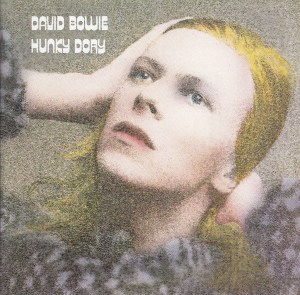
I don’t know much about the music industry, but I do know that as in publishing, labels make a difference. Who doesn’t conjure up a certain sound when they see Motown? Companies jealously sign artists to their label, with a close eye on the bottom line. Labels. Branding. Marking our territory. People like to give things labels to make them easier to understand. By now it’s no longer news that David Bowie has died. The tributes are coming thick and fast, and one recurring theme seems to be that nobody really knew how to label him. Bowie was an original, a creator. Like many truly creative people, he was seldom at the top of the charts, but his fan-base grew over decades and those who listened to him knew that he defied labels. Labels are for convenience, and life is, well, not convenient.

There’s been speculation about his final album, Blackstar, released an iconic two days before his death. The song “Lazarus” has flagged the attention of many, but here we are after the third day and he hasn’t come back. I think of my childhood and tween years in the 1970s, seeing Bowie’s album covers in my brother’s room and wondering if he was a man or woman. His transgressions frightened the young conservative that I was, accepting the label given to me by those who thought they knew me. I heard his songs coming through the open door. I couldn’t understand them, but somehow they remained with me until I was mature enough to learn to listen. Some sounds are too subtle to hear, except with experience. Here was a man telling the world “don’t label me.” And yet label we did.

“Lazarus” is a haunting song. I may be no music critic, but here is a piece by a man who knows he’s dying. The video shows him emerging from a tomb-like wardrobe (in itself significant) and simultaneously lying on his deathbed. He’s in Heaven, but in danger. Still, he knows he’s free. Like the biblical Lazarus from the Gospel of John, resurrection is only temporary. Lazarus has come back, but he must die again. As the frantic Bowie scribbles his final words on the final page, he backs up once again into the tomb from which he emerged. David Bowie may not have been a Bible scholar, but his song is prophetic. The three days have now gone past. He may not have come back, but it just may be that he never really left.

HunkyDory


Excuse Me, Mammon

An article in the New York Times back in December explored the use of God in adverting. The piece, by Michael McCarthy, suggests that religious viewers are not very forgiving of commercials using God, unless they are respectfully done. The occasional spot will score points for being funny, but overall the issue is whether the deity is treated well or not. I always find it interesting when the media seems surprised that people don’t like to have their religious beliefs belittled. When I was growing up it was common sense that you didn’t talk about religion or politics in polite company. Now, of course, both topics are open for constant debate in the media, and few ever treat religion as one that deserves respect. That’s odd since most people in the world claim to be be committed to their religious traditions. It’s almost as if someone personally isn’t religious they can’t understand why anyone else would be.

Amos5

Quite apart from that, I wonder about the larger question of the purposes of advertisements. Ads are intended, as we well know, to make money. They are a marketing ploy. We appreciate the extra effort for a funny commercial on nearly any topic. Religion may be an exception. And one might wonder, is there a natural objection to using a religion to earn money for a non-religious cause? Maybe mammon and religion simply don’t mix. It may be difficult to convince marketers, however, that there are issues that lie outside the purview of the purse.

This past week I found myself in the waiting room of a local clinic for a while. Such places always make me uncomfortable in the best of circumstances. I was waiting in a room where the commercials for all the things that could possibly go wrong with me edged my blood-pressure up a bit, I’m sure. It occurred to me, however, that medical ads have the same intention as religious ones, namely, getting more business. If you can’t be made aware that something is “wrong,” how can you know to ask your doctor for their product? Is there anything mammon can’t buy? Our physical health is up for bids, it seems. Why not throw in the spiritual as well? But that will have to wait; I’ve got to talk to a doctor about a new condition I’m just sure I’ve developed here. I’m sure money can fix it.