Playing God

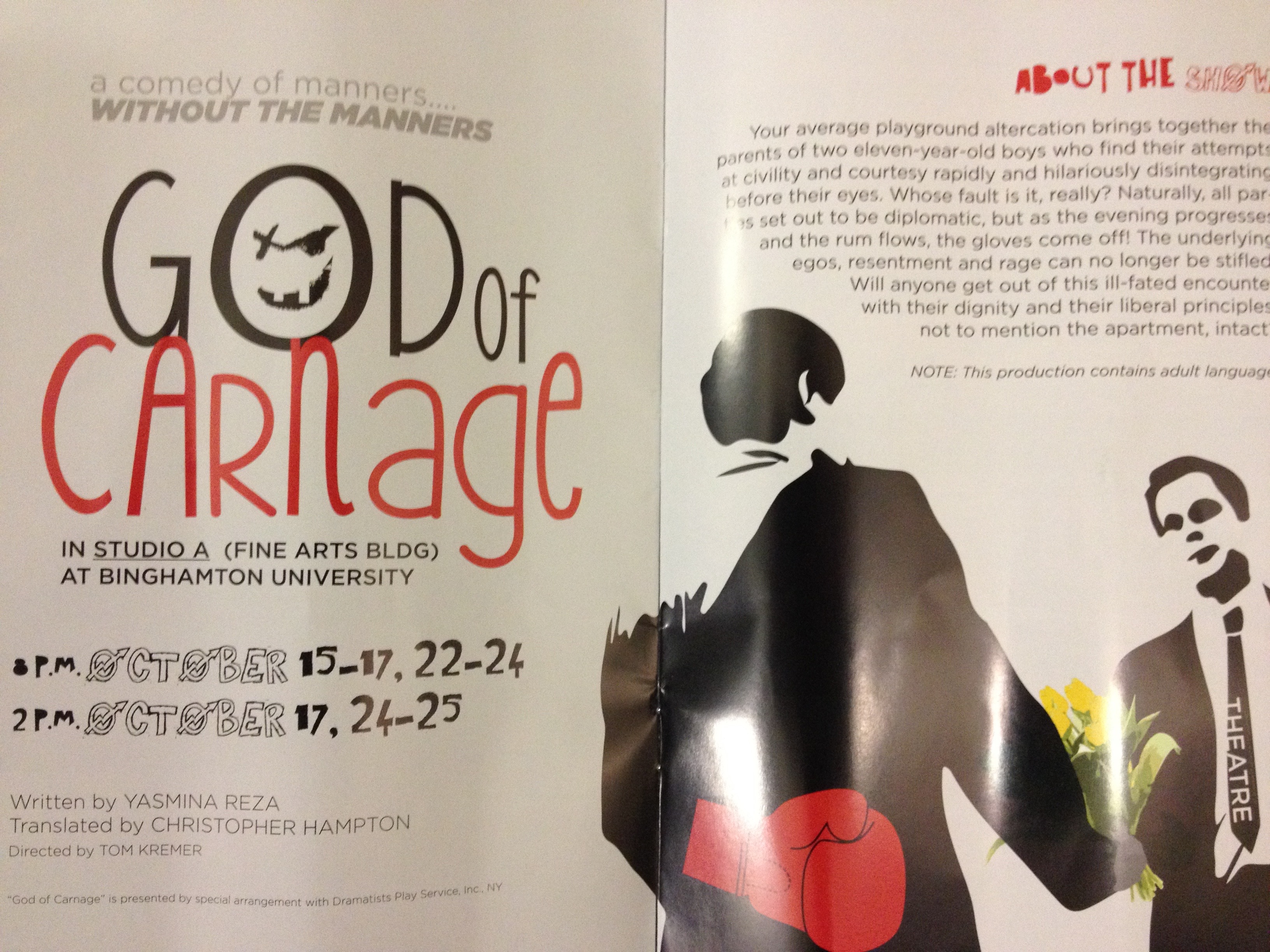
College is a rare time in life. Unlike any time after you find yourself with a diversity of intelligent and talented people open to possibilities that life tends to close shortly thereafter. At Parents Weekend at Binghamton University we took advantage of this wondrous juxtaposition to enjoy student talent. One of those offerings was the play “God of Carnage” by Yasmina Reza. It isn’t literally about God, but rather about two couples whose children had a playground fight. Parents try to solve the crisis, only to end up showing that they are really the ones who need to grow up. One of the vexed parents claims he believes in a God of carnage—that all people will seek their own good first and will eliminate those who get in the way. Perhaps might is right.
IMG_2587

The play is quite funny as the negativity grows and hidden assumptions come to the surface. There are no heroes here. In fact, any factor that might divide people does: gender, socio-economic status, race, sense of importance in the work one does. Each is turned into a weapon to make oneself appear more acceptable than others. Ironically, acceptance is just what’s missing here. Each of the four characters is alone and only finds company in teaming up with another to point out someone else’s foibles. As in most plays, the circumstances are exaggerated, and as in real life, peace is harder to attain than it should be. The god of carnage here is the individual desire to exceed at the expense of others.

The play reminded me, in a rather literal way of the verse stating that a child shall lead us. Not that children are entirely innocent, for they are people too. They can’t be held accountable in the same way adults are. We do our best, but our intentions seldom rise to our ideals. Our own needs and desires get in the way. In my experience of over half a century, most of us never really grow up. Selfish behaviors are magnified in a setting like New York City where so many agenda are crowded in together. If we believe in a god of carnage—that our own desires are more important than those of others—our differences will only emphasize that. Apart from high school and college performances, I have been to few plays in my life. Each time I attend one, however, I learn a bit more about how art reflects reality. And if we could only learn to consider others to be just as important as ourselves, the god of carnage would be the one who ends up unemployed.


Pagan Religion

TriumphMoonFraming. Much of what we call “religion” has to do with framing. At one time it was standard practice to assume “pagan” was distasteful, if not downright evil. “Witch” was a pejorative term intended to humiliate and excoriate. Ronald Hutton is one of the few scholars who has taken the time to consider Wicca and related religions seriously. The Triumph of the Moon: a History of Modern Pagan Witchcraft has been on my reading list for quite some time. It is a big book, but this is a complex subject that can’t be dealt with briefly. Taking the time to get to know witches, with a historian’s patience, Hutton has given the world a valuable, balanced resource. Without prejudice, he traces how paganism, Wicca, and witchcraft are religions difficult to define or even categorize. There is little to frame them.

Rumor and hearsay make poor substitutes for understanding a religion. Most of what I grew up learning about witches was, in short, completely wrong. I wonder how much more pleasant the world might be if people assumed religions all to be similar in many ways. They are varied attempts to find ways of being moral in a world that gives little clear instruction on the matter. Witches and pagans are only evil in the uninformed opinions of more powerfully established religions. Religions of empire, whether real or only imagined. Those that had political backing and brute force to anathematize those who were different. Theirs is still a stigma that persists.

The Triumph of the Moon recounts the development, since the early part of the last century, of a somewhat organized experiment of religion as it grows organically. Without a leading figure or spokesperson, radically egalitarian, these groups, while sometimes in conflict, coalesce around the practice of finding something magical in the world. Theirs is an educated, literate world that does not judge other religions. It isn’t perfect, but then what religion is? The belief structure isn’t so different than many established religions except in the matter of degree. It is private and secretive in a way that we could only wish in many religions, if they could be counted on to behave themselves. I’m not likely to do a sky-clad spiral dance any time soon, but I would say that if we took religions at their word for being what they say they are, we might have a lot more resembling that of the noble pagan.


Dakota Territory

A few weeks back I found myself on the upper west side of Manhattan. This is a fashionable district in which to live, but back when the Dakota was built, as pictures from that era demonstrate, this was an undeveloped area. The building stands alone against the sky, not surrounded, as it is today, by neighbors. I’ve noticed this in other parts of Manhattan as well. New buildings can grow in seemingly impossibly slim spaces between other structures. Sometimes I wonder how construction workers can get their hands back there to lay the bricks. The city is so overbuilt that it is difficult to get into the Halloween mood of October. Yes, stores, restaurants, and bars do decorate windows, but the enormity of the surroundings makes them seem miniscule. Although New York is a gothic city, it seems to swallow up holidays. Perhaps because of its greater commercial potential, Christmas is much more evident around town. Halloween, however, is a holiday best appreciated outdoors.

IMG_2524

While in the neighborhood, we stopped by to look at the Dakota. It was under scaffolding the prevented seeing the entirety of the building, but the famous entryway was unobstructed. I know that it was near here that John Lennon was murdered, and I know other famous people used to live here: Judy Garland, for example, and Leonard Bernstein. To me, however, the visual aspect of that entry always suggests Rosemary’s Baby. Even the doormen still wear the uniforms that they wore in the movie, only today they have to shoo away those who try to wander inside the gates to snap a selfie where the other half live. For me it was once again being in the presence of a place I’d felt I’d been before.

Rosemary’s Baby still stands out among the classic horror films as being particularly effective. The Satanism scare of the late sixties and early seventies has moderated, and we know now that witches are not people to be feared. Nevertheless, the eerie pacing of the film, and the sense of threat forever mark this location as one of caution. Seeing Terry Gionoffrio lying in a pool of blood where John Lennon would, in reality be twelve years later, is prophetic in the worse possible way. Still, the tourists stopped to have their pictures snapped at this infamous location. New York can be like a giant movie set at times. I quite often walk through staging areas for films on my way to work. It is a city where fantasy can be difficult to parse from reality from time to time. Even being in the upper west side, for someone like me, is, I know, pure fantasy.


Babylonian Boogle

220px-SinisterMoviePoster2012

I confess. I’ve fallen behind on my horror movies. My work schedule doesn’t allow for much down time, and on weekends when I spend time with family, well, horror films aren’t their favorites. So on a weekend afternoon when I was alone, I finally saw Sinister. I remembered seeing ads for it a few years back, but far enough back that I didn’t know what to expect. As I’ve often asserted on this blog, horror frequently draws its spookiest material from the deep well of religion, and Sinister once again emphasizes this point. With clear connections to The Shining and Ringu, Sinister does keep you in its web. Of course, ritualized murders are by their nature scary, since those who perpetrate them have taken leave of reason. I don’t read true crime because I have to sleep, and I’d rather not know what some psychopath has eating his brain as he plans his sacrifices. So it comes out in fiction.

The protagonist, crime-writer Ellison Oswalt, consults with a Professor Jonas, whose name those acquainted with the Bible can’t separate from Jonah, to find out about ritual crimes. Jonas informs Oswalt that the occult symbols found at a couple of the murder sites are unconventional. He eventually traces them to Bughuul, a Babylonian deity that eats children. The religious element couldn’t be clearer. Bughuul, who is a god fabricated for the movie, is effectively frightening in the film. But for the ritual element to the murders, the story might have passed as just another gruesome offering to audiences who want a little fright in their October. Religion makes it scarier.

The second appearance of Professor Jonas reveals that, like Ringu, watching the films that tell the story is dangerous. He delves into iconography. Icons, according to orthodox tradition, take part in the reality they represent. Bughuul knows that, and merely by watching the films, or looking at pictures (icons) you open a portal between his world and that of the viewer. By the time Oswalt learns this it is, of course, too late. Again, the element of terror is introduced through religious thought. Bughuul (Mr. Boogle) is a morbid iconographer. The reality of the evil is represented in the “artwork” itself. Once you’ve seen an image, you can’t unsee it. So it is that Sinister draws on religion to plumb the depths of fear. It is surprisingly effective, even on a sunny afternoon when I’ve had too much time alone.


Heaven Unawares

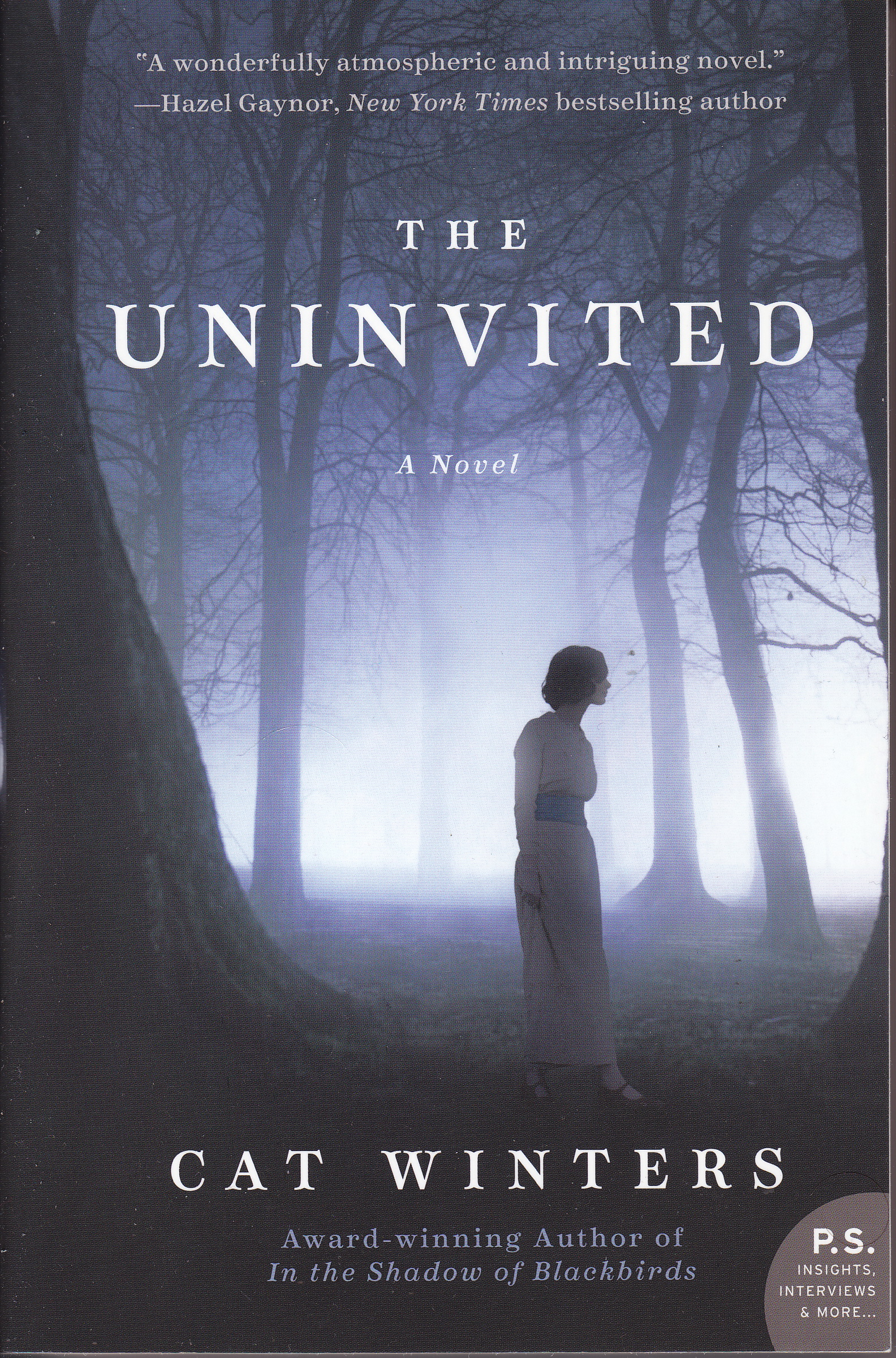
UninvitedIn order to have this book fit my blog, I’ll begin with a spoiler alert. If you plan to read Cat Winters’ The Uninvited, I will be giving away information below. Please believe me when I say it’s not intended to be persnickety by this preface, but I know what it’s like to enter a book knowing too much.

When autumn comes around I like to find a ghost story or two to read, to settle into what seems to be a primal urge connecting harvest with death. Sometimes the books I find are advertised in places like the Library Journal, or Publishers Weekly (which I see more like biannually). More often than not, however, they are books that I spy at a store. The Uninvited stared at me from a table. I picked it up, read the blurbs, and put it back. A week later I stopped in again and picked it up. It is a moody tale set during the First World War and the influenza epidemic. That was a time, I suspect, of great fear. And many ghosts. It’s easy to see why Winters chose such a time to set a tale. Still, the narrative is gentle and despite the places where the language sounds too modern, it is artfully told. Like most ghost stories it is a love story. Seriously folks, here come some spoilers!

The protagonist, Ivy, falls in love with Daniel, a German immigrant living in Buchanan, Illinois during the war. Germans have been under suspicion and lynchings have occurred. We come to learn, as in many ghost stories, that the protagonist and her lover were both victims—he of a lynching, she of the flu. He’s aware they’re dead, she’s not. The novel is one of Ivy’s growing self-realization that she’s deceased. While avoiding those who spy on Germans, she discovers the joys of an interracial, prohibition-free (being prior to prohibition, of course, but the idea was in the air) club where jazz is played all night long. She wants to bring her lover to the club, which is just across the street from his apartment, but he is German and feels he would not be welcome. The reader at this point doesn’t realize the two are dead. Once Ivy discovers the truth, she realizes that the club is actually Heaven. The reluctant ghosts, lost, stay away. She tries to convince them to come.

Heaven has been portrayed in many ways in literature. Although I find jazz very difficult to bear (it is like being inside a beehive without a bee suit, to me) the idea that Heaven is complete and utter acceptance of who we are is a compelling one. Religions are often all about change—how we must alter who we are to merit Heaven or Nirvana or whatever might await us at the end. Winters suggests that it is a place where people can be who they are and nobody will try to make you be any different than you were created. It is a comforting idea. It is my personal hope, however, that there might be a few different clubs in town and that some of them might be playing music other than jazz.


The State Demon

It’s the time of year for seeing things. I suppose that’s why there have been two supposed sightings of the Jersey Devil flying around the internet this past week. The credulous take these kinds of things for evidence, and the posters claim complete sincerity and who doesn’t want to believe? Still, the photos and videos fail to convince. It’s the time of year when we want to see monsters.

DSCN0128

While the origin story of the Jersey Devil is one of the main strikes against it for sheer impossibility: Mother Leeds, who had twelve children, finding herself pregnant with a thirteenth, wished that it would be born a devil. The cursed child, meeting motherly expectations, came out a devil, flew up the chimney, and has haunted southern New Jersey ever since. The folklore elements are thick in this tale: the thirteenth child, the exasperated mother, devils in the woods. This doesn’t, however, suggest much confidence in the literal truth of the story. This traditional tale circulated in the same region where legitimately strange things were seen, especially around the turn of the last century. Every now and again the devil reappears in a present-day venue. At one time the Jersey Devil was even the official state demon of New Jersey.

The ease of use of photo-altering software has taken us further and further from the truth. It is an impoverished world that has no mystery to it, but the easily hoaxed world of Photoshopped monsters will cast doubt on all contenders, I fear, forevermore. We can no longer trust the veracity of the lens. Our world has become an electronic illusion. The creature spotted in the Pine Barrens can be more readily believed without photographic proof. The sober, shaken witness who can’t explain what s/he saw one dark night is more believable than a goat with wings or a stuffed animal on a string. Our religious sensibilities urge us to believe in the impossible. Our cameras urge caution. After all, internet fame is often the only kind available to those whose videos and photos go viral. The devil, they say, is in the details.


Latter-Day Battlestars

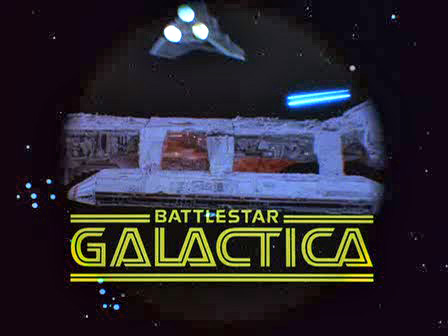
Science fiction, when I was a child, constituted my fantasy life. I read such science fiction books as were available to a kid in a small town with no actual bookstore, and I watched what I could on a television with three or four channels. Star Trek and Twilight Zone were staples. As I got to high school there were more offerings, and one that I remember particularly liking was Battlestar Galactica. I was disappointed when the show ran only a few months. Something about looking for a home, being a scrappy, rag-tag fleet fighting against the odds appealed to me. Although I grew away from sci-fi as I went to college and studied more “serious” subjects, I never completely abandoned it. So the other day when I had reason to use the word “cylon” in something I was writing, I decided to do a little reading about the original series. I never did watch the reboot, as I was far too busy for television by then.

Battlestar_Galactica_1978_-_intro

I was surprised to learn that the original 1978 series was an exploration of Mormon theology. The show’s creator, Glen A. Larson, was a member of the Church of Jesus Christ of Latter-Day Saints and, not surprisingly, used his fiction to promote his religious ideals. After all, Orson Scott Card, of Ender’s Game fame, is also a Mormon and elements of its theology come through in his work. As a child I didn’t watch television for religion, but rather as form of escape. I wouldn’t have guessed, however, that I was escaping to Mormon theology. The Church of Jesus Christ of Latter-Day Saints is a bit more shy about telling outsiders its theology than many Christian bodies are. Mainstream Christianity, after all, is one of the main ingredients in our cultural soup. Any Methodist will be happy to tell you Wesley’s theology, if they happen to know it.

I haven’t watched television for over two decades. Very select shows we’ll watch on DVD, being the old-fashioned sort, but I missed the reincarnation of Battlestar Galactica in 2004. I’ve always had a soft spot for the originals when it comes to sci fi. The original Star Trek, the original Star Wars, and even that sleepy and terribly dated Space 1999. I suppose as a working-class child looking for an escape these shows had a kind of religious message. Although my religion taught a conventional Heaven and Hell, I wondered what was out there beyond even that, since the tri-partite universe was basically earth-bound. And science fiction offered to lead me to other worlds where things might be better. On the Enterprise we might whizz past the Galactica and wave, even if it was piloted by Mormons in space. And L. Ron Hubbard was known to me only as a writer of science fiction rather than the creator of a new religion.


Nature of Religion

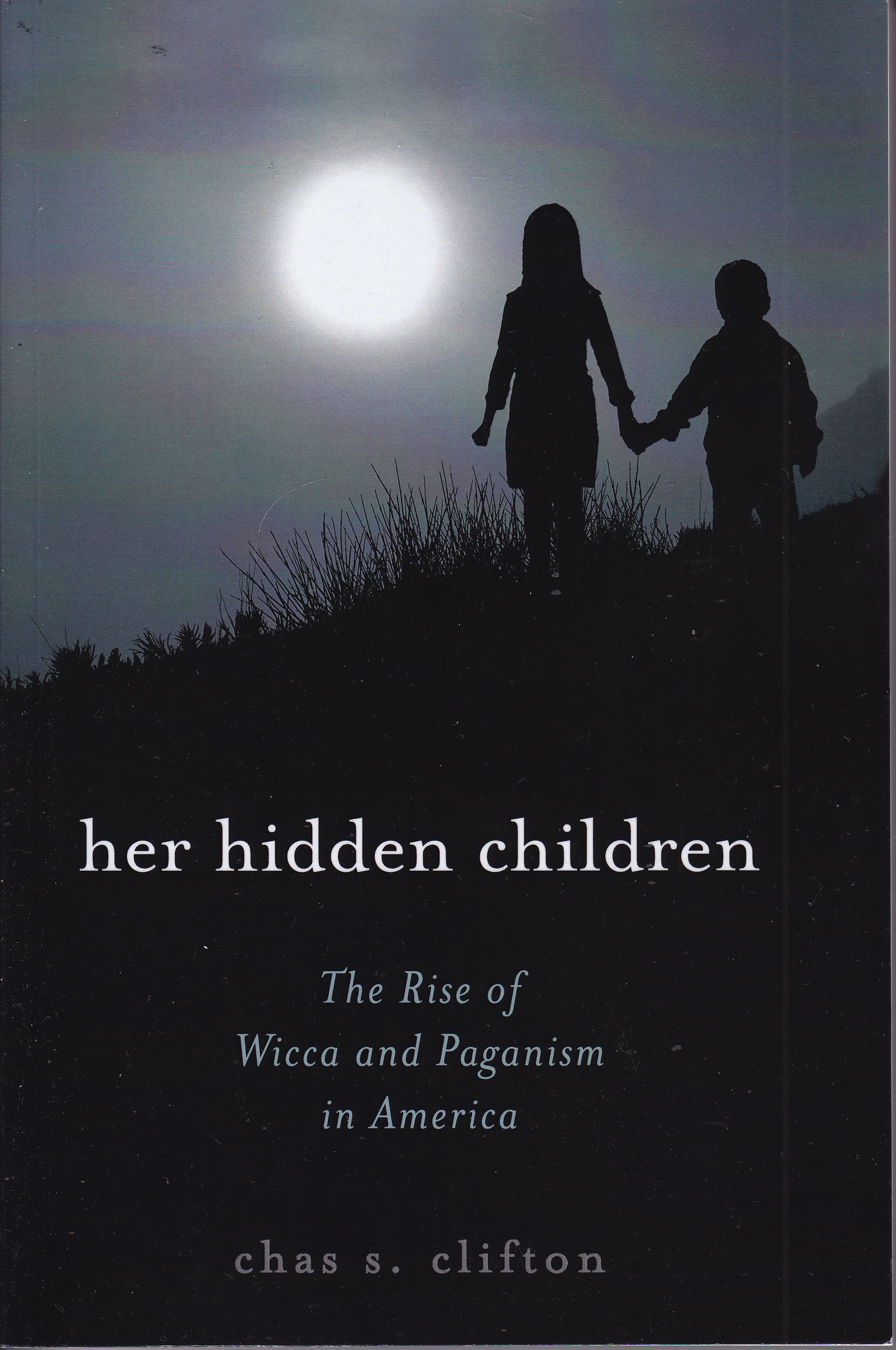
HerHiddenChAutumn is a moody time of year. Dolorous gray skies hang low one day, and the next a sky of such incredible blue stretches unbroken out into space itself. Nights are definitely longer now; I climb onto the bus in the dark in the morning and get off in the dark in the evening. And thinking about nature’s cycles leads me to thinking about nature religions. Wicca has often been presented as a nature religion, but it is somewhat more complex than that. Her Hidden Children: The Rise of Wicca and Paganism in America, by Chas S. Clifton provides a rare academic look at various pagan religions from the inside. Analysts of New Religious Movements have long classified religious witchcraft as a modern religion. Although Gerald Gardener made claims of being initiated into an ancient British coven when he began what was to become Wicca, it is recognized that this claim was unsubstantiated and that Gardener, in true prophetic form, was inventing a new religion.

I’ve read quite a bit about witches over the years, but I’ve always found contemporary paganism somewhat confusing. As Clifton points out, there are many branches of this relatively small religion, and there is no single leader or head of the movement. In fact, various groups, just like Christian groups, seem to splinter fairly easily. Many revival religions exist, also claiming the name pagan. You can join those who worship Egyptian gods or Norse deities. Or those who find nature itself divine. Pantheism, panetheism, or just plain paganism. Religions come in endless varieties. In a world committed to allowing individuals to follow their own religious conscience, there are bound to be varieties of religious experiences.

Clifton offers a brief history of these fairly recent groups. Paganism began to reassert itself only last century. There had been a social stigma with lying outside the territory claimed by church, synagogue or mosque. Many Americans only learned that religions such as Hinduism and Buddhism existed at the very end of the nineteenth century. What most people don’t realize even today is that a large, and increasingly expanding, variety of religious options exist for the seeker. Not all Wiccans see themselves as believers in a nature religion. Not all pagans call themselves Wiccans. Although Clifton makes no claims to an exhaustive tome, which would have to be far larger, he is a helpful guide through many of the groups that have existed over the past decades and some of which continue to this day. By learning about them we learn some basic truths about the very human urge to connect with something larger than ourselves.


Living Undead

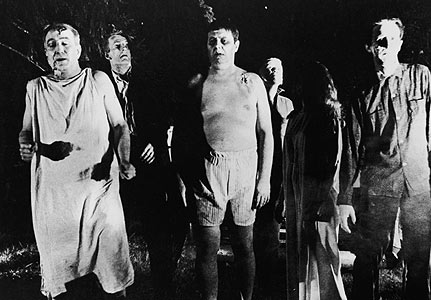
Now that autumn is in the air, my thoughts turn to zombies. I’ve read a few monster books lately, and as I pondered the attraction of zombies to the post-modern psyche, I began to wonder if they weren’t becoming, in their own secular way, a religion. Think about it. Zombies, first and foremost, are about resurrection. In a world ruled by rationality and science, we know that resurrection is impossible. What isn’t possible in science may indeed emerge in the world of monsters. The zombie, often not speaking, proclaims a distorted kind of gospel that the end is not really the end. Resurrection is not all that it seems. Zombies are spattered with gore, reminding us that the visceral existence we know as quotidian experience is temporary. Resurrection comes at the loss of a soul. The zombie is the monster of science: the animating principle is no longer spiritual. It’s just physical.

NightoftheLivingDead

Not only do zombies proclaim resurrection, they are the ultimate proselytizers. Their zealous hunger leads them to bite and their biting infects and creates new zombies. Their brainless goal—as they are unthinking consumers—is to convert the entire human world to their point of view. Once the zombies take over completely, there will be nowhere left to go. The way of the undead flesh may be a dead end, but rationality doesn’t always play a role in zealotry. The zombie is all about making more zombies. They are unbelievable, and unbelieving, but they have the making of a mega-religion nonetheless.

As a student of religion, I wonder how belief systems get started. We hold irrational beliefs on any number of things, including our religions. The difference that zombies make is, in real life, nil. And yet we can’t help tuning into the Walking Dead, or watching World War Z. The zombie is the most recognized symbol of the proletariate among the workers of the world—the brainless, soulless drone in the machine. Mega-churches draw in thousands every week for a religion that doesn’t require much intellectual engagement. Keep doing what you’re doing. Think of others once in a while. God really does want you to be rich. And the minions go out and make disciples of all nations. It is a world full of zombies. We see them in our dreams and in our mirrors. And although we think they’re only entertainment, they are oh so much more.


Ghost Rider

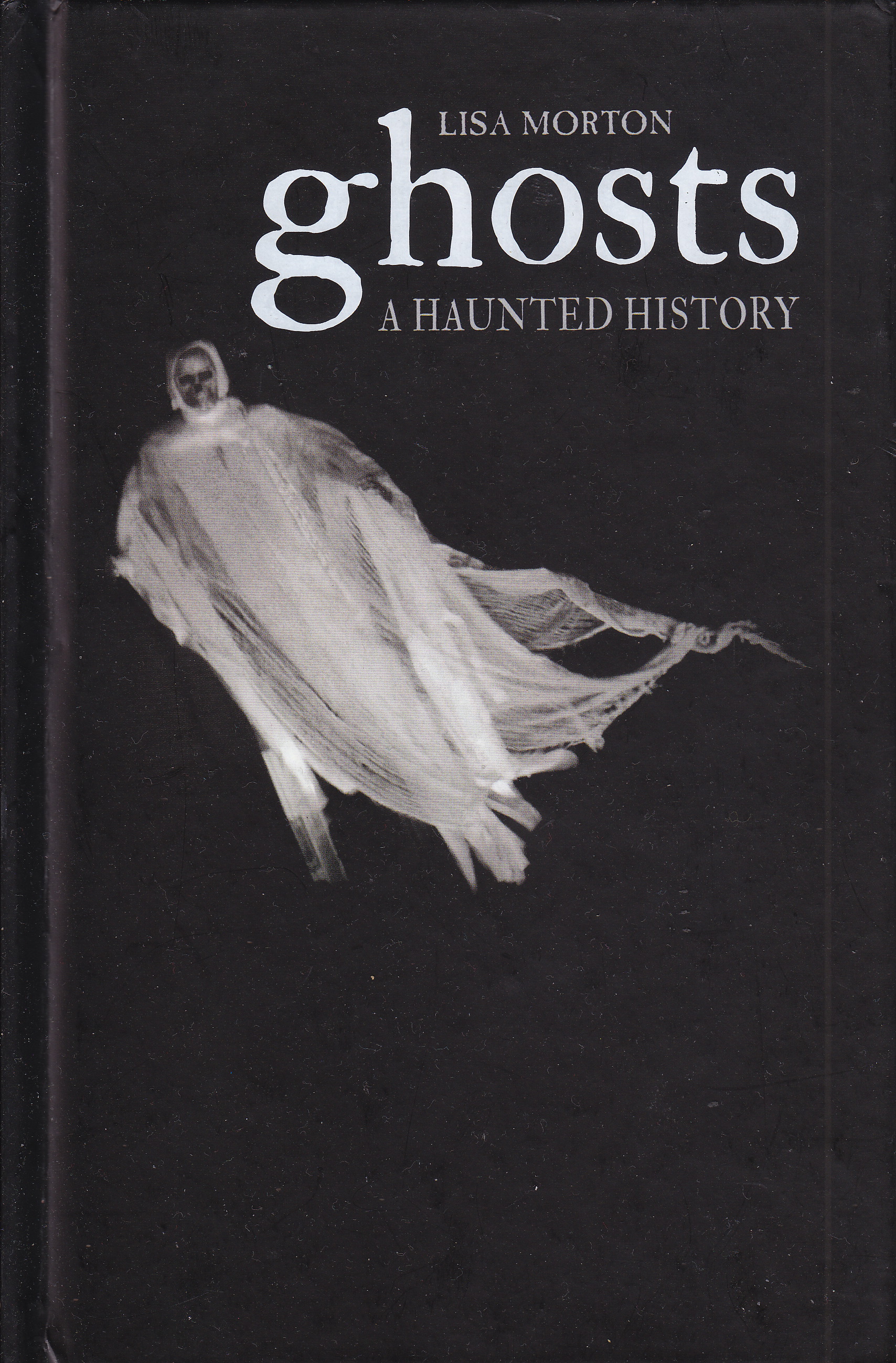
GhostsOf all frightening creatures, ghosts are by far the most ubiquitous. Believed in by every civilization ever recorded and throughout the world, not even science has been able to displace them. Lisa Morton’s Ghosts: A Haunted History offers a brief tour through the realm of the dead. With a sense of how ancient the phenomenon is, she also notes time and again how religions have an uneasy but steady relationship with disembodied spirits. After all, religions give us souls that science strives to take away. What makes Morton’s study so interesting is its restlessness. Not focusing on one culture or time period, the reader learns about Asian ghosts as well as the familiar translucent variety favored in the western world. Ghosts are everywhere.

Now that October has invited thoughts of long nights and falling leaves, I often ponder a world without ghosts. If rationalism of the materialistic variety had its way, this would be simply a natural season like any other. No need to be frightened as the sun takes on that quality that suggests some things should not be seen, and the air feels as if anything might happen. Spooky houses are merely wanting maintenance and every creak and rustle can be explained. There are no ghosts in the night and Halloween is only for children. It seems to me, rather, to be the season of belief. It’s more tangible now, the world where unanswered questions dwell. Ghosts, whether in our mind or in this physical world, are part of the ambiance without which autumn isn’t worth having.

Are ghosts real? I can’t say that I have any evidence one way or the other. We all die, and we all wish we didn’t have to. In this world some are lucky enough to make their wishes come true. Might it be that some have found a way to stay when the physical party is over? Religions are uncomfortable with ghosts since they refuse to be contained in any Heaven, Hell, or Purgatory. They simply are. People of every education level and social standing see them and some believe while others explain them away. Without going over to the other side we likely will never be able to prove whether they are really real or not. As Morton amply demonstrates in her thoughtful little book, they will never go away as long as consciousness and death coexist.


Secular Family Values

Fear of social disruption runs deep. Things may not be perfect, but people would rather keep things the way they’re used to them being rather than to face radical change. This is natural enough. During the dark days of the Cold War, when nuclear annihilation constantly hung over our heads, atheism was a mark of the Soviet threat. “Godless communism.” Intellectually, however, a kind of atheism was already part of American society as well, although few people talked of it. With our national history of encouraging Bible reading and prayer in public schools, our self-presentation was of the faithful. Those who hold to “old time religion.” In fact, many had moved on, but those of us growing up in small towns or rural settings had no way of knowing that. Life before the internet was primitive in that way.

A recent Op-Ed in the Los Angeles Times asks “How secular family values stack up.” In this age of Nones many are worried that the social fabric has already begun to unweave and that our ethical clothes have become threadbare and see-through. The statistics, however, don’t really bear that up. Written by Phil Zuckerman, it is no surprise that the piece takes a positive view of a faith-free value system. The fact is, the social disruption that has been widely hyped, especially by Neo-Con pundits, has simply not occurred because of secularism. As Zuckerman points out, the largely secular European society has handled ethical situations admirably well. Even in the United States, non-believers in jail populations are an astonishingly small demographic, and divorce rates run lower than those who report being more religious. Those who don’t believe tend to be more empathetic and to have closer family ties than many religious families do.

Tolerance of those with different outlooks is important. In a nation that was at one time considered a melting pot, such difference of opinion is only to be expected. In practical terms, people in the United States knew nothing of Buddhism or Hinduism until late in the nineteenth century. Other religions were simply outside of the experience of most. And those who lived in different religious traditions were also moral. Biologists who study the development of moral sentiments find that apes, certainly not religious by any standard, are often inclined toward positive social values (although clearly not always so—there are dangers in extremism). It is time that we overcame our distrust of those who, for whatever reason, cannot believe. Being human is sufficiently religious to make us concerned about our fellow person. It is only the drive and insatiable hunger, ironically, of godly capitalism that leads to unfeeling disregard of human need.

FullSizeRender-2


Apostolic Succession

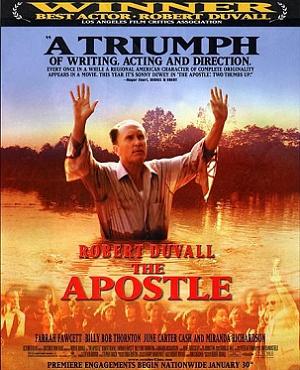
I try, normally, to limit blog posts to one per movie (per viewing), but I’m still thinking about The Apostle, so I thought I’d share a bit more. I can’t get that scene of “tag team” preaching out of my head. The extras on the DVD reveal that the preachers, other than Robert Duvall, were actual ministers. When Duvall comes on the stage, acting, these other men “catch on fire,” preaching to the small congregation gathered under the tent. They’re not acting. This juxtaposition of someone acting as a preacher sharing an actual revival with those who are actually preaching makes me wonder if there was any dissonance felt. Did anyone feel any compunction about really preaching after getting riled up by someone who was only pretending? Where is the line between fiction and fact here? Film and reality blend.

Apostleposter

The same kind of question occurred to me after watching The Witness. I’m not a Hollywood expert, but the rumors that circulated then (and I was in college at the time) were that some of the actors were actually Amish. They too, lived their actual faith while in the presence of actors, cameras, and a director. These films that use non-actors certainly score points for verisimilitude. Rev. Charles Johnson, for example, is really “in the spirit.” The scene of him, “coming down from the spirit,” Duvall reveals in the Making of segment, is real. This man, at least, had a spiritual experience in a fictional piece. The same, Duvall suggests, may apply to Sam in the final altar call. This was, he avers, real emotion, not acting. Does being saved in fiction count in real life?

Movies sometimes leave me wondering what is real. I suppose that’s part of the draw. Religious experience, like sex, is generally faked on film. Things that are sacred are felt to be off limits to the eyes of strangers with only voyeuristic interests. I’ve lived long enough to see photographs go from proof positive to Photoshop fantasy. We can’t believe what we see any more. How are we to comprehend films that portray religious experience? Did Robert Duvall actually save any sinners from Hell? Does it make a difference if an ersatz minister is the one who leads you there? What of a real minister who fails to convert the viewing audience? Films are not simple escapism, I know. And as I continue to wonder about saints and apostles, I’m going to have to try to understand what can be caught on celluloid and what can’t.


Forbidden Love

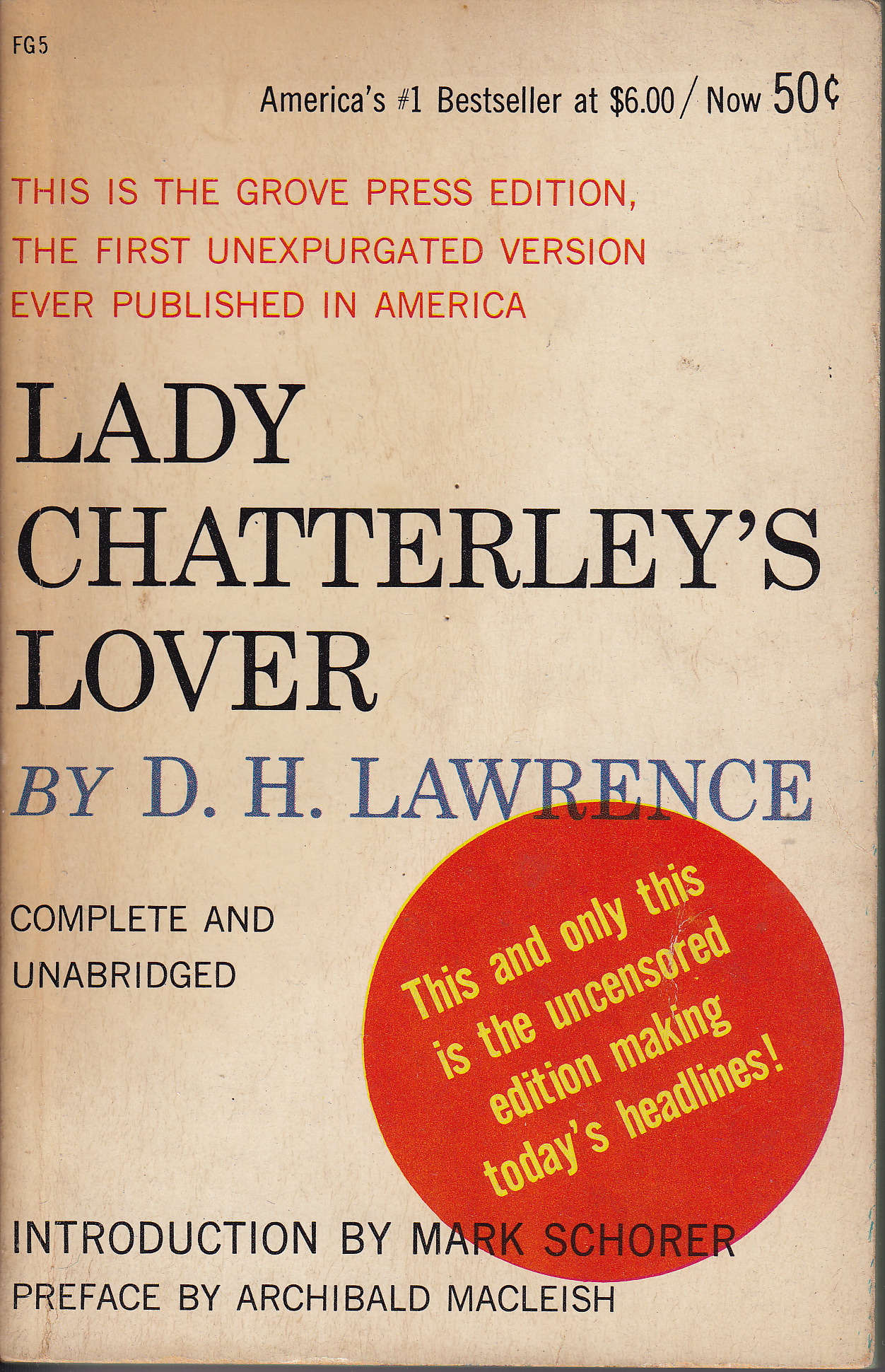
LadyChatterleyBanned Book Week is upon us. In that time of year when we begin to think of spooky, scary things, the prohibition of literature naturally comes to mind. Every year I try to read a banned or challenged book for the occasion. This year I went to perhaps the jugular vein of banned books, Lady Chatterley’s Lover, by D. H. Lawrence. Now, I’m not a romance reader, but I was curious about this sexually explicit novel that had been banned to the point of being outlawed and was now considered a classic. Lawrence’s last novel, it tells the tale of a woman escaping a loveless marriage with the help of lover below her social class. The steamy bits are tame by today’s standards, but Lawrence does use several words that are still rarely heard in the media due to their offensiveness. From my perspective the story was a bit too drawn out, and the fawning wasfs a bit over the top. What struck me even more, however, was the fact that this novel was largely about social justice. Not that Lawrence was an activist, but his concern for the poor and discarded of the industrial revolution is quite clear throughout the novel. The privileged having affairs within their class is acceptable. The scandal is that a titled lady falls for a common gamekeeper.

I haven’t read Fifty Shades of Grey, a franchise that has made even romance writers jealous. From the criticisms I hear, however, the concern is less the sex than it is the lack of literary value. I’m sure Fifty Shades of Grey is a banned book in some location. Still, the deeper concern for humanity that runs through Lady Chatterley’s Lover is part of its appeal. Several times I put the book down thinking, “this isn’t just surface stuff.” It is, baldly put, the search for redemption. Sir Clifford is an invalid who wants to control others. In an era when men laid claim to control of women’s sexuality this was no small demand. He also sees his coal miners as pieces in a larger game that is, it turns out, only to his own benefit.

Although the book ends with the lovers parted, and hoping for reunion, Lawrence’s final words turn toward economic oppression. Mellors (the gamekeeper) writes, “If you could only tell them that living and spending isn’t the same thing!… If only they were educated to live instead of earn and spend…” He defines Mammon as “wanting money and hating life.” No doubt, the book was a vehicle for Lawrence’s desire to see writing about sex to be part of literature and not pornography. Still, there is something deeper here. The story is more than carnality, although carnality is what brought it to fame. It is a banned book that proclaims liberty that, despite the license of contemporary society, is not really as free as it might seem. As banned book week unfolds, it is a moral obligation, I believe, to read those books that have threatened settled mindsets and raised the ire of censors. In so doing, we learn what it is to be human.


Powerful Movies

PowerOfMoviesOur friends were shocked. I don’t even remember the title of the movie, but they couldn’t believe we had gone to see it. Not because of the content of the film, but because it had been shown on a Sunday morning. Why hadn’t we been in church? This was back in Edinburgh when we had very little money—wait, we still have very little money. This was back in Edinburgh, and we had won free tickets to an early screening of a new movie. The showtime was on Sunday morning. So in our own version of weak-willed athletes from Chariots of Fire, we’d skipped church to go see the movie. I don’t remember the title and I remember very little of the film. It had something to do with Richard Wagner and a conductor. An art film. We didn’t really feel too guilty missing church to go, since at the time, it seemed like a rare opportunity and the movie was, in some sense, religious. Or at least mythological.

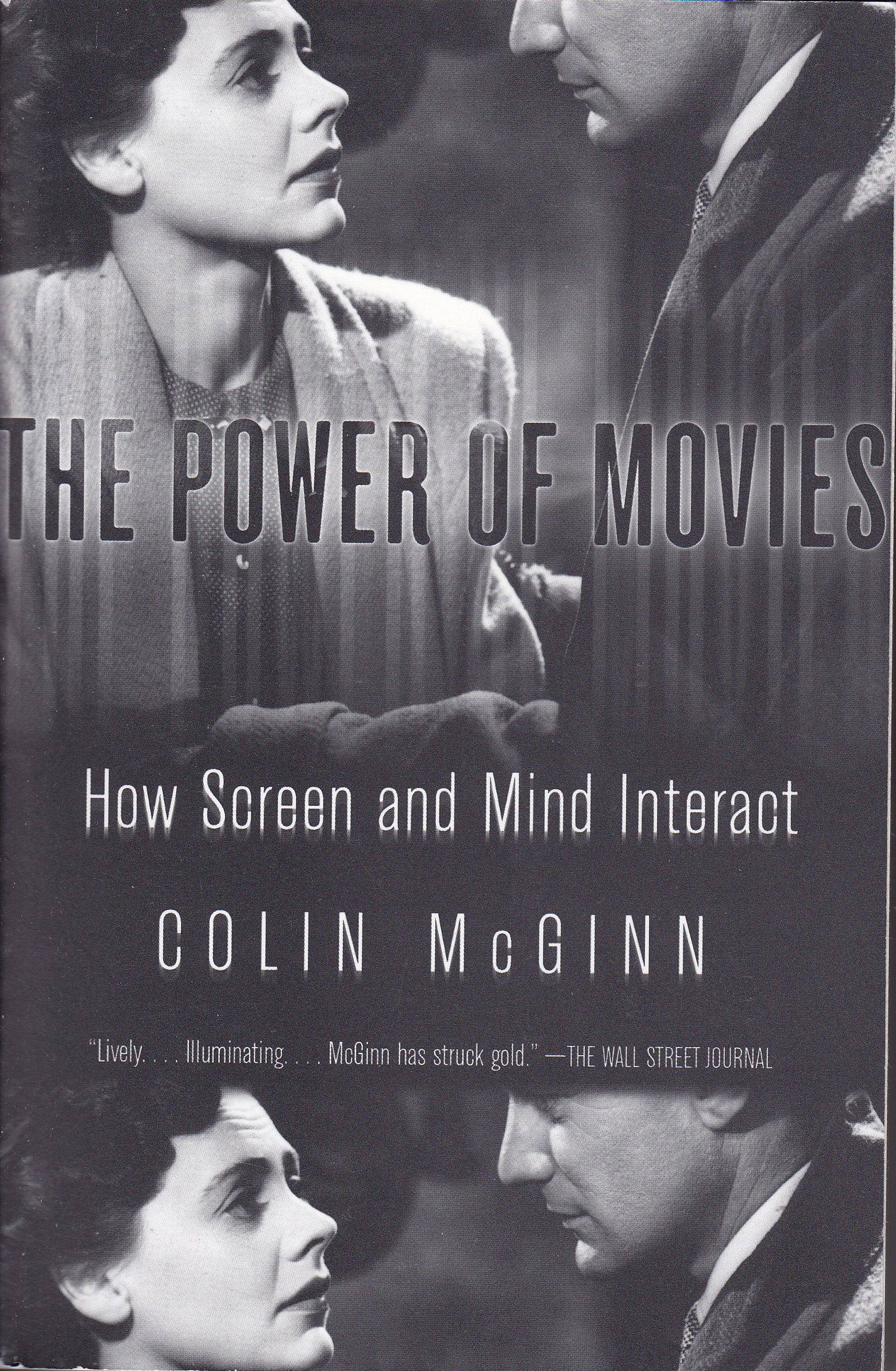
Movies have a way of really influencing people. Thus it has been since the invention of the art form. We’ve all had the experience, I suppose, of a movie hitting us with a profound impact. It never really occurred to me to ask why. That is, until I read Colin McGinn’s The Power of Movies: How Screen and Mind Interact. I’d always thought that movies were simply a successful form of entertainment, and scholars seldom take entertainment seriously. As McGinn makes clear, there’s a lot more than casual watching going on when we slip into the theater. As a philosopher, McGinn is duty-bound to look beyond the obvious. Time after time in this profound little book I found myself pausing to consider the implications of what he says. Ultimately, he suggests that movies access the same areas of the brain that dreams do, not only giving them dreamlike qualities, but also making films emotional experiences like dreams.

At one point, McGinn draws explicit connections between going to church and going to a movie. Beyond the superficial aspects of a darkened building with a performance meant to impact a person, there are clear parallels between going to the theater and going to church. Both can be transformative experiences. The Power of Movies is a powerful little book. As much as we like to think that we have custody of our minds, the realm beneath the surface—that which gives us dreams and syncs with movies—has more influence on us than we’d generally like to admit. More and more, scholars are beginning to realize that films do have a profound impact on viewers. This is not just entertainment. It may not be worship, but after reading McGinn I think it might not be too far from it. The mind able to dream, after all, is a mind that’s truly free.


Apostle

Apostleposter

I was teaching in a seminary when Robert Duvall’s The Apostle came out. Seeing the favorable reviews, I put it on my wish-list and somehow it never managed to rise to the top. Perhaps it was because I worked at a religious institution 24/7. Seeing a movie about church felt almost superfluous. Many years on now, my wife bought me the DVD (yes, we’re old-fashioned) and we finally sat down to watch it. I realized, as the preaching started, that I didn’t know what to expect. I assumed that Sonny would be a typical Elmer Gantry-type character, cynical and self-centered, but as I kept waiting for the sneering commentary to come, it never did. The movie didn’t valorize Sonny either—he is a flawed preacher who commits murder out of jealousy and flees the state to start a life elsewhere. Landing in rural Louisiana, he begins building a life doing what he does best—preaching. The local people benefit from his presence, so I was waiting for the cracks to appear, but they never did. The movie is amazingly respectful of Holiness, or Pentecostal religion. It left me quite thoughtful.

Having grown up in a non-denominational setting, the scene of the altar call was one that was familiar to me. Fiery sermons were also something I’d seen before. Theological education, of course, causes one to question much of this, which is why many Fundamentalist churches do not hire seminary graduates to be their clergy. Study tends to refine that ability to let go and have emotion become the substance of the service. Recalling my own childhood, steeped in the Bible and fervent fear of Hell, church was primarily an emotional catharsis for me, not an intellectual enterprise. The problem for me was that I couldn’t stop thinking about it. That’s where it often starts to crumble for those who want to understand emotion-driven religion. It doesn’t mix well with rationality.

The Apostle is made all the more powerful for its use of actual Holiness preachers in the movie. When they’re preaching, they’re not acting. They’re preaching on film. Part of the draw, I suppose, for many viewers is that this is a foreign world. Mainstream church services are often subdued, perhaps even dour, by comparison. They are, however, more rationally driven. The substance of any mainstream liturgy derives in some form from Catholicism. Pentecostalism dismisses all of that, retaining the music and the sermon and the Bible. Otherwise, they are practically different species. The storyline of the movie isn’t anything grand. Preacher commits crime, repents, gets caught. Still, there’s an authenticity to it that makes it compelling. No Jim Jones here. No David Koresh. Just a man, in many ways typical, trying to make his way in the world in the only way he knows how. And that can be inspirational.