Bible Stories

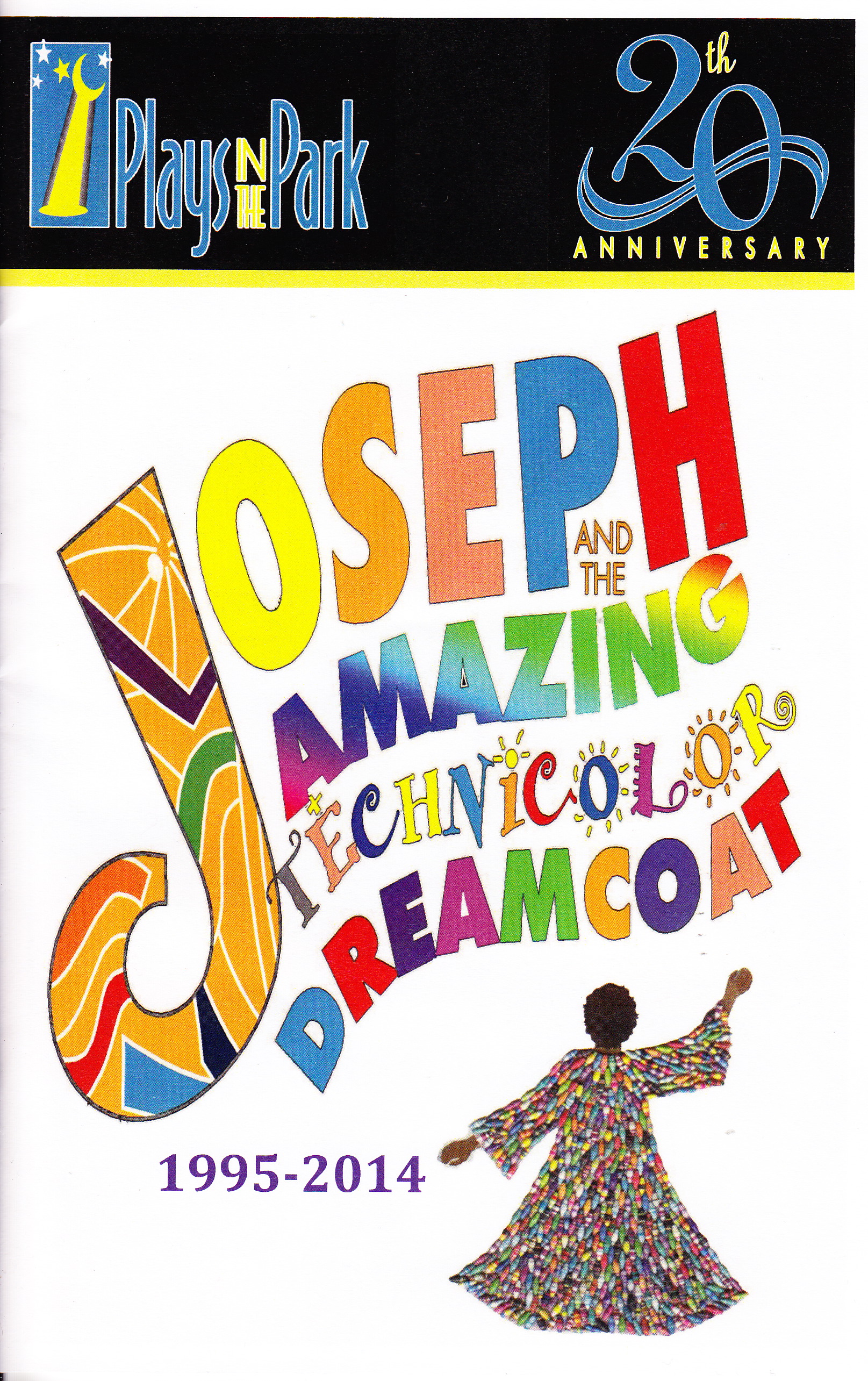
JosephSay what you will about it, but the Bible has some great stories. Based on classical measures of what makes a good tale, the Bible ranks up there with Greek mythology and other ancient fiction that is meant to teach us about being human. Stories do teach, and literature is among the greatest of pedagogues. For the past two decades, Plays in the Park here in the New Brunswick area of New Jersey, has been putting on a post-Christmas, pre-New Year production of Joseph and the Amazing Technicolor Dreamcoat (indoors, due to the time of year). With the kinds of production values you expect of many off-Broadway venues, the show is exceptionally well done, and due to the local color, never too serious. And they play before a packed house. The reasonable prices, I’m sure, have something to do with it, but the fact is the story of Joseph is classic. Full of radical reversals, dreams that come true, and reconciliation, the Joseph novella is one of the great stories of humankind. Unlike many tales of Genesis, God is rather in the background here, perhaps overseeing the event, but not interfering in the human drama.

Although the musical, like most adaptations, takes liberties with the story, it remains fairly true to the Bible. Andrew Lloyd Webber and Tim Rice also had success with Jesus Christ Superstar, showing that, despite its detractors, the Bible still has some appeal. Negative sentiment directed toward the Bible largely derives from the wooden insistence of literalists that everything must be taken at face value. The Bible isn’t allowed its symbolic resonance. Perhaps we can get beyond a worldview where the sun literally goes around the earth, and pay attention to the very human dimensions of the stories it tells. Truth may be of scientific nature, but it may also be—indeed, it must be—human. The very concept of verity is human. We are the ones making up the story.

Scholars point out that even the colored coat of Joseph is based on a translation decision in the Septuagint (the Greek Hebrew Bible). For many people, however, who’ve never read biblical scholars, the truths of Joseph and the Amazing Technicolor Dreamcoat as just as legitimate. The rivalry between siblings is something many of us have experienced firsthand. While not many of us get promoted from prison to vice-president, we still dream that our lives could get better. Our dreams could come true. The upbeat score, of course, helps to reinforce the message—one might say it makes the message believable. That doesn’t mean that the tale is not true. There was no historical Joseph. The colored coat may be a translation error. The story is nevertheless true. Doubters should watch the show. Next year in the State Theater in New Brunswick just after Christmas would be an excellent opportunity to do so.

A Lot of Salem

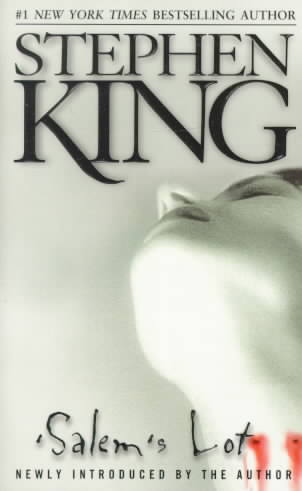
SalemsLotVampires may seem out of place late in December, but they never really go out of season. That will be my excuse, anyway, for writing about Stephen King’s ‘Salem’s Lot, which I have just finished reading. Like many of King’s books, ‘Salem’s Lot takes a fair commitment of time to get through, and I actually started it back in November when it feels natural to have creepy thoughts. I suppose winter is more of a ghost season than a vampire season, but I have read what I have read. So, vampires.

The book is old enough now to have been a kind of prequel to the current vampire craze. Prior to picking up the tome, however, I didn’t know that it as a vampire story. I’m not sure it made as much of an impact as the shudder-inducing Twilight series (and that is a shudder of the most ironic kind). ‘Salem’s Lot is, after all, a fairly conventional vampire story—a Dracula reset in rural Maine. Instead of a Jonathan Harker we have a Ben Mears. Instead of Abraham van Helsing, we have Matt Burke. The plot is much the same, the end result is much the same. And vampires are banished by religious paraphernalia, as we’ve come to expect. For me the ultimate Maine vampire will always be Barnabas Collins (the kind fitting more the description of Jonathan Frith than Johnny Depp). Barlow, as a vampire, is entirely too self-serving. Barnabas is a deeply conflicted ghoul, a monster you can love. But not too much, because then we’d be left in the twilight. Mixing the vampire just right is tricky, and it seems that a soap opera was the place that got it right.

The movie Thirty Days of Night, based on the graphic novel, places vampires squarely in the middle of winter. In the thirty days of no sunshine in the Arctic Circle, the vampires of winter flood the town. Perhaps the idea relates to ‘Salem’s Lot for an entire town to come under siege. Or maybe not. When I read vampire stories I hope to come out transformed, I guess. Elizabeth Kostova’s The Historian may have spoiled me in that regard. As with most King novels, however, ‘Salem’s Lot is artfully written and at least for the characters a new story with a small twist on the old ending. In at least one regard, it is true to life—although they learn that the church banishes vampires, nobody joins and they only pray as a last resort.


Lords a’Leaping

As I’m writing a not insubstantial check for the rent, as I do every 25th, I am participating in a Christmas ritual. Having grown up with trees, presents, cookies, and a general warm glow about the holiday where you got things for free and didn’t have to do any work (home or otherwise), it is hard to believe that this kind of Christmas is a modern invention. Some years ago I wrote an unpublished book about the holidays. In researching it, I learned that Christmas was only gradually accepted as a day of celebration. For many it was too popish, and for others it was too frivolous. It was the day when tenants paid their rent to their landlords—and here is the tradition in which I’m participating—for landlords who don’t make money from their tenants are no lords at all. Indeed, this commercial transaction gives the lie to the common lament that Christmas has become commercial. It has been commercial for a very long time.

Some suggest that Charles Dickens—who wrote not just A Christmas Carol, but several stories about Christmas—is largely responsible for our sentimental image of the holiday. Individual traditions of the day go back to Medieval or earlier times, but the conglomeration of events that occur around December 25 come from many sources. Human beings, entrepreneurial by nature, recognize the economy of bringing various disruptions to the flow of money onto a single day. Indeed, the day after Christmas is often a day to rival the holiday itself, with people returning items and purchasing more. Soon enough Epiphany will ring in austerity. In watching for economic recovery, Christmas is a mere indicator of financial health. There need be nothing more to it.

A capital Christmas

A capital Christmas

As I was sitting in my windowless cubicle this week, receiving little email from academics (who are the main business partners for publishers) already out on a semester break, my thoughts turned toward the deeper meaning of the holiday. Business is business. Meetings with recurring set dates popped up for Christmas reminding me of events that, one senses, are only reluctantly cancelled. The true entrepreneur can’t wait to get back to the office. I’m busy looking deeper. The trappings may be modern, but the idea of celebrating in the darkest time of year is very ancient. We are hoping for something better. We are looking for a new start. Christian or not, anyone looking over the sprawl that we’ve made of everyday life can appreciate the symbol of a baby on the day the rent is due.


X-mas Time

As predictable as crocuses in early spring are the controversies that crop up around holiday billboards. Even living in the quite blue state of New Jersey, I see plenty of advocating for the keeping of Christ in Christmas that the “keep Christ in Christie” campaign seems to lack. This year, however, the American Atheists billboard kerfuffle has shifted to Memphis and Nashville. There protests have been lodged that using children on “holidays for all” billboards is a kind of exploitation. And as we all prepare for the visit of baby Jesus, or Santa Claus, or any variety of mythical nighttime visitors, American Atheists are only asking that we all share the presents. It is an odd kind of culture war. Christmas, as we’ve long known, predates Christ. The holiday was usurped from pagan tradition and baptized into a holy day that was barely observed until the nineteenth century. The commercialization of the holiday gave it the current shape we recognize, and some Christian groups feel compelled to reclaim it in a kind of cultural crusade that will only end with complete acquiescence.

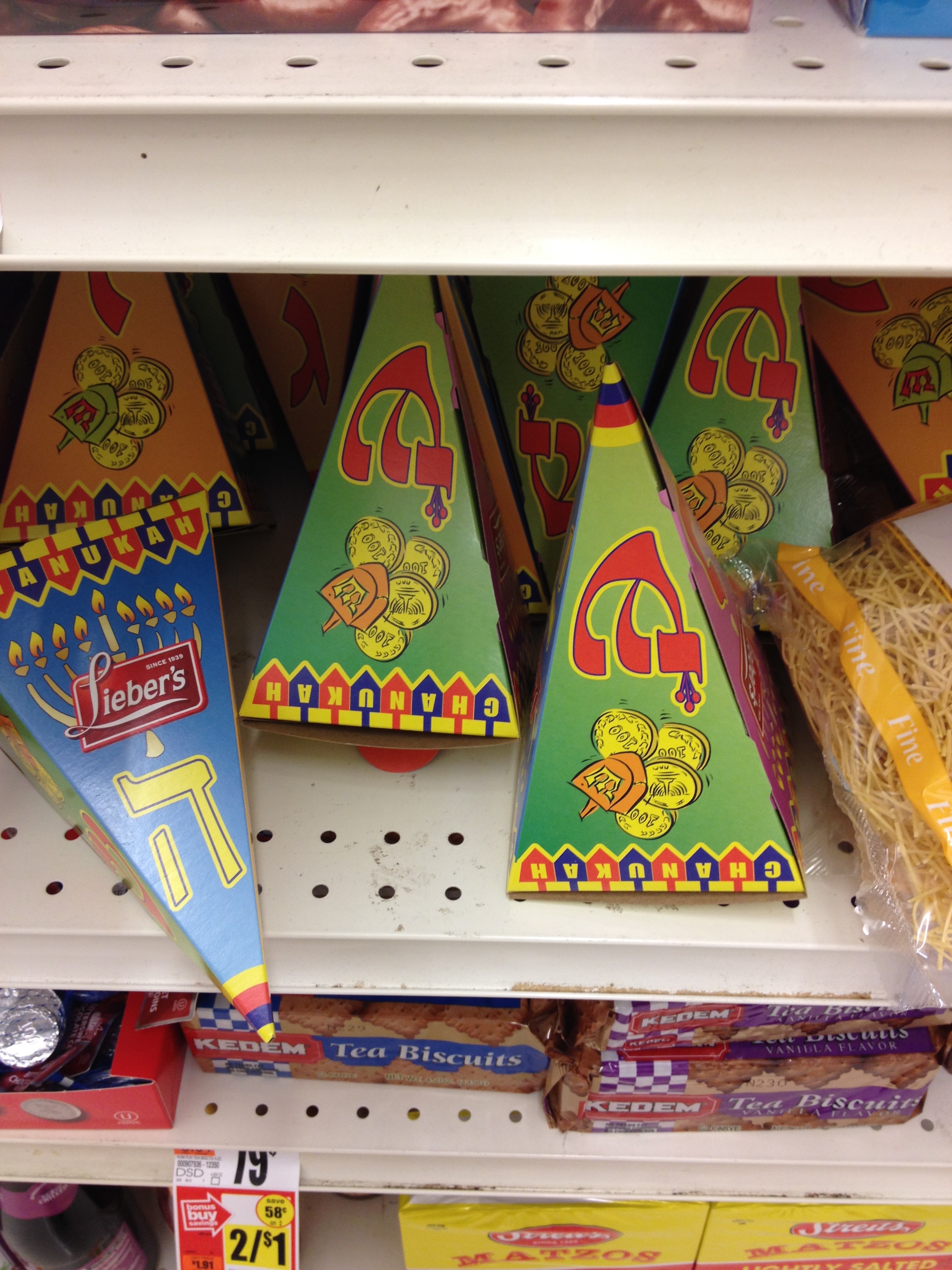
This is a holy war in which neither side is right. In the work-a-day world that I inhabit Christmas is above all a long weekend with a respite from the drudgery of a long commute to ensure that the system continues. Thousands stream into New York City, which, amazingly, does seem to transform for the holidays. The city that is, for most of the year, cold and heartless, suddenly displays a more human face. Giant wreaths and tall trees appear, bright decorations hang in windows. Menorahs and dreidels become manifest. Signs of Kwanzaa or other solstice-related holidays are evident for those who know how to spot them. People in general seem more generous than usual. Even many businesses relax their time-grabbing strictures a bit. Christmas did not begin as a Christian holiday, nor, it seems, will it ever be fully supersessionist.

IMG_1849

Celebration, I would suggest, is worth celebrating. Should atheists use a poster-child for the secular celebration of the holiday season? Should Christians have displays of mangers on church property where all passers by can see? Should Mensch on a Bench be displayed in stores? Should Santa be advocating for corporate giants who only want us to spend? Perhaps the answers are obvious. In my mind they are. We gather our families in, and in the northern style that has always resonated deeply with me, we look out the window and await the coming of the purifying snow.


Foundation and Empire

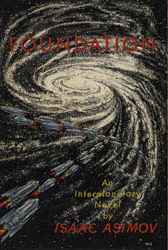
Foundation_gnomeIn a childhood full of science fiction I’m sure I read much material that was too sophisticated for me. After all, I grew up in a working-class family where politics amounted to lambasting the incumbent because things still weren’t getting any better. Even the conservative super-hero Ronald Reagan was mostly remembered for the government-issue cheese we received for free. We called it “Reagan Cheese.” In that setting much of Isaac Asimov’s Foundation trilogy must have been far beyond me. Still, I dutifully plowed through all three volumes as any budding science-fiction nerd was expected to. It was a required piece of the curriculum along with Frank Herbert’s Dune. Heinlein’s Stranger in a Strange Land would have to wait until adulthood. I remember rooting for the cosmic empire—the symbol of law and order—unaware that similar systems would eventually find me as a fifty-something, educated man unemployable for years at a time. Science fiction doesn’t bestow the ability to see the future.

Then I read a recent issue of Books and Culture, the bi-monthly publication review by Christian Century. An article by Philip Jenkins, reviewing a book I’ve not read, started off with a reference to Asimov’s trilogy. Suddenly I found myself transported hundreds of miles and two-score years from Midtown Manhattan to rural western Pennsylvania in barely adequate housing, holding Foundation and Empire close to my face. Jenkins, a noted historian of religion, was pointing out that Asimov often drew from Gibbon’s Decline and Fall of the Roman Empire and based his character of the Mule—those of you who’ve read the trilogy remember him, I’m sure—on Mohammed. The thought had never occurred to me that the science-oriented mind of Asimov would ever delve into religion for inspiration. Still, with the little I recall of the story, it does seem to add up.

In fact, much of science fiction is deeply dependent on religion. Science fiction dares to dream of the future, and no matter how technical that future becomes, the religious are still there. Last century bold claims were made that we’d be living in the twilight years of religion by now. Mid-term elections fueled by religious fervor prove the pundits wrong yet again. Organized religion, fledgling or fully adult, is a political animal. Religion and politics are both about how we interact with one another as a society. It may seem that the concepts behind religious thought are unsubstantiated myths that transcend the mechanistic world in which we live. Even so, they continue to drive revolutions large and small. And somewhere in the attic I still have my copy of the Foundation trilogy ready to be seen by grown-up eyes. Or better yet, through the credulous eyes of a child.


Not Your Grandma’s Moses

Exodus Gods and Kings

Exodus: Gods and Kings is, in many ways, a startling movie. It didn’t leave me with a strong impression of profundity, but it did make me a bit reflective. The media hype about God as an eleven-year-old boy proved to be merely hype. In fact, the boy deity was one of the most intriguing characters in the film. The role was played respectfully, and God, like a good Englishman, favored his tea. There was nothing comedic about it, however. More troubling was the agnostic Moses, à la Clash of the Titans with its unbelieving Perseus. Moses, even after meeting God, comes across as having little interior life. He hides in a cave and builds an army of terrorists making him seem like Moses bin Laden. He conceals himself while innocent Hebrews are hanged for his crimes (and did they even hang people in ancient Egypt?). When a great storm brews over Memphis, however, it is with a sense of wonder that we ponder at an eleven-year-old doing all this.

The movie plays lightly with the scholarly “explanations” that used to be doled out in seminaries about how one plague led to another. In fact, the character called “the Expert” in the credits is shown lecturing the Pharaoh on the causation scheme of clay churning up in the Nile turning it red, and killing the fish which in turn drove the frogs from the toxic water, but when they died flies came along and the flies spread disease. Then the Expert is hanged. Not so subtle a warning to biblical scholars. In fact, there seems to be a science behind much of the movie that makes miracles less acts of God than acts of nature. Even the drying of the Red Sea is understated. Its return is reminiscent of the Christmas Tsunami of 2004. God is sometimes not there when you’d expect a deity to care.

On the matter of caring, for an age of nones who have concerns for equality, the film was thin on women’s roles, making even the Bible appear to foreground them more. Sigourney Weaver—great in any context—seems only to be there to wish Moses dead. Even Miriam is given scant lines in the movie and no role in the Exodus itself. In Prince of Egypt she at least led her famous song. Zipporah is lovely but shows no sign of being as handy with a flint knife as Exodus makes her out to be. A woman of action. Miriam’s quick thinking saved the infant Moses. Overall, however, the Bible is a guy’s book, and Exodus is a guy’s flick. Opening with the battle of Qadesh on the Orontes is a way to draw men to a Bible movie. Lots of slashing, gashing, and charging horses. And the splendor of Egypt, filmed in Spain and the Canary Islands. Some miracles, it seems, are even impossible for CGI.


Behind the Exodus

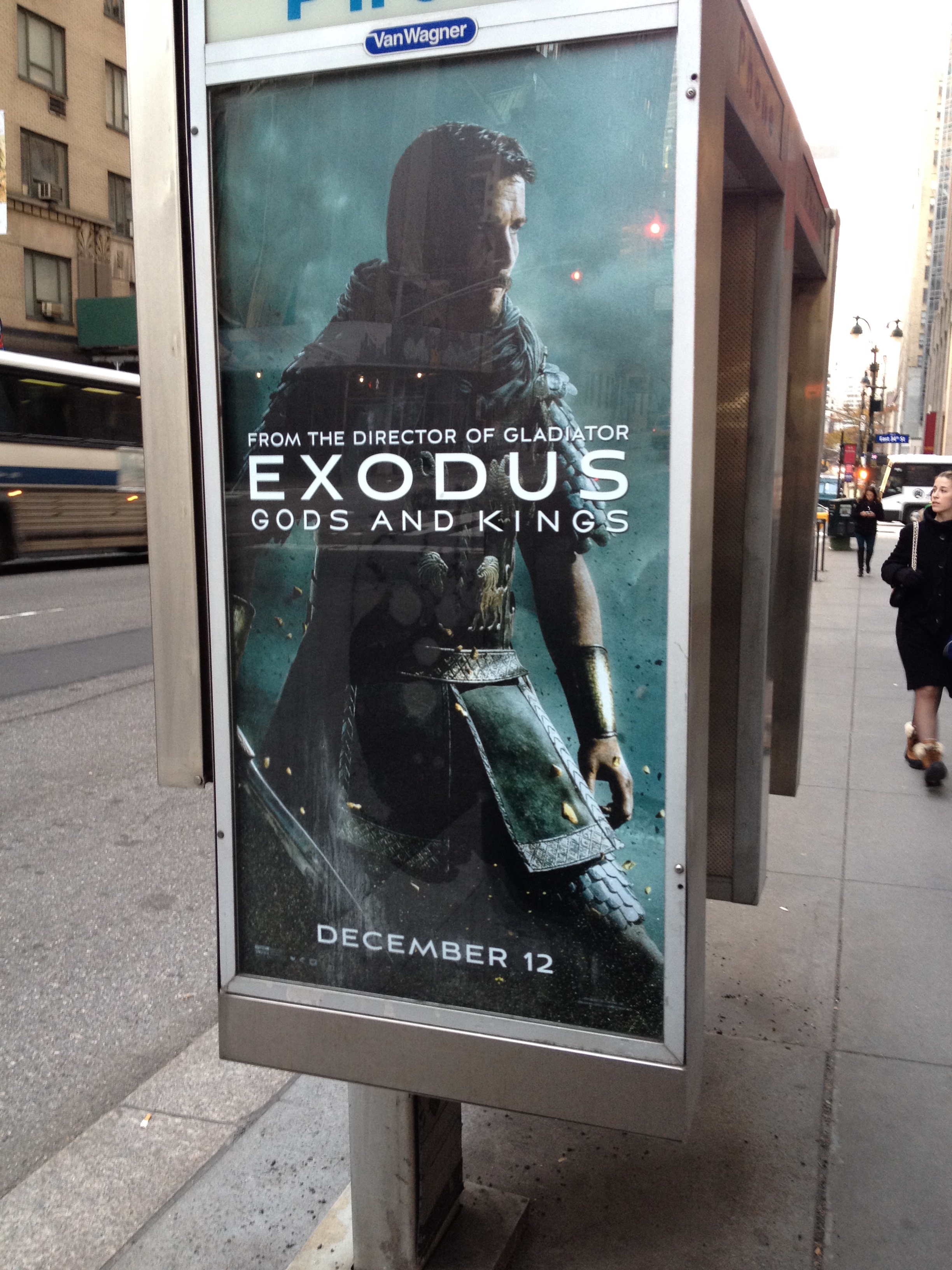
Over this past week two of my friends/colleagues were quoted in major media outlets about Exodus: Gods and Kings. Being merely a blogger with nearly two decades of teaching Hebrew Bible means, naturally, that I have nothing valuable to say. Nevertheless, I would meekly venture to make my own observations and cast them out there into the world-wide web and see what happens. I haven’t seen the movie since it only opens tomorrow. I already know it is only loosely based on the Bible. Still, I wonder at the talking heads who constantly declare the Bible to be irrelevant to a throughly modern world. Okay, so I realize that this is about money, but Manhattan is often seen to be one of the more sophisticated cultural landmarks in the country. This summer I couldn’t walk more than a book or two without being inundated with Noah posters. Now I am finding the same with Exodus paraphernalia. If we try to put the Bible away, it seems, it will come to find us.

IMG_1843

The Bible, relevant or not, is full of great baseline stories. Even in a secular society we can see the appeal of Noah and his menagerie to young children who are so fascinated with animals. We decorate youngsters’ sleepwear and toys with elephants and lions and giraffes (interestingly not mentioning that these are primarily African animals) aboard an ark with an unfailingly cheerful Noah. Now we have another classic—the great liberation story (also set in Africa) of a people held in bondage being released by divine command. We are a post-Christian society, according to the pundits, so who this divine one is remains an open question. The idea that one people is kept oppressed by another people, however, is presented as unequivocally wrong. Moses rides out on a horse, weapons in hand. Are we not focusing on the larger point yet?

IMG_1848

This latest love affair with the Bible as a source of great cinematography will not last forever. It will surely ebb away until only a few old blog posts might remain to remind us there was a time when Holy Writ inspired screen writers and directors. Nevertheless, the Bible bides its time. Back in the days when I used to teach Hebrew Bible Hollywood didn’t do too much to help out. Students had to slog through pages of picture-less Bibles to get the gist of the what God had in mind. The results may not be the same from those comfy seats in movie theaters, but a future generation will come to see Charlton Heston as a white man who loved guns being overcome by a newer generation of producers and directors who know there is a larger story here. Of course, I’m only a blogger with no credentials. Still I know what I see on the streets of the city.


Get Out of Town

If the Bible were to be written today, it would be more graphic. Those who’ve read it know that it is a graphic book already, but with no literal illustrations. Somewhat surprisingly for a post-Christian society where the Bible generally gets bad press, this year has seen the release of at least two major movies based, loosely, on scripture. Noah came with a flood of hype this summer, and even then we were told to keep an eye out for a movie on the exodus later in the year. The New York Times heralds the imminent arrival of Exodus: Gods and Kings with a movie preview. Like Noah the new movie will take liberties with the biblical accounts of the exodus. (The Bible itself is not consistent on the story in any case. The “Song of the Sea” in Exodus 15 differs considerably from the prior prose account.) Ridley Scott, who gave us Alien, has cast the iconic Batman, Christian Bale, as Moses. When I first read about this during the summer, I wondered how Bale would take the meek role of the humblest man on earth. With considerable chutzpah seems to be the answer.

The review by Michael Cieply and Brooks Barnes, however, make the most not of Moses but of his mentor, Yahweh. Using an eleven-year old, Isaac Andrews, as the deity, the movie “preserves the awful severity of the Old Testament God.” In this it touches on one of the sore-spots among biblical scholars and theologians both—the characterization of a bifurcated deity. God in the New Testament is frequently said to be loving and kind (except for the iron-clad rule that makes him (as he is male) sacrifice his own child), while the deity of the Hebrew Bible is said to be angry, mean, and vindictive. Others say he’s simply just just. We like to see a divinity who is swayed by mercy and is deeply aware of the human condition. The Bible presents, it seems, a conflicted God who is sometimes just as confused as we are.

800px-Lamentations_over_the_Death_of_the_First-Born_of_Egypt_by_Charles_Sprague_Pearce

Casting a deity who is forever young, however, may be a stroke of genius. In the Bible, in as far as there is a coherent storyline, God does seem to evolve. Sure, there are those who claim God always remains the same, but any deity whose first recorded words to Adam and Eve, after laying down the rules, take the form of an interrogative certainly must be able to learn and grow. Of course, it is very much like a human to suppose that the world could not have existed before we got here to see it. We who are so fascinated by the idea that the world could have carried on without us for the generations before we were born. What was God doing in those eons, besides playing with dinosaurs, like a child? I don’t suppose Exodus will delve into those questions, busy as it will be with battle scenes and other adult situations. At least if it’s true to the Bible, which, despite popular opinion is so graphic that would have a hard time retaining an R rating, if taken literally.


The Force Re-Awakens

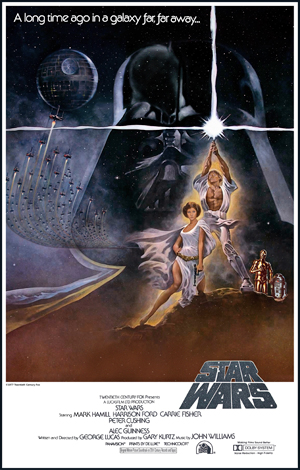
StarWarsMoviePoster1977In a galaxy long ago, in a galaxy far, far away… The year was 1977 and the Joseph Campbell-inspired Star Wars was like nothing we’d ever seen before. The film captured the essence of good versus evil in what, for the time, were realistic scenes in space. Many of us were in awe. Some worshipped. In fact, some six films later, an only quasi-ironic Star Wars religion does exist (Jediism) and its adherents must be buzzing after yesterday’s announcement that a new Star Wars movie will be released next year. What particularly caught my attention was the New York Times article on the event. Peppered with religious language, the trailer review (have we come to this?) by Dave Itzkoff plays on the fact that fans are nothing less than religious about the movies. I have to admit to falling a few movies behind. I’m a lapsed Jediist, I guess.

The new movie, The Force Awakens, will be directed by J. J. Abrams, and that seems to be a prophecy for a positive outcome. It also provides me with a goal; I need to see the episodes I, II, and III that I somehow missed early in the new millennium. Some see, to borrow Itzkoff’s language, the original trilogy as being canonical. The original novelizations—all of which I read as a teenager—were written by various guest writers with names like Glut and Kahn (the latter somewhat prescient for the upcoming Star Trek movies of the time), recording the sacred texts of the nascent religion. Rituals developed, light-sabers were purchased, and imagination became the vehicle for theology.

Behind it all, of course, is the force. This is a deity for a rationalist world. Even today we know that things don’t always turn out the way they should. Juries make the wrong decisions, computers still crash, even even two space shuttles—highly sophisticated though they were—failed and exploded during routine operations. Many find the white-bearded God untenable, but somewhere out there amid the comets and stars, there seems to be a moral force guiding us in the constant struggle of good versus evil. Heaven is still over our heads, although lost in the darkness of space. Less than 90 seconds of film footage have lit up the web with speculation, critique, and yes, reverence. We may have become the consummate secular society, but there is still always room for the force. Indeed, The Force Awakens may contain a not-so-subtle message for those who have ceased to believe that its personified form still exists.


Thank You

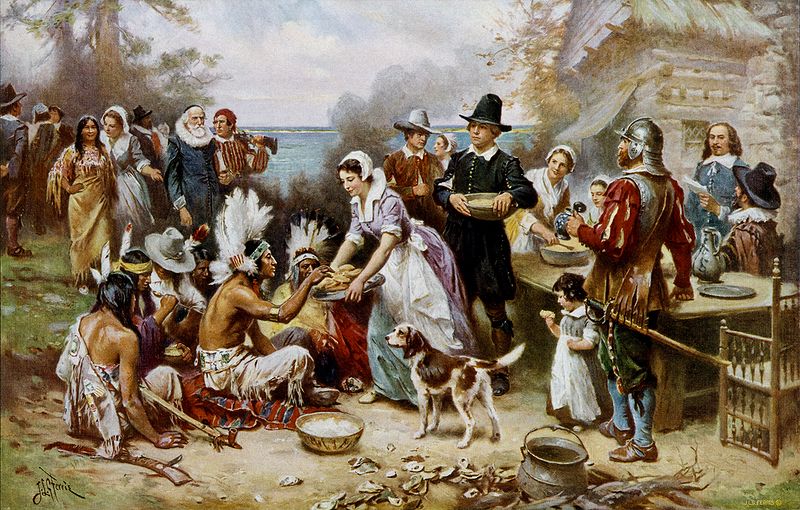
Comments being rare on this blog, I do read them when they come along. Recently I had a reader comment, in the form of a question (as sometimes happens): “Do Native American Indians do ‘Thanksgiving’?” Although I’m fairly certain this was intended as a rhetorical question, I was raised a literalist and couldn’t help trying to formulate an answer. Although I can make no claims to know Native American culture well (I wish I did) it led me to ponder the concept of Thanksgiving. No doubt the idea had at least informal religious beginnings. Even with the early European settlers, a religious diversity was already appearing. Still, although the Native Americans lost pretty much everything, they were still involved, at least according to the early accounts. The great spirit they thanked was not likely conceived of in the way that the god of the pilgrims was, and yet, thankfulness is a natural human response. Writers, often fully aware that their work deserves publication, frequently thank an editor for accepting it. It’s a deeply rooted biological response.

800px-The_First_Thanksgiving_cph.3g04961

For some of us, Thanksgiving is more about having time to recuperate after non-stop work for about ten months. The standard business calendar gives the occasional long weekend, but after New Year’s the only built-in four-day weekend is Thanksgiving. It is that oasis we see in the distance as we crawl through the desert sand. Time to be together with those we love rather than those we’re paid to spend time with. To rest and be thankful.

Among the highlands of Argyll, in western Scotland, is the picturesque Glen Croe. Years ago, driving with friends through the rugged scenery of boulders and heather, the little car struggled with its burden of four passengers. We stopped at a viewpoint known as “Rest and Be Thankful.” The name derives from an inscription left by soldiers building the Drover’s road in 1753, at the highest point in the climb. The Jacobite movement and the Killing Time had instilled considerable religious angst to the Scotland of the previous century and led to the calamity of Culloden less than a decade before the road was laid. These religious differences led to excessive bloodshed throughout a realm supposedly unified by the monarchy. Even though no natives protested displacement, religion led to hatred and mistrust, as it often does. Is not Rest and Be Thankful, however, for everyone, no matter their faith or ethnicity? And in case anyone is wondering, yes, this rhetorical question contains a metaphor to contemplate. Rest and be thankful.


Biblically Literate Ichabod Crane

I’m trying to pace my viewing of Sleepy Hollow, but autumn is never long enough for me. In many ways the FOX series exemplifies the current love-hate relationship popular culture has with the Bible. While its dictates and commandments seem tedious and petty, its prophetic view is so very full of possibilities. The millennium has passed but we’re not weary of the apocalypse yet. Even from the pilot episode with its cringing reference to “Revelations” three or four episodes into season one tidied that book title down to the proper singular and have begun to introduce other biblical characters along the way. Since the conceit of the series involves the four horsemen, the Bible is never far from view. Forensics can’t figure out what’s climbing out of the woods of the Hudson valley, but we already know that the demon is Moloch. Many fingers, I trust, have been scampering across keyboards to investigate this biblical figure.

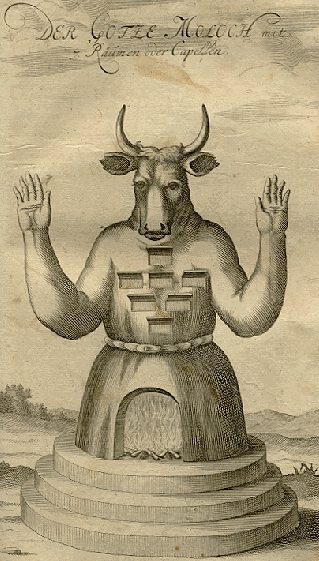
Moloch_the_godMoloch is a “Canaanite” deity. He is also one of the least understood of biblical archenemies. Scant references to making children “pass through the fire” for Moloch have led to widespread assertions of human sacrifice. Others have argued that the passing was just that—kind of like racing your finger through the flame of a candle—to appease the angry god. We don’t know that Moloch was angry. No extended myths about him have survived from antiquity. His name means “king,” an epithet fit for most gods. The vacuum left by the historical records allows imagination to fill in the gaps. Sleepy Hollow does that nicely, and although I haven’t reached the end of season one yet, I have my suspicions that he’ll be showing up for some time to come.

The Bible, viewed so disparagingly because of the ministrations of the likes of Jerry Falwell and Pat Robertson and their intolerant ilk, remains a mystery to many. Let’s face it—it’s a daunting book. Even with onionskin paper, it is a massive undertaking to read it all. Many a spiritual soldier lays slain on the beach-head of Leviticus, and that’s only three books in of the Protestant 66. What Leviticus doesn’t finish, Chronicles will polish off. And yet we have such colorful characters as Asherah, Resheph, Leviathan, and Moloch scattered throughout. Sleepy Hollow has brought back the dead. I regret that I no longer have classes of students to ask about such things, because I too, through the magic of television, am beginning to believe in resurrection again.


Earthbound

Major news outlets have been raving over Interstellar, the new Christopher Nolan film. I’ve not seen it yet, and it hasn’t had the same kind of hype that Noah received earlier this year. It isn’t, after all, biblical. Still, the reviews for the movie borrow liberally from religious language. One of the obvious reasons is that the vastness, the incomprehensibility—I think I’m safe to say it here—the impossibility of space, almost demand such language. Ironically, it is considered unsophisticated to say similar things of religion, that fall-back for those of weak intellects who, well, believe the impossible. Whether science or religion, we are faced, when we look at interpretations of reality, with something we barely comprehend. Even by conservative measures, on the scale of the universe, we are somewhere around the level of a sub-atomic particle to an earth-sized universe. And yet, with great confidence, indeed, at times arrogance, we claim that we have it all figured out. God? Not possible. Science, less than a millennium old? We’ve got it all figured out. And we haven’t even stepped beyond our own satellite yet.

Having grown up in a rural setting, I was used to seeing stars at night. From a young age astronomy fascinated me. My high school, built during the era around Sputnik, had a working planetarium (and this was not an affluent community). I took astronomy as a junior elective and ran into my teacher at a weekend retreat for lay preachers. A man of science who looked at the universe and came away with wonder. On clear winter nights, away from the light pollution that has become my daily bread here in the orbit of New York City, I would shiver and look upward, knowing that I was reaching both the limits of what the earthbound could see, but also infinity at the same time. The vastness of space still weakens my knees. Even more than my age does naturally.

hs-2003-10-i-large_web

In at least one of the many interviews, Nolan admits to having been influenced by 2001: A Space Odyssey. It was the genesis of the believable space movies, giving Star Wars a jump start and we’ve been exploring deep space in our celluloid fantasies ever since. The constant in all of this is the humility of humanity. “Humility” derives from Latin humilis, literally, “on the ground.” It is no accident when the concept of divinity began to emerge that the human, or perhaps porto-human, gaze was cast upward. The gods, whatever else they might be, weren’t down here with us. They have access to up there. And even a scientist can get away with calling the sky “the heavens.” This journey of Interstellar began long before Kubrick, and we are flocking in numbers to see what the latest rendition might be. Wonder might just be what the doctor calls for on a dark night, when the hope of humanity could use a little humility.


Horrorshow

Halloween may be over, and more’s the pity. Still, Halloween is simply the entry point to longer nights and opportunities to revisit what scares us in the dark. I have to admit to feeling a twinge of justification at reading Richard Corliss’s article “Never Watch Alone: Hollywood’s newest horror films remind us why fear loves company,” in this week’s Time magazine. One sentence in his piece on culture made me smile: “Horror movies are a rite of passage audiences never outgrow.” Okay, sure, the demographics may catapult me into the more geriatric of viewers, but I generally take my medicine neat. I do watch horror movies alone at night. And I never hit “pause.” To be honest, I have no idea why I do it. I do not like being scared, and I certainly don’t enjoy slashers. I am, however, seeking something profound.

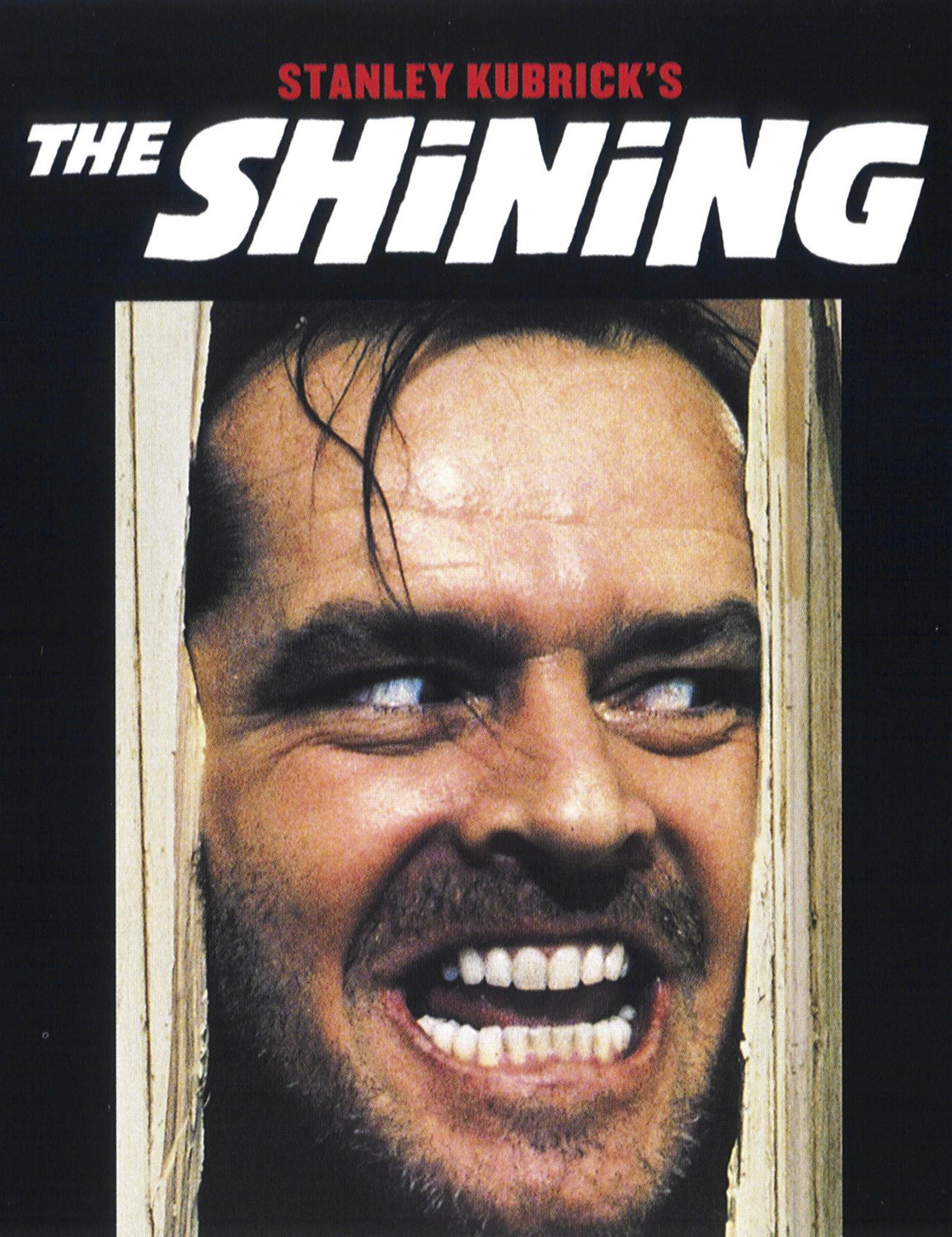
the-shiningOver the weekend my wife volunteered to watch The Shining all the way through with me. I’ve seen the movie five or six times, and I can’t seem to tire of it. The use of blood is sparing, and the pacing is positively Kubrickian, but it never fails to leave me contemplative. Don’t we all fear the madman that lurks inside? There may be ghosts in The Shining, but it is one of the least supernatural of thrillers. The monster is the protector, and nothing quite equals that disconnect for night chills. Corliss highlights the prequel to The Conjuring in his article, a movie called Annabelle. It is now on my must-see list, although dolls need not be haunted or possessed to be scary. Like Jack Torrence, they inhabit the uncanny valley of that which is close enough to human to be frightening. According to the pundits on the web, there is a real Annabelle doll collected by Ed and Lorraine Warren as a possessed toy. Debriefing with my wife after The Shining demonstrated the point Corliss was making, however. It helps to talk it out.

We spend much of our lives, I contend, trying to avoid those things that frighten us. Horror films do us a psychological service by bringing them to the surface, like desensitizing a child to spiders or snakes (at least the harmless kind). As we watch we learn what it is to be human. Religion, like horror films, is often a response to fear. Despite all our science, the world does not operate according to logic. The inexplicable happens. The horror movie allows us to explore the “what if” that science disallows. Once upon a time we went to church and held onto a crucifix. Today’s vampire is unfazed by our religious baubles. Exorcisms don’t always work—at least not completely. And the longer nights may be because the northern hemisphere is tilting away from the sun. Or maybe, just maybe, it is something more.


Fear and Dissembling

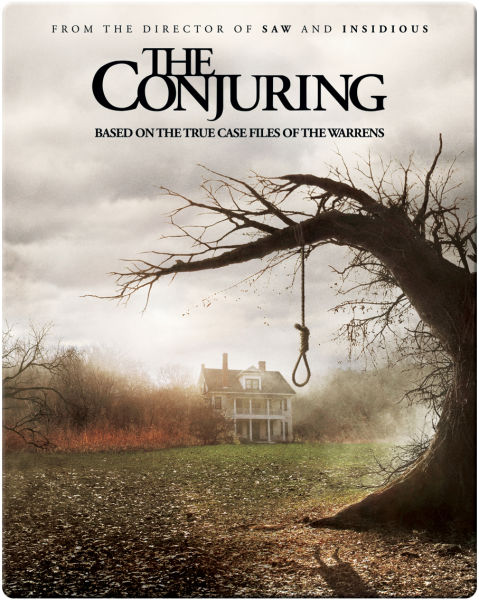
The ConjuringLast year, when The Conjuring was released, it quickly became one of the (if not the) top earning horror films of all time at the box office. Based on a “true case” of Ed and Lorraine Warren—real life paranormal investigators—the film is a demonic possession movie that ties in the Warren’s most notorious case of a haunted (or possessed) doll, with a haunting of the Perron family of Rhode Island. (The Warrens were also known as the investigators behind the Lutz family in the case of the “Amityville Horror,” showing their pedigree in the field.) Given that Halloween has been in the air, I decided to give it a viewing. As with most horror movies, the events have to be dramatized in order to fit cinematographic expectations. Apparently the Warrens did believe the Perron house was possessed by a witch. In the film this became somewhat personal as the dialogue tied her in with Mary Eastey, who was hanged as a witch at Salem (and who was a great-great (and a few more greats) aunt of my wife). Bringing this cheap shot into the film immediately made the remainder of it seem like fiction of a baser sort.

Witches may be standard Halloween fare, but when innocent women executed for the religious imagination are brought into it, justice demands separating fact from fiction. Writers of all sorts have toyed with the idea of real witches in Salem—it was a trope H. P. Lovecraft explored freely—but there is no pretense of misappropriation here. Lovecraft did not believe in witchcraft and made no attempt to present those tragically murdered as what the religious imagination made them out to be. The Conjuring could have done better here. It reminds me of Mr. Ullman having to drop the line about the Overlook Hotel being built on an Indian burial ground. Was that really necessary? (Well, Room 237 has those who suggest it is, in all fairness.) The actual past of oppressed peoples is scary enough without putting it behind horror entertainment.

A doctoral student in sociology interviewed me while I was at Boston University. She’d put an ad in the paper (there was no public internet those days) for students who watched horror movies. I was a bit surprised when I realized that I did. I had avoided the demonic ones, but I had been in the theatre the opening week of A Nightmare on Elm Street (on a date, no less) and things had grown from there. I recall my answer to her question of why I thought I did it: it is better to feel scared than to feel nothing at all. Thinking over the oppressed groups that have lived in fear, in reality, I have been reassessing that statement. What do you really know when you’re a student? As I’ve watched horror movies over the years, I have come to realize that the fantasy world they represent is an escape from a reality which, if viewed directly, may be far more scary than conjured ghosts.


Transformations

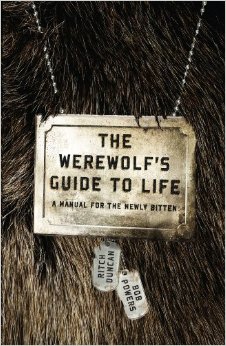
WerewolfsGuideToLifeHalloween, when you think about it, is an odd holiday. I know many who claim it as their favorite although you get no presents and not even a day off work. I suspect that part of the mystique comes in the form of Halloween representing autumn in miniature. The slow death of summer as the chill of winter settles in. The trees, vibrant in their dramatic death throes, are beautiful and melancholy at the same time. The long hours of darkness leave plenty of opportunities to see ghosts. Rich Duncan and Bob Powers’ book, The Werewolf’s Guide to Life: A Manual for the Newly Bitten, is appropriate for the season. This lighthearted parody of self-help books nicely illustrates how monsters often come into contact with religion. As a secular handbook, the Guide nevertheless addresses itself to the religious questions of life: should a werewolf go to confession? How do you deal with guilt? Do werewolves go to heaven? Monsters often force us to face the questions we just can’t answer.

The werewolf, of course, is the manifestation of a person gone feral. While people don’t actually physically change into animals, evolution has left us with a deep kinship to our fellow creatures. At times when work, or school, or relationships become trying, we are tempted to let the beast loose. One size doesn’t fit all, despite the many attempts of society to keep the vast majority of people in the same plight. Halloween is a cathartic holiday that permits us to be someone else and, perchance, to howl at the moon. Not exactly like Carnival, Halloween thrives on false appearances. We wear costumes. The trees and sunlight that apparently die are really only cycling through an annual death and resurrection.

Halloween can’t touch Christmas for a holiday that commemorates new beginnings, but in many ways Halloween is the more visceral of the two. In Manhattan, although Halloween decorations show up early in October, the holiday is lost in the city. The werewolves pretty much keep to themselves. As Christmas, with its lucre, becomes the next obvious holiday (in stores Halloween decorations already give way to those of Christmas at the start of October now) the city transforms. Despite its multi-ethnic and multi-religious makeup, Christmas trees will begin to appear, some impressively large, and the greens will remind everyone that it is time to spend. You’ll get days off work and the days will be painfully brief. Light will slowly return to the skies and the cycle will begin all over. Some will watch this all with wolf-like eyes, however, awaiting the next season of monsters and myths, knowing they are what make us truly human.