Map and Territory

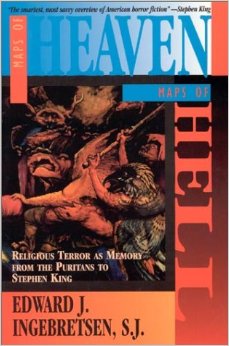
MapsHeavenMapsHellAt first glance the Puritan divines of early New England should seem to be as far from horror films, on the cultural divide, as phenomena can be. After all, academics long ago declared “genre fiction,” and particularly Gothic and horror fiction, to be lowbrow at best, and generally of no cultural worth. The amazing success of scary movies only underscores this point. Edward J. Ingebretsen (S.J.), however, begs to differ. His wonderfully insightful book, Maps of Heaven, Maps of Hell: Religious Terror as Memory from the Puritans to Stephen King, is a surprising study of how religion and terror share much that is essentially human. On this blog I have, from time to time, claimed that religion and horror are close cousins. In fact, they may be siblings. Since studies of Cotton Mather and Jonathan Edwards are often produced by Reformed, or at least Protestant, theologians, it may be that a Catholic thinker will catch aspects often overlooked. The Puritans, with their Calvinistic underpinning, had a worldview that holds much in common with standard horror fare. Ingebretsen suggests that to map Heaven, you must also map Hell.

The map conceit works well as the reader navigates through unconventional ways of thinking. The fears of the Puritans included the fear of God, and those who read or watch horror have noticed that nothing scares like the divine. It may not be on the surface, however. Even those not accustomed to deep digging can, upon a few moments’ reflection, see that the Gothic writers of the American canon have drawn repeated from this well. Many literary experts (well, some) celebrate H. P. Lovecraft’s atheistic rationalism, but enjoy his tales of the old gods nevertheless. His modern heir, Stephen King, is quite open about the potential fear of religion. He even blurbed the back cover of the book.

As society grows continually more secular, the religious impulse will not disappear. Sublimation, the process of changing states, may hide what is happening from the casual eye. A close look shows, however, that the same fears Mather and Edwards unleashed on witch-addled, spider-fearing New Englanders, have come back to us in pulp and celluloid. Religion has its earliest roots in a kind of holy fear, it seems. The innovative human mind, however, with its drive to rationalize, devised mythologies that make fears seem plausible. Those mythologies are relatively easy to believe. Everybody likes a good story. Stories, with all their twists and turns, can leave you lost in the woods. It’s good to have a map. I would suggest Maps of Heaven, Maps of Hell. You may still be scared, but you may feel more sophisticated for it.

Two Roads Divergent

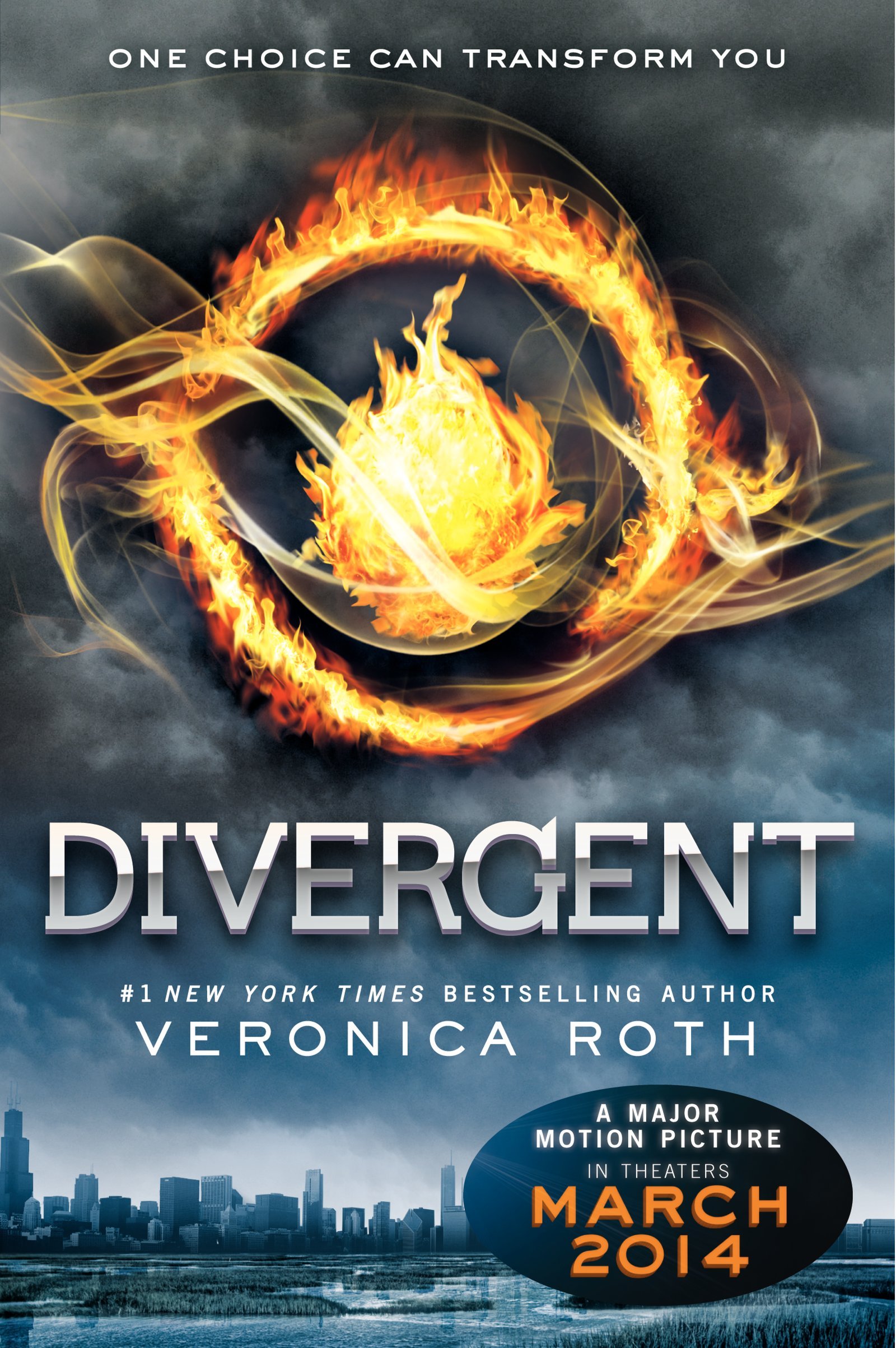
DivergentOne of the most hopeful signs for culture is the quality of young adult fiction on the market. Since I’m now in the book industry, Publisher’s Weekly is required reading. I always take a look over the fiction lists as well as the non, and over the past several months a couple of “teen fiction” books have been near the top for regular bestseller lists as well as for demographic-specific ones. (That is, adults seem to be reading them too.) One of those books is Divergent by Veronica Roth. While movie tie-ins certainly don’t hurt, as many of us opine, it is difficult to do justice to a complex story on screen. Divergent is one of those books that stays with you after you’ve closed the cover, and that suggests to me that something deeply meaningful is going on. What about dystopias is so compelling?

I’m not indulging in any spoilers to say that Divergent is a dystopia. Set at an indeterminate time in the future, civilization still exists—at least in Chicago—as society has fallen into five factions: Dauntless, Erudite, Candor, Amity, and Abnegation. Each group has its own beliefs as to why civilization collapsed, based on philosophical dispositions. Abnegation, the self-deniers, are the leaders of government. And clearly, the idea of Abnegation is a form of quasi-monastic Christianity. In fact, among the factions, Abnegation is the only one that seems to mention God. The other groups, stressing bravery, intellect, honesty, and peacefulness, don’t really have much need for the divine. To deny oneself, however, requires a powerful motivation. Even the protagonist’s name, Beatrice, is taken from its favored status among early Christians. I know little of Veronica Roth, but I have to wonder whether Dante is in the background here.

In the acknowledgements to the novel, Roth first gives thanks to God. As a high school convert to Bible-based Christianity, I suppose that’s only natural for a writer who is, at the moment, only twenty-five. Writers for young adults often have their religion close to the skin. Stephanie Meyer’s Mormonism translates into moral vampires. Orson Scott Card provides Ender Wiggin with values from the same faith tradition. People are, despite the logical implications, inherently religious. That doesn’t prevent Divergent from being a page-turner. Full of action and personal development, the first book of Roth’s trilogy bristles with self-sacrifice and belief in something better to come. Even if it’s a world we have to make ourselves. And like most human enterprises, it comes out as a well-meaning dystopia that underscores the value of reading for us all.


Singing the Truth

Attending a local high school choral concert recently, I arrived late. That’s fairly common since the bus from New York is often quite tardy—arriving forty minutes after the scheduled time is pretty standard. In any case, I joined the concert already in progress. One of the first pieces I heard was “Operator,” a number based on an old Manhattan Transfer song. Since my wife grew up liking the group, I recognized the song and yet it felt strange to have Jesus mentioned repeatedly in a public school setting. Music, by its very nature, however, often contains religious sentiments. The Doobie Brothers had, in the early 1970s—the height of a hedonistic age—done very well with a cover of “Jesus is Just Alright.” Jesus, after all, had been declared a superstar a couple of years before. I used to tell my students that the musical impulse is linked with the appearance of religion in very early human culture. Still, disestablishment reigns.

I know that a large Jewish population makes up a significant demographic at the school, and I often think about how the cultural supersessionism of Christianity must feel. Much of what became Christianity has deep roots in Judaism, and even Jesus was Jewish. Can a song be just a song? After a while Randall Thompson’s “The Last Words of David” was performed. No offense there, since the Hebrew Bible is recognized by both Jews and Christians. But what of those of other faiths? Don’t get me wrong—our high school has an excellent music program. I was just wondering how the music might be perceived in a multicultural world. We have Muslim and Hindu students, as well as secular. Is this just counted as mythology to them? The selection of music teachers would be far more restricted if all music associated with religious words or themes were jettisoned.

Affaire_de_Bizoton_1864

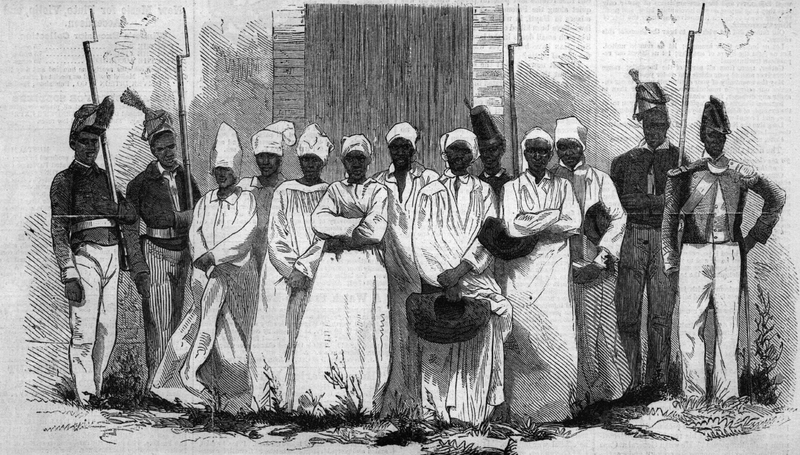
These were the kinds of thoughts milling about my head when the last song from a religious tradition came up: “Wangol.” This is a Vodou song. I was pleased and amazed that the “last word” went to an underrepresented religious group. True enough, Vodou grew out of Christianity’s interaction with traditional African religions, but it demonstrates just how eclectic both American religious culture and high school music concerts can be. Choosing the music for a secular choral concert in a multicultural setting must be a trying experience every single time. When we lived in Wisconsin, most concerts were unabashedly Christian in orientation. This is hardly surprising, I suppose, since choral music itself is often composed to express religious sentiments. New Jersey is a different world. I left the auditorium musing that Vodou is just alright with me, and just as plausible as calling Jesus on the telephone.


Double Blind

When I read Isaac Asimov’s three laws of robotics as a child, I assumed that I’d not live to worry about them in real life. What we don’t know can indeed hurt us. Time magazine frightens me sometimes. This week’s offerings include a small blurb about drones. When I was a kid, a drone was a bee—dangerous in its own right—or it was a verb used to describe an uninspired teacher or preacher’s monotoned wisdom. Now drones are robotic planes that can operate themselves without human input. Time reveals that technology has been developed that would allow drones to kill without human input. Asimov’s laws have become truly science fiction. Proponents argue that “collateral damage” might be minimized if we allow robots to kill with precision, and some have argued that the research should be prohibited. The fact that it has been developed, however, means the line in the sand has been crossed. If it has been done once, it will be done again.

800px-MQ-9_Reaper_in_flight_(2007)

Even as a daily user of technology, a deep ambivalence besets me. Maybe if it weren’t for the fact that every once in a while my computer (most often at work) freezes up and issues a command I can’t understand, I might feel a little more secure. Instead I issue a ticket for IT and when they call on me sometimes even a specialist can’t figure out what went wrong. Once the bullets are flying it’s a little too late to reboot. Maybe I’m just not yet ready to crawl into bed with a technology that might kill me, without feeling.

Just five pages earlier Time notes that 1 in 5 is the “Ratio of people who would have sex with a robot, according to a U.K. study.” All things are fair, it seems, in love and war. The part of the equation that we haven’t accounted for in our artificial intelligence is that thought requires emotion—which we don’t understand—as much as it requires reason, upon which we have only a toddler’s grasp. And yet we continue to build more and more powerful devices that might kill us with ease. Isaac Asimov was a prescient writer and a forward thinker. He was from the generation that aspired to ethics being in place before technology was implemented. At least as an ideal. We’ve reversed the order in our world, where ethics is continually playing catch-up to the new technologies we’ve invented. Now it’s time to decide whether to make love to it or to say our final prayers.


Gorilla Whale

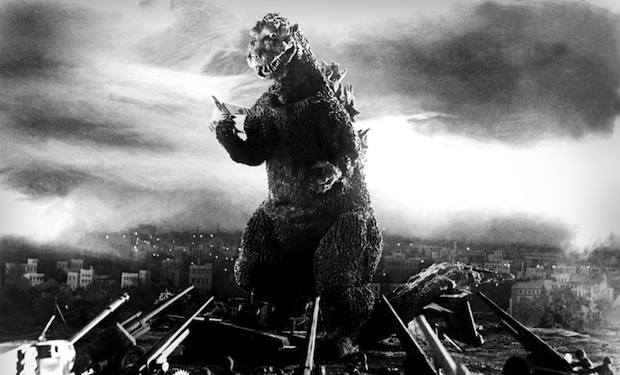
Monster Boomers grew up with Godzilla. Among the many monsters on offer on a Saturday afternoon, Godzilla was one of the most obvious fakes, but also among the most poignant of realities. Even as kids in the 1960s we knew about the atomic bombs that had been dropped on Japan. We knew, at some level, that we had come to a point where one species could destroy its entire habitat and that we had obliterated millions of our own kind in just the past half-century, let alone the millennia prior to that. Godzilla represented not just a man in a rubber suit, but the fear of what we could bring upon ourselves. Radiation, burning, the terror of Japanese citizens, and yet, that odd sympathy for the monster. Metaphors were growing much faster than the half-life was decaying. Godzilla became a lasting symbol of both childhood and adult awareness.

I haven’t seen the Godzilla that opened in theaters this past weekend. Inevitably, I eventually will. The 1998 version came pretty cheaply on DVD at a local video store a decade after its release, and I saw then that the monster had lost its emotional appeal. The original, compelling Godzilla was now just another monster to be destroyed. Instead of representing the environment fighting back, it was the environment waiting to be exploited. A shift had taken place and Godzilla was less godlike than before, but more terrifying. Monsters can be lovable, too.

MCDGODZ EC052

H. R. Giger, Time reports, died this past week. Giger was involved in creature design for the new Godzilla, and the memorial by Richard Corliss notes that he was inspired by H. P. Lovecraft, among others. Lovecraft gave us the old gods, and although the original Godzilla was about the horrors of nuclear war, there is a streak of Lovecraftian righteousness to it. The universe does not care for us. We invent gods, or monsters, or both, for that. Godzilla, as originally conceived, was never really that scary. What people could do to each other, and their planet, was. Sometime in the next decade, I’ll watch the newest Godzilla, and in the meantime, I hope that the message of the original somehow manages to sink in. We Monster Boomers can be quite naive that way.


In Our Own Backyard

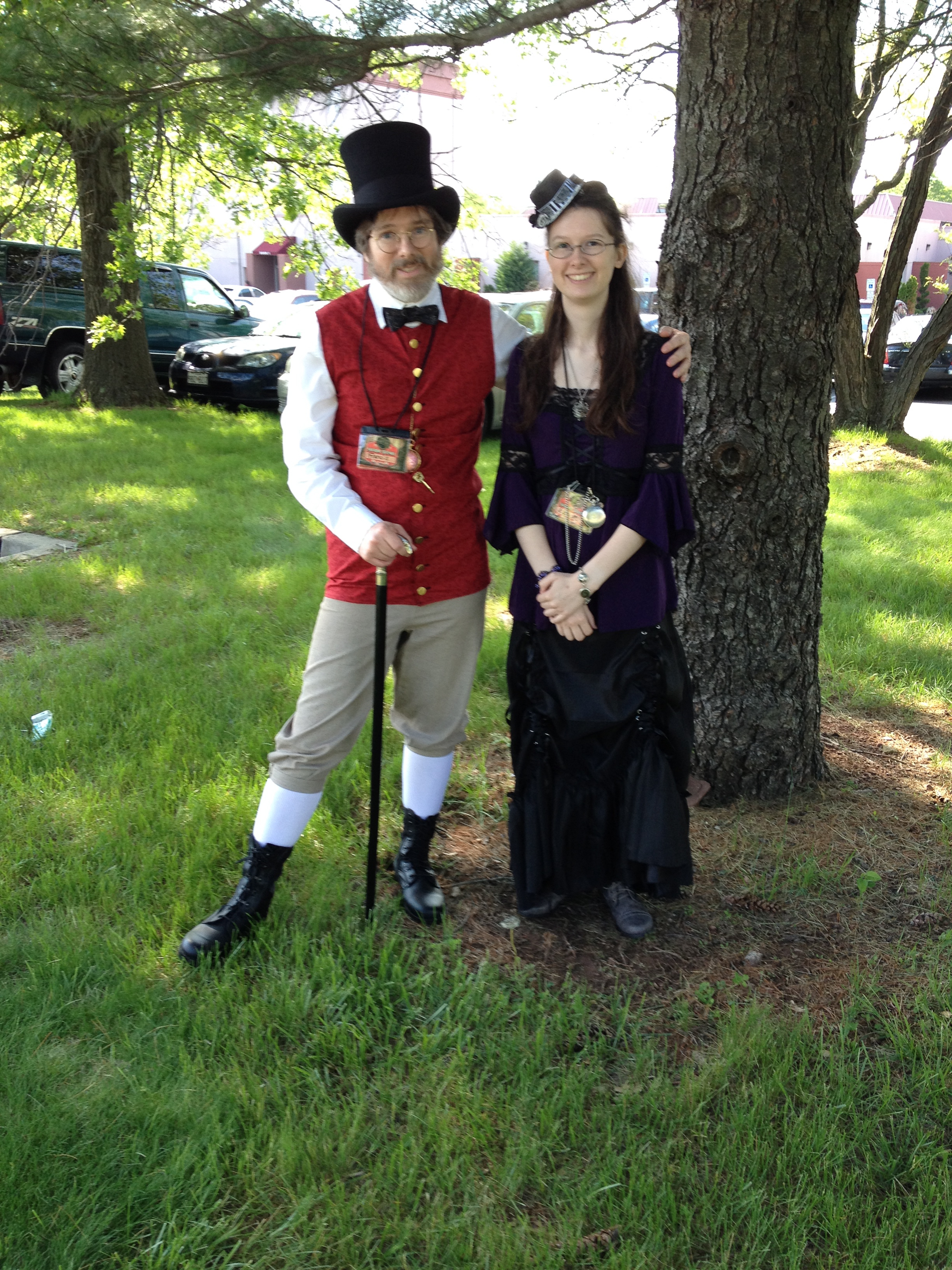
That monk walking towards me looks a little suspicious. Perhaps it’s that guy with a top hat and weird gun strolling next to him with a waxed mustache and carefully sculpted beard. Like a page ripped from ComicCon, the Steampunk World’s Fair draws people from all across the east coast (perhaps even further afield) to Piscataway, New Jersey, or some venue near Rutgers, every spring. In a world where work routinely stifles creativity, a weekend of subculture is about as good as it gets. As a veteran of over two decades of Society of Biblical Literature meetings, I’m used to large conferences. Only this is much more fun. The Steampunk World’s Fair draws some 4,000 people, most of them baroquely costumed, to a sleepy corner of an overly developed industrial corridor, courtesy of Jeff Mach and Widdershins LLC. I met Jeff Mach at Steampunk City last October. A natural promoter, he has a way of getting events noticed.

Steampunk is more than a literary genre. It has become an eclectic mix of the technical and supernatural, the scientific and the absinthe-laced dreams of fantasy. An element of H. P. Lovecraft fandom is clearly present at the World’s Fair, as is an interest in Victorian spiritualism. Indeed, it would not be difficult to concoct a religion out of this heady brew. Like most human cultures, there is no pure form here. Vendors will be glad to accept your money, but true artists put great effort into unique pieces of creativity and style. I’m here, not feeling entirely safe surrounded by such strangeness, wondering if this isn’t a natural outgrowth of what happens when a technically oriented society too long denies its emotional subtext.

Role-playing is catharsis. Many of us spend our days feeling relatively powerless in a capitalistic system that is overwhelming and stifling. Thomas Piketty meanwhile suggests that extreme economic inequality leads to a breakdown of a system that favors too few. Although restraining himself from the economic implications, Frans de Waal notes the same phenomenon among primates that we insist on calling lower than ourselves. Bread and circuses, we know, only kept imperial Rome going for so long before it collapsed under the weight of inherited greed. Under great pressure, the people will play. This feels a bit heavy for the Steampunk World’s Fair, however. I can’t recall the last time I saw robots rubbing elbows with bearded, cross-dressing nuns, and nobody thought any of this was out of the ordinary. Or maybe it’s just the absinthe-flavored truffles talking. I know where I will be, in any case, come next May.

A typical sight.

A typical sight.


Underwater Zombies

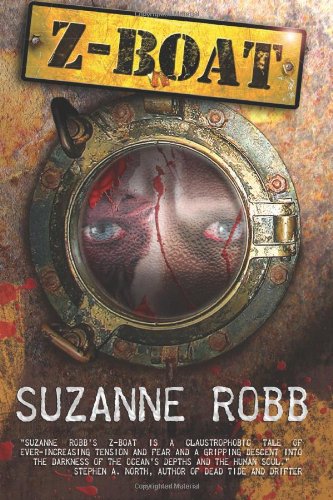
Z-BoatOne of the (many) benefits of blogging about zombies from time to time, is being sent books to read on the subject. Just as I cracked open The Zombie Bible volume What Our Eyes Have Witnessed, Permuted Press sent me an ebook of Suzanne Robb’s Z-Boat for comment. Z-Boat is an action novel with a strong female protagonist, that sets two naturally phobia-ridden subjects together: submarines and zombies. Since zombies, whether they acquire their undead status by vodou or by infection, are inherently a religious creation, they find their way onto this blog often. Unlike Stant Litore’s zombie universe, Robb’s is solidly secular, no mention of deities or demons anywhere. Set in a post-apocalyptic future (aren’t they all post-apocalyptic these days? We have difficulty envisioning anything much better), the crew of the submarine Betty Loo has to fight off a host of zombies intent on eating, and yes, converting, the living.

Zombies, whether conjured by spells and concoctions or by a contagious organism, while unthinking, always appreciate converts. The age-old human fear of being overwhelmed by swarms pertains just as well to the undead. We tend to avoid cemeteries at night, but death has a way of seeking us out in any case. I knew when my wife received a rather unsubtle flier in the mail advertising a local mausoleum that I too was likely on the list. Isn’t being a zombie all about the desire to survive, no matter what the cost? Still, it’s nice to know your custom is valued, right down to the end.

As I’ve mentioned before, zombie stories are difficult to take seriously in any rational world. Why a corpse with no stomach and no tongue would want to eat baffles the quasi-scientific mind I’ve installed. The Zombie Bible suggests that it’s hunger, and a metaphor is always appreciated in a room full of zombies. In Z-Boat the drive is more along the lines of the plot. You wouldn’t have a story without the undead. A potboiler, this is a page-turner, or, if you’re reading an ebook, a page-swiper. And although the function of a submarine is inherently like an ark—the preservation of breathing animals when overwhelmed by water—when the zombie organism eats its way into the crew, the only safety is found in escaping that ark. Robb’s tale is rollicking and rough, but her female Noah gives us all ground for hope.


Rosemary by Any Other Name

Rosemary

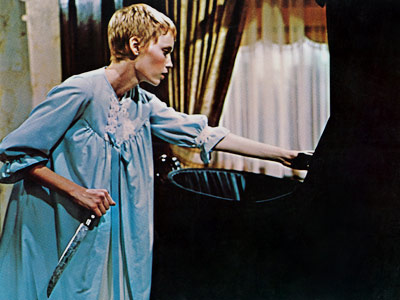
With NBC’s remake of Rosemary’s Baby into a mini-series in the news, I sat down to watch the original again. I’ve blogged about it before, but with most available funds being diverted to college, watching new movies will be a rare treat for some years to come. Besides, the original is a mishmash of religious ideas that despite their lack of coherence still leave the viewer somewhat disturbed. Since the last time I watched the movie, I’ve read several books on witches and have come to recognize the strange brew that Roman Polanski concocted for public consumption. Reaching back to the myth of diabolic witches, the original movie presents such witches initiating a new world by literally spawning Satan on a woman whose name is based on the mother of Jesus and who will ultimately care for the helpless little devil. The viewer, despite the knowledge that Rosemary is carrying evil incarnate, still sides with the vulnerable, pregnant protagonist. It’s the end of the world as we know it.

I’m not sure how you make a miniseries out of this thin plot. I suppose a nine-month pregnancy would lend itself to slow development, but haven’t we grown a little too old for witches and devils? In fact, Wicca is now a recognized religion in much of the industrial world, and the devil’s been on the run for decades. Religious movies, or at least movies based on religious themes and characters, are perennially popular, however, no matter what the secularists tell us. And why not open a series about pregnancy on the weekend of Mother’s Day? Nothing stirs the emotions like putting a young mother at risk. That’s perhaps the insidious side of the original movie—we silently side with the devil.

Rosemary is, of course, manipulated by her husband with the everyman name of Guy. This isn’t in any sense his child and, like any businessman, he stands to gain enormously from someone else’s labor. Exploitation is the cost of the continuation of the human race. It doesn’t take much to figure out that we’re watching a parable here. After all, the Time magazine cover asking if God is dead makes a cameo in Dr. Saperstein’s office. And the setting in Manhattan clues us in from the beginning that this is the place were many millions are asked to make a few very rich. There is a witchery in New York, and for those who know how to look, the devil may be found in the details.


Atheist Deities

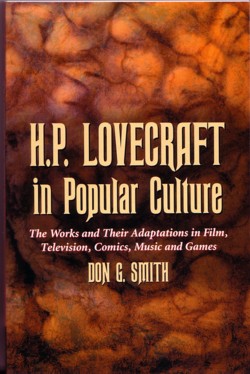
HPL in Pop CultureAn atheist who created gods. That’s the basic skinny on H. P. Lovecraft. Perhaps all gods are thus created. I can’t know; I wasn’t there at the beginning. Among writers who failed to make much of an impression in their lifetimes, Lovecraft staged a remarkable comeback in his afterlife. Don G. Smith’s H. P. Lovecraft in Popular Culture attests to the fact that some academics are beginning to pay attention to one of Providence’s most famous children as his works continue to spin off new forms. With an almost Puritan devotion to rationalism, Lovecraft saw no need nor room for deities in the world. His most ardent fans claim the gods he created are mere aliens, voyagers from beyond.

I wonder why one has to be a theist to create gods. Part of the problem is definitional; what is a god? According to the three fifty-cent words in the explanatory section of my young-person’s Bible, the traits are being omnipotent, omnipresent, and omniscient. Problem is, in the Bible God doesn’t really seem to fit any of these particularly well. The closest match seems to be omnipotent, but omnipotence leads to logical conundrums in reasoning, creating rocks so large you can’t lift them, and all that. Gods are, by just about any ancient standard, defined in relational terms—they are more powerful than us. That’s true of Lovecraft’s gods as well. They are so powerful that merely viewing them could drive you insane, eh, Ezekiel? (Perhaps Ezekiel is a good choice to compare, since his God comes down from the sky as well. Some would claim in a spaceship.)

Lovecraft survived because he understood what scares a person. Power, without feeling, is frightening. I’ve seen it in the eyes of both Christian and Pagan and it always sends me away shuddering. Smith’s book is more concerned with the survival of H. P.’s ideas in the media. It is a pleasant stroll, or an unpleasant stroll, depending on your perspective, through the descendants of Lovecraft’s monsters and gods. There’s no shame in calling them deities. If we are honest with ourselves, we will admit that some kinds of entities are inherently frightening.


Hotel Nowhere

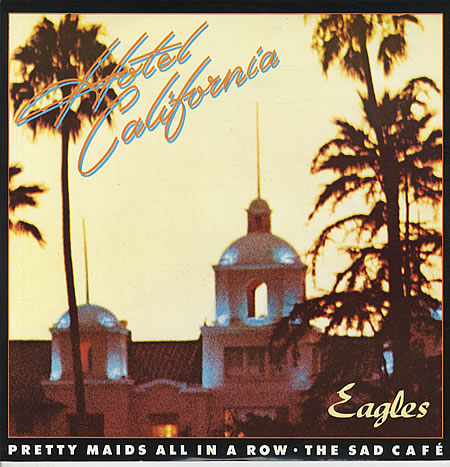
HotelCalifornia1977. I was in junior high school and I wore my hair long. I hadn’t yet donned the cross that I carried through my high school years with a constant fear of Hell on my back, but I did listen to the radio. The haunting song “Hotel California,” by the Eagles, scared me. There was something lurking there—something undefined and yet compelling. Cults were in the news, and after the People’s Temple suicide a year later, we were all pretty well convinced that the song was based on fact of some sort. Religious analysts concluded that the song referred to everything from the Antichrist (“they just can’t kill the beast”) to a New Religious Movement that had taken over a western mission (“we haven’t had that spirit here since 1969”). Members of the Eagles, when asked, said their intentions were to expose the darkness of the music industry as idealistic hippies came of age and realized, yes, it’s just business. Still, I shivered.

Nashotah House used to be on the frontier. Although it is only 30 miles from Milwaukee, it could still feel terribly isolated less than two decades after the Eagles had flown. Indeed, there were sotto voce suggestions that “Hotel California” should be the official seminary hymn. “You can check out any time you like, but you can never leave.” The nights could be very dark in the Wisconsin woods, and for those attuned to some of the more honest aspects of a religion based on exclusion this didn’t seem too far to stretch. “Hotel California” came forcefully back to mind reading about Oneiric Hotel in Wired. (Mentioning Wired makes me look smart.) The Oneiric Hotel is a lucid-dreaming device by artist Julijonas Urbonas, the kind of thing Wired finds newsworthy. The story mentions that Urbonas’s previous project—called Euthanasia Coaster—was designed to kill its passengers.

Now my mind checks into Bates Motel. I know Psycho is set in Arizona, but the desert southwest is terra incognita to an easterner, and besides, it’s just a metaphor. It looks like California to me. I saw Psycho as a college student, and was rather afraid to watch it while at Nashotah House. Indeed, the night I moved to campus I found a dog-eared script from a play about a murderous maid at the seminary left on my coffee table. “This could be Heaven or this could be Hell.” Psycho, it is asserted, was based on the macabre case of sociopathic killer Ed Gein who had roamed these self-same woods of Wisconsin, and who had died less than a decade earlier just down the road in Madison. There was, I knew, a psychiatric hospital just across the small lake that the campus bordered. We don’t call them cults anymore, but we all know what we’re talking about. There are indeed places that you can never check out, even if you leave.


Not Child’s Play

Games reveal quite a bit about a culture. That’s a little takeaway from my undergraduate anthropology class. Different societies favor different types of games: chance, strategy, zero-sum, role-playing, the list could go on and on. Indeed, games have surpassed movies as the big money makers of the tech entertainment industry. We love to play.

Religions sometimes try to capitalize on popular culture. The difference is that religions are taken with a lethal seriousness that most games leave behind. Sure, you may end up shooting a few hundred people, but when you walk away from the flat screen you probably know that the game is over. Religions, of course, realize that they aren’t fun. Despite the constant criticism that religions get for being simplistic and superstitious, anyone who has tried to be a serious adherent knows that it isn’t as easy as it looks. Being religious is very hard work. So, why not turn to games to convey hard truths? The other day I found an old, still-in-the-box, shrink-wrapped game called Divinity. It is designed to teach the catechism of the Catholic Church. A Monopoly-like track edges a stained-glass center board, and, I suspect, you get considerably more than $200 for passing Go.

IMG_1307

Using games to sugar-coat bad tasting doctrine is nothing new. One might argue that the Sunday School tradition long ago capitalized on the idea of making avoiding perdition fun. In some cases it does seem to have worked; some kids grow up terrified and spend their lives trying hard to win the game. In fact, it can set some lives on a trajectory far too high to achieve, but far too important not to try. We can’t all be priests, after all. Should we all be clergy, then many interested parties would be out of a job.

IMG_1308

Once upon a time, the state religion could demand a sizable chunk of municipal funding. Taxes went to support the expensive luxury of clergy dedicated to pleasing the gods, Then the rules changed. With religious freedom there comes a great outpouring of creativity to ensure that the coffers never run dry. Christian comic books, Christian rock, Christian movies, Christian board games. We have come to an age of faith branding. It’s no surprise, really, for it is, according to the rules, a zero-sum game.


Fire Bearer

Prometheusposterfixed

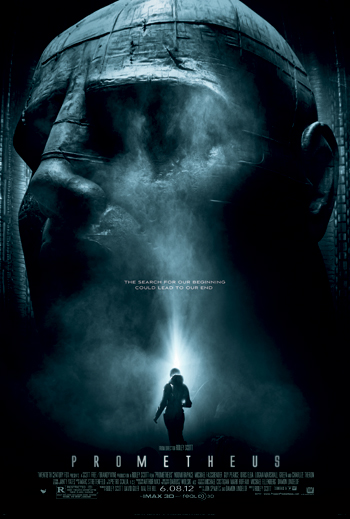
Part prequel and part religious odyssey, Prometheus both treads familiar ground and explores new territory. In keeping with my invariable sense of timing (I saw none of the Alien trilogy in theaters), I waited until well after the fact to see the movie. I had heard Prometheus called a prequel, but even if I hadn’t some of the Ridley Scottish touches might’ve given it away: a large ship bound for a distant planet, evidence of unexpected inhabitants—yes, they knew about the “engineers” (we could call them “watchers”) but not the proto-Aliens they were breeding. We even have the android that understands science’s need to be greater than that of human need. Déjà vu. Still, there’s something very different here—direct discussion of religion and how faith plays into the work of scientists. Elizabeth Shaw, the sole survivor, wears a cross as she tries to work out what her father’s teaching about religion might mean. The cross isn’t hidden in the background—it is brought out into the open and discussed.

If you haven’t seen the movie, the premise is that ancient artifacts (including the ubiquitous Sumerian, Egyptian, and Mayan templates) added to a new discovery in Scotland, demonstrate that a race of giants have been inviting us to their planet for thousands of years. In fact, they had engineered us. (Ironically, the biologist who espouses Darwin is among the first to die.) Peter Wayland, industrialist billionaire who doesn’t want to die, funds a trip to meet these engineers. The engineers, save one, died long ago. Apparently of some plague (cue the aliens!) that were created to destroy humans. They were about ready to send the nasty beasties to earth when they were overcome, with only a single survivor. No coincidence that this planet was reached on Christmas day. It becomes clear to Dr. Shaw that these engineers were intent on destroying the human race they created. And still, she slips her cross back on before facing the engineers of life and death. This was Noah without all the water (and much better writers).

Of course we think we know the rest of the story. Sigourney Weaver bravely led us through three alien attacks before sacrificing herself in a New Testament kind of ending. But what about Elizabeth Shaw? She who bore and aborted the mother of aliens in a very maculate conception? She is off to a prequel’s prequel to find out why these engineers wanted to destroy us. Rumor tells of Prometheus 2, and I wonder if we will get to meet our maker’s makers. Although Scott is an atheist, he brings us Moses later this year, and has already given us Mary and Jesus wrapped up into one with Ripley and her spiritual mother, a sci-fi St Anne, in Elizabeth Shaw. After all Elizabeth was cousin to Mary, and now that the question of faith has been openly discussed, it will have to be more fully addressed. Among the unanswered questions is whether I be able to make it to the theater on time to see this one, or will two years vanish before I find the time to address the eternal questions that Ridley Scott always seems to pose.


Clearly Religion

GoingClear“There is no point in questioning Scientology’s standing as a religion; in the United States, the only opinion that really counts is that of the IRS;” so Lawrence Wright partially concludes Going Clear: Scientology, Hollywood, and the Prison of Belief. This is an important book, and one which once again demonstrates how seriously religions should be taken. New religious movements offer a ringside seat to how orthodoxies are born. Facts may be distorted or covered up, but there is information to be had on L. Ron Hubbard, Joseph Smith, and Mary Baker Eddy. We can learn from the way their ideas may move from fiction to fact, and how intelligent people still feeling spiritual yearning can turn to a religion invented recently as well as those invented millennia ago. As Wright points out, all religions make improbable claims. Fact-checking, however, is much more difficult for periods long gone that left only meager records. The distance in time may lend ancient assertions the benefit of the doubt, but the real decision-maker is money.

Given universities’ interests in lucre, one might logically conclude that religions would be of great interest. It is telling that, especially in the case of Scientology, that the factor most important to the status of the church is its money. Religions may claim tax-exempt status, setting them apart from purely commercial enterprises. This gives religions an advantage when they are careful with their finances, and the whole question of whether a religion is a religion is not left to scholars but to the lawyers of the Internal Revenue Service. The truth of religion lies in its bank-books, not its holy books. No doubt in the case of Scientology this is because of the high-profile court cases in which the status of the religion was challenged by government agencies. Nevertheless, when it comes to the laying down of the law, only money really matters in defining a religion.

As Wright discusses, one of the problems we face is that religion is poorly defined. Nobody can really assert much beyond that religions involve belief of some kind. Beliefs, in this case, about L. Ron Hubbard and his ideas. Although facts about his life are disputed, there can be no doubt that Hubbard was an intriguing man. He was a prolific writer with great imagination, and he clearly had keen insight into psychology. A religion used to be measured by the good it produced. Now it is measured by the dollars. As Going Clear illustrates, trying to construct an unbiased account of Scientology is a fraught enterprise. Like many modern religions, Scientology is very secretive. Even the early Christians knew that if everybody could join, then the club loses its appeal. Apart from belief, religions also must have outsiders and well as insiders. In a world measured by consumerism, wealth is the surest sign of blessing. No one should be at all surprised, therefore, that it takes the IRS to decide that which used to be taken by faith alone.


Take a PAAS

Like so much of life, PAAS Easter Egg coloring kits were the result of an accident. To be more specific, a chemical accident in New Jersey, something which is far from rare. This particular accident, however, had a fortuitous side-effect: the brightly colored (but not radioactive) Easter Egg dye that many of us associate with childhood. Around 1880 Newark druggist William Townley spilled colored dye onto his suit, leading him to individually package holiday colors, according to a story in the New Jersey Star-Ledger. That individual packaging allowed for a full set of egg colors to be sold together and the PAAS brand was soon launched.

The idea of coloring Easter Eggs, like so many Christian traditions, likely has pagan roots. Eggs were a sign of new life with the coming of spring in many cultures (although boiling the poor things rather defeats the purpose). Christians adopted the egg as a resurrection symbol—the chick pecking out of its shell was like the resurrected Jesus bursting from the tomb, albeit somewhat less dramatically. Watching a newborn chick hatch is an emotional experience. At the 4-H Fair, standing around the incubator in the chicken tent, you can see wobbly, uncertain, tiny birds tentatively trying to assess this strange new world that is colder and somehow more compelling than life in the shell had ever been. The mighty son of God they’re not, but they are much more like us, looking for answers and taking small steps until they’re more certain of what they face.

DSCN4483

The coloring of eggs has origins lost in antiquity. Nobody’s quite sure why it was done beyond the fact that they look nice. Romans ate eggs as part of their spring celebrations, and Christians came up with a story to explain colored eggs. The legend claims that Mary Magdalene, in trying to convince the emperor of the truth of the resurrection, turned eggs from white (or brown, as they likely were in those days) to red in her open hands. This proof, however, failed to convince the Caesar. What seems certain is that pagans liked coloring eggs so this provided a new source of evangelism to the Christians who assimilated the practice. Like Christmas, the Easter Egg has become a thoroughly cultural symbol—since Easter comes on a Sunday employers aren’t obligated to give the day off, so everyone can celebrate. Children hunt eggs on the White House lawn and we can still expect everyone to be in the office on Monday morning. Resurrection, after all, can only reach so far.


Ham Awry

Ham, in the movie Noah, is a conflicted figure. I felt a slight chill, I’ll have to admit, when the carnivore Tubal-Cain asked him his name, reminiscent as it is of pork. Of the sons of Noah he alone bears the impossibly stylish short hair his father seems to favor, and yet, he is one of four men alive and the only one without a mate. Japheth is young enough to wait for his twin nieces to grow up, and the ancestor of the Semites, Shem, has already begun his fruitful multiplication, just when humanity seemed at an evolutionary bottle-neck. Ham found a wife but couldn’t keep her. Noah leaves her to be trampled to death as he takes his son to the gentlemen’s club known as The Ark. The rain has already begun to fall.

In the Bible Ham gets short-shrift as well. Having seen Noah naked after he discovers alcoholism, Ham bears the brunt of his father’s wrath. Noah, perhaps still hungover, curses Ham’s son (not appearing in the movie), Canaan. From the biblical point of view, the reason is perfectly clear: when Israel arrived in the promised land, the Canaanites already lived there. Given that the promise was to Shem’s descendants, a genocide was ordered and probably the more liberal among the marauding Israelites felt a bit of guilt about that. No worries—like ethnic minorities in horror movies, the Canaanites were created to be killed. Ham, however, isn’t cursed for his voyeurism. Still, according to later interpretation, he is the ancestor of the Africans as well, and the “curse of Ham” was used for a biblically literate society as a justification of slavery. After all, Ham had had an eyeful, and it was only fitting, they reasoned, that his n-teenth-hundredth generation should suffer cruelly for it. How’s that for air-tight reasoning?

According to the movie, Ham decided to leave in voluntary exile. Perhaps he hoped that like Cain he might find an unlikely spouse in an unpopulated world. He had grown apart from the new Adam, welcoming Tubal-Cain aboard the ark, and keeping him hidden until Noah threatened to kill the future of all humankind. Strangely, it seems that Ham is the proximate cause of the salvation of all humanity, and he become a self-sacrificial scapegoat in the Icelandic scenery. He declares that his deceased chosen mate was good, and Noah had cursed her as well. In the Bible cursing is freely dispensed, and it is considered adequate to its task. Somehow that curse transmuted to a nobility in the film, for Ham is the most like Noah of all his children. And even today that self-same Bible is used to justify a genocide in a world where myth is taken for reality.

Noah doesn't like Ham

Noah doesn’t like Ham