Divergency

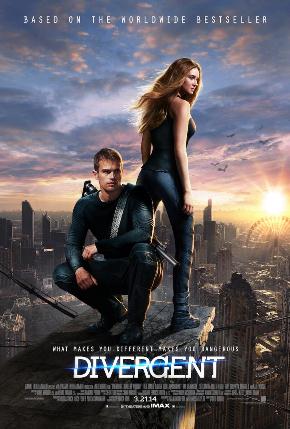
DivergentSelf-denial, no matter what its motivation, is a religious ideal. In its more extreme forms it becomes martyrdom, but most religions agree on the value of taking less for yourself so that others might have more. This has been running through my head since seeing the movie Divergent. I read and posted on the book some time ago, but having recently seen the movie—a fairly faithful adaptation to the novel—I was forcefully reminded that this is a dystopian parable. In the future, society is divided into different factions, based on a person’s predisposition. This is done to keep the peace, and the factions seem to get along until suspicion grows about the group called Abnegation. The Abnegation faction is moved by pity and compassion for others. They are the consummate self-deniers, not thinking of themselves to the point of limiting time they can spend looking in a mirror. Others are the focus. Naturally, those who see the utter selflessness of others wonder what they’re really up to. Suspicion grows that this group is after wealth, in the form of food, secretly stockpiling it for themselves. Nobody would give up for themselves so that others can have more.

As I watched the movie I thought about religious groups that preach self-denial. Granted, I’m only one person, but growing up that was the message I continually heard loud and clear in the teachings of Jesus, according to the Gospels. Deny yourself so that others might have more. The deeper I became involved with the church, however, the rarer I found such behavior. By the time I reached college, I still hadn’t figured out that religion had become an industry, like any other. A service industry, to be sure, but it still had CEOs and treasurers and, increasingly, political power. The political seduction of religion already had a history by the time I became aware of it, but I still believed that self-denial was at the core of true religion. Perhaps the factions I heard whispering around me were right. Perhaps there was something more driving all this.

In Divergent, the belief in selflessness leads to self-sacrifice. In many feel-good movies, this leads to an expected resurrection. Here the future is bleak, and the dead remain dead. There is a kind of resurrection as the Dauntless faction comes out of its stupor, but the movie leaves the viewer wondering if there is a future after all. Is there a place in the world for those who legitimately want everyone to share? I think that every time I find myself driving. Behind the wheel, selfish maneuvers that lead to little, if any, ultimate gain seem to be deeply embedded in those who want to get there first. Abnegation, it seems, is a danger on the road. Driving, it seems to me, is a real test of someone’s religious convictions. Perhaps it is that one has to realize that the vehicle in front of you contains another human soul. Or perhaps it is that the fragmentation of society has already gone too far and those who don’t take for themselves are not emulated, but consumed.

The Last Word

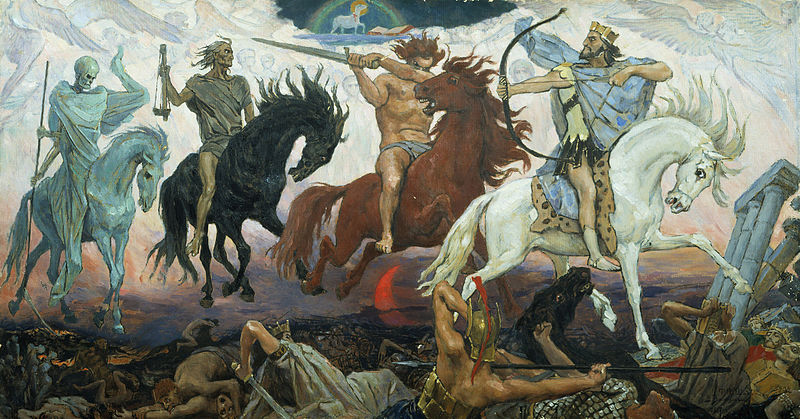
The end of the world, it seems, never goes out of fashion. My wife shared a story on the BBC about CNN (such self-referential media hype may be a sign that society is collapsing already) having a video ready to release for the apocalypse. In a bit of end-of-time sangfroid, it is rumored, CNN’s Ted Turner ordered a last-second video to be made so that loyal CNN viewers would be ushered out with his version of the last word. The media, of course, is a powerful segment of society. Occasionally schools and businesses are shut down due to their meteorological predictions. The media tells us who the experts are, and why we should listen to them. The media provides us with some of the only fact-checked material from far-flung ends of the globe—or even outer space—to which we, the people, would not normally have access. The media, in other words, determines reality.

800px-Apocalypse_vasnetsov

Meanwhile I wonder, as I often do, what gives those who own media corporations the right to determine reality for the rest of us. For example, if the rumor of Turner’s video is true, what would give the rich and powerful the right to determine what flashes before our eyes as the world winks out of existence? The apocalypse, after all, is a religious concept. Although largely developed from biblical scripts, other religions do occasionally have their end-of-the-world myths, just like most religions have beginning-of-the-world myths. If you have billions of dollars, does that mean you have the right to determine end-times viewing? When money determines the truth, the world has already ended.

Nevertheless, the idea lives on. We are constantly reminded that one or another religious sect has declared that the end is nigh. We’ve heard it so often that we’ve ceased to pay attention. In a world where the media has largely dismissed the rest of the Bible (except when blockbuster movies come out featuring a biblical story) why does Revelation still hold such currency? After all, the apocalypse takes its very name from the final book of the Christian Bible, and without Revelation we might be none-the-wiser about the looming end of all things. Revelation was very much a product of its time. Despite the progress of science and technology that gave us the media corporations we blandly recognize today, we still harbor doubts deep down about the longevity of it all. Even those who write the news look to other media giants to get some hints of the truth. Ironically, they don’t seem to want to ask scholars about it. After all, sensationalism is news. At the end of the world, we really don’t care what scholars have to say, as long as we’re entertained.


Worn Out Religion

Truth claims are integral to religions. No one would join a religion not declaring itself to be true. Some months ago, I posted about the store True Religion that had recently opened at our local mall. I’ve always found such branding odd—surely the store wasn’t proselytizing those who had religious commitments to buy its jeans. Or perhaps it was trying to lure in the increasing generation of nones. I have seldom felt any kinds of truth claims applied to my apparel. I buy clothes at reasonable prices and wear them until they are no longer fit to be seen in public. Even then I continue to wear them at home until they simply grow too holey to be of utility. I seldom have clothes left in good enough shape to donate, and I’m only fashion-conscious in terms of a decade or two between stints of buying what’s on the bargain rack. Religions, of course, sometimes do dictate what it is appropriate to wear. Leviticus famously declares that fabrics of mixed fibers are an infraction. Perhaps True Religion carries only single fiber-fabrics? I guess I’ll never know.

IMG_1868_2

Since our local mall has mostly clothing stores (few whimsical shops appear any more), I seldom go. There is an Apple store, and since our family has used exclusively Apple products since the 1980s, we do have to stop in from time to time. On my most recent trip, I noticed that True Religion, right across the corridor from Apple, had gone. “There’s no more true religion,” my daughter quipped. I couldn’t help but think about the implications of all this. Surely this was not the first religion to die. Disused churches have been converted into businesses for years, and some religions die out entirely rather than just fade away like an old pair of jeans. What is the message, however, when a claim of truth is made, only to be closed down by the exigencies of finance alone? Something disingenuous is going on here.

Religions not only make truth claims. They also convey a sense of promise. If you believe, you receive something in return. But what does it mean to believe? Driving home we passed the Elks Lodge. Once, when my daughter received a certificate of merit from the Elks, we were invited to an award ceremony there. The president of the lodge, doing a bit of proselytizing, mentioned that very little was required to join the Elks. “You do have to believe in God,” she said. How do you measure such a belief? Did she mean to say “you have to say that you believe in God”? The Elks are, after all, not a religion, but a community organization. Although True Religion is gone, the Elks, with their minimal commitment to faith, are still around. My clothes are perhaps a bit too worn to join the Elks, but what else is there to do when there is no more true religion?


Monster Map

Monster QuestMonsters are becoming more mainstream. Or at least it seems that the ridicule factor, with which I had to deal as a child, has moderated a bit. A friend recently sent me a link to Hog Island Press’s Monsters in America map. No doubt, skeptical persons will dismiss such whimsical charts as a load of hooey, but people continue to see unusual things. Although we don’t subscribe to any television service, it has become clear that ghosts and Bigfoot have become pretty standard fare for reality shows. Lake monsters still make appearances from time to time, and since we aren’t always watching the waters, nobody’s terribly surprised. And who knows what’s flying below the radar at night? People have believed in monsters from the very earliest of times. We, however, live in an age when belief can’t exist without proof, and our world of the plausible has shrunk because of it.

Another problem here is the definition of “monster.” The traditional monster was pure fiction—werewolves, vampires, and zombies simply don’t exist. We tell scary stories about them because it’s fun to be afraid when we know there’s really no such thing. American monsters, on the other hand, are based on eyewitness reports, reliable or not. I grew up literally on the edge of the woods in a rural town and never saw anything cryptozoological in nature. At the same time I learned that it’s difficult to see everything in the woods. I would’ve never guessed, for instance, that the number of deer and bear that were shot each season were only a small representative of their populations. The woods, it seemed, should’ve been much more crowded.

Those who’ve spent time in the woods know that nature doesn’t reveal everything easily. Looking at the Hog Island Press chart, I notice some new creatures (to me) and some surprising omissions. Wisconsin and Michigan, both heavily wooded and (I speak from experience here) areas of strangeness, seem devoid of the creatures so commonly reported. Linda Godfrey has written extensively about the dog-men (or werewolves) not uncommonly reported in both states. I suppose that in making such a map there is an embarrassment of riches. People see things all the time, and urbanites have a difficult time identifying species the naturalist finds, well, natural. One need not be credulous to enjoy the monsters of the natural world. It is fun, in any case, to consider the possibilities, now that monsters have gone mainstream.


Commandments by Committee

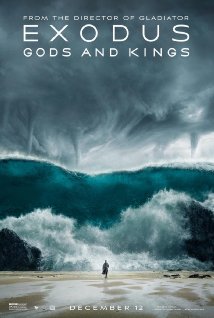
Something about the holiday season seems to bring out atheistic activism, or at least media interest in atheism. Now that we’re safely in 2015, I suspect things will quiet down a bit until the next major religious holiday comes along. Ironically, since I was a child I’ve heard about how secular Christmas, in particular, has become. Reactions to this have led to “Christmas wars” that give the lie to sleeping in heavenly peace. In any case, back in December CNN ran a story on the atheist ten commandments. This was just before the holidays, but just after the release of Exodus: Gods and Kings, so it was a story sure to capture human interest. The atheist commandments were chosen by a committee, and, of course, have no binding value. Many of them are more precepts than commandments since, it seems, you need a deity to command all of humanity. Nevertheless, the number 7 commandment has a very biblical sound: “Treat others as you would want them to treat you, and can reasonably expect them to want to be treated.”

More interesting than the list, in my way of thinking, is the form of delivery. The ten commandment format is an obviously religious one. Atheists have long tried to make the case that non-belief is not the same as immorality, and there can be little doubt that this is correct. One need not believe in order to be a good person. Yet, the force of the symbolic ten commandments comes from a divine mandate. Committees, as efficient as they may be, don’t have the same kind of authority. You can hear it now—“Why should I listen to you? Who are you to tell me what to do?” With God there is always the threat of eternal damnation or the sending of plagues. Commandments by committee appeal to reason.

The ten commandments—here I mean the traditional ones—haven’t fared especially well among the faithful. Survey after survey shows many people don’t know all ten well enough to cite them. Some, such as the one against coveting, are hard to demonstrate or prove one way or the other. Honoring parents, in some extreme cases, seems sinful in itself. What doesn’t count as a graven image? So my question is, who has the authority in a post-Christian world to give commandments? The religious certainly won’t take advice from atheists, and religious leaders disagree among themselves about what the deity demands. No committee, it seems, can capture the true essence of divine demands. Perhaps it is a matter of boiling the ten down to one (similar to number 7 cited above) and getting our leaders to truly believe this before imposing it on all.

480px-Rembrandt_-_Moses_with_the_Ten_Commandments_-_Google_Art_Project


Biggest Buy

It isn’t really that much of a specialty item. You see, we live in an older apartment and three-pronged outlets were mostly reserved for kitchens the last time the place received any kind of upgrade. I’m not sure which century that was, but here in the twenty-first, we have lots of electrical toys, and of course, they come with grounding plugs. We needed an outlet for a device, but the nearest plug was yards away. Well, it seems that extension cords are now fire hazards, so you need to use a power-strip. Your typical power strip, as I came to learn, has a six-foot cord. (Although I said “yards,” I meant more than a couple.) So I drove to Best Buy. I can’t remember the last time I was in one. These “buy it large,” “consume excessively” kinds of stores aren’t really my style. I never believed the consumer myth, but I figured these large appliances must require surge protectors or power strips, right? And surely not all houses have conveniently located plugs.

Photo credit: Myke 2020, Wikipedia Commons

Photo credit: Myke 2020, Wikipedia Commons

I am neither a large man nor a fetching woman, but it became clear that I was practically invisible in the store. Trying to get the attention of anyone on the blue-shirted staff was impossible. Even walking right up to someone with purpose wasn’t enough. I did notice, however, that the blue shirts were fairly adept at helping the female clientele. Eventually I found the surge protectors, etc., in their aisle—up to eight feet in length. I tried for another 20 minutes to find help, but the kind of help I need, apparently, doesn’t come in bulk. Maybe on a couch. I went home and within minutes found what I needed on Amazon. I would have it in two days.

Bulk buying, in my humble opinion, is an ethical issue. I’ve stopped going to Home Depot, and even Staples and Barnes and Noble are final resorts. What I’m looking for can’t be found in such places. Besides, nobody wants to stop and direct a bearded, perpetually confused-looking guy. We live in a culture where worth is measured in comestibles and durable goods purchased in bulk. Those with the most buying power are the gods. I can’t even drive by Costco without a substantial delay on a Saturday morning. I don’t need very much to get by. Still, come to think of it, I could use a power source that is conveniently located. And perhaps, some day, a culture more interested in quality than quantity.


Like a Virgin

Having more than two days in a row when I could be both home and awake, led to some premature spring cleaning over the last few days. One of the artifacts discovered among the piles of “deal with it later” things was a booklet that was likely an impulse buy—a stocking stuffer or perhaps a whimsical birthday giftie. In our house it could have only been directed at me since it was a little book about Virgo. I have never, even in my most experimental modes, considered astrology to be anything but pure fantasy. I do, however, realize that it is just as old as astronomy, and ancient peoples firmly believed that the sky had unseen influences on everyone. Still, the calendar dates during which you are born can’t provide personality traits any more accurate than gross generalizations. Two of my brothers and I are Virgos, and we are very different personalities, despite having grown up together.

Still, curiosity compelled me to take a few minutes to look at the guide by Teresa Celsi and Michael Yawney. It begins with a brief introduction to astrology, and as I thought about it, I realized that there are indeed people who take it seriously. Long ago I recognized that the criticism “ridiculous” (apart from being offensive) is never an adequate antidote to religious belief. Many elements in conventional Christianity, and other mainstream religions, fall into the similarly implausible realm. There is a kind of science to astrology—labeling and categorization, observation and recording. I still don’t believe it, but I can see how it might appeal. And I thought I could recognize myself in the Virgo the booklet described. Yes, some of that was definitely me. Then I got to the bit about a Virgo’s house being neat and tidy, and how people appreciate it. We live in a small apartment and visitors (who are few) are more inclined to make sure their immunizations are updated after leaving, rather than praising our housekeeping skills. Fact is, clutter doesn’t bother me that much.

Virgo2

The majority of the little novelty book was about relationships, of course. I still remember the days when “what’s your sign” was considered an acceptable pick-up line, at least if movies are to be believed. I couldn’t remember my wife’s sign, and was surprised to read, when I found it, that we might encounter some conflict, should we decide on a permanent relationship. We’ve been married for 26 years with barely a raised voice in all that time. Maybe it’s because I’m a Virgo. Or maybe it is because we are more the agents of our own destiny than the stars. Nevertheless, it would be a comfort if we could pick up a chart and know what our lives might be like. It’s easy to see why astrology has taken on the quality of a religion for many. Please excuse me but, according to my nature, it is about time to get back to my cleaning.


Land’s End

Although not due for release for another two years, the internet is already buzzing about Pirates of the Caribbean 5. Thing is, once a studio finds a successful formula, they’re reluctant to let it go. Nevertheless, with a couple days off for New Year’s, and all the family here, we decided on a marathon of the four movies available for home viewing. I used to use a clip from the second movie (Dead Man’s Chest) in my classes to demonstrate how the Bible is portrayed in popular culture. In the scene where Pintel and Ragetti are rowing toward the beached Black Pearl, Ragetti is leafing through a Bible, although he can’t read. He says, in his defense, “It’s the Bible. You get credit for trying.” Indeed, the Bible appears disguised as the huge codex of the pirate code (a kind of over-compensatory pentateuch), and, as I noted before, the book that saves the mermaid’s life in On Stranger Tides. In fact, for those willing to look behind the scenes, the Bible shows up repeatedly in the series.

Even as a landlocked child maritime themes and concepts were compelling to me. I yearned for the ocean without ever seeing it. Long I stared at the cover of Rachel Carson’s The Sea Around Us in wonder. When I finally had the opportunity to strike out on my own, it was to Boston I headed, with its rich New England tradition of the sea. I have tried, ever since, to return there. Theologians, although I don’t count myself among their number, have often found a religious resonance with the sea. The Pirates of the Caribbean movies, based as they have been on a Disney ride, nevertheless manage to tap into the romance of the ocean. Not compellingly written, apart from the fun antics of Captain Jack Sparrow, they don’t present an entirely coherent story line, but they do put the viewer, vicariously, at least, on the ocean. And they have been among the most successful film series ever released. Many, I suspect, are drawn by the lure of the open ocean.

Rewatching the films also reminded me of Cthulhu’s influence on the character of Davy Jones. The origins of the euphemism “Davy Jones’ locker” are uncertain, although some trace it back to Jonah. Nevertheless, it stands for the place of death on the sea floor—the very place where Cthulhu lies dead but dreaming according to his creator H. P. Lovecraft. No doubt, Lovecraft’s description of Cthulhu played into the depiction of the character of Davy Jones as presented by Disney. At the end of At World’s End, Jones falls dead, once again, into the maelstrom that will take him back, dreaming, to the ocean floor. In so doing he participates in the endless give and take of the sea. I suspect a couple years hence will find me in a theater to watch what seems a somewhat tired trope, but it will be more the sea than the sparrow that will draw me in.

Photo credit: Anthony92931, Wikipedia Commons

Photo credit: Anthony92931, Wikipedia Commons


2015

New Year’s Day seemed to me, as a child, an odd choice for a holiday. We’d just had Christmas a week before. Of course, at the time I did not realize that the date of New Year’s was a symbolic one for the Christian calendar, and the celebration seemed no more significant than getting to stay up until midnight. The systematic changing of the years felt just like the regular progression of numbers, and what was there to celebrate about that? Of course, time cures even itself, and I came to see New Year’s as a time of new beginnings. Resolutions never sat well with me, since improvements, I’ve always believed, should be implemented as soon as the problem is noticed. Waiting until the dead of winter hardly seemed like an inspiration to get things done. Unless the resolution was to get more sleep. Still, we can all use new beginnings.

Photo credit: chensiyuan, Wikipedia Commons

Photo credit: chensiyuan, Wikipedia Commons

New Year’s, however, has taken on a more somber tone of late. As an adult, I often brood over the past year, and it seems that just when hope may be on the horizon, we find new ways to make the situation worse. Much of it comes down to politicians and the economy, two things that no resolutions ever seem to fix. Although I didn’t see the point of it all as a child, I did look to the future with optimism. It has gotten so bad now that science fiction writers have to make a case for trying to have a positive outlook. Dystopias are popular, I believe, because they are believable. Given the performance of politicians and church leaders (with the obvious and large exception of Pope Francis) we’ve seen little to suggest that our institutions have the will or the means to improve our lot. Even the Pope has made enemies by being a nice guy.

Already we’ve begun to hear that some apocalyptic groups have targeted 2015 as the year the world will end. We’re just getting over 2012. I think what is most disturbing is the sameness of it all. Another year means the continuation of a job that keeps food on the table, at least it is to be hoped. Beyond that, we will have more antics to watch that, were they not so fraught with consequences, might be thought funny. I haven’t lost my capacity to dream. Those who think me a pessimist don’t know me very well. Dreams are, however, futures that we have to take into our own hands. We can’t spend 2015 waiting for politicians and corporations to suddenly change for the better. In what sense is “business as usual” ever new?


Bible Stories

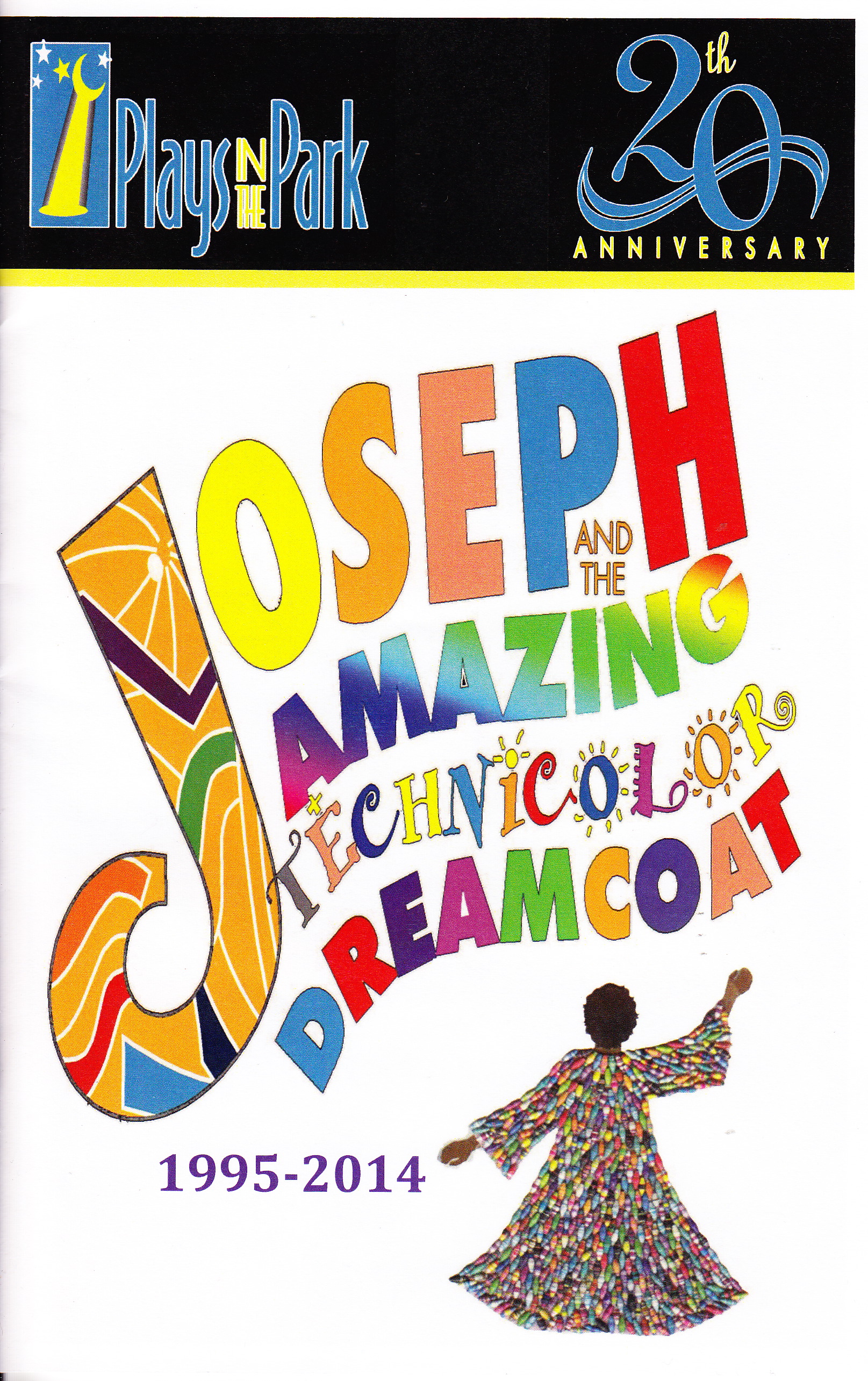
JosephSay what you will about it, but the Bible has some great stories. Based on classical measures of what makes a good tale, the Bible ranks up there with Greek mythology and other ancient fiction that is meant to teach us about being human. Stories do teach, and literature is among the greatest of pedagogues. For the past two decades, Plays in the Park here in the New Brunswick area of New Jersey, has been putting on a post-Christmas, pre-New Year production of Joseph and the Amazing Technicolor Dreamcoat (indoors, due to the time of year). With the kinds of production values you expect of many off-Broadway venues, the show is exceptionally well done, and due to the local color, never too serious. And they play before a packed house. The reasonable prices, I’m sure, have something to do with it, but the fact is the story of Joseph is classic. Full of radical reversals, dreams that come true, and reconciliation, the Joseph novella is one of the great stories of humankind. Unlike many tales of Genesis, God is rather in the background here, perhaps overseeing the event, but not interfering in the human drama.

Although the musical, like most adaptations, takes liberties with the story, it remains fairly true to the Bible. Andrew Lloyd Webber and Tim Rice also had success with Jesus Christ Superstar, showing that, despite its detractors, the Bible still has some appeal. Negative sentiment directed toward the Bible largely derives from the wooden insistence of literalists that everything must be taken at face value. The Bible isn’t allowed its symbolic resonance. Perhaps we can get beyond a worldview where the sun literally goes around the earth, and pay attention to the very human dimensions of the stories it tells. Truth may be of scientific nature, but it may also be—indeed, it must be—human. The very concept of verity is human. We are the ones making up the story.

Scholars point out that even the colored coat of Joseph is based on a translation decision in the Septuagint (the Greek Hebrew Bible). For many people, however, who’ve never read biblical scholars, the truths of Joseph and the Amazing Technicolor Dreamcoat as just as legitimate. The rivalry between siblings is something many of us have experienced firsthand. While not many of us get promoted from prison to vice-president, we still dream that our lives could get better. Our dreams could come true. The upbeat score, of course, helps to reinforce the message—one might say it makes the message believable. That doesn’t mean that the tale is not true. There was no historical Joseph. The colored coat may be a translation error. The story is nevertheless true. Doubters should watch the show. Next year in the State Theater in New Brunswick just after Christmas would be an excellent opportunity to do so.


A Lot of Salem

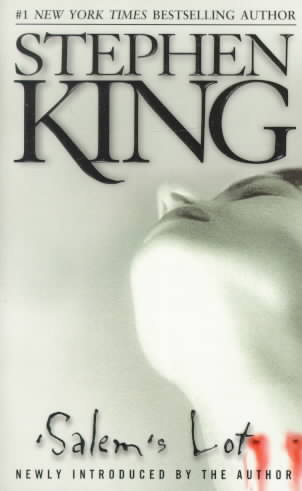
SalemsLotVampires may seem out of place late in December, but they never really go out of season. That will be my excuse, anyway, for writing about Stephen King’s ‘Salem’s Lot, which I have just finished reading. Like many of King’s books, ‘Salem’s Lot takes a fair commitment of time to get through, and I actually started it back in November when it feels natural to have creepy thoughts. I suppose winter is more of a ghost season than a vampire season, but I have read what I have read. So, vampires.

The book is old enough now to have been a kind of prequel to the current vampire craze. Prior to picking up the tome, however, I didn’t know that it as a vampire story. I’m not sure it made as much of an impact as the shudder-inducing Twilight series (and that is a shudder of the most ironic kind). ‘Salem’s Lot is, after all, a fairly conventional vampire story—a Dracula reset in rural Maine. Instead of a Jonathan Harker we have a Ben Mears. Instead of Abraham van Helsing, we have Matt Burke. The plot is much the same, the end result is much the same. And vampires are banished by religious paraphernalia, as we’ve come to expect. For me the ultimate Maine vampire will always be Barnabas Collins (the kind fitting more the description of Jonathan Frith than Johnny Depp). Barlow, as a vampire, is entirely too self-serving. Barnabas is a deeply conflicted ghoul, a monster you can love. But not too much, because then we’d be left in the twilight. Mixing the vampire just right is tricky, and it seems that a soap opera was the place that got it right.

The movie Thirty Days of Night, based on the graphic novel, places vampires squarely in the middle of winter. In the thirty days of no sunshine in the Arctic Circle, the vampires of winter flood the town. Perhaps the idea relates to ‘Salem’s Lot for an entire town to come under siege. Or maybe not. When I read vampire stories I hope to come out transformed, I guess. Elizabeth Kostova’s The Historian may have spoiled me in that regard. As with most King novels, however, ‘Salem’s Lot is artfully written and at least for the characters a new story with a small twist on the old ending. In at least one regard, it is true to life—although they learn that the church banishes vampires, nobody joins and they only pray as a last resort.


Lords a’Leaping

As I’m writing a not insubstantial check for the rent, as I do every 25th, I am participating in a Christmas ritual. Having grown up with trees, presents, cookies, and a general warm glow about the holiday where you got things for free and didn’t have to do any work (home or otherwise), it is hard to believe that this kind of Christmas is a modern invention. Some years ago I wrote an unpublished book about the holidays. In researching it, I learned that Christmas was only gradually accepted as a day of celebration. For many it was too popish, and for others it was too frivolous. It was the day when tenants paid their rent to their landlords—and here is the tradition in which I’m participating—for landlords who don’t make money from their tenants are no lords at all. Indeed, this commercial transaction gives the lie to the common lament that Christmas has become commercial. It has been commercial for a very long time.

Some suggest that Charles Dickens—who wrote not just A Christmas Carol, but several stories about Christmas—is largely responsible for our sentimental image of the holiday. Individual traditions of the day go back to Medieval or earlier times, but the conglomeration of events that occur around December 25 come from many sources. Human beings, entrepreneurial by nature, recognize the economy of bringing various disruptions to the flow of money onto a single day. Indeed, the day after Christmas is often a day to rival the holiday itself, with people returning items and purchasing more. Soon enough Epiphany will ring in austerity. In watching for economic recovery, Christmas is a mere indicator of financial health. There need be nothing more to it.

A capital Christmas

A capital Christmas

As I was sitting in my windowless cubicle this week, receiving little email from academics (who are the main business partners for publishers) already out on a semester break, my thoughts turned toward the deeper meaning of the holiday. Business is business. Meetings with recurring set dates popped up for Christmas reminding me of events that, one senses, are only reluctantly cancelled. The true entrepreneur can’t wait to get back to the office. I’m busy looking deeper. The trappings may be modern, but the idea of celebrating in the darkest time of year is very ancient. We are hoping for something better. We are looking for a new start. Christian or not, anyone looking over the sprawl that we’ve made of everyday life can appreciate the symbol of a baby on the day the rent is due.


X-mas Time

As predictable as crocuses in early spring are the controversies that crop up around holiday billboards. Even living in the quite blue state of New Jersey, I see plenty of advocating for the keeping of Christ in Christmas that the “keep Christ in Christie” campaign seems to lack. This year, however, the American Atheists billboard kerfuffle has shifted to Memphis and Nashville. There protests have been lodged that using children on “holidays for all” billboards is a kind of exploitation. And as we all prepare for the visit of baby Jesus, or Santa Claus, or any variety of mythical nighttime visitors, American Atheists are only asking that we all share the presents. It is an odd kind of culture war. Christmas, as we’ve long known, predates Christ. The holiday was usurped from pagan tradition and baptized into a holy day that was barely observed until the nineteenth century. The commercialization of the holiday gave it the current shape we recognize, and some Christian groups feel compelled to reclaim it in a kind of cultural crusade that will only end with complete acquiescence.

This is a holy war in which neither side is right. In the work-a-day world that I inhabit Christmas is above all a long weekend with a respite from the drudgery of a long commute to ensure that the system continues. Thousands stream into New York City, which, amazingly, does seem to transform for the holidays. The city that is, for most of the year, cold and heartless, suddenly displays a more human face. Giant wreaths and tall trees appear, bright decorations hang in windows. Menorahs and dreidels become manifest. Signs of Kwanzaa or other solstice-related holidays are evident for those who know how to spot them. People in general seem more generous than usual. Even many businesses relax their time-grabbing strictures a bit. Christmas did not begin as a Christian holiday, nor, it seems, will it ever be fully supersessionist.

IMG_1849

Celebration, I would suggest, is worth celebrating. Should atheists use a poster-child for the secular celebration of the holiday season? Should Christians have displays of mangers on church property where all passers by can see? Should Mensch on a Bench be displayed in stores? Should Santa be advocating for corporate giants who only want us to spend? Perhaps the answers are obvious. In my mind they are. We gather our families in, and in the northern style that has always resonated deeply with me, we look out the window and await the coming of the purifying snow.


Foundation and Empire

Foundation_gnomeIn a childhood full of science fiction I’m sure I read much material that was too sophisticated for me. After all, I grew up in a working-class family where politics amounted to lambasting the incumbent because things still weren’t getting any better. Even the conservative super-hero Ronald Reagan was mostly remembered for the government-issue cheese we received for free. We called it “Reagan Cheese.” In that setting much of Isaac Asimov’s Foundation trilogy must have been far beyond me. Still, I dutifully plowed through all three volumes as any budding science-fiction nerd was expected to. It was a required piece of the curriculum along with Frank Herbert’s Dune. Heinlein’s Stranger in a Strange Land would have to wait until adulthood. I remember rooting for the cosmic empire—the symbol of law and order—unaware that similar systems would eventually find me as a fifty-something, educated man unemployable for years at a time. Science fiction doesn’t bestow the ability to see the future.

Then I read a recent issue of Books and Culture, the bi-monthly publication review by Christian Century. An article by Philip Jenkins, reviewing a book I’ve not read, started off with a reference to Asimov’s trilogy. Suddenly I found myself transported hundreds of miles and two-score years from Midtown Manhattan to rural western Pennsylvania in barely adequate housing, holding Foundation and Empire close to my face. Jenkins, a noted historian of religion, was pointing out that Asimov often drew from Gibbon’s Decline and Fall of the Roman Empire and based his character of the Mule—those of you who’ve read the trilogy remember him, I’m sure—on Mohammed. The thought had never occurred to me that the science-oriented mind of Asimov would ever delve into religion for inspiration. Still, with the little I recall of the story, it does seem to add up.

In fact, much of science fiction is deeply dependent on religion. Science fiction dares to dream of the future, and no matter how technical that future becomes, the religious are still there. Last century bold claims were made that we’d be living in the twilight years of religion by now. Mid-term elections fueled by religious fervor prove the pundits wrong yet again. Organized religion, fledgling or fully adult, is a political animal. Religion and politics are both about how we interact with one another as a society. It may seem that the concepts behind religious thought are unsubstantiated myths that transcend the mechanistic world in which we live. Even so, they continue to drive revolutions large and small. And somewhere in the attic I still have my copy of the Foundation trilogy ready to be seen by grown-up eyes. Or better yet, through the credulous eyes of a child.


Not Your Grandma’s Moses

Exodus Gods and Kings

Exodus: Gods and Kings is, in many ways, a startling movie. It didn’t leave me with a strong impression of profundity, but it did make me a bit reflective. The media hype about God as an eleven-year-old boy proved to be merely hype. In fact, the boy deity was one of the most intriguing characters in the film. The role was played respectfully, and God, like a good Englishman, favored his tea. There was nothing comedic about it, however. More troubling was the agnostic Moses, à la Clash of the Titans with its unbelieving Perseus. Moses, even after meeting God, comes across as having little interior life. He hides in a cave and builds an army of terrorists making him seem like Moses bin Laden. He conceals himself while innocent Hebrews are hanged for his crimes (and did they even hang people in ancient Egypt?). When a great storm brews over Memphis, however, it is with a sense of wonder that we ponder at an eleven-year-old doing all this.

The movie plays lightly with the scholarly “explanations” that used to be doled out in seminaries about how one plague led to another. In fact, the character called “the Expert” in the credits is shown lecturing the Pharaoh on the causation scheme of clay churning up in the Nile turning it red, and killing the fish which in turn drove the frogs from the toxic water, but when they died flies came along and the flies spread disease. Then the Expert is hanged. Not so subtle a warning to biblical scholars. In fact, there seems to be a science behind much of the movie that makes miracles less acts of God than acts of nature. Even the drying of the Red Sea is understated. Its return is reminiscent of the Christmas Tsunami of 2004. God is sometimes not there when you’d expect a deity to care.

On the matter of caring, for an age of nones who have concerns for equality, the film was thin on women’s roles, making even the Bible appear to foreground them more. Sigourney Weaver—great in any context—seems only to be there to wish Moses dead. Even Miriam is given scant lines in the movie and no role in the Exodus itself. In Prince of Egypt she at least led her famous song. Zipporah is lovely but shows no sign of being as handy with a flint knife as Exodus makes her out to be. A woman of action. Miriam’s quick thinking saved the infant Moses. Overall, however, the Bible is a guy’s book, and Exodus is a guy’s flick. Opening with the battle of Qadesh on the Orontes is a way to draw men to a Bible movie. Lots of slashing, gashing, and charging horses. And the splendor of Egypt, filmed in Spain and the Canary Islands. Some miracles, it seems, are even impossible for CGI.