Monsters of Science

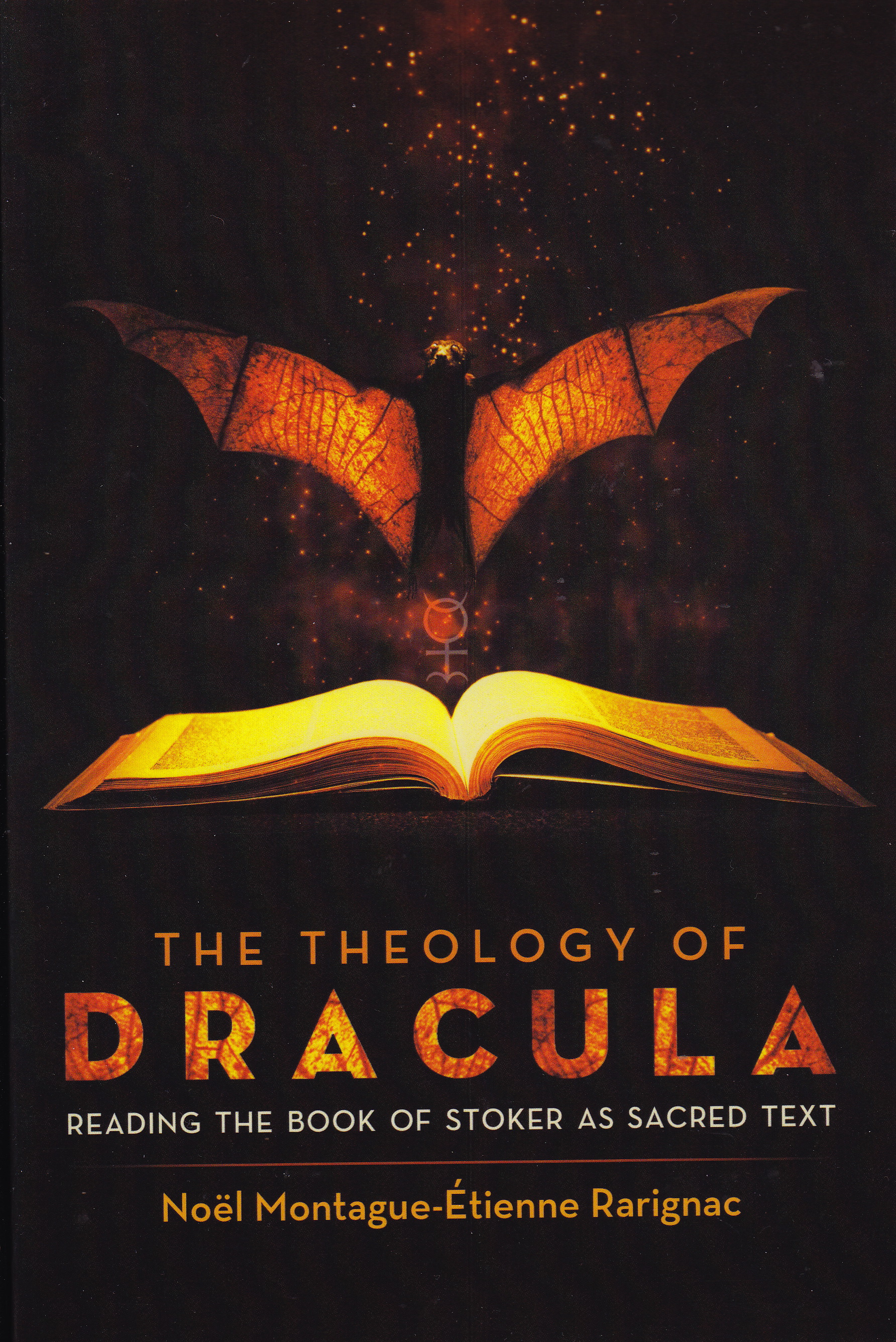
ScienceOfMonstersMaybe it’s the ebola in the air, or perhaps the gas from all the midterm elections verbiage, but I’ve been on a monster run this October. I just finished Matt Kaplan’s The Science of Monsters: The Origins of the Creatures We Love to Fear. It is a charmingly written book, at parts approaching the finesse of Mary Roach. Beginning with the ancient Greeks (and sometimes stepping back into the world of the Bible or the Mesopotamians) Kaplan examines the major categories of monsters and tries to offer scientific explanations for why people came up with them. It is a keen conceit and it is deftly handled. Noting that animals sometimes got jumbled in the fossilization process, he offers explanations for creatures such as the Chimera, Griffon, and perhaps even the Sphinx. Some of the unlikely episodes are quite fun to visualize as well, as when a snake slithers over a tar pit where a goat got stuck and was eaten by a lion that also got stuck. Beast after hideous beast he brings down to analytical size, sometimes convincing even this old monster lover.

One of the problems, however, is that science often doesn’t comprehend the symbolic nature of mythical thought. Quite apart from sheer creativity—and it does exist!—some of the material in Kaplan’s analysis would have benefited from having a mythographer’s look. For example, demons do not suddenly appear as monsters in the Middle Ages. Kaplan knows this, but that’s where he starts. The ancient Mesopotamians knew of them very, perhaps, too, well. And Lilith isn’t even mentioned when discussing succubi. Still, there’s a great deal of interesting conjecture here, and some scientifically, if not mythographically, viable suggestions on whence vampires and werewolves. As expected, modern sightings of cryptids are simply swept off the table, but I almost shouted aloud when I read that he gave credence to Wade Davis’s work on Haitian zombies.

The larger question here is one of approach. Do monsters lend themselves to scientific explanations at all? The case that elephant/mammoth skulls might suggest a cyclops seems reasonable enough, and the occasional dinosaur bone that represented a giant in ancient times is entirely possible. (Who can tell one femur from another anyway?) But the monster is primarily a creature inhabiting the shadowy realms of religion and psychology. Our fears are seldom directed toward science, although, now that I’ve read his chapter on “The Created” I’m not so sure. Constructing backward toward the unknown is always a dicey proposition, as those of us who’ve studied history of religions know. We may be able to find the genesis of modern monsters, but, admittedly, the fun for most of our scary friends is that they are mysterious. Impervious, as it were, even to science.


Gothic American

AmericanGothAmerican Gothic, the painting by Grant Wood, caused me trouble at Routledge. An author wanted to use the image on the cover of his book (we eventually managed it) but the choice was contested at every step. Along the way editors, editorial assistants, and marketers all told me what the painting represented and how it was inappropriate. I’ve learned, however, a few things from the post-modernist movement: nobody can say what an artwork means definitively. So when I read American Gothic: New Interventions in a National Narrative by Robert K. Martin and Eric Savoy, I was ready for a combination of po-mo and the macabre. Like post-modernism, Gothic is a difficult term to define. Indeed, the first set of essays in this collection struggle with definitions. Being literary criticism, the book points out that the novel and Gothic more or less developed together. When people read to be entertained, as early as the eighteenth century, they wanted to read Gothic tales.

Being a life-long fan of Poe, I was pleased to see that he made a good showing in the pieces contained in the book. What makes it appropriate to this blog—other than it being October, a comment that requires no explanation in the northern hemisphere—is a notion I found early in the book. People read horror literature for healing. Anthropologically, the wounded healer is a well-recognized figure. In a world where we expect opposites to go together health comes from disease and healing from being wounded. The gothic is a wounding of the mind to lend it healing. To be sure, many of us who read gothic literature do not relish scenes of violence or hurt. We do, however, find a kind of therapy within such darkness. In the darkness light is best appreciated. Who uses a flashlight outdoors on a sunny day?

As with most books from multiple authors, there’s some unevenness to the contributions here, yet more often than not, I found deep insight throughout its pages. Religion makes occasional appearances. Indeed, the figures of the monk and the debased church are stock images for early gothic literature. The sacred, if we’re honest, is a bit creepy. Having spent many nights in churches on retreats or for hospitality when youth groups couldn’t afford a hotel, I know that fewer places are scarier at night than an unlit, empty sanctuary. The gothic, following culture, has tended to move away from monasteries and churches into the more scientific spaces of the twenty-first century. Nevertheless, ravens and haunted houses still evoke the age-old fears of a coming period of darkness, the Halloween of the soul. And for those who want to know how a post-modern crowd scans the darkness, this book will not disappoint.


Autumn Music

It is an experience as old as humanity itself. At least humanity that started to realize that age, as remote as it may seem, will always eventually catch up with you. This past weekend was Family Weekend at my daughter’s college. Since her school does things up right, there were a variety of events on offer, one of which was an a cappella group concert. A cappella has come a long way since my college days, with students able to use their voices to sound like a band, professionally mixed, and full of energy. Somehow, I don’t recall that much energy from when I was a student. In any case, the inevitable group doing “oldies” took the stage an opened with a song from 1987. Wait. What? Since when was a song of which I remember the first release an oldie? The kids did a great cover, and I suspect in their minds it was really an old song. I was only 25 when it was given to the world. Can I really be an oldie? Outside the leaves on the trees were brilliant, as if on cue for the tuition payers to have their heartstrings wrung. Trees become their most alluring as they are about to die.

Songs, however, have a way of becoming part of you. Back when we were young(er) and idealistic, my wife had thought to study music therapy. Nashotah House, however, decided to change the career trajectories of an entire family in the name of orthodoxy. One of the things she learned in her classwork, prior to being sent back to the work-a-day world, was that patients suffering from dementia can often sing a song from their youth, even if they can’t speak a word. Music gets into our brains in a way that language learning doesn’t, and when we hear that song we are, to borrow a phrase from Bob Dylan (which another of the groups sang), forever young. It is a beautiful wish, endlessly covered and recovered. Watching those kids on stage, I recalled being on the cusp of adulthood myself. Everything seemed possible then. Then a world that others constructed imposed its constraints on me. My hair began to grow gray even as the leaves lit up yellow and scarlet and fire orange.

DSCN4928

Religion is the business of those who are old. Even as a religion major in college I was classed among those old before my time. We think of the hereafter on our deathbeds, not when we’re twenty. For those who teach their children to ponder eternity at a young age, however, that portal is never far from view. My fellow students were looking ahead to careers in all kinds of fields that would make their fortunes and reputations. My modest attempt to bring a younger generation to a more mature outlook faltered at the hands of Fundamentalists, and it was music that helped me through that terrible shock. Little do we think that that song we like so much is marking us indelibly as a child of our age. Time will not relent. We will be the ones, like the trees, showing our signs of age as our children show us where the future lies. And the attitude of that song from 1987 will be, for any who truly listen, forever young.


The Joy of Tech

In the age of Steampunk, New Jersey is among the world capitals. Indeed, today is the second day that the International Steampunk City will be inhabited in Speedwell, home of the telegraph. For yours truly, Steampunk is an escape. Alternate realities often look better than the pedestrian one we’ve inherited, so we like to look at the world through steamy lenses and imagine how it might have turned out differently. New Jersey, in the spring, also hosts the Steampunk World’s Fair. Perhaps we have more pressures to escape here in the Garden State. Imagination is certainly in no short supply. I attended the International Steampunk City last year and decided that I’d like to be a part of it. Knowing a thing or two about ancient technology, I thought I might share a bit with the Steampunk crowd. What is Steampunk without tech? Some ancient technology, although not very well known, is perhaps of even greater influence than we might imagine.

One of the connections that is easily misplaced in this era of purely scientific advance, is that technology was devised in the service of religion. At least in the early days. The greatest architectural achievements came under the aegis of temple building. Domes, arches, and eventually flying buttresses that could hold tons of stone high over your head—these were to please the gods. We can’t imagine Stonehenge as anything other than a capitalist venture these days, a way of drawing in the money. Of course, ancient builders knew of the financial benefits as well; temples were often the equivalent of ancient banks. Still, beneath all the pride of accomplishment there was the belief that the gods were somehow pleased with our innovation. Perhaps we’ve just done away with the convenient myth. Steampunk often has a religious underpinning. Many of the stories I’ve read touch on our ancient mythologies. Only, in fantasy, there are different possible permutations.

We sometimes think that technology is a modern phenomenon. Actually, it is quite ancient, as far as human culture goes. The first “computer” was invented around about the first century. Since it didn’t have an obvious benefit to the control of the masses, however, no technological revolution took place. The steam engine was, in nascent stages, invented also in ancient times. Until we learned, however, that it could be enslaved to make certain industrialists rich, we had no need for it beyond a diverting toy. Technology does not take hold without a deeper purpose. Every now and again I get a little paranoid knowing that I carry a telephone that knows my exact location at all times. As if I were important enough for anyone to care. Then the feeling passes and I open my iBooks app and turn to my latest Steampunk novel. I am a slave. I wonder what innovations there will be at International Steampunk City this year that might change the world. Only the imagination will limit the possibilities.

DSCN4341


De Profundis

IMG_1591In a grocery store last week a friend pointed out how many magazines had pictures of Robin Williams on the cover. Although his suicide two months ago was tragic, I wonder about the message we send to young people (and maybe some older ones as well) about this fixation. As we probe, attempting to understand the sad clown (and they generally all are), are we inadvertently telling our kids that suicide will make you an icon? We often hear accusations that extremist Muslims “brainwash” their youth into thinking that a righteous suicide will lead to glory. Perhaps the glory we perceive is somewhat different here in the post-Christian west than it is in the post-Christian east, yet I wonder what the essential difference really is. Why can’t we see that the cult of celebrity seldom ends well? The worship of the successful does not really grant them eternal life, as much as we may think otherwise.

Call me a curmudgeon—I probably deserve that—but when I overhear office mates in their cubicles or young people on campuses talking about stars I feel not a little like Rip van Winkle. Most of the names I do not recognize, and even showing me a picture doesn’t really help. Of course, I enjoy movies as much as the next dinosaur, but apart from the bargain bin and the occasional indulgence in Amazon Prime I really can’t much afford them anymore. I walk into a bookstore (where they can still be found) and the authors I want to read are not on the shelves. They are gone and all but forgotten. Many of them having left profound ideas in their wake. I guess I could pick up a magazine. Robin Williams looks happy on the cover.

I used to watch some late-night television before my job required waking between three and four a.m. One of the things I quickly noticed is that those stars our society worships had little of substance to say. That’s not to say all actors and media darlings are shallow, but I often wondered why their interviews always seemed to come down to the lowest common denominators. Have we lost our interest in probing beneath the surface? Isn’t there some profundity left to explore? Don’t get me wrong—I find Robin Williams’s death a tragedy. He may have been a deep and philosophical man. Who really knew him? Nevertheless, I wonder if perhaps, if we challenged ourselves a bit more, we might just consider the messages that our media broadcast. After all, they have to turn a profit. Do we really mean what our magazine covers seem to imply?


Monster Mash

American MonstersIn one of those ironies of personal history, I never met Linda Godfrey although we lived not far from one another and shared a great many common interests. I’m not sure she would return the sentiment, but while I lived at Nashotah House many odd things happened. Academics can be pretty deep in denial about what they experience, and although I never saw any man-wolves, as I stood outside one night to photograph a comet I felt terribly exposed and in not a little danger. This was on a rural seminary campus. Nashotah was still wooded then, before evangelical shaving of the landscape, and certainly among the most gothic of seminaries I’ve ever seen. Meanwhile Linda Godfrey was researching, just a few miles down the road, weird animal sightings on Bray Road. I began a correspondence with her after we left Wisconsin and I have read all of her books. Local history has always fascinated me, and although I was an accidental Wisconsonite, I nevertheless enjoyed learning about the strangeness of the state I formerly called home.

Godfrey’s latest book, American Monsters: A History of Monster Lore, Legends, and Sightings in America, throws a wider net. We are all in here with the monsters. Blending, as the subtitle suggests, lore and legends with eyewitness accounts, American Monsters can leave the reader a little disoriented, in a good way. We’ve been taught to discount anything that doesn’t match the everyday—what boss wants a worker with a higher vision?—and pretend that such things don’t exist. Weird creatures don’t donate their bodies to science readily, and we are left wondering if something is really peering at us from these October woods. Inside you’ll find stories of flying, swimming, and running monsters. We are safe nowhere. Either from the scientifically undocumented or from those that are purely imaginary. I stand outside in the dark in a smallish town waiting for a bus. What was that sound behind me?

Monsters are only now beginning to gain academic respectability. When I was in graduate school the topic felt so puerile that no respectable Ph.D. candidate would dare suggest such a dissertation to a button-down committee. Now they are beginning to roll off the presses. As part of the religious imagination, monsters are not so easily dismissed. We can assign them to the dark caverns of fantasy and under-stimulated imagination, but they will burst out in their own time and, like gods, demand our devotion. I have no idea whether these cryptids creep, flap, or swish around in our world. People see them all the same. And believing may be seeing. I’m glad for Godfrey’s success at pointing out that our rational world is full of monsters. Hers is a perfect book for days of effacing light and lengthening shadows, all across the country.


Theatrical Desert

LawrenceOfArabia

While the appellation T. E. Lawrence may leave many scratching their heads, “Lawrence of Arabia” will still garner nods of recognition. Of course, having a major movie made after you is a pretty good way to retain currency. Being a student of the history of religions, focusing on those of ancient West Asia, I read about Lawrence as I was doing background reading on what would eventually become known as the Middle East—another contrived name. Lawrence, who apparently disliked being called, “of Arabia,” along with Gertrude Bell, played a formative role in what would become a theater of European entanglements that continue to cause trouble to this day. The First World War gave opportunity for colonial interests to play out in the tribal polities that had worked in that part of the world for centuries. The fact that many of these countries are oil rich didn’t hurt.

Yesterday, starting very early, my wife and I settled in to watch the movie Lawrence of Arabia. Since it was released the year that I was born I might be forgiven for missing the first run in theaters, but I really hadn’t had the opportunity to see it before. Sure, you can pick up the DVD in many bargain bins at video stores—now also becoming rare—but a day with four free hours to watch a movie is also an endangered species. What struck me the most about the movie, after the commitment it takes to spend so long watching it, is that the few women who appear in it have no lines. Or lives. No woman speaks for this entire film. Although the portrayal of the Arabs is positive, the utter invisibility of half of all people on the planet is somewhat bewildering. Although not shown in the movie, Lawrence was known to be able to pass himself off as a woman, it is said. Yet the real women are missing, as if their stake in the world following the war just didn’t matter.

It may have been intended as a man-cave of a film—fighting scenes (although mild by present-day standards), things blowing up, and an awful lot of masculine bravado make up much of it. Still, men are not known for sitting patiently while minutes and minutes of visually lush desert scenery and blur shots of the sun take up so much of their weekend time. Yes, women did not fight in the field during the war, but they were an important part of the story. Gertrude Bell, as I mentioned, was a key figure in the drawing up of the boundaries of the Arab world. The movie isn’t about her, nevertheless the women show up in numbers only twice, once to wave goodbye the to army off to take Aqaba and then as nurses to help the overflowing hospital in Damascus. In neither scene do they talk. Perhaps it is intentional, but such a tactic made the desert seem very barren indeed. War has victims of all genders.


Dirty Words

I don’t have any bumper-stickers on my car. As clever as I may think any particular one to be, driving down the highway is not the place that I want other drivers to get ticked off at me. A more judicious use of turn-signals would be my preference over mass-produced witticisms. I suspect that most readers know of my liberal leanings. Some have even bothered to inform me that they no longer read my musings precisely because of this. On the information superhighway, unlike the real highway, you can just click off and not be annoyed anymore. My bumper, therefore, will stay clean. While in a parking lot recently I saw a bumper-sticker reading “Not A Liberal.” I had to ponder this a bit.

IMG_1589

I grew up conservative, although, as working-class folk, we didn’t label ourselves with that word at home. I wouldn’t have even known what it meant. Liberal, in its basic form, has to do with generosity and being respectful of others. The media has built it up into a kind of evil juggernaut that intends to take over the safe, unchanging world of religion and politics. I wonder how liberal became a dirty word. Who, among your friends, would want to remain so if you disrespect their views and refuse to show generosity? I get the sense that even conservatives are liberal with their friends. When I walk past the homeless sleeping on a subway vent to keep warm, I wonder if conservatives ever read the parable of the good Samaritan. What bumper-stickers would the homeless wear?

A polarized society had better prepare for the big chill. In my admittedly limited experience, people come in a continuum of positions, not just one extreme or the other. It makes better news, however, when we divide into camps, the more clearly to spar with one another. What separates us is more important than what brings us together. Yes, I grew up conservative. I continued, however, to grow up. I suspect in some things I am still conservative, while in many I am liberal. I’m not sure what I’d put on my bumper-sticker. What do I want people to know about me while I’m driving? I think it might be better to suggest “I Respect You,” than an implied “I don’t like your views.” Then again, since it happens so often, I now look for a Jesus fish automatically when I’m cut off in traffic. Be careful of what you put on your bumper, because dirty words are in the eyes of the reader.


Knockin’ Where?

KnockinOnHeavensDoorFor a while, when I was with Routledge, I tried to kick-start the old series Biblical Limits. I didn’t initiate the series, but it had been cutting edge at the time, and one thing biblical scholars seldom get to claim is that particular adjectival phrase. Alas, my enthusiasm wasn’t contagious and the series never moved ahead. Recently I decided to read Roland Boer’s Knockin’ on Heaven’s Door: The Bible and Popular Culture. Little did I realize that it would be a book that would make such a literal fit for the symbolic nature of my blog title. This is a book that my internet savvy would declare NSFW: not safe for work. Boer explores the sex and violence that are really rather pronounced in the biblical text, but which are often sublimated into object lessons for the faithful. We hear that such books as Song of Songs are allegories since they can’t possibly be about real people really attracted to each other. Would God sanction such things, well, after Genesis 1, I mean?

Post-modern readings of the Bible like to place the obvious before the reader. There is, no doubt, some over-reading going on here, but there is plentiful insight as well. A number of places I stopped and thought, I could use that, were I still teaching. Popular culture isn’t just movies and video games. There is a very human element to culture. Indeed, culture would not exist without such a thing as human interest. Boer explores everything from David’s carnal interests to Alfred Hitchcock’s morbid ones. McDonalds to Ezekiel in Guns-n-Roses. This is not the usual finding Christology in E.T. This is more like the bad boy’s Bible.

If the Bible cannot be made applicable to a constantly changing culture, then it becomes irrelevant. Many object to Boer’s bold treatment, but I believe that unless we can move beyond our concerns with J, E, D, P, R, Q, and double, or triple-redactions, we’re going to lose readers from page one. Knockin’ on Heaven’s Door is a page-turner. You can sit on the bus and have people think you’re reading about the Bible when in reality, a chapter on pornography may have you blushing madly. It brings to mind Odysseus in Polyphemus’s cave. But then, blind giants may be the most dangerous of all.


Lola Lolita

LolitaAs a father, Vladimir Nabokov’s Lolita is difficult to read. With Banned Book Week upon us, however, and with my wife suggesting I read Reading Lolita in Tehran, I figured I’d better read Lolita in New Jersey first. It’s not the kind of book you want to be seen reading on the bus. As is well known, the novel is written from the sympathetic point of view of a pedophile. It is distinctly creepy and yet also strangely sincere. Effacing the distinctions between love and lust and healthy and ill psyches, the story draws you into the life of a single-minded Humbert Humbert and his twelve-year-old obsession. I had been prepared for the end of the story, having seen Stanley Kubrick’s cinematic version some years ago, still, this tale distresses. Banned books take us to places we’d rather not be, and cause us to linger there. This is part of their secret appeal. These authors are honest enough to make us question assumptions. You have floated out of sight of land.

Lolita, through euphony, if not something more, reminds me of “Lola.” The Kink’s hit. I first heard “Lola” while I was in seminary, although it had been released a decade and a half earlier (I tend to run a little behind the times). When I listen to songs I pay attention to the lyrics, and I was disturbed to find that “Lola” was a catchy tune with a (to me, at the time) disturbing message. I confessed to a friend that I liked the song, but wasn’t sure that I should. We ban songs just as we ban books, because they bring us to a place where we question what we thought we knew. In my case, it often doesn’t take much. My friend Dave gave sage advice not to overthink the whole thing. If you like a song, you like a song. Let the music play on.

“You say you’re afraid for children,” Ellen Hopkins’s second stanza of “Manifesto” begins. (I confess to following a different scansion of the poem, call it poetic license.) I believe, however, our fear is for ourselves. We know that we could have a monster lurking inside. Lolita does not encourage pedophilia. Like many social crimes, pedophilia is the manifestation of an illness that some people, like sociopaths, unfortunately suffer. The lack of empathy for others is a frightening thing indeed. It makes for some of the scariest movies, and headlines, that I have ever seen. We do ourselves no favors, however, by pretending it doesn’t exist. I know little of the life of Nabokov, but I know that he died in Montreux. I know that he could afford to live there at least in part because of the royalties from Lolita, a novel whose manuscript he had once attempted to burn. And I know that in Montreux “some stupid with a flare gun,” well, you know the rest.


Bargain Basement

Signs, in my experience at least, lend themselves to being over-read. How often a heedless moment suggests something more than was intended—signs try to say too much in too few words. Indeed, poets rather than marketers ought to be sought. I found myself in Barnes and Noble recently, since Borders is gone. In all fairness, I attended two independent bookstores as penance afterward. Nevertheless, in the corporate atmosphere of the last major brick-and-mortar chain, I saw a sign. Several, actually. One of the most obvious is how many tchotchkes the store had, as opposed to wall-to-wall books. Barnes and Nobel has never been particularly imaginative in its selection of floor stock, but now it is a great place to buy toys, electronics, and coffee. Maybe pick up a book as an afterthought on your way out.

IMG_1550

The front space just inside the door of a bookstore is prime real estate. Publishers have to pay extra to have their books displayed immediately inside the doors—something they reserve for sure-fire rapid sellers. The average customer will walk in, down the center aisle and there they will find promoted (and demoted) items, laid out on their own tables. So it was that I saw a sign reading “Religion & Spirituality Bargain Priced.” In fact, they’re free. Not the books, but religion and spirituality. Even in this secular world, people are not shy about buying books in these categories. Step into the religion aisle sometime. You may be surprised how much you find there. In fact, those who track the industry often include Christian books as a third major category besides fiction and non. We trust those who know enough to write books about such matters. The Bible, despite its detractors, is a bestseller by any measure.

Do we, however, value religion and spirituality? So often religion is portrayed as the root of all extremism while spirituality is relegated to the weak-minded. The science section generally takes up only half the shelf space of religion. People want to know what it’s all about. The rates are anything but bargain priced. Some religion may indeed be simple, but most religions are unexpectedly complex. Those who engage them seriously know there is more to life than just fact and fiction. There are middle grounds and outer limits. There are places that have yet to be discovered, let alone explored. We are in the infancy of intellectual awakening. Of course that shows in how quickly we’ve abandoned our bookstores and gone off after less weighty things. If you have a moment, though, on your way to the coffee bar, you might pick up some religion cheap, and who knows where it might lead?


Fighting with Monsters

GothicThe Lady and Her Monsters reminded me of Gothic. A friend of mine in seminary showed me this “shocking” movie by Ken Russell just after it was released on VHS (I always was fond of ancient history). To my young eyes this was a challenging film, but it rated higher in moodiness than scariness. Roseanne Montillo’s book brought the movie to mind because, it turns out, several of the incidents in the movie were based on fact. Perhaps I need to take a step back because Gothic never made it big, and many may not realize that the movie is about the legendary night Mary Godwin (soon to be Shelley) came up with the idea for Frankenstein. In an early nineteenth-century walk of fame, Percy Shelley, Mary Godwin, Lord Byron, and John Polidori decided to write scary stories, as a kind of contest. Only two ever made it to print, Polidori’s The Vampyre, which inspired Bram Stoker’s Dracula many decades later, and Mary Shelley’s Frankenstein. The movie, with Ken Russell’s famous flamboyance, traced an unlikely story of the friends conjuring a ghost and then banishing it once again before the stormy night is over.

Ken Russell had the reputation for being obsessed with the church and sexuality. These interests are certainly well represented in Gothic, where Percy Shelley, famously an atheist and believer in the supernatural, struggles to make sense of it all. Polidori, Byron’s personal physician, is presented as a Catholic who admits, when each has to confess his or her deepest fears, that God terrifies him. The friends (perhaps in an unwitting prelude to a television series by that name) explore sexuality and the supernatural through the long night. Waking nightmares meet them at every turn. They even have a skull of “the black monk,” a character attested in all sincerity, at one time, at the most gothic seminary in the Wisconsin woods.

“He who fights with monsters,” Friedrich Nietzsche opined, “might take care lest he thereby become a monster. And if you gaze long enough into an abyss, the abyss gazes also into you.” That which we worship is that which we fear. Certainly the Christianity of the Middle Ages had as much of Hell as of Heaven in it. Bursting out into the light of rationalism, it seems, did not banish the darkness after all. We still have many questions left unanswered, and many intelligent people have begun to question whether any one paradigm fits all of the evidence. I suspect not. Human experience goes in multiple directions at once. We have ladies, we have monsters, we have scientists, we have God. And on rainy nights we have movies that make us see that we have combined them all into a tale often repeated but never fully understood.


Dark and Stormy Night

LadyAndHerMonstersI miss my monsters, especially when I stay away too long. I had eyeballed Roseanne Montillo’s The Lady and Her Monsters: A Tale of Dissections, Real-Life Dr. Frankensteins, and the Creation of Mary Shelley’s Masterpiece nearly a year ago in a busy Port Authority bookshop, and wanted to curl up with it right away. Well, work and the world intervened, but finally I found time for the beast. Although a member of the monster kid generation, as a child I never felt much kinship with Frankenstein’s creation. I think it is because there was so much human intention involved in his origins. Almost ungodly. Too godly. Vampires and werewolves, and even mummies, seemed to have come up on the wrong side of a curse and couldn’t be blamed for being what they were. Frankenstein’s monster had a willful, if neglectful, creator. A human being, and fully so. There was, it seemed, some kind of blasphemy at work here.

Montillo’s book, however, gives me pause to rethink this. I had never realized, foe example, that Shelley’s book unfolds over nine months, and that Mary Godwin Shelley had suffered as her own fate unfolded—or unraveled—after Percy Shelley’s death. Nor had I stopped to consider that in the lifetime of these young lovers scientists and poets were overlapping careers with philosophy holding them together. I also hadn’t realized that Percy Shelley also shared his beau’s enchantment with the fantastic. But Montillo gives us so much more, wandering through the seedy world of body-snatchers and scientists who experimented on the dead, often with an eye toward a secular resurrection.

Frankenstein’s monster has, of course, become an instantly recognizable fixture in our society. Indeed, it is almost the definition of monstrosity: the ultimate mischwesen while being technically only one species. A creature that crosses boundaries and is both dead and alive, a miracle and a curse, innocent and evil. Morillo places this creature in the context of a world where galvanism was thought to bring life and medical schools scrambled to find corpses to dissect and on which to experiment. A world where the Shelleys would visit Lord Byron and Polidori, literally on a stormy night, and give the world both Frankenstein and the prototype of Dracula. Where the three men of that night all died prematurely and tragically, survived by a struggling Mary who lived only to fifty-three and who gave the world one of its most memorable nightmares. Horror fiction was, and is, considered lowbrow entertainment, but there is something profound here. And we are richer, if more unsettled, for having it.


Dystopian Paradise

Dystopias resonate with me. As I ponder why, two factors seem to rise to the surface: dystopias are inevitably populist in orientation, and I was raised religious. Each of these factors requires some explanation, but so does the choice of addressing dystopian topics on a cheerful September day. In an article by Debbie Siegelbaum in the BBC News Magazine, Project Hieroglyph is featured. Project Hieroglyph, which involves some people I know, is an attempt to write a more optimistic future back into science fiction. To understand my reservations, I have to confess to having grown up as a nerdy science fiction reader. The stories from the 1950s and ’60s to which I had access (growing up poor, and buying books at Goodwill and second-hand shops) tended to be optimistic—people colonizing other planets, creating great labor-saving inventions, traveling time itself. In the meanwhile I slept in torn sheets in a ratty room and had to work to buy my own school clothes, inevitably cheap. For a few years our house didn’t even have a bathtub or shower. It wasn’t an easy existence, and I found solace in religion and science fiction, both of which promised a better future.

Today, forward-looking literature tends to be pretty bleak. With reason. Optimistic futures are the luxury of the elite. The average working person labors under a constant threat of unemployment and no jobs to replace the one you have. Hey, some of the people I see begging in Midtown are not dressed in the rags of the classic ne’er-do-well. Their signs asking for help are articulate and neatly written. The elite may look to a brighter future, but from street-level things appear a bit more challenging. There’s no question that politicians long ago lost touch with the commoner. They have no idea what life is like for most of us. Same is true of most university folk (cited in the article); unless they’ve been cast out, I suspect, they can conjure a pretty rosy future. With tenure.

That’s the populist angle. Now for the religious. The basic idea of Project Hieroglyph is as old as Buddhism, or perhaps even older than that. Salvation. Religions promulgate the idea that people require salvation. Otherwise it’s pretty difficult to get people up on a Sunday morning and convince them to drop their money in the plate. Look, however, at what has been happening to mainstream churches. So technocrats and other elites think technology, rather than the gods, will save us. Those devices of optimistic 1950’s and ’60’s sci fi have turned on us, and we have become slaves to our own technology. Gee, it’s awfully gloomy in here! Perhaps we need a brighter vision of the future where technology makes things better. It sounds like a return to the stories I read as a child. Still, I can’t help noticing all the closed churches I see, and how much the penmanship of the indigent has improved with the passing of time. If only I could decipher hieroglyphs my future might look shinier too.

Is this paradise or what?

Is this paradise or what?


Disco Duck

From the Roman Empire, Holy or otherwise, to the British Empire upon which the sun once never set, human endeavors are inevitably temporary. We like to think we’re making lasting contributions. Not so long ago Phil Robertson could make claims on vast amounts of media attention for his homiletical, gun-toting brand of family values. Despite not being a television watcher, even I was drawn into the drama as Happy! Happy! Happy! became a bestseller. Perhaps because my pursuit of religion has never earned me three such exclamation points, I read the book to find the secret of success. It is a combination of unquestioning belief and a willingness to blow the heads off of ducks in flight. Not that I would know about such things. The Dynasty made its way into Time magazine and other media outlets as the most interesting thing reality television, which is anything but, could throw at us.

Then Phil made a statement that set many viewers off. Mistaking intolerance for true religion—rather a constant in the algebra of faith—Robertson expressed his views on homosexuality and the ratings began to slip. Last year as I walked into a department store, I found Duck Dynasty bobble-head dolls and even fake Dynasty beards for those with no gumption to grow their own. Golf balls and beer glasses and all sorts of merchandise. Yes, you could partake of the good life without even cocking or pumping your shotgun. Other members of the family wrote books. (I have friends who produce quality literature who can’t find publishers.) We love the self-made genius of a simple guy and his make-believe world. Happy. Happy. Happy.

IMG_1503

It has been some time since I’ve seen Duck Dynasty mentioned in the media. I wandered into the same department store this year to find stacks of Dynasty merchandise drastically reduced. You could buy Phil Robertson’s memoirs for even less than Amazon prices. In bulk, if you desired. My historically inclined mind turned to the great empires of antiquity. Did Alexander, I wonder, really know what he wanted? What about when you finally reach the ocean? What is off on the other side? Once you’re out of sight of land, you’ve lost your control back home. Next thing you know, Diadochi have fractured everything. The gods of empire, it seems, don’t have it all together after all. Happy? Happy? Happy?